

Historical information
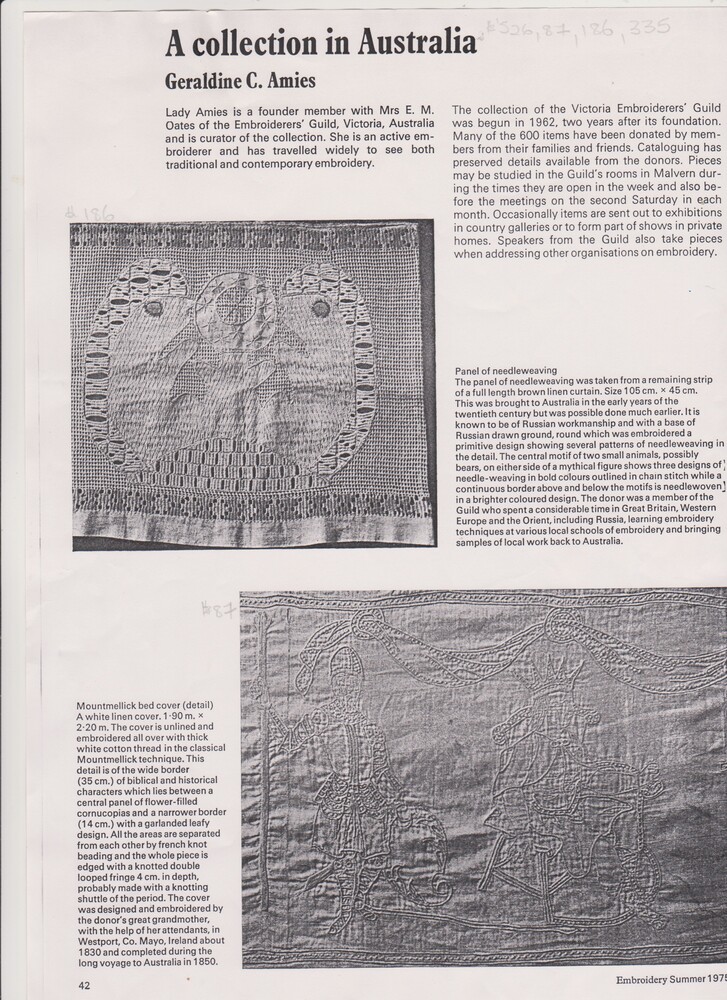
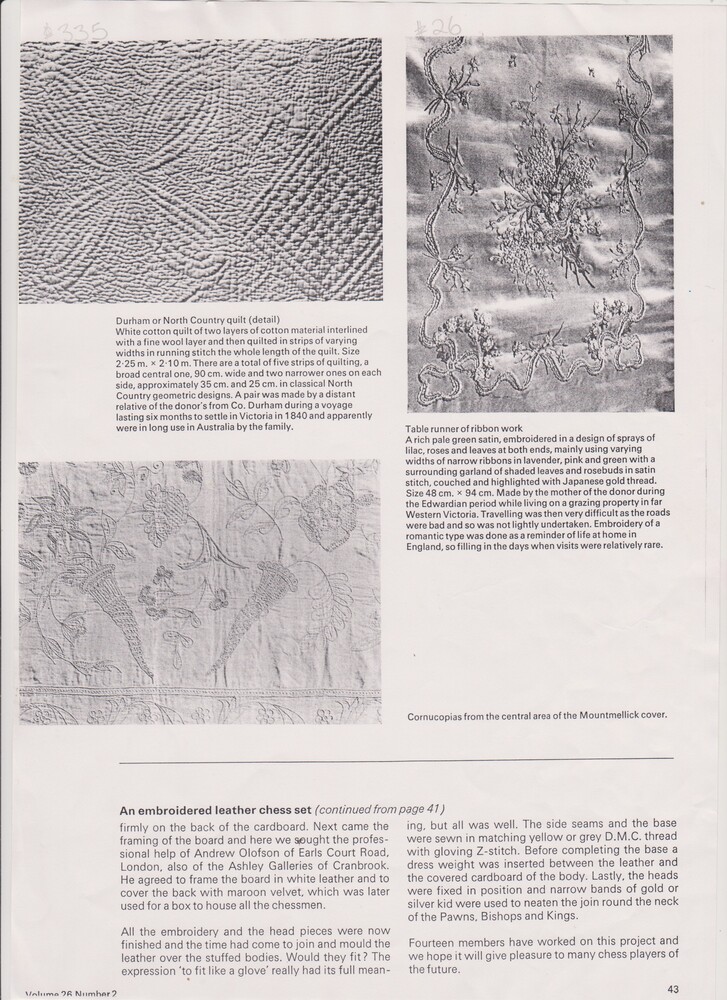
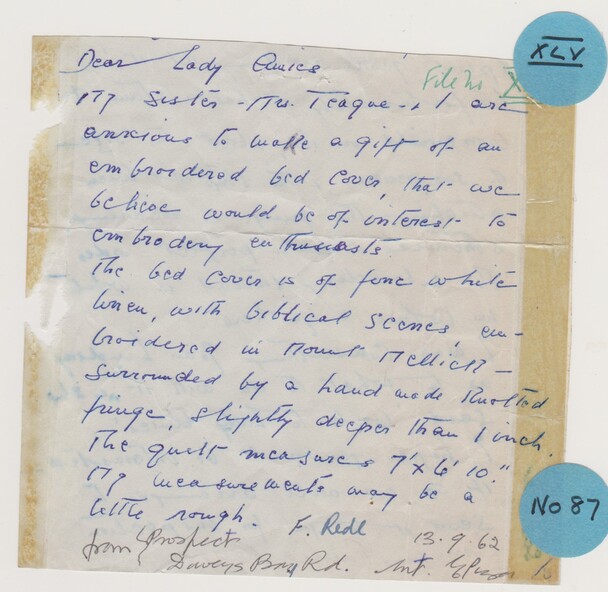
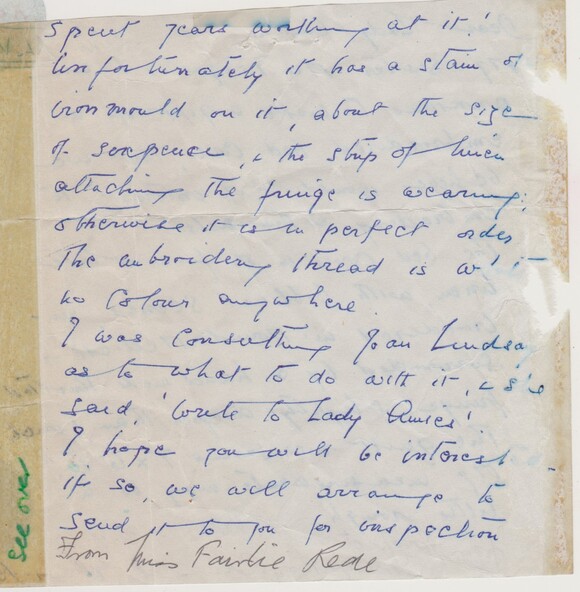
Donor's mother brought this from the west of Ireland in 1950. Said to have been embroidered by her grandmother and her ladies in 1780-1800. (This may be a later rather than actual date).
Knotting was a genteel pastime for leisured ladies requiring little concentration, so conversation could be carried out. Favoured at Court and practised in England in the late 17th C in William and Mary's reign and Queen Anne's reign in the early 18th C.
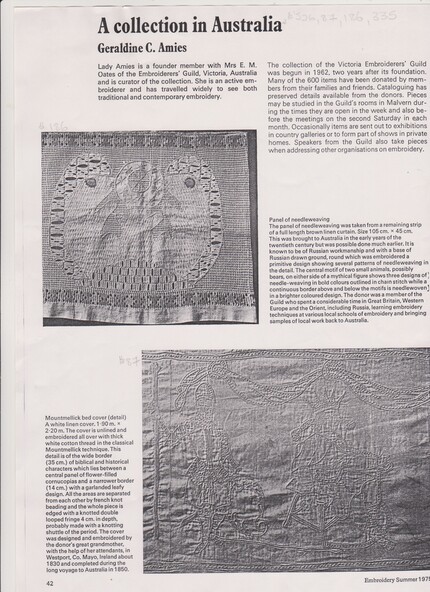
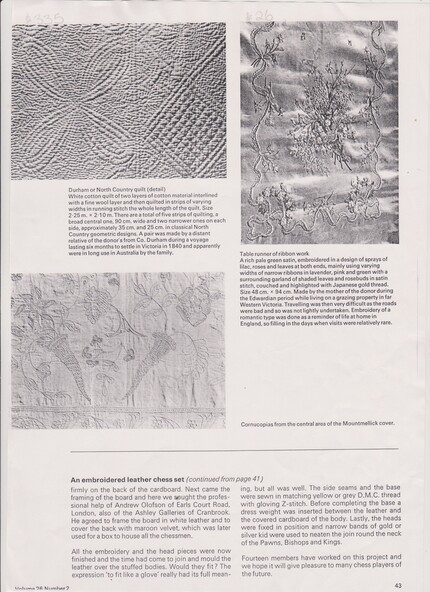
Addit: Old article written by Lady Geraldine Amies states "the cover was designed and embroidered by the donor's great grandmother, with the help of her attendants, in Westport, County Mayo, Ireland about 1830 and completed during the long voyage to Australia in 1850".
Significance
Knotting was a genteel pastime for leisured ladies requiring little concentration, so conversation could be carried out. Favoured at Court and practised in England in the late 17th C in William and Mary's reign and Queen Anne's reign in the early 18th C.
A knotting shuttle, larger than a tatting shuttle, made knots at every quarter inch or 6 mm intervals in string, linen, silk or wool.
Mrs Mary Delaney enjoyed knotting and preferred linen thread which was stronger. The Ulster Museum in Belfast holds an embroidered bedcover by Delany, one of the few complete pieces of embroidery made by her.
The threads between the knots was dependent on the thickness of the thread. This fashionable occupation was often mocked by men, Sir Charles Sedley, a wit and libertine wrote a verse mocking Queen Mary, the dull Protestant wife of William 111:
"Blest we, who from such queens are freed/ Who, buy vain superstition led,/ Are always telling beads;/But here's a queen now, thanks to God/ Who, when she rides in Coach abroad/ Is always knotting threads.
In the Spectator of 1712 it was suggested that men might take up knotting. Dr Johnson attempted to learn the skill but told Boswell "I once tried knotting: Dempster's sister undertook to teach me, but I could not learn it."
Physical description
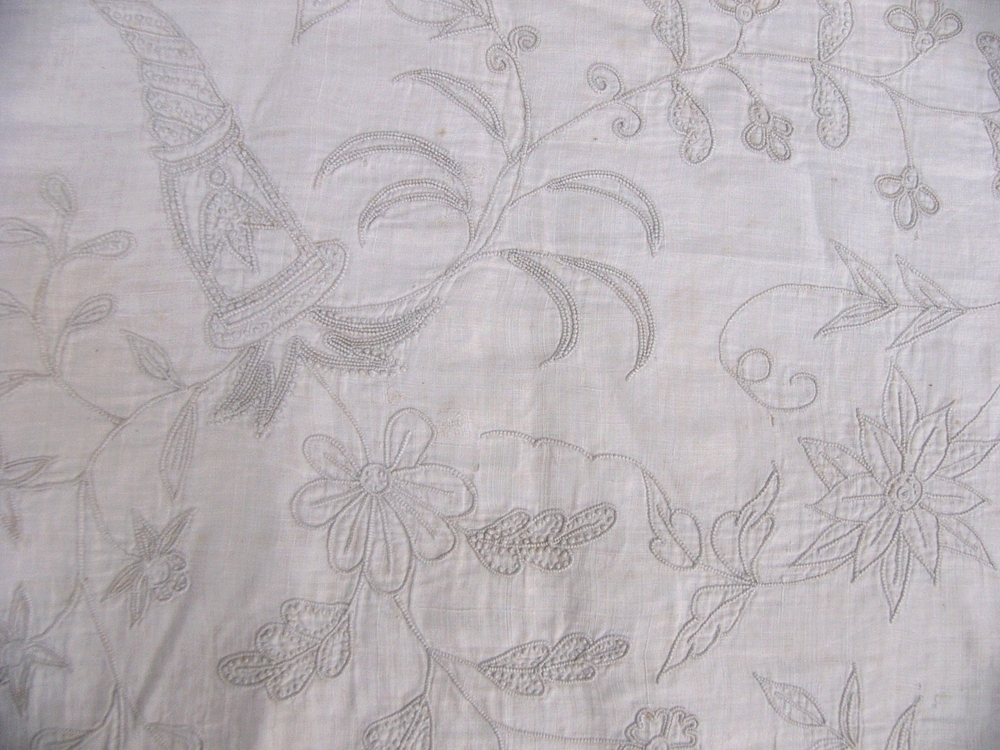
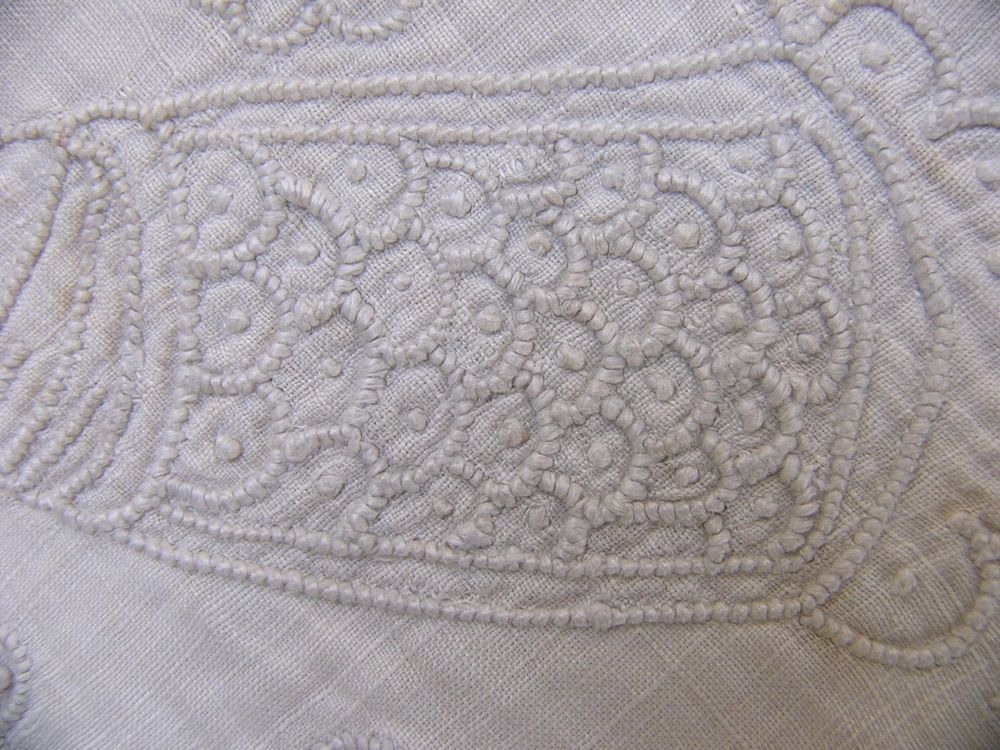
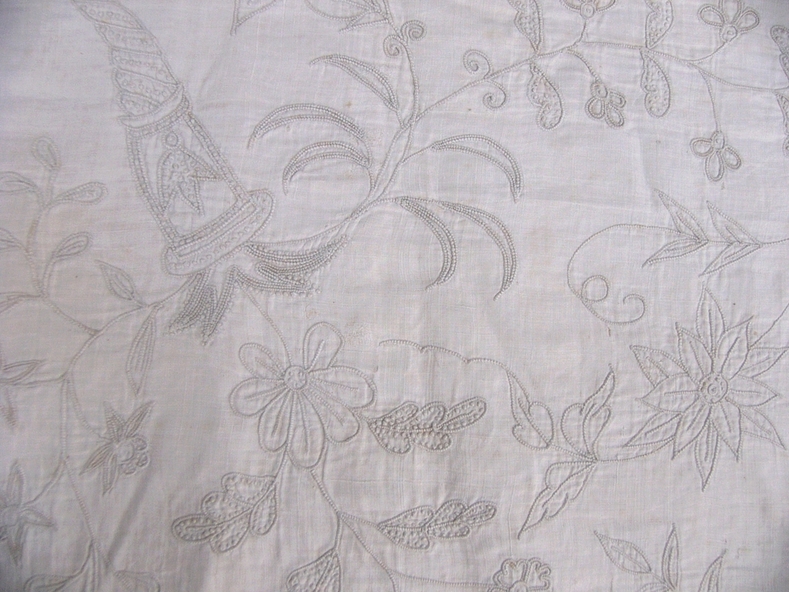
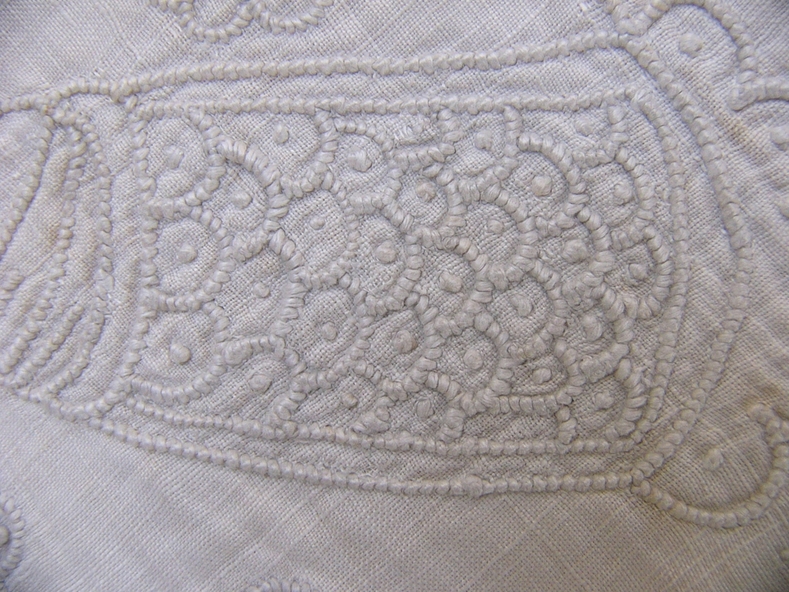
Knotted linen thread couched onto white linen bed cover.
Subjects
References
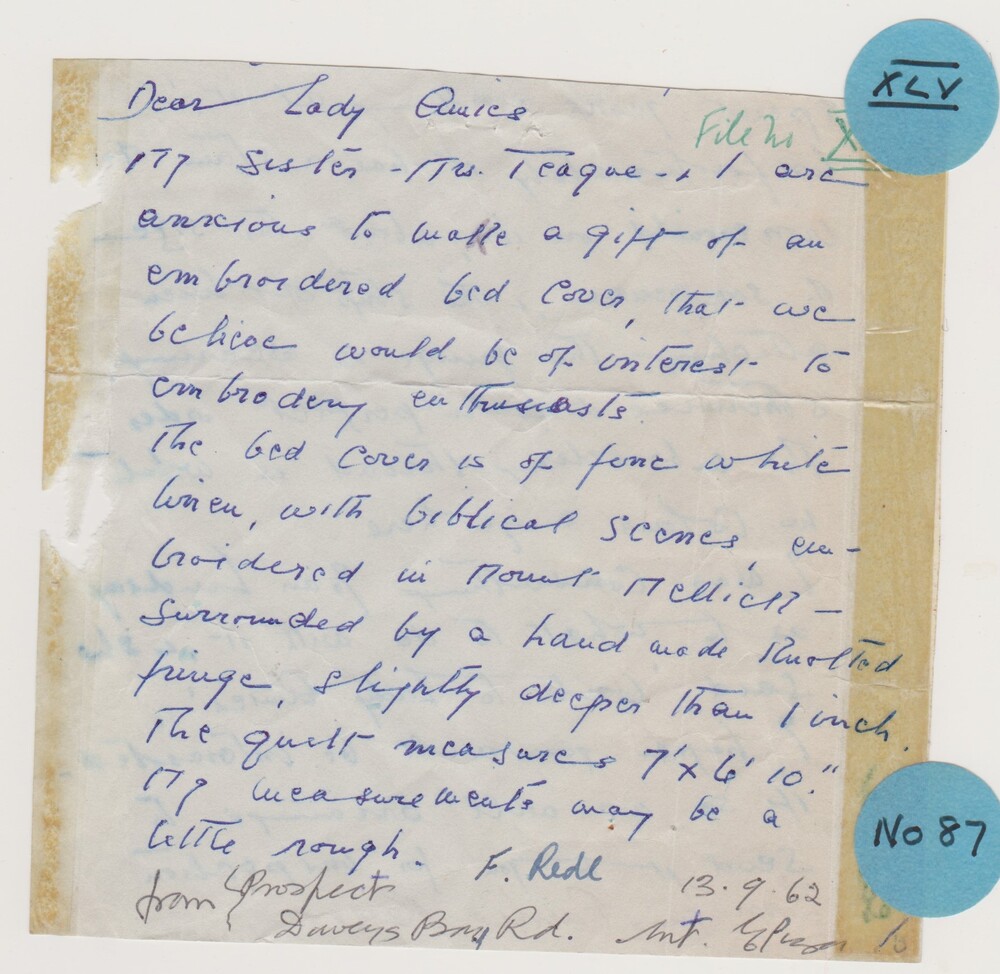
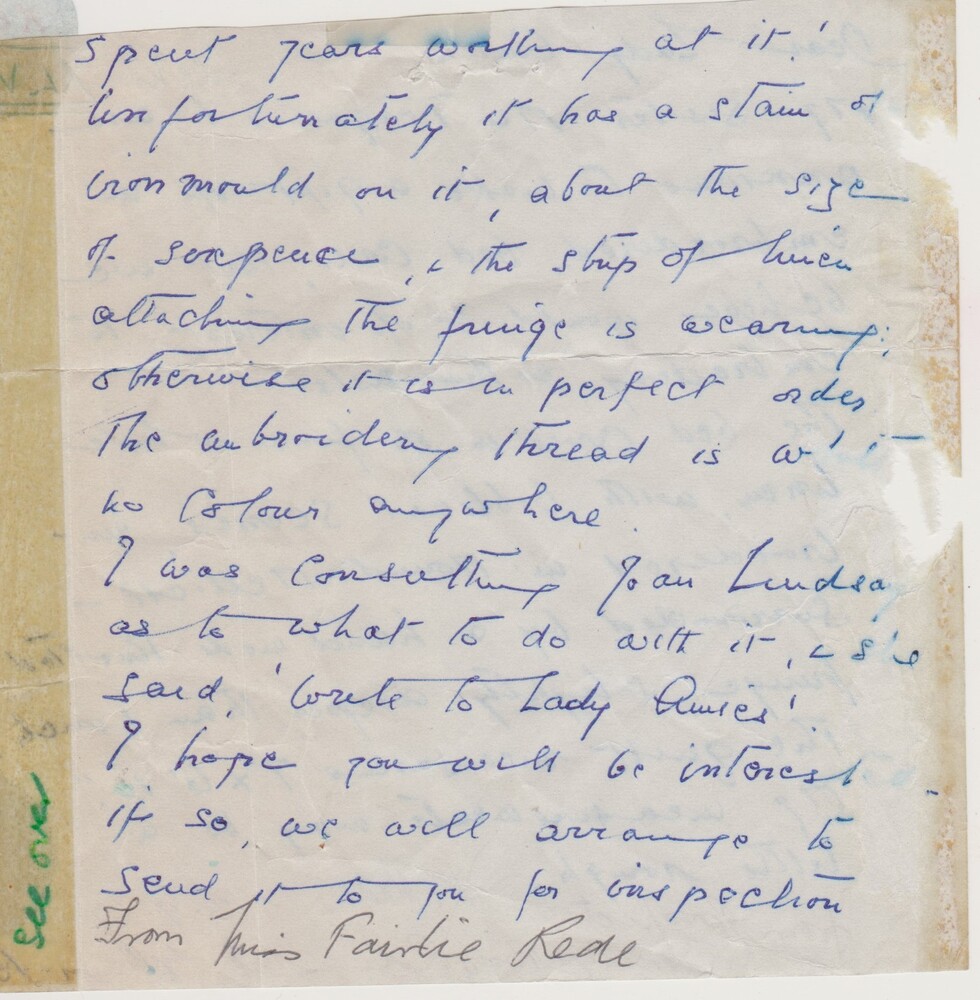
- Donor letter in Archives.