
Showing 101 items matching "max family"
-
 Bendigo Historical Society Inc.
Document - INFORMATION ABOUT SIMON (SIMEON) MAX AND MAX FAMILY
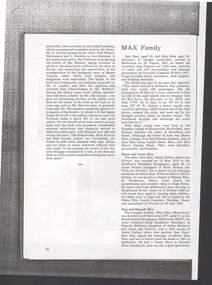
... INFORMATION ABOUT SIMON (SIMEON) MAX AND MAX FAMILY......Max Family...Information about Simon (Simeon) Max and Max family. Sam Sin and Max Sina arrive Melbourne 1857 from Prussia. ...PERSON Individual Max Family American Ship Dragoon Simon Max Annie Max Bendigo Synagogue Hannah Mathews. ...Information about Simon (Simeon) Max and Max family. Sam Sin and Max Sina arrive Melbourne 1857 from Prussia. (half-brothers). Sam Sina (Hebrew name Shimon) married Annie Nathan, Sandhurst Synagogue 1873 (shown on marriage certificate as Simon Sina). Died in Sydney, known as Simon or Simeon Max.. Simon had pawnbroking and jewellery shop in High St, Sandhurst. Annie buried White Hills Jewish Cemetery. Max Sin resided in Sandhurst, married Hannah Mathews. Max Sina signed his marriage certificate Sina Max.person, individual, max family, american ship dragoon, simon max, annie max, bendigo synagogue, hannah mathews. -
 Dandenong & District Historical Society
Curtain Family, Curtain Family - Max Curtain - Biographies, Pics, Newspaper Articles, Certificates
... Curtain Family - Max Curtain - Biographies, Pics, Newspaper Articles, Certificates...Curtain Family - Max Curtain - Biographies, Pics, Newspaper Articles, Certificates...Curtain Family - Max Curtain - Biographies, Pics, Newspaper Articles, Certificates...Curtain Family - Max Curtain - Biographies, Pics, Newspaper Articles, Certificates Curtain Max Curtain Betty Stephen Betty Curtain Sweetheart (Crocodile) Darwin Princess (boat) Edwina May (boat) Wedge Wedge Basketball Club Southern Star (boat) Wedge Swimming and Life Saving Club French Island Ferry Carrum Football Club Centralian Tour DABA Dianne Hunt Footscray Swimming Club 3UZ Listener Award Bill Wintle John Peel Curtain Family - Max Curtain - Biographies, Pics, Newspaper Articles, Certificates Curtain Family - Max Curtain - Biographies, Pics, Newspaper Articles, Certificates Curtain Family ...Curtain Family - Max Curtain - Biographies, Pics, Newspaper Articles, Certificatescurtain, max curtain, betty stephen, betty curtain, sweetheart (crocodile), darwin princess (boat), edwina may (boat), wedge, wedge basketball club, southern star (boat), wedge swimming and life saving club, french island ferry, carrum football club, centralian tour, daba, dianne hunt, footscray swimming club, 3uz listener award, bill wintle, john peel -
 Greensborough Historical Society
Article - Memoir, Max's Memories by Max Spence, Montmorency, 2010
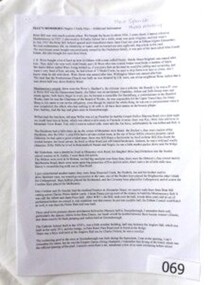
... max spence...spence family...A personal record of memories of the 20th century in Montmorency, Briar Hill and Greensborough. montmorency greensborough briar hill max spence spence family 5 x A4 pages, typed on 2 sides. ...Max Spence lived in the Briar Hill - Montmorency area from the late 1920s and recounts his memories of the people and places of the area.A personal record of memories of the 20th century in Montmorency, Briar Hill and Greensborough.5 x A4 pages, typed on 2 sides. Pages are numbered 1-13, but at 30/10/2011 pages 2-6 inclusive are missing.montmorency, greensborough, briar hill, max spence, spence family -
 Narre Warren and District Family History Group
Book, Terence FitzSimons, Two fat ladies and Hercules Tom : the story of the Australian giant family, 2015
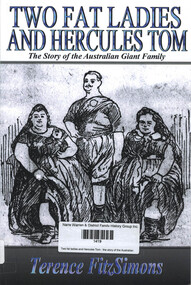
... Australian Giant Family...Max...Hercules Tom Snell siblings Clara Snell Anna Snell Tom Snell Australian Giant Family Max Kreitmayer Melbourne Waxworks Two Fat Ladies and Hercules Tom: The Story of the Australian Giant Family by Terence FitzSimons tells the fascinating tale of Clara, Anna, and Tom Snell, siblings from Gippsland, Australia, who became internationally famous as "The Australian Giant Family" in the late 1800s. ...Two Fat Ladies and Hercules Tom: The Story of the Australian Giant Family by Terence FitzSimons tells the fascinating tale of Clara, Anna, and Tom Snell, siblings from Gippsland, Australia, who became internationally famous as "The Australian Giant Family" in the late 1800s. Discovered by Max Kreitmayer, the proprietor of Melbourne Waxworks, they toured the world, performing in America, Great Britain, South Africa, and beyond. Their combined weight as adults exceeded half a ton, making them a spectacle of their time. The book also delves into their encounters with other famous performers, such as Jo-Jo the Dog-Faced Boy and Buffalo Bill, as well as the challenges they faced, including tensions with their father, William Snell, who managed their early careers. (AI generated)202 p.; 23 cmnon-fictionTwo Fat Ladies and Hercules Tom: The Story of the Australian Giant Family by Terence FitzSimons tells the fascinating tale of Clara, Anna, and Tom Snell, siblings from Gippsland, Australia, who became internationally famous as "The Australian Giant Family" in the late 1800s. Discovered by Max Kreitmayer, the proprietor of Melbourne Waxworks, they toured the world, performing in America, Great Britain, South Africa, and beyond. Their combined weight as adults exceeded half a ton, making them a spectacle of their time. The book also delves into their encounters with other famous performers, such as Jo-Jo the Dog-Faced Boy and Buffalo Bill, as well as the challenges they faced, including tensions with their father, William Snell, who managed their early careers. (AI generated)hercules tom, snell siblings, clara snell, anna snell, tom snell, australian giant family, max kreitmayer, melbourne waxworks -
 Rutherglen Historical Society
Image, 21/10/2012
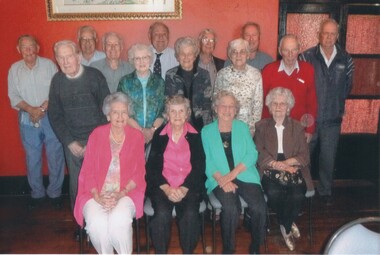
... ...buscall family...max...This gathering was in the Eastern Palace Chinese restaurant at the Star Hotel on 21st October 2012. rutherglen higher elementary school rutherglen show eastern palace star hotel buscall family max wright ian stones max turner bill morris doug stanton gary grail ken buscall bob martin aileen terrill ena buscall andree buscall rod johnston kath morris jean buscall jean mcdonald jean stanton leonie nicholl leonie martin Written on back of photo: "21st October 2012" Caption on separate piece of paper: "Max Wright, Ian Stones, Max Turner, Bill Morris, Doug Stanton, Gary Grail, Ken Buscall | Bob Martin, Aileen Terrill, Ena (Buscall)___, Andree (Buscall)___, Rod Johnston | Kath Morris, Jean (Buscall) McDonald, Jean Stanton, Leonie (Nicholl) Martin" Colour photograph of a gathering of former Higher Elementary School students. ...Former students of Rutherglen Higher Elementary School meet on Rutherglen Show day. This gathering was in the Eastern Palace Chinese restaurant at the Star Hotel on 21st October 2012.Colour photograph of a gathering of former Higher Elementary School students.Written on back of photo: "21st October 2012" Caption on separate piece of paper: "Max Wright, Ian Stones, Max Turner, Bill Morris, Doug Stanton, Gary Grail, Ken Buscall | Bob Martin, Aileen Terrill, Ena (Buscall)___, Andree (Buscall)___, Rod Johnston | Kath Morris, Jean (Buscall) McDonald, Jean Stanton, Leonie (Nicholl) Martin" rutherglen higher elementary school, rutherglen show, eastern palace, star hotel, buscall family, max wright, ian stones, max turner, bill morris, doug stanton, gary grail, ken buscall, bob martin, aileen terrill, ena buscall, andree buscall, rod johnston, kath morris, jean buscall, jean mcdonald, jean stanton, leonie nicholl, leonie martin -
 Greensborough Historical Society
Photograph - Photograph (Copy), Photo of Ian Gilbert, Shirley Evans and Max Gilbert
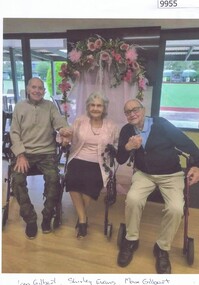
... family...shirley evans...max...Photograph of Ian Gilbert, Shirley Evans and Max Gilbert, Greensborough locals. ian gilbert evans family shirley evans max gilbert gilbert family Copy of coloured photo of Ian Gilbert, Shirley Evans and Max Gilbert Photo of Ian Gilbert, Shirley Evans and Max Gilbert Photograph Photograph (Copy) ...Photograph of Ian Gilbert, Shirley Evans and Max Gilbert, Greensborough locals.Copy of coloured photo of Ian Gilbert, Shirley Evans and Max Gilbertian gilbert, evans family, shirley evans, max gilbert, gilbert family -
 Mont De Lancey
Photograph - Max Proctor Photograph, 1944
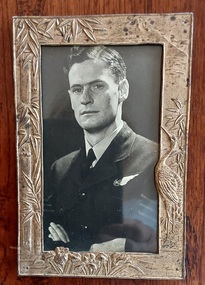
... Unfortunately there are no details of Max's squadron. His family may know....Unfortunately there are no details of Max's squadron. His family may know. WW11 Royal Australian Air Force RAF 1944 War 'AG, Air Gunner Air Crew Badge, 1939 - 45 Star' above his left breast pocket. ...Maxwell Hay Proctor was a member of the top air crew in his RAF squadron in WW11, 1944. Unfortunately there are no details of Max's squadron. His family may know.A decorative gold metal framed photo of Max Proctor in his RAF uniform with his arms folded, showing his AG, Air Gunner Air Crew Badge, 1939 - 45 Star above his left breast pocket and Sergeant chevron stripes on both sleeves.'AG, Air Gunner Air Crew Badge, 1939 - 45 Star' above his left breast pocket.ww11, royal australian air force, raf 1944, war -
 Stawell Historical Society Inc
Photograph, Mick Walsh, Mick Walsh Stawell Studio Colour Negatives, 1975 to 1986
... W Pianta Baby Megan Cooper & Rickard Ararat Trots Janet Evans John Shalders 40th Val Wortley 80th Birthday Great Western Cup 1984 Dianne Freeberg & David Wortley Caffrey Family Stawell Motel Dunn Bros New Reservoir Aug 1983 McCanns Val & Max Kennedy & Family Bigmore Family Coopers Cars Walters Wedding Bauer Girls Watchom Leigh McClure Coopers Car Middleton Reunion Carol Cunningham & Rodney Clarke Sue Dunmore Sisters RSL Baby Show 1983 Della Bessingham 4-11-83 Stawell Show 1983 Chas Mangle Cousins Grave Delzotta Car Whelan Pigeons Sharon Hustler & Cliff Naeff ...W Pianta Baby Megan Cooper & Rickard Ararat Trots Janet Evans John Shalders 40th Val Wortley 80th Birthday Great Western Cup 1984 Dianne Freeberg & David Wortley Caffrey Family Stawell Motel Dunn Bros New Reservoir Aug 1983 McCanns Val & Max Kennedy & Family Bigmore Family Coopers Cars Walters Wedding Bauer Girls Watchom Leigh McClure Coopers Car Middleton Reunion Carol Cunningham & Rodney Clarke Sue Dunmore Sisters RSL Baby Show 1983 Della Bessingham 4-11-83 Stawell Show 1983 Chas Mangle Cousins Grave Delzotta Car Whelan Pigeons Sharon Hustler & Cliff Naeff Photography Mick Walsh 52 Patrick Street Stawell Colour negatives of families, weddings and other. ...Negatives from Stawell Photographer. Discarded from Penna Print Ararat. Son contacted and gave approval for Stawell Historical Society to keep them. Only those of a non personal nature scanned. W Pianta Baby Megan Cooper & Rickard Ararat Trots Janet Evans John Shalders 40th Val Wortley 80th Birthday Great Western Cup 1984 Dianne Freeberg & David Wortley Caffrey Family Stawell Motel Dunn Bros New Reservoir Aug 1983 McCanns Val & Max Kennedy & Family Bigmore Family Coopers Cars Walters Wedding Bauer Girls Watchom Leigh McClure Coopers Car Middleton Reunion Carol Cunningham & Rodney Clarke Sue Dunmore Sisters RSL Baby Show 1983 Della Bessingham 4-11-83 Stawell Show 1983 Chas Mangle Cousins Grave Delzotta Car Whelan Pigeons Sharon Hustler & Cliff Naeff Colour negatives of families, weddings and other. Nineteen Lever Arch Folders Mick Walsh 52 Patrick Street Stawellphotography -
 Federation University Historical Collection
Letter, Letters from Richard Squire to his son Tom 1934
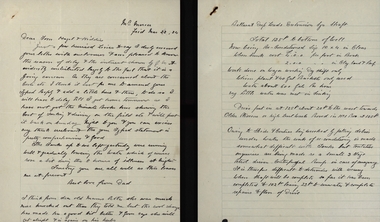
... Walker Secretary for Mines Pipeclay Sandstone Mr Saville Weymouth & Carroll Suction Pipe Valves Financiers Gold Mines of Australia Mr Hanley Hunter Sadowa Coy Kerang Shareholder Buninyong Stanley Hunter Len Fran Max Dr Jones Honeycomb Rock Booth Sandy McNab Emily Shaw John Cock Ross Creek Mitchell Rowe Neil Cameron Walker Kidney Disease Holst Nellie Ronaldson's Ronaldson & Tippett Brokers Investors Lockett Miller & Co Wellesly John Sharpe Elizabeht Ellen Old Lawaluk Mining Handwritten letters from Richard Squire to his son Tom and Family reporting happening at the mine Letters from Richard Squire to his son Tom 1934 Letter ...In 1905 Richard Squire was manager of the West Berry Consols at Allendale, and developed an improved system of mine ventilation, which was supported in "The Age."[4] He was successful in combating and remedying the gas and ventilation troubles of the Deep Mines of Creswick and Allendale Districts after all had failed.[5] MINE MANAGERS’ ASSOCIATION. Ballarat Branch. ... Mr R. B. Squire, manager of the West Berry Consols, at Allendale, submitted a paper detailing what he had done tor the betterment of ventilation in the alluvial mines of Smeaton and Mary borough districts- Members gave Mr Squire every credit for the results that he claimed to have effected; the adoption of his ideas had testified to their value to mine-owners. It was painted out, however, that for want of a thorough debate of the subject with experienced men the author had unwittingly included some general statements that required modifying in some points and extending in others, in justice to other workers among the earlier and the present day managers of mines. It was decided to invite the author to meet a sub-committee on this subject![6]Handwritten letters from Richard Squire to his son Tom and Family reporting happening at the mine richard squire, tom squire, engine trouble, basil, f.l. smythe broker, trembath, w. ryall, mt mercer, flu, plant, skids, pump, c. hayes, illness, poppet, carburetor, mum, ned, shaft, balance weight, hazel squire, pearson, pulleys, syndicate, goon, len hopkins, suction, dunstown, lease, jim squire, bannockburn, nina, albert, mrs trenery, connie, jay, judy squire, cohuna, bladder attack, reports, estimates, dunstan & coy, jelbarts, barrett, flat fields, brown, gold estates, berry leads, parsley roots, share book, meredith, reef, pay sheet, colin, mr gibbs, l.r.g plan, banagwanth, mcnaughton bores, glenfine, allan, william thomas, john lynch, crawford, shelford, liz the car, trucks, chandlers, ballarat trustees, cameron, elaine, mrs read, clark, j. hayes, dunlop, dr lawrence, eye specialist, reid, mullock bank, jack squire, herman, peter's legal inc. ballarat, freddie reid, j.r. whipp, a.b. reid, grenville, leigh river plan, johnstone's, premier petrol coy, chandler's, ballarat deep leads extension, harwood & pincott, a. rice, lillas, l. e. walker, secretary for mines, pipeclay, sandstone, mr saville, weymouth & carroll, suction pipe, valves, financiers, gold mines of australia, mr hanley hunter, sadowa coy, kerang shareholder, buninyong, stanley hunter, len, fran, max, dr jones, honeycomb rock, booth, sandy mcnab, emily shaw, john cock, ross creek, mitchell, rowe, neil cameron, walker, kidney disease, holst, nellie, ronaldson's, ronaldson & tippett, brokers, investors, lockett, miller & co, wellesly, john sharpe, elizabeht ellen, old lawaluk, mining -
 Federation University Historical Collection
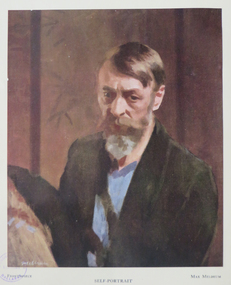
Book, The Shepherd Press, The Science of Appearances as Formulated and Taught by Max Meldrum, 1950
... Max Meldrum was born in Edinburgh, Scotland on 03 December 1875. His family arrived in Australia and Max Meldrum attended the National Gallery School, winning the Victorian Travelling Scholarship in 1899. ...Max Meldrum was born in Edinburgh, Scotland on 03 December 1875. His family arrived in Australia and Max Meldrum attended the National Gallery School, winning the Victorian Travelling Scholarship in 1899. ...This book could be described as the summing up of a theory of physical appearances, devised by a painter and demonstrated by paint. The foundation of this theory was laid down first in Paris by Max Meldrum early 1900s. A review calls the book "the most outstanding book on the craft of painting yet published in any language. Max Meldrum was born in Edinburgh, Scotland on 03 December 1875. His family arrived in Australia and Max Meldrum attended the National Gallery School, winning the Victorian Travelling Scholarship in 1899. It was deaccessioned and transferred from the Ballarat School of Mines library so would have been used by students and staff of the Ballarat Technical Art School, a division of the Ballarat School of Mines. Red fabric hard covered book of 298pp, includes colour plates that have been pasted into the book. The book inlcudes 11 colour prints and 11 line and tone diagrams. These diagrams in clude Major and Minor Dark and liLight Disturbances; Speed Values and Form; Complex Light Disturbance; Experiments in Definition and Inclination; Apparatus for the Analysus of Visual Phenomena by Distance; Set of Patches; Modern and Obsolete Methods of Approach, Tonal Analysis on "St John's Parad"'; Chromatic Analysis of "St John's Parade". This book was part of the Ballarat Technical Art School LibraryA review has been pasted in the front..max meldrum school, max meldrum, art, science of appearances, appearances, color plates, tonalism, ballarat school of mines library, ballarat technical art school -
Glenelg Shire Council Cultural Collection
Administrative record - Rate Notice - Mr Campbell, Portland, 1942-1943
... Campbell family records Rate Notice 1942 - 43, Portland Borough Council, Portland Waterworks Trust, Portland Sewerage Authority, dated 18 MAR 1943 for 57 Percy St Portland, owner / occupier Max Hector Campbell Administrative record Rate Notice - Mr Campbell, Portland ...Rate Notice 1942 - 43, Portland Borough Council, Portland Waterworks Trust, Portland Sewerage Authority, dated 18 MAR 1943 for 57 Percy St Portland, owner / occupier Max Hector Campbellcampbell family records -
 Orbost & District Historical Society
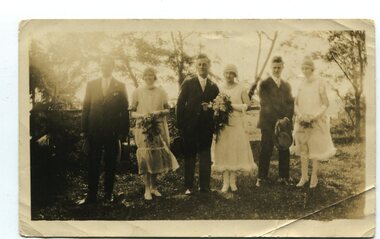
Photograph - Four b/w photographs of Orbost people, 1920s
... families who lived in the Orbost district. The names mentioned are Cameron, Reynolds, and Royce. These photographs are significant because they show people who lived in the Orbost district in the 1920s. Cameron Royce Reynolds weddings 2705.1 Jim and Jean Cameron. 2705.2 'Catching fish at Glenavon, Orbost 1923' 2705.3 'Mr & Mrs Reynolds, April Orbost 1926' 2705.4 'Mr & Mrs Max Reynolds, Orbost 1926' Four b/w photos of Orbost people. 2705.1 b/w photo of a boy and girl sitting amongst the grass. ...These four photographs are of people from families who lived in the Orbost district. The names mentioned are Cameron, Reynolds, and Royce.These photographs are significant because they show people who lived in the Orbost district in the 1920s.Four b/w photos of Orbost people. 2705.1 b/w photo of a boy and girl sitting amongst the grass. A tree behind. Girl is in a chair. 2705.2 b/w photo of a boy and girl. The girl is standing in water, holding a cat. The boy is sitting in a drum. 2705.3 b/w photo of a man and woman (bride and groom) standing on a verandah of a house. 2507.4 b/w photo of 6 people standing in a garden. They are a wedding party, including the groom and bride in centre. 2705.1 Jim and Jean Cameron. 2705.2 'Catching fish at Glenavon, Orbost 1923' 2705.3 'Mr & Mrs Reynolds, April Orbost 1926' 2705.4 'Mr & Mrs Max Reynolds, Orbost 1926'cameron, royce, reynolds, weddings -
 Orbost & District Historical Society
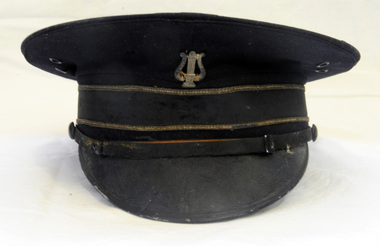
cap, 1937
... It was worn by members of the Wehner family who played in the band. They were Tom, Eric and Max Wehner....It was worn by members of the Wehner family who played in the band. They were Tom, Eric and Max Wehner. The Orbost Municipal Orbost Band played a major role in the Orbost community activities. ...This cap was part of the uniform of the Orbost Municipal Band. 1937-1975 (circa). It was worn by members of the Wehner family who played in the band. They were Tom, Eric and Max Wehner.The Orbost Municipal Orbost Band played a major role in the Orbost community activities. Charles Spink made sure each soldier returning home from the 1914 to 1918 war was welcomed home in front of the Shire Hall to the music of the Orbost Municipal Band. The band played in the main street on most Friday nights and in 1929 the band played at the official opening of the Buchan Caves, by Sir Albert Lind.A black serge cap with a black shade peak on front. It has a brass lyre insignia badge on the front. The hat band is trimmed in gold braid.cap hat orbost-municipal-band wehner uniform -
 Orbost & District Historical Society
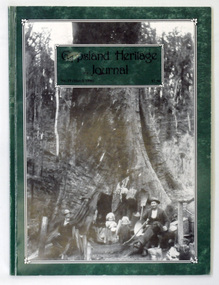
Journal, Gippsland Heritage Journal, March 1996
... The main photo is by Max Lowenhardt and shows John Green, Mrs Eva Penny (inside the tree and hardly visible) nursing Charlie, May, George and Nicolas Penny. Colin Silcock wrote of the tree on p.39 that the family...The main photo is by Max Lowenhardt and shows John Green, Mrs Eva Penny (inside the tree and hardly visible) nursing Charlie, May, George and Nicolas Penny. Colin Silcock wrote of the tree on p.39 that the family ...The main photo is by Max Lowenhardt and shows John Green, Mrs Eva Penny (inside the tree and hardly visible) nursing Charlie, May, George and Nicolas Penny. Colin Silcock wrote of the tree on p.39 that the family lived int he hollowed-out butt for nine months in 1906-1907. It was 20 feet across at floor level with 12 feet of head room inside. Nicholas Penny ring-barked the tree in 1905, with it being 130 feet high with the top broken off. The fires the following year destroyed the tent in which he was living and hollowed out the tree. After "making a few alterations" Penny moved in and brought his wife and children across from Outtrim. They later built a more permanent home. The tree was destroyed in the 1926 bushfires. (ref Linda Barraclough)This magazine is a useful reference on Gippsland history.A 64 pp magazine, titled Gippsland Heritage Journal. It has a dark green cover with a photograph of the "Penny Tree" . The magazine is dated March 1996 and cost $7.50. It contains stories and photographs on the history of Gippsland.There is a library bar code on the outside back cover.gippsland-heritage-journal penny-tree history-gippsland -
 Greensborough Historical Society
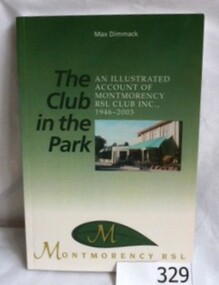
Book, Benchmark Publications for the Montmorency RSL, The Club in the park: an illustrated account of Montmorency RSL Club Inc, 1946-2003. by Max Dimmack, 1946-2003
... max dimmack...returned services league of australia...petrie family...families. Includes a short history of the Montmorency area and some of the early settlers in the district. montmorency rsl max dimmack returned services league of australia petrie family barling family montmorency Paperback book, 168 p., illus, Green cover with illustration of RSL building. 2 copies. ...A history of the people and events that shaped the Montmorency RSL, including the Montmorency pioneers, the Barling and Petrie families.Includes a short history of the Montmorency area and some of the early settlers in the district.Paperback book, 168 p., illus, Green cover with illustration of RSL building. 2 copies.montmorency rsl, max dimmack, returned services league of australia, petrie family, barling family, montmorency -
 Greensborough Historical Society
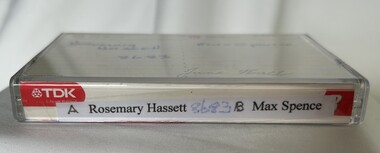
Audio - Oral History, June Hall, Rosemary Hassett, and, Max Spence: interviewed by June Hall, 2011
... max spence...rosemary hassett...spear family...Max Spence are each interviewed by June Hall. They discuss memories of growing up in Greensborough and Montmorency and Rosemary's connection to the Spear family....Max Spence are each interviewed by June Hall. They discuss memories of growing up in Greensborough and Montmorency and Rosemary's connection to the Spear family. june hall oral history max spence rosemary hassett spear family Side 1: "Rosemary"; Side 2 "Max". 1 audio cassette in plastic case Rosemary Hassett, and, Max Spence: interviewed by June Hall Audio Oral History June Hall ...Rosemary Hassett and Max Spence are each interviewed by June Hall. They discuss memories of growing up in Greensborough and Montmorency and Rosemary's connection to the Spear family.1 audio cassette in plastic caseSide 1: "Rosemary"; Side 2 "Max".june hall, oral history, max spence, rosemary hassett, spear family -
 Flagstaff Hill Maritime Museum and Village
Decorative object - Peacock, Minton Majolica life-size model, Paul Comolera, artist, Designed: c. 1873; Made: c. 1875
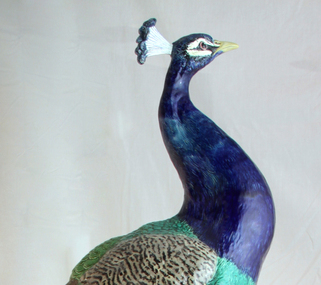
... Max Meldrum. He painted and exhibited his works at The Studio and in a public exhibition, and he was a finalist eight times in the coveted Archibald Prize portrait competition, including the submission of his self-portrait that is now part of his grandson’s collection. The next owner of the Loch Ard Peacock was Frank Ridley-Lee. He displayed it at his home in Ivanhoe after buying it at an auction in May 1941. The peacock remained in the hands of the Ridley-Lee family...Max Meldrum. He painted and exhibited his works at The Studio and in a public exhibition, and he was a finalist eight times in the coveted Archibald Prize portrait competition, including the submission of his self-portrait that is now part of his grandson’s collection. The next owner of the Loch Ard Peacock was Frank Ridley-Lee. He displayed it at his home in Ivanhoe after buying it at an auction in May 1941. The peacock remained in the hands of the Ridley-Lee family ...This majestic peacock embodies the technical achievement, skill and ingenuity of artisans during the 19th century. It is now known as the 'Loch Ard Peacock' and was designed and modelled in 1873 by Paul Comolera (1818-1897) and fired in one piece at the Minton factory at Stoke-on-Trent in the United Kingdom in 1875. The peacock has been portrayed in symbolic motifs and has figured heavily in folktales and fables since antiquity, and many cultures around the world see it as a symbol of beauty, rebirth and power. Wealthy Victorians loved majolica, and the large peacock would have been the ultimate home accessory as a conservatory ornament – combining their desire for nature, the exotic and vibrant colours. The peacock model was listed in catalogues by Minton & Co. for a retail price of 35 guineas or sold as a pair for 90 guineas. Minton & Co. was founded in 1793 by Thomas Minton (1765–1836) and became a famous pottery and porcelain manufacturer. Comolera was a French artist and sculptor, renowned for dramatic naturalistic forms and life-size renditions of birds and animals that won him admiration in public and artistic circles. He was employed by Minton & Co. from 1873 to 1880, and the life-sized peacock became his best-known work. Comolera kept a live peacock loaned from the nearby Duke of Sutherland's Trentham Hall Estate in his studio to create a life-size model of fine buff earthenware model, which was then hand painted in brilliantly coloured green and blue glazes to mimic the peafowl’s dazzling plumage. There are no surviving production records, but according to documents in the Minton Archive, nine peacocks were made by Comolera. However, today, some historians now believe that twelve were fired at the Minton factory; research is ongoing. These peacocks were so admired that Minton & Co. used them as exhibition showpieces at International Exhibitions in London, Paris, and the United States of America, ensuring the company had a worldwide reputation. So, when Melbourne hosted an International Exposition in 1880, Minton & Co. sent out ceramics and tiles, and in particular, this peacock was intended to be part of their exhibit in the British Court in the Exhibition Building, built in the Carlton Gardens. The early dispatch date (1878) indicates that the company may have intended to exhibit their wares, including the peacock, at the 1879 Sydney International Exhibition, but the company did not take up this option. The ship that Minton & Co. used to bring the peacock and their other wares to the Australian colonies was the ill-fated Loch Ard, which sunk after striking Mutton Bird Island near Port Campbell, Victoria, in calm foggy weather in June 1878 on the final leg of the ship's journey to Melbourne. The loss of 52 lives made it one of Victoria’s worst shipwrecks. Therefore, this peacock never made it to the grand exposition in Melbourne, as Minton & Co. had planned. Charles McGillivray dragged this peacock, still in its original packing case, onto the beach in the gorge just two days after the Loch Ard went down. The peacock was rescued unscathed apart from a chip on its beak (only repaired in 1988). After a disagreement with a Melbourne Customs Officer, Joseph Daish, McGillivray stopped his salvage operations, leaving the peacock on the beach. The second salvagers were James Miller and Thomas Keys. Miller was a member of the firm Howarth, Miller and Matthews, Geelong, who had brought the salvage rights to the Loch Ard wreck on 10 June. When Miller and Keys arrived at the wreck site, a storm had washed many of the salvaged goods, including this peacoc,k back into the sea. The two men found the peacock in its case ‘bobbing along in the water’ and pulled it back to the beach. To ensure the peacock wasn't washed out to sea again, Miller and Keys hauled the packing case containing the peacock up the gorge's cliff face to the top, ready to be transported. In an interview in 1928, Keys claimed that at the time of the rescue, the head had broken from the body. This account was proven to be true in 1988, following the birds' display in Brisbane. This peacock began its life in Australia, not in the grandeur of an International Exhibition as intended, but in the hallway of a simple domestic house in Geelong. It appears Minton & Co. did not attempt to buy this peacock back. Florence Miller, daughter of James Miller (Loch Ard salvage rights holder), later remarked that the only item of real value rescued from the wreck had been the peacock and that this had been kept by her father in the family home at Malvern for many years and became a treasured family possession. As such, this 'Loch Ard peacock' was almost forgotten and mistaken with other Minton peacocks around the world. Miss Florence Miller tried to sell the peacock due to financial difficulties in the 1930s but was unsuccessful. While attempting to sell her Loch Ard relic, it was displayed in the window of the old Argus newspaper office, which was at 76 Collins Street, Melbourne; the Argus had relocated to the corner of Elizabeth and La Trobe Streets in 1926. Between 1935 and 1939, the old Argus building was occupied by the Joshua N. McClelland Print Room, which sold not only paintings and prints but also antiques and authentic replicas, as well as hosting exhibitions. Miss Florence Miller loaned her peacock for display at the Victorian Historical Exhibition held in the National Gallery on 1st June 1935, the 57th anniversary of the Loch Ard wreck. As a result, the peacock attracted public attention in books, newspapers and magazine articles that told the story of its survival from a shipwreck. Miss Florence Miller was keen to sell the peacock, even writing overseas to Captain Blain on November 30th, 1938, about the possibility of a sale, but this became no longer possible due to the outbreak of war. Recent information points to the Loch Ard peacock being owned by John S R Heath before its sale to Frank Ridley-Lee in May 1941. Research is ongoing, but it seems likely that John Samuel Robert Heath, a leading Melbourne dentist with a practice in Collins Street, and his wife, a dental mechanic, had purchased Miss Miller’s Loch Ard peacock before its sale in 1941. They were lovers of fine arts, music, wine and food. The peacock in the window of the old Argus building could have attracted their attention as they had already purchased the old stone Presbyterian Church on Warrigal Road, Oakleigh, in 1933 and had converted its interior. The home, renamed The Studio, even included Melbourne’s first all-electric kitchen. The peacock was perfect for display in the Studio’s entrance. A magazine article published after the conversion was completed included photographs of the interior. The picture of the ‘portico’ had a caption below that stated, “Some of her [Mrs Heath’s] finest pottery was salvaged from the Loch Ard Wreck”. In 2025, Heath’s two remaining sons remember running around in the entrance with the peacock standing there, oblivious to its value. Heath was an accomplished artist, studying under Max Meldrum. He painted and exhibited his works at The Studio and in a public exhibition, and he was a finalist eight times in the coveted Archibald Prize portrait competition, including the submission of his self-portrait that is now part of his grandson’s collection. The next owner of the Loch Ard Peacock was Frank Ridley-Lee. He displayed it at his home in Ivanhoe after buying it at an auction in May 1941. The peacock remained in the hands of the Ridley-Lee family until it was offered for sale by auction in 1975 as part of an art collection belonging to Mrs Ridley-Lee's estate. The peacock was not sold at this time, as the reserve price of $4500 was not met. This news was passed on to the board of the newly created Flagstaff Hill Maritime Village. Urgent efforts were made to collect the necessary money through fundraising by the Warrnambool City Council and public donations. The Fletcher Jones Company and the Victorian Government contributed half the cost. On 9 September 1975, the Loch Ard peacock was purchased by Flagstaff Hill Maritime Village, and it found a new home at the maritime museum. Since then, it has only left Warrnambool twice. Firstly, in 1980, at the centenary celebrations of the Royal Exhibition Building in Melbourne, and secondly, in 1988, the peacock was given pride of place at the entrance to the Victorian Pavilion at the Brisbane World Expo, acknowledging that this Minton Majolica peacock is the most significant shipwreck object in Australia. The Minton majolica peacock is considered of historical social and aesthetic significance to Victoria and is one of only a few 'objects' registered on the Victorian Heritage Register (H 2132), as it is a most notable and rare object associated with the Minton factory of the 1870s and works by the celebrated sculptor Paul Comolera along with the wreck of the Loch Ard on the Victorian coastline. This Minton peacock is historically significant for its rarity; it was one of only 9-12 known to exist. The shipwreck of the Loch Ard is also of significance for Victoria and is registered on the Victorian Heritage Register Ref (S 417). Flagstaff Hill has a varied collection of artefacts from Loch Ard and its collection is significant for being one of the largest accumulation of artefacts from this notable Victorian shipwreck. The collections object is to also give us a snapshot into history so we can interpret the story of this tragic event. The collection is also archaeologically significant as it represents aspects of Victoria's shipping history that allows us to interpret Victoria's early social and historical themes. The collection is historically significant is that it is associated, unfortunately with the worst and best-known shipwreck in Victoria's history. The peacock, resplendent in polychrome glaze, stands perched on a rocky plinth decorated with vines, leaves, flowers, blackberries and wild mushrooms. The peacock’s breast is cobalt blue; the wings and legs are in naturalistic colours. The tail is a mass of feathers coloured in green, ochre blue and brown — a fantastic display of artistry and Minton expertise. Inscribed at the base :P Comolera, and a Minton & Co. design number: 2045.flagstaff hill, warrnambool, maritime museum, shipwreck coast, loch ard, loch ard gorge, peacock, paul comolera, victorian heritage register, minton peacock, minton & co., stoke upon trent, bird figures, mintons, ceramics, international expositions, majolica, naturalistic, staffordshire, john samuel robert heath, peacock statue, loch ard peacock, majorca peacock -
 Ringwood and District Historical Society
Photograph, North side of City Road, Ringwood 1969
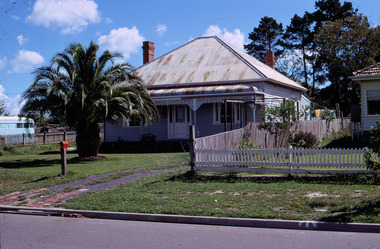
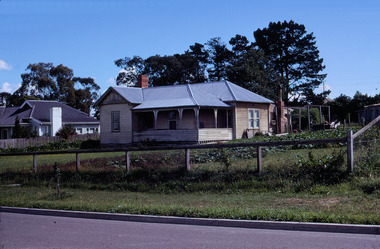
... family lived there in an old weatherboard house on an acre of land. Mr Roberts was a carpenter who had built our house at No. 14, and he lived there with his wife and two sons, Graeme and Max. ...family lived there in an old weatherboard house on an acre of land. Mr Roberts was a carpenter who had built our house at No. 14, and he lived there with his wife and two sons, Graeme and Max. ...Written by Michael Anderson on RDHS Facebook on March 2016 CITY ROAD, RINGWOOD 1959 My family moved to City Road in 1959. At that time, it was a narrow rutted dirt road, with a large drain running on the northern side, and a wide nature strip complete with big wattle trees on the southern side, ideal for playing cricket and other games. There was no Salvation Army Citadel, nor was there a Lutheran Church. As you proceed from Wantirna Road towards Jubilee Park, there were no houses on the right hand side at all until you reached our house, 14 City Road, which at the time was Lot 51. On the corner where the Lutheran Church now stands, there was an old rusty farm gate, attached to a very weathered wooden post. This indicated that at some stage, City Road had been a private road. This rusty old gate was never closed, but it was a remnant of bygone days. Ireland St, Regina St, and Greenwood Avenue south of Haig Street were all narrow dirt roads as well. Jubilee Park Oval was fairly new, and there was no grandstand. The players and staff had to make do with a small wooden building that looked like a garden shed. Just beyond the southern end of the oval were growing many wild pumpkins, and I understand that the land had been a rubbish tip in the not so distant past. The park also had a couple of tennis courts. There was no road from Jubilee Park to Reilly St, and Reilly St didn't go all the way through from Wantirna Road to Great Ryrie St. It was broken by a creek. Aquinas College was an orchard. As you proceed up City Road from Wantirna Road, The Salvation Army church is on the left corner. The Hobbs family lived on that corner, in an old house on a block which was bordered by a huge hedge. The house next door in Wantirna Road, which is also Salvation Army land now, was owned by the Bayliss family. Mrs Bayliss was a teacher at Ringwood High. The first house in City Rd proper was at no. 1 to 5. The Roberts family lived there in an old weatherboard house on an acre of land. Mr Roberts was a carpenter who had built our house at No. 14, and he lived there with his wife and two sons, Graeme and Max. Eventually, they wanted more space, so they moved to the acre. Next door to the Roberts was Ted O'Regan at no. 7 to no. 9. He appears to have been a widower, and he lived by himself in an old wooden house which was surrounded by a large veranda on about 2/3 acre. Next door to Ted O'Regan lived his brother Jack O'Regan at no. 11 on about 1/2 acre, with his wife Edna, his son Alan, and his Daughter Judith. Barney Meadows lived on about 1/2 acre at no. 13. Barney was an old widower, and his front garden had a huge palm tree in it. Next to Barney lived the Reeves at no. 15, and finally there was the McDonald family at no. 17, which is on the corner of Regina St. From then on, City Rd, was a bush block down to Greenwood Ave, and the bush continued up Greenwood Ave to the Williams house, one house block from Haig St. On the right hand side of City Road it was all paddock to Ireland St, and another paddock which ended at our house was over the other side of Ireland St. Both paddocks were developed in about 1961/62, and there are about 12 houses there now, plus the Lutheran Church. When we first moved there, there was a horse and a cow grazing in the paddock beside our house. For the first couple of years, there was a huge bonfire in "our" paddock to mark Guy Fawkes day. It was a lot of fun, although I concede that it might have been a tad dangerous, with 3d. bungers and all that! Next door to us at no. 16 was the Goessling family. From now on the house blocks were normal sized. The Goesslings had one baby girl who was about 9 months old when we first moved in, but they ended up with 4 kids, all of whom would be middle aged now. They were observant Lutherans, but they were there before the church. Next door to the Goesslings at no. 18 was the Weir family on the corner of Regina St. On the other side of Regina St. at no. 20 was the Gowland family, and the last house in the street at no. 22 was owned by Arthur Johnston and his family. Arthur was an Ambulance Driver. Of course, many other people moved in and moved out in all those years. There was one particularly bad week for the street in June 1969. My brother Peter was killed in a work accident on Saturday 7th June. The next Wednesday 11th June Ted O'Regan, who lived diagonally opposite us died. Then on the next Saturday the 14th June, Ted Bell, who lived next door to us at no. 12 died from a heart attack at the age of 47. Three deaths in one week was a bit too much. It was eerie! Our old house is still standing, but I doubt for much longer. It was bought by people who wanted to develop it. Their plans were knocked back, so they sold it again. I would bet that in the not too distant future the house will be a piece of history. City Road was a paradise for kids when we moved in. We had lived in the inner suburbs, so the space and freedom were amazing for us "city slickers." I don't know where you could move to now if you wanted to bring up your children in a similar environment. Somehow, I don't think it would be possible. -
 Ringwood and District Historical Society
Photograph, City Road – North Side. Owned by E A (Ted) O’Regan on 23 March 1969
... family lived there in an old weatherboard house on an acre of land. Mr Roberts was a carpenter who had built our house at No. 14, and he lived there with his wife and two sons, Graeme and Max. ...family lived there in an old weatherboard house on an acre of land. Mr Roberts was a carpenter who had built our house at No. 14, and he lived there with his wife and two sons, Graeme and Max. ...Written by Michael Anderson on RDHS Facebook on March 2016 CITY ROAD, RINGWOOD 1959 My family moved to City Road in 1959. At that time, it was a narrow rutted dirt road, with a large drain running on the northern side, and a wide nature strip complete with big wattle trees on the southern side, ideal for playing cricket and other games. There was no Salvation Army Citadel, nor was there a Lutheran Church. As you proceed from Wantirna Road towards Jubilee Park, there were no houses on the right hand side at all until you reached our house, 14 City Road, which at the time was Lot 51. On the corner where the Lutheran Church now stands, there was an old rusty farm gate, attached to a very weathered wooden post. This indicated that at some stage, City Road had been a private road. This rusty old gate was never closed, but it was a remnant of bygone days. Ireland St, Regina St, and Greenwood Avenue south of Haig Street were all narrow dirt roads as well. Jubilee Park Oval was fairly new, and there was no grandstand. The players and staff had to make do with a small wooden building that looked like a garden shed. Just beyond the southern end of the oval were growing many wild pumpkins, and I understand that the land had been a rubbish tip in the not so distant past. The park also had a couple of tennis courts. There was no road from Jubilee Park to Reilly St, and Reilly St didn't go all the way through from Wantirna Road to Great Ryrie St. It was broken by a creek. Aquinas College was an orchard. As you proceed up City Road from Wantirna Road, The Salvation Army church is on the left corner. The Hobbs family lived on that corner, in an old house on a block which was bordered by a huge hedge. The house next door in Wantirna Road, which is also Salvation Army land now, was owned by the Bayliss family. Mrs Bayliss was a teacher at Ringwood High. The first house in City Rd proper was at no. 1 to 5. The Roberts family lived there in an old weatherboard house on an acre of land. Mr Roberts was a carpenter who had built our house at No. 14, and he lived there with his wife and two sons, Graeme and Max. Eventually, they wanted more space, so they moved to the acre. Next door to the Roberts was Ted O'Regan at no. 7 to no. 9. He appears to have been a widower, and he lived by himself in an old wooden house which was surrounded by a large veranda on about 2/3 acre. Next door to Ted O'Regan lived his brother Jack O'Regan at no. 11 on about 1/2 acre, with his wife Edna, his son Alan, and his Daughter Judith. Barney Meadows lived on about 1/2 acre at no. 13. Barney was an old widower, and his front garden had a huge palm tree in it. Next to Barney lived the Reeves at no. 15, and finally there was the McDonald family at no. 17, which is on the corner of Regina St. From then on, City Rd, was a bush block down to Greenwood Ave, and the bush continued up Greenwood Ave to the Williams house, one house block from Haig St. On the right hand side of City Road it was all paddock to Ireland St, and another paddock which ended at our house was over the other side of Ireland St. Both paddocks were developed in about 1961/62, and there are about 12 houses there now, plus the Lutheran Church. When we first moved there, there was a horse and a cow grazing in the paddock beside our house. For the first couple of years, there was a huge bonfire in "our" paddock to mark Guy Fawkes day. It was a lot of fun, although I concede that it might have been a tad dangerous, with 3d. bungers and all that! Next door to us at no. 16 was the Goessling family. From now on the house blocks were normal sized. The Goesslings had one baby girl who was about 9 months old when we first moved in, but they ended up with 4 kids, all of whom would be middle aged now. They were observant Lutherans, but they were there before the church. Next door to the Goesslings at no. 18 was the Weir family on the corner of Regina St. On the other side of Regina St. at no. 20 was the Gowland family, and the last house in the street at no. 22 was owned by Arthur Johnston and his family. Arthur was an Ambulance Driver. Of course, many other people moved in and moved out in all those years. There was one particularly bad week for the street in June 1969. My brother Peter was killed in a work accident on Saturday 7th June. The next Wednesday 11th June Ted O'Regan, who lived diagonally opposite us died. Then on the next Saturday the 14th June, Ted Bell, who lived next door to us at no. 12 died from a heart attack at the age of 47. Three deaths in one week was a bit too much. It was eerie! Our old house is still standing, but I doubt for much longer. It was bought by people who wanted to develop it. Their plans were knocked back, so they sold it again. I would bet that in the not too distant future the house will be a piece of history. City Road was a paradise for kids when we moved in. We had lived in the inner suburbs, so the space and freedom were amazing for us "city slickers." I don't know where you could move to now if you wanted to bring up your children in a similar environment. Somehow, I don't think it would be possible. -
Eltham District Historical Society Inc
Document - Folder, Spence, Maxwell
... Max Spence". Maxwell Spence Briar Hill Montmorency Fernside Avenue Briar Hill Montmorency State School Were Street Montmorency Briar Hill State School Stan Stainsby Hee Alcock Ned Haughton Australian Paper Mills Lovitool Tomasetti baker of Greensborough Gladstone Avenue Briar Hill Beaconsfield Road Briar Hill Williams Road Briar Hill Ellis family Hillcrest playfield field Ben Barnett Bill Slater Colin Pugh Clifton Pugh St Helena Karingal Drive St Helena Ted Walker Weidligh Roslind Miller Graham Kennedy Jimmy Beale Leach Street St Helena Plenty River St Faith's Chrch of England Briar Hil St Andrew's Church Briar Hill St Francis Xavier Catholic Church Briar Hill Herbie Wilson Victoria Coffee Palace Eltham Higher Elementary School Kate McKenie Diamond Creek Frank Phillips Wingrove Park Bremner's Park Orrs Dam Pecks Dam Wal Scriver Montmorency Tennis Club Albert Price Hill Fred Balaam Greensborough RSL Joe Poulter Fairfield RSL Youth Club Bristcoes Hardware Merchants Montmorency RSL Jack Shallard Ted Weiland Petrie Park South Riding Ratepaers and Tenants Association Dr Keith Alexander Fred Durham Eltham Shire Council Meruka Park Max Watson Eric Harmer Spence Park Montmorency Mountain View Railway Bridge Montmrency Pre School Lower Plenty Fire Brigade Eltham High School Newspaper clippings, A4 photocopies, etc Spence, Maxwell Document Folder ...Max Spence came to Briar Hill as a child in 1923, and lived in the area for many years. Contents Typed and manuscript notes (2pp missing from MS), undated but ?c1990. "Spence: My Briar Hill and Montmorency." Reminiscences of Maxwell Spence of Briar Hill and Montmorency from 1923. Manuscript notes, AGM 1991, "Max Spence". Newspaper clippings, A4 photocopies, etcmaxwell spence, briar hill, montmorency, fernside avenue briar hill, montmorency state school, were street montmorency, briar hill state school, stan stainsby, hee alcock, ned haughton, australian paper mills, lovitool, tomasetti baker of greensborough, gladstone avenue briar hill, beaconsfield road briar hill, williams road briar hill, ellis family, hillcrest playfield field, ben barnett, bill slater, colin pugh, clifton pugh, st helena, karingal drive st helena, ted walker, weidligh, roslind miller, graham kennedy, jimmy beale, leach street st helena, plenty river, st faith's chrch of england briar hil, st andrew's church briar hill, st francis xavier catholic church briar hill, herbie wilson, victoria coffee palace, eltham higher elementary school, kate mckenie, diamond creek, frank phillips, wingrove park, bremner's park, orrs dam, pecks dam, wal scriver, montmorency tennis club, albert price hill, fred balaam, greensborough rsl, joe poulter, fairfield rsl youth club, bristcoes hardware merchants, montmorency rsl, jack shallard, ted weiland, petrie park, south riding ratepaers and tenants association, dr keith alexander, fred durham, eltham shire council, meruka park, max watson, eric harmer, spence park montmorency, mountain view railway bridge, montmrency pre school, lower plenty fire brigade, eltham high school -
Eltham District Historical Society Inc
Document - Folder, Squire family
... Max McMahon...Martin McMahon...Clive Tingate...Eltham Clay Bird Shooting Club...Greensborough Masonic Lodge...Mountain View Road Briar Hill...Briar Hill Hall...H R Squire Family...Frederick Vincent Squire Hazel Squire Lorraine Squire Briar Hill Primary School Eltham Shire Councill Sir Dallas Brooks Eltham Country Womens Association Dean Lacey Eltham Community Festival Edward Hughes Hazel Rose Squire nee Hughes Deirdre Squire James Squire Genista House Greensborough Avery sisters Diamond Valley Community Hospital Briar Hill Hardware 25-31 Sherbourne Road Briar Hill Eltham Cottage Hospital Eltham Methodist Hall Dr Edward Cordner Dr Bradbury Dr Sinclair Albert Charles Henry Price Andrew Griffith Irvine Hewitt Honorary Justices Association Eltham Court William Brinkotter Were Street Montmorency Sherbourne Road Eltham Police Station Eltham District Play Centre Montmorency branch Montmorency park Lower Plenty park Fitzsimmons Lane bridge Kangaroo Ground Max McMahon Martin McMahon Clive Tingate Eltham Clay Bird Shooting Club Greensborough Masonic Lodge Mountain View Road Briar Hill Briar Hill Hall H R Squire Family Reserve Hazel Rose Court Montmorency Briar Hill Swimming Pool Centre Briar Hill Timber and Hardware Stan Nedwell Montmorency Football Club Sylvia Davey Briar Hill Girl Guide Group Montmorency Girl Guides Eltham Pony Club Rederick Nedwell Robert Manuell Sutherland Homes Committee Red Cross Eltham Rurl Group Lower Plenty Neighbourhood House Eltham/Diamond Valley Citizens AdviceBureau Cape Otway ratio-operated lighthouse Heidelberg Town Hall Ouyen High School J B Were St Helena Briar Hill Timber and Trading Pty Ltd St Margaret's Church Eltham D V Darwin A W Brinkkotter D C O'Beirne Newspaper clippings, A4 photocopies, etc Squire family Document Folder ...Frederick Vincent Squire established a building business in Briar Hill, later becoming an Eltham Shire Councillor and responsible for many local advances; he was later Shire President. He and wife Hazel with involved with numerous community activities. Their children continued local involvement. Contents Letter Shire Secretary to F V Squite, 2 October 1981. Items of Council business of interest to F V Squire. Letter F V Squire to Shire Seretary, 3 October 1963. Accepting and declining social invitation. Newspaper article: "Wife of former councillor dies", Diamond Valley News, 7 October 1986. Death of Hazel Squire. Another article: "Young Eltham man recovering after horse-riding accident". Diamond Valley News, 7 October 1986. Dean Lacey seriously injured in horse riding accident. Another article: "Everyone loves a community parade.". Diamond Valley News, 7 October 1986. Eltham Community festival will be held again. Typed notes, no author:"Squire Family History", 18 December 1989. Newspaper article: "Briar Hill building recalls early days", Diamond Valley News, 12 November 1991. Biography of Fred Squite. Handwritten note, 30 January 1998: Names and telephone numbers.Newspaper clippings, A4 photocopies, etcfrederick vincent squire, hazel squire, lorraine squire, briar hill primary school, eltham shire councill, sir dallas brooks, eltham country womens association, dean lacey, eltham community festival, edward hughes, hazel rose squire nee hughes, deirdre squire, james squire, genista house greensborough, avery sisters, diamond valley community hospital, briar hill hardware, 25-31 sherbourne road briar hill, eltham cottage hospital, eltham methodist hall, dr edward cordner, dr bradbury, dr sinclair, albert charles henry price, andrew griffith, irvine hewitt, honorary justices association, eltham court, william brinkotter, were street montmorency, sherbourne road, eltham police station, eltham district play centre montmorency branch, montmorency park, lower plenty park, fitzsimmons lane bridge, kangaroo ground, max mcmahon, martin mcmahon, clive tingate, eltham clay bird shooting club, greensborough masonic lodge, mountain view road briar hill, briar hill hall, h r squire family reserve, hazel rose court montmorency, briar hill swimming pool centre, briar hill timber and hardware, stan nedwell, montmorency football club, sylvia davey, briar hill girl guide group, montmorency girl guides, eltham pony club, rederick nedwell, robert manuell, sutherland homes committee, red cross, eltham rurl group, lower plenty neighbourhood house, eltham/diamond valley citizens advicebureau, cape otway ratio-operated lighthouse, heidelberg town hall, ouyen high school, j b were, st helena, briar hill timber and trading pty ltd, st margaret's church eltham, d v darwin, a w brinkkotter, d c o'beirne -
 Glen Eira Historical Society
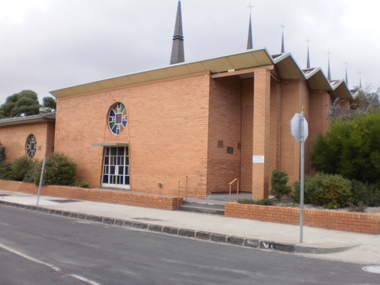
Document - Murrumbeena Baptist Church, Murrumbeena Road, 44
... family... Bertram Bill... Staunton Ian... Staunton Yvonne... Staunton Jean... Staunton Keith... Staunton Martin... Clifferd. Patricia... Clifferd. Charles... Chambers Awen... Wall Brian... Wall Bev... Ryall Geoff... Ryall Kay... Ryall Edna... Davidson Max...Max Rev Kingdom Fredq Allison C. Eleiner E Mrs Provis Jan Miss Chambers Merle Miss Collicot Allison Miss Cook John Cook family Horn Neville Rev Horn family Benneld family Bennett John. ...Reprinted history of Murrumbeena Baptist Church 1890 – 1990 compiled for the church’s centenary celebrations in 1990 by Ross Harrison Snow and Geoft Barthold. Each chapter details certain periods of church history and associated events Handwritten notes, including wording on foundation stone, by person unknown & undatedmurrumbeena, murrumbeena baptist church, pitt annie sophia, dandenong road., george samuel, baptist church, emily street, whitlam janet, box henry, snow ross harrison, gallop abel, pay henry mrs., rollings william, barthold geoff, thomas pay, pay e – miss godfrey, w- mrs, pitt st clair percival, godfrey william, pay t. a. h – mrs, blair mrs, white mrs, shearer mrs., box marie miss, box nellie miss, gallop prudence miss, gallop e. j. miss, rosstown wesleyan churches, murrumbeena baptist church, churches, gresswell f. l. mrs, neerim road, public halls, murrumbeena railway station, union chapel, kangaroo road, oakleigh, cole. j. h., turner mr., williamson r. rev, stewart allan., rosstown., architects, laver and flick messrs, mayhew george mr., chambers a. r. mr., godfrey brother, whitley w. t. rev., williamson rev., endersby elizabeth miss., meehani francis, french john, whyte mrs., thompson isabella mrs., burgess mary mrs., organ, tarry j. brother, mclean donald f. rev., wilkins george mr., sutherland mr., sydney street, nopkins ivor. rev, gallop mrs, pay brother, pitt brother, hopkins mrs, thompson ethel. miss, thompson mabel. miss, lavender mr. fred, whitlam george. master, varley frank mr, whitlam fred. mr, varley mrs, hale g. e. rev., whitlam crissie miss, curnick elizabeth miss, byrne mr, clemens f. rev., tennis club, tennis courts, cheffer mr., peace george mr., green mr., nash w. f rev., earl stanley j. rev, earl mrs., parker miss, adelaide street 12 manses, endersby david, harvey nellie. miss, fasham f. miss, mills mr., kelly mr., dyason mr, mckeon mr, lavender b. mr., chaffey alf, nelson norman, guthrie andrew, hopkins mrs., kindergarten, girl guides, loyal orange lodge, hall, fire, juniour christian endeavour league, intermediate christian, endeavour society, endersby mr, wilkins mr, wills mr, kelley mr, golden jubilee 22- 29 sept. 1940, knight e. o. rev, marriott e staunton m stone j., clay clark e. messrs, carter mr, carter mrs, deacenesses, helmore p. h. mrs, ryall c. m. mrs, carbis l. miss, wilson a. mrs, clark e. j. mrs, cornock m. miss, smith a. w. rev, mcdonald h. miss, stewart j. miss, edwards. w. messrs, crowe m. messrs, diggins l. messrs, wilson k. mr, ryall c. m. mr., wright a. mr., watkins mr., smith k. a. rev, scout groups, hobart street – 59 manses, helmer p. mr, filmer mr, carter mr., staunton martin mr., lewis donald rev 1951- 1956, perri john, collrus barry, ferguson mrs, white mrs, outhread noel mr., burleigh betty miss, orchestras, clark ted mr., daniels alan mr, staunton keith mr., staunton martin mr, steer doug mr, pascoe vack mr., ryall mert mr., clay ken mr., carter francis mr., chambers harry mr, hendry t. j. mr, andrews. e. f. rev, venning frank, provis keith, lee milton f. rev, kingdom max rev, kingdom fredq, allison c., eleiner e mrs, provis jan miss, chambers merle miss, collicot allison miss, cook john, cook family, horn neville rev, horn family, benneld family, bennett john., bennetts cliff, wiesmayrs’ family, allison barbara miss, jones ross, jones joy, fverst walter, doyle family, bertram estelle, bertram family, saletta margaret, saletta len, close kevin, close family, close anne, stewart des, stewart family, peel family, fisher family, leis family, arms harry, jones ross, jones family, jones joy, langdon family, bertram bill, staunton ian, staunton yvonne, staunton jean, staunton keith, staunton martin, clifferd. patricia, clifferd. charles, chambers awen, wall brian, wall bev, ryall geoff, ryall kay, ryall edna, davidson max, davidson mary, freeman john, hendry t s, provis keith, terrington michael, terrington doreen, carbis hazel miss, butterworth ern, clay ken, clay mrs., clay judith, clay noelle, muller ron, cook john, kingdom joy, kingdom graham, strong david, owens cliff, chambers harry, christy family, warr bill dr., morrison grace mrs., soderholm harvey, soderholm mrs, harris jeanette mrs, harris trevor rev., freeman pauline, freeman john., hendry t. j., steer doug, owens allison, owens graham, henderson ray, henderson chris, rathbone ian, rathbone pat, jenkins marion, girls’ club, wilson cliff dr., ladies evening group (legs), anderson family, l’ amont family, powell harold., harris luke, harris trevor, davies mrs, young george, anderson russell, wade joan, sauvarin lois, hill fred, wilson david., hansell fiona, hansell jane, brammer leanne, bertram ruth, langton john, crowe ken, dobney john, nobbs steve, jordan mr., steer david., steer doug, murrumbeena christian education centre (cec), suggare alwyn, gray s. mr., wilson clive rev., jephcott hume, jephcott heather, mccleary ross, mccleary glenn, claringbold mary, bennetts marcia., langton phil, worthy reg, thomson ave, mckerlie darrell rev., henderson ray, langenberg stewart van, crowe malcolm., sydney street, wall brian, zegelis imants, allison doug, owens rhonda, anderson peter, provis ken, vaitch fay, longenberg roger van, ife david, warren lena, churches bruce, churches mrs, bennetts john, mcdonald. k., cathie ian., cathie wendy, wright norman rev., alma street, mckerlie darrell rev., hampton keith rev., robinson john rev, jolly rod, crowe malcolm, lakey m, ferdinands ann, ferdinands ken, inders brett, inders jenny, cooke stephen, cooke deanne, langenberg jeremy van, binks paul, wall john, leslie geoff, leslie debbie, macleod nelson, macleod heather, dalton steven, pugh jeff, jones ross, ceulson joy, jackel lindsay, jackel sue, berry graham, wall brian, wheatland don, langton phil, stewart margaret, wheatland elise, wall bev., chambers gwen., foundation stone, morley john rev., sunday seekers, young marrieds, mothers’ group, choirs, walrond cw, turner mr, chisholm mr, mcdonald mr, church furniture, williams brother, sunday schools, victorian baptist preachers’ society, pitt mrs, thompson m miss., pitt w. miss, pay miss, thompson e. mrs., stained glass, christian endeavour society, young worshipper’ league, baptist women’s association, men’s society, murrembeena baptist football club, children’s church, youth council, junior christian endeavour, buds, baptist girls’ fellowship, boys club, baptist men’s society, youth fellowship life boys, boys brigade, alma street 17 chadstone manse, one way searchers’ group -
Glen Eira Historical Society
Article - Glenfern
... family... Glenfern... St Kilda East... Boyd Thomas... Boyd John Theodore... Boyd William... Boyd Lucy... Boyd Emma Minnie... Inkerman Road... Inkerman Street... Boyd Arthur Merric... Boyd Lily... Laing Charles... Terry Leonard... Architects... Watson Thomas... Wesley College... Colleges... à Beckett Emma... Ostberg John... Ostberg Amy... Cooke Max...Clark Mary Ryllis Boyd family Glenfern St Kilda East Boyd Thomas Boyd John Theodore Boyd William Boyd Lucy Boyd Emma Minnie Inkerman Road Inkerman Street Boyd Arthur Merric Boyd Lily Laing Charles Terry Leonard Architects Watson Thomas Wesley College Colleges à Beckett Emma Ostberg John Ostberg Amy Cooke Max Heathcote Richard Ned Kelly Ledger Heath Griffiths Rachel Films Labassa Rippon Lea Boyd Ethel Caulfield Historical Society Gothic style Architectural features Martin Lucy Boyd Merric Hotham Street Boyd Max Article Glenfern ...Two hand written one page letters from Brenda M. Niall, dated 11/05/1983 and 03/06/1983 respectively, to R. Ballantyne of the Caulfield Historical Society, requesting information on the property Glenfern. One page newspaper article entitled INSPIRING THE ARTS from THE AGE, dated 04/05/2002, regarding Glenfern and the Boyd family by Mary Ryllis Clark. Includes photographs of two paintings and one photograph of the home.niall brenda m., clark mary ryllis, boyd family, glenfern, st kilda east, boyd thomas, boyd john theodore, boyd william, boyd lucy, boyd emma minnie, inkerman road, inkerman street, boyd arthur merric, boyd lily, laing charles, terry leonard, architects, watson thomas, wesley college, colleges, à beckett emma, ostberg john, ostberg amy, cooke max, heathcote richard, ned kelly, ledger heath, griffiths rachel, films, labassa, rippon lea, boyd ethel, caulfield historical society, gothic style, architectural features, martin lucy, boyd merric, hotham street, boyd max -
 Eltham District Historical Society Inc
Photograph - Digital Photograph, Jim Connor, River Bend House, 130 Laughing Waters Road, Eltham, 7 September 2013
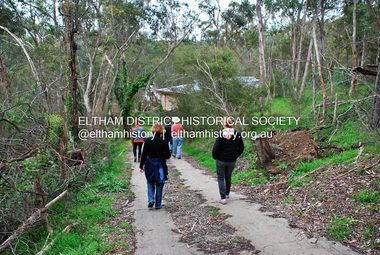
... family had lived for a period. The kitchen was equipped with a 1960s stove as well as a cast iron wood stove reclaimed from Rosemary's sister's home in Armadale. Max...family had lived for a period. The kitchen was equipped with a 1960s stove as well as a cast iron wood stove reclaimed from Rosemary's sister's home in Armadale. Max ...Laughing Waters Walk, 7 Sep 2013 This Society excursion was a follow up to the Laughing Waters Story told to us by Jane Woollard at our Annual General Meeting in March 2013. It involved a walk commencing from the corner of Laughing Waters and Overbank Roads along Laughing Waters Road to its eastern end and returning partly over the same route - a total distance of about 2.5km. On the way we visited the two artist in residence properties, River Bend and Birrarung, to view the houses on them that are associated with Alistair Knox, Gordon Ford and others in the local mud brick and artistic community. We also able to walk around the derelict ruin which was once home to Gordon and Sue Ford, Boomerang House. An unexpected afternoon tea was offered to us by the artists in residence at Birrarung House and we had a brief opportunity to view inside the house. River Bend was designed and built by Alistair Knox for Rosemary and Bill Cuming in 1968. It sits in a deep cutting on a steep slope above the Yarra River and features floor to ceiling windows and glass doors set into mission brown timber frames and walls of reclaimed bricks in pinkish hue. Rosemary laid the brick paving around the house, a copy of the shell paving found in the ancient French town of Colmar, where the family had lived for a period. The kitchen was equipped with a 1960s stove as well as a cast iron wood stove reclaimed from Rosemary's sister's home in Armadale. Max and Tini Huygens, migrants from Holland, purchased the property in 1975 and named it Tilwinda from an Aboriginal word meaning 'hole in a rock'. In late 1981 Tini died after a short illness, but Max continued to live at Tilwinda until he moved to a retirement village in 2000 and the property was sold to Parks Victoria. Renamed River Bend, the property became part of the Laughing Waters Artist in Residency Program in 2008. Nillumbik Shire Council upgraded the property in 2012 with solar panels, a heat pump for hot water and double glazing to improve the comfort of the artists in residence and make the house more energy efficient. For a more in-depth description of the property and biographies of the various artists in residence commencing from 2008 to 2015, see Jane Woollard's book, "Laughing Waters Road; Art, Landscape & Memory in Eltham" published 2016.2013-09-07, activities, artists in residence, eltham district historical society, heritage excursion, jim connor collection, laughing waters road, river bend house -
 Eltham District Historical Society Inc
Album - Photograph, J.A. McDonald, Eltham-Diamond Creek Road, 21 Oct. 1953
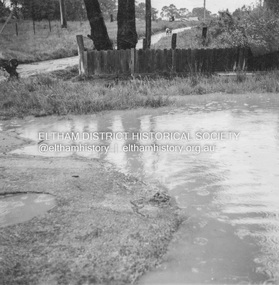
... max.) This view is looking southwest along Railway Parade (now present-day Gastons Road) past Mrs Lucy Egan's house now owned by the Bakos family, purchased by Mrs Heather Bakos in 1960...max.) This view is looking southwest along Railway Parade (now present-day Gastons Road) past Mrs Lucy Egan's house now owned by the Bakos family, purchased by Mrs Heather Bakos in 1960 Record of various Shire of Eltham infrastructure works undertaken during the period of 1952-1962 involving bridge and road reconstruction projects, sometimes with Eltham Shire Council Project Reference numbers quoted. ...18 October 1956 Flooding on Diamond Creek 17th October 1956 (not max.) This view is looking southwest along Railway Parade (now present-day Gastons Road) past Mrs Lucy Egan's house now owned by the Bakos family, purchased by Mrs Heather Bakos in 1960Record of various Shire of Eltham infrastructure works undertaken during the period of 1952-1962 involving bridge and road reconstruction projects, sometimes with Eltham Shire Council Project Reference numbers quoted. It was during this period that a number of significant improvements were made to roads and new bridges constructed within the shire that remain in place as of present day (2022). In many situations, the photos provide a tangible visible record of infrastructure that existed throughout the early days of the Shire. The album was put together by or under the direction of the Shire Engineer, J.A. McDonald.infrastructure, road construction, shire of eltham, bridge construction, eltham north, floods, floodwater, glen park bridge, 1956-10-18, diamond creek (creek), eltham, railway parade, wattletree road, wattletree road bridge, gastons road -
 Eltham District Historical Society Inc
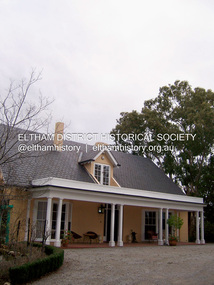
Photograph - Digital Photograph, Marguerite Marshall, 'Landscape', 60 Lavender Park Road, Eltham South, 24 June 2008
... family and to entertaining their friends in style. Large airy rooms have high ceilings with moulded plaster, timber floors and several are brightened with bay windows. Leason made friends with many of the artists and personalities who gravitated to Eltham. Around 1931 Justus Jörgensen, founder of the Montsalvat Artists’ Colony, helped Leason build his large studio at the back of the house. Another friend was journalist Mervyn Skipper, father of jeweller and sculptor Matcham, and artists Helen and Sonia. Leason’s teacher, artist Max...family and to entertaining their friends in style. Large airy rooms have high ceilings with moulded plaster, timber floors and several are brightened with bay windows. Leason made friends with many of the artists and personalities who gravitated to Eltham. Around 1931 Justus Jörgensen, founder of the Montsalvat Artists’ Colony, helped Leason build his large studio at the back of the house. Another friend was journalist Mervyn Skipper, father of jeweller and sculptor Matcham, and artists Helen and Sonia. Leason’s teacher, artist Max ...Built by artist and cartoonist Percy Leason in 1927 in what was then New Street but renamed Lavender Park Road in the late 1950s/early 1960s. Covered under Heritage Overlay, Nillumbik Planning Scheme. Published: Nillumbik Now and Then / Marguerite Marshall 2008; photographs Alan King with Marguerite Marshall.; p121 Said to be a genius, cartoonist Percy Leason’s career was at its peak when in 1925 to 1926 he built his home at New Street (now Lavender Park Road) Eltham. The Herald newspaper owner, Sir Keith Murdoch, had hired Leason for his newly acquired Melbourne Punch magazine at a salary of £1750, making him ‘one of the highest paid cartoonists in the world’.1 With this salary and financial help from Murdoch, Leason was able to build his lovely home in Eltham. At the crest of a sweeping drive, the home now two-storey in white brick with a gabled grey slate roof and dormer windows is flanked by an extension built by another owner in the 1980s. Leason lived in the home with his wife, Isabel and children, until 1937, when he left for the United States of America, where he lived until his death in 1959. The four-bedroom house and garden would have been well-suited to bringing up his family and to entertaining their friends in style. Large airy rooms have high ceilings with moulded plaster, timber floors and several are brightened with bay windows. Leason made friends with many of the artists and personalities who gravitated to Eltham. Around 1931 Justus Jörgensen, founder of the Montsalvat Artists’ Colony, helped Leason build his large studio at the back of the house. Another friend was journalist Mervyn Skipper, father of jeweller and sculptor Matcham, and artists Helen and Sonia. Leason’s teacher, artist Max Meldrum, also visited and rented accommodation in Eltham, opposite Wingrove Park. Punch folded in 1925, but Leason continued as cartoonist for Table Talk. In 1926 Leason began the cartoons of a mythical Australian town Wiregrass, which were inspired by Kaniva, his home town. The art gallery in Main Road Eltham was named Wiregrass in Leason’s honour. Leason completed 1000 drawings from 1919 to 1937, which author Garrie Hutchinson claimed, were technically unsurpassed and had regional and universal interest. Leason’s acute observations of country life stemmed from his childhood in Kaniva in Victoria’s western Wimmera, where he was born, the son of a selector, in 1889. Meldrum claimed that Leason could name every plant and the habits of every animal.2 Leason also painted 28 portraits of the last full-blooded aboriginals in Victoria at Lake Tyers in Gippsland, most of which are in a private collection. In Sydney Leason illustrated Henry Lawson’s Selected Poems and worked for The Bulletin. Leason had begun his career at 13 as an apprentice lithographic artist at Sands and MacDougall. He attended night classes at the National Gallery and the Victorian Artists Society. Leason first visited Eltham in 1910 to paint with fellow artist William ‘Jock’ Frater. They camped near Bible and Pitt Streets and along the Diamond Creek on the site of the present Eltham Retirement Centre. Despite his success as a cartoonist, Leason wanted to be recognised as a serious painter and for his anthropological work.3 He was also conservative and felt uncomfortable with the modern art scene in Melbourne.4 So he left for the United States of America to work as a painter. Ironically his time in New York saw the burgeoning of modern art, notably by artists such as Jackson Pollock. But Leason found his niche by running an art school, painting society portraits and illustrating books and magazines.This collection of almost 130 photos about places and people within the Shire of Nillumbik, an urban and rural municipality in Melbourne's north, contributes to an understanding of the history of the Shire. Published in 2008 immediately prior to the Black Saturday bushfires of February 7, 2009, it documents sites that were impacted, and in some cases destroyed by the fires. It includes photographs taken especially for the publication, creating a unique time capsule representing the Shire in the early 21st century. It remains the most recent comprehenesive publication devoted to the Shire's history connecting local residents to the past. nillumbik now and then (marshall-king) collection, landscape, lavender park road, percy leason, new street -
 Eltham District Historical Society Inc
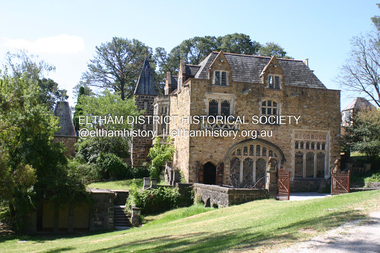
Photograph - Digital Photograph, Alan King, Great Hall, Montsalvat, 8 January 2008
... With the Jörgensens, the colony’s original nucleus consisted of the Skipper family – Mervyn and wife Lena, daughters Helen and Sonia and son Matcham,who was to become an eminent jeweller and sculptor represented in National Gallery collections throughout Australia and in European museums.3 Other members were Arthur Munday, Lesley Sinclair, Helen Lempriere, Ian Robertson, John Smith, George Chalmers, John Busst and Sue Van der Kellan; also Jörgensen’s three sons – Max, Sebastian and Sigmund – and Saskia, Sonia Skipper and Arthur Munday’s daughter. ...With the Jörgensens, the colony’s original nucleus consisted of the Skipper family – Mervyn and wife Lena, daughters Helen and Sonia and son Matcham,who was to become an eminent jeweller and sculptor represented in National Gallery collections throughout Australia and in European museums.3 Other members were Arthur Munday, Lesley Sinclair, Helen Lempriere, Ian Robertson, John Smith, George Chalmers, John Busst and Sue Van der Kellan; also Jörgensen’s three sons – Max, Sebastian and Sigmund – and Saskia, Sonia Skipper and Arthur Munday’s daughter. ...Great Hall at Montsalvat built 1938-52, designed by Justus Jorgensen Covered under National Estate, National Trust of Australia (Victoria) State Significance, Victorian Heritage and Heritage Overlay, Nillumbik Planning Scheme. Published: Nillumbik Now and Then / Marguerite Marshall 2008; photographs Alan King with Marguerite Marshall.; p129 At first glance, Montsalvat, the artists’ community at Hillcrest Avenue, Eltham, could belong to another time and place. The French provincial Gothic-style buildings blend picturesquely with the introduced and native trees and farm animals on the five hectare property. But Montsalvat belongs very much to today’s Eltham, having inspired much of its creative activity and style. The use of mud-brick and recycled building materials, for which Eltham is so well-known, was largely popularised by Montsalvat. Montsalvat – unique in Victoria and probably in Australia – is registered by the National Trust and National Estate.1 Montsalvat, named after the castle of the Knights of the Holy Grail, has attracted artists and intellectuals since it was founded in 1934. For years at weekends, artists, lawyers, philosophers, politicians and others, who shared a love for what Montsalvat stood for, gathered for a meal and stimulating discussion. The focus for this gathering of talent was Justus Jörgensen, an eccentric man with vision and charisma. It was Jörgensen’s foresight that saw the creation of Montsalvat, which in 1975 was formed into a trust to benefit the Victorian people. The property was then valued at about three million dollars. It is now visited by thousands of people annually. Born in 1894 and brought up a Catholic, Jörgensen had trained as an architect. He later studied painting at the National Gallery School under artist, Frederick McCubbin, then joined the studio of artist Max Meldrum. In 1924, Jörgensen married medical student Lillian Smith, and with artist friends they travelled to Europe to study the great masters. In London Jörgensen exhibited in several major galleries. One of his still life paintings was included in the book The Art of Still Life by Herbert Furst, which featured 100 of the greatest ever still life paintings.2 In 1929, Jörgensen returned to Melbourne where Lil, now qualified, worked as an anaesthetist at St Vincent’s Hospital. They bought a small house in Brighton and Jörgensen rented a large building in Queen Street for his studio until the Royal Automobile Club of Victoria bought it in 1955. While designing and overseeing the building of a studio for his friend the famous cartoonist Percy Leason, in Lavender Park Road, Jörgensen decided to buy land for a country retreat in Eltham. So the building of Montsalvat began. Jörgensen gathered around a dozen of his friends and students from his Queen Street studio. They set to work, first at weekends then some decided to live permanently on the site. Jörgensen had seen mud-brick buildings in Spain and recognised that Eltham’s clay soil was ideal for mud-bricks and although labour intensive, it was a very cheap way of building. Jörgensen’s students and friends worked under his direction with the help of local tradesmen, including carpenter, Len Jarrold and later stone mason, Horrie Judd. In return Jörgensen would give the students a painting lesson or two. It was the Great Depression when many were out of work. Jörgensen also inspired people to give generously of money and materials. With their help Jörgensen found second-hand materials for building. Friends donated slate for roofing, discarded firebricks were used for flooring and windows and doors and a cast-iron circular staircase came from a wrecker. The students’ day started at 7am with building and domestic chores, shared equally between the sexes. The first building was used by his friends at weekends and then became a home for his wife Lil. It consisted of three rooms and an attic under a high-pitched roof. Jörgensen then built a similar structure with the same high-pitched roof as a more permanent home for his students. The two buildings were joined together with a tower and a studio for Jörgensen. While excavating for the studio a reef of yellow mud-stone was found and then used in construction. The next building was the Great Hall, to be used for dining, exhibitions and meetings and completed in 1958, after a halt during the war. Whelan the Wrecker donated the stone-framed windows from the building that housed the Victorian Insurance Co. in Collins Street, which had been demolished in the 1930s. The swimming pool was donated and cubicles were built for the students with their initials marked in tiles on each doorstep.1 One of Jörgensen’s great abilities was to recognise how to use material which harmonised. He would comb through wreckers’ yards for what he needed. Regarding his buildings as sculptural pieces, his first consideration was for the aesthetic quality of a building and only then for its functionality.2 At Montsalvat, Jörgensen found he was able to put his ideas into practice without compromise and those who worked with him had to conform to his ideas. With the Jörgensens, the colony’s original nucleus consisted of the Skipper family – Mervyn and wife Lena, daughters Helen and Sonia and son Matcham,who was to become an eminent jeweller and sculptor represented in National Gallery collections throughout Australia and in European museums.3 Other members were Arthur Munday, Lesley Sinclair, Helen Lempriere, Ian Robertson, John Smith, George Chalmers, John Busst and Sue Van der Kellan; also Jörgensen’s three sons – Max, Sebastian and Sigmund – and Saskia, Sonia Skipper and Arthur Munday’s daughter. Montsalvat went through some hard times when local gossips spread rumours of sexual shenanigans at Montsalvat. However Montsalvat also had many local supporters – especially amongst the local tradespeople. The colony was certainly unconventional – with Jörgensen’s wife Lil (and son Max) and life-time partner Helen Skipper, (mother of Sebastian and Sigmund) living at Montsalvat. Sonia Skipper says in her biography that the group were ‘very conscious of their responsibilities to each other and a desire to make their relationships work’.4 By World War Two many buildings around the Great Hall were completed. Jörgensen was a pacifist, as were most of his students. Some of the Montsalvat community enlisted while others engaged in essential services like dairy farming and market gardening for the war effort. It was then that Jörgensen constructed farm buildings. After the war many well-known personalities such as Clifton Pugh, landscape gardener Gordon Ford, and builder Alistair Knox, were drawn to Montsalvat. They learnt that building was not a ‘sacred cow’ only for professionals, but that anyone who was willing to get their hands dirty could do it. The post-war shortage of materials also encouraged builders to follow Montsalvat’s lead in reusing materials. When Jörgensen died in 1975, his influence did not – thanks largely to the vigilance of his son, Sigmund, who became its administrator. The weekend dinners have gone, but in 2008 about 14 artists still work at Montsalvat – some living there – including a couple who have been there since its early days. Under Sigmund’s direction Montsalvat further expanded its activities which included festivals, art exhibitions, concerts and weddings. Sigmund completed the Chapel, then the Long Gallery next to the pool, After the barn burnt down, he replaced it in 1999 (the builder was Hamish Knox, Alistair’s son) with a new gallery and entrance and added a restaurant. Sigmund has been careful that any new building blends in with the character of Montsalvat. In 2006 Montsalvat was restructured for its continued financial viability and with the help of Arts Victoria a new executive officer was appointed. A representative board from the wider community was established, which includes members from the former Montsalvat Trust including Sigmund Jörgensen – who is now the heritage and arts adviser to the new company Montsalvat Ltd.5 Today, visiting Montsalvat one still sees artists, students and visitors enjoying the unique and beautiful surroundings.This collection of almost 130 photos about places and people within the Shire of Nillumbik, an urban and rural municipality in Melbourne's north, contributes to an understanding of the history of the Shire. Published in 2008 immediately prior to the Black Saturday bushfires of February 7, 2009, it documents sites that were impacted, and in some cases destroyed by the fires. It includes photographs taken especially for the publication, creating a unique time capsule representing the Shire in the early 21st century. It remains the most recent comprehenesive publication devoted to the Shire's history connecting local residents to the past. nillumbik now and then (marshall-king) collection, eltham, great hall, montsalvat -
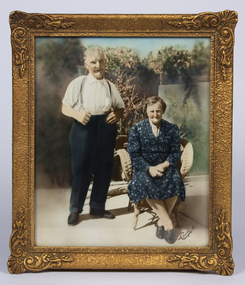 Queenscliffe Maritime Museum
Photograph - A framed Photograph of Alice and Charles Zanoni, Alice and Charles Zanoni
... Max [William K Zanoni's father]. Charles' brother Henry Zanoni painted the ships in the fishermen's waiting shed in the QMM. Prominent Queenscliff family ...Alice Zanoni [Alice Lillian Bourke 1879 - 1957] and Charles Zanoni's children were Norman, Charles, Ruby and Max [William K Zanoni's father]. Charles' brother Henry Zanoni painted the ships in the fishermen's waiting shed in the QMM.Prominent Queenscliff family with connection to the fishing, boat building industries and the Pilot Service.A framed photograph of Alice and Charles Zanonifishermen, henry zanoni, fishermen's waiting shed, boat builders, queenscliff, local history -
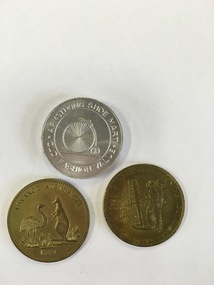 Warrnambool and District Historical Society Inc.
Token x 3, Tokens: Armstrong shoes, Circa 1968 -1987
... These are three of a number of tokens issued by Armstrong shoes which was established by Max Armstrong who once lived in Warrnambool and helped to run the family shoe business here. ...These are three of a number of tokens issued by Armstrong shoes which was established by Max Armstrong who once lived in Warrnambool and helped to run the family shoe business here. ...These tokens are customer reward tokens which can be redeemed for a discount when making a later purchase. The practice of using tokens was prevalent in the early settlement of Australia when shop owners issued tokens as a form of currency. These are three of a number of tokens issued by Armstrong shoes which was established by Max Armstrong who once lived in Warrnambool and helped to run the family shoe business here. He was an excellent rower and on his arrival in Warrnambool worked towards reviving the Warrnambool Rowing Club.Interesting items with social and historical significance.001047.1 Round white metal token with penny farthing enclosed in circle on one side and lady’s button up boot. Surrounded by text. Edge plain. 001047.2 Round yellow metal with diagram of astronaut on front surrounded by text. Back has text in centre surrounded by larger text. 001047.3Round yellow metal. Emu and kangaroo with text above and date below. The back image of man surrounded by text. 001047.1 Armstrong shoe mart old fashion value on front with maker’s name Stokes below penny-farthing. On reverse Armstrong boot and shoe warehouse estab. Four generations Stokes Melb. 001047.2Armstrong’s shoes first on the moon. Armstrong shoe mart Frankston. On the reverse text in centre reads “This $1 token gains $1 each year from 1987 till year 2000 AD when worth $14 off next pair of shoes at Armstrong shoe mart 70 Wells St Frankston. Around rim,” Armstrong inflation proof dollar. Edition limited to 5000. 001047.3 On front Advance Australia 1987. On back Armstrong shoe mart shoex 70 Wells St Frankston Look at you shoes others do. Ian M L Armstrong 1984 armstrong shoe token, dollar token, warrnambool, frankston shoe mart, -
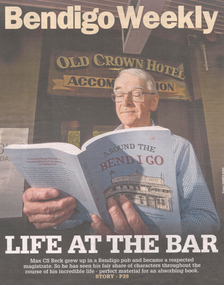 Bendigo Historical Society Inc.
Newspaper - Bendigo Advertiser Article "Life the bar" and "the day a severed finger was in a pub", Sat Aug 08 2022
... family struggles, particularly related to alcohol. Beck expresses a sense of loss for the Bendigo of his youth, noting how much the city and its culture have changed.He emphasizes the importance of treasuring memories of the past without grieving for what is gone. bendigo beck's crown hotel max c s beck Bendigo Advertiser "Life the bar" and "the day a severed finger was in a pub" Sat Aug 08 2022 3486.56a Max C S Beck in front of the Old Crown Hotel 3486.56b Colour Photo Beck's Hotel Hargeaves St Bendigo in about 1980 3486.56c Article from the Bendigo Advertiser "Life the bar" and "the day a severed finger was in a pub" Newspaper Bendigo Advertiser Article "Life the bar" and "the day a severed finger was in a pub" ...This document is a personal and nostalgic account by Max CS Beck, reflecting on his childhood and Bendigo's social history during the 1950s and 1960s. Beck's father, Reg, owned and ran The Crown Hotel, which became a central social hub in Bendigo after World War II. The hotel was known for its lively atmosphere, especially during the '6 o'clock swill' when patrons rushed to buy and consume drinks before the 6 pm closing time. Colorful anecdotes, such as the story of a severed finger prank involving a tobacco tin, illustrate the camaraderie and humor among patrons. Drinking was a standing-only affair, with heavy smoking and loud conversation common. The ritual of last drinks and the clearing of the bar at closing time were daily highlights. Sawdust was used on the bar floor to manage spills and, humorously, to recover lost coins and even a diamond ring. The influx of American soldiers during the war brought new customs and challenges to local pubs, including currency confusion and overcrowding. Beck's father previously ran the Canadian Hotel in Seymour, which was popular with American troops. Beck recounts his mischievous childhood, including borrowing his father's car underage and the influence of hotel patrons on his upbringing. The narrative touches on the loneliness of having parents who worked long hours and hints at family struggles, particularly related to alcohol. Beck expresses a sense of loss for the Bendigo of his youth, noting how much the city and its culture have changed.He emphasizes the importance of treasuring memories of the past without grieving for what is gone.Bendigo Advertiser "Life the bar" and "the day a severed finger was in a pub" Sat Aug 08 2022 3486.56a Max C S Beck in front of the Old Crown Hotel 3486.56b Colour Photo Beck's Hotel Hargeaves St Bendigo in about 1980 3486.56c Article from the Bendigo Advertiser "Life the bar" and "the day a severed finger was in a pub"bendigo, beck's crown hotel, max c s beck
