
Showing 66 items matching "mayoress portrait"
-
 City of Greater Bendigo - Civic Collection
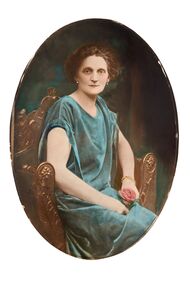
Photograph - Portrait, Vincent Kelly, Mrs W. Ewing Mayoress 1925-26
... ...Mayoress Portrait...Victoria Keighley Mayoress Ewing Mayor Ewing Vincent Kelly photographer City of Bendigo Mayoress Portrait Framed copy Mrs W Ewing / Mayoress 1925 - 26 / Vincent Kelly / Bendigo Framed, oval photographic studio portrait. ...Prior to the election of female Councillors and Mayors in the 1960’s, The Lady Mayoress role was one of the few ways women could be active in civic life. Mayoresses made important contributions to their local communities through their charity work and as ambassadors for their region on a state and at times, international level. They also undertook some Mayoral duties on occasions when their husband was unavailable. Mayoress Ewing was born Victoria Keighley in East Melbourne. Her father Edward Keighley was one on the district's earliest mine managers and part owner of the Rose of Denmark Mine. Framed, oval photographic studio portrait. Hand coloured detail.Mrs W Ewing / Mayoress 1925 - 26 / Vincent Kelly / Bendigovictoria keighley, mayoress ewing, mayor ewing, vincent kelly photographer, city of bendigo, mayoress portrait, framed copy -
 City of Greater Bendigo - Civic Collection
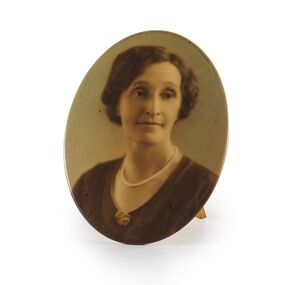
Photograph - Portrait
... Mayoress...City of Greater Bendigo Portrait...Oval portrait of Mayoress Taylor. Portrait is sealed within a plastic cover and gold coloured metal oval casement. ...City of Bendigo Mayor City of Bendigo Mayoress City of Greater Bendigo Portrait Hannah Mullany Oval portrait of Mayoress Taylor. ...Mayoress Taylor was born Hannah Ellen Mullany and died 9th September 1963 aged 83. Hannah Taylor served as Mayoress from 1930 -31, 1937 - 38 and 1942 - 43.Oval portrait of Mayoress Taylor. Portrait is sealed within a plastic cover and gold coloured metal oval casement. Designed to stand upright on shelf. city of bendigo mayor, city of bendigo mayoress, city of greater bendigo portrait, hannah mullany -
 Bendigo Historical Society Inc.
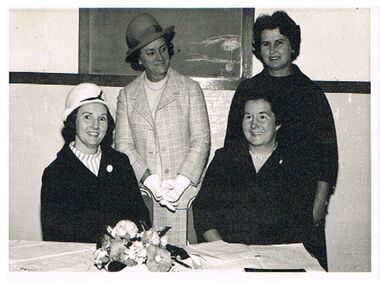
Photograph - GROUP PORTRAIT, WOMEN AT TREFOIL AGM C1969
... mayoress) Betty Every. Seated Shirley Orr and Doris Moyle. Written on bottom LH of photo: Doris Moyle. Photo given to 'Advertiser' by Audrey McKenzie for the 'as you were' section of paper. Photograph GROUP PORTRAIT ...Black and white photo: four women, two standing two seated. On back of photo: Trefoil AGM about 1969, L to R, standing Gwen Jeffry ( mayoress) Betty Every. Seated Shirley Orr and Doris Moyle. Written on bottom LH of photo: Doris Moyle. Photo given to 'Advertiser' by Audrey McKenzie for the 'as you were' section of paper.cottage, miners, gwen jeffry ( mayoress) betty every. seated shirley orr and doris moyle. bendigo, trefoil agm. -
 Bendigo Historical Society Inc.
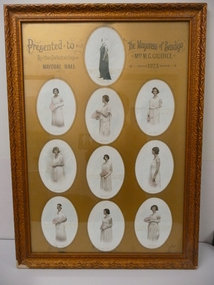
Photograph - GIUDICE COLLECTION: MAYORAL BALL DEBUTANTES PRESENTATION, 1923
... PHOTOGRAPH Portrait female group Bendigo-History-Mayoral Ball- Debutantes Vincent Kelly Pall Mall Bendigo Framed presentation to the Mayoress of Bendigo Mrs.M.G.Giudice from the Debutantes of the Mayoral Ball in 1923 with a collage of 10 oval shaped hand coloured photographs, 9 of which are the Debutantes and 1 of the Mayoress, under glass with a gold mount and with a gold coloured timber frame. ...Framed presentation to the Mayoress of Bendigo Mrs.M.G.Giudice from the Debutantes of the Mayoral Ball in 1923 with a collage of 10 oval shaped hand coloured photographs, 9 of which are the Debutantes and 1 of the Mayoress, under glass with a gold mount and with a gold coloured timber frame. Debutantes have names printed underneath, Miss M Jeffrey, Miss D Moore, Miss V Mayne, Miss E Helwig, Miss M Houston, Miss C Helwig, Miss F Trevillian, Miss A Bolton, Miss M Herbel. Deframed 2022Vincent Kelly Pall Mall Bendigophotograph, portrait, female group, bendigo-history-mayoral ball- debutantes -
 Bendigo Historical Society Inc.
Photograph - MAYORAL DEBUTANTE BALL, 1966-1967
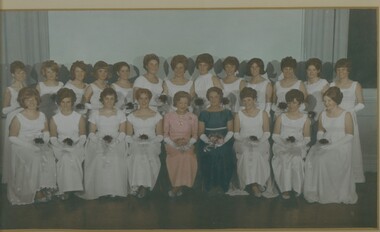
... PHOTOGRAPH Portrait female group Martin Washington Mayoral Debutante Ball 1960's, colour group photograph of Debutantes seated with Mayoress Mrs Tom Flood, under glass in a white timber frame with gold moulding. ...Mayoral Debutante Ball 1960's, colour group photograph of Debutantes seated with Mayoress Mrs Tom Flood, under glass in a white timber frame with gold moulding. Deframed 2022Martin Washingtonphotograph, portrait, female group -
 Bendigo Historical Society Inc.
Photograph - MAYORAL DEBUTANTE BALL, 1957-1958
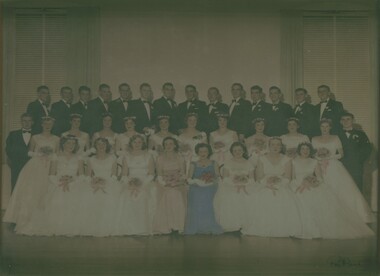
... PHOTOGRAPH Portrait group Reg Brock Hand tinted photograph of Debutante Ball in 1950's showing group of Debutantes and partners with Mayoress Mrs Tom Flood, under glass with blond wood timber frame. ...Hand tinted photograph of Debutante Ball in 1950's showing group of Debutantes and partners with Mayoress Mrs Tom Flood, under glass with blond wood timber frame. Deframed 2022Reg Brockphotograph, portrait, group -
 Port Melbourne Historical & Preservation Society
Photograph - Lady Mayoress of Melbourne, Win Woodruff with her five daughters and son, John, Aug 1980
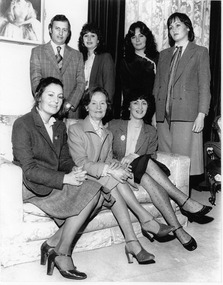
... From the Woodruff family archives, Mayoral period, lasercopy of portrait of Lady Mayoress Win Woodruff with her five daughters and son John August 1980....families john william (jack) woodruff mary woodruff fran woodruff josie woodruff angela woodruff judy woodruff john woodruff From the Woodruff family archives, Mayoral period, lasercopy of portrait of Lady Mayoress Win Woodruff with her five daughters and son John August 1980. ...From the Woodruff family archives, Mayoral period, lasercopy of portrait of Lady Mayoress Win Woodruff with her five daughters and son John August 1980.families, john william (jack) woodruff, mary woodruff, fran woodruff, josie woodruff, angela woodruff, judy woodruff, john woodruff -
 Glen Eira Historical Society
Document - Elsternwick District Bowling Club (E.D.B.C.)
... portrait, noting that he is now associated with the Elsternwick District Bowling Club. Mounted photograph of Opening Day of the Elsternwick District Bowling Club 1934, handwritten on the reverse, of the raising of the flag for new club building. Mounted photograph of Elsternwick District Bowling Club Opening Day. Previous label on file states that it shows the presentation of a small trophy “Kitty” to Mayor H.C.H. Smith and Mayoress...portrait, noting that he is now associated with the Elsternwick District Bowling Club. Mounted photograph of Opening Day of the Elsternwick District Bowling Club 1934, handwritten on the reverse, of the raising of the flag for new club building. Mounted photograph of Elsternwick District Bowling Club Opening Day. Previous label on file states that it shows the presentation of a small trophy “Kitty” to Mayor H.C.H. Smith and Mayoress ...This file contains eight items. “A Short Outline of the History of the E.D.B.C.” Photocopy of typewritten history of the club, one page from 1909 to 1982, noting important events and personalities. Handwritten notes from Southern Cross newspaper, 08/05/1909 and 10/04/1909 about meetings to establish the club, into lists of office-bearers. Three photocopies of a group photo of members of the E.D.B.C., undated but probably 1910-14. No caption but verse of one copy states Early Days E.D.B.C. Photocopy of one page from 500 Victorians, Centenary Edition, 1934, on Arthur Apps, J.P. “Mortician” with cartoon portrait, noting that he is now associated with the Elsternwick District Bowling Club. Mounted photograph of Opening Day of the Elsternwick District Bowling Club 1934, handwritten on the reverse, of the raising of the flag for new club building. Mounted photograph of Elsternwick District Bowling Club Opening Day. Previous label on file states that it shows the presentation of a small trophy “Kitty” to Mayor H.C.H. Smith and Mayoress on opening day 1934. Photocopy of printed R.S.V.P. invitation from Elsternwick District Bowling Club for meeting of Official Opening of the Green and 75th Anniversary of the Club Opening 31/08/1984. The page states that the original Invitation in file 1204A with note on back. Ten mounted original colour photographs on five pages of Opening of the Green, presumably 31/08/1984 but no date is given, of presentations and speeches by office-bearers and photographs of members, identified by handwritten names written under each photograph. Backing used in this file states that it contains History of Elsternwick District Bowling Club 1909-1951 but this is not included.elsternwick district bowling club, king j.l., levens g., hunt keith, charlesworth harold, hannah charlie, donaldson janet, hunt ellen mrs., hannah doris, pearson les, peterson les, mcloghlin jim, berg john, berg joy, trimble family, christie j., cook r., dear i., hunt e., shier n., vessey l., ward i., white m., main m. i., coz charles, meadows s., watts j., regan j.b., ross w.t., murphy e.c., davies h.g., scott arthur, cunningham h., brown w.r., lillie a.g., apps arthur, smith h.c.h., elsternwick district ladies bowling club, govett miss y., ward norma, martins veronica, peace mary, markaris thelma, tirrike trio, sporting clubs, lawn bowls, anniversaries, elsternwick, bowling clubs -
 St Kilda Historical Society
Photograph, Yeoman & Co, S E Jeans Mrs, 1888- 1889
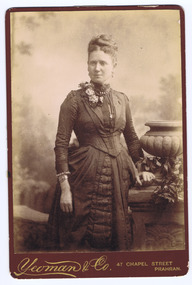
... Lady Mayoress of St Kilda 1888-1889, standing studio portrait...Lady Mayoress of St Kilda 1888-1889, standing studio portrait Mrs S E Jeans Lady Mayoress 1888-1889 sepia studio portrait, mounted, original, fair condition S E Jeans Mrs Photograph Yeoman & Co ...Lady Mayoress of St Kilda 1888-1889, standing studio portraitsepia studio portrait, mounted, original, fair conditionMrs S E Jeans Lady Mayoress 1888-1889 -
 Kew Historical Society Inc
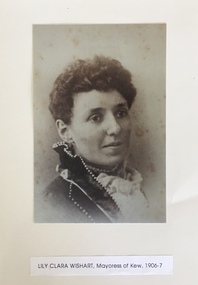
Photograph, Lily Clara Wishart (nee Annear), Unknown
... Cr William Wishart was Mayor of Kew in 1906-7, his wife Lily serving as Mayoress during his term of office. Locally significant portrait of Lily Wishart, mayoress of Kew in 1906-7. ...Cr William Wishart was Mayor of Kew in 1906-7, his wife Lily serving as Mayoress during his term of office. Locally significant portrait of Lily Wishart, mayoress of Kew in 1906-7. Photographs of past mayoresses are rare. The photograph also informs a number of other items in the collection created by or owned by Lily and William Wishart.Photographic portrait of Lily Wishart, mounted on card for a previous exhibition of items, including her dress from 1907-10.LILY CLARA WISHART / MAYORESS OF KEW 1906-7clara wishart (nee annear), stevenson street - kew (vic) -
 Kew Historical Society Inc
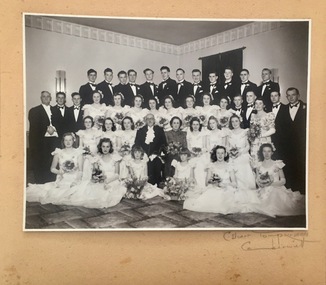
Photograph, Kew Mayoral Ball, Hawthorn Town Hall, 1947, 1947
... Mr Ron Dickinson, the son of the Mayor and Mayoress is standing in the back row at left. The photograph is in a beige card folder embossed with the words "Portrait by C. ...Mr Ron Dickinson, the son of the Mayor and Mayoress is standing in the back row at left. The photograph is in a beige card folder embossed with the words "Portrait by C. ...Photograph of the first Kew Mayoral Ball to be held after the Second World War. The photograph formed part of the collection of WHS Dickinson and was presented to the Kew Historical Society by his daughter in 2018. A group portrait of attendees at the 1947 Kew Mayoral Ball, held in 1947 at the Hawthorn Town Hall. In the second row, centre are the Mayor and Mayoress of Kew, Cr WHS Dickinson and Mrs Doris Dickinson. Also in the photo are the acting Town Clerk of Kew, Bill Graham (3rd row at left), two flower girls, Judith and Janet Dickinson, and debutantes with their partners. Mr Ron Dickinson, the son of the Mayor and Mayoress is standing in the back row at left. The photograph is in a beige card folder embossed with the words "Portrait by C. Stuart Tompkins, Camberwell". The internal framing mount is signed in pencil with: "C Stuart Tompkins, Camberwell". 1947cr whs dickinson - mayor of kew 1946-1947, civic events - kew (vic), mayoral balls - kew (vic) -
 Ballarat Heritage Services
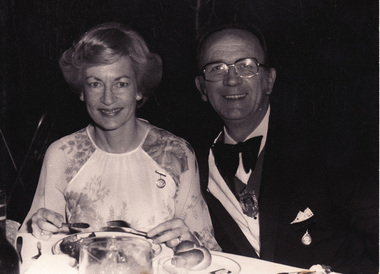
Photograph - digital copy, Jack and Kathllen Gervasoni Mayor and Mayoress of Kew 1979-80, 1979
... mayor mayoral portrait kew gervasoni john jack coat of arms cresco city of Kew Jack gervasoni John Hogan Gervasoni Kathleen Gervasoni Kathleen Carroll Copy of black and white photograph showing the City of Kew Mayor and Mayoress, Councillor John H. ...Copy of black and white photograph showing the City of Kew Mayor and Mayoress, Councillor John H. Gervasoni and Kathleen Gervasoni.mayor, mayoral, portrait, kew, gervasoni, john, jack, coat of arms, cresco, city of kew, jack gervasoni, john hogan gervasoni, kathleen gervasoni, kathleen carroll -
 Ballarat Heritage Services
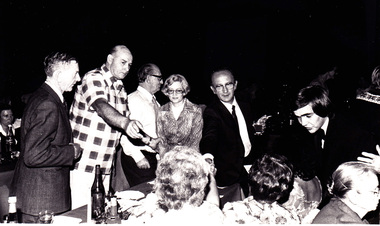
Photograph - digital copy, Gervasoni Mayor and Mayoress of Kew at the 1979-80 Kew Festival, 1979
... portrait...kew...gervasoni...john...jack...mayoress...mayor mayoral portrait kew gervasoni john jack mayoress fesitval dinner kew festival city of kew kew mayors Jack Gervasoni Kathleen Gervasoni John Hogan Gervasoni Copy of black and white photograph showing City of Kew Mayor Cr Jack Gervasoni, and Mayoress Kathleen Gervasoni being introduced to people at the Kew Festival. ...Copy of black and white photograph showing City of Kew Mayor Cr Jack Gervasoni, and Mayoress Kathleen Gervasoni being introduced to people at the Kew Festival.mayor, mayoral, portrait, kew, gervasoni, john, jack, mayoress, fesitval, dinner, kew festival, city of kew, kew mayors, jack gervasoni, kathleen gervasoni, john hogan gervasoni -
 Ballarat Heritage Services
Photograph - digital copy, Jack and Kathllen Gervasoni Mayor and Mayoress of Kew 1979-80 at Chellowdene, 1979
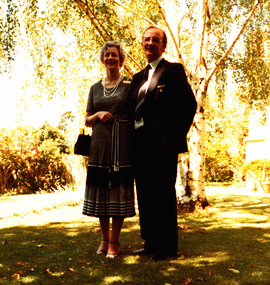
... portrait...kew...gervasoni...john...jack...k...mayoress...It was demolished by the subsequent owner. mayor mayoral portrait kew gervasoni john jack k mayoress chellowdene wills kew mayors wills street kew Copy of a colour photograph showing City of Kew Mayor John H. ...Chellowdene was an architect designed triple fronted 1950s brick dwelling with an Edna Walling garden at 37 Wills Street, Kew. It was demolished by the subsequent owner.Copy of a colour photograph showing City of Kew Mayor John H. Gervasoni and Mayoress Kathleen Gervasoni in the front of their Kew property 'Chellowdene', 37 Wills Street, Kew. mayor, mayoral, portrait, kew, gervasoni, john, jack, k, mayoress, chellowdene, wills, kew mayors, wills street kew -
 Ballarat Heritage Services
Photograph - digital copy, Gervasoni Mayoress of Kew 1979-80 with daughter Lisa, 1979
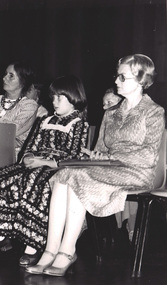
... portrait...kew...gervasoni...mayoress...portrait kew gervasoni mayoress lisa kathleen gervasoni lisa gervasoni Copy of black and white photograph showing Mayoress of Kew Kathleen Gervasoni and her daughter Lisa Gervasoni at a City of Kew event. ...Copy of black and white photograph showing Mayoress of Kew Kathleen Gervasoni and her daughter Lisa Gervasoni at a City of Kew event. Lisa wears a dress purchased from Buckleys.portrait, kew, gervasoni, mayoress, lisa, kathleen gervasoni, lisa gervasoni -
 Kew Historical Society Inc
Container - Presentation Jewellery Box, 1948
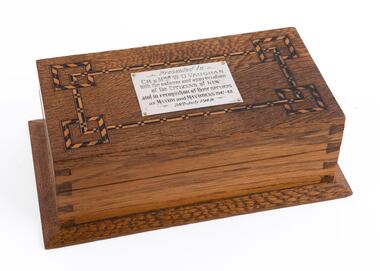
... Mayoress of Kew in 1948 by the citizens of the municipality. It is the only 'civic award' in the collection given to a former civic leader and complements the large collection of civic portraits in the collection. ...In 1948, the citizens of Kew presented this jewellery box to the outgoing Mayor and Mayoress of Kew, Cr & Mrs W D Vaughan. In 2021, it returned to Kew, thanks to the generous donations of our Friends of the Collection. William David Vaughan to whom the jewel box was presented in 1948 was a publisher, politician and historian, born in 1897 at Heathcote. By 1922, he had become a publisher and Secretary of Victorian Newspapers Ltd. In October 1922, he married Muriel Gladys Frazer in Bendigo. He purchased 'Elsfield' in Cotham Road, renamed it 'Carramar', and resided there for almost fifty years. His wife, the Mayoress, was an accomplished pianist and entertained the wives of councillors and supported many charitable works from her home. In 1926, Vaughan founded a local newspaper, the Kew Advertiser. During his second term as Mayor, he was elected president of Melbourne Suburban Newspapers’ Association, In April 1947, he was appointed to and later became chairman of the Free Library Services Board. In 1960, he published his history of Kew - 'Kew's Civic Century'. Vaughan’s third term as Mayor in 1962-63 saw the erection of the pavilion at Victoria Park and the final clean-up of the Outer Circle Railway. He died in September 1976. This inlaid and engraved jewellery box was part of a larger donation made to the Mayor and Mayoress of Kew in 1948 by the citizens of the municipality. It is the only 'civic award' in the collection given to a former civic leader and complements the large collection of civic portraits in the collection. The box is additionally significant because of its association with William David Vaughan - newspaper proprietor, local politician, and local historian. A presentation jewellery box, she-oak with barber pole inlay adorned with an Australian silver plaque.Engraved inscription on silver plaque - "Presented to Cr & Mrs W.D. Vaughan With The Esteem And Appreciation Of The Citizens Of Kew And In Recognition Of their Services As Mayor And Mayoress 1947-48. 28th July 1948"w d vaughan, mayors of kew, kew advertiser, kew (vic.) -- history -
 City of Greater Bendigo - Civic Collection
Photograph - Portrait, Vincent Kelly, Mrs E.G. Batchelder Mayoress 1928 - 1929, c. 1929
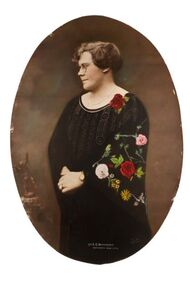
... Batchelder Mayoress 1928 - 1929 Photograph Portrait Vincent Kelly ...Prior to the election of female Councillors and Mayors in the 1960’s, the Lady Mayoress role was one of the few ways women could be active in civic life. Mayoresses made important contributions to their local communities through their charity work and as ambassadors for their region on a state and at times, national level. Mayoresses were also required to undertake Mayoral duties on occasions when their husband was unavailable. Mayoress Batchelder was born Elizabeth Helen Wilkinson and is recognised for her work among the poor of the district. Art NouveauFramed, oval photographic portraits with convex glass and print, created using a collodion wet plate process. Hand coloured detail.Mrs E.G. Batchelder / Mayoress 1928 - 1929 / Vincent Kelly / Bendigoelizabeth wilkinson, mayoress batchelder, mayor batchelder, vincent kelly photographer, city of bendigo, city of greater bendigo portraits, framed copy -
 City of Greater Bendigo - Civic Collection
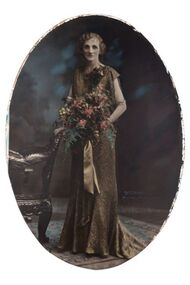
Photograph - Portrait, Vincent Kelly, Mrs G. Bennetts Mayoress 1933 - 1934, c. 1934
... Bennetts Mayoress 1933 - 1934 Photograph Portrait Vincent Kelly ...Prior to the election of female Councillors and Mayors in the 1960’s, the Lady Mayoress role was one of the few ways women could be active in civic life. Mayoresses made important contributions to their local communities through their charity work and as ambassadors for their region on a state and at times, international level. Mayoress Bennetts was born Christina Annie Williams in 1879 in Daylesford and died on 27th March, 1974, aged 95 in Melbourne. Christina Bennetts was Mayoress from 1933 - 34.The Bennetts were widely known for establishing Bennetts Arcade in Pall Mall.Framed, oval photographic portraits with convex glass and print, created using a collodion wet plate process. Hand coloured detail.christina williams, mayoress christina bennetts, mayor bennetts, vincent kelly phototgrapher, city of bendigo -
 City of Greater Bendigo - Civic Collection
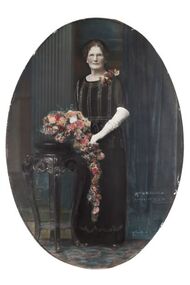
Photograph - Portrait, Vincent Kelly, Mrs W.M. Bolton Mayoress 1936 - 1937
... Bolton Mayoress 1936 - 1937 Photograph Portrait Vincent Kelly ...Prior to the election of female Councillors and Mayors in the 1960’s, The Lady Mayoress role was one of the few ways women could be active in civic life. Mayoresses made important contributions to their local communities through their charity work and as ambassadors for their region on a state and at times, international level. They also undertook some Mayoral duties on occasions when their husband was unavailable. Mayoress Bolton was born Jemima 'Mina' Vance in White Hills in 1866. She died on 7th December 1946 aged 80 years. Mayoress Bolton was an ardent worker for charitable bodies, particularly Baby Health Centre and Children's Welfare department. Framed, oval photographic portraits with convex glass and print, created using a collodion wet plate process. Hand coloured detail.jemima vance, mayoress bolton, mayor bolton, vincent kelly photographer, city of bendigo, city of greater bendigo portraits -
 City of Greater Bendigo - Civic Collection
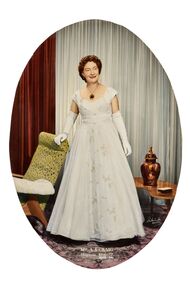
Photograph - Portrait, Mrs A.S. Craig Mayoress 1956-57, 1963-64, 1973-74, c 1956
... Craig / Mayoress 1956 - 57 / 1963 - 64 / Eric (? aslington ) Framed, oval photographic studio portrait. ...Prior to the election of female Councillors and Mayors in the 1960’s, the Lady Mayoress role was one of the few ways women could be active in civic life. Mayoresses made important contributions to their local communities through their charity work and as ambassadors for their region on a state and at times, international level. They also undertook Mayoral duties on occasions when their husband was unavailable. Mayoress Craig was born Grace Adeline and was a highly respected teacher at Bendigo Girl's School and Bendigo High School. Grace Craig was the first lady to have an official part in the traditional induction of Mayor ceremony. Framed, oval photographic studio portrait. Hand coloured detail.Mrs A.S. Craig / Mayoress 1956 - 57 / 1963 - 64 / Eric (? aslington )grace adeline, mayoress craig, mayor craig, washington photographer, city of bendigo, city of greater bendigo portraits, lansell pendant, framed copy -
 City of Greater Bendigo - Civic Collection
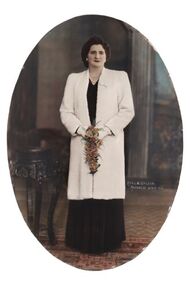
Photograph - Portrait, Vincent Kelly, Mrs L.W. Galvin Mayoress 1944 - 45
... Galvin Mayoress 1944 - 45 Photograph Portrait Vincent Kelly ...Prior to the election of female Councillors and Mayors, the Mayoress role was one of the few ways women could officially undertake civic duties and Mayoress's played an important role in civic life through charity work, even stepping in on occasions to undertake Mayoral duties. Anne Galvin O.B.E. was born Anne Edith Ruby in 1903 and was one of Bendigo's best known charity workers. She used her first speech as Mayoress to indicate her intentions to do something for mothers and children and it was mainly through her efforts as president of the National Council of Women that Bendigo received the appointment of the two first women police officers in 1956 (1). Anne Galvin was the second woman in Bendigo to be elected to the Bendigo City Council in the 1960's, retiring after six years on Council in 1973. Anne was awarded an O.B.E in 1967 for community service and the Anne Galvin Early Learning Centre is named after her. (1) p 193 Jackman, Mayors of Bendigo 1856 - 2001. Framed, oval photographic portraits with convex glass and print, created using a collodion wet plate process. Hand coloured detail.cr: Mrs L W Galvin / Mayoress 1944 - 45annie ruby, mayoress galvin, mayor galvin, councillor annie galvin, city of greater bendigo portraits -
 City of Greater Bendigo - Civic Collection
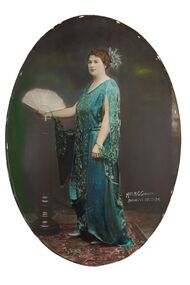
Photograph - Portrait, Vincent Kelly, Mrs M.G. Giudice Mayoress 1922 - 24, c 1924
... Mayoress...Mayor...Vincent Kelly...Studio photography...portrait...Framed, oval photographic portraits with convex glass and print, created using a collodion wet plate process. Hand coloured detail. Mrs M.G. Giudice Mayoress ...Prior to the election of female Councillor's and Mayors, the Mayoress role as wife of the Mayor, was one of the few ways women could officially undertake civic duties. Mayoress's made important contributions through their charity work, even stepping in on occasions to undertake Mayoral duties. Mayoress Giudice was born Beatrice Annie Harvey in Bendigo and became the first Girl Guide Commissioner in Bendigo. The Giudice family was associated with the Lyric Theatre, the Bendigo United Breweries, Shamrock Hotel and the Bendigo Lyric Photo Plays. Mrs Giudice died in 1980, aged 95 years.Framed, oval photographic portraits with convex glass and print, created using a collodion wet plate process. Hand coloured detail.Mrs M.G Giudice / Mayoress 1922 -24.sandhurst, bendigo, mayoress, mayor, vincent kelly, studio photography, portrait, giudice, beatrice annie harvey, lyric theatre bendigo, girl guides, mayor giudice, city of greater bendigo portraits, framed copy -
 City of Greater Bendigo - Civic Collection
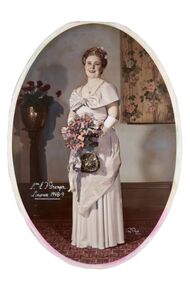
Photograph - Portrait, Reg Brock, Mrs E.F. Granger Mayoress 1948 - 49, c 1949
... Granger Mayoress 1948 - 49 Photograph Portrait Reg Brock ...Elizabeth Enid Granger (nee Webster) born Eaglehawk (1906-1965).Framed, oval photographic studio portrait. Hand coloured detail. Glass domed, photograph is flat. cl; Mrs E F Granger / Mayoress 1948 - 9. lr: Reg Brockelizabeth webster, mayoress granger, mayor granger, reg brock photographer, city of bendigo, city of greater bendigo portraits -
 City of Greater Bendigo - Civic Collection
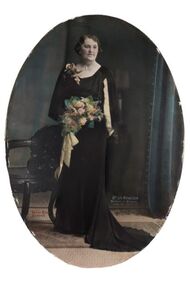
Photograph - Portrait, Vincent Kelly, Mrs J.A. Michelsen Mayoress 1935 -36, c. 1936
... Michelsen Mayoress 1935 -36 Photograph Portrait Vincent Kelly ...Prior to the election of female Councillors and Mayors from the 1960’s onwards the Mayoress role was one of the few ways women could be active in civic life. Mayoresses made important contributions to their local communities through their charity work and as ambassadors for their region on a state and at times, international level. They also undertook some Mayoral duties on occasions when the Mayor was unavailable. Annie Irene Michelsen (nee Tussup) born Huntly (1870-1955). Mayoress 1926/1927, 1935/1936, 1942/1943. Wife of Cr John Andrew Michelsen OBE. Pioneer in the field of social work and regarded as a woman of tremendous vitality and versatility. Known as an outstanding horse woman and breeder of standardbreds for harness racing. Member numerous sporting clubs and foundation president of the Bendigo Nurses Association. Framed, oval photographic studio portrait. Hand coloured detail. Mrs. Michelsen wore a gown of black crepe eros, cut to mould the figure and fall into a train at the back. A cascade eflect of gold lame from one shoulder to the hem in front gave graceful movement to the front of the gown, and wing draperies lined with gold lame were shirred to the shoulders of the square neckline. She wore a shoulder spray of golden orchids and carried a bouquet of old gold roses and golden leaves (1). The Argus (Melbourne, Vic. : 1848 - 1957) Wed 3 Jun 1936 annie tussup, mayoress michelsen, mayor michelsen, vincent kelly photographer, city of bendigo, city of greater bendigo portraits -
 City of Greater Bendigo - Civic Collection
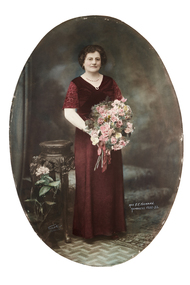
Photograph - Portrait, Vincent Kelly, Mrs F.C. Niemann Mayoress 1932 - 33
... Niemann Mayoress 1932 - 33 Photograph Portrait Vincent Kelly ...Prior to the election of female Councillor's and Mayors, the Mayoress role as wife of the Mayor, was one of the few ways women could officially undertake civic duties. Mayoress's played an important role in civic life through charity work, even stepping in on occasions to undertake Mayoral duties. Mayoress Niemann was born Ethel Emily May Harding in 1880 in Geelong and died in Canberra in 1959.Framed, oval photographic portraits with convex glass and print, created using a collodion wet plate process. Hand coloured detail.Verso; signed Vincent Kelly 1ethel harding, mayoress niemann, mayor niemann, vincent kelly photographer, city of bendigo, city of greater bendigo portraits -
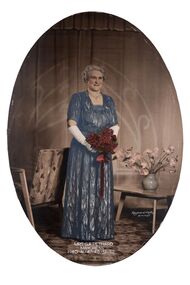 City of Greater Bendigo - Civic Collection
Photograph - Portrait, Mrs G.A. Pethard Mayoress 1940 - 41, 1947 - 48, 1951 - 52, c 1945
... City of Bendigo City of Bendigo Mayoress Framed, convex, oval photographic studio portrait. Hand coloured detail. ...Prior to the election of female Councillor's and Mayors, the Mayoress role as wife of the Mayor, was one of the few ways women could officially undertake civic duties. Mayoress's played an important role in civic life through charity work, even stepping in on occasions to undertake Mayoral duties. Mayoress Pethard was born Hilda Robina Leed in Eaglehawk in 1889 and died in 1966. Mrs Pethard travelled extensively with her husband throughout their time in Office. Framed, convex, oval photographic studio portrait. Hand coloured detail. vincent kelly, studio photography, hilda leed, tarax, city of greater bendigo portraits, city of bendigo, city of bendigo mayoress -
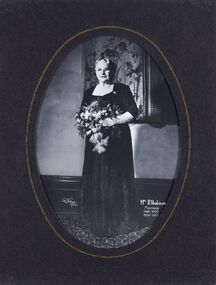 City of Greater Bendigo - Civic Collection
Photograph - Portrait, Reg V Brock, Mrs R. Poulston Mayoress 1949 - 50, 1954 - 55, c 1950
... Mayoress...City of Greater Bendigo Portrait...Poulston / Mayoress / 1949 - 1950 / 1954 - 1955 Framed, oval photographic studio portrait. ...Prior to the election of female Councillors and Mayors in the 1960’s, The Lady Mayoress role was one of the few ways women could officially undertake civic duties. Mayoresses made important contributions to their local communities through their charity work and as ambassadors for their region on a state and federal level. They also undertook some Mayoral duties on occasions if if their husband was unavailable. Mayoress Poulston was born Dora Isobel Morgan and was actively associated with many charities including the Baby Health Centre. Mayoress Poulston died in 1965 aged 75 and was born and lived her entire life in the district. Framed, oval photographic studio portrait. Hand coloured detail.ll, Reg Brock / of Bendigo. lr, Mrs R. Poulston / Mayoress / 1949 - 1950 / 1954 - 1955dora morgan, dora poulston, reg brock photographer, robert poulston, city of bendigo mayoress, city of greater bendigo portrait -
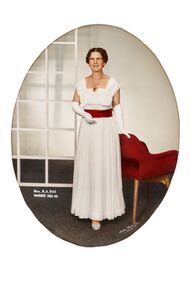 City of Greater Bendigo - Civic Collection
Photograph - Portrait, Martin Washington, Mrs R.A. Rae Mayoress 1962 - 63, c 1962
... Rae Mayoress 1962 - 63 Photograph Portrait Martin Washington ...Prior to the election of female Councillors and Mayors in the 1960’s, The Lady Mayoress role was one of the few ways women could officially undertake civic duties. Mayoresses made important contributions to their local communities through their charity work and as ambassadors for their region on a state and federal level. They also undertook some Mayoral duties on occasions when their husband was unavailable. Mayoress Rae was born Ethel Mary and during her time in office she attended functions alongside her husband for Queen Elizabeth and the Duke of Edinburgh during their visit in 1963.Framed, oval photographic studio portrait with flat glass. Hand coloured detail.ll, Mrs R A Rae / Mayoress 1962 - 63. lr, Martin Washington / Bendigoethel mary, martin washington photography, roy alexander rae, city of bendigo mayoress, city of greater bendigo portraits, mayoress rae, mayor rae, lansell pendant, framed copy -
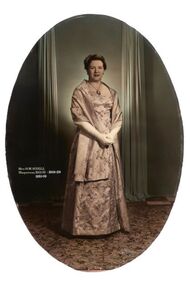 City of Greater Bendigo - Civic Collection
Photograph - Portrait, Vincent Kelly, Mrs H.W. Snell Mayoress 1955 - 56, c 1956
... Snell Mayoress 1955 - 56 Photograph Portrait Vincent Kelly ...Prior to the election of female Councillors and Mayors in the 1960’s, the Lady Mayoress role was one of the few ways women could be active in civic life. Mayoresses made important contributions to their local communities through their charity work and as ambassadors for their region on a state and at times, national level. Mayoresses were also required to undertake Mayoral duties on occasions when their husband was unavailable. Mayoress Snell was born in Durham UK. Mayoress Snell was the first Mayoress to wear the gold medallion which came with the office. It was presented on April 11th 1956 at the municipal centenary dinner at the Shamrock and was a gift from Sir George Lansell who followed in the tradition of his late father George Lansell in making a mayoral presentation in gold. (1) p 209 Jackman.Framed, oval photographic studio portrait. Hand coloured detail. Image is flat, glass is domed.cl; Mrs H. W. Snell / Mayoress 1955 - 56 1958 - 59 / 1959 - 60vincent kelly, studio photography, edith margaret snell, city of bendigo mayoress, city of greater bendigo portraits, lansell pendant -
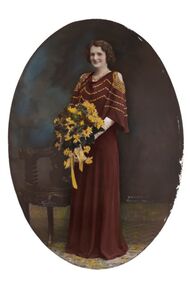 City of Greater Bendigo - Civic Collection
Photograph - Portrait, Vincent Kelly, Mrs A Staples Mayoress 1934 - 35
... Mrs A Staples Mayoress 1934 - 35 Photograph Portrait Vincent Kelly ...Prior to the election of female Councillors and Mayors in the 1960’s, the Lady Mayoress role was one of the few ways women could be active in civic life. Mayoresses made important contributions to their local communities through their charity work and as ambassadors for their region on a state and at times, national level. Mayoresses were also required to undertake Mayoral duties on occasions when their husband was unavailable. Mayoress Staples was born Harriet Jane Whitford in 1892 and died in 1959. Married to Cr alber Staples, the couple reinstituted the annual Mayoral Ball after an absence of many years. Framed, oval photographic studio portrait. Hand coloured detail.vincent kelly, studio photography, staples, harriet jane whitford, city of bendigo mayoress, city of greater bendigo portraits
