
Showing 232 items matching "medical units"
-
 Moorabbin Air Museum
Drawing (Item) - Photocopies of DA78015000 DA78044000 DA78038000, Packet 23 RAAF Medical units
... Packet 23 RAAF Medical units ...Packet 23 RAAF Medical units Drawing Photocopies of DA78015000 DA78044000 DA78038000 ... -
 Returned Nurses RSL Sub-branch
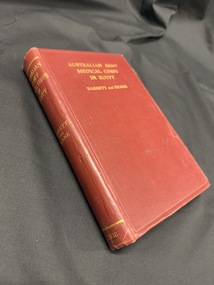
Book, James W Barrett et al, The Australian Army Medical Corps in Egypt : An illustrated and detailed account of the early organisation and work of the Australian medical units in Egypt in 1914-1915, 1918
... The Australian Army Medical Corps in Egypt : An illustrated and detailed account of the early organisation and work of the Australian medical units in Egypt in 1914-1915...[stamp on title page] Book has no dustjacket, is bound with dull red book cloth and has gold text on the cover and spine The Australian Army Medical Corps in Egypt : An illustrated and detailed account of the early organisation and work of the Australian medical units in Egypt in 1914-1915 Book James W Barrett P E Deane H K Lews & Co. ...Book has no dustjacket, is bound with dull red book cloth and has gold text on the cover and spinenon-fictionwwi, ww1, world war one, australian nurses, egypt -
 Returned Nurses RSL Sub-branch
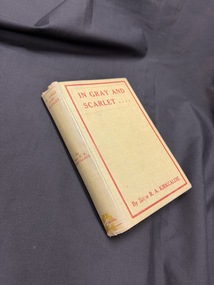
Book - Illustrated hardback book, R[osa] A[ngela] Kirkcaldie, The Australian Army Medical Corps in Egypt : An illustrated and detailed account of the early organisation and work of the Australian medical units in Egypt in 1914-1915, 1922
... The Australian Army Medical Corps in Egypt : An illustrated and detailed account of the early organisation and work of the Australian medical units in Egypt in 1914-1915...The Australian Army Medical Corps in Egypt : An illustrated and detailed account of the early organisation and work of the Australian medical units in Egypt in 1914-1915 Book Illustrated hardback book R[osa] A[ngela] Kirkcaldie Alexander McCubbin ...A memoir about author's experience of working as a nurse for the Australian Army during World War One. [Appears to have been fleshed out from diary/journal entries]A hardback book bound in pale olive green bookcloth with red text and details on the cover and spine. The book has damage to the edges of the covers and inside the front cover part of the original dust jacket is glued.non-fictionA memoir about author's experience of working as a nurse for the Australian Army during World War One. [Appears to have been fleshed out from diary/journal entries]wwi, ww1, world war one, australian nurses, army nurse, naval nurse, queen alexandra's imperial military nursing service reserve, queen alexandra's imperial military nursing service medal, r[osa] a[ngela] kirkcaldie -
 Bendigo Historical Society Inc.
Document - BILL ASHMAN COLLECTION: CORRESPONDENCE
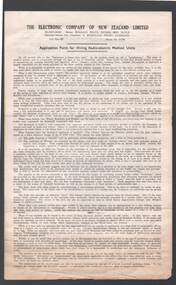
... Application for Hiring Radio-electric Medical Units...Two printed Application Forms for Hiring Radio-electric Medical Units. Secretaries and address printed at the top of the page. ...SCIENCES Instruments - general scalebuoy Bill Ashman Collection - Correspondence The Electronic Company of New Zealand Limited Mr Wallace Mr Bruce Mr Duthie Mr Voyce National Mutual Life Chambers Radio-electric Medical Unit Application for Hiring Radio-electric Medical Units Two printed Application Forms for Hiring Radio-electric Medical Units. ...Two printed Application Forms for Hiring Radio-electric Medical Units. Secretaries and address printed at the top of the page. The first page mentions how the Scalebuoy works and its effects on the water. Also the different things that can happen to the body. On the back are Instructions for the Use of the Radio-electric Medical Unit and the hiring of the Units. A form is at the bottom of the page for the Medical Officer to fill in as it required a Doctor's order to hire one.sciences, instruments - general, scalebuoy, bill ashman collection - correspondence, the electronic company of new zealand limited, mr wallace, mr bruce, mr duthie, mr voyce, national mutual life chambers, radio-electric medical unit, application for hiring radio-electric medical units -
 Flagstaff Hill Maritime Museum and Village
Badge - Australian Military cloth patch, Army Medical Corps, Non-Divisional Units, 1925 - 1942
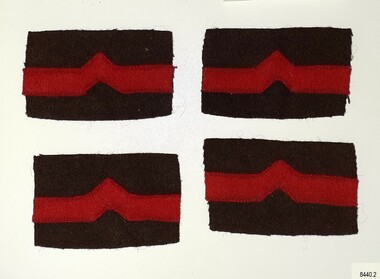
... Army Medical Corps, Non-Divisional Units...Medical Corp (Militia)...WW 2...ww II...1925-1940...Military badge...Non-Divisional Unit...The colour patch was approved for wear by full-time duty personnel of all medical units apart from the Infantry and Cavalry. ...Insignia of the Australian Army Medical Corps, Non-Divisional Units. The cloth patches belonged to Dr W R Angus and are now part of the W. ...The colour patch was approved for wear by full-time duty personnel of all medical units apart from the Infantry and Cavalry. ...The cloth insignia badges date to 1925-1940, after the First World War and into the early Second World War era. During peacetime training, the "brown with a cherry-red crossbar" badge was initially used for the 8th Field Ambulance, 2nd Military District Medical and Veterinary Stores. The colour patch was approved for wear by full-time duty personnel of all medical units apart from the Infantry and Cavalry. In 1942 these patches were replaced by the new scheme of colour patches introduced by the Australian Army Medical Corps. Dr W R Angus was a Surgeon Captain for the Australian Defence Forces, Army Medical Corps, stationed in Ballarat, Victoria, and in Bonegilla, N.S.W. He completed his service just before the end of the war due to suffering from a heart attack. The badges are now part of Flagstaff Hill’s comprehensive W.R. Angus Collection, donated by the family of Dr W R Angus (1901-1970), surgeon and oculist. The W.R. Angus Collection: - The W.R. Angus Collection includes historical medical equipment, surgical instruments and material belonging to Dr Edward Ryan and Dr Thomas Francis Ryan, (both of Nhill, Victoria) and Dr Angus’ own belongings. The Collection’s history spans the medical practices of the two Doctors Ryan, from 1885-1926 plus that of Dr Angus, up until 1969. It includes historical medical and surgical equipment and instruments from the doctors Edward and Thomas Ryan of Nhill, Victoria. Dr Angus married Gladys in 1927 at Ballarat, the nearest big city to Nhill where he began as a Medical Assistant. He was also Acting House surgeon at the Nhill hospital where their two daughters were born. During World War II He served as a Military Doctor in the Australian Defence Forces. Dr Angus and his family moved to Warrnambool in 1939, where Dr Angus operated his own medical practice. He later added the part-time Port Medical Officer responsibility and was the last person appointed to that position. Both Dr Angus and his wife were very involved in the local community, including the planning stages of the new Flagstaff Hill and the layout of the gardens there. Dr Angus passed away in March 1970.These colour insignia patches represent the history between the First and Second World Wars and the evolution of Australian Army Medical Corps patches. Dr W R Angus (1901-1970), surgeon and oculist, collected a range of military objects including those he personally used during his time as Surgeon Captain in the Australian Defence Forces in World War II. The item allows insight into military life in the early-to-mid 20th century. The W.R. Angus Collection is significant for still being located at the site it is connected with, Doctor Angus being the last Port Medical Officer in Warrnambool. The Collection includes historical medical objects that date back to the late 1800s.Badge, cloth insignia patch. Set of four Insignia colour patches.Red stripe with an inverted 'V' shape on brown fabric. Insignia of the Australian Army Medical Corps, Non-Divisional Units. The cloth patches belonged to Dr W R Angus and are now part of the W. R. Angus Collection.flagstaff hill, warrnambool, maritime village, maritime museum, shipwreck coast, great ocean road, flagstaff hill maritime museum and village, dr w r angus, w.r. angus collection, australian army, surgeon captain, ballarat, bonegilla, badge, insignia, badge collection, world war 2, second world war, australian defence forces, army medical corps, military uniform, cloth patch, insignia patch, australian army medical corp (militia), ww 2, ww ii, 1925-1940, military badge, non-divisional unit, aamc, 1940-1942, 8th field ambulance, peacetime training, insignia history -
 Flagstaff Hill Maritime Museum and Village
Badge - Australian Military cloth patch, Army Medical Corps, Non-Divisional Units, 1925 - 1942
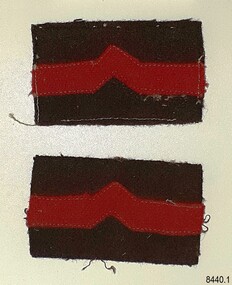
... Army Medical Corps, Non-Divisional Units...Medical Corp (Militia)...WW 2...ww II...1925-1940...Military badge...Non-Divisional Unit...The colour patch was approved for wear by full-time duty personnel of all medical units apart from the Infantry and Cavalry. ...Insignia of the Australian Army Medical Corps, Non-Divisional Units. One badge has light-coloured stitches around the perimeter. ...The colour patch was approved for wear by full-time duty personnel of all medical units apart from the Infantry and Cavalry. ...The cloth insignia badges date to 1925-1940, after the First World War and into the early Second World War era. During peacetime training, the "brown with a cherry-red crossbar" badge was initially used for the 8th Field Ambulance, 2nd Military District Medical and Veterinary Stores. The colour patch was approved for wear by full-time duty personnel of all medical units apart from the Infantry and Cavalry. In 1942 these patches were replaced by the new scheme of colour patches introduced by the Australian Army Medical Corps. Dr W R Angus was a Surgeon Captain for the Australian Defence Forces, Army Medical Corps, stationed in Ballarat, Victoria, and in Bonegilla, N.S.W. He completed his service just before the end of the war due to suffering from a heart attack. The badges are now part of Flagstaff Hill’s comprehensive W.R. Angus Collection, donated by the family of Dr W R Angus (1901-1970), surgeon and oculist. The W.R. Angus Collection: - The W.R. Angus Collection includes historical medical equipment, surgical instruments and material belonging to Dr Edward Ryan and Dr Thomas Francis Ryan, (both of Nhill, Victoria) and Dr Angus’ own belongings. The Collection’s history spans the medical practices of the two Doctors Ryan, from 1885-1926 plus that of Dr Angus, up until 1969. It includes historical medical and surgical equipment and instruments from the doctors Edward and Thomas Ryan of Nhill, Victoria. Dr Angus married Gladys in 1927 at Ballarat, the nearest big city to Nhill where he began as a Medical Assistant. He was also Acting House surgeon at the Nhill hospital where their two daughters were born. During World War II He served as a Military Doctor in the Australian Defence Forces. Dr Angus and his family moved to Warrnambool in 1939, where Dr Angus operated his own medical practice. He later added the part-time Port Medical Officer responsibility and was the last person appointed to that position. Both Dr Angus and his wife were very involved in the local community, including the planning stages of the new Flagstaff Hill and the layout of the gardens there. Dr Angus passed away in March 1970.These colour insignia patches represent the history between the First and Second World Wars and the evolution of Australian Army Medical Corps patches. They Dr W R Angus (1901-1970), surgeon and oculist, collected a range of military objects including those he personally used during his time as Surgeon Captain in the Australian Defence Forces in World War II. The item allows insight into military life in the early-to-mid 20th century. The W.R. Angus Collection is significant for still being located at the site it is connected with, Doctor Angus being the last Port Medical Officer in Warrnambool. The Collection includes historical medical objects that date back to the late 1800s.Badge, cloth insignia patch. Pair of two Insignia colour patches.Red stripe with an inverted 'V' shape on brown fabric. Insignia of the Australian Army Medical Corps, Non-Divisional Units. One badge has light-coloured stitches around the perimeter. The cloth patches belonged to Dr W R Angus and are now part of the W. R. Angus Collection.flagstaff hill, warrnambool, maritime village, maritime museum, shipwreck coast, great ocean road, flagstaff hill maritime museum and village, dr w r angus, w.r. angus collection, australian army, surgeon captain, ballarat, bonegilla, badge, insignia, badge collection, world war 2, second world war, australian defence forces, army medical corps, military uniform, cloth patch, insignia patch, australian army medical corp (militia), ww 2, ww ii, 1925-1940, military badge, non-divisional unit, aamc, 1940-1942, 8th field ambulance, peacetime training, insignia history -
 National Vietnam Veterans Museum (NVVM)
Slide - Sims Image Collection
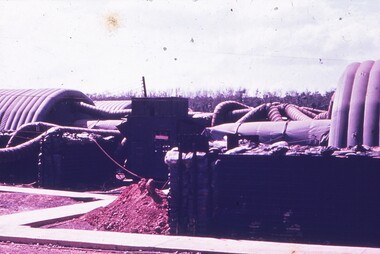
... ...Medical unit self contained transportable...During the war in Vietnam, a MUST hospital (Medical Unit, Self-Contained, Transportable) was a type of field hospital developed by the US Army. ...Medical Unit, Self-contained, Transportable (MUST) inflatable shelters used for wards and operating theatres at American 20 Surgical hospital, Vietnam 1969/70....During the war in Vietnam, a MUST hospital (Medical Unit, Self-Contained, Transportable) was a type of field hospital developed by the US Army. ...During the war in Vietnam, a MUST hospital (Medical Unit, Self-Contained, Transportable) was a type of field hospital developed by the US Army. These hospitals utilized inflatable shelters, expandable structures, and auxiliary power units to create self-contained medical facilities. They could be constructed relatively easily and were capable of supporting a large number of patients. This image is from a collection of 253 images on slides taken by Corporal Peter Stanley Sims (Service no:44304), while on deployment in Vietnam 1969 -1970. He served in the Royal Australian Army Medical Corps. Medical Unit, Self-contained, Transportable (MUST) inflatable shelters used for wards and operating theatres at American 20 Surgical hospital, Vietnam 1969/70.peter stanley sims, 44304, slides, royal australian army medical corps, vietnam war, sims, australian forces vietnam, hq australian forces vietnam, 20 surgical hospital, quonset hut, medical unit self contained transportable, must, hospital -
 National Vietnam Veterans Museum (NVVM)
Slide - Sims Image Collection
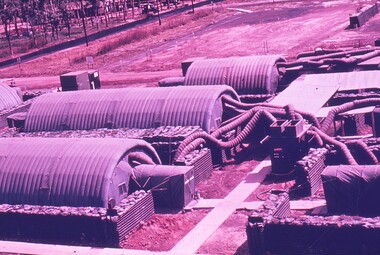
... ...Medical unit self contained transportable...During the war in Vietnam, a MUST hospital (Medical Unit, Self-Contained, Transportable) was a type of field hospital developed by the US Army. ...Medical Unit, Self-contained, Transportable (MUST) inflatable shelters used for wards and operating theatres at American 20 Surgical hospital, Vietnam 1969/70....During the war in Vietnam, a MUST hospital (Medical Unit, Self-Contained, Transportable) was a type of field hospital developed by the US Army. ...During the war in Vietnam, a MUST hospital (Medical Unit, Self-Contained, Transportable) was a type of field hospital developed by the US Army. These hospitals utilized inflatable shelters, expandable structures, and auxiliary power units to create self-contained medical facilities. They could be constructed relatively easily and were capable of supporting a large number of patients. This image is from a collection of 253 images on slides taken by Corporal Peter Stanley Sims (Service no:44304), while on deployment in Vietnam 1969 -1970. He served in the Royal Australian Army Medical Corps. Medical Unit, Self-contained, Transportable (MUST) inflatable shelters used for wards and operating theatres at American 20 Surgical hospital, Vietnam 1969/70.peter stanley sims, 44304, slides, royal australian army medical corps, vietnam war, sims, australian forces vietnam, hq australian forces vietnam, 20 surgical hospital, quonset hut, medical unit self contained transportable, must -
 National Vietnam Veterans Museum (NVVM)
Slide - Sims Image Collection
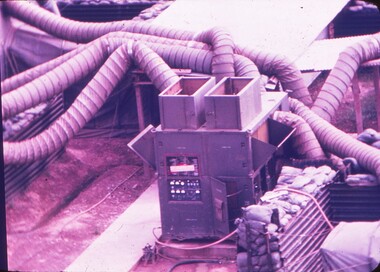
... ...Medical unit self contained transportable...During the war in Vietnam, a MUST hospital (Medical Unit, Self-Contained, Transportable) was a type of field hospital developed by the US Army. ...Flexible pipes connected to equipment to inflate the Medical unit self contained transportable (MUST) temporary buildings at the 20 Surgical hospital, Vietnam 1969/70....During the war in Vietnam, a MUST hospital (Medical Unit, Self-Contained, Transportable) was a type of field hospital developed by the US Army. ...During the war in Vietnam, a MUST hospital (Medical Unit, Self-Contained, Transportable) was a type of field hospital developed by the US Army. These hospitals utilized inflatable shelters, expandable structures, and auxiliary power units to create self-contained medical facilities. They could be constructed relatively easily and were capable of supporting a large number of patients. This image is from a collection of 253 images on slides taken by Corporal Peter Stanley Sims (Service no:44304), while on deployment in Vietnam 1969 -1970. He served in the Royal Australian Army Medical Corps. Flexible pipes connected to equipment to inflate the Medical unit self contained transportable (MUST) temporary buildings at the 20 Surgical hospital, Vietnam 1969/70.peter stanley sims, 44304, slides, royal australian army medical corps, vietnam war, sims, australian forces vietnam, hq australian forces vietnam, 20 surgical hospital, medical unit self contained transportable -
 Running Rabbits Military Museum operated by the Upwey Belgrave RSL Sub Branch
Badge
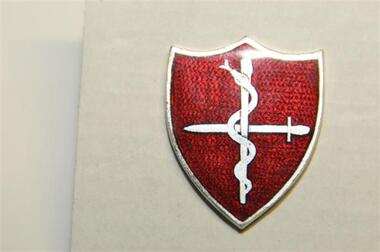
... Lapel Badge for the 48th Armored Regiment Medical Unit...Badge/Buttons Vietnam Army Lapel Badge for the 48th Armored Regiment Medical Unit Badge ...Lapel Badge for the 48th Armored Regiment Medical Unitbadge/buttons, vietnam, army -
 Lara RSL Sub Branch
Book, Australia in the War of 1939-1945 MEDICAL SERVICES of the RAN and RAAF Author Allan.S. Walker MD. Ch.M F.R.A.C.P, First published in 1961
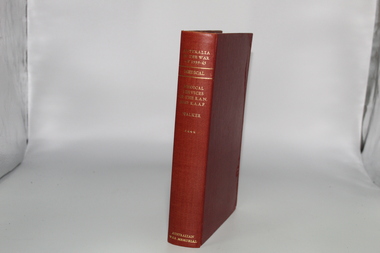
... ...medical units in base areas and in the field...Women in the Medical Services ran raaf medical building the naval medical service medical stores and eqipment living conditions in ships prisoners of war burns infectious diseases diseases of the skin affections of the ear, nose and throat dental branch medical units in base areas and in the field milne bay to noemfoor morotai to philippines and borneo aviation medical medical aspects of survival raaf nursing service physiotherapists occupational therapists the australian army medical women's service Australian War Memorial Australia in the War of 1939-1945 - Medical Services of the RAN and RAAF Australia in the War of 1939-1945 MEDICAL SERVICES of the RAN and RAAF Author Allan.S. ...Part One - Medical services of the RAN Part 2 - Medical Services of the RAAF. Part 3 - Women in the Army Medical Services.Women in the Medical ServicesAustralia in the War of 1939-1945 - Medical Services of the RAN and RAAFAustralian War Memorialran raaf medical, building the naval medical service, medical stores and eqipment, living conditions in ships, prisoners of war, burns, infectious diseases, diseases of the skin, affections of the ear, nose and throat, dental branch, medical units in base areas and in the field, milne bay to noemfoor, morotai to philippines and borneo, aviation medical, medical aspects of survival, raaf nursing service, physiotherapists, occupational therapists, the australian army medical women's service -
 Returned Nurses RSL Sub-branch
Book - Hardcover book, Allan S. Walker, Medical services of the R.A.N. and R.A.A.F. : with a section on women in the Army Medical Services, 1961
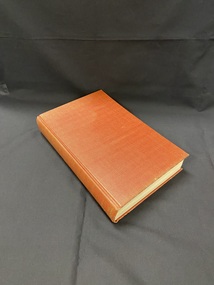
... ...medical units...Australian Army Medical Corps hospital ships hospitals medical units training The book covers the work of naval and air force medical services and of the women's service in the Australian Army Medical Corps. ...The book covers the work of naval and air force medical services and of the women's service in the Australian Army Medical Corps. It also contains chapters on hospital ships, the Geneva Conventions and rehabilitation. The Royal Adelaide Hospital is mentioned several times throughout the book. [From Trove]Cloth bound hardcover book without a dust jacket. non-fiction The book covers the work of naval and air force medical services and of the women's service in the Australian Army Medical Corps. It also contains chapters on hospital ships, the Geneva Conventions and rehabilitation. The Royal Adelaide Hospital is mentioned several times throughout the book. [From Trove] australian army medical corps, hospital ships, hospitals, medical units, training -
 Returned Nurses RSL Sub-branch
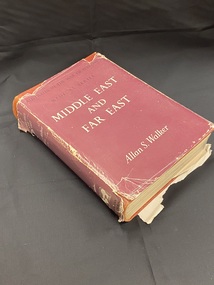
Book - Hardcover book, Allan Walker, Middle East and Far East, 1953
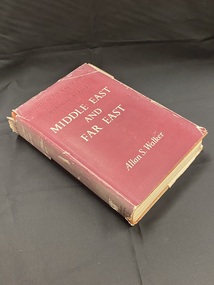
... ...medical units in the Second World War...WW2 WWII Second World War World War 1939-1945 World War 1939-1945 medical care Military medicine history medical units in the Second World War Australian Medical Services - Middle East and Malaya History of medical care in the A.I.F. leading up to and covering the Second World War in the Middle East and Malaya. ...History of medical care in the A.I.F. leading up to and covering the Second World War in the Middle East and Malaya.Burgundy cloth-bound book with torn burgundy dust-jacket. Series title printed in black across the top of the cover and title printed in white across the centre. Author's name printed in white across the bottom of the cover. The spine contains the same information, it is quite worn and marked.non-fictionHistory of medical care in the A.I.F. leading up to and covering the Second World War in the Middle East and Malaya.ww2, wwii, second world war, world war 1939-1945, world war 1939-1945 medical care, military medicine history, medical units in the second world war, australian medical services - middle east and malaya -
 Returned Nurses RSL Sub-branch
Book - Hardcover book, Allan Walker, Middle East and Far East, 1953
... ...medical units in the Second World War...WW2 WWII Second World War World War 1939-1945 World War 1939-1945 medical care Military medicine history medical units in the Second World War Australian Medical Services - Middle East and Malaya History of medical care in the A.I.F. leading up to and covering the Second World War in the Middle East and Malaya. ...History of medical care in the A.I.F. leading up to and covering the Second World War in the Middle East and Malaya.Burgundy cloth-bound book with torn burgundy dust-jacket. Series title printed in black across the top of the cover and title printed in white across the centre. Author's name printed in white across the bottom of the cover. The spine contains the same information, it is quite worn and marked.non-fictionHistory of medical care in the A.I.F. leading up to and covering the Second World War in the Middle East and Malaya.ww2, wwii, second world war, world war 1939-1945, world war 1939-1945 medical care, military medicine history, medical units in the second world war, australian medical services - middle east and malaya -
 Returned Nurses RSL Sub-branch
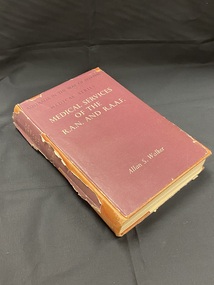
Book - Hardcover book, Australian War Memorial Canberra, Medical services of the R.A.N. and R.A.A.F. : with a section on women in the Army Medical Services, 1961
... ...medical units...Australian Army Medical Corps hospital ships hospitals medical units trainiing The book covers the work of naval and air force medical services and of the women's service in the Australian Army Medical Corps. ...The book covers the work of naval and air force medical services and of the women's service in the Australian Army Medical Corps. It also contains chapters on hospital ships, the Geneva Conventions and rehabilitation. The Royal Adelaide Hospital is mentioned several times throughout the book. [From Trove]Burgundy cloth-bound book with torn burgundy dust-jacket. Series title printed in black across the top of the cover and title printed in white across the centre. Author's name printed in white across the bottom of the cover. The spine contains the same information, it is quite worn and marked.non-fictionThe book covers the work of naval and air force medical services and of the women's service in the Australian Army Medical Corps. It also contains chapters on hospital ships, the Geneva Conventions and rehabilitation. The Royal Adelaide Hospital is mentioned several times throughout the book. [From Trove]australian army medical corps, hospital ships, hospitals, medical units, trainiing -
 Bendigo Historical Society Inc.
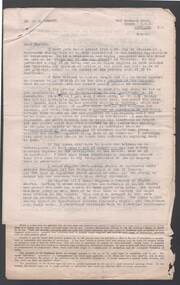
Document - BILL ASHMAN COLLECTION: CORRESPONDENCE
... Medical Research Council... Radio-Electric Research Unit...Typed letter, dated 8/4/49, with an Application Form for Hiring Radio-electric Medical Units attached. Letter is from Norman to Harold. ...SCIENCES Instruments - general scalebuoy Bill Ashman Collection - Correspondence Dr W N Abbott Dr May Electronic Co Mr A K Duthie Hartley Stephenson Mackenzie Dr D H Abbott Mr Holt Electronic Company of NZ Wallace Bruce Duthie Voyce Stevenson McCorkindale Medical Research Council Radio-Electric Research Unit Stoke-Mandeville Hospital Capillograph Pasteur Mandevilles Typed letter, dated 8/4/49, with an Application Form for Hiring Radio-electric Medical Units attached. ...Typed letter, dated 8/4/49, with an Application Form for Hiring Radio-electric Medical Units attached. Letter is from Norman to Harold. Letter refers to the administrative side of Scalebuoys and a new business venture. Also some shares for Hartley's widow and that she can't sell or will them to anyone. Development in Great Britain is also mentioned.sciences, instruments - general, scalebuoy, bill ashman collection - correspondence, dr w n abbott, dr may, electronic co, mr a k duthie, hartley, stephenson, mackenzie, dr d h abbott, mr holt, electronic company of nz, wallace, bruce, duthie, voyce, stevenson, mccorkindale, medical research council, radio-electric research unit, stoke-mandeville hospital, capillograph, pasteur, mandevilles -
 Returned Nurses RSL Sub-branch
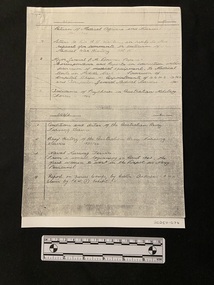
Document - Photocopy of record cards, unknown
... Photocopies of four catalogue records detailing various correspondence and documents relating to World War II, miscellaneous points regarding medical units, personnel and patients....Photocopies of four catalogue records detailing various correspondence and documents relating to World War II, miscellaneous points regarding medical units, personnel and patients. World War 1939-1945 WW2 WWII Australian Army Nursing Service Photocopy of four handwritten record cards (two per page), from a catalogue. ...Photocopies of four catalogue records detailing various correspondence and documents relating to World War II, miscellaneous points regarding medical units, personnel and patients.Photocopy of four handwritten record cards (two per page), from a catalogue. Each card has a margin with a number above the top line and further numbers down the left margin. The rest of the card lists various items found at those numbers.world war 1939-1945, ww2, wwii, australian army nursing service -
 Royal Australasian College of Surgeons Museum and Archives
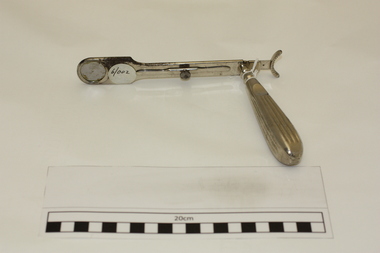
Tonsil guillotine
... Donated by the Alfred Hospital medical Supply Unit...Donated by the Alfred Hospital medical Supply Unit Tonsil guillotine ...Donated by the Alfred Hospital medical Supply Unit -
 Returned Nurses RSL Sub-branch
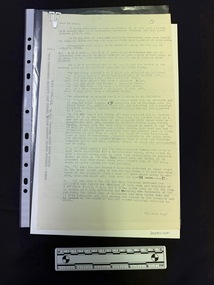
Document - Partial copy of an WWII Army report, Department of Defence, ca. 1940-1942
... Copy of file no. 33-401-203 from the National Archives of Australia being part of a report about medical units in the Northern Territory during WWII circa. 1940-1942. ...Copy of file no. 33-401-203 from the National Archives of Australia being part of a report about medical units in the Northern Territory during WWII circa. 1940-1942. ...Copy of file no. 33-401-203 from the National Archives of Australia being part of a report about medical units in the Northern Territory during WWII circa. 1940-1942. Also includes 'General Considerations' heading. Partial copy on foolscap paper of a World War 2 Army report, 2 pages held together with a white archival paperclip with information on the source along the left hand edge.'6' [Blue ink on left hand edge of both pages] '33-401-203' [Blue ink on left hand side of both pages] '7' [Inside a circle written in blue ink in top right hand corner of first page] [Blue ink scribble on left hand side of second page]wwii, ww2, world war 2, northern territory australia -
 National Vietnam Veterans Museum (NVVM)
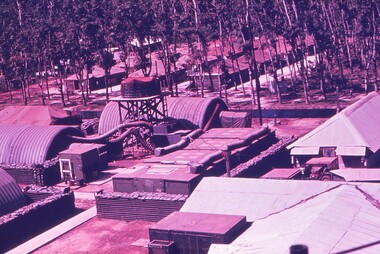
Slide - Sims Image Collection
... ...Medical unit self contained transportable...During the war in Vietnam, a MUST hospital (Medical Unit, Self-Contained, Transportable) was a type of field hospital developed by the US Army. ...During the war in Vietnam, a MUST hospital (Medical Unit, Self-Contained, Transportable) was a type of field hospital developed by the US Army. ...During the war in Vietnam, a MUST hospital (Medical Unit, Self-Contained, Transportable) was a type of field hospital developed by the US Army. These hospitals utilized inflatable shelters, expandable structures, and auxiliary power units to create self-contained medical facilities. They could be constructed relatively easily and were capable of supporting a large number of patients. This image is from a collection of 253 images on slides taken by Corporal Peter Stanley Sims (Service no:44304), while on deployment in Vietnam 1969 -1970. He served in the Royal Australian Army Medical Corps. Equipment used for operating wards and operating theatres at American 20 Surgical hospital, Vietnam 1969/70.peter stanley sims, 44304, slides, royal australian army medical corps, vietnam war, sims, australian forces vietnam, hq australian forces vietnam, 20 surgical hospital, medical unit self contained transportable, must -
 National Vietnam Veterans Museum (NVVM)
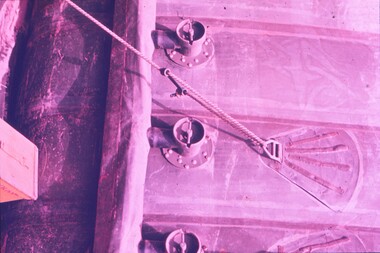
Slide - Sims Image Collection
... During the war in Vietnam, a MUST hospital (Medical Unit, Self-Contained, Transportable) was a type of field hospital developed by the US Army. ...During the war in Vietnam, a MUST hospital (Medical Unit, Self-Contained, Transportable) was a type of field hospital developed by the US Army. ...During the war in Vietnam, a MUST hospital (Medical Unit, Self-Contained, Transportable) was a type of field hospital developed by the US Army. These hospitals utilized inflatable shelters, expandable structures, and auxiliary power units to create self-contained medical facilities. They could be constructed relatively easily and were capable of supporting a large number of patients. This image is from a collection of 253 images on slides taken by Corporal Peter Stanley Sims (Service no:44304), while on deployment in Vietnam 1969 -1970. He served in the Royal Australian Army Medical Corps. Anchor point on buildings at American 20 Surgical hospital, Vietnam 1969/70.peter stanley sims, 44304, slides, royal australian army medical corps, vietnam war, sims, australian forces vietnam, hq australian forces vietnam, 20 surgical hospital, must -
 National Vietnam Veterans Museum (NVVM)
Slide - Sims Image Collection
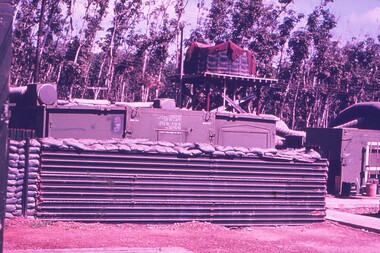
... During the war in Vietnam, a MUST hospital (Medical Unit, Self-Contained, Transportable) was a type of field hospital developed by the US Army. ...During the war in Vietnam, a MUST hospital (Medical Unit, Self-Contained, Transportable) was a type of field hospital developed by the US Army. ...During the war in Vietnam, a MUST hospital (Medical Unit, Self-Contained, Transportable) was a type of field hospital developed by the US Army. These hospitals utilized inflatable shelters, expandable structures, and auxiliary power units to create self-contained medical facilities. They could be constructed relatively easily and were capable of supporting a large number of patients. This image is from a collection of 253 images on slides taken by Corporal Peter Stanley Sims (Service no:44304), while on deployment in Vietnam 1969 -1970. He served in the Royal Australian Army Medical Corps. Fortified barrier protecting equipment that runs wards and operating theatres at the 20 surgical Hospital , Vietnam 1969/70.peter stanley sims, 44304, slides, royal australian army medical corps, vietnam war, sims, australian forces vietnam, hq australian forces vietnam, 20 surgical hospital, fortified barriers, must, hospital -
 National Vietnam Veterans Museum (NVVM)
Slide - Sims Image Collection
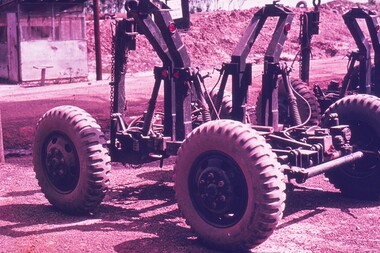
... During the war in Vietnam, a MUST hospital (Medical Unit, Self-Contained, Transportable) was a type of field hospital developed by the US Army. ...During the war in Vietnam, a MUST hospital (Medical Unit, Self-Contained, Transportable) was a type of field hospital developed by the US Army. ...During the war in Vietnam, a MUST hospital (Medical Unit, Self-Contained, Transportable) was a type of field hospital developed by the US Army. These hospitals utilized inflatable shelters, expandable structures, and auxiliary power units to create self-contained medical facilities. They could be constructed relatively easily and were capable of supporting a large number of patients. This image is from a collection of 253 images on slides taken by Corporal Peter Stanley Sims (Service no:44304), while on deployment in Vietnam 1969 -1970. He served in the Royal Australian Army Medical Corps. Cart for moving equipment at the 20 Surgical Hospital, Vietnam 1970. peter stanley sims, 44304, slides, royal australian army medical corps, vietnam war, sims, australian forces vietnam, hq australian forces vietnam, 20 surgical hospital -
 National Vietnam Veterans Museum (NVVM)
Slide - Sims Image Collection
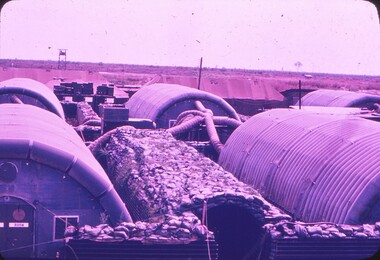
... During the war in Vietnam, a MUST hospital (Medical Unit, Self-Contained, Transportable) was a type of field hospital developed by the US Army. ...During the war in Vietnam, a MUST hospital (Medical Unit, Self-Contained, Transportable) was a type of field hospital developed by the US Army. ...During the war in Vietnam, a MUST hospital (Medical Unit, Self-Contained, Transportable) was a type of field hospital developed by the US Army. These hospitals utilized inflatable shelters, expandable structures, and auxiliary power units to create self-contained medical facilities. They could be constructed relatively easily and were capable of supporting a large number of patients. This image is from a collection of 253 images on slides taken by Corporal Peter Stanley Sims (Service no:44304), while on deployment in Vietnam 1969 -1970. He served in the Royal Australian Army Medical Corps. Inflatable buildings and fortified storage areas at the 20 Surgical hospital, Vietnam 1969/70.peter stanley sims, 44304, slides, royal australian army medical corps, vietnam war, sims, australian forces vietnam, hq australian forces vietnam, 20 surgical hospital, must -
 National Vietnam Veterans Museum (NVVM)
Slide - Sims Image Collection
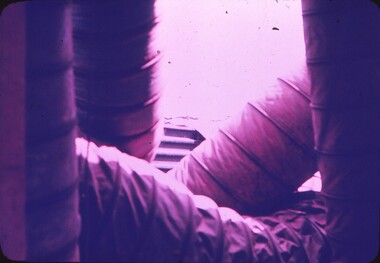
... During the war in Vietnam, a MUST hospital (Medical Unit, Self-Contained, Transportable) was a type of field hospital developed by the US Army. ...During the war in Vietnam, a MUST hospital (Medical Unit, Self-Contained, Transportable) was a type of field hospital developed by the US Army. ...During the war in Vietnam, a MUST hospital (Medical Unit, Self-Contained, Transportable) was a type of field hospital developed by the US Army. These hospitals utilized inflatable shelters, expandable structures, and auxiliary power units to create self-contained medical facilities. They could be constructed relatively easily and were capable of supporting a large number of patients. This image is from a collection of 253 images on slides taken by Corporal Peter Stanley Sims (Service no:44304), while on deployment in Vietnam 1969 -1970. He served in the Royal Australian Army Medical Corps. Large piping to take air to inflatable buildings at the 20 Surgical hospital, Vietnam 1969/70.peter stanley sims, 44304, slides, royal australian army medical corps, vietnam war, sims, australian forces vietnam, hq australian forces vietnam, 20 surgical hospital, must, hospital, field hospital -
 National Vietnam Veterans Museum (NVVM)
Slide - Sims Image Collection
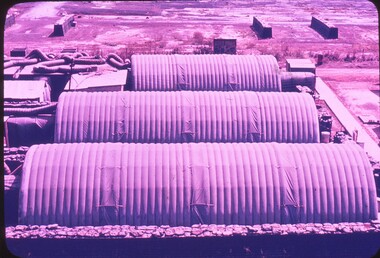
... During the war in Vietnam, a MUST hospital (Medical Unit, Self-Contained, Transportable) was a type of field hospital developed by the US Army. ...During the war in Vietnam, a MUST hospital (Medical Unit, Self-Contained, Transportable) was a type of field hospital developed by the US Army. ...During the war in Vietnam, a MUST hospital (Medical Unit, Self-Contained, Transportable) was a type of field hospital developed by the US Army. These hospitals utilized inflatable shelters, expandable structures, and auxiliary power units to create self-contained medical facilities. They could be constructed relatively easily and were capable of supporting a large number of patients. This image is from a collection of 253 images on slides taken while on deployment in Vietnam by Corporal Peter Stanley Sims (44304), who served in the Royal Australian Army Medical Corps, 1969 -1970.Inflated roofs of buildings at the 20 Surgical hospital, Vietnam 1969/70.peter stanley sims, 44304, slides, royal australian army medical corps, vietnam war, sims, australian forces vietnam, hq australian forces vietnam, 20 surgical hospital -
 National Vietnam Veterans Museum (NVVM)
Slide - Sims Image Collection
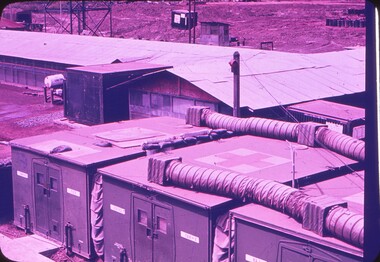
... During the war in Vietnam, a MUST hospital (Medical Unit, Self-Contained, Transportable) was a type of field hospital developed by the US Army. ...During the war in Vietnam, a MUST hospital (Medical Unit, Self-Contained, Transportable) was a type of field hospital developed by the US Army. ...During the war in Vietnam, a MUST hospital (Medical Unit, Self-Contained, Transportable) was a type of field hospital developed by the US Army. These hospitals utilized inflatable shelters, expandable structures, and auxiliary power units to create self-contained medical facilities. They could be constructed relatively easily and were capable of supporting a large number of patients. This image is from a collection of 253 images on slides taken while on deployment in Vietnam by Corporal Peter Stanley Sims (44304), who served in the Royal Australian Army Medical Corps, 1969 -1970.Medical buildings at the 20 Surgical hospital (USA), Vietnam 1969/70.peter stanley sims, 44304, slides, royal australian army medical corps, vietnam war, sims, australian forces vietnam, hq australian forces vietnam, 20 surgical hospital -
 National Vietnam Veterans Museum (NVVM)
Slide - Sims Image Collection
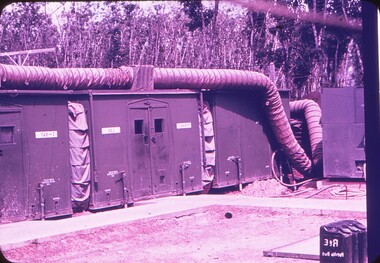
... During the war in Vietnam, a MUST hospital (Medical Unit, Self-Contained, Transportable) was a type of field hospital developed by the US Army. ...During the war in Vietnam, a MUST hospital (Medical Unit, Self-Contained, Transportable) was a type of field hospital developed by the US Army. ...During the war in Vietnam, a MUST hospital (Medical Unit, Self-Contained, Transportable) was a type of field hospital developed by the US Army. These hospitals utilized inflatable shelters, expandable structures, and auxiliary power units to create self-contained medical facilities. They could be constructed relatively easily and were capable of supporting a large number of patients. This image is from a collection of 253 images on slides taken while on deployment in Vietnam by Corporal Peter Stanley Sims (44304), who served in the Royal Australian Army Medical Corps, 1969 -1970.Medical buildings at the 20 Surgical hospital, Vietnam 1969/70.peter stanley sims, 44304, slides, royal australian army medical corps, vietnam war, sims, australian forces vietnam, hq australian forces vietnam, 20 surgical hospital, must, hospital -
 Returned Nurses RSL Sub-branch
Photograph, Unknown
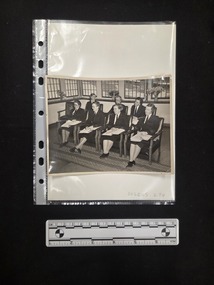
... ...RAAF Medical Training Unit...Handwritten in pencil on reverse: 'Hospital Matrons' Course / RAAF Medical Training Unit. "Larundel" / Preston. Victoria. ...Army Nurse Clare Rothwell MacIntire WWII World War Two WW2 RAAF Medical Training Unit Larundel Handwritten in pencil on reverse: 'Hospital Matrons' Course / RAAF Medical Training Unit. ...Part of a series of items related to Clare Rothwell Macintire. Clare Rothwell Macintire was born 27 July 1910 in Essendon and enlisted with the Royal Australian Airforce on 3 August 1943. Her service number was 500432. Black and white photograph of seven women in uniform seated in two rows. The four women in the front row have folders of paperwork open in their laps. Handwritten in pencil on reverse: 'Hospital Matrons' Course / RAAF Medical Training Unit. "Larundel" / Preston. Victoria. November 1944 / Matrons Joiner, Mackay, Mackintire, / Feidler, Monger, Smith, Buchanan' Stamped in ink on reverse: 'Directorate of Public Relations / Department of Air'army nurse, clare rothwell macintire, wwii, world war two, ww2, raaf medical training unit, larundel -
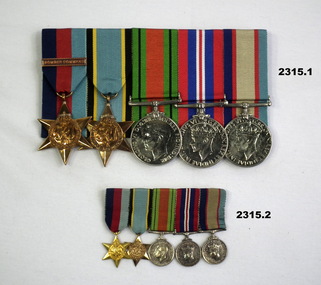 Bendigo Military Museum
Award - MEDAL SET WW2, Post 1945
... He was returned to Australia and on discharge from the RAAF 9.5.45 his rank was F/O in a Medical Rehabilitation Unit. ...He was returned to Australia and on discharge from the RAAF 9.5.45 his rank was F/O in a Medical Rehabilitation Unit. medals military history .1) "408598 J Stanistreet" Medal set, court mounted, set of (5) re J Stanistreet. .1) 1. 1939-45 Star with clasp "Bomber Command" 2. ...John Stanistreet No 408598 (born Bendigo, enlisted Melbourne) in the RAAF on 27.4.41. He was WIA over Duisberg Germany 7.9.42. He was returned to Australia and on discharge from the RAAF 9.5.45 his rank was F/O in a Medical Rehabilitation Unit. Medal set, court mounted, set of (5) re J Stanistreet. .1) 1. 1939-45 Star with clasp "Bomber Command" 2. Aircrew Europe Star. 3. Defence Medal. 4. War Medal 1939-45. 5. Australian Service Medal 1939 - 45 .2) Medal set, miniatures, brass plate mounted, set of (5) same as .1)..1) "408598 J Stanistreet"medals, military, history
