
Showing 91 items matching "military aid"
-
 Lilydale RSL Sub Branch
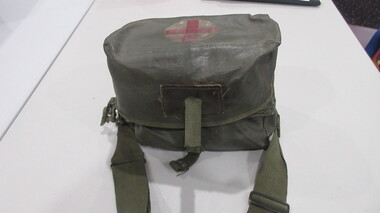
Equipment, military field first aid bag
... military field first aid bag...Vintage military field first aid bag complete with medical supplies...Believed used by Australian Army Red Cross emblem on white circular background Vintage military field first aid bag complete with medical supplies military field first aid bag Equipment ...Contains many Australian manufactured items. Believed used by Australian ArmyVintage military field first aid bag complete with medical suppliesRed Cross emblem on white circular background -
 National Vietnam Veterans Museum (NVVM)
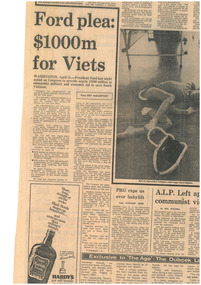
Newspaper - Articles about attitudes to end of war and Operation Babylift, The Age, 12 April, 1975
... ...Military aid...The Age President Ford ALP Vietnam Babylift Operation Babylift Post-war vietnam Military aid fall of saigon communist take-over Two newspaper article from The Age, Saturday April 12, 1975 The Age, 12 April, 1975 Newspaper Articles about attitudes to end of war and Operation Babylift ...Two newspaper articles from The Age in 1975 that contributes to an understanding of those involved in the war in Vietnam (1962 -1972) other than Australian servicemen.Two newspaper article from The Age, Saturday April 12, 1975the age, president ford, alp, vietnam, babylift, operation babylift, post-war vietnam, military aid, fall of saigon, communist take-over -
 Flagstaff Hill Maritime Museum and Village
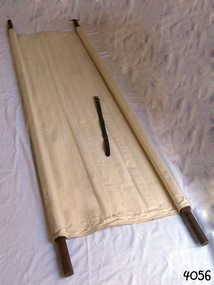
Equipment - Field Stretcher, Australian Defence Force, 1939-1942
... Aid...military equipment...military and emergency services in the 19th and early 20th centuries. It is significant for its connection to Dr W R Abgus, who practised medicine in the community, the Australian Army and the Flying Doctor service from the 1920s to 1960s. He was also Warrnambool's last Port Medical Officer. Flagstaff Hill Flagstaff Hill Maritime Museum and Village Warrnambool Maritime Museum Maritime Village Great Ocean Road Shipwreck Coast stretcher field stretcher First Aid ...This field stretcher was the property of Dr. William Roy Angus. It was donated to Flagstaff Hill Maritime Village by the family of Doctor William Roy Angus, Surgeon and Oculist. It is part of the “W.R. Angus Collection” that includes historical medical equipment, surgical instruments, and material once belonging to Dr Edward Ryan and Dr Thomas Francis Ryan (both of Nhill, Victoria), as well as Dr Angus’ belongings. The Collection’s history spans the medical practices of the two Doctors Ryan, from 1885-1926, plus that of Dr Angus, up until 1969. W R Angus served with the Australian Department of Defence as a Surgeon Captain during World War II from 1942 to 1945, in Ballarat, Victoria, and Bonegilla, N.S.W., completing his service just before the end of the war due to suffering from a heart attack. During his convalescence, he carved an intricate and ‘most artistic’ chess set from the material used for making dentures.The stretcher is an example of portable medical and emergency equipment used by the military and emergency services in the 19th and early 20th centuries. It is significant for its connection to Dr W R Abgus, who practised medicine in the community, the Australian Army and the Flying Doctor service from the 1920s to 1960s. He was also Warrnambool's last Port Medical Officer.Medical Field Stretcher: cream coloured canvas with wooden poles through side hems and a leather strap with buckle to keep parts together when folded or rolled up. This stretcher is part of the W.R. Angus Collection.flagstaff hill, flagstaff hill maritime museum and village, warrnambool, maritime museum, maritime village, great ocean road, shipwreck coast, stretcher, field stretcher, first aid, military equipment, medical equipment, emergency equipment, dr w r angus, canvas stretcher, patient transport, world war ii, ww2, australian department of defence, military doctor, medic, military stretcher, field gear, army stretcher, litter, adf, folding stretcher, w.r. angus -
 Bendigo Military Museum
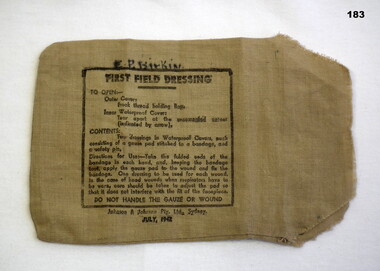
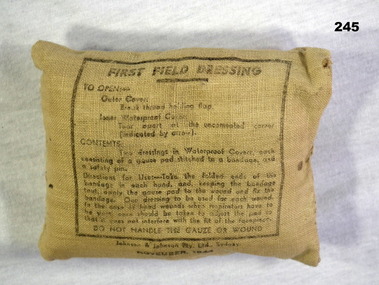
Equipment - COVER, FIELD DRESSING, Johnson & Johnson Pty. Ltd, July 1942
... aid...military history...This item was held in the tin 182.2 with the card set 184.54. medicine - first aid military history field dressing In ink - "E.P. ...Edna Phyliss BIRKIN No VF396668 enlisted in the Australian Women’s Army Service on 26.1.43 age 20 years. At discharge on 1.3.44 she held the rank of Pte. This item was held in the tin 182.2 with the card set 184.54.Khaki cloth bag with instructions for use of dressing, printed in black on surface.In ink - "E.P. Birkin"medicine - first aid, military history, field dressing -
 Bendigo Military Museum
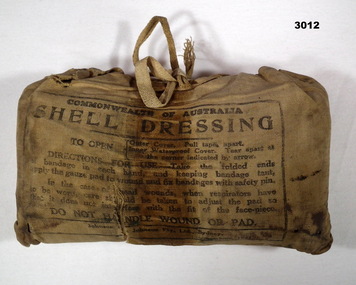
Equipment - DRESSING, SHELL, Johnson and Johnson, C.1940
... aid...military - equipment...The package has two seperate dressings inside. medicine - first aid military - equipment Shell Dressing. Light khaki cotton cover sewn around medical items. ...The package has two seperate dressings inside.Shell Dressing. Light khaki cotton cover sewn around medical items. Contents, instructions for use, printed on cover.medicine - first aid, military - equipment -
 Bendigo Military Museum
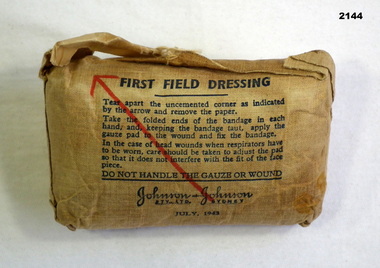
Equipment - DRESSING, FIELD, Johnson & Johnson Pty Ltd, July 1943
... aid...military history-army...medicine-first aid military history-army first field "First field dressing" (with instructions). ...Gauze pad within bandage. Safety pin wrapped in paper."First field dressing" (with instructions). medicine-first aid, military history-army, first field -
 Bendigo Military Museum
Equipment - DRESSING, Johnson & Johnson, 6.1941
... aid...military history - equipment...Item issued to Peter Ball 3796117, refer Cat No 4704 medicine-first aid military history - equipment Commonwealth of Australia Shell Dressing Written: Peter BALL Shell dressing, khaki colour, light waterproof canvas cover with draw string at top. ...The dressing on one side has full directions on use & handling. Item issued to Peter Ball 3796117, refer Cat No 4704Shell dressing, khaki colour, light waterproof canvas cover with draw string at top.Commonwealth of Australia Shell Dressing Written: Peter BALLmedicine-first aid, military history - equipment -
 Bendigo Military Museum
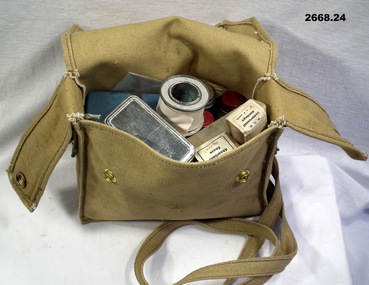
Equipment - FIRST AID KIT, Possibly post WW2
... aid...military history - equipment...medicine-first aid military history - equipment Passchendaele barracks trust .1) - 2.) ....1) - 2.) Canvas bag with strap, khaki, brass press studs. .3) - .8) Group 3 bandages & 3 dressings in paper wrapping. .9) - .13) Cardboard box with lid containing 3 ampoules of tincture of iodine. .14) Sealed paper pocket containing safety pins. .15) - .17) x 3 bottles containing tablets. .18) Metal tin with attached lid. .19) Roll of adhesive tape. .20 - .21) Tube of Tannic of Acid Jelly in cardboard box. .22) Small brush. .23) Dressing fabric. .24) Gauze bandage. medicine-first aid, military history - equipment, passchendaele barracks trust -
 Bendigo Military Museum
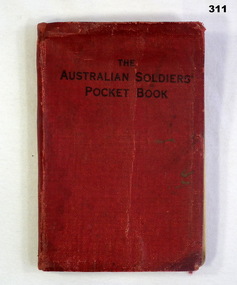
Book - POCKET BOOK, The Australian Soldiers' Pocket Book, July 1941
... Contains information of use to Australian soldiers including signalling, first aid, military terminology etc Revised 5th Edition....military Page 3 personal details of owner . Pocket book with red cloth cover, title in black ink on front. Contains information of use to Australian soldiers including signalling, first aid, military terminology etc Revised 5th Edition. ...Made for the Australian Comforts Fund and published by Brown, Prior Anderson Pty LtdPocket book with red cloth cover, title in black ink on front. Contains information of use to Australian soldiers including signalling, first aid, military terminology etc Revised 5th Edition.Page 3 personal details of owner .pocket books, soldiers, military, -
 National Vietnam Veterans Museum (NVVM)
Flag - Philippines Flag - More Flags program
... Philippines flag representing military and medical aid given to South Vietnam as of June, 1966 re the US "More Flags" aid program. ...Flag Philippines Philippines flag representing military and medical aid given to South Vietnam as of June, 1966 re the US "More Flags" aid program. ...Philippines flag representing military and medical aid given to South Vietnam as of June, 1966 re the US "More Flags" aid program. Red and blue with white triangle with yellow sunburst and starsflag, philippines -
 National Vietnam Veterans Museum (NVVM)
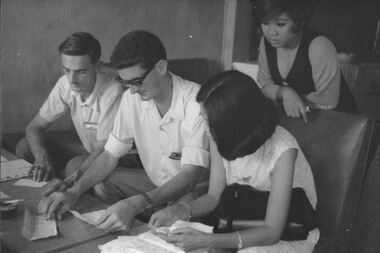
Photograph, Gibbons, Denis, Counterfeit Documents
... A black and white photograph of plain clothes Military Police with the aid of two female Vietnamese interpreters study confiscated and captured documents. ...Photograph Military Police Counterfeit Documents Gibbons Collection Catalogue Vietnamese Interpreters PX Cards Denis Gibbons A black and white photograph of plain clothes Military Police with the aid of two female Vietnamese interpreters study confiscated and captured documents. ...Denis Gibbons (1937 – 2011) Trained with the Australian Army, before travelling to Vietnam in January 1966, Denis stayed with the 1st Australian Task Force in Nui Dat working as a photographer. For almost five years Gibbons toured with nine Australian infantry battalions, posting compelling war images from within many combat zones before being flown out in late November 1970 after sustaining injuries. The images held within the National Vietnam Veterans Museum make up the Gibbons Collection. A black and white photograph of plain clothes Military Police with the aid of two female Vietnamese interpreters study confiscated and captured documents. Counterfeit military documents, such as leave cards and PX cards were much sought after by the local population.photograph, military police, counterfeit documents, gibbons collection catalogue, vietnamese interpreters, px cards, denis gibbons -
 Wangaratta RSL Sub Branch
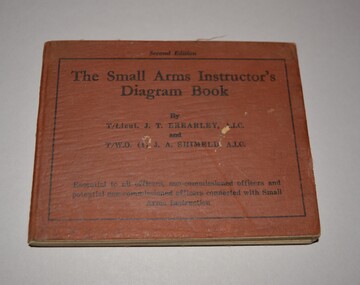
Book, Halstead Press Pty Limited, The Small Arms Instructor's Diagram Book, 1942
... The Small Arms Instructor's Diagram Book (1942) is a military training aid containing visual illustrations, mechanism plates, and trajectory diagrams used by Commonwealth forces during World War II. ...The Small Arms Instructor's Diagram Book (1942) is a military training aid containing visual illustrations, mechanism plates, and trajectory diagrams used by Commonwealth forces during World War II. ...The Small Arms Instructor's Diagram Book (1942) is a military training aid containing visual illustrations, mechanism plates, and trajectory diagrams used by Commonwealth forces during World War II. Booklet belonged to Robert Francis ISKOV VX15237 born at Glenrowan served with the 59th Battalion CMF before joining the 2/14th Battalion at Caulfield in September 1940. He disembarked for the Middle East in November, 1940 and fought in the Syrian campaign in 1941. In 1942 the 2/14th Battalion returned to Australia and sent to Papua where he fought at the Battle of Isurava before the battalion was sent to Gona. On 1943 Bob returned to Australia to undertake officer training and in 1945 with the 2/23rd Battalion sailed to Morotai and served with the battalion on Tarakan. He returned to Australia in November, 1945 and discharged a month later.A monograph publication by T/Lieut. J. T Brearley and T/W.O (1) J.A.ShimeldBrown cloth covered hard cover book containing 92 pages mainly of diagrams.Second Editionww2, new guinea, 1942, instructor's diagram book, small arms, second edition -
 Surrey Hills Historical Society Collection
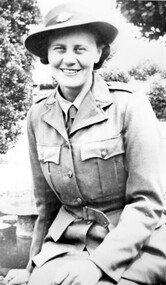
Photograph, Doris Wright, member of the Australian Women's Army Service
... Training for members of the WANS included air raid drills, first aid, basic military drills, and even shooting, signalling, and mechanics. ...Training for members of the WANS included air raid drills, first aid, basic military drills, and even shooting, signalling, and mechanics. ...Doris Lilian Wright of 214 Union Road was a milliner but joined the Australian Women's Army Service (AWAS) in the early war years. The Women’s Australian National Service (WANS) was inaugurated in 1940. Training for members of the WANS included air raid drills, first aid, basic military drills, and even shooting, signalling, and mechanics. AWAS on formed on 13 August 1941 with the objective of releasing more men into forward areas. The Army was particular with its recruiting and four references were required; another stipulation was that teeth were in good condition. Doris was located at Elwood. Their training area was along the foreshore and one day to their great surprise there were crowds of American Marines – "the cream of the American Army". These were the first Americans to arrive in Australia to strengthen the defence of the country. The Americans soon went north and the AWAS went off to Balcombe on the Mornington Peninsula. At this time there were no uniforms for the girls only ‘giggle’ dresses – of a non-descript colour. They were not expected to appear in public in these and wore civilian dress. Japan had just entered the war and there were more urgent demands on restricted supplies. The formal uniforms eventually arrived.A black and white photograph of a lady in an army uniform and wearing a hat.union road, surrey hills, uniforms, clothing and dress, (miss) doris wright, australian women's army service -
 Flagstaff Hill Maritime Museum and Village
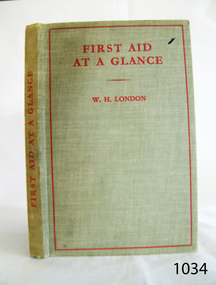
Book - Reference Medical/First Aid, William H. London, First Aid At A Glance, 1939
... military handbooks, educational materials, and civil defence manuals to support the Australian war effort and home front preparedness. The book holds clear historical and cultural significance, primarily as a home-front artefact of World War II. Printed in late 1939, it directly reflects Australia's rapid mobilisation and civilian preparation for war, including blackout conditions and potential air raids. Additionally, it captures a transitional period in Australian medical history that bridged surf lifesaving and industrial workplace safety into wartime first aid ...Published on the eve of World War II in 1939, First Aid at a Glance is a compact, highly practical emergency manual. Designed as a concise summary for quick reference during crisis situations, it covers core civil defence and emergency medical topics such as the treatment of wounds, severe bleeding, and shock. Other subjects covered in this publication are fracture immobilisation and bandaging techniques, resuscitation and drowning intervention, and the management of casualties in public, industrial, or home settings.Hard cover book, First Aid at a Glance Author: William H. London Publisher: Angus & Robertson, Sydney, Australia Date: 1939 Further Information: Green cloth covered hardback volume with title in rednon-fictionPublished on the eve of World War II in 1939, First Aid at a Glance is a compact, highly practical emergency manual. Designed as a concise summary for quick reference during crisis situations, it covers core civil defence and emergency medical topics such as the treatment of wounds, severe bleeding, and shock. Other subjects covered in this publication are fracture immobilisation and bandaging techniques, resuscitation and drowning intervention, and the management of casualties in public, industrial, or home settings.flagstaff hill, warrnambool, shipwrecked-coast, flagstaff-hill, flagstaff-hill-maritime-museum, maritime-museum, shipwreck-coast, flagstaff-hill-maritime-village, first aid at a glance, book, william london, w.r. angus -
 Flagstaff Hill Maritime Museum and Village
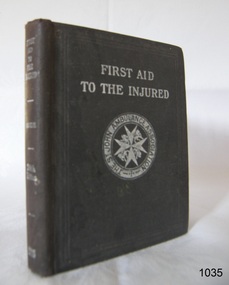
Book - Reference Medical/First Aid, James Cantlie, First Aid to the Injured, 1915
... aid manual in the Zulu Wars, Cantlie took over editing that manual. Noted on the flyleaf is the term Med-chi, which refers to medical-surgical societies. In the late 19th century, military...aid manual in the Zulu Wars, Cantlie took over editing that manual. Noted on the flyleaf is the term Med-chi, which refers to medical-surgical societies. In the late 19th century, military ...First Aid to the Injured was the official training manual of the St John Ambulance Association, arranged to follow the syllabus of their First Aid course. It was written by James Cantlie for the St John Ambulance Association. The volume is a practical instructional text covering anatomy basics, how to treat fractures, dislocations, sprains and strains, circulation and blood loss, the nervous system, poisoning cases, and the organisation of first aid response essentially a comprehensive guide to the principles and practice of First Aid, reflecting the state of medical knowledge at the time.Hard cover book, First Aid to The Injured Author: James Cantlie Publisher: St John Ambulance Association Date: 1915 Further Information: Black colour with white titles and a St Johns icon or logo to front cover.non-fictionFirst Aid to the Injured was the official training manual of the St John Ambulance Association, arranged to follow the syllabus of their First Aid course. It was written by James Cantlie for the St John Ambulance Association. The volume is a practical instructional text covering anatomy basics, how to treat fractures, dislocations, sprains and strains, circulation and blood loss, the nervous system, poisoning cases, and the organisation of first aid response essentially a comprehensive guide to the principles and practice of First Aid, reflecting the state of medical knowledge at the time.flagstaff hill, warrnambool, shipwrecked-coast, flagstaff-hill, flagstaff-hill-maritime-museum, maritime-museum, shipwreck-coast, flagstaff-hill-maritime-village, first aid to the injured, book -
 Federation University Historical Collection
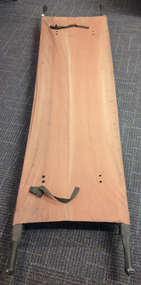
Equipment - Stretcher, Military Stretcher, c1915
... Stretcher dates from the first World War period and is thought to be a British army stretcher carrier. world war stretcher casualty ambulance stretcher world war one ambulance classes medical first aid Brown canvas stretcher with timber handles and metal fittings painted khaki green. Military Stretcher Equipment Stretcher ...Stretcher dates from the first World War period and is thought to be a British army stretcher carrier. Brown canvas stretcher with timber handles and metal fittings painted khaki green. world war, stretcher, casualty, ambulance stretcher, world war one, ambulance classes, medical, first aid -
 Federation University Historical Collection
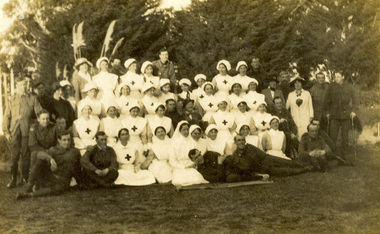
Photograph, VADs, a Nurse, and Soldiers at Highton, c1917
... The primary role of a Voluntary Aid Detachment (VAD) member was that of nursing orderly in hospitals, carrying out menial but essential tasks - scrubbing floors, sweeping, dusting and cleaning bathrooms and other areas, dealing with bedpans, and washing patients. They were not employed in military...The primary role of a Voluntary Aid Detachment (VAD) member was that of nursing orderly in hospitals, carrying out menial but essential tasks - scrubbing floors, sweeping, dusting and cleaning bathrooms and other areas, dealing with bedpans, and washing patients. They were not employed in military ...The primary role of a Voluntary Aid Detachment (VAD) member was that of nursing orderly in hospitals, carrying out menial but essential tasks - scrubbing floors, sweeping, dusting and cleaning bathrooms and other areas, dealing with bedpans, and washing patients. They were not employed in military hospitals, except as ward and pantry maids; rather, they worked in Red Cross convalescent and rest homes, canteens, and on troop trains. At the start of the First World War, Australian VADs were restricted from travelling overseas by the Defence Council. As a result, many chose to travel on their own initiative and join British detachments, often in Australian Hospitals. It is reported that the 1st Australian Auxiliary Hospital included in their nursing staff some 120 VADs, chiefly Australians in the British service, employed through the Australian Red Cross Society. This policy was changed in 1916 after a request from Great Britain, and the first detachment of thirty official Australian VADs to serve overseas left Australia in September 1916.(http://www.awm.gov.au/encyclopedia/vad/, accessed 13 August 2014)A group of VADs, a nurse, and some men from the Australian Imperial Forces. Verso: 'group of nurses and some of the men at Highton - taken at an afternoon we had. Can you find me [Harold Holmes] it is not very clear. The 2nd in uniform from the right hand side.chatham family archive, chatham, holmes, world war, world war 1, world war i, world war one, highton, red cross, vad, voluntary aid detachment, nurse, nursing -
 Flagstaff Hill Maritime Museum and Village
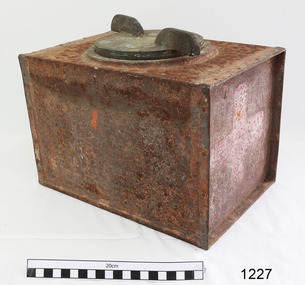
Equipment - Survival Kit, c. 1943
... Emergency survival kit made safe and watertight The kit represents equipment used around the time of World War II to aid the safety and survival of seafarers. warrnambool flagstaff-hill flagstaff-hill-maritime-museum shipwreck-coast survival kit commonwealth of australia sun-flash distress signal mirror survival advice book military supplies emergency kit survival kit. ...Emergency survival kit made safe and watertightThe kit represents equipment used around the time of World War II to aid the safety and survival of seafarers.Survival kit, 1973. Rectangular metal box with round screw top lid that has wing handles with a red cross on both ends of box (one end is heavily rusted). Contents of box includes booklet 1943 "Advice to Those in Lifeboats and Rafts of Merchant Ships" and one rectangular piece of water resistant paper with "Advice-books" written on it (separated from booklet), cylindrical stainless steel container with wire handle, cotton bandage. Also inside, one Sun-flash Distress Signal Mirror (instructions adhered to back) with padded pouch, labelled "MIRROR" in white paint, and a card inside pouch, adhering to insides. Metal is corroding.White painted label on pouch 'MIRROR". Paper instructions on back of mirror headed "_ _ FSON SUN-FLASH DISTRESS, SIGNAL DEVICE". Printed on waterproof cover "ADVICE BOOKS". warrnambool, flagstaff-hill, flagstaff-hill-maritime-museum, shipwreck-coast, survival kit, commonwealth of australia, sun-flash distress signal mirror, survival advice book, military supplies, emergency kit, survival kit. -
 Federation University Historical Collection
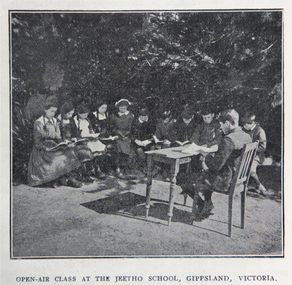
Book, Victoria Education Gazette and Teachers' Aid, 1911-1919, 1910-1919
... War Relief Fund, Commonwealth War Record, Caulfield Military Hosptial, ANZAC Day Pilgrimage, Jimmie Panikin, Donald Fraser, Arthur Mee, Card Sun Dial, Balboa Day in Honolulu, William Hamilton, Alfred Jackson, The Backward Child, Flies, Language Teaching and Learning, Spelling, The Education of the Adolescent, Victoria Education Gazette and Teachers' Aid, 1911-1919 Book Book Education Department Victoria ...Black hard covered book with red spine, holding Victorian Education Gazettes for one calendar year. .1) 1910 .2) 1912 .3) 1911 .4) 1914 .5) 1918 Images: Open Air Classroom Black Rock; Open Air Classroom, Jeetho, Gippsland; Open Air Nurses bedroom, Mildura; Gym at Canterbury School ; Babies and Nurses at Melbourne Foundling Hospital; Camp at Portland; Alexander Peacock Opens a Melbourne School; Unveiling Major Mitchell Memorial at Mt Arapiles; Agricultural Plot; School Interior; Swimming Drill; Graham Dux Prize Board; Bathing Place; Classroom with blackboard and pictures; Major Mitchell's Map; Melbourne, Derbyshire; Market Place Melbourne; The Blackwood; World War One Send-off at The Athenaeum; Scarsdale Old Boy's logo; Sloyd articles for the Field Hospital; World War One; Gifts for Transport to the Wharf; soldiers; ANZAC Day; ANZAC Day Medalion .5) 1915: Education Department's War Relief Fund, William Park obituary, Closer Settlement Act 1912, Agriculture, needlework, Swimming and Life Saving, explorers, Gregory Blaxland, Matthew Flinders, Composition, Geography, potatoes, onions, gardens, Needlework for Infants, Iona and Staffa, Trained Primary Teacher's Course, Electricity, Electrical Technology, hygiene, Arbour Day, Horticulture, Wattle Day, Bird Day, Technical Schools, Landing at Gaba Tepe, Evils of Alcohol, Old Boys of Scarsdale, Belgium, Teachers' College Images: The British at War, The Sonnet, History and Patriotism, Male Swimming Teachers Summer School at Geelong, Women Swimming Teachers at Port Fairy, Buln Buln State School, Burwood East State School, needlework plans, methods of Rescue and Resucitation. plan of the journey of Gregory Blaxland, Macquarie House, teachers killed (William Ross Hoggart, Stanley Robert Close, William Roy Hodgson, Campbell McDiarmid Peter, William Henry Dawkins, William Hugh Hamilton, Frederick McRae Neal, Vernon Brookes, Frank J. Olle, Alfred J. Collins, Ernest R. Fairlie, William J. McLaren, A.E. Smith, Thomas Patton, Francis W. Kemp, Frederick G. Hall, Rupert O. Hepburn, Woolston J. Govan), Frederick Harold Tubb VC, Botanic Gardens Red Gum, Shelter Pavillions, Head of Wheat, Australian Commonwealth Flag, Iona Cathedral, Drawing exercises, ANZAC Madallion, School Rolls of Honor .6) 1916 - Nature Study, war relief, school gardening, horticulture, singing class, geography of the war, School Rolls of Honour, Ponsonby Carew-Smyth, Astronomy, ANZAC Day, Empire Day, Arbor Day, "Some Suul of Goodness in Things Evil" by Frank Tate, War Relief Gardeners' League, ANZAC Day medallion, Solar System, Abolition of German Schools in Victoria, ANZAC Avenues, avenues of honour, Geography of the War: The West, War relief and handwork, Victorian State Schools Horticultural Society, Patrick Maloney obituary, formalin lamps, Victoria League of Victoria, Wonwondah East Roll of Honor Images - Teachers killed (John Clarke, A.C.H. Jackson, Alexander Robertson, Noel Gambetta, Ralp E. Leyland, Laurance J. Woodruff, Walter E. Cass, Percy D. Moncur, Thomas M. Carmichael, Edward G. Brain, Reginald N.F. Woods, George E. James, William Colvin, David Dobson, Stanley L. Robinson, Charles Allen, G.E. James, H.F. Curnow, Franl L. Cousins, James R. Thompson, Henry H. Campbell, George E. Read, Ernest D. Morshead, Wilfred S. Merlin, Henry R. Wright, George B. Webb, Noel Nicholas, David H. Thomas, Charles A. Levens, Thomas R. Fenner, John M. Daniell, P.J. Larkin, Ralph Smith, Philip Ormsby), school rolls of honour, Swimming Instructors at Queenscliff, The Southern Sky, Map of the North Sea and its Littorals, Easter School of Horticulture at Oakleigh, Map of the Eastern Front, Map of Mesopotamia, Map of the War Area in the Egyptian Campaign, leeches for the Melbourne Hospital .7) 1917 - Swimming and Life-Saving, Childre's FLower Day, Education Department's War Relief Fund, State War Council, Horticulture, Bird Day, Swimming, Growing Chicory at Cowes Images - Teachers killed during World War One (G.M. Nicholas, William C.W. Spencer, J.W.C. Profitt, Ivon C. Bromilow, John Colwell, Robert W. Campbell, Arthur P. Bourchier, Francid G. Houston, Claude N. Harrison, Edgar Williams, Leslie A. Stevens, Charles E. W. Chester, Stanley R. Green, Walter Baker, Arthur G. Scott, Harry L. Swinburne, Horace W. Brown, Arnold Bretherton, Edward W. Jenkins Aubrey Liddelow, Ewen A. Cameron, Edmund R. Lyall, John H. Martin, Harry Bell, Frank L. Nicholls, Melville R. Hughes, Edwin W. Hauser, Walter S. Filmer, Walter G. Barlow, Henry A. Donaldson, Edward H. Jones, Walter W. Raw, Alfred W. Dean, Wiliam Lea, Frederick G. Drury, J.T. Richards, Norman G. Pelton, Lance-Corporal Doran, Kenneth F. McKenzie, William F. Robertson, Wiliam Jarrott, Norman Graham, George G. Paul, Victor Green, Arthur William Rennie, Alfred J. Glendinning, Robert B. Liston, Eward P. Toll, George Jones, Errol E. Rodda, Christian P. Christensen, Charles F. Sydes, H.G. Clements, Norman C. Fricker, J.M. Romeo. Eric N. Lear, Thomas J. Bartley, Norval Birrell, Frederick H. Tubb. J.T. Hamilton Aram, Arthur Wilcock, William M. Conroy, Alex. H. Miller, Patrick J. Cunningham, Charles S. Mitchell, John R. Maddern, James Roadknight, Harry Arundel, Jack C. McKellar, duncan M. McKellar, George S. Manfield, Edgar C. Holmes, George A. Young, Raymond A. Gardiner, William B. Bell, William Opie, George R. Scott, Richard V.B. Vine, Herbery S. Marshall, Hugh St Omer Dentry, George B. Fullerton, Harry Oulton, Iva F. Morieson), School Honor Books, Drawing, Presentation of 30,000 pounds to the British Red Cross at Melbourne Town Hall .8) 1918 .9) 1919 - Photographs of World War One soldiers from the Education Department, Margaret Montgomery Memorial, 1918 Act relating to State School Teachers, State Scolarships, Victorian State Schools' Horticultural Society, Pneumonic Influenza, Spanish Flu, epedemic, swimming and life savinfJunior cadet training, vacancies in Fiji, School Committees, Arbor Day, Arbour Day, Henry Harding of Yinnar, Planting Trees and Shrubs, Juvenile Crime, The use of 'Get', Soldier-Teachers from Overseas in Congress London, Australia's Effort in the War, Military, Working Bees, Tree Planting, fence building, Welcoming Home a Returned Soldier, Avenue of Honour planting, Discipline, Unveiling an Honor Board, School gymnasium, school tennis court, E. E. Crogger grave at Aldershot, The School Honor Book. War Relief Fund, Commonwealth War Record, Caulfield Military Hosptial, ANZAC Day Pilgrimage, Jimmie Panikin, Donald Fraser, Arthur Mee, Card Sun Dial, Balboa Day in Honolulu, William Hamilton, Alfred Jackson, The Backward Child, Flies, Language Teaching and Learning, Spelling, The Education of the Adolescent, victorian education gazette, education gazette and teachers' aid, sloyd, william a. cavanagh, james i froebel, school, education, world war one, memorials, alfred williams, exploration and settlement, cadets, australian naval college, bernard o;dowd, birds, swimming, drawingempire league, eucalypts, paper in history, forestry, arbor day, identification of trees, forestrey museums, fiji, gravel hill school band, horticulture, hygiene, gould league of bird lovers, life saving, la perouse, bandin, j. holland, w. hamilton, charles sturt, principles of archimedes, james holland, william hamilton, scarsdale old boys' reunion, foundling home melbourne, montessori education, open air schools, james hughes, marie corelli, flinders sydney harbour, major mitchell's map, tooth brushing, r.h.s. bailey -
 Lara RSL Sub Branch
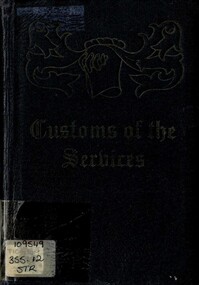
Booklet, Customs of the Services
... This book covered all Military Services of the time, meant for newly Commissioned Officers as a "go to" training aid....This book covered all Military Services of the time, meant for newly Commissioned Officers as a "go to" training aid. ...This book covered all Military Services of the time, meant for newly Commissioned Officers as a "go to" training aid.Navy Blue material covered cardpaper, has Helmet Crest on front cover, "Customs of the Services"First published as "Customs of the Service" in March 1939, and republished at regular intervals throughout the war years until publication of "Customs of the Services" September 1946. Preface: Group Captain A.H. Stradling OBE September 1946. -
 Federation University Historical Collection
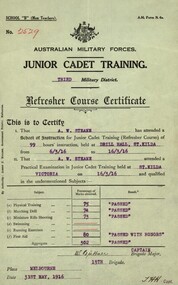
Certificate, Australian Military Forces: Junior Cadet Training, Third Military District, 31/05/1916
... military forces...drill hall...st Kilda...refresher course...w buttner...melbourne...physical training...marching drill...rifle shooting...swimming...running...first aid...a w steane junior cadet training australian military forces drill hall st Kilda refresher course w buttner melbourne physical training marching drill rifle shooting swimming running first aid 'A.M.Form N. 6a' and 'SCHOOL "B" (Men Teachers) printed at top of page No. written in red pen; 2529 Official seal of Australian Military Forces Signed: W Buttner Captain, 13th Brigade T H H Capt. ...Off white printed form. Sections filled in with purple typing.'A.M.Form N. 6a' and 'SCHOOL "B" (Men Teachers) printed at top of page No. written in red pen; 2529 Official seal of Australian Military Forces Signed: W Buttner Captain, 13th Brigade T H H Capt. Chief Instructora w steane, junior cadet training, australian military forces, drill hall, st kilda, refresher course, w buttner, melbourne, physical training, marching drill, rifle shooting, swimming, running, first aid -
 Montmorency–Eltham RSL Sub Branch
Knife, Clasp, with Marlin Spike and Tin Opener - Carr Fast second pattern, World War Two era
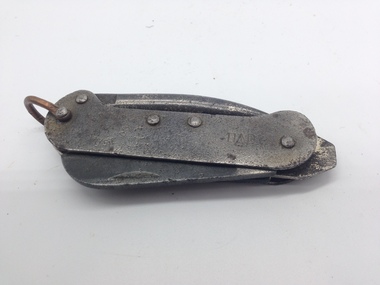
... military steel clasp knife. The clasp knife is the Carr Fast second pattern with the improved tin opener, manufactured in Australia in the World War Two era. The clasp knife has a blade, a tin/bottle opener, a marline spike as well as a screw driver and a copper wire shackle used to attach the knife to a lanyard or belt clip. The body of the knife is held together by steel rivets. Indentations to aid...military steel clasp knife. The clasp knife is the Carr Fast second pattern with the improved tin opener, manufactured in Australia in the World War Two era. The clasp knife has a blade, a tin/bottle opener, a marline spike as well as a screw driver and a copper wire shackle used to attach the knife to a lanyard or belt clip. The body of the knife is held together by steel rivets. Indentations to aid ...Two patterns of clasp knife were supplied to the Australian Military Forces in the WW2 era by the Carr Fastener Company. These clasp knives were identical to those made by Whittingslowe Engineers that were made in the Whittingslowe factory under contract to Carr Fasteners. William Whittingslowe had a close association with Carr Fasteners prior to WW2 and had been Chairman of Carr Fasteners for some time.Smaller sized canoe shaped body military steel clasp knife. The clasp knife is the Carr Fast second pattern with the improved tin opener, manufactured in Australia in the World War Two era. The clasp knife has a blade, a tin/bottle opener, a marline spike as well as a screw driver and a copper wire shackle used to attach the knife to a lanyard or belt clip. The body of the knife is held together by steel rivets. Indentations to aid opening are located on the top RHS of the blade, and on the top LHS of the tin opener. The end of the tin opener is shaped to a point.CARR FAST CO AUST D (broad arrow pattern) Dclasp knife, world war two, australian military forces, steel -
 Australian Commando Association - Victoria
Book, Lenette Ramsay Silver, The Heros of RIMAU
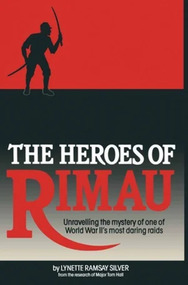
... Aided by thousands of Japanese and Allied documents and by the first-hand accounts of several Indonesians and Malays, sole witnesses to the events of 1944, they have established the fate of every member of the party and unravelled the story of "The Heroes of Rimau" - a story that has for 45 years been all but lost, distorted by hearsay and fantasy, by military cover-ups and conspiracy, by official bungling, ineptitude and apathy. ...On September 11, 1944, the British submarine "Porpoise" slipped quietly from Fremantle Harbour, bound for Indonesia. It was carrying the 23 Australian and British members of Operation Rimau who, under the leadership of the remarkable Lieutenant-Colonel Ivan Lyon of the Gordon Highlanders, intended to repeat the successful Jaywick raid of 1943 by blowing up 60 ships in Japanese-occupied Singapore Harbour, 19 days later, the preliminary part of the operation successfully completed, the submarine commander bade farewell to the raiders at Pedjantan Island, promising to return to pick them up in 38 days' time. A handful of Chinese and Malays and the conquering Japanese were the only people ever to see the 23 men again. According to the scant official post-war record, the mission was an utter failure. All of the party were captured of killed - ten of them beheaded in Singapore only five weeks before the Japanese surrender in, it was claimed, a ceremonial execution. The fate of eleven of the others remains officially unknown. After a 31 year search, Major Tom Hall, with the assistance of writer Lynette Silver, has overturned the official version and uncovered the truth. Aided by thousands of Japanese and Allied documents and by the first-hand accounts of several Indonesians and Malays, sole witnesses to the events of 1944, they have established the fate of every member of the party and unravelled the story of "The Heroes of Rimau" - a story that has for 45 years been all but lost, distorted by hearsay and fantasy, by military cover-ups and conspiracy, by official bungling, ineptitude and apathy. This book not only chronicles a feat of extraordinary daring in the face of overwhelming odds - a gripping tale of inspired courage, self-sacrifice and eventual tragedy - it also exposes the appalling sequence of events which has, until now, resulted in the shameful suppression of the truth about one of the most amazing stories to emerge from World War II.Self-government publication comprising 314 pages with some black-and-white photographs.non-fictionOn September 11, 1944, the British submarine "Porpoise" slipped quietly from Fremantle Harbour, bound for Indonesia. It was carrying the 23 Australian and British members of Operation Rimau who, under the leadership of the remarkable Lieutenant-Colonel Ivan Lyon of the Gordon Highlanders, intended to repeat the successful Jaywick raid of 1943 by blowing up 60 ships in Japanese-occupied Singapore Harbour, 19 days later, the preliminary part of the operation successfully completed, the submarine commander bade farewell to the raiders at Pedjantan Island, promising to return to pick them up in 38 days' time. A handful of Chinese and Malays and the conquering Japanese were the only people ever to see the 23 men again. According to the scant official post-war record, the mission was an utter failure. All of the party were captured of killed - ten of them beheaded in Singapore only five weeks before the Japanese surrender in, it was claimed, a ceremonial execution. The fate of eleven of the others remains officially unknown. After a 31 year search, Major Tom Hall, with the assistance of writer Lynette Silver, has overturned the official version and uncovered the truth. Aided by thousands of Japanese and Allied documents and by the first-hand accounts of several Indonesians and Malays, sole witnesses to the events of 1944, they have established the fate of every member of the party and unravelled the story of "The Heroes of Rimau" - a story that has for 45 years been all but lost, distorted by hearsay and fantasy, by military cover-ups and conspiracy, by official bungling, ineptitude and apathy. This book not only chronicles a feat of extraordinary daring in the face of overwhelming odds - a gripping tale of inspired courage, self-sacrifice and eventual tragedy - it also exposes the appalling sequence of events which has, until now, resulted in the shameful suppression of the truth about one of the most amazing stories to emerge from World War II. -
 Eltham District Historical Society Inc
Photograph, "Curry, Byrne, McGeachy & self on rustic bridge, Eltham", 22 Oct 1919
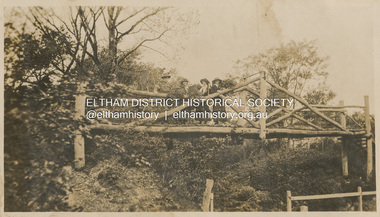
... This photo is part of the Alice Broadhurst collection held by Yarra Plenty Regional Library, a series of 12 photo albums compiled by Alice Broadhurst (1896-1981), initially while working as a Voluntary Aid Detachment nurse with the Australian Red Cross at the Mont Park Military Hospital (No. 16 AGH) and subsequently as a nurse at the Royal Melbourne and Royal Women’s hospitals alongside many pioneering doctors of their fields. ...This photo is part of the Alice Broadhurst collection held by Yarra Plenty Regional Library, a series of 12 photo albums compiled by Alice Broadhurst (1896-1981), initially while working as a Voluntary Aid Detachment nurse with the Australian Red Cross at the Mont Park Military Hospital (No. 16 AGH) and subsequently as a nurse at the Royal Melbourne and Royal Women’s hospitals alongside many pioneering doctors of their fields. ...The old Diamond Street bridge in Eltham had a raised section seen here and a lower section, the railings of which can just be seen. The upper pedestrian crossing provided continual access for foot traffic during times of flood. This photo is part of the Alice Broadhurst collection held by Yarra Plenty Regional Library, a series of 12 photo albums compiled by Alice Broadhurst (1896-1981), initially while working as a Voluntary Aid Detachment nurse with the Australian Red Cross at the Mont Park Military Hospital (No. 16 AGH) and subsequently as a nurse at the Royal Melbourne and Royal Women’s hospitals alongside many pioneering doctors of their fields. This photo depicts an outing with fellow VAD nurses McGeachy and Byrne and two patients of Mont Park, Curry and Caffery to Eltham in spring 1919 Digital file"Curry, Byrne, McGeachy & self on rustic bridge, Eltham, Oct 22, 1919"eltham, diamond creek, diamond street bridge, alice elizabeth broadhurst, byrne, caffery, curry, mcgeachy, nursing staff, mont park, 16 agh -
 Eltham District Historical Society Inc
Photograph, "McGeachy, Curry, Byrne & Caffery with an old man who lives there at Eltham", 22 Oct 1919
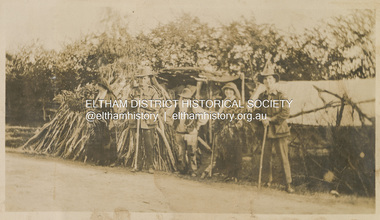
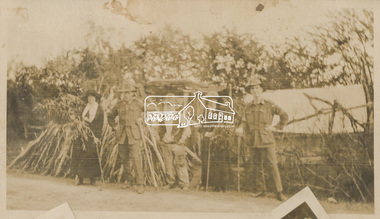
... Military Hospital), Curry and Caffery to Eltham in spring 1919. Broadhurst's companions pose with an old timer from Eltham on the roadside verge with a large collection of sticks stacked vertically outside a cottage. This photo is part of the Alice Broadhurst collection held by Yarra Plenty Regional Library, a series of 12 photo albums compiled by Alice Broadhurst (1896-1981), initially while working as a Voluntary Aid Detachment nurse with the Australian Red Cross at the Mont Park Military Hospital (No. 16 AGH) and subsequently as a nurse at the Royal Melbourne and Royal Women’s hospitals alongside many pioneering doctors of their fields....Military Hospital), Curry and Caffery to Eltham in spring 1919. Broadhurst's companions pose with an old timer from Eltham on the roadside verge with a large collection of sticks stacked vertically outside a cottage. This photo is part of the Alice Broadhurst collection held by Yarra Plenty Regional Library, a series of 12 photo albums compiled by Alice Broadhurst (1896-1981), initially while working as a Voluntary Aid Detachment nurse with the Australian Red Cross at the Mont Park Military Hospital (No. 16 AGH) and subsequently as a nurse at the Royal Melbourne and Royal Women’s hospitals alongside many pioneering doctors of their fields. eltham alice elizabeth broadhurst byrne caffery curry mcgeachy nursing staff mont park 16 agh old timer pioneer cottage wood pile "McGeachy, Curry, Byrne & Caffery with an old man who lives there at Eltham" Digital file "McGeachy, Curry, Byrne & Caffery with an old man who lives there at Eltham" Photograph Photograph ...This photo depicts an outing of VAD nurses Alice Broadhurst, McGeachy and Byrne and two patients of No. 16 AGH Macleod (Mont Park Military Hospital), Curry and Caffery to Eltham in spring 1919. Broadhurst's companions pose with an old timer from Eltham on the roadside verge with a large collection of sticks stacked vertically outside a cottage. This photo is part of the Alice Broadhurst collection held by Yarra Plenty Regional Library, a series of 12 photo albums compiled by Alice Broadhurst (1896-1981), initially while working as a Voluntary Aid Detachment nurse with the Australian Red Cross at the Mont Park Military Hospital (No. 16 AGH) and subsequently as a nurse at the Royal Melbourne and Royal Women’s hospitals alongside many pioneering doctors of their fields.Digital file"McGeachy, Curry, Byrne & Caffery with an old man who lives there at Eltham"eltham, alice elizabeth broadhurst, byrne, caffery, curry, mcgeachy, nursing staff, mont park, 16 agh, old timer, pioneer, cottage, wood pile -
 Eltham District Historical Society Inc
Photograph, "Same group with self instead of Byrne, Eltham", 22 Oct 1919
... Military Hospital), Curry and Caffery to Eltham in spring 1919. Broadhurst's companions pose with an old timer from Eltham on the roadside verge with a large collection of sticks stacked vertically outside a cottage. This photo is part of the Alice Broadhurst collection held by Yarra Plenty Regional Library, a series of 12 photo albums compiled by Alice Broadhurst (1896-1981), initially while working as a Voluntary Aid Detachment nurse with the Australian Red Cross at the Mont Park Military Hospital (No. 16 AGH) and subsequently as a nurse at the Royal Melbourne and Royal Women’s hospitals alongside many pioneering doctors of their fields....Military Hospital), Curry and Caffery to Eltham in spring 1919. Broadhurst's companions pose with an old timer from Eltham on the roadside verge with a large collection of sticks stacked vertically outside a cottage. This photo is part of the Alice Broadhurst collection held by Yarra Plenty Regional Library, a series of 12 photo albums compiled by Alice Broadhurst (1896-1981), initially while working as a Voluntary Aid Detachment nurse with the Australian Red Cross at the Mont Park Military Hospital (No. 16 AGH) and subsequently as a nurse at the Royal Melbourne and Royal Women’s hospitals alongside many pioneering doctors of their fields. eltham alice elizabeth broadhurst byrne caffery curry mcgeachy nursing staff mont park 16 agh old timer pioneer cottage wood pile "Same group with self instead of Byrne, Eltham, Oct 22" Digital file "Same group with self instead of Byrne, Eltham" Photograph Photograph ...This photo depicts an outing of VAD nurses Alice Broadhurst, McGeachy and Byrne and two patients of No. 16 AGH Macleod (Mont Park Military Hospital), Curry and Caffery to Eltham in spring 1919. Broadhurst's companions pose with an old timer from Eltham on the roadside verge with a large collection of sticks stacked vertically outside a cottage. This photo is part of the Alice Broadhurst collection held by Yarra Plenty Regional Library, a series of 12 photo albums compiled by Alice Broadhurst (1896-1981), initially while working as a Voluntary Aid Detachment nurse with the Australian Red Cross at the Mont Park Military Hospital (No. 16 AGH) and subsequently as a nurse at the Royal Melbourne and Royal Women’s hospitals alongside many pioneering doctors of their fields.Digital file"Same group with self instead of Byrne, Eltham, Oct 22"eltham, alice elizabeth broadhurst, byrne, caffery, curry, mcgeachy, nursing staff, mont park, 16 agh, old timer, pioneer, cottage, wood pile -
 Eltham District Historical Society Inc
Photograph, Picnic at Eltham with Caffery, Curry, Byrne and McGeachy, 22 Oct 1919
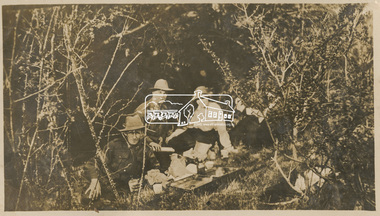
... Military Hospital), Curry and Caffery to Eltham in spring 1919. Broadhurst's companions pose sitting on a creek bank around a open suitcase which containes their picnic spread. This photo is part of the Alice Broadhurst collection held by Yarra Plenty Regional Library, a series of 12 photo albums compiled by Alice Broadhurst (1896-1981), initially while working as a Voluntary Aid Detachment nurse with the Australian Red Cross at the Mont Park Military Hospital (No. 16 AGH) and subsequently as a nurse at the Royal Melbourne and Royal Women’s hospitals alongside many pioneering doctors of their fields....Military Hospital), Curry and Caffery to Eltham in spring 1919. Broadhurst's companions pose sitting on a creek bank around a open suitcase which containes their picnic spread. This photo is part of the Alice Broadhurst collection held by Yarra Plenty Regional Library, a series of 12 photo albums compiled by Alice Broadhurst (1896-1981), initially while working as a Voluntary Aid Detachment nurse with the Australian Red Cross at the Mont Park Military Hospital (No. 16 AGH) and subsequently as a nurse at the Royal Melbourne and Royal Women’s hospitals alongside many pioneering doctors of their fields. eltham alice elizabeth broadhurst byrne caffery curry mcgeachy nursing staff mont park 16 agh diamond creek picnic Digital file Picnic at Eltham with Caffery, Curry, Byrne and McGeachy Photograph Photograph ...This photo depicts an outing of VAD nurses Alice Broadhurst, McGeachy and Byrne and two patients of No. 16 AGH Macleod (Mont Park Military Hospital), Curry and Caffery to Eltham in spring 1919. Broadhurst's companions pose sitting on a creek bank around a open suitcase which containes their picnic spread. This photo is part of the Alice Broadhurst collection held by Yarra Plenty Regional Library, a series of 12 photo albums compiled by Alice Broadhurst (1896-1981), initially while working as a Voluntary Aid Detachment nurse with the Australian Red Cross at the Mont Park Military Hospital (No. 16 AGH) and subsequently as a nurse at the Royal Melbourne and Royal Women’s hospitals alongside many pioneering doctors of their fields.Digital fileeltham, alice elizabeth broadhurst, byrne, caffery, curry, mcgeachy, nursing staff, mont park, 16 agh, diamond creek, picnic -
 Eltham District Historical Society Inc
Photograph, "Resting, Eltham", 22 Oct 1919
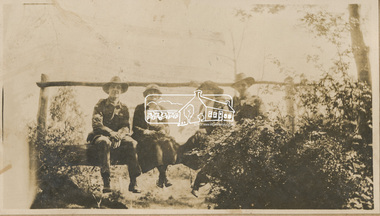
... Military Hospital), Curry and Caffery to Eltham in spring 1919. Broadhurst's companions pose sitting on a log bridge. This photo is part of the Alice Broadhurst collection held by Yarra Plenty Regional Library, a series of 12 photo albums compiled by Alice Broadhurst (1896-1981), initially while working as a Voluntary Aid Detachment nurse with the Australian Red Cross at the Mont Park Military Hospital (No. 16 AGH) and subsequently as a nurse at the Royal Melbourne and Royal Women’s hospitals alongside many pioneering doctors of their fields....Military Hospital), Curry and Caffery to Eltham in spring 1919. Broadhurst's companions pose sitting on a log bridge. This photo is part of the Alice Broadhurst collection held by Yarra Plenty Regional Library, a series of 12 photo albums compiled by Alice Broadhurst (1896-1981), initially while working as a Voluntary Aid Detachment nurse with the Australian Red Cross at the Mont Park Military Hospital (No. 16 AGH) and subsequently as a nurse at the Royal Melbourne and Royal Women’s hospitals alongside many pioneering doctors of their fields. eltham alice elizabeth broadhurst byrne caffery curry mcgeachy nursing staff mont park 16 agh log bridge Digital file "Resting, Eltham" Photograph Photograph ...This photo depicts an outing of VAD nurses Alice Broadhurst, McGeachy and Byrne and two patients of No. 16 AGH Macleod (Mont Park Military Hospital), Curry and Caffery to Eltham in spring 1919. Broadhurst's companions pose sitting on a log bridge. This photo is part of the Alice Broadhurst collection held by Yarra Plenty Regional Library, a series of 12 photo albums compiled by Alice Broadhurst (1896-1981), initially while working as a Voluntary Aid Detachment nurse with the Australian Red Cross at the Mont Park Military Hospital (No. 16 AGH) and subsequently as a nurse at the Royal Melbourne and Royal Women’s hospitals alongside many pioneering doctors of their fields.Digital fileeltham, alice elizabeth broadhurst, byrne, caffery, curry, mcgeachy, nursing staff, mont park, 16 agh, log bridge -
 Bendigo Military Museum
Photograph - Army Survey Regiment - Regimental Training Military Skills Revision, c1984
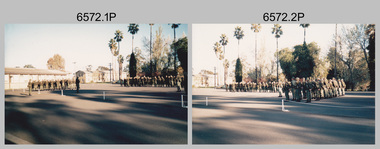
... military skills revision, at the Army Survey Regiment, Fortuna, Bendigo, c1984. It is evident in the photos that they participated in lessons on the handling of the M30 Grenade and SLR Rifle, and lessons in first aid....military skills revision, at the Army Survey Regiment, Fortuna, Bendigo, c1984. It is evident in the photos that they participated in lessons on the handling of the M30 Grenade and SLR Rifle, and lessons in first aid. ...This is a set of 25 photographs of the Army Survey Regiment personnel undertaking military skills revision, at the Army Survey Regiment, Fortuna, Bendigo, c1984. It is evident in the photos that they participated in lessons on the handling of the M30 Grenade and SLR Rifle, and lessons in first aid.This is a set of 25 photographs of the Army Survey Regiment undertaking military skills revision, part of Regimental Training at Fortuna Villa c1984. Colour photos are printed on photographic paper and scanned at 300 dpi. The photos are also stored on 35mm negative film. They are part of the Army Survey Regiment’s Collection. .1) & .2) - Photo, colour, c1984. Pre-training briefings on the parade ground. .3) - Photo, colour, c1984. Rifle revision training. L to R: unidentified personnel, WO2 Ralph Chant – instructor, SGT John Zuringer – instructor. .4) & .5) - Photo, colour, c1984. Rifle revision training. L to R: unidentified personnel, WO2 Ralph Chant – instructor. .6) - Photo, colour, c1984. Rifle revision training. L to R: WO2 Tony Clark – instructor, unidentified, SPR Sherri (Dally) Burke, CPL Robin Marshall, CPL Roger Pearson, SPR Bob Hopper, unidentified, CPL Dan Cirsky. .7) - Photo, colour, c1984. Rifle revision training. WO2 Tony Clark – instructor. .8) to .14) - Photo, colour, c1984. Hand grenade training. Unidentified soldier throwing grenade. .15) - Photo, colour, c1984. Hand grenade training. L to R: unidentified (x2) SPR Jann (Caithness) Lambdon-Young throwing grenade, WO2 Ian ‘Rock’ Thistleton. .16) - Photo, colour, c1984. Hand grenade training. L to R: unidentified soldier throwing grenade, WO2 Ian ‘Rock’ Thistleton. .17) - Photo, colour, c1984. Hand grenade training. L to R: unidentified, unidentified soldier throwing grenade. .18) - Photo, colour, c1984. Navigation revision L to R: CPL Gary Tremain, SPR Jim Humphrey. .19) & .20) - Photo, colour, c1984. Navigation revision. Unidentified personnel. .21) - Photo, colour, c1984. Navigation revision. SPR Tracy (Parker) Ash. .22) - Photo, colour, c1984. Navigation revision. Unidentified (x2), CPL Gary Tremain. .23) - Photo, colour, c1984. Navigation revision. L to R: CPL Lorraine (Daly) Talbot-Smith, SPR Jim Humphrey, unidentified (x4), SGT Gavin Neilson. .24) - Photo, colour, c1984. Navigation revision. L to R: CPL Lea-anne (Smallshaw) Shirley, CPL Lorraine (Daly) Talbot-Smith, unidentified, CPL Gary Tremain, unidentified. .25) - Photo, colour, c1984. First Aid revision. L to R: SGT Bruce Wetzig – instructor, CPL Ken Peters, unidentified..1P to .25P No personnel are identifiedroyal australian survey corps, rasvy, army survey regiment, army svy regt, fortuna -
 Warrnambool and District Historical Society Inc.
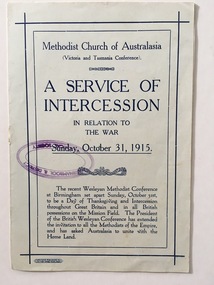
Document, A Service of Intercession, 1915
... The service was held to seek Divine intercession and aid for those on active military service in World War One and for the families of these men and women. ...The service was held to seek Divine intercession and aid for those on active military service in World War One and for the families of these men and women. ...This is a programme for a Service of Intercession in Relation to the War. It was held by the Methodist Church (Victoria and Tasmania Conference) in October 1915. The Wesleyan Methodist Conference at Birmingham, England requested that Sunday October 31st 1915 be set aside as a Day of Thanksgiving and Intercession throughout Britain and all other countries in the British Empire. The service was held to seek Divine intercession and aid for those on active military service in World War One and for the families of these men and women. This programme is of interest as the 1915 service would have been held in Methodist Churches throughout Victoria and Tasmania and this would have included the Warrnambool Methodist Church. World War One was a highly significant event in the history of Australia and Warrnambool, along with all other places in Australia, was affected deeply by the war with many young local people enlisting and many dying on active service.These are two sheets of paper folded in two to make eight pages. The pages contain a programme for the Methodist Church service in October 1915. The printing is in blue on a whitish/bluish background. The front cover is edged with blue lines. There is a blue stamp of the Warrnambool & District Historical Society on the front cover. The programme has been stapled but the staples have been removed. methodist church, world war one
