
Showing 111 items matching "military heritage"
-
 Mont De Lancey
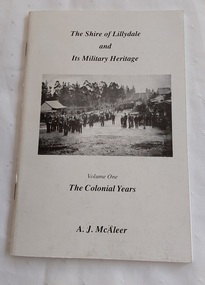
Book, J D Publishing, The Shire of Lilydale and its Military Heritage: Volume One, 2001
... The Shire of Lilydale and its Military Heritage: Volume One......Military heritage...A white paperback book titled: The Shire of Lillydale and its Military Heritage - Volume One - The Colonial Years. ...Second World War Lilydale history Lilydale military history Military heritage This collection of Lilydale's military heritage covers The Second World War: The war in Europe and the Middle East. ...This collection of Lilydale's military heritage covers The Second World War: The war in Europe and the Middle East. It has sections on - Between the wars: The Spanish Civil War (1936 - 1939, Local Militia Forces (1918 - 1939), The Coming of the War. It details The Homefront, Patriotic Welfare, Our Service Personnel, V.E. Day, and Locals in Australian Military History.A white paperback book titled: The Shire of Lillydale and its Military Heritage - Volume One - The Colonial Years. It has the title at the top of the front cover with a black and white photograph of, The Mafeking Day Procession down Castella Street Lillydale,1900. There is a Contents, Introduction, Foreword and then detailed information and black and white photographs of the early wars, significant people, advertisements, militia facts and stories as well as a bibliography and Index at the back. Pp. 68.non-fictionThis collection of Lilydale's military heritage covers The Second World War: The war in Europe and the Middle East. It has sections on - Between the wars: The Spanish Civil War (1936 - 1939, Local Militia Forces (1918 - 1939), The Coming of the War. It details The Homefront, Patriotic Welfare, Our Service Personnel, V.E. Day, and Locals in Australian Military History.second world war, lilydale history, lilydale military history, military heritage -
 Mont De Lancey
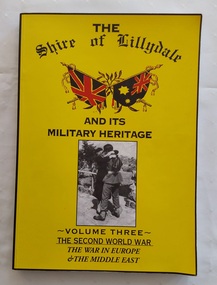
Book, J D Publishing, The Shire of Lillydale and its Military Heritage: Volume Three, 2001
... The Shire of Lillydale and its Military Heritage: Volume Three......Military heritage...A large yellow paperback book titled: The Shire of Lillydale and its Military heritage - Volume Three - The Second World War: The War in Europe & the Middle East. ...Second World War Lilydale history Lilydale military history Military heritage This book of Lillydale's military heritage covers The Second World War: The War in Europe and the Middle East. ...This book of Lillydale's military heritage covers The Second World War: The War in Europe and the Middle East. It has sections on - Between the Wars: The Spanish Civil War (1936 - 1939, Local Militia Forces (1918 - 1939), The Coming of the War. It details The Home Front, Patriotic Welfare, Our Service Personnel, V.E. Day, and Locals in Australian Military History.A large yellow paperback book titled: The Shire of Lillydale and its Military heritage - Volume Three - The Second World War: The War in Europe & the Middle East. It has English and Australian crossed flags underneath the title at the top, with a black and white photograph of a soldier embracing his mother. Inside is Contents, Introduction, Foreword are black and white photographs of significant people, advertisements, militia facts and stories as well as a Bibliography and Index at the back. Pp. 339.non-fictionThis book of Lillydale's military heritage covers The Second World War: The War in Europe and the Middle East. It has sections on - Between the Wars: The Spanish Civil War (1936 - 1939, Local Militia Forces (1918 - 1939), The Coming of the War. It details The Home Front, Patriotic Welfare, Our Service Personnel, V.E. Day, and Locals in Australian Military History.second world war, lilydale history, lilydale military history, military heritage -
 Monbulk RSL Sub Branch
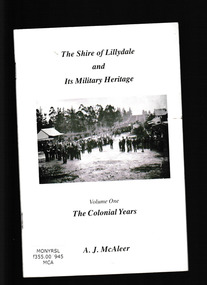
Book, Anthony J McAleer, The Shire of Lilydale and its Military Heritage : Vol 1 The Colonial Years, 1994
... The Shire of Lilydale and its Military Heritage : Vol 1 The Colonial Years...The Shire of Lilydale and its Military Heritage : Vol 1 The Colonial Years Book Anthony J McAleer Anthony J McAleer ...The military history and heritage of the Shire of Lillydale in three volumesIndex, bib, ill, p.61.non-fictionThe military history and heritage of the Shire of Lillydale in three volumeslillydale shire - history, military participation - shire of lillydale -
 Monbulk RSL Sub Branch
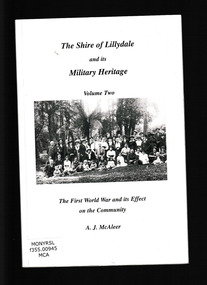
Book, Anthony J McAleer, The Shire of Lilydale and its Military Heritage : Vol 2 The first world war and its effect on the community, 1994
... The Shire of Lilydale and its Military Heritage : Vol 2 The first world war and its effect on the community...The Shire of Lilydale and its Military Heritage : Vol 2 The first world war and its effect on the community Book Anthony J McAleer Anthony J McAleer ...The military history and heritage of the Shire of Lillydale in three volumesIndex, bib, ill, p.257.non-fictionThe military history and heritage of the Shire of Lillydale in three volumeslillydale shire - history, military participation - shire of lillydale -
 Monbulk RSL Sub Branch
Book, Anthony J McAleer, The Shire of Lillydale and its military heritage. Volume three : the Second World War: the war in Europe & the Middle East, 1994
... The Shire of Lillydale and its military heritage. Volume three : the Second World War: the war in Europe & the Middle East ...Lillydale Shire - History Military participation - Shire of Lillydale The military history and heritage of the Shire of Lillydale in three volumes Index, bib, ill, p.321. ...The military history and heritage of the Shire of Lillydale in three volumesIndex, bib, ill, p.321.non-fictionThe military history and heritage of the Shire of Lillydale in three volumeslillydale shire - history, military participation - shire of lillydale -
 Lilydale RSL Sub Branch
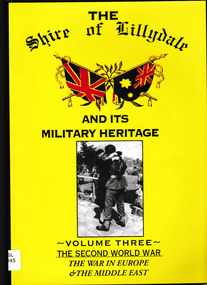
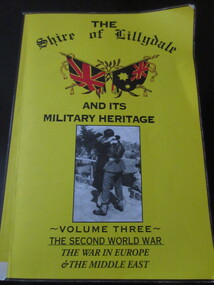
Book, J D Publishing, The Shire Of Lillydale and its Military Heritage Vol 3- The Second World War- The War in Europe and the Middle East, 2001
... The Shire Of Lillydale and its Military Heritage Vol 3- The Second World War- The War in Europe and the Middle East...The Shire Of Lillydale and its Military Heritage Vol 3- The Second World War- The War in Europe and the Middle East Book Book J D Publishing Aristoc Offset ... -
 Lilydale RSL Sub Branch
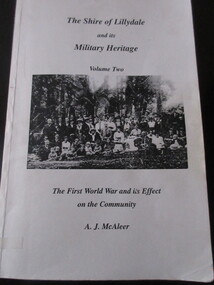
Book - Book (Paperback), A J McAleer, The Shire Of Lillydale and its Military Heritage Vol2 - The First World War and its effect on the Community, 1995
... The Shire Of Lillydale and its Military Heritage Vol2 - The First World War and its effect on the Community...Book The Shire Of Lillydale and its Military Heritage Vol2 - The First World War and its effect on the Community Book Book (Paperback) A J McAleer Roundabout Publishing Pty Ltd Copymate Printing ...Book -
 Lilydale RSL Sub Branch
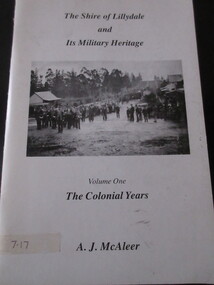
Book - Book (Paperback), A J McAleer, The Shire Of Lillydale and its Military Heritage Vol 1 - The Colonial Years, 1994
... The Shire Of Lillydale and its Military Heritage Vol 1 - The Colonial Years...Book The Shire Of Lillydale and its Military Heritage Vol 1 - The Colonial Years Book Book (Paperback) A J McAleer Roundabout Publishing Pty Ltd Bizprint ...Book -
 Monbulk RSL Sub Branch
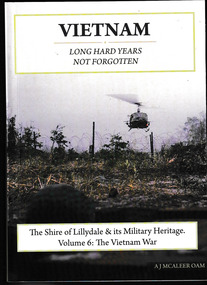
Book, Lilydale RSL Sub-Branch, The Shire of Lilydale and its Military Heritage: Vietnam - long hard years not forgotten, 2026
... The Shire of Lilydale and its Military Heritage: Vietnam - long hard years not forgotten...The Shire of Lilydale and its Military Heritage: Vietnam - long hard years not forgotten Book Lilydale RSL Sub-Branch Anthony McAleer ...A listing of recollections of the Vietnam years by residents of the Shire of Lillydale, including those of servicemen. conscripts and others.Ill, index, p.322.non-fictionA listing of recollections of the Vietnam years by residents of the Shire of Lillydale, including those of servicemen. conscripts and others.vietnam war 1961-1975 - biography, vietnam conflict 1961-1975 - personal recollections -
 8th/13th Victorian Mounted Rifles Regimental Collection
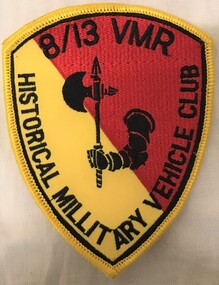
Badge - 8/13 Heritage Vehicle
... ...military...heritage...Vehicles were often used on Anzac Day to carry incapacitated and aged veterans. vehicle military heritage vmr club 8/13 VMR Historical Military Vehicle Club Coloured shield shaped embroidered badge with battle axe motif and title around edge. ...A club formed by members of the 8/13 Victorian Mounted Rifles who owned heritage vehicles. Vehicles were often used on Anzac Day to carry incapacitated and aged veterans.Coloured shield shaped embroidered badge with battle axe motif and title around edge.8/13 VMR Historical Military Vehicle Club vehicle, military, heritage, vmr, club -
 Mont De Lancey
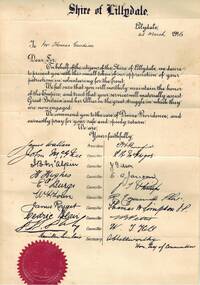
Certificate - WWI Appreciation Certificate, 1916
... ...Military heritage...Gaudion's Voluntary Active Service during World War 1. certificates of appreciation WW1 wwi Certificates shire of lilydale lilydale Lilydale military history Military heritage T.W. Gaudion Gaudion family history World War One World War 1 first world war "Shire of Lilydale, Lilydale 1st March 1916 to Mr Thomas Gaudion......" ...Certificate acknowledging Mr Thomas W. Gaudion's Voluntary Active Service during World War 1.White coloured Certificate from Shire of Lilydale to Thomas W. Gaudion acknowledging Voluntary Active Service during 1st World War, with a red Wax Seal."Shire of Lilydale, Lilydale 1st March 1916 to Mr Thomas Gaudion......" Red Wax Seal in lower left of Certificatecertificates of appreciation, ww1, wwi, certificates, shire of lilydale, lilydale, lilydale military history, military heritage, t.w. gaudion, gaudion, family history, world war one, world war 1, first world war -
 8th/13th Victorian Mounted Rifles Regimental Collection
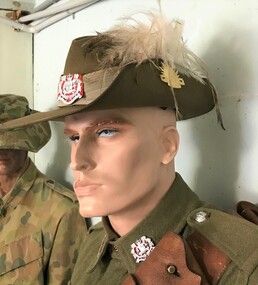
Uniform - Heritage mannequin
... military...light horse...heritage...Training and advice came from former light horsemen: Des Martin (8LH), Norm Whitehead (21LH), Bob Fyffe (20LH) and Fred Trickey (Riding Master RMC). military light horse heritage vmr Mannequin dressed in the uniform of a sergeant of the 8/13 Victorian Mounted Rifles Light Horse Heritage Troop Uniform Heritage mannequin ...The Heritage Troop of 8/13 Victorian Mounted Rifles was a very public face of the regiment during the 1980s and early 1990s. It conducted one royal escort, several vice-regal escorts and numerous VIP escorts in the border, north-east and wider Victorian locations. The royal duty was at the opening of Hopkins Barracks, Puckapunyal by HRH Prince Charles accompanied by HRH Princess Diana, 31 October 1985. Major General Kevin Cooke GOC 3rd Division authorised the establishment of the troop in February 1980. Captain (later Major) Robert Morrison was the troop leader and the driving force behind the concept seeing potential where others did not. The troop was made up mainly by serving members of 8/13 but did include some civilian members. Training and advice came from former light horsemen: Des Martin (8LH), Norm Whitehead (21LH), Bob Fyffe (20LH) and Fred Trickey (Riding Master RMC). Mannequin dressed in the uniform of a sergeant of the 8/13 Victorian Mounted Rifles Light Horse Heritage Troopmilitary, light horse, heritage, vmr -
 8th/13th Victorian Mounted Rifles Regimental Collection
Document - Instruction
... military...orders...VMR...Heritage...military orders VMR Heritage Troop Corowa Typed Administrative Instruction for A Squadron 8/13 VMR support to Corowa Bicentenial Show 27-28 February 1988. ...Typed Administrative Instruction for A Squadron 8/13 VMR support to Corowa Bicentenial Show 27-28 February 1988. Current unit, light Horse Troop, and Historical Vehicle Club participated. Six pages including nominal roll.military, orders, vmr, heritage troop, corowa -
 8th/13th Victorian Mounted Rifles Regimental Collection
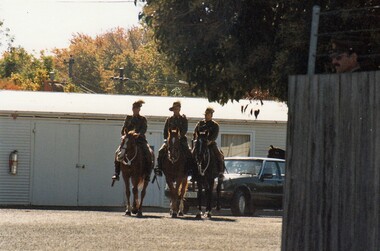
Photograph - Heritage Troop light horsemen on escort duty
... military...light horse...heritage...military light horse heritage escort Buna Barracks horses uniform Three colour photographs of light horsemen of the Victorian Mounted Rifles Heritage Troop escorting a car bearing a VIP to a parade at Buna Barracks Albury. ...Three colour photographs of light horsemen of the Victorian Mounted Rifles Heritage Troop escorting a car bearing a VIP to a parade at Buna Barracks Albury.military, light horse, heritage, escort, buna barracks, horses, uniform -
 Ballarat Tramway Museum
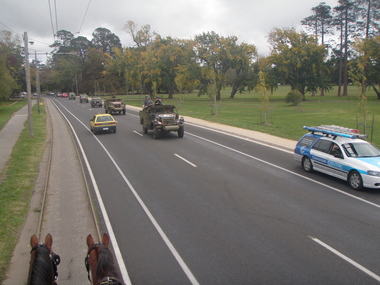
Photograph - Digital image set of 8, 8 and 9 May 2010
... Set of 8 digital images taken on Saturday and Sunday 8 & 9 May 2010 of the horse tram operating between Gardens Loop and St Aidans Drive by Alastair Reither, for the City of Ballarat 2010 Heritage Weekend. .1 - View from the top deck with a group of heritage military vehicles head along Wendouree Parade. .2 - ditto at the terminal with No. 28 .3 - swapping the horses around. .4 - travelling along Wendouree Parade from the wetlands .5 - ditto] .6 - ditto .7 - ditto .8 - ditto from northern footpath, near Fairy land....Trams tramways Horse Tram BTM Wendouree Parade tram 1 tram 28 Set of 8 digital images taken on Saturday and Sunday 8 & 9 May 2010 of the horse tram operating between Gardens Loop and St Aidans Drive by Alastair Reither, for the City of Ballarat 2010 Heritage Weekend. .1 - View from the top deck with a group of heritage military vehicles head along Wendouree Parade. .2 - ditto at the terminal with No. 28 .3 - swapping the horses around. .4 - travelling along Wendouree Parade from the wetlands .5 - ditto] .6 - ditto .7 - ditto .8 - ditto from northern footpath, near Fairy land. ...Yields information about the operation of the horse tram by the BTM during the Ballarat Heritage Weekend 2010.Set of 8 digital images taken on Saturday and Sunday 8 & 9 May 2010 of the horse tram operating between Gardens Loop and St Aidans Drive by Alastair Reither, for the City of Ballarat 2010 Heritage Weekend. .1 - View from the top deck with a group of heritage military vehicles head along Wendouree Parade. .2 - ditto at the terminal with No. 28 .3 - swapping the horses around. .4 - travelling along Wendouree Parade from the wetlands .5 - ditto] .6 - ditto .7 - ditto .8 - ditto from northern footpath, near Fairy land.trams, tramways, horse tram, btm, wendouree parade, tram 1, tram 28 -
 Flagstaff Hill Maritime Museum and Village
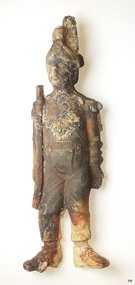
Leisure object - Toy Soldier, circa 1878
... Heritage Register. The toy soldier represents a 19th-century child's interest in military history. ...The toy soldier is a relic from the shipwreck of the LOCH ARD in 1878. It has a companion piece in the Flagstaff Hill collection. The toy soldier is unpainted, but the style of uniform, and the weapons carried (a musket and a basket-handled cutlass), indicate it is a representation of the Napoleonic Wars period from the beginning of the nineteenth century. Mass-produced toy soldiers made of cast metal (lead or tin) became popular during the 1800s. Heyde of Germany manufactured silhouette-shaped flat toy soldiers early in the century. Mignot of France released three-dimensional solid figures and later around 1893 W. Britain, a toy company became known for its die-cast lead toy soldiers. These innovations were designed to make sets of toy soldiers more affordable for middle and lower-class children, extending the market beyond the intricately made and hand-crafted replicas that were the preserve of the rich in the eighteenth century. Wooden military figures, specially carved and unpainted ones, were therefore not particularly common at the time when the Loch Ard foundered on Victoria’s southwest coast. Mignot was the first to sell unpainted soldiers, leaving their customers to fill in the colours according to their own patriotic preferences. It is, therefore, possible the two figures in the Flagstaff Hill collection were part of a new set intended for sale, rather than part of a passenger’s existing collection. Loch Ard History: The Loch Ard got its name from ”Loch Ard” a loch that lies to the west of Aberfoyle, and the east of Loch Lomond. It means "high lake" in Scottish Gaelic. The vessel belonged to the famous Loch Line which sailed many vessels from England to Australia. The Loch Ard was built in Glasgow by Barclay, Curle & Co. in 1873, the vessel was a three-masted square-rigged iron sailing ship that measured 79.87 meters in length, 11.58 m in width, and 7 m in depth with a gross tonnage of 1693 tons with a mainmast that measured a massive 45.7 m in height. Loch Ard made three trips to Australia and one trip to Calcutta before its fateful voyage. Loch Ard left England on March 2, 1878, under the command of 29-year-old Captain Gibbs, who was newly married. The ship was bound for Melbourne with a crew of 37, plus 17 passengers. The general cargo reflected the affluence of Melbourne at the time. Onboard were straw hats, umbrellas, perfumes, clay pipes, pianos, clocks, confectionery, linen and candles, as well as a heavier load of railway irons, cement, lead and copper. There were other items included that were intended for display in the Melbourne International Exhibition of 1880. The voyage to Port Phillip was long but uneventful. Then at 3 am on June 1, 1878, Captain Gibbs was expecting to see land. But the Loch Ard was running into a fog which greatly reduced visibility. Captain Gibbs was becoming anxious as there was no sign of land or the Cape Otway lighthouse. At 4 am the fog lifted and a lookout aloft announced that he could see breakers. The sheer cliffs of Victoria's west coast came into view, and Captain Gibbs realised that the ship was much closer to them than expected. He ordered as much sail to be set as time would permit and then attempted to steer the vessel out to sea. On coming head-on into the wind, the ship lost momentum, the sails fell limp and Loch Ard's bow swung back towards land. Gibbs then ordered the anchors to be released in an attempt to hold their position. The anchors sank some 50 fathoms - but did not hold. By this time the ship was among the breakers and the tall cliffs of Mutton Bird Island rose behind. Just half a mile from the coast, the ship's bow was suddenly pulled around by the anchor. The captain tried to tack out to sea, but the ship struck a reef at the base of Mutton Bird Island, near Port Campbell. Waves subsequently broke over the ship and the top deck became loosened from the hull. The masts and rigging came crashing down knocking passengers and crew overboard. When a lifeboat was finally launched, it crashed into the side of Loch Ard and capsized. Tom Pearce, who had launched the boat, managed to cling to its overturned hull and shelter beneath it. He drifted out to sea and then on the flood tide came into what is now known as Lochard Gorge. He swam to shore, bruised and dazed, and found a cave in which to shelter. Some of the crew stayed below deck to shelter from the falling rigging but drowned when the ship slipped off the reef into deeper water. Eva Carmichael a passenger had raced onto the deck to find out what was happening only to be confronted by towering cliffs looming above the stricken ship. In all the chaos, Captain Gibbs grabbed Eva and said, "If you are saved Eva, let my dear wife know that I died like a sailor". That was the last Eva Carmichael saw of the captain. She was swept off the ship by a huge wave. Eva saw Tom Pearce on a small rocky beach and yelled to attract his attention. He dived in and swam to the exhausted woman and dragged her to shore. He took her to the cave and broke the open case of brandy which had washed up on the beach. He opened a bottle to revive the unconscious woman. A few hours later Tom scaled a cliff in search of help. He followed hoof prints and came by chance upon two men from nearby Glenample Station three and a half miles away. In a complete state of exhaustion, he told the men of the tragedy. Tom then returned to the gorge while the two men rode back to the station to get help. By the time they reached Loch Ard Gorge, it was cold and dark. The two shipwreck survivors were taken to Glenample Station to recover. Eva stayed at the station for six weeks before returning to Ireland by steamship. In Melbourne, Tom Pearce received a hero's welcome. He was presented with the first gold medal of the Royal Humane Society of Victoria and a £1000 cheque from the Victorian Government. Concerts were performed to honour the young man's bravery and to raise money for those who lost family in the disaster. Of the 54 crew members and passengers on board, only two survived: the apprentice, Tom Pearce and the young woman passenger, Eva Carmichael, who lost her family in the tragedy. Ten days after the Lochard tragedy, salvage rights to the wreck were sold at auction for £2,120. Cargo valued at £3,000 was salvaged and placed on the beach, but most washed back into the sea when another storm developed. The wreck of Lochard still lies at the base of Mutton Bird Island. Much of the cargo has now been salvaged and some items were washed up into Lochard Gorge. Cargo and artefacts have also been illegally salvaged over many years before protective legislation was introduced in March 1982. One of the most unlikely pieces of cargo to have survived the shipwreck was a Minton majolica peacock- one of only nine in the world. The peacock was destined for the Melbourne 1880 International Exhibition. It had been well packed, which gave it adequate protection during the violent storm. Today the Minton peacock can be seen at the Flagstaff Hill Maritime Museum in Warrnambool. From Australia's most dramatic shipwreck, it has now become Australia's most valuable shipwreck artifact and is one of very few 'objects' on the Victorian State Heritage Register.The toy soldier represents a 19th-century child's interest in military history. The item is one of two toy soldiers recovered from the Loch Ard in Flagstaff Hill's collection. The shipwreck of the Loch Ard is of significance for Victoria and is registered on the Victorian Heritage Register ( S 417). Flagstaff Hill has a varied collection of artefacts from Loch Ard and its collection is significant for being one of the largest accumulations of artefacts from this notable Victorian shipwreck of which the subject items are a small part. The collections of objects give us a snapshot of how we can interpret the story of this tragic event. The collection is also archaeologically significant as it represents aspects of Victoria's shipping history, allowing us to interpret Victoria's social and historical themes. Through is associated with the worst and best-known shipwreck in Victoria's history.An unpainted, cream-coloured toy soldier, recovered from the Loch Ard. The figure wears a Napoleonic Wars-era uniform, a plumed helmet, a short jacket with tails, bib-front trousers with button closure, straps crossed at the front and back, and epaulettes. The figure is in marching posture with one foot extended forward, and is bearing a musket at the slope-arms position, with a sabre or cutlass slung behind. It is unable to stand on its own. There are reddish-brown and orange-brown stains on the head and body. The body has seams along both sides that are uneven at the lower leg. There is a hole in the back and the inside is hollow. The material has a rough texture.flagstaff hill, warrnambool, flagstaff hill maritime museum, shipwreck coast, flagstaff hill maritime village, great ocean road, loch ard, toy soldier, napoleonic uniforms, military toy, moulded soldier -
 Flagstaff Hill Maritime Museum and Village
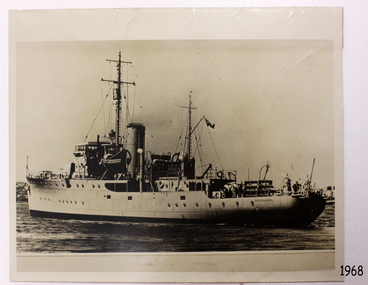
Photograph - Vessel, Steam Ship, HMAS Warrnambool J202, Between 1941-1947
... - National significance, being present in Timor at the Japanese surrender - National significance, shown by the significance of the ship’s bell being curated as Military Heritage and Technology at the Australian War Memorial. - National significance as part of Australia’s defence force history, being one of only four Bathurst class corvettes lost while in Australian service, the only Bathurst class corvette lost after World War II, the only RAN vessel to be sunk by a mine, and associated with the last four Navy deaths of WWII flagstaff hill Maritime Village maritime museum Warrnambool Shipwreck coast Mort's Dock & Engineering Co Ltd H.M.A.S. ...The photograph shows the vessel HMAS Warrnambool J202, which was commissioned by the Royal Australian Navy for use as a minesweeper during World War II. The Bathurst Class Corvette, fitted out with a range of armaments, was launched in Sydney 1941. The ship began service in Bass Strait in 1941. At the end of the year it called into its namesake city, Warrnambool, where the crew paraded for the public marching eastwards along Timor Street. A gift of books for the ship’s personnel and a plaque bearing the City of Warrnambool’s Coat of Arms were presented to the ship. The ship was involved in evacuating a family of nine from the Dutch East Indies that was later successful in its challenge of Australia’s Immigration Restriction Act (White Australia Polity). The ship had many other appointments around Australia. On 13th September 1947 HMAS Warrnambool was leading a flotilla of minesweepers in northern Queensland’s coastal waters, clearing mines previously laid to defend Australia. The ship hit a mine, which exploded and very quickly sunk the ship. Boats from the nearby ships rescued most of the seamen although one was killed at the time. The survivors were taken by the HMAS Swan II to Darwin, and they went from there to hospitals in Brisbane and Sydney. Three of these men later died from their injuries. A number of items were recovered by Navy divers in 1948 including the ship’s bell and a plaque with Warrnambool’s Coat of Arms. In 1972-75 the wreck was sold and other items were salvaged. In 1995 a memorial plaque was erected in Warrnambool near the RSL. NOTE: The RAN built a second HMAS Warrnambool FCPB204, launched in 1981 and decommissioned in 2005. There was also a steam ship SS Warrnambool built in London 1892 and broken up in 1926. [A more detailed history can be found in our Collection Record 3477.] This photograph of HMAS Warrnambool is significant for its association with Royal Australian Navy and its vessel, HMAS Warrnambool (J202). The HMAS Warrnambool played a nationally significant role in overturning Australia’s Immigration Restriction Act 1901 (colloquially known as the White Australia policy). The ship rescued, and brought to Australia, Samuel and Annie Jacob and their family after they evacuated Dutch East India. The family was threatened with deportation and made the first successful appeal to High Court regarding that Act. The HMAS Warrnambool has - Local significance for being the namesake of the City of Warrnambool - Local significance, having docked in Warrnambool Harbour - Local significance, the crew having paraded in Timor Street, Warrnambool - State significance for its first patrol being in Bass Strait. - National significance, being present in Timor at the Japanese surrender - National significance, shown by the significance of the ship’s bell being curated as Military Heritage and Technology at the Australian War Memorial. - National significance as part of Australia’s defence force history, being one of only four Bathurst class corvettes lost while in Australian service, the only Bathurst class corvette lost after World War II, the only RAN vessel to be sunk by a mine, and associated with the last four Navy deaths of WWIIPhotograph of HMAS Warrnambool near land. Black and white photograph shows a steam and sail vessel in calm water beside land. Figures are standing on board. A flag flies on a mast. The ship's name is on the stern. The light coloured funnel has emitted a small amount of smoke.On side of ship "WARRNAMBOOL"flagstaff hill, maritime village, maritime museum, warrnambool, shipwreck coast, mort's dock & engineering co ltd, h.m.a.s. warrnambool, hmas warrnambool, hmas warrnambool i, hmas warrnambool j202, hmas swan ii, j202, world war ii, bathurst class corvette, royal australian navy, ran, sydney built ship, bass strait patrol, sea mine patrol, mine sweeper, mine clearance, navy divers, great barrier reef, cockburn reef, southern cross diving and salvage, warrnambool city council, cr j r astbury, mayor j r astbury, warrnambool patriotic fund, seal, coat of arms, dedicatory plaque, hmas warrnambool 1941, shipwreck by sea mine 1947, sinking ship, sunk ship, minesweeper -
 Flagstaff Hill Maritime Museum and Village
Equipment - Speaking Tube, Morts Dock & Engineering Co. Ltd, circa 1941
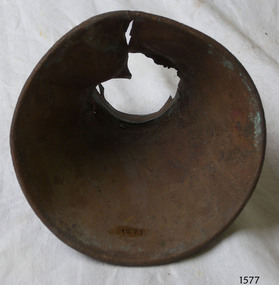
... - National significance, being present in Timor at the Japanese surrender - National significance, shown by the significance of the ship’s bell being curated as Military Heritage and Technology at the Australian War Memorial. - National significance as part of Australia’s defence force history, being one of only four Bathurst class corvettes lost while in Australian service, the only Bathurst class corvette lost after World War II, the only RAN vessel to be sunk by a mine, and associated with the last four Navy deaths of WWII flagstaff hill Maritime Village maritime museum Warrnambool Shipwreck coast Mort's Dock & Engineering Co Ltd H.M.A.S. ...This brass speaking tube or voice pipe was used by the crew to communicate within the ship. It was recovered from the wreck of the Royal Australian Navy vessel, HMAS Warrnambool in 1948. The HMAS Warrnambool J202 was commissioned by the Royal Australian Navy for use as a minesweeper during World War II. The Bathurst Class Corvette, fitted out with a range of armaments, was launched in Sydney 1941 and was. The ship began service in Bass Strait in 1941. At the end of the year it called into its namesake city, Warrnambool, where the crew paraded for the public marching eastwards along Timor Street. A gift of books for the ship’s personnel and a plaque bearing the City of Warrnambool’s Coat of Arms were presented to the ship. The ship was involved in evacuating a family of nine from the Dutch East Indies that was later successful in its challenge of Australia’s Immigration Restriction Act (White Australia Polity). The ship had many other appointments around Australia. On 13th September 1947 HMAS Warrnambool was leading a flotilla of minesweepers in northern Queensland’s coastal waters, clearing mines previously laid to defend Australia. The ship hit a mine, which exploded and very quickly sunk the ship. Boats from the nearby ships rescued most of the seamen although one was killed at the time. The survivors were taken by the HMAS Swan II to Darwin, and they went from there to hospitals in Brisbane and Sydney. Three of these men later died from their injuries. A number of items were recovered by Navy divers in 1948 including the ship’s bell and a plaque with Warrnambool’s Coat of Arms. In 1972-75 the wreck was sold and other items were salvaged. In 1995 a memorial plaque was erected in Warrnambool near the RSL. NOTE: The RAN built a second HMAS Warrnambool FCPB204, launched in 1981 and decommissioned in 2005. There was also a steam ship SS Warrnambool built in London 1892 and broken up in 1926. [A more detailed history can be found in our Collection Record 3477.] This speaking tube is an example of communication used in the mid-1900s on board a vessel. It is significant is significant for its association with Royal Australian Navy and its vessel, HMAS Warrnambool (J202). The HMAS Warrnambool played a nationally significant role in overturning Australia’s Immigration Restriction Act 1901 (colloquially known as the White Australia policy). The ship rescued, and brought to Australia, Samuel and Annie Jacob and their family after they evacuated Dutch East India. The family was threatened with deportation and made the first successful appeal to High Court regarding that Act. The HMAS Warrnambool has - Local significance for being the namesake of the City of Warrnambool - Local significance, having docked in Warrnambool Harbour - Local significance, the crew having paraded in Timor Street, Warrnambool - State significance for its first patrol being in Bass Strait. - National significance, being present in Timor at the Japanese surrender - National significance, shown by the significance of the ship’s bell being curated as Military Heritage and Technology at the Australian War Memorial. - National significance as part of Australia’s defence force history, being one of only four Bathurst class corvettes lost while in Australian service, the only Bathurst class corvette lost after World War II, the only RAN vessel to be sunk by a mine, and associated with the last four Navy deaths of WWIISpeaking tube or voice pipe, brass, conical shape, broken off at base. Wide end has a rolled edge. Recovered from HMAS Warrnambool, sunk on 13-09-1947.flagstaff hill, maritime village, maritime museum, warrnambool, shipwreck coast, mort's dock & engineering co ltd, h.m.a.s. warrnambool, hmas warrnambool, hmas warrnambool i, hmas warrnambool j202, hmas swan ii, j202, world war ii, bathurst class corvette, royal australian navy, ran, sydney built ship, bass strait patrol, sea mine patrol, mine sweeper, mine clearance, navy divers, great barrier reef, cockburn reef, southern cross diving and salvage, warrnambool city council, cr j r astbury, mayor j r astbury, warrnambool patriotic fund, seal, coat of arms, ship’s bell, hmas warrnambool 1941, shipwreck by sea mine 1947, sinking ship, sunk ship, sea rescue, life saving, lifesaving, speaking tube, voice pipe, communication on ship, marine technology, marine equipment, minesweeper -
 Federation University Historical Collection
Document - Booklets, Books of sheet music, Mid 1900s
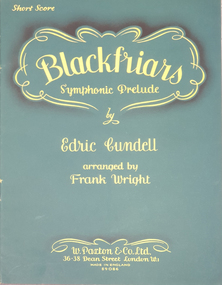
... Military Band Scoring and conducted at the Guildhall of Music and Drama. Frank was often invited to adjudicate Brass Band Championships around Europe, in Australia, including South Street and in New Zealand. The Frank Wright Medal at the Royal South Street competition is awarded to an individual recognized as making an outstanding contribution to brass music in Australia. frank wright sheet music le carnaval romain berlioz ida and dot polka f.h. losey trumpet concerto haydn diadem of gold overture g. bailey the frogs overture granville bantock the shining river edmund rubbra le roi d'ys overture edouard lalo sovereign heritage j. beaver la forza del destino overture verdi cornet blackfriars symphonic prelude eric cundell 1). ...Frank Wright was a renown resident of Smeaton, where he was born on 2 August 1901. He lived at Laura Villa, and attended Smeaton State School. His father William was a gold miner and his mother's name was Sarah. Their family won many singing and instrumental awards. Frank was tutored by Percy Code and was awarded a gold medal for the highest marks in the ALCM examinations in the British Colonies at the age of seventeen years. He became the Australian Open Cornet Champion by the age of eighteen. A year later, Frank conducted the City of Ballarat Band, and later the Ballarat Soldiers’ Memorial Band. He formed the Frank Wright Frisco Band and Frank Wright and his Coliseum Orchestra. These bands won many South Street awards, and Frank as conductor won many awards in the Australian Band Championship contest. In 1933 Frank Wright sailed to England to conduct the famous St Hilda’s Band and was later appointed Musical Director of the London County Council, where he organized many amazing concerts in parks, in and around the London district. He was made Professor of Brass and Military Band Scoring and conducted at the Guildhall of Music and Drama. Frank was often invited to adjudicate Brass Band Championships around Europe, in Australia, including South Street and in New Zealand. The Frank Wright Medal at the Royal South Street competition is awarded to an individual recognized as making an outstanding contribution to brass music in Australia.11 books of sheet music written by various composers but all arranged by Frank Wright. 1). 'Le Carnaval Romain' (The Roman Carnival) Overture by Berlioz for Solo B flat Cornet (Conductor). 2). 'Ida and Dot' Polka by F.H.Losey, for Soprano Cornet, 1st & 2nd Solo Cornet (Conductor), 3rd Cornet, Repiano B flat, 2nd Cornet, Solo Tenore E flat, 1st Tenor E flat, 2nd Tenor E flat, Euphonium B flat, Bass Trombone, 1st Baritone B flat, 2nd Baritone B flat, 1st Trombone, 2nd Trombone, Contre Bass E flat & Drums. The Pianoforte accompaniment was arranged by Frank Wright. 3). 'Trumpet Concerto' by Haydn. The Full Score with parts for a band of 25. 4). 'Diadem of Gold' Overture by G.Bailey for Solo B flat Cornet (Conductor). 5). 'The Frogs (of Aristophanes)' Overture for Solo B flat Cornet (Conductor), Short Score & Full Score arranged for brass band. 6). Variations of 'The Shining River' by Edmund Rubbra for Solo B flat Cornet (Conductor). 7). 'Le Roi D'Ys' (The King of Ys) Overture by Edouard Lalo for Solo B flat Cornet (Conductor). 8). 'Sovereign Heritage' Symphonic Overture by J.Beaver for Solo B flat Cornet (Conductor). 9). 'La Forza del Destino' (The Force of Destiny) Overture by Verdi - the Short Score. 10). 'Blackfriars' Symphonic Prelude by Edric Cundell - Short Score. 11). 'Diadem of Gold' Overture by G.Bailey - Short Score1). Pencil markings on page 1,4,5 &6. 9). Written in pen on front cover - Mr Geoffrey Hosier. 10). Written in pen on title page - All good wishes F.W. 29.x.'55frank wright, sheet music, le carnaval romain, berlioz, ida and dot polka, f.h. losey, trumpet concerto, haydn, diadem of gold overture, g. bailey, the frogs overture, granville bantock, the shining river, edmund rubbra, le roi d'ys overture, edouard lalo, sovereign heritage, j. beaver, la forza del destino overture, verdi, cornet, blackfriars symphonic prelude, eric cundell -
Marysville & District Historical Society
Article (item) - Book Extract, Aboriginal History, Unknown
... heritage protection act 1984...archaelological and aboriginal relics preservation act 1972...camp jungai...rubicon...warrawa college...victorian archaeological survey...hume and hovell...molesworth...broadford...william hamilton...alexandra...mansfield...avenel...tallarook...worrough...john cotton...trawool valley...seymour...pyalong...gold mining...central victoria...strath creek...reedy creek...yea...jamieson...marysville...jordan goldfields...comet mine...wandong...melbourne-albury railway...rabbit plague...narbethong...lord kitchener...puckapunyal military...The extract also covers current (1991) status of Aboriginal affairs and European settlement of the area. kulin nation woiworung taungurong bunurong watherong jajowrong wurrundjeri-willam waring-ilam-balluk goulburn valley acheron valley upper goulburn district eildon-thornton eildon homestead o'rourke thornton assistant protector thomas yarra valley kilmore mount william jt gellibrand william buckley major mitchell port phillip murray river yorta yorta yowung-illam-balluk waring-illam-balluk ngurai-illam-wurrung kurnai nation protectorate system victoria george robinson chief protector willam thomas james dredge edward parker charles sievewright central board for the protection of aborigines presbyterian mission anglican mission moravian mission wonga munnarin beaning murrin murrin parugean baruppin koo-gurrin acheron river little river acheron run peter snodgrass stephen jones barak dividing range black spur watts river badger creek healesville coranderrk victorian christmas bush aboriginal and torres strait islander heritage protection act 1984 archaelological and aboriginal relics preservation act 1972 camp jungai rubicon warrawa college victorian archaeological survey hume and hovell molesworth broadford william hamilton alexandra mansfield avenel tallarook worrough john cotton trawool valley seymour pyalong gold mining central victoria strath creek reedy creek yea jamieson marysville jordan goldfields comet mine wandong melbourne-albury railway rabbit plague narbethong lord kitchener puckapunyal military camp 1944 decentralisation policy eildon weir hume freeway bypass timber industry australian paper manufacturers mill An extract from a book regarding a brief history of the Kulin nation of the North Central district of Victoria. ...An extract from a book regarding a brief history of the Kulin nation of the North Central district of Victoria.An extract from a book regarding a brief history of the Kulin nation of the North Central district of Victoria. This history covered is both prior to European history and post-European history. The extract also covers current (1991) status of Aboriginal affairs and European settlement of the area.kulin nation, woiworung, taungurong, bunurong, watherong, jajowrong, wurrundjeri-willam, waring-ilam-balluk, goulburn valley, acheron valley, upper goulburn district, eildon-thornton, eildon homestead, o'rourke, thornton, assistant protector thomas, yarra valley, kilmore, mount william, jt gellibrand, william buckley, major mitchell, port phillip, murray river, yorta yorta, yowung-illam-balluk, waring-illam-balluk, ngurai-illam-wurrung, kurnai nation, protectorate system, victoria, george robinson, chief protector, willam thomas, james dredge, edward parker, charles sievewright, central board for the protection of aborigines, presbyterian mission, anglican mission, moravian mission, wonga, munnarin, beaning, murrin murrin, parugean, baruppin, koo-gurrin, acheron river, little river, acheron run, peter snodgrass, stephen jones, barak, dividing range, black spur, watts river, badger creek, healesville, coranderrk, victorian christmas bush, aboriginal and torres strait islander heritage protection act 1984, archaelological and aboriginal relics preservation act 1972, camp jungai, rubicon, warrawa college, victorian archaeological survey, hume and hovell, molesworth, broadford, william hamilton, alexandra, mansfield, avenel, tallarook, worrough, john cotton, trawool valley, seymour, pyalong, gold mining, central victoria, strath creek, reedy creek, yea, jamieson, marysville, jordan goldfields, comet mine, wandong, melbourne-albury railway, rabbit plague, narbethong, lord kitchener, puckapunyal military camp, 1944 decentralisation policy, eildon weir, hume freeway bypass, timber industry, australian paper manufacturers mill -
 Lara RSL Sub Branch
Booklet "Their service Our Heritage", Booklet produced by Department of Vetran's affairs, Canberra A.C.T. "Their service Our Heritage" -Australians at War, Circ 01/1998
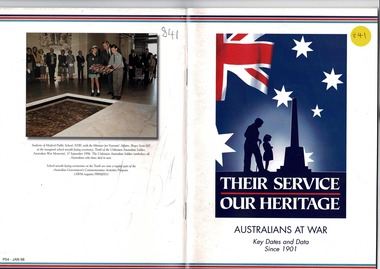
... This small booklet , produced under Their Service - Our Heritage highlights how the course of Australia's military history is unextricably intertwwined with our development as a nation. their service our heritage produced by derartment of vetran affairs Cover is made up with artistic impression of the Australian Flag and a symbolized father and Daughter standing at the war memorial. ...Booklet produced by Department of Vetran's affairs, Canberra A.C.T. "Their service Our Heritage" -Australians at War.This small booklet , produced under Their Service - Our Heritage highlights how the course of Australia's military history is unextricably intertwwined with our development as a nation.Paper booklet A5 in size produced by Department of Vetran's affairs, Canberra A.C.T. "Their service Our Heritage" -Australians at War - key dates and data since 1901. Contains 60 pages covered by laminated cardboard cover. Included is a page from a note pad from HMAS Junee Association.Cover is made up with artistic impression of the Australian Flag and a symbolized father and Daughter standing at the war memorial. Booklet titled Their Service Our Heritage - Australians at War - Key Dates and Data Since 1901. Included is a page from a note pad from HMAS Junee Association.their service our heritage, produced by derartment of vetran affairs -
 Lara RSL Sub Branch
Coloured Print, Colour Patches of the Australian Military Forces World War Two
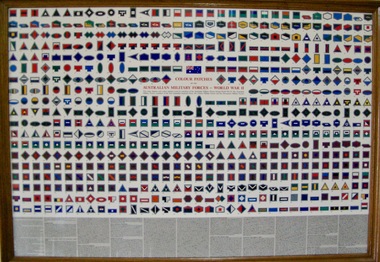
... The Chart displays unit colour patches worn by members of the Australian military forces during world war 2. the Australian Military forces consisted of the 2nd Australian Imperial Forces and the Permanent Military Forces During the world wars and the years in between, Australian soldiers wore cloth patches of various shapes and colours on their upper sleeves to indicate to which unit or formation they belonged. The use of colour patches was discontinued in 1949 when the British system of embroidered shoulder titles, formation signs and lanyards was adopted. In July 1987 colour patches were reintroduced in order to foster the Army’s heritage ...The Chart displays unit colour patches worn by members of the Australian military forces during world war 2. the Australian Military forces consisted of the 2nd Australian Imperial Forces and the Permanent Military ForcesDuring the world wars and the years in between, Australian soldiers wore cloth patches of various shapes and colours on their upper sleeves to indicate to which unit or formation they belonged. The use of colour patches was discontinued in 1949 when the British system of embroidered shoulder titles, formation signs and lanyards was adopted. In July 1987 colour patches were reintroduced in order to foster the Army’s heritage and are now worn on the right side of the puggaree on the slouch hat. Coloured Print of Colour Patches of the Australian Military Forces World War TwoNumbered Colour Patches and descriptions of each patch 1 to 630 -
 Federation University Historical Collection
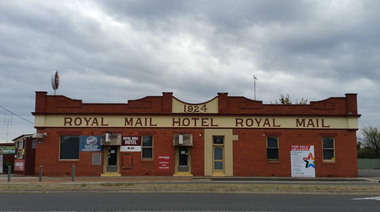
Photograph, Marilyn Jeffs, Hotels of Ballarat, 2019
... hotels ballarat royal mail hotel peter lalor hotel the george hotel x on albert hotel cattleyards inn market hotel bunch of grapes hotel argyle hotel atlantic hotel ballarat hotel black hill hotel blue bell hotel bluebell hotel brown hill hotel canberra hotel carboni carboni's italian kitchen eureka stockade hotel carriers arms hotel eastern station hotel centenary hotel craig's hotel eastern railway hotel freight bar athletic club hotel grapes hotel munster arms hotel golden city hotel golf house hotel irish murphy's camp hotel lake view hotel la porchetta southern cross hotel the mallow hotel meaghers hotel millers arms miners tavern hotel miner's tavern hotel provincial hotel north britain hotel north star hotel oscar's hotel criterian hotel park hotel prince regent house prince regent hotel sport globe sporting globe jacksons hotel railway hotel pwtn pater lalor hotel royal highlander hotel queen's head hotel red lion hotel robin hood hotel military arms hotel royal oak hotel western hotel imperial hotel unicorn hotel union hotel Numerous photographs take by Marilyn Jeffs for use on the Ballarat and District Industrial Heritage Wiki Hotels of Ballarat Photograph Marilyn Jeffs ...Numerous photographs take by Marilyn Jeffs for use on the Ballarat and District Industrial Heritage Wikihotels, ballarat, royal mail hotel, peter lalor hotel, the george hotel, x on albert hotel, cattleyards inn, market hotel, bunch of grapes hotel, argyle hotel, atlantic hotel, ballarat hotel, black hill hotel, blue bell hotel, bluebell hotel, brown hill hotel, canberra hotel, carboni, carboni's italian kitchen, eureka stockade hotel, carriers arms hotel, eastern station hotel, centenary hotel, craig's hotel, eastern railway hotel, freight bar, athletic club hotel, grapes hotel, munster arms hotel, golden city hotel, golf house hotel, irish murphy's, camp hotel, lake view hotel, la porchetta, southern cross hotel, the mallow hotel, meaghers hotel, millers arms, miners tavern hotel, miner's tavern hotel, provincial hotel, north britain hotel, north star hotel, oscar's hotel, criterian hotel, park hotel, prince regent house, prince regent hotel, sport globe, sporting globe, jacksons hotel, railway hotel, pwtn, pater lalor hotel, royal highlander hotel, queen's head hotel, red lion hotel, robin hood hotel, military arms hotel, royal oak hotel, western hotel, imperial hotel, unicorn hotel, union hotel -
Greensborough Historical Society
Booklet, Australia. Department of Veterans Affairs, Caring for your wartime memorabilia: a guide to preserving your family's heritage items, 2001_
... Basic information on conservation of memorabilia and historical documents, especially military items. conservation of materials military memorabilia 34 p., spiral bound, illus. Caring for your wartime memorabilia: a guide to preserving your family's heritage items. ...Basic information on conservation of memorabilia and historical documents, especially military items.34 p., spiral bound, illus.conservation of materials, military memorabilia -
 City of Moorabbin Historical Society (Operating the Box Cottage Museum)
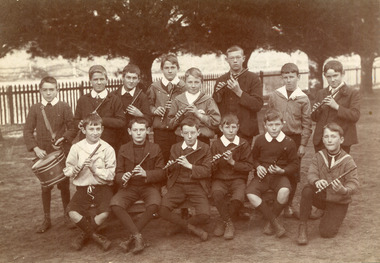
Photograph,Black & White Cheltenham State School Fife & Drum Band c1908, c1908
... heritage of many early settlers the Fife & Drum Band was established at the West Beaumaris (Cheltenham) State School . The Fife is similar to the piccolo, and usually made of wood, consisting of a tube with 6 finger holes and an embouchure hole that produces sound when blown across.The fife was used in folk music traditions to accompany dancing by all social classes. Also in the Military...heritage of many early settlers the Fife & Drum Band was established at the West Beaumaris (Cheltenham) State School . The Fife is similar to the piccolo, and usually made of wood, consisting of a tube with 6 finger holes and an embouchure hole that produces sound when blown across.The fife was used in folk music traditions to accompany dancing by all social classes. Also in the Military ...1855 Stephen Charman donated land to the Methodist Church so that a School could be established to educate the children of the early settler market gardeners and farmers in the Cheltenham area . Education was valued by the general community and as well as schools they established mechanics Institutes and Libraries in Moorabbin Shire. Cheltenham State School No. 84 was among the first schools in Melbourne. Stephen Charman, 1821-1906 a market gardener, donated land for the first Methodist Chapel, Cemetery and School in Charman Rd Cheltenham 1855. The enrolment was 36 pupils with Mr Frederick Meeres as Teacher. 1863 the school is called Beaumaris Common School No 84 with 70 pupils and Walter Meeres as Teacher. 1869 another 2 acres in Charman Road were granted by the Education Board and brick building built . 1872 State School 84 Beaumaris was increasing enrollments and 1878 a new brick school was built to accommodate 174 pupils and the name changed to Cheltenham State School No.84 1894 Mentone State School No.2950 amalgamated with Cheltenham SS No.84. 1910 the buildings were in disrepair, overcrowding was increasing and renovations were made 1912 with further additions in 1925 and 1937. Post WW11 extra prefabricated Classrooms were added as enrollment increased to 1038 in 1955.. Cheltenham East State School 4754 was opened as housing development spread over the City of Moorabbin . (J.Larson Sandringham HS) Probably due to the Scottish heritage of many early settlers the Fife & Drum Band was established at the West Beaumaris (Cheltenham) State School . The Fife is similar to the piccolo, and usually made of wood, consisting of a tube with 6 finger holes and an embouchure hole that produces sound when blown across.The fife was used in folk music traditions to accompany dancing by all social classes. Also in the Military where drums accompanied the fife and originally these 'boy soldier ' bands were used to signal manouevres in the field for the infantry. Later Fife & Drum bands were used for marching bands in schools and community groups, 1855 Stephen Charman donated land to the Methodist Church so that a School could be established to educate the children of the early settler market gardeners and farmers in the Cheltenham area . Education was valued by the general community and as well as schools they established mechanics Institutes and Libraries in Moorabbin Shire. Cheltenham State School No. 84 was among the first schools in Melbourne.Black & White photograph of pupils at West Beaumaris (Cheltenham) State School No.84 in the boy's Fife and Drum Band c 1908Back Handwritten Mrs Whelan / Beaumariswhelan r, marriott geoff, meeres frederick, cheltenham state school no.84, education, keys robert, holloway josiah, king brothers, smith j l; smith mary ann, stanley helen, chaff cutter, horse drawn carts, toll gates brighton, motor cars 1900, steam engines, early settlers, bentleigh, parish of moorabbin, city of moorabbin, county of bourke, moorabbin roads board, shire of moorabbin, henry dendy's special survey 1841, were j.b.; bent thomas, o'shannassy john, king richard, charman stephen, highett william, ormond francis, maynard dennis, market gardeners, vineyards, orchards -
 Orbost & District Historical Society
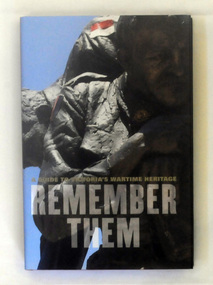
book, Remember Them, 2009
... This is a significant research tool. military-history memorials-Victoria A 308 pp hard cover book with a dust jacket titled Remember Them, A guide to Victoria's Wartime Heritage. ...This guidebook shares the personal stories of the individuals honoured in 250 of Victoria's key war memorials. It covers metropolitan Melbourne and regional Victoria, providing a unique insight into wartime history and the local heroes who fought overseas. Garrie Hutchinson has authored and edited over 30 books, In the early 1970s Hutchinson was heavily involved in anti-war activism and alternative journalism. From the late 1970s Hutchinson moved away from writing poetry and towards a journalistic career.This is a significant research tool.A 308 pp hard cover book with a dust jacket titled Remember Them, A guide to Victoria's Wartime Heritage. The author is Garrie Hutchinson. On the front cover is a photograph of a close-up image of a sculpture of a soldier. The text is dark grey.It is arranged geographically, with accompanying maps and photographs,military-history memorials-victoria -
 Flagstaff Hill Maritime Museum and Village
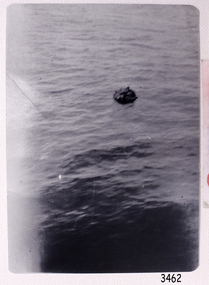
Photograph - Shipwreck rescue, 13-09-1947
... - National significance, being present in Timor at the Japanese surrender - National significance, shown by the significance of the ship’s bell being curated as Military Heritage and Technology at the Australian War Memorial. - National significance as part of Australia’s defence force history, being one of only four Bathurst class corvettes lost while in Australian service, the only Bathurst class corvette lost after World War II, the only RAN vessel to be sunk by a mine, and associated with the last four Navy deaths of WWII flagstaff hill Maritime Village maritime museum Warrnambool Shipwreck coast Mort's Dock & Engineering Co Ltd H.M.A.S. ...This photograph was taken at the scene of the wreck of the HMAS Warrnambool J202 on September 13th 1947.The photographer has captured the crew in a lifeboat surrounded by sea. The lifeboat is approaching the HMAS Swan II. The HMAS Warrnambool J202 was commissioned by the Royal Australian Navy for use as a minesweeper during World War II. The Bathurst Class Corvette, fitted out with a range of armaments, was launched in Sydney in May 1941. The ship began service in Bass Strait in 1941. At the end of the year it called into its namesake city, Warrnambool, where the crew paraded for the public marching eastwards along Timor Street. A gift of books for the ship’s personnel and a plaque bearing the City of Warrnambool’s Coat of Arms were presented to the ship. The ship was involved in evacuating a family of nine from the Dutch East Indies that was later successful in its challenge of Australia’s Immigration Restriction Act (White Australia Polity). The ship had many other appointments around Australia. On 13th September 1947 HMAS Warrnambool was leading a flotilla of minesweepers in northern Queensland’s coastal waters, clearing mines previously laid to defend Australia. The ship hit a mine, which exploded and very quickly sunk the ship. Boats from the nearby ships rescued most of the seamen although one was killed at the time. The survivors were taken by the HMAS Swan II to Darwin, and they went from there to hospitals in Brisbane and Sydney. Three of these men later died from their injuries. A number of items were recovered by Navy divers in 1948 including the ship’s bell and a plaque with Warrnambool’s Coat of Arms. In 1972-75 the wreck was sold and other items were salvaged. In 1995 a memorial plaque was erected in Warrnambool near the RSL. NOTE: The RAN built a second HMAS Warrnambool FCPB204, launched in 1981 and decommissioned in 2005. There was also a steam ship SS Warrnambool built in London 1892 and broken up in 1926. [A more detailed history can be found in our Collection Record 3477.] This photograph is significant for its association with the lifesaving rescue of the crew and the sinking Royal Australian Navy vessel, HMAS Warrnambool (J202). The HMAS Warrnambool played a nationally significant role in overturning Australia’s Immigration Restriction Act 1901 (colloquially known as the White Australia policy). The ship rescued, and brought to Australia, Samuel and Annie Jacob and their family after they evacuated Dutch East India. The family was threatened with deportation and made the first successful appeal to High Court regarding that Act. The HMAS Warrnambool has - Local significance for being the namesake of the City of Warrnambool - Local significance, having docked in Warrnambool Harbour - Local significance, the crew having paraded in Timor Street, Warrnambool - State significance for its first patrol being in Bass Strait. - National significance, being present in Timor at the Japanese surrender - National significance, shown by the significance of the ship’s bell being curated as Military Heritage and Technology at the Australian War Memorial. - National significance as part of Australia’s defence force history, being one of only four Bathurst class corvettes lost while in Australian service, the only Bathurst class corvette lost after World War II, the only RAN vessel to be sunk by a mine, and associated with the last four Navy deaths of WWII Photograph of rescue of crew from H.M.A.S. Warrnambool, sunk on 13-09-1947. Men in life boat surrounded by water. This black and white photograph is one of a series of photographs taken at that time. flagstaff hill, maritime village, maritime museum, warrnambool, shipwreck coast, mort's dock & engineering co ltd, h.m.a.s. warrnambool, hmas warrnambool, hmas warrnambool i, hmas warrnambool j202, hmas swan ii, j202, world war ii, bathurst class corvette, royal australian navy, ran, sydney built ship, bass strait patrol, sea mine patrol, mine sweeper, mine clearance, navy divers, great barrier reef, cockburn reef, southern cross diving and salvage, warrnambool city council, cr j r astbury, mayor j r astbury, warrnambool patriotic fund, seal, coat of arms, dedicatory plaque, hmas warrnambool 1941, shipwreck by sea mine 1947, sinking ship, sunk ship, sea rescue, life saving, lifesaving, lifeboat, minesweeper -
 Flagstaff Hill Maritime Museum and Village
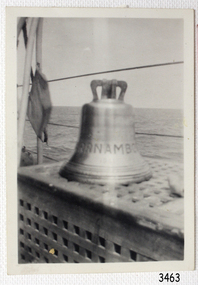
Photograph - Ship's Bell, Royal Australian Navy (RAN), HMAS Warrnambool 1941, 1948
... - National significance, being present in Timor at the Japanese surrender - National significance, shown by the significance of the ship’s bell being curated as Military Heritage and Technology at the Australian War Memorial. - National significance as part of Australia’s defence force history, being one of only four Bathurst class corvettes lost while in Australian service, the only Bathurst class corvette lost after World War II, the only RAN vessel to be sunk by a mine, and associated with the last four Navy deaths of WWII flagstaff hill Maritime Village maritime museum Warrnambool Shipwreck coast Mort's Dock & Engineering Co Ltd H.M.A.S. ...This photograph was taken at the wreck site of the HMAS Warrnambool J202, wrecked on September 13th 1947. The bell was recovered in 1948 by the Royal Australian Navy. The ship's bell has been of great importance to a ship for hundreds of years. The bell is used for the timing of ships watches, for emergencies and many other purposes. It is also a prized possession when a ship is wrecked or broken up, as lasting memorial of the ship's existence. The HMAS Warrnambool J202 was commissioned by the Royal Australian Navy for use as a minesweeper during World War II. The Bathurst Class Corvette, fitted out with a range of armaments, was launched in Sydney 1941 and was. The ship began service in Bass Strait in 1941. At the end of the year it called into its namesake city, Warrnambool, where the crew paraded for the public marching eastwards along Timor Street. A gift of books for the ship’s personnel and a plaque bearing the City of Warrnambool’s Coat of Arms were presented to the ship. The ship was involved in evacuating a family of nine from the Dutch East Indies that was later successful in its challenge of Australia’s Immigration Restriction Act (White Australia Polity). The ship had many other appointments around Australia. On 13th September 1947 HMAS Warrnambool was leading a flotilla of minesweepers in northern Queensland’s coastal waters, clearing mines previously laid to defend Australia. The ship hit a mine, which exploded and very quickly sunk the ship. Boats from the nearby ships rescued most of the seamen although one was killed at the time. The survivors were taken by the HMAS Swan II to Darwin, and they went from there to hospitals in Brisbane and Sydney. Three of these men later died from their injuries. A number of items were recovered by Navy divers in 1948 including the ship’s bell and a plaque with Warrnambool’s Coat of Arms. In 1972-75 the wreck was sold and other items were salvaged. In 1995 a memorial plaque was erected in Warrnambool near the RSL. NOTE: The RAN built a second HMAS Warrnambool FCPB204, launched in 1981 and decommissioned in 2005. There was also a steam ship SS Warrnambool built in London 1892 and broken up in 1926. [A more detailed history can be found in our Collection Record 3477.] This photograph is significant for its association with the lifesaving rescue of the crew and the sinking Royal Australian Navy vessel, HMAS Warrnambool (J202). The HMAS Warrnambool played a nationally significant role in overturning Australia’s Immigration Restriction Act 1901 (colloquially known as the White Australia policy). The ship rescued, and brought to Australia, Samuel and Annie Jacob and their family after they evacuated Dutch East India. The family was threatened with deportation and made the first successful appeal to High Court regarding that Act. The HMAS Warrnambool has - Local significance for being the namesake of the City of Warrnambool - Local significance, having docked in Warrnambool Harbour - Local significance, the crew having paraded in Timor Street, Warrnambool - State significance for its first patrol being in Bass Strait. - National significance, being present in Timor at the Japanese surrender - National significance, shown by the significance of the ship’s bell being curated as Military Heritage and Technology at the Australian War Memorial. - National significance as part of Australia’s defence force history, being one of only four Bathurst class corvettes lost while in Australian service, the only Bathurst class corvette lost after World War II, the only RAN vessel to be sunk by a mine, and associated with the last four Navy deaths of WWII Photograph of ship bell from shipwreck of HMAS Warrnambool, sunk on 13-09-1947. The black and white photograph of the bell shows its inverted 'U' shaped fitting on top and inscribed letters around it. The flared base of the bell has concentric rings as decoration. In photograph, inscription on bell "- ARNAMB-" [WARRNAMBOOL]flagstaff hill, maritime village, maritime museum, warrnambool, shipwreck coast, mort's dock & engineering co ltd, h.m.a.s. warrnambool, hmas warrnambool, hmas warrnambool i, hmas warrnambool j202, hmas swan ii, j202, world war ii, bathurst class corvette, royal australian navy, ran, sydney built ship, bass strait patrol, sea mine patrol, mine sweeper, mine clearance, navy divers, great barrier reef, cockburn reef, southern cross diving and salvage, warrnambool city council, cr j r astbury, mayor j r astbury, warrnambool patriotic fund, seal, coat of arms, dedicatory plaque, hmas warrnambool 1941, shipwreck by sea mine 1947, sinking ship, sunk ship, sea rescue, life saving, lifesaving, hmas warrnambool ship’s bell, ship’s bell, minesweeper -
 Flagstaff Hill Maritime Museum and Village
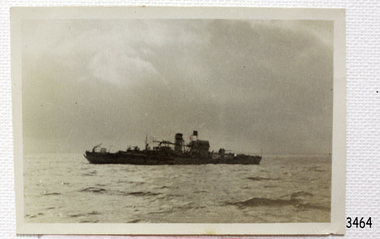
Photograph - Shipwreck rescue, Royal Australian Navy (RAN), 13-09-1947
... - National significance, being present in Timor at the Japanese surrender - National significance, shown by the significance of the ship’s bell being curated as Military Heritage and Technology at the Australian War Memorial. - National significance as part of Australia’s defence force history, being one of only four Bathurst class corvettes lost while in Australian service, the only Bathurst class corvette lost after World War II, the only RAN vessel to be sunk by a mine, and associated with the last four Navy deaths of WWII flagstaff hill Maritime Village maritime museum Warrnambool Shipwreck coast Mort's Dock & Engineering Co Ltd H.M.A.S. ...This photograph was taken at the scene of the wreck of the HMAS Warrnambool J202 on September 13th 1947. The photographer has captured the ship as it sinks at sea. The HMAS Warrnambool J202 was commissioned by the Royal Australian Navy for use as a minesweeper during World War II. The Bathurst Class Corvette, fitted out with a range of armaments, was launched in Sydney in 1941. The ship began service in Bass Strait in 1941. At the end of the year it called into its namesake city, Warrnambool, where the crew paraded for the public marching eastwards along Timor Street. A gift of books for the ship’s personnel and a plaque bearing the City of Warrnambool’s Coat of Arms were presented to the ship. The ship was involved in evacuating a family of nine from the Dutch East Indies that was later successful in its challenge of Australia’s Immigration Restriction Act (White Australia Polity). The ship had many other appointments around Australia. On 13th September 1947 HMAS Warrnambool was leading a flotilla of minesweepers in northern Queensland’s coastal waters, clearing mines previously laid to defend Australia. The ship hit a mine, which exploded and very quickly sunk the ship. Boats from the nearby ships rescued most of the seamen although one was killed at the time. The survivors were taken by the HMAS Swan II to Darwin, and they went from there to hospitals in Brisbane and Sydney. Three of these men later died from their injuries. A number of items were recovered by Navy divers in 1948 including the ship’s bell and a plaque with Warrnambool’s Coat of Arms. In 1972-75 the wreck was sold and other items were salvaged. In 1995 a memorial plaque was erected in Warrnambool near the RSL. NOTE: The RAN built a second HMAS Warrnambool FCPB204, launched in 1981 and decommissioned in 2005. There was also a steam ship SS Warrnambool built in London 1892 and broken up in 1926. [A more detailed history can be found in our Collection Record 3477.] This photograph is significant for its association with the lifesaving rescue of the crew and the sinking Royal Australian Navy vessel, HMAS Warrnambool (J202). The HMAS Warrnambool played a nationally significant role in overturning Australia’s Immigration Restriction Act 1901 (colloquially known as the White Australia policy). The ship rescued, and brought to Australia, Samuel and Annie Jacob and their family after they evacuated Dutch East India. The family was threatened with deportation and made the first successful appeal to High Court regarding that Act. The HMAS Warrnambool has - Local significance for being the namesake of the City of Warrnambool - Local significance, having docked in Warrnambool Harbour - Local significance, the crew having paraded in Timor Street, Warrnambool - State significance for its first patrol being in Bass Strait. - National significance, being present in Timor at the Japanese surrender - National significance, shown by the significance of the ship’s bell being curated as Military Heritage and Technology at the Australian War Memorial. - National significance as part of Australia’s defence force history, being one of only four Bathurst class corvettes lost while in Australian service, the only Bathurst class corvette lost after World War II, the only RAN vessel to be sunk by a mine, and associated with the last four Navy deaths of WWII Photograph of the sinking of the ship HMAS Warrnambool, sunk on 13-09-1947. This black and white photograph showing the vessel at sea is one of a series of photographs taken at the time.flagstaff hill, maritime village, maritime museum, warrnambool, shipwreck coast, mort's dock & engineering co ltd, h.m.a.s. warrnambool, hmas warrnambool, hmas warrnambool i, hmas warrnambool j202, hmas swan ii, j202, world war ii, bathurst class corvette, royal australian navy, ran, sydney built ship, bass strait patrol, sea mine patrol, mine sweeper, mine clearance, navy divers, great barrier reef, cockburn reef, southern cross diving and salvage, warrnambool city council, cr j r astbury, mayor j r astbury, warrnambool patriotic fund, seal, coat of arms, dedicatory plaque, hmas warrnambool 1941, shipwreck by sea mine 1947, sinking ship, sunk ship, minesweeper -
 Flagstaff Hill Maritime Museum and Village
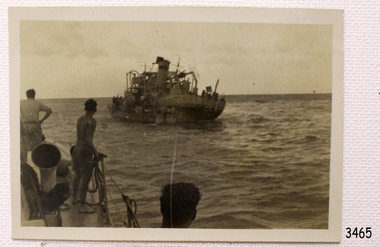
Photograph - Shipwreck rescue, Royal Australian Navy (RAN), 13-09-1947
... - National significance, being present in Timor at the Japanese surrender - National significance, shown by the significance of the ship’s bell being curated as Military Heritage and Technology at the Australian War Memorial. - National significance as part of Australia’s defence force history, being one of only four Bathurst class corvettes lost while in Australian service, the only Bathurst class corvette lost after World War II, the only RAN vessel to be sunk by a mine, and associated with the last four Navy deaths of WWII flagstaff hill Maritime Village maritime museum Warrnambool Shipwreck coast Mort's Dock & Engineering Co Ltd H.M.A.S. ...This photograph was taken at the scene of the wreck of the HMAS Warrnambool J202 on September 13th 1947. The photographer has captured the ship as it sinks at sea. The photograph is taken from a nearby vessel, likely to be the HMAS Swan II, which took the survivors onboard. The HMAS Warrnambool J202 was commissioned by the Royal Australian Navy for use as a minesweeper during World War II. The Bathurst Class Corvette, fitted out with a range of armaments, was launched in Sydney in 1941. The ship began service in Bass Strait in 1941. At the end of the year it called into its namesake city, Warrnambool, where the crew paraded for the public marching eastwards along Timor Street. A gift of books for the ship’s personnel and a plaque bearing the City of Warrnambool’s Coat of Arms were presented to the ship. The ship was involved in evacuating a family of nine from the Dutch East Indies that was later successful in its challenge of Australia’s Immigration Restriction Act (White Australia Polity). The ship had many other appointments around Australia. On 13th September 1947 HMAS Warrnambool was leading a flotilla of minesweepers in northern Queensland’s coastal waters, clearing mines previously laid to defend Australia. The ship hit a mine, which exploded and very quickly sunk the ship. Boats from the nearby ships rescued most of the seamen although one was killed at the time. The survivors were taken by the HMAS Swan II to Darwin, and they went from there to hospitals in Brisbane and Sydney. Three of these men later died from their injuries. A number of items were recovered by Navy divers in 1948 including the ship’s bell and a plaque with Warrnambool’s Coat of Arms. In 1972-75 the wreck was sold and other items were salvaged. In 1995 a memorial plaque was erected in Warrnambool near the RSL. NOTE: The RAN built a second HMAS Warrnambool FCPB204, launched in 1981 and decommissioned in 2005. There was also a steam ship SS Warrnambool built in London 1892 and broken up in 1926. [A more detailed history can be found in our Collection Record 3477.] This photograph is significant for its association with the lifesaving rescue of the crew and the sinking Royal Australian Navy vessel, HMAS Warrnambool (J202). The HMAS Warrnambool played a nationally significant role in overturning Australia’s Immigration Restriction Act 1901 (colloquially known as the White Australia policy). The ship rescued, and brought to Australia, Samuel and Annie Jacob and their family after they evacuated Dutch East India. The family was threatened with deportation and made the first successful appeal to High Court regarding that Act. The HMAS Warrnambool has - Local significance for being the namesake of the City of Warrnambool - Local significance, having docked in Warrnambool Harbour - Local significance, the crew having paraded in Timor Street, Warrnambool - State significance for its first patrol being in Bass Strait. - National significance, being present in Timor at the Japanese surrender - National significance, shown by the significance of the ship’s bell being curated as Military Heritage and Technology at the Australian War Memorial. - National significance as part of Australia’s defence force history, being one of only four Bathurst class corvettes lost while in Australian service, the only Bathurst class corvette lost after World War II, the only RAN vessel to be sunk by a mine, and associated with the last four Navy deaths of WWII Photograph of the sinking of the ship HMAS Warrnambool, sunk on 13-09-1947. Figures onboard a vessel are looking towards figures on the sinking vessel. This black and white photograph is one of a series of photographs taken at the time.flagstaff hill, maritime village, maritime museum, warrnambool, shipwreck coast, mort's dock & engineering co ltd, h.m.a.s. warrnambool, hmas warrnambool, hmas warrnambool i, hmas warrnambool j202, hmas swan ii, j202, world war ii, bathurst class corvette, royal australian navy, ran, sydney built ship, bass strait patrol, sea mine patrol, mine sweeper, mine clearance, navy divers, great barrier reef, cockburn reef, southern cross diving and salvage, warrnambool city council, cr j r astbury, mayor j r astbury, warrnambool patriotic fund, seal, coat of arms, dedicatory plaque, hmas warrnambool 1941, shipwreck by sea mine 1947, sinking ship, sunk ship, sea rescue, life saving, lifesaving, minesweeper
