
Showing 30 items matching "military prison"
-
 National Vietnam Veterans Museum (NVVM)
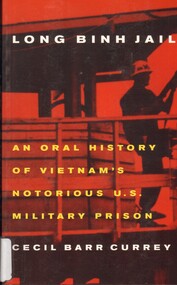
Book, Currey, Cecil Barr, Long Binh Jail: An Oral History of Vietnam's Notorious U.S. Military Prison, 1999
... Long Binh Jail: An Oral History of Vietnam's Notorious U.S. Military Prison....Long Binh Jail: An Oral History of Vietnam's Notorious U.S. Military Prison. Book Book Currey, Cecil Barr ...The infamous horror stories of the U.S. military prison at Long Binh made it so feared that American soldiers preferred to face the Viet Cong rather than be sent there.The infamous horror stories of the U.S. military prison at Long Binh made it so feared that American soldiers preferred to face the Viet Cong rather than be sent there.vietnamese conflict , 1961-1975 - prisoners and prisons, prisons - vietnam - long binh (dong nai), 1961-1975 - personal narratives, american -
 National Vietnam Veterans Museum (NVVM)
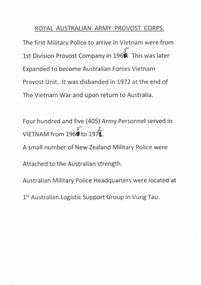
Memorabilia, Memorabilia Royal Australian Army Provist Corps by Cpl James Archbold
... ...Military Prison...Royal Australian Army Provost Corps 1st Division Provost Company Australian Forces Vietnam Provost Unit New Zealand Military Police Australian Military Police Headquarters 1st Australian Logistic Support Group Vung Tau Military Prison Detention Barrack Court Martial Centre AFV Pro Unit American MPs Vietnamese Military and Civilian Police Nui Dat Cam Ranh Bay Special Investigation Branch (SIB) Guard Duties 1st Australian Field Hospital Viet Cong Prisoner North Vietnamese Army Prisoners VIP Security Prisoner Of War Camp Long Binh Saigon EOD Night Curfew Qantas Tan Son Nhat International Airport Cpl Ian Robert Brown 54157 Killed in Action Cpl James Stuart Archbold 3790920 Military Medal Maj Richard Karney Gorman 237669 Mention in Despatches WO1 William Anthony Eade 52772 Australian Army Training Team Vietnam (AATTV) Sgt Robert James Popperwell 52731 Memorabilia Royal Australian Army Provist Corps by Cpl James Archbold. ...Memorabilia Royal Australian Army Provist Corps by Cpl James Archbold. There is also a DVD and USB stick with photographs of the Military Police in Vietnam. royal australian army provost corps, 1st division provost company, australian forces vietnam provost unit, new zealand military police, australian military police headquarters, 1st australian logistic support group, vung tau, military prison, detention barrack, court martial centre, afv pro unit, american mps, vietnamese military and civilian police, nui dat, cam ranh bay, special investigation branch (sib), guard duties, 1st australian field hospital, viet cong prisoner, north vietnamese army prisoners, vip security, prisoner of war camp, long binh, saigon, eod, night curfew, qantas, tan son nhat international airport, cpl ian robert brown, 54157, killed in action, cpl james stuart archbold, 3790920, military medal, maj richard karney gorman, 237669, mention in despatches, wo1 william anthony eade, 52772, australian army training team vietnam (aattv), sgt robert james popperwell, 52731 -
 Bendigo Historical Society Inc.
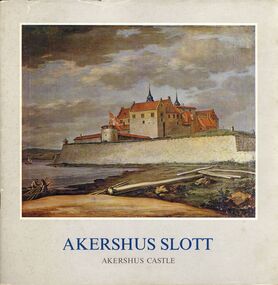
Book - STRAUCH COLLECTION: AKERSHUS SLOTT CASTLE
... This medieval castle in Oslo, Norway was built in the 1290's and has served as a fortress, military base, prison and more recently the temporary office of the Norwegian Prime Minister....This medieval castle in Oslo, Norway was built in the 1290's and has served as a fortress, military base, prison and more recently the temporary office of the Norwegian Prime Minister. ...This medieval castle in Oslo, Norway was built in the 1290's and has served as a fortress, military base, prison and more recently the temporary office of the Norwegian Prime Minister.Akershus Slott Akershus Castle Oslo, souvenier booklet with soft cover 27 pages written in Norwegian & English with colour photographs.place, building, castle, norway-oslo-castles -
 City of Moorabbin Historical Society (Operating the Box Cottage Museum)
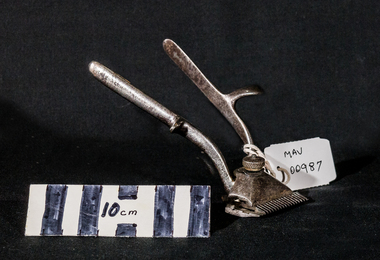
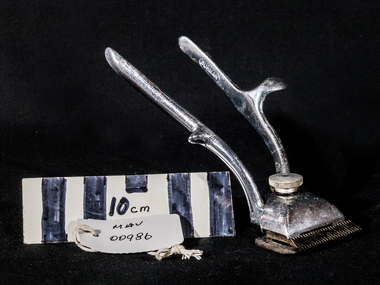
Barbers’ Equipment, hair clippers steel, c1950
... Mid 20thC such haircuts became popular among boys, and young men in the military and in prisons. ...Mid 20thC such haircuts became popular among boys, and young men in the military and in prisons. barbers, hairdressing, hair clippers, grooming, horse clippers, steel manufacture, moorabbin, bentleigh, ormond, cheltenham, market gardeners, A set of hand held barbers’ hair clippers with an adjustable screw. ...Hair clippers are specialized implements used to cut human head hair. They work on the same principle as scissors, but are distinct from scissors and razors. :Hair clippers comprise a pair of sharpened comb-like blades in close contact one above the other which slide sideways relative to each other, a mechanism which may be manual or electrical to make the blades oscillate from side to side, and a handle. The clipper is moved so that hair is positioned between the teeth of the comb, and cut with a scissor action when one blade slides sideways relative to the other. Friction between the blades needs to be as low as possible, which is attained by choice of material and finish, and frequent lubrication. Hair clippers are operated by a pair of handles that are alternately squeezed together and released. Barbers used them to cut hair close and fast. The hair was picked up in locks and the head was rapidly depilated. Mid 20thC such haircuts became popular among boys, and young men in the military and in prisons. A set of hand held barbers’ hair clippers with an adjustable screw. Chrome plated, in good condition, c1950 barbers, hairdressing, hair clippers, grooming, horse clippers, steel manufacture, moorabbin, bentleigh, ormond, cheltenham, market gardeners, -
 City of Moorabbin Historical Society (Operating the Box Cottage Museum)
Barbers' Equipment, hair clippers 'BURMAN", c1950
... Mid 20thC such haircuts became popular among boys, and young men in the military and in prisons. Burman & Sons Ltd, of Ryland Road, Birmingham, West Midlands, manufactured Burman-Douglas steering gear. ...Mid 20thC such haircuts became popular among boys, and young men in the military and in prisons. Burman & Sons Ltd, of Ryland Road, Birmingham, West Midlands, manufactured Burman-Douglas steering gear. ...Hair clippers are specialized implements used to cut human head hair. They work on the same principle as scissors, but are distinct from scissors and razors. :Hair clippers comprise a pair of sharpened comb-like blades in close contact one above the other which slide sideways relative to each other, a mechanism which may be manual or electrical to make the blades oscillate from side to side, and a handle. The clipper is moved so that hair is positioned between the teeth of the comb, and cut with a scissor action when one blade slides sideways relative to the other. Friction between the blades needs to be as low as possible, which is attained by choice of material and finish, and frequent lubrication. Hair clippers are operated by a pair of handles that are alternately squeezed together and released. Barbers used them to cut hair close and fast. The hair was picked up in locks and the head was rapidly depilated. Mid 20thC such haircuts became popular among boys, and young men in the military and in prisons. Burman & Sons Ltd, of Ryland Road, Birmingham, West Midlands, manufactured Burman-Douglas steering gear. Their recirculating worm and ball design of steering gear was fitted to pre-war vehicles such as the Ford Eight and the Ford Prefect, the Bedford CA, plus heavy trucks and off-road vehicles - both pre and post-war. In its day, Burman-Douglas steering-gear was regarded as.... a "quality" feature of a car chassis specification, but the worm and ball design was eventually surpassed by the cheaper rack and pinion design that dominates today. The company also manufactured motorcycle gearboxes, horse clippers and barbers’ clippers. 1871 Company founded. 1897 Private company. 1930s Gearbox for Ariel Square-four motorcycle. (Exhibit at Birmingham Thinktank museum) 1933 Burman and Sons Limited, manufacturers of horse and barbers' clippers, sheep shearers, motor cycle gear boxes and steering gears, Ryland road, Edgebaston 1953 S. F. Burman, M.B.E., Managing Director, Burman and Sons, Ltd 1955 Acquired by Vono Industrial Products. 1961 Manufacturers of motor and motorcycle accessories. 1,500 employees. 1968 Supplied rack and pinion steering units to Ford 1978 Adwest Group acquired Burman and Sons, the steering gear part of Duport. 1986 Major reduction in staffing at Burman due to fall in demand for its products and delivery problems. A set of hand held barbers’ hair clippers with an adjustable screw, from Burman and Sons Ltd of Birmingham, England. Chrome plated, in good condition, c1950. On left arm ; BURMAN On right arm ; MADE IN ENGLANDbarbers, hairdressing, hair clippers, grooming, horse clippers, cars, motor cycles, gear boxes, rack and pinion , worm and ball, steering gears, steel manufacture, birmingham england, burman and sons ltd, moorabbin, bentleigh, ormond, cheltenham, market gardeners, -
 Lara RSL Sub Branch
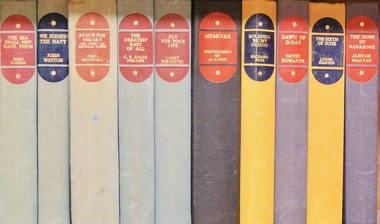
Book, Fly for your Life Author Larry Forrester, March 1956
... The story of Stanford Tuck's military career. tuck forrester 65 squadron distinguished service medal royal air force distinguished flying cross italian bombers 257 squadron spitfire prison camp The story of R.R. ...The story of Stanford Tuck's military career.Hard Cover - colour blue- on spine red seal with gold star on top and bottom. Photographs, The story of R.R. Stanford Tuck, D.S.O D.F.C with two bars To my wife and eight other proud travellers of the inner circle. Part of Companion Book Clubtuck, forrester, 65 squadron, distinguished service medal, royal air force, distinguished flying cross, italian bombers, 257 squadron, spitfire, prison camp -
 Bendigo Military Museum
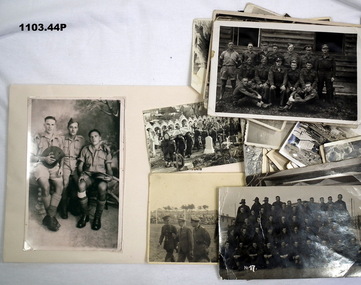
Photograph - ENVELOPE- PHOTOS WW2, 1942 - 1945
... military history Pow Forbes .1) Envelope, fawn colour with B & W copy of original photo showing 3 soldiers set in photo corners on one end. The other end has typed details re the contents. .2)-.47) Forty-six photos inside the envelope, B & W, Sepia, all sizes up to Post card size covering the following subjects. War damage, scenes from N/Africa, prison ...Most of the photos were pasted on something originally so that now most of the writing is unreadable. Two large photos have stamped in red & blue on rear "Gepruft Stalag XVIII A". These were censored POW post cards. .1)The man standing centre is Walter FORBES VX953, on his right is Doug Gregor VX981. Both were POW's. Refer 1101, 1102, 1106..1) Envelope, fawn colour with B & W copy of original photo showing 3 soldiers set in photo corners on one end. The other end has typed details re the contents. .2)-.47) Forty-six photos inside the envelope, B & W, Sepia, all sizes up to Post card size covering the following subjects. War damage, scenes from N/Africa, prison camp, funerals in Germany, Group photos in Prison camp, working parties & concert parties in P.O.W camps.photography - photographs, documents - envelopes, military history, pow, forbes -
 Bendigo Military Museum
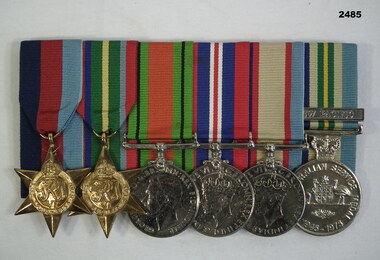
Award - MEDAL SET WW2, Post 1945
... He was held in Changi Gaol then went to work on the Thai-Burma Railway 1942-43 followed by Prison ship to Japan where he worked on the Docks until Wars end. He was discharged from the AIF on 12.12.45. military history Medals "VX25221 A.R Maskell" Medals, court mounted, set of (6) re A Maskell. 1. 1939-45 Star. 2. ...Alfred Maskell No VX25221 (born Mildura, enlisted Caulfield) in the 2nd AIF on 25.6.40 aged 19 years. Posted to 4th Anti Tank Regt with the rank of Gunner he was taken POW at the fall of Singapore. He was held in Changi Gaol then went to work on the Thai-Burma Railway 1942-43 followed by Prison ship to Japan where he worked on the Docks until Wars end. He was discharged from the AIF on 12.12.45.Medals, court mounted, set of (6) re A Maskell. 1. 1939-45 Star. 2. Pacific Star. 3. Defence Medal. 4. War Medal 1939-45. 5. Australian Service Medal 1939 - 45 6. Australian Service Medal 1945-75 with clasp "SW PACIFIC"."VX25221 A.R Maskell"military, history, medals -
 Waverley RSL Sub Branch
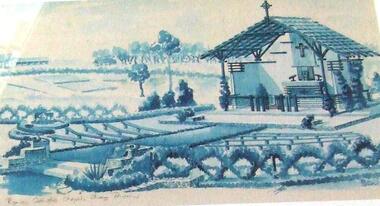
Poster, Changi Chapel
... The original chapel has been re-erected at Duntroon Military Academy and is on public display as a memorial to the P.O.W's In 1988, Singapore built a replica Chapel and Museum next to the Changi Prison. ...The original chapel has been re-erected at Duntroon Military Academy and is on public display as a memorial to the P.O.W's In 1988, Singapore built a replica Chapel and Museum next to the Changi Prison. ...The Changi Museum is a museum dedicated to Singapore's history during the Second World War. The original chapel has been re-erected at Duntroon Military Academy and is on public display as a memorial to the P.O.W's In 1988, Singapore built a replica Chapel and Museum next to the Changi Prison. When Changi Prison was expanded in 2001, the Chapel and Museum was relocated to a new site 1 km away and the Changi Chapel and Museum was officially established on 15 February 2001. Bernard Stogden, the son of Sgt. Harry Stogden, was invited to place the cross that his father made onto the wreathed altar in the new Chapel. He was claimed to have cried while doing so, as this was one of the only chances he got to interact with his father(through his work) as "Harry" Stogden died during the war. The Museum has a collection of paintings, photographs and personal effects donated by former POWs. Among the collection is a series of paintings and sketches by a POW named William Haxworth which provide valuable insight on the daily life of the internees during the occupation. In 1986, Haxworth's wife donated a collection of over 400 paintings and sketches to the National Archives of Singapore. Also in the museum is a collection of watercolour paintings by Mary Angela Bateman who was among the thousands of women and children held at Changi Prison for more than three years during the war.[1]Poster produced by Australian War Memorial detailing the history of The Changi Chapel Framedchangi, changi chapel, changi history -
 Waverley RSL Sub Branch
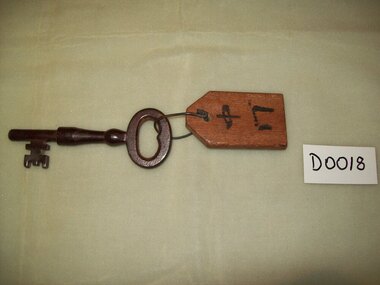
Key
... During World War II, following the Fall of Singapore in February 1942, the Japanese military detained about 3,000 civilians in Changi Prison, which was built to house only 600 prisoners. ...During World War II, following the Fall of Singapore in February 1942, the Japanese military detained about 3,000 civilians in Changi Prison, which was built to house only 600 prisoners. ...During World War II, following the Fall of Singapore in February 1942, the Japanese military detained about 3,000 civilians in Changi Prison, which was built to house only 600 prisoners. The Japanese used the British Army's Selarang Barracks, near the prison, as a prisoner of war camp, holding some 50,000 Allied—predominantly British and Australian—soldiers.[1] Although POWs were rarely, if ever, held in the civilian prison, the name Changi became synonymous in the UK, Australia, and elsewhere with the POW camp. About 850 POWs died during their internment in Changi during the Japanese Occupation of Singapore,[2] a relatively low rate compared to the overall death rate of 27% for POWs in Japanese camps.[3] However, many more prisoners died after being transferred from Changi to various labour camps outside Singapore, including the Burma Railway and the Sandakan airfield.this item is of historical significance because it is supposedly one of the few surving keys to Changi Jail and donated by Mr.Robertson . Changi is significant as it was a major prison camp during WWII Changi Jail Key. Blackened metal key, Wooden tag attached with Japanese print on it. Kanji Characters read Middle Gatechangi, fall of singapore, key, p.o.w. -
 Bendigo Military Museum
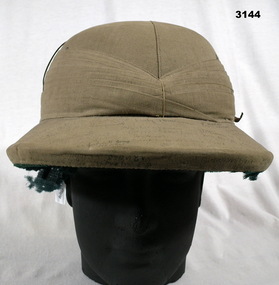
Headwear - HELMET, PITH
... prison ship Rakuyo Maru to Japan when it was sunk by an American submarine. The hand written signatures on the hat include high ranking AIF Officers, major local Officials and dozens of 8th Division AIF soldiers. military equipment - army costume - male headwear On top written in pen & ink: Many army numbers & names of soldiers and some dignitaries.. ...This hat was sent home to Laanecoorie, from Malaya, in 1941 by Driver Cyril John Johnson VX36298, 1 Coy A.A.S.C whilst a POW. Cyril enlisted in the 2nd AIF on 17.6.1940 age 22 years 2 months. Posted to 8th Div Petrol Coy Seymour 25.7.1940, hospital 12.8.1940 with Mumps, rejoin unit 31.8.1940, embark for overseas 2.2.1941, disembark Singapore 19.2.1941. He is listed as missing on 16.2.1942 and later listed as POW in a Thai Camp no date. (He was on the Burma Railway) Last entry on his records states Presumed to be dead 12.9.1944 SWPA. (South West Pacific Area) He with hundreds of others were on the Japanese prison ship Rakuyo Maru to Japan when it was sunk by an American submarine. The hand written signatures on the hat include high ranking AIF Officers, major local Officials and dozens of 8th Division AIF soldiers. British pattern Pith Helmet, khaki coloured cotton cloth with brown leather strap over the top. Large quantity of hand written names on top. Inside rim has green felt lining. Dome section is plaited red silk with manufacturer's label at crest. Hat band is brown leather.On top written in pen & ink: Many army numbers & names of soldiers and some dignitaries.. On top written in ink: To Dad etc from Cyril.military equipment - army, costume - male headwear -
 Bendigo Military Museum
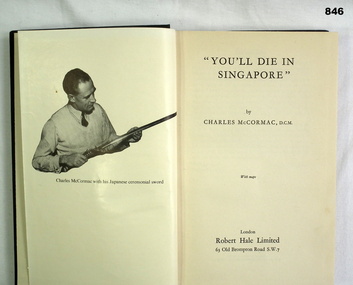
Book, Robert Hale Limited, You'll Die in Singapore, 1955
... books military history imprisonment Front fly leaf in black ink: RSL Stamp Hard, black coloured buckram cover, gold print on spine, 189 cut plain pages, illustrated, black & white photo of author, black & red map. Autobiography - an account of Charles McCormac's escape from a Japanese prison ...Hard, black coloured buckram cover, gold print on spine, 189 cut plain pages, illustrated, black & white photo of author, black & red map. Autobiography - an account of Charles McCormac's escape from a Japanese prison camp in Singapore.Front fly leaf in black ink: RSL Stampbooks, military, history, imprisonment -
 Bendigo Military Museum
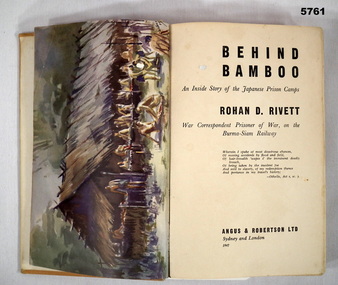
Book - BOOK - JAPANESE PRISON CAMPS WW2, Rohan D. RIVETT, "Behind Bamboo", 1947 (First published May 1946
... Military History...WW2...Japanese Prison...Prison Camps" Author - ROHAN D. RIVETT "War Correspondent Prisoner of War, on the Burma-Siam Railway" Books Military History WW2 Japanese Prison Camps Front end papers - Owner's name - handwritten, black pen, "O.PELL / 7 VIOLET ST/ BGO" "M. ..."BEHIND BAMBOO" "An Inside Story of the Japanese Prison Camps" Author - ROHAN D. RIVETT "War Correspondent Prisoner of War, on the Burma-Siam Railway"Hard cover book. Cover - cardboard, light orange buckram with red and white print on front and spine. 400 pages - cut, plain, off white paper, illustrated - black and white and colour illustrations. Front end papers - owner's name, owner's stamp, book seller's label. Price notation.Front end papers - Owner's name - handwritten, black pen, "O.PELL / 7 VIOLET ST/ BGO" "M. PELL/ ORBOST" Owner's stamp - black ink "BENDIGO DISTRICT RSL SUB BRANCH INC/ PO BOX 42/ LONG GULLY 3550. Book seller's label - silver on black background A.J. DIGBY/ BOOKSELLER AND STAT (?)/ BAIRNSDALE" price notation - grey lead pencil "$10/ DMTY"books, military history, ww2, japanese prison camps -
 Monbulk RSL Sub Branch
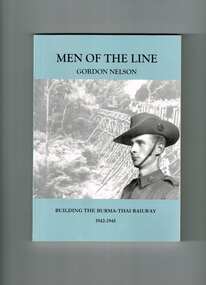
Book, Australian Military History Publications, Men of the line : building the Burma-Thai railway, 1942-1945, 2005
... Burma - Thailand Railway World war 1939 – 1945 - Prisons and prisoners - Japanese Biographical account of the travails of an p Australian risoner on the Burma railway Ill, index, p.192. Men of the line : building the Burma-Thai railway, 1942-1945 Book Australian Military History Publications Gordon Nelson ...Biographical account of the travails of an p Australian risoner on the Burma railwayIll, index, p.192.non-fictionBiographical account of the travails of an p Australian risoner on the Burma railwayburma - thailand railway, world war 1939 – 1945 - prisons and prisoners - japanese -
 Monbulk RSL Sub Branch
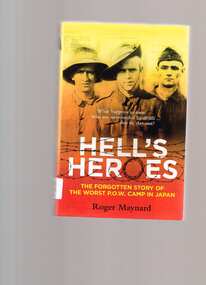
Book, Harper Collins, Hell's heroes, 2009
... World war 1939 – 1945 - Prisons and prisoners - Japanese Atrocities - Japan Hell′s Heroes is the story of the POW camp that never was − so dubbed by one old soldier because the atrocities that occurred there went largely unreported at the time. For while the Burma−Thai railway‚ the Bataan death march and events at Changi and in many other parts of Asia became synonymous with Japanese brutality‚ most of the camps which were set up to provide slave labour for the enemy military machine at home were slowly forgotten in the aftermath of World War II. ...Hell′s Heroes is the story of the POW camp that never was − so dubbed by one old soldier because the atrocities that occurred there went largely unreported at the time. For while the Burma−Thai railway‚ the Bataan death march and events at Changi and in many other parts of Asia became synonymous with Japanese brutality‚ most of the camps which were set up to provide slave labour for the enemy military machine at home were slowly forgotten in the aftermath of World War II.Ill, maps, p.359.non-fictionHell′s Heroes is the story of the POW camp that never was − so dubbed by one old soldier because the atrocities that occurred there went largely unreported at the time. For while the Burma−Thai railway‚ the Bataan death march and events at Changi and in many other parts of Asia became synonymous with Japanese brutality‚ most of the camps which were set up to provide slave labour for the enemy military machine at home were slowly forgotten in the aftermath of World War II.world war 1939 – 1945 - prisons and prisoners - japanese, atrocities - japan -
 Monbulk RSL Sub Branch
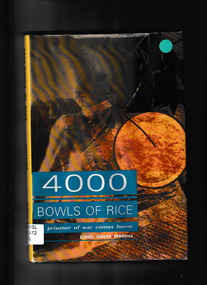
Book, Allen & Unwin, Four thousand bowls of rice : a prisoner of war comes home, 1993
... World war 1939 – 1945 - Prisons and prisoners – Australia Burma Thailand railway Over 60,000 Australians and Americans captured by the Japanese during World War II toiled and died to build the Bridge over the River Kwai. Respected military ...Over 60,000 Australians and Americans captured by the Japanese during World War II toiled and died to build the Bridge over the River Kwai. Respected military historian Linda Goetz Holmes tells the story of one man's survival in Japanese labor camps during WWII. Amazing photographs, taken secretly by other prisoners, chronicle this dark history of Allied troops in the Pacific theatre of war.Index, bibliography, notes, ill, p.179.non-fictionOver 60,000 Australians and Americans captured by the Japanese during World War II toiled and died to build the Bridge over the River Kwai. Respected military historian Linda Goetz Holmes tells the story of one man's survival in Japanese labor camps during WWII. Amazing photographs, taken secretly by other prisoners, chronicle this dark history of Allied troops in the Pacific theatre of war.world war 1939 – 1945 - prisons and prisoners – australia, burma thailand railway -
 Monbulk RSL Sub Branch
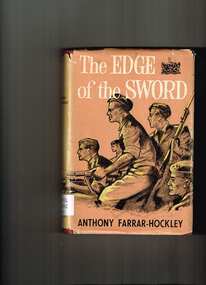
Book, Readers Book Club, The edge of the sword, 1954
... military history. In The Edge of the Sword General Sir Anthony Farrar-Hockley, then Adjutant of the Glosters, has painted a vivid and accurate picture of the battle as seen by the officers and soldiers caught up in the middle of it. The book does not, however, end there. Like the majority of those who survived, the author became a prisoner-of-war, and the book continues with a remarkable account of his experiences in and out of Chinese prison ...In April 1951, at the height of the Korean War, Chinese troops advanced south of the 38th parallel towards a strategic crossing-point of the Imjin River on the invasion route to the South Korean capital of Seoul. The stand of the 1st Battalion, the Gloucestershire Regiment, against the overwhelming numbers of invading troops has since passed into British military history. In The Edge of the Sword General Sir Anthony Farrar-Hockley, then Adjutant of the Glosters, has painted a vivid and accurate picture of the battle as seen by the officers and soldiers caught up in the middle of it. The book does not, however, end there. Like the majority of those who survived, the author became a prisoner-of-war, and the book continues with a remarkable account of his experiences in and out of Chinese prison camps. This book is not an attempt at a personal hero-story, and it is certainly not a piece of political propaganda. It is, above all, an amazing story of human fortitude and high adventure.Ill, p.286non-fictionIn April 1951, at the height of the Korean War, Chinese troops advanced south of the 38th parallel towards a strategic crossing-point of the Imjin River on the invasion route to the South Korean capital of Seoul. The stand of the 1st Battalion, the Gloucestershire Regiment, against the overwhelming numbers of invading troops has since passed into British military history. In The Edge of the Sword General Sir Anthony Farrar-Hockley, then Adjutant of the Glosters, has painted a vivid and accurate picture of the battle as seen by the officers and soldiers caught up in the middle of it. The book does not, however, end there. Like the majority of those who survived, the author became a prisoner-of-war, and the book continues with a remarkable account of his experiences in and out of Chinese prison camps. This book is not an attempt at a personal hero-story, and it is certainly not a piece of political propaganda. It is, above all, an amazing story of human fortitude and high adventure. korean war 1950-1953 - history, korean war - campaigns - gloucestershire regiment -
 Monbulk RSL Sub Branch
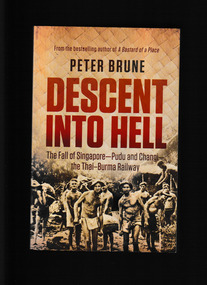
Book, Allen and Unwin, Descent into hell : the fall of Singapore--Pudu and Changi--the Thai Burma railway, 2014
... World War 1939-1945 - Australia - Military history World war 1939 – 1945 - Prisons and prisoners – Australia The definitive story of the Australian campaign in Southeast Asia during World War II from a leading military writer. ...The definitive story of the Australian campaign in Southeast Asia during World War II from a leading military writer. Impressive, compelling, and rich in human spirit, this is a scrupulously researched and groundbreaking account of one of the most traumatic calamities in Australian history-the Malayan Campaign, the fall of Singapore, and the subsequent horrors of the Thai-Burma Railway.Index, ill, maps, p.802.non-fictionThe definitive story of the Australian campaign in Southeast Asia during World War II from a leading military writer. Impressive, compelling, and rich in human spirit, this is a scrupulously researched and groundbreaking account of one of the most traumatic calamities in Australian history-the Malayan Campaign, the fall of Singapore, and the subsequent horrors of the Thai-Burma Railway. world war 1939-1945 - australia - military history, world war 1939 – 1945 - prisons and prisoners – australia -
 Monbulk RSL Sub Branch
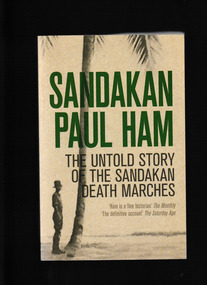
Book, William Heinemann, Sandakan : the untold story of the Sandakan Death Marches, 2013
... After the fall of Singapore, in February 1942, the Japanese conquerors rounded up tens of thousands of British and Australian soldiers and shipped them to prison camps scattered throughout Hirohito's newly won Empire. The fall of Britain's 'impregnable fortress' was the greatest humiliation in British military history, for which Churchill never forgave the Japanese. ...The untold story of the Sandakan death marches of World War II. After the fall of Singapore, in February 1942, the Japanese conquerors rounded up tens of thousands of British and Australian soldiers and shipped them to prison camps scattered throughout Hirohito's newly won Empire. The fall of Britain's 'impregnable fortress' was the greatest humiliation in British military history, for which Churchill never forgave the Japanese. But nothing would surpass the wretched fate of some 2,700 British and Australian prisoners who were shipped to British North Borneo later that year. They landed in Sandakan, on the east coast of the island, after a 10-day voyage on a Japanese 'hell' ship, and were herded into a jungle camp some eight miles inland. Thus began the three-year ordeal of the Sandakan prisoners of war - a barely known story of unimaginable horror.Index, bibliography, notes, ill, p.688.non-fictionThe untold story of the Sandakan death marches of World War II. After the fall of Singapore, in February 1942, the Japanese conquerors rounded up tens of thousands of British and Australian soldiers and shipped them to prison camps scattered throughout Hirohito's newly won Empire. The fall of Britain's 'impregnable fortress' was the greatest humiliation in British military history, for which Churchill never forgave the Japanese. But nothing would surpass the wretched fate of some 2,700 British and Australian prisoners who were shipped to British North Borneo later that year. They landed in Sandakan, on the east coast of the island, after a 10-day voyage on a Japanese 'hell' ship, and were herded into a jungle camp some eight miles inland. Thus began the three-year ordeal of the Sandakan prisoners of war - a barely known story of unimaginable horror.world war 1939-1945 - prisoners of war - sandakan, japan - prisons and prisoners of war -
 Victoria Police Museum
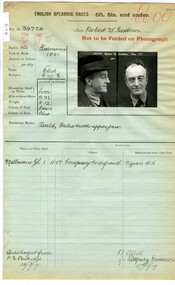
Prison record (Robert Gardner), 27 August 1919
... In September, Robert Gardner, who worked in the pay office of the third military district, was accused, along with Joseph Farrie, of defrauding the Commonwealth Government by creating a fictitious soldier and drawing his pay. english speaking prisoner robert william gardner conspiracy to defraud Prison record for Robert William Gardner, prisoner registered number 34754, giving details of the prisoner, his crimes and the dates and places of his trials. ...In September, Robert Gardner, who worked in the pay office of the third military district, was accused, along with Joseph Farrie, of defrauding the Commonwealth Government by creating a fictitious soldier and drawing his pay.Prison record for Robert William Gardner, prisoner registered number 34754, giving details of the prisoner, his crimes and the dates and places of his trials. english speaking prisoner, robert william gardner, conspiracy to defraud -
 Victoria Police Museum
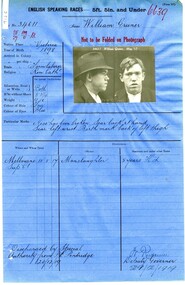
Prison record (William Gruner), 29 December 1919
... military service knife. Walker was a former policeman. Gruner was charged with manslaughter. english speaking prisoner william gruner robert walker manslaughter Prison record for William Gruner, prisoner registered number 34611, giving details of the prisoner, his crimes and the dates and places of his trials. ...In May 1917 William Gruner, a soldier, was with a group of people drinking at the Prince of Wales hotel in Richmond. After the group left the hotel, Gruner returned and stabbed the licensee, Robert Walker, with a military service knife. Walker was a former policeman. Gruner was charged with manslaughter.Prison record for William Gruner, prisoner registered number 34611, giving details of the prisoner, his crimes and the dates and places of his trials.english speaking prisoner, william gruner, robert walker, manslaughter -
 Alfred Hospital Nurses League - Nursing History Collection
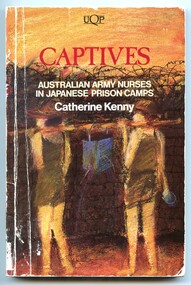
Book - Illustrated Book, Catherine Kenny 1962, Captives: Australian army nurses in Japanese prison camps, 1986
... prison in Japan. Shortly before the fall of Singapore 65 army nurses were evacuated on the Vyner Brooke. Twelve drowned when the ship was sunk off the coast of Sumatra, a further 21 died in the Banka Island massacre, and another eight died in captivity Of significance to AHNL as Alfred graduates were among the captives World War 1939-1945 Australian Army Nurses prisoners of War military nursing nurses Experiences of Australian Army nurses who were prisoners of the Japanese during World War two At the bottom left of the first page is a printed coloured donation sticker: AHNL logo, "This book was donated to AHNL Inc-Nursing Archives by" the Alfred Hospital Library 21/3/18 (handwritten in ink) The previous catalogue number is handwritten in ink at top right of this page. ...Experiences of Australian Army nurses who were prisoners of the Japanese during World War twoIllustrated book. Front cover has a painting by Cynthia Breusch depicting two female figures carrying a container hanging from a pole on their shoulders. Behind them is a barbwire topped fence. The book title is printed over this painting in red and white ink. The author's name is printed in white below the title, and the publisher's mark is printed in black above the title. The Spine is cream in colour, with abbreviated title printed in red, author's surname and publishers mark printed in black. The back cover has a cream background, with quotes from two nurses and a summary of the book overprinted in blacknon-fictionExperiences of Australian Army nurses who were prisoners of the Japanese during World War twoworld war 1939-1945, australian army nurses, prisoners of war, military nursing, nurses -
 National Vietnam Veterans Museum (NVVM)
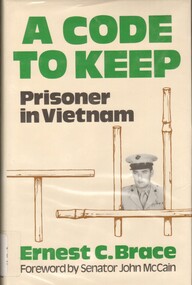
Book, Brace, Ernest, A Code To Keep: Prisoner in Vietnam
... Vietnam War 1961-1975 - Prisoners and prisons North Vietnamese Vietnam War 1961-1975 - Personal narratives American He was a former Marine hero, banished in disgrace from the Corps. Yet he maintained the military ...He was a former Marine hero, banished in disgrace from the Corps. Yet he maintained the military code of conduct in the torture cells of the enemy. this is the true, firsthand account of America's longest-held 'civilian' prisoner of war in Vietnam, and his courageous return to honour.He was a former Marine hero, banished in disgrace from the Corps. Yet he maintained the military code of conduct in the torture cells of the enemy. this is the true, firsthand account of America's longest-held 'civilian' prisoner of war in Vietnam, and his courageous return to honour.vietnam war, 1961-1975 - prisoners and prisons, north vietnamese, vietnam war, 1961-1975 - personal narratives, american -
 National Vietnam Veterans Museum (NVVM)
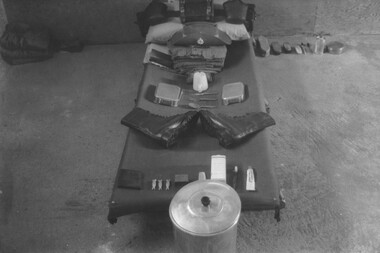
Photograph, Gibbons, Denis, Prison Cell
... Photograph Detention Barrack 1st ALSG Base Vung Tau Military Police Gibbons Collection Catalogue Prisoners Australian Forces Vietnam Detention Barack Denis Gibbons A black and white photograph of the regimentation, discipline and order required of a prisoner, in his cell, when confined to Australian Forces Vietnam Detention Barack located at the First Australian Logistic Support Base, Vung Tau Prison Cell Photograph Gibbons, Denis ...Denis Gibbons (1937 – 2011) Trained with the Australian Army, before travelling to Vietnam in January 1966, Denis stayed with the 1st Australian Task Force in Nui Dat working as a photographer. For almost five years Gibbons toured with nine Australian infantry battalions, posting compelling war images from within many combat zones before being flown out in late November 1970 after sustaining injuries. The images held within the National Vietnam Veterans Museum make up the Gibbons Collection. A black and white photograph of the regimentation, discipline and order required of a prisoner, in his cell, when confined to Australian Forces Vietnam Detention Barack located at the First Australian Logistic Support Base, Vung Tauphotograph, detention barrack, 1st alsg base, vung tau, military police, gibbons collection catalogue, prisoners, australian forces vietnam detention barack, denis gibbons -
 Eltham District Historical Society Inc
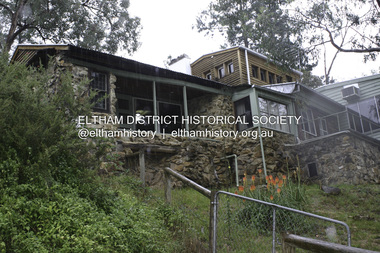
Photograph - Digital Photograph, Alan King, Stonygrad, 34 Hamilton Road, North Warrandyte, 30 January 2008
... Vassilieff trained with the Imperial Military Academy at St Petersburg and fought in World War One as an officer in the White Russian Army against the communists. In 1920 he was captured, then escaped from prison, stole a horse and rode bareback 150 miles to the Black Sea, helped at first by Tartar freebooters. ...Vassilieff trained with the Imperial Military Academy at St Petersburg and fought in World War One as an officer in the White Russian Army against the communists. In 1920 he was captured, then escaped from prison, stole a horse and rode bareback 150 miles to the Black Sea, helped at first by Tartar freebooters. ...Vassilieff dynamited rock from his own property to build his house. Stonygrad is reminiscent of a grotto and in parts, of a sculpture. Covered under Heritage Overlay, Nillumbik Planning Scheme. Published: Nillumbik Now and Then / Marguerite Marshall 2008; photographs Alan King with Marguerite Marshall.; p135 Stonygrad, the home built by Expressionist painter and sculptor Danila Vassilieff, is reminiscent of a grotto and in parts, of a sculpture. Vassilieff, who amongst others influenced painter Sydney Nolan and Albert Tucker, was a member of the artists group the Angry Penguins. He was also a highly regarded art teacher at the nearby Koornong Experimental School and taught at Eltham High School. Art critic Robert Hughes described Vassilieff’s painting as ‘lyrical without social commentary’, and said Vassilieff was ‘the most oddly neglected artist in recent Australian History’. Vassilieff, who was born in 1897 in Russia, had an unusually adventurous life before he settled in Warrandyte. The 12th of 18 children, he lived on a farm in the Don Basin. Vassilieff trained with the Imperial Military Academy at St Petersburg and fought in World War One as an officer in the White Russian Army against the communists. In 1920 he was captured, then escaped from prison, stole a horse and rode bareback 150 miles to the Black Sea, helped at first by Tartar freebooters. He then travelled to India, Shanghai and arrived in Queensland as a refugee in 1923 where he began painting. He and his wife Anisia bought a sugar farm near Ingram, and later he constructed railway lines at Mataranka, in the Northern Territory.4 In 1929 Vassilieff went to Brazil for formal art training from former fellow-officer Dmitri Ismailovich, but he soon left to travel up the Amazon River. He then worked as a sidewalk artist in the West Indies and travelled for two years in England, France and Spain. In 1937 he arrived in Melbourne where he lived until his death in 1958. His first major Australian series was the Carlton streetscapes and from 1951 he sculpted in local hard limestone. Vassilieff rejected all dogma and regarded religious subjects as suitable only for decorative arts. In 1944 he helped defeat a communist attempt to take over the Contemporary Art Society. For a short time, from around 1955, Vassilieff taught at various Victorian schools. The Angry Penguins painted mainly between 1937 and 1947, and included Arthur Boyd, Albert Tucker, Sidney Nolan and Joy Hester. The group formed as they felt isolated from European thought and art (including Surrealism) from which their work was derived. They were also angry at what they considered to be the complacency and insularity of their society. They maintained Australians at first were scarcely aware of the threats of the Wall Street Crash and Hitler and were little interested in the Spanish Civil War. The Angry Penguins also objected to the White Australia Policy. Hughes said although most of the Melbourne Expressionists in the 1940s were unskilled and their work crude in style, they helped jolt Australian painting from its pastoral complacency. Their style influenced nearly every painting produced by significant figurative artists in Melbourne in the 1950s such as Charles Blackman. From 1939 Vassilieff built Stonygrad, mainly with local stone. The house stands at the end of a private road surrounded by trees with the quiet occasionally broken by the sounds of bellbirds. To build his house Vassilieff dynamited rock and cut trees from his own property. The original section of the three-level house is of irregular-shaped pieces of solid stone, exposed inside like the exterior. Vassilieff later built sections with timber and brick. Inside is rustic and cave-like, and several rooms are linked by arched openings with no doors. One undulating wall was carved out of rock from which two sculptured heads protrude. Several ceilings are of rough-hewn logs and the built-in table and bookcase are rough, as is a timber ladder leading to a bedroom. Not for the elderly or unsteady! Yet the general impression in the muted light is beautiful, with artistic originality.This collection of almost 130 photos about places and people within the Shire of Nillumbik, an urban and rural municipality in Melbourne's north, contributes to an understanding of the history of the Shire. Published in 2008 immediately prior to the Black Saturday bushfires of February 7, 2009, it documents sites that were impacted, and in some cases destroyed by the fires. It includes photographs taken especially for the publication, creating a unique time capsule representing the Shire in the early 21st century. It remains the most recent comprehenesive publication devoted to the Shire's history connecting local residents to the past. nillumbik now and then (marshall-king) collection, danila vassilieff, hamilton road, north warrandyte, stonygrad -
 Lakes Entrance Historical Society
Book, Reid Richard Page Courtney Pounds Robert, Laden, Fevered, Starved. The POWs of Sandakan, North Borneo, 1945, 1999
... Military History Memorials An account of the atrocities suffered by Australian POWs of the Japanese in the Sandakan, North Borneo prison camp, and the Sandakan-Ranau death marches. ...An account of the atrocities suffered by Australian POWs of the Japanese in the Sandakan, North Borneo prison camp, and the Sandakan-Ranau death marches. Includes War Memorials, illustrated with photographs.military history, memorials -
 City of Ballarat
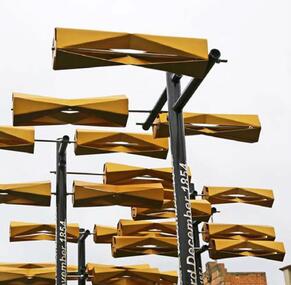
Artwork, other - Public Artwork, Aaron Robinson et al, Flow by Holly Grace and Aaron Robinson, 2014
... Henry Seekamp, editor of the Ballarat Times is charged with seditious libel. 6th December/ Major General Sir Robert Nickle, commander-in-chief of the military forces in the Australian colonies, arrives in Ballarat. 9th December/ General Nickle repeals martial law. 14th December/ The Gold Fields Commission sits for the first time. 18th December/ The first Ballarat sitting of the Gold Fields Commission is held at Bath’s Hotel. 1855 23rd January/ Henry Seekamp is found guilt of sedition and sentenced to three months in prison. 22nd February/ The Eureka trials starts in Melbourne. ...Henry Seekamp, editor of the Ballarat Times is charged with seditious libel. 6th December/ Major General Sir Robert Nickle, commander-in-chief of the military forces in the Australian colonies, arrives in Ballarat. 9th December/ General Nickle repeals martial law. 14th December/ The Gold Fields Commission sits for the first time. 18th December/ The first Ballarat sitting of the Gold Fields Commission is held at Bath’s Hotel. 1855 23rd January/ Henry Seekamp is found guilt of sedition and sentenced to three months in prison. 22nd February/ The Eureka trials starts in Melbourne. ...Water is key to a thriving community and it is through the representation of water Flow enlivens the space at Bakery Hill. Historically ‘water races’ ran through the valleys of the Greater Ballarat area unearthing the minerals that forged prosperity and wealth. This water still flows today unearthing new possibilities for the community. Possibilities focusing on sustainability, ecology, health and prosperity. Flowing over the site a series of kinetic turbines flutter in the wind creating a contemporary water race. The interactive elements offer visual stimulation enticing people to connect with the artwork and in turn the surrounding spaces. Bakery Hill has great historical significance. It’s connection to the Eureka Stockade and the series of events that were to unfold during the 1850’s was to become the turning point in Australian political history. The placement of each turbine is to mirror a point of history in the timeline of events that occurred during the Eureka Stockade. The Water Race is a symbol of possibilities, the ones created by history and those of modern society. It is a visual timeline that can be read by traversing the site. The connecting turbines that flow and turn in sync are a representation of time passing and the interconnectedness of history with the community that surrounds it. The gateway to Bridge Mall is framed through the placement of each turbine allowing the sense of prosperity and wealth to flow through to the surrounding community. This gateway also references the significance of Bakery Hill reinvigorating the historical site by reconnecting it back to its town centre. The artwork is of aesthetic and historical significance to the people of BallaratTwelve steel turbines set on poles with dates attached and a large bronze 'timeline' plaqueFLOW/ Plotting the motion of Wind, Water, History and Time/ by Holly Grace and Aaron Robinson/ This site has great historical significance. It’s connection to the Eureka Stockade and the series of events that unfolded in the 1850’s was to become the turning point in Australian history. The placement of each turbine within this artwork mirrors a point of history in the events that led up to the Eureka Stockade. It is a visual timeline that can be read by traversing the site. The connecting turbines that flow and turn in sync are a representation of time passing. They are a symbol of the community’s connection to their history. 1851 June James Esmond makes the first discovery of gold in Victoria at Clunes./ 1st July The Port Phillip District separates from New South Wales and becomes the Colony of Victoria. It is still subject to British rule./ August Gold is discovered at Buninyong and at Golden Point, Ballarat. Lt-Governor La Trobe introduces the Gold Licence system in an attempt to reduce the colony’s debt./ 20th September First gold licences issued in Ballarat. / 1852 August/ Eureka Lead discovered on the Ballarat goldfields. December Charles La Trobe resigns as Lt-Governor but he is not relieved until 1854/ July – December/ Unrest builds on the various goldfields with protest meetings held in Bendigo and Castlemaine. Bendigo’s Red Ribbon Movement is active on the goldfields and the Bendigo Petition is presented to Lt-Governor./ December/ Charles Hotham is appointed Lt-Governor/ 1854 March/ A bill to extend the Elective Franchise is passed by the Legislative Council and sent to London for the assent of the British Parliament. 22nd June/ Lt-Governor Sir Charles Hotham arrives in Victoria. The colony faces mounting debt and Hotham orders weekly licence hunts in an attempt to increase income./ August/ Hotham is acclaimed during his visit to the Ballarat goldfield./ 13th September? Hotham orders twice-weekly licence hunts to further increase revenue./ September – October/ Miners are experiencing problems – no shafts bottomed on the Eureka Lead for five weeks./ 7th October/ James Scobie is murdered outside the Eureka Hotel. Many diggers believe that publican James Bentley is responsible./ 9th October/ At Scobie’s inquest, Bentley is acquitted, despite strong evidence of his guilt./ 10th October/ Father Smythe’s servant is beaten up by authorities and falsely arrested for not holding a licence./ 15th October/ Mass meeting of miners on Bakery Hill. Catholic miners meet after Mass. // 17th October/ A meeting of up to 10,000 Diggers is held near the Eureka Hotel to protest against Bentley’s acquittal. The meeting results in the burning of the hotel. Three diggers, Westerby, Fletcher and McIntyre, are arrested. Hotham dispatches 400 soldiers to Ballarat. 22nd October/ Another large meeting is held to address grievances. The Catholics send their leaders, Hayes, Kennedy and Manning to meet Rede. The Government Camp is under siege 11th November/ A public meeting on Bakery Hill results in the formal establishment of the Ballarat Reform League and adoption of the League’s proposals./ 21st November/ The enquiry into the Bentley affair is published. It recommends the dismissal of the judge and the establishment of a Royal Commission. 23rd November/ Westerby, Fletcher and McIntyre are convicted of burning the hotel. The Ballarat Reform League demands their release. 27th November/ A deputation from The Ballarat Reform League, including Humffray, Black and Kennedy, meet with Hotham to demand the release of the three prisoners. Hotham does not believe the diggers have the right to “demand anything”, Rede requests reinforcements in Ballarat. 28th November/ Miners attack the troop reinforcements and wagons passing near the Eureka diggings. A drummer boy is seriously wounded. 29th November/ A “Monster Meeting” attended by more than 10,000 diggers is held on Bakery Hill. The Southern Cross flag is flown for the first time. Peter Lalor addresses the miners and a number of diggers burn their licences. 30th November/ A licence hunt occurs in the morning at the order of Commissioner Rede. Another meeting of radical miners is held on Bakery Hill. Peter Lalor becomes leader of the diggers and calls for volunteers. Many diggers wear an oath to defend their rights and liberties under the Southern Cross flag. A number of diggers move to the Eureka Lead and start to erect a stockade. 3rd December In the early hours of Sunday morning 296 soldiers and police led by Captain Thomas proceed from the Government Camp to the Eureka Lead and attack the Stockade. 22 diggers and 7 military are officially listed as being killed. Many others are wounded. Approximately 120 diggers are arrested and marched to the Government Camp. 4th December/ Funeral of some of the fallen diggers and soldiers. Martial Law is proclaimed in Ballarat. Henry Seekamp, editor of the Ballarat Times is charged with seditious libel. 6th December/ Major General Sir Robert Nickle, commander-in-chief of the military forces in the Australian colonies, arrives in Ballarat. 9th December/ General Nickle repeals martial law. 14th December/ The Gold Fields Commission sits for the first time. 18th December/ The first Ballarat sitting of the Gold Fields Commission is held at Bath’s Hotel. 1855 23rd January/ Henry Seekamp is found guilt of sedition and sentenced to three months in prison. 22nd February/ The Eureka trials starts in Melbourne. February to March/ 13 prisoners are tried and acquitted amid great public rejoicing. 27th March Report of the Royal Commission recommends miners’ rights and significant reforms. 10th November/ Peter Lalor and John Basson Humffray are nominated for seats in the legislative Council. 31st December Sir Charles Hotham dies before his resignation takes effect. flow, aaron robinson, holly grace, public art, eureka stockade, bakery hill -
Unions Ballarat
Commandant of Auschwitz: The autobiography of Rudolf Hoess (Don Woodward Collection), Hoess, Rudolf, 1995 (date of translation)
... Autobiographical interest . btlc ballarat trades hall ballarat trades and labour council hoess, rudolf politics and government - nazi germany hitler, adolf world war - prisoners and prisons auschwitz autobiography Military - World War II Book; 252 pages. ...Autobiography of Rudolf Hoess. Hoess was an SS functionary during the Nazi regime. He was responsible for devising killing methods at the concentration camps. Royalties from this book were distributed to survivors of Auschwitz. World War II - Auschwitz, Hitler, Rudolf Hoess. Autobiographical interest .Book; 252 pages. Cover: black and white photograph of Hoess on the first day of his trial (c) Hulton Getty; yellow and white lettering; authors' names and title.btlc, ballarat trades hall, ballarat trades and labour council, hoess, rudolf, politics and government - nazi germany, hitler, adolf, world war - prisoners and prisons, auschwitz, autobiography, military - world war ii -
 Royal Brighton Yacht Club
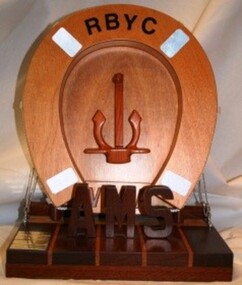
Life Ring, Vega Trophy (Mounted Wooden Life Ring)
... The military demanded first pick of all foodstuffs and kept meticulous records of all livestock forcing farmers even to show newborn calves and piglets to them, then claiming the new arrivals for their dinner tables. However there are many stories of farmers outwitting their masters when twin calves or suchlike arrived! Lawbreakers were quickly dealt with, mostly with lengthy prison...The military demanded first pick of all foodstuffs and kept meticulous records of all livestock forcing farmers even to show newborn calves and piglets to them, then claiming the new arrivals for their dinner tables. However there are many stories of farmers outwitting their masters when twin calves or suchlike arrived! Lawbreakers were quickly dealt with, mostly with lengthy prison ...Vega Trophy (Mounted Wooden Life Ring) Donor: Graham Noel During World War II when the Germans occupied the Channel Islands the local people went through very severe food rationing and were on the verge of starvation. Near the end of the war, the Swedish ship Vega was allowed by the Germans to deliver several shipments of food to the civilian population, easing the critical shortages of food on the islands. Further background detail can be found below. Graham Noel was born on the Islands and lived there during this harsh period. The trophy is awarded to the winner of the Combined Division AMS Aggregate Series. First Winner: Under Capricorn, P. Bedlington 2005/06 Vega – Further historical background Early in the Second World War Jersey was declared “unarmed” and the German military took over, taking quite a few lives in the process, through strafing the main harbour and a few other places which they needlessly considered threatening. A considerable number of locals evacuated to England before the Germans arrived, but more than 60% of the population remained and endured 5 years of very strict and difficult conditions. Not only was the population unable to contact relatives in the UK or elsewhere, but very quickly they found themselves subject to harsh curfews, strictly rationed foodstuffs, no fuel for vehicles, radios confiscated, and homes and hotels commandeered by the military. The military demanded first pick of all foodstuffs and kept meticulous records of all livestock forcing farmers even to show newborn calves and piglets to them, then claiming the new arrivals for their dinner tables. However there are many stories of farmers outwitting their masters when twin calves or suchlike arrived! Lawbreakers were quickly dealt with, mostly with lengthy prison terms in Jersey, but the more serious crimes were punished by being sent to some horrible French prisons, or even some of the notorious German concentration camps. All local Jews were dispatched to concentration camps, and even English born families were similarly shipped through France and on to Germany. Sadly, a considerable number of those deported did not make it back safely to Jersey. In June 1944 the locals were delighted to hear that the Allies had invaded Normandy and very soon they could hear the battles as the Allies worked their way along the French coast. Little did they know they would still have to wait another 11 months for freedom, having to put up with a very demanding German occupation force which was still determined to obey Hitler’s order to “Defend the Channel Islands to the death”. Now that France was in Allied Hands the local military commanders were unable to supplement their food supplies from France and even harsher demands were made on the local population to ensure that all branches of their still very substantial military force were reasonably well fed. As well as the military, Jersey farmers had to provide food for the Allied POWs and the many “forced labourers”, mainly of Russian, Polish and Italian backgrounds who had been directed to the island to build all the concrete bunkers. This included an underground hospital, all this complying with Hitler’s orders to ensure that the Channel Islands would never again be part of Britain. Many requests by the Jersey authorities for Red Cross assistance were rejected, but finally in December 1944 they agreed and on 30th December the Red Cross vessel “Vega” (Swedish Registry) arrived and delivered parcels to the civilian population. These parcels contained a variety of foodstuffs supplied mainly by Canadian authorities, desperately needed medical supplies, flour, oils and soaps, as well as tobacco from New Zealand. Vega made a further 3 or 4 trips and most certainly eased the desperate situation being faced by the locals. In fact, it resulted in the locals having slightly better food supplies than the military and many local farmers tell stories of having to protect their stock from marauding soldiers. Understandably Churchill was reluctant to send in an invading force to retake the Channel Islands, but by May 1945 it was clear that the Third Reich was finished and on May 9th the German Military surrendered, without a fight, to a large British landing force. On a slightly lighter note … in January 1945 Jersey stonemasons were seen in the main town square repairing flagstones … the Germans had never noticed that the name “Vega” had been formed in those flagstones! As a side note Vega is the name of the brightest star in the universe. Furthermore, throughout the occupation, despite German law that demanded confiscation of all radio sets, punishable by long prison terms or deportation to Germany, there were still many sets being listened to. The locals had a well refined news system for the dissemination of news of what was happening in the outside world. vega, graham noel, ams, combined division, aggregate -
 Returned Nurses RSL Sub-branch
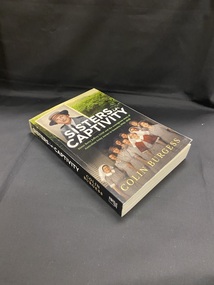
Book - Paperback book, Colin Burgess, Sisters in captivity: Sister Betty Jeffrey OAM and the courageous story of Australian Army nurses in Sumatra, 1942-1945, 2023
... Military Nursing Military history Betty Jeffrey Royal Australian Army Nursing Corps The incredible account of Sister Betty Jeffrey OAM and the Australian war nurses who survived the bombing of evacuation ship SS Vyner Brooke in February 1942, and subsequently spent three years in Japanese prison camps in Sumatra. ...The incredible account of Sister Betty Jeffrey OAM and the Australian war nurses who survived the bombing of evacuation ship SS Vyner Brooke in February 1942, and subsequently spent three years in Japanese prison camps in Sumatra. During those perilous years surviving in squalid conditions, Sister Jeffrey kept a secret diary of day-to-day events which, after the war, was turned into a hugely successful book and radio serial: White Coolies. She would often write of the powerful sisterhood that evolved as the prisoners of war took strength from each other, even forming a vocal orchestra. White Coolies was a major inspiration for the 1997 film Paradise Road. Sisters in Captivity builds on those diaries to not only re-live the years the nurses spent as POWs but also recounts the early life and influences that encouraged Betty Jeffrey into the field of nursing as a lifelong endeavour. A tireless advocate for returned nurses, she co-founded the Australian Nurses Memorial Centre with sole survivor of the Banka Island Massacre, fellow POW, and her longtime friend Vivian Bullwinkel. Featuring 32 pages of photos including personal mementos of Betty Jeffrey, courtesy of her family, and her drawings from the prison camps, this is a powerful account of women's resilience amidst the devastating brutality of war.--Back cover.Title is printed across the middle of the cover in large white text, followed by the sub title in smaller green print below. There is a photo of Sister Betty Jeffrey in the top left corner and the bottom half of the page shows an image of a group of ten nurses posing for a photo. The background of the cover is dense green jungle.non-fictionThe incredible account of Sister Betty Jeffrey OAM and the Australian war nurses who survived the bombing of evacuation ship SS Vyner Brooke in February 1942, and subsequently spent three years in Japanese prison camps in Sumatra. During those perilous years surviving in squalid conditions, Sister Jeffrey kept a secret diary of day-to-day events which, after the war, was turned into a hugely successful book and radio serial: White Coolies. She would often write of the powerful sisterhood that evolved as the prisoners of war took strength from each other, even forming a vocal orchestra. White Coolies was a major inspiration for the 1997 film Paradise Road. Sisters in Captivity builds on those diaries to not only re-live the years the nurses spent as POWs but also recounts the early life and influences that encouraged Betty Jeffrey into the field of nursing as a lifelong endeavour. A tireless advocate for returned nurses, she co-founded the Australian Nurses Memorial Centre with sole survivor of the Banka Island Massacre, fellow POW, and her longtime friend Vivian Bullwinkel. Featuring 32 pages of photos including personal mementos of Betty Jeffrey, courtesy of her family, and her drawings from the prison camps, this is a powerful account of women's resilience amidst the devastating brutality of war.--Back cover. military nursing, military history, betty jeffrey, royal australian army nursing corps
