
Showing 16 items matching "missionaries - africa"
-
 Phillip Island and District Historical Society Inc.
Book, ROBERTSON, John S, life of David Livingstone, Ll.D. : the great missionary explorer, 1888
... ...missionaries...africa...David Livingstone missionaries africa explorers biography Labelled 'Cowes Free Public Library'. ...Labelled 'Cowes Free Public Library'. Labelled: 'Phillip Island Historical Society. Cleeland Bequest'.david livingstone, missionaries, africa, explorers, biography -
 Mrs Aeneas Gunn Memorial Library
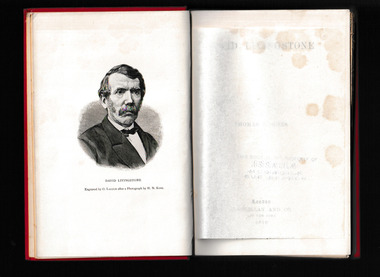
Book, Macmillan and Co, David Livingstone, 1890
... ...Missionaries - Africa...Explorers - Africa Missionaries - Africa Born in an overcrowded slum in Scotland in 1813, David Livingstone worked twelve-hour days in a cotton factory from age ten to twenty-four. ...Born in an overcrowded slum in Scotland in 1813, David Livingstone worked twelve-hour days in a cotton factory from age ten to twenty-four. But a pamphlet by Karl Gutzlaff changed his life. Resolved to become a missionary, he applied himself to medicine, self-educating and eventually qualifying as a doctor. In 1841, Livingstone left for Africa as a medical missionary, where he would stay for thirty years ...p.208.non-fictionBorn in an overcrowded slum in Scotland in 1813, David Livingstone worked twelve-hour days in a cotton factory from age ten to twenty-four. But a pamphlet by Karl Gutzlaff changed his life. Resolved to become a missionary, he applied himself to medicine, self-educating and eventually qualifying as a doctor. In 1841, Livingstone left for Africa as a medical missionary, where he would stay for thirty years ... explorers - africa, missionaries - africa -
 Mrs Aeneas Gunn Memorial Library
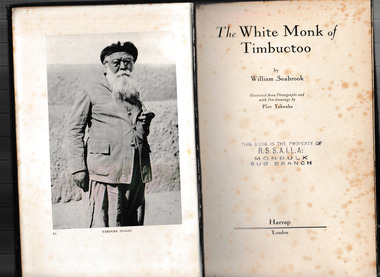
Book, William Seabrook, The white monk of Timbuctoo, 1934
... ...Missionaries - West Africa...Catholic church Missionaries - West Africa Biography of Père Yakouba, a French monk who became a White Father missionary to Timbuctoo in 1895 and later left the priesthood to marry a native, remaining in the city until his death in 1945. ...Biography of Père Yakouba, a French monk who became a White Father missionary to Timbuctoo in 1895 and later left the priesthood to marry a native, remaining in the city until his death in 1945.Ill, p.270.non-fictionBiography of Père Yakouba, a French monk who became a White Father missionary to Timbuctoo in 1895 and later left the priesthood to marry a native, remaining in the city until his death in 1945.catholic church, missionaries - west africa -
 Bendigo Historical Society Inc.
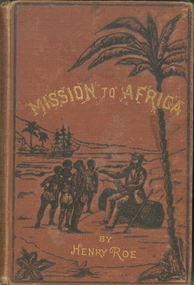
Book - Mission to Africa
... ...Missionary...Africa...Next page has a black and white image of Henry Roe, under which is written in pen 'Yours for Africa's sake, Henry Roe, 1872' Title page of book: ' Mission to Africa being sketches of places, peoples, providence and personal experience by Henry Roe, one of the first Primitive Methodist Missionaries to Africa. ...Eaglehawk Primitive Methodist Church Mary Arkle Henry Roe Missionary Africa 1872 Hard cover book, On front cover 'Mission to Africa by Henry Row' in gold print. ...Hard cover book, On front cover 'Mission to Africa by Henry Row' in gold print. A black drawing of a missionary sitting on a log with book in hand, preaching to five Africans. In background, a three masted sailing ship. Inside front cover on fly page: 'Presented to Mary A. Arkle by the P.M. S. School, Eaglehawk, 20.1.76. Next page has a black and white image of Henry Roe, under which is written in pen 'Yours for Africa's sake, Henry Roe, 1872' Title page of book: ' Mission to Africa being sketches of places, peoples, providence and personal experience by Henry Roe, one of the first Primitive Methodist Missionaries to Africa. London, Published by F.H. Hurd, 131 Fleet St., E. C., G. Lamb, Sutton St. Commercial Rd. E. Plain Cloth, Superior Binding Gilt and Portrait, 1s. 6d. May be had of any Primitive Methodist Minister. eaglehawk, primitive methodist church, mary arkle, henry roe, missionary, africa, 1872 -
 Flagstaff Hill Maritime Museum and Village
Book - Reference, The Elements of Euclid
... Author John William Colenso (1814-1883) was a mathematician, missionary and renowned clergyman in the Anglican Church. In 1853 he became the first Bishop of Natal, South Africa. ...Author John William Colenso (1814-1883) was a mathematician, missionary and renowned clergyman in the Anglican Church. In 1853 he became the first Bishop of Natal, South Africa. ...Author John William Colenso (1814-1883) was a mathematician, missionary and renowned clergyman in the Anglican Church. In 1853 he became the first Bishop of Natal, South Africa. The publisher firm, Longmans, Green & Co., was originally founded in 1724 in London by Thomas Longman under the name Longman. In August of that year, he bought the two shops and goods of William Taylor and set up his publishing house there at 39 Paternoster Row. The shops were called Black Swan and Ship, and it is said that the 'ship' sign was the inspiration for Longman's Logo. After many changes of name and management, the firm was incorporated in 1926 as Longmans, Green & Co. Pty Ltd. The firm was acquired by Pearson in 1968 and was known as Pearson Longman or Pearson PLC. The printer, Spottiswoode and Co,, was established in 1738 by William Strahan, with premises in New Street Square, London. The growing firm advertised as Printers, Lithographers, Stationers, Electrotypers, Publishers, and Booksellers and by 1914 there were 1,000 employees. The book is significant for its connection to 19th-century author John William Colenso, was a mathematician and Anglican clergyman who had several works published. The publisher and printer of this book are also significant in their roles for being established in the early 18th century, contributing to the education of the studies of the scholars of the day. The book is also significant for its connection to the publisher Longmans, Green and Co., of London, and printer Spottiswoode & Co., firms that have been established for around two centuries, renowned for publishing and printing reference works that contributed to the education of scholars over many years.The Elements of Euclid by John William Colenso, D.D. (new edition) [The Elements of Euclid (the parts read in the University of Cambridge) from the text of Dr Robert Simson with Geometrical Examples by John William Colenso, D.D., Lord Bishop of Natal} Date: 1846 Publisher: Longmans Green and Co, London Printer: Spottiswoode and Co, New Street Navy blue textured hardcover on the book, with title on a label on the spine.Text on spineflagstaff hill, flagstaff hill maritime museum and village, warrnambool, maritime museum, maritime village, great ocean road, shipwreck coast, longmans green and co., thomas longman, paternoster row london, john william colenso, 19th-century british mathematician, missionary, spottiswoode & co., the elements of euclid -
 Flagstaff Hill Maritime Museum and Village
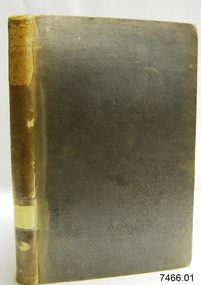
Book - Religious Book, John William Colenso, author, The Pentateuch and Book of Joshua Part 1, 1863
... Author John William Colenso (1814-1883) was a mathematician, missionary and renowned clergyman in the Anglican Church. In 1853 he became the first Bishop of Natal, South Africa. ...Author John William Colenso (1814-1883) was a mathematician, missionary and renowned clergyman in the Anglican Church. In 1853 he became the first Bishop of Natal, South Africa. ...This item is from the ‘Pattison Collection’, a collection of books and records that was originally owned by the Warrnambool Mechanics’ Institute, which was founded in Warrnambool in 1853. Author John William Colenso (1814-1883) was a mathematician, missionary and renowned clergyman in the Anglican Church. In 1853 he became the first Bishop of Natal, South Africa. The publisher firm, Longman Green Longman Roberts & Green was originally founded in 1724 in London by Thomas Longman under the name Longman. In August of that year, he bought the two shops and goods of William Taylor and set up his publishing house there at 39 Paternoster Row. The shops were called Black Swan and Ship, and it is said that the 'ship' sign was the inspiration for Longman's Logo. After many changes of name and management, the firm was incorporated in 1926 as Longmans, Green & Co. Pty Ltd. The firm was acquired by Pearson in 1968 and was known as Pearson Longman or Pearson PLC.The book is significant for its connection to 19th-century author John William Colenso, who was a mathematician and Anglican clergyman who had several works published. The publisher of this book, Longman Green Longman Roberts & Green, is also significant for being established in the early 18th century, contributing to the education of the studies of the scholars of the day. The book has additional importance for its connection to the Pattison Collection, which, along with other items at Flagstaff Hill Maritime Village, was originally part of the Warrnambool Mechanics' Institutes’ Collection. The Warrnambool Mechanics’ Institute book collection has historical and social significance for its strong association with the Mechanics Institute movement and the important role it played in the intellectual, cultural and social development of people throughout the latter part of the nineteenth century and the early twentieth century. The collection of books is a rare example of an early lending library and its significance is enhanced by the survival of an original collection of many volumes. The Warrnambool Mechanics' Institute’s publication collection is of both local and state significance.The Pentateuch and Book of Joshua Part 1 Author: John William Colenso Publisher: Longman, Green, Longman, Roberts & Green Date: 1863 This book is one of a three-part series by this author. Textured hardcover book with labels attached to the spine, oval stamp and handwritten inscription on fly pagy. Part of the Pattison Colleciton.Label with the typed text: "PAT 222 COL" Handwritten on Fly page: "T 7" Stamped on the Pastedown end page, within an oval: "Warrnambool Mechanics Institute" Sticker on Front loose endpaper: "Corangamite Regional Library Service"flagstaff hill, flagstaff hill maritime museum and village, warrnambool, maritime museum, maritime village, great ocean road, shipwreck coast, thomas longman, paternoster row london, pattison collection, ralph eric pattison, warrnambool mechanics’ institute, mechanics’ institute library, warrnambool library, free library, corangamite regional library service, the pentateuch and book of joshua, john william colenso, 19th-century british mathematician, missionary, anglican bishop, napal, longman green longman roberts & green -
 Flagstaff Hill Maritime Museum and Village
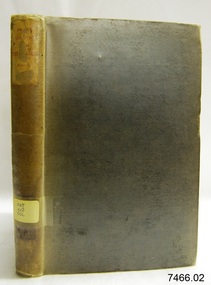
Badge - Religious Book, John William Colenso, author, The Pentateuch and Book of Joshua Part 2, 1863
... Author John William Colenso (1814-1883) was a mathematician, missionary and renowned clergyman in the Anglican Church. In 1853 he became the first Bishop of Natal, South Africa. ...Author John William Colenso (1814-1883) was a mathematician, missionary and renowned clergyman in the Anglican Church. In 1853 he became the first Bishop of Natal, South Africa. ...This item is from the ‘Pattison Collection’, a collection of books and records that was originally owned by the Warrnambool Mechanics’ Institute, which was founded in Warrnambool in 1853. Author John William Colenso (1814-1883) was a mathematician, missionary and renowned clergyman in the Anglican Church. In 1853 he became the first Bishop of Natal, South Africa. The publisher firm, Longman Green Longman Roberts & Green was originally founded in 1724 in London by Thomas Longman under the name Longman. In August of that year, he bought the two shops and goods of William Taylor and set up his publishing house there at 39 Paternoster Row. The shops were called Black Swan and Ship, and it is said that the 'ship' sign was the inspiration for Longman's Logo. After many changes of name and management, the firm was incorporated in 1926 as Longmans, Green & Co. Pty Ltd. The firm was acquired by Pearson in 1968 and was known as Pearson Longman or Pearson PLC.The book is significant for its connection to 19th-century author John William Colenso, who was a mathematician and Anglican clergyman who had several works published. The publisher of this book, Longman Green Longman Roberts & Green, is also significant for being established in the early 18th century, contributing to the education of the studies of the scholars of the day. The book has additional importance for its connection to the Pattison Collection, which, along with other items at Flagstaff Hill Maritime Village, was originally part of the Warrnambool Mechanics' Institutes’ Collection. The Warrnambool Mechanics’ Institute book collection has historical and social significance for its strong association with the Mechanics Institute movement and the important role it played in the intellectual, cultural and social development of people throughout the latter part of the nineteenth century and the early twentieth century. The collection of books is a rare example of an early lending library and its significance is enhanced by the survival of an original collection of many volumes. The Warrnambool Mechanics' Institute’s publication collection is of both local and state significance.The Pentateuch and Book of Joshua Part 2 Author: John William Colenso Publisher: Longman, Green, Longman, Roberts and Green Date: 1863 This book is one of a three-part series by this author. Textured hardcover book with labels attached to the spine and an oval stamp fly page. Part of the Pattison Colleciton.Label with the typed text: "PAT 222 COL" Stamped on the Pastedown end page, within an oval: "Warrnambool Mechanics Institute" Sticker on Front loose endpaper: "Corangamite Regional Library Service"flagstaff hill, flagstaff hill maritime museum and village, warrnambool, maritime museum, maritime village, great ocean road, shipwreck coast, thomas longman, paternoster row london, pattison collection, ralph eric pattison, warrnambool mechanics’ institute, mechanics’ institute library, warrnambool library, free library, corangamite regional library service, the pentateuch and book of joshua, john william colenso, 19th-century british mathematician, missionary, anglican bishop, napal, longman green longman roberts & green -
 Flagstaff Hill Maritime Museum and Village
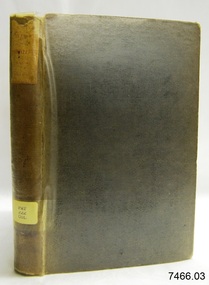
Book - Religious Book, John William Colenso, author, The Pentateuch and Book of Joshua Part 3, 1863
... Author John William Colenso (1814-1883) was a mathematician, missionary and renowned clergyman in the Anglican Church. In 1853 he became the first Bishop of Natal, South Africa. ...Author John William Colenso (1814-1883) was a mathematician, missionary and renowned clergyman in the Anglican Church. In 1853 he became the first Bishop of Natal, South Africa. ...Author John William Colenso (1814-1883) was a mathematician, missionary and renowned clergyman in the Anglican Church. In 1853 he became the first Bishop of Natal, South Africa. The publisher firm Longman Green Longman Roberts & Green, was originally founded in 1724 in London by Thomas Longman under the name Longman. In August of that year, he bought the two shops and goods of William Taylor and set up his publishing house there at 39 Paternoster Row. The shops were called Black Swan and Ship, and it is said that the 'ship' sign was the inspiration for Longman's Logo. After many changes of name and management, the firm was incorporated in 1926 as Longmans, Green & Co. Pty Ltd. The firm was acquired by Pearson in 1968 and was known as Pearson Longman or Pearson PLC.The book is significant for its connection to 19th-century author John William Colenso, who was a mathematician and Anglican clergyman who had several works published. The publisher of this book, Longman Green Longman Roberts & Green, is also significant for being established in the early 18th century, contributing to the education of the studies of the scholars of the day. The book has additional importance for its connection to the Pattison Collection, which, along with other items at Flagstaff Hill Maritime Village, was originally part of the Warrnambool Mechanics' Institutes’ Collection. The Warrnambool Mechanics’ Institute book collection has historical and social significance for its strong association with the Mechanics Institute movement and the important role it played in the intellectual, cultural and social development of people throughout the latter part of the nineteenth century and the early twentieth century. The collection of books is a rare example of an early lending library and its significance is enhanced by the survival of an original collection of many volumes. The Warrnambool Mechanics' Institute’s publication collection is of both local and state significance.The Pentateuch and Book of Joshua Part 3 Author: John William Colenso Publisher: Longman, Green, Longman, Roberts & Green Date: 1863 This book is one of a three-part series by this author. It is part of the Pattison Collection.Label on spine "PAT 222 COL" Handwritten text on fly: "T 9" Pastedown papers; Oval stamp "Warrnambool Mechanics Institute" "Corangamite Regional Library Service"flagstaff hill, flagstaff hill maritime museum and village, warrnambool, maritime museum, maritime village, great ocean road, shipwreck coast, longman green longman roberts & green, thomas longman, paternoster row london, pattison collection, ralph eric pattison, warrnambool mechanics’ institute, mechanics’ institute library, warrnambool library, free library, corangamite regional library service, the pentateuch and book of joshua, john william colenso, 19th-century british mathematician, missionary, anglican bishop, napal -
 Flagstaff Hill Maritime Museum and Village
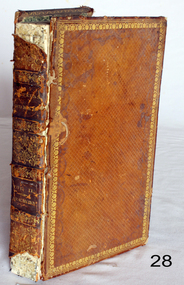
Literary work - Book, G. Sidney, Book of sermons by The Right Reverend Beilby Porteus Vol 2. Additional notes on authors life by Rev. Robert Hodgson, A.M.F.R.S, 1811 Published
... It was during these years that it is thought he became more aware of the conditions of the enslaved Africans in the American colonies and the British West Indies. He corresponded with clergy and missionaries, receiving reports on the appalling conditions facing the slaves from Rev James Ramsay in the West Indies and from Granville Sharp, the English lawyer who had supported the cases of freed slaves in England. ...It was during these years that it is thought he became more aware of the conditions of the enslaved Africans in the American colonies and the British West Indies. He corresponded with clergy and missionaries, receiving reports on the appalling conditions facing the slaves from Rev James Ramsay in the West Indies and from Granville Sharp, the English lawyer who had supported the cases of freed slaves in England. ...Rev Robert Hodgson: His father was Robert Hodgson Snr, of Congleton, and Mildred (née Porteus) in early 1773. He was baptised on 22 September 1773 at St Peter's Church, Congleton. Hodgson was a close relative (by marriage on his father's side and by blood on his mother's side) of Beilby Porteus, Bishop of London of whom Hodgson wrote a biography of Porteus. On his mother's side, he was a descendant of Augustine Warner Jnr., who presided as the Speaker of the Virginia House of Burgesses during the time of Bacon's Rebellion (Warner served before the Rebellion in 1676, and after the Rebellion in 1677.) Hodgson was educated at Macclesfield School and Peterhouse, Cambridge, where he graduated with a BA as 14th Wrangler in 1795. He was appointed rector of St George's, Hanover Square for over forty years, from 1803 until his death in 1844. Bishop Beilby Porteus: Beilby Porteus 8 May 1731 – 13 May 1809), successively Bishop of Chester and London was a Church of England reformer and a leading abolitionist in England. He was the first Anglican in a position of authority to seriously challenge the Church's position on slavery. Porteus was born in York on 8 May 1731, the youngest of the 19 children of Elizabeth Jennings and Robert Porteus ( 1758/9), a planter. Although the family was of Scottish ancestry, his parents were Virginian planters who had returned to England in 1720 as a result of the economic difficulties in the province and for the sake of his father's health. Educated at York and Ripon Grammar School, he was a classics scholar at Christ's College, Cambridge, becoming a fellow in 1752. In 1759 he won the Seatonian Prize for his poem Death: A Poetical Essay, a work for which he is still remembered. He was ordained as a priest in 1757, and in 1762 was appointed as domestic chaplain to Thomas Secker, Archbishop of Canterbury, acting as his assistant at Lambeth Palace for six years. It was during these years that it is thought he became more aware of the conditions of the enslaved Africans in the American colonies and the British West Indies. He corresponded with clergy and missionaries, receiving reports on the appalling conditions facing the slaves from Rev James Ramsay in the West Indies and from Granville Sharp, the English lawyer who had supported the cases of freed slaves in England. In 1769 Beilby Porteus was appointed as chaplain to King George III. He was also Rector of Lambeth (a living shared between the Archbishop of Canterbury and the Crown) from 1767 to 1777, and later Master of St Cross, Winchester (1776–77). He was concerned about trends within the Church of England towards what he regarded as the watering-down of the truth of Scripture and stood for doctrinal purity. He was, however, happy to work with Methodists and dissenters and recognised their major contributions in evangelism and education. In 1776, Porteus was nominated as Bishop of Chester, taking up the appointment in 1777. He was Renowned as a scholar and a popular preacher, it was in 1783 that the young bishop was to first come to national attention by preaching his most famous and influential sermon. In 1787, Porteus was translated to the bishopric of London on the advice of Prime Minister William Pitt, a position he held until his death in 1809. As is customary, he was also appointed to the Privy Council, and Dean of the Chapel Royal. In 1788, he supported Sir William Dolben's Slave Trade Bill from the bench of bishops, and over the next quarter-century, he became the leading advocate within the Church of England for the abolition of slavery, lending support to such men as Wilberforce, Granville Sharp, Henry Thornton, and Zachary Macaulay to secure the eventual passage of the Slave Trade Act in 1807.Beilby Porteus was one of the most significant, albeit under-rated church figures of the 18th century. His sermons continued to be read by many, and his legacy as a foremost abolitionist was such that his name was almost as well known in the early 19th century as those of Wilberforce and Thomas Clarkson but 100 years later he had become one of the 'forgotten abolitionists', and today his role has largely been ignored and his name has been consigned to the footnotes of history. His primary claim to fame in the 21st century is for his poem on Death and, possibly unfairly, as the supposed prototype for the pompous Mr. Collins in Jane Austen's novel ”Pride and Prejudice”. But, ironically, Porteus' most lasting contribution was one for which he is little-known, the Sunday Observance Act of 1781 (a response to what he saw as the moral decay of England), which legislated how the public were allowed to spend their recreation time at weekends these laws continued for the following 200 years until the passing of the Sunday Trading Act of 1994.Book of sermons cover is brown with gold border and decoration Beilby Porteus (or Porteous; 8 May 1731 – 13 May 1809), successively Bishop of Chester and of London, was a Church of England reformer and a leading abolitionist in England. He was the first Anglican in a position of authority to seriously challenge the Church's position on slavery. The Works of The Right Reverend Beilby Porteus Vol 2” . Spine has “Porteus’ Works, Vol. II Sermons”. The works of the Right Reverend Beilby Porteus, D.D., late Bishop of London; with his life, by the Rev. Robert Hodgson, A.M.F.R.S. and one of the Chaplains in Ordinary to His Majesty. A New Edition in Six Volumes. Vol. II – Sermons. Published in 1811 for T. Cadell and W., Davies, in The Strand, London. Printed by G. Sidney, Northumberland-street. flagstaff hill, warrnambool, shipwrecked coast, flagstaff hill maritime museum, maritime museum, shipwreck coast, flagstaff hill maritime village, great ocean road, right reverend beilby porteous, sermons, london reverend -
 Port Melbourne Historical & Preservation Society
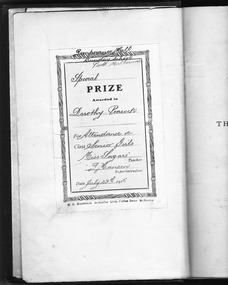
Book - Sunday School prize, D Crawford, Thinking Black, 1913
... 'Thinking Black - 22 years in the long grass of Central Africa' by D. Crawford. A 1912 account of a missionary's experiences in an illustrated book of c500 pages that was presented as an attendance prize to Dorothy Peacock by the Sunday School at Temperance Hall 29 July 1916....Religion Port Melbourne Temperance Hall Dorothy PEACOCK Miss SUGAR U HANSEN Education - Sunday Schools Presentation sticker on flyleaf 'Thinking Black - 22 years in the long grass of Central Africa' by D. Crawford. A 1912 account of a missionary's experiences in an illustrated book of c500 pages that was presented as an attendance prize to Dorothy Peacock by the Sunday School at Temperance Hall 29 July 1916. ...'Thinking Black - 22 years in the long grass of Central Africa' by D. Crawford. A 1912 account of a missionary's experiences in an illustrated book of c500 pages that was presented as an attendance prize to Dorothy Peacock by the Sunday School at Temperance Hall 29 July 1916.Presentation sticker on flyleafreligion, port melbourne temperance hall, dorothy peacock, miss sugar, u hansen, education - sunday schools -
 Uniting Church Archives - Synod of Victoria
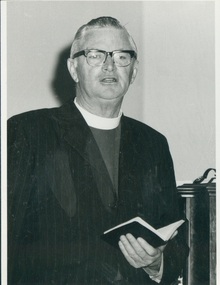
BW photo, Undated
... missionaries. Home life allowed him to relax in a serene and contented atmosphere and to exercise his gifts for friendship and hospitality. He was always on the watch for souls, a person-to-person evangelist par excellence. He was a man of faith and prayer who dared to believe in the God of the impossible. His love for Africa...missionaries. Home life allowed him to relax in a serene and contented atmosphere and to exercise his gifts for friendship and hospitality. He was always on the watch for souls, a person-to-person evangelist par excellence. He was a man of faith and prayer who dared to believe in the God of the impossible. His love for Africa ...STANWAY, ALFRED (b. 9 Sept 1908; d. Melbourne, Vic, 27 June 1989). Anglican bishop, missionary. Stanway grew up in the Wimmera district of western Victoria, and left school when 14 years old. He found work in Melbourne, trained as an accountant, and at the age of 20, held a responsible position with a publishing company. This background, allied with an uncommon flair for figures and finance, was to stand him in good stead throughout his life. But he had little knowledge and no experience of the grace of God until 29 July 1928. At the Evening Service in the parish church of Fairfield on 29 July, he heard the Rev C H Nash (q.v.) preach a sermon which led to his conversion. Within two years he made up his mind to become a missionary and began night studies in order to matriculate. He entered Ridley College in March 1932 to prepare for ordination undertaking week-end duties as a catechist at Deer Park and St Albans. He joined the CMS League of Youth, became chairman, and gathered a fine band of young people many of whom were to become missionaries. He was closely involved with the Belgrave Heights Convention (then at Upwey) and established a League of Youth camp on the site. All his energies were thrown into the task of building up its members in personal holiness and vigorous evangelism. Stanway was ordained in St Paul's Cathedral, Melbourne on St Thomas Day 1934 and was placed in charge of the Old Mission Church of St James and St John, Melbourne. The duties were light enough to allow him to enrol in the Melbourne Teachers College and to complete the Diploma in Teaching. On 26 January 1937, he sailed for Africa to become a missionary in the Anglican Diocese of Mombasa, which at that time embraced the whole of Kenya. He was sent to the hot coastal town of Kaloleni as principal of a Secondary Boys School. Before he left Melbourne, he had become engaged to Marjory Harrison: she followed him to Africa and their marriage took place in Mombasa Cathedral in June 1939. He remained at Kaloleni until 1944 when he was transferred to the inland station of Maseno where all his gifts were to be deployed as rural dean of Nyanza. His oversight of some 500 village churches as well as a widespread primary school system was so efficient that in 1948 he was appointed archdeacon of Kenya with his home and office in Nairobi. As secretary of the African Church Council and of the African Education Board, he was responsible for all African work in the diocese. His contacts with government ministers and public servants were of first class significance at the time when the cry of Uhuru and the demand for independence was travelling throughout the colonial world. On 2 Feb 1951, Alfred Stanway was consecrated in Westminster Abbey as the third Anglican Bp of Central Tanganyika. This Diocese was the special sphere of the CMS Australia, and he already knew most of the missionary personnel. He brought with him the understanding and experience of one who had fully shared the lot and problems of a district missionary, but he came to the diocese at a time when it had yet to recover from its losses in personnel and finance as a result of the war. His immediate task was to provide the impetus of fresh leadership and a long-term overall policy. His aim from-the outset was to build up a strong autonomous church with its own indigenous pastorate. With the whole-hearted confidence of the home base, he was able to enlist the service of new missionaries. He saw a great increase in the number of African clergy and he encouraged village evangelists to open new fields of work. Simple structures were built as new churches at the rate of two a week, week in and week out, year by year. He worked hard to meet the need for Christian literature, bookshops, adult literacy and theological training. He opened Bible schools for village evangelists and sent suitable clergy overseas for further studies. He encouraged initiative in others, helped them to find and use their talents, and gave them his unstinted confidence and support. Fresh finance was required for new ventures. This led him to travel widely in Germany and America, where he raised large funds for these projects. Mackay House was built in Dodoma as the central administrative base for the diocese, hospitals such as those at Mvumi and Hombolo were modernised or established, schools were built and upgraded. In keeping with his vision for ultimate leadership by African personnel, he consecrated Yohana Omari in 1955 as his assistant, he was the first national to become a bp in East Africa. Bp Stanway then set on foot the long and complicated process for the division of his sprawling diocese. In 1963, the diocese of Victoria Nyanza came into being; in 1965, that of Morogoro; in 1966, that of Western Tanganyika. Yet in 1971, his own diocese of Central Tanganyika, though greatly reduced in size, had more churches and more clergy than in its undivided state in 195 l. Stanway then played a leading part in the formation of the Province of Tanzania in 1970, with an African abp as metropolitan. A year later, after 35 years in East Africa and 20 years as bishop of Central Tanganyika, he resigned. His leadership and achievements throughout those years had placed him in the front rank as a great missionary statesman. Stanway had returned to Melbourne at the time when his resignation took effect in August 1971. His early love for Ridley College reasserted itself and he went into residence as deputy principal under the Rev Dr Leon Morris. He was put in charge of chapel worship and the pastoral oversight of the students. All his gifts and experience were called into play as he sought to guide and encourage those who were on the threshold of their ministry. The whole bent of his heart was to foster the spiritual life and missionary calling of those whose hearts the Lord had touched. It was during those years that his life-long zeal for the spread of the gospel through Christian literature had its ultimate flowering. It had begun in his Nairobi days with a small church bookstall, this had developed into a major book-shop in the heart of the city. Then in Dodoma he had established the Central Tanganyika Press in order to promote the publication and distribution of Christian literature at all levels. He had marked out Kevin Engel, trained him, and launched him on the international scene. Hence it was natural that in Melbourne he and Kevin Engel should found the Australian Christian Literature Society. But his time at Ridley College was not to last. Unknown to him, the Rev J R W Stott had put his name forward as that of a person who could head a new school of theology in the United States to provide a sound training for evangelical ordinands. Such a task would have been formidable enough for a younger man who had grown up in America. How could an Australian who had spent half his life in Africa hope to succeed in a venture of that kind in America? How could one who had been a missionary, not a theologian, found a new school to train men for ordination? Nevertheless he rose to the challenge. In Sept 1975, he and Mrs Stanway left Melbourne for Sewickly, an outer suburb of Pittsburg, with the promise of three years' service. He had to start from scratch. He found a house to live in, but there was no land for the school, no funds in hand, no staff yet appointed, no students, and no buildings. His drive, his infections enthusiasm, and his flair for practical enterprise carried the day. One by one, obstacles were overcome and support grew in volume and strength. Twelve months after his arrival, in Sept 1976, the Trinity Episcopal School for Ministry was opened with three staff members, seventeen students, and the goodwill of the whole American Episcopal Church to win. During the next two years, the school took shape and was firmly established. Bp Stanway left an indelible stamp on every aspect of its life and work, its spiritual tone and ideals, its financial and administrative principles. He had inspired widespread support among evangelical episcopalians and had imparted a strong sense of divine guidance and purpose. The council would gladly have extended his term in office beyond three years, but at 75 years of age he knew that his health had begun to fail. When he finally relinquished his office in Nov 1978, he could look back on those three years as the crown of his ministry. It is not too much to say that his name was even more highly honoured and revered in the Trinity School of Ministry than in his own dearly loved Africa. His return to Melbourne led to quiet retirement at Mount Waverley where he settled down to a long battle with the ever worsening effects of Parkinson's Disease. The slow loss of physical capacity and the ultimate failure in powers of speech were a great trial, but he never complained. His faith was summed up in his brief reply when he was asked why he had not prayed for healing: 'What God allows, I accept'. That acceptance was without reserve; his testimony was never brighter. His mental powers were undiminished and his spiritual concerns were as wide as ever. He kept in touch with CMS, he went to church, he met with missionaries, he led Bible studies in his home as long as he was able. Africa was always in his heart, news from Sewickly always gave him great pleasure. He had left a mark for God on three great continents and his death left sad but thankful hearts in them all. It was the close of a life in which he had felt that he could never do enough for God who had done so much for him. One of Bp Stanway's sayings was 'when the Holy Spirit takes hold of you, anything can happen'. So it was in his case. He was very human, with his full share of human foibles and frailties. He had a great zest for life and an endless fund of stories drawn from his own experience. He was himself the subject of many stories, some true, others legendary. His vibrant personality always seemed to fill the house where he was, his presence could not be overlooked. His own home was one in which Mrs Stanway had a paramount influence. She was a trained teacher, a skilled artist, a born hostess and a first-class linguist. They had no children of their own, but were devoted Godparents and always deeply interested in the children of missionaries. Home life allowed him to relax in a serene and contented atmosphere and to exercise his gifts for friendship and hospitality. He was always on the watch for souls, a person-to-person evangelist par excellence. He was a man of faith and prayer who dared to believe in the God of the impossible. His love for Africa, his total dedication as a missionary; his gifts as a soulwinner; his genius for finance; his shrewd practical initiatives, and his statesmanlike vision were outstanding characteristics. But great or small, all his gifts were laid out in the service of the gospel, and that service marked him out as one of the most remarkable Australian missionaries of his generation. M L Loane, Men to Remember (Sydney, 1987) Rev. Alfred Stanway is standing with open book in hand, dressed in clerical garb.Bishop Alfred Stanwaybishop alfred stanway -
 Tatura Irrigation & Wartime Camps Museum
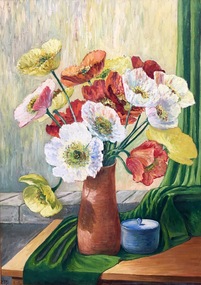
Painting - Painting - oil, Poppies
... Frau C Rippert was a Lutheran Missionary worker in Cairo, Egypt when the British Army was in north Africa and she was arrested and transferred to Palestine and later sent on the Queen Elizabeth to Australia where she was interned...Frau C Rippert was a Lutheran Missionary worker in Cairo, Egypt when the British Army was in north Africa and she was arrested and transferred to Palestine and later sent on the Queen Elizabeth to Australia where she was interned painting - oil rippert fc vollmer h poppies camp 3 tatura ww2 camps illustrations oil Oil painting of poppies in a brown vase beside a blue cylindrical bowl with lid. ...Frau C Rippert was a Lutheran Missionary worker in Cairo, Egypt when the British Army was in north Africa and she was arrested and transferred to Palestine and later sent on the Queen Elizabeth to Australia where she was internedOil painting of poppies in a brown vase beside a blue cylindrical bowl with lid. On a green cloth which is draped over a fawn coloured table. Brown frame with pale strip.painting - oil, rippert fc, vollmer h, poppies, camp 3, tatura, ww2 camps, illustrations, oil -
Koorie Heritage Trust
Book, Bannister, S, British colonization and coloured tribes, 1838
... National efforts alone will turn mischievous squatters into useful settlers, and lead aright the tens of thousands at this moment bursting through every frontier we occupy in Canada, in South Africa, and in all the Australias. without national effforts to correct present oppression, buccaneering in every remote sea must spring out of the indulgence now permitted with impunity to the violent passions of uncontrolled men; and witout national effforts now put forth, to follow up and crown those of the admirable missionaries, the possession of unwatched power will corrupt even them; and the whole work, now calling for your aid, must be done hereafter with lessened means of success and infinitely increased obstacles. p.323; appendices; 19 cm. ...the whole aborigines subject must soon be taken up by the best statesmen in this country. National efforts alone will turn mischievous squatters into useful settlers, and lead aright the tens of thousands at this moment bursting through every frontier we occupy in Canada, in South Africa, and in all the Australias. without national effforts to correct present oppression, buccaneering in every remote sea must spring out of the indulgence now permitted with impunity to the violent passions of uncontrolled men; and witout national effforts now put forth, to follow up and crown those of the admirable missionaries, the possession of unwatched power will corrupt even them; and the whole work, now calling for your aid, must be done hereafter with lessened means of success and infinitely increased obstacles.p.323; appendices; 19 cm.the whole aborigines subject must soon be taken up by the best statesmen in this country. National efforts alone will turn mischievous squatters into useful settlers, and lead aright the tens of thousands at this moment bursting through every frontier we occupy in Canada, in South Africa, and in all the Australias. without national effforts to correct present oppression, buccaneering in every remote sea must spring out of the indulgence now permitted with impunity to the violent passions of uncontrolled men; and witout national effforts now put forth, to follow up and crown those of the admirable missionaries, the possession of unwatched power will corrupt even them; and the whole work, now calling for your aid, must be done hereafter with lessened means of success and infinitely increased obstacles.colonization. | indigenous peoples. | indigenous peoples -- british colonies. -
Unions Ballarat
With Stanley on the Congo, Douglas, M, 1903
... Stanley is known for his exploration of central Africa, his search for missionary and explorer David Livingstone and his search for the source of the Nile....Stanley is known for his exploration of central Africa, his search for missionary and explorer David Livingstone and his search for the source of the Nile. ...The book relates to Sir Henry Morton Stanley, a Welsh journalist and explorer. Stanley is known for his exploration of central Africa, his search for missionary and explorer David Livingstone and his search for the source of the Nile.Historical - United Kingdom & Africa. Biographical interest.Book; 215 pages; black lettering; author's name and title; black swastika (this symbol predates Hitlerism). Inside cover: 1. Methodist Sabbath School Corack - Sunday School Prize slip: awarded to Richard Moore for 164 Marks, HP 208, Mr JS Perry Supt, D Nicholls Sec, 2nd April 1929. 2. In black ink - Master Richard Moore was present at the 50 years Jubilee of the Carack Methodist Sunday School on March 31st 1929. Frank S Perry Supt.stanley, henry morton, congo, btlc, ballarat trades hall, ballarat trades and labour council, biography, history - united kingdom and africa, rowlands, john, explorers, bula matar -
Kew Historical Society Inc
Journal, The Kewriosity Sheet Vol.3 No.1 : July 1981
... Missionary Sisters of St Peter Claver] / p1. Movement and dance in Special education [Caritas Centre] / p3. Day Care Centre [Caritas Centre] / p3. What is a blitz? [Yarra Bend Pakr; South African ...Fete [Kew Elder Citizens] / p1. Televising the service of worship [Uniting Church East Kew] / p1. Desperately needed [7th Kew Cub Pack] / p1. For sale ... The Artists of Kew [Elizabeth Mackie; Kew Historical Society] / p1. Art exhibition [Australian art] / p1. Afternoon movie [Missionary Sisters of St Peter Claver] / p1. Movement and dance in Special education [Caritas Centre] / p3. Day Care Centre [Caritas Centre] / p3. What is a blitz? [Yarra Bend Pakr; South African Boneweed]/ p3. The David Allen Memorial Scholarship [Concert; Old Presbyterian Church, Kew; Ian Frederick Lowe, Kaye Allen, Miriam Leuba] / p4. Kew Garden Club / p4. Child development and play - Eastern Region / p4. Caregivers needed [Family Day Care Centre] / p4.The Kewriosity Sheet (1979-83) was first published in the City of Kew (Victoria) in June 1979 as a two-sided 'community newssheet'. It aimed to: 'share news about Kew happenings and Kew people, and to exchange ideas about living in Kew'. Later issues gradually evolved into a 4-page, quarto sized publication. The Kewriosity Sheet was superseded by the Kew Council publication 'Kewriosity' (1983-1994).non-fictionFete [Kew Elder Citizens] / p1. Televising the service of worship [Uniting Church East Kew] / p1. Desperately needed [7th Kew Cub Pack] / p1. For sale ... The Artists of Kew [Elizabeth Mackie; Kew Historical Society] / p1. Art exhibition [Australian art] / p1. Afternoon movie [Missionary Sisters of St Peter Claver] / p1. Movement and dance in Special education [Caritas Centre] / p3. Day Care Centre [Caritas Centre] / p3. What is a blitz? [Yarra Bend Pakr; South African Boneweed]/ p3. The David Allen Memorial Scholarship [Concert; Old Presbyterian Church, Kew; Ian Frederick Lowe, Kaye Allen, Miriam Leuba] / p4. Kew Garden Club / p4. Child development and play - Eastern Region / p4. Caregivers needed [Family Day Care Centre] / p4. community publications --- kew (vic.), the kewriosity sheet, newsletters - kew (vic.) -
 Flagstaff Hill Maritime Museum and Village
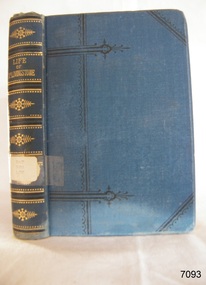
Book - Biography Compilation, J S Robertson, The Life of David Livingstone, 1880s to 1890s
... He was instead recruited by the veteran missionary Robert Moffat, who described seeing 'the smoke of a thousand villages' in Africa where no missionary had ever gone. ...He was instead recruited by the veteran missionary Robert Moffat, who described seeing 'the smoke of a thousand villages' in Africa where no missionary had ever gone. ...Subject copy is a variant issue of "The Life and Explorations of David Livingstone, LL.D., edited by J S Robinson and carefully compiled from reliable sources" the work is sometimes issued with the shorter cover title "The Life of David Livingstone, LL.D., the Great Missionary Explorer" or "Livingstone, the Great Missionary Traveller"). It's a complete history of Livingstone's life written following the news of his death, aimed particularly at educating young readers about his life and ministry. It covers his childhood in a Scottish mill, his medical training, his missionary and exploration career in Africa the naming of Victoria Falls, and the search for the Nile's source, his campaign against the slave trade, and in later printings extracts from his last journals. It was a popular, mass-market compilation rather than an original scholarly biography, capitalising on the huge public fascination with Livingstone after Henry Morton Stanley's famous 1871 encounter and Livingstone's 1873 death.Hard cover book. The Life of David Livingstone Editor: J S Robertson Publisher: J G Murdoch & Co. Ltd, Date: 1880s to 1890s Further Information: Blue Cloth hardcover with lettering and patterning to spine in Gilt. The spine has a Library label with an inscription.non-fictionSubject copy is a variant issue of "The Life and Explorations of David Livingstone, LL.D., edited by J S Robinson and carefully compiled from reliable sources" the work is sometimes issued with the shorter cover title "The Life of David Livingstone, LL.D., the Great Missionary Explorer" or "Livingstone, the Great Missionary Traveller"). It's a complete history of Livingstone's life written following the news of his death, aimed particularly at educating young readers about his life and ministry. It covers his childhood in a Scottish mill, his medical training, his missionary and exploration career in Africa the naming of Victoria Falls, and the search for the Nile's source, his campaign against the slave trade, and in later printings extracts from his last journals. It was a popular, mass-market compilation rather than an original scholarly biography, capitalising on the huge public fascination with Livingstone after Henry Morton Stanley's famous 1871 encounter and Livingstone's 1873 death. warrnambool, shipwrecked-coast, flagstaff-hill, flagstaff-hill-maritime-museum, maritime-museum, shipwreck-coast, flagstaff-hill-maritime-village, shipwrecked-artefact, book, the life of david livingstone, j s robertson
