
Showing 423 items matching "moore street"
-
 Bendigo Historical Society Inc.
Document - National Trust Collection: Graylings 90 Moore Street, Bendigo, 1988
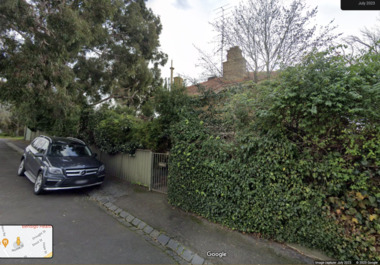
... National Trust Collection: Graylings 90 Moore Street, Bendigo...This item includes the following documents: 3084.48a Google St View in 2023 Graylings, 90 Moore Street, Bendigo 3084.48b National Trust Letter to new owner of Graylings February 1988 (Contact BHS for details)...This item includes the following documents: 3084.48a Google St View in 2023 Graylings, 90 Moore Street, Bendigo 3084.48b National Trust Letter to new owner of Graylings February 1988 (Contact BHS for details) Document National Trust Collection: Graylings 90 Moore Street, Bendigo ...The house was designed in 1924 by Harold Desbrowe Anneal and described as ahead of its time. Born in Happy Valley, Bendigo, Victoria in 1865, Desbrowe Annear was the elder son of James Annear, mining contractor, and Eliza Ann (née Hawkins). In 1883, Desbrowe-Annear was articled to Melbourne architect William Salway and during this time his interest and knowledge of architecture grew extensively. In 1889 he chose to pursue a practice of his own having already received recognition for his architectural sketches and papers delivered to the Victorian Institute of Architects. Source Wikipedia.Letter from National Trust to new owner re the Design of the House and its importance. This item includes the following documents: 3084.48a Google St View in 2023 Graylings, 90 Moore Street, Bendigo 3084.48b National Trust Letter to new owner of Graylings February 1988 (Contact BHS for details)history, national trust bendigo collection, bendigo, harold desbrowe anneal -
 Hawthorn Historical Society
Drawing - Property Illustration, 12 Moore Street, Hawthorn
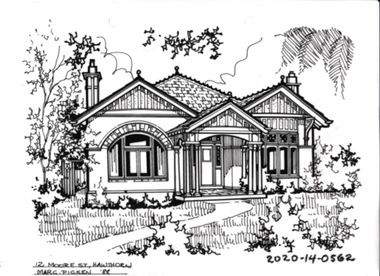
... 12 Moore Street, Hawthorn...The year in which the drawing was created is also a valuable record for house historians, as a number of the properties depicted have either been altered since that date or demolished. artist - margaret picken 1950- 12 MOORE ST, HAW Marg Picken ~88 pen and ink architectural drawing on drafting film. 12 Moore Street, Hawthorn Drawing Property Illustration ...'After training as a Cartographic Draftsman within the mining industry, I worked as a property illustrator for real estate firms in the eastern suburbs of Melbourne for 23 years from 1983. I initially photographed houses with a Polaroid camera and made a 'thumbnail' sketch while there. The photos were used to scale off a sketch in pencil and then that sketch was overlaid with drafting film and the 'pen and ink' completed. The pens I used were the Rotring ‘Rapidigraph’ drafting pens. The ink was also made by Rotring (German).The film was ‘Rapidraw’, polyester drafting film, double matte. It takes a very fine line and doesn’t bleed. As well as house sketches, there were often floor plans and site plans ordered. Aerial sketches were ordered when the property needed an overall view.' (Margaret Picken, 2020)This property illustration is one of a series created by Margaret Picken for a range of real estate agents in Melbourne between c. 1983 and c. 2006. Each work is signed and dated by the artist.Gift of Margaret Picken, 2020pen and ink architectural drawing on drafting film.12 MOORE ST, HAW Marg Picken ~88artist - margaret picken 1950- -
 Hawthorn Historical Society
Drawing - Property Illustration, 16 Moore Street, Hawthorn
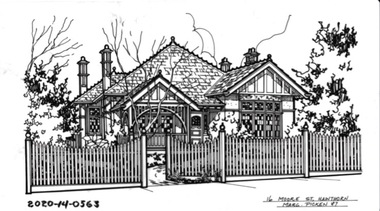
... 16 Moore Street, Hawthorn...The year in which the drawing was created is also a valuable record for house historians, as a number of the properties depicted have either been altered since that date or demolished. artist - margaret picken 1950- 16 MOORE ST, HAWTHORN Marg Picken ~87 pen and ink architectural drawing on drafting film. 16 Moore Street, Hawthorn Drawing Property Illustration ...'After training as a Cartographic Draftsman within the mining industry, I worked as a property illustrator for real estate firms in the eastern suburbs of Melbourne for 23 years from 1983. I initially photographed houses with a Polaroid camera and made a 'thumbnail' sketch while there. The photos were used to scale off a sketch in pencil and then that sketch was overlaid with drafting film and the 'pen and ink' completed. The pens I used were the Rotring ‘Rapidigraph’ drafting pens. The ink was also made by Rotring (German).The film was ‘Rapidraw’, polyester drafting film, double matte. It takes a very fine line and doesn’t bleed. As well as house sketches, there were often floor plans and site plans ordered. Aerial sketches were ordered when the property needed an overall view.' (Margaret Picken, 2020)This property illustration is one of a series created by Margaret Picken for a range of real estate agents in Melbourne between c. 1983 and c. 2006. Each work is signed and dated by the artist.Gift of Margaret Picken, 2020pen and ink architectural drawing on drafting film.16 MOORE ST, HAWTHORN Marg Picken ~87artist - margaret picken 1950- -
 Hawthorn Historical Society
Drawing - Property Illustration, 16 Moore Street, Hawthorn
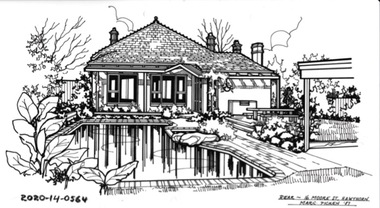
... 16 Moore Street, Hawthorn...The year in which the drawing was created is also a valuable record for house historians, as a number of the properties depicted have either been altered since that date or demolished. artist - margaret picken 1950- REAR 16 MOORE ST, HAWTHORN Marg Picken ~87 pen and ink architectural drawing on drafting film. 16 Moore Street, Hawthorn Drawing Property Illustration ...'After training as a Cartographic Draftsman within the mining industry, I worked as a property illustrator for real estate firms in the eastern suburbs of Melbourne for 23 years from 1983. I initially photographed houses with a Polaroid camera and made a 'thumbnail' sketch while there. The photos were used to scale off a sketch in pencil and then that sketch was overlaid with drafting film and the 'pen and ink' completed. The pens I used were the Rotring ‘Rapidigraph’ drafting pens. The ink was also made by Rotring (German).The film was ‘Rapidraw’, polyester drafting film, double matte. It takes a very fine line and doesn’t bleed. As well as house sketches, there were often floor plans and site plans ordered. Aerial sketches were ordered when the property needed an overall view.' (Margaret Picken, 2020)This property illustration is one of a series created by Margaret Picken for a range of real estate agents in Melbourne between c. 1983 and c. 2006. Each work is signed and dated by the artist.Gift of Margaret Picken, 2020pen and ink architectural drawing on drafting film.REAR 16 MOORE ST, HAWTHORN Marg Picken ~87artist - margaret picken 1950- -
 Ballarat and District Irish Association
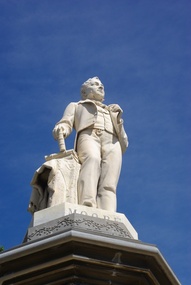
Photograph - Colour, Clare Gervasoni, Thomas Moore Statue, Sturt Street Ballarat, 2011, 29/12/2014
... Thomas Moore Statue, Sturt Street Ballarat, 2011...moore...poet...statue...sturt street...A coloured photograph of the Thomas Moore Statue in Sturt Street Ballarat....Thomas Moore Statue, Sturt Street Ballarat, 2011 Photograph - Colour Clare Gervasoni ...Thomas Moore (28 May 1779 – 25 February 1852) was an Irish poet, singer, songwriter, and entertainer, now best remembered for the lyrics of "The Minstrel Boy" and "The Last Rose of Summer". (Wikipedia, accessed 05 April 2014)A coloured photograph of the Thomas Moore Statue in Sturt Street Ballarat.ballarat, moore, thomas moore, poet, statue, sturt street, surt street gardens -
 Stawell Historical Society Inc
Archive, Land Title - Register. 1897 Sloane and Scotchman's Quartz Mining Co No Liability Stawell, 1897
... Black Framed Memorial Title of Land in Moore Street Stawell. Sloanes & Scotchmans Quartz Mining Co No Liability Stawell....Stawell Historical Society Inc 46 Longfield St Stawell grampians stawell mining Black Framed Memorial Title of Land in Moore Street Stawell. Sloanes & Scotchmans Quartz Mining Co No Liability Stawell. ...Black Framed Memorial Title of Land in Moore Street Stawell. Sloanes & Scotchmans Quartz Mining Co No Liability Stawell.stawell, mining -
Glen Eira Historical Society
Article - Elsternwick Congregational Church – Caulfield Union Church
... ... Moore Street...Morley Rodney Caulfield North Real Estate Agents Auctions Churches Masters Street Balaclava Road Glen Eira Road Aroona Road Yanakie Crescent Fosbery Avenue Howitt Road Orrong Court Moore Street Jupiter Street Chuppa Pty Ltd. Loganbee Pty Ltd. ...One page leaflet advertising the auction of the former Union Church building by Birner Morley Pty Ltd to be held on 19/02/1989. Includes exterior sketch. Newspaper article, date and source unknown advertising forthcoming auction of the church on 19/02/1989. Includes exterior sketch. Copy of the contract of sale of the church property prepared for the auction on 19/02/1989. Includes copies of the title, council rate and zoning details and other information required for the sale. Includes exterior photograph copy. Newspaper article from The Age of 20/02/1989 reporting the sale of the church property at auction to a religious organization.elsternwick, orrong road, alma road, caulfield, birner morley pty ltd., morley rodney, caulfield north, real estate agents, auctions, churches, masters street, balaclava road, glen eira road, aroona road, yanakie crescent, fosbery avenue, howitt road, orrong court, moore street, jupiter street, chuppa pty ltd., loganbee pty ltd., hawthorn road, margolis tuszynski and klein, hamiltons and aleck sacks and sons, congregational union of victoria, king street, watson peter julian, the uniting church in australia property trust victoria, city of caulfield, aylen d. r. -
Glen Eira Historical Society
Article - BOORAN ROAD, 109, CAULFIELD SOUTH, ‘PONSONBY’
... ... Moore Street...‘Ponsonby’ Booran Road Caulfield South Ormond North Road Moore Street Frederick Street Brick Houses Architectural Styles Californian Bungalows ‘Ormese’ Munday Audrey Munday J.R Narrawong Road Thompson Flora Louise Ponsonby Grocers Agg Janette Thompson Daphne Ponsonby Thompson Catherine Ponsonby Garratt J Garratt Catherine (Kate) Garratt Ormee Garratt Esme St. ...This file contains four items: 1/Two page description of the house with colour exterior and interior photographs downloaded from realestate.com.au website in May 2014, after its sale in March 2013. 2/Two pages of handwritten notes dated 27/06/2014 by Peta Darke containing information about the former occupants of the house. 3/Handwritten list of directory entries for ‘Ponsonby’ from 1923 to 1970. Also, a page downloaded from Kendall Want Associates on 21/03/2014 describing Michelle Scheibner’s position there. 4/Nine brief articles copied from ‘The Argus’ over the years from 1916 to 1940 concerning various events and activities in the life of Flora Ponsonby Thompson.‘ponsonby’, booran road, caulfield south, ormond, north road, moore street, frederick street, brick houses, architectural styles, californian bungalows, ‘ormese’, munday audrey, munday j.r, narrawong road, thompson flora louise ponsonby, grocers, agg janette, thompson daphne ponsonby, thompson catherine ponsonby, garratt j, garratt catherine (kate), garratt ormee, garratt esme, st. agnes anglican church ormond, boxshall john, boxshall jack, boxshall ormee, scheibner carl h, scheibner esmee, scheibner michelle, mclaren andrew, whitby george, booksellers, shelford anglican girls school -
Whitehorse Historical Society Inc.
Document, 'Willowbank', 1985
... ...Moore Street...(Mrs) Evans R.B. (Mr) Moore Street Vermont No. 3 Notes by Jean Uhl on interview, 1985, about 'Willowbank' Notes by Jean Uhl on interview, 1985, about 'Willowbank', used to be called 'Willowbridge' (named 'Willowbridge' by Mrs B. ...Notes by Jean Uhl on interview, 1985, about 'Willowbank'Notes by Jean Uhl on interview, 1985, about 'Willowbank', used to be called 'Willowbridge' (named 'Willowbridge' by Mrs B. Rawson). Home was built 1880, land originally subdivided by Gerard Letts, German family thought to be original builders. Situated at 3 Moore Road, Vermont. 1978 purchased by R.B. Evans,Notes by Jean Uhl on interview, 1985, about 'Willowbank'willowbank', uhl, jean, letts, gerard, rawson, b. (mrs), evans, r.b. (mr), moore street, vermont, no. 3 -
 Stawell Historical Society Inc
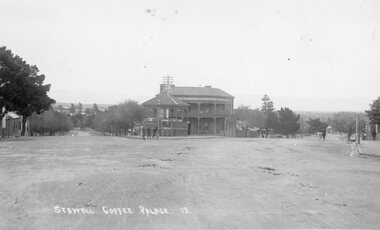
Postcard, Stawell Coffee Palace formerly the Castlemaine Hotel and Rotunda in Lower Main Street -- Post Card
... Post Card 13. D.S. King Moore Street East Ararat...Post Card 13. D.S. King Moore Street East Ararat stawell Stawell Coffee Palace formerly the Castlemaine Hotel and Rotunda in Lower Main Street -- Post Card Postcard ...Stawell Coffee Palace formerly Castlemaine Hotel and Rotunda Lower Main Street. Post Card 13. D.S. King Moore Street East Araratstawell -
 Bacchus Marsh & District Historical Society
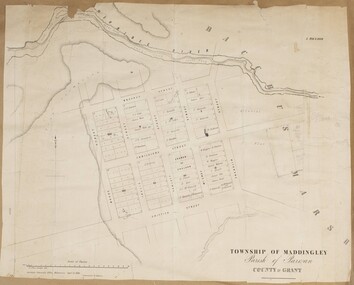
Map, Maddingley Township, Parish of Parwan, County of Grant, 1856
... The main area of Maddingley shown on this map is an area bounded by Bacchus Street, Moore Street, Griffith Street and Franklin Street. ...The main area of Maddingley shown on this map is an area bounded by Bacchus Street, Moore Street, Griffith Street and Franklin Street. ...Maddingley is a locality or township within the broader township area of Bacchus Marsh. This map is dated 1856 but is based on an earlier survey in 1843. The main area of Maddingley shown on this map is an area bounded by Bacchus Street, Moore Street, Griffith Street and Franklin Street. Other streets visible are Inglis Street, Labilliere Street, McCrae Street. The area to the east of Franklin Street is not sub-divided and is described as an 'alluvial flat. A single page paper map showing land allotments, streets, and natural watercourses in the township of Maddingley. The map is pasted into a bound volume containing 76 maps or plans in total. Two inscriptions: 1. A.J. Skene Surveyor, 1843. ; 2. Surveyor-General's Office Melbourne, Sept 6, 1856. (Lithographed by R. Meikle)bacchus marsh victoria maps, maddingley victoria maps, land use, maddingley victoria history -
Whitehorse Historical Society Inc.
Document, Moore Property, 1/12/1997
... Street...Mitcham...No 15...Omerod Family...Moore...The Moore Property, Casella Street, Mitcham ; researched and prepared by Frances Warren, December 1997....Casella Street Mitcham No 15 Omerod Family Moore Margaret Moorakyne Place Mitcham Moore Geoff The Moore Property, Casella Street, Mitcham The Moore Property, Casella Street, Mitcham ; researched and prepared by Frances Warren, December 1997. ...The Moore Property, Casella Street, MitchamThe Moore Property, Casella Street, Mitcham ; researched and prepared by Frances Warren, December 1997.The Moore Property, Casella Street, Mitchamcasella street, mitcham, no 15, omerod family, moore, margaret, moorakyne place, mitcham, moore, geoff -
Glen Eira Historical Society
Document - Glenhuntly Road, Elsternwick
... Moore Hugh... Selwyn Street...Glen Huntly Road Moore’s Buildings 1891 Italianate style Architectural styles Architectural features Verandahs Elsternwick Moore Hugh Selwyn Street St Georges Road Glenmoore Glenmoore Estate Corkill French and Pugh Jamieson W W Thompson A G Eddy Henrietta Valey Frank Allen Thomas Saddlers Dairy products Green W I Undertakers Delany Edward Drapers Herbenstreit Huldreich Butcher shops Sincock John Plumbers Allen T Greengrocers Coppel George Painters Dickinson F H Dickinson V Johnson Thomas Cole Constance Hairdressers Ortner Frank Drycleaners Gaffney Elodie Ward Andrew Long MR Robinson Mr Le Page Mr Byers Robert Carter Mary Millar C Smythe F C Crook Thomas Stancy H Crook’s National Stores Pty Ltd E J Buckeridge’s Buildings 1911 Kelly Walter Staniland Grove Buckeridge Edward Hannon John Kellett Frances Beck Miss Armstrong Miss Tuck Mary Milliners Doherty John Adams Herbert Bakeries Perry Robert Picture framers Adams Clifford Arches Windows Shops Land subdivision Retail trade Property developers Advertising signs Document Glenhuntly Road, Elsternwick ...Three three page extracts from Andrew Ward’s 1994 Caulfield Conservation Study on commercial buildings in Glen Huntly Road, Elsternwick. The three studies concern Moore’s Buildings 1891 shops at 305-313 Glen Huntly Road, shops at 323-329 Glen Huntly Road and E J Buckeridge’s Buildings 1911 shops at 357-371 Glen Huntly Road. The studies describe the buildings’ architectural features, provide a historical overview and statements of the buildings’ significance, especially in relation to the Land Boom and commercial development between 1890 to the 19020s. All three studies include a black and white photograph (109mm x 152mm; 114mm x 150mm; 110mm x 151mm) of the shop fronts.glen huntly road, moore’s buildings 1891, italianate style, architectural styles, architectural features, verandahs, elsternwick, moore hugh, selwyn street, st georges road, glenmoore, glenmoore estate, corkill french and pugh, jamieson w w, thompson a g, eddy henrietta, valey frank, allen thomas, saddlers, dairy products, green w i, undertakers, delany edward, drapers, herbenstreit huldreich, butcher shops, sincock john, plumbers, allen t, greengrocers, coppel george, painters, dickinson f h, dickinson v, johnson thomas, cole constance, hairdressers, ortner frank, drycleaners, gaffney elodie, ward andrew, long mr, robinson mr, le page mr, byers robert, carter mary, millar c, smythe f c, crook thomas, stancy h, crook’s national stores pty ltd, e j buckeridge’s buildings 1911, kelly walter, staniland grove, buckeridge edward, hannon john, kellett frances, beck miss, armstrong miss, tuck mary, milliners, doherty john, adams herbert, bakeries, perry robert, picture framers, adams clifford, arches, windows, shops, land subdivision, retail trade, property developers, advertising signs -
 Warrnambool and District Historical Society Inc.
Document - William Cox Probate 1899, 1899
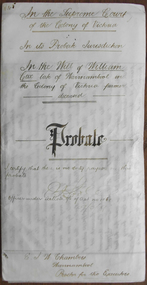
... He was a farmer residing in Moore Street Warrnambool at the time of his death at the age of 83. ...He was a farmer residing in Moore Street Warrnambool at the time of his death at the age of 83. ...Tait collection: item 19 of 62 This is an 1899 document giving Will and Probate details of William Cox who died in Warrnambool in March 1899. He was a farmer residing in Moore Street Warrnambool at the time of his death at the age of 83. He left real estate to the value of £425 and personal estate to the value of £412 to Gwenllian Williams who may have been his sister or niece. A Mr and Mrs Williams were also living in the Moore Street house at the time of Cox’s death. His executors were Thomas Goodall, a law clerk who managed the office of the lawyer Ernest Chambers in Warrnambool and John Ward, a pioneer settler in Warrnambool and a shopkeeper in Jamieson Street in 1899. No other details are available on William Cox. This is an interesting document as it gives details of the Will and Probate belonging to a local Warrnambool person, William Cox. The lawyer dealing with the document was Ernest Chambers who had legal offices in Warrnambool, Port Fairy and Koroit at the end of the 19th century and the beginning of the 20th century. This document has been passed on to successive lawyers occupying legal chambers in the Kepler Street building and that is where the document was held until passed on to the Warrnambool and District Historical Society in 2014.This is an 1899 piece of parchment paper folded in two with handwritten material on three sides of the paper. The seal of the Supreme Court of the Colony of Victoria is attached with blue ribbon and there are two stamps, one blue one of the Colonial Bank in Warrnambool and the other a red one of the Master in Equity of the Supreme Court in Melbourne. Two of the pages have ruled black lines. The writing is very clear but the pages are a little stained.In the Supreme Court of the Colony of Victoria In its Probate Jurisdiction In the Will of William Cox late of Warrnambool in the Colony of Victoria farmer deceased; Probate; I certify there is no duty payable on this probate (signature) Officer under Section 96 of act No 106; E J W Chambers Warrnambool Proctors for the Executorswilliam cox, ernest chambers, john ward, thomas goodall, tait collection -
 Bendigo Military Museum
Postcard - PHOTOGRAPHIC POSTCARDS WW1, Edgar Dawson Collection : Medics of the 57th Battalion
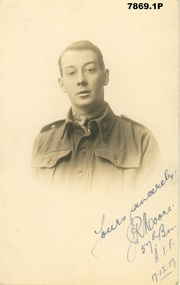
... "Yours sincerely *** France 20-12-17" on verso "*** co Reuters Ltd, 5 Moore Street Sydney" 5. "Yours sincerely, Snow, 25-2-18" ..."Yours sincerely *** France 20-12-17" on verso "*** co Reuters Ltd, 5 Moore Street Sydney" 5. "Yours sincerely, Snow, 25-2-18" 1. ...This six-postcard group is the tenth in a series of records of items in the collection of Edgar Dawson DCM. Dawson was the Regimental Sergeant Major of 57th Battalion, AIF. C Company of the 57th was composed of men drawn from Echuca, Eaglehawk and Bendigo. The postcards are from his personal album, and many are annotated in Dawson's hand with explanatory notes on the subject. Refer to Cat No 893 for his service details. Items originally in album cat. no. 207P 1. Moore, James Robert 2462 57th Battalion 2. 'Bert H', unidentified Lance Corporal, three years service stripes, unit unidentified. 3. Unidentified medic, from Bendigo 4. Medic, 57th Battalion, not yet identified 5. 'Snow", unidentified 57th Battalion medic 6. Unidentified medic, 57th Battalion 1. "Yours sincerely J R Moore, 57th Battalion A.I.F 17-12-17" 2. "Yours sincerely, Bert H" 3. "Another Bendigo boy doing great work in the A.M.C" 4. "Yours sincerely *** France 20-12-17" on verso "*** co Reuters Ltd, 5 Moore Street Sydney" 5. "Yours sincerely, Snow, 25-2-18" postcards, 57th battalion, edgar dawson dcm -
 Bendigo Historical Society Inc.
Document - H. A. & S. R. WILKINSON COLLECTION: CONTRACT OF SALE
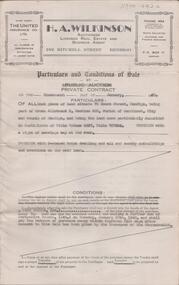
... Property: all that piece of land situate 78 Moore Street, Bendigo being part of Crown allotment 5 section 32C, Parish of Sandhurst City of Bendigo, being the land described in certificate of title volume 3637 folio 727324, together with a right of carriage way at the rear. ...Property: all that piece of land situate 78 Moore Street, Bendigo being part of Crown allotment 5 section 32C, Parish of Sandhurst City of Bendigo, being the land described in certificate of title volume 3637 folio 727324, together with a right of carriage way at the rear. ...Conditions of sale by private contract dated 19th January, 1948 between C. M. Taylor (vendor) and Mrs. M. E. Speechley (purchaser). Property: all that piece of land situate 78 Moore Street, Bendigo being part of Crown allotment 5 section 32C, Parish of Sandhurst City of Bendigo, being the land described in certificate of title volume 3637 folio 727324, together with a right of carriage way at the rear. Together with 6 room brick dwelling and all sundry outbuildings. Price: 397 pounds. Attached hand written note.organization, business, h.a. & s.r wilkinson real estate -
 Bacchus Marsh & District Historical Society
Map, Maddingley Township, Parish of Parwan, circa 1890s
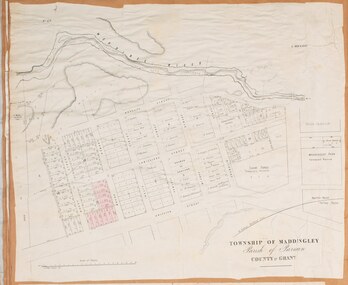
... Other streets visible are Franklin Street, Inglis Street, Labilliere Street, McCrae Street, Moore Street and part of Station Street....Other streets visible are Franklin Street, Inglis Street, Labilliere Street, McCrae Street, Moore Street and part of Station Street. Bacchus Marsh Victoria Maps Maddingley Victoria Maps Land Use Maddingley Victoria History A single page paper map showing land allotments, streets, rivers, creeks, park lands, the railway line and Bacchus Marsh railway station in the township of Maddingley. ...Maddingley is a locality or township within the broader township area of Bacchus Marsh. This map is not dated. However features in Maddingley which appeared in the 1880s and 1890s are present in the map, These include the Bacchus Marsh Railway Station and the Bacchus Marsh Showgrounds. The main residential and commercial area of Maddingley is shown on this map in an area bounded by Bacchus Street, Barry Street, Griffith Street and Maddingley Road. Other streets visible are Franklin Street, Inglis Street, Labilliere Street, McCrae Street, Moore Street and part of Station Street.A single page paper map showing land allotments, streets, rivers, creeks, park lands, the railway line and Bacchus Marsh railway station in the township of Maddingley. The map is pasted into a bound volume containing 76 maps or plans in total. bacchus marsh victoria maps, maddingley victoria maps, land use, maddingley victoria history -
 Bendigo Military Museum
Souvenir - SOUVENIR WW1, FRAMED
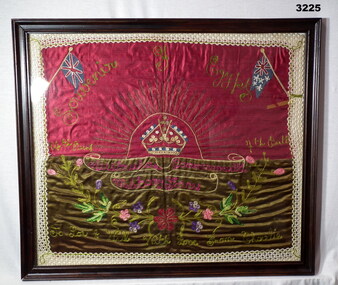
... Made for Mr & Mrs William Moore, 7 Pitt Street, Bendigo by the mother of Charlie, one of 3 American Soldiers billeted during WWII....Bendigo Military Museum 37 - 39 Pall Mall Bendigo goldfields Made for Mr & Mrs William Moore, 7 Pitt Street, Bendigo by the mother of Charlie, one of 3 American Soldiers billeted during WWII. ...Made for Mr & Mrs William Moore, 7 Pitt Street, Bendigo by the mother of Charlie, one of 3 American Soldiers billeted during WWII.Dark brown wooden frame with glass front & white cardboard backing. Red top & gold bottom silk background with white woven lace border. Embroidery consists of Union Jack & Australian flags with souvenir of Egypt at top, Commonwealth Forces badge in centre & a floral arrangement under the badge.Embroidered at bottom: "To Lou & Will with love from Charlie"passchendaele barracks trust, embroidery, silk, eygpt, souvenir -
 Bendigo Historical Society Inc.
Memorabilia - Doctor Lilian Cleeve Collection, 1915 - 1996
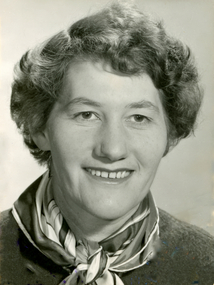
... They lived at 96 Moore Street ('Silver Birches'), close to the hospital. ...They lived at 96 Moore Street ('Silver Birches'), close to the hospital. ...Doctor Lilian Marjorie Cleeve was born in 1915 and died in February 1996. She grew up in Moonee Ponds and graduated as a Doctor from the University of Melbourne School of Medicine in 1941. She completed her training at the Women's Hospital in Melbourne between December 1940 and January 1941 where she delivered her first baby, Beverley Margaret Manley. In 1942 at the beginning of the war with Japan, Doctor Cleeve travelled to Bendigo. The train was full of soldiers travelling to camp at the Bendigo Showgrounds next to the hospital (now the Tom Flood Centre). Because of the war, the streets were in darkness. Some soldiers carried her suitcase to her new home. Doctor Cleeve immediately began work as the hospital Registrar. Later on she specialized in the delivery of babies, who always seemed to be born on her days off. After leaving the hospital Doctor Cleeve joined the medical practice of Doctors Gorman and Grant (husband and wife). Their rooms were on the corner of View and Mckenzie Streets in the Atkinson building (named after Doctor Harry Atkinson). Doctor Cleeve then established a medical practice in Garsed Street where the Dan Murphy Car Park is now located. Later Doctor Cleeve ran an eye clinic with Doctor Gorman's son, on the other side of Garsed Street. She also used to visit Puckapunyal Army Base to screen both the regular army recruits and the conscripts who were sent to Vietnam. Doctor Cleeve last worked as part of the associate medical staff at the Bendigo Teachers' College in Osborne Street from 1979 to 1980. In 1944 Lilian married Sargent George Cathcart (Fortuna Army Survey Regiment). George was the secretary/treasurer of the Bendigo Branch of the Liberal Party. They lived at 96 Moore Street ('Silver Birches'), close to the hospital. George and Lilian had one son, Andrew. George passed away from a heart attack in 1957. Lilian married Roy Lockart Chisholm in 1960. Roy was the manager of the Charing Cross Branch of the CBA Bank. Not long after their marriage, Lilian (now Mrs Chisholm), Roy, and Lilian's young son Andrew, took a honeymoon voyage on the cargo vessel "Milos" to Hong Kong, Japan, New Guinea and Borneo, where they visited the Sandakan War Memorial. In 1960 Lilian sold 96 Moore Street, and following Roy's retirement, they purchased a house which they named 'Roslyn' at 28 Reginald Street, Quarry Hill. Roy died in 1963 after suffering a stroke. Respected and well-liked, Mrs Chisholm continued to raise Andrew in Reginald Street with the assistance of her faithful housekeeper Coral Suurpaa, known to all as “Hickey". Coral lived in a house in Breen Street, beside the Myrtle Street railway bridge. Prior to this, "Hickey" had lived-in at Moore Street when Dr Cleeve was widowed after the death of her first husband. Photos, Passport, Letter and Nameplate 11138a Doctor Lilian Marjorie Cleeve passport photo May 1961 11138b British Australian Passport 11138c The Premier Visits 'Silver Birches' 96 Moore St., Bendigo on April 8th 1957 Photo. From Left to Right are: Former Bendigo Organiser, Mr T.J. Langdon (now at Ballarat), Mrs Langdon, Mrs John Stanistreet, The Premier, Hon. H.E. Bolte, Mr John Stanistreet, M.L.A., Mrs G. Cathcart (Dr Cleeve) and Mr G.W.S. Cathcart. 11138d Doctor Cleeve and George Cathcart Photo 11138e Dr Cleeve front row 3rd from the right with her first baby delivered at the Women's Hospital Melbourne 1940 Photo. Back Row: B J Bernstein, B Chromow, S I D Preston, H J Hoffman, P Zerman, D G Sisely. Middle Row: L B Satchell, J B Buchanan, O B Pearce, J C Trinea, M R Millikan, I J Selikoff, R E Dwork. Front Row: J Kremer, R B Lewis, Miss B Marshall, Dr M A Mackie, Prof. Marshall Allan, Miss L Cleeve, Miss J grant, H Berinshaw. 11138f Dr Cleeve, Coral Suurpaa, Andrew Cathcart Photo in the backyard at 28 Reginald St. Quarry Hill, 1195-1997. 11138g Letter from Andrew Cathcart to the Sisely family in dec 2009 re the photo taken at the Women's Hospital Melbourne in 1940-41 11138h Dr L M Cleeve Nameplate Front View 11138i Dr L M Cleeve Nameplate Rear View 11138j The University of Melbourne Conferring of degrees Wilson Hall Monday 1st June 1942bendigo, doctor lorna sisely, women's hospital melbourne, roy lockart chisholm, reginald street, quarry hill, coral suurpaa, dr lilian cleeve, george cathcart -
 Flagstaff Hill Maritime Museum and Village
Container - Medicine Glass, W T & Co. (Whitall Tatum), late 19th Century to 1916
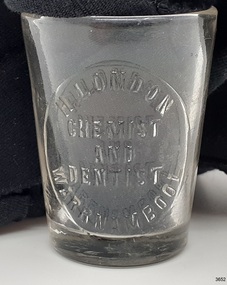
... A further record in The Warrnambool Standard mentions Mr London, chemist, formerly of Warrnambool, as currently a chemist in Moore Street, Rochester. He was noted again in the Bendigo Advertiser in 1917. ...A further record in The Warrnambool Standard mentions Mr London, chemist, formerly of Warrnambool, as currently a chemist in Moore Street, Rochester. He was noted again in the Bendigo Advertiser in 1917. ...This medicine glass, or dose cup, was made for Mr. H. London, chemist and dentist, Warrnambool. His premises was at corner of Koroit and Liebig Streets, Warrnambool. The medicine glass has graduations on its side to measure doses of Teaspoon, Dessert Spoon and Tablespoon. It was donated by the family of Dr WR Angus of Warrnambool. The side seams and indented base of the glass, with the embossed lettering, show that it was produced in a three-piece mould, a method used in the late 19th and early 20th century. Mr H London was recorded in local newspaper articles from The Warrnambool Standard between 1885 to 1904. A further record in The Warrnambool Standard mentions Mr London, chemist, formerly of Warrnambool, as currently a chemist in Moore Street, Rochester. He was noted again in the Bendigo Advertiser in 1917. The maker, Whitall Tatum & Co, is clearly marked on the base of the bottle. The company was a well-known maker of prescription bottles. He used the brand "W. T. & Co". from Mid-1870's until the late 1880's, moulded into his glassware.This medicine glass is significant as an example of medical equipment that has a design still used today. It is also significant for its association with H London, a local Warrnambool chemist involved in the community and commerce of early 20th century in Warrnambool.Medicine glass or dose cup, c. 1916. Glass is a conical shape with inward sloping sides and a concave base. there are side seams and a concave base. Embossed inscriptions are on the glass, showing measurements in the imperial scale on one side , the owner's details are on the other side and the maker's details are on the base. Three horizontal lines are etched on the left of the measurements. The glass belonged to H. London, Chemist and Dentist, Warrnambool, and was made by Whitall Tatum & Co., U.S.A. The glass is part of the W R Angus Collection.On sides: "TABLE", "DESSERT", "TEA". "H LONDON / WARRNAMBOOL / CHEMIST AND DENTIST" On base: "W.T. & CO. / A.J. / U.S.A."flagstaff hill, warrnambool, shipwrecked coast, flagstaff hill maritime museum, maritime museum, shipwreck coast, flagstaff hill maritime village, great ocean road, dose cup, medicine glass, chemist, mdeical equipment, medicine, h. london, chemist and dentist, liegig st warrnambool, rochester, whitall tatum & co, w. t. & co., three-piece mould, w.r. angus -
 Bendigo Historical Society Inc.
Document - LONG GULLY HISTORY GROUP COLLECTION: BANKNOTES AND JAMES BEVERAGE
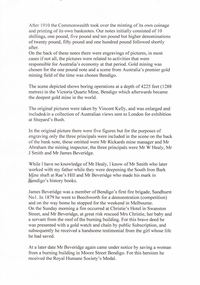
... At a later date Mr Beverage saved a woman from a burning building in Moore Street in Bendigo. He received the Royal Humane Society's Medal which is now housed at the Bendigo Fire Station in Hargreaves Street. ...At a later date Mr Beverage saved a woman from a burning building in Moore Street in Bendigo. He received the Royal Humane Society's Medal which is now housed at the Bendigo Fire Station in Hargreaves Street. ...Victoria Quartz Gold Mine was on Victoria Hill, Ironbark, Bendigo. The Victoria Hill Quartz Gold Mines are scientifically important, as they contain relics span nearly sixty years of mining (1854 to 1913), documenting the richest and most significant years of Bendigo's world-famous quartz mining industry. Enhancing the significance of the place are relics from the Victoria Quartz Company operations, including, at 4,870 feet, the world's deepest nineteenth-century gold mining shaft. (Heritage Victoria) Geology of Victoria Hill: https://aigjournal.aig.org.au/wp-content/uploads/2019/12/AIG-Victoria-Hill-Mining-Reserve_FinalWeb.pdfTyped copy of what appears to be a speech. Mentioned is that after 1910 the Commonwealth took over the minting it's own money. Gold mining was chosen for the one pound note and a Bendigo scene was chosen. The scene chosen shows boring operations in the Victoria Quartz Mine. The picture was taken by Vincent Kelly of the five figures but for engraving only three were shown. They were Mr W Healy, Mr J Smith and Mr James Beverage. James Beverage was a member of Bendigo's first fire brigade. He went to Beechworth for a demonstration and on the way home stopped at Christie's Hotel in Swanston Street. There was a fire at the hotel and Mr Beverage rescued Mrs Christie, her baby and a servant. At a later date Mr Beverage saved a woman from a burning building in Moore Street in Bendigo. He received the Royal Humane Society's Medal which is now housed at the Bendigo Fire Station in Hargreaves Street. In the City's formative years the area that deposited its rain water into the Long Gully Creek was considered to be in Long Gully and for many years the Victoria Quartz Mine deposited many thousands of gallons of water into the Long Gully Creek. Mr Steve Gibbons unveiled the plaque.bendigo, history, long gully history group, the long gully history group - banknotes and james beverage, victoria quartz mine, vincent kelly, shepard's bush, mr rickards, mr abraham, mr w healy, mr j smith, mr james beverage, south iron bark mine, rae's hill, sandhurst no 1 fire brigade, christie's hotel, mrs christie, royal humane society's medal, bendigo fire station, long gully history group, mr steve gibbons, department of environment water heritage, arts commnmoration of historic events and famous persons -
 Federation University Historical Collection
Photograph - Photograph - Black and White, Photographs of Ballarat Buildings by Geoff Biddington, 1967, 1967
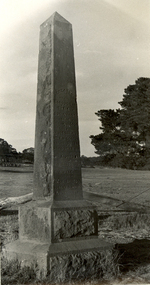
... Queen St Statue,Sturt Street 27-29. Sturt Street Fountain 30. Moore Statue, Sturt Street 31. Hede Statue, Sturt Street 32. ...Queen St Statue,Sturt Street 27-29. Sturt Street Fountain 30. Moore Statue, Sturt Street 31. Hede Statue, Sturt Street 32. ...Geoff Biddington took numerous photos around Ballarat and District. He was an active member of the Ballarat Branch of the National Trust. 48 black and white photographs of Ballarat buildings. 1. National Bank, Buninyong 2. Gas Light Standard, Geelong Road, Mount Clear 3. Water Hydrant 4. Former Police Station, Camp Street 5. Cast Iron Drinking Fountain, Eureka Stockade 6. Buninyong Gold Discovery Monument 7. Ballarat Old Cemetery Gates 8. Ballarat East Post office 9. Carriers Arms, Doveton Street North 10. North Star Hotel, Lydiard Street North 11.Lake View Hotel 12. Former Ballarat Gaol, Gate Two 13. Beaufort House 14. Smythesdale Post Office 15. Ballan Timber Building 16. National Mutual Building, Sturt Street 17. Craig's Hotel Doors 18. Her Majesty's Theatre Stage 19 & 20. Ballarat Botanical Gardens Statuary House 21 & 22. Stonemason at work 23. Methodist Church School (1867) Humffray Street 24 & 25. Methodist Church, Brown Hill 26. Queen St Statue,Sturt Street 27-29. Sturt Street Fountain 30. Moore Statue, Sturt Street 31. Hede Statue, Sturt Street 32. George V Statue (Victor Greenhalgh), Sturt Street 33-35. Peter Lalor Statue, Sturt Street 36. Art Deco Statue, Sturt Street 37. Beaufort Bandstand 38. Ranger Barracks, Curtis Street, Ballarat 39. Smeaton Mill and Bridge 40. Hepburn Graveyard, Smeaton 41-45 - Ballarat Tram Ride (possibly last) 46-48. Taking up the Ballarat Tram Tracks, 1967 .49. Melbourne House, Sebastopolgeoff biddington, biddington, buninyong, mount clear, police, gold, cemetery, hotels, ballarat gaol, beaufort house, smythesdale, ballan, theatre, statue, statues, statuary, peter lalor, ranger barracks, smeaton mill, smeaton bridge, hepburn, tram, sebastopol, craig's, her majesty's theatre, smeaton, hepburn graveyard, gold monument, queen victoria statue, ballarat, foodland, ballarat, ballarat buildings, former eagle hotel, former ballarat police station, gold discovery, craig's hotel, buninyong gold discovery obelisk -
 Warrnambool and District Historical Society Inc.
Label, Youngers, Early 20th century
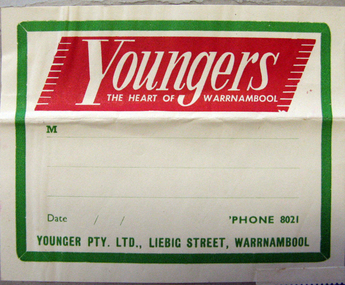
... The business grew into a large department store in Liebig Street. In 1958 the business was sold to Charles Moore and continued trading as Youngers. ...The business grew into a large department store in Liebig Street. In 1958 the business was sold to Charles Moore and continued trading as Youngers. ...John Younger came to Warrnambool from Yackandandah in 1888 originally with a partner John Jeffrey and opened a store selling general merchandise. In 1914 a new company known as Younger PTY LTD. was formed. The business grew into a large department store in Liebig Street. In 1958 the business was sold to Charles Moore and continued trading as Youngers. The store closed in 1980This label is an important memento of one of the key businesses in Liebig Street, Warrnambool in the 20th century. Younger stores are credited with making Liebig Street the main street in this city.White paper label with red and green printing adhered to a piece of grey cardboard. There is another label on the same card.Youngers THE HEART OF WARRNAMBOOL YOUNGER PTY. LTD.,LIEBIG STREET,WARRNAMBOOL M date 'PHONE 8021 youngers warrnambool -
 Warrnambool and District Historical Society Inc.
Badges x 4, Stokes Melbourne, Red Cross- Links of Service, Circa 1950's
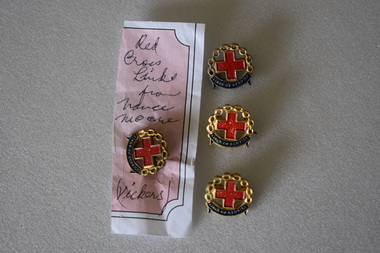
... Street (south of Merri St) Warrnambool great-ocean-road The Red Cross was established in Switzerland in 1683 and in Australia in 1914. Today it is the best known charitable organisation in the world and operates extensively throughout Australia. These badges may have been given to members for years of service. One badge comes from a local Warrnambool woman named Nance Moore ...The Red Cross was established in Switzerland in 1683 and in Australia in 1914. Today it is the best known charitable organisation in the world and operates extensively throughout Australia. These badges may have been given to members for years of service. One badge comes from a local Warrnambool woman named Nance Moore, nee Vickers.These badges are retained as examples of badges produced for the Red Cross in Australia and possibly treasured by members of the Red Cross.Four metal badges: .1 features a symmetrical red cross with gold edging. Three extremities of the cross are linked by a gold coloured semi circular chain on the perimeter. The fourth extremity has a curved scroll with text and two small triangular points. The later allow the badge to stand when not being worn. There is a pin clip on the reverse. .2 Identical to .1 with pin detached .3 Identical to .1 except pin on reverse is missing. .4 Identical to .1 . the badge is pinned through a piece of pink and white paper with text All badges : LINKS OF SERVICE On reverse .1 2525 Stokes .2 2570 .3 2535 STOKES .4 395 Paper- Red Cross Links from Nance Moore ( Vickers)red cross -
 Warrnambool and District Historical Society Inc.
Booklet, Tinker, C 2000
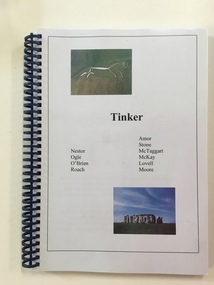
... Street (south of Merri St) Warrnambool great-ocean-road This book tells the story of the Tinker family from their origins in England in 1833 to the present time in Warrnambool and Victoria up to the present time. It contains a number of photographs, certificates and letters which relate to the family in particular a Royal Humane society award to Leslie Arthur Tinker for assisting passengers on the boat Nestor in 1921. A detailed history of a family with many local connections. tinker family warrnambool nestor hopkins river Tinker Nestor Ogle, O’Brien, Roach, Amor, Stone, McTaggart, McKay,, Lovell, Moore ...This book tells the story of the Tinker family from their origins in England in 1833 to the present time in Warrnambool and Victoria up to the present time. It contains a number of photographs, certificates and letters which relate to the family in particular a Royal Humane society award to Leslie Arthur Tinker for assisting passengers on the boat Nestor in 1921. A detailed history of a family with many local connections.Dark blue spiral bound booklet with two photographs one of the Uffington White horse and the other of Stonehenge, on front cover with black text in the centre. Pages are not numbered but approximately 100 A4 size. Plastic binding with clear plastic sheet over front cover.Tinker Nestor Ogle, O’Brien, Roach, Amor, Stone, McTaggart, McKay,, Lovell, Moore.tinker family, warrnambool, nestor, hopkins river -
 Warrnambool and District Historical Society Inc.
Certificate, Royal Human Society, 1921
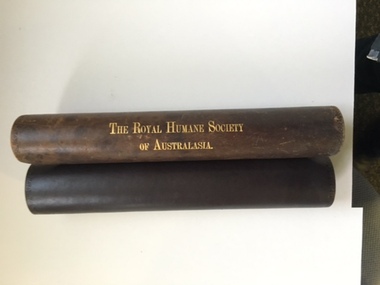
... Warrnambool and District Historical Society Inc. 2 Gilles Street (south of Merri St) Warrnambool great-ocean-road This item is a Certificate of Merit awarded to Leslie Arthur Tinker for bravery in risking his life in going to the rescue of passengers on the motor launch "Nestor " on the Hopkins River at Warrnambool On January 09 1921. Leslie Arthur Tinker was 31 years of age at the time of this rescue of passengers from the launch"Nestor". Les Tinker was the third son of Jessie and Frank Tinker. He was caretaker at the Town Hall for many years and lived on site. He was married to Elsie Moore ...This item is a Certificate of Merit awarded to Leslie Arthur Tinker for bravery in risking his life in going to the rescue of passengers on the motor launch "Nestor " on the Hopkins River at Warrnambool On January 09 1921. Leslie Arthur Tinker was 31 years of age at the time of this rescue of passengers from the launch"Nestor". Les Tinker was the third son of Jessie and Frank Tinker. He was caretaker at the Town Hall for many years and lived on site. He was married to Elsie Moore and they had one son Donald born 1928. The sinking of the Nestor claimed 10 lives in Warrnambool that day and was a tragedy for Warrnambool. Two long remaining survivors were Janet Glass Dickson who died in 2011 at 97 years of age and A Mr Jim Russell who was still living in Warrnambool in 2011 at the age of 94.This certificate has strong historical and social significance with strong links to one of Warrnambool's larger families. The event itself was a tragedy for Warrnambool with ten people losing their lives. The award comes from The Royal Humane Society of Australasia and as such is a national recognition. Cream parchment certificate with black text. The text sits within a border with coats of Arms at the top The certificate sits on a paper lined brown leather scroll with gold lettering on the outside. The Royal Humane Society of Australasia in gold lettering on the outside.awarded to leslie Arthur Tinker16th June 1921 Nestor jan 9, 1921 Mason Firth and McCutcheon on the bottom of the certificate. Signed by George Lush and Thomas Brentnall. warrnambool, leslie tinker, royal humane society, nestor rescue, nestor warrnambool, certificate of merit tinker -
 Warrnambool and District Historical Society Inc.
Poster - Warrnambool Ozone Hotel Poster, Circa 1895
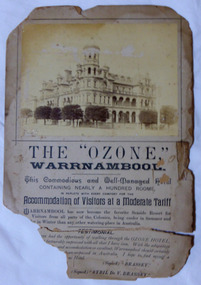
... Streets. The grand architectural style in which it was built, was used for a number of similar buildings throughout the state. The fire which destroyed the building was one of the largest in the town. warrnambool ozone coffee palace warrnambool mansions hotel hotel warrnambool ozone fire 1929 Jordan in bottom LH corner of photograph. “L.N. Moore ...The Ozone Coffee Palace was built in 1890-1891. It was designed by Mr J McLeod. It was grand in design and decoration. The term Coffee Palace was used to describe temperance hotels which were built during the 1880’s -1890’s. They typically were multi-purpose and had a large number of rooms for ballrooms and leisure activities. Coffee palaces were aimed at families in coastal areas and inner city locations. Examples of some are The Windsor Hotel Melbourne, Ozone, Queenscliff and Kilbreda Convent in Mentone. The bottom part of the advertisement is a testimonial written by Brassey and Sybil De V Brassey, Lord Brassey being Governor of Victoria around 1895. Their visit to Warrnambool and their stay at the Ozone sparked a much needed interest in the Ozone. In 1896 the price to stay at the Ozone was two pounds two shillings and it remain in business for several years but in 1910 it closed after losing money for many years. It remained closed until it was bought by Mr Howard Lawson in 1920. It continued to struggle financially. It was burnt down in February 1929. When the Ozone was built in1891 it was the largest building in Warrnambool. It occupied a prominent position on the corner of Koroit and Kepler Streets. The grand architectural style in which it was built, was used for a number of similar buildings throughout the state. The fire which destroyed the building was one of the largest in the town.Large photograph glued to the top of the card with text in various styles underneath. Photo is sepia and card is cream. The bottom part of the piece has broken away. Jordan in bottom LH corner of photograph. “L.N. Moore 2 Landcox St Nth Brighton” written in pencil on back. warrnambool, ozone coffee palace warrnambool, mansions hotel, hotel warrnambool, ozone fire 1929 -
 Warrnambool and District Historical Society Inc.
Document - Younger Pty Ltd docket book, 1950s
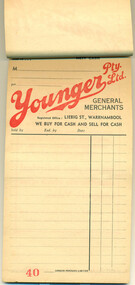
... Street became the main shopping precinct in Warrnambool by the beginning of the 20th century. John Younger was active in community affairs and was a Town Councillor from 1902 to 1918 and Mayor of the Town. He died in the 1930s and his store was continued by family members but taken over by Charles Moore...Street became the main shopping precinct in Warrnambool by the beginning of the 20th century. John Younger was active in community affairs and was a Town Councillor from 1902 to 1918 and Mayor of the Town. He died in the 1930s and his store was continued by family members but taken over by Charles Moore ...This booklet of sales dockets came from the Youngers Stores in Warrnambool. John Younger came to Warrnambool from Beechworth in 1888 and established a general store in Liebig Street and quickly built up a thriving business. His store was one of the main reasons why Liebig Street became the main shopping precinct in Warrnambool by the beginning of the 20th century. John Younger was active in community affairs and was a Town Councillor from 1902 to 1918 and Mayor of the Town. He died in the 1930s and his store was continued by family members but taken over by Charles Moore in 1958. It closed in the 1980s. The maker of the docket book, Lamson Paragon Limited, was a British firm with factories and offices in Australia and it initially specialized in making sales docket books using a carbon paper process. The original founder of the firm, William Lamson of Massachusetts, U.S.A., was the first to introduce the system of paying for goods in a store using cash balls on tracks. This pad is of some interest as it shows the system of receipts issued by a Warrnambool firm in the 1950s. It is of particular interest coming from Youngers Stores, a major retailer in Warrnambool for over 90 years. This is a pad of dockets stapled together 30 pages). The pages are buff-coloured with red and black printing on every second page. Every second page has been left blank so that a second copy could be kept of every transaction using carbon paper. The pad originally had dockets for 50 transactions for Youngers Stores in Liebig Street, Warrnambool. The first three pages are badly torn. The back of every docket has an advertisement for Youngers stores.Docket front: ‘Phone 21, Terms, Nett Cash, M……………., Younger Pty Ltd, General Merchants, Registered Office, Liebig St., Warrnambool, We Buy for Cash and Sell for Cash, Sold by, Exd. By, Date, Lamson Paragon Limited.’docket book, younger pty ltd, general merchants, department stores, liebig street, warrnambool -
 Warrnambool and District Historical Society Inc.
Book, Michael Moore, Peterborough Please Slow Down: a history of Peterborough, 2014
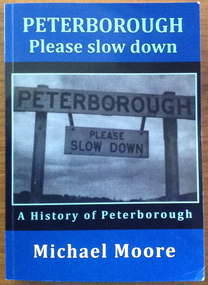
... Warrnambool and District Historical Society Inc. 2 Gilles Street (south of Merri St) Warrnambool great-ocean-road This book is the story of Peterborough a small town on Victoria’s Great Ocean Road. It tells the story of a number of pioneering families and life in the small town. Peterborough, Michael Moore ...History of Peterborough, VictoriaBlue cover with black and white photograph of the Peterborough sign. Title text is a pale blue and authors name is white. Colour plates inside front and back covers. 184 pages. non-fictionHistory of Peterborough, Victoria peterborough, michael moore, a history of peterborough, daniel curdie, james meek, jemima vans robertson, james irvine, tom mackenzie -
 Warrnambool and District Historical Society Inc.
Postcard - WW1 The King at the front
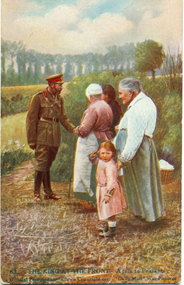
... Warrnambool and District Historical Society Inc. 2 Gilles Street (south of Merri St) Warrnambool great-ocean-road Daisy Vickers collection: Item 1 of 27.Nance Moore, nee Vickers has a collection of post cards which were sent to her older sister Daisy Vickers, (later Mrs Ogier) by her uncle Arthur Anderson between August 1916 and October 1918. ...Daisy Vickers collection: Item 1 of 27.Nance Moore, nee Vickers has a collection of post cards which were sent to her older sister Daisy Vickers, (later Mrs Ogier) by her uncle Arthur Anderson between August 1916 and October 1918. There is also one card from Ike – assumed to be Ike Primmer, an uncle by his marriage to Ida Anderson sister of Daisy’s mother. There are seven envelopes addressed to Miss Daisy Vickers, Bushfield Post Office. Daisy was born in 1907, so would have been a young girl of about ten years. There are nine cards – Arthur’s were sent from France and Belgium, Ike’s from Glasgow. The messages are simple. There are three embroidered cards. Some of the messages are responses to Daisy who must have sent letters or cards to her uncles. Daisy Vickers/Ogier was a long serving, much loved and respected teacher and senior mistress at Warrnambool Technical School. The cards bring to life the family ties, the need for contact, and the difficulty of communication of a distant time.This postcard along with others connected to Daisy Vickers provide a link to one of the most significant events of the 20th century.This postcard depicts the King at the front greeting peasant s from the countrysidedaisy vickers, ww1 postcard, warrnambool history, the king of the front
