
Showing 13 items matching "morgue"
-
 Greensborough Historical Society
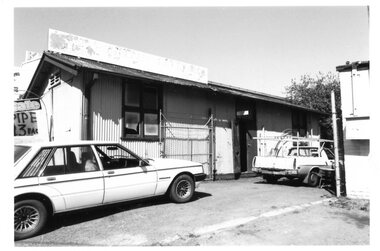
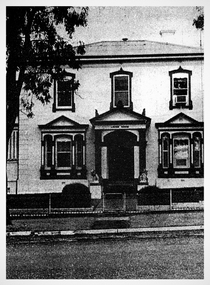
Photograph - Photograph Collection, Alison Lendoudis et al, Storeroom for imported Scandinavian timber at Briar Hill Timber 1996, 1996
... This building was originally the Caulfield Morgue. It was transported to Briar Hill to store imported Scandinavian timber....This building was originally the Caulfield Morgue. It was transported to Briar Hill to store imported Scandinavian timber. ...This building was originally the Caulfield Morgue. It was transported to Briar Hill to store imported Scandinavian timber.The Briar Hill Timber and Trading Company was active during the 1930s - 1950s during the development of the local area with many houses being built by owner-builders who used the company for their needs. Group of 5 black and white photographsbriar hill timber and trading company, briar hill timber, alison lendoudis, bob manuell, sherbourne road briar hill, squire family -
 Williamstown Historical Society Inc
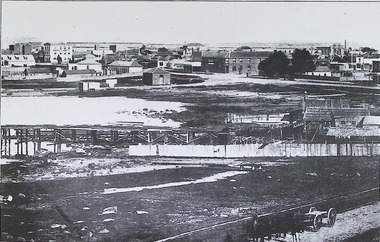
Photograph - Nelson Place, c.1860's
... This image was taken in the 1860's and shows Gem Pier and the old Morgue in its original location, prior to being relocated to Ann Street. ...Nelson Place 1860's This image was taken in the 1860's and shows Gem Pier and the old Morgue in its original location, prior to being relocated to Ann Street. ...This image was taken in the 1860's and shows Gem Pier and the old Morgue in its original location, prior to being relocated to Ann Street. The three-storey Barkly Arms hotel, later named Oriental Hotel can be seen in the background.nelson place, 1860's -
 Lake Bolac & District Historical Society
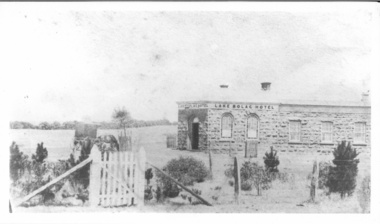
Photograph - Lake Bolac Hotel 1862, Lake Bolac Hotel 1862
... In early years the hotel served the community for church services, as a barber-shop and as a morgue. ...In early years the hotel served the community for church services, as a barber-shop and as a morgue. Lake Bolac Hotel 1862 Photograph - Lake Bolac Hotel 1862 ...Lake Bolac Hotel constructed in 1862 following the establishment of a 'shanty' on the same site by James Brown in 1856. James Brown originally established a "shanty" in 1856, then built a wooden hotel and then erected the current bluestone hotel in 1862. It is made from locally quarried bluestone. In early years the hotel served the community for church services, as a barber-shop and as a morgue. -
 Williamstown Historical Society Inc
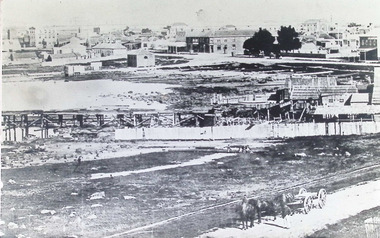
Photograph - Nelson Place, showing the slipway and the Morgue, c.1863
... ...Morgue...Nelson Place Morgue c.1863 Andrew Rider - Photographer Photographer: Andrew Rider Photograph Nelson Place, showing the slipway and the Morgue, c.1863 ...Photographer: Andrew Rider nelson place, morgue, c.1863, andrew rider - photographer -
 Federation University Historical Collection
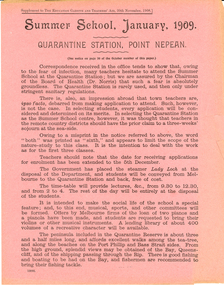
Document, Point Nepean Information, 1909, 1909
... It is now a community of hospitals, disinfecting complex, morgue, cemetery and other defunct buildings comprised an infectious disease facility which processed newly arrived humans and livestock alike. ...It is now a community of hospitals, disinfecting complex, morgue, cemetery and other defunct buildings comprised an infectious disease facility which processed newly arrived humans and livestock alike. quarantine station port nepean quarantine station summer school lady loch Education Department education port nepean A pink document provided with the Education Gazette outlining a summer school for teachers in 1909. ...The Port Napean Quarantine Station was established in 1852. It is now a community of hospitals, disinfecting complex, morgue, cemetery and other defunct buildings comprised an infectious disease facility which processed newly arrived humans and livestock alike. A pink document provided with the Education Gazette outlining a summer school for teachers in 1909. It starts with "..owing to the fear of infection, many teachers hesitate to attend the Summer School at the Quarantine Station; but we are assured by the Chairman of the Board of Health (Mr Norris) that such fear is absolutely groundless. The Quarantine Station is rarely used, and then only under the stringest sanitary regulations. ..."quarantine station, port nepean quarantine station, summer school, lady loch, education department, education, port nepean -
 City of Moorabbin Historical Society (Operating the Box Cottage Museum)
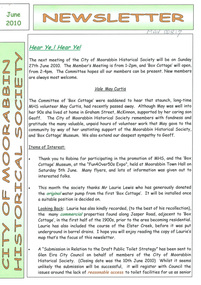
Newsletter, City of Moorabbin Historical Society Jun 2010 pdf, June 2010
... Helen provides a précis, of 4 A4 pages, describing ‘The City Morgue in Colonial Melbourne’ printed in Provenance Journal No3 November 2004....Helen provides a précis, of 4 A4 pages, describing ‘The City Morgue in Colonial Melbourne’ printed in Provenance Journal No3 November 2004. ...The City of Moorabbin Historical Society was formed c 1960 by a group of Moorabbin residents who were concerned that the history of the area should be preserved. A good response to a call for items related to the historical area of Moorabbin Shire brought donations of a wide variety of artefacts which are now preserved by the current members of CMHS at Box Cottage Museum . Helen Stanley, Secretary of CMHS, began producing a Newsletter for members in April 2007 to provide current information and well researched items of historical interest. Helen Stanley has produced a bi-monthly Newsletter, 2007 - 2013, for the members of the City of Moorabbin Historical Society that contains well researched interesting historical items, notification of upcoming events, current advice from Royal Australian Historical Society , Museums Australia Victoria and activities of Local Historical Societies. The Newsletter is an important record of the activities of the CMHS. Photocopied Plan of ‘Two Acre Village c1853’ and notes about the Colonial City Morgue Melbourne c1888 7 x A4 paper printed on 1 side Issue 17 of the bi-monthly, City of Moorabbin Historical Society Newsletter produced by Society member and Secretary, Mrs Helen Stanley in June 2010. Notice of meeting June 17th and recent death of Mrs May Curtis,CMHS member. June 5th , Robina Naughton, CMHS, represented Box Cottage at the 'Fun4over50s' expo at Moorabbin Town Hall. Mr Laurie Lewis donated the 'original water pump' from the first Box Cottage and has provided a list of the commercial properties around Box Cottage c 1900, as he remembers. An application to Glen Eira City Council for a Public Toilet at Box Cottage for visitors and volunteers. A volunteer has joined CMHS following our enrolment with 'Volunteering Glen Eira'. State Library of Victoria has approved CMHS for the 'Vicnet' program where Box Cottage Museum can be promoted. Helen provides a précis, of 4 A4 pages, describing ‘The City Morgue in Colonial Melbourne’ printed in Provenance Journal No3 November 2004.CITY of MOORABBIN HISTORICAL SOCIETY / JUNE 2010 NEWSLETTERcity of moorabbin historical society, stanley helen, curtis may, graham street mckinnon, curtis geoff, moorabbin town hall, lewis laurie, lewis grace, lewis timber pty. ltd., melbourne, moorabbin, brighton, cheltenham, ormond, bentleigh, market gardeners, pioneers, early settlers, moorabbin shire, box cottage museum, water pump, elster creek, volunteering glen eira, state library of victoria, vicnet, dendy henry, dendy’s special survey 1841, mclean n, box henry, joyce park ormond, city of moorabbin, box william, jasper road east brighton, melbourne city morgue, cooke simon, brown mwy andrew -
 Sunshine and District Historical Society Incorporated
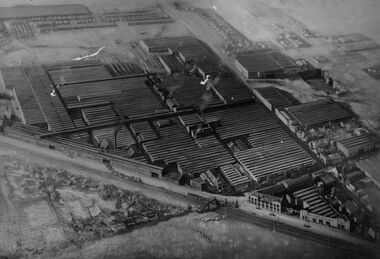
Photograph - Aerial view of HV McKay Massey Harris Factory, 1942
... Aerial view of HV McKay Massey Harris Factory building administration office and Sunshine including Sunshine Gardens and gardeners residence This photograph shows many other points of historical nature Top Left 1 Storage shed stacks of timber air drying 2 Old clock tower and new factory office block 3 Main or head office block opposite clock tower Then along Devonshire Road Adjacent to Head Office new drawing office on 1st floor over new workshop for experimental department These two later amalgamated and formed what became known as The Engineering Department Right Centre 4 on both sides of Devonshire Road 5 State Savings Bank before rebuilding 6 Blair Athol guesthouse with National Bank on ground floor opposite State Savings Bank 7 Along Hampshire away from Blair Athol some houses then McKays laboratory Duplicates department Service Street Morgue Steel Storage and Pickling Annex and Roberts Quarry and some houses in background top right Top Left to Right 8 In front of timber stacks Stony Creek winds through factory site to dam fire fighting before running under Hampshire Road in front of Annexe and Quarry across Service Street Creek was diverted through a channel and tunnel not shown Also Railway lines to Bendigo and Mildura show McKays railway engine hauling trucks from factory...McKay Massey Harris Sunshine Devonshire Road Aerial view of HV McKay Massey Harris Factory building administration office and Sunshine including Sunshine Gardens and gardeners residence This photograph shows many other points of historical nature Top Left 1 Storage shed stacks of timber air drying 2 Old clock tower and new factory office block 3 Main or head office block opposite clock tower Then along Devonshire Road Adjacent to Head Office new drawing office on 1st floor over new workshop for experimental department These two later amalgamated and formed what became known as The Engineering Department Right Centre 4 on both sides of Devonshire Road 5 State Savings Bank before rebuilding 6 Blair Athol guesthouse with National Bank on ground floor opposite State Savings Bank 7 Along Hampshire away from Blair Athol some houses then McKays laboratory Duplicates department Service Street Morgue Steel Storage and Pickling Annex and Roberts Quarry and some houses in background top right Top Left to Right 8 In front of timber stacks Stony Creek winds through factory site to dam fire fighting before running under Hampshire Road in front of Annexe and Quarry across Service Street Creek was diverted through a channel and tunnel not shown Also Railway lines to Bendigo and Mildura show McKays railway engine hauling trucks from factory Aerial view of HV McKay Massey Harris Factory Photograph Aerial view of HV McKay Massey Harris Factory ...Aerial view of HV McKay Massey Harris Factory building administration office and Sunshine including Sunshine Gardens and gardeners residence This photograph shows many other points of historical nature Top Left 1 Storage shed stacks of timber air drying 2 Old clock tower and new factory office block 3 Main or head office block opposite clock tower Then along Devonshire Road Adjacent to Head Office new drawing office on 1st floor over new workshop for experimental department These two later amalgamated and formed what became known as The Engineering Department Right Centre 4 on both sides of Devonshire Road 5 State Savings Bank before rebuilding 6 Blair Athol guesthouse with National Bank on ground floor opposite State Savings Bank 7 Along Hampshire away from Blair Athol some houses then McKays laboratory Duplicates department Service Street Morgue Steel Storage and Pickling Annex and Roberts Quarry and some houses in background top right Top Left to Right 8 In front of timber stacks Stony Creek winds through factory site to dam fire fighting before running under Hampshire Road in front of Annexe and Quarry across Service Street Creek was diverted through a channel and tunnel not shown Also Railway lines to Bendigo and Mildura show McKays railway engine hauling trucks from factoryh.v. mckay massey harris, sunshine, devonshire road -
 Northern District School of Nursing. Managed by Bendigo Historical Society Inc.
Newspaper - Northern District School of Nursing Graduates Association - Article "They will nurse fond memories of their school", Tues July 18 1989
... The school, once lively, is now described as silent and empty, likened to a 'morgue.'Former students and staff find the emptiness unsettling, highlighting the emotional impact of the closure. ...The school, once lively, is now described as silent and empty, likened to a 'morgue.'Former students and staff find the emptiness unsettling, highlighting the emotional impact of the closure. ...The Northern District School of Nursing in Victoria, Australia Graduates Association: The closure of the Northern District School of Nursing (NDSN) in Bendigo:Closure and TransitionNDSN, Australia's first independent nursing school, has closed after nearly 40 years of training nurses in central and northern Victoria. School 108 was the last after almost 40 years of nurse training. All general nurse training in the region will now be conducted in colleges instead of at NDSN. The school began in 1950 at Lister House, a historic mansion in Bendigo. It was certified as a training school for registered nurses in 1951, working with several regional hospitals. Initially, NDSN collaborated with hospitals in Castlemaine, Kyneton, Bendigo, Mildura, Swan Hill, Echuca, St. Arnaud, Dunolly, and Ouyen. Over time, some hospital affiliations changed, with trainees from smaller hospitals gaining clinical experience at larger base hospitals in Bendigo and Mildura. All students attended Lister House for study blocks during their three-year training. The school was known for its highly trained and experienced tutors.Staff numbers dwindled as the school closed, with tutors moving to other jobs, hospitals, or early retirement.The last tutor to leave was Mary Ryan, who had been at Lister House for over 10 years. The school, once lively, is now described as silent and empty, likened to a 'morgue.'Former students and staff find the emptiness unsettling, highlighting the emotional impact of the closure. Despite the sadness, staff members emphasize the school's positive environment and achievements. The assistant dean notes high retention and pass rates, indicating strong academic performance. Over the years, significant renovations were made, including the construction of a new hall.Staff express pride in these improvements and the school's development. The School of Nursing in Bendigo has a rich history, remembered fondly by many Victorians who trained there.Staff, such as Mary, found it rewarding when former students returned to share their career progress and experiences. Anecdotes include students reaching out for support, such as requesting references to secure jobs while traveling. Graduation balls ('grad balls') were a significant tradition, known for their fun, themed events and memorable costumes. Themes ranged from 'Your fantasy' to 'Wear something you've never dared to wear before.'The final grad ball for School 108 is scheduled with the theme 'The wake,' marking the end of an era. The NDSN building currently stands empty, with its future undecided.A feasibility study is underway to consider repurposing the building, possibly for a government department such as the Health Department.Other groups have shown interest, but the final decision will be made by the Health Minister, Caroline Hogg.Northern District School of Nursing Graduates Association - Article "They will nurse fond memories of their school" from the Midland Express Tues 18 July 1988 by Linda Harrow Page 14 This item contains the following document: 3792.9a From the article black and white photo of Lister House 3792.9b Part of the Article "They will nurse fond memories of their school" from the Midland Express 3792.9c From the article black and white photo of the first group of general nurses ever to be trained at the Northern District School of Nursing 3792.9d Part of the Article "They will nurse fond memories of their school" from the Midland Express 3792.9e Part of the Article "They will nurse fond memories of their school" from the Midland Expressnurse training, lister house, history, mary ryan -
 Ballarat Heritage Services
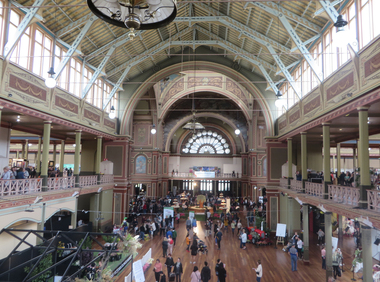
Photograph - Photograph -Colour, Clare Gervasoni, Interior of the Melbourne Exhibition Building, 2019, 31/03/2019
... The basement was used a a morgue. With the departure of the State Parliament in 1927 the western annexe became home to the Country Roads Board. ...The basement was used a a morgue. With the departure of the State Parliament in 1927 the western annexe became home to the Country Roads Board. ...A competition was announced to design a suitable building for the proposed Melbourne International Exhibition in December 1877. Eighteen entries were received. The winner of 300 pounds was Joseph Reed of the architectual firm Reed and Barnes. The foundation stone was laid by Governor Sir George Bowen on 19 February 1879. Prominent Melbounre builder David Mitchell, father of Dame Nellie Melba, won the tender to construct the main building. Exhibitors were able to move in by May 1880. On 01 October 1880 the Melbourne International Exhibition opened, when over 6000 people entered the main hall to see the Governor, the Marquess of Normanby open the show. Thirty three nations participated and ofver 32,000 exhibits were displayed. At the close of the exhibition on 30 April 1881 over 1.3 million people had visited the exhibition. In 1881 Victoria's population was just over 250,000. The management of the Exhibition Building and eight hectares of the Carlton Gardens was handed to the Exhibition Trustees by the Melbourne International Exhibition Commissioners on 01 OCtober 1881. The Trustees maintained the building for 'future public exhibitions and ... general public instruction and recreation' until 1996 when management of the building was transferred to Museum Victoria. In 1901 when the Australian colonies federated there was no capital and no federal parliament building. The Federal Parliament moved into the Victorian State Parliament building, and the State Parliament moved into the Western Annexe of the Exhibition Building for 26 years. After World War One, on 04 February 1919, the exhibition Building was turned into a hospital to treat Melbournians struck down with the Spanis 'Flu'. Initially housing 500 beds, the hospital grew to accomodate 2000 patients. Femals were located between the concert platform in the western nave and the done; male patients occupied the spaces beyond. The basement was used a a morgue. With the departure of the State Parliament in 1927 the western annexe became home to the Country Roads Board. In 1932 it was joined by the MOtor Registration Branch, and the Transport Regulation Board in 1934. They co-existedin cramped offices until the 1960s. In 1949 the oval at the rear of the ExhibitionBuilding was leased to the Commonealth Government for the establishment of the Migrant Reception Centre. When it closed in 1961-62, the centre comrised 29 bungalows over 1.4 hectare. The centre provided temporary accomodation for thousands of new arrivals from Britain. On 01 July 2004 the Royal Exhibition Building and Carlton Gardens were inscribed on the World Heritage List. It is the only 19th century Great Hall to survive largely intact, still in its original landscape setting, and still used as a palace of industry. The Melbourne International Flower and Garden Show is a flower show held annually since 1995 in early April each year, in Melbourne, Australia. It is located in the World Heritage Site of Carlton Gardens and the Royal Exhibition Building.[1] It is the largest horticultural event in the southern hemisphere, attracting over 100,000 visitors. It is rated among the top five flower and garden shows in the world. (Wikipedia)Colour photograph of the interior of the Melbourne Exhibition Buildings during the 2019 Melbourne Flower and Garden Show.melbourne international flower and garden show, carlton gardens, melbourne exhibition building, royal exhibition buildings -
 Ballarat Heritage Services
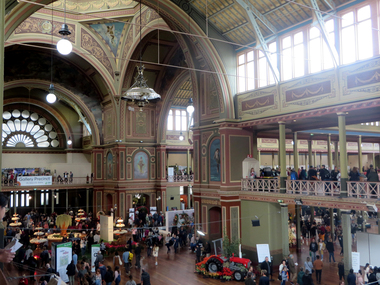
Photograph -Colour, Clare Gervasoni, Interior of the Melbourne Exhibition Building, 2019, 31/03/2019
... The basement was used a a morgue. With the departure of the State Parliament in 1927 the western annexe became home to the Country Roads Board. ...The basement was used a a morgue. With the departure of the State Parliament in 1927 the western annexe became home to the Country Roads Board. ...A competition was announced to design a suitable building for the proposed Melbourne International Exhibition in December 1877. Eighteen entries were received. The winner of 300 pounds was Joseph Reed of the architectual firm Reed and Barnes. The foundation stone was laid by Governor Sir George Bowen on 19 February 1879. Prominent Melbounre builder David Mitchell, father of Dame Nellie Melba, won the tender to construct the main building. Exhibitors were able to move in by May 1880. On 01 October 1880 the Melbourne International Exhibition opened, when over 6000 people entered the main hall to see the Governor, the Marquess of Normanby open the show. Thirty three nations participated and ofver 32,000 exhibits were displayed. At the close of the exhibition on 30 April 1881 over 1.3 million people had visited the exhibition. In 1881 Victoria's population was just over 250,000. The management of the Exhibition Building and eight hectares of the Carlton Gardens was handed to the Exhibition Trustees by the Melbourne International Exhibition Commissioners on 01 OCtober 1881. The Trustees maintained the building for 'future public exhibitions and ... general public instruction and recreation' until 1996 when management of the building was transferred to Museum Victoria. In 1901 when the Australian colonies federated there was no capital and no federal parliament building. The Federal Parliament moved into the Victorian State Parliament building, and the State Parliament moved into the Western Annexe of the Exhibition Building for 26 years. After World War One, on 04 February 1919, the exhibition Building was turned into a hospital to treat Melbournians struck down with the Spanis 'Flu'. Initially housing 500 beds, the hospital grew to accomodate 2000 patients. Femals were located between the concert platform in the western nave and the done; male patients occupied the spaces beyond. The basement was used a a morgue. With the departure of the State Parliament in 1927 the western annexe became home to the Country Roads Board. In 1932 it was joined by the MOtor Registration Branch, and the Transport Regulation Board in 1934. They co-existedin cramped offices until the 1960s. In 1949 the oval at the rear of the ExhibitionBuilding was leased to the Commonealth Government for the establishment of the Migrant Reception Centre. When it closed in 1961-62, the centre comrised 29 bungalows over 1.4 hectare. The centre provided temporary accomodation for thousands of new arrivals from Britain. On 01 July 2004 the Royal Exhibition Building and Carlton Gardens were inscribed on the World Heritage List. It is the only 19th century Great Hall to survive largely intact, still in its original landscape setting, and still used as a palace of industry. The Melbourne International Flower and Garden Show is a flower show held annually since 1995 in early April each year, in Melbourne, Australia. It is located in the World Heritage Site of Carlton Gardens and the Royal Exhibition Building.[1] It is the largest horticultural event in the southern hemisphere, attracting over 100,000 visitors. It is rated among the top five flower and garden shows in the world. (Wikipedia)Colour photograph of the interior of the Melbourne Exhibition Buildings during the 2019 Melbourne Flower and Garden Show. Four mottoes are painted under teh windows of the dome: Dei Grecia (By the grace of God), Carpe diem (Make the most of the day), Aude sapere (Dare to be wise) and Benigno numine (With benighn power)melbourne international flower and garden show, carlton gardens, melbourne exhibition building, royal exhibition buildings -
 Ballarat Heritage Services
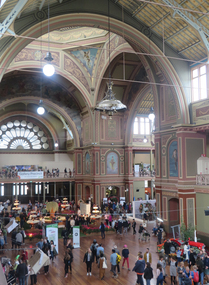
Photograph - Photograph -Colour, Clare Gervasoni, Interior of the Melbourne Exhibition Building, 2019, 31/03/2019
... The basement was used a a morgue. With the departure of the State Parliament in 1927 the western annexe became home to the Country Roads Board. ...The basement was used a a morgue. With the departure of the State Parliament in 1927 the western annexe became home to the Country Roads Board. ...A competition was announced to design a suitable building for the proposed Melbourne International Exhibition in December 1877. Eighteen entries were received. The winner of 300 pounds was Joseph Reed of the architectual firm Reed and Barnes. The foundation stone was laid by Governor Sir George Bowen on 19 February 1879. Prominent Melbounre builder David Mitchell, father of Dame Nellie Melba, won the tender to construct the main building. Exhibitors were able to move in by May 1880. On 01 October 1880 the Melbourne International Exhibition opened, when over 6000 people entered the main hall to see the Governor, the Marquess of Normanby open the show. Thirty three nations participated and ofver 32,000 exhibits were displayed. At the close of the exhibition on 30 April 1881 over 1.3 million people had visited the exhibition. In 1881 Victoria's population was just over 250,000. The management of the Exhibition Building and eight hectares of the Carlton Gardens was handed to the Exhibition Trustees by the Melbourne International Exhibition Commissioners on 01 OCtober 1881. The Trustees maintained the building for 'future public exhibitions and ... general public instruction and recreation' until 1996 when management of the building was transferred to Museum Victoria. In 1901 when the Australian colonies federated there was no capital and no federal parliament building. The Federal Parliament moved into the Victorian State Parliament building, and the State Parliament moved into the Western Annexe of the Exhibition Building for 26 years. After World War One, on 04 February 1919, the exhibition Building was turned into a hospital to treat Melbournians struck down with the Spanis 'Flu'. Initially housing 500 beds, the hospital grew to accomodate 2000 patients. Femals were located between the concert platform in the western nave and the done; male patients occupied the spaces beyond. The basement was used a a morgue. With the departure of the State Parliament in 1927 the western annexe became home to the Country Roads Board. In 1932 it was joined by the MOtor Registration Branch, and the Transport Regulation Board in 1934. They co-existedin cramped offices until the 1960s. In 1949 the oval at the rear of the ExhibitionBuilding was leased to the Commonealth Government for the establishment of the Migrant Reception Centre. When it closed in 1961-62, the centre comrised 29 bungalows over 1.4 hectare. The centre provided temporary accomodation for thousands of new arrivals from Britain. On 01 July 2004 the Royal Exhibition Building and Carlton Gardens were inscribed on the World Heritage List. It is the only 19th century Great Hall to survive largely intact, still in its original landscape setting, and still used as a palace of industry. The Melbourne International Flower and Garden Show is a flower show held annually since 1995 in early April each year, in Melbourne, Australia. It is located in the World Heritage Site of Carlton Gardens and the Royal Exhibition Building.[1] It is the largest horticultural event in the southern hemisphere, attracting over 100,000 visitors. It is rated among the top five flower and garden shows in the world. (Wikipedia)Colour photograph of the interior of the Melbourne Exhibition Buildings during the 2019 Melbourne Flower and Garden Show. Four mottoes are painted under teh windows of the dome: Dei Grecia (By the grace of God), Carpe diem (Make the most of the day), Aude sapere (Dare to be wise) and Benigno numine (With benighn power)melbourne international flower and garden show, carlton gardens, melbourne exhibition building, royal exhibition buildings -
 National Vietnam Veterans Museum (NVVM)
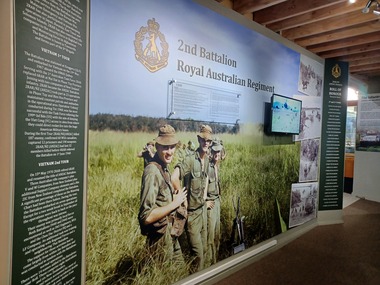
Poster - Poster, Information Board, 2nd Battalion Royal Australian Regiment
... There were two do's, one to the Morgue and one at the Hospital. Lucky me, I went through the hospital door. ...There were two do's, one to the Morgue and one at the Hospital. Lucky me, I went through the hospital door. ...A large information board describing the 1st and 2nd tours of 2RAR. A large coloured image in the centre of the board, shows seven soldiers in a field. To the right of the board are four black and white images. To the right of the board is the Roll of Honour to the many soldiers who lost their lives in Vietnam.2 RAR: This photo was taken by Elvon King of Delta Company in September of 1967. This photo was chosen without the knowledge of the historical significance of the shot, which proved to be very momentous. For within a very short time (about 30 seconds) of the photo being taken a wayward rocket from a U.S. gunship landed amongst this group of men in the photo, resulting in three of them being killed and fourteen being wounded. Elvon King was one of the wounded. The three men in the photo are left to right Dennis (Dave) Enright who lost a foot in the incident. Harry Leggett who received shrapnel wounds, and Stan Radomi who was killed outright. A very poignant moment in time. these thoughts about the incident from Wally Musgrave was one of those severely wounded at the time. What could have been a sunny afternoon at a Newcastle or Bondi Hotel or beer Garden..... After what could have been a week of patrolling, it was back inside the wire to scrub up and top up on fluids. Next morning, at 9.00, we went out side of the wire for a fire power, demonstration to satisfy a visiting General. The sun was shining, no seating, grass wasn't cut but we were young and so we thought bullet proof. then someone asked for the old Iroquois gun ship which had been firing rockets at a dead tree to be swung around to fire rockets over our heads. Why?? I haven't given "why" that much thought, but the 1 metre long port side rocket tumbled down amongst us and I'm sure everyone who was there can close their eyes and still see it today. This tumbling rocket landed where these three mates were standing amongst 11 and 12 platoon's young soldiers, chatting in the sun, then we were sailing through the air. I didn't see the devastation myself. I was under bodies. As first Dust-off priority we were off to 36 Evacuation Hospital at Vung Tau. There were two do's, one to the Morgue and one at the Hospital. Lucky me, I went through the hospital door. Eight major operations at once. Three dead, fourteen wounded and nothing on record!! Yeah it was a lovely Sunny Day at Nui Dat., we'll leave it at that! We can't change yesterday. I'm just another Nasho.poster, information board, 2 rar, elvon king -
 Mission to Seafarers Victoria
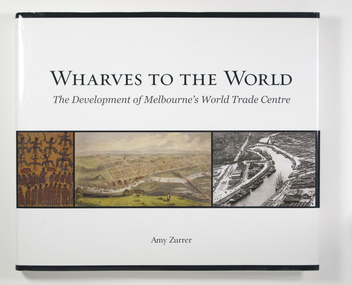
Book - Reference book, Melbourne Books, Wharves To The World: The Development Of Melbourne's World Trade Centre, 2011
... So it goes that was once home to swampland and the City morgue has been transformer into a Diamond of the Yarra River. ...Wharves to the World: The Development of Melbourne's World Trade Centre is a photographic chronicle of the history of the World Trade Centre and its surrounds. The book traces the journey of land and the buildings that occupied it - from its beginnings with the Wurundjeri people to its role as a trading hub in early Melbourne, then as the site of the modern-day World Trade Centre, and now as part of a flourishing residential and commercial Precinct. As with any major project The World Trade Centre has face its share of fêlures, but despite thèse it has become an integral part of the City. So it goes that was once home to swampland and the City morgue has been transformer into a Diamond of the Yarra River.A 128-page book of printed matter, photographs, engravings and drawings. The hard cover is white with the title in gold lettering on the front. The dust-cover is also white with black lettering. Along the lower half of the cover, front and back, is a strip of six photos, three coloured and three black and white. 128 p. : ill. (some col.), ports. non-fictionWharves to the World: The Development of Melbourne's World Trade Centre is a photographic chronicle of the history of the World Trade Centre and its surrounds. The book traces the journey of land and the buildings that occupied it - from its beginnings with the Wurundjeri people to its role as a trading hub in early Melbourne, then as the site of the modern-day World Trade Centre, and now as part of a flourishing residential and commercial Precinct. As with any major project The World Trade Centre has face its share of fêlures, but despite thèse it has become an integral part of the City. So it goes that was once home to swampland and the City morgue has been transformer into a Diamond of the Yarra River.yarra yarra tribe, early melbourne, world trade centre, melbourne, southbank, northbank, australian wharf, siddeley street, waterfront, amy zurrer, wurundjeri, spencer street bridge, north wharf, riverlee, wtc, wharf, harbor trust, sir john coode, harbour trust, little dock, polly woodside, wharfies, divers
