
Showing 23 items matching "mrs spain"
-
 Charlton Golden Grains Museum Inc
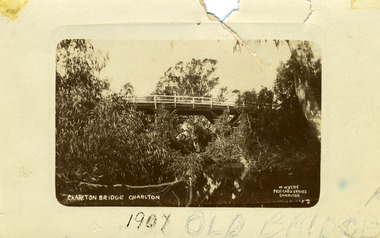
Photograph - Charlton Bridge 1907 Sepia Photograph
... ...Mrs Spain...W.Wyere photo taken of first Charlton Bridge 1907 Post card sent to Mrs Mary Spain Clifton Hill Charlton...W.Wyere photo taken of first Charlton Bridge 1907 Post card sent to Mrs Mary Spain Clifton Hill Charlton Charlton Bridge Mrs Spain W.Wyere 1907 Front CHARLTON BRIDGE CHARLTON W. ...W.Wyere photo taken of first Charlton Bridge 1907 Post card sent to Mrs Mary Spain Clifton Hill CharltonSepia Photograph of Bridge at Charlton Victoria Front CHARLTON BRIDGE CHARLTON W. WYERE POSTCARD SERIES CHARLTON Hand Written - 1907 OLD BRIDGE Back Please excuse ..........is bedtime. Dear Mary, How is your cold today. I hope it is better. Hope everything will be alright at dinnertime. Your sincere friend Grace.charlton bridge, mrs spain, w.wyere, 1907 -
 Mission to Seafarers Victoria
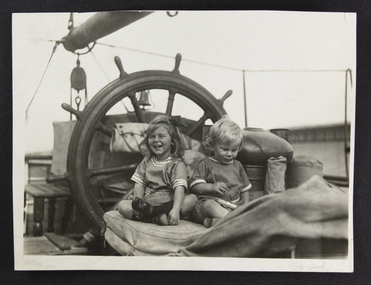
Photograph - Photograph, Black and white, 1918
... Unfortunately the young Mrs Aviss contracted the Spanish influenza on their arrival in St John, New Brunswick, Canada, she succumbed in November 1918 after spending a week in the Parks Hospital. ...Unfortunately the young Mrs Aviss contracted the Spanish influenza on their arrival in St John, New Brunswick, Canada, she succumbed in November 1918 after spending a week in the Parks Hospital. ...The LHLG newsletter of 1918 features this image and notes that they accompanied their shipmaster father Captain Aviss, of the Barque Inverneill who with his wife Catherine Florence Aviss, travelling through dangerous European waters, brought the family of three children to visit Melbourne. The two children featured are Margaret and Ronald, born at sea in 1915. Their young sister, Ruth Neil, was also born at sea on the 27 August 1918. The family re-united with a first meeting for the children and grandparents, Captain and Mrs Frampton, who "had lost two ships to enemy submarines and were now on their third". The family participated in "a happy Communion service in our chapel , in which the parents and grandparents joined this formed the keystone of their visit to Melbourne". Unfortunately the young Mrs Aviss contracted the Spanish influenza on their arrival in St John, New Brunswick, Canada, she succumbed in November 1918 after spending a week in the Parks Hospital. Herbert Aviss was left with 2 toddlers and a 3 month old baby. He went back to England with his children in March 1919 on passenger ship, accompanied by a nurse. Martin Frampton and his wife were in New York at the time, but they probably learnt about Catherine's death in the local newspaper. A memorial plaque in her name unveiled in the chapel at the Mission in April 1919. The parents and grandparents left their names and signatures in the visitor book (0149) on the 28 April 1918.One of the rare stories of seafarer visits illustrated with a photograph of the children of a family accustomed to life aboard ship. The impact of influenza also affected this family and others are recorded amongst the supporters of the Mission and reflects the widespread impact that the epidemic of the post WW1 period had on people, Mission activities and restrictions affecting public events. Both Framptons and Aviss are noted in the annals of the Cape Horne society.Small monochrome photograph of two small children, a girl and a boy posed in front of the ship's wheel of a sailing vesselshipboard life, seafarer families, martin frampton, elizabeth frampton, herbert aviss, children, catherine florence aviss nee frampton, wwi, world war one, great war, first world war, german, submarine, u boat, torpedo, spanish influenza, flu, pandemic, st john, new brunswick, sea mites, wheel, boy, girl, margaret aviss, ronald aviss, ruth aviss, ruth neill aviss, ruth neill paterson nee aviss (1918-2017), ronald aviss (1915-1996) -
 Federation University Historical Collection
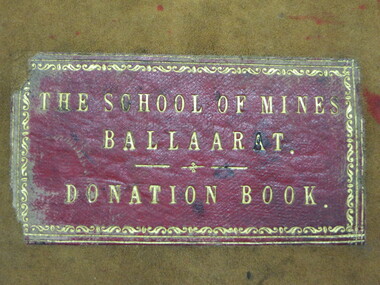
Book - Ledger, Ballarat School of Mines Donation Book, 1878 - 1895, 1878-1895
... Mrs James Murray)
1442. Henry Sutton, Ballarat - Specimens of fossil fruits collected at Haddon by Charles Brown.
1444. Mining Department - Underground Mine Workings from Band of Hope and others.
1517. W.H. Wooster, Ballarat
1592. Bishop of Ballarat - Stone Axe and other native items
1669. H. McHaffier, Napoleons - 1 Spanish...Mrs James Murray)
1442. Henry Sutton, Ballarat - Specimens of fossil fruits collected at Haddon by Charles Brown.
1444. Mining Department - Underground Mine Workings from Band of Hope and others.
1517. W.H. Wooster, Ballarat
1592. Bishop of Ballarat - Stone Axe and other native items
1669. H. McHaffier, Napoleons - 1 Spanish ...The Donation Book relates to the Ballarat School of Mines Museum which opened in 1872. Very few of these items are still held by Federation University. The Museum was emptied in the 1960s with items being distrubuted to the Ballarat Historical Society, returned to original lenders (ie Pern Collection), of disposed of. Donations to the Ballarat School of Mines include: 34. M. Hamburger, Ballarat - bunsen burner 41. W.H. Shaw, Phoenix Foundry - 81 nos of 'Engineer' 89. Juvenile Industrial Exhibition Association Committee per Joseph Flude - dies used for striking medals awarded to successful exhibits. 165. Ferdinand Von Mueller 172 Ferdinand Von Mueller o hortus siccus 6 197. James Stoddart 203. Edward Gazzard, North Creswick - Model of safety Cage invented and made by donor 218. E. Morey 222. Alfred Lestor 228. J.J. Sleep, Ballarat, patent Lever escarpment Clock (displayed in laboratories) 237. Bernard Smith (Warden) per favor of James M. Bickett - Bust of Mr John Lynch, Smythesdale. (Note: This item is not in the present Federation University Historical Collection) 241. James Oddie, J.P., Ballarat, Copy of 'the Chemist and Druggist' 267. John Lynch Junior, Smythesdale - Cast of "Golden Age" nugget, found at Browns by Co-operative party, 12 men. Weight 75 oz, 12 dwts, 12 grs.(Note: This item is not in the present Federation University Historical Collection) 270. Isaac Davis, Main Road, Ballarat 294. W. H. Shaw, Ballarat - 94 nos of 'The Engineer' 295. Rivett Henry Bland, Clunes - Specimen of water pipe from the Port Phillip Company's mine encrusted with carbonites of lime and magnesium (Note: This item is not in the present Federation University Historical Collection) 299. D.J. Williams, Queenscliff - 1 case shells from Fiji 305. C. Retallack, Ballarat 314. William Henry Shaw, Ballarat - glass case 323. W. Longley, Ballarat - Botanical Specimen (Note: This item is not in the present Federation University Historical Collection) 327. W. H. Angove, Perth 337. J. Cosmo Newbery, B Sc, Melbourne 343. James Hector, M.D., New Zealand 353. R.S. Mitchell, Ballarat - 8 specimens live plants (medicinal) (for the Ballarat School of Mines Garden) 355. W. Magee, Ballarat - Sugar cane plants and seeds (for the Ballarat School of Mines Garden) 363. James Hector, Wellington, new Zealand 371. William Wesley, 28 Essex St, Strand, London - Scientific book circular 380. Jacob Upfold (deceased) per favor of the trustees - bequest of steam engine indicator and belongings (boothe and case) 381. Joseph Mitchell, 22 Macarthur Street, Ballarat - sod of turf cut from Warboy's High Few, County Huntingdon, England, 1872. 394. W.H. Barnard 401. James Orr 418. F. Ratte, Sydney 440. Alfred Mica Smith, Sandhurst (Bendigo), Inaugural Address, delivered to the Bendigo School of Mines Science Society, June 20. 1881 by P.H. Macgillivray, MA, MRCS, FLS, President. (Note: This item is not in the present Federation University Historical Collection) (Note: This item is not in the present Federation University Historical Collection) 446. C. C. Shoppee, Ballarat 462. Dr Bunce, Ballarat 468. James Black, Mining Manager "Kerrit Bureet' 479. J.S. North, Mining Manager No. 2 Queen Co, Black Hill Ballarat. 505. Smith Tibbitts - A block of ancient leaves from the Nigtingbool Estate near Haddon on the Ballarat district from shaft 80 feet deep. (Note: This item is not in the present Federation University Historical Collection) 512. F.W. Niven, Ballarat - "A Handy Book to Tasmania" 522. James Hector, Wellington, New Zealand 549. C.E. Grainger, Manager Ballarat Woollen Mills - samples of dyed and raw wools 600. (4 July 1882) Henry Sutton, Ballarat - 13th annual report of the Aeronautical Society of Great Britain; 2 papers from the Proceedings of the Royal Society, nos 217 and 218- 1882, "One a new electrical storage battery by Henry Sutton, Ballarat, Victoria. 608. H. Glenny J.P., Ballarat - Specimen of Asbestos from Tasmania 610. M.H. Edelmann, Munich, Germany 674. W.H. Shaw, Phoenix Foundry - Steel boring 95 feet long taken from bed-plate of locomotive engine. 675 - H.R. Hancock J.P. pre favour Mr James Pryor, Moonta Mines 676. Baron Ferdinand Von Mueller KCMG, etc, Melbourne 678. E.F.A. Gaunt, Royal Navy, H.M.S. Nelson, per favour Lyde Gaunt - Specimen of manganese ore from the mines - Russell - New Zealand 728. Dr Pinnock, Ballarat 760. Simon Morrison, Ballarat 784. James Shugg, Hamilton - 1 case fossils from Muddy Creek, near Hamilton. (Note: This item is not in the present Federation University Historical Collection) 786. W. Bolam (inspector of Schools), Melbourne - 2 spears and 1 fishing prong Fijian 806. James Oddie, Ballarat 708. Henry G. Hanks, San Francisco 786. W. Bolam (Inspector of Government Schools Melbourne) - 2 spears and one fishing prong Fijian 824. Henrique Gorceixm Onro Preto, Brazil 840. W. Laplau, Ballarat - Gas furnace with a large assortment of fittings, also large gas holder and oil-heating apparatus 854. Robert Borch, Main Road, Ballarat - Improved safety chain (Note: This item is not in the present Federation University Historical Collection) 928. James Oddie 944. James P. Munroe, Registrar, Massachusetts 952. L.E. Cutter per favour of Mr F.J. Martell - Unexploded bomb shell from the Eureka Stockade 957. H. Glenny, Hobart 962. George Hart, Ballarat - eagle 976. Henry Sutton, Ballarat - 1 volume "Plattner on the Blowpipe" 978. J.W. Flatow, 45 Madeline Street, Carlton, Melbourne 984. Charles C Shoppee Ballarat - Copies of ancient coins 989-95 - Specimens from Moonta, South Australia 985. W.H. Wooster BOlwarra - books microscope related 1179. James Oddie - Live hedgehog 1181 C. Crisp, Bacchus Marsh, Portugal Copper Coin, 1785 1248 James Oddie, Solomon Islands - Bow and arrows & Spears 1285. C. Colyer, Smythesdale 1327. John L. McKenna, Smeaton - Fragment of Stone Axe. 1395. Mrs O. Skoglund, Nerrina 1428. Daniel Brophy, Ballarat - Collection of mineral specimen form Silverton (Collected by Mrs James Murray) 1442. Henry Sutton, Ballarat - Specimens of fossil fruits collected at Haddon by Charles Brown. 1444. Mining Department - Underground Mine Workings from Band of Hope and others. 1517. W.H. Wooster, Ballarat 1592. Bishop of Ballarat - Stone Axe and other native items 1669. H. McHaffier, Napoleons - 1 Spanish silver coin 1681. James Oddie, Dunedin 1688. W. Burbridge, Ballarat - Native Tomahawk from Metung 1708. A. Doepel, Ballarat 1712. Marty Guerin, Ballarat 1735. Bella Guerin. M.A., Ballarat - Copy Wide Awake Vol 1 No 7 May 28th 1887 and The Bulletin, March 19th 1887. 1747. Bella Geurin M.A., Ballarat - Copy Wide Awake Vol 1 No 8 June 4 1887 1751. Bella Geurin M.A., Ballarat - Copy Wide Awake Vol 1 No 9 June 11th 1887 1842. Linnean Society, London England - Charter, By Laws, Proceedings, Transactions, Journals 1853. W.J. Corbould, Silverton, NSW - chloride of silver from Pinnacles, Broken Hill, Silverton 1888. W. J. Corbould, Sample of metallic silver from Silverton, NSW 1928. E. Morey, Ballarat - Steam Engine 1937. Henry Sutton A.S.I.E., Ballarat - Plate Electric Machine, chimes and Sportman (number crossed out) 1951. Henry Sutton A.S.I.E., Ballarat - Plate Electric Machine, chimes and Sportman 1981. Harrie Wood (per W.H.B.[Barnard?), Ballarat 1996. W.H. Shaw, Phoenix Foundry - Papers "The Vict Engineer July 1887, May June July August 1888 and others 2014. Harrie Wood, Sydney - Report Department of Mines, 18872027. W.J. Bechervaise - Copy of Book by Baldwin Spencer 2034. A.G. Randall - Native Hatchet 2045. W.H. Corbould, Silverton, Collection of silver ores 2051. Fowler, Tarnagulla - Native Tomahawk 2123-2131. James Oddie, London 2163. Roff. F. Taplier, Sturt Street - Native Tomahawk 2178. Syd. Johnson, Meredith - Native Tomahawk, Greenstone 2184. Mr Tupp for Hall - Native Spear and Club 2292. Emmanuel Steinfeld, Melbourne 2313. A. Atwood, Rowlands Factory, Dana Street 2361. Dr Pinnock, Ballarat - Collection of Living Sponges 2363. P. Curnow, Ballarat - Piece of wood with stone naturally embedded 2364. R. Dowling, Waubra 2875. Mrs C, Flude, Ballarat - Collection of (5) mineral specimens 3460. Joseph Weir, Ballarat - Sample of rolled Annibar 3466. J. Hart, Ballarat - Native Shield - supposed to have been made by King Billy 4784. Mr. O. Woolnaugh, Pleasant Street - Four Native Tomahawks 6469. L. Balhausen, Ballarat 3472. John English, Smeaton - three samples of auriferous wash dirt 3607. Columbia College, New York - Handbook of Information of the Columbia College in the Ciry of New York 1892-3. 3672. L.A. Samuels, Bendigo 3724. P. Paperhagen 3736. The Late Rivett Henry Bland per John Noble Wilson - Collection of mineral specimens and fossils 3752. G.A. Denny, South Africa 3755. J. Carroll, Ballarat - Specimen of Native bread found in Ballarat East. 4765. J. Donnelly, Springs, Bungaree I. Fowler, Coolgardie, Specimen of Gold Bearing Quartz ballarat school of mines, doantions, museum, ballarat school of mines museum, safety cage, botanical garden, materia medica garden, library, bella guerin, james oddie, phoenix foundry, w.h. shaw, john lynch, henry sutton, aboriginal, stone axe, tomahawk, geological specimens, moonta, fedinand krause, oddie collection of minerals, thomas bath, spears, solomon islands, king billy, bows and arrows, ancient coins, birds eggs, snakes -
 Ringwood and District Historical Society
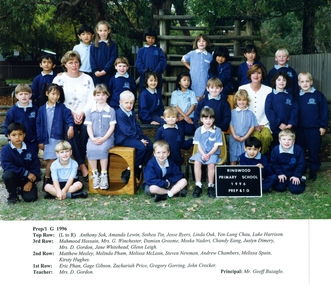
Photograph, Ringwood Primary School 1996 Class Photo Grade Prep /1G, 1996
... Mrs. D. Gordon, Jane Whitehead, Glenn Leigh. 2nd Row:Matthew Mesley, Melinda Pham, Melissa McLean, Steven Newman, Andrew Chambers, Melissa Spain, Kirsty Hughes. 1st Row: Eric Phan, Gage Gibson, Zachariah Price, Gregory Gorring, John Crocker. ...Mrs. D. Gordon, Jane Whitehead, Glenn Leigh. 2nd Row:Matthew Mesley, Melinda Pham, Melissa McLean, Steven Newman, Andrew Chambers, Melissa Spain, Kirsty Hughes. 1st Row: Eric Phan, Gage Gibson, Zachariah Price, Gregory Gorring, John Crocker. ...Prep/IG 1996 Top Row: (L to R) Anthony Sok, Amanda Lewin, Sothea Tin, Jesse Byers, Linda Ouk, Yen-Lung Chau, Luke Harrison. 3rd Row: Mahmood Hossain, Mrs. G. Winchester, Damian Groome, Moska Naderi, Chandy Eang, Justyn Dimery, Mrs. D. Gordon, Jane Whitehead, Glenn Leigh. 2nd Row:Matthew Mesley, Melinda Pham, Melissa McLean, Steven Newman, Andrew Chambers, Melissa Spain, Kirsty Hughes. 1st Row: Eric Phan, Gage Gibson, Zachariah Price, Gregory Gorring, John Crocker. Teacher: Mrs. D. Gordon. Principal: Mr. Geoff Buzaglo. -
 Ringwood and District Historical Society
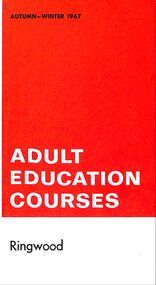
Flyer, Adult Education Courses, Autumn-Winter 1967 - Ringwood, Victoria
... Mrs. P.J. Rosewarne, L.Mus., Clarinet for Beginners - Mr. C. Boon, Recorder Classes - Mr. Alan Murphy, Mus.Bac., Dip.Ed., Practical Painting - Mr. Geoff Spruzen, The Modern Cinema - Mr. P.G. Hourigan, B.A. (Hons.) Woodwork for Beginners - Mr. P.J. Waring, German - Miss J. Juhasz, B.A. (Hons.) Dip.Ed., Spanish...Mrs. P.J. Rosewarne, L.Mus., Clarinet for Beginners - Mr. C. Boon, Recorder Classes - Mr. Alan Murphy, Mus.Bac., Dip.Ed., Practical Painting - Mr. Geoff Spruzen, The Modern Cinema - Mr. P.G. Hourigan, B.A. (Hons.) Woodwork for Beginners - Mr. P.J. Waring, German - Miss J. Juhasz, B.A. (Hons.) Dip.Ed., Spanish ...Brochure listing Council of Adult Education evening classes at Norwood High School and daytime classes at East Ringwood Community Centre Hall.Subjects and lecturers include: Australia 1967 - Dr. D.B. Waterson, M.A., Phd, Honest Doubt - Mr. C.R. Badger, M.A., Mammals in Australia - Mr. Jack Hyett, How to Read and Understand Music - Mrs. P.J. Rosewarne, L.Mus., Clarinet for Beginners - Mr. C. Boon, Recorder Classes - Mr. Alan Murphy, Mus.Bac., Dip.Ed., Practical Painting - Mr. Geoff Spruzen, The Modern Cinema - Mr. P.G. Hourigan, B.A. (Hons.) Woodwork for Beginners - Mr. P.J. Waring, German - Miss J. Juhasz, B.A. (Hons.) Dip.Ed., Spanish Guitar - Mrs. Susan Ellis, Basic Painting - Mr. Robert Grieve, French - Mrs. G. Bennett, B.A., Dip.Ed. -
 Mission to Seafarers Victoria
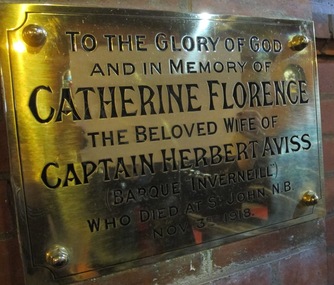
Plaque - Memorial Plaque, Catherine Florence Aviss, 1919
... Mrs Aviss gave birth to her third child in August 1918 on board the ship. She contracted the "Spanish flu" probably in St John, New Brunswick and died, at the age of 28, on the 3 November 1918 after a week in hospital, leaving her husband with two toddlers and a 3 month old baby. ...Mrs Aviss gave birth to her third child in August 1918 on board the ship. She contracted the "Spanish flu" probably in St John, New Brunswick and died, at the age of 28, on the 3 November 1918 after a week in hospital, leaving her husband with two toddlers and a 3 month old baby. ...Links to another image in the collection previously unidentified now known as at 2018 to be the children of a seafaring family of Captain and Mrs Aviss. In 1918 the family was re-united with Mrs Aviss' parents after a dangerous journey by sea the first time that the children met their grandparents, Captain and Mrs Frampton also seafarers . Mrs Aviss gave birth to her third child in August 1918 on board the ship. She contracted the "Spanish flu" probably in St John, New Brunswick and died, at the age of 28, on the 3 November 1918 after a week in hospital, leaving her husband with two toddlers and a 3 month old baby. The story demonstrates the respect and support of the Mission for two remarkable families of seafarers and the dangers of the influenza epidemic post WW1.An example of lives and tribulations of a seafarer family who survived the Great War but who also had to deal with the Spanish flu pandemic of 1918-1919.Large engraved brass plaque mounted onto brick wall commemorating wife of sea captain. To the Glory of God / and in memory of Catherine Florence/ the beloved wife of Captain Herbert Aviss/ (Barque Inverneill) who died at St John. N.B./ Nov 3rd 1918.brass, plaque, great war, memorial, commemorate, catherine florence aviss, florence catherine nee frampton, wwi, first world war, barque, inverneill, herbert aviss, st peter the mariner chapel, mission to seafarers, flinders street, 1919, st john, new brunswick, influenza, spanish flu, pandemic, 1918 -
 Mission to Seafarers Victoria
Article, A Woman's Melbourne Letter
... Mrs. Goldsmith -, the chaplain's wife - rightly thinks it is far more homely to pour out the tea from a pot, than to serve it straight from the urns. So tea is poured out by a member, who sits at the head of a table gay with flowers, and chats to the guests. These latter are of all nationalities. But the French, the Spanish...Mrs. Goldsmith -, the chaplain's wife - rightly thinks it is far more homely to pour out the tea from a pot, than to serve it straight from the urns. So tea is poured out by a member, who sits at the head of a table gay with flowers, and chats to the guests. These latter are of all nationalities. But the French, the Spanish ...A detailed description of the Mission and its activities written by a woman: Western Mail (Perth, WA : 1885 - 1954), Friday 13 December 1918, page 34 A WOMAN'S MELBOURNE LETTER. Melbourne, Dec. 4. There is an idea abroad, which as regards Melbourne, at any rate, is quite erroneous, that our sailors are not as well looked after as our soldiers, and that the noble men of the Mercantile Marine are much neglected ! For once, perhaps, my readers will pardon a letter dealing with only one subject, but the steady, unostentatious work done by the Ladies' Harbour Light Guild, in connection with the mission to seamen in Melbourne could not be adequately explained if dismissed in the usual short paragraph. Some of the most prominent names in Melbourne are associated with this guild and with the Mission Chaplain, and Mrs. Gurney Goldsmith, the members have made the Seamen's Institute a real home for those sailors of the Mercantile Marine, who touch our port. What we as a community owe to those men by their heroism in recent hostilities is certainly more understood by this band of enthusiastic workers than by the community generally. By using their unflagging energies, and influence on the sailor's behalf they endeavour to discharge a debt to which in some way or other we could and should all contribute. Even the most casual person can, if he thinks at all, sum up a few of the things our sailors - other than those belonging to our glorious navy - have done for us. On the spur of the moment we remember that those of the Mercantile Marine, are the men who manned our transports, who carried our wheat and wool, to oversea markets; who kept us in touch with our loved ones abroad; who kept the fires going in the furnaces of the great leviathans, bringing our wounded soldiers home again; who never flinched when self-sacrifice was demanded; who cared, with that tenderness, innate in all sailors, for the women and children, when the passenger ships were struck a dastardly blow by the wicked enemy; who, mocking death, gave up life with a heroism all the more heroic because it was always taken as a matter of course! Is it any wonder, then, that the members of the Ladies' Harbour Light Guild make it their business to provide a bright, homelike, spot in Melbourne, where the sailors are always certain of a cherry welcome ashore? The members of the guild are admirably drafted! The 360 non-workers each pay £1 1s. per annum. The workers, of whom there are between 700 and 800, donate 2s. 6d. and school members - it is confidently hoped that gradually all the schools will take an active interest in the mission - 1s. a year. The knights of the guild - as the men members are designated - are responsible for any sum they wish to name, from 5s. a year upwards. Everything is paid for out of these revenues, with the exception of a small grant from the Home Mission Fund - and such is the organisation, and management, that the entire concern is quite free from debt. The Seamen's Church and Institute, where the "Harbour Lights" gleam so brightly, is situated right in the midst of all the bustle and turmoil of the wharves, at the end of Flinders-street. The building, comprising chapel, and institute under the one red tiled roof, is grey stuccoed, with a small tower, from which flaunts the flag of 'The Flying Angel" - the badge of the guild. A visit to the institute makes one fully appreciate the boon the place must be to the voyage worn, weary, sailor. The atmosphere is eminently social in its best sense. While the architecture imparts an elegance, and quiet dignity which soothes by the very subtlety of its charm. With its comfortable furniture, its wealth of flowers, and the happy, wholesome, feminine influence which prevails everywhere, the quality which stands for the magic word "home" abounds. The Chaplain in the course of conversation said: -"We try to make this really a free club for sailors." But the habitues would probably tell you it was far more than that to them. The Institute is excellently appointed, and every little corner seems to have its particular history. It was built after the model of one of the old mission churches in California, and retains something of the old world attraction, while yet it combines all the advantages of modern, practical, conveniences. On entering the door the first thing, one notices is a huge compass, inlaid upon the floor, evidently to indicate one's proper bearings for it points due north - to the chapel! Only one other seamen's mission in the world boasts such a compass. As the sailor swings through the entrance he finds the office on his right, and there is, here, always a smiling face to welcome the shy, or timid, new comer. Quite a real post office is staffed by members of the guild, and all the letters received are listed alphabetically. Therefore, the expectant sailor has just to run his eye down the list, and he can immediately see whether there is a letter for him or not. If he is fortunate, he comes up to the member in charge, who unlocks the box, and produces the longed for missive. The boys are always encouraged to answer letters - and to write them. Often a few words about their mother, and their own home, will provoke a sleeping memory into activity. The writing room is well stocked with paper, envelopes, pens, and ink. The tables are so divided to ensure the utmost privacy, and through a calculated chain of circumstances, many an anxious mother receives a letter from her sailor lad, who, perhaps, might not have written but for these kindly inducements. The central hall - where social evenings are held every other night besides two special concerts a week - is inviting in the extreme. A handsome piano affords opportunity for those musically inclined. The tables are strewn with papers. The walls are bright with pictures, and here, and there, is a carved model, of a ship. One, of especial interest, is a model of "The Roon" carved, and presented by a French sailor. This German vessel will always be remembered in Australia. For it was across her bows that the first hostile shot was ever fired in Australian waters. In the corner is the canteen. It was fitted up entirely from the proceeds of a quotation calendar compiled by one of the members. The sailors may at any time, get a teapot of tea, or a tray of eatables, at a nominal cost. Before the canteen was in existence they had to go out for refreshments! - and sometimes they did not come back! Groups of sailors sit chatting at the tables. Half a dozen Swedes laugh and talk among themselves, for the simple reason they know no other language than their own. Several British sailors cluster about a dark-eyed Welsh lad - a perfect Celtic type - who, although only about twenty years of age, has been the victim of the Hun five times. Mines and torpedoes sank the ships he was in, either in the Channel or off the English coast, four times; and it is to his fifth experience, when the Inverness was wrecked, that everyone is eagerly listening. "We were in the boats eight days," he was saying, "I was pretty well mangled when they picked me up. The sufferings we endured were awful. At last we managed to reach Rapa, a Hawaiian island. The natives thought we were Germans, and came at us with spears. When they found we were British, they were awfully good to us. They even cried when we left, and the day before the rescue boat arrived they begged us to go into the hills and hide." At another table a Canadian lad - once a sailor - then a soldier, who trained at the Broadmeadows camp - was telling his experiences : - "The voyage which will always stick in my memory," he said, "was to a place which must be nameless. We left the United States not knowing whether we were bound, or what we were going to do. After some weeks we sighted a group of wonderfully beautiful islands, and we headed for the most remote and most lovely of them all. Then, and only then, we learned our mission from the skipper. We were taking their year's supply to a leprosy station! Oh no! I don't blame the skipper for not telling us ! Someone has to do these things, you know. A naval guard saw they didn't come near - and we all got sixty dollars extra. When the job was over we were quarantined on another island for two months, and one little chap - the baby of the crew, not eighteen - developed leprosy, and died before we left. Yes! I'll never forget that voyage, mates! Sometimes, I seem to see Leper's Island yet, with its lavish tropical vegetation and the gorgeous sunsets which stained all the water with blood. Then, too" - here the voice deepened - "there was an English girl - a leper - there. We heard she used to be an actress, and she contracted the disease somehow or other. She was always alone, and always watching us. In the distance we could see her come to the water's edge, and from there she would watch. Just watch . .. . watch . . .watch. ..." "Here come a couple of North Sea chaps," broke in an elderly man after pause. "One of them wounded, too, poor lad." It is not strange that all the sailors flock to the Institute. It is so comfortable, and essentially inviting, besides being full of human interest. The men's quarters comprise reading, writing and dressing rooms - hot and cold baths are always available - billiard room, and a special baggage room, where any sailor may leave his kit for as long as he likes. The payment of 3d. covers its complete insurance. Upstairs are the officers' quarters. These also have their own billiard room, writing and reading rooms, bath and dressing rooms. Just close are the apprentices' quarters - "The Half Deck," as popular parlance has it! The lads also have a billiard room of their own, and indulge in an easy armchair - amongst others - which was a donation from the Milverton School branch of the Guild. It is hoped by the committee to some day utilise the huge empty rooms, which run the length of the whole building. Their ultimate intention is to fit them up as cubicles, or "cabins," as they are to be called. They trust these "cabins" will be donated, either in memory, or in honour, of someone dear to the donor. Another forward movement soon to be put in hand, now that materials are available, is the establishment of "Norla Gymnasium." In a sailors' club such facility for exercise is absolutely essential. The men both need, and miss, exertion. As one boy, who had been backsliding, once said pathetically : -"If only there was something to do to get me into a good sweat, I would be all right." Soon such an one will be helped to swing from the trapese of the Norla Gymnasium into the right track! Sunday is always a fete day at the Institute, for 40 or 50 sailors generally come into tea. The up-to-date kitchen, which is fitted with every labour-saving appliance - all paid for out of working members' half crowns - is then a hive of animation, and methodical order. A formidable row of teapots await filling. Mrs. Goldsmith -, the chaplain's wife - rightly thinks it is far more homely to pour out the tea from a pot, than to serve it straight from the urns. So tea is poured out by a member, who sits at the head of a table gay with flowers, and chats to the guests. These latter are of all nationalities. But the French, the Spanish, Scandinavian, Norwegian - or any other sailor is equally welcome with the British. Two enthusiasts belonging to the Guild actually learnt Norwegian, so that men of this nation would have someone to talk to, and so be less lonely when they reached this, to them, foreign port ! The members of the Guild have their own private suite where they arrange the flow-err and do other necessary odds and ends undisturbed. No one appreciates flowers like a sailor, and the earliest and most beautiful may always be seen adorning the tables and rooms. Teas are served and lectures are held in the "Celia Little Hall," one of the most beautiful portions of the institute. It was erected by the chaplain in memory of his aunt from whom the hall takes its name. The Gothic windows open upon the cloisters, where, in the hot weather, the sailors enjoy their meals out of doors. The cloisters, indeed, form an exquisite spot. They are between a series of sweeping arches which lead to the chapel, and are sheltered by the open balcony of the chaplain's quarters. Grace of contour marks the architecture on every turn. Just around the corner is the chaplain's garden - a patch of green and colour, transformed from a desert waste, by a well-known woman horticulturist. The book room is a department especially valued by the sailors. There are two secretaries, one for home and the other for foreign literature. Books in French, English, Spanish, Scandinavian, Norwegian, and German may be found on the shelves. Each week about 36 convenient parcels of reading stuff are made up. These contain illustrated papers, books in various languages, and magazines. These parcels are eagerly accepted by the sailor with a long monotonous voyage before him. But complete as is every corner of the institute, no part is so well equipped as the memorial chapel erected by the Ladies' Harbour Light Guild, in memory of the officers and men, who have lost their lives during the war. St Peter's - for it is called after the sailor's patron saint - with its hallowed gentle dignity is a veritable sanctuary of peace, perhaps all the more so because it sprang out of war. The fittings are entirely of Australian wood. The pews, given in memory of some loved one by one of the members, are of Tasmanian hardwood. The reredos and altar chairs of carved blackwood. The rich carpet was provided by the members' magical half-crowns. Already this chapel holds memorials of peculiar historical interest. The altar lectern was given in memory of Commander Elwell, who, it will be remembered, was killed at Rabaul, in the early part of the war. The font commemorates two heroes - Nigel Hockley and Fred Hyde, who lost their lives at the hands of the Germans, although they survived the actual torpedoing of their ships, the Galgorn Castle off the coast of Ireland. The mother of one of them wrote out that her son had died as an Englishman should - fighting for the right. This noble sentiment is suitably paraphrased upon the inscription engraved upon the font. Practically every-hing enshrined in the chapel has its own sentimental value. The alms salver of beaten copper, studded with agate, is fragrant with the memory of a saintly woman.The eye of the sailor is caught and held by the pulpit, which is fashioned like a ship's hull and only a twist of rope guides the chaplain up the steps. For the last 13 years the Rev. A. Gurney Goldsmith, M.A., has acted as chaplain to the Seamen's Mission in Melbourne. Before that he and his wife worked in China. Mr Goldsmith visits all the boats and gets in touch personally with the sailor, over whom he has great influence. He is not only their chaplain and friend, but, amongst a wide range of other things, their banker besides. An exchange system exists between the various Missions, and the sailor who has "banked" his money with the chaplain, upon going away, receives a cheque which is cashed - minus exchange - by the chaplain of the next port. Mr. Goldsmith will tell you he has a soft spot in his heart for on old sailor he calls "Paddy." This ancient mariner has been wrecked ten times. It was a long time before the chaplain prevailed upon "Paddy" to partake of the spiritual and secular advantages afforded by the institute. He would not come, he said, until he could do so "with a good heart." Finally he frankly admitted that he had no "friends like those of 'the Flying Angel,' " and that he eventually proved his own "good heart" will be shown in this story. One day he came in to the chaplain and said bluffly, "Well, sir, I've been payin' off some old scores up Carlton way, an' I tells yer, plain, sir, not one of 'em would have seen a penny of their money but for the Mission." The Ladies' Harbour Light Guild has over thirty working suburban branches, and the excellent results achieved at the Institute now will no doubt be considerably augmented in the future. The practical actions of the members do more than anything else to convey the subtle meaning of the name of the Guild. To the visiting sailors the word "ladies" signifies the bread givers; "harbour" safety ; "lights" welcome; "guild" the welding of fraternity, and they one and all tell you the ideals thus embodied are unselfishly carried out by all the ladies who have banded together to care for the sailors' welfare.The article describes the Mission and the use of several spaces a year after its opening and gives details about the daily activities.Digital copy of an article published in the Western Mail on the 13th of December 1918. 717 flinders street, seamen's mission, norla dome, lhlg, reverend alfred gurney goldsmith, celia little room, garden, frederica godfrey -
 Eltham District Historical Society Inc
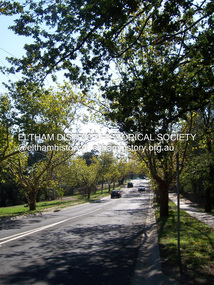
Photograph - Digital Photograph, Marguerite Marshall, Avenue of Honour, Main Road, Eltham, 20 April 2008
... Lady Irvine thou proceeded to plant the first tree, which was an English oak: Sir William following by planting a Spanish chestnut; and Mrs W. G. Gray a sycamore. After that the gathering refired to the entrance of Mr R. ...Lady Irvine thou proceeded to plant the first tree, which was an English oak: Sir William following by planting a Spanish chestnut; and Mrs W. G. Gray a sycamore. After that the gathering refired to the entrance of Mr R. ...The suggestion of an Avenue of Honour may have been originally put forward by Lady Irvine who was a member of the Welcome Home Committee. The Avenue of Honour was established to memorialise all those from Eltham who enlisted (some of whom were still fighting overseas at the time), similarly as the Shire of Eltham (Soldiers) Memorial Park was in tribute to all from the Shire who enlisted. The twenty-seven names of those killed from Eltham were engraved on the Eltham War Memorial Obelisk unveiled in 1919 at the corner of Main Road and Bridge Street. From an article in the Heidelberg News and Greensborough, Eltham and Diamond Creek Chronicle, September 22, 1917, p. 2, it was reported: Some few weeks ago a public meeting was held in the Eltham Rechabite Hall for the purpose of forming a committee to make necessary arrangements for the return of our brave lads from the front, with the result that the following officers were elected, viz., Sir William Irvine. president; Cr. R. D. Taylor, vice-president; Rev. T. W. Sapsford, secretary; Mr R. E. Gilsenan, treasurer; with a very strong committee of local residents. Lady Irvine then suggested that it would be nice to plant an Avenue of Honor, which was carried out in a very cheerful and spirited manner on Saturday afternoon. Cr Taylor and Mr R. E. Gilsenan occupied themselves during the fore-forenoon in getting the lining-out and other preliminaries ready, but shortly after one o'clock the willing workers could be seen wending their way towards the township, with picks, shovels. &c., on their shoulders, and in a very short time the gang at work was in appearance a very lively and pretty sight, the only thing that was missing was the camera, to have had a few snapshots taken. A little after 3 o'clock Sir William and Lady Irvine, and Mr W. Gray and family, arrived by motor. Cr Taylor then explained that their object in gathering together so hurriedly to plant the avenue was on account of the lateness of the season, and being offered 100 trees, free of charge, by Cr. Wm. G. Gray; of Allwood Nursery, Hurst's Bridge (for which the committee are deeply grateful to him and the public highly appreciate his generous offer). Sir Wm. Irvine then spoke at some length on the ravages of this cruel war, and the good that must result therefrom in bringing all closer together; he also referred to our brave lads who were fighting for us, and thought it was for those at home to show their appreciation by planting the Avenue of Honor. Lady Irvine thou proceeded to plant the first tree, which was an English oak: Sir William following by planting a Spanish chestnut; and Mrs W. G. Gray a sycamore. After that the gathering refired to the entrance of Mr R. E. Gilsenan's green paddock to partake of refreshments, which the ladies had kindly provided for the willing band of workers. Work was again taken to in earnest, and the planting finished, all being satisfied that they had done good work. At the Eltham Shire Council’s monthly meeting held May 6, 1918, Cr. Gray promised to give Council £20 to £25 worth of trees if the Council would plant and guard them. His desire was that a tree be planted in the name of every soldier lad who has gone to the front. Each tree was later adorned with a brass plaque with the name of a soldier and a wooden tree guard placed around them. Over the years many trees died, and following roadworks were replanted on a new alignment. Nillumbik Shire Council is continuing this process of replanting trees in a new alignment to move them away from overhead power lines and to clear the VicRoads reserve. Covered under Heritage Overlay, Nillumbik Planning Scheme. Published: Nillumbik Now and Then / Marguerite Marshall 2008; photographs Alan King with Marguerite Marshall.; p119This collection of almost 130 photos about places and people within the Shire of Nillumbik, an urban and rural municipality in Melbourne's north, contributes to an understanding of the history of the Shire. Published in 2008 immediately prior to the Black Saturday bushfires of February 7, 2009, it documents sites that were impacted, and in some cases destroyed by the fires. It includes photographs taken especially for the publication, creating a unique time capsule representing the Shire in the early 21st century. It remains the most recent comprehenesive publication devoted to the Shire's history connecting local residents to the past. nillumbik now and then (marshall-king) collection, avenue of honour, main road, eltham -
 Warrnambool and District Historical Society Inc.
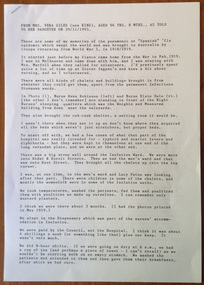
Document - Typescript, Spanish 'flu epidemic 1919, Originally written in 1995
... Three pages of typed details about the Spanish flu in Warrnambool as recorded by volunteer Nurse Mrs Vera Giles (nee King). ...This article is significant because it is a first- hand record and gives a local perspective to a world- wide event. warrnambool spanish flu mrs vera giles warrnambool base hospital 1919 spanish flu dr holmes Covering letter from Mrs Giles’ daughter, Aurelin, dated January 22, 2015 Three pages of typed details about the Spanish flu in Warrnambool as recorded by volunteer Nurse Mrs Vera Giles (nee King). ...The 1918 Spanish 'flu was a deadly pandemic which infected 500 million people worldwide and killed millions. There is still discussion as to where the disease originated but the movement of troops at the end of WW1 contributed to the spread of the disease. This article deals with methods of disease and infection control in Warrnambool. This article is significant because it is a first- hand record and gives a local perspective to a world- wide event.Three pages of typed details about the Spanish flu in Warrnambool as recorded by volunteer Nurse Mrs Vera Giles (nee King). There are also photographs included and Victorian BDM records as well as general information on the 1918 Flu pandemic.Covering letter from Mrs Giles’ daughter, Aurelin, dated January 22, 2015 warrnambool, spanish flu, mrs vera giles, warrnambool base hospital, 1919 spanish flu, dr holmes -
 NMIT (Northern Melbourne Institute of TAFE)
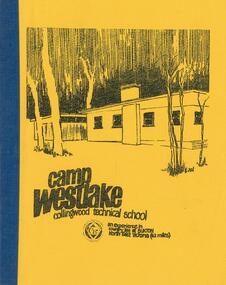
Booklet 'Camp Westlake Collingwood Technical School:...' written by Principal J.F. Barberis
... Mrs. Westlake who were staunch workers for the school. (From J.F.Barberis} Collingwood Technical College J.F.Barberis Camp Westlake NMIT Booklet of 15 pages with gold cover, A4 sized. Title: Camp Westlake Collingwood Technical School: an experience in country life at Buxton North East Victoria (62 miles)' written by Principal J.F. Barberis (undated but possibly around 1970-1971). Also 6 page booklets on Camp Westlake in English, Greek, Serbo-Croation, Spanish ...Camp Westlake was built by Collingwood Technical School in 1967 and was officially opened on 22 September 1968. The camp was built by staff and students of the school with finance from various school sections and from materials donated by interested people and firms. It is named after Mr. F.R.Westlake and Mrs. Westlake who were staunch workers for the school. (From J.F.Barberis}Booklet of 15 pages with gold cover, A4 sized. Title: Camp Westlake Collingwood Technical School: an experience in country life at Buxton North East Victoria (62 miles)' written by Principal J.F. Barberis (undated but possibly around 1970-1971). Also 6 page booklets on Camp Westlake in English, Greek, Serbo-Croation, Spanish and Turkish. Also photographs of buildings and students at the camp. Also Programne for Official opening of Alex & Doris Cowmeadow wings Camp Westlake, 14/11/71.Two-sided white with black text. On cover the CTC logo and black and white photo and the words: 'COLLINGWOOD / TECHNICAL COLLEGE / OFFICIAL OPENING / of / ALEX & DORIS COWMEADOW WINGS / CAMP WESTLAKE / by / W.J.WHITE, Esq. / College President / 14/11/71'. On reverse is the Programme. Also folder of correspondence regarding Camp Westlake dated 12 May 1969 to 7 November 1971collingwood technical college, j.f.barberis, camp westlake, nmit -
Glen Eira Historical Society
Document - ST JAMES PARADE, 33, ELSTENRWICK, ‘AVALON’
... St James Parade Elsternwick ‘Avalon’ House names Spanish Mission Architectural features ‘O’Neill Estate’ fireplaces lead lights plaster moulds Geer Clfrd. M Davis Mrs ...Contains 2 items about this property: 1/Two property advertisementss, dated 15/06/2002 on forth coming sale of property, including 4 photographs. 2/Handwritten research on occupiers of property by Claire Barton from Sands and McDougall on 15/03/2013.st james parade, elsternwick, ‘avalon’, house names, spanish mission, architectural features, ‘o’neill estate’, fireplaces, lead lights, plaster moulds, geer clfrd. m, davis mrs annice f. -
Glen Eira Historical Society
Document - LEMPRIERE AVENUE
... East St Kilda ‘Rozelle’ mansions Balaclava Land subdivision Balaclava Road Georgian style Spanish Mission style Orrong Road Greenmeadows Gardens Lempriere Avenue Leadlight McKaige George Power and telegraph lines Triple-fronted style Interwar streetscape McKaige Edna Ward Andrew Caulfield Council Elsternwick Welsh Heather (Councillor) Councillors Akehurst Jeff Caulfield Heritage Watch Spencer David Johnson John Dr. ‘Kilwinning’ George H. Peterson William Mrs ...1/A newspaper cutting from The Argus 12/07/1927 (a print-out of same from Trove), praising the virtues of demolishing former mansion ‘Rozelle’ and erecting a ‘score’ of pretty modern villas from Balaclava Road directly into Green Meadows Gardens, a public reserve. Article describes modernity of homes in great details and the streetscape vistas (1 photo included) including road and pathways. 2/A Caulfield St Kilda Leader, dated 25/08/1993, article with Caulfield residents George and Edna McKaige wanting a planning amendment ‘with teeth’ to protect their Lempriere Ave streetscape. Andrew Ward, Heritage Architect, identified Lempriere Ave as one of Caulfield’s significant areas, because of its Interwar streetscape.east st kilda, ‘rozelle’ mansions, balaclava, land subdivision, balaclava road, georgian style, spanish mission style, orrong road, greenmeadows gardens, lempriere avenue, leadlight, mckaige george, power and telegraph lines, triple-fronted style, interwar streetscape, mckaige edna, ward andrew, caulfield council, elsternwick, welsh heather (councillor), councillors, akehurst jeff, caulfield heritage watch, spencer david, johnson john dr., ‘kilwinning’, george h., peterson william mrs., ‘melby’, ‘springfield’, rose-watt miss, ‘rozelle’, ‘cressy house’, meadow street, smith wallace m., heron herbert l., ‘goathland’, ‘melbe’, wright james, marsh malcolm reginald, house names, melby avenue, springfield avenue, goathlands street, kilwinning court, heritage studies, town planning -
Glen Eira Historical Society
Plan - LEMPRIERE AVENUE
... Spanish Mission style ‘Greenmeadows House Lempriere W. G. Meadow Street Clarke William Senior ‘Greenmeadows’ Trees Balaclava Road Orrong Road Allan Road Meadow Street Lempriere John Kirton Mr Dickson and Yorston (Pty Ltd) Lempriere Ruby L Mrs Dickson G C Yorston J C St Kilda East East St Kilda Roselle Estate East St Kilda East St Kilda Riding Plan LEMPRIERE AVENUE ...One item about this location 1/Excerpts (5 pages) from Andrew Wards Heritage Study vol 2, 3.6 on Lempriere Avenue and ‘Greenmeadows Gardens’ Historic Area include street plan and general view of Roselle Estate’, Greenmeadows Garden. Included in his description is mention of a large eucalypt in ‘Greenmeadows Gardens’ which pre-dates European settlement.streetscape, lempriere avenue, ‘greenmeadows gardens’, meadow street, alston grove, californian bungalow style, fences, spanish mission style, ‘greenmeadows house, lempriere w. g., meadow street, clarke william senior, ‘greenmeadows’, trees, balaclava road, orrong road, allan road, meadow street, lempriere john, kirton mr, dickson and yorston (pty ltd), lempriere ruby l mrs, dickson g c, yorston j c, st kilda east, east st kilda, roselle estate, east st kilda, east st kilda riding -
Box Hill Historical Society
Book, McIntyre, Kenneth Gordon, The Secret Discovery of Australia: Portuguese Ventures 200 Years before Captain Cook, 1977
... Explorers Australia Portuguese Mahogany Ship An understanding of deep - sea navigation and of the policies that drove the Maritime Powers of Spain and Portugal to compete to rule the world on either side of the Pope's meridian including the Australian coast. An historical mystery unearthing of secrets that have been kept for hundreds of years. Dear Mrs ...An understanding of deep - sea navigation and of the policies that drove the Maritime Powers of Spain and Portugal to compete to rule the world on either side of the Pope's meridian including the Australian coast. An historical mystery unearthing of secrets that have been kept for hundreds of years.450 p. Index; maps; bibliography.An understanding of deep - sea navigation and of the policies that drove the Maritime Powers of Spain and Portugal to compete to rule the world on either side of the Pope's meridian including the Australian coast. An historical mystery unearthing of secrets that have been kept for hundreds of years.explorers, australia, portuguese, mahogany ship -
 Surrey Hills Historical Society Collection
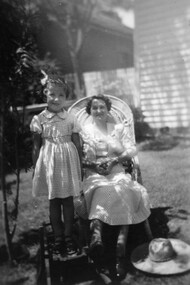
Digital photo, George L Coop, Winifred Alice Coop and her daughter Alison, c1950, c1950
... Spanish Mission style flats at 346 Whitehorse Road, opposite Brenbeal Street, Balwyn. When his grandparents died, the family moved to 688 Whitehorse Road and he then attended Mont Albert Central School. Alison being younger did not go to Chatham Primary. alison coop, (Mrs ...The photo was taken at 688 Whitehorse Road, Mont Albert. It is of Winifred Alice Coop (nee Trewartha), known as Alice, and her daughter Alison, b1945. This was the home of 3 generations of the Coop family: 1. Josephine and George Frank Coop (noted in Box Hill Rate Books for 1947-1954). 2. George Burton Coop (1906-1960) and his family. He was Assistant Chief Architect of Victoria in the Public Works Department (P.W.D.) George Burton Coop was born in c1906 in Williamstown, the son of Josephine Vistarini and George Frank Coop. He married Winifred Alice Trewartha in 1936 and they are listed in the electoral rolls at 688 Whitehorse Road in 1937. George died 3/4/1960, aged 54 years at Mont Albert; Alice died in 1980. 3. George Burton and Alice Coop had 2 children: George Lister Coop - born St Georges Hospital, 8/10/1937 Alison - born c1945. The donor George Lister Coop informed that he initially attended Chatham State School because his first home was the Spanish Mission style flats at 346 Whitehorse Road, opposite Brenbeal Street, Balwyn. When his grandparents died, the family moved to 688 Whitehorse Road and he then attended Mont Albert Central School. Alison being younger did not go to Chatham Primary. A black & white photo of a woman seated in a cane chair with her daughter standing adjacent to her and standing on a small child's chair. The woman's sun hat is lying beside her on the grass. Both faces are partly shaded by an adjacent bush.alison coop, (mrs) winifred alice coop, whitehorse road, surrey hills, children, clothing and dress, george lister coop -
 Melbourne Legacy
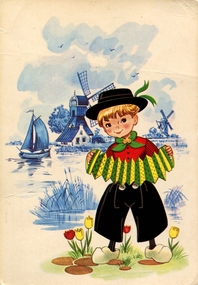
Postcard
... Addressed to: Mr & Mrs John Elsum, 52 Davey Street, Mordialloc Vic 3195, Australia." Printed on postcard: gebr.spanjersberg / Rotterdam - antwerpen / Cobas y Cia. Barna. Printed in Spain...Addressed to: Mr & Mrs John Elsum, 52 Davey Street, Mordialloc Vic 3195, Australia." Printed on postcard: gebr.spanjersberg / Rotterdam - antwerpen / Cobas y Cia. Barna. Printed in Spain ...The postcard has a drawing of a traditional landscape of The Netherlands represented by a lake, house with mills, a boat and a child dressed in a colourful, traditional costume. The handwriten text is a letter home and describes the writer Peter's visit with his cousin. Other items addressed to Mrs Elsum are in the archive (see 00180 a postcard from 1915). The connection to Legacy is not known.This postcard has a historical significance for the family involved and remind them the time when Peter was at Holland. Postcard with a drawing of the Netherlands.Handwritten text in blue pen: "10-10-80, Hello There, greetings from Holland. Spending a couple of days with my cousin & his wife at Leiden, which is very old city with narrow cobble stone streets. Last night Paul & I did a 'pub crawl' on bikes which was good fun. Everyone rides bikes here, they even have part of the road reserved for them! All are well at Takerton, [?], send their best wishes & thanks for your gifts. Mum is writing to you. Thanks for keeping my girl company. See you soon. Love. Peter. Addressed to: Mr & Mrs John Elsum, 52 Davey Street, Mordialloc Vic 3195, Australia." Printed on postcard: gebr.spanjersberg / Rotterdam - antwerpen / Cobas y Cia. Barna. Printed in Spain / [Symbol] 7013 [Air mail stamp] LUCHPOST PAR AVION / P 4579 / PTT / [Postage Stamp] JULIANA NEDERLAND REGINA 55csouvenir, postcard -
 Surrey Hills Historical Society Collection
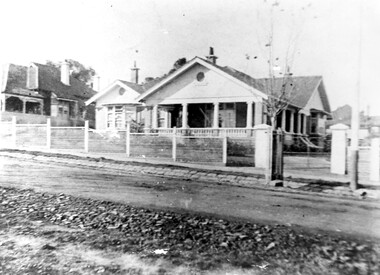
Photograph, 181 Union Road, home of Mr and Mrs Antonio Clota
... Spain. Josephine Clota and Kim Sans had photos taken on the front entrance to the house when they were married on 9 May 1919. The wedding was reported in Punch. houses antonio clota, josepha comellas, josepha clota, catalan families, josephine clota, josephine sans, kim sans, joaquim sans, francis clota, frank clota box hill cemetery Black and white photo of the home of Mr and Mrs Antonio Clota; later the home of their daughter Josephine and son-in-law, Kim Sans and family. ...The house was built in 1910. The Clota and Sans families were part of a group of families of Spanish (Catalan) background who lived around Surrey Hills, many of whom are buried in Box Hill Cemetery. The house was built for Antonio and Josepha Clota and passed on to their daughter Josephine Sans and her family. Antonio's full name: Antonio Eusebio Miquel CLota (1869-1940; died Surrey Hills) had 3 brothers who came to Australia with him. Louis Clota (1864-1925); Marcus Clota (1866-1940) died Surrey Hills; Eusebio Clota (1869-1919). Their parents remained in Spain. Josephine Clota and Kim Sans had photos taken on the front entrance to the house when they were married on 9 May 1919. The wedding was reported in Punch.Black and white photo of the home of Mr and Mrs Antonio Clota; later the home of their daughter Josephine and son-in-law, Kim Sans and family. It shows bluestone curb and channelling in Union Road and a substantial wire mesh fence. The street tree looks like a plane tree and is a relatively young plant. Ther house is single storey brick with a tile roof and solid pillars supporting the verandah.houses, antonio clota, josepha comellas, josepha clota, catalan families, josephine clota, josephine sans, kim sans, joaquim sans, francis clota, frank clota, box hill cemetery -
 Surrey Hills Historical Society Collection
Photograph, Mr A Noack, Emilia Villa, 4 Albany Crescent, Surrey Hills, 1984
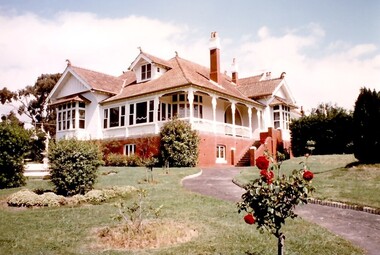
... The Rubiras and the Parers established and supplied a number of high-class restaurants and hotels in Melbourne. emilia villa house names 1913 singers spanish community italian community ethnic communities parer family albany crescent surrey hills restaurants hotels edwardian style mr james rubira mrs emilia rubira miss Emilia Tajouera Guidotti On rear in blue pen: "Mr Rubira's House / per / A Noack (underlined) / Albany Cres" Coloured image of an Edwardian style brick house at 4 Albany Crescent, Surrey Hills. ...The house was built in 1913 for Mr James Rubira and named for his wife Emilia Tajouera Guidotti, an Italian opera singer. She was born in 1865 and died in Surrey Hills on 21 October 1950. James was born in 1863 in Allela, Barcelona, Catalonia, Spain and died on 8 November 1935 in Surrey Hills. They married in Victoria in 1892. They married in 1892. James's mother was a member of the Parer family. The Rubiras and the Parers were among a number of Spanish families who began to migrate to Australia in the 1860s. James' mother was Teresa Florentina Lluisa Parer. Many of the families settled in Box Hill and then Surrey Hills by the 1900s. The Rubiras and the Parers established and supplied a number of high-class restaurants and hotels in Melbourne.Coloured image of an Edwardian style brick house at 4 Albany Crescent, Surrey Hills. It shows the path up to the house with the garden on each side. There is a fountain in the garden on the LHS of the path.On rear in blue pen: "Mr Rubira's House / per / A Noack (underlined) / Albany Cres"emilia villa, house names, 1913, singers, spanish community, italian community, ethnic communities, parer family, albany crescent, surrey hills, restaurants, hotels, edwardian style, mr james rubira, mrs emilia rubira, miss emilia tajouera guidotti -
 Whitehorse Historical Society Inc.
Accessory - Fan
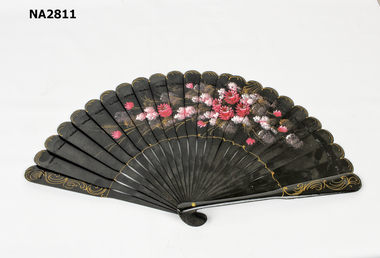
... Donated by Barbara Keene to whose mother, Mrs Osborne, the fan had belonged costume accessories female handcrafts woodwork Made in Spain Ladies' wooden folding fan made of 24 leaf. ...Donated by Barbara Keene to whose mother, Mrs Osborne, the fan had belongedLadies' wooden folding fan made of 24 leaf. The fan is painted to resemble a black lacquered surface with gilded curlicue decoration and a hand painted motif of a pink floral bouquet. Small paper label on back of end stick reading: Made in SpainMade in Spaincostume accessories, female, handcrafts, woodwork -
 Mont De Lancey
Dresden China - Figure, Dresden Porcelain
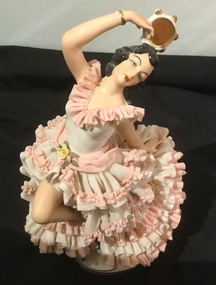
... Mrs. Annette Lord (nee Sebire). Purchased by the family in Heidelberg from 1952. china figures human figures Dresden China - Spanish dancing girl - pink and white. ...Porcelain ware with elaborate decoration and delicate colourings, made originally at Dresden in Germany. Part of collection of Dresden China from the collection of Misses Eva, Olive Sebire and Mrs. Annette Lord (nee Sebire). Purchased by the family in Heidelberg from 1952.Dresden China - Spanish dancing girl - pink and white.china, figures, human figures -
 Mont De Lancey
Dresden China - Figure, Dresden Porcelain
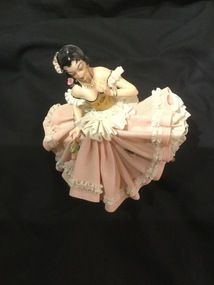
... Mrs. Annette Lord (nee Sebire). Purchased by the family in Heidelberg from 1952. china figures human figures Dresden China - Spanish dancing girl - pink & white. ...Porcelain ware with elaborate decoration and delicate colourings, made originally at Dresden in Germany. Part of collection of Dresden China from the collection of Misses Eva, Olive Sebire and Mrs. Annette Lord (nee Sebire). Purchased by the family in Heidelberg from 1952.Dresden China - Spanish dancing girl - pink & white.china, figures, human figures -
 Mont De Lancey
Fan
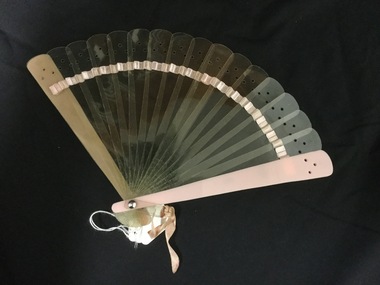
... Mrs. H. N. Lord fans folding fans Clear plastic Spanish style fan, edged with pink plastic and pink ribbon trim. ...Used by Mrs. H. N. LordClear plastic Spanish style fan, edged with pink plastic and pink ribbon trim.fans, folding fans -
 Mont De Lancey
Fan
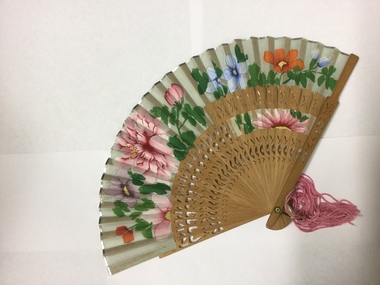
... Used by Mrs. H. N. Lord fans folding fans Wooden Spanish style fan with flower painted detailing on ends and pink tassel. ...Used by Mrs. H. N. LordWooden Spanish style fan with flower painted detailing on ends and pink tassel.fans, folding fans
