
Showing 24 items matching "music compositions"
-
 Bendigo Historical Society Inc.
Document - HOWARD AND VIOLET JOLLEY COLLECTION: MUSICAL COMPOSITIONS
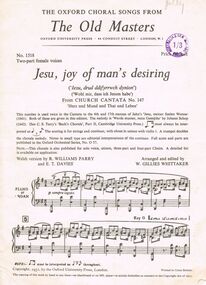
... Music Compositions...Music Compositions Jesu joy of man's desiring God save the King Published and copy righted musical compositions, One under the heading of The Old Masters, Jesu, joy of man's desiring, 5 pages, by Jacob Schop, arranged by W GILLIES WHITTAKER; and God Save the King, by HENRY CAREY circa 1740 arranged by GEORGE POWNALL. ...Published and copy righted musical compositions, One under the heading of The Old Masters, Jesu, joy of man's desiring, 5 pages, by Jacob Schop, arranged by W GILLIES WHITTAKER; and God Save the King, by HENRY CAREY circa 1740 arranged by GEORGE POWNALL.music compositions, jesu, joy of man's desiring, god save the king -
 Flagstaff Hill Maritime Museum and Village
Functional object - Blackboard & Easel, Probably first half of 20th century
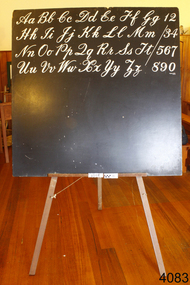
... The first classroom uses of large blackboards are difficult to date, but they were used for music education and composition in Europe as far back as the 16th century.The term "blackboard" is attested in English from the mid-18th century; the Oxford English Dictionary provides a citation from 1739, to write "with Chalk on a black-Board". ...The first classroom uses of large blackboards are difficult to date, but they were used for music education and composition in Europe as far back as the 16th century.The term "blackboard" is attested in English from the mid-18th century; the Oxford English Dictionary provides a citation from 1739, to write "with Chalk on a black-Board". ...The first classroom uses of large blackboards are difficult to date, but they were used for music education and composition in Europe as far back as the 16th century.The term "blackboard" is attested in English from the mid-18th century; the Oxford English Dictionary provides a citation from 1739, to write "with Chalk on a black-Board". The first attested use of chalk on blackboard in the United States dates to 1801, in a lecture course in mathematics given by George Baron. James Pillans has been credited with the invention of coloured chalk (1814); he had a recipe with ground chalk, dyes and porridge! The use of blackboards did change methods of education. Manufacturing of slate blackboards began by the 1840s. A green porcelain enamel surface was first used in 1930, and as this type of board became popular, the word "chalkboard" appeared. Various types of easel have been in use since ancient times, in particular for supporting paintings and other artwork. However, the schoolroom easel would have been introduced around the same time as when the blackboard started to be used in educational establishments. Wooden board painted black, resting on wooden easel with rope supporting the three easel legs.Noneflagstaff hill, warrnambool, shipwrecked-coast, flagstaff-hill, flagstaff-hill-maritime-museum, maritime-museum, shipwreck-coast, flagstaff-hill-maritime-village -
 Federation University Historical Collection
Book, Longman, Green and Co. Ltd, Australia Makes Music, 1948
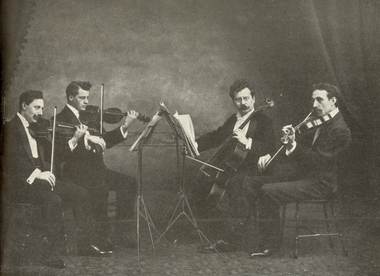
... Doctors of Music c. A Selection of Records of Australian Composition. ...Doctors of Music c. A Selection of Records of Australian Composition. Australia Makes Music Book Book Longman, Green and Co. ...This book was part of the Frank Wright Collection. His early tutor, Percy Code, is mentioned in the book. Percy Code was senior conductor of the ABC, and commenced his musical career as a violinist but transferred his musical talent to the trumpet.Red hard covered book of 197 pages, and a number of black and white images. The book contains the following chapters: - 1. A Century and a Half of Music 2. Music of the Australian Aborigine 3. Personally Speaking 4. Biographical sketches (Amy Sherwin, Ada Crossley, Nellie Stewart, Melba, W.A. Laver, Alberto Zelman, Amy Castles, Peter Dawson, Percy Grainger, Hohn Lemmone, John Amadio, Horace Stevens, Evelyn Scotney (born Ballarat), Una Bourne, Browning Mummery, Daisy Kennedy, Essie Ackland, Dorothy Helmrich, Florence Austral, Bernard heinze, Harold Williams, Arnold Matters, Lauri kennedy, Gladys Moncrief, John Brownlee, John Dudley (born Ballarat), Marjorie Lawrence, Alan Eddy, Eileen Joyce, Joan Hammond, Nancy Weir, Noel Mewton-Wood, Raymond O'connell) 5. Australian Composers (May Brahe, Margaret Sutherland, Roy Agnew, Horace Gleeson, William G. James, Alfred Hill, Frank Hutchins, Lindley Evans, Horace Keats) 6. The Men with the Baton (G. Marhsall-Hall, Henri Verbruggen, Slapoffski, Fritz Hart, , Arundel Orchard, Edgar Bainton, Alberto Zelman, Bernard Heinze, Percy Code (Ballarat), William Cade, Joseph Post, John Farnsworth Hall) 7. Broadcasting in Australia 8. Violin Makers in Australia 9. Life in a Symphony Orchestra Appendices a. Choral Societies of Australia b. Doctors of Music c. A Selection of Records of Australian Composition. frank wright, percy code, music, bernard heinze, zelman, alberto zelman, joseph north, j.w. dawson, louis hattenbach, didgeridoo, nellie stewart, harold williams, lauri kennedy, tarczynski, nelson oliver, william dolphin, radio, new number -
 Mission to Seafarers Victoria
Booklet - Music Score, The 'M.N.' Ships Get Through, 1942
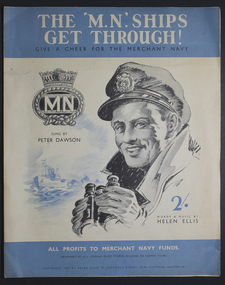
... composition the composer Helen Ellis is held by the National Library of Australia. Promotional text also indicates that the song was performed by the notable Australian singer Peter Dawson. The song "The M.N. ships get through" carries an important acknowledgement of the oft forgotten vital role of the Merchant Navy as carrier of goods and supplies, and especially so in wartime. The publication is of special significance to the MTSV as an example of the many skilled and creative women who have supported the Missions to seafarers. peter dawson music ...A song composition by Helen Ellis, of Kew, first known to have been performed in 1942 at the BBC for the 'Shipmates Ashore Programme it was then published 1943. A copy of this song and one other composition the composer Helen Ellis is held by the National Library of Australia. Promotional text also indicates that the song was performed by the notable Australian singer Peter Dawson. The song "The M.N. ships get through" carries an important acknowledgement of the oft forgotten vital role of the Merchant Navy as carrier of goods and supplies, and especially so in wartime. The publication is of special significance to the MTSV as an example of the many skilled and creative women who have supported the Missions to seafarers.Commercially printed single fold music score for a 2 verse song and chorus. Front cover with blue band at top and lower edge features the Merchant Navy insignia at top left with depiction in half tone blue of a Merchant ship convoy and at right a sketched depiction of head and shoulders of a Merchant Navy officer with binoculars in hand. Music score and full text printed on p.2 and 3. The back cover features text of chorus and a handwritten notation in blue ink with reference to performance of the song on a BBC programme, 'Shipmates Ashore'.Back cover-handwritten notation in blue ink: "Sung by Raymond ?(indecipherable) in the B.B.C. London / 'Shipmates Ashore' programme,1942." This inscription is found after the printed sample of chorus words accredited to Helen Ellis, Central Club, Victoria, Mission to Seamen. See images for design and printing.peter dawson, music, sheet-music, composers australia, merchant navy, mn, helen ellis, ww2, shipmates ashore, bbc, 1942 -
 Federation University Historical Collection
Book, Patricia Smith, Exercise Books used by Teacher's College Student Patricia Smith, 1951
... ...grammar and composition...music...Ballarat Teacher's College is a predecessor of Federation University ballarat teachers' college patricia smith Urqhart street primary school mathematics social studies literature and reading spelling and dictation grammar and composition music and speech health physical education nature study art and handcraft Patricia Smith written on front cover 2 x soft covered exercise books used by teaching student Patricia Smith for Observations and notes of lessons Exercise Books used by Teacher's College Student Patricia Smith Book Patricia Smith ...Ballarat Teacher's College is a predecessor of Federation University2 x soft covered exercise books used by teaching student Patricia Smith for Observations and notes of lessonsPatricia Smith written on front coverballarat teachers' college, patricia smith, urqhart street primary school, mathematics, social studies, literature and reading, spelling and dictation, grammar and composition, music and speech, health, physical education, nature study, art and handcraft -
 Federation University Historical Collection
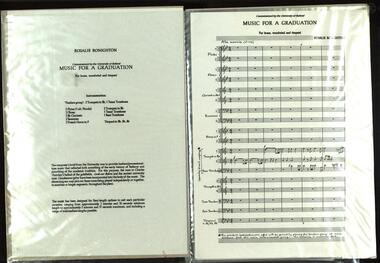
Document - Music Score, Music for a Graduation, 1997, 01/1997
... under Keith Humble, Ian Bonington, Theodore Dollarhide and Lawrence Whiffen from the University of Melbourne and completed her Master of Arts (Music) at LaTrobe University in composition with a thesis on 'Contemporary Liturgical Music and the Composer. ... under Keith Humble, Ian Bonington, Theodore Dollarhide and Lawrence Whiffen from the University of Melbourne and completed her Master of Arts (Music) at LaTrobe University in composition with a thesis on 'Contemporary Liturgical Music and the Composer. ...This work was commissioned by the University of Ballarat (later Federation University Australia) at the suggestion of University lecturer Janice Newton.The composers brief was to provide fanfare/processional - type music that reflected both something of the early history of Ballarat and something of the goldfields. 'Look Out Below' and the medieval university tune 'Gaudeamus Igitar' has been incorporated into the body of the music. The discerning ear may pick out these tunes being played independently or together, in snatches or longer segments, throughout the piece. Rosalie Boninghton (9.4.1946 - 21.12.2011) was born in Ballarat. She studied composition under Keith Humble, Ian Bonington, Theodore Dollarhide and Lawrence Whiffen from the University of Melbourne and completed her Master of Arts (Music) at LaTrobe University in composition with a thesis on 'Contemporary Liturgical Music and the Composer. In 1967 Rosalie was awarded the Coutts Memorial Prize for Composition from the University of Melbourne. She has also won the national Song of Jubilee competition (1999), and was co-winner of the national Competition for Liturgical Psalm-Setting (1983). An A3 score of fourteen A3 pages for brass, woodwind and timpani. The pages have been inserted into an A3 display book. An collections of A4 scores for each musical instrument is also located in the A3 display book. The music has been designed for flexi-length options to suit each particular occasion, ranging from approximately 2 minutes and 35 seconds minimum length to approximately 3 minutes and 37 seconds maximum, and including a range of intermediate lengths possible. graduation, music, music score, rosalie bonighton, processional hymn, janice newton, fanfare -
 Mission to Seafarers Victoria
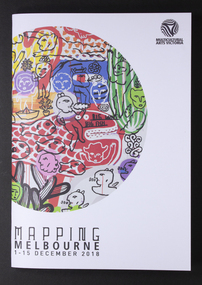
Programme, Multicutural Arts Victoria, Mapping Melbourne 2018, 2018
... Featuring Intricate rhythmic compositions inspired by the rich heritage of Indonesian and Middle Eastern musical traditions, performed by Ron Reeves and Matt Stonehouse – two of Australia’s foremost world music percussionists. ...Featuring Intricate rhythmic compositions inspired by the rich heritage of Indonesian and Middle Eastern musical traditions, performed by Ron Reeves and Matt Stonehouse – two of Australia’s foremost world music percussionists. ...On 6 December 2018, a recurring event was organised at the Mission. From the Multicultural website: "Meeting at the Seafarer’s bridge on the Yarra, you will be welcomed into a little-known site nearby, a sanctuary for seafarers for the last 100 years and a symbol of old-world generosity amidst the rapidly shifting landscape of the Docklands. A journey through the quirky spaces at Mission to Seafarer’s site through a compelling contemporary ritual performance. The Echoes Projects artists evoke fragments of stories embedded in this site through mesmerising live soundscapes, movement and imagery. Ria Soemardjo, Janette Hoe and Pongjit (Jon) Saphakhun collaborate to create an ongoing exploration of contemporary rituals in response to urban sites in Australia. Based in Melbourne, their contemporary performance work draws deeply from their personal connections to Thai, Chinese and Indonesian ceremonial traditions. Featuring Intricate rhythmic compositions inspired by the rich heritage of Indonesian and Middle Eastern musical traditions, performed by Ron Reeves and Matt Stonehouse – two of Australia’s foremost world music percussionists. Note: 7 PM and 8 PM sessions include delicious vegetarian Indonesian food. 9 PM session includes Indonesian and Thai cakes and sweets. You are invited to stay and eat after the performance, drinks available for purchase at the venue. Performers: Janette Hoe – dance artist Pongjit (Jon) Sekhukhune – actor Ria Soemardjo – musician Ron Reeves – musician Matt Stonehouse – musician /instrument maker Supported by the City of Melbourne Arts Grants Program Details: 6 Dec 2018 (Thursday) Sessions: 7 PM, 8 PM & 9 PM The Mission to Seafarers Audience Meeting point – next to the entrance of the Seafarer’s Bridge, Siddeley St, Docklands. Wheelchair accessible venue. Bookings essential. Tickets: $10 – $15 via Eventbrite. Ticket price is purely to pay for the food element. Companion Card ticketing available. Please contact Multicultural Arts Victoria for ticketing options. Companion ticket will allow admission only. The Seafarers Welcome is presented as part of Mapping Melbourne 2018."The Mission has always welcomed artistic events Colour programme of events with illustrationstop right corner: Multicultural Arts Victoria lower left corner: MAPPING MELBOURNE/1-15 DECEMBER 2018arts, events, multicultural arts victoria, the seafarer welcome, echoes project, 2018, cultural events, community -
 Warrnambool and District Historical Society Inc.
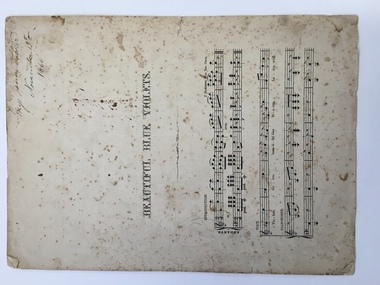
Leisure object - Sheet music, Beautiful blue violets, c. 1864
... This piece of music was composed by Joseph Summers (1839-1917). The date of the composition is between 1863 and 1866. ...This piece of music was composed by Joseph Summers (1839-1917). The date of the composition is between 1863 and 1866. ...This piece of music was composed by Joseph Summers (1839-1917). The date of the composition is between 1863 and 1866. The brother of Charles Summers, the sculptor, Joseph Summers was born in England and came to Australia in 1865. He was an organist and composer, an Inspector of Music in schools and in charge of music examinations conducted through Trinity College, London. In 1897 he moved to Perth. The signature of ‘Miss Jessie Webster’ presents a problem as no information has been found on this person. This is a most significant item because of the date, 1866, and the name, ‘Jessie Webster’. But it is not known if the music has any local provenance. The item also has social significance as an example of the type of music played in mid-Victorian drawing rooms. This is a piece of music of four printed pages of musical notation. The cover of this music is missing. The paper is white with black printing and all the pages are much mottled and stained. The edges of the pages are ragged and torn. There is some pencil scribble on the first page. A name and a date are written in black ink on the first page. ‘Miys (Miss) Jessie Webster, November 13th 1866’jessie webster, joseph summers, warrnambool -
 Warrnambool and District Historical Society Inc.
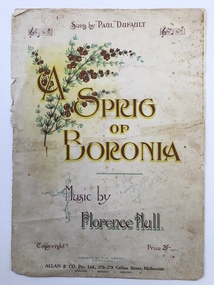
Leisure object - Sheet music, A sprig of boronia, 1916
... This is an early 20th century musical composition by a leading Tasmanian composer, Florence Hull (Mrs Arthur Kenny). It is a sentimental song as the ‘sprig of boronia’ is a withered one, kept as a relic of some past event. This music...music bars. The back of the cover has information on eight of Florence Hull’s other compositions with comments by critics. ...music bars. The back of the cover has information on eight of Florence Hull’s other compositions with comments by critics. ...This is an early 20th century musical composition by a leading Tasmanian composer, Florence Hull (Mrs Arthur Kenny). It is a sentimental song as the ‘sprig of boronia’ is a withered one, kept as a relic of some past event. This music was printed in the Victorian School Paper for Grades 7 and 8 in 1918 and the proceeds of copies of one of the editions of this work were donated to the Hawthorn Red Cross in Melbourne. Florence Hull’s musical works and memoirs are in the Tasmanian Archives. Paul Dufault, who sang this song, was a leading Canadian tenor who toured Australia and Europe. He died in 1930 aged 57. This sheet music has significance as it was composed by a Tasmanian woman in the early 20th century and it represents the type of music popular in concert halls at the time. It has been in the Warrnambool and District Historical Society collection for many years. This is a four page piece of sheet music (cover plus two pages of music). The paper is cream-coloured, discoloured in places, with brown print on the back of the cover and black notation on the music pages. The front cover is in brown, yellow and green tonings, with a chromolithographic illustration of a Boronia flower spray and some music bars. The back of the cover has information on eight of Florence Hull’s other compositions with comments by critics. The pages have been torn and mended with adhesive tape.Front Cover: ‘Sung by Paul Dufault’ ‘A Sprig of Boronia’ ‘Music by Florence Hull’ ‘Copyright, Price 2/- nett, Published by F. M. Kenny, Melbourne, Allan and Co. Pty. Ltd., 276-278 Collins Street, Melbourne, Adelaide, Bendigo, Geelong’ In pencil on front cover: ‘To Mac from ….., 25/8/24’ florence hull, paul dufault, warrnambool, a sprig of boronia sheet music, sheet music, warrnambool history -
 Bendigo Historical Society Inc.
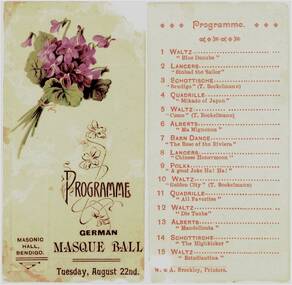
Programme - Programme for German Masque Ball, 1905
... music. Many of the items on a long programme were of Mr. Bockelmann's own composition, notably the schottische "Bendigo," the waltz 'Como, 'and the waltz "Golden City." ...music. Many of the items on a long programme were of Mr. Bockelmann's own composition, notably the schottische "Bendigo," the waltz 'Como, 'and the waltz "Golden City." ...Two cardboard parts to a printed programme. On one is a posy of violets and the printing: "Programme German Masque Ball, Tuesday 22nd. The second lists 15 dances. Printed by A. Brookley, Printers. Also are the following two articles from Trove: From the Bendigo Advertiser and the Bendigo Independant, Wed 23 Aug 1905: GERMAN MASQUE BALL. The pleasant plan of fancy masque ball, which for nearly 20 years now has been an annual fixture at this season, is always looked forward to with delight. It is got up by the Bendigo Deutcher Verein, in aid of their free library. The function took place last night in the Masonic Hall and was most enjoyable, and all who took part in it were delighted. The hall was tastefully decorated with flags, flowers and ferns. Bockelmann's Band occupied the stage and discoured sweet music. Many of the items on a long programme were of Mr. Bockelmann's own composition, notably the schottische "Bendigo," the waltz 'Como, 'and the waltz "Golden City." By 9 o'clock there were about 80 couples on the floor. Amongst the merry troupe of dancers were youths and maidens in all sorts and descriptions of gay costumes, including flower girls, Japanese lady, German peasant, lily of the valley, Mercia, Geisha girl, French Vivandiere, red dominos, black dominos, "The Last Rose of Summer," rose, sailor girls, gondolier, Pierot, Charles II., Tipperary boy. Toreador, Romeo, Prince Le Var, huntsman, Indian prince, fireman, barristers. jockeys, cricketers, etc. Many of the Iadies were in evening dress, but wore the masque. The arrangements were admirably carried out by the secretarv. Mr. J. D. Khaland, while it would be difficult to find a better M.C. than Mr. J. Armstrong. The dancing was witnessed by a large number of the public, who were accommodated on a temporary gallery at one end of the hall. A small charge was made for their admission, which helped to swell thelibrary funds. An excellent supper, served in Mr. W. C. Dick's best style, was much enjoyed. Dancing was kept up till about three o'clock, everybody pronouncing the gathering a highly enjoyable one. bendigo history, sandhurst, lutheran german church, penny school -
 Bendigo Historical Society Inc.
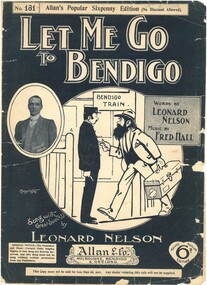
Document - Let Me Go to Bendigo (No. 181 Allan's Popular Sixpenny Edition), 1908
... music editor at Allan & Co. Earning early recognition at 16 years of age when he conducted the Sydney Orchestra, Hall was a versatile composer having written in a variety of styles including solos for the piano, violin and cello, operas, foxtrots and orchestral suites. Publications indicate that between 300 and 400 of his compositions...music editor at Allan & Co. Earning early recognition at 16 years of age when he conducted the Sydney Orchestra, Hall was a versatile composer having written in a variety of styles including solos for the piano, violin and cello, operas, foxtrots and orchestral suites. Publications indicate that between 300 and 400 of his compositions ...Frederick "Fred" Fifield Hall was born in Carlton, Victoria in 1878. Son of Frederick Hall and Jessie Wallace Hall (nee Lloyd), Fred would marry Elsa May Daegner in 1899 with whom he had a son named Anthony. Hall died on 27th September 1956 in Mont Albert, Victoria and was buried at the Box Hill Cemetery. Hall was known as a solo pianist and the first conductor of the Station Orchestra at 3LO (ABC Radio Station). He was also a notable music editor at Allan & Co. Earning early recognition at 16 years of age when he conducted the Sydney Orchestra, Hall was a versatile composer having written in a variety of styles including solos for the piano, violin and cello, operas, foxtrots and orchestral suites. Publications indicate that between 300 and 400 of his compositions were published. The most famous of which was "Goodbye Melbourne Town" which he wrote with Lyricist Leonard Nelson. "Let Me Go to Bendigo" was another of their joint compositions. Leonard Nelson Snell, professionally known as Leonard Nelson, was born c. 1874 in Melbourne and grew up in Kew (he was 76 in 1950). Nelson married Lily Maud Haight in Victoria in 1897 and had six children named Roy, Dorothy, Leonard, Lionel, Austin and Marie. Nelson died on the 13 August 1962 in Blackheath, NSW and was buried at the local cemetery. Nelson had a varied resume including Cattle station work, song writing and public speaking. Nelson was known for his enjoyment of Australian poetry having known many of the greats personally and could recite works from memory. In his later life, Nelson worked as an entertainer for hire at banquets and other social gatherings. No. 181 Allan's popular sixpenny edition "Sung with great success by Leonard Nelson" Allan & Co. Pty Ltd. Melbourne, Bendigo & Geelong 1 score A B4 size document containing sheet music titled "Let Me Go to Bendigo". The document has a black and white cover with bold lettering and a cartoon of a man boarding the Bendigo Train. The music was written by Fred Hall and the lyrics were written and sung by Leonard Nelson who is pictured on the cover. The music covers 3 pages (1 double sided page and 1 single side) making up this 3-page document including the cover.The front cover contains a handwritten name in the top right-hand corner "Mrs Sinclair"sheet music, leonard nelson, fred hall, allan's popular sixpenny edition, bendigo, piano, songs and music, frederick fifield hall -
 National Vietnam Veterans Museum (NVVM)
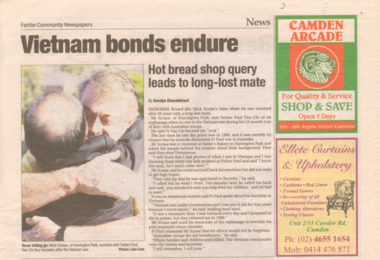
Memorabilia - Original Fairfax Community Newspaper titled Vietnam bonds endure
... music and author. Ordained in Saigon, Vietnam, in 1975, he was imprisoned for several years by Communist authorities opposed to his religious activities. He escaped in 1988 and resettled in Australia. Currently, he serves the Vietnamese Catholic community in Sydney. His compositions...music and author. Ordained in Saigon, Vietnam, in 1975, he was imprisoned for several years by Communist authorities opposed to his religious activities. He escaped in 1988 and resettled in Australia. Currently, he serves the Vietnamese Catholic community in Sydney. His compositions ...Father Paul Van Chi Chu is a prolific composer of Vietnamese liturgical music and author. Ordained in Saigon, Vietnam, in 1975, he was imprisoned for several years by Communist authorities opposed to his religious activities. He escaped in 1988 and resettled in Australia. Currently, he serves the Vietnamese Catholic community in Sydney. His compositions include “The Way of Love / Con Ðu?ng Chúa Ðã Ði Qua.” It was at an orphanage that Mick Scrase met Father Paul Van Chi.Original Fairfax Community Newspaper titled Vietnam bonds endure dated Wednesday, June 20, 2007. The article is about the reunion of Mick Scrase and Father Paul Van Chi four decades after the Vietnam War. Read the media for the story of this reunion'. Also with this article there is a copy of Catholic faith in prison life explaining why bishops, priests and lay people were put in Education Camps which actually were prisons.father paul van chi chu, saigon, prisoner of war, fairfax community newspaper, cpl michael arthur scrase, 216544, catholic orphanage, royal australian corps of signals, 110 signal squadron -
 National Vietnam Veterans Museum (NVVM)
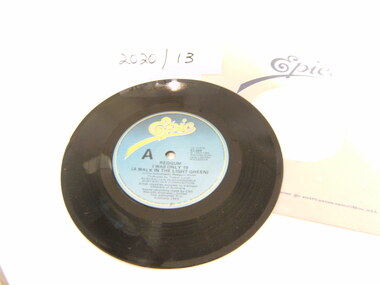
Audio - Record, Vinyl, I Was Only 19, 1983
... Music. Produced by Trevor Lucas. Aust Performance. Aust Composition...Music. Produced by Trevor Lucas. Aust Performance. Aust Composition A 45rpm record in grey paper cover with Epic in yellow fancy writing on blue paper. ...A 45rpm record in grey paper cover with Epic in yellow fancy writing on blue paper. Also in dark blue ink are the details of the record. the label is has a white border around it. On Side A: Redgum: "I was Only 19 (A Walk In the Light Green). On Side B: Redgum, Yarralumba Wine"John Schumann, Redgum Music. Produced by Trevor Lucas. Aust Performance. Aust Compositionentertainment, record, music -
 Warrnambool and District Historical Society Inc.
45 R.P.M. Record, A Silver Star, 1975
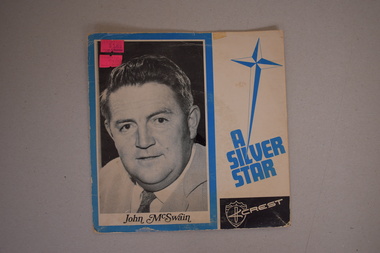
... music and words of ‘A Silver Star’ were by Glorie Attrill nee McLean(1911-1998) who was born in Glenormiston, Victoria. She lived and farmed for some years at The Sisters and in her later years lived at Terang. She wrote several songs, with ‘A Silver Star’ being her best-loved composition...music and words of ‘A Silver Star’ were by Glorie Attrill nee McLean(1911-1998) who was born in Glenormiston, Victoria. She lived and farmed for some years at The Sisters and in her later years lived at Terang. She wrote several songs, with ‘A Silver Star’ being her best-loved composition ...This item was made by Crest Records, a Melbourne company established by Marcus Herman that recorded pop, jazz, folk, liturgical and other music from the early 1960s to the mid 1970s. The music and words of ‘A Silver Star’ were by Glorie Attrill nee McLean(1911-1998) who was born in Glenormiston, Victoria. She lived and farmed for some years at The Sisters and in her later years lived at Terang. She wrote several songs, with ‘A Silver Star’ being her best-loved composition. Her two autobiographical booklets are ‘Sunset Serenade’ and ‘At Twilight’. John McSwain was the son of an acquaintance in her childhood days. This record is of interest as the one of the songs was written by a local woman, Glorie Attrill and the disc was recorded in Warrnambool in the 1970s.This is a circular 45 R.P.M. black disc with silver-coloured printing in the centre. The cove has a black and white photograph of the singer on the front with white and blue printing, an image of a star and the logo of the recording company. There are also two pink labels from the retail shop where the record was purchased. The back cover has black and blue printing A Silver Star John McSwain Crest crest records, melbourne, john mcswain, singer, glorie attrill, songwriter, catherine brymer, musician, st. john’s presbyterian church, warrnambool, history of warrnambool -
Tatura Irrigation & Wartime Camps Museum
Document - music score, Under The Southern Sun
... 3 plastic sleeves containing music scores - conductors score, complete band instrumental parts and original piano composition....William Heinrich Bathurts Goal Tatura Internment camp Siege Under the Southern Cross 3 plastic sleeves containing music scores - conductors score, complete band instrumental parts and original piano composition. ...Music score written by William Henrich Wallbaum, who emigrated to Australia, settled in Manly and worked for an importing firm in Sydney NSW. He was interned in 1939 in Bathurst Goal and then transferred to Tatura. Whils in Tatura camp he wrote "Siege" later to be known as "Under the Southern Cross".3 plastic sleeves containing music scores - conductors score, complete band instrumental parts and original piano composition.william heinrich, bathurts goal, tatura internment camp, siege, under the southern cross -
 Melton City Libraries
Photograph, Bruce Myers, 1931
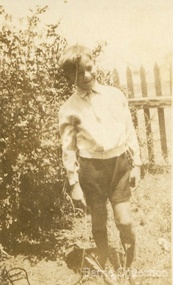
... music he was able to on hearing it identify the key it was written in, due to his perfect pitch. I remember “Mum” Myers telling about the time they went to see Artur Rubeinstein at a concert, when Bruce was a small boy, it may have been on this occasion that he had noted the key of the piano composition. ...music he was able to on hearing it identify the key it was written in, due to his perfect pitch. I remember “Mum” Myers telling about the time they went to see Artur Rubeinstein at a concert, when Bruce was a small boy, it may have been on this occasion that he had noted the key of the piano composition. ...My Story by Bruce Myers – June 2001 Arthur Bruce Myers was born on Wednesday morning on the 29/4/1925 at Kelvin Grove Hospital Bacchus Marsh. Background Information: Prepared by Niece Wendy Barrie. The early life of Bruce Myers “Burnbank” Ballarat Road Melton. The family home was built by his grandparents Ann nee Dowling and Henri Miers in 1867. His father Frederick was born in 1877 in Melton the youngest of four boys. Bruce the fourth son of Frederick and Martha, brother Frederick the eldest was followed by Marjorie and Edna. His brother Max was the youngest child. Father Frederick Myers attended Melton State School No 430 enrolling in 1881 and leaving in 1888 gaining his Merit Certificate No 116343. Bruce enrolled in July 1931 and completed and gaining his Merit Certificate in 1937. In 1938 he travelled to Melbourne Boys High School. Bruce was taught piano by his sister Marjorie, a respected Melton music teacher. He entered many Piano competitions and at the age of 10 winning the radio cup in the Junior Cavalcade at 3AW at Latrobe Street. At Melbourne Boys High School during his lunchtime was allowed to practice the piano in the basement for his recreation. He was pestered by another boy (name I have forgotten) a teacher intervened telling him to leave Myers alone. As a young child when listening to music he was able to on hearing it identify the key it was written in, due to his perfect pitch. I remember “Mum” Myers telling about the time they went to see Artur Rubeinstein at a concert, when Bruce was a small boy, it may have been on this occasion that he had noted the key of the piano composition. Bruce writes – In my early teens Max and I frequently accompanied the Williams boys, Wally and Jim on expeditions up the Toolern Creek near where the Gisborne exit now crosses it. The dogs would chase the rabbits into their burrows after placing nets over the burrows a ferret would be let in to burrow, much excitement would be involved in the rush to grab the rabbits as they bolted into the nets. In the same area I used too accompany Dad on an evening rabbit shoot (summer time). After the heat of the day the rabbits would emerge from their burrows at dusk. We would his behind the tree in silence, a mark contrast to the ferreting scene. Dad with the shotgun cocked would wait until 2 or 3 rabbits were close together then fire (Bang!). Hopefully killing two rabbits. They would have to be killed outright, otherwise they would run back into their burrows. Needless to say, one deafening shot ended the event, also it only cost one cartridge. Our only swimming pool was hole in the Toolern Creek at its junction with the blind creek at the eastern entrance to Melton. Dad swum there in the 1880’s teaching many of the youngsters to swim. Females never swum there to my knowledge. The dressing shed consisted of a 4 corrugated iron nailed to a wooden frame about 4 metres by 3 no floor or roof. We always walked the kilometre in our bathers anyway. The swimming hole once dried up leaving about 2 ft of mud. We Melton boys had so much fun fossicking around with our hands and feet and yanking out numerous eels, some very bid. I don’t know what happened to them all. No doubt Dad would have skun one or two for Mum to cook after cutting them up into short lengths. They used to jump around the pan when they were cooking. Dad accompanied by Max and I, frequently fished for eels in the Gillespie’s waterhole just below our place using a rod, line, sinker, hook baited with a worm, and a white floater so as to easily see when an eel was on the hook, so that it could quickly be pulled before it could anchor itself on and under water snag such as a tree root making it impossible to catch, or causing the line to be lost. At about the age of 8, I suddenly discovered amazingly easily means of movement. One day when I was riding the bike on rough bluestone road near the Presbyterian Church [Uniting Church] in Melton when the front fork broke and I landed on my right knee and right eye gashing both, the knee severely. I have carried the scars ever since. I started getting mobile by riding a scooter with good leg on the scooter and swinging the right leg, keeping is straight because bending it was too painful.Childhood photo of Brucelocal identities -
 Rutherglen Historical Society
Booklet - Sheet Music, Back to Rutherglen, 1935 (Exact)
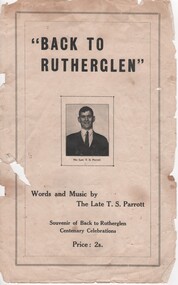
... Music and words written in 1935 by T.S. Parrott, at that time residing in Rutherglen, killed in motorcycle accident before the composition was published in 1936. ...Music and words written in 1935 by T.S. Parrott, at that time residing in Rutherglen, killed in motorcycle accident before the composition was published in 1936. ...Music and words written in 1935 by T.S. Parrott, at that time residing in Rutherglen, killed in motorcycle accident before the composition was published in 1936. Music donated to Museum by Fred Terrill."Back to Rutherglen" music composed by the late T S Parrott. Photo of composer on front page." "Back to Rutherglen" Words and Music by The Late T. S. Parrott. Souvenir of Back to Rutherglen Centenary Celebrations. Price: 2s."back to rutherglen., t s parrott, music, songs, centenary -
Federation University Art Collection
Musical composition, Rosalie Bonighton, Music for a Graduation
... A Music graduate of the University of Melbourne, she also completed a Master of Arts degree in Composition at La Trobe University. ...Music for a Graduation Musical composition Rosalie Bonighton ...Rosalie BONINGTON (09 April 1946 - ) Rosalie Bonington was born in Ballarat and received her early education here. A Music graduate of the University of Melbourne, she also completed a Master of Arts degree in Composition at La Trobe University. She currently lives in Ballarat, and works as a composer, teacher and church organist. In addition to occasional works for larger instrumental forces, her compositional output comprises mainly vocal, choral, organ and liturgical music, and she accepts regular publisher commissions in these genres. This item is part of the Federation University Art Collection. The Art Collection features over 2000 works and was listed as a 'Ballarat Treasure' in 2007.'Music for a Graduation' was commissioned by the University of Ballarat (now Federation University Australia) to provide fanfare/processional music for such ceremonial occasions. The composer's brief was also to make the music reflect something of the early history of allarat and something of an academic tradition. To these latter ends the tune of Charles Thatcher's ballad of the goldfields, 'Look Out Below', and the ancient university tune, 'Gaudeamus igitur', have been incorporated into the body of the music. The discerning ear may pick out these tunes being played independently or together, in segments or longer segments, throughout the piece.art, artwork, bonington, music, graduation, composer, music for a graduation -
 Bialik College
Audio - Bialik College Choir: Hear our Voices, 1977, 1977
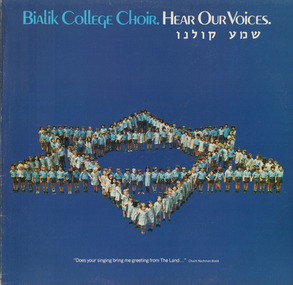
... compositions. Nathan Slowo: Piano, chimes David Honig: Bass, acoustic guitars, percussion Jack Setton: Drums, percussion Martin Splitter: Organ, synthesizer, percussion Ronniet Spijer: Violin Jonathan Cohen: Electric guitar Kevin Kerr: Flute Choir directed by Mr N. Slowo and Mrs B. Goldfinger. Engineered by Kevin Kerr. Produced with the generous assistance of the Bialik College Parents' Association. The record has been digitised. For access to this material, please contact [email protected] music ...Vinyl record produced by the school choir - boys and girls aged nine to thirteen, 1977. The songs are a selection of traditional and modern compositions. Nathan Slowo: Piano, chimes David Honig: Bass, acoustic guitars, percussion Jack Setton: Drums, percussion Martin Splitter: Organ, synthesizer, percussion Ronniet Spijer: Violin Jonathan Cohen: Electric guitar Kevin Kerr: Flute Choir directed by Mr N. Slowo and Mrs B. Goldfinger. Engineered by Kevin Kerr. Produced with the generous assistance of the Bialik College Parents' Association. The record has been digitised. For access to this material, please contact [email protected] -
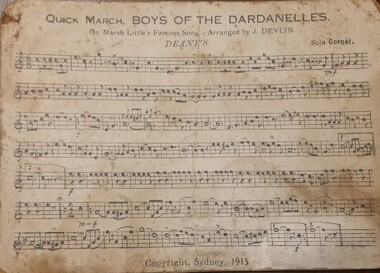 Hymettus Cottage & Garden Ballarat
Work on paper - music card, The Boys of the Dardenelles
... The music for popular First World War composition "The Boys of the Dardenelles" by Marsh Little and arranged by J.Devlin Deane 1915 and copyrighted Sydney 1915. ...The music for popular First World War composition "The Boys of the Dardenelles" by Marsh Little and arranged by J.Devlin Deane 1915 and copyrighted Sydney 1915. ...The music for popular First World War composition "The Boys of the Dardenelles" by Marsh Little and arranged by J.Devlin Deane 1915 and copyrighted Sydney 1915. These cards attach to the lyre holder on the cornet for use in a marching band. This copy belonging to Michael Taffe of Ballarat and used during WWI & WWII.This is the first piece of specifically Australian patriotic music generated as a result of the disastrous campaign at Anzac. Produced in 1915 it was used in this instance by Ballarat Bands within a year of Anzac..Small music card for cornet lyre.nil,brass band, solo cornet, taffe, ballarat, music card, world war i, deane, devlin, dardenelles, quick march -
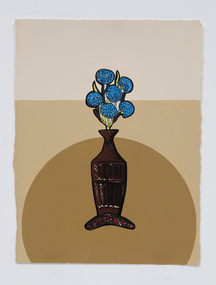 Wyndham Art Gallery (Wyndham City Council)
Painting, Tony Albert, Interior Composition (with Appropriated Aboriginal Design Vase) IX, 2022
... Appropriating textual references from sources as diverse as popular music, film, fiction, and art history, Albert plays with the tension arising from the visibility, and in-turn, the invisibility of Aboriginal People across the news media, literature, and the visual world. Australian First Nations Art Colonialisation Painting Interior Composition ...Tony Albert’s 2022 solo exhibition at Sullivan+Strumpf, Remark, continues the artist’s investigation into the imagery and identification of appropriated Indigenous Australian iconography in domestic decoration and design. Incorporating fabric from his extensive collection of ‘Aboriginalia’, Remark sees Albert expand on his acclaimed Conversations with Margaret Preston series dimensionality, critically engaging with the fabric in his own right. Like the fabric of Australian society, the appropriated Indigenous imagery printed on souvenir tea towels intertwines in a complicated web of national identity. These are not images by Aboriginal people and our voices and autonomy continued to be silenced through the object’s inauthenticity. As a country we must reconcile with these objects’ very existence. They are painful reiterations of a violent and oppressive history, but we also cannot hide or destroy them because they are an important societal record that should not be forgotten. As an artist this juxtaposition and tension fascinates me. Tony Albert’s multidisciplinary practice investigates contemporary legacies of colonialism, prompting audiences to contemplate the human condition. Drawing on both personal and collective histories, Albert explores the ways in which optimism can be utilised to overcome adversity. His work poses important questions such as how do we remember, give justice to, and rewrite complex and traumatic histories. Albert’s technique and imagery are distinctly contemporary, displacing traditional Australian Aboriginal aesthetics with an urban conceptuality. Appropriating textual references from sources as diverse as popular music, film, fiction, and art history, Albert plays with the tension arising from the visibility, and in-turn, the invisibility of Aboriginal People across the news media, literature, and the visual world. australian first nations art, colonialisation, painting -
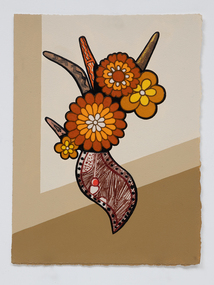 Wyndham Art Gallery (Wyndham City Council)
Painting, Tony Albert, Interior Composition (with Appropriated Aboriginal Design Vase) X, 2022
... Appropriating textual references from sources as diverse as popular music, film, fiction, and art history, Albert plays with the tension arising from the visibility, and in-turn, the invisibility of Aboriginal People across the news media, literature, and the visual world. Australian First Nations Art Colonialisation Painting Interior Composition ...Tony Albert’s 2022 solo exhibition at Sullivan+Strumpf, Remark, continues the artist’s investigation into the imagery and identification of appropriated Indigenous Australian iconography in domestic decoration and design. Incorporating fabric from his extensive collection of ‘Aboriginalia’, Remark sees Albert expand on his acclaimed Conversations with Margaret Preston series dimensionality, critically engaging with the fabric in his own right. Like the fabric of Australian society, the appropriated Indigenous imagery printed on souvenir tea towels intertwines in a complicated web of national identity. These are not images by Aboriginal people and our voices and autonomy continued to be silenced through the object’s inauthenticity. As a country we must reconcile with these objects’ very existence. They are painful reiterations of a violent and oppressive history, but we also cannot hide or destroy them because they are an important societal record that should not be forgotten. As an artist this juxtaposition and tension fascinates me. Tony Albert’s multidisciplinary practice investigates contemporary legacies of colonialism, prompting audiences to contemplate the human condition. Drawing on both personal and collective histories, Albert explores the ways in which optimism can be utilised to overcome adversity. His work poses important questions such as how do we remember, give justice to, and rewrite complex and traumatic histories. Albert’s technique and imagery are distinctly contemporary, displacing traditional Australian Aboriginal aesthetics with an urban conceptuality. Appropriating textual references from sources as diverse as popular music, film, fiction, and art history, Albert plays with the tension arising from the visibility, and in-turn, the invisibility of Aboriginal People across the news media, literature, and the visual world. australian first nations art, colonialisation, painting -
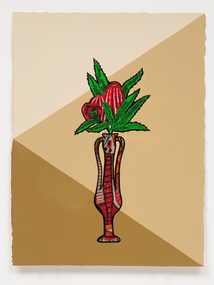 Wyndham Art Gallery (Wyndham City Council)
Painting, Tony Albert, Interior Composition (with Appropriated Aboriginal Design Vase) VII, 2022
... Appropriating textual references from sources as diverse as popular music, film, fiction, and art history, Albert plays with the tension arising from the visibility, and in-turn, the invisibility of Aboriginal People across the news media, literature, and the visual world. Australian First Nations Art Colonialisation Painting Interior Composition ...Tony Albert’s 2022 solo exhibition at Sullivan+Strumpf, Remark, continues the artist’s investigation into the imagery and identification of appropriated Indigenous Australian iconography in domestic decoration and design. Incorporating fabric from his extensive collection of ‘Aboriginalia’, Remark sees Albert expand on his acclaimed Conversations with Margaret Preston series dimensionality, critically engaging with the fabric in his own right. Like the fabric of Australian society, the appropriated Indigenous imagery printed on souvenir tea towels intertwines in a complicated web of national identity. These are not images by Aboriginal people and our voices and autonomy continued to be silenced through the object’s inauthenticity. As a country we must reconcile with these objects’ very existence. They are painful reiterations of a violent and oppressive history, but we also cannot hide or destroy them because they are an important societal record that should not be forgotten. As an artist this juxtaposition and tension fascinates me. Tony Albert’s multidisciplinary practice investigates contemporary legacies of colonialism, prompting audiences to contemplate the human condition. Drawing on both personal and collective histories, Albert explores the ways in which optimism can be utilised to overcome adversity. His work poses important questions such as how do we remember, give justice to, and rewrite complex and traumatic histories. Albert’s technique and imagery are distinctly contemporary, displacing traditional Australian Aboriginal aesthetics with an urban conceptuality. Appropriating textual references from sources as diverse as popular music, film, fiction, and art history, Albert plays with the tension arising from the visibility, and in-turn, the invisibility of Aboriginal People across the news media, literature, and the visual world. australian first nations art, colonialisation, painting -
 City of Melbourne Libraries
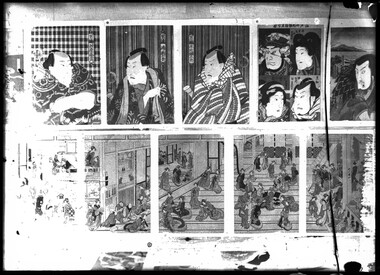
Photograph, Bull, Hugh Jones, 1897-1993, Japanese woodblock prints
... compositions and perspectives. ukiyo-e's flat perspective and unmodulated colours were a particular influence on graphic designers and poster makers. Toulouse-Lautrec's lithographs displayed his interest not only in ukiyo-e's flat colours and outlined forms, but also in their subject matter: performers and prostitutes. He signed much of this work with his initials in a circle, imitating the seals on Japanese prints. Other artists of the time who drew influence from ukiyo-e include Monet, La Farge, Gauguin, and Les Nabis members such as Bonnard and Vuillard. French composer Claude Debussy drew inspiration for his music...compositions and perspectives. ukiyo-e's flat perspective and unmodulated colours were a particular influence on graphic designers and poster makers. Toulouse-Lautrec's lithographs displayed his interest not only in ukiyo-e's flat colours and outlined forms, but also in their subject matter: performers and prostitutes. He signed much of this work with his initials in a circle, imitating the seals on Japanese prints. Other artists of the time who drew influence from ukiyo-e include Monet, La Farge, Gauguin, and Les Nabis members such as Bonnard and Vuillard. French composer Claude Debussy drew inspiration for his music ...A DECK GALLERY FOR JAPANESE PRINTS. A unique exhibition of Japanese Prints was opened yesterday on Japanese ship Kamo Maru.These pictures are the property of the captain of the Kamo Maru Captain T. Takahata, and are displayed in a specially arranged gallery on the deck of the ship now berthed at No. 13 Victoria Dock. A picture on board yesterday after noon. (Inset) - One of many fine works by Utaguard Toyokuni who died in 1825. Photographer notations on slide: "B21" Published: 23 February 1934 Published title: A DECK GALLERY FOR JAPANESE PRINTS. Published caption: A unique exhibition of Japanese Prints was opened yesterday on Japanese ship Kamo Maru.These pictures are the property of the captain of the Kamo Maru Captain T. Takahata, and are displayed in a specially arranged gallery on the deck of the ship now berthed at No. 13 Victoria Dock. A picture on board yesterday after noon. (Inset) - One of many fine works by Utaguard Toyokuni who died in 1825. Trove article identifier: http://nla.gov.au/nla.news-article203376863 Description: Japanese woodblock prints, probably belonging to Captain Takahata of the Japanese passenger and cargo ship Kamo Maru, who displayed his Japanese Woodblock prints in a special on-board gallery when it visited Melbourne during 1933 and 1934. Research by project volunteer, Louise McKenzie: Plate MCK025 shows a number of Japanese woodblock prints. Three are of traditional “samurai” or Kabuki-style Japanese men in traditional dress and hairstyle; one is a composite of four different prints: two men and two women (samurai/geisha) in traditional dress. There are also several prints appearing to depict traditional scenes of indoor and outdoor life in Japan in the Edo period. An article appeared in The Age in February 1934, covering the visit to Melbourne of Captain T Takahata on the Japanese ship the Kamo Maru. An accompanying photo shows several women, in coats and hats, and a man, closely inspecting a gallery hang of Japanese woodblocks. Inset is a single image of a Kabuki theatre performer, a detail from the full photograph as shown in our slide. This work is attributed to Utagawa Toyokuni (1769-1823), who was mostly known for his prints relating to kabuki theatre and the actors’ dramatic postures. Japanese Kabuki theatre features heavily stylised performances, glamorous, highly decorated costumes and elaborate make-up worn by its performers. It was particularly popular in the Edo period (1615-1868), as was woodblock printing, after its earlier introduction from China around 150 years earlier. Woodblock printing in Japan is a technique best known for its use in the ukiyo-e artistic genre of single sheet images (although books were also created) which flourished from the 17th through 19th centuries. Its artists produced woodblock prints and paintings of such subjects as female beauties; kabuki actors and sumo wrestlers; scenes from history and folk tales; travel scenes and landscapes; flora and fauna, and erotica. The term ukiyo-e translates as 'picture[s] of the floating world'. This expression could be confusingly translated as meaning ‘a world of sorrow and grief’, 'erotic’ or ‘stylish’, and later came to describe the hedonistic spirit of the lower classes of the 17th century. Asai Ryōi celebrated this spirit in the novel Ukiyo Monogatari (Tales of the Floating World), c. 1661: “[L]iving only for the moment, savouring the moon, the snow, the cherry blossoms, and the maple leaves, singing songs, drinking sake, and diverting oneself just in floating, unconcerned by the prospect of imminent poverty, buoyant and carefree, like a gourd carried along with the river current: this is what we call ukiyo.” (Wikipedia: 'Ukiyo-e') Mass production of woodblocks during the Edo period was due to high literacy rates: 100% for samurai and 50-60% for farmers. Consequently, cheaper books were produced in large numbers. In the 18th century, Suzuki Harunobu established the technique of multicolor woodblock printing called nishiki-e and greatly developed Japanese woodblock printing culture such as ukiyo-e. Ukiyo-e influenced European Japonisme and Impressionism. Yoshitoshi was called the last great ukiyo-e master, and his cruel depictions and fantastic expressions influenced later Japanese literature and anime. However today the best known exponents from the period are probably Hokusai and Hiroshige.The price of one ukiyo-e at that time was about 20 mon, and the price of a bowl of soba noodles was 16 mon, so the price of one ukiyo-e was several hundred yen to 1000 yen in today's currency. 'Wikipedia: Ukiyo-e' states: “Japanese art, and particularly ukiyo-e prints, came to influence Western art from the time of the early Impressionists. Early painter-collectors incorporated Japanese themes and compositional techniques into their works as early as the 1860s: the patterned wallpapers and rugs in Manet's paintings were inspired by the patterned kimono found in ukiyo-e pictures, and Whistler focused his attention on ephemeral elements of nature as in ukiyo-e landscapes. Van Gogh was an avid collector, and painted copies in oil of prints by Hiroshige and Eisen. Degas and Cassatt depicted fleeting, everyday moments in Japanese-influenced compositions and perspectives. ukiyo-e's flat perspective and unmodulated colours were a particular influence on graphic designers and poster makers. Toulouse-Lautrec's lithographs displayed his interest not only in ukiyo-e's flat colours and outlined forms, but also in their subject matter: performers and prostitutes. He signed much of this work with his initials in a circle, imitating the seals on Japanese prints. Other artists of the time who drew influence from ukiyo-e include Monet, La Farge, Gauguin, and Les Nabis members such as Bonnard and Vuillard. French composer Claude Debussy drew inspiration for his music from the prints of Hokusai and Hiroshige, most prominently in La mer (1905). Imagist poets such as Amy Lowell and Ezra Pound found inspiration in ukiyo-e prints; Lowell published a book of poetry called Pictures of the Floating World (1919) on oriental themes or in an oriental style.” An awareness of and interest in this style of art seems to have been well established by the time Captain Takahata brought his sailing gallery to Australia in the 1930s. The Age article “Colour Prints from Japan” on 22 February 1934 p. 13, consists predominantly of a sophisticated curatorial assessment of the woodblock style and detailed artist and style information, which is remarkable for its in-depth analysis. The writer even draws attention to the existence of female woodprint artists. It has been difficult to verify those noted in this article, but worth drawing attention to the work produced by the daughter of Hokusai, Katsushika Oi, which is documented and has gained attention within Japan and elsewhere. Captain Takahata may have been quite the ambassador: adverts in Australian quarterly magazine, The Home, promoted regular cruises out of Melbourne and Sydney via Queensland, Thursday Island, Phillippines and Hong Kong to Japan at a cost of £90 for a round trip via Yokohama.(The Home, 1 August 1936, pages 76 and 79). It is reported in one of the many newspapers articles printed during 1933/1934 about Captain Takahata and his collection, that he inherited it, and it was not for sale even at an offered £10,000. However, one article makes mention of him scouring antique shops in rural Japan to add to the collection! And even enlisting the help of his children in the hunt. The collection totalled 11,000 prints and apparently 1,500 travelled with him when he sailed. These numbers do differ between reports, but his collection was undoubtedly large, and Captain Takahata enjoyed lecturing on the subject, explaining that each print was handmade. It took painstaking work over months to create the delicate colour tones, with a block being created for each colour used, and transferred onto specially prepared paper. Many of the designs are symbolic, and even those representing figures and scenes have a narrative basis, or represent traditional incidents in the life and history of Japan. (See Japanese Prints, The Sydney Morning Herald, 14 July 1934). In Brisbane in October 1934, The Courier Mail noted that Captain Takahata, now on the Yusen Kaisha steamer ‘Atsuta Mam’ (a sister ship to Kamo Maru) arrived with another 100 prints in his possession, and that he spent his spare time mounting and cataloguing his treasures. One of his new additions dated from 1787 and Captain Takahata “said that it was the only woodcut to depict eyelashes, and with the aid of a magnifying glass, he showed the extremely fine lines around the eyes of the three Japanese ladies on the print.” References: COLOR PRINTS FROM JAPAN. (1934, February 22). The Age (Melbourne, Vic. : 1854 - 1954), p. 13. Retrieved February 29, 2024, from http://nla.gov.au/nla.news-article20338088 A DECK GALLERY FOR JAPANESE PRINTS. (1934, February 23). The Age (Melbourne, Vic. : 1854 - 1954), p. 11. Retrieved February 29, 2024, from http://nla.gov.au/nla.news-article203376863 JAPANESE WOOD-CUTS. (1934, July 14). Daily Commercial News and Shipping List (Sydney, NSW : 1891 - 1954), p. 4. Retrieved February 29, 2024, from http://nla.gov.au/nla.news-article161150580 JAPANESE PRINTS. (1934, July 14). The Sydney Morning Herald (NSW : 1842 - 1954), p. 12. Retrieved February 29, 2024, from http://nla.gov.au/nla.news-article28024038 RARE WOOD-PRINTS FROM JAPAN (1934, July 16). The Herald (Melbourne, Vic. : 1861 - 1954), p. 20. Retrieved March 2, 2024, from http://nla.gov.au/nla.news-article243171208 JAPANESE WOODPRINTS. (1934, July 14). The Sydney Morning Herald (NSW : 1842 - 1954), p. 16. Retrieved March 2, 2024, from http://nla.gov.au/nla.news-article28023902 11,000 RARE WOODCUTS (1934, October 11). The Courier-Mail (Brisbane, Qld. : 1933 - 1954), p. 18. Retrieved March 2, 2024, from http://nla.gov.au/nla.news-article35647690 A DECK GALLERY FOR JAPANESE PRINTS. (1934, February 23). The Age (Melbourne, Vic. : 1854 - 1954), p. 11. Retrieved March 2, 2024, from http://nla.gov.au/nla.news-article203376863 RARE JAPANESE PRINTS (1934, July 11). The Courier-Mail (Brisbane, Qld. : 1933 - 1954), p. 10. Retrieved March 2, 2024, from http://nla.gov.au/nla.news-article36723139 Wikipedia: 'Ukiyo-e', https://en.wikipedia.org/wiki/Ukiyo-e Wikipedia: 'Woodblock printing in Japan', https://en.wikipedia.org/wiki/Woodblock_printing_in_Japan Wikipedia: 'Utagawa Toyokuni', https://en.wikipedia.org/wiki/Utagawa_Toyokuni Wikipedia: 'Kabuki', https://en.wikipedia.org/wiki/Kabuki 'Digital Humanities and Japanese History',https://dh.japanese-history.org/2020-spring-women-in-japanese-history/japanese-women-artists-of-the-edo-period/ '25 Famous Painters in Japanese Art', https://dh.japanese-history.org/2020-spring-women-in-japanese-history/japanese-women-artists-of-the-edo-period/ 'Nyk Kamo Maru', https://blog.shipwatcher.com/index.php/nyk-kamo-maru/ The Home : an Australian quarterly Retrieved March 4, 2024, from http://nla.gov.au/nla.obj-386036987 : Volume 17, No. 8, 1 August 1936.Photographer notations on slide: "B21".japan, prints, ships, art
