
Showing 136 items matching "new recruits"
-
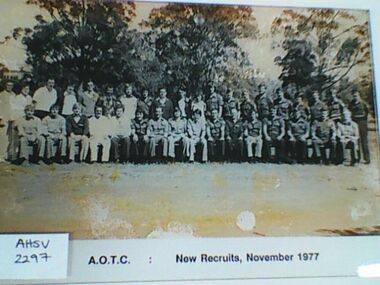 Ambulance Victoria Museum
Photograph, Ambulance Officers Training Centre Course ,New Recruits, November 1977, 1977
... Photograph, Ambulance Officers Training Centre Course ,New Recruits, November 1977...ambulance officers training course, new recruits...Black and White photograph of ambulance officer new recruits...ambulance officers training course, new recruits Black and White photograph of ambulance officer new recruits Photograph, Ambulance Officers Training Centre Course ,New Recruits, November 1977 ...Black and White photograph of ambulance officer new recruitsambulance officers training course, new recruits -
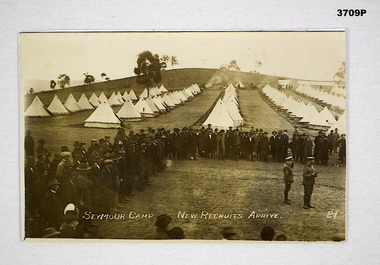 Bendigo Military Museum
Photograph, c.1915 - 1916
... Copy of original sepia photo showing a camp with tents in the background & new recruits in civilian clothes in the foreground....Printed in white at bottom: SEYMOUR CAMP NEW RECRUITS ARRIVE 24...Photograph Seymour camp Printed in white at bottom: SEYMOUR CAMP NEW RECRUITS ARRIVE 24 Copy of original sepia photo showing a camp with tents in the background & new recruits in civilian clothes in the foreground. ...Items in items re James Edgar KOCH No 2096 AIF. Refer Reg No 1256 for his service history.Copy of original sepia photo showing a camp with tents in the background & new recruits in civilian clothes in the foreground.Printed in white at bottom: SEYMOUR CAMP NEW RECRUITS ARRIVE 24photograph, seymour camp -
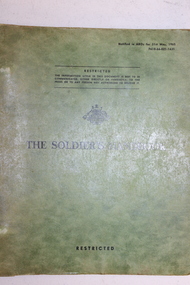 National Vietnam Veterans Museum (NVVM)
Booklet - Handbook, Army, The Soldiers Handbook
... ...new recruits...He served in Vietnam with the 7th Battalion, The Royal Australian Regiment from April 1967 to October 1967. Handbook new recruits Vietnam 7RAR Army recruits woods DG woods 2783285 Restricted top and bottom of front and back The Soldiers Handbook " Notified in AROs for 31st May 1965. 7610-66-021-1631 Green covered book with 147 pages of diagrams, graphs and information for soldiers. ...Standard issue Army manual from the Vietnam era. This item was donated by Pte David George Woods (2783285) who was a National Serviceman with the Royal Australian Infantry Corps. He served in Vietnam with the 7th Battalion, The Royal Australian Regiment from April 1967 to October 1967.Green covered book with 147 pages of diagrams, graphs and information for soldiers. Cover is soft cardboard secured by 2 brass screws positioned on inside of cover. Bold black print on front cover.Restricted top and bottom of front and back The Soldiers Handbook " Notified in AROs for 31st May 1965. 7610-66-021-1631handbook, new recruits, vietnam, 7rar, army recruits, woods, dg woods, 2783285 -
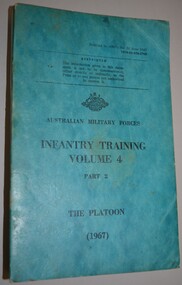 Wangaratta RSL Sub Branch
Manual, Infantry Training Volume 4 Part 2 The Platoon (1967), 30/6/1967
... Australian Army produced training manual written primarily for new recruits...Australian Army produced training manual written primarily for new recruits Army Training manual A blue colour cardboard covered manual with black information on the front. ...Australian Army produced training manual written primarily for new recruitsA blue colour cardboard covered manual with black information on the front. Under the Australian Coat of Arms are the details of the manual which contains 259 pages of text and diagrams held together with two metal screws from the inside of the cover. army, training manual -
 City of Ballarat Libraries
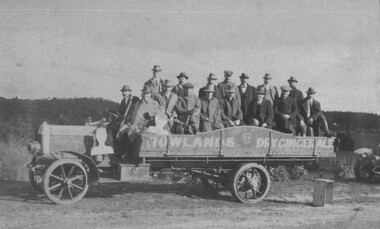
Photograph - Card Box Photographs, Troops on their way to Queenscliff
... Rowlands Soft Drink Delivery truck transports troops to Queenscliff for army training. The new recruits are yet to get their uniforms....Rowlands Soft Drink Delivery truck transports troops to Queenscliff for army training. The new recruits are yet to get their uniforms. e.r. rowlands soldiers vehicle queenscliff military Troops on their way to Queenscliff. ...A E.R. Rowlands Soft Drink Delivery truck transports troops to Queenscliff for army training. The new recruits are yet to get their uniforms.e.r. rowlands, soldiers, vehicle, queenscliff, military -
 University of Melbourne, Burnley Campus Archives
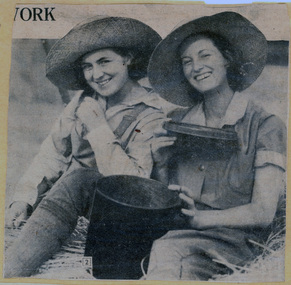
Newspaper - Newspaper Cutting, Down on the farm - at Burnley, 1931
... One student is sitting on the horse and the caption reads: "New recruits at Burnley Horticultural School drove in rustic state to gather the maize crop yesterday. ...One student is sitting on the horse and the caption reads: "New recruits at Burnley Horticultural School drove in rustic state to gather the maize crop yesterday. ...(1) Two students sitting on straw and holding a bucket. (2) Seven female students with a horse and cart. One student is sitting on the horse and the caption reads: "New recruits at Burnley Horticultural School drove in rustic state to gather the maize crop yesterday. So popular has the school course become that there are no more vacancies for students this season. These beginners tackled a tall job, for the maize produced in the school paddock is 10 to 11 feet high."students, female students, burnley horticultural college, maize, students working outside, horses, draught horses -
 8th/13th Victorian Mounted Rifles Regimental Collection
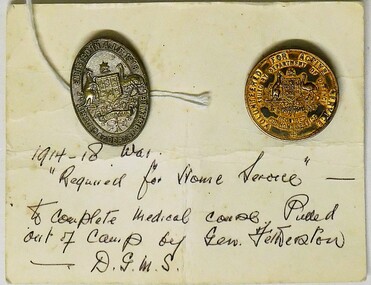
Badge - Woods badges, 1917 circa
... One is a Demobilised Soldiers badge issued to new recruits training in Australia at the time of the Armistice on 11 November 1918 or those who had enlisted but had not yet been called into camp for training, and the other a Volunteer Home Service Badge issued to employees of the Department of Defence who had volunteered for active service abroad but who had been denied due to their services being required in Australia. ....One is a Demobilised Soldiers badge issued to new recruits training in Australia at the time of the Armistice on 11 November 1918 or those who had enlisted but had not yet been called into camp for training, and the other a Volunteer Home Service Badge issued to employees of the Department of Defence who had volunteered for active service abroad but who had been denied due to their services being required in Australia. . ...These badges were almost certainly issued to Leslie Samuel Woods of Albury who enlisted 10 May 1915 having completed first year medicine at Melbourne University. He served a year at the Convalescent Hospital, Harefield UK, before being ordered home to complete his medical studies. He would have completed his studies near the end on 1918 and attempted to re-enlist but had not entered training before the Armistice. Doctor Leslie Woods was a General Practitioner in Albury till his death. He is buried in Albury Waugh Road Cemetery.Well provenanced object illustrating the WWI experience of a young Albury man.Two lapel badges pinned to a piece of paper with a handwritten notation. One is a Demobilised Soldiers badge issued to new recruits training in Australia at the time of the Armistice on 11 November 1918 or those who had enlisted but had not yet been called into camp for training, and the other a Volunteer Home Service Badge issued to employees of the Department of Defence who had volunteered for active service abroad but who had been denied due to their services being required in Australia. ."14-18 War / 'required for Home Service' / to complete medical course. Pulled / out of camp by Gen Fetherson / DGMS"military, wwi, world war one, woods, enlist, enlistment, non-enlistment -
 University of Melbourne, Burnley Campus Archives
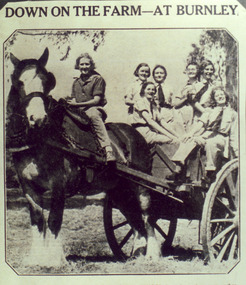
Photograph - Colour print, A.P. Winzenried, Down on the Farm-at Burnley, 1931-1990
... Caption reads, "Down on the Farm-at Burnley. New recruits at Burnley Horticultural School drove in rustic state to gather the maize crop yesterday. ...Caption reads, "Down on the Farm-at Burnley. New recruits at Burnley Horticultural School drove in rustic state to gather the maize crop yesterday. ...Photograph made by A.P. Winzenried for, "Green Grows Our Garden," p73Colour photograph. Copy of newspaper article, made by A.P. Winzenried. Caption reads, "Down on the Farm-at Burnley. New recruits at Burnley Horticultural School drove in rustic state to gather the maize crop yesterday. So popular has the school course become that there are no more vacancies for students this season. These beginners tackled a tall job, for the maize produced in the school paddock is 10 to 11 feet high." Horse drawn cart with 6 female students seated on it and one astride the horse.a.p. winzenried, green grows our gardern, maize crop, students, students working outside, west orchard, horse-drawn cart, draught horse -
 Bendigo Military Museum
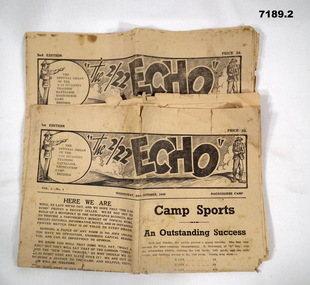
Newspaper, The 2/22 Echo, C.1940
... Purpose of camp was to train new recruits and feed them into the Infantry Battalion itself. ...Purpose of camp was to train new recruits and feed them into the Infantry Battalion itself. ...The "Echo" was a small newspaper issued by the 2/22nd Infantry Training Battalion based at the racecourse camp at Epsom, Bendigo. Purpose of camp was to train new recruits and feed them into the Infantry Battalion itself. Aim of the newspaper would be as a conduit of official information and for local morale.News sheets issued by Training Battalion titled the 2/22 Echo. Content includes lots of advertisements, social occasions, Official Military business. Both are 8 pages long on yellowed paper and writing in black. 1: 1st Edition date Wed 22nd Oct 1940 with part of pages 6 & 7 missing. 2. 2nd Edition dated Thursday 7th Nov 1940.2/22 battalion, ww2, newspaper -
 Northern District School of Nursing. Managed by Bendigo Historical Society Inc.
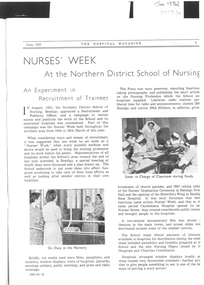
Document - The Hospital Magazine June 1952, 1952
... (A) is a photocopy of pages 5 to 6 of The Hospital Magazine of June 1952 describing ‘Nurses’ Week” at the Northern District School of nursing and describes activities in a week designed to showcase the Nursing Profession to the public and attract new recruits. (B) is Photocopy of pages 13 to 20 of The Hospital Magazine of June, 1952. ...Nurse education Trainee selection (A) is a photocopy of pages 5 to 6 of The Hospital Magazine of June 1952 describing ‘Nurses’ Week” at the Northern District School of nursing and describes activities in a week designed to showcase the Nursing Profession to the public and attract new recruits. (B) is Photocopy of pages 13 to 20 of The Hospital Magazine of June, 1952. ...The Northern District School of Nursing opened in 1950 to address the issues around nurse recruitment, training and education that had previously been hospital based. The residential school was to provide theoretical and in-house education and practical training over three years. The students would also receive practical hands-on training in the wards of associated hospitals. The Northern District School of Nursing operated from Lister House, Rowan Street, Bendigo. It was the first independent school of nursing in Victoria and continued until it closed in 1989.(A) is a photocopy of pages 5 to 6 of The Hospital Magazine of June 1952 describing ‘Nurses’ Week” at the Northern District School of nursing and describes activities in a week designed to showcase the Nursing Profession to the public and attract new recruits. (B) is Photocopy of pages 13 to 20 of The Hospital Magazine of June, 1952. Entitled “The Student Nurse” Short Post Graduate Course - 1952 at College of Nursing, Australia. These are notes of lecture given by Miss Gwenyth Williams, Nursing Executive Officer, Hospitals and Charities Commission, Melbourne. Lecture covers profession of nursing, selection and training.nurse education, trainee selection -
 Wangaratta RSL Sub Branch
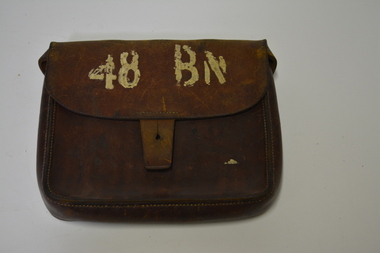
Equipment - Despatch Pouch
... Roughly half of its new recruits were Gallipoli veterans from the 16th Battalion, and the other half, fresh reinforcements from Australia. ...Roughly half of its new recruits were Gallipoli veterans from the 16th Battalion, and the other half, fresh reinforcements from Australia. ...Leather dispatch pouch issued to unknown soldier serving with the 48th Battalion to deliver urgent orders and messages usually between headquarters and military units. The 48th Battalion was raised in Egypt on 16 March 1916 as part of the "doubling" of the AIF. Roughly half of its new recruits were Gallipoli veterans from the 16th Battalion, and the other half, fresh reinforcements from Australia. Reflecting the composition of the 16th, the men of the new battalion hailed mainly from regional South Australia and Western Australia.Despatch riders were used by armed forces to deliver urgent orders and messages between headquarters and military units. They had a vital role at a time when telecommunications were limited and insecure.Brown leather pouch with 48 BN written in white on front flap. Two metal buckles with leather straps on rearOn front flap: 48 BN written in white paint. Under flap: C.H.F. ^^ES C.M.F S.A 10/12 has been engraved into the leatherleather pouch, pouch, leather, map case -
 Mission to Seafarers Victoria
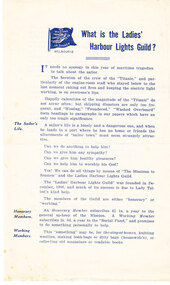
Flyer, What is the Ladies' Harbour Lights Guild?, c. 1912
... A cream colour paper flyer describing in blue ink the work and value of membership of The Ladies' Harbour Lights Guild, in order to recruit new members. Also includes a photocopy of the flyer. (2 copies)...A cream colour paper flyer describing in blue ink the work and value of membership of The Ladies' Harbour Lights Guild, in order to recruit new members. Also includes a photocopy of the flyer. (2 copies) What is the Ladies' Harbour Lights Guild? ...Charity organisation, Ladies' Harbour Lights Guild,was formed within The Missions to Seamen Institute to provide a home away from home, for visiting seamen. The flyer was to recruit members. The flyer mentions the sinking of the Titanic in 1912 and the bravery of the seamen staying in the engine room. The flyer mentions also Lady Talbot Margaret Jane nee Stuart-Wortley (1855-1937), wife of Governor Reginald Taldot, actively promoted advanced social welfare projects.This paper flyer holds historical significance at a local level because it illustrates the Ladies' Harbour Lights Guild involvement in the Mission to Seafarers.The Ladies' Harbour Lights Guild formally named in 1907 grew to become a significant charity in Melbourne raising large amounts of money which helped to establish the current MTSV building, supporting seafarers. In 1960s the LHLG merged with the Flying Angels Club of the MTSV.A cream colour paper flyer describing in blue ink the work and value of membership of The Ladies' Harbour Lights Guild, in order to recruit new members. Also includes a photocopy of the flyer. (2 copies)The photocopy of the original has written in blue "1912". ladies' harbour lights guild, australian wharf, chapel, ephemera, titanic, 1912, lhlg, mission to seamen, seamens' mission, mission to seafarers, alice sibthorpe tracy, reverend alfred gurney goldsmith, philanthropy, charity, welfare, sailors, tragedy, heroism, honorary members, working members, norwegian, foreign language, pit, card game, animal grab, le jeu des animaux, margaret jane (née stuart-wortley), lady talbot, lady margaret jane talbot (nee stuart-wortley), ethel augusta godfrey 1861-1935, knitting, woolies -
 Mont De Lancey
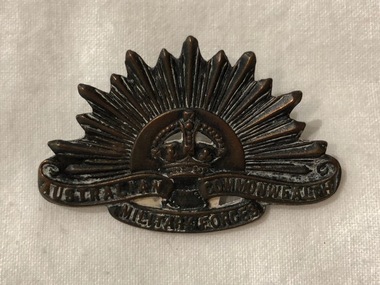
Badge, 1918
... The badge is readily identified with the spirit of ANZAC, the legend of the Australian Soldier (or digger) and the esprit de corps of the Army itself, due to the association with the landing at Gallipoli in 1915. Today, new recruits receive the iconic badge with their initial issue of equipment which happens within their first three days of enlistment....The badge is readily identified with the spirit of ANZAC, the legend of the Australian Soldier (or digger) and the esprit de corps of the Army itself, due to the association with the landing at Gallipoli in 1915. Today, new recruits receive the iconic badge with their initial issue of equipment which happens within their first three days of enlistment. ...The Rising Sun badge also known as the General Service badge or the Australian Army badge is the official insignia of the Australian Army. Worn on the brim of a slouch hat or the front of a peaked cap (selected appointments only). The badge is readily identified with the spirit of ANZAC, the legend of the Australian Soldier (or digger) and the esprit de corps of the Army itself, due to the association with the landing at Gallipoli in 1915. Today, new recruits receive the iconic badge with their initial issue of equipment which happens within their first three days of enlistment.Rising Sun Metal badge Australian Commonwealth Military Forces 1914 - 1918 War. -
 Running Rabbits Military Museum operated by the Upwey Belgrave RSL Sub Branch
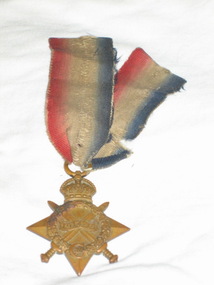
Medals, Medals of L/Cpl George William Steele
... It should be remembered that recipients of this medal were responsible for assisting the French to hold back the German army while new recruits could be trained and equipped. Collectively, they fully deserve a great deal of honour for their part in the first sixteen weeks of the Great War. ...It should be remembered that recipients of this medal were responsible for assisting the French to hold back the German army while new recruits could be trained and equipped. Collectively, they fully deserve a great deal of honour for their part in the first sixteen weeks of the Great War. ...Wounded7/5/1915 Gallipoli Died of Wounds at sea in transit to hospital The 1914 Star This bronze medal award was authorized by King George V in April 1917 for those who had served in France or Belgium between 5th August 1914 to midnight on 22nd November 1914 inclusive. The reverse is plain with the recipient's service number, rank, name and unit impressed on it. It should be remembered that recipients of this medal were responsible for assisting the French to hold back the German army while new recruits could be trained and equipped. Collectively, they fully deserve a great deal of honour for their part in the first sixteen weeks of the Great War. There were approximately 378,000 1914 Stars issued. The British War Medal, 1914-18 The silver or bronze medal was awarded to officers and men of the British and Imperial Forces who either entered a theatre of war or entered service overseas between 5th August 1914 and 11th November 1918 inclusive Approximately 6.5 million British War Medals were issued. Approximately 6.4 million of these were the silver versions of this medal. The recipient's service number, rank, name and unit was impressed on the rim. SN 1053 14Btn AIF -
 Melbourne Legacy
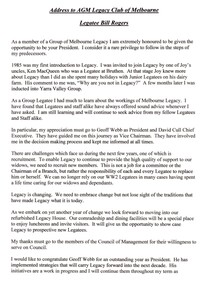
Document - Speech, Address to AGM Legacy Club of Melbourne, 2006
... He mentions the changes facing Legacy, especially to recruit new members. Legacy House was to be reopened after renovations. ...He mentions the changes facing Legacy, especially to recruit new members. Legacy House was to be reopened after renovations. ...A speech by Legatee Bill Rogers at the 2006 AGM. He mentions the changes facing Legacy, especially to recruit new members. Legacy House was to be reopened after renovations. Document was from a folder of documents donated to the archive by Legatee Bill Rogers that related to his time as President (March 2006 - March 2008).A record of Legacy in 2006.Print out x 2 pages of a speech by Legatee Bill Rogers to the Legacy Club of Melbourne's AGM in 2006.speeches, bill rogers, renovations -
 Mission to Seafarers Victoria
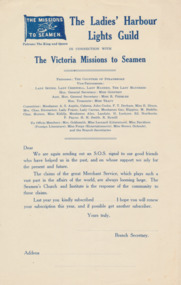
Flyer - Subscription, Mission to Seamen Institute, The Ladies' Harbour Lights Guild in Connection with The Victoria Mission to Seamen, 1921-1926
... The flyer was to recruit new members or for former Members of the charity to renew their subscription. ...The flyer was to recruit new members or for former Members of the charity to renew their subscription. ...The charity organisation, Ladies' Harbour Lights Guild, was formed within the Missions to Seamen Institute to provide a home away from home, for visiting seamen. The flyer was to recruit new members or for former Members of the charity to renew their subscription. The patroness was always the governor's wife: here the Countess of Stradbroke whose husband, the Earl of Stradbroke was governor of Victoria between 1921 to 1926.This paper flyer holds historical significance at a local level because it illustrates the Ladies' Harbour Lights Guild involvement in the Mission to Seafarers.The Ladies' Harbour Lights Guild grew to become a significant charity in Melbourne raising large amounts of money which helped to establish the current MTS building, supporting seafarers.Cream colour paper flyer's in blue ink that are also subscription forms in order to become Honorary Members/Working/School Members or renewals of previous Membership of the Ladies' Harbour Lights Guild. (9 copies)missions to seamen institute, ladies' harbour lights guild, australian wharf, lhlg, subscriptions, countess of stradbroke, patroness, lady irvine, lady creswell, lady madden, the lady mayoress, ethel augusta godfrey 1861-1935, miss b. peebles, alice sibthorpe tracy -
 Mission to Seafarers Victoria
Flyer - Subscription, Mission to Seamen Institute, The Ladies' Harbour Lights Guild in Connection with The Victoria Mission to Seamen, 1921-1926
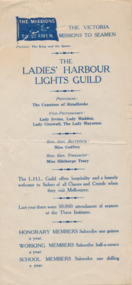
... The flyer was to recruit new members or for former Members of the charity to renew their subscription. ...The flyer was to recruit new members or for former Members of the charity to renew their subscription. ...The charity organisation, Ladies' Harbour Lights Guild, was formed within the Missions to Seamen Institute to provide a home away from home, for visiting seamen. The flyer was to recruit new members or for former Members of the charity to renew their subscription. The patroness was always the governor's wife: here the Countess of Stradbroke whose husband, the Earl of Stradbroke was governor of Victoria between 1921 to 1926.This paper flyer holds historical significance at a local level because it illustrates the Ladies' Harbour Lights Guild involvement in the Mission to Seafarers.The Ladies' Harbour Lights Guild grew to become a significant charity in Melbourne raising large amounts of money which helped to establish the current MTS building, supporting seafarers.Cream colour paper 3 fold-flyer in blue ink that are also subscription forms in order to become Honorary Members/Working/School Members or renewals of previous Membership of the Ladies' Harbour Lights Guild. Includes an extract from the Age.missions to seamen institute, ladies' harbour lights guild, australian wharf, lhlg, subscriptions, countess of stradbroke, patroness, lady irvine, lady creswell, lady madden, the lady mayoress, ethel augusta godfrey 1861-1935, miss b. peebles, alice sibthorpe tracy -
 Mission to Seafarers Victoria
Flyer - Subscription, Mission to Seamen Institute, The Ladies' Harbour Lights Guild, c.1909
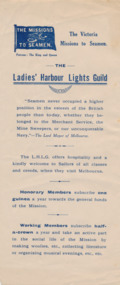
... The flyer was to recruit new members or for former Members of the charity to renew their subscription. ...The flyer was to recruit new members or for former Members of the charity to renew their subscription. ...The charity organisation, Ladies' Harbour Lights Guild, was formed within the Missions to Seamen Institute to provide a home away from home, for visiting seamen. The flyer was to recruit new members or for former Members of the charity to renew their subscription. The patroness was always the governor's wife: here the Countess of Stradbroke whose husband, the Earl of Stradbroke was governor of Victoria between 1921 to 1926.This paper flyer holds historical significance at a local level because it illustrates the Ladies' Harbour Lights Guild involvement in the Mission to Seafarers.The Ladies' Harbour Lights Guild grew to become a significant charity in Melbourne raising large amounts of money which helped to establish the current MTS building, supporting seafarers.Cream colour paper 2 fold-flyer in blue ink that are also subscription forms in order to become Honorary Members/Working/School Members or renewals of previous Membership of the Ladies' Harbour Lights Guild. missions to seamen institute, ladies' harbour lights guild, australian wharf, lhlg, subscriptions, patroness, ethel augusta godfrey 1861-1935 -
 Running Rabbits Military Museum operated by the Upwey Belgrave RSL Sub Branch
Medals, Medals of PTE Arthur Ernest Clarke
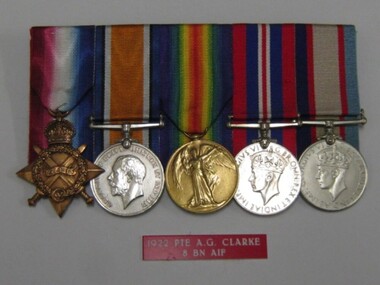
... It should be remembered that recipients of this medal were responsible for assisting the French to hold back the German army while new recruits could be trained and equipped. Collectively, they fully deserve a great deal of honour for their part in the first sixteen weeks of the Great War. ...It should be remembered that recipients of this medal were responsible for assisting the French to hold back the German army while new recruits could be trained and equipped. Collectively, they fully deserve a great deal of honour for their part in the first sixteen weeks of the Great War. ...WW1 Served in Gallipoli & France WW2 Militia The 1914 Star This bronze medal award was authorized by King George V in April 1917 for those who had served in France or Belgium between 5th August 1914 to midnight on 22nd November 1914 inclusive. The reverse is plain with the recipient's service number, rank, name and unit impressed on it. It should be remembered that recipients of this medal were responsible for assisting the French to hold back the German army while new recruits could be trained and equipped. Collectively, they fully deserve a great deal of honour for their part in the first sixteen weeks of the Great War. There were approximately 378,000 1914 Stars issued. The British War Medal, 1914-18 The silver or bronze medal was awarded to officers and men of the British and Imperial Forces who either entered a theatre of war or entered service overseas between 5th August 1914 and 11th November 1918 inclusive Approximately 6.5 million British War Medals were issued. Approximately 6.4 million of these were the silver versions of this medal. The recipient's service number, rank, name and unit was impressed on the rim. The Allied Victory Medal Approximately 5.7 million victory medals were issued. The recipient's service number, rank, name and unit was impressed on the rim. The 1939-45 Star Awarded for service as follows: • Army - awarded for six months service in an operational command during the period 3 September 1939 to 2 September 1945. The War Medal 1939-45 Awarded to members who served full-time in operational or non-operational service between 3 September 1939 and 2 September 1945. Clarke SN 1703 8 Btn AIF -
 Melbourne Tram Museum
Document - Melbourne and Metropolitan Tramways Board - Report of Visit Abroad - Recruitment of Staff and Transport Information, 23rd April, 1951 - 6th March, 1952, Melbourne & Metropolitan Tramways Board (MMTB), c.1952
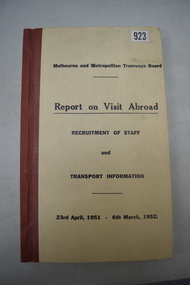
... Report from the Melbourne and Metropolitan Tramways Board (MMTB) on a visit to Great Britain (Manchester, Blackpool, Glasgow, London) and North America (New York, Toronto) to recruit single men for employment at the MMTB, in light of labour shortages. ...Report from the Melbourne and Metropolitan Tramways Board (MMTB) on a visit to Great Britain (Manchester, Blackpool, Glasgow, London) and North America (New York, Toronto) to recruit single men for employment at the MMTB, in light of labour shortages. ...Report from the Melbourne and Metropolitan Tramways Board (MMTB) on a visit to Great Britain (Manchester, Blackpool, Glasgow, London) and North America (New York, Toronto) to recruit single men for employment at the MMTB, in light of labour shortages. The visit also collected information on operation details of public transportation in the visited locations, such as pay, amenities and facilities for employees, public relations, traffic operation, timetables, and rolling stock.A document that detailed operations of public transport agencies in the UK, US and Canada from an Australian perspective during the 1950s.Report of Visit Abroad - Recruitment of Staff and Transport Information, 23rd April, 1951 - 6th March, 1952public transport, tramways, mmtb, employment, overseas tours, recruitment -
 Port Melbourne Historical & Preservation Society
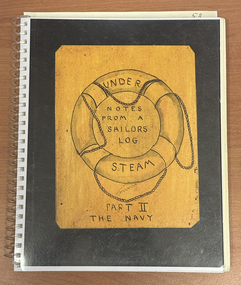
Document - James CONDER Journal, James Brycanne Conder, NOTES FROM A SAILORS LOG - UNDER STEAM - PART II THE NAVY
... On his first ship, ‘HMS Katoomba’, as bosun yeoman, he helped train new recruits. He later served on ‘HMS Challenger’ and ‘HMS Psyche’ which included voyages to Fiji, the New Hebrides, Singapore and New Zealand as well as regular cruises to Australian ports. ...On his first ship, ‘HMS Katoomba’, as bosun yeoman, he helped train new recruits. He later served on ‘HMS Challenger’ and ‘HMS Psyche’ which included voyages to Fiji, the New Hebrides, Singapore and New Zealand as well as regular cruises to Australian ports. ...James Bryance CONDER (aka James Brycanne CONDER) Artist, poet and four-navy veteran, 1872 - 1954. In 1889 he served in the Merchant Marine Service sailing on the ships ‘Ellora’ and ‘Avenger’. in 1891, aged 19, he joined the Royal Navy in Australia serving on the flagship of the Australian Station, ‘HMS Orlando’, when it escorted ships of the new Australasian Auxiliary Squadron in coastal voyages. After serving 6 months he returned to family in Melbourne rather than sign on for 12 years. Instead he joined the Victorian Colonial Navy and was posted, in succession, to the ‘HMVS Cerberus’, ‘HMVS Nelson’ and the gunboat ‘HMVS Albert’. In 1896 he left the navy, married Victoria Agnes NIHILL and joined the Victorian Police Force. In 1904 CONDOR returned to the sea as part of the Commonwealth Naval Forces, an amalgamation of the colonial navies formed after federation and later becoming the Royal Australian Navy. On his first ship, ‘HMS Katoomba’, as bosun yeoman, he helped train new recruits. He later served on ‘HMS Challenger’ and ‘HMS Psyche’ which included voyages to Fiji, the New Hebrides, Singapore and New Zealand as well as regular cruises to Australian ports. In 1909, CONDER left the Navy and undertook shored-based civilian work until 1913 when he joined the Royal Australian Naval College at Osborne House in Geelong. He remained with the Naval College until 1937 through its moves to Jervis Bay, NSW and then to Crib Point, Victoria training midshipmen according to the practices of the Royal Navy. In later life, CONDER produced two handwritten journals for his family illustrated with his own paintings and drawings. Two original sets were made. One remains in the family while the other is held by the Australian National Maritime Museum in Sydney. PMHPS hold several items relating to James CONDER including photocopies of his journals ‘Notes from a Sailors Log - Under Canvas - Part I The Merchant Service’ (Cat No 2700.01) and ‘Notes from a Sailors Log - Under Steam - Part II The Navy’ (Cat No 2700.02), a photocopy of his Certificate of Service (Cat No 2700.03), a booklet of his life story (Cat No 2700.04) and several digital items (Cat No 2476.01 - 2476.09).A spiral bound photocopy of a sailor's log; dark red marbled covers; front cover has tan inset with title in and around a sketch of a lifebuoy. Under Steam - Part II The Navy. See Under Canvas - Part I The Merchant Service (Cat No 2700.01)transport - shipping, hmvs cerberus, james bryance conder, armed services - navy, ran - royal australian navy -
 Port Melbourne Historical & Preservation Society
Booklet, Robert Murphy, James Conder - A Maritime Life - 1872-1954, c. 2000
... On his first ship, ‘HMS Katoomba’, as bosun yeoman, he helped train new recruits. He later served on ‘HMS Challenger’ and ‘HMS Psyche’ which included voyages to Fiji, the New Hebrides, Singapore and New Zealand as well as regular cruises to Australian ports. ...On his first ship, ‘HMS Katoomba’, as bosun yeoman, he helped train new recruits. He later served on ‘HMS Challenger’ and ‘HMS Psyche’ which included voyages to Fiji, the New Hebrides, Singapore and New Zealand as well as regular cruises to Australian ports. ...James Bryance CONDER (aka James Brycanne CONDER) Artist, poet and four-navy veteran, 1872 - 1954. In 1889 he served in the Merchant Marine Service sailing on the ships ‘Ellora’ and ‘Avenger’. in 1891, aged 19, he joined the Royal Navy in Australia serving on the flagship of the Australian Station, ‘HMS Orlando’, when it escorted ships of the new Australasian Auxiliary Squadron in coastal voyages. After serving 6 months he returned to family in Melbourne rather than sign on for 12 years. Instead he joined the Victorian Colonial Navy and was posted, in succession, to the ‘HMVS Cerberus’, ‘HMVS Nelson’ and the gunboat ‘HMVS Albert’. In 1896 he left the navy, married Victoria Agnes NIHILL and joined the Victorian Police Force. In 1904 CONDOR returned to the sea as part of the Commonwealth Naval Forces, an amalgamation of the colonial navies formed after federation and later becoming the Royal Australian Navy. On his first ship, ‘HMS Katoomba’, as bosun yeoman, he helped train new recruits. He later served on ‘HMS Challenger’ and ‘HMS Psyche’ which included voyages to Fiji, the New Hebrides, Singapore and New Zealand as well as regular cruises to Australian ports. In 1909, CONDER left the Navy and undertook shored-based civilian work until 1913 when he joined the Royal Australian Naval College at Osborne House in Geelong. He remained with the Naval College until 1937 through its moves to Jervis Bay, NSW and then to Crib Point, Victoria training midshipmen according to the practices of the Royal Navy. In later life, CONDER produced two handwritten journals for his family illustrated with his own paintings and drawings. Two original sets were made. One remains in the family while the other is held by the Australian National Maritime Museum in Sydney. PMHPS hold several items relating to James CONDER including photocopies of his journals ‘Notes from a Sailors Log - Under Canvas - Part I The Merchant Service’ (Cat No 2700.01) and ‘Notes from a Sailors Log - Under Steam - Part II The Navy’ (Cat No 2700.02), a photocopy of his Certificate of Service (Cat No 2700.03), a booklet of his life story (Cat No 2700.04) and several digital items (Cat No 2476.01 - 2476.09). 'James Conder - A Maritime Life - 1872-1954', A5 booklet 20 pp incl cover, 'developed by Robert Murphy for the many family members descended from James Conder'.armed services - navy, transport - shipping, police, arts and entertainment - visual arts, hmvs cerberus, james bryance conder, ran - royal australian navy, victorian colonial navy, victoria police, royal australian naval college, robert murphy, painting, royal naval squadron -
 Port Melbourne Historical & Preservation Society
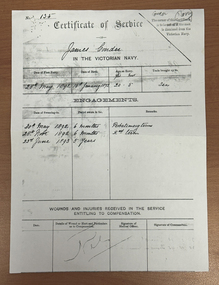
Certificate - Photocopy, Certificate of Service, James Condor, Navy, 1904 - 1959
... On his first ship, ‘HMS Katoomba’, as bosun yeoman, he helped train new recruits. He later served on ‘HMS Challenger’ and ‘HMS Psyche’ which included voyages to Fiji, the New Hebrides, Singapore and New Zealand as well as regular cruises to Australian ports. ...On his first ship, ‘HMS Katoomba’, as bosun yeoman, he helped train new recruits. He later served on ‘HMS Challenger’ and ‘HMS Psyche’ which included voyages to Fiji, the New Hebrides, Singapore and New Zealand as well as regular cruises to Australian ports. ...James Bryance CONDER (aka James Brycanne CONDER) Artist, poet and four-navy veteran, 1872 - 1954. In 1889 he served in the Merchant Marine Service sailing on the ships ‘Ellora’ and ‘Avenger’. in 1891, aged 19, he joined the Royal Navy in Australia serving on the flagship of the Australian Station, ‘HMS Orlando’, when it escorted ships of the new Australasian Auxiliary Squadron in coastal voyages. After serving 6 months he returned to family in Melbourne rather than sign on for 12 years. Instead he joined the Victorian Colonial Navy and was posted, in succession, to the ‘HMVS Cerberus’, ‘HMVS Nelson’ and the gunboat ‘HMVS Albert’. In 1896 he left the navy, married Victoria Agnes NIHILL and joined the Victorian Police Force. In 1904 CONDOR returned to the sea as part of the Commonwealth Naval Forces, an amalgamation of the colonial navies formed after federation and later becoming the Royal Australian Navy. On his first ship, ‘HMS Katoomba’, as bosun yeoman, he helped train new recruits. He later served on ‘HMS Challenger’ and ‘HMS Psyche’ which included voyages to Fiji, the New Hebrides, Singapore and New Zealand as well as regular cruises to Australian ports. In 1909, CONDER left the Navy and undertook shored-based civilian work until 1913 when he joined the Royal Australian Naval College at Osborne House in Geelong. He remained with the Naval College until 1937 through its moves to Jervis Bay, NSW and then to Crib Point, Victoria training midshipmen according to the practices of the Royal Navy. In later life, CONDER produced two handwritten journals for his family illustrated with his own paintings and drawings. Two original sets were made. One remains in the family while the other is held by the Australian National Maritime Museum in Sydney. PMHPS hold several items relating to James CONDER including photocopies of his journals ‘Notes from a Sailors Log - Under Canvas - Part I The Merchant Service’ (Cat No 2700.01) and ‘Notes from a Sailors Log - Under Steam - Part II The Navy’ (Cat No 2700.02), a photocopy of his Certificate of Service (Cat No 2700.03), a booklet of his life story (Cat No 2700.04) and several digital items (Cat No 2476.01 - 2476.09). Photocopy of James CONDER's Certificate of Servicearmed services - navy, transport - shipping, james bryance conder, ran - royal australian navy, royal naval squadron, victorian colonial navy, merchant navy, victoria police, police -
 Port Melbourne Historical & Preservation Society
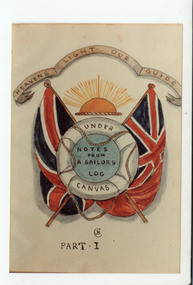
Photograph - Title page drawing from James Conder Journal Part I
... On his first ship, ‘HMS Katoomba’, as bosun yeoman, he helped train new recruits. He later served on ‘HMS Challenger’ and ‘HMS Psyche’ which included voyages to Fiji, the New Hebrides, Singapore and New Zealand as well as regular cruises to Australian ports. ...On his first ship, ‘HMS Katoomba’, as bosun yeoman, he helped train new recruits. He later served on ‘HMS Challenger’ and ‘HMS Psyche’ which included voyages to Fiji, the New Hebrides, Singapore and New Zealand as well as regular cruises to Australian ports. ...James Bryance CONDER (aka James Brycanne CONDER) Artist, poet and four-navy veteran, 1872 - 1954. In 1889 he served in the Merchant Marine Service sailing on the ships ‘Ellora’ and ‘Avenger’. in 1891, aged 19, he joined the Royal Navy in Australia serving on the flagship of the Australian Station, ‘HMS Orlando’, when it escorted ships of the new Australasian Auxiliary Squadron in coastal voyages. After serving 6 months he returned to family in Melbourne rather than sign on for 12 years. Instead he joined the Victorian Colonial Navy and was posted, in succession, to the ‘HMVS Cerberus’, ‘HMVS Nelson’ and the gunboat ‘HMVS Albert’. In 1896 he left the navy, married Victoria Agnes NIHILL and joined the Victorian Police Force. In 1904 CONDOR returned to the sea as part of the Commonwealth Naval Forces, an amalgamation of the colonial navies formed after federation and later becoming the Royal Australian Navy. On his first ship, ‘HMS Katoomba’, as bosun yeoman, he helped train new recruits. He later served on ‘HMS Challenger’ and ‘HMS Psyche’ which included voyages to Fiji, the New Hebrides, Singapore and New Zealand as well as regular cruises to Australian ports. In 1909, CONDER left the Navy and undertook shored-based civilian work until 1913 when he joined the Royal Australian Naval College at Osborne House in Geelong. He remained with the Naval College until 1937 through its moves to Jervis Bay, NSW and then to Crib Point, Victoria training midshipmen according to the practices of the Royal Navy. In later life, CONDER produced two handwritten journals for his family illustrated with his own paintings and drawings. Two original sets were made. One remains in the family while the other is held by the Australian National Maritime Museum in Sydney. PMHPS hold several items relating to James CONDER including photocopies of his journals ‘Notes from a Sailors Log - Under Canvas - Part I The Merchant Service’ (Cat No 2700.01) and ‘Notes from a Sailors Log - Under Steam - Part II The Navy’ (Cat No 2700.02), a photocopy of his Certificate of Service (Cat No 2700.03), a booklet of his life story (Cat No 2700.04) and several digital items (Cat No 2476.01 - 2476.09).Colour digital photograph of the title page handdrawn by James GONDER from ‘Notes from a Sailors Log - Under Canvas - Part I The Merchant Service’ (Cat No 2700.01).armed services - navy, transport - shipping, james bryance conder, ran - royal australian navy, victorian colonial navy, royal australian naval college, merchant navy, royal naval squadron -
 Port Melbourne Historical & Preservation Society
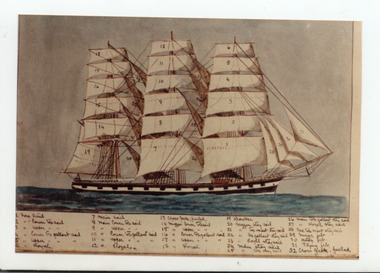
Photograph - Sailing ship showing sail configuration
... On his first ship, ‘HMS Katoomba’, as bosun yeoman, he helped train new recruits. He later served on ‘HMS Challenger’ and ‘HMS Psyche’ which included voyages to Fiji, the New Hebrides, Singapore and New Zealand as well as regular cruises to Australian ports. ...On his first ship, ‘HMS Katoomba’, as bosun yeoman, he helped train new recruits. He later served on ‘HMS Challenger’ and ‘HMS Psyche’ which included voyages to Fiji, the New Hebrides, Singapore and New Zealand as well as regular cruises to Australian ports. ...James Bryance CONDER (aka James Brycanne CONDER) Artist, poet and four-navy veteran, 1872 - 1954. In 1889 he served in the Merchant Marine Service sailing on the ships ‘Ellora’ and ‘Avenger’. in 1891, aged 19, he joined the Royal Navy in Australia serving on the flagship of the Australian Station, ‘HMS Orlando’, when it escorted ships of the new Australasian Auxiliary Squadron in coastal voyages. After serving 6 months he returned to family in Melbourne rather than sign on for 12 years. Instead he joined the Victorian Colonial Navy and was posted, in succession, to the ‘HMVS Cerberus’, ‘HMVS Nelson’ and the gunboat ‘HMVS Albert’. In 1896 he left the navy, married Victoria Agnes NIHILL and joined the Victorian Police Force. In 1904 CONDOR returned to the sea as part of the Commonwealth Naval Forces, an amalgamation of the colonial navies formed after federation and later becoming the Royal Australian Navy. On his first ship, ‘HMS Katoomba’, as bosun yeoman, he helped train new recruits. He later served on ‘HMS Challenger’ and ‘HMS Psyche’ which included voyages to Fiji, the New Hebrides, Singapore and New Zealand as well as regular cruises to Australian ports. In 1909, CONDER left the Navy and undertook shored-based civilian work until 1913 when he joined the Royal Australian Naval College at Osborne House in Geelong. He remained with the Naval College until 1937 through its moves to Jervis Bay, NSW and then to Crib Point, Victoria training midshipmen according to the practices of the Royal Navy. In later life, CONDER produced two handwritten journals for his family illustrated with his own paintings and drawings. Two original sets were made. One remains in the family while the other is held by the Australian National Maritime Museum in Sydney. PMHPS hold several items relating to James CONDER including photocopies of his journals ‘Notes from a Sailors Log - Under Canvas - Part I The Merchant Service’ (Cat No 2700.01) and ‘Notes from a Sailors Log - Under Steam - Part II The Navy’ (Cat No 2700.02), a photocopy of his Certificate of Service (Cat No 2700.03), a booklet of his life story (Cat No 2700.04) and several digital items (Cat No 2476.01 - 2476.09).Colour digital photograph of a drawing by James CONDER showing the sail configuration for a sailing ship.armed services - navy, transport - shipping, james bryance conder, ran - royal australian navy, victorian colonial navy, royal australian naval college, merchant navy, royal naval squadron -
 Port Melbourne Historical & Preservation Society
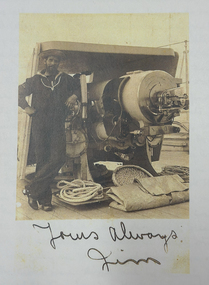
Photograph - James CONDER in uniform, c. 1905
... On his first ship, ‘HMS Katoomba’, as bosun yeoman, he helped train new recruits. He later served on ‘HMS Challenger’ and ‘HMS Psyche’ which included voyages to Fiji, the New Hebrides, Singapore and New Zealand as well as regular cruises to Australian ports. ...On his first ship, ‘HMS Katoomba’, as bosun yeoman, he helped train new recruits. He later served on ‘HMS Challenger’ and ‘HMS Psyche’ which included voyages to Fiji, the New Hebrides, Singapore and New Zealand as well as regular cruises to Australian ports. ...James Bryance CONDER (aka James Brycanne CONDER) Artist, poet and four-navy veteran, 1872 - 1954. In 1889 he served in the Merchant Marine Service sailing on the ships ‘Ellora’ and ‘Avenger’. in 1891, aged 19, he joined the Royal Navy in Australia serving on the flagship of the Australian Station, ‘HMS Orlando’, when it escorted ships of the new Australasian Auxiliary Squadron in coastal voyages. After serving 6 months he returned to family in Melbourne rather than sign on for 12 years. Instead he joined the Victorian Colonial Navy and was posted, in succession, to the ‘HMVS Cerberus’, ‘HMVS Nelson’ and the gunboat ‘HMVS Albert’. In 1896 he left the navy, married Victoria Agnes NIHILL and joined the Victorian Police Force. In 1904 CONDOR returned to the sea as part of the Commonwealth Naval Forces, an amalgamation of the colonial navies formed after federation and later becoming the Royal Australian Navy. On his first ship, ‘HMS Katoomba’, as bosun yeoman, he helped train new recruits. He later served on ‘HMS Challenger’ and ‘HMS Psyche’ which included voyages to Fiji, the New Hebrides, Singapore and New Zealand as well as regular cruises to Australian ports. In 1909, CONDER left the Navy and undertook shored-based civilian work until 1913 when he joined the Royal Australian Naval College at Osborne House in Geelong. He remained with the Naval College until 1937 through its moves to Jervis Bay, NSW and then to Crib Point, Victoria training midshipmen according to the practices of the Royal Navy. In later life, CONDER produced two handwritten journals for his family illustrated with his own paintings and drawings. Two original sets were made. One remains in the family while the other is held by the Australian National Maritime Museum in Sydney. PMHPS hold several items relating to James CONDER including photocopies of his journals ‘Notes from a Sailors Log - Under Canvas - Part I The Merchant Service’ (Cat No 2700.01) and ‘Notes from a Sailors Log - Under Steam - Part II The Navy’ (Cat No 2700.02), a photocopy of his Certificate of Service (Cat No 2700.03), a booklet of his life story (Cat No 2700.04) and several digital items (Cat No 2476.01 - 2476.09).Sepia digital photograph of James CONDER in uniform, sent to family with greeting 'Yours Always, Jim'. This photo is included in the early pages of CONDER's journal ‘Notes from a Sailors Log - Under Steam - Part II The Navy’ (Cat No 2700.02)."Yours always / Jim"armed services - navy, transport - shipping, james bryance conder, ran - royal australian navy, victorian colonial navy -
 Port Melbourne Historical & Preservation Society
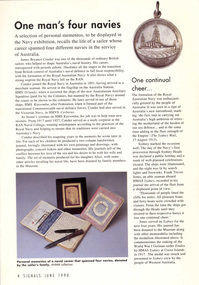
Magazine - Article, One Man's Four Navies
... On his first ship, ‘HMS Katoomba’, as bosun yeoman, he helped train new recruits. He later served on ‘HMS Challenger’ and ‘HMS Psyche’ which included voyages to Fiji, the New Hebrides, Singapore and New Zealand as well as regular cruises to Australian ports. ...On his first ship, ‘HMS Katoomba’, as bosun yeoman, he helped train new recruits. He later served on ‘HMS Challenger’ and ‘HMS Psyche’ which included voyages to Fiji, the New Hebrides, Singapore and New Zealand as well as regular cruises to Australian ports. ...James Bryance CONDER (aka James Brycanne CONDER) Artist, poet and four-navy veteran, 1872 - 1954. In 1889 he served in the Merchant Marine Service sailing on the ships ‘Ellora’ and ‘Avenger’. in 1891, aged 19, he joined the Royal Navy in Australia serving on the flagship of the Australian Station, ‘HMS Orlando’, when it escorted ships of the new Australasian Auxiliary Squadron in coastal voyages. After serving 6 months he returned to family in Melbourne rather than sign on for 12 years. Instead he joined the Victorian Colonial Navy and was posted, in succession, to the ‘HMVS Cerberus’, ‘HMVS Nelson’ and the gunboat ‘HMVS Albert’. In 1896 he left the navy, married Victoria Agnes NIHILL and joined the Victorian Police Force. In 1904 CONDOR returned to the sea as part of the Commonwealth Naval Forces, an amalgamation of the colonial navies formed after federation and later becoming the Royal Australian Navy. On his first ship, ‘HMS Katoomba’, as bosun yeoman, he helped train new recruits. He later served on ‘HMS Challenger’ and ‘HMS Psyche’ which included voyages to Fiji, the New Hebrides, Singapore and New Zealand as well as regular cruises to Australian ports. In 1909, CONDER left the Navy and undertook shored-based civilian work until 1913 when he joined the Royal Australian Naval College at Osborne House in Geelong. He remained with the Naval College until 1937 through its moves to Jervis Bay, NSW and then to Crib Point, Victoria training midshipmen according to the practices of the Royal Navy. In later life, CONDER produced two handwritten journals for his family illustrated with his own paintings and drawings. Two original sets were made. One remains in the family while the other is held by the Australian National Maritime Museum in Sydney. PMHPS hold several items relating to James CONDER including photocopies of his journals ‘Notes from a Sailors Log - Under Canvas - Part I The Merchant Service’ (Cat No 2700.01) and ‘Notes from a Sailors Log - Under Steam - Part II The Navy’ (Cat No 2700.02), a photocopy of his Certificate of Service (Cat No 2700.03), a booklet of his life story (Cat No 2700.04) and several digital items (Cat No 2476.01 - 2476.09).Article, 'One Man's Four Navies', about James CONDER from National Maritime Museum's 'Signals' magazine, Issue 12, 1 June 1990. armed services - navy, transport - shipping, james bryance conder, ran - royal australian navy, royal naval squadron, victorian colonial navy -
 Port Melbourne Historical & Preservation Society
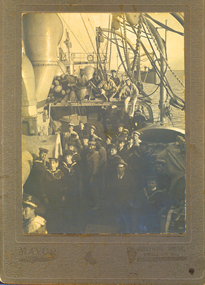
Photograph - Crew of the Katoomba, 1904
... On his first ship, ‘HMS Katoomba’, as bosun yeoman, he helped train new recruits. He later served on ‘HMS Challenger’ and ‘HMS Psyche’ which included voyages to Fiji, the New Hebrides, Singapore and New Zealand as well as regular cruises to Australian ports. ...On his first ship, ‘HMS Katoomba’, as bosun yeoman, he helped train new recruits. He later served on ‘HMS Challenger’ and ‘HMS Psyche’ which included voyages to Fiji, the New Hebrides, Singapore and New Zealand as well as regular cruises to Australian ports. ...James Bryance CONDER (aka James Brycanne CONDER) Artist, poet and four-navy veteran, 1872 - 1954. In 1889 he served in the Merchant Marine Service sailing on the ships ‘Ellora’ and ‘Avenger’. in 1891, aged 19, he joined the Royal Navy in Australia serving on the flagship of the Australian Station, ‘HMS Orlando’, when it escorted ships of the new Australasian Auxiliary Squadron in coastal voyages. After serving 6 months he returned to family in Melbourne rather than sign on for 12 years. Instead he joined the Victorian Colonial Navy and was posted, in succession, to the ‘HMVS Cerberus’, ‘HMVS Nelson’ and the gunboat ‘HMVS Albert’. In 1896 he left the navy, married Victoria Agnes NIHILL and joined the Victorian Police Force. In 1904 CONDOR returned to the sea as part of the Commonwealth Naval Forces, an amalgamation of the colonial navies formed after federation and later becoming the Royal Australian Navy. On his first ship, ‘HMS Katoomba’, as bosun yeoman, he helped train new recruits. He later served on ‘HMS Challenger’ and ‘HMS Psyche’ which included voyages to Fiji, the New Hebrides, Singapore and New Zealand as well as regular cruises to Australian ports. In 1909, CONDER left the Navy and undertook shored-based civilian work until 1913 when he joined the Royal Australian Naval College at Osborne House in Geelong. He remained with the Naval College until 1937 through its moves to Jervis Bay, NSW and then to Crib Point, Victoria training midshipmen according to the practices of the Royal Navy. In later life, CONDER produced two handwritten journals for his family illustrated with his own paintings and drawings. Two original sets were made. One remains in the family while the other is held by the Australian National Maritime Museum in Sydney. PMHPS hold several items relating to James CONDER including photocopies of his journals ‘Notes from a Sailors Log - Under Canvas - Part I The Merchant Service’ (Cat No 2700.01) and ‘Notes from a Sailors Log - Under Steam - Part II The Navy’ (Cat No 2700.02), a photocopy of his Certificate of Service (Cat No 2700.03), a booklet of his life story (Cat No 2700.04) and several digital items (Cat No 2476.01 - 2476.09). Digital copy of b&w photograph of the crew of the 'Katoomba'armed services - navy, hms katoomba, james bryance conder, ran - royal australian navy -
 Port Melbourne Historical & Preservation Society
Photograph - James CONDER's journals, Glen Stuart, Aug 2008
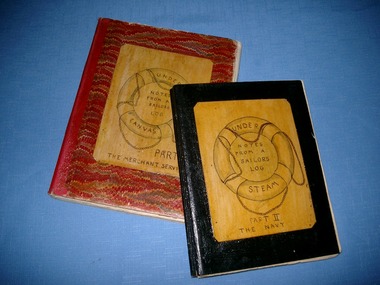
... On his first ship, ‘HMS Katoomba’, as bosun yeoman, he helped train new recruits. He later served on ‘HMS Challenger’ and ‘HMS Psyche’ which included voyages to Fiji, the New Hebrides, Singapore and New Zealand as well as regular cruises to Australian ports. ...On his first ship, ‘HMS Katoomba’, as bosun yeoman, he helped train new recruits. He later served on ‘HMS Challenger’ and ‘HMS Psyche’ which included voyages to Fiji, the New Hebrides, Singapore and New Zealand as well as regular cruises to Australian ports. ...James Bryance CONDER (aka James Brycanne CONDER) Artist, poet and four-navy veteran, 1872 - 1954. In 1889 he served in the Merchant Marine Service sailing on the ships ‘Ellora’ and ‘Avenger’. in 1891, aged 19, he joined the Royal Navy in Australia serving on the flagship of the Australian Station, ‘HMS Orlando’, when it escorted ships of the new Australasian Auxiliary Squadron in coastal voyages. After serving 6 months he returned to family in Melbourne rather than sign on for 12 years. Instead he joined the Victorian Colonial Navy and was posted, in succession, to the ‘HMVS Cerberus’, ‘HMVS Nelson’ and the gunboat ‘HMVS Albert’. In 1896 he left the navy, married Victoria Agnes NIHILL and joined the Victorian Police Force. In 1904 CONDOR returned to the sea as part of the Commonwealth Naval Forces, an amalgamation of the colonial navies formed after federation and later becoming the Royal Australian Navy. On his first ship, ‘HMS Katoomba’, as bosun yeoman, he helped train new recruits. He later served on ‘HMS Challenger’ and ‘HMS Psyche’ which included voyages to Fiji, the New Hebrides, Singapore and New Zealand as well as regular cruises to Australian ports. In 1909, CONDER left the Navy and undertook shored-based civilian work until 1913 when he joined the Royal Australian Naval College at Osborne House in Geelong. He remained with the Naval College until 1937 through its moves to Jervis Bay, NSW and then to Crib Point, Victoria training midshipmen according to the practices of the Royal Navy. In later life, CONDER produced two handwritten journals for his family illustrated with his own paintings and drawings. Two original sets were made. One remains in the family while the other is held by the Australian National Maritime Museum in Sydney. PMHPS hold several items relating to James CONDER including photocopies of his journals ‘Notes from a Sailors Log - Under Canvas - Part I The Merchant Service’ (Cat No 2700.01) and ‘Notes from a Sailors Log - Under Steam - Part II The Navy’ (Cat No 2700.02), a photocopy of his Certificate of Service (Cat No 2700.03), a booklet of his life story (Cat No 2700.04) and several digital items (Cat No 2476.01 - 2476.09).Colour digital photograph of of of the original two sets of James CONDER's handwritten and illustrated journals made for his family, '‘Notes from a Sailors Log - Under Canvas - Part I The Merchant Service’ (Cat No 2700.01) and ‘Notes from a Sailors Log - Under Steam - Part II The Navy’ (Cat No 2700.02). Displayed in 'Navy in Port' exhibition Aug/Sept 2008armed services - navy, transport - shipping, james bryance conder, merchant navy, royal naval squadron, victorian colonial navy, ran - royal australian navy -
 Port Melbourne Historical & Preservation Society
Photograph - HMVS Cerberus by James CONDER
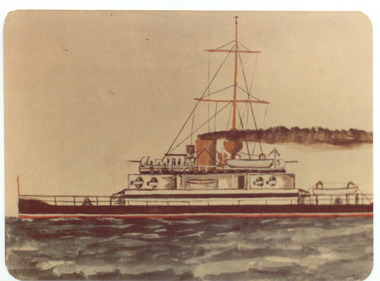
... On his first ship, ‘HMS Katoomba’, as bosun yeoman, he helped train new recruits. He later served on ‘HMS Challenger’ and ‘HMS Psyche’ which included voyages to Fiji, the New Hebrides, Singapore and New Zealand as well as regular cruises to Australian ports. ...On his first ship, ‘HMS Katoomba’, as bosun yeoman, he helped train new recruits. He later served on ‘HMS Challenger’ and ‘HMS Psyche’ which included voyages to Fiji, the New Hebrides, Singapore and New Zealand as well as regular cruises to Australian ports. ...James Bryance CONDER (aka James Brycanne CONDER) Artist, poet and four-navy veteran, 1872 - 1954. In 1889 he served in the Merchant Marine Service sailing on the ships ‘Ellora’ and ‘Avenger’. in 1891, aged 19, he joined the Royal Navy in Australia serving on the flagship of the Australian Station, ‘HMS Orlando’, when it escorted ships of the new Australasian Auxiliary Squadron in coastal voyages. After serving 6 months he returned to family in Melbourne rather than sign on for 12 years. Instead he joined the Victorian Colonial Navy and was posted, in succession, to the ‘HMVS Cerberus’, ‘HMVS Nelson’ and the gunboat ‘HMVS Albert’. In 1896 he left the navy, married Victoria Agnes NIHILL and joined the Victorian Police Force. In 1904 CONDOR returned to the sea as part of the Commonwealth Naval Forces, an amalgamation of the colonial navies formed after federation and later becoming the Royal Australian Navy. On his first ship, ‘HMS Katoomba’, as bosun yeoman, he helped train new recruits. He later served on ‘HMS Challenger’ and ‘HMS Psyche’ which included voyages to Fiji, the New Hebrides, Singapore and New Zealand as well as regular cruises to Australian ports. In 1909, CONDER left the Navy and undertook shored-based civilian work until 1913 when he joined the Royal Australian Naval College at Osborne House in Geelong. He remained with the Naval College until 1937 through its moves to Jervis Bay, NSW and then to Crib Point, Victoria training midshipmen according to the practices of the Royal Navy. In later life, CONDER produced two handwritten journals for his family illustrated with his own paintings and drawings. Two original sets were made. One remains in the family while the other is held by the Australian National Maritime Museum in Sydney. PMHPS hold several items relating to James CONDER including photocopies of his journals ‘Notes from a Sailors Log - Under Canvas - Part I The Merchant Service’ (Cat No 2700.01) and ‘Notes from a Sailors Log - Under Steam - Part II The Navy’ (Cat No 2700.02), a photocopy of his Certificate of Service (Cat No 2700.03), a booklet of his life story (Cat No 2700.04) and several digital items (Cat No 2476.01 - 2476.09).Colour digital photograph of a drawing of HMVS Cerberus by James CONDER.armed services - navy, transport - shipping, james bryance conder, ran - royal australian navy, victorian colonial navy, royal australian naval college, merchant navy, hmvs cerberus, royal naval squadron
