
Showing 50 items matching "new zealand infantry"
-
 The 5th/6th Battalion Royal Victoria Regiment Historical Collection
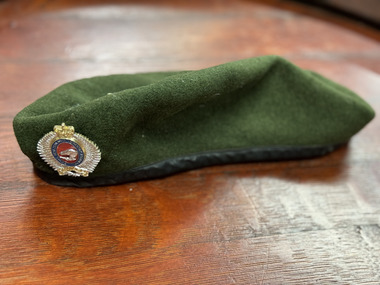
Headwear - Royal New Zealand Infantry Regiment Beret, Royal New Zealand Infantry Regiment Greet Beret
... Royal New Zealand Infantry Regiment Beret...Royal New Zealand Infantry Regiment Greet Beret...Royal New Zealand Infantry Regiment Beret in Green colour...Royal New Zealand Infantry Regiment Beret in Green colour Royal New Zealand Infantry Regiment Greet Beret Headwear Royal New Zealand Infantry Regiment Beret ...Royal New Zealand Infantry Regiment Beret in Green colour -
 National Vietnam Veterans Museum (NVVM)
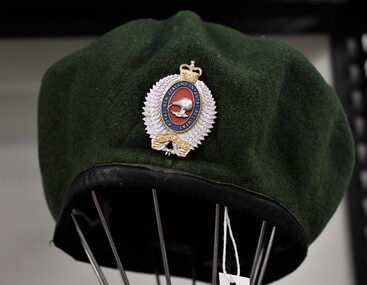
Uniform - Beret, New Zealand Infantry
... Beret, New Zealand Infantry...Infantry...New Zealand... Beret worn by John T Robinson, service number 699302 of the Royal New Zealand Infantry, 2nd platoon, Victor 3 Company, Vietnam 1968....Royal New Zealand Infantry Regiment; onward...Uniform Beret, New Zealand Infantry ...Beret worn by John T Robinson, service number 699302 of the Royal New Zealand Infantry, 2nd platoon, Victor 3 Company, Vietnam 1968.Green woollen beret with black leather band. The badge is oval with a silver fern outside with a gold crown at the top of an oval with a kiwi in silver on a red background with a blue surround.Royal New Zealand Infantry Regiment; onwardberet, nz infantry, new zealand, uniform, robinson, john t robinson -
 The 5th/6th Battalion Royal Victoria Regiment Historical Collection
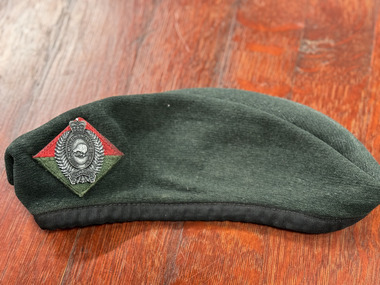
Headwear - New Zealand Green Beret, Royal New Zealand Infantry Regiment Greet Beret
... Royal New Zealand Infantry Regiment Greet Beret...Green coloured Beret of the Royal New Zealand Infantry Regiment with red and green patch behind the unit badge...Green Green coloured Beret of the Royal New Zealand Infantry Regiment with red and green patch behind the unit badge Royal New Zealand Infantry Regiment Greet Beret Headwear New Zealand Green Beret ...Green coloured Beret of the Royal New Zealand Infantry Regiment with red and green patch behind the unit badgeGreen -
 Monbulk RSL Sub Branch
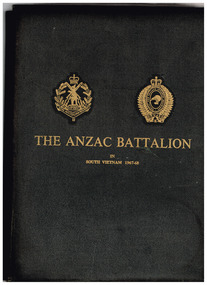
Book, K E Newman, The ANZAC Battalion: A record of the tour of the 2nd Battalion RAR and 1st Battalion, the Royal New Zealand Infantry Regiment in Sth Vietnam 1967-1968, 1968
... The ANZAC Battalion: A record of the tour of the 2nd Battalion RAR and 1st Battalion, the Royal New Zealand Infantry Regiment in Sth Vietnam 1967-1968...Ill, index, maps, p.274 The ANZAC Battalion: A record of the tour of the 2nd Battalion RAR and 1st Battalion, the Royal New Zealand Infantry Regiment in Sth Vietnam 1967-1968 Book K E Newman 2nd Battalion The Royal Australian Regiment ...Two volume set. Volume 1 is descriptive of the ANZAC Battilion in 1967-1968 and the second of maps.2.v. Ill, index, maps, p.274non-fictionTwo volume set. Volume 1 is descriptive of the ANZAC Battilion in 1967-1968 and the second of maps.vietnam - pictorial works, vietnam war - 1961-1975 - australian participation -
 National Vietnam Veterans Museum (NVVM)
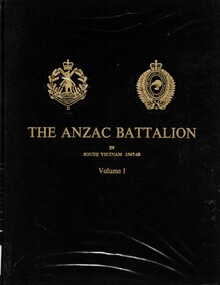
Book, Newman, Kevin E. (Major), The Anzac Battalion: A Record Of The Tour of 2nd Battalion, the Royal Australian Regiment, 1st Battalion, The Royal New Zealand Infantry Regiment (The Anzac Battalion) in South Vietnam, 1968-68 Vol 1
... The Anzac Battalion: A Record Of The Tour of 2nd Battalion, the Royal Australian Regiment, 1st Battalion, The Royal New Zealand Infantry Regiment (The Anzac Battalion) in South Vietnam, 1968-68 Vol 1...The Anzac Battalion: A Record Of The Tour of 2nd Battalion, the Royal Australian Regiment, 1st Battalion, The Royal New Zealand Infantry Regiment (The Anzac Battalion) in South Vietnam, 1968-68 Vol 1 Book Book Newman, Kevin E. ...The 2nd Battalion, The Royal Australian Regiment has had a colourful history since its foundation in Morotai in 1945.The 2nd Battalion, The Royal Australian Regiment has had a colourful history since its foundation in Morotai in 1945.the anzac battalion, 1st battalion the royal newzealand infantry regiment, 2nd battalion royal australian regiment, anzac -
 National Vietnam Veterans Museum (NVVM)
Flag - New Zealand W Company flag
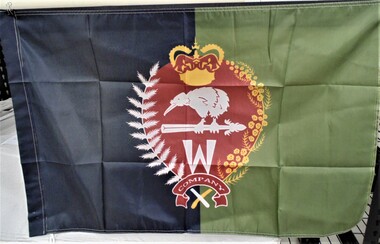
... New Zealand...Reihana Patrick Nuku...42903...RNZIR...New Zealand Infantry..."W Company" (Whiskey Company) refers to a rotating rifle company from the Royal New Zealand Infantry Regiment (RNZIR) who served in South Vietnam as part of the ANZAC Battalion alongside Australian forces between 1967 and 1972. ..."W Company" (Whiskey Company) refers to a rotating rifle company from the Royal New Zealand Infantry Regiment (RNZIR) who served in South Vietnam as part of the ANZAC Battalion alongside Australian forces between 1967 and 1972. ..."W Company" (Whiskey Company) refers to a rotating rifle company from the Royal New Zealand Infantry Regiment (RNZIR) who served in South Vietnam as part of the ANZAC Battalion alongside Australian forces between 1967 and 1972. The company was known for its jungle patrols and stealth ambushes. This item was donated by Pte Reihana Patrick Nuku, New Zealand Service no. 42903, W1 unit 575, who was wounded by a booby trap on 10 May 1968. Flag with left hand half navy blue and the right hand olive green. A gold crown with a maroon background is in the centre. A wing of white feathers fan to the left of a white kiwi and a sprig of gold flowers fans the kiwi on the right side. Underneath the emblem is W Company . w company, new zealand, reihana patrick nuku, 42903, rnzir, new zealand infantry -
 National Vietnam Veterans Museum (NVVM)
Book, Laurent, Rob, With ANZACS in Vietnam: A Photographic Record of 6RAR/NZ (ANZAC) Battalion 1969-1970 - Includes DVD Video and song "The Green Soldier" (Copy 1)
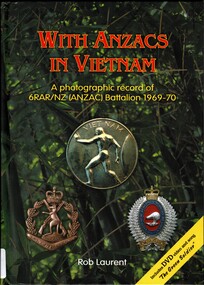
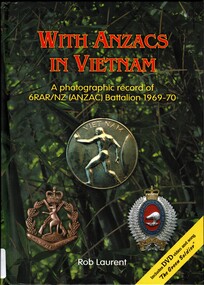
... New Zealand...Royal New Zealand Infantry Regiment...Australian Vietnam War 1961-1975 - Participation New Zealand Royal New Zealand Infantry Regiment ANZAC 6RAR/NZ Three of he Australian Infantry Battalions that served in Vietman were ANZAC units, incorporating companies of the Royal New Zealand Infantry Regiment. ...Three of he Australian Infantry Battalions that served in Vietman were ANZAC units, incorporating companies of the Royal New Zealand Infantry Regiment. This book tells the story of one suct unit: 6RAR/NZ (ANZAC) Battalion.Three of he Australian Infantry Battalions that served in Vietman were ANZAC units, incorporating companies of the Royal New Zealand Infantry Regiment. This book tells the story of one suct unit: 6RAR/NZ (ANZAC) Battalion. australian, vietnam war, 1961-1975 - participation, new zealand, royal new zealand infantry regiment, anzac, 6rar/nz -
 National Vietnam Veterans Museum (NVVM)
Book, Laurent, Rob, With ANZACS In Vietnam: A Photographic Record of 6RAR/NZ (ANZAC) Battalion 1969-1970 (includes a CD on the inside cover(Copy 3)
... New Zealand...6RAR/NZ...Royal New Zealand Infantry Regiment...Australian Vietnam War 1961-1975 - Participation New Zealand 6RAR/NZ Royal New Zealand Infantry Regiment ANZAC Three of he Australian Infantry Battalions that served in Vietman were ANZAC units, incorporating companies of the Royal New Zealand Infantry Regiment. ...Three of he Australian Infantry Battalions that served in Vietman were ANZAC units, incorporating companies of the Royal New Zealand Infantry Regiment. This book tells the story of one suct unit: 6RAR/NZ (ANZAC) Battalion.Three of he Australian Infantry Battalions that served in Vietman were ANZAC units, incorporating companies of the Royal New Zealand Infantry Regiment. This book tells the story of one suct unit: 6RAR/NZ (ANZAC) Battalion. australian, vietnam war, 1961-1975 - participation, new zealand, 6rar/nz, royal new zealand infantry regiment, anzac -
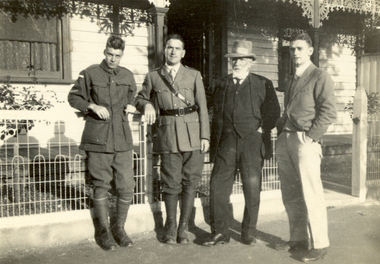 Federation University Historical Collection
Frank and William Wright and friends, early 1930s
... New Zealand. The Frank Wright Medal at the Royal South Street competition is awarded to an individual recognized as making an outstanding contribution to brass music in Australia. frank wright william wright 71st infantry band Black and white photograph of four men standing beside the fence of a weatherboard and lacework house. ...Frank Wright was a renown resident of Smeaton, where he was born on 2 August 1901. He lived at Laura Villa, and attended Smeaton State School. His father William was a gold miner and his mother's name was Sarah. Their family won many singing and instrumental awards. Frank was tutored by Percy Code and was awarded a gold medal for the highest marks in the ALCM examinations in the British Colonies at the age of seventeen years. He became the Australian Open Cornet Champion by the age of eighteen. A year later, Frank conducted the City of Ballarat Band, and later the Ballarat Soldiers’ Memorial Band. He formed the Frank Wright Frisco Band and Frank Wright and his Coliseum Orchestra. These bands won many South Street awards, and Frank as conductor won many awards in the Australian Band Championship contest. In 1933 Frank Wright sailed to England to conduct the famous St Hilda’s Band and was later appointed Musical Director of the London County Council, where he organized many amazing concerts in parks, in and around the London district. He was made Professor of Brass and Military Band Scoring and conducted at the Guildhall of Music and Drama. Frank was often invited to adjudicate Brass Band Championships around Europe, in Australia, including South Street and in New Zealand. The Frank Wright Medal at the Royal South Street competition is awarded to an individual recognized as making an outstanding contribution to brass music in Australia.Black and white photograph of four men standing beside the fence of a weatherboard and lacework house. The left hand man is dressed in a soldier's uniform, the middle, left hand man is dressed in the 71st Infantry Band uniform, the man to his right is an older man with a beard and dressed in a dark suit and the fouth man is dressed in a jacket and light trousers. The middle, left hand man is Frank Wright and the man to his right is his father William Wright.frank wright, william wright, 71st infantry band -
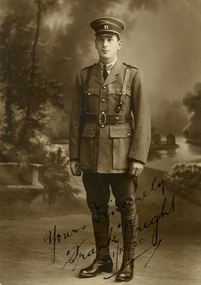 Federation University Historical Collection
Photograph - Sepia, Frank Wright in 71st Infantry Uniform, 1/10/1920
... New Zealand. The Frank Wright Medal at the Royal South Street competition is awarded to an individual recognized as making an outstanding contribution to brass music in Australia. frank wright brass band 71st infantry band Frank Wright 1/10/1920. 71st Infantry Band Broadmeadows Camp 1.) ...Frank Wright was a renown resident of Smeaton, where he was born on 2 August 1901. He lived at Laura Villa, and attended Smeaton State School. His father William was a gold miner and his mother's name was Sarah. Their family won many singing and instrumental awards. Frank was tutored by Percy Code and was awarded a gold medal for the highest marks in the ALCM examinations in the British Colonies at the age of seventeen years. He became the Australian Open Cornet Champion by the age of eighteen. A year later, Frank conducted the City of Ballarat Band, and later the Ballarat Soldiers’ Memorial Band. He formed the Frank Wright Frisco Band and Frank Wright and his Coliseum Orchestra. These bands won many South Street awards, and Frank as conductor won many awards in the Australian Band Championship contest. In 1933 Frank Wright sailed to England to conduct the famous St Hilda’s Band and was later appointed Musical Director of the London County Council, where he organized many amazing concerts in parks, in and around the London district. He was made Professor of Brass and Military Band Scoring and conducted at the Guildhall of Music and Drama. Frank was often invited to adjudicate Brass Band Championships around Europe, in Australia, including South Street and in New Zealand. The Frank Wright Medal at the Royal South Street competition is awarded to an individual recognized as making an outstanding contribution to brass music in Australia.1.) A full length sepia photograph of a young man in an Infantry Band Uniform. The man is Frank Wright 2.) A sepia photograph showing the torso of a young man in an Infantry Band Uniform. The man is Frank WrightFrank Wright 1/10/1920. 71st Infantry Band Broadmeadows Campfrank wright, brass band, 71st infantry band -
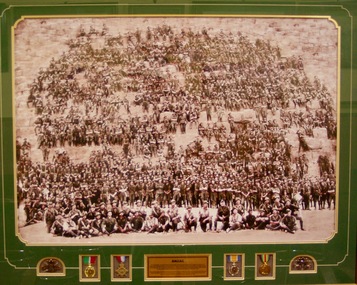 Lara RSL Sub Branch
Framed Print, Original photo 28/2/1915
... Infantry was raised at Blackboy Hill Camp Bellevue in Western Australia on the 17th of August 1914. Following a period of training of just 2 weeks the Battalion embarked at Fremantle on the HMAS Ascantius on the 11th of November 1918. The Ascantius formed part of a convoy 38 troop ships carrying approximately 35,000 Australians and New Zealanders...Infantry was raised at Blackboy Hill Camp Bellevue in Western Australia on the 17th of August 1914. Following a period of training of just 2 weeks the Battalion embarked at Fremantle on the HMAS Ascantius on the 11th of November 1918. The Ascantius formed part of a convoy 38 troop ships carrying approximately 35,000 Australians and New Zealanders ...The 11th Battalion, Australian Infantry was raised at Blackboy Hill Camp Bellevue in Western Australia on the 17th of August 1914. Following a period of training of just 2 weeks the Battalion embarked at Fremantle on the HMAS Ascantius on the 11th of November 1918. The Ascantius formed part of a convoy 38 troop ships carrying approximately 35,000 Australians and New Zealanders and reached the port of Alexandria Egypt on the 3rd of December 1914. After arriving in Egypt, the Battalion camped and trained at Mena, ten miles from Cairo at the foot of the great pyramid Cheops. On the 10th of January 1915 prior to leaving Egypt, a photograph of more than 800 original officers and men of the battalion was undertaken at the great pyramid of Cheops on the 28th of February 1915Historical photograph of the 11th Infantry Btn taken on the Cheops Pyramid Mena Egypt on the 28/2/1914Plastic framed print behind glass with plaque medals and two rising sun badgesAnzac and plaque describing the historical significance.11 battalion aif cheop pyramid egypt photo pegan anzac mena hmas ascantius -
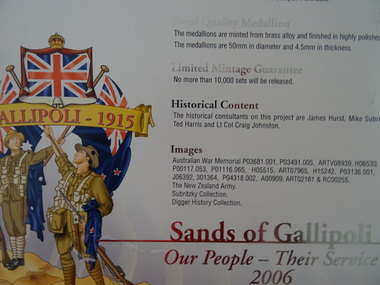 Geelong RSL Sub Branch
Medallions, Sands of Gallipoli, Our People - Their Service 2006, 2006
... Medallions depicting Infantry, Medical, Light Horse Artillery, They also Served, Navy. from pictures from collections. This set is Number 1620 of 10,000. Gallipoli Medallions Images on the medallions are from Australian War Memorial, The New Zealand Army, Subritzky Collection, Digger History Collection 7 x round medallions, brass alloy, polished silver, engraved pictires on both sides of the each medallion. ...Medallions depicting Infantry, Medical, Light Horse Artillery, They also Served, Navy. from pictures from collections.This set is Number 1620 of 10,000.7 x round medallions, brass alloy, polished silver, engraved pictires on both sides of the each medallion. Gallipoli Sand from the Gallipoli Peninsula.Images on the medallions are from Australian War Memorial, The New Zealand Army, Subritzky Collection, Digger History Collectiongallipoli, medallions -
 Bendigo Military Museum
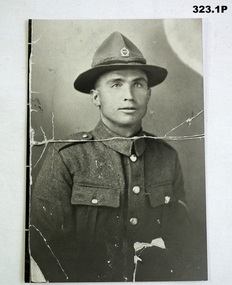
Administrative record - SERVICE, TELEGRAM AND PHOTO WW1, circa 1918
... He enlisted in New Zealand No 69437, 2nd Batt Canterbury Infantry Regiment. He was WIA early September 1918 and admitted to hospital United Kingdom on 10th September with a GSW slight to the right leg. ...He enlisted in New Zealand No 69437, 2nd Batt Canterbury Infantry Regiment. He was WIA early September 1918 and admitted to hospital United Kingdom on 10th September with a GSW slight to the right leg. ...Harry Thompson was from Australia. He enlisted in New Zealand No 69437, 2nd Batt Canterbury Infantry Regiment. He was WIA early September 1918 and admitted to hospital United Kingdom on 10th September with a GSW slight to the right leg. He served 1 year 110 days overseas and was discharged from the Army 25.6.19. Refer 1258, 2026.2, 2027..1) Photo, black and white copy of a New Zealand Soldier in uniform re H.Thompson. .2) New Zealand Military Forces Telegram dated 20th September to Mrs J.W Thompson of Sebastion, Bendigo, Victoria re the wounding of H.Thompson. .3) Certificate of Discharge from the New Zealand Expeditionary Force, form No 207, No 53263 re H Thompson. .2) "69437 Harry Thompson" .3) "69437 Pte, Canterbury Infantry Regiment, Harry Thompson, 25th June 1919"documents - certificates, communications - telegraphic, photography - photographs, -
 Bendigo Military Museum
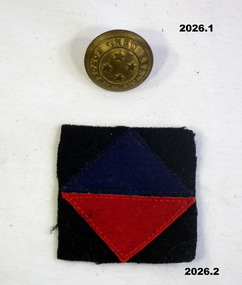
Uniform - BUTTON & COLOUR PATCH, 1914 -18
... The colour patch is 2nd Battalion Canterbury Infantry Regiment New Zealand Military Forces. They belonged to Harry Thompson who came from Sebastion near Bendigo and enlisted in New Zealand. ...The colour patch is 2nd Battalion Canterbury Infantry Regiment New Zealand Military Forces. They belonged to Harry Thompson who came from Sebastion near Bendigo and enlisted in New Zealand. ...The colour patch is 2nd Battalion Canterbury Infantry Regiment New Zealand Military Forces. They belonged to Harry Thompson who came from Sebastion near Bendigo and enlisted in New Zealand. Refer 323.3, 1258, 2027..1) Button, metal, round with 4 stars in the centre with "New Zealand Forces" around the outside. .2) Canterbury Regiment colour patch, felt material, square shaped black backing with central diamond shape, dark blue over red.uniforms-military-accessories, metalcraft-brassware, manchester-trimmings -
 Bendigo Military Museum
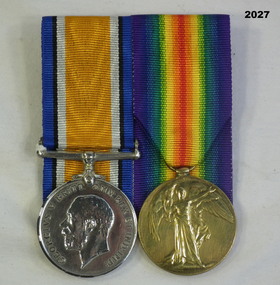
Award - MEDAL SET WW1, Post 1919
... New Zealand). He enlisted in the New Zealand Expeditionary Force No 69437 Canterbury Infantry Regiment. ...New Zealand). He enlisted in the New Zealand Expeditionary Force No 69437 Canterbury Infantry Regiment. ...Harry Thompson (born Sebastion near Bendigo, enlisted New Zealand). He enlisted in the New Zealand Expeditionary Force No 69437 Canterbury Infantry Regiment. Refer 323.3, 1258, 2026.2.Medal set, court mounted, set of (2) re H.Thompson. 1. War medal 1914-1918 2. Victory Medal 1914 - 19"69437 Pte H Thompson N.Z.E.F"medals, military, history -
 4th/19th Prince of Wales's Light Horse Regiment Unit History Room
Flag, 173rd Airborne Brigade (US)
... Infantry (2/503`) and the attached Australians of 1 RAR constituted the infantrymen available to the Brigade. Their mission was to protect the Bien Hoa Air Base and to close with and destroy or capture the enemy. This was in fact the first operational ground force formed under the ANZUS Defence Treaty. ANZUS was a mutual defence treaty signed in 1951 between Australia, New Zealand...Infantry (2/503`) and the attached Australians of 1 RAR constituted the infantrymen available to the Brigade. Their mission was to protect the Bien Hoa Air Base and to close with and destroy or capture the enemy. This was in fact the first operational ground force formed under the ANZUS Defence Treaty. ANZUS was a mutual defence treaty signed in 1951 between Australia, New Zealand ...173 AIRBORNE BRIGADE (SEPARATE) US ARMY 1 RAR BATTLE GROUP BIEN HOA 1965-1966 On May 5, 1965, the Brigade deployed to South Viet Nam as the first US Army ground combat unit in that war. Upon arrival, the 1st Battalion of the Royal Australian Regiment (1 RAR) and a battery from New Zealand (161Royal NZ Artillery) were attached to the Brigade -- making the 173d Airborne the only multi-national combat unit in the war. Initially headquartered in Bien Hoa, the Brigade operated in the four provinces around Saigon. (Xuan Loc, Long Khanh, Phuoc Long & Phuoc Tuy), but (in its roll as a "Fire Brigade") also went to the Central Highlands (Pleiku / Kontum) to fight Viet Cong. The 173d also conducted constant operations against the southern stronghold of the VC Main Force in the legendary Iron Triangle in War Zone D. The brigade was organized as a balanced airborne combat force consisting of two infantry battalions, an artillery battalion, a support battalion, an engineer company, a cavalry troop, an armour company, and a headquarters company. Upon activation, it became the first and only separate airborne brigade in the United States Army. This was the beginning of a long series of "Firsts" for the Brigade. On 5 May 1965, it became the first US Army ground combat unit committed to the war in South Vietnam, where further organizational changes were to take place. Australians attached to the Brigade were: 1st Battalion, of the Royal Australian Regiment (I RAR) and support troops of the 4/19th Prince of Wales Light Horse Regiment (1Troop), 105 Field Battery Royal Australian Artillery, 161 Field Battery Royal New Zealand Artillery, 3 Field Troop Royal Australian Engineers, 161 Reconnaissance Flight, Royal Australian Army Air Corps, 1st Australian Logistical Support Company. The Brigade's two infantry battalions, the First Battalion of the 503' Infantry (1/503`d) and the Second Battalion, of the 503`d Infantry (2/503`) and the attached Australians of 1 RAR constituted the infantrymen available to the Brigade. Their mission was to protect the Bien Hoa Air Base and to close with and destroy or capture the enemy. This was in fact the first operational ground force formed under the ANZUS Defence Treaty. ANZUS was a mutual defence treaty signed in 1951 between Australia, New Zealand and the United States of America. In 1965 the spirit of this treaty appeared as 173d Airborne Brigade (Sep) a tri-national brigade. The only such tri-national fighting force formed during the Vietnam War. On deployment to South Vietnam in 1965, 1 Troop A Squadron, 4th/19th Prince of Wales's Light Horse Regiment was part of the US 173rd Airborne Brigade combat group. Flag, two colours divided vertically, hoist half mid blue, fly half red. Badge of 173rd Airborne Brigade (730 x 490 mm) in centreflag, 173rd airborne, south vietnam -
4th/19th Prince of Wales's Light Horse Regiment Unit History Room
Medal, Long Service and Good Conduct Medal
... New Zealand, Canada, India or South Africa. The medal was originally awarded to soldiers of good conduct who had completed 21 years service in the infantry or 24 years in the cavalry. ...New Zealand, Canada, India or South Africa. The medal was originally awarded to soldiers of good conduct who had completed 21 years service in the infantry or 24 years in the cavalry. ...The British Army Long Service and Good Conduct medal was instituted in 1830. The medal is made from silver and is 36 millimetres in diameter. Until 1901 the medal's obverse contained an image of a trophy of arms with the Royal Arms in an oval shield in the centre while the reverse side contained the inscription "For Long Service and Good Conduct". The King William IV issue had the Royal Coat of Arms with the badge of Hanover on the obverse and a small suspension ring with a plain crimson ribbon. The small ring was replaced by a larger version in 1831. When Queen Victoria succeeded to the throne in 1837 the Hanover emblem was removed from the medal's obverse. In 1855, during the Crimean War, a swivelling scroll suspension was introduced similar to that on the Crimea Medal, followed in 1874 by small lettering replacing the original large lettering on the reverse side. On the succession of King Edward VII to the throne in 1901, the effigy of the reigning sovereign was placed on the medal's obverse. The reverse side remained unchanged, while in 1920 the swivelling scroll suspension was replaced by a fixed suspender. In 1930 the title of the medal was changed to the Long Service and Good Conduct (Military) Medal. It was also decided to add a fixed suspension bar bearing the text "Regular Army" or the name of a dominion country: Australia, New Zealand, Canada, India or South Africa. The medal was originally awarded to soldiers of good conduct who had completed 21 years service in the infantry or 24 years in the cavalry. In 1870, this qualifying period was reduced to 18 years for both the infantry and cavalry. During World War II officers could also be awarded this medal if they had completed at least 12 of their 18 years service in the ranks. Today, the Long Service & Good Conduct Medal (Army) is awarded to members of the British Army who have completed 15 years of reckonable service. A soldier who completes 15 years of reckonable service from the date of attestation or age 17½, whichever is later, shall be eligible to receive the medal. However, there are a number of offences which would normally preclude award of the LS&GCM. Awards are only made after a thorough check of a soldier's record of service. A Clasp to the medal was introduced in 1940. This can be awarded for an additional fifteen years' service. The Clasp bears an image of the Army Crest. When the ribbon alone is worn on a uniform a silver rosette denotes the award of the Clasp. The medal's ribbon was plain crimson from 1830 until 1917 when white stripes were added to both edges. An officer can be considered eligible for the award of the LS&GCM if 12 or more of the 15 years of his or her service have been in the ranks and provided that the other requirements for the award of the medal have been met. An Officer shall be eligible for the award of the Clasp if 22 or more of the 30 years of his or her service has been in the ranks and provided that the other requirements have again been met. Before 1 December 1977 18 years of service was required for consideration for the LS&GCM (Army). The vast majority of LS&GC medals are issued named to the recipient, with the name on the rim around the medal.Full size medal with ribbonREGULAR ARMY Recipient details on rim - not decipherablemedal long service good conduct -
 Warrnambool RSL Sub Branch
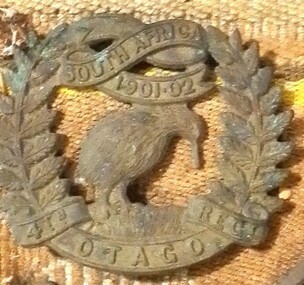
Uniform - Cap Badge, 4th Otago Regiment
... An infantry regiment, it served within the New Zealand Expeditionary Force (NZEF) in World War I during the Gallipoli Campaign (1915) and on the Western Front (1916–1919) ...An infantry regiment, it served within the New Zealand Expeditionary Force (NZEF) in World War I during the Gallipoli Campaign (1915) and on the Western Front (1916–1919) Banner above reads ‘South Africa 1901-1902, banner below reads ‘4th Otago Regt’. ...Banner above reads ‘South Africa 1901-190 (refers to 4th Contingent of NZ Mounted Rifles which served in the Boer War), banner below reads ‘4th Otago Regt’. An infantry regiment, it served within the New Zealand Expeditionary Force (NZEF) in World War I during the Gallipoli Campaign (1915) and on the Western Front (1916–1919) Oval Badge (3.0 X 4.0 cm) Banner above reads ‘South Africa 1901-1902, banner below reads ‘4th Otago Regt’. Centre Kiwi Image. Outside, NZ Ferns Wreath. -
 Frankston RSL Sub Branch
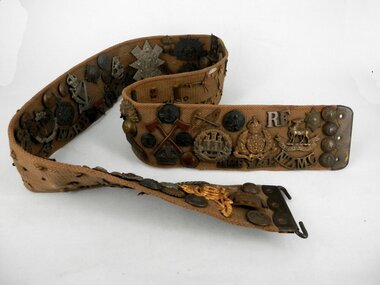
Collection, Badges
... infantry heavyweight webbing waist belt as worn in World War 1. This is an example of a 'trophy' belt, complete with a souvenir collection of metal insignia, badges and buttons which are attached to the belt. The belt has brass fittings however the original buckle is missing. There are a total of 83 various allied military insignia, badges and uniform buttons from the World War 1 era, 56 metal insignia and badges and 27 metal buttons which are mostly of Australian, New Zealand, Canadian or British origin. ...infantry heavyweight webbing waist belt as worn in World War 1. This is an example of a 'trophy' belt, complete with a souvenir collection of metal insignia, badges and buttons which are attached to the belt. The belt has brass fittings however the original buckle is missing. There are a total of 83 various allied military insignia, badges and uniform buttons from the World War 1 era, 56 metal insignia and badges and 27 metal buttons which are mostly of Australian, New Zealand, Canadian or British origin. ...United States Army standard issue infantry heavyweight webbing waist belt as worn in World War 1. This is an example of a 'trophy' belt, complete with a souvenir collection of metal insignia, badges and buttons which are attached to the belt. The belt has brass fittings however the original buckle is missing. There are a total of 83 various allied military insignia, badges and uniform buttons from the World War 1 era, 56 metal insignia and badges and 27 metal buttons which are mostly of Australian, New Zealand, Canadian or British origin. Belt manufactured by M W & S Limited of England in 1915.The reverse side of the belt is stamped "M W & S LTD., 1915" and has an "L" stamp and the Defence Department "/|\". The belt reverse also has the following name in black handwriting "A Paxino 9781 2211". Note A Paxino was associated with Frankston RSL Sub Branch for many years. -
 Victorian Interpretive Projects Inc.
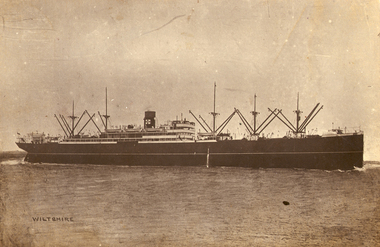
Photograph - Digital, Troopship Wiltshire, 1918, c1918
... New Zealand Imperial Expeditionary Forces. It completed nine transport voyages from Australia commencing 18 October 1914 until final voyage from Sydney 9th November 1918. During that time The Wiltshire carried the 4th Field Artillery Brigade (Victoria) 2nd Division Artillery and their 1st Reinforcements, 1st Division Ammunition Column 1st Division Artillery 4th Reinforcements, thirty-four Infantry Battalion Reinforcements, the 10th, 11th & 12th Field Artillery Battery (Victoria) 4th Field Artillery Brigades, the 4th Brigade Ammunition Column 4th Field Artillery Brigade, the 1st Siege Artillery Brigade 15th Reinforcements, the 4th Light Horse Regiment (Victoria) A, B & C squadron & their Machine Gun Section, six Light Horse Brigade Reinforcements, the 1st Veterinary Section (New South Wales) 11th Reinforcements, the 1st Mobile Veterinary Section (New South Wales) 1st Division 11th Reinforcements, the 2nd Mobile Veterinary Section (Victoria, New South Wales) 2nd Division 11th Reinforcements, the 1st Cyclist Battalion (New South Wales and Queensland) 3rd Reinforcements, the 2nd Field Ambulance (Victoria) First Division & Medical Officers. ...New Zealand Imperial Expeditionary Forces. It completed nine transport voyages from Australia commencing 18 October 1914 until final voyage from Sydney 9th November 1918. During that time The Wiltshire carried the 4th Field Artillery Brigade (Victoria) 2nd Division Artillery and their 1st Reinforcements, 1st Division Ammunition Column 1st Division Artillery 4th Reinforcements, thirty-four Infantry Battalion Reinforcements, the 10th, 11th & 12th Field Artillery Battery (Victoria) 4th Field Artillery Brigades, the 4th Brigade Ammunition Column 4th Field Artillery Brigade, the 1st Siege Artillery Brigade 15th Reinforcements, the 4th Light Horse Regiment (Victoria) A, B & C squadron & their Machine Gun Section, six Light Horse Brigade Reinforcements, the 1st Veterinary Section (New South Wales) 11th Reinforcements, the 1st Mobile Veterinary Section (New South Wales) 1st Division 11th Reinforcements, the 2nd Mobile Veterinary Section (Victoria, New South Wales) 2nd Division 11th Reinforcements, the 1st Cyclist Battalion (New South Wales and Queensland) 3rd Reinforcements, the 2nd Field Ambulance (Victoria) First Division & Medical Officers. ...The HMAT A18 Wiltshire (1912-1922) weighed 10,390 tons with an average cruise speed of 13.5 knots or 25.00 kmph. Described as a refrigerated steamship it was b uilt 1912 by John Brown, Clydebank for the Federal S N Co Ltd, London and was propelled by a twin screw, quadruple expansion engine 2 x 4 cylinders each 6500 hp. Owned by the Commonwealth & Dominion Line Ltd, London, it was leased by the Commonwealth until 2 October 1917. It embarked from Egypt on 2 February 1918. On 18 October 1914 at Melbourne embarked the 4th Light Horse Regiment (Victoria) A, B & C squadron & their Machine Gun Section, the 2nd Field Ambulance (Victoria) First Division. The disembarked the 4th Light Horse Regiment in Egypt on 10 December 1914. On 01 November 1914 The Wiltshire assembled with the first convoy at King George's Sound, Albany Western Australia in transporting the first detachment of the Australian and New Zealand Imperial Expeditionary Forces. It completed nine transport voyages from Australia commencing 18 October 1914 until final voyage from Sydney 9th November 1918. During that time The Wiltshire carried the 4th Field Artillery Brigade (Victoria) 2nd Division Artillery and their 1st Reinforcements, 1st Division Ammunition Column 1st Division Artillery 4th Reinforcements, thirty-four Infantry Battalion Reinforcements, the 10th, 11th & 12th Field Artillery Battery (Victoria) 4th Field Artillery Brigades, the 4th Brigade Ammunition Column 4th Field Artillery Brigade, the 1st Siege Artillery Brigade 15th Reinforcements, the 4th Light Horse Regiment (Victoria) A, B & C squadron & their Machine Gun Section, six Light Horse Brigade Reinforcements, the 1st Veterinary Section (New South Wales) 11th Reinforcements, the 1st Mobile Veterinary Section (New South Wales) 1st Division 11th Reinforcements, the 2nd Mobile Veterinary Section (Victoria, New South Wales) 2nd Division 11th Reinforcements, the 1st Cyclist Battalion (New South Wales and Queensland) 3rd Reinforcements, the 2nd Field Ambulance (Victoria) First Division & Medical Officers. After the conclusion of World War One is was wrecked Rosalie Bay, Great Barrier Island New Zealand 31 May 1922 on passage London for Dunedin. Onboard was a crew of 103 plus 1 stowaway, and 10,000 ton of general cargo. No lives lost and is now a well frequented 'Dive' wrecksite. (http://www.flotilla-australia.com/hmat.htm#A18)Photographic postcard of the troopship Wiltshire out at sea.world war one, world war, wiltshire, troop ship, mmm -
 Kyneton RSL Sub Branch
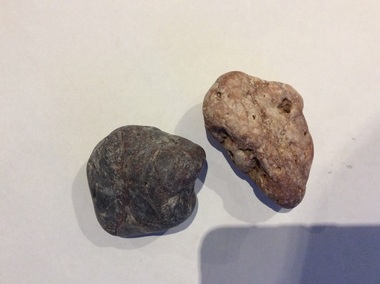
Gallipoli pebbles
... Infantry Force's landing in 1915. Landing at ANZAC Cove , 25 April 1915 Description As part of the attempt to seize the Gallipoli Peninsula in order to suppress the Turkish defences guarding the Dardanelles, military landings were made at Cape Helles at the southern tip of the peninsula (the main landing) and on the west coast near Ari Burnu. At this secondary objective two Divisions of the Australian and New Zealand ...The stones are a momento from Anzac Cove, the site of the Australian Infantry Force's landing in 1915.Landing at ANZAC Cove , 25 April 1915 Description As part of the attempt to seize the Gallipoli Peninsula in order to suppress the Turkish defences guarding the Dardanelles, military landings were made at Cape Helles at the southern tip of the peninsula (the main landing) and on the west coast near Ari Burnu. At this secondary objective two Divisions of the Australian and New Zealand Army Corps (ANZAC) landed in the darkness and faced rugged and difficult country. Units mixed up on their arrival rushed inland and became separated from the main force, which came under growing fire from the Turkish defenders. While Turkish reinforcements arrived, the ANZAC position became increasingly precarious as the assaulting force failed to secure their initial objectives. Falling back on improvised and shallow entrenchments the ANZACs held on for a crucial first night. By that first evening 16,000 men had been landed; of those over 2,000 Australians had been killed or wounded. www.awm.gov.au ANZAC Cove landingTwo smooth stones. Both would fit into the palm of a medium sized hand. One is dark, almost black, the other lighter, with a pinkish tinge.Catalogued as 108A and 108 Banzac cove, gallipoli -
 National Vietnam Veterans Museum (NVVM)
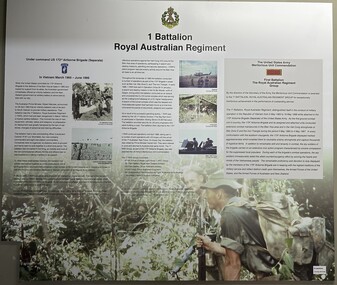
Poster - Information Board - 1 Battalion Royal Australian Regiment in Vietnam March 1965 - June 1966, 1 Royal Australian Regiment 1st Tour 1965-1966
... Infantry Dicision...Operation Rolling Stone...1st Australian Task Force...Prime Minister Harold Holt...Anzac Day...US Army's Meritorious Unit Commendation...4th/19th Prince of Wales Light Horse...ACP Troop...161 Field Battery...Royal New Zealand...This item commemorates the conflict in Vietnam. 1 Battalion Royal Australian Regiment Viet Cong VC Bien Hoa 173rd Airborne Brigade Ben Cat War Zone D The Iron T Operation Crimp Ho Bo Woods Saigon Tunnels of Cu Chi US 1st Infantry Dicision Operation Rolling Stone 1st Australian Task Force Prime Minister Harold Holt Anzac Day US Army's Meritorious Unit Commendation 4th/19th Prince of Wales Light Horse ACP Troop 161 Field Battery Royal New Zealand Artillery 105 Field Battery Royal Australian Artillery 3 Field Troop Royal Australian Engineers 161 (Indep) Recce Flt Australian Army Aviation Corps 1 Australian Logistics Support Company Sgt William John Noble 3411105 Royal Australian Infantry Corps A large white information board commemorating 1 Battalion Royal Australian Regiment under command US 173rd Airborne Brigade (separate) during 1965 to 1966 in Vietnam. ...This item commemorates the conflict in Vietnam.A large white information board commemorating 1 Battalion Royal Australian Regiment under command US 173rd Airborne Brigade (separate) during 1965 to 1966 in Vietnam. There are 5 photos of soldiers in the jungle and one photo of a soldier walking with a local. In brief the board describes the history of first tour with a detailed citation of US meritorious unit commendation.1 battalion, royal australian regiment, viet cong, vc, bien hoa, 173rd airborne brigade, ben cat, war zone d, the iron t, operation crimp, ho bo woods, saigon, tunnels of cu chi, us 1st infantry dicision, operation rolling stone, 1st australian task force, prime minister harold holt, anzac day, us army's meritorious unit commendation, 4th/19th prince of wales light horse, acp troop, 161 field battery, royal new zealand artillery, 105 field battery, royal australian artillery, 3 field troop, royal australian engineers, 161 (indep) recce flt, australian army aviation corps, 1 australian logistics support company, sgt william john noble, 3411105, royal australian infantry corps -
 National Vietnam Veterans Museum (NVVM)
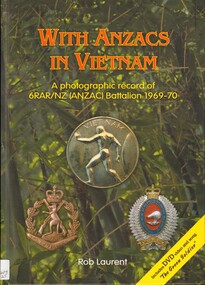
Book, Laurent, Rob, With ANZACS in Vietnam: A photographic Record of 6RAR/NZ (ANZAC) Battalion 1969-1970 (Copy 2)
... 1961-1975 - Participation Australian Vietnam War 1961-1975 - Participation New Zealand Royal New Zealand Infactry Regiment Three of the Australian Infantry batallions that served in Vietnam were ANZAC units, incorporating companies of the Royal New Zealand Infantry Regiment. ...Three of the Australian Infantry batallions that served in Vietnam were ANZAC units, incorporating companies of the Royal New Zealand Infantry Regiment.Three of the Australian Infantry batallions that served in Vietnam were ANZAC units, incorporating companies of the Royal New Zealand Infantry Regiment. 1961-1975 - participation, australian, vietnam war, 1961-1975 - participation, new zealand, royal new zealand infactry regiment -
 National Vietnam Veterans Museum (NVVM)
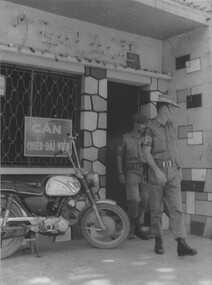
Photograph, Gibbons, Denis, Palace Bar
... For almost five years Gibbons toured with nine Australian infantry battalions, posting compelling war images from within many combat zones before being flown out in late November 1970 after sustaining injuries. The images held within the National Vietnam Veterans Museum make up the Gibbons Collection. Photograph Military Police Palace Bar Gibbons Collection Catalogue New Zealand ...Denis Gibbons (1937 – 2011) Trained with the Australian Army, before travelling to Vietnam in January 1966, Denis stayed with the 1st Australian Task Force in Nui Dat working as a photographer. For almost five years Gibbons toured with nine Australian infantry battalions, posting compelling war images from within many combat zones before being flown out in late November 1970 after sustaining injuries. The images held within the National Vietnam Veterans Museum make up the Gibbons Collection. A black and white photograph of Australian and New Zealand Military Police leave the Palace Bar following and inspection for unauthorised trading practices, particularly alcohol sales. MP's were also very vigilant in the pursuit of drug dealers.photograph, military police, palace bar, gibbons collection catalogue, new zealand military police, denis gibbons -
 National Vietnam Veterans Museum (NVVM)
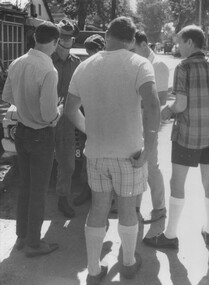
Photograph, Gibbons, Denis, Document Inspection
... For almost five years Gibbons toured with nine Australian infantry battalions, posting compelling war images from within many combat zones before being flown out in late November 1970 after sustaining injuries. The images held within the National Vietnam Veterans Museum make up the Gibbons Collection. Photograph Military Police R & C Leave Vung Tau Gibbons Collection Catalogue New Zealand ...Denis Gibbons (1937 – 2011) Trained with the Australian Army, before travelling to Vietnam in January 1966, Denis stayed with the 1st Australian Task Force in Nui Dat working as a photographer. For almost five years Gibbons toured with nine Australian infantry battalions, posting compelling war images from within many combat zones before being flown out in late November 1970 after sustaining injuries. The images held within the National Vietnam Veterans Museum make up the Gibbons Collection. A black and white photograph of diggers on R & C leave in Vung Tau have their leave passes and other military documents inspected Australian and NewZealand Military Police. Any digger, Australian or New Zealandphotograph, military police, r & c leave, vung tau, gibbons collection catalogue, new zealand military police, diggers, australian military police, denis gibbons -
 National Vietnam Veterans Museum (NVVM)
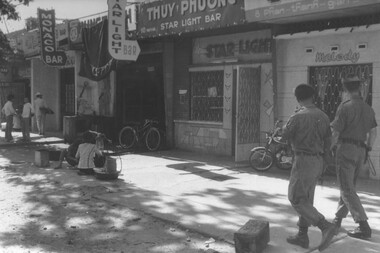
Photograph, Gibbons, Denis, Vung Tau Bars
... For almost five years Gibbons toured with nine Australian infantry battalions, posting compelling war images from within many combat zones before being flown out in late November 1970 after sustaining injuries. The images held within the National Vietnam Veterans Museum make up the Gibbons Collection. Photograph Military Police Vung Tau Gibbons Collection Catalogue New Zealand ...Denis Gibbons (1937 – 2011) Trained with the Australian Army, before travelling to Vietnam in January 1966, Denis stayed with the 1st Australian Task Force in Nui Dat working as a photographer. For almost five years Gibbons toured with nine Australian infantry battalions, posting compelling war images from within many combat zones before being flown out in late November 1970 after sustaining injuries. The images held within the National Vietnam Veterans Museum make up the Gibbons Collection. A black and white photograph of Australian and New Zealand Military Police regularly checked out the premises along the street of bars at Vung Tau Those establishments involved in shady trading were placed off limits. Some Vietnamese bar girls were notorious for fleecing Diggers of money.photograph, military police, vung tau, gibbons collection catalogue, new zealand military police, vietnames bar girls, diggers, vietnamese bar girls, denis gibbons -
 National Vietnam Veterans Museum (NVVM)
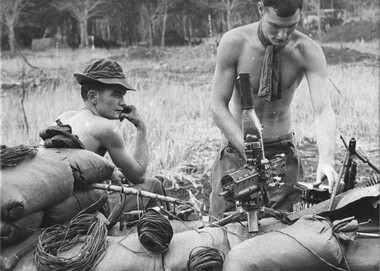
Photograph, Gibbons, Denis, Mortar Platoon
... infantry battalions, posting compelling war images from within many combat zones before being flown out in late November 1970 after sustaining injuries. The images held within the National Vietnam Veterans Museum make up the Gibbons Collection. Photograph 1st ATF Base 4RAR NZ M60 Machine Gun Mortars Pte McAuley Pte Penny Gibbons Collection Catalogue Claymore Mine 4 RAR/NZ (ANZAC) New Zealand ...Denis Gibbons (1937 – 2011) Trained with the Australian Army, before travelling to Vietnam in January 1966, Denis stayed with the 1st Australian Task Force in Nui Dat working as a photographer. For almost five years Gibbons toured with nine Australian infantry battalions, posting compelling war images from within many combat zones before being flown out in late November 1970 after sustaining injuries. The images held within the National Vietnam Veterans Museum make up the Gibbons Collection. A black and white photograph of Mortar Platoon members of 4 RAR/NZ (ANZAC) Pte M.P.McAuley, Pte R.A.Penny check the claymore lines and clean the M60 machine gun on the 1st Australian Task Force perimeter defences. Pte Penny was a member of the New Zealand component of 4RARphotograph, 1st atf base, 4rar nz, m60 machine gun, mortars, pte mcauley, pte penny, gibbons collection catalogue, claymore mine, 4 rar/nz (anzac), new zealand, denis gibbons -
 National Vietnam Veterans Museum (NVVM)
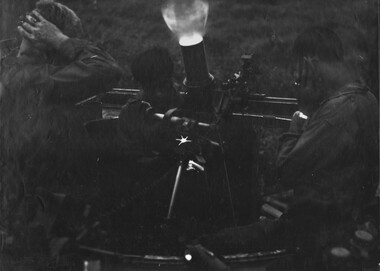
Photograph, Gibbons, Denis, NZ Mortar Team
... New Zealand...4 RAR/NZ (ANZAC)...Infantry...A black and white photograph of the crew of a New Zealand mortar, mounted inside an Australian Australian Personnel Carrier, cover their ears against the blast sound, as they fire in support of ANZAC infantry operating in Phuoc Tuy Province...infantry battalions, posting compelling war images from within many combat zones before being flown out in late November 1970 after sustaining injuries. The images held within the National Vietnam Veterans Museum make up the Gibbons Collection. Photograph 1st ATF Base Nui Dat Phuoc Tuy Province 4 RAR NZ Mortars APC Gibbons Collection Catalogue New Zealand ...Denis Gibbons (1937 – 2011) Trained with the Australian Army, before travelling to Vietnam in January 1966, Denis stayed with the 1st Australian Task Force in Nui Dat working as a photographer. For almost five years Gibbons toured with nine Australian infantry battalions, posting compelling war images from within many combat zones before being flown out in late November 1970 after sustaining injuries. The images held within the National Vietnam Veterans Museum make up the Gibbons Collection. A black and white photograph of the crew of a New Zealand mortar, mounted inside an Australian Australian Personnel Carrier, cover their ears against the blast sound, as they fire in support of ANZAC infantry operating in Phuoc Tuy Provincephotograph, 1st atf base, nui dat, phuoc tuy province, 4 rar nz, mortars, apc, gibbons collection catalogue, new zealand, 4 rar/nz (anzac), infantry, denis gibbons -
 National Vietnam Veterans Museum (NVVM)
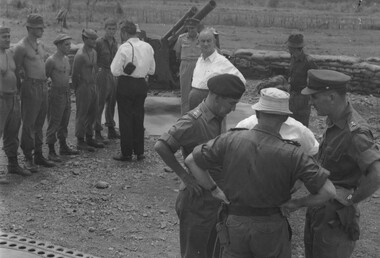
Photograph, Gibbons, Denis, Visiting Politicians
... infantry battalions, posting compelling war images from within many combat zones before being flown out in late November 1970 after sustaining injuries. The images held within the National Vietnam Veterans Museum make up the Gibbons Collection. Photograph Maj Gen Doug Vincent 1st ATF Base Nui Dat 161 battery RNZA Gibbons Collection Catalogue New Zealand ...Denis Gibbons (1937 – 2011) Trained with the Australian Army, before travelling to Vietnam in January 1966, Denis stayed with the 1st Australian Task Force in Nui Dat working as a photographer. For almost five years Gibbons toured with nine Australian infantry battalions, posting compelling war images from within many combat zones before being flown out in late November 1970 after sustaining injuries. The images held within the National Vietnam Veterans Museum make up the Gibbons Collection. A black and white photograph of 1 ATF Base Nui Dat while one of the visiting politicians from New Zealand talks with a gun detachment at 161 Battery RNZA, Maj Gen Doug Vincent discusses the role of the battery with other politicians and the Battery Commander (circa February 1967)photograph, maj gen doug vincent, 1st atf base, nui dat, 161 battery rnza, gibbons collection catalogue, new zealand, 1st australian task force, visiting politicans, battery commander, denis gibbons -
 National Vietnam Veterans Museum (NVVM)
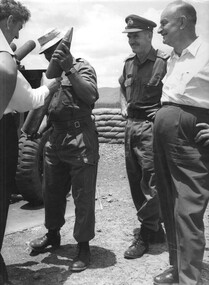
Photograph, Gibbons, Denis, Visiting Politicians
... infantry battalions, posting compelling war images from within many combat zones before being flown out in late November 1970 after sustaining injuries. The images held within the National Vietnam Veterans Museum make up the Gibbons Collection. Photograph Maj Gen Doug Vincent 161 battery RNZA 1st ATF Base Gibbons Collection Catalogue Royal New Zealand ...Denis Gibbons (1937 – 2011) Trained with the Australian Army, before travelling to Vietnam in January 1966, Denis stayed with the 1st Australian Task Force in Nui Dat working as a photographer. For almost five years Gibbons toured with nine Australian infantry battalions, posting compelling war images from within many combat zones before being flown out in late November 1970 after sustaining injuries. The images held within the National Vietnam Veterans Museum make up the Gibbons Collection. A black and white photograph of Maj Gen Doug Vincent and a visiting New Zealand politician watch as the Battery Commander 161 Battery Royal New Zealand Aartillery attached to the Australian 1st Field Regt Nui Dat. photograph, maj gen doug vincent, 161 battery rnza, 1st atf base, gibbons collection catalogue, royal new zealand artillery, nui dat, battery commander, australian 1st field regiment, denis gibbons
