
Showing 17 items matching "nursery workers"
-
 Whitehorse Historical Society Inc.
Pamphlet, Using herbs, 1991
... Nursery Workers...Introduction by Judith Fry. Nursery Workers Conjara Horticultural Project Harrison Youth Services Australia. ...Small recipe book for using herbs by Conjara Horticultural Project.Small recipe book for using herbs by Conjara Horticultural Project. The project is a skillshare project funded by the Department of Employment, education and Training. Trainees are selected on a 'needs' basis. Introduction by Judith Fry.Small recipe book for using herbs by Conjara Horticultural Project. nursery workers, conjara horticultural project, harrison youth services, australia. department of employment, education and training, fry, judith -
Whitehorse Historical Society Inc.
Article, Exclusive Green Thumbs, 1993
... Nursery Workers...Conjara is a wholesale based program course and the new Skillshare Nursery, Harvest Herbs, teaches retail nursery practices. Nursery Workers Townson Bernard Dunnell Karen Harrison Youth Services Nunawading/Wantirna Skillshare Harvest Herbs Nursery Conjara Nursery A Nursery Practices Course is helping unemployed people in Nunawading to get back to the workforce. ...A Nursery Practices Course is helping unemployed people in Nunawading to get back to the workforce.A Nursery Practices Course is helping unemployed people in Nunawading to get back to the workforce. Nunawading/Wantirna Skillshare Course is sponsored by Harrison Youth Services. Conjara is a wholesale based program course and the new Skillshare Nursery, Harvest Herbs, teaches retail nursery practices.A Nursery Practices Course is helping unemployed people in Nunawading to get back to the workforce. nursery workers, townson, bernard, dunnell, karen, harrison youth services, nunawading/wantirna skillshare, harvest herbs nursery, conjara nursery -
 Emerald Museum & Nobelius Heritage Park
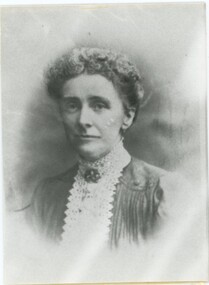
Photograph - Print of photographic portrait of Mrs Florrie Meyenn, 1900s
... She ran one of the first guest houses in Emerald, Nottingham House, situated on the now Kilvington Drive, near the Scout Hall. Nursery workers used to board there. Mrs Meyenn later married Mr Ned Horwood....She ran one of the first guest houses in Emerald, Nottingham House, situated on the now Kilvington Drive, near the Scout Hall. Nursery workers used to board there. Mrs Meyenn later married Mr Ned Horwood. ...This photographic portrait is of Mrs Florrie Meyenn (nee Middleton), wife of a German seaman. She ran one of the first guest houses in Emerald, Nottingham House, situated on the now Kilvington Drive, near the Scout Hall. Nursery workers used to board there. Mrs Meyenn later married Mr Ned Horwood.This photograph of the proprietor of one of the earliest guest houses in Emerald recalls Emerald's early history of guesthouses.Black and white studio photographic print (head and shoulders) of Mrs Florrie Meyenn. In clear plastic packet.On back top right, blue label handwritten (recent): 'P4' On back at bottom handwritten (recent): 'P401002' On outside of packet, typed: '7892-1 #150 * Positive / HERITAGE SPRING '88 / LITHOCRAFT BLUE 27/7/88 PM' Underneath typing on packet, handwritten: 'P. 40-61 100%'nottingham house, guest houses, meyenn -
Emerald Museum & Nobelius Heritage Park
Tool - Name Plate maker, Roovers Bros Co, 1900s
... According to Syd Jinette, Emerald Resident and ex-nursery worker who used this machine in the 1930s and 1940s, it was used at the nursery since the early 1900s until at least the 1940s, but continued to reside at the site after this time (oral history account held at Emerald Museum)....According to Syd Jinette, Emerald Resident and ex-nursery worker who used this machine in the 1930s and 1940s, it was used at the nursery since the early 1900s until at least the 1940s, but continued to reside at the site after this time (oral history account held at Emerald Museum). ...The name plate maker was used by a number of Nursery employees, contributing to intangible narratives of how stock at Nobelius Nursery was prepared for transport. It has a high interpretive capacity as an object associated with a tangible, physical process, presenting opportunities for understanding work practices at Nobelius Nursery and nurseries more generally.No similar name plate maker was identified after contact with and/or searches of collections held at National Museum of Australia, Museum Victoria, the Museum of Applied Arts & Sciences or the Australian Garden History Society, Victoria Branch. It is a rare example of its type in Australia. The name plate maker is of historic and social significance. It is associated with the Nobelius Nursery, the largest nursery in the southern hemisphere at its peak prior to WWI (Lyng 1927:75), where it was used from the early 1900s until at least the 1940s. The Nursery was renowned for its supply of plants and trees of high quality and reliability; the name plate maker was part of this process by providing imprinted metal labels that did not fade. The object therefore also demonstrates technological advances of the period. The object holds social significance to employees of Nobelius Nursery who used the machine for several decades to prepare stock for transport to clients.This name plate maker has a hollow hardwood rectangle body and stands on four decorative cast iron legs. It has a cast iron top and further cast iron detail on its front and sides. The top detail lists all numbers and letters to be used in the production of the labels (A-Z, 0-9, space, finish, start and - , ‘), and the front detail reads ‘THIS MACHINE IS SOLD FOR USE IN THE UNITED STATES ONLY. PATENTED NOV. 19 1901, NOV 19 1901, NOV 22 1904, JAN 31 1905 PAT. APPL’D FOR’. The side detail reads ‘PATENT APPLIED FOR’ The inside of the box contains the metal and wooden mechanisms for making embossed metal labels, which are produced inside and then come out the front once printed. Several metal labels remain sitting in the dispensing hollow. This machine is a Roovers ‘name plate’ maker or ‘nameplate’ machine, also known as an ‘embossing machine’ or as in the original patent application as a ‘die press’. It was manufactured from about 1895 by a firm called Roovers Bros Co., of New York, later known as Roovers Bros Inc. Carl Axel Nobelius imported this name plate machine from the USA, indicated by the plate of text at the front, between 1905 and 1915. It is likely that the machine was ordered directly from the manufacturer, as there is no record of the company having had distributors in Australia. The nameplate maker remained at the former nursery site throughout its changes in ownership, until it was donated to Emerald Museum in the 1970s. This machine was used to create metal labels for tree stock at Nobelius Nursery to identify produce, which were otherwise difficult to distinguish as seedlings. According to Syd Jinette, Emerald Resident and ex-nursery worker who used this machine in the 1930s and 1940s, it was used at the nursery since the early 1900s until at least the 1940s, but continued to reside at the site after this time (oral history account held at Emerald Museum). -
 Ringwood and District Historical Society
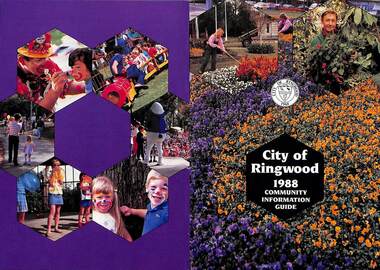
Booklet, City of Ringwood 1988 Community Information Guide, 1988
... Caffyn 3 Meals on Wheels 24 Members of Parliament 9 Playgroups 33 Pre-Schools 53 Primary Arterial Road Network in Ringwood 13 Rates—New Collection Service 18 & 19 Ringwood Aquatic Centre 14 & 15 Ringwood Bypass Road 12 Ringwood Convention & Performing Arts Centre 33 Ringwood District Centre Structure Plan 12 Rubbish Collection Service 35 & 36 Schools 56 Youth Outreach Worker 20 Community information booklet issued by City of Ringwood for 1988 - covering the facilities and activities of the Ringwood Council and other local organisations and associations. Cover photographs: Front - Floral displays at Clock Tower and a scene at Council nursery ...Community information booklet issued by City of Ringwood for 1988 - covering the facilities and activities of the Ringwood Council and other local organisations and associations. Cover photographs: Front - Floral displays at Clock Tower and a scene at Council nursery; Back - Activities at Ringwood Festival held at Ringwood Lake in April each year.CONTENTS: (page no.) After School Activities Programme 23 Aged Services 21 Bicentennial 15 Building Information 29 By-Laws and Traffic Regulations 31 Caravans/Mobile Homes 31 Chief Executive's Message 10 Children's Services 22 Churches 40 Civic Centre 4 Committees of Council 5 Community Plan 15 Community Services 35 Corporate Management Structure 11 Council Meeting Dates 4 Council Representatives 8 Councillors 6 & 7 Disabled Persons Facilities 42 Dogs 31 Domiciliary Care 24, 25 & 26 Elderly Day Care 44 Elderly Persons Units 29 Emergency Telephone Numbers 53 Employment Opportunities in Ringwood 26 European Wasps 28 Family Day Care 22 Finances 17 Fire Hazards 31 Future Leaders 16 Golf Course 34 Home Handyman Services 25 Home Help 26 Immunisation Programme 27 Incinerators 32 Knaith Road Child Care Centre 22 & 23 Library 30&31 Maternal & Child Health Centre 30 Mayoral Message – Cr. John R. Caffyn 3 Meals on Wheels 24 Members of Parliament 9 Playgroups 33 Pre-Schools 53 Primary Arterial Road Network in Ringwood 13 Rates—New Collection Service 18 & 19 Ringwood Aquatic Centre 14 & 15 Ringwood Bypass Road 12 Ringwood Convention & Performing Arts Centre 33 Ringwood District Centre Structure Plan 12 Rubbish Collection Service 35 & 36 Schools 56 Youth Outreach Worker 20 rinx -
 Vision Australia
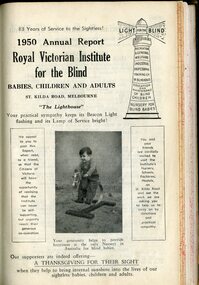
Administrative record - Text, Royal Victorian Institute for the Blind annual report 1950, 1950
... This includes the increase of blind babies due to medical care of premature infants, interest free loans to help workers purchase homes, praise for Council of Auxiliaries chairwoman Augusta Tutton, establishment of the Blind Workers Retirement Fund, foundation of the Victorian Guild of Professional Blind, Headmaster Green offers insight into the routines and education of children in the nursery and school, listing of staff including portraits of George Findlay, Donald Forbes, Hugh Jeffrey, Neil Westh and Dorothy Nuske - first blind woman to receive a Bachelor of Music....This includes the increase of blind babies due to medical care of premature infants, interest free loans to help workers purchase homes, praise for Council of Auxiliaries chairwoman Augusta Tutton, establishment of the Blind Workers Retirement Fund, foundation of the Victorian Guild of Professional Blind, Headmaster Green offers insight into the routines and education of children in the nursery and school, listing of staff including portraits of George Findlay, Donald Forbes, Hugh Jeffrey, Neil Westh and Dorothy Nuske - first blind woman to receive a Bachelor of Music. ...From it's beginning in 1867, the Royal Victorian Institute for the Blind grew in size and its number of employees and benefactors. These bound volumes of annual reports contain the information sent to subscribers of the Institute and outline the notable events and difficulties facing the blind and the RVIB. This includes the increase of blind babies due to medical care of premature infants, interest free loans to help workers purchase homes, praise for Council of Auxiliaries chairwoman Augusta Tutton, establishment of the Blind Workers Retirement Fund, foundation of the Victorian Guild of Professional Blind, Headmaster Green offers insight into the routines and education of children in the nursery and school, listing of staff including portraits of George Findlay, Donald Forbes, Hugh Jeffrey, Neil Westh and Dorothy Nuske - first blind woman to receive a Bachelor of Music.1 volume bound with illustrations.royal victorian institute for the blind, annual reports, george findlay, donald forbes, hugh jeffrey, neil westh, dorothy hamilton -
 Vision Australia
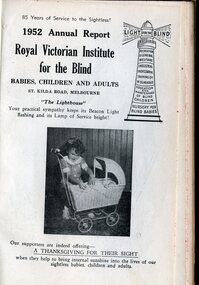
Administrative record - Text, Royal Victorian Institute for the Blind annual report 1952, 1952
... This includes a drawing of the proposed buildings at Burwood Road, the first Australian National Conference of Institutions for the Blind held and from this, that the Australian National Council for the Blind be established, a Christmas function for children by the Council of Auxiliaries, subjects and areas taught or encouraged at the nursery and school, background on the Victorian Guild of Professional Blind, Annual Christmas Tree presents to 138 blind workers children, and image of deaf-blind boy in the U.S....This includes a drawing of the proposed buildings at Burwood Road, the first Australian National Conference of Institutions for the Blind held and from this, that the Australian National Council for the Blind be established, a Christmas function for children by the Council of Auxiliaries, subjects and areas taught or encouraged at the nursery and school, background on the Victorian Guild of Professional Blind, Annual Christmas Tree presents to 138 blind workers children, and image of deaf-blind boy in the U.S. ...From it's beginning in 1867, the Royal Victorian Institute for the Blind grew in size and its number of employees and benefactors. These bound volumes of annual reports contain the information sent to subscribers of the Institute and outline the notable events and difficulties facing the blind and the RVIB. This includes a drawing of the proposed buildings at Burwood Road, the first Australian National Conference of Institutions for the Blind held and from this, that the Australian National Council for the Blind be established, a Christmas function for children by the Council of Auxiliaries, subjects and areas taught or encouraged at the nursery and school, background on the Victorian Guild of Professional Blind, Annual Christmas Tree presents to 138 blind workers children, and image of deaf-blind boy in the U.S.1 volume bound with illustrations.royal victorian institute for the blind, annual report -
 Vision Australia
Administrative record - Text, Royal Victorian Institute for the Blind annual report 1962-1963, 1962-1963
... Articles in annual report include: List of office bearers of the institute and officers of the institute, Confidence mobility, Annual report of the RVIB babies, Children and adults - 97 years of service and programmes - special appeal, Residence rehabilitation training centre, Conference mobility, Ten pin bowling, Deaf blind centre, Resident nursery and school, Worldwide literary competition, Higher education, Employment, Welfare, Recreation, Finance, Appreciation, Auxiliary, 3KZ Christmas appeal, Vice regal patronage, My friend the long cane - a new method of self-help for blind people, They're the workers, 36th annual report of the council of auxiliary. ...Articles in annual report include: List of office bearers of the institute and officers of the institute, Confidence mobility, Annual report of the RVIB babies, Children and adults - 97 years of service and programmes - special appeal, Residence rehabilitation training centre, Conference mobility, Ten pin bowling, Deaf blind centre, Resident nursery and school, Worldwide literary competition, Higher education, Employment, Welfare, Recreation, Finance, Appreciation, Auxiliary, 3KZ Christmas appeal, Vice regal patronage, My friend the long cane - a new method of self-help for blind people, They're the workers, 36th annual report of the council of auxiliary. ...Articles in annual report include: List of office bearers of the institute and officers of the institute, Confidence mobility, Annual report of the RVIB babies, Children and adults - 97 years of service and programmes - special appeal, Residence rehabilitation training centre, Conference mobility, Ten pin bowling, Deaf blind centre, Resident nursery and school, Worldwide literary competition, Higher education, Employment, Welfare, Recreation, Finance, Appreciation, Auxiliary, 3KZ Christmas appeal, Vice regal patronage, My friend the long cane - a new method of self-help for blind people, They're the workers, 36th annual report of the council of auxiliary. Events that occurred in 1962 : Hon. H.E. Bolte, Premier opened the appeal and announced a special grant of $20,000 pounds from the state government. Lieutenant General Sir Henry Wells accepted the board's invitation to become chairman of the appeal, at the Burwood school Cheng Ann Cheok a 15 year old Singaporean boy arrived to further his education and study music, he hopes to adopt music as his career. Through the kind offices of Dr Edward J. Waterhouse director of Perkins school for the blind of Boston and the generosity of its Board of Trustees a scholarship will be provided to the Institute for an Australian teacher to be trained as a specialist teacher within their school.1 volume of text and illustrationsroyal victorian institute for the blind, annual reports -
 Vision Australia
Photograph - Image, Demolition of Raleigh Street premises, 200
... workers, and building commenced in 1926 and was completed in 1927, at a cost of 3500 pounds. Demand for accommodation was strong and in 1929 a hostel for men was completed. The building were used as hostels for many years, but as demand decreased, the Institution found other ways to utilise the buildings. In 1972, a plant nursery...workers, and building commenced in 1926 and was completed in 1927, at a cost of 3500 pounds. Demand for accommodation was strong and in 1929 a hostel for men was completed. The building were used as hostels for many years, but as demand decreased, the Institution found other ways to utilise the buildings. In 1972, a plant nursery ...On September 23, 1925 the State Goverment gazetted a transfer of land in Raleigh Street, Prahran to RVIB. This was used to establish a hostel for women apprentices and workers, and building commenced in 1926 and was completed in 1927, at a cost of 3500 pounds. Demand for accommodation was strong and in 1929 a hostel for men was completed. The building were used as hostels for many years, but as demand decreased, the Institution found other ways to utilise the buildings. In 1972, a plant nursery was established on the site and other departments temporarily used the site. In 1994 the Employment Services team moved out of the building and the site was sold to developers.17 col. images of the partially demolished house at Raleigh Street, Prahranroyal victorian institute for the blind, raleigh street hostel -
 Mt Dandenong & District Historical Society Inc.
Photograph, Group at Maroondah Dam 1953, 1953
... Possibly an outing of workers from Woolrich Nursery....Maroondah Dam woolrich nursery Handwritten on reverse in pencil: Maroondah Dam Dec 1953 Small photograph of 11 adults and 3 children posing at Maroondah Dam in December 1953. Possibly an outing of workers ...Small photograph of 11 adults and 3 children posing at Maroondah Dam in December 1953. Possibly an outing of workers from Woolrich Nursery.Handwritten on reverse in pencil: Maroondah Dam Dec 1953maroondah dam, woolrich nursery -
 Mt Dandenong & District Historical Society Inc.
Photograph, Workers at Range View Nursery, 1950s
... Nursery in the 1950s. Bagged rhododendrons at the front. L to R: John Jaggers, Henk Koelwyn, Ted Woolrich, Iris Woolrich & Alice. Workers ...Iris and Ted Woolrich pose with a group at Range View Nursery in the 1950s. Bagged rhododendrons at the front. L to R: John Jaggers, Henk Koelwyn, Ted Woolrich, Iris Woolrich & Alice.Handwritten on the reverse in pencil: John Jaggers, Henk, Ted, Alice & Irisiris woolrich, ted woolrich, range view nursery, henk koelwyn, john jaggers, olinda, rhododendron -
 Returned Nurses RSL Sub-branch
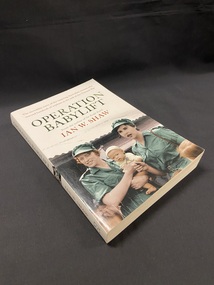
Book - Paperback book, Ian W. Shaw, Operation babylift, 2019
... Rosemary Taylor Margaret Moses Vietnam War Children and war In late March 1975, as the Vietnam War raged, an Australian voluntary aid worker named Rosemary Taylor approached the Australian Embassy seeking assistance to fly 600 orphans out of Saigon to safety. Rosemary and Margaret Moses, two former nuns from Adelaide, had spent eight years in Vietnam during the war, building up a complex of nurseries to house war orphans and street waifs as the organisation that built up around them facilitated international adoptions for the children. ...In late March 1975, as the Vietnam War raged, an Australian voluntary aid worker named Rosemary Taylor approached the Australian Embassy seeking assistance to fly 600 orphans out of Saigon to safety. Rosemary and Margaret Moses, two former nuns from Adelaide, had spent eight years in Vietnam during the war, building up a complex of nurseries to house war orphans and street waifs as the organisation that built up around them facilitated international adoptions for the children. As the North Vietnamese forces closed in on their nurseries, they needed a plan to evacuate the children, or all their work might count for little . Based on extensive archival and historical research, and interviews of some of those directly involved in the events described, Operation Babylift details the last month of the Vietnam War from the perspective of the most vulnerable victims of that war: the orphans it created.--[From Trove]White book with a picture of two women in green uniforms, one of whom is holding a baby, in front of a building with a corrugated roof. The title 'OPERATION BABYLIFT' is printed above the image in green, followed by the author's name in red text. At the top of the page it reads "The incredible story of the inspiring Australian women who rescued hundreds of orphans at the end of the Vietnam War".non-fictionIn late March 1975, as the Vietnam War raged, an Australian voluntary aid worker named Rosemary Taylor approached the Australian Embassy seeking assistance to fly 600 orphans out of Saigon to safety. Rosemary and Margaret Moses, two former nuns from Adelaide, had spent eight years in Vietnam during the war, building up a complex of nurseries to house war orphans and street waifs as the organisation that built up around them facilitated international adoptions for the children. As the North Vietnamese forces closed in on their nurseries, they needed a plan to evacuate the children, or all their work might count for little . Based on extensive archival and historical research, and interviews of some of those directly involved in the events described, Operation Babylift details the last month of the Vietnam War from the perspective of the most vulnerable victims of that war: the orphans it created.--[From Trove]rosemary taylor, margaret moses, vietnam war, children and war -
 Returned Nurses RSL Sub-branch
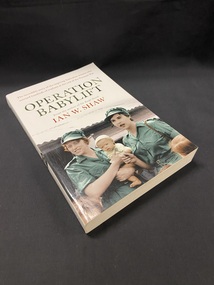
Book - Paperback book, Ian W. Shaw, Operation babylift, 2019
... Rosemary Taylor Margaret Moses Vietnam War Children and war In late March 1975, as the Vietnam War raged, an Australian voluntary aid worker named Rosemary Taylor approached the Australian Embassy seeking assistance to fly 600 orphans out of Saigon to safety. Rosemary and Margaret Moses, two former nuns from Adelaide, had spent eight years in Vietnam during the war, building up a complex of nurseries to house war orphans and street waifs as the organisation that built up around them facilitated international adoptions for the children. ...In late March 1975, as the Vietnam War raged, an Australian voluntary aid worker named Rosemary Taylor approached the Australian Embassy seeking assistance to fly 600 orphans out of Saigon to safety. Rosemary and Margaret Moses, two former nuns from Adelaide, had spent eight years in Vietnam during the war, building up a complex of nurseries to house war orphans and street waifs as the organisation that built up around them facilitated international adoptions for the children. As the North Vietnamese forces closed in on their nurseries, they needed a plan to evacuate the children, or all their work might count for little . Based on extensive archival and historical research, and interviews of some of those directly involved in the events described, Operation Babylift details the last month of the Vietnam War from the perspective of the most vulnerable victims of that war: the orphans it created.--[From Trove]White book with a picture of two women in green uniforms, one of whom is holding a baby, in front of a building with a corrugated roof. The title 'OPERATION BABYLIFT' is printed above the image in green, followed by the author's name in red text. At the top of the page it reads "The incredible story of the inspiring Australian women who rescued hundreds of orphans at the end of the Vietnam War".non-fictionIn late March 1975, as the Vietnam War raged, an Australian voluntary aid worker named Rosemary Taylor approached the Australian Embassy seeking assistance to fly 600 orphans out of Saigon to safety. Rosemary and Margaret Moses, two former nuns from Adelaide, had spent eight years in Vietnam during the war, building up a complex of nurseries to house war orphans and street waifs as the organisation that built up around them facilitated international adoptions for the children. As the North Vietnamese forces closed in on their nurseries, they needed a plan to evacuate the children, or all their work might count for little . Based on extensive archival and historical research, and interviews of some of those directly involved in the events described, Operation Babylift details the last month of the Vietnam War from the perspective of the most vulnerable victims of that war: the orphans it created.--[From Trove]rosemary taylor, margaret moses, vietnam war, children and war -
 Emerald Museum & Nobelius Heritage Park
Photograph, Nightingale/Thompson Collection, c. 1930's
... Workers at Nightingale Nursery belonging to Alfred George Nightingale ...Copy of photograph pasted on cream board, depicting workers at Nightingale Nursery. c. 1930...Handwritten on back: Workers at Nightingale's Nursery, Avonsleigh...Workers at Nightingale Nursery belonging to Alfred George Nightingale Only of only three photographs depicting Nightingale Nursery, part of the large photographic collection of Nightingale/Thompson family photographs nightingale thompson Handwritten on back: Workers at Nightingale's Nursery, Avonsleigh Copy of photograph pasted on cream board, depicting workers at Nightingale Nursery. c. 1930 Nightingale/Thompson Collection Photograph ...Workers at Nightingale Nursery belonging to Alfred George Nightingale Only of only three photographs depicting Nightingale Nursery, part of the large photographic collection of Nightingale/Thompson family photographsCopy of photograph pasted on cream board, depicting workers at Nightingale Nursery. c. 1930Handwritten on back: Workers at Nightingale's Nursery, Avonsleighnightingale, thompson -
Emerald Museum & Nobelius Heritage Park
Photograph - Budding at Gembrook Nurseries, Unknown photographer, 1910s
... The photograph is significant because it depicts work processes at the Gembrook Nurseries during the early decades of the Twentieth Century; a period in which the nurseries were the leading Southern-hemisphere supplier of plants and trees to public gardens around the world. The photograph may also depict Carl Axel Nobelius overseeing his workers, which gives insights into work practices and social dynamics of the time. 1910s 1900s 1890s 1880s 1886 1905 Carl Axel Nobelius Nobelius Nursery Gembrook Nurseries Emerald Country Club Emerald Lake Park fruit growing Trees Farming Obverse: BUDDING AT GEMBROOK NURSERIES. / Black and white rectangular photograph printed on photographic paper. ...Carl Axel Nobelius established the Gembrook Nurseries in 1886 on sixty-three acres purchased from an original selector after the area's gold rush started to diminish. It was called the Gembrook Nurseries as it was located in the Parish of Gembrook, but it was commonly referred to as the Nobelius nurseries after its founder; especially as control of the remaining portions of the nurseries remained with the Nobelius family until 1955. The Nobelius Nurseries had a substantial impact on the development of the township of Emerald, as local farmers were able to earn funds during the winter by working at the nursery which gave them financial resources while waiting for their own farms to become productive. The need to transport plants and trees to port quickly also contributed to the development of rail infrastructure in the region; C.A. Nobelius was one of thirteen witnesses to the Parliamentary Standing Committee on Railways in 1898 debating a rail connection between Gembrook and Ferntree Gully, which became today's Puffing Billy tourist service. The nurseries occupied 280 acres at their peak in 1905, with more than one million trees available for sale at that time. The nursery focused on exotic fruit and ornamental species which were supplied to public parks and gardens all over the world. In several cases the nurseries were the first suppliers of the trees in Australia. Sales records show that trees were supplied to clients in Europe, Asia, the United States, Africa and New Zealand, as well as to many Councils and Government organisations around Australia, such as Melbourne's Fitzroy Gardens and Royal Botanic Gardens. Portions of the Gembrook Nurseries were sold at different times throughout the Twentieth Century, with the Emerald Country Club and Emerald Lake Park both occupying portions of the original land. In 1981 the final twelve acres were purchased by the Shire of Sherbrooke in recognition to be used as a heritage landmark in recognition of the site's significance.The photograph is significant because it depicts work processes at the Gembrook Nurseries during the early decades of the Twentieth Century; a period in which the nurseries were the leading Southern-hemisphere supplier of plants and trees to public gardens around the world. The photograph may also depict Carl Axel Nobelius overseeing his workers, which gives insights into work practices and social dynamics of the time.Black and white rectangular photograph printed on photographic paper. The photograph of a postcard or newspaper clipping depicts twelve men in clothes associated with the first decades of the Twentieth Century undertaking planting or other field work under the gaze of a man in a suit and top hat. The item is captioned 'Budding at Gembrook Nurseries.'Obverse: BUDDING AT GEMBROOK NURSERIES. /1910s, 1900s, 1890s, 1880s, 1886, 1905, carl axel nobelius, nobelius nursery, gembrook nurseries, emerald country club, emerald lake park, fruit growing, trees, farming -
Emerald Museum & Nobelius Heritage Park
Book - History Book, Cuffley, Peter et al, That Little Train: The Puffing Billy Railway 1900-1953, 1987
... Emerald Victoria Australia Dandenong Ranges Victoria Australia railway bridges railway stations railway workers Belgrave Victoria Australia bullock teams fruit growing nurseries (plants) horticulture Peter Cuffley Puffing Billy Railway Rail Services - History Hard cover with jacket, 236 p. : ill. ...Hard cover with jacket, 236 p. : ill. (some col.), maps ; includes bibliography and index. ISBN 0 86788 1.36 4Paperemerald, victoria, australia, dandenong ranges, victoria, australia, railway bridges, railway stations, railway workers, belgrave victoria australia, bullock teams, fruit growing, nurseries (plants), horticulture, peter cuffley, puffing billy railway, rail services - history -
Emerald Museum & Nobelius Heritage Park
Book - Novel, Palmer, Vance Stanley Paul & Co. Ltd, Daybreak, [1931 or 1932]
... The story of an orchard and the orchard workers, based on the Gembrook Nurseries, it relates the story of a strike by the workers. ...The story of an orchard and the orchard workers, based on the Gembrook Nurseries, it relates the story of a strike by the workers. ...A novel written about Emerald when the Palmers were living there with characters thinly disguised. The story of an orchard and the orchard workers, based on the Gembrook Nurseries, it relates the story of a strike by the workers. This copy was signed by the author and presented to Marjorie Barnard.Hard cover book , 288 pages'To M. Barnard Eldershaw - this exoperiment! Vance Palmer'emerald, victoria, australia, authors, fiction, australian literature, vance palmer
