
Showing 1427 items matching "offical opening"
-
 Lorne Historical Society
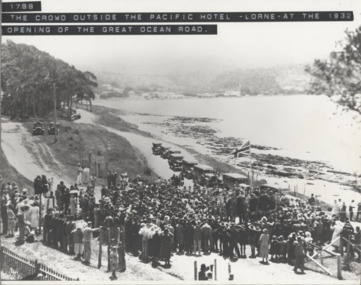
Photograph, Offical Opening Celebrations at Pacific Hotel Lorne 26th November 1932
... Offical Opening Celebrations at Pacific Hotel Lorne 26th November 1932...Opening Ceremony: Lorne Pacific Hotel: 26/11/1932 The Great Ocean Road was officially declared open on 26th November 1932 at a ceremony near Lorne's Grand Pacific Hotel, the site where the first survey peg for the road was hammered into the ground 14 years before. Offical Opening Celebrations at Pacific Hotel Lorne 26th November 1932 Photograph Photograph ...The Great Ocean Road was officially declared open on 26th November 1932 at a ceremony near Lorne's Grand Pacific Hotel, the site where the first survey peg for the road was hammered into the ground 14 years before. opening ceremony: lorne pacific hotel: 26/11/1932 -
 Uniting Church Archives - Synod of Victoria
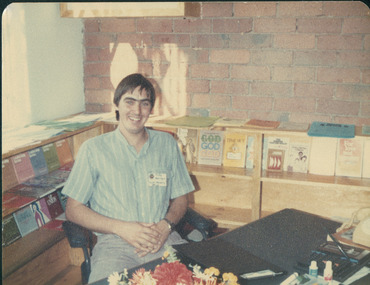
Photograph, Phillip Allardyce: Presbytery Youth Ministry Officer, 12/04/1984
... Allardyce seated at desk in new office on opening day 12/4/1984...."Phillip Allardyce - Presbytery Youth Officer in new office - opening day 12/4/1984"....Ron Allardyce. allardyce, phillip "Phillip Allardyce - Presbytery Youth Officer in new office - opening day 12/4/1984". Allardyce seated at desk in new office on opening day 12/4/1984. ...Phillip was presumably the son or grandson of the Rev. Ron Allardyce.Allardyce seated at desk in new office on opening day 12/4/1984."Phillip Allardyce - Presbytery Youth Officer in new office - opening day 12/4/1984".allardyce, phillip -
 Bendigo Historical Society Inc.
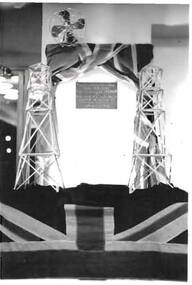
Photograph - S.E.C. VICTORIA, 1941
... SEC Victoria Offical Opening...Opening of the new S.E.C. Victoria Administration Buildings March 14 1941, Plaque reads 'This Building was offically opened by the Hon. ...Victoria SEC Victoria SEC Victoria Offical Opening SEC Victoria Offical Plaque Black and White Photo of Official Plaque, Opening of the new S.E.C. ...Black and White Photo of Official Plaque, Opening of the new S.E.C. Victoria Administration Buildings March 14 1941, Plaque reads 'This Building was offically opened by the Hon. F.E. Old. MLA. Minister in Charge of Electrical Undertakings 14 March 1941'. Flag wrapped around a bar at the top of the display, and fan. Another flag at the front bottom of the display. Rear of photo Sec. opening 14 March 1941 written in biro and number 30 written in pencil.organization, public utility, electricity company, s.e.c. victoria, sec victoria, sec victoria offical opening, sec victoria offical plaque -
 Tatura Irrigation & Wartime Camps Museum
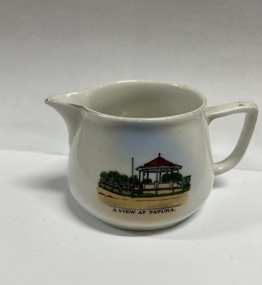
Souvenir - Small Jug, Small Souvenir jug
... ...Offical Opening...Milk jug sold at Johnston's Newsagency to commemorate the official opening of the Tatura Band Rotunda Tatura Rotunda Local history Offical Opening "A view at Tatura" Royal Scenic China made in Czechoslvakia IBC Small White jug with a small coloured picture of the Tatura Rotunda on the front Small Souvenir jug Souvenir Small Jug ...Milk jug sold at Johnston's Newsagency to commemorate the official opening of the Tatura Band RotundaSmall White jug with a small coloured picture of the Tatura Rotunda on the front"A view at Tatura" Royal Scenic China made in Czechoslvakia IBCtatura, rotunda, local history, offical opening -
 Tatura Irrigation & Wartime Camps Museum
Photograph, Keith Whyte c1990s
... Keith Whyte at Trevaskis Engineering Office opening, c1990s....tatura whyte locals costume male trades mechanics Keith Whyte at Trevaskis Engineering Office opening, c1990s. Keith Whyte c1990s Photograph ...Keith Whyte at Trevaskis Engineering Office opening, c1990s.tatura, whyte, locals, costume, male, trades, mechanics -
 National Vietnam Veterans Museum (NVVM)
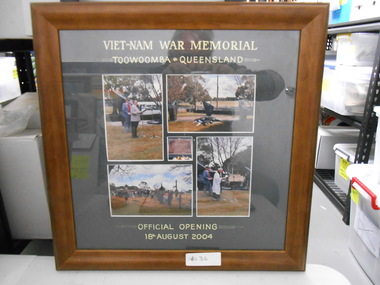
Photograph, Vietnam War Memorial, Toowoomba QLD
... A framed collection of coloured Photograph of the Offical opening of the Vietnam War Memorial in Toowoomba, Qld on the 18th August 2004...Photograph Vietnam War Memorial Toowoomba A framed collection of coloured Photograph of the Offical opening of the Vietnam War Memorial in Toowoomba, Qld on the 18th August 2004 Vietnam War Memorial, Toowoomba QLD Photograph Photograph ...A framed collection of coloured Photograph of the Offical opening of the Vietnam War Memorial in Toowoomba, Qld on the 18th August 2004photograph, vietnam war memorial, toowoomba -
 Kensington Neighbourhood House
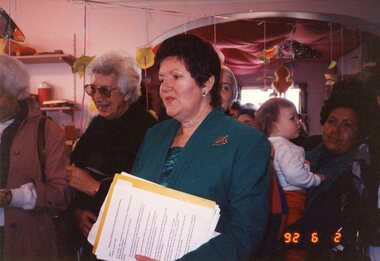
Photograph - KNH Item 5_4_013, Opening of KNH Upstairs Extension 1992 - Joan Kirner and others 2
... Colour photograph of Premier Joan Kirner and others inside 89 McCracken Street at the offical opening of the 2nd story extension. Nov 1992...Colour photograph of Premier Joan Kirner and others inside 89 McCracken Street at the offical opening of the 2nd story extension. Nov 1992 Opening of KNH Upstairs Extension 1992 - Joan Kirner and others 2 Photograph KNH Item 5_4_013 ...Colour photograph of Premier Joan Kirner and others inside 89 McCracken Street at the offical opening of the 2nd story extension. Nov 1992 -
 Kensington Neighbourhood House
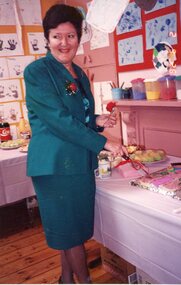
Photograph - KNH Item 5_4_007, Opening of KNH Upstairs Extension 1992 - Joan Kirner cutting cake
... Colour photograph of Victorian Premier, Joan Kirner cutting cake on the occasion of the offical opening of the 2nd story extension of 89 McCracken Street, Kensington...Colour photograph of Victorian Premier, Joan Kirner cutting cake on the occasion of the offical opening of the 2nd story extension of 89 McCracken Street, Kensington Opening of KNH Upstairs Extension 1992 - Joan Kirner cutting cake Photograph KNH Item 5_4_007 ...Colour photograph of Victorian Premier, Joan Kirner cutting cake on the occasion of the offical opening of the 2nd story extension of 89 McCracken Street, Kensington -
 Kensington Neighbourhood House
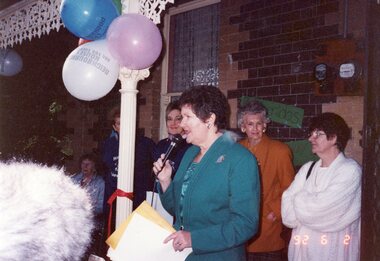
Photograph - KNH Item 5_4_010, Opening of KNH Upstairs Extension 1992 - Joan Kirner speaking
... Colour photograph of Premier Joan Kirner speaking at the offical opening of the 2nd story extension of 89 McCracken Street. ...Colour photograph of Premier Joan Kirner speaking at the offical opening of the 2nd story extension of 89 McCracken Street. ...Colour photograph of Premier Joan Kirner speaking at the offical opening of the 2nd story extension of 89 McCracken Street. Nov 1992. Maureen Fegan and Carolyn Fuller in the background. -
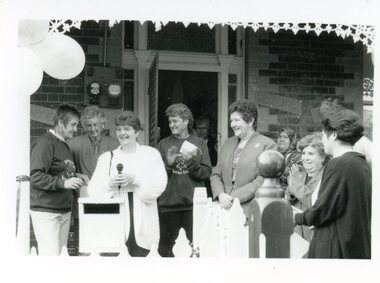 Kensington Neighbourhood House
Photograph - KNH Item 5_04_009, Opening of KNH Upstairs Extension 1992 - Joan Kirner and Womens Group members
... Black and white photograph of Carolyn Fuller, Maureen Fegan, Beryl Forster, Premier Joan Kirner on the verandah of 89 McCracken Street, Kensington at the the offical opening of the 2nd story extension Nov 1992...Black and white photograph of Carolyn Fuller, Maureen Fegan, Beryl Forster, Premier Joan Kirner on the verandah of 89 McCracken Street, Kensington at the the offical opening of the 2nd story extension Nov 1992 Opening of KNH Upstairs Extension 1992 - Joan Kirner and Womens Group members Photograph KNH Item 5_04_009 ...Black and white photograph of Carolyn Fuller, Maureen Fegan, Beryl Forster, Premier Joan Kirner on the verandah of 89 McCracken Street, Kensington at the the offical opening of the 2nd story extension Nov 1992 -
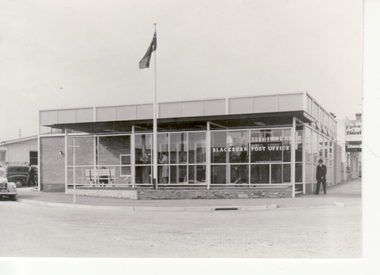 Whitehorse Historical Society Inc.
Photograph - Black and white photograph, Blackburn Post Office. C1960, 12/09/1960 12:00:00 AM
... Black and white photo of new Blackburn Post Office on opening day....blackburn post office Blackburn Black and white photo of new Blackburn Post Office on opening day. Blackburn Post Office. C1960. ...Black and white photo of new Blackburn Post Office on opening day.blackburn post office, blackburn -
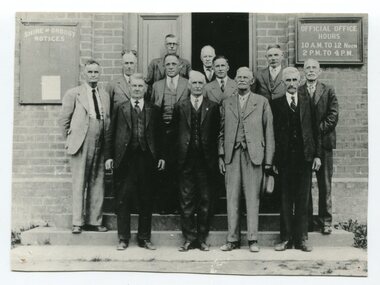 Orbost & District Historical Society
black / white photograph, first half 20th century
... On the left of the building is a Shire of Orbost notice board and on the right wall is a notice of the office opening hours - 10AM - 12 NOON 2PM - 4PM...On the left of the building is a Shire of Orbost notice board and on the right wall is a notice of the office opening hours - 10AM - 12 NOON 2PM - 4PM black / white photograph ...This is a photograph of some of the Orbost Shire councillors standing outside their council chambers. This photograph was taken before 1969 outside the previous council offices in Orbost. The current building was opened on Friday 28th February 1969 by the Premier of Victoria, The Hon. Sir Henry E. Bolte, K.C.M.G., M.P. The Shire of Orbost was a local government area about 380 kilometres east of Melbourne, the state capital of Victoria, Australia. The shire covered an area of 9,347 square kilometres and existed from 1892 until 1994. Originally, Orbost was part of the Bairnsdale Road District which was created on 30 April 1867. Splitting away as part of the Shire of Tambo in 1882, Orbost was first incorporated as a shire in its own right as the Shire of Croajingolong on 30 May 1892. It received its present name on 17 February 1893. On 3 January 1913 part of its western riding was annexed to Tambo as its Cunninghame Riding. Local governments play an important role in the lives of citizens in Australia. Local government authorities exist to provide services and amenities to local communities, and are also responsible for regulating and providing services for land and property in their district. This item is representative of a time when Orbost had its own Shire Council. A black / white photograph of a group of men standing in front of an open door of a brick building. On the left of the building is a Shire of Orbost notice board and on the right wall is a notice of the office opening hours - 10AM - 12 NOON 2PM - 4PMorbost-shire-council local government -
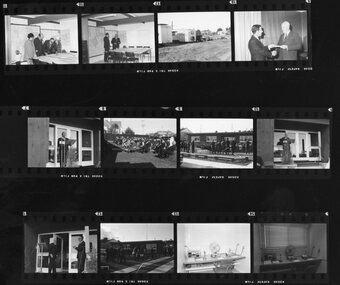 Stawell Historical Society Inc
Photograph, Forest Commission Stawell Office Opening 1972 -- 10 Photos
... Forest Commission Stawell Office Opening 1972 -- 10 Photos...Forest Commission Office Opening 1972. Series of ten photographs....Forest Commission Office Opening 1972. Series of ten photographs. ...Forest Commission Office Opening 1972. Series of ten photographs.stawell -
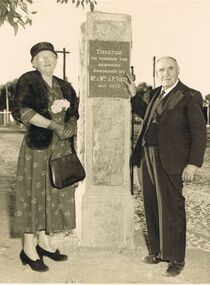 Bendigo Historical Society Inc.
Photograph - BERT GRAHAM COLLECTION: MR AND MRS TULLY AT EASTERN PARK GATES, May 1957
... Tully at the Offical Opening of the Eastern Park Gates in May 1957.on the plaque reads; Erected to Honour the Services Rendered by Mr. & Mrs. ...Tully at the Offical Opening of the Eastern Park Gates in May 1957.on the plaque reads; Erected to Honour the Services Rendered by Mr. & Mrs. ...Black & white photograph, Bert Graham Collection, Mr. & Mrs. Tully at the Offical Opening of the Eastern Park Gates in May 1957.on the plaque reads; Erected to Honour the Services Rendered by Mr. & Mrs. J.P.Tully, May 1957. as mentioned on back, 9.6.1957 AHG..bendigo, clubs, eastern park -
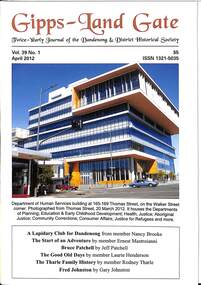 Dandenong & District Historical Society
Journal, Dandenong & District Historical Society, Gipps-Land Gate Vol39 No1, 2012
... A Lapidary Club For Dandenong 1952: The Start Of An Adventure Bruce Patchell 1920-2011 The Good Old Days Tharle Family History Fred Johnston 1919-2011 Harking Back 73 Years Dandenong's Modern Hotel Offical Opening 10th May 1939 Society News ...A Lapidary Club For Dandenong 1952: The Start Of An Adventure Bruce Patchell 1920-2011 The Good Old Days Tharle Family History Fred Johnston 1919-2011 Harking Back 73 Years Dandenong's Modern Hotel Offical Opening 10th May 1939 Society News Gipps-Land Gate Vol39 No1 Journal Dandenong & District Historical Society ...An interesting group of Early Dandenong Personalities, Places and EventsA5 size publication of the Gipps-Land Gate, April, 2012 featuring an old picture of Dandenong on the cover. A Lapidary Club For Dandenong 1952: The Start Of An Adventure Bruce Patchell 1920-2011 The Good Old Days Tharle Family History Fred Johnston 1919-2011 Harking Back 73 Years Dandenong's Modern Hotel Offical Opening 10th May 1939 Society News An interesting group of Early Dandenong Personalities, Places and Eventshotel history, early education in dandenong, interesting milestones, family histories -
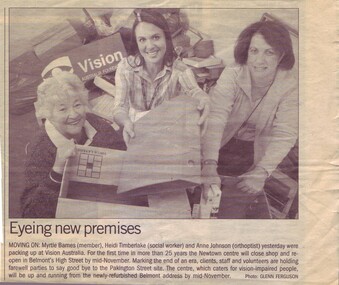 Vision Australia
Article - Text, Glenn Ferguson, Eyeing new premises
... Brief article on the closure of the Newtown office, and opening of an office in Belmont by Vision Australia Foundation....Brief article on the closure of the Newtown office, and opening of an office in Belmont by Vision Australia Foundation. ...Brief article on the closure of the Newtown office, and opening of an office in Belmont by Vision Australia Foundation.Cut out newspaper article taken from Geelong Advertisernon-fictionvision australia foundation, anne johnson, heidi timberlake, myrtle barnes -
Unions Ballarat
Photograph: Sharon Knight & others - office opening, 3/2/11
... Photograph: Sharon Knight & others - office opening...Photograph: Sharon Knight & others - office opening The photograph is the official opening of Sharon Knight's electorate office. ...Photograph: Sharon Knight & others - office opening The photograph is the official opening of Sharon Knight's electorate office. ...Photograph: Sharon Knight & others - office opening The photograph is the official opening of Sharon Knight's electorate office. Pictured from left: Unknown, Pauline Akers, Sharon Knight MLA (Ballarat West), David Miller, Matthew Smith (Secretary, Ballarat West Branch ALP), Cr. Cheryl Bromfield (behind Matthew Smith). Knight was successor to Karen Overington. Knight is now the state member for Wendouree. She has a background in health and community sectors, including having managed Lifeline in Ballarat. David Miller was Deputy Chief of Staff in the Office of Steve Bracks, Premier of Victoria.Photographbtlc, ballarat trades and labour council, ballarat trades hall, knight, sharon, alp, australian labor party, politicians - state, miller, david, smith, matthew, bracks, steve -
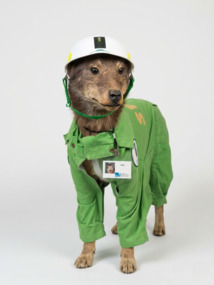 Department of Energy, Environment and Climate Action
Spot
... Ted then rescued Spot and gave him a new lease on life with a focus on State forests, recreation, bushfires, planned burns, office openings, statewide videoconferences and similar gala events (invited or not). ...Ted then rescued Spot and gave him a new lease on life with a focus on State forests, recreation, bushfires, planned burns, office openings, statewide videoconferences and similar gala events (invited or not). ...Spot and Ted Stabb became friends in the late 1980s during the days of the Department of Conservation, Forests and Lands (CFL). Rob Chalwell (ex-Bright Forests Commission) told Ted that Spot had been looking very sad and lonely in the front window of the Lands Department Office at Bright for some years. Ted then rescued Spot and gave him a new lease on life with a focus on State forests, recreation, bushfires, planned burns, office openings, statewide videoconferences and similar gala events (invited or not). Spot enjoyed many adventures and travels with Ted over the next 35 years or so, and became very popular and well known, particularly in northeastern Victoria. But not everyone liked or appreciated Spot, and one Departmental Secretary, who has long since been forgotten, even referred to him as “That Dog”. But the locals ignored the rudeness and Spot stayed. And outside work, Spot was also known to be active in his local community. He even had a social and political conscience and was occasionally seen trying to influence the way we vote. On Friday 13th November 2025, Ted finally, and somewhat reluctantly, retired from the Department after a very long and distinguished career as a forester. And while Spot would have liked to go home with Ted – which he did during Covid lockdown and for the duration of the Wodonga office refurbishments – Ted has a fairly small house and backyard, and Spot is a big dog that needs space to run. Besides, Spot was not under any pressure to leave the department like other oldies, because he is not paid a salary, doesn’t need a computer or desk space and has no large credit of unused sick leave. Pleasingly, Aaron Kennedy, the Deputy Chief Fire Officer for Hume Region, promised to give Spot a bit of a spruce up and find an appropriate place for him in the Benalla Office, rather than the dusty museum at Altona. He has also assured Ted that Spot will never end up in the dumpster or standing in a lonely window again. But the staff objected to Spot’s transfer to Benalla, so he stayed in Wodonga. Allegedly for his own protection he has been placed in a Perspex display case at the front of the office, where he keeps a watchful eye on staff and visitors. Spot and Ted… both Victorian forestry and bushfire legends… Wild Dog -
 Ballarat Tramway Museum
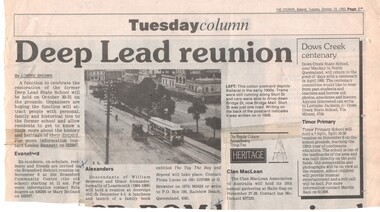
Newspaper, The Courier Ballarat, "Tuesday Column - Heritage", 19/10/1993 12:00:00 AM
... Photo taken from the Post Office tower, soon after opening, as the destination board is on the dash panel. ...Photo taken from the Post Office tower, soon after opening, as the destination board is on the dash panel. ...Newspaper cutting from The Courier, Ballarat, Tuesday 19/10/1993 from the Tuesday Column - heritage feature of the Courier, featuring a postcard of an ESCo tram and horse drawn Vehicle in Sturt St, just to the East of Lydiard St. Photo taken from the Post Office tower, soon after opening, as the destination board is on the dash panel. Caption notes it is a colour postcard that was written in 1908. Has a good illustration of telephone poles / telegraph wires.trams, tramways, sturt st., esco, telephone poles -
 Sunshine and District Historical Society Incorporated
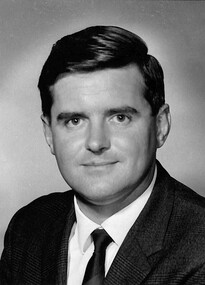
Photograph - Massey Ferguson - Employees Photographs
... Thornbrough, The Hon Harry Hayes Toronto Canada Head Office Opening 4650.141 - Massey Ferguson Employees - Thornbrough Speaking At The Toronto Canada Head Office Opening 4650.142 - Massey Ferguson Employees - L To R George Johnson, Unknown John Shiner Canada Director 4650.143 - Massey Ferguson Employees - Bob Prowse, Alex Hamilton Branch Manager, Peter Boys, Aron Collins 4650.144 - Massey Ferguson Employees - Bill Bedsor, A. ...Thornbrough, The Hon Harry Hayes Toronto Canada Head Office Opening 4650.141 - Massey Ferguson Employees - Thornbrough Speaking At The Toronto Canada Head Office Opening 4650.142 - Massey Ferguson Employees - L To R George Johnson, Unknown John Shiner Canada Director 4650.143 - Massey Ferguson Employees - Bob Prowse, Alex Hamilton Branch Manager, Peter Boys, Aron Collins 4650.144 - Massey Ferguson Employees - Bill Bedsor, A. ...Many of these photographs appeared in the Massey Ferguson Review Publication4650.001 - Massey Ferguson Employees - Mr S. R. Makeham Manager Cane Industry Project Massey Ferguson (Australia) Limited 4650.002 - Massey Ferguson Employees - Alex Hamilton 4650.003 - Massey Ferguson Employees - J. Hackett Director Special Projects Massey Ferguson (Australia) Limited 4650.004 - Massey Ferguson Employees - William 'Bill' Geddes 4650.005 - Massey Ferguson Employees - Ken Steel Director 4650.006 - Massey Ferguson Employees - I. H. Salom Director Of Manufacturing Massey Ferguson (Australia) Limited 4650.007 - Massey Ferguson Employees - E. Wendt Perth Sales Manager Massey Ferguson (Australia) Limited 4650.008 - Massey Ferguson Employees - Unknown 4650.009 - Massey Ferguson Employees - John Rogers 4650.010 - Massey Ferguson Employees - George Johnson Marketing Director Massey Ferguson (Australia) Limited 4650.011 - Massey Ferguson Employees - J. Mason Hobart Branch Manager Massey Ferguson (Australia) Limited 4650.012 - Massey Ferguson Employees - J. Masson Hobart Branch Manager Massey Ferguson (Australia) Limited 4650.013 - Massey Ferguson Employees - Noel Unknown 4650.014 - Massey Ferguson Employees - S. V. Bishop Corporate Plastics Control Co-odinator 4650.015 - Massey Ferguson Employees - Jack Baker Foreman MC Shop 4650.016 - Massey Ferguson Employees - Bob Burns 4650.017 - Massey Ferguson Employees - Unknown 4650.018 - Massey Ferguson Employees - George Johnson, Peter Boyd Brisbane Branch Manager & 3 Unknown People 4650.019 - Massey Ferguson Employees - Unknown 4650.020 - Massey Ferguson Employees - Unknown 4650.021 - Massey Ferguson Employees - Unknown 4650.022 - Massey Ferguson Employees - Unknown 4650.023 - Massey Ferguson Employees - Unknown 4650.024 - Massey Ferguson Employees - M. Bishop 4650.025 - Massey Ferguson Employees - Tom Carroll In Sunshine Engineering Drawing Office 4650.026 - Massey Ferguson Employees - Unknown 4650.027 - Massey Ferguson Employees - Unknown 4650.028 - Massey Ferguson Employees - B. Baxter 4650.029 - Massey Ferguson Employees - Jim Bruce 4650.030 - Massey Ferguson Employees - Howard Clemson (Sunshine Resident) 4650.031 - Massey Ferguson Employees - Tom A. Minahan 4650.032 - Massey Ferguson Employees - A. W. Moffat General Marketing Manager Massey Ferguson (Australia) Limited 4650.033 - Massey Ferguson Employees - Jack Unknown Service Manager W. R. Burrer Preston Dealer In Victoria 4650.034 - Massey Ferguson Employees - Doug Retallick Perth Branch 4650.035 - Massey Ferguson Employees - Doug Retallick Perth Branch 4650.036 - Massey Ferguson Employees - John Plunisrtt 4650.037 - Massey Ferguson Employees - Dennis Potter 4650.038 - Massey Ferguson Employees - James 'Jim' Poole 4650.039 - Massey Ferguson Employees - Ray Stone 4650.040 - Massey Ferguson Employees - Unknown 4650.041 - Massey Ferguson Employees - D. Willshire 4650.041 - Massey Ferguson Employees - Unknown 4650.042 - Massey Ferguson Employees - Brian Unknown Adelaide 4650.043 - Massey Ferguson Employees - Mike B. Allen Adelaide Branch Manager Massey Ferguson (Australia) Limited 4650.044 - Massey Ferguson Employees - J. Anderson Brisbane Sales Manager Northern Division Massey Ferguson (Australia) Limited 4650.045 - Massey Ferguson Employees - L To R Mike B, Allen Adelaide Branch Manager, Unknown, Unknown 4650.046 - Massey Ferguson Employees - Unknown 4650.047 - Massey Ferguson Employees - John Anson 4650.048 - Massey Ferguson Employees - Mr Honautavic 4650.049 - Massey Ferguson Employees - Mr Brockman South Australia Minister For Agriculture 4650.051 - Massey Ferguson Employees - W. B. Allen Perth BranchMassey Ferguson (Australia) Limited 4650.052 - Massey Ferguson Employees - L To R Unknown, T. Thornbrough, Unknown 4650.053 - Massey Ferguson Employees - Bob Ashworth Assistant Manager Hunts Farm Equipment Pty Ltd 4650.054 - Massey Ferguson Employees - Unknown 4650.055 - Massey Ferguson Employees - W. M. Alexander Massey Harris 4650.056 - Massey Ferguson Employees - Mike B. Allen Adelaide Branch Manager Massey Ferguson (Australia) Limited 4650.057 - Massey Ferguson Employees - Unknown 4650.058 - Massey Ferguson Employees - L to R Bob Ross Chairman Of Directos, G. R. Johnson Director Of Marketing, Jack Heirman M.L.C. 4650.059 - Massey Ferguson Employees - Mike B. Allen Adelaide Branch Manager Massey Ferguson (Australia) Limited & John Henderson New Dealer 4650.060 - Massey Ferguson Employees - K. D. Steel Massey Ferguson (Australia) Limited 4650.061 - Massey Ferguson Employees - Unknown 4650.062 - Massey Ferguson Employees - Eric F. Smart West Australia Massey Ferguson (Australia) Limited 4650.063 - Massey Ferguson Employees - E. H. Williams Agent 4650.064 - Massey Ferguson Employees - Unknown 4650.065 - Massey Ferguson Employees - Unknown 4650.066 - Massey Ferguson Employees - Unknown 4650.067 - Massey Ferguson Employees - Unknown 4650.068 - Massey Ferguson Employees - Larry Pomeroy Sunshine Director Of Marketing (Ex Toronto Canada) 4650.069 - Massey Ferguson Employees - George Johnson Director Of Marketing Manager Massey Ferguson (Australia) Limited 4650.070 - Massey Ferguson Employees - John 'Jack' Vance Director Of Finance, George Johnson Director Of Marketing, Tom Mindhan 4650.071 - Massey Ferguson Employees - John 'Jack' Vance Director Of Finance & Mary Danaher 4650.072 - Massey Ferguson Employees - Unknown 4650.073 - Massey Ferguson Employees - L To R George Johnson, Ian McIntosh, Les McIntosh, John Shiner 4650.074 - Massey Ferguson Employees - Ken Spicer Director Of Marketing (Canadian) 4650.075 - Massey Ferguson Employees - Herman Weber Managing Director Addressing Conference. Far Right Alex Hamilton Manager ICM 4650.076 - Massey Ferguson Employees - Paecw Motors Family Partnership 4650.077 - Massey Ferguson Employees - Bill Mullolland 4650.078 - Massey Ferguson Employees - L To R Unknown, Graham Brooks 4650.079 - Massey Ferguson Employees - Unknown 4650.080 - Massey Ferguson Employees - Unknown 4650.081 - Massey Ferguson Employees - B. Sloane & Bruce Sloane Dealers 4650.082 - Massey Ferguson Employees - Unknown 4650.083 - Massey Ferguson Employees - R. T. Weir, Rob Ross Chairman Of Directors, Ian Munroe, G. R. Johnson 4650.084 - Massey Ferguson Employees - Miss Sue Barnett Sales Office Oakbank South Australia 4650.085 - Massey Ferguson Employees - L To R J. A. Taylor, J. Mason, G. L. Roberts, T. L. Roberts, H. B. Weher 4650.086 - Massey Ferguson Employees - Mike B. Allen, Mick C. Trest, C. Peter Prest, H. B. Welsh 4650.087 - Massey Ferguson Employees - Alex Hamilton (Middle) 4650.088 - Massey Ferguson Employees - Unknown 4650.089 - Massey Ferguson Employees - Unknown 4650.090 - Massey Ferguson Employees - Bill Benham Sales Manager, Bob Weidenhofa Parts Manager 4650.091 - Massey Ferguson Employees - Syd Williams Cairns Dealer 4650.092 - Massey Ferguson Employees - Bill Banney (Centre) 4650.093 - Massey Ferguson Employees - J. Morris, T. Minahan, J. Vance, H. Weber, J. Johnsone, G. Davey All Directors Massey Ferguson (Australia) Limited At Wyeera 4650.094 - Massey Ferguson Employees - W. barber, A. Collins, P. Couch, D. Leggw, Allan Doust 4650.095 - Massey Ferguson Employees - Unknown 4650.096 - Massey Ferguson Employees - Unknown 4650.097 - Massey Ferguson Employees - Norm Hazelwood Personal Manager Training 4650.098 - Massey Ferguson Employees - Kevin Day 3rd From Right 4650.099 - Massey Ferguson Employees - Unknown 4650.100 - Massey Ferguson Employees - Eric Thomas (Far Left) 4650.101 - Massey Ferguson Employees - Peter Fieder (Instructing) & Norrie Croker (Standing) 4650.102 - Massey Ferguson Employees - James 'Jim' Poole & Malcolm Scott 4650.103 - Massey Ferguson Employees - A. Collins Training Officer & Herman Weber Managing Director 4650.104 - Massey Ferguson Employees - Harry McPherson Instructing On A Baller To A Group Of Sevicemen 4650.105 - Massey Ferguson Employees - L To Right Kehh Ott, Murray David (MD), Unknown, Mike Allan 4650.106 - Massey Ferguson Employees - Allen Murray Product Training Sunshine 4650.107 - Massey Ferguson Employees - Bon Johnson, Avon Collins, Stan Galbraith, Harry Gregory, Lindsay Baggin 4650.108 - Massey Ferguson Employees - L To R Unknown, Unknown, James 'Jim' Poole 4650.109 - Massey Ferguson Employees - L To R Unknown, Tim Pickett, Unknown, James 'Jim' Poole, Dave Cunningham, Unknown, John Vaughan, Unknown 4650.110 - Massey Ferguson Employees - Unknown, Ron White, Unknown 4650.111 - Massey Ferguson Employees - L To R P. Boyd, J. R. Warmer, G. A. Gemmell-Smith, Herman Weber (MD), G. Cannon, M. Bennett 4650.112 - Massey Ferguson Employees - Sir Dallas Brook Victorian Governor (Standing) & Company Executives & VIPS H.V. McKay Massey Harris 4650.113 - Massey Ferguson Employees - John Vaughan, Noel Clarke Melbourne Branch Manager, Brian Harrod Export Manager 4650.114 - Massey Ferguson Employees - Jack Day, Ivan Leyendekkers, Ken Gaunt, Jack Stokes, Jack Vance, Dick Weir 4650.115 - Massey Ferguson Employees - Jack Vance Director Finance & Ken Gaunt Director Engineering 4650.116 - Massey Ferguson Employees - P. Boyd, R. armstrong, Whittaker, L. Wood, J. K. Gaunt, H. P. Weber, G. Mann, Sir Syd Williams 4650.117 - Massey Ferguson Employees - Unknown 4650.118 - Massey Ferguson Employees - Unknown 4650.119 - Massey Ferguson Employees - L To R Jack Hacket, Unknown, George Johnson 4650.120 - Massey Ferguson Employees - H. P. Weber Speaking 4650.121 - Massey Ferguson Employees - L To R J. J. Jaejar Corporate Engineering, Unknown, Brian Harrod Export Marketing, Unknown 4650.122 - Massey Ferguson Employees - Unknown 4650.123 - Massey Ferguson Employees - Ian Forristor Lectoring, Ales Simpson, Stuart McKay H.V. McKay Massey Harris 4650.124 - Massey Ferguson Employees - L To R Russell Cox, Dennis Potter, Stan Paytoh, Lee Street, Harold Harwood, Graham Hardman, Sandy McColl 4650.125 - Massey Ferguson Employees - L To R Eric Thomas, Unknown, Unknown, Mick Allen 4650.126 - Massey Ferguson Employees - L To R Mollison Sunshine Factory Manager, Unknown, Unknown, Brian Harrod 4650.127 - Massey Ferguson Employees - Shirlene Clancy 4650.128 - Massey Ferguson Employees - Unknown 4650.129 - Massey Ferguson Employees - L. H. Thornborough (Toronto Chairman), John Mitchell, Monty Prichard Perksins 4650.130 - Massey Ferguson Employees - Gus Cargen & John Shiner (Toronto) 4650.131 - Massey Ferguson Employees - H. P. Weber Sunshine Managing Director Speaking 4650.132 - Massey Ferguson Employees - Press Conference 4650.133 - Massey Ferguson Employees - Unknown 4650.134 - Massey Ferguson Employees - Unknown & L. T. Richie Managing Director 4650.135 - Massey Ferguson Employees - Unknown 4650.136 - Massey Ferguson Employees - Herman Weber 4650.137 - Massey Ferguson Employees - A Group In The Conference Room At The Sunshine Factory 4650.138 - Massey Ferguson Employees - Cliff Freer Melbourne Training Manager & Ken Guant Director Engineering 4650.139 - Massey Ferguson Employees - L To R Sir Dallas Brooks Victorian Governor General & Tom Rictchie Managing Director 4650.140 - Massey Ferguson Employees - L To R Tom Carroll, A. Thornbrough, The Hon Harry Hayes Toronto Canada Head Office Opening 4650.141 - Massey Ferguson Employees - Thornbrough Speaking At The Toronto Canada Head Office Opening 4650.142 - Massey Ferguson Employees - L To R George Johnson, Unknown John Shiner Canada Director 4650.143 - Massey Ferguson Employees - Bob Prowse, Alex Hamilton Branch Manager, Peter Boys, Aron Collins 4650.144 - Massey Ferguson Employees - Bill Bedsor, A. Thornbrough, H. Weber 4650.145 - Massey Ferguson Employees - L To R G. M. Taylor, Unknown, Unknown, Unknown, John 'Jack' Vance, Mrs T. Ritchie, Tom Ritchie 4650.146 - Massey Ferguson Employees - Centre Herman Weber Managing Director 4650.147 - Massey Ferguson Employees - L To R Unknown, Unknown, Tom Ritchie, Unknown 4650.148 - Massey Ferguson Employees - M. Weber, Jager, Whittaker, R. Armstrong, J. R. Harner 4650.149 - Massey Ferguson Employees - L To R Sir Dalls Brooks, Bill Moeser, Tom Ritchie, Unknown, Unknown, Harold Holt Prime Minister Of Australia 4650.150 - Massey Ferguson Employees - J. Day, E. French, D. Hudson, H. Weber, J. Hooking, P. Holloway, B. Ramage 4650.151 - Massey Ferguson Employees - Unknown 4650.152 - Massey Ferguson Employees - George Johnson Speaking 4650.153 - Massey Ferguson Employees - Ray Carer WA Dealer & John Shiner From Toronto 4650.154 - Massey Ferguson Employees - L To R W. G. Banks, P. Nagle, A. Wood, J. Morrison, E. Elletson 4650.155 - Massey Ferguson Employees - Unknown 4650.156 - Massey Ferguson Employees - Unknown 4650.157 - Massey Ferguson Employees - Unknown 4650.158 - Massey Ferguson Employees - Unknown 4650.159 - Massey Ferguson Employees - G. R. Johnson On Stage With Norm Boddington & Dean Fisher 4650.160 - Massey Ferguson Employees - Unknown 4650.161 - Massey Ferguson Employees - Unknown 4650.162 - Massey Ferguson Employees - L To R Tom Carroll Being Called To The Dais, A. A. Thornborough & John Mictchel At Toronto, Canada 4650.163 - Massey Ferguson Employees - Unknown At St. Leonards, NSW Dealer Entertainment Night 4650.164 - Massey Ferguson Employees - Unknown At St. Leonards, NSW Dealer Entertainment Night 4650.165 - Massey Ferguson Employees - L To R Albert Thornbough, Unknown, Herman Weber 4650.166 - Massey Ferguson Employees - Farewell To J. F. Plunkett At Perth Branch 4650.166 - Massey Ferguson Employees - Farewell To J. F. Plunkett At Perth Branch Names 4650.167 - Massey Ferguson Employees - National Dealer Meeting Sydney, NSW 4650.168 - Massey Ferguson Employees - W. B. Allen Perth Branch 4650.169 - Massey Ferguson Employees - Tom Carroll With An Early H.V. McKay Harvester 4650.170 - Massey Ferguson Employees - Mr. M. Robson Explains The MF542 4650.171 - Massey Ferguson Employees - Stage Performance 4650.172 - Massey Ferguson Employees - Stage Performance 4650.173 - Massey Ferguson Employees - Stage Performance 4650.174 - Massey Ferguson Employees - Stage Performance 4650.175 - Massey Ferguson Employees - Unknown 4650.176 - Massey Ferguson Employees - Stage Performance 4650.177 - Massey Ferguson Employees - Unknown 4650.178 - Massey Ferguson Employees - Unknown 4650.179 - Massey Ferguson Employees - L To R Unknown, Unknown 4650.180 - Massey Ferguson Employees - L To R Unknown, Keith Storey 4650.181 - Massey Ferguson Employees - Unknownmassey ferguson, sunshine harvester works, employee -
 Flagstaff Hill Maritime Museum and Village
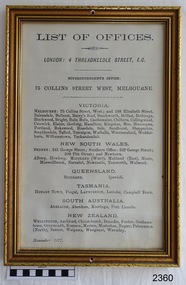
Document - Bank notice, List of Offices, ca Nov. 1877
... office opened on the corner of Collins Street and Queen's Street in 1879. The Bank of Australasia was incorporated by Royal Charter of England in March 1834. It came to Australia on 14th December 1835, opening...office opened on the corner of Collins Street and Queen's Street in 1879. The Bank of Australasia was incorporated by Royal Charter of England in March 1834. It came to Australia on 14th December 1835, opening ...The addresses given on the List for the London and Melbourne offices have connected the document to the Bank of Australasia. The List is dated November 1877 and shows the number and the location of all of the branches of the Bank at that point in time., a total of 77. - Victoria 35, New South Wales 14, Queensland 2, Tasmania 5, South Australia 5, New Zealand 16 Copies of the notice would have been displayed in all branches of the bank in both Australia and New Zealand to inform customers and perhaps impress them too with a large number of locations and the reference to the bank's connection with London. This document gives information on all bank offices throughout Australia and New Zealand. It refers to the Superintendent's Office address at 75 Collins Street West, Melbourne and is dated November 1877. This places the document at the time just before the new Melbourne office opened on the corner of Collins Street and Queen's Street in 1879. The Bank of Australasia was incorporated by Royal Charter of England in March 1834. It came to Australia on 14th December 1835, opening in Sydney. The Acting Superintendent of the Bank of Australasia in Sydney at that time was David Charters McArthur. He was Superintendent from 1867-to 1876. The Melbourne branch of the Bank of Australasia opened on 28th August 1838 in a two-roomed brick cottage on the north side of Little Collins Street. Two huge mastiff dogs were kept in the backyard and let loose at night to guard the bank. The government also provided an armed military sentinel. Due to the bank's rapid growth, a new building for the Melbourne branch was opened in 1840 at 75 Collins Street West. By 1879 the bank had been upgraded to a magnificent two-storey building on the corners of Collins and Queens Streets, with the entry on Collins Street. In 1951 the Bank of Australasia amalgamated with the Union Bank to form the Australia and New Zealand Bank, now known as the ANZ. Then in 1970, the ANZ merged with both the ES&A and the London Bank of Australia to form the ANZ Banking Group Limited. The ANZ Banking Group Ltd kindly donated a variety of historic items from the Bank of Australasia. BANK of AUSTRALASIA, WARRNAMBOOL – In 1854 Warrnambool had two banks, the Union Back and the Bank of Australasia. Later, completely different bank businesses opened; in 1867 the National Bank of Australasia, then in 1875 the Colonial Bank of Australasia. The original Bank of Australasia was established in Warrnambool in July 1854, and operated from a leased cottage on Merri Street, close to Liebig Street. The bank bought a stone building previously erected by drapers Cramond & Dickson on the corner of Timor and Gibson Streets. Samuel Hannaford was a teller and then Manager at the Warrnambool branch from 1855 to 1856. Warrnambool’s Council chose the Bank of Australasia as its bank 1856-57. In 1859 Roberts & Co. was awarded the contract to build the new Bank of Australasia branch for the sum of £3,000. The land was on a sand hill on the northeast corner of Timor and Kepler Streets and had been bought in 1855 from investor James Cust. The new building opened on May 21, 1860. The bank continued to operate there until 1951 when it merged with the Union Bank to form the ANZ Bank, which continued operating from its Liebig Street building. Warrnambool City Council purchased the former Bank of Australasia building in 1971 and renovated it, then on 3rd December 1973 it was officially opened as the Art Gallery by Cr. Harold Stephenson and Gallery Director John Welsh. The Gallery transferred to the purpose-built building in Liebig Street in 1986 and the old bank building is now the Gallery club. The List of Offices of the Bank of Australasia has early Australian historical significance through its association with the Bank, which was established in 1834 by Royal Charter and opened in Sydney, Australia, in Sydney in 1835. The List is significant for showing the number and location of all of the Offices of the Bank of Australia in November 1877. This shows that Victoria had 45 percent of all Offices. The framed document is locally significant for its association with the Bank of Australasia, Warrnambool's first bank, established in 1854. The bank continued to operate until the organisation's merger in 1951. It became the ANZ Bank, which is still in operation today. The Bank was an integral part of the establishment and growth of commerce in Colonial Warrnambool and throughout Australia.Document in a decorative gilt frame. Titled List of Bank Offices and dated November 1877, facsimile. Offices include London, and a variety of offices in Victoria, New South Wales, Queensland, Tasmania, South Australia and New Zealand. Round holes in the centre top and bottom of the frame. Text includes: "LONDON: 4 THREADNEEDLE STREET, E.C." "SUPERINTENDENT'S OFFICE: / 75 COLLINS STREET WEST, MELBOURNE" "Warrnambool" " November 1877" flagstaff hill, warrnambool, bank of australasia 1877, branches of bank of australasia 1877, banks in australia 1877, commerce 1877, shipwreck-coast, document, bank document, flagstaff hill maritime museum & village, bank of australasia, 1877, branches in australia, bank of london, offices in australia, offices in new zealand, commerce, banking, finance, shipwrecked coast, flagstaff hill maritime museum, maritime museum, shipwreck coast, flagstaff hill maritime village, great ocean road, boa, union bank, australia & new zealand bank, anz bank, david charters mcarthur, d c mcarthur, sydney, new south wales, currency, banknote, legal tender, list of bank offices -
 Flagstaff Hill Maritime Museum and Village
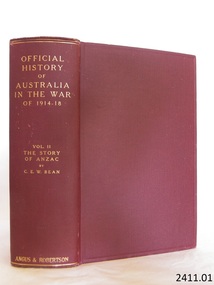
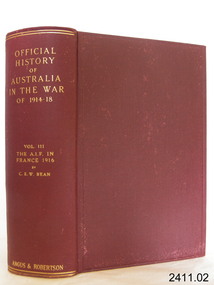
Book, Official History of Australia in the War of 1914-18 Vol 2-1
... office during the years of his service there. Ralph Pattison was described as “a meticulous gentleman whose punctuality, floorless courtesy and distinctive neat dress were hallmarks of his character, and ‘his’ clock controlled his daily routine and his opening and closing of the library’s large heavy doors to the minute.” ...office during the years of his service there. Ralph Pattison was described as “a meticulous gentleman whose punctuality, floorless courtesy and distinctive neat dress were hallmarks of his character, and ‘his’ clock controlled his daily routine and his opening and closing of the library’s large heavy doors to the minute.” ...This item is from the ‘Pattison Collection’, a collection of books and records that was originally owned by the Warrnambool Mechanics’ Institute, which was founded in Warrnambool in 1853. By 1886 the Warrnambool Mechanics’ Institute (WMI) had grown to have a Library, Museum and Fine Arts Gallery, with a collection of “… choice productions of art and valuable specimens in almost every branch and many wonderful national curiosities are now to be seen there, including historic relics of the town and district.” It later included a School of Design. Although it was very well patronised, the lack of financial support led the WMI in 1911 to ask the City Council to take it over. In 1935 Ralph Pattison was appointed as City Librarian to establish and organise the Warrnambool Library as it was then called. When the WMI building was pulled down in 1963 a new civic building was erected on the site and the new Warrnambool Library, on behalf of the City Council, took over all the holdings of the WMI. At this time some of the items were separated and identified as the ‘Pattison Collection’, named after Ralph Pattison. Eventually, the components of the WMI were distributed from the Warrnambool Library to various places, including the Art Gallery, Historical Society and Flagstaff Hill. Later some were even distributed to other regional branches of Corangamite Regional Library and passed to and fro. It is difficult now to trace just where all of the items have ended up. The books at Flagstaff Hill Maritime Village generally display stamps and markings from Pattison as well as a variety of other institutions including the Mechanics’ Institute itself. RALPH ERIC PATTISON Ralph Eric Pattison was born in Rockhampton, Queensland, in 1891. He married Maude Swan from Warrnambool in 1920 and they set up home in Warrnambool. In 1935 Pattison accepted a position as City Librarian for the Warrnambool City Council. His huge challenge was to make a functional library within two rooms of the Mechanics’ Institute. He tirelessly cleaned, cleared and sorted a disarrayed collection of old books, jars of preserved specimens and other items reserved for exhibition in the city’s museum. He developed and updated the library with a wide variety of books for all tastes, including reference books for students; a difficult task to fulfil during the years following the Depression. He converted all of the lower areas of the building into a library, reference room and reading room for members and the public. The books were sorted and stored using a cataloguing and card index system that he had developed himself. He also prepared the upper floor of the building and established the Art Gallery and later the Museum, a place to exhibit the many old relics that had been stored for years for this purpose. One of the treasures he found was a beautiful ancient clock, which he repaired, restored and enjoyed using in his office during the years of his service there. Ralph Pattison was described as “a meticulous gentleman whose punctuality, floorless courtesy and distinctive neat dress were hallmarks of his character, and ‘his’ clock controlled his daily routine and his opening and closing of the library’s large heavy doors to the minute.” Pattison took leave from 1942 to 1945 to serve in the Royal Australian Navy, Volunteer Reserve as Lieutenant. A few years later he converted one of the Museum’s rooms into a Children’s Library, stocking it with suitable books for the younger generation. This was an instant success. In the 1950’s he had the honour of being appointed to the Victorian Library Board and received more inspiration from the monthly conferences in Melbourne. He was sadly retired in 1959 after over 23 years of service, due to the fact that he had gone over the working age of council officers. However, he continued to take a very keen interest in the continual development of the Library until his death in 1969. The Pattison Collection, along with other items at Flagstaff Hill Maritime Village, was originally part of the Warrnambool Mechanics' Institute’s collection. The Warrnambool Mechanics’ Institute Collection is primarily significant in its totality, rather than for the individual objects it contains. Its contents are highly representative of the development of Mechanics' Institute libraries across Australia, particularly Victoria. A diversity of publications and themes has been amassed, and these provide clues to our understanding of the nature of and changes in the reading habits of Victorians from the 1850s to the middle of the 20th century. The collection also highlights the Warrnambool community’s commitment to the Mechanics’ Institute, reading, literacy and learning in the regions, and proves that access to knowledge was not impeded by distance. These items help to provide a more complete picture of our community’s ideals and aspirations. The Warrnambool Mechanics Institute book collection has historical and social significance for its strong association with the Mechanics Institute movement and the important role it played in the intellectual, cultural and social development of people throughout the latter part of the nineteenth century and the early twentieth century. The collection of books is a rare example of an early lending library and its significance is enhanced by the survival of an original collection of many volumes. The Warrnambool Mechanics' Institute’s publication collection is of both local and state significance. Official History of Australia in the War of 1914-18 Vol 2-1 Author: C E W Bean Publisher: Angus & Robertson Date: 1937 shipwrecked-coast, flagstaff-hill, warrnambool, flagstaff-hill-maritime-museum, maritime-museum, shipwreck-coast, flagstaff-hill-maritime-village, shipwrecked-artefact, book, warrnambool library, warrnambool mechanics’ institute, warrnambool city librarian, mechanics’ institute library, victorian library board, warrnambool books and records, warrnambool children’s library, great ocean road, official history of australia in the war of 1914-18 vol 2-1, official history of australia in the war of 1914-18 -
 Flagstaff Hill Maritime Museum and Village
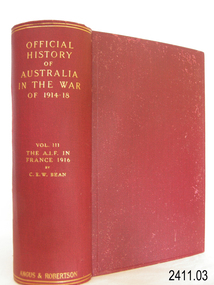
Book, Official History of Australia in the War of 1914-18 Vol 3-1
... office during the years of his service there. Ralph Pattison was described as “a meticulous gentleman whose punctuality, floorless courtesy and distinctive neat dress were hallmarks of his character, and ‘his’ clock controlled his daily routine and his opening and closing of the library’s large heavy doors to the minute.” ...office during the years of his service there. Ralph Pattison was described as “a meticulous gentleman whose punctuality, floorless courtesy and distinctive neat dress were hallmarks of his character, and ‘his’ clock controlled his daily routine and his opening and closing of the library’s large heavy doors to the minute.” ...This item is from the ‘Pattison Collection’, a collection of books and records that was originally owned by the Warrnambool Mechanics’ Institute, which was founded in Warrnambool in 1853. By 1886 the Warrnambool Mechanics’ Institute (WMI) had grown to have a Library, Museum and Fine Arts Gallery, with a collection of “… choice productions of art and valuable specimens in almost every branch and many wonderful national curiosities are now to be seen there, including historic relics of the town and district.” It later included a School of Design. Although it was very well patronised, the lack of financial support led the WMI in 1911 to ask the City Council to take it over. In 1935 Ralph Pattison was appointed as City Librarian to establish and organise the Warrnambool Library as it was then called. When the WMI building was pulled down in 1963 a new civic building was erected on the site and the new Warrnambool Library, on behalf of the City Council, took over all the holdings of the WMI. At this time some of the items were separated and identified as the ‘Pattison Collection’, named after Ralph Pattison. Eventually, the components of the WMI were distributed from the Warrnambool Library to various places, including the Art Gallery, Historical Society and Flagstaff Hill. Later some were even distributed to other regional branches of Corangamite Regional Library and passed to and fro. It is difficult now to trace just where all of the items have ended up. The books at Flagstaff Hill Maritime Village generally display stamps and markings from Pattison as well as a variety of other institutions including the Mechanics’ Institute itself. RALPH ERIC PATTISON Ralph Eric Pattison was born in Rockhampton, Queensland, in 1891. He married Maude Swan from Warrnambool in 1920 and they set up home in Warrnambool. In 1935 Pattison accepted a position as City Librarian for the Warrnambool City Council. His huge challenge was to make a functional library within two rooms of the Mechanics’ Institute. He tirelessly cleaned, cleared and sorted a disarrayed collection of old books, jars of preserved specimens and other items reserved for exhibition in the city’s museum. He developed and updated the library with a wide variety of books for all tastes, including reference books for students; a difficult task to fulfil during the years following the Depression. He converted all of the lower areas of the building into a library, reference room and reading room for members and the public. The books were sorted and stored using a cataloguing and card index system that he had developed himself. He also prepared the upper floor of the building and established the Art Gallery and later the Museum, a place to exhibit the many old relics that had been stored for years for this purpose. One of the treasures he found was a beautiful ancient clock, which he repaired, restored and enjoyed using in his office during the years of his service there. Ralph Pattison was described as “a meticulous gentleman whose punctuality, floorless courtesy and distinctive neat dress were hallmarks of his character, and ‘his’ clock controlled his daily routine and his opening and closing of the library’s large heavy doors to the minute.” Pattison took leave from 1942 to 1945 to serve in the Royal Australian Navy, Volunteer Reserve as Lieutenant. A few years later he converted one of the Museum’s rooms into a Children’s Library, stocking it with suitable books for the younger generation. This was an instant success. In the 1950’s he had the honour of being appointed to the Victorian Library Board and received more inspiration from the monthly conferences in Melbourne. He was sadly retired in 1959 after over 23 years of service, due to the fact that he had gone over the working age of council officers. However, he continued to take a very keen interest in the continual development of the Library until his death in 1969. The Pattison Collection, along with other items at Flagstaff Hill Maritime Village, was originally part of the Warrnambool Mechanics' Institute’s collection. The Warrnambool Mechanics’ Institute Collection is primarily significant in its totality, rather than for the individual objects it contains. Its contents are highly representative of the development of Mechanics' Institute libraries across Australia, particularly Victoria. A diversity of publications and themes has been amassed, and these provide clues to our understanding of the nature of and changes in the reading habits of Victorians from the 1850s to the middle of the 20th century. The collection also highlights the Warrnambool community’s commitment to the Mechanics’ Institute, reading, literacy and learning in the regions, and proves that access to knowledge was not impeded by distance. These items help to provide a more complete picture of our community’s ideals and aspirations. The Warrnambool Mechanics Institute book collection has historical and social significance for its strong association with the Mechanics Institute movement and the important role it played in the intellectual, cultural and social development of people throughout the latter part of the nineteenth century and the early twentieth century. The collection of books is a rare example of an early lending library and its significance is enhanced by the survival of an original collection of many volumes. The Warrnambool Mechanics' Institute’s publication collection is of both local and state significance. Official History of Australia in the War of 1914-18 Vol 3-1 Author: C E W Bean Publisher: Angus & Robertson Date: 1937 shipwrecked-coast, flagstaff-hill, warrnambool, flagstaff-hill-maritime-museum, maritime-museum, shipwreck-coast, flagstaff-hill-maritime-village, shipwrecked-artefact, book, warrnambool library, warrnambool mechanics’ institute, warrnambool city librarian, mechanics’ institute library, victorian library board, warrnambool books and records, warrnambool children’s library, great ocean road, official history of australia in the war of 1914-18 vol 3 -
 Flagstaff Hill Maritime Museum and Village
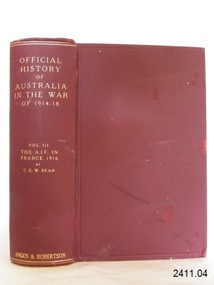
Book, Official History of Australia in the War of 1914-18 Vol 3-2
... office during the years of his service there. Ralph Pattison was described as “a meticulous gentleman whose punctuality, floorless courtesy and distinctive neat dress were hallmarks of his character, and ‘his’ clock controlled his daily routine, and his opening and closing of the library’s large heavy doors to the minute.” ...office during the years of his service there. Ralph Pattison was described as “a meticulous gentleman whose punctuality, floorless courtesy and distinctive neat dress were hallmarks of his character, and ‘his’ clock controlled his daily routine, and his opening and closing of the library’s large heavy doors to the minute.” ...This item is from the ‘Pattison Collection’, a collection of books and records that was originally owned by the Warrnambool Mechanics’ Institute, which was founded in Warrnambool in 1853. By 1886 the Warrnambool Mechanics’ Institute (WMI) had grown to have a Library, Museum and Fine Arts Gallery, with a collection of “… choice productions of art, and valuable specimens in almost every branch and many wonderful national curiosities are now to be seen there, including historic relics of the town and district.” It later included a School of Design. Although it was very well patronised, the lack of financial support led the WMI in 1911 to ask the City Council to take it over. In 1935 Ralph Pattison was appointed as City Librarian to establish and organise the Warrnambool Library as it was then called. When the WMI building was pulled down in 1963 a new civic building was erected on the site and the new Warrnambool Library, on behalf of the City Council, took over all the holdings of the WMI. At this time some of the items were separated and identified as the ‘Pattison Collection’, named after Ralph Pattison. Eventually the components of the WMI were distributed from the Warrnambool Library to various places, including the Art Gallery, Historical Society and Flagstaff Hill. Later some were even distributed to other regional branches of Corangamite Regional Library and passed to and fro. It is difficult now to trace just where all of the items have ended up. The books at Flagstaff Hill Maritime Village generally display stamps and markings from Pattison as well as a variety of other institutions including the Mechanics’ Institute itself. RALPH ERIC PATTISON Ralph Eric Pattison was born in Rockhampton, Queensland, in 1891. He married Maude Swan from Warrnambool in 1920 and they set up home in Warrnambool. In 1935 Pattison accepted a position as City Librarian for the Warrnambool City Council. His huge challenge was to make a functional library within two rooms of the Mechanics’ Institute. He tirelessly cleaned, cleared and sorted a disarrayed collection of old books, jars of preserved specimens and other items reserved for exhibition in the city’s museum. He developed and updated the library with a wide variety of books for all tastes, including reference books for students; a difficult task to fulfil during the years following the Depression. He converted all of the lower area of the building into a library, reference room and reading room for members and the public. The books were sorted and stored using a cataloguing and card index system that he had developed himself. He also prepared the upper floor of the building and established the Art Gallery and later the Museum, a place to exhibit the many old relics that had been stored for years for this purpose. One of the treasures he found was a beautiful ancient clock, which he repaired, restored and enjoyed using in his office during the years of his service there. Ralph Pattison was described as “a meticulous gentleman whose punctuality, floorless courtesy and distinctive neat dress were hallmarks of his character, and ‘his’ clock controlled his daily routine, and his opening and closing of the library’s large heavy doors to the minute.” Pattison took leave during 1942 to 1945 to serve in the Royal Australian Navy, Volunteer Reserve as Lieutenant. A few years later he converted one of the Museum’s rooms into a Children’s Library, stocking it with suitable books for the younger generation. This was an instant success. In the 1950’s he had the honour of being appointed to the Victorian Library Board and received more inspiration from the monthly conferences in Melbourne. He was sadly retired in 1959 after over 23 years of service, due to the fact that he had gone over the working age of council officers. However he continued to take a very keen interest in the continual development of the Library until his death in 1969. The Pattison Collection, along with other items at Flagstaff Hill Maritime Village, was originally part of the Warrnambool Mechanics' Institute’s collection. The Warrnambool Mechanics’ Institute Collection is primarily significant in its totality, rather than for the individual objects it contains. Its contents are highly representative of the development of Mechanics' Institute libraries across Australia, particularly Victoria. A diversity of publications and themes has been amassed, and these provide clues to our understanding of the nature of and changes in the reading habits of Victorians from the 1850s to the middle of the 20th century. The collection also highlights the Warrnambool community’s commitment to the Mechanics’ Institute, reading, literacy and learning in the regions, and proves that access to knowledge was not impeded by distance. These items help to provide a more complete picture of our community’s ideals and aspirations. The Warrnambool Mechanics Institute book collection has historical and social significance for its strong association with the Mechanics Institute movement and the important role it played in the intellectual, cultural and social development of people throughout the latter part of the nineteenth century and the early twentieth century. The collection of books is a rare example of an early lending library and its significance is enhanced by the survival of an original collection of many volumes. The Warrnambool Mechanics' Institute’s publication collection is of both local and state significance. Official History of Australia in the War of 1914-18 Vol 3-2 Author: C E W Bean Publisher: Angus & Robertson Date: 1937shipwrecked-coast, flagstaff-hill, warrnambool, flagstaff-hill-maritime-museum, maritime-museum, shipwreck-coast, flagstaff-hill-maritime-village, shipwrecked-artefact, book, warrnambool library, warrnambool mechanics’ institute, warrnambool city librarian, mechanics’ institute library, victorian library board, warrnambool books and records, warrnambool children’s library, great ocean road, official history of australia in the war of 1914-18 vol 3, c e w bean -
 Flagstaff Hill Maritime Museum and Village
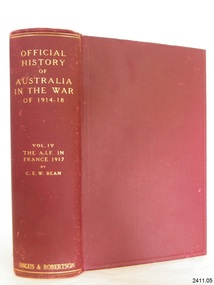
Book, Official History of Australia in the War of 1914-18 Vol 3-3
... office during the years of his service there. Ralph Pattison was described as “a meticulous gentleman whose punctuality, floorless courtesy and distinctive neat dress were hallmarks of his character, and ‘his’ clock controlled his daily routine, and his opening and closing of the library’s large heavy doors to the minute.” ...office during the years of his service there. Ralph Pattison was described as “a meticulous gentleman whose punctuality, floorless courtesy and distinctive neat dress were hallmarks of his character, and ‘his’ clock controlled his daily routine, and his opening and closing of the library’s large heavy doors to the minute.” ...This item is from the ‘Pattison Collection’, a collection of books and records that was originally owned by the Warrnambool Mechanics’ Institute, which was founded in Warrnambool in 1853. By 1886 the Warrnambool Mechanics’ Institute (WMI) had grown to have a Library, Museum and Fine Arts Gallery, with a collection of “… choice productions of art, and valuable specimens in almost every branch and many wonderful national curiosities are now to be seen there, including historic relics of the town and district.” It later included a School of Design. Although it was very well patronised, the lack of financial support led the WMI in 1911 to ask the City Council to take it over. In 1935 Ralph Pattison was appointed as City Librarian to establish and organise the Warrnambool Library as it was then called. When the WMI building was pulled down in 1963 a new civic building was erected on the site and the new Warrnambool Library, on behalf of the City Council, took over all the holdings of the WMI. At this time some of the items were separated and identified as the ‘Pattison Collection’, named after Ralph Pattison. Eventually the components of the WMI were distributed from the Warrnambool Library to various places, including the Art Gallery, Historical Society and Flagstaff Hill. Later some were even distributed to other regional branches of Corangamite Regional Library and passed to and fro. It is difficult now to trace just where all of the items have ended up. The books at Flagstaff Hill Maritime Village generally display stamps and markings from Pattison as well as a variety of other institutions including the Mechanics’ Institute itself. RALPH ERIC PATTISON Ralph Eric Pattison was born in Rockhampton, Queensland, in 1891. He married Maude Swan from Warrnambool in 1920 and they set up home in Warrnambool. In 1935 Pattison accepted a position as City Librarian for the Warrnambool City Council. His huge challenge was to make a functional library within two rooms of the Mechanics’ Institute. He tirelessly cleaned, cleared and sorted a disarrayed collection of old books, jars of preserved specimens and other items reserved for exhibition in the city’s museum. He developed and updated the library with a wide variety of books for all tastes, including reference books for students; a difficult task to fulfil during the years following the Depression. He converted all of the lower area of the building into a library, reference room and reading room for members and the public. The books were sorted and stored using a cataloguing and card index system that he had developed himself. He also prepared the upper floor of the building and established the Art Gallery and later the Museum, a place to exhibit the many old relics that had been stored for years for this purpose. One of the treasures he found was a beautiful ancient clock, which he repaired, restored and enjoyed using in his office during the years of his service there. Ralph Pattison was described as “a meticulous gentleman whose punctuality, floorless courtesy and distinctive neat dress were hallmarks of his character, and ‘his’ clock controlled his daily routine, and his opening and closing of the library’s large heavy doors to the minute.” Pattison took leave during 1942 to 1945 to serve in the Royal Australian Navy, Volunteer Reserve as Lieutenant. A few years later he converted one of the Museum’s rooms into a Children’s Library, stocking it with suitable books for the younger generation. This was an instant success. In the 1950’s he had the honour of being appointed to the Victorian Library Board and received more inspiration from the monthly conferences in Melbourne. He was sadly retired in 1959 after over 23 years of service, due to the fact that he had gone over the working age of council officers. However he continued to take a very keen interest in the continual development of the Library until his death in 1969. The Pattison Collection, along with other items at Flagstaff Hill Maritime Village, was originally part of the Warrnambool Mechanics' Institute’s collection. The Warrnambool Mechanics’ Institute Collection is primarily significant in its totality, rather than for the individual objects it contains. Its contents are highly representative of the development of Mechanics' Institute libraries across Australia, particularly Victoria. A diversity of publications and themes has been amassed, and these provide clues to our understanding of the nature of and changes in the reading habits of Victorians from the 1850s to the middle of the 20th century. The collection also highlights the Warrnambool community’s commitment to the Mechanics’ Institute, reading, literacy and learning in the regions, and proves that access to knowledge was not impeded by distance. These items help to provide a more complete picture of our community’s ideals and aspirations. The Warrnambool Mechanics Institute book collection has historical and social significance for its strong association with the Mechanics Institute movement and the important role it played in the intellectual, cultural and social development of people throughout the latter part of the nineteenth century and the early twentieth century. The collection of books is a rare example of an early lending library and its significance is enhanced by the survival of an original collection of many volumes. The Warrnambool Mechanics' Institute’s publication collection is of both local and state significance. Official History of Australia in the War of 1914-18 Vol 3-3 Author: C E W Bean Publisher: Angus & Robertson Date: 1937 shipwrecked-coast, flagstaff-hill, warrnambool, flagstaff-hill-maritime-museum, maritime-museum, shipwreck-coast, flagstaff-hill-maritime-village, shipwrecked-artefact, book, warrnambool library, warrnambool mechanics’ institute, warrnambool city librarian, mechanics’ institute library, victorian library board, warrnambool books and records, warrnambool children’s library, great ocean road, official history of australia in the war of 1914-18 vol 3 -
 Flagstaff Hill Maritime Museum and Village
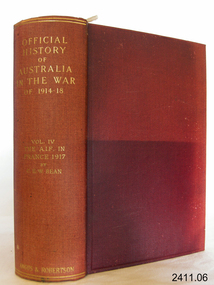
Book, Official History of Australia in the War of 1914-18 Vol 4-1
... office during the years of his service there. Ralph Pattison was described as “a meticulous gentleman whose punctuality, floorless courtesy and distinctive neat dress were hallmarks of his character, and ‘his’ clock controlled his daily routine and his opening and closing of the library’s large heavy doors to the minute.” ...office during the years of his service there. Ralph Pattison was described as “a meticulous gentleman whose punctuality, floorless courtesy and distinctive neat dress were hallmarks of his character, and ‘his’ clock controlled his daily routine and his opening and closing of the library’s large heavy doors to the minute.” ...This item is from the ‘Pattison Collection’, a collection of books and records that was originally owned by the Warrnambool Mechanics’ Institute, which was founded in Warrnambool in 1853. By 1886 the Warrnambool Mechanics’ Institute (WMI) had grown to have a Library, Museum and Fine Arts Gallery, with a collection of “… choice productions of art and valuable specimens in almost every branch and many wonderful national curiosities are now to be seen there, including historic relics of the town and district.” It later included a School of Design. Although it was very well patronised, the lack of financial support led the WMI in 1911 to ask the City Council to take it over. In 1935 Ralph Pattison was appointed as City Librarian to establish and organise the Warrnambool Library as it was then called. When the WMI building was pulled down in 1963 a new civic building was erected on the site and the new Warrnambool Library, on behalf of the City Council, took over all the holdings of the WMI. At this time some of the items were separated and identified as the ‘Pattison Collection’, named after Ralph Pattison. Eventually, the components of the WMI were distributed from the Warrnambool Library to various places, including the Art Gallery, Historical Society and Flagstaff Hill. Later some were even distributed to other regional branches of Corangamite Regional Library and passed to and fro. It is difficult now to trace just where all of the items have ended up. The books at Flagstaff Hill Maritime Village generally display stamps and markings from Pattison as well as a variety of other institutions including the Mechanics’ Institute itself. RALPH ERIC PATTISON Ralph Eric Pattison was born in Rockhampton, Queensland, in 1891. He married Maude Swan from Warrnambool in 1920 and they set up home in Warrnambool. In 1935 Pattison accepted a position as City Librarian for the Warrnambool City Council. His huge challenge was to make a functional library within two rooms of the Mechanics’ Institute. He tirelessly cleaned, cleared and sorted a disarrayed collection of old books, jars of preserved specimens and other items reserved for exhibition in the city’s museum. He developed and updated the library with a wide variety of books for all tastes, including reference books for students; a difficult task to fulfil during the years following the Depression. He converted all of the lower areas of the building into a library, reference room and reading room for members and the public. The books were sorted and stored using a cataloguing and card index system that he had developed himself. He also prepared the upper floor of the building and established the Art Gallery and later the Museum, a place to exhibit the many old relics that had been stored for years for this purpose. One of the treasures he found was a beautiful ancient clock, which he repaired, restored and enjoyed using in his office during the years of his service there. Ralph Pattison was described as “a meticulous gentleman whose punctuality, floorless courtesy and distinctive neat dress were hallmarks of his character, and ‘his’ clock controlled his daily routine and his opening and closing of the library’s large heavy doors to the minute.” Pattison took leave from 1942 to 1945 to serve in the Royal Australian Navy, Volunteer Reserve as Lieutenant. A few years later he converted one of the Museum’s rooms into a Children’s Library, stocking it with suitable books for the younger generation. This was an instant success. In the 1950’s he had the honour of being appointed to the Victorian Library Board and received more inspiration from the monthly conferences in Melbourne. He was sadly retired in 1959 after over 23 years of service, due to the fact that he had gone over the working age of council officers. However, he continued to take a very keen interest in the continual development of the Library until his death in 1969. The Pattison Collection, along with other items at Flagstaff Hill Maritime Village, was originally part of the Warrnambool Mechanics' Institute’s collection. The Warrnambool Mechanics’ Institute Collection is primarily significant in its totality, rather than for the individual objects it contains. Its contents are highly representative of the development of Mechanics' Institute libraries across Australia, particularly Victoria. A diversity of publications and themes has been amassed, and these provide clues to our understanding of the nature of and changes in the reading habits of Victorians from the 1850s to the middle of the 20th century. The collection also highlights the Warrnambool community’s commitment to the Mechanics’ Institute, reading, literacy and learning in the regions, and proves that access to knowledge was not impeded by distance. These items help to provide a more complete picture of our community’s ideals and aspirations. The Warrnambool Mechanics Institute book collection has historical and social significance for its strong association with the Mechanics Institute movement and the important role it played in the intellectual, cultural and social development of people throughout the latter part of the nineteenth century and the early twentieth century. The collection of books is a rare example of an early lending library and its significance is enhanced by the survival of an original collection of many volumes. The Warrnambool Mechanics' Institute’s publication collection is of both local and state significance. Official History of Australia in the War of 1914-18 Vol 4-1 Author: C E W Bean Publisher: Angus & Robertson Date: 1941shipwrecked-coast, flagstaff-hill, warrnambool, flagstaff-hill-maritime-museum, maritime-museum, shipwreck-coast, flagstaff-hill-maritime-village, shipwrecked-artefact, book, warrnambool library, warrnambool mechanics’ institute, warrnambool city librarian, mechanics’ institute library, victorian library board, warrnambool books and records, warrnambool children’s library, great ocean road, official history of australia in the war of 1914-18 vol 4 -
 Flagstaff Hill Maritime Museum and Village
Book, Official History of Australia in the War of 1914-18 Vol 4-2
... office during the years of his service there. Ralph Pattison was described as “a meticulous gentleman whose punctuality, floorless courtesy and distinctive neat dress were hallmarks of his character, and ‘his’ clock controlled his daily routine and his opening and closing of the library’s large heavy doors to the minute.” ...office during the years of his service there. Ralph Pattison was described as “a meticulous gentleman whose punctuality, floorless courtesy and distinctive neat dress were hallmarks of his character, and ‘his’ clock controlled his daily routine and his opening and closing of the library’s large heavy doors to the minute.” ...This item is from the ‘Pattison Collection’, a collection of books and records that was originally owned by the Warrnambool Mechanics’ Institute, which was founded in Warrnambool in 1853. By 1886 the Warrnambool Mechanics’ Institute (WMI) had grown to have a Library, Museum and Fine Arts Gallery, with a collection of “… choice productions of art and valuable specimens in almost every branch and many wonderful national curiosities are now to be seen there, including historic relics of the town and district.” It later included a School of Design. Although it was very well patronised, the lack of financial support led the WMI in 1911 to ask the City Council to take it over. In 1935 Ralph Pattison was appointed as City Librarian to establish and organise the Warrnambool Library as it was then called. When the WMI building was pulled down in 1963 a new civic building was erected on the site and the new Warrnambool Library, on behalf of the City Council, took over all the holdings of the WMI. At this time some of the items were separated and identified as the ‘Pattison Collection’, named after Ralph Pattison. Eventually, the components of the WMI were distributed from the Warrnambool Library to various places, including the Art Gallery, Historical Society and Flagstaff Hill. Later some were even distributed to other regional branches of Corangamite Regional Library and passed to and fro. It is difficult now to trace just where all of the items have ended up. The books at Flagstaff Hill Maritime Village generally display stamps and markings from Pattison as well as a variety of other institutions including the Mechanics’ Institute itself. RALPH ERIC PATTISON Ralph Eric Pattison was born in Rockhampton, Queensland, in 1891. He married Maude Swan from Warrnambool in 1920 and they set up home in Warrnambool. In 1935 Pattison accepted a position as City Librarian for the Warrnambool City Council. His huge challenge was to make a functional library within two rooms of the Mechanics’ Institute. He tirelessly cleaned, cleared and sorted a disarrayed collection of old books, jars of preserved specimens and other items reserved for exhibition in the city’s museum. He developed and updated the library with a wide variety of books for all tastes, including reference books for students; a difficult task to fulfil during the years following the Depression. He converted all of the lower areas of the building into a library, reference room and reading room for members and the public. The books were sorted and stored using a cataloguing and card index system that he had developed himself. He also prepared the upper floor of the building and established the Art Gallery and later the Museum, a place to exhibit the many old relics that had been stored for years for this purpose. One of the treasures he found was a beautiful ancient clock, which he repaired, restored and enjoyed using in his office during the years of his service there. Ralph Pattison was described as “a meticulous gentleman whose punctuality, floorless courtesy and distinctive neat dress were hallmarks of his character, and ‘his’ clock controlled his daily routine and his opening and closing of the library’s large heavy doors to the minute.” Pattison took leave from 1942 to 1945 to serve in the Royal Australian Navy, Volunteer Reserve as Lieutenant. A few years later he converted one of the Museum’s rooms into a Children’s Library, stocking it with suitable books for the younger generation. This was an instant success. In the 1950’s he had the honour of being appointed to the Victorian Library Board and received more inspiration from the monthly conferences in Melbourne. He was sadly retired in 1959 after over 23 years of service, due to the fact that he had gone over the working age of council officers. However, he continued to take a very keen interest in the continual development of the Library until his death in 1969. The Pattison Collection, along with other items at Flagstaff Hill Maritime Village, was originally part of the Warrnambool Mechanics' Institute’s collection. The Warrnambool Mechanics’ Institute Collection is primarily significant in its totality, rather than for the individual objects it contains. Its contents are highly representative of the development of Mechanics' Institute libraries across Australia, particularly Victoria. A diversity of publications and themes has been amassed, and these provide clues to our understanding of the nature of and changes in the reading habits of Victorians from the 1850s to the middle of the 20th century. The collection also highlights the Warrnambool community’s commitment to the Mechanics’ Institute, reading, literacy and learning in the regions, and proves that access to knowledge was not impeded by distance. These items help to provide a more complete picture of our community’s ideals and aspirations. The Warrnambool Mechanics Institute book collection has historical and social significance for its strong association with the Mechanics Institute movement and the important role it played in the intellectual, cultural and social development of people throughout the latter part of the nineteenth century and the early twentieth century. The collection of books is a rare example of an early lending library and its significance is enhanced by the survival of an original collection of many volumes. The Warrnambool Mechanics' Institute’s publication collection is of both local and state significance. Official History of Australia in the War of 1914-18 Vol 4-2 Author: C E W Bean Publisher: Angus & Robertson Date:1942 shipwrecked-coast, flagstaff-hill, warrnambool, flagstaff-hill-maritime-museum, maritime-museum, shipwreck-coast, flagstaff-hill-maritime-village, shipwrecked-artefact, book, warrnambool library, warrnambool mechanics’ institute, warrnambool city librarian, mechanics’ institute library, victorian library board, warrnambool books and records, warrnambool children’s library, great ocean road, official history of australia in the war of 1914-18 vol 4-2, official history of australia in the war of 1914-18, c e w bean -
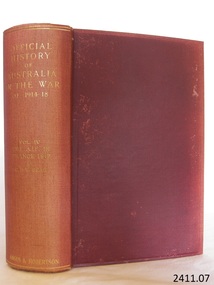 Flagstaff Hill Maritime Museum and Village
Book, Official History of Australia in the War of 1914-18 Vol 4-3
... office during the years of his service there. Ralph Pattison was described as “a meticulous gentleman whose punctuality, floorless courtesy and distinctive neat dress were hallmarks of his character, and ‘his’ clock controlled his daily routine and his opening and closing of the library’s large heavy doors to the minute.” ...office during the years of his service there. Ralph Pattison was described as “a meticulous gentleman whose punctuality, floorless courtesy and distinctive neat dress were hallmarks of his character, and ‘his’ clock controlled his daily routine and his opening and closing of the library’s large heavy doors to the minute.” ...This item is from the ‘Pattison Collection’, a collection of books and records that was originally owned by the Warrnambool Mechanics’ Institute, which was founded in Warrnambool in 1853. By 1886 the Warrnambool Mechanics’ Institute (WMI) had grown to have a Library, Museum and Fine Arts Gallery, with a collection of “… choice productions of art and valuable specimens in almost every branch and many wonderful national curiosities are now to be seen there, including historic relics of the town and district.” It later included a School of Design. Although it was very well patronised, the lack of financial support led the WMI in 1911 to ask the City Council to take it over. In 1935 Ralph Pattison was appointed as City Librarian to establish and organise the Warrnambool Library as it was then called. When the WMI building was pulled down in 1963 a new civic building was erected on the site and the new Warrnambool Library, on behalf of the City Council, took over all the holdings of the WMI. At this time some of the items were separated and identified as the ‘Pattison Collection’, named after Ralph Pattison. Eventually, the components of the WMI were distributed from the Warrnambool Library to various places, including the Art Gallery, Historical Society and Flagstaff Hill. Later some were even distributed to other regional branches of Corangamite Regional Library and passed to and fro. It is difficult now to trace just where all of the items have ended up. The books at Flagstaff Hill Maritime Village generally display stamps and markings from Pattison as well as a variety of other institutions including the Mechanics’ Institute itself. RALPH ERIC PATTISON Ralph Eric Pattison was born in Rockhampton, Queensland, in 1891. He married Maude Swan from Warrnambool in 1920 and they set up home in Warrnambool. In 1935 Pattison accepted a position as City Librarian for the Warrnambool City Council. His huge challenge was to make a functional library within two rooms of the Mechanics’ Institute. He tirelessly cleaned, cleared and sorted a disarrayed collection of old books, jars of preserved specimens and other items reserved for exhibition in the city’s museum. He developed and updated the library with a wide variety of books for all tastes, including reference books for students; a difficult task to fulfil during the years following the Depression. He converted all of the lower areas of the building into a library, reference room and reading room for members and the public. The books were sorted and stored using a cataloguing and card index system that he had developed himself. He also prepared the upper floor of the building and established the Art Gallery and later the Museum, a place to exhibit the many old relics that had been stored for years for this purpose. One of the treasures he found was a beautiful ancient clock, which he repaired, restored and enjoyed using in his office during the years of his service there. Ralph Pattison was described as “a meticulous gentleman whose punctuality, floorless courtesy and distinctive neat dress were hallmarks of his character, and ‘his’ clock controlled his daily routine and his opening and closing of the library’s large heavy doors to the minute.” Pattison took leave from 1942 to 1945 to serve in the Royal Australian Navy, Volunteer Reserve as Lieutenant. A few years later he converted one of the Museum’s rooms into a Children’s Library, stocking it with suitable books for the younger generation. This was an instant success. In the 1950’s he had the honour of being appointed to the Victorian Library Board and received more inspiration from the monthly conferences in Melbourne. He was sadly retired in 1959 after over 23 years of service, due to the fact that he had gone over the working age of council officers. However, he continued to take a very keen interest in the continual development of the Library until his death in 1969. The Pattison Collection, along with other items at Flagstaff Hill Maritime Village, was originally part of the Warrnambool Mechanics' Institute’s collection. The Warrnambool Mechanics’ Institute Collection is primarily significant in its totality, rather than for the individual objects it contains. Its contents are highly representative of the development of Mechanics' Institute libraries across Australia, particularly Victoria. A diversity of publications and themes has been amassed, and these provide clues to our understanding of the nature of and changes in the reading habits of Victorians from the 1850s to the middle of the 20th century. The collection also highlights the Warrnambool community’s commitment to the Mechanics’ Institute, reading, literacy and learning in the regions, and proves that access to knowledge was not impeded by distance. These items help to provide a more complete picture of our community’s ideals and aspirations. The Warrnambool Mechanics Institute book collection has historical and social significance for its strong association with the Mechanics Institute movement and the important role it played in the intellectual, cultural and social development of people throughout the latter part of the nineteenth century and the early twentieth century. The collection of books is a rare example of an early lending library and its significance is enhanced by the survival of an original collection of many volumes. The Warrnambool Mechanics' Institute’s publication collection is of both local and state significance. Official History of Australia in the War of 1914-18 Vol 4-3 Author: C E W Bean Publisher: Angus & Robertson Date: 1942shipwrecked-coast, flagstaff-hill, warrnambool, flagstaff-hill-maritime-museum, maritime-museum, shipwreck-coast, flagstaff-hill-maritime-village, shipwrecked-artefact, book, warrnambool library, warrnambool mechanics’ institute, warrnambool city librarian, mechanics’ institute library, victorian library board, warrnambool books and records, warrnambool children’s library, great ocean road, official history of australia in the war of 1914-18 vol 4-3, official history of australia in the war of 1914-18, c e w bean -
 Flagstaff Hill Maritime Museum and Village
Book, The Works of Alfred Lord Tennyson
... office during the years of his service there. Ralph Pattison was described as “a meticulous gentleman whose punctuality, floorless courtesy and distinctive neat dress were hallmarks of his character, and ‘his’ clock controlled his daily routine and his opening and closing of the library’s large heavy doors to the minute.” ...office during the years of his service there. Ralph Pattison was described as “a meticulous gentleman whose punctuality, floorless courtesy and distinctive neat dress were hallmarks of his character, and ‘his’ clock controlled his daily routine and his opening and closing of the library’s large heavy doors to the minute.” ...This item is from the ‘Pattison Collection’, a collection of books and records that was originally owned by the Warrnambool Mechanics’ Institute, which was founded in Warrnambool in 1853. By 1886 the Warrnambool Mechanics’ Institute (WMI) had grown to have a Library, Museum and Fine Arts Gallery, with a collection of “… choice productions of art and valuable specimens in almost every branch and many wonderful national curiosities are now to be seen there, including historic relics of the town and district.” It later included a School of Design. Although it was very well patronised, the lack of financial support led the WMI in 1911 to ask the City Council to take it over. In 1935 Ralph Pattison was appointed as City Librarian to establish and organise the Warrnambool Library as it was then called. When the WMI building was pulled down in 1963 a new civic building was erected on the site and the new Warrnambool Library, on behalf of the City Council, took over all the holdings of the WMI. At this time some of the items were separated and identified as the ‘Pattison Collection’, named after Ralph Pattison. Eventually, the components of the WMI were distributed from the Warrnambool Library to various places, including the Art Gallery, Historical Society and Flagstaff Hill. Later some were even distributed to other regional branches of Corangamite Regional Library and passed to and fro. It is difficult now to trace just where all of the items have ended up. The books at Flagstaff Hill Maritime Village generally display stamps and markings from Pattison as well as a variety of other institutions including the Mechanics’ Institute itself. RALPH ERIC PATTISON Ralph Eric Pattison was born in Rockhampton, Queensland, in 1891. He married Maude Swan from Warrnambool in 1920 and they set up home in Warrnambool. In 1935 Pattison accepted a position as City Librarian for the Warrnambool City Council. His huge challenge was to make a functional library within two rooms of the Mechanics’ Institute. He tirelessly cleaned, cleared and sorted a disarrayed collection of old books, jars of preserved specimens and other items reserved for exhibition in the city’s museum. He developed and updated the library with a wide variety of books for all tastes, including reference books for students; a difficult task to fulfil during the years following the Depression. He converted all of the lower areas of the building into a library, reference room and reading room for members and the public. The books were sorted and stored using a cataloguing and card index system that he had developed himself. He also prepared the upper floor of the building and established the Art Gallery and later the Museum, a place to exhibit the many old relics that had been stored for years for this purpose. One of the treasures he found was a beautiful ancient clock, which he repaired, restored and enjoyed using in his office during the years of his service there. Ralph Pattison was described as “a meticulous gentleman whose punctuality, floorless courtesy and distinctive neat dress were hallmarks of his character, and ‘his’ clock controlled his daily routine and his opening and closing of the library’s large heavy doors to the minute.” Pattison took leave from 1942 to 1945 to serve in the Royal Australian Navy, Volunteer Reserve as Lieutenant. A few years later he converted one of the Museum’s rooms into a Children’s Library, stocking it with suitable books for the younger generation. This was an instant success. In the 1950’s he had the honour of being appointed to the Victorian Library Board and received more inspiration from the monthly conferences in Melbourne. He was sadly retired in 1959 after over 23 years of service, due to the fact that he had gone over the working age of council officers. However, he continued to take a very keen interest in the continual development of the Library until his death in 1969. WARRNAMBOOL MECHANICS’ INSTITUTE Warrnambool's Mechanics' Institute (or Institution as it was sometimes called) was one of the earliest in Victoria. On 17th October 1853, a meeting was held where it was resolved to request the Lieutenant Governor of the Colony to grant land for the erection of a Mechanics' Institutes building. A committee was formed at the meeting and Richard Osburne chaired the first meeting of this committee. The land on the North West corner of Banyan and Merri Streets was granted but there were no funds to erect the building. The Formal Rights of the Warrnambool Mechanics' Institute's encompassed its aims and these were officially adopted in1859; "This Institution has for its object the diffusion of literary, scientific, and other useful knowledge amongst its members, excluding all controversial subjects, religious or political. These objects are sought to be obtained by means of a circulating library, a reading room, the establishment of classes, debates, and the occasional delivery of lectures on natural and experimental philosophy, mechanics, astronomy, chemistry, natural history, literature, and the useful and ornamental arts, particularly those which have a more immediate reference to the colony." The Warrnambool Mechanics' Institute opened its first reading room in November 1884 in the National School building at the corner of Banyan and Timor Streets. The Institute was funded by member subscription, payable on a quarterly, half-yearly or yearly basis. Samuel Hannaford, the Manager of the Warrnambool Bank of Australasia, was the first Honorary Secretary of the Mechanics' Institutes, and an early President and Vice-President. He also gave several of the early lectures in the Reading Room. Another early Secretary, Librarian and lecturer was Marmaduke Fisher, the teacher at the National School. Lecture topics included The Poets and Poetry of Ireland', 'The Birth and Development of the Earth', 'The Vertebrae - with Remarks on the pleasures resulting from the study of Natural History' and 'Architecture'. In 1856 the Reading Room was moved to James Hider's shop in Timor Street, and by 1864 it was located in the bookshop of Davies and Read. In the 1860's the Mechanics' Institute struggled as membership waned but in 1866, after a series of fundraising efforts, the committee was able to purchase land in Liebig Street, on a site then called Market Square, between the weighbridge and the fire station. A Mechanics' Institute building was opened at this site in August 1871. The following year four more rooms were added to the main Reading Room and in 1873 the Artisan School of Design was incorporated into the Institute. The same year Joseph Archibald established a Museum; however, it deteriorated when he was transferred to Bendigo in 1877. In 1880, with Archibald's return to Warrnambool, the Museum was re-established, and in 1885 a new building was built at the back of the Institute to accommodate the re-created School of Design, the Art Gallery and the Museum. In 1887 the Museum section was moved to the former courthouse in Timor Street (for some time the walls of the building formed part of the TAFE cafeteria but all is now demolished)). In 1911 the Museum was transferred back to the original building and the management of the Mechanics' Institute was handed over to the Warrnambool City Council. The Museum and Art Gallery became one and housed many fine works of art, and the Library continued to grow. The building was well patronised, with records showing that at the beginning of the 20th century there were between 500 and 800 visitors. During World War One the monthly figures were in the thousands, with 3,400 people visiting in January 1915. The Museum was a much-loved Institution in Warrnambool until the contents of the Museum and Art Gallery were removed to make room for the Warrnambool City Council Engineers' Department. The contents were stored but many of the items were scattered or lost. When the original building was demolished the site became occupied by the Civic Centre, which included the new City Library. (The library was temporarily located in the old Palais building in Koroit Street.) In the process of reorganisation the Collection was distributed amongst the community groups: -The new City Library took some of the historical books and some important documents, historic photographs and newspapers. -The Art Gallery kept the 19th Century art collection and some of the artefacts from the museum. -The Historical Society has some items -The State Museum has some items -Some items were destroyed -Flagstaff Hill Maritime Village has old newspapers, Government Gazettes, most of the Mechanics' Institute Library, ledgers and documents connected to the Mechanics' Institute Library, some framed and unframed artworks and some photographs. The Warrnambool Mechanics' Institute Library book collection is deemed to be of great importance because it is one of the few collections in an almost intact state, and many of the books are now very rare and of great value. The Pattison Collection, along with other items at Flagstaff Hill Maritime Village, was originally part of the Warrnambool Mechanics' Institute’s collection. The Warrnambool Mechanics’ Institute Collection is primarily significant in its totality, rather than for the individual objects it contains. Its contents are highly representative of the development of Mechanics' Institute libraries across Australia, particularly Victoria. A diversity of publications and themes has been amassed, and these provide clues to our understanding of the nature of and changes in the reading habits of Victorians from the 1850s to the middle of the 20th century. The collection also highlights the Warrnambool community’s commitment to the Mechanics’ Institute, reading, literacy and learning in the regions, and proves that access to knowledge was not impeded by distance. These items help to provide a more complete picture of our community’s ideals and aspirations. The Warrnambool Mechanics Institute book collection has historical and social significance for its strong association with the Mechanics Institute movement and the important role it played in the intellectual, cultural and social development of people throughout the latter part of the nineteenth century and the early twentieth century. The collection of books is a rare example of an early lending library and its significance is enhanced by the survival of an original collection of many volumes. The Warrnambool Mechanics' Institute’s publication collection is of both local and state significance. The Works of Alfred Lord Tennyson Author: Alfred, Lord Tennyson - Poet Laureate Publisher: Macmillan And Co Date: 1892The label on spine cover has typed text PAT 821 TEN Pastedown front endpaper has a sticker from Warrnambool Mechanics Institute and Free Library Front loose endpaper has a sticker from Corangamite Regional Library Service Front loose endpaper has a stamp from Corangamite Regional Library Service Flyleaf has a stamp from Warrnambool Public Museumshipwrecked-coast, flagstaff-hill, flagstaff-hill-maritime-museum, warrnambool, maritime-museum, shipwreck-coast, flagstaff-hill-maritime-village, shipwrecked-artefact, book, pattison collection, warrnambool library, warrnambool mechanics’ institute, ralph eric pattison, corangamite regional library service, warrnambool city librarian, mechanics’ institute library, victorian library board, warrnambool books and records, warrnambool children’s library, the works of alfred lord tennyson, alfred, lord tennyson, poet laureate, alfred tennyson -
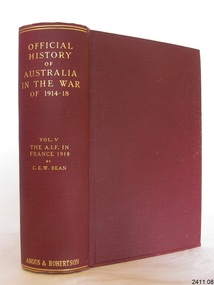 Flagstaff Hill Maritime Museum and Village
Book, Official History of Australia in War 1914-1918 Vol 5-1
... office during the years of his service there. Ralph Pattison was described as “a meticulous gentleman whose punctuality, floorless courtesy and distinctive neat dress were hallmarks of his character, and ‘his’ clock controlled his daily routine and his opening and closing of the library’s large heavy doors to the minute.” ...office during the years of his service there. Ralph Pattison was described as “a meticulous gentleman whose punctuality, floorless courtesy and distinctive neat dress were hallmarks of his character, and ‘his’ clock controlled his daily routine and his opening and closing of the library’s large heavy doors to the minute.” ...This item is from the ‘Pattison Collection’, a collection of books and records that was originally owned by the Warrnambool Mechanics’ Institute, which was founded in Warrnambool in 1853. By 1886 the Warrnambool Mechanics’ Institute (WMI) had grown to have a Library, Museum and Fine Arts Gallery, with a collection of “… choice productions of art and valuable specimens in almost every branch and many wonderful national curiosities are now to be seen there, including historic relics of the town and district.” It later included a School of Design. Although it was very well patronised, the lack of financial support led the WMI in 1911 to ask the City Council to take it over. In 1935 Ralph Pattison was appointed as City Librarian to establish and organise the Warrnambool Library as it was then called. When the WMI building was pulled down in 1963 a new civic building was erected on the site and the new Warrnambool Library, on behalf of the City Council, took over all the holdings of the WMI. At this time some of the items were separated and identified as the ‘Pattison Collection’, named after Ralph Pattison. Eventually, the components of the WMI were distributed from the Warrnambool Library to various places, including the Art Gallery, Historical Society and Flagstaff Hill. Later some were even distributed to other regional branches of Corangamite Regional Library and passed to and fro. It is difficult now to trace just where all of the items have ended up. The books at Flagstaff Hill Maritime Village generally display stamps and markings from Pattison as well as a variety of other institutions including the Mechanics’ Institute itself. RALPH ERIC PATTISON Ralph Eric Pattison was born in Rockhampton, Queensland, in 1891. He married Maude Swan from Warrnambool in 1920 and they set up home in Warrnambool. In 1935 Pattison accepted a position as City Librarian for the Warrnambool City Council. His huge challenge was to make a functional library within two rooms of the Mechanics’ Institute. He tirelessly cleaned, cleared and sorted a disarrayed collection of old books, jars of preserved specimens and other items reserved for exhibition in the city’s museum. He developed and updated the library with a wide variety of books for all tastes, including reference books for students; a difficult task to fulfil during the years following the Depression. He converted all of the lower areas of the building into a library, reference room and reading room for members and the public. The books were sorted and stored using a cataloguing and card index system that he had developed himself. He also prepared the upper floor of the building and established the Art Gallery and later the Museum, a place to exhibit the many old relics that had been stored for years for this purpose. One of the treasures he found was a beautiful ancient clock, which he repaired, restored and enjoyed using in his office during the years of his service there. Ralph Pattison was described as “a meticulous gentleman whose punctuality, floorless courtesy and distinctive neat dress were hallmarks of his character, and ‘his’ clock controlled his daily routine and his opening and closing of the library’s large heavy doors to the minute.” Pattison took leave from 1942 to 1945 to serve in the Royal Australian Navy, Volunteer Reserve as Lieutenant. A few years later he converted one of the Museum’s rooms into a Children’s Library, stocking it with suitable books for the younger generation. This was an instant success. In the 1950’s he had the honour of being appointed to the Victorian Library Board and received more inspiration from the monthly conferences in Melbourne. He was sadly retired in 1959 after over 23 years of service, due to the fact that he had gone over the working age of council officers. However, he continued to take a very keen interest in the continual development of the Library until his death in 1969. The Pattison Collection, along with other items at Flagstaff Hill Maritime Village, was originally part of the Warrnambool Mechanics' Institute’s collection. The Warrnambool Mechanics’ Institute Collection is primarily significant in its totality, rather than for the individual objects it contains. Its contents are highly representative of the development of Mechanics' Institute libraries across Australia, particularly Victoria. A diversity of publications and themes has been amassed, and these provide clues to our understanding of the nature of and changes in the reading habits of Victorians from the 1850s to the middle of the 20th century. The collection also highlights the Warrnambool community’s commitment to the Mechanics’ Institute, reading, literacy and learning in the regions, and proves that access to knowledge was not impeded by distance. These items help to provide a more complete picture of our community’s ideals and aspirations. The Warrnambool Mechanics Institute book collection has historical and social significance for its strong association with the Mechanics Institute movement and the important role it played in the intellectual, cultural and social development of people throughout the latter part of the nineteenth century and the early twentieth century. The collection of books is a rare example of an early lending library and its significance is enhanced by the survival of an original collection of many volumes. The Warrnambool Mechanics' Institute’s publication collection is of both local and state significance. Official History of Australia in the War of 1914-18 Vol 5-1 Author: C E W Bean Publisher: Angus & Robertson Date: 1942shipwrecked-coast, flagstaff-hill, warrnambool, flagstaff-hill-maritime-museum, maritime-museum, shipwreck-coast, flagstaff-hill-maritime-village, shipwrecked-artefact, book, warrnambool library, warrnambool mechanics’ institute, warrnambool city librarian, mechanics’ institute library, victorian library board, warrnambool books and records, warrnambool children’s library, great ocean road, official history of australia in the war of 1914-18 vol 5-1, c e w bean
