
Showing 11 items matching "officer’s clock"
-
 Flagstaff Hill Maritime Museum and Village
Instrument - Clock Parts, Bef. 01-06-1878
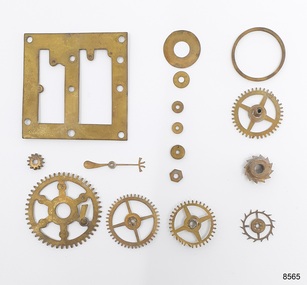
... ...officer’s clock...The travelling clock or officer’s clock may have been part of the cargo destined for the 1880 Melbourne Exhibition, or the personal possession of one of the people on board the vessel. ...The clock parts were discovered in 1980 by Julie Wilkins, a Victorian scuba diver who had already experienced more than 500 dives in Australia and overseas. She was holidaying in Peterborough, Victoria, and looking forward to discovering more about the famous Loch Ard ship, wrecked in June 1878 at Mutton Bird Island. The fast Glasgow-built clipper ship was only five years old when the tragedy occurred. There were 54 people on board the vessel and only two survived Julie's holiday photograph of Boat Bay reminds her of her most memorable dive. Submerged in the calm, flat sea, she was carefully scanning around the remains of the old wreck when, to her amazement, a gold coin and a small gold cross suddenly came up towards her. She excitedly cupped them in her hands and then stowed the treasures safely in her wetsuit and continued her dive. She soon discovered a group of brass carriage clock parts and some bottles of champagne. It was a day full of surprises. The items were easily recognisable, without any build-up of encrustations or concretion. Julie secretly enjoyed her treasures for twenty-four years then packed them up for the early morning train trip to Warrnambool. After a short walk to Flagstaff Hill Maritime Museum and Village, her photograph was taken as she handed over her precious find. She told her story to a local newspaper reporter, lunched a café in town then took the late afternoon train home. Her generous donation is now part of a vast collection of Loch Ard shipwreck artefacts, including the gold watch and the Minton Majolica model peacock. This group of brass clockwork parts is incomplete. The pieces were in the ocean for over 100 years before Julie recovered them from the Loch Ard wreck. Their size would suit the works of a carriage clock, with a mainspring and weight to power the clock movement, a pendulum to measure the clock's speed, arbours, posts, pillars and at least one other plate. They would have been mounted inside a protective case with a small door to easily access the clock face for setting the time and accessing the key's winding hole. The clock cases were usually made from decorative gilt brass with a glass front and a carrying handle. The parts include a weighted second hand with a decorative four-pronged finish at one end, a rounded weight at the other, and a hole for attaching it to the clock face. The gear teeth profiles are ‘cycloidal’, an arch shape with vertical sides, which is common for antique clocks. Modern clockworks have ‘involute’ teeth with sloping sides and a squared-off top. The brass carriage clock parts are an example of a mechanical clock produced in the 1870s. The clock's design is a part of the chain of technological improvements in methods for timekeeping. Its cycloidal gear teeth were the forerunner of the more modern involute gears. The group of clock parts includes a weighted hand or arm for signifying the seconds. This feature was uncommon in portable Victorian-era clocks. The clock parts are also significant for their association with the ill-fated sailing ship Loch Ard, wrecked in 1878. The travelling clock or officer’s clock may have been part of the cargo destined for the 1880 Melbourne Exhibition, or the personal possession of one of the people on board the vessel. Brass clockwork parts from a mechanical clock, sixteen pieces. Parts comprise a plate, large gears or wheels, small pinions or wheels with fine teeth, wheels with cogs, and a weighted second hand. The parts were from a carriage clock ca. 1878. They were recovered from the wreck of the sailing ship Loch Ard.flagstaff hill maritime museum and village, warrnambool, great ocean road, shipwreck coast, loch ard, wreck of the loch ard, 1878, mutton bird island, peterborough, scuba diver, 1980s, shipwreck artefact, relic, clock, mechanical, clock parts, time, timekeeper, horology, chronometry, cogs, time keeping device, scientific instrument, chronometer, john harrison, longitude, carriage clock, coach clock, portable clock, travelling clock, travel clock, traveller’s clock, officer’s clock, weighted second hand, victorian era, cycloidal gear teeth, brass clock, julie wilkins -
 Port Melbourne Historical & Preservation Society
Equipment - Watchman's clock, J Kitchen & Sons, Detex Corporation, 1960
... Used for security purposes as it records the time when the security officer "clocked on" at each of the numerous points around the premises (i.e. it provided evidence that he had, at least, fully patrolled all areas). ...Used for security purposes as it records the time when the security officer "clocked on" at each of the numerous points around the premises (i.e. it provided evidence that he had, at least, fully patrolled all areas). ...Portable watch clock with a Detex Newman name badge on black leather casing (front). Used at John Kitchen and Sons in the 1960s (and on?) . Used for security purposes as it records the time when the security officer "clocked on" at each of the numerous points around the premises (i.e. it provided evidence that he had, at least, fully patrolled all areas). Also may be known as the watchman's clock.industry - manufacturing, workers, j kitchen & sons pty ltd, watchman -
 Flagstaff Hill Maritime Museum and Village
Memorabilia - Fire Brigade Collection, Warrnambool Fire Brigade, 1863-1950s
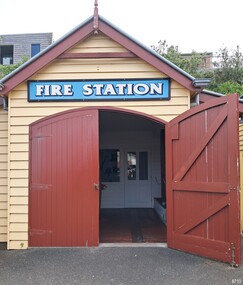
... The items include: EQUIPMENT: 2 fire reels, 3 leather buckets, 1 wooden ladder, 2 old pumps, 2 fire extinguishers, 1 foam nozzle, 2 hydrants, 1 red chest with breathing apparatus, 1 large grey chest, 1 red metal thread gauges box, 2 copper and brass extinguishers, 3 copper and brass branches, 1 canvas bucket, assorted reels of hose, assorted couplings and branches, PHOTOGRAPHS/CERTIFICATES: 3 Discipline Certificates dated 1894, 1893, 1911, Mounted photo of members of the Warrnambool Fire Brigade Football Club, Mounted photos of members of the Warrnambool Fire Brigade in uniform, framed photo of LC Marshall UNIFORMS: 1 Officer’s jacket, 1 blazer, 1 turnout jacket, 1 harness belt, 1 leather helmet, 1 pair of boots, 1 brass helmet, 1 axe belt with axe and plug spanner TROPHIES: 1 clock ...Flagstaff Hill Maritime Museum and Village Great Ocean Road Shipwreck Coast Flagstaff Hill Warrnambool Maritime Village Maritime Museum CFA Fire Brigade Warrnambool Fire Brigade fire reel leather bucket wooden ladder pump fire extinguisher foam nozzle fireman’s hydrant breathing apparatus copper and brass extinguishers copper and brass branches canvas bucket Discipline Certificates Warrnambool Fire Brigade Football Club L C Marshall Officer’s jacket blazer turnout jacket harness belt leather helmet pair of boots brass helmet axe belt with axe and plug spanner clock mantle clock Warrnambool Fire Brigade Collection: a variety of historic objects and equipment used by the firemen of the brigade since 1863. ...The original replica Fire Station at Flagstaff Hill was constructed in 2006 by members of the CVA Warrnambool Fire Brigade. It was rebuilt in 2015, ironically due to damage from fire in the adjacent building, and now includes a locked display. The fire station faithfully replicates the designs of the late 1800s fire stations found across Victoria. Every detail, including the type of nails used, adheres to period-correct specifications. The objects on display are on loan from the CFA. They provide a glimpse into the history and evolution of firefighting in Victoria, preserving the heritage and legacy of the brave men and women who have served their communities. Fire Brigade Collection highlights: . Hose reels and equipment: essential firefighting equipment used during the late 19th and early 20th centuries. . Brass helmets: symbolic headgear worn by firefighters for protection and identification. . Photographs: historical images capturing the evolution of firefighting in the region. . Certificates: awards highlighting the skill and dedication of firefighters. A BRIEF HISTORY OF THE WARRNAMBOOL FIRE BRIGADE - [Ref: Quarrell, A, 2013, The Warrnambool Fire Brigade: 1863-2013, Amazon Printing, Warrnambool]: “Since the township of Warrnambool was established in the 1840s, there were several attempts at forming a Fire Brigade. However, many issues hindered progress. Firstly, minimal fires were recorded. Secondly, the town had no money to purchase expensive equipment, including a fire engine, and thirdly and most importantly, there was no infrastructure for accessible running water from pipes, as we know today. But after the expansion and growth of the township, it was time for action. The Warrnambool Fire Brigade was formed in 1863. The Brigade has served Warrnambool on a daily basis ever since. The volunteers of the Brigade were required to fill their water carts each evening from a spring on Cannon Hill and be on standby to deliver water to fire scenes. In 1889, the Warrnambool Council built a new Fire Station at 25 Liebig Street. Today, the Civic Centre is located on this site.” The objects on loan from the Warrnambool Fire Brigade are significant to local history since its establishment in 1863. They tell the story of the Brigade’s history, which is part of Warrnambool and the district’s history.Warrnambool Fire Brigade Collection: a variety of historic objects and equipment used by the firemen of the brigade since 1863. The items are kindly on loan from the Warrnambool Fire Brigade in a building originally erected in the Village by the Fire Brigade to house their historic collection. The items include: EQUIPMENT: 2 fire reels, 3 leather buckets, 1 wooden ladder, 2 old pumps, 2 fire extinguishers, 1 foam nozzle, 2 hydrants, 1 red chest with breathing apparatus, 1 large grey chest, 1 red metal thread gauges box, 2 copper and brass extinguishers, 3 copper and brass branches, 1 canvas bucket, assorted reels of hose, assorted couplings and branches, PHOTOGRAPHS/CERTIFICATES: 3 Discipline Certificates dated 1894, 1893, 1911, Mounted photo of members of the Warrnambool Fire Brigade Football Club, Mounted photos of members of the Warrnambool Fire Brigade in uniform, framed photo of LC Marshall UNIFORMS: 1 Officer’s jacket, 1 blazer, 1 turnout jacket, 1 harness belt, 1 leather helmet, 1 pair of boots, 1 brass helmet, 1 axe belt with axe and plug spanner TROPHIES: 1 clock flagstaff hill maritime museum and village, great ocean road, shipwreck coast, flagstaff hill, warrnambool, maritime village, maritime museum, cfa, fire brigade, warrnambool fire brigade, fire reel, leather bucket, wooden ladder, pump, fire extinguisher, foam nozzle, fireman’s hydrant, breathing apparatus, copper and brass extinguishers, copper and brass branches, canvas bucket, discipline certificates, warrnambool fire brigade football club, l c marshall, officer’s jacket, blazer, turnout jacket, harness belt, leather helmet, pair of boots, brass helmet, axe belt with axe and plug spanner, clock, mantle clock -
 Flagstaff Hill Maritime Museum and Village
Book - Fiction, Hal Porter, author, The Tilted Cross, 1961
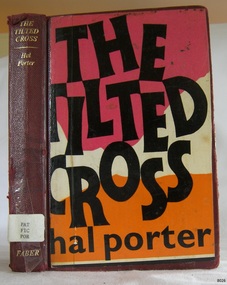
... clock regulated his daily routine and the precise opening and closing of the library’s doors. During 1942 to 1945, Pattison took leave to serve as a Lieutenant in the Royal Australian Navy Volunteer Reserve. A few years later, he converted one of the Museum’s rooms into a Children’s Library, which quickly became popular. In the 1950s, Pattison was appointed to the Victorian Library Board, where he gained further inspiration from monthly conferences in Melbourne. He retired in 1959, after more than 23 years of service, due to having surpassed the working age limit for council officers...clock regulated his daily routine and the precise opening and closing of the library’s doors. During 1942 to 1945, Pattison took leave to serve as a Lieutenant in the Royal Australian Navy Volunteer Reserve. A few years later, he converted one of the Museum’s rooms into a Children’s Library, which quickly became popular. In the 1950s, Pattison was appointed to the Victorian Library Board, where he gained further inspiration from monthly conferences in Melbourne. He retired in 1959, after more than 23 years of service, due to having surpassed the working age limit for council officers ...The Pattison Collection: The ‘Pattison Collection’ comprises books and records that were originally owned by the Warrnambool Mechanics’ Institute, which was established in Warrnambool in 1853. By 1886, the Institute had expanded significantly, boasting a Library, Museum, and Fine Arts Gallery. The collection included notable works of art and valuable specimens from various fields, as well as remarkable national curiosities and historic relics relating to the town and district. The Institute later incorporated a School of Design. Despite being popular with the public, the Institute struggled financially and, in 1911, requested that the City Council assume control. In 1935, Ralph Pattison was appointed as City Librarian to establish and organise what was then known as the Warrnambool Library. When the Mechanics’ Institute building was demolished in 1963, a new civic building was constructed on the site, and the Warrnambool Library, managed by the City Council, acquired all the holdings of the WMI. It was during this transition that certain items were separated and designated as the ‘Pattison Collection’, in honour of Ralph Pattison. Over time, the various components of the WMI were distributed among different institutions, including the Art Gallery, Historical Society, and Flagstaff Hill. Some items were also sent to other regional branches of the Corangamite Regional Library, and their exact locations have become difficult to trace. The books at Flagstaff Hill Maritime Village typically bear stamps and markings from Pattison and various other institutions, including the Mechanics’ Institute itself. Ralph Eric Pattison: Ralph Eric Pattison was born in Rockhampton, Queensland, in 1891. In 1920, he married Maude Swan from Warrnambool, and the couple settled in Warrnambool. Pattison accepted the role of City Librarian for the Warrnambool City Council in 1935. Tasked with transforming two rooms in the Mechanics’ Institute into a functional library, he diligently cleaned, sorted, and organised a disordered collection of old books, jars of preserved specimens, and assorted items previously reserved for the city’s museum. Pattison expanded and modernised the library, ensuring it catered to a broad range of interests, including providing reference books for students—a challenging feat in the years following the Depression. He converted the lower level of the building into a library, reference room, and reading room for both members and the public. Books were organised using a cataloguing and card index system that Pattison designed himself. He also prepared the upper floor, establishing both an Art Gallery and, later, a Museum to display the many historical relics collected over the years. Among these treasures was a beautiful antique clock, which Pattison restored and used in his office throughout his tenure. He was known as a meticulous gentleman, recognised for his punctuality, impeccable courtesy, and neat appearance. His restored clock regulated his daily routine and the precise opening and closing of the library’s doors. During 1942 to 1945, Pattison took leave to serve as a Lieutenant in the Royal Australian Navy Volunteer Reserve. A few years later, he converted one of the Museum’s rooms into a Children’s Library, which quickly became popular. In the 1950s, Pattison was appointed to the Victorian Library Board, where he gained further inspiration from monthly conferences in Melbourne. He retired in 1959, after more than 23 years of service, due to having surpassed the working age limit for council officers. Nevertheless, Pattison maintained a strong interest in the ongoing development of the Library until his death in 1969. Warrnambool Public Library: The Warrnambool Mechanics’ Institute (WMI) originated from a voluntary community group in 1863, just six years after the founding of Warrnambool, with its Reading Room opening in 1854. The WMI remained in operation until 1963 and was among the oldest Mechanics’ Institutes in Victoria. Mechanics’ Institutes provided essential public services, including libraries, reading rooms, and spaces for the exhibition and storage of curiosities and local historical relics. In 1886, a Museum and Fine Arts Gallery were added to the WMI, and by the early 20th century, it also featured a billiards room and a School of Art. At this time, it was common for country Victorian Mechanics’ Institutes to have attached museums. Over the years, the Warrnambool Mechanics’ Institute Library was also referred to as the Warrnambool Public Library, the Warrnambool Library, and the Free Library. Early government funding was provided for the “Free Library”. For example, a book titled “Science of Man” was inscribed for the “Warrnambool Public Library” and donated by Joseph Archibald in 1899. Another book, “Catalogue of Plants Under Cultivation in the Melbourne Botanic Gardens 1 & 2, 1883”, was presented to the “Warrnambool Library” and signed by the author W.R. Guilfoyle. In 1903, the Warrnambool Public Library established a Juvenile Department, stocking hundreds of books suitable for young readers. In 1905, the committee updated the book collection by adding 100 new novels and arranging for the latest novels to be included as soon as they became available in Victoria. By July 1911, the Warrnambool Council had assumed management of the Public Library, Art Gallery, Museum, and Mechanics’ Institute, with plans to double the size of the existing building. In 1953, under the stewardship of Mr. R. Pattison, the Warrnambool Public Library’s senior section contained 10,000 fiction books out of a total of 13,000. The children’s section held an additional 3,400 books, equating to one book per head of population and serving around 33 percent of the local reading public. The collection comprised approximately 60 percent reference books and 40 percent fiction, with the library lending out 400 books per day. In 1963, the Warrnambool City Council designated the site of the Mechanics’ Institute building—which included the Public Library, Museum, and Art Gallery—for the new Municipal Offices, resulting in the dispersal of the collections until 1971. The Warrnambool Library subsequently assumed responsibility for the Mechanics’ Institute Library’s holdings on behalf of the City Council. Since the closure of the Mechanics’ Institute, the precise location and composition of the original WMI books and items have become unclear. Additional items have entered the collection over time, including materials from Terang MI, Warrnambool Court House, and Customs House. Many books are now identified as part of the Pattison Collection, named after the librarian who catalogued and numbered them before the Mechanics’ Institute closed. When Warrnambool joined the Corangamite Regional Library, some books and materials were sent to its head office in Colac and later returned to Warrnambool, where they were stored at the Art Gallery for an extended period. Some items subsequently went to the Warrnambool Historical Society, some remained at the Art Gallery, and others were transferred to Flagstaff Hill Maritime Village. The various stamps and labels on the books at Flagstaff Hill reflect the diverse distribution and origins of the collection. The books currently held at Flagstaff Hill Maritime Village date from the 1850s to the late 1950s and include rare and valuable volumes. Many are part of the “Pattison Collection”, named after Warrnambool’s Public Librarian, Mr. R. Pattison.Integration and Significance of the WMI Publication Collection: Many components of the Warrnambool Mechanics' Institute (WMI) publication collection serve to complement and reinforce other important cultural collections in the region, including those held by the Flagstaff Hill Maritime Museum, the Warrnambool Art Gallery, and the Warrnambool Historical Society. Collectively, these collections provide a more comprehensive understanding of the origins and development of the original Warrnambool Mechanics' Institute holdings. The presence and integration of these materials not only enhance the appreciation of the few remaining Mechanics' Institute collections in Victoria, but also contribute to the recognition of similar collections in New South Wales. Examining both the similarities and differences among these surviving collections offers valuable insights into the ways in which the people of Victoria—and the community of Warrnambool in particular—constructed a civic culture centred on adult education, ultimately fostering an informed and engaged citizenry. Local and State Importance: The Warrnambool Mechanics' Institute publication collection is significant at local and state levels. Its value lies in its relationship to other cultural collections, its historical context, and its enduring role in supporting the intellectual and social development of the community.The Tilted Cross Author: Hal Porter Publisher: Faber and Faber. London Date: 1961 Hardcover bound book with gold embossed titles on the spine, and a pasted-on title on the front cover. Inscriptions are on labels on the spine and front loose endpaper, and on a stamp on the fly page. The book is part of the Pattison CollectionLabel with typed text": "PAT FIC POR" Sticker: "Corangamite Regional Library Service" Stamp: "Warrnambool Public Library"warrnambool, shipwrecked-coast, flagstaff-hill, flagstaff-hill-maritime-museum, maritime-museum, shipwreck-coast, flagstaff-hill-maritime-village, shipwrecked-artefact, book, pattison collection, warrnambool library, warrnambool mechanics’ institute, ralph eric pattison, corangamite regional library service, warrnambool city librarian, mechanics’ institute library, victorian library board, warrnambool books and records, warrnambool children’s library, great ocean road, the tilted cross, hal porter -
 Seaworks Maritime Museum
GODAVARI clock
... clock in the upper right corner. Gold writing in the bottom edge stating ‘Presented by The Commanding Officer & Officers.’ ...clock in the upper right corner. Gold writing in the bottom edge stating ‘Presented by The Commanding Officer & Officers.’ ...A clock with a coloured photograph of a frigate GODAVARI and the statue of liberty in the background. A small quartz clock in the upper right corner. Gold writing in the bottom edge stating ‘Presented by The Commanding Officer & Officers.’ There is also a stamp ship crest for the ship GODAVARI next to the writing. There is a wooden stand insert on the secured by two screws. There are two metal holders on the upper part of the display as well. Copwud clock mechanism in the top left corner. Item is housed in blue velvet box with twin clasps.‘Presented by The Commanding Officer V Officers’ The DOGAVARI crest. Lower right corner, verso: PMA0146 On wooden stand holder: PMA0146/1 -
 Bendigo Military Museum
Photograph - RESERVE COMMAND & STAFF COLLEGE, 1984
... Officers are arranged in two rows - back standing, front seated. Curtained windows and wood panel with clock in background. ...Officers are arranged in two rows - back standing, front seated. Curtained windows and wood panel with clock in background. ...Major Kevin Herdman, second from right in back row as part of Senior Officer's Course, 1984. Part of the "Kevin John Herdman" (No. 397661) collection. See catalogue No. 5942P for details of his service.Colour photo of a group of Army Officers in uniform. Officers are arranged in two rows - back standing, front seated. Curtained windows and wood panel with clock in background. Named silhouette of Officers on back of photograph. All text in black type.Names of Officers and name of group on back in black.kevin john herdman, army reserve, reserve command and staff college, photograph -
 Queenscliffe Maritime Museum
Instrument - Barometer and Clock mounted on a timber cabinet and 10 associated items from the TSS Nairana, 1915
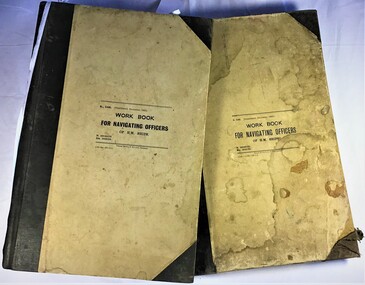
... JF Spence, navigation Officer and possibly later the captain who sailed with the Nairana out of Plymouth after WWI. tss nairana wwi bass strait huddart parker capt. spence Barometer and Clock from dining saloon, TSS Nairana 1917 - 1951 Clock Key - 4 50-No9 Hat badge - HP .01 Barometer and Clock from Dining Saloon .02 Commemorative plaque describing the HMS Nairana's WWI service with timber mount for plaque with information sheet attached. .03 Clock Key .04 Two 2 Log books owned by Capt. ...Bass Strait passenger ship Nairana. Built for Bass Strait ferry operator Huddart Parker & Co. Ltd. of Melbourne during World War One, the Nairana was requisitioned by the Royal Navy and completed as a seaplane carrier, HMS Nairana. Serving from 1917 to 1920 participating in the capture of Archangel during the Bolshevik Revolution. After 1920 she was decommissioned as a seaplane carrier and returned to her Australian owners crossing Bass Strait until she was laid up in 1948. Just off Port Phillip Heads on April 12 1936, a strong wave struck the Nairana, tipping her over for two minutes before she righted herself again. During the horrifying two minutes, four people were drowned, and eight people were injured. The ship was reportedly carrying roughly one tonne of concrete in the hull when she tipped. Reports from the local papers said that it was a tidal wave meanwhile others were saying it was either an earthquake or a total lie. A later paper said that the ship had been caught in a rip at the mouth of the bay, causing the tragedy. The S.S Nairana, was sold for £4,000 (over $170,200 in today’s money!) in 1951 after two years of being stranded on the beach at Port Melbourne, when the moorings broke one night during a storm and drifted ashore, causing her to wreck.Items associated with the TSS/HMS Nairana in its military and civilian roles and items relating to Capt. JF Spence, navigation Officer and possibly later the captain who sailed with the Nairana out of Plymouth after WWI. .01 Barometer and Clock from Dining Saloon .02 Commemorative plaque describing the HMS Nairana's WWI service with timber mount for plaque with information sheet attached. .03 Clock Key .04 Two 2 Log books owned by Capt. Spence containing the navigation calculations for the journey from Plymouth to Melbourne. .05 Huddart Parker hat badge [Capt. JF Spence].Barometer and Clock from dining saloon, TSS Nairana 1917 - 1951 Clock Key - 4 50-No9 Hat badge - HPtss nairana, wwi, bass strait, huddart parker, capt. spence -
4th/19th Prince of Wales's Light Horse Regiment Unit History Room
Booklet, The Small Arms Instructor's Diagram Book, 1947
... A hard covered booklet for Officers and NCOs involved with small arms instruction. Contains a variety of diagrams including target indication using clock ray, silhouette targets, trigger mechanisms and the correct aiming with various sights....small arms instruction A hard covered booklet for Officers and NCOs involved with small arms instruction. Contains a variety of diagrams including target indication using clock ray, silhouette targets, trigger mechanisms and the correct aiming with various sights. ...A hard covered booklet for Officers and NCOs involved with small arms instruction. Contains a variety of diagrams including target indication using clock ray, silhouette targets, trigger mechanisms and the correct aiming with various sights.small arms instruction -
 Victorian Railway History Library
Book, Love, Ray, Byways of Steam 23, 2004
... clock back to the 1930s when railways were the main stay of our transportation system. A Southern Junction: Culcairn, by Lloyd Holmes. These locations included Corowa, Gerogery, Albury and Culcairn. The essay is a recollection of the history of the town and an insight into the early days of the busy railway junction and Lloyd’s days working as a station officer there. ...Features: Steam Locomotive Depots in NSW: Glenreagh and Dorrigo, by Ray Love. Continuing his series on the history of the locomotive depots in the state, Ray Love presents the life and times of the small locomotive out-depots at Glenreagh and Dorrigo. Our Railway Heritage: West Maitland, by Robert Booth. Turning the clock back to the 1930s when railways were the main stay of our transportation system. A Southern Junction: Culcairn, by Lloyd Holmes. These locations included Corowa, Gerogery, Albury and Culcairn. The essay is a recollection of the history of the town and an insight into the early days of the busy railway junction and Lloyd’s days working as a station officer there. Steaming on at Oberon, by Leon Oberg. Seeks out the origin of the boiler at an Oberon mill. Features: The Shop Order Book, by Ian Dunn. Covers some of the history that can be researched from these valuable NSWGR volumes. In the Midst of Life: 2, by Stephen Halgren. Describing the night a truck full of celebrating locals knocked part of an over bridge into the path of the southbound Melbourne Express. A Tribute to Fred Saxon, by Ian Wallace. Ian, who worked closely with Fred, presents a tribute to a family man who loved life, loved his photography and made many friends along the way. A well-known railway photographer Fred Saxon passed away in January 2004 after a brief illness. Fred had a strong affection for steam working. During the last decade of his life, Fred worked with the Eveleigh Press team on several books and essays.ill, maps, p.120.non-fictionFeatures: Steam Locomotive Depots in NSW: Glenreagh and Dorrigo, by Ray Love. Continuing his series on the history of the locomotive depots in the state, Ray Love presents the life and times of the small locomotive out-depots at Glenreagh and Dorrigo. Our Railway Heritage: West Maitland, by Robert Booth. Turning the clock back to the 1930s when railways were the main stay of our transportation system. A Southern Junction: Culcairn, by Lloyd Holmes. These locations included Corowa, Gerogery, Albury and Culcairn. The essay is a recollection of the history of the town and an insight into the early days of the busy railway junction and Lloyd’s days working as a station officer there. Steaming on at Oberon, by Leon Oberg. Seeks out the origin of the boiler at an Oberon mill. Features: The Shop Order Book, by Ian Dunn. Covers some of the history that can be researched from these valuable NSWGR volumes. In the Midst of Life: 2, by Stephen Halgren. Describing the night a truck full of celebrating locals knocked part of an over bridge into the path of the southbound Melbourne Express. A Tribute to Fred Saxon, by Ian Wallace. Ian, who worked closely with Fred, presents a tribute to a family man who loved life, loved his photography and made many friends along the way. A well-known railway photographer Fred Saxon passed away in January 2004 after a brief illness. Fred had a strong affection for steam working. During the last decade of his life, Fred worked with the Eveleigh Press team on several books and essays.railroads - nsw - history, steam locomotives - nsw – pictorial -
 Emerald Museum & Nobelius Heritage Park
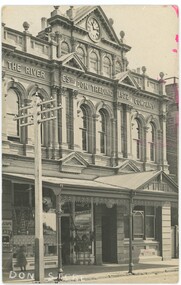
Postcard - Postcard of Don Trading Company, Devonport
... clock'. These and other postcards and photos came from the estate of David Moyle (1938-2015) who was a police officer in Emerald during late 1960s-early 1970s, and subsequently at Belgrave in the early 1980s. ...clock'. These and other postcards and photos came from the estate of David Moyle (1938-2015) who was a police officer in Emerald during late 1960s-early 1970s, and subsequently at Belgrave in the early 1980s. ...This postcard may have belonged to the donor's paternal grandmother, Maggie Johnston Rees (1867-1964) as there is another postcard in the collection recounting a trip in Tasmania where the writer is 'M. J. Rees'. This postcard is probably post-1926 when the company had completed a renovation of their Devonport building (which included 'a large, illuminated clock'. These and other postcards and photos came from the estate of David Moyle (1938-2015) who was a police officer in Emerald during late 1960s-early 1970s, and subsequently at Belgrave in the early 1980s. David Moyle was closely associated with the now defunct Sherbrooke Historical Association.This postcard is significant because it was part of a collection belonging to a community member who had a close association with a local historical society.Don Trading Company Building - building has three stories topped with a large clock.Printed on bottom L: 'DON STORE' Embossed on bottom R: 'A MARSHALLS / STUDIOS DEVONPORT'david moyle, police, emerald, belgrave, maggie johnston rees, don trading company, devonport, marshalls studios -
 Sunshine and District Historical Society Incorporated
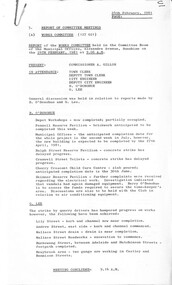
Administrative record - City of Sunshine - Commissioner Mr Alexander Alex George Gillon Collection 1976 - 1982 - Report of committee meetings 24th February 1981, City of Sunshine, 24th February 1981
... Investigation indicated that vandals had again damaged the equipment The Strike by Quarry Drive hrsave hampered the progress of works Lily Street Braybrook kerb & channel near completion Andrew Street East side kern & channel commenced Wallace Street Drain is neat completion Wallace Street roadworks excavation to commence Burnewang Street between Adelaide Street and Hutchinson Street footpath completed Braybrook Area two gangs are working in Castley Street and Rennison Street Report of the Finance Committee Meeting Report of the Town Clerk General Rate, Sanitary, Interest Adjustments and Abandonments for months of December 1980 and January 1981 Annual return State Co-Ordinator of Works Report of the City Engineer McIntyre Road Bridge over Railway Line Maintenance by Victorian Railways Municipal Officers' Association of Australia Industrial Relations Course Proposed 1981 Study Tour of Japan, U.S.A. and Canda Statutory Town Planner Recommendations of Forward Planning Committee Meetings 12th February 1981 Authorisation of Time Sheets Replacement of Time Clock Deport 17th February 1981 St. ...Investigation indicated that vandals had again damaged the equipment The Strike by Quarry Drive hrsave hampered the progress of works Lily Street Braybrook kerb & channel near completion Andrew Street East side kern & channel commenced Wallace Street Drain is neat completion Wallace Street roadworks excavation to commence Burnewang Street between Adelaide Street and Hutchinson Street footpath completed Braybrook Area two gangs are working in Castley Street and Rennison Street Report of the Finance Committee Meeting Report of the Town Clerk General Rate, Sanitary, Interest Adjustments and Abandonments for months of December 1980 and January 1981 Annual return State Co-Ordinator of Works Report of the City Engineer McIntyre Road Bridge over Railway Line Maintenance by Victorian Railways Municipal Officers' Association of Australia Industrial Relations Course Proposed 1981 Study Tour of Japan, U.S.A. and Canda Statutory Town Planner Recommendations of Forward Planning Committee Meetings 12th February 1981 Authorisation of Time Sheets Replacement of Time Clock Deport 17th February 1981 St. ...Report of Committee Meetings 24th February 1981 Report of the Works Committee Meeting Depot Workshop now completed and partially occupied Pennell Reserve Pavilion brickwork anticipated to be completed this week Municipal Offices the anticipated date for the whole project is second week in July but the new building is expected to be completed by the 27th April 1981 Ralph Street Reserve Pavilion concrete strike has delayed progress Cranwell Street Toilets concrete strike has delayed progress Cherry Crescent Child Care Centre slab poured anticipated completion date is the 30th June 1981 Skinner Reserve Pavilion further complaints were received about the electrical work. Investigation indicated that vandals had again damaged the equipment The Strike by Quarry Drive hrsave hampered the progress of works Lily Street Braybrook kerb & channel near completion Andrew Street East side kern & channel commenced Wallace Street Drain is neat completion Wallace Street roadworks excavation to commence Burnewang Street between Adelaide Street and Hutchinson Street footpath completed Braybrook Area two gangs are working in Castley Street and Rennison Street Report of the Finance Committee Meeting Report of the Town Clerk General Rate, Sanitary, Interest Adjustments and Abandonments for months of December 1980 and January 1981 Annual return State Co-Ordinator of Works Report of the City Engineer McIntyre Road Bridge over Railway Line Maintenance by Victorian Railways Municipal Officers' Association of Australia Industrial Relations Course Proposed 1981 Study Tour of Japan, U.S.A. and Canda Statutory Town Planner Recommendations of Forward Planning Committee Meetings 12th February 1981 Authorisation of Time Sheets Replacement of Time Clock Deport 17th February 1981 St. Albans Tennis Club BMX Track St. Albans 19th February 1981 Nil 24th February 1981 Kinder Smith Reserve Redevelopment Tree Watering Ward Boundariesmcintyre road bridge, mcintyre road, sunshine north, st. albans tennis club, kinder smith reserve, lily street, braybrook, pennell reserve, burke street, ralph street reserve, ralph street, sunshine west, cranwell park, cranwell street, cherry crescent child care centre, cherry crescent, skinner reserve, churchill avenue, andrew street, sunshine, wallace street, maidstone, burnewang street, adelaide street, hutchinson street, albion, castley street, rennison street, errington reserve, st. albans
