
Showing 4 items matching "old stein"
-
 Bayside Gallery - Bayside City Council Art & Heritage Collection
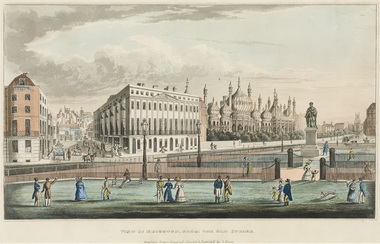
Print - engraving, John Bruce, View of Brighton from the old Steine, c.1834
... ...old stein...Presented to the Brighton City Council by the Brighton County Borough Council, England, and formally handed over to the Council by Councillor R.H.Wallman, J.P. on 10th December 1951 brighton england royal pavillion old stein city engraving streets View of Brighton from the old Steine Print engraving John Bruce ...Presented to the Brighton City Council by the Brighton County Borough Council, England, and formally handed over to the Council by Councillor R.H.Wallman, J.P. on 10th December 1951 brighton, england, royal pavillion, old stein, city, engraving, streets -
 Phillip Island and District Historical Society Inc.
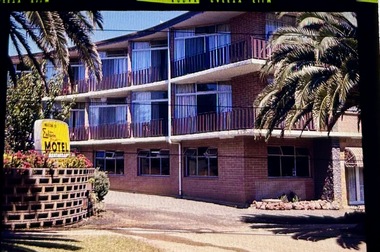
Memorabilia, Folder of tourist brochures and photos
... old Erehwon Guesthouse on the corner of The Esplanade and Steele Street, Cowes. The guesthouse burnt down in 1963. Both were famous for the activities organised for their guests eg parades, dances and fancy dress competitions. Mr and Mrs Stein...old Erehwon Guesthouse on the corner of The Esplanade and Steele Street, Cowes. The guesthouse burnt down in 1963. Both were famous for the activities organised for their guests eg parades, dances and fancy dress competitions. Mr and Mrs Stein ...The Erehwon Point Holiday Motel replaced the old Erehwon Guesthouse on the corner of The Esplanade and Steele Street, Cowes. The guesthouse burnt down in 1963. Both were famous for the activities organised for their guests eg parades, dances and fancy dress competitions. Mr and Mrs Stein ran the motel in the 1960s-1970s. It later became The Anchor at Cowes and is now the Waves apartments. Historical Dark blue plastic wallet containing motel brochures, map, 31 coloured photos, 1 coloured negative and 2 black and white photos of the Erehwon Guesthouse and the fire. World Travel Headquarters AFTA erehwon point holiday motel, tourism, accomodation, the anchor motel, the esplanade, cowes, erehwon guesthouse fire -
 Flagstaff Hill Maritime Museum and Village
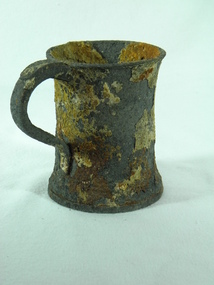
Domestic object - Tankard, Before March 1878
... steins. The word "tankard" originally meant any wooden vessel derived from the 13th century and later came to mean a drinking vessel. The earliest tankards were made of wooden staves, similar to a barrel, and did not have lids. A 2000-year-old...steins. The word "tankard" originally meant any wooden vessel derived from the 13th century and later came to mean a drinking vessel. The earliest tankards were made of wooden staves, similar to a barrel, and did not have lids. A 2000-year-old ...A tankard is a form of drinkware consisting of a large, roughly cylindrical, drinking cup with a single handle. Tankards are usually made of silver or pewter but can be made of other materials, for example, wood, ceramic or leather. A tankard may have a hinged lid, and tankards featuring glass bottoms are also fairly common. Tankards are shaped and used similarly to German beer steins. The word "tankard" originally meant any wooden vessel derived from the 13th century and later came to mean a drinking vessel. The earliest tankards were made of wooden staves, similar to a barrel, and did not have lids. A 2000-year-old wooden tankard of approximately four-pint capacity has been unearthed in Wales. Metal tankards often come with a glass bottom and the legend is that the glass-bottomed tankard was developed as a way of refusing the King's shilling, i.e. conscription into the British army or navy. The drinker could see the coin in the bottom of the glass and refuse the drink, thereby avoiding conscription. However, this is likely to be a myth, since the Navy could press by force, known as press-ganging, rendering deception unnecessary. In a bar fight, the first punch was thrown while the recipient had the tankard raised to his mouth; another legend has it that the glass bottom was implemented to see the attack coming. A further story is that the glass bottom merely allowed the drinker to judge the clarity of their drink while forgoing the expense of a fragile pint glass. It is unclear if all or any of these legends have any substance. The Tankard is associated with the shipwreck of the Loch Ard which is of significance for Victoria and is registered on the Victorian Heritage Register (S 417). Flagstaff Hill has a varied collection of artefacts from Loch Ard and this tankard is one item from the largest accumulation of artefacts from this notable Victorian shipwreck. The tankard was found on the wreck and it gives us a snapshot into Victorian maritime history. Allowing us to interpret the story of this tragic event. This drinking vessel is also archaeologically significant as it represents aspects of Victoria's history that allows us to interpret Victoria's social and historical themes of the time. The tankards significance is unfortunately its association with the worst and best-known shipwreck in Victoria's history. (See note section this document for history of the Loch Ard wreck) Pewter tankard; rolled lip, flared base, large handle. Surface has marine encrustations. Inscription on attached label. Recovered from the shipwreck as the Loch Ard. "LA 33 255" flagstaff hill, warrnambool, shipwrecked coast, flagstaff hill maritime museum, maritime museum, shipwreck coast, flagstaff hill maritime village, great ocean road, loch line, loch ard, captain gibbs, eva carmichael, tom pearce, glenample station, mutton bird island, loch ard gorge, pewter tankard, tankard, drinking vessel -
 Ringwood and District Historical Society
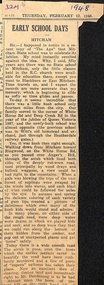
Newspaper, Mitcham State School - Newspaper Clipping from The Age 1935 reprinted 1948 "Early School Days"
... old school site becoming a children’s playground in the future. Families and pupils mentioned: Hands, Davis, Schwerkolt, Swartsman, Calder, Miller, Turnbull, Swindon, McPhee, Mashiter, Kendall, Dickson, Kennedy, Murphy, Brown, Sandars, Cox, Smith, Dobbins, Banks, Frost, Clements, Hill, Quigly, Wiggins, Foster, McGhee, Walker, Richard Bros., Voarse, Tankard, de Valles, Pomeroy, Kenny, Schmidt, Ainger, Stein, Lee, Wheeler, Cook, Shannon, Irley, Thum, Tunstall, Hewish. 3. ...old school site becoming a children’s playground in the future. Families and pupils mentioned: Hands, Davis, Schwerkolt, Swartsman, Calder, Miller, Turnbull, Swindon, McPhee, Mashiter, Kendall, Dickson, Kennedy, Murphy, Brown, Sandars, Cox, Smith, Dobbins, Banks, Frost, Clements, Hill, Quigly, Wiggins, Foster, McGhee, Walker, Richard Bros., Voarse, Tankard, de Valles, Pomeroy, Kenny, Schmidt, Ainger, Stein, Lee, Wheeler, Cook, Shannon, Irley, Thum, Tunstall, Hewish. 3. ...Newspaper Clipping Summary of the three articles by CoPilot: Together, these three articles form a nostalgic, first‑person account of early schooling in the Mitcham–Heatherdale–White Horse Road district from the late 19th century into the early 20th century. They describe a small, close-knit rural community where education was improvised, roads were rough, and children travelled long distances through bushland to reach school. 1. Early School Days — Mitcham (1948) The writer recalls that Mitcham had no state school fifty years earlier. Lessons were held in the Roman Catholic church, and many children had to walk to Blackburn or East Mitcham for schooling. The family moved to the corner of White Horse Road and Deep Creek Road in 1887, the year of Queen Victoria’s jubilee. A new school was later built near the Heatherdale railway gates. The writer describes the landscape as dense bush with rough roads and towering gum trees, contrasting it with the more developed and less charming Mitcham of 1948. 2. The School Near White Horse Road — Community Memories This article expands the picture by listing the families whose children attended the old school. It emphasises the strong community bonds and the simplicity of early education: one teacher taught all six classes in a single room, assisted by older pupils. The writer imagines the old school site becoming a children’s playground in the future. Families and pupils mentioned: Hands, Davis, Schwerkolt, Swartsman, Calder, Miller, Turnbull, Swindon, McPhee, Mashiter, Kendall, Dickson, Kennedy, Murphy, Brown, Sandars, Cox, Smith, Dobbins, Banks, Frost, Clements, Hill, Quigly, Wiggins, Foster, McGhee, Walker, Richard Bros., Voarse, Tankard, de Valles, Pomeroy, Kenny, Schmidt, Ainger, Stein, Lee, Wheeler, Cook, Shannon, Irley, Thum, Tunstall, Hewish. 3. Early School Days (1935) — Alf Antonio In this continuation piece, Alf Antonio of East Camberwell recalls Mr Sweeney, the teacher who managed the entire school alone. He is remembered as firm but kind, maintaining good discipline without harshness. Serious misbehaviour was rare. Younger students were encouraged to listen to lessons for higher grades, helping them prepare for advancement. Winter memories include children drying wet boots and stockings by the fire. The writer ends by noting that many more memories could be shared but restrains himself to avoid overwhelming the reader. (Co-Pilot 10/10/2026)
