
Showing 64 items matching "olympic games - history"
-
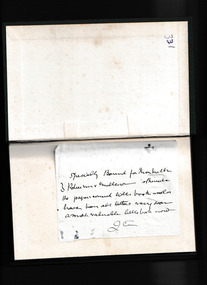 Mrs Aeneas Gunn Memorial Library
Book, Harold Abrahams, The Olympic Games book, 1956
... Olympic games - History...Olympic games - History Olympic games - Melbourne An account of the 1956 Olympic games including statistics Ill, p.224. ...An account of the 1956 Olympic games including statisticsIll, p.224.non-fictionAn account of the 1956 Olympic games including statisticsolympic games - history, olympic games - melbourne -
 Southern Sherbrooke Historical Society Inc.
Newspaper - Aldham newspaper collection
... Major events|Australian history|Olympic Games|World War 1 & Gallipoli centenary. ...Major events|Australian history|Olympic Games|World War 1 & Gallipoli centenary. ...Major events|Australian history|Olympic Games|World War 1 & Gallipoli centenary. Newspaper articles compiled by Joy & Neville Aldham -
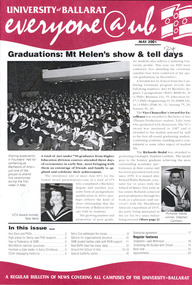 Federation University Historical Collection
Magazine - Booklet, University of Ballarat, Everyone@UB, 2001
... Images: Vivienne Witwer, Claire Hetherington, Ian Wright, Virginia Fenelin .17) Broadband, AARNet, David James Retirement, wetlands, Debbie Eagles, Centre for Rural and Regional Health, numeracy, nursing, Sue Turale, Max Palmer, Camp Street, Arts Academy, library, SMB scholarship, Landcare, Mallee pipeline, Verna Barry, Alice Mills, Marian Brown, .18) Fiji, Texans, Greenhill, Robert Whitson, Ian Clark, Abororiginal history, Yuille St, Peter Baird, Martin Westrbrook, Robert Allen, Arts Academy, John McGrath, Phil Ruglen, 3BBB, John Ferrier .21) Beverley. Lassiter, Vice-ChAncellor appointment, Kerry Cox, Craig Hurley, Barry Wemyss, Ceramics, Bill Pryor, University Games, Olympics, Broken Hill, Alex Rubinov, Jonathan Halls, Dare to be different, Wayne Muir, Student Union Refit. ...Images: Vivienne Witwer, Claire Hetherington, Ian Wright, Virginia Fenelin .17) Broadband, AARNet, David James Retirement, wetlands, Debbie Eagles, Centre for Rural and Regional Health, numeracy, nursing, Sue Turale, Max Palmer, Camp Street, Arts Academy, library, SMB scholarship, Landcare, Mallee pipeline, Verna Barry, Alice Mills, Marian Brown, .18) Fiji, Texans, Greenhill, Robert Whitson, Ian Clark, Abororiginal history, Yuille St, Peter Baird, Martin Westrbrook, Robert Allen, Arts Academy, John McGrath, Phil Ruglen, 3BBB, John Ferrier .21) Beverley. Lassiter, Vice-ChAncellor appointment, Kerry Cox, Craig Hurley, Barry Wemyss, Ceramics, Bill Pryor, University Games, Olympics, Broken Hill, Alex Rubinov, Jonathan Halls, Dare to be different, Wayne Muir, Student Union Refit. ...The University of Ballarat in 1998 comprised the Mt Helen Campus, SMB (Ballarat School of Mines) Campus and the Horsham Campus. It's current name is Federation University Australia. In 1998 Everyone@UB was a monthly staff newsletter edited by Peter Baird in consultation with Don Moconachie.A series of monthly bulletins covering all University of Ballarat campuses. .1) University merger, John Bailey, Michael Adermann, Vice-Chancellor, Jenny Nemeth, Katherine Birkin, Rowena Coutts, Ballarat Technology Park, Ron Wild .2) Chancellor appointment, Chancellor retirement, Geoffrey Blainey tribute, David Caro, Katherine Birkin, Arno Besse, George Murdoch, Bullarook, Stephen Kemmus, Neville French, ceramics, Tristan Smith, Horsham, Arnhem Land film, Ararat, Kerry Cox, anorexia, salary packages, University of Ballarat Brass Band, Natalie Radomski, becoming a university. Images: Geoffrey Blainey, David Caro, David James, Katherine Birkin, Arno Besse, George Murdoch, Geoffrey Blainey, Stephen Kemmis, Neville French, John Ackland, Richard Jardine, Glen Auld, Dennis Arne, Andrew Kotsonis, Kerry Cox, Suzanne McLaren, Marcia Pope, Rosemary Green, Leonie Otago, Natalie Rodomski .5) October 1998 - Carolyn Taylor, misogyny, Horsham campus building under construction, David Caro, Miranda Kerr, Martin Westbrook, Iain Reid, virtual monitors, teaching practice, Joanne Knight, John Pidgeon, Sally Buckland, arsenic, Ian Rae, Bob Allan, Patricia Cartwright, Matthew Baker, Sundru Sivamalai, Janine Smith, Pat Mann, International Student Market Research, Steve Mennen, Copyright, internet to the outback, Charters Towers, Engineering students, Darryl Dyason, Andrew McDougall, Dianne Jacono, Ross Morgan, Keith Boast, Cranbrook Academy of Art (Detroit), Helmut Stenzel, Mt Helen vegetation, Jan Bedggood, Ann-Maree Haintz, Kathleen Lakey, Adrienne Ryan, Fiona Schmidt. .11) Phil Candy, flexible learning, strategic planning. .12) diving, Reconciliation, Learning City, Student residence, Alex Rubinov, Graduate Centre, Ceramics, horse, Wimmera, tree regeneration, student poverty, UB museum, David Manterfeild, Heather Hatfeild. Redundancy, video conferencing Images: Steve Matthews, Craig Holloway, Peter Pilven, Sneha Kirubakaran, Phil Honeywood, Kerry Cox, David Manterfield, Martin Westbrooke, Ram Karan, Barry Jones, Gael Ramsay, Jenny Hargave, Heather Hatfield. .16) Jeff Kennett, Honorary Doctorate, Technology Park, Mary Atkinson, Ian Wright, Internet, Disability Action Plan, Robert Munt obituary, Sandra Stepcich obituary, Virginia Fenwlon, East Timor, Centre for Environmental Management, Wayne Jolly, 130th anniversary, Craig Hurley, Barry Wemyss, John Murray, Tori Power, Grant Curnow. Images: Vivienne Witwer, Claire Hetherington, Ian Wright, Virginia Fenelin .17) Broadband, AARNet, David James Retirement, wetlands, Debbie Eagles, Centre for Rural and Regional Health, numeracy, nursing, Sue Turale, Max Palmer, Camp Street, Arts Academy, library, SMB scholarship, Landcare, Mallee pipeline, Verna Barry, Alice Mills, Marian Brown, .18) Fiji, Texans, Greenhill, Robert Whitson, Ian Clark, Abororiginal history, Yuille St, Peter Baird, Martin Westrbrook, Robert Allen, Arts Academy, John McGrath, Phil Ruglen, 3BBB, John Ferrier .21) Beverley. Lassiter, Vice-ChAncellor appointment, Kerry Cox, Craig Hurley, Barry Wemyss, Ceramics, Bill Pryor, University Games, Olympics, Broken Hill, Alex Rubinov, Jonathan Halls, Dare to be different, Wayne Muir, Student Union Refit. Images: Wayne Muir, Alex Ruminov, Kerry Cox .22) December 2000 - nursing, David James, Phil Candy, John McLean, Debbie Eagles, brewery, brewing, Meredith Sussex, Lyn Faneco, TAFE,Joy Nunn, ARC, mosaics, Timor, Alfredo Pires, Centre for Rural and Regional Health, diabetes, kangaroos, Murray-Darling, Leagher Homestead, David Welch, Joy Nunn, Jill Blee, Maryanne Coutts, positive discrimination, Theresa Saunders, Imelda Crebbin .23) March 2001 - Nancy Lange, Paul Lambeth, Yvonne Button, Don Pennell, Natalie Radomski, Marcia Pope, McKinnon Walker, Marc Brodie, TAFE, WorldSkills, Horticulture, Ararat, Website, library, Leeanne Pitman, Liz Hartmann, nursing, Miranda Walker, Ciaran Pier, Anxiety Disorders, volcano, brewing, beer, Peter Aldred, Rob Greig, Jeremy Smith, Alice Mills, Geoff Burgess, .24) May 2001 - Graduations, Talia Venn, Stephen Carthew, Honory Doctorate, Steve Monaghetti, Heather Moore, Brendan O'Brien, Bill Pryr, Terry O'Brien, Carole Wilson, Carolyn Taylor, rape law reform, Federation at the Ballarat School of Mines, Work Skills, Debbie Eagles, Sue Purtle, Longerenong, Mohair, Early Childhood, Horsham, Kerry Cox, Willy Hobbs, David Firth, Kim Durban, BAPA, maryanne Coutts, Ewen McDonald, butterflys, Fukuoaka INstitute of Technology, Jane Wilkinson .25) Wayne Robinson, Neil McAdam retirement, Anne Beggs Sunter, nursing, Eileen Sellers, Hannelore Best, international nursing, Francis Adams, copyright, Roy Taylor, Wendy Bolger, unplugged, Horsham, Robert Irvine, Horsham graduations, Anxiety Clinic, Carole Wilson, Heart Mat, University of Ballarat Mission, Diabetes, Emelia Martinez-Brawley. Images include Wayne Robinson, Anne Beggs Sunter, Eileen Sellers, Hannelore Best, Phil Candy. Meg Tasker, Roy Taylor, Wendy Bolger, Robert Irvine, Angus McLachlan, Roger Castleman, Stephen Roberts, Philip Smith, Bob Allen, Rob Greig, Dennis Jeandet, Carole Wilson, Doug Lloyduniversity of ballarat, ballarat school of mines, wetland, broadband, david janes, smb, kennett, leadership, eagles, centre for rural and regional health, microwave, turale, arts academy, camp street, library, landcare, mallee, mallee pipeline, barry, verna barry, mills, brown, palmer, caro, geoffrey blainey, blainey, birkin, besse, kemmis, adermann, ackland, jardine, auld, mclaren, pope, green, otago, radomski, honorary doctorate, munt, stepcich, wemyss, rubinov, muir, everyone@ub, robinson, horsham, stawell, ararat, fukuoaka, taylor, moneghetti, coutt, hatfeild, westbrooke, karan, bailey, james, nemeth, wild, de bono, texas, sharpam, fiji, clark, ruyg, kropp, sugget, baird, allen, westbrook, rural health, stacpoole, mcgrath, ruglen, ferrier, manterfield, pilven, michael adermann, tafe, mount helen vegetation, dennis arne -
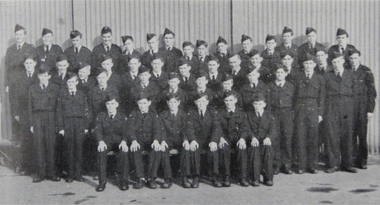 Federation University Historical Collection
Magazine - Booklet, Ballarat School of Mines Students' Magazine, 1952-1961, 1952-1961
... Olympic games 1961- Red, black and white soft covered magazine of the Ballarat School of Mines Information outlined in the magazine includes: The Richard W. Richards Medal, Philips Electrical Industries scholarship, A.F. Heseltine scholarship, Hong Kong To-Day (by Daniel Yung), A Treatise on Mount Morgan, Bath Push, The Stud Room, A Gentlemen's Excursion to Beaufort House, Electrical Laboratory, Metallurgical Laboratory, The Australian Aboriginal in Modern Civilization (J. Kavanagh) , The history...Olympic games 1961- Red, black and white soft covered magazine of the Ballarat School of Mines Information outlined in the magazine includes: The Richard W. Richards Medal, Philips Electrical Industries scholarship, A.F. Heseltine scholarship, Hong Kong To-Day (by Daniel Yung), A Treatise on Mount Morgan, Bath Push, The Stud Room, A Gentlemen's Excursion to Beaufort House, Electrical Laboratory, Metallurgical Laboratory, The Australian Aboriginal in Modern Civilization (J. Kavanagh) , The history ...1957 - Art Lending Library, Neville Bunning, Dana Street Primary School - The Original Ballarat Junior Technical School, ATC, Flight Cadets; Ballarat Junior Girls' Technical School, Ballarat North Junior Technical School, Roll Call 1960 - Ballarat School of MNes Literary Sociaty, begonia parade, Efficient reading, enter the modern, Lois Morris, sheetmetal, G. Cornell Obituary, I. Menz Obituary, metallurgists' Society, Olympic games 1961- Red, black and white soft covered magazine of the Ballarat School of Mines Information outlined in the magazine includes: The Richard W. Richards Medal, Philips Electrical Industries scholarship, A.F. Heseltine scholarship, Hong Kong To-Day (by Daniel Yung), A Treatise on Mount Morgan, Bath Push, The Stud Room, A Gentlemen's Excursion to Beaufort House, Electrical Laboratory, Metallurgical Laboratory, The Australian Aboriginal in Modern Civilization (J. Kavanagh) , The history of Electricity ballarat school of mines, ballarat junior technical school, cadets, flight cadets, airforce cadets, ballarat school of mines students' association, noel delosa, noel whiticher, bob coutts, noel kelly, les dobie, noel murphy, malcolm peel, peter agrums, ian weir, sue mole, val baker, neil bromley, kevin oscar rogers, h.e. arblaster, richard w. richards, dick richards medal, keith hindson, james tinney, walter tooth, john bethune, vilma sansom, betty clark, travers duncn, joyce wilson, lex lockhart, jim beattie, joyce stevens, slim ingleton, john skuja, murray gillan, graeme willey, diana mainwaring, eureka stockade, east africa, canada, sumatra, chris sanos, greece, malaya, bee-keeping, worshipful company of plumbers, hong kong, daniel yung, mount morgan, history of electricity, peter robinson, john clelland, davis schmist, harry brue, harry brew, rex hollioake, broken hill, excusions, john wolfe, beverly selkirk, barry singleton, mara jekabsons, bill widdop, frank pomeroy, art lending library, john mckenzie, ballarat girls' technical school, robert norton, graeme williams, alan bethuse, janis erdmanis, alan rock, gail trewanack, tony white, ching thung tay, jack tay, noel whitcher, norm nash, helen ross, eric mcgrath, g. cornell death, i menz death, john wolffe, brian duthie, bill durant, w.g. durant, heather walton, heather durant, beverly singleton, neville bunning -
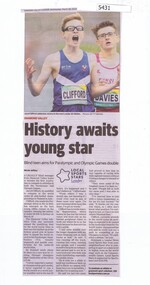 Greensborough Historical Society
Newspaper Clipping, Diamond Valley Leader, History awaits young star, 28/03/2018
... Jaryd Clifford, a legally blind teenager from Diamond Valley hopes to become the first Australian to compete in athletics at both the Paralympic and Olympic Games paralympic and olympic games diamond valley athletics club jaryd clifford News article 1 page, black text and colour image . History ...Jaryd Clifford, a legally blind teenager from Diamond Valley hopes to become the first Australian to compete in athletics at both the Paralympic and Olympic GamesNews article 1 page, black text and colour image .paralympic and olympic games, diamond valley athletics club, jaryd clifford -
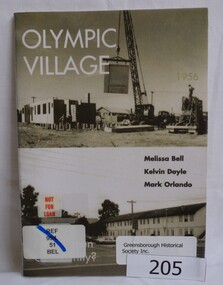 Greensborough Historical Society
Booklet, Olympic Village: a forgotten community? / Melissa Bell, Kelvin Doyle and Mark Orlando, 1995_
... A short history of the West Heidelberg Olympic Village built to accommodate participants in the Melbourne Olympic Games 1956. ...A short history of the West Heidelberg Olympic Village built to accommodate participants in the Melbourne Olympic Games 1956. ...A short history of the West Heidelberg Olympic Village built to accommodate participants in the Melbourne Olympic Games 1956. It also looks at the Village in 1995.23 pages, black and white illustrations.1956 olympic games, west heidelberg, olympic village -
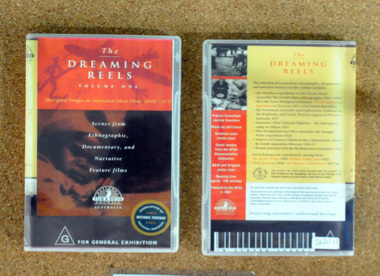 Orbost & District Historical Society
video, The Dreaming Reels, 1997
... Olympic Games. This disc is a significant research tool as it contains contemporary film of the early indigenous people of Australia. Aboriginal-history ...This disc was a project supported by the Festival of the Dreaming, a festival leading up to the 2000 Sydney Olympic Games.This disc is a significant research tool as it contains contemporary film of the early indigenous people of Australia.A video disc titled, The Dreaming Reels. it is a compilation of scenes from the Hadden expedition to the Torres Strait in 1898, Lake Tyers settlement, Northwest Scientific Exploration in the Kimberleys, the aboriginal camp at Orbost in 1921, the Douglas Wylie Expedition in 1926, Princess Charlotte Bay 1926-1927 and McRobertson's Expedition. It also contains footage from several Australian films depicting Aborigines. aboriginal-history dreaming -
 Greensborough Historical Society
Book, Bryce Kinnear, Land of the Southern Cross Australia, 1956
... history...olympic games melbourne 1956...Published just before the 1956 Melbourne Olympic Games, this book outlines agricultural and industrial development in Australia. victoria history australia history olympic games melbourne 1956 Published as publicity for visitors to Melbourne and wider Australia. 152 p., illus. ...Published as publicity for visitors to Melbourne and wider Australia.152 p., illus. (some col.).non-fictionPublished as publicity for visitors to Melbourne and wider Australia.victoria history, australia history, olympic games melbourne 1956 -
Bendigo Historical Society Inc.
Ephemera - Olympics for Melbourne 1996 Sticker, 1990s
... Olympic Games including Melbourne. Melbourne's bid cost 21million dollars. The decision made in Tokyo in 1990 saw the games awarded to Atlanta. history bendigo merle lummis collection 1996 olympics melbourne bid Olympics for Melbourne 1996 Bid 1. ...Six cities originally placed bids to hold the 1996 centennial Olympic Games including Melbourne. Melbourne's bid cost 21million dollars. The decision made in Tokyo in 1990 saw the games awarded to Atlanta.Olympics for Melbourne 1996 Bid 1. How to join the teams for the olmypics brochure and win a Nissan Pulsar GL Hatch 2. A Car sticker and envelope that contained it.history, bendigo, merle lummis collection, 1996 olympics melbourne bid -
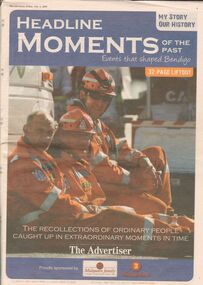 Bendigo Historical Society Inc.
Newspaper - THE ADVERTISER: FRIDAY JULY 3, 2009 HISTORY-EVENTS THAT SHAPED BENDIGO 32 PAGES, 1881
... History - Events That Shaped Bendigo 32 Page Supplement. Newspaper supplement includes images and articles as diverse as the construction of Alexander Fountain in 1881, The Great Depression 1930s, End of World War II 1945, CBD Floods 1949, Queen Elizabeth's Visit 1954, Olympic Games (Melb) and first television in Bendigo 1956, Bendigo farewells local champion horse 1958, Demolition of verandahs on local buildings 1960s, opening of Eppalock 1964, The Vietnam War 1965-1975, The new dragon Sun Loong 1970, The last tram run and Faraday kidnapping 1972, opening of Sacred Heart Cathedral 1977, opening of Hargreaves Mall 1982, Killians Walk Fire and Gaol Siege 1987, Local government Amalgamation 1993, Opening of Marketplace and Discovery Centre 1995, Restoration of Rosalind Park Cascades 1997, Bendigo Tornado 2003. ...History - Events That Shaped Bendigo 32 Page Supplement. Newspaper supplement includes images and articles as diverse as the construction of Alexander Fountain in 1881, The Great Depression 1930s, End of World War II 1945, CBD Floods 1949, Queen Elizabeth's Visit 1954, Olympic Games (Melb) and first television in Bendigo 1956, Bendigo farewells local champion horse 1958, Demolition of verandahs on local buildings 1960s, opening of Eppalock 1964, The Vietnam War 1965-1975, The new dragon Sun Loong 1970, The last tram run and Faraday kidnapping 1972, opening of Sacred Heart Cathedral 1977, opening of Hargreaves Mall 1982, Killians Walk Fire and Gaol Siege 1987, Local government Amalgamation 1993, Opening of Marketplace and Discovery Centre 1995, Restoration of Rosalind Park Cascades 1997, Bendigo Tornado 2003. ...Headline Moments of the Past The Advertiser, Friday July 3, 2009 History - Events That Shaped Bendigo 32 Page Supplement. Newspaper supplement includes images and articles as diverse as the construction of Alexander Fountain in 1881, The Great Depression 1930s, End of World War II 1945, CBD Floods 1949, Queen Elizabeth's Visit 1954, Olympic Games (Melb) and first television in Bendigo 1956, Bendigo farewells local champion horse 1958, Demolition of verandahs on local buildings 1960s, opening of Eppalock 1964, The Vietnam War 1965-1975, The new dragon Sun Loong 1970, The last tram run and Faraday kidnapping 1972, opening of Sacred Heart Cathedral 1977, opening of Hargreaves Mall 1982, Killians Walk Fire and Gaol Siege 1987, Local government Amalgamation 1993, Opening of Marketplace and Discovery Centre 1995, Restoration of Rosalind Park Cascades 1997, Bendigo Tornado 2003. This publication has not been scanned.bendigo, history, bendigo advertiser, alexander fountain construction 1881, bendigo cbd floods 1949, dmolitition of bendigo building verandahs 1960s, last tram run 1972, killians walk fire 1987, bendigo tornado 2003 -
 Kiewa Valley Historical Society
Printed material from the internet, with colour illustrations – History of the Birkebeiner Nordic Ski Club Inc, 14/01/2016
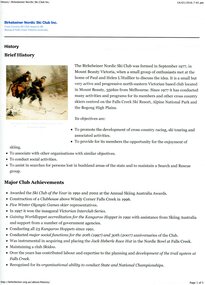
... Olympic Games. A number of Kiewa Valley residents are active members or have been past members of the club over the years. Birkebeiner Ski Club; Nordic Skiing; Cross Country skiing; Falls Creek; Bogong High Plains Printed material from the internet with colour illustrations – History of the Birkebeiner Nordic Ski Club Inc. ...The Birkebeiner Nordic Ski Club was formed in September 1977 when a group of enthusiasts met to discuss the idea. The club, located in Mount Beauty has conducted many activities and programs for its members and other cross country skiers at the Falls Creek Ski Resort, Alpine National Park and the Bogong High Plains. Club objectives are to promote the development of cross country racing, ski touring and associated activities. To assist in searches for persons lost in bushland areas and to maintain a Search and Rescue group. It also provides its members with opportunities for skiing and social activities. The Birkebeiner Nordic Ski Club constructed a clubhouse at Falls Creek for the use of members in 1996. The club has conducted the annual Kangaroo Hoppet since 1991. Since its inception, the Birkebeiner Nordic Ski Club has been active in promoting cross country skiing including racing and touring in the Falls Creek, Alpine National Park and the Bogong High Plains areas and have actively participated in search and rescue in the alpine region. Birkebeiner members have represented Australia at five Olympic Games. A number of Kiewa Valley residents are active members or have been past members of the club over the years.Printed material from the internet with colour illustrations – History of the Birkebeiner Nordic Ski Club Inc. Sourced from http://birkebeiner.org.au/about/history/, 14/01/2016 7.45pmbirkebeiner ski club; nordic skiing; cross country skiing; falls creek; bogong high plains -
 Warrnambool and District Historical Society Inc.
Stick Pins, Sydney Olympic Games Victorian Torch Relay, 1998
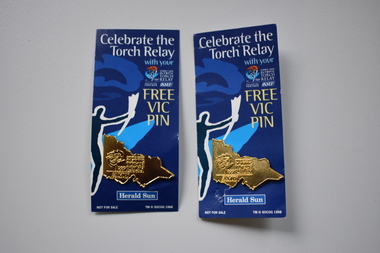
... Olympic Games were held in Sydney in 2000 and the Olympic Torch was brought from Olympia in Greece to Australia via Oceania. There were 13,400 torchbearers with 11,000 of these being in Australia. The Olympic Torch was carried on Day 43 (July 20th 2000) through the streets of Warrnambool. These stick pins are of minor interest as souvenirs of the Sydney Olympics 2000 Torch Relay, an event connected to Warrnambool’s history ...These stick pins were souvenirs of the Olympic Torch Relay in 2000. The summer Olympic Games were held in Sydney in 2000 and the Olympic Torch was brought from Olympia in Greece to Australia via Oceania. There were 13,400 torchbearers with 11,000 of these being in Australia. The Olympic Torch was carried on Day 43 (July 20th 2000) through the streets of Warrnambool. These stick pins are of minor interest as souvenirs of the Sydney Olympics 2000 Torch Relay, an event connected to Warrnambool’s history. .1 A metal stick pin attached to a card. The card has a blue background with coloured writing and background images. The pin is gold-coloured and designed in the shape of the State of Victoria with an image of a runner, a boomerang and ocean waves on the front and a metal clip at the back .2 as above Celebrate the Torch Relay with your Sydney 2000 Olympic Torch Relay Free Vic Pin Presenting Partner AMP Herald Sun Not for sale TM C SOCOG 1998 sydney olympics 2000, olympic torch relay 2000 warrnambool, history of warrnambool -
 Victorian Aboriginal Corporation for Languages
Periodical, Australian Institute of Aboriginal and Torres Strait Islander Studies, Australian Aboriginal studies : journal of the Australian Institute of Aboriginal and Torres Strait Islander Studies, 2009
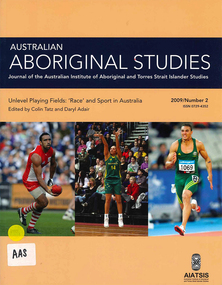
... history and explore the debates that continue to swirl around its purpose and meaning. We also draw attention to the way the careful study of photographs might enhance the study of sport, race and racism. ?She?s not one of us?: Cathy Freeman and the place of Aboriginal people in Australian national culture Toni Bruce (University of Waikato) and Emma Wensing (Independent scholar) The Sydney 2000 Olympic Games generated a national media celebration of Aboriginal 400 metre runner Cathy Freeman. ...history and explore the debates that continue to swirl around its purpose and meaning. We also draw attention to the way the careful study of photographs might enhance the study of sport, race and racism. ?She?s not one of us?: Cathy Freeman and the place of Aboriginal people in Australian national culture Toni Bruce (University of Waikato) and Emma Wensing (Independent scholar) The Sydney 2000 Olympic Games generated a national media celebration of Aboriginal 400 metre runner Cathy Freeman. ...Darkness and a little light: ?Race? and sport in Australia Colin Tatz (AIATSIS & Australian National University) and Daryl Adair (University of Technology Sydney) Despite ?the wonderful and chaotic universe of clashing colors, temperaments and emotions, of brave deeds against odds seemingly insuperable?, sport is mixed with ?mean and shameful acts of pure skullduggery?, villainy, cowardice, depravity, rapaciousness and malice. Thus wrote celebrated American novelist Paul Gallico on the eve of the Second World War (Gallico 1938 [1988]:9-10). An acute enough observation about society in general, his farewell to sports writing also captures the ?clashing colors? in Australian sport. In this ?land of the fair go?, we look at the malice of racism in the arenas where, as custom might have it, one would least want or expect to find it. The history of the connection between sport, race and society - the long past, the recent past and the social present - is commonly dark and ugly but some light and decency are just becoming visible. Coming to terms: ?Race?, ethnicity, identity and Aboriginality in sport Colin Tatz (AIATSIS & Australian National University) Notions of genetic superiority have led to some of the world?s greatest human calamities. Just as social scientists thought that racial anthropology and biology had ended with the cataclysm of the Second World War, so some influential researchers and sports commentators have rekindled the pre-war debate about the muscular merits of ?races? in a new discipline that Nyborg (1994) calls the ?science of physicology?. The more recent realm of racial ?athletic genes?, especially within socially constructed black athletic communities, may intend no malice but this search for the keys to their success may well revive the old, discredited discourses. This critical commentary shows what can happen when some population geneticists and sports writers ignore history and when medical, biological and sporting doctrines deriving from ?race? are dislocated from any historical, geographic, cultural and social contexts. Understanding discourses about race, racism, ethnicity, otherness, identity and Aboriginality are essential if sense, or nonsense, is to be made of genetic/racial ?explanations? of sporting excellence. Between the two major wars boxing was, disproportionately, a Jewish sport; Kenyans and Ethiopians now ?own? middle- and long-distance running and Jamaicans the shorter events; South Koreans dominate women?s professional golf. This essay explores the various explanations put forward for such ?statistical domination?: genes, biochemistry, biomechanics, history, culture, social dynamics, the search for identity, alienation, need, chance, circumstances, and personal bent or aptitude. Traditional games of a timeless land: Play cultures in Aboriginal and Torres Strait Islander communities Ken Edwards (University of Southern Queensland) Sports history in Australia has focused almost entirely on modern, Eurocentric sports and has therefore largely ignored the multitude of unique pre- European games that are, or once were, played. The area of traditional games, especially those of Aboriginal and Torres Strait Islander peoples, is an important aspect of the cultural, social and historical experiences of Indigenous communities. These activities include customs of play that are normally not associated with European notions of competitive sport. Overall, this paper surveys research undertaken into traditional games among Indigenous Australians, as well as proposals for much needed further study in this area. Culture, ?race? and discrimination in the 1868 Aboriginal cricket tour of England David Sampson As a consequence of John Mulvaney?s important historical research, the Aboriginal cricket and performance tour of Britain in 1868 has in recent decades become established as perhaps the most famous of all public events in contact history involving Aborigines, white settlers and the British metropolis. Although recognition of its importance is welcome and significant, public commemorations of the tour have enveloped the tour in mythologies of cricket and nation. Such mythologies have obscured fundamental aspects of the tour that were inescapable racial and colonial realities of the Victorian era. This reappraisal of the tour explores the centrality of racial ideology, racial science and racial power imbalances that enabled, created and shaped the tour. By exploring beyond cricketing mythology, it restores the central importance of the spectacular performances of Aboriginal skills without which the tour would have been impossible. Such a reappraisal seeks to fully recognise the often trivialised non-cricketing expertise of all of the Aboriginal performers in 1868 for their achievement of pioneering their unique culture, skills and technologies to a mass international audience. Football, ?race? and resistance: The Darwin Football League, 1926?29 Matthew Stephen (Northern Territory Archive Service) Darwin was a diverse but deeply divided society in the early twentieth century. The Commonwealth Government introduced the Aboriginals Ordinance 1911 in the Northern Territory, instituting state surveillance, control and a racially segregated hierarchy of whites foremost, then Asians, ?Coloureds? (Aborigines and others of mixed descent) and, lastly, the so-called ?full-blood? Aborigines. Sport was important in scaffolding this stratification. Whites believed that sport was their private domain and strictly controlled non-white participation. Australian Rules football, established in Darwin from 1916, was the first sport in which ?Coloured? sportsmen challenged this domination. Football became a battleground for recognition, rights and identity for all groups. The ?Coloured? community embraced its team, Vesteys, which dominated the Northern Territory Football League (NTFL) in the 1920s. In 1926, amidst growing racial tension, the white-administered NTFL changed its constitution to exclude non-white players. In reaction, ?Coloured? and Chinese footballers formed their own competition - the Darwin Football League (DFL). The saga of that colour bar is an important chapter in Australia?s football history, yet it has faded from Darwin?s social memory and is almost unknown among historians. That picture - Nicky Winmar and the history of an image Matthew Klugman (Victoria University) and Gary Osmond (The University of Queensland) In April 1993 Australian Rules footballer Nicky Winmar responded to on-field racist abuse by lifting his jersey and pointing to his chest. The photographic image of that event is now famous as a response to racial abuse and has come to be seen as starting a movement against racism in football. The racial connotations in the image might seem a foregone conclusion: the power, appeal and dominant meaning of the photograph might appear to be self-evident. But neither the fame of the image nor its racial connotation was automatic. Through interviews with the photographers and analysis of the use of the image in the media, we explore how that picture came to be of such symbolic importance, and how it has remained something to be re-shown and emulated. Rather than analyse the image as a photograph or work of art, we uncover some of its early history and explore the debates that continue to swirl around its purpose and meaning. We also draw attention to the way the careful study of photographs might enhance the study of sport, race and racism. ?She?s not one of us?: Cathy Freeman and the place of Aboriginal people in Australian national culture Toni Bruce (University of Waikato) and Emma Wensing (Independent scholar) The Sydney 2000 Olympic Games generated a national media celebration of Aboriginal 400 metre runner Cathy Freeman. The construction of Freeman as the symbol of national reconciliation was evident in print and on television, the Internet and radio. In contrast to this celebration of Freeman, the letters to the editor sections of 11 major newspapers became sites for competing claims over what constitutes Australian identity and the place of Aboriginal people in national culture. We analyse this under-explored medium of opinion and discuss how the deep feelings evident in these letters, and the often vitriolic responses to them, illustrate some of the enduring racial tensions in Australian society. Sport, physical activity and urban Indigenous young people Alison Nelson (The University of Queensland) This paper challenges some of the commonly held assumptions and ?knowledges? about Indigenous young people and their engagement in physical activity. These include their ?natural? ability, and the use of sport as a panacea for health, education and behavioural issues. Data is presented from qualitative research undertaken with a group of 14 urban Indigenous young people with a view to ?speaking back? to these commentaries. This research draws on Critical Race Theory in order to make visible the taken-for-granted assumptions about Indigenous Australians made by the dominant white, Western culture. Multiple, shifting and complex identities were expressed in the young people?s articulation of the place and meaning of sport and physical activity in their lives. They both engaged in, and resisted, dominant Western discourses regarding representations of Indigenous people in sport. The paper gives voice to these young people in an attempt to disrupt and subvert hegemonic discourses. An unwanted corroboree: The politics of the New South Wales Aboriginal Rugby League Knockout Heidi Norman (University of Technology Sydney) The annual New South Wales Aboriginal Rugby League Knockout is so much more than a sporting event. Involving a high level of organisation, it is both a social and cultural coming together of diverse communities for a social and cultural experience considered ?bigger than Christmas?. As if the planning and logistics were not difficult enough, the rotating-venue Knockout has been beset, especially since the late 1980s and 1990s, by layers of opposition and open hostility based on ?race?: from country town newspapers, local town and shire councils, local business houses and, inevitably, the local police. A few towns have welcomed the event, seeing economic advantage and community good will for all. Commonly, the Aboriginal ?influx? of visitors and players - people perceived as ?strangers?, ?outsiders?, ?non-taxpayers? - provoked public fear about crime waves, violence and physical safety, requiring heavy policing. Without exception, these racist expectations were shown to be totally unfounded. Research report: Recent advances in digital audio recorder technology provide considerable advantages in terms of cost and portability for language workers.b&w photographs, colour photographs, tablessport and race, racism, cathy freeman, nicky winmar, rugby league, afl, athletics, cricket, digital audio recorders -
 Ballarat Tramway Museum
Newspaper, Herald & Weekly Times Ltd, The Sun 17/4/1953, Apr. 1953
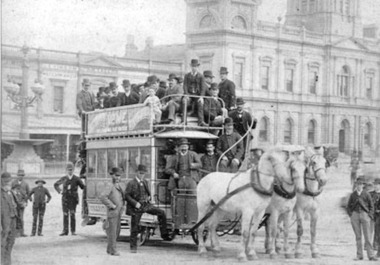
... history. Trams tramways Horse Trams Ballarat Melbourne Olympic Games Ballarat Town Hall Front and back page of "The Sun" Melbourne, Friday April 17, 1953. ...Yields information about Ballarat civic facilities and is history.Front and back page of "The Sun" Melbourne, Friday April 17, 1953. On page 2 has an articles re Ballarat : homes for aged, hospital, Civic hall, photos of horse trams (3 horses), Town Hall in background), 6 Ballarat Base Hospital Nurses. Front page - Melbourne Olympic Games - final decision by IOC and the Cold War.trams, tramways, horse trams, ballarat, melbourne olympic games, ballarat town hall -
 Tatura Irrigation & Wartime Camps Museum
Binder, Locals & Former Residents Personal Recollections
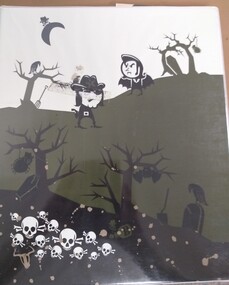
... history...tatura residents...1956 olympic games...Includes trip by school children to 1956 Olympic Games, Township of Tatura 1879, Matt Patterson's life story, Dhurringile Mansion history by J Lowry, W Doller and R Newnham...Includes trip by school children to 1956 Olympic Games, Township of Tatura 1879, Matt Patterson's life story, Dhurringile Mansion history by J Lowry, W Doller and R Newnham tatura and district documents history tatura residents 1956 olympic games tatura 1879 matt patterson dhurringile mansion history j. lowry w. doller r newnham Plastic cover, black and white cartoon like characters and grave yard scene on front. ...Various stories written by local and former Tatura residents. Includes trip by school children to 1956 Olympic Games, Township of Tatura 1879, Matt Patterson's life story, Dhurringile Mansion history by J Lowry, W Doller and R NewnhamPlastic cover, black and white cartoon like characters and grave yard scene on front. Contains plastic sleeves each with printed material.tatura and district, documents, history, tatura residents, 1956 olympic games, tatura 1879, matt patterson, dhurringile mansion history, j. lowry, w. doller, r newnham -
Clunes Museum
Badge, 1956
... METAL PIN CELEBRATING THE 1956 OLYMPIC GAMES HELD IN MELBOURNE. LOCAL HISTORY NUMISMATIC COMMEMORATIVE MEDALS BADGES OLYMPIC GAMES 1956 MEDAL OF LIGHT MATERIAL PROBABLY OF TIN - MALE FIGURE WITH RED TOP WHITE SHORTS RUNNING. ...METAL PIN CELEBRATING THE 1956 OLYMPIC GAMES HELD IN MELBOURNE.MEDAL OF LIGHT MATERIAL PROBABLY OF TIN - MALE FIGURE WITH RED TOP WHITE SHORTS RUNNING. BLUE BACKGROUND, YELLOW SURROUND OLYMPIC RINGS AT BASE. SOCCER BALL.OLYMPIC GAMES 1956local history, numismatic, commemorative, medals, badges -
 Ballarat Tramway Museum
Book, The Courier Ballarat, "The Lake ... the story of our greatest treasure", 6/11/2003 12:00:00 AM
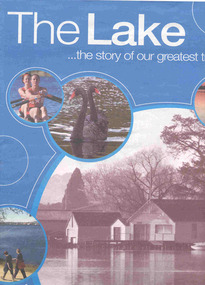
... Features the history, precincts, life, flora and fauna of the Lake Wendouree and Botanical Gardens. Includes many articles, photographs of the lake, Olympic games rowing in 1956, Ballarat Tramway Museum (p31) with a photo of inside the depot, a timeline and many advertisements by local companies. ...Trams tramways Lake Wendouree Botanical Gardens Olympics BTM Fifty six page Newspaper supplement, titled "The Lake ... the story of our greatest treasure", published by The Courier, Ballarat, 6 November 2003. Features the history, precincts, life, flora and fauna of the Lake Wendouree and Botanical Gardens. Includes many articles, photographs of the lake, Olympic games ...Fifty six page Newspaper supplement, titled "The Lake ... the story of our greatest treasure", published by The Courier, Ballarat, 6 November 2003. Features the history, precincts, life, flora and fauna of the Lake Wendouree and Botanical Gardens. Includes many articles, photographs of the lake, Olympic games rowing in 1956, Ballarat Tramway Museum (p31) with a photo of inside the depot, a timeline and many advertisements by local companies. The centre pages has an aerial photograph of the lake with features numbered, including the depot.trams, tramways, lake wendouree, botanical gardens, olympics, btm -
 Whitehorse Historical Society Inc.
Book, Australia's Olympic Century, 1998
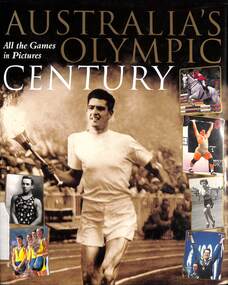
... A history of a century of the Olympic Games...A history of a century of the Olympic Games Olympic Games Athletes "All the Games in Pictures" (1896 - 1996). 240 pages Australia's Olympic Century Book Ironbark by Pan Macmillan Australia Pty. ..."All the Games in Pictures" (1896 - 1996).240 pagesnon-fiction"All the Games in Pictures" (1896 - 1996).olympic games, athletes -
 Whitehorse Historical Society Inc.
Booklet, The Story of the Olympic Games, 1956
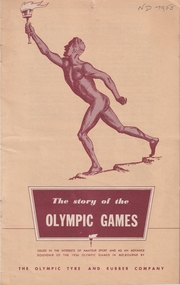
... Issued by the Olympic Tyre and Rubber Company in the interests of amateur sport and as an advance souvenir of the 1956 Olympic Games in Melbourne Olympic Games Sport A souvenir booklet of the history of the Olympic Games Contains a leaflet announcing the death Sir Frank Beaurepaire Issued by the Olympic Tyre and Rubber Company in the interests of amateur sport and as an advance souvenir of the 1956 Olympic Games in Melbourne The Story of the Olympic Games Booklet The Olympic Tyre and Rubber Company ...A souvenir booklet of the history of the Olympic GamesIssued by the Olympic Tyre and Rubber Company in the interests of amateur sport and as an advance souvenir of the 1956 Olympic Games in Melbournenon-fictionA souvenir booklet of the history of the Olympic Gamesolympic games, sport -
 Wodonga & District Historical Society Inc
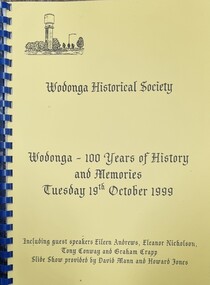
Book - Wodonga - 100 Years of History and Memories, Wodonga Historical Society, 1999
... History Memories of Wodonga This publication documents and evening held by Wodonga Historical Society, reflecting on different aspects of the 100 years of the city of Wodonga. It featured many guest speakers including Eileen Andrews, Eleanor Nicholson, Tony Conway and Graham Crapp with a slide show presentation by David Mann and Howard Jones. Guest of Honour was Dr Merv Lincoln, former Australian athlete at the 1956 and 1960 Olympic Games ...This publication documents and evening held by Wodonga Historical Society, reflecting on different aspects of the 100 years of the city of Wodonga. It featured many guest speakers including Eileen Andrews, Eleanor Nicholson, Tony Conway and Graham Crapp with a slide show presentation by David Mann and Howard Jones. Guest of Honour was Dr Merv Lincoln, former Australian athlete at the 1956 and 1960 Olympic Games and 1958 Commonwealth Games and former student of Wodonga High School.An A4 sized publication with yellow cover and black text. It features the logo of Wodonga Historical Society.non-fictionThis publication documents and evening held by Wodonga Historical Society, reflecting on different aspects of the 100 years of the city of Wodonga. It featured many guest speakers including Eileen Andrews, Eleanor Nicholson, Tony Conway and Graham Crapp with a slide show presentation by David Mann and Howard Jones. Guest of Honour was Dr Merv Lincoln, former Australian athlete at the 1956 and 1960 Olympic Games and 1958 Commonwealth Games and former student of Wodonga High School.wodonga history, memories of wodonga -
 Whitehorse Historical Society Inc.
Card - Cards, Olympics, 1956
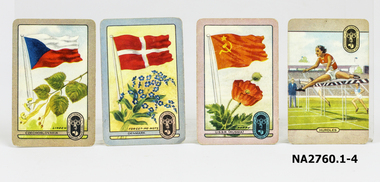
... Three cards represented/featured flags and floral emblem of each competing nation at the games and the fourth card features Olympic sports e.g. hurdles documents cards recreations sports Card 1 - 'Czechoslovakia - Linden XV1th Olympiad/ Melbourne 1956'|Card 2 - 'Denmark - Forget-me-nots XVI Olympiad/Melbourne 1956'|Card 3 - 'USSR (Russia) - Poppy - XVI Olympiad/ Melbourne 1956'|Card 4 - 'Hurdles' XVIth Olympiad/Melbourne 1956'|On back off all cards 'Exclusive Coles Production' Four small full colour printed cards from the 1956 Olympics in Melbourne. Three card depict National Flags along with a flower; the fourth card depicts a hurdles athlete and sports grandstand. Each card features Olympic Logo in one corner - see also History ...Collectable Cards. Produced by Coles to commemorate the XVIth Olympiad held in Melbourne in 1956. Three cards represented/featured flags and floral emblem of each competing nation at the games and the fourth card features Olympic sports e.g. hurdlesFour small full colour printed cards from the 1956 Olympics in Melbourne. Three card depict National Flags along with a flower; the fourth card depicts a hurdles athlete and sports grandstand. Each card features Olympic Logo in one corner - see also History of object.Card 1 - 'Czechoslovakia - Linden XV1th Olympiad/ Melbourne 1956'|Card 2 - 'Denmark - Forget-me-nots XVI Olympiad/Melbourne 1956'|Card 3 - 'USSR (Russia) - Poppy - XVI Olympiad/ Melbourne 1956'|Card 4 - 'Hurdles' XVIth Olympiad/Melbourne 1956'|On back off all cards 'Exclusive Coles Production'documents, cards, recreations, sports -
Whitehorse Historical Society Inc.
Article, Carrying The Dream, 2000
... Olympic Torch Relay. The 100 day journey around Australia covered 27,000 kms, the longest in history. The flame was carried to the Sydney Olympic Games 2000....Olympic Games 2000 4 articles concerning the Olympic Torch Relay. The 100 day journey around Australia covered 27,000 kms, the longest in history. ...4 articles concerning the Olympic Torch Relay. The 100 day journey around Australia covered 27,000 kms, the longest in history. The flame was carried to the Sydney Olympic Games 2000.olympic games 2000 -
 Whitehorse Historical Society Inc.
Programme - Programme - Opening Ceremony 1956 Olympic Games, c1956
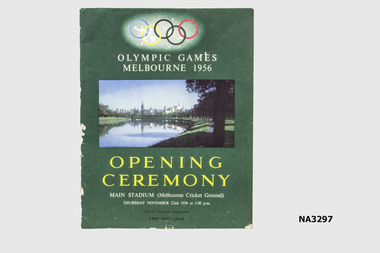
... Olympic Games Green coloured programme. Five Olympic Rings in blue, yellow, black, green and red. Photograph of Melbourne including Yarra River. Thirty-one pages including history ...Used at Opening Ceremony by Edward Arrowsmith, 1956Green coloured programme. Five Olympic Rings in blue, yellow, black, green and red. Photograph of Melbourne including Yarra River. Thirty-one pages including history of Olympic movement.'Opening Ceremony. Main Stadium (MCG) Thursday November 22nd 1956 at 3 p.m. Official Souvenir Programme. Two shillings. Olympic Gamesdocuments, programmes -
 Whitehorse Historical Society Inc.
Photograph, Site of Blackburn Fibrous Plaster Works, 9/11/1962 12:00:00 AM
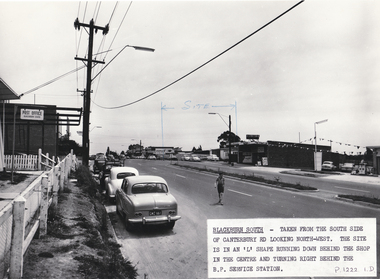
... Olympics games. It was located in the grounds of the M.C.C. and was transported to the Blackburn South site. Demolished c1970s. Information supplied by Stan Hander, 34Drummond Street, Blackburn South. He worked near the P.O. during the Olympics. blackburn fibrous plaster works blackburn south post office. hander stan olympic games Black and white photo of site of Blackburn Fibrous Plaster Works, Canterbury Road, Blackburn South. On left hand side can be seen the Blackburn South Post Office ( see History ...The Blackburn South Post Office was in 1962 housed in a building originally built as a P.O. for the 1956 Olympics games. It was located in the grounds of the M.C.C. and was transported to the Blackburn South site. Demolished c1970s. Information supplied by Stan Hander, 34Drummond Street, Blackburn South. He worked near the P.O. during the Olympics.Black and white photo of site of Blackburn Fibrous Plaster Works, Canterbury Road, Blackburn South. On left hand side can be seen the Blackburn South Post Office ( see History below).blackburn fibrous plaster works, blackburn south post office., hander, stan, olympic games -
 Wodonga & District Historical Society Inc
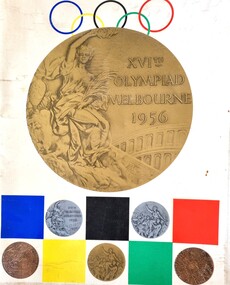
Book - The Games of the Sixteenth Olympiad Melbourne MCMLVI, The Argus and Australasian Limited, 1956
... The booklet details information about the selection of Melbourne and preparation for the Games as well as a history of aspects of the Olympic Games. It includes names of the Organising Committee as well as many images of Melbourne and noted athletes. ...A publication prepared to commemorate the Games of the Sixteenth Olympiad to be held in Melbourne from November 22 until December 8, 1956. The booklet details information about the selection of Melbourne and preparation for the Games as well as a history of aspects of the Olympic Games. It includes names of the Organising Committee as well as many images of Melbourne and noted athletes.A paper back publication, including text and black and white photographs. The cover bears colour embossed images of the Olympic medals and the colours of the Olympics. The back cover features an image of the Coat of Arms of the City of Melbourne.A publication prepared to commemorate the Games of the Sixteenth Olympiad to be held in Melbourne from November 22 until December 8, 1956. The booklet details information about the selection of Melbourne and preparation for the Games as well as a history of aspects of the Olympic Games. It includes names of the Organising Committee as well as many images of Melbourne and noted athletes.melbourne olympics, 16th olympiad, australian sporting events -
 Falls Creek Historical Society
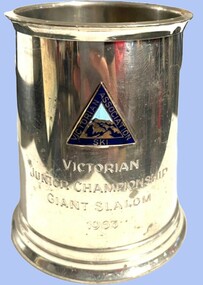
Award - Pewter Mug Trophies - Ross and Malcolm Milne - Victorian Junior Championship Giant Slalom 1963
... Olympic Games and the 1966 and 1970 World Championships before turning professional in 1972. Malcolm Milne was inducted into the Sport Australia Hall of Fame in 1985. In 2000 he received the Australian Sports Medal for his contribution to skiing. In 2004, Ski & Snowboard Australia granted Milne Life Membership for the contribution he made to the sport by becoming the first World Cup medal winner in Australian winter sports history, and the subsequent impact his performances have had on future athletes. ...Olympic Games and the 1966 and 1970 World Championships before turning professional in 1972. Malcolm Milne was inducted into the Sport Australia Hall of Fame in 1985. In 2000 he received the Australian Sports Medal for his contribution to skiing. In 2004, Ski & Snowboard Australia granted Milne Life Membership for the contribution he made to the sport by becoming the first World Cup medal winner in Australian winter sports history, and the subsequent impact his performances have had on future athletes. ...This Pewter Mug Collection is a set of 32 trophies won by Australian Alpine skiers Ross and Malcolm Milne between 1959 and 1964. Ross and Malcolm grew up on their family's tobacco property in Myrtleford, and began skiing at Falls Creek at an early age. They were both taught by Austrian Sigi Haberzettl, who was chief coach at Falls Creek for 17 years. Ross went on to win the North-Eastern District Ski Association (NEDSA) Junior Championships for three years in a row. In 1961 Ross was a member of the Australian team which competed against New Zealand in the Inter-Dominion Championships. In 1963, he won the Downhill and Alpine Combined title at the Australian Championships, while placing second in the Grand Slalom event. Ross Milne was selected in the Australian team that participated in the 1964 Olympic Winter Games at Innsbruck, Austria. A few days before the opening of the Games, on 25 January 1964, he tragically lost his life when he crashed into a tree during a training run for the Men's Downhill. He was only 19 years of age. Malcolm became a member of the Australian Junior Ski Team to Japan at the age of 14. He won all of the NEDSA children’s races and won the State Title in 1966. Malcolm continued to achieve great success, winning the Australian Championships for the next five years. At the end of 1969 he won Gold in the Val d'Isere FIS Alpine Ski World Cup Downhill, Australia's first Alpine Ski World Cup medal. He was on the Australian National Ski Team for eight years, representing his country at the 1968 and 1972 Olympic Games and the 1966 and 1970 World Championships before turning professional in 1972. Malcolm Milne was inducted into the Sport Australia Hall of Fame in 1985. In 2000 he received the Australian Sports Medal for his contribution to skiing. In 2004, Ski & Snowboard Australia granted Milne Life Membership for the contribution he made to the sport by becoming the first World Cup medal winner in Australian winter sports history, and the subsequent impact his performances have had on future athletes. Malcolm Milne was awarded the Medal of the Order of Australia (OAM) for services to skiing in 2016.This item is significant because it is part of a collection which documents the career of two outstanding Australian sportsmen.A pewter mug awarded for Victorian Junior Championship Giant Slalom 1963. The mug also bears the triangular logo of the Victorian Ski Association.Engraved on side of mug: VICTORIAN JUNIOR CHAMPIONSHIP GIANT SLALOM 1963ross milne, malcolm milne, milne brothers, australian alpine skiers -
 Falls Creek Historical Society
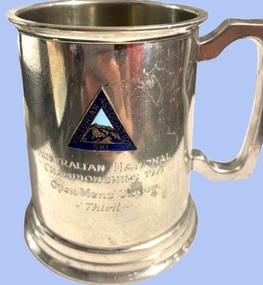
Award - Pewter Mug Trophies - Ross and Malcolm Milne - Australian National Championships 1971 Open Men's Slalom
... Olympic Games and the 1966 and 1970 World Championships before turning professional in 1972. Malcolm Milne was inducted into the Sport Australia Hall of Fame in 1985. In 2000 he received the Australian Sports Medal for his contribution to skiing. In 2004, Ski & Snowboard Australia granted Milne Life Membership for the contribution he made to the sport by becoming the first World Cup medal winner in Australian winter sports history, and the subsequent impact his performances have had on future athletes. ...Olympic Games and the 1966 and 1970 World Championships before turning professional in 1972. Malcolm Milne was inducted into the Sport Australia Hall of Fame in 1985. In 2000 he received the Australian Sports Medal for his contribution to skiing. In 2004, Ski & Snowboard Australia granted Milne Life Membership for the contribution he made to the sport by becoming the first World Cup medal winner in Australian winter sports history, and the subsequent impact his performances have had on future athletes. ...This Pewter Mug Collection is a set of 32 trophies won by Australian Alpine skiers Ross and Malcolm Milne between 1959 and 1964. Ross and Malcolm grew up on their family's tobacco property in Myrtleford, and began skiing at Falls Creek at an early age. They were both taught by Austrian Sigi Haberzettl, who was chief coach at Falls Creek for 17 years. Ross went on to win the North-Eastern District Ski Association (NEDSA) Junior Championships for three years in a row. In 1961 Ross was a member of the Australian team which competed against New Zealand in the Inter-Dominion Championships. In 1963, he won the Downhill and Alpine Combined title at the Australian Championships, while placing second in the Grand Slalom event. Ross Milne was selected in the Australian team that participated in the 1964 Olympic Winter Games at Innsbruck, Austria. A few days before the opening of the Games, on 25 January 1964, he tragically lost his life when he crashed into a tree during a training run for the Men's Downhill. He was only 19 years of age. Malcolm became a member of the Australian Junior Ski Team to Japan at the age of 14. He won all of the NEDSA children’s races and won the State Title in 1966. Malcolm continued to achieve great success, winning the Australian Championships for the next five years. At the end of 1969 he won Gold in the Val d'Isere FIS Alpine Ski World Cup Downhill, Australia's first Alpine Ski World Cup medal. He was on the Australian National Ski Team for eight years, representing his country at the 1968 and 1972 Olympic Games and the 1966 and 1970 World Championships before turning professional in 1972. Malcolm Milne was inducted into the Sport Australia Hall of Fame in 1985. In 2000 he received the Australian Sports Medal for his contribution to skiing. In 2004, Ski & Snowboard Australia granted Milne Life Membership for the contribution he made to the sport by becoming the first World Cup medal winner in Australian winter sports history, and the subsequent impact his performances have had on future athletes. Malcolm Milne was awarded the Medal of the Order of Australia (OAM) for services to skiing in 2016.This item is significant because it is part of a collection which documents the career of two outstanding Australian sportsmen.A pewter mug awarded for Australian National Championships 1971 Open Men's Slalom third place. The mug also bears the triangular logo of the Victorian Ski Association.Engraved on side of mug: AUSTRALIAN NATIONAL CHAMPIONSHIP 1971 Open Men's Slalom - Third -ross milne, malcolm milne, milne brothers, australian alpine skiers -
 Falls Creek Historical Society
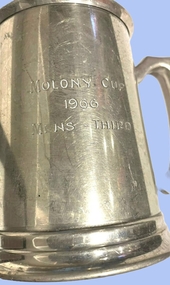
Award - Pewter Mug Trophies - Ross and Malcolm Milne - Molony Cup 1966 - Third
... Olympic Games and the 1966 and 1970 World Championships before turning professional in 1972. Malcolm Milne was inducted into the Sport Australia Hall of Fame in 1985. In 2000 he received the Australian Sports Medal for his contribution to skiing. In 2004, Ski & Snowboard Australia granted Milne Life Membership for the contribution he made to the sport by becoming the first World Cup medal winner in Australian winter sports history, and the subsequent impact his performances have had on future athletes. ...Olympic Games and the 1966 and 1970 World Championships before turning professional in 1972. Malcolm Milne was inducted into the Sport Australia Hall of Fame in 1985. In 2000 he received the Australian Sports Medal for his contribution to skiing. In 2004, Ski & Snowboard Australia granted Milne Life Membership for the contribution he made to the sport by becoming the first World Cup medal winner in Australian winter sports history, and the subsequent impact his performances have had on future athletes. ...This Pewter Mug Collection is a set of 32 trophies won by Australian Alpine skiers Ross and Malcolm Milne between 1959 and 1964. Ross and Malcolm grew up on their family's tobacco property in Myrtleford, and began skiing at Falls Creek at an early age. They were both taught by Austrian Sigi Haberzettl, who was chief coach at Falls Creek for 17 years. Ross went on to win the North-Eastern District Ski Association (NEDSA) Junior Championships for three years in a row. In 1961 Ross was a member of the Australian team which competed against New Zealand in the Inter-Dominion Championships. In 1963, he won the Downhill and Alpine Combined title at the Australian Championships, while placing second in the Grand Slalom event. Ross Milne was selected in the Australian team that participated in the 1964 Olympic Winter Games at Innsbruck, Austria. A few days before the opening of the Games, on 25 January 1964, he tragically lost his life when he crashed into a tree during a training run for the Men's Downhill. He was only 19 years of age. Malcolm became a member of the Australian Junior Ski Team to Japan at the age of 14. He won all of the NEDSA children’s races and won the State Title in 1966. Malcolm continued to achieve great success, winning the Australian Championships for the next five years. At the end of 1969 he won Gold in the Val d'Isere FIS Alpine Ski World Cup Downhill, Australia's first Alpine Ski World Cup medal. He was on the Australian National Ski Team for eight years, representing his country at the 1968 and 1972 Olympic Games and the 1966 and 1970 World Championships before turning professional in 1972. Malcolm Milne was inducted into the Sport Australia Hall of Fame in 1985. In 2000 he received the Australian Sports Medal for his contribution to skiing. In 2004, Ski & Snowboard Australia granted Milne Life Membership for the contribution he made to the sport by becoming the first World Cup medal winner in Australian winter sports history, and the subsequent impact his performances have had on future athletes. Malcolm Milne was awarded the Medal of the Order of Australia (OAM) for services to skiing in 2016. James Malony originally established his business in 1854 in King Street Melbourne. The family owned business of J. Molony initially specialised in shoemaking. Several members of the family were recognised ice hockey and figure skaters who have represented Australia in international winter events including the 1952 Olympic Games in Oslo, Norway and the 1976 Innsbruck Winter Olympics. Molony’s in Elizabeth Street expanded their business with a focus on ski equipment, opening new premises in Falls Creek in 1960. They sponsored several events included the Malony Cup, a Grand Slalom event held at Falls Creek.This item is significant because it is part of a collection which documents the career of two outstanding Australian sportsmen.A pewter mug awarded for Moloney Cup 1966Engraved on side of mug: Molony Cup 1966 MENS THIRDross milne, malcolm milne, milne brothers, australian alpine skiers, j. malony -
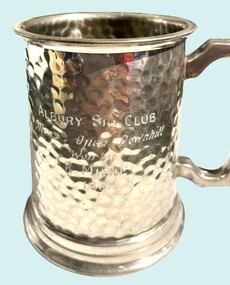 Falls Creek Historical Society
Award - Pewter Mug Trophies - Ross and Malcolm Milne - Albury Ski Club Men's Open Downhill 1961
... Olympic Games and the 1966 and 1970 World Championships before turning professional in 1972. Malcolm Milne was inducted into the Sport Australia Hall of Fame in 1985. In 2000 he received the Australian Sports Medal for his contribution to skiing. In 2004, Ski & Snowboard Australia granted Milne Life Membership for the contribution he made to the sport by becoming the first World Cup medal winner in Australian winter sports history, and the subsequent impact his performances have had on future athletes. ...Olympic Games and the 1966 and 1970 World Championships before turning professional in 1972. Malcolm Milne was inducted into the Sport Australia Hall of Fame in 1985. In 2000 he received the Australian Sports Medal for his contribution to skiing. In 2004, Ski & Snowboard Australia granted Milne Life Membership for the contribution he made to the sport by becoming the first World Cup medal winner in Australian winter sports history, and the subsequent impact his performances have had on future athletes. ...This Pewter Mug Collection is a set of 32 trophies won by Australian Alpine skiers Ross and Malcolm Milne between 1959 and 1964. Ross and Malcolm grew up on their family's tobacco property in Myrtleford, and began skiing at Falls Creek at an early age. They were both taught by Austrian Sigi Haberzettl, who was chief coach at Falls Creek for 17 years. Ross went on to win the North-Eastern District Ski Association (NEDSA) Junior Championships for three years in a row. In 1961 Ross was a member of the Australian team which competed against New Zealand in the Inter-Dominion Championships. In 1963, he won the Downhill and Alpine Combined title at the Australian Championships, while placing second in the Grand Slalom event. Ross Milne was selected in the Australian team that participated in the 1964 Olympic Winter Games at Innsbruck, Austria. A few days before the opening of the Games, on 25 January 1964, he tragically lost his life when he crashed into a tree during a training run for the Men's Downhill. He was only 19 years of age. Malcolm became a member of the Australian Junior Ski Team to Japan at the age of 14. He won all of the NEDSA children’s races and won the State Title in 1966. Malcolm continued to achieve great success, winning the Australian Championships for the next five years. At the end of 1969 he won Gold in the Val d'Isere FIS Alpine Ski World Cup Downhill, Australia's first Alpine Ski World Cup medal. He was on the Australian National Ski Team for eight years, representing his country at the 1968 and 1972 Olympic Games and the 1966 and 1970 World Championships before turning professional in 1972. Malcolm Milne was inducted into the Sport Australia Hall of Fame in 1985. In 2000 he received the Australian Sports Medal for his contribution to skiing. In 2004, Ski & Snowboard Australia granted Milne Life Membership for the contribution he made to the sport by becoming the first World Cup medal winner in Australian winter sports history, and the subsequent impact his performances have had on future athletes. Malcolm Milne was awarded the Medal of the Order of Australia (OAM) for services to skiing in 2016.This item is significant because it is part of a collection which documents the career of two outstanding Australian sportsmen.A pewter mug awarded for Albury Ski Club Men's Open Downhill 1961 with engraving on side.Engraved on side of mug: Albury Ski Club Men's Open Downhill Won by R. Milne 1961ross milne, malcolm milne, milne brothers, australian alpine skiers -
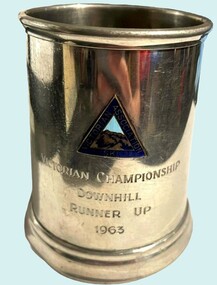 Falls Creek Historical Society
Award - Pewter Mug Trophies - Ross and Malcolm Milne - Victorian Championship Downhill 1963
... Olympic Games and the 1966 and 1970 World Championships before turning professional in 1972. Malcolm Milne was inducted into the Sport Australia Hall of Fame in 1985. In 2000 he received the Australian Sports Medal for his contribution to skiing. In 2004, Ski & Snowboard Australia granted Milne Life Membership for the contribution he made to the sport by becoming the first World Cup medal winner in Australian winter sports history, and the subsequent impact his performances have had on future athletes. ...Olympic Games and the 1966 and 1970 World Championships before turning professional in 1972. Malcolm Milne was inducted into the Sport Australia Hall of Fame in 1985. In 2000 he received the Australian Sports Medal for his contribution to skiing. In 2004, Ski & Snowboard Australia granted Milne Life Membership for the contribution he made to the sport by becoming the first World Cup medal winner in Australian winter sports history, and the subsequent impact his performances have had on future athletes. ...This Pewter Mug Collection is a set of 32 trophies won by Australian Alpine skiers Ross and Malcolm Milne between 1959 and 1964. Ross and Malcolm grew up on their family's tobacco property in Myrtleford, and began skiing at Falls Creek at an early age. They were both taught by Austrian Sigi Haberzettl, who was chief coach at Falls Creek for 17 years. Ross went on to win the North-Eastern District Ski Association (NEDSA) Junior Championships for three years in a row. In 1961 Ross was a member of the Australian team which competed against New Zealand in the Inter-Dominion Championships. In 1963, he won the Downhill and Alpine Combined title at the Australian Championships, while placing second in the Grand Slalom event. Ross Milne was selected in the Australian team that participated in the 1964 Olympic Winter Games at Innsbruck, Austria. A few days before the opening of the Games, on 25 January 1964, he tragically lost his life when he crashed into a tree during a training run for the Men's Downhill. He was only 19 years of age. Malcolm became a member of the Australian Junior Ski Team to Japan at the age of 14. He won all of the NEDSA children’s races and won the State Title in 1966. Malcolm continued to achieve great success, winning the Australian Championships for the next five years. At the end of 1969 he won Gold in the Val d'Isere FIS Alpine Ski World Cup Downhill, Australia's first Alpine Ski World Cup medal. He was on the Australian National Ski Team for eight years, representing his country at the 1968 and 1972 Olympic Games and the 1966 and 1970 World Championships before turning professional in 1972. Malcolm Milne was inducted into the Sport Australia Hall of Fame in 1985. In 2000 he received the Australian Sports Medal for his contribution to skiing. In 2004, Ski & Snowboard Australia granted Milne Life Membership for the contribution he made to the sport by becoming the first World Cup medal winner in Australian winter sports history, and the subsequent impact his performances have had on future athletes. Malcolm Milne was awarded the Medal of the Order of Australia (OAM) for services to skiing in 2016.This item is significant because it is part of a collection which documents the career of two outstanding Australian sportsmen.A pewter mug awarded for VIctorian Championship Downhill event 1963 with engraving. It has the triangular emblem of the Victorian Ski Association on one side.Engraved on side of mug: VICTORIAN CHAMPIONSHIP DOWNHILL RUNNER UP 1963ross milne, malcolm milne, milne brothers, australian alpine skiers
