
Showing 20 items matching "open gardens scheme"
-
 University of Melbourne, Burnley Campus Archives
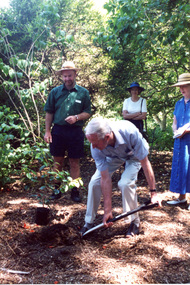
Album, Jan Chamberlain, Friends of Burnley Gardens Achievement Book, 2000
... ...open gardens scheme...Jessep, the Open Garden Scheme donation, Renovating the Ellis Stones Rock Garden, Pruning Day 2000, the Grassland Project and the Camellia Planting Ceremony. ...Jessep, the Open Garden Scheme donation, Renovating the Ellis Stones Rock Garden, Pruning Day 2000, the Grassland Project and the Camellia Planting Ceremony. ...camellia planting ceremony, kay hirst, a w jessep, dorothy jessep, tom kneen, andrew smith, camellia japonica 'a w jessep', camellia japonica' dorothy jessep', friends of burnley gardens, fobg, sir rupert hamer, open gardens scheme, ellis stones rock garden, ellis stones, australian plants society, grasslands project, 150th birthday celebration, pruning day 2000, planting ellis stones rockery 2000, summer house, shelter shed, native garden, herb garden, grey garden, orchard, field station, bulb bed, working bee, twilight working bee, ikebana exhibition -
 Whitehorse Historical Society Inc.
Article, Native garden special, 1998
... ...Open Garden Scheme...Interview with John and Beth Armstrong about their native garden, which has been selected for opening in the Open garden Scheme....Armstrong John Gardens Watherspoon Miss Open Garden Scheme Grey Street Vermont No. 28 Armstrong Beth Native plants Interview with John and Beth Armstrong about their native garden, which has been selected for opening in the Open garden Scheme. ...Interview with John and Beth Armstrong about their native garden, which has been selected for opening in the Open garden Scheme.Interview with John and Beth Armstrong about their native garden, which has been selected for opening in the Open garden Scheme.Interview with John and Beth Armstrong about their native garden, which has been selected for opening in the Open garden Scheme.armstrong, john, gardens, watherspoon, miss, open garden scheme, grey street vermont, no. 28, armstrong, beth, native plants -
Canterbury History Group
Article, Eastgate, Janine, Garden oasis on show, 7/10/2014 12:00:00 AM
... Article from the Progress Leader on two gardens in Wentworth Avenue Canterbury taking part in the Open Garden scheme 2014. Includes four coloured photographs....Canterbury Wentworth Avenue Open Gardens Australia James> Annie Gardens Article from the Progress Leader on two gardens in Wentworth Avenue Canterbury taking part in the Open Garden scheme 2014. ...Article from the Progress Leader on two gardens in Wentworth Avenue Canterbury taking part in the Open Garden scheme 2014. Includes four coloured photographs.canterbury, wentworth avenue, open gardens australia, james> annie, gardens -
 University of Melbourne, Burnley Campus Archives
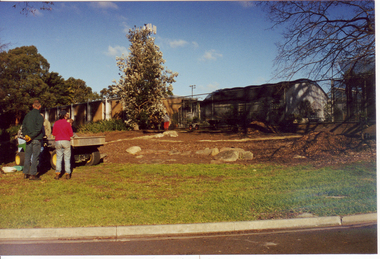
Photograph - Colour print, Jan Chamberlain, Ellis Stones Rockery Refurbishment, c. 1999
... ...open garden scheme...Funding from the Open Garden Scheme in 1999. ...fobg volunteer sandi pullman sandra pullman tractor open garden scheme 1999 (1) FOBG volunteers looking at the cleared ground. (2) Sandi Pullman on the tractor, planting completed. ...(1) FOBG volunteers looking at the cleared ground. (2) Sandi Pullman on the tractor, planting completed. Letter attached dated 25.08.2012. Funding from the Open Garden Scheme in 1999. fobg, volunteer, sandi pullman, sandra pullman, tractor, open garden scheme, 1999 -
 Hymettus Cottage & Garden Ballarat
Functional object - bookmark, Happy May Thy Birthday Be
... It is housed in Hymettus an historic property first opened to the public in 1917 and one of the first garden properties to be part of the Victorian Open Garden scheme in 1987 remaining open and a poular tourist attraction for the following decade....It is housed in Hymettus an historic property first opened to the public in 1917 and one of the first garden properties to be part of the Victorian Open Garden scheme in 1987 remaining open and a poular tourist attraction for the following decade. ...This bookmark forms part of the large collection of stevengraph bookmarks in the Hymettus collection at Ballarat, arguably the largest collection of bookmarks in Australia. It is housed in Hymettus an historic property first opened to the public in 1917 and one of the first garden properties to be part of the Victorian Open Garden scheme in 1987 remaining open and a poular tourist attraction for the following decade.Woven silk bookmarks were popularised by Stevens & Co of Coventry from the 1860s and other companies soon entered the industry. The Australian colonists from Britain also used these popular markers.bookmark, stevengraph, weaving, silk -
 Hymettus Cottage & Garden Ballarat
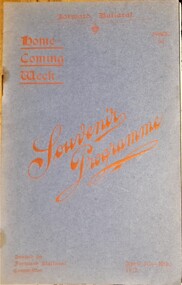
Booklet, Ballarat Homecoming Souvenir Programme, 1917
... This garden, by descent the property of the third Michael Taffe, was open to the public in 1917 having won City of Ballaarat Cottage Garden Competition in 1915. It was one of the first gardens included in the inaugural Victorian Garden Scheme open gardens seventy years later in 1987 and remained open into its second century....This garden, by descent the property of the third Michael Taffe, was open to the public in 1917 having won City of Ballaarat Cottage Garden Competition in 1915. It was one of the first gardens included in the inaugural Victorian Garden Scheme open gardens seventy years later in 1987 and remained open into its second century. ...This booklet includes the open factories, factory displays, pageants and open gardens at Ballarat in 1917. Open gardens were a popular attraction throughout much of the twentieth century when Ballarat was renowned as Victoria's Garden City and the state as The Garden State.32 pages and card covers staple boundnon-fictionThis booklet includes the open factories, factory displays, pageants and open gardens at Ballarat in 1917. Open gardens were a popular attraction throughout much of the twentieth century when Ballarat was renowned as Victoria's Garden City and the state as The Garden State. factories, business, gardens, displays, ballarat, taffe, hymettus garden -
 Eltham District Historical Society Inc
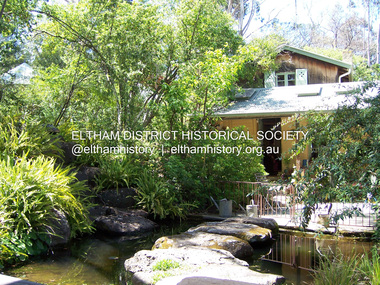
Photograph - Digital Photograph, Marguerite Marshall, Gordon Ford's Garden, 'Fulling', Pitt Street, Eltham, 10 November 2006
... The garden, which has been part of the Open Garden Scheme since the mid 1980s, is based on a balance of mass (plants) and void (paths and pools), textures and forms. ...The garden, which has been part of the Open Garden Scheme since the mid 1980s, is based on a balance of mass (plants) and void (paths and pools), textures and forms. ...'Fulling', the half-hectare property at Pitt Street, Eltham was the home of landscape designer Gordon Ford and his wife Gwen. Ford bought the property in 1948, originally part of an orchard. The garden encapsulates the major trends of Australian garden design in the second half of the 20th century. The garden design is based on mass (plants) and void (paths and pools), textures and forms. It epitomises the Eltham style because of its relaxed informality and attraction to native wildlife. The mud brick house and designed and built by Ford commenced in 1948. Several extensions were added up to 1970 and were built by Graham Rose (Source: information panel for exhibition, n.d.) Covered under Heritage Overlay, Nillumbik Planning Scheme. Published: Nillumbik Now and Then / Marguerite Marshall 2008; photographs Alan King with Marguerite Marshall.; p147 A narrow timber gate opens onto a garden that has had a huge impact on natural garden development in Australia since the 1950s.1 Fulling, the half-hectare property at Pitt St, Eltham, was the home of the landscape designer, Gordon Ford, who died in 1999. The garden ‘encapsulates the major trends of Australian garden design in the second half of the 20th century...and epitomises the Eltham style of garden’.2 It in turn, was influenced by several Victorian major landscape designers of the mid 20th century – Ellis Stones, Peter Glass and Edna Walling. The gate opens onto a sandy gravel path, one of several, which wind around dramatic pools and what appear to be natural bush, but on close inspection are carefully integrated native, indigenous and exotic plantings. Retaining walls and steps of rock through the garden link different terrace levels. Lichen-covered boulders serve as steps across a pool, leading to the triple level mud-brick house. Ford bought the property, which was originally part of an orchard, in 1948. As the son of a Presbyterian minister, Ford received a good education, which included learning Latin. This was advantageous when he worked in plant sales for the Forestry Commission, before the Second World War. In the late 1940s, however, Ford turned to building and landscape gardening. He worked on the Busst house, an early mud-brick building designed by Alistair Knox and at the same time, Ford was employed by Ellis Stones. Knox described Ford as, ‘one of the funniest men of the district. ...Rocky’s (Ellis Stones) Depression stories and Gordon’s memory and quick tongue made the jobs the most enjoyable of all those hysterical times that made Eltham the centre of the eternal laugh, between the years of 1945 and 1950’.3 Ford’s house, like so many after the war, was built progressively, as more space was needed and formerly scarce materials became available. It began with an army-shed of timber-lined walls, now used as the kitchen. Ford then built what is now the lounge room, and the house grew ‘like topsy and on a shoestring,’ says his widow Gwen. A lot of second-hand materials such as window frames were used, a style made famous particularly with their extensive use at Montsalvat, the Eltham Artists’ Colony. The house was constructed as a joint venture with friends, including artist Clifton Pugh, who built Ford’s bedroom for £10. The polished floorboards and solomite (compressed straw) ceilings, interspersed with heavy beams, exude warmth. The result is a home of snug spaces, with soft light and garden vistas. Several other mud-brick buildings were constructed as needed, including a studio and units for bed-and-breakfast clients. The garden, which has been part of the Open Garden Scheme since the mid 1980s, is based on a balance of mass (plants) and void (paths and pools), textures and forms. It epitomises the Eltham style because of its relaxed informal ethos and attracts native animals. Wattlebirds, scrub wrens, pardalotes, currawongs, owls and even kangaroos, have been seen at Fulling. Gwen, a former English teacher who has worked on the garden since around 1970, urged and helped Ford write his book, The Natural Australian Garden.4 Several of Ford’s favourite trees are in the garden, including the native Casuarina or She-Oak. In spring, the garden is dusted with the purple Orthrosanthus multiflorus or blue native irises and rings with the calls of birds attracted to plants like the callistemons, correas and grevilleas.This collection of almost 130 photos about places and people within the Shire of Nillumbik, an urban and rural municipality in Melbourne's north, contributes to an understanding of the history of the Shire. Published in 2008 immediately prior to the Black Saturday bushfires of February 7, 2009, it documents sites that were impacted, and in some cases destroyed by the fires. It includes photographs taken especially for the publication, creating a unique time capsule representing the Shire in the early 21st century. It remains the most recent comprehenesive publication devoted to the Shire's history connecting local residents to the past. nillumbik now and then (marshall-king) collection, eltham, fulling, gordon ford garden, pitt street, eltham mud brick buildings, mud brick house -
Marysville & District Historical Society
THE TRIANGLE NEWS-VOL 41 NO 48-DECEMBER 5 2014
... marysville victoria australia marysville ugly duckling comes of age the tower motel vibe hotel & conference centre what's on when in december donation accepted by peter cobb the committee of management of the gallipoli park precinct public notice proposed sale of land buxton tennis courts buxton post office trading hours marysville golf report church notices promote your community group on line mayor's chair by councillor margaret rae murrindindi shire council half day council office and library closures planning & environmental act 1987 murrindindi planning scheme marysville & triangle community men's shed advertisements great victorian bike ride road closures & event information open gardens marysville marysville triangle real estate THE TRIANGLE NEWS-VOL 41 NO 48-DECEMBER 5 2014 ...marysville, victoria, australia, marysville ugly duckling comes of age, the tower motel, vibe hotel & conference centre, what's on when in december, donation accepted by peter cobb, the committee of management of the gallipoli park precinct, public notice proposed sale of land, buxton tennis courts, buxton post office trading hours, marysville golf report, church notices, promote your community group on line, mayor's chair by councillor margaret rae, murrindindi shire council, half day council office and library closures, planning & environmental act 1987, murrindindi planning scheme, marysville & triangle community men's shed, advertisements, great victorian bike ride, road closures & event information, open gardens marysville, marysville triangle real estate -
Marysville & District Historical Society
THE TRIANGLE NEWS-VOL 34 NO 18-MAY 25 2007
... open garden success...advertisements...mayor's chair...opening el kanah work for the dole scheme...marysville victoria australia viewers choice vote eco-switch local inventor wins competition dairy dates deadline advertising rates buxton progress assocn results anzac appeal for r.s.l. disclaimer murrindindi shire council ceo visiting schedule fire calls thanks for volunteering bpa update church notices mops dedication of christ church window christ church marysville ladies' guild annual luncheon vacation bible school holiday programme women of hope village hall marysville wilbur the pig at marysville market charlotte's web star pig edgar's mission farm open garden success advertisements mayor's chair opening el kanah work for the dole scheme project nominated for award prime minister's work for the dole achievement award community health services outreach services property numbering squash business opportunity health & wellbeing mental illness & good mental health mystic mountains tourism newsletter bookkeeper alexandra cinema youth night at kooringa wild dog control access to inclusion plan payment of rate installment restaurant advertisements aluminium cans for cash buxton hotel cottage to rent advert/public notice bendigo bank yarra track stopping places marysville medical clinic THE TRIANGLE NEWS-VOL 34 NO 18-MAY 25 2007 ...marysville, victoria, australia, viewers choice vote, eco-switch, local inventor wins competition, dairy dates, deadline, advertising rates, buxton progress assocn, results anzac appeal for r.s.l., disclaimer, murrindindi shire council, ceo visiting schedule, fire calls, thanks for volunteering, bpa update, church notices, mops, dedication of christ church window, christ church marysville ladies' guild annual luncheon, vacation bible school holiday programme, women of hope, village hall marysville, wilbur the pig at marysville market, charlotte's web star pig, edgar's mission farm, open garden success, advertisements, mayor's chair, opening el kanah work for the dole scheme, project nominated for award, prime minister's work for the dole achievement award, community health services, outreach services, property numbering, squash, business opportunity, health & wellbeing, mental illness & good mental health, mystic mountains tourism newsletter, bookkeeper, alexandra cinema, youth night at kooringa, wild dog control, access to inclusion plan, payment of rate installment, restaurant advertisements, aluminium cans for cash, buxton hotel, cottage to rent, advert/public notice, bendigo bank, yarra track stopping places, marysville medical clinic -
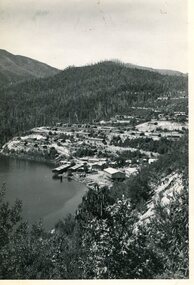 Kiewa Valley Historical Society
Photo - Bogong Township, March 1944
... Scheme. Due to the influx of European workers into the Township the beautification of the immediate surrounds (gardens etc.) had a distinct European flavour. This environment has been very beneficial for tourism in later years. At the completion of the scheme, in the 1960's, the village was opened ...In 1940 Field Headquarters for the Kiewa Scheme were established at Bogong with office, workshop facilities and accommodation for workmen, staff and some families constructed. (There had been a 'tent camp' on this site in 1939 but was destroyed by bushfires) Construction of accommodation continued until 1947. A total of 40 houses plus a hostel for single staff, post office, police station, medical centre and primary school all with water and sewerage and electricity supply. The staff hostel was known as Kiewa House and is now occupied by the Education Department. Lake Guy was named after Mr. L.T. Guy who was the Resident Engineer in charge of construction work and associated activities on the Kiewa area. He held this position from 1939 to November 1946 when he was transferred to Head Office. The Bogong Township was developed firstly as an accommodation centre (base camp) for construction workers employed under the Kiewa Hydroelectric Scheme. Due to the influx of European workers into the Township the beautification of the immediate surrounds (gardens etc.) had a distinct European flavour. This environment has been very beneficial for tourism in later years. At the completion of the scheme, in the 1960's, the village was opened to public/tourism use. Strict environmental control has not allowed for any extensive redevelopment in tourist accommodation and basically restricted it to the accommodation initially built for the construction workers. Activities such a bike riding, snow skiing, restricted horse riding and bush walking on the Alpine plains and mountains are now a viable part of the Kiewa Valley Tourist Industry. The lake is one of the many water storage reservoirs used to supply the power stations their main power to run the huge turbines generating the final product, electricityBlack and white photograph of Bogong Township taken March 1944Handwritten on the back of photo - Township March '44bogong village, secv -
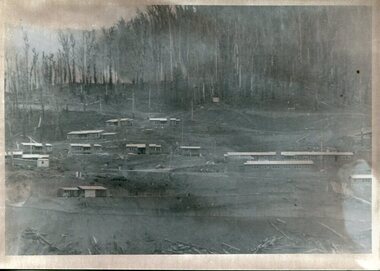 Kiewa Valley Historical Society
Photograph - Bogong Village (7 copies), Approx 1940
... Scheme. Due to the influx of European workers into the Township the beautification of the immediate surrounds (gardens etc.) had a distinct European flavour. This environment has been very beneficial for tourism in later years. At the completion of the scheme, in the 1960's, the village was opened ...In 1940 Field Headquarters for the Kiewa Scheme were established at Bogong with office, workshop facilities and accommodation for workmen, staff and some families constructed. (There had been a 'tent camp' on this site in 1939 but was destroyed by bushfires) Construction of accommodation continued until 1947. A total of 40 houses plus a hostel for single staff, post office, police station, medical centre and primary school all with water and sewerage and electricity supply. The staff hostel was known as Kiewa House and is now occupied by the Education Department. Lake Guy was named after Mr. L.T. Guy who was the Resident Engineer in charge of construction work and associated activities on the Kiewa area. He held this position from 1939 to November 1946 when he was transferred to Head Office. The Bogong Township was developed firstly as an accommodation centre (base camp) for construction workers employed under the Kiewa Hydroelectric Scheme. Due to the influx of European workers into the Township the beautification of the immediate surrounds (gardens etc.) had a distinct European flavour. This environment has been very beneficial for tourism in later years. At the completion of the scheme, in the 1960's, the village was opened to public/tourism use. Strict environmental control has not allowed for any extensive redevelopment in tourist accommodation and basically restricted it to the accommodation initially built for the construction workers. Activities such a bike riding, snow skiing, restricted horse riding and bush walking on the Alpine plains and mountains are now a viable part of the Kiewa Valley Tourist Industry. The lake is one of the many water storage reservoirs used to supply the power stations their main power to run the huge turbines generating the final product, electricity. Evidence can be seen of the 1939 bushfires.Set of 7 identical black and white photographs of Bogong Village after 1939 bush firesHandwritten on the back of one photo - Bogong Village approx. 1940, after 1939 bush fires. Staff residences to left. Kiewa House, General offices and test lab to the right. Hand drawn map on the back of one photo.bogong village, secv -
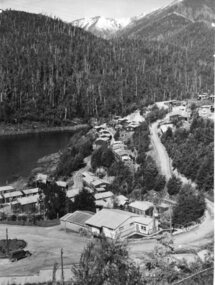 Kiewa Valley Historical Society
Photo - Bogong Village Township, October 8, 1946
... Scheme. Due to the influx of European workers into the Township the beautification of the immediate surrounds (gardens etc.) had a distinct European flavour. This environment has been very beneficial for tourism in later years. At the completion of the scheme, in the 1960's, the village was opened ...In 1940 Field Headquarters for the Kiewa Scheme were established at Bogong with office, workshop facilities and accommodation for workmen, staff and some families constructed. (There had been a 'tent camp' on this site in 1939 but was destroyed by bushfires) Construction of accommodation continued until 1947. A total of 40 houses plus a hostel for single staff, post office, police station, medical centre and primary school all with water and sewerage and electricity supply. The staff hostel was known as Kiewa House and is now occupied by the Education Department. Lake Guy was named after Mr. L.T. Guy who was the Resident Engineer in charge of construction work and associated activities on the Kiewa area. He held this position from 1939 to November 1946 when he was transferred to Head Office. The Bogong Township was developed firstly as an accommodation centre (base camp) for construction workers employed under the Kiewa Hydroelectric Scheme. Due to the influx of European workers into the Township the beautification of the immediate surrounds (gardens etc.) had a distinct European flavour. This environment has been very beneficial for tourism in later years. At the completion of the scheme, in the 1960's, the village was opened to public/tourism use. Strict environmental control has not allowed for any extensive redevelopment in tourist accommodation and basically restricted it to the accommodation initially built for the construction workers. Activities such a bike riding, snow skiing, restricted horse riding and bush walking on the Alpine plains and mountains are now a viable part of the Kiewa Valley Tourist Industry. The lake is one of the many water storage reservoirs used to supply the power stations their main power to run the huge turbines generating the final product, electricityBlack and white photograph of Bogong Village which appeared in the Herald Sun newspaper on October 8, 1946. Page 13Handwritten on the back - Town of Bogong on a rugged mountain slope above Lake Guy. State Electricity Committee workers on the Kiewa Hydro Electric scheme live here in all electric homes. Stamped on the back - Copyright Not for reproduction Herald Sun Feature Service Melbourne Australiabogong village; lake guy; kiewa hydro electric scheme -
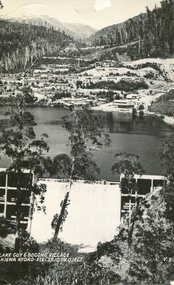 Kiewa Valley Historical Society
Postcard - Lake Guy and Bogong Village
... Scheme. Due to the influx of European workers into the Township the beautification of the immediate surrounds (gardens etc.) had a distinct European flavour. This environment has been very beneficial for tourism in later years. At the completion of the scheme, in the 1960's, the village was opened ...In 1940 Field Headquarters for the Kiewa Scheme were established at Bogong with office, workshop facilities and accommodation for workmen, staff and some families constructed. (There had been a 'tent camp' on this site in 1939 but was destroyed by bushfires) Construction of accommodation continued until 1947. A total of 40 houses plus a hostel for single staff, post office, police station, medical centre and primary school all with water and sewerage and electricity supply. The staff hostel was known as Kiewa House and is now occupied by the Education Department. Lake Guy was named after Mr. L.T. Guy who was the Resident Engineer in charge of construction work and associated activities on the Kiewa area. He held this position from 1939 to November 1946 when he was transferred to Head Office. The Bogong Township was developed firstly as an accommodation centre (base camp) for construction workers employed under the Kiewa Hydroelectric Scheme. Due to the influx of European workers into the Township the beautification of the immediate surrounds (gardens etc.) had a distinct European flavour. This environment has been very beneficial for tourism in later years. At the completion of the scheme, in the 1960's, the village was opened to public/tourism use. Strict environmental control has not allowed for any extensive redevelopment in tourist accommodation and basically restricted it to the accommodation initially built for the construction workers. Activities such a bike riding, snow skiing, restricted horse riding and bush walking on the Alpine plains and mountains are now a viable part of the Kiewa Valley Tourist Industry. The lake is one of the many water storage reservoirs used to supply the power stations their main power to run the huge turbines generating the final product, electricityBlack and white photographic postcard of Lake Guy and Bogong Village. Kiewa Hydro electric Project (showing Junction Dam in front)Handwritten on the back of postcard ' Like most of our camps, this looks like something from the Canadian Rockies' Stamped on the back - Valentine's Post Card A genuine photographlake guy, bogong village, secv -
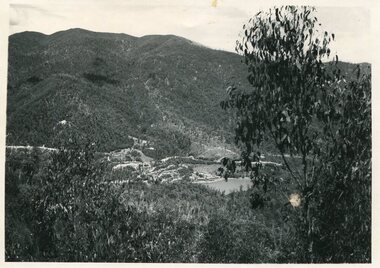 Kiewa Valley Historical Society
Photo - Bogong Township, September 1953
... Scheme. Due to the influx of European workers into the Township the beautification of the immediate surrounds (gardens etc.) had a distinct European flavour. This environment has been very beneficial for tourism in later years. At the completion of the scheme, in the 1960's, the village was opened ...In 1940 Field Headquarters for the Kiewa Scheme were established at Bogong with office, workshop facilities and accommodation for workmen, staff and some families constructed. (There had been a 'tent camp' on this site in 1939 but was destroyed by bushfires) Construction of accommodation continued until 1947. A total of 40 houses plus a hostel for single staff, post office, police station, medical centre and primary school all with water and sewerage and electricity supply. The staff hostel was known as Kiewa House and is now occupied by the Education Department. Lake Guy was named after Mr. L.T. Guy who was the Resident Engineer in charge of construction work and associated activities on the Kiewa area. He held this position from 1939 to November 1946 when he was transferred to Head Office. The Bogong Township was developed firstly as an accommodation centre (base camp) for construction workers employed under the Kiewa Hydroelectric Scheme. Due to the influx of European workers into the Township the beautification of the immediate surrounds (gardens etc.) had a distinct European flavour. This environment has been very beneficial for tourism in later years. At the completion of the scheme, in the 1960's, the village was opened to public/tourism use. Strict environmental control has not allowed for any extensive redevelopment in tourist accommodation and basically restricted it to the accommodation initially built for the construction workers. Activities such a bike riding, snow skiing, restricted horse riding and bush walking on the Alpine plains and mountains are now a viable part of the Kiewa Valley Tourist Industry. The lake is one of the many water storage reservoirs used to supply the power stations their main power to run the huge turbines generating the final product, electricityBlack and white photograph of Bogong Township taken from Little Arthur fire track. September 1953Faded handwritten inscription on back - Bogong Township taken from Little Arthur fire track. Sept 1953bogong village, secv -
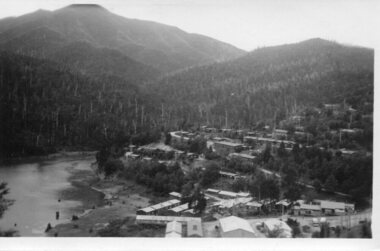 Kiewa Valley Historical Society
Photo - First Bogong Camp, September 1950
... Scheme. Due to the influx of European workers into the Township the beautification of the immediate surrounds (gardens etc.) had a distinct European flavour. This environment has been very beneficial for tourism in later years. At the completion of the scheme, in the 1960's, the village was opened ...In 1940 Field Headquarters for the Kiewa Scheme were established at Bogong with office, workshop facilities and accommodation for workmen, staff and some families constructed. (There had been a 'tent camp' on this site in 1939 but was destroyed by bushfires) Construction of accommodation continued until 1947. A total of 40 houses plus a hostel for single staff, post office, police station, medical centre and primary school all with water and sewerage and electricity supply. The staff hostel was known as Kiewa House and is now occupied by the Education Department. Lake Guy was named after Mr. L.T. Guy who was the Resident Engineer in charge of construction work and associated activities on the Kiewa area. He held this position from 1939 to November 1946 when he was transferred to Head Office. The Bogong Township was developed firstly as an accommodation centre (base camp) for construction workers employed under the Kiewa Hydroelectric Scheme. Due to the influx of European workers into the Township the beautification of the immediate surrounds (gardens etc.) had a distinct European flavour. This environment has been very beneficial for tourism in later years. At the completion of the scheme, in the 1960's, the village was opened to public/tourism use. Strict environmental control has not allowed for any extensive redevelopment in tourist accommodation and basically restricted it to the accommodation initially built for the construction workers. Activities such a bike riding, snow skiing, restricted horse riding and bush walking on the Alpine plains and mountains are now a viable part of the Kiewa Valley Tourist Industry. The lake is one of the many water storage reservoirs used to supply the power stations their main power to run the huge turbines generating the final product, electricityBlack and white photo of Bogong Village. September 1950Handwritten on the back - 1st Bogong Camp. SEC Kiewa Scheme Sept 1950bogong camp, bogong village, secv -
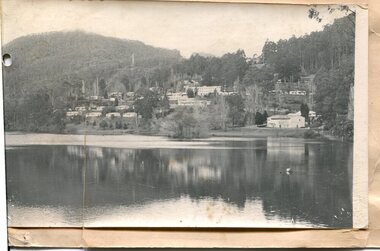 Kiewa Valley Historical Society
Photo - Bogong Village Township
... Scheme. Due to the influx of European workers into the Township the beautification of the immediate surrounds (gardens etc.) had a distinct European flavour. This environment has been very beneficial for tourism in later years. At the completion of the scheme, in the 1960's, the village was opened ...In 1940 Field Headquarters for the Kiewa Scheme were established at Bogong with office, workshop facilities and accommodation for workmen, staff and some families constructed. (There had been a 'tent camp' on this site in 1939 but was destroyed by bushfires) Construction of accommodation continued until 1947. A total of 40 houses plus a hostel for single staff, post office, police station, medical centre and primary school all with water and sewerage and electricity supply. The staff hostel was known as Kiewa House and is now occupied by the Education Department. Lake Guy was named after Mr. L.T. Guy who was the Resident Engineer in charge of construction work and associated activities on the Kiewa area. He held this position from 1939 to November 1946 when he was transferred to Head Office. The Bogong Township was developed firstly as an accommodation centre (base camp) for construction workers employed under the Kiewa Hydroelectric Scheme. Due to the influx of European workers into the Township the beautification of the immediate surrounds (gardens etc.) had a distinct European flavour. This environment has been very beneficial for tourism in later years. At the completion of the scheme, in the 1960's, the village was opened to public/tourism use. Strict environmental control has not allowed for any extensive redevelopment in tourist accommodation and basically restricted it to the accommodation initially built for the construction workers. Activities such a bike riding, snow skiing, restricted horse riding and bush walking on the Alpine plains and mountains are now a viable part of the Kiewa Valley Tourist Industry. The lake is one of the many water storage reservoirs used to supply the power stations their main power to run the huge turbines generating the final product, electricityBlack and white photograph of Bogong Village from across Lake Guy. Photo mounted on buff cardbogong village, secv -
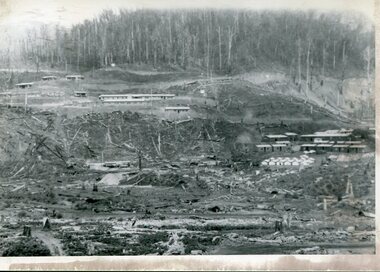 Kiewa Valley Historical Society
Photograph – Set of 3 black and white photographs of Bogong Village circa late 1930's - 1940's during early construction of Lake Guy ( in the foreground), Late 1930's - 1940's
... Scheme. Due to the influx of European workers into the Township the beautification of the immediate surrounds (gardens etc.) had a distinct European flavour. This environment has been very beneficial for tourism in later years. At the completion of the scheme, in the 1960's, the village was opened ...In 1940 Field Headquarters for the Kiewa Scheme were established at Bogong with office, workshop facilities and accommodation for workmen, staff and some families constructed. (There had been a 'tent camp' on this site in 1939 but was destroyed by bush fires) Construction of accommodation continued until 1947. A total of 40 houses plus a hostel for single staff, post office, police station, medical centre and primary school all with water and sewerage and electricity supply. The staff hostel was known as Kiewa House and is now occupied by the Education Department. Lake Guy was named after Mr. L.T. Guy who was the Resident Engineer in charge of construction work and associated activities on the Kiewa area. He held this position from 1939 to November 1946 when he was transferred to Head Office. The Bogong Township was developed firstly as an accommodation centre (base camp) for construction workers employed under the Kiewa Hydroelectric Scheme. Due to the influx of European workers into the Township the beautification of the immediate surrounds (gardens etc.) had a distinct European flavour. This environment has been very beneficial for tourism in later years. At the completion of the scheme, in the 1960's, the village was opened to public/tourism use. Strict environmental control has not allowed for any extensive redevelopment in tourist accommodation and basically restricted it to the accommodation initially built for the construction workers. Activities such a bike riding, snow skiing, restricted horse riding and bush walking on the Alpine plains and mountains are now a viable part of the Kiewa Valley Tourist Industry. The lake is one of the many water storage reservoirs used to supply the power stations their main power to run the huge turbines generating the final product, electricity3 black and white photographs of the Bogong camp area showing the clearing of trees for the construction of the Junction Dam and Lake Guy. Some administration buildings have been constructed, but part of the tent camp can be seen to the right of the photograph in front of the buildings. bogong village; junction dam; lake guy; kiewa hydro electric scheme; secv -
Unions Ballarat
It wasn't meant to be easy: Tamie Fraser in Canberra, Hindhaugh, Christina, 1986
... ...open garden scheme...Relevant to the history of liberal and labour politics in Australia, including events around the dismissal of the Whitlam government in 1975. fraser, tamie fraser, tamara fraser, malcolm btlc ballarat trades and labour council ballarat trades hall politics politicians politicians' spouses biography whitlam government - dismissal whitlam, eg 1975 liberal party australia australian labour party alp australiana fund open garden scheme prime minister beggs, tamara Title page: name, "F. ...Biography of Tamie Fraser. Tamie Fraser was married to Malcolm Fraser who was Prime Minister of Australia. Includes her role of campaigning on her husband's behalf in the 1975 Federal election. The author, Christina Hindhaugh, is Tamie Fraser's sister.Relevant to the history of liberal and labour politics in Australia, including events around the dismissal of the Whitlam government in 1975.Paper; book. Dust jacket: light blue background; colour picture of Tamie Fraser, black and blue lettering; author's name and title. Cover: blue; white lettering; author's name and title.Title page: name, "F. J. Story, Ex AL 3/87".fraser, tamie, fraser, tamara, fraser, malcolm, btlc, ballarat trades and labour council, ballarat trades hall, politics, politicians, politicians' spouses, biography, whitlam government - dismissal, whitlam, eg, 1975, liberal party australia, australian labour party, alp, australiana fund, open garden scheme, prime minister, beggs, tamara -
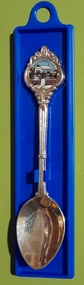 Hymettus Cottage & Garden Ballarat
Memorabilia - spoon, Hymettus Ballarat
... ...Open Garden Scheme...open to the public as a tourist attraction and house museum 1985 - 2010 following extensive heritage work with Victoria 150th funding and analysis from Royal Botanic Gardens Melbourne. The property was awarded Champion Cottage Garden for the City of Ballaarat 1915-1918. Following restoration work it was the only nineteenth century working mans' exhibition garden retaining original layout and plantings from the Victorian/Edwardian era surviving in Australia. The property has been lived in by the same family from 1899 - the present. souvenir Spoon tourism Ballarat Museum Heritage garden Historic House Open Garden Scheme ...Plastic, cased silverplate souvenir spoon from when Hymettus Cottage and Garden, Ballarat was open to the public1985 - 2010.The Taffe family home, Hymettus was open to the public as a tourist attraction and house museum 1985 - 2010 following extensive heritage work with Victoria 150th funding and analysis from Royal Botanic Gardens Melbourne. The property was awarded Champion Cottage Garden for the City of Ballaarat 1915-1918. Following restoration work it was the only nineteenth century working mans' exhibition garden retaining original layout and plantings from the Victorian/Edwardian era surviving in Australia. The property has been lived in by the same family from 1899 - the present.souvenir spoon, tourism, ballarat, museum, heritage garden, historic house, open garden scheme -
Marysville & District Historical Society
THE TRIANGLE NEWS-VOL 42 NO 19-MAY 1 2015
... marysville victoria australia cafe culture series what's on when in may advertisements buxton progress assocn gallipoli park precinct creative triangle mayor's chair cr margaret rae church notices beyond blue community information evening alexandra shire hall lions triangle tool library marysville & triangle community men's shed community meeting inviting public buxton memorial hall marysville golf report marysville triangle real estate residential and rural real estate taliska scottish band at el kanah australia's biggest morning tea influenza vaccine marysville saddletramps ralph wait memorial ride dinner dance adventurous cooks cfa annual 2015 challenge marysville jazz & blues weekend planning & environmental act 1987 murrindindi planning scheme von guerard expert coming back upper goulburn landcare network farm chemical users course triangle community dinner mercy ships fundraising launch intrepid triangle bushwalkers lest we forget marysville & district historical society australian open gardens narbethong farms change smoke alarm batteries buxton anglican church special service the committee of management of the gallipoli park precinct anzac day at marysville THE TRIANGLE NEWS-VOL 42 NO 19-MAY 1 2015 ...marysville, victoria, australia, cafe culture series, what's on when in may, advertisements, buxton progress assocn, gallipoli park precinct, creative triangle, mayor's chair cr margaret rae, church notices, beyond blue community information evening, alexandra shire hall, lions triangle tool library, marysville & triangle community men's shed, community meeting inviting public, buxton memorial hall, marysville golf report, marysville triangle real estate, residential and rural real estate, taliska scottish band at el kanah, australia's biggest morning tea, influenza vaccine, marysville saddletramps, ralph wait memorial ride dinner dance, adventurous cooks, cfa annual 2015 challenge, marysville jazz & blues weekend, planning & environmental act 1987, murrindindi planning scheme, von guerard expert coming back, upper goulburn landcare network, farm chemical users course, triangle community dinner, mercy ships fundraising launch, intrepid triangle bushwalkers, lest we forget, marysville & district historical society, australian open gardens, narbethong farms, change smoke alarm batteries, buxton anglican church special service, the committee of management of the gallipoli park precinct, anzac day at marysville
