
Showing 73 items matching "organ restoration"
-
 Wodonga & District Historical Society Inc
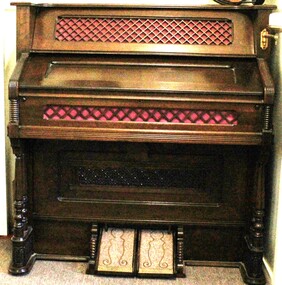
Instrument - Farrand & Votey Pump Organ, Farrand & Votey Organ Company, c1885
... ...Organ restoration...Farrand & Votey pump organ Organ restoration Above keyboard: "Farrand & Votey" An upright Farrand & Votey Pump Organ which was originally manufactured in Detroit, USA. ...This Farrand & Votey pump organ was manufactured in Detroit USA c1885. It was lovingly restored by the late Peter Frost of Tallangatta. The organ was gifted to Peter in 2000 in a state of disrepair and was not working. Peter was born in Devon, England in 1930 and completed an apprenticeship in joinery and cabinetry, specialising in ornate church and cathedral furniture. He migrated to Australia in 1957 and became a highly regarded woodwork and building science teacher as well as a Building Inspector. He was also a passionate musician. On completion of the refurbishment Peter gave the organ to his daughter at Georges Creek. Farrand & Votey started out as the Detroit Organ Co. in 1881. They started building pipe organs in 1888. Votey did pioneering work on piano players, developing the famous Pianola. However, in 1897 the company split up, Farrand remaining with the reed organs as the Farrand Organ Co., and Votey taking the pipe organ and player piano business. The Farrand Organ Co. later brought out its own piano player, the Cecilian, but went bankrupt in 1915.This organ is an example of a craftsmanship from the late 19th century and has been fully refurbished by a skilled craftsmen from the Tallangatta district near Wodonga.An upright Farrand & Votey Pump Organ which was originally manufactured in Detroit, USA. It has been fully refurbished and is in working condition. Ron Fudge, a pump organ restorer in USA has dated it at c.1885 based on its serial number 14404 83.Above keyboard: "Farrand & Votey"farrand & votey, pump organ, organ restoration -
 Whitehorse Historical Society Inc.
Newspaper - Article, Pipe organ needs help, 18/09/1991
... It is the only organ made by William Stone still intact. The organ needs restoration and a concert was being arranged to raise funds....It is the only organ made by William Stone still intact. The organ needs restoration and a concert was being arranged to raise funds. ...Article in Nunawading Gazette about the historic pipe organ built in 1879 installed in the Blackburn Uniting Church in 1973. It is the only organ made by William Stone still intact. The organ needs restoration and a concert was being arranged to raise funds.the avenue uniting church, blackburn, williams, david, south st kilda congregational church, stone, william, organs -
 Mission to Seafarers Victoria
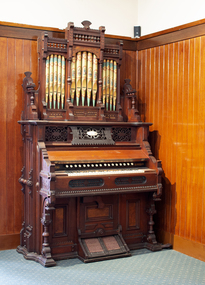
Instrument - Reed organ, W Bell & Co, c. 1888
... In 1972, it was transferred to the Holy Trinity Church in Bay Street after the closure of the Mission In the late 1980s during a National Trust campaign to save the building, the organ was sold by the Anglican Men's Society to the Trust's organ committee, who carried out some restoration work and returned it to the former Missions to Seamen chapel. ...In 1972, it was transferred to the Holy Trinity Church in Bay Street after the closure of the Mission In the late 1980s during a National Trust campaign to save the building, the organ was sold by the Anglican Men's Society to the Trust's organ committee, who carried out some restoration work and returned it to the former Missions to Seamen chapel. ...This organ was gifted by the Bethel Community in 1890 to the then Victorian Seamen's Mission, originally founded by the Bethel Union in 1857. The gift was intended to assist with worship. Despite all appearance, this organ is not a pipe organ but a reed organ that works in a similar manner to an accordion. In May 1890, the sum of seventy pounds was put towards the purchase of the organ. The sum being raised via subscriptions. The organ was inaugurated in September 1890. Jabez Carnegie (1832-1892), importer of piano and organs in Melbourne, had made a trip to Europe and Canada in 1887 and had secured the agency of Bell organs. W. Bell & Co were a Canadian organ and piano manufacturer, considered the premier organ manufacturer of the time. W Bell & Co changed its name to Bell Organ and Piano Co in 1888 meaning this organ had to be manufactured prior to the name change. The organ was first used in the mission main room from 1890 to 1915 when the St Nicholas chapel was built at the back (see item 0548. It was transfered to the new Port Melbourne mission in 1937 (link on postcard from State Library Victoria). In 1972, it was transferred to the Holy Trinity Church in Bay Street after the closure of the Mission In the late 1980s during a National Trust campaign to save the building, the organ was sold by the Anglican Men's Society to the Trust's organ committee, who carried out some restoration work and returned it to the former Missions to Seamen chapel. In 1991 the Office of Major Projects had control of the whole 'Bayside' development site. With the Mission to Seamen Building emptied and proposed for demolition, the Office of Major Projects removed the organ and placed it in storage in various locations - finally, in the Museum of Victoria store in Abbotsford. In 1995-6, enquiries by Jim Hillis resulted in the return of the organ to the control of the Port Melbourne HIstorical & Preservation Society. As the Society had no suitable location for the organ, several churches and schools in Port Melbourne were approached to take the organ with no results. The nearby suburbs were suggested next. Finally the Melbourne Maritime Museum (Polly Woodside) was approached and agreed to place it in their Museum on a long term loan. In 1997 it was on display in no 5 shed South Wharf (23/3/1997). In 2006, the Polly Woodside South Wharf site was to be re-developed, and they could no longer retain the organ. Accordingly, on 4 May 2006, the organ was transferred to the Mission To Seafarers building in Flinders Street Extension as an indefinite loan (refer OL 022) The PMHPS deaccessioned it to finally transfered it in 2018 to MTSV.(See also acquisition details re 21st C finalisation of acquisition) This organ is a tangible reminder of the longevity of the Mission to Seafarers, a link with the original Bethel Union which was instrumental in 1856 calling a public meeting and inviting subscriptions by various non-conformist churches to found a mission to Seamen. Rev Kerr-Johnson delivered the first service in 1857 aboard the Emily. The Mission to Seafarers has been in operation ever since and continues to operate to the same purpose today.Large reed organ that looks like a pipe organ with fifteen elaborately painted pipes bearing a floral motif. The body of the organ is elaborately decorated in carved wood. It has 17 knobs above the keyboard both which can be concealed when the keyboard cover is lowered. There are two foot pedals at the bottom of the organ with "Mouse Proof Pedals" cast into the framing iron. list of stop names: Viola 4Ft Diapason 8Ft Dolce 4Ft Violetta 2Ft Sub Bass 16 Ft Octave Coupler Vox Humana Forte Picciolo 2Ft Hautboy 8Ft Aeoline 8Ft Cremona 16Ft E---bone 16Ft Echo 8Ft Celeste 8Ft Melodia 8Ft Flute 4FtMaker's mark in gold lettering above keyboard: W. Bell & Co Brass plaque on front board: Presented to/The Victorian Seamen's Mission/by/Congregation worshipping in Bethel/& friends./1st September 1890 Behind the stops a wooden plaque: J. CARNEGIE & SONS, SOLE AGENTS FOR VICTORIA MELBOURNE organ, worship, bethel, pipes, reed, bethel union, pipe top, jabez carnegie, w. bell & co, port melbourne, mission to seafarers, seamens' mission, mission to seamen, guelph, ontario, canada, pmhps, polly woodside, harmonium, reed organ -
 Bendigo Historical Society Inc.
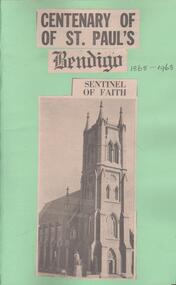
Newspaper - Lydia Chancellor collection: centenary of St. Paul's
... organ in 1883. It was closed in 2009 due to safety concerns and after extensive restoration and renovation was reopened in 2016....organ in 1883. It was closed in 2009 due to safety concerns and after extensive restoration and renovation was reopened in 2016. ...Originally a parish church, St Paul's became a cathedral in 1981 when Bendigo was declared a separate diocese. The church, designed by Robert A Love, was dedicated in 1868, with the bells being added in 1873 and the organ in 1883. It was closed in 2009 due to safety concerns and after extensive restoration and renovation was reopened in 2016.Green folder: centenary of St. Paul's Bendigo 1868-1968. On the front a black and white photograph ot the cathedral under the title "sentinel of faith". inside the folder newspaper articles relating to the celebration of the centenary.bendigo churches, st. paul's, centenary -
Glen Eira Historical Society
Document - Organs
... This file contains eight items about the history and construction of church organs in the Glen Eira area: 1/A photocopy of notes on the history of the church organ in the Bambra Road Church of Christ (1 page). 2/A photocopy of an extract from the book ‘The Christ Church Chronicles 1901-2001’ p20-24, by Vi Manson, giving a detailed description of the life of the organ in Christ Church Anglican Church, Ormond. It describes the building, relocation, restoration, rededication and role of the organ in church activities. 3/Extracts from ‘Colonial Organs and Organbuilders’, p121-122, 126, 131, 140, 182-183, by E. ...This file contains eight items about the history and construction of church organs in the Glen Eira area: 1/A photocopy of notes on the history of the church organ in the Bambra Road Church of Christ (1 page). 2/A photocopy of an extract from the book ‘The Christ Church Chronicles 1901-2001’ p20-24, by Vi Manson, giving a detailed description of the life of the organ in Christ Church Anglican Church, Ormond. It describes the building, relocation, restoration, rededication and role of the organ in church activities. 3/Extracts from ‘Colonial Organs and Organbuilders’, p121-122, 126, 131, 140, 182-183, by E. ...This file contains eight items about the history and construction of church organs in the Glen Eira area: 1/A photocopy of notes on the history of the church organ in the Bambra Road Church of Christ (1 page). 2/A photocopy of an extract from the book ‘The Christ Church Chronicles 1901-2001’ p20-24, by Vi Manson, giving a detailed description of the life of the organ in Christ Church Anglican Church, Ormond. It describes the building, relocation, restoration, rededication and role of the organ in church activities. 3/Extracts from ‘Colonial Organs and Organbuilders’, p121-122, 126, 131, 140, 182-183, by E. N. Matthews, 1969, about organ installations, repairs and sales. It contains entries about organs previously and currently located in Murrumbeena, Caulfield, Elsternwick, Balaclava and Bentleigh. 4/A photocopied extract from a letter from Mrs. M. Ring to the Caulfield Historical Society, dated 14/03/1986, describing the organ at ‘Crotonhurst’ (1 page). 5/A photocopy of notes (1 page), written by Trevor Hart, dated unknown, on the history and building of Elsternwick Congregational Church (Caulfield Union Church) containing a note about an organ built by George Fincham that was sold in 1962. 6/A photocopy of a small paragraph about the organ in St. Mary’s Anglican Church, paraphrased from E. N. Matthews ‘Colonial Organs and Organbuilders’, author and date unknown (1 page). 7/A photocopy of a page of a research project by Kate William, date unknown, giving a brief history of the organ and choirs at St. Mary’s Catholic Church, Caulfield. 8/A photocopy of a draft resolution to gift the Merklin-Shutze pipe organ located in the Uniting Church, Orrong Road, Ormond to the Australian Catholic University. Author and date unknown (1 page).bambra road church of christ, bambra road, organs, choirs, religious groups, fincham george, organists, fullard leonard, depression 1929-1939, world war 1939-1945, durance ronald rev., dunlop julie, larner john, muston ged. bishop, musical events and activities, christ church anglican church ormond, concerts, balaclava, holy trinity church balaclava, torrance g. w., parsons c. r., ure james, bryant mr., brentnall t., meedham s. p., inge h. j., stevens j. n., balaclava methodist church, fentum g. b., eggleston j., bentleigh, st. george’s church bentleigh, caulfield, st. mary’s church caulfield, perry bishop, reed joseph, lee kaye, taylor hugh ms., stephen miss, hart mr., kaye s., dixon miss, hardeman j. j., dumergue charles, wright j. d., dixon f. miss, courcelle john, elsternwick, elsternwick baptist church, warner l., andrewartha c. w., elsternwick methodist church, rippon lea, ripponlea, sargood frederick t. hon. sir., croton hurst, crotonhurst, webb g. h. f., mclaughlin j., murrumbeena, murrumbeena methodist church, hill william, hart trevor, caulfield historical society, caulfield union church, elsternwick congregational church, st. mary’s anglican church caulfield, music, dixon h. mr., smithers mr., merklin-schutze, orrong road, elsternwick/caulfield south church council, ormond -
 Bendigo Historical Society Inc.
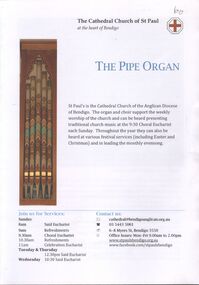
Booklet - Griffith Collection: The Cathedral Church of St Paul: The Pipe Organ, 2017
... St Paul's Cathedral organ was a rebuild of the Alfred Fuller instrument in 1957 by Hill, Norman and Beard of Melbourne. It underwent extensive cleaning and maintenance in 2016 after the cathedral was closed for seven years for major building restoration....St Paul's Cathedral organ was a rebuild of the Alfred Fuller instrument in 1957 by Hill, Norman and Beard of Melbourne. It underwent extensive cleaning and maintenance in 2016 after the cathedral was closed for seven years for major building restoration. ...St Paul's Cathedral organ was a rebuild of the Alfred Fuller instrument in 1957 by Hill, Norman and Beard of Melbourne. It underwent extensive cleaning and maintenance in 2016 after the cathedral was closed for seven years for major building restoration.Four page booklet about the history of the pipe organ located at St Paul's Cathedral, Bendigo. White paper with black print and colour photographs of the organ. Published in 2017.st. pauls, bendigo, pipe organ -
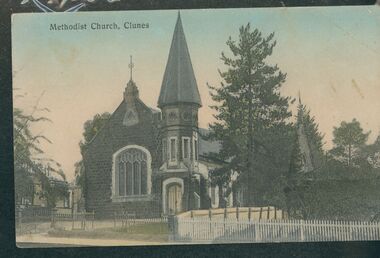 Uniting Church Archives - Synod of Victoria
Postcard, undated
... organ incorporate scrolled texts and may be by the Melbourne makers Ferguson & Urie. With declining congregations, the property was purchased by Wesley College in 1999 and now forms part of its Clunes campus. The church building has received a very extensive restoration...organ incorporate scrolled texts and may be by the Melbourne makers Ferguson & Urie. With declining congregations, the property was purchased by Wesley College in 1999 and now forms part of its Clunes campus. The church building has received a very extensive restoration ...The Wesleyan Methodist Church at Clunes is a distinctive bluestone building in the Gothic style and was designed by the Ballarat architect J.A. Doane. Construction began in 1864 and the church was further extended in 1871. The building consists of a broad nave and transepts with galleries, these having cast iron balustrades. The facade incorporates a slate-roofed octagonal turret and spire and a four-light perpendicular Gothic window. The interior includes windows with quarry glass panes and coloured borders; those on either side of the organ incorporate scrolled texts and may be by the Melbourne makers Ferguson & Urie. With declining congregations, the property was purchased by Wesley College in 1999 and now forms part of its Clunes campus. The church building has received a very extensive restoration, including structural strengthening, the opening out of the interior to its original dimensions and the installation of a new floor. Ref: https://www.ohta.org.au/organs/organs/ClunesUC.html Colour postcard showing a street view of the Clunes Methodist Church,clunes wesleyan methodist church, wesley college -
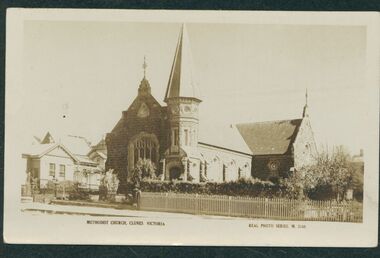 Uniting Church Archives - Synod of Victoria
Postcard, undated
... organ incorporate scrolled texts and may be by the Melbourne makers Ferguson & Urie. With declining congregations, the property was purchased by Wesley College in 1999 and now forms part of its Clunes campus. The church building has received a very extensive restoration...organ incorporate scrolled texts and may be by the Melbourne makers Ferguson & Urie. With declining congregations, the property was purchased by Wesley College in 1999 and now forms part of its Clunes campus. The church building has received a very extensive restoration ...The Wesleyan Methodist Church at Clunes is a distinctive bluestone building in the Gothic style and was designed by the Ballarat architect J.A. Doane. Construction began in 1864 and the church was further extended in 1871. The building consists of a broad nave and transepts with galleries, these having cast iron balustrades. The facade incorporates a slate-roofed octagonal turret and spire and a four-light perpendicular Gothic window. The interior includes windows with quarry glass panes and coloured borders; those on either side of the organ incorporate scrolled texts and may be by the Melbourne makers Ferguson & Urie. With declining congregations, the property was purchased by Wesley College in 1999 and now forms part of its Clunes campus. The church building has received a very extensive restoration, including structural strengthening, the opening out of the interior to its original dimensions and the installation of a new floor. Ref: https://www.ohta.org.au/organs/organs/ClunesUC.html Sepia postcard showing a street view of the Clunes Methodist Church,clunes wesleyan methodist church, wesley college -
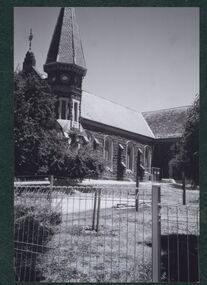 Uniting Church Archives - Synod of Victoria
Postcard - Photograph, January 2002
... organ incorporate scrolled texts and may be by the Melbourne makers Ferguson & Urie. With declining congregations, the property was purchased by Wesley College in 1999 and now forms part of its Clunes campus. The church building has received a very extensive restoration...organ incorporate scrolled texts and may be by the Melbourne makers Ferguson & Urie. With declining congregations, the property was purchased by Wesley College in 1999 and now forms part of its Clunes campus. The church building has received a very extensive restoration ...The Wesleyan Methodist Church at Clunes is a distinctive bluestone building in the Gothic style and was designed by the Ballarat architect J.A. Doane. Construction began in 1864 and the church was further extended in 1871. The building consists of a broad nave and transepts with galleries, these having cast iron balustrades. The facade incorporates a slate-roofed octagonal turret and spire and a four-light perpendicular Gothic window. The interior includes windows with quarry glass panes and coloured borders; those on either side of the organ incorporate scrolled texts and may be by the Melbourne makers Ferguson & Urie. With declining congregations, the property was purchased by Wesley College in 1999 and now forms part of its Clunes campus. The church building has received a very extensive restoration, including structural strengthening, the opening out of the interior to its original dimensions and the installation of a new floor. Ref: https://www.ohta.org.au/organs/organs/ClunesUC.html B & W exterior view of the Clunes Methodist Church, from the side.clunes wesleyan methodist church, wesley college -
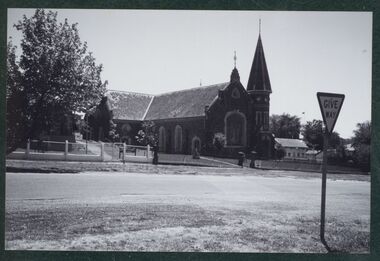 Uniting Church Archives - Synod of Victoria
Postcard - Photograph, January 2002
... organ incorporate scrolled texts and may be by the Melbourne makers Ferguson & Urie. With declining congregations, the property was purchased by Wesley College in 1999 and now forms part of its Clunes campus. The church building has received a very extensive restoration...organ incorporate scrolled texts and may be by the Melbourne makers Ferguson & Urie. With declining congregations, the property was purchased by Wesley College in 1999 and now forms part of its Clunes campus. The church building has received a very extensive restoration ...The Wesleyan Methodist Church at Clunes is a distinctive bluestone building in the Gothic style and was designed by the Ballarat architect J.A. Doane. Construction began in 1864 and the church was further extended in 1871. The building consists of a broad nave and transepts with galleries, these having cast iron balustrades. The facade incorporates a slate-roofed octagonal turret and spire and a four-light perpendicular Gothic window. The interior includes windows with quarry glass panes and coloured borders; those on either side of the organ incorporate scrolled texts and may be by the Melbourne makers Ferguson & Urie. With declining congregations, the property was purchased by Wesley College in 1999 and now forms part of its Clunes campus. The church building has received a very extensive restoration, including structural strengthening, the opening out of the interior to its original dimensions and the installation of a new floor. Ref: https://www.ohta.org.au/organs/organs/ClunesUC.html B & W exterior view of the Clunes Methodist Church.clunes wesleyan methodist church, wesley college -
 Uniting Church Archives - Synod of Victoria
Postcard - Photograph, 2002
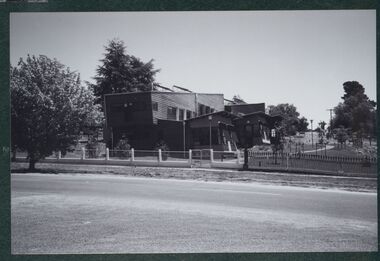
... organ incorporate scrolled texts and may be by the Melbourne makers Ferguson & Urie. With declining congregations, the property was purchased by Wesley College in 1999 and now forms part of its Clunes campus. The church building has received a very extensive restoration...organ incorporate scrolled texts and may be by the Melbourne makers Ferguson & Urie. With declining congregations, the property was purchased by Wesley College in 1999 and now forms part of its Clunes campus. The church building has received a very extensive restoration ...The Wesleyan Methodist Church at Clunes is a distinctive bluestone building in the Gothic style and was designed by the Ballarat architect J.A. Doane. Construction began in 1864 and the church was further extended in 1871. The building consists of a broad nave and transepts with galleries, these having cast iron balustrades. The facade incorporates a slate-roofed octagonal turret and spire and a four-light perpendicular Gothic window. The interior includes windows with quarry glass panes and coloured borders; those on either side of the organ incorporate scrolled texts and may be by the Melbourne makers Ferguson & Urie. With declining congregations, the property was purchased by Wesley College in 1999 and now forms part of its Clunes campus. The church building has received a very extensive restoration, including structural strengthening, the opening out of the interior to its original dimensions and the installation of a new floor. Ref: https://www.ohta.org.au/organs/organs/ClunesUC.html B & W exterior view of the Clunes Wesley College development. The image shows school buildings on a block next to the former Clunes Methodist Church.clunes wesleyan methodist church, wesley college -
 Sunshine and District Historical Society Incorporated
Document - Organ Pipes National Park A Natural History, Friends Of Organ Pipes National Park Inc, 1994
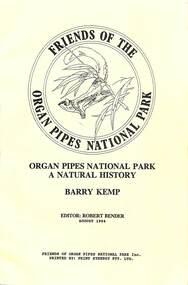
... The document was intended to assist people to become familiar with the local flora and its' restoration. Organ Pipes Keilor North Jacksons Creek history geology flora Friends Of The Organ Pipies National Park Organ Pipes National Park A Natural History A soft covered black bound report. ...The document was intended to assist people to become familiar with the local flora and its' restoration. Friends Of The Organ Pipies National Park Organ Pipes National Park A Natural Historyorgan pipes, keilor north, jacksons creek, history, geology, flora -
 Sunshine and District Historical Society Incorporated
Document - Environmental Friends of Brimbank Group Directory, Brimbank Council
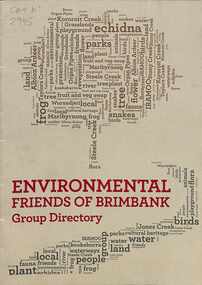
... McKay Memorial Gardens|Friends of Iramoo|Grasslands Group|Jones Creek Restoration Group|Friends of Kororoit Creek|Friends of Maribyrnong Valley|Friends of Organ Pipes National Park (Previosly Maribyrnong Valley Committee)|Friends of Steel Creek|Friends of Stony Creek...McKay Memorial Gardens|Friends of Iramoo|Grasslands Group|Jones Creek Restoration Group|Friends of Kororoit Creek|Friends of Maribyrnong Valley|Friends of Organ Pipes National Park (Previosly Maribyrnong Valley Committee)|Friends of Steel Creek|Friends of Stony Creek Small Booklet listing various friends and community groups with the City of Brimbank Document Environmental Friends of Brimbank Group Directory Brimbank Council ...Environmental Friends of Brimbank Group Directory|Albion & Ardeer Community Club|Albion Ecoliving Centre|Friends of the H.V. McKay Memorial Gardens|Friends of Iramoo|Grasslands Group|Jones Creek Restoration Group|Friends of Kororoit Creek|Friends of Maribyrnong Valley|Friends of Organ Pipes National Park (Previosly Maribyrnong Valley Committee)|Friends of Steel Creek|Friends of Stony Creekcity of brimbank -
Clunes Museum
Document - REPORT
... THE ORGAN WAS SENT TO NEW ZEALAND FOR RESTORATION AND IS NOW IN THE CATHEDRAL IN BENDIGO. ...REPORTS ON THE RESTORATION OF THE PIPE ORGAN IN WESLEY CHURCH, CLUNES (NOW PART OF THE WESLEY COLLEGE, CLUNES CAMPUS)...WHEN RESTORATION IS COMPLETED ON THE WESLEY CHURCH, CLUNES, THE ORGAN WILL BE INSTALLED THERE local history documents reports churches wesley REPORTS ON THE RESTORATION OF THE PIPE ORGAN IN WESLEY CHURCH, CLUNES (NOW PART OF THE WESLEY COLLEGE, CLUNES CAMPUS) Document REPORT ...THE ORGAN WAS SENT TO NEW ZEALAND FOR RESTORATION AND IS NOW IN THE CATHEDRAL IN BENDIGO. WHEN RESTORATION IS COMPLETED ON THE WESLEY CHURCH, CLUNES, THE ORGAN WILL BE INSTALLED THEREREPORTS ON THE RESTORATION OF THE PIPE ORGAN IN WESLEY CHURCH, CLUNES (NOW PART OF THE WESLEY COLLEGE, CLUNES CAMPUS)local history, documents, reports, churches, wesley -
Kew Historical Society Inc
Journal, Kewriosity : December 1985
... Holiday program] / p13. 1888 Organ restoration recalls Kew businessman [Alfred Fuller] / p14. ...Celebrating 125 years / p1. Happy anniversary Kew! / p1. Dates for December / p2. [Community] Notices / p2. Christmas Services / p2. Update: Notes from Council [Local Government restructure] / Cr Phyllis Hore [Mayor of Kew] p3. Traffic management / p3. In Brief [Heavy traffic - Kew Traffic School; Yarra Bend contribution; Prospect Hill [Hotel]; Money for Mexico; Improvements to Willsmere Park; Senior Citizens' Week; Safeway go-ahead; Community Bus; Dawn patrol for dogs; Public Meeting for North Ward residents] / p4. 125th Anniversary supplement [graphic collage] / p5. Kew becomes a municipality / p6. "Ma Dalley" / p6. History of Kew Library / Alex Tarr [City Librarian] p6. [Historic] Kew dates / p7. Kew's Crest / p6. The Outer Circle revisited / Joan Barrett p6. Getting the news to Kew [Chronological history of Kew newspapers] / p8-9. Of Councils past [What rubbish ...; Kew by moonlight; Evil practices; All quiet on the Council front; Things change?; In the marketplace; Kew goes it alone; No cows for Kew; Voting is compulsory; In the beginning ...] / p10. Finding out about our history / p10. From the old "Rec" to the new Recreation Centre / p11. Kew's history in houses - your guide to style and period / p12. 'Ow Commissioners catered for Kew [poem] /p12. Welcome Councillor Timms / p13. Govt grant for Recreation Centre / p13. Volunteers needed for Kew Meals on Wheels / p13. Holday programs / p13. Kew Community House [Rhonda (McCaw) takes over; We're expanding!; Volunteer Child Care workers; Suggestion box; T.O.P. at the house; Christmas break-up] p13. Why Kew? p13. Youth Page [Making the most of the holidays; What does Christmas mean to you? Holiday program] / p13. 1888 Organ restoration recalls Kew businessman [Alfred Fuller] / p14. The Citizens' Advice Bureaux needs new volunteers / p14.Kewriosity was a local newsletter combining Kew Council and community news. It was published between November 1983 and June 1994, replacing an earlier Kewriosity [broad] Sheet (1979-84). In producing Kewriosity, Council aimed to provide a range of interesting and informative articles covering its deliberations and decision making, together with items of general interest and importance to the Kew community and information not generally available through daily media outlets.non-fictionCelebrating 125 years / p1. Happy anniversary Kew! / p1. Dates for December / p2. [Community] Notices / p2. Christmas Services / p2. Update: Notes from Council [Local Government restructure] / Cr Phyllis Hore [Mayor of Kew] p3. Traffic management / p3. In Brief [Heavy traffic - Kew Traffic School; Yarra Bend contribution; Prospect Hill [Hotel]; Money for Mexico; Improvements to Willsmere Park; Senior Citizens' Week; Safeway go-ahead; Community Bus; Dawn patrol for dogs; Public Meeting for North Ward residents] / p4. 125th Anniversary supplement [graphic collage] / p5. Kew becomes a municipality / p6. "Ma Dalley" / p6. History of Kew Library / Alex Tarr [City Librarian] p6. [Historic] Kew dates / p7. Kew's Crest / p6. The Outer Circle revisited / Joan Barrett p6. Getting the news to Kew [Chronological history of Kew newspapers] / p8-9. Of Councils past [What rubbish ...; Kew by moonlight; Evil practices; All quiet on the Council front; Things change?; In the marketplace; Kew goes it alone; No cows for Kew; Voting is compulsory; In the beginning ...] / p10. Finding out about our history / p10. From the old "Rec" to the new Recreation Centre / p11. Kew's history in houses - your guide to style and period / p12. 'Ow Commissioners catered for Kew [poem] /p12. Welcome Councillor Timms / p13. Govt grant for Recreation Centre / p13. Volunteers needed for Kew Meals on Wheels / p13. Holday programs / p13. Kew Community House [Rhonda (McCaw) takes over; We're expanding!; Volunteer Child Care workers; Suggestion box; T.O.P. at the house; Christmas break-up] p13. Why Kew? p13. Youth Page [Making the most of the holidays; What does Christmas mean to you? Holiday program] / p13. 1888 Organ restoration recalls Kew businessman [Alfred Fuller] / p14. The Citizens' Advice Bureaux needs new volunteers / p14. publications -- city of kew (vic.), kewriosity, council newsletters, community newsletters -
 City of Greater Geelong
Photograph - Carousel Restoration, Elphinstone, Victoria, Stewart Strachan, 1997-1999
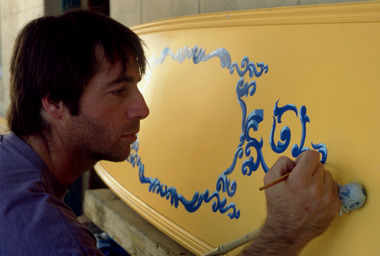
... organ and steam engine were sourced from New South Wales and Tasmania respectively. The Steampacket Place Development Board, a joint team formed by the Victorian State Government and the City of Greater Geelong undertook the $30 million revitalisation of the entire Geelong Waterfront from 1995 to 2000. As part of the revitalisation, the Steampacket Place Development Board purchased the Armitage-Herschell portable steam-driven carousel as a major feature on the revitalised waterfront. merry go-round horses carousel geelong restoration rides j. j. miller Geelong Waterfront Steam Engine Opening 35mm colour transparency steampacket place development board City of Greater Geelong revitalisation armitage-herschell Stewart Strachan Photograhy Elphinstone Rick Furlong Artists mordialloc Colour image showing a man painting a wooden panel. ...This image is part of a collection of 35mm colour transparencies taken by photographer Stewart Strachan during the carousel restoration project which took place in Elphinstone between 1997-1999. The Carousel was manufactured around 1892 by the Armitage-Herschell company of New York. The Carousel operated on the Mordialloc Pier from the 1920s to the 1950s. In around 1996, the carousel was found quietly rotting away in a Victorian shed by collector and restorer Rick Furlong, who saw its beauty and potential, then gathered a team of specialist historians, craftspeople and artists to work on the project of authentic restoration. Rick Furlong – Collector, Restorer and Project Manager Lindsay Mew – Woodcarver and Foundry Artist, dismantled, sectioned and cleaned the horses. Graeme Wright – Artist, who stripped up to 40 layers of paint from the horses and completed colour research for each individual horse. Kurt Simmons - Dismantled, sectioned and cleaned the horses. Andy Bull – Carpenter and Joiner, restored the floorboards, platforms, drums and crown panels and recreated a ticket box. Colin Turton – Repaired and restored all the structural metal work. Brendan Furlong & David Ely – Artists, painted the horses in their original colours. Jenny McCracken – Artist, created the paintings on sixteen scenery panels. Denise Puller – Made the pure horsehair tails. Chuck Kaparich (from Montana, USA) – Carved the chariots and shipped them for assembly and painting in Elphinstone. Using only recycled timbers, 24 of the 36 horses were restored with many legs, heads and necks replaced, while 12 replicas were hand-carved to match the originals, believed to be rare examples hand-carved by the American master, Charles Dare. Each horse took 300 hours to restore, with intricate carving, coating, filling, sanding, smoothing, painting and varnishing. The period matched organ and steam engine were sourced from New South Wales and Tasmania respectively. The Steampacket Place Development Board, a joint team formed by the Victorian State Government and the City of Greater Geelong undertook the $30 million revitalisation of the entire Geelong Waterfront from 1995 to 2000. As part of the revitalisation, the Steampacket Place Development Board purchased the Armitage-Herschell portable steam-driven carousel as a major feature on the revitalised waterfront.Colour image showing a man painting a wooden panel.merry go-round, horses, carousel, geelong, restoration, rides, j. j. miller, geelong waterfront, steam engine, opening, 35mm colour transparency, steampacket place development board, city of greater geelong, revitalisation, armitage-herschell, stewart strachan photograhy, elphinstone, rick furlong, artists, mordialloc -
 City of Greater Geelong
Photograph - Carousel Restoration, Elphinstone, Victoria, Stewart Strachan, 1997-1999
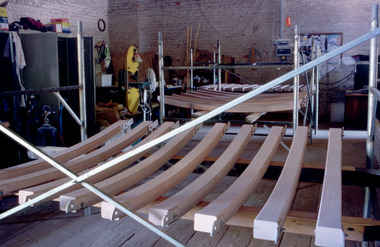
... organ and steam engine were sourced from New South Wales and Tasmania respectively. The Steampacket Place Development Board, a joint team formed by the Victorian State Government and the City of Greater Geelong undertook the $30 million revitalisation of the entire Geelong Waterfront from 1995 to 2000. As part of the revitalisation, the Steampacket Place Development Board purchased the Armitage-Herschell portable steam-driven carousel as a major feature on the revitalised waterfront. merry go-round horses carousel geelong restoration rides j. j. miller Geelong Waterfront Steam Engine Opening 35mm colour transparency steampacket place development board City of Greater Geelong revitalisation armitage-herschell Stewart Strachan Photograhy Elphinstone Rick Furlong Artists mordialloc Colour image showing rows of curved timber in a workshop. ...This image is part of a collection of 35mm colour transparencies taken by photographer Stewart Strachan during the carousel restoration project which took place in Elphinstone between 1997-1999. The Carousel was manufactured around 1892 by the Armitage-Herschell company of New York. The Carousel operated on the Mordialloc Pier from the 1920s to the 1950s. In around 1996, the carousel was found quietly rotting away in a Victorian shed by collector and restorer Rick Furlong, who saw its beauty and potential, then gathered a team of specialist historians, craftspeople and artists to work on the project of authentic restoration. Rick Furlong – Collector, Restorer and Project Manager Lindsay Mew – Woodcarver and Foundry Artist, dismantled, sectioned and cleaned the horses. Graeme Wright – Artist, who stripped up to 40 layers of paint from the horses and completed colour research for each individual horse. Kurt Simmons - Dismantled, sectioned and cleaned the horses. Andy Bull – Carpenter and Joiner, restored the floorboards, platforms, drums and crown panels and recreated a ticket box. Colin Turton – Repaired and restored all the structural metal work. Brendan Furlong & David Ely – Artists, painted the horses in their original colours. Jenny McCracken – Artist, created the paintings on sixteen scenery panels. Denise Puller – Made the pure horsehair tails. Chuck Kaparich (from Montana, USA) – Carved the chariots and shipped them for assembly and painting in Elphinstone. Using only recycled timbers, 24 of the 36 horses were restored with many legs, heads and necks replaced, while 12 replicas were hand-carved to match the originals, believed to be rare examples hand-carved by the American master, Charles Dare. Each horse took 300 hours to restore, with intricate carving, coating, filling, sanding, smoothing, painting and varnishing. The period matched organ and steam engine were sourced from New South Wales and Tasmania respectively. The Steampacket Place Development Board, a joint team formed by the Victorian State Government and the City of Greater Geelong undertook the $30 million revitalisation of the entire Geelong Waterfront from 1995 to 2000. As part of the revitalisation, the Steampacket Place Development Board purchased the Armitage-Herschell portable steam-driven carousel as a major feature on the revitalised waterfront.Colour image showing rows of curved timber in a workshop.merry go-round, horses, carousel, geelong, restoration, rides, j. j. miller, geelong waterfront, steam engine, opening, 35mm colour transparency, steampacket place development board, city of greater geelong, revitalisation, armitage-herschell, stewart strachan photograhy, elphinstone, rick furlong, artists, mordialloc -
 City of Greater Geelong
Photograph - Carousel Restoration, Elphinstone, Victoria, Stewart Strachan, 1997-1999
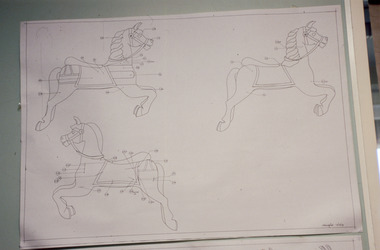
... organ and steam engine were sourced from New South Wales and Tasmania respectively. The Steampacket Place Development Board, a joint team formed by the Victorian State Government and the City of Greater Geelong undertook the $30 million revitalisation of the entire Geelong Waterfront from 1995 to 2000. As part of the revitalisation, the Steampacket Place Development Board purchased the Armitage-Herschell portable steam-driven carousel as a major feature on the revitalised waterfront. merry go-round horses carousel geelong restoration rides j. j. miller Geelong Waterfront Steam Engine Opening 35mm colour transparency steampacket place development board City of Greater Geelong revitalisation armitage-herschell Stewart Strachan Photograhy Elphinstone Rick Furlong Artists mordialloc Colour image showing illustrations of horses attached to a board. ...This image is part of a collection of 35mm colour transparencies taken by photographer Stewart Strachan during the carousel restoration project which took place in Elphinstone between 1997-1999. The Carousel was manufactured around 1892 by the Armitage-Herschell company of New York. The Carousel operated on the Mordialloc Pier from the 1920s to the 1950s. In around 1996, the carousel was found quietly rotting away in a Victorian shed by collector and restorer Rick Furlong, who saw its beauty and potential, then gathered a team of specialist historians, craftspeople and artists to work on the project of authentic restoration. Rick Furlong – Collector, Restorer and Project Manager Lindsay Mew – Woodcarver and Foundry Artist, dismantled, sectioned and cleaned the horses. Graeme Wright – Artist, who stripped up to 40 layers of paint from the horses and completed colour research for each individual horse. Kurt Simmons - Dismantled, sectioned and cleaned the horses. Andy Bull – Carpenter and Joiner, restored the floorboards, platforms, drums and crown panels and recreated a ticket box. Colin Turton – Repaired and restored all the structural metal work. Brendan Furlong & David Ely – Artists, painted the horses in their original colours. Jenny McCracken – Artist, created the paintings on sixteen scenery panels. Denise Puller – Made the pure horsehair tails. Chuck Kaparich (from Montana, USA) – Carved the chariots and shipped them for assembly and painting in Elphinstone. Using only recycled timbers, 24 of the 36 horses were restored with many legs, heads and necks replaced, while 12 replicas were hand-carved to match the originals, believed to be rare examples hand-carved by the American master, Charles Dare. Each horse took 300 hours to restore, with intricate carving, coating, filling, sanding, smoothing, painting and varnishing. The period matched organ and steam engine were sourced from New South Wales and Tasmania respectively. The Steampacket Place Development Board, a joint team formed by the Victorian State Government and the City of Greater Geelong undertook the $30 million revitalisation of the entire Geelong Waterfront from 1995 to 2000. As part of the revitalisation, the Steampacket Place Development Board purchased the Armitage-Herschell portable steam-driven carousel as a major feature on the revitalised waterfront.Colour image showing illustrations of horses attached to a board.merry go-round, horses, carousel, geelong, restoration, rides, j. j. miller, geelong waterfront, steam engine, opening, 35mm colour transparency, steampacket place development board, city of greater geelong, revitalisation, armitage-herschell, stewart strachan photograhy, elphinstone, rick furlong, artists, mordialloc -
 City of Greater Geelong
Photograph - Carousel Restoration, Elphinstone, Victoria, Stewart Strachan, 1997-1999
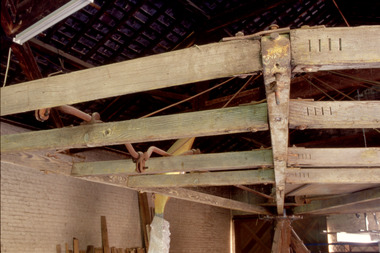
... organ and steam engine were sourced from New South Wales and Tasmania respectively. The Steampacket Place Development Board, a joint team formed by the Victorian State Government and the City of Greater Geelong undertook the $30 million revitalisation of the entire Geelong Waterfront from 1995 to 2000. As part of the revitalisation, the Steampacket Place Development Board purchased the Armitage-Herschell portable steam-driven carousel as a major feature on the revitalised waterfront. merry go-round horses carousel geelong restoration rides j. j. miller Geelong Waterfront Steam Engine Opening 35mm colour transparency steampacket place development board City of Greater Geelong revitalisation armitage-herschell Stewart Strachan Photograhy Elphinstone Rick Furlong Artists mordialloc Colour image showing detail of wooden carousel frame. ...This image is part of a collection of 35mm colour transparencies taken by photographer Stewart Strachan during the carousel restoration project which took place in Elphinstone between 1997-1999. The Carousel was manufactured around 1892 by the Armitage-Herschell company of New York. The Carousel operated on the Mordialloc Pier from the 1920s to the 1950s. In around 1996, the carousel was found quietly rotting away in a Victorian shed by collector and restorer Rick Furlong, who saw its beauty and potential, then gathered a team of specialist historians, craftspeople and artists to work on the project of authentic restoration. Rick Furlong – Collector, Restorer and Project Manager Lindsay Mew – Woodcarver and Foundry Artist, dismantled, sectioned and cleaned the horses. Graeme Wright – Artist, who stripped up to 40 layers of paint from the horses and completed colour research for each individual horse. Kurt Simmons - Dismantled, sectioned and cleaned the horses. Andy Bull – Carpenter and Joiner, restored the floorboards, platforms, drums and crown panels and recreated a ticket box. Colin Turton – Repaired and restored all the structural metal work. Brendan Furlong & David Ely – Artists, painted the horses in their original colours. Jenny McCracken – Artist, created the paintings on sixteen scenery panels. Denise Puller – Made the pure horsehair tails. Chuck Kaparich (from Montana, USA) – Carved the chariots and shipped them for assembly and painting in Elphinstone. Using only recycled timbers, 24 of the 36 horses were restored with many legs, heads and necks replaced, while 12 replicas were hand-carved to match the originals, believed to be rare examples hand-carved by the American master, Charles Dare. Each horse took 300 hours to restore, with intricate carving, coating, filling, sanding, smoothing, painting and varnishing. The period matched organ and steam engine were sourced from New South Wales and Tasmania respectively. The Steampacket Place Development Board, a joint team formed by the Victorian State Government and the City of Greater Geelong undertook the $30 million revitalisation of the entire Geelong Waterfront from 1995 to 2000. As part of the revitalisation, the Steampacket Place Development Board purchased the Armitage-Herschell portable steam-driven carousel as a major feature on the revitalised waterfront.Colour image showing detail of wooden carousel frame.merry go-round, horses, carousel, geelong, restoration, rides, j. j. miller, geelong waterfront, steam engine, opening, 35mm colour transparency, steampacket place development board, city of greater geelong, revitalisation, armitage-herschell, stewart strachan photograhy, elphinstone, rick furlong, artists, mordialloc -
 City of Greater Geelong
Photograph - Carousel Restoration, Elphinstone, Victoria, Stewart Strachan, 1997-1999
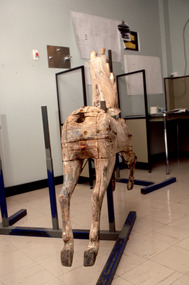
... organ and steam engine were sourced from New South Wales and Tasmania respectively. The Steampacket Place Development Board, a joint team formed by the Victorian State Government and the City of Greater Geelong undertook the $30 million revitalisation of the entire Geelong Waterfront from 1995 to 2000. As part of the revitalisation, the Steampacket Place Development Board purchased the Armitage-Herschell portable steam-driven carousel as a major feature on the revitalised waterfront. merry go-round horses carousel geelong restoration rides j. j. miller Geelong Waterfront Steam Engine Opening 35mm colour transparency steampacket place development board City of Greater Geelong revitalisation armitage-herschell Stewart Strachan Photograhy Elphinstone Rick Furlong Artists mordialloc Colour image showing a wooden carousel horse from behind on a metal frame inside a room. ...This image is part of a collection of 35mm colour transparencies taken by photographer Stewart Strachan during the carousel restoration project which took place in Elphinstone between 1997-1999. The Carousel was manufactured around 1892 by the Armitage-Herschell company of New York. The Carousel operated on the Mordialloc Pier from the 1920s to the 1950s. In around 1996, the carousel was found quietly rotting away in a Victorian shed by collector and restorer Rick Furlong, who saw its beauty and potential, then gathered a team of specialist historians, craftspeople and artists to work on the project of authentic restoration. Rick Furlong – Collector, Restorer and Project Manager Lindsay Mew – Woodcarver and Foundry Artist, dismantled, sectioned and cleaned the horses. Graeme Wright – Artist, who stripped up to 40 layers of paint from the horses and completed colour research for each individual horse. Kurt Simmons - Dismantled, sectioned and cleaned the horses. Andy Bull – Carpenter and Joiner, restored the floorboards, platforms, drums and crown panels and recreated a ticket box. Colin Turton – Repaired and restored all the structural metal work. Brendan Furlong & David Ely – Artists, painted the horses in their original colours. Jenny McCracken – Artist, created the paintings on sixteen scenery panels. Denise Puller – Made the pure horsehair tails. Chuck Kaparich (from Montana, USA) – Carved the chariots and shipped them for assembly and painting in Elphinstone. Using only recycled timbers, 24 of the 36 horses were restored with many legs, heads and necks replaced, while 12 replicas were hand-carved to match the originals, believed to be rare examples hand-carved by the American master, Charles Dare. Each horse took 300 hours to restore, with intricate carving, coating, filling, sanding, smoothing, painting and varnishing. The period matched organ and steam engine were sourced from New South Wales and Tasmania respectively. The Steampacket Place Development Board, a joint team formed by the Victorian State Government and the City of Greater Geelong undertook the $30 million revitalisation of the entire Geelong Waterfront from 1995 to 2000. As part of the revitalisation, the Steampacket Place Development Board purchased the Armitage-Herschell portable steam-driven carousel as a major feature on the revitalised waterfront.Colour image showing a wooden carousel horse from behind on a metal frame inside a room. Orange coloured stones can be seen embedded in the horse.merry go-round, horses, carousel, geelong, restoration, rides, j. j. miller, geelong waterfront, steam engine, opening, 35mm colour transparency, steampacket place development board, city of greater geelong, revitalisation, armitage-herschell, stewart strachan photograhy, elphinstone, rick furlong, artists, mordialloc -
 City of Greater Geelong
Photograph - Carousel Restoration, Elphinstone, Victoria, Stewart Strachan, 1997-1999
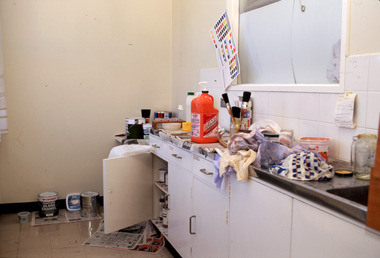
... organ and steam engine were sourced from New South Wales and Tasmania respectively. The Steampacket Place Development Board, a joint team formed by the Victorian State Government and the City of Greater Geelong undertook the $30 million revitalisation of the entire Geelong Waterfront from 1995 to 2000. As part of the revitalisation, the Steampacket Place Development Board purchased the Armitage-Herschell portable steam-driven carousel as a major feature on the revitalised waterfront. merry go-round horses carousel geelong restoration rides j. j. miller Geelong Waterfront Steam Engine Opening 35mm colour transparency steampacket place development board City of Greater Geelong revitalisation armitage-herschell Stewart Strachan Photograhy Elphinstone Rick Furlong Artists mordialloc Colour image showing sink, cupboards, paint cans and cleaning equipment. ...This image is part of a collection of 35mm colour transparencies taken by photographer Stewart Strachan during the carousel restoration project which took place in Elphinstone between 1997-1999. The Carousel was manufactured around 1892 by the Armitage-Herschell company of New York. The Carousel operated on the Mordialloc Pier from the 1920s to the 1950s. In around 1996, the carousel was found quietly rotting away in a Victorian shed by collector and restorer Rick Furlong, who saw its beauty and potential, then gathered a team of specialist historians, craftspeople and artists to work on the project of authentic restoration. Rick Furlong – Collector, Restorer and Project Manager Lindsay Mew – Woodcarver and Foundry Artist, dismantled, sectioned and cleaned the horses. Graeme Wright – Artist, who stripped up to 40 layers of paint from the horses and completed colour research for each individual horse. Kurt Simmons - Dismantled, sectioned and cleaned the horses. Andy Bull – Carpenter and Joiner, restored the floorboards, platforms, drums and crown panels and recreated a ticket box. Colin Turton – Repaired and restored all the structural metal work. Brendan Furlong & David Ely – Artists, painted the horses in their original colours. Jenny McCracken – Artist, created the paintings on sixteen scenery panels. Denise Puller – Made the pure horsehair tails. Chuck Kaparich (from Montana, USA) – Carved the chariots and shipped them for assembly and painting in Elphinstone. Using only recycled timbers, 24 of the 36 horses were restored with many legs, heads and necks replaced, while 12 replicas were hand-carved to match the originals, believed to be rare examples hand-carved by the American master, Charles Dare. Each horse took 300 hours to restore, with intricate carving, coating, filling, sanding, smoothing, painting and varnishing. The period matched organ and steam engine were sourced from New South Wales and Tasmania respectively. The Steampacket Place Development Board, a joint team formed by the Victorian State Government and the City of Greater Geelong undertook the $30 million revitalisation of the entire Geelong Waterfront from 1995 to 2000. As part of the revitalisation, the Steampacket Place Development Board purchased the Armitage-Herschell portable steam-driven carousel as a major feature on the revitalised waterfront.Colour image showing sink, cupboards, paint cans and cleaning equipment.merry go-round, horses, carousel, geelong, restoration, rides, j. j. miller, geelong waterfront, steam engine, opening, 35mm colour transparency, steampacket place development board, city of greater geelong, revitalisation, armitage-herschell, stewart strachan photograhy, elphinstone, rick furlong, artists, mordialloc -
 City of Greater Geelong
Photograph - Carousel Restoration, Elphinstone, Victoria, Stewart Strachan, 1997-1999
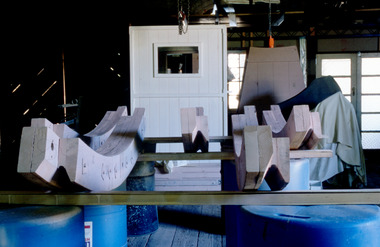
... organ and steam engine were sourced from New South Wales and Tasmania respectively. The Steampacket Place Development Board, a joint team formed by the Victorian State Government and the City of Greater Geelong undertook the $30 million revitalisation of the entire Geelong Waterfront from 1995 to 2000. As part of the revitalisation, the Steampacket Place Development Board purchased the Armitage-Herschell portable steam-driven carousel as a major feature on the revitalised waterfront. merry go-round horses carousel geelong restoration rides j. j. miller Geelong Waterfront Steam Engine Opening 35mm colour transparency steampacket place development board City of Greater Geelong revitalisation armitage-herschell Stewart Strachan Photograhy Elphinstone Rick Furlong Artists mordialloc Colour image showing curved pieces of timber resting on planks and barrels. ...This image is part of a collection of 35mm colour transparencies taken by photographer Stewart Strachan during the carousel restoration project which took place in Elphinstone between 1997-1999. The Carousel was manufactured around 1892 by the Armitage-Herschell company of New York. The Carousel operated on the Mordialloc Pier from the 1920s to the 1950s. In around 1996, the carousel was found quietly rotting away in a Victorian shed by collector and restorer Rick Furlong, who saw its beauty and potential, then gathered a team of specialist historians, craftspeople and artists to work on the project of authentic restoration. Rick Furlong – Collector, Restorer and Project Manager Lindsay Mew – Woodcarver and Foundry Artist, dismantled, sectioned and cleaned the horses. Graeme Wright – Artist, who stripped up to 40 layers of paint from the horses and completed colour research for each individual horse. Kurt Simmons - Dismantled, sectioned and cleaned the horses. Andy Bull – Carpenter and Joiner, restored the floorboards, platforms, drums and crown panels and recreated a ticket box. Colin Turton – Repaired and restored all the structural metal work. Brendan Furlong & David Ely – Artists, painted the horses in their original colours. Jenny McCracken – Artist, created the paintings on sixteen scenery panels. Denise Puller – Made the pure horsehair tails. Chuck Kaparich (from Montana, USA) – Carved the chariots and shipped them for assembly and painting in Elphinstone. Using only recycled timbers, 24 of the 36 horses were restored with many legs, heads and necks replaced, while 12 replicas were hand-carved to match the originals, believed to be rare examples hand-carved by the American master, Charles Dare. Each horse took 300 hours to restore, with intricate carving, coating, filling, sanding, smoothing, painting and varnishing. The period matched organ and steam engine were sourced from New South Wales and Tasmania respectively. The Steampacket Place Development Board, a joint team formed by the Victorian State Government and the City of Greater Geelong undertook the $30 million revitalisation of the entire Geelong Waterfront from 1995 to 2000. As part of the revitalisation, the Steampacket Place Development Board purchased the Armitage-Herschell portable steam-driven carousel as a major feature on the revitalised waterfront.Colour image showing curved pieces of timber resting on planks and barrels. A white painted wooden ticket box is shown in the background.merry go-round, horses, carousel, geelong, restoration, rides, j. j. miller, geelong waterfront, steam engine, opening, 35mm colour transparency, steampacket place development board, city of greater geelong, revitalisation, armitage-herschell, stewart strachan photograhy, elphinstone, rick furlong, artists, mordialloc -
 City of Greater Geelong
Photograph - Carousel Restoration, Elphinstone, Victoria, Stewart Strachan, 1997-1999
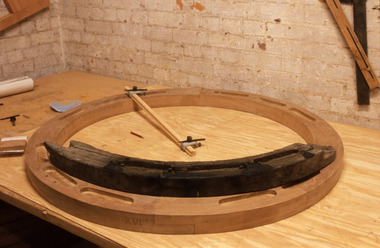
... organ and steam engine were sourced from New South Wales and Tasmania respectively. The Steampacket Place Development Board, a joint team formed by the Victorian State Government and the City of Greater Geelong undertook the $30 million revitalisation of the entire Geelong Waterfront from 1995 to 2000. As part of the revitalisation, the Steampacket Place Development Board purchased the Armitage-Herschell portable steam-driven carousel as a major feature on the revitalised waterfront. merry go-round horses carousel geelong restoration rides j. j. miller Geelong Waterfront Steam Engine Opening 35mm colour transparency steampacket place development board City of Greater Geelong revitalisation armitage-herschell Stewart Strachan Photograhy Elphinstone Rick Furlong Artists mordialloc Colour image showing a curved circle of wood with a roman numeral imprinted resting on a bench top, with a piece of damaged timber on top. ...This image is part of a collection of 35mm colour transparencies taken by photographer Stewart Strachan during the carousel restoration project which took place in Elphinstone between 1997-1999. The Carousel was manufactured around 1892 by the Armitage-Herschell company of New York. The Carousel operated on the Mordialloc Pier from the 1920s to the 1950s. In around 1996, the carousel was found quietly rotting away in a Victorian shed by collector and restorer Rick Furlong, who saw its beauty and potential, then gathered a team of specialist historians, craftspeople and artists to work on the project of authentic restoration. Rick Furlong – Collector, Restorer and Project Manager Lindsay Mew – Woodcarver and Foundry Artist, dismantled, sectioned and cleaned the horses. Graeme Wright – Artist, who stripped up to 40 layers of paint from the horses and completed colour research for each individual horse. Kurt Simmons - Dismantled, sectioned and cleaned the horses. Andy Bull – Carpenter and Joiner, restored the floorboards, platforms, drums and crown panels and recreated a ticket box. Colin Turton – Repaired and restored all the structural metal work. Brendan Furlong & David Ely – Artists, painted the horses in their original colours. Jenny McCracken – Artist, created the paintings on sixteen scenery panels. Denise Puller – Made the pure horsehair tails. Chuck Kaparich (from Montana, USA) – Carved the chariots and shipped them for assembly and painting in Elphinstone. Using only recycled timbers, 24 of the 36 horses were restored with many legs, heads and necks replaced, while 12 replicas were hand-carved to match the originals, believed to be rare examples hand-carved by the American master, Charles Dare. Each horse took 300 hours to restore, with intricate carving, coating, filling, sanding, smoothing, painting and varnishing. The period matched organ and steam engine were sourced from New South Wales and Tasmania respectively. The Steampacket Place Development Board, a joint team formed by the Victorian State Government and the City of Greater Geelong undertook the $30 million revitalisation of the entire Geelong Waterfront from 1995 to 2000. As part of the revitalisation, the Steampacket Place Development Board purchased the Armitage-Herschell portable steam-driven carousel as a major feature on the revitalised waterfront.Colour image showing a curved circle of wood with a roman numeral imprinted resting on a bench top, with a piece of damaged timber on top.merry go-round, horses, carousel, geelong, restoration, rides, j. j. miller, geelong waterfront, steam engine, opening, 35mm colour transparency, steampacket place development board, city of greater geelong, revitalisation, armitage-herschell, stewart strachan photograhy, elphinstone, rick furlong, artists, mordialloc -
 City of Greater Geelong
Photograph - Carousel Restoration, Elphinstone, Victoria, Stewart Strachan, 1997-1999
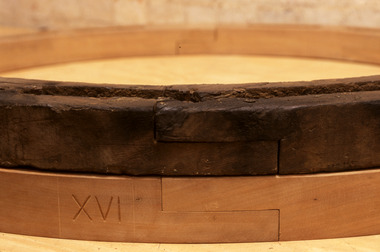
... organ and steam engine were sourced from New South Wales and Tasmania respectively. The Steampacket Place Development Board, a joint team formed by the Victorian State Government and the City of Greater Geelong undertook the $30 million revitalisation of the entire Geelong Waterfront from 1995 to 2000. As part of the revitalisation, the Steampacket Place Development Board purchased the Armitage-Herschell portable steam-driven carousel as a major feature on the revitalised waterfront. merry go-round horses carousel geelong restoration rides j. j. miller Geelong Waterfront Steam Engine Opening 35mm colour transparency steampacket place development board City of Greater Geelong revitalisation armitage-herschell Stewart Strachan Photograhy Elphinstone Rick Furlong Artists mordialloc Colour image showing detail of a new and old pieces of curved timber, the new piece has a roman numeral imprinted. ...This image is part of a collection of 35mm colour transparencies taken by photographer Stewart Strachan during the carousel restoration project which took place in Elphinstone between 1997-1999. The Carousel was manufactured around 1892 by the Armitage-Herschell company of New York. The Carousel operated on the Mordialloc Pier from the 1920s to the 1950s. In around 1996, the carousel was found quietly rotting away in a Victorian shed by collector and restorer Rick Furlong, who saw its beauty and potential, then gathered a team of specialist historians, craftspeople and artists to work on the project of authentic restoration. Rick Furlong – Collector, Restorer and Project Manager Lindsay Mew – Woodcarver and Foundry Artist, dismantled, sectioned and cleaned the horses. Graeme Wright – Artist, who stripped up to 40 layers of paint from the horses and completed colour research for each individual horse. Kurt Simmons - Dismantled, sectioned and cleaned the horses. Andy Bull – Carpenter and Joiner, restored the floorboards, platforms, drums and crown panels and recreated a ticket box. Colin Turton – Repaired and restored all the structural metal work. Brendan Furlong & David Ely – Artists, painted the horses in their original colours. Jenny McCracken – Artist, created the paintings on sixteen scenery panels. Denise Puller – Made the pure horsehair tails. Chuck Kaparich (from Montana, USA) – Carved the chariots and shipped them for assembly and painting in Elphinstone. Using only recycled timbers, 24 of the 36 horses were restored with many legs, heads and necks replaced, while 12 replicas were hand-carved to match the originals, believed to be rare examples hand-carved by the American master, Charles Dare. Each horse took 300 hours to restore, with intricate carving, coating, filling, sanding, smoothing, painting and varnishing. The period matched organ and steam engine were sourced from New South Wales and Tasmania respectively. The Steampacket Place Development Board, a joint team formed by the Victorian State Government and the City of Greater Geelong undertook the $30 million revitalisation of the entire Geelong Waterfront from 1995 to 2000. As part of the revitalisation, the Steampacket Place Development Board purchased the Armitage-Herschell portable steam-driven carousel as a major feature on the revitalised waterfront.Colour image showing detail of a new and old pieces of curved timber, the new piece has a roman numeral imprinted.merry go-round, horses, carousel, geelong, restoration, rides, j. j. miller, geelong waterfront, steam engine, opening, 35mm colour transparency, steampacket place development board, city of greater geelong, revitalisation, armitage-herschell, stewart strachan photograhy, elphinstone, rick furlong, artists, mordialloc -
 City of Greater Geelong
Photograph - Carousel Restoration, Elphinstone, Victoria, Stewart Strachan, 1997-1999
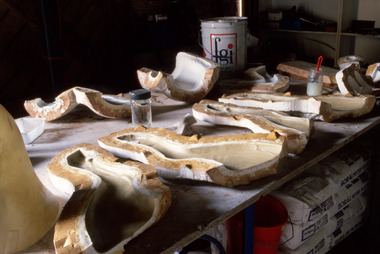
... organ and steam engine were sourced from New South Wales and Tasmania respectively. The Steampacket Place Development Board, a joint team formed by the Victorian State Government and the City of Greater Geelong undertook the $30 million revitalisation of the entire Geelong Waterfront from 1995 to 2000. As part of the revitalisation, the Steampacket Place Development Board purchased the Armitage-Herschell portable steam-driven carousel as a major feature on the revitalised waterfront. merry go-round horses carousel geelong restoration rides j. j. miller Geelong Waterfront Steam Engine Opening 35mm colour transparency steampacket place development board City of Greater Geelong revitalisation armitage-herschell Stewart Strachan Photograhy Elphinstone Rick Furlong Artists mordialloc Colour image showing leg casts resting on a table. ...This image is part of a collection of 35mm colour transparencies taken by photographer Stewart Strachan during the carousel restoration project which took place in Elphinstone between 1997-1999. The Carousel was manufactured around 1892 by the Armitage-Herschell company of New York. The Carousel operated on the Mordialloc Pier from the 1920s to the 1950s. In around 1996, the carousel was found quietly rotting away in a Victorian shed by collector and restorer Rick Furlong, who saw its beauty and potential, then gathered a team of specialist historians, craftspeople and artists to work on the project of authentic restoration. Rick Furlong – Collector, Restorer and Project Manager Lindsay Mew – Woodcarver and Foundry Artist, dismantled, sectioned and cleaned the horses. Graeme Wright – Artist, who stripped up to 40 layers of paint from the horses and completed colour research for each individual horse. Kurt Simmons - Dismantled, sectioned and cleaned the horses. Andy Bull – Carpenter and Joiner, restored the floorboards, platforms, drums and crown panels and recreated a ticket box. Colin Turton – Repaired and restored all the structural metal work. Brendan Furlong & David Ely – Artists, painted the horses in their original colours. Jenny McCracken – Artist, created the paintings on sixteen scenery panels. Denise Puller – Made the pure horsehair tails. Chuck Kaparich (from Montana, USA) – Carved the chariots and shipped them for assembly and painting in Elphinstone. Using only recycled timbers, 24 of the 36 horses were restored with many legs, heads and necks replaced, while 12 replicas were hand-carved to match the originals, believed to be rare examples hand-carved by the American master, Charles Dare. Each horse took 300 hours to restore, with intricate carving, coating, filling, sanding, smoothing, painting and varnishing. The period matched organ and steam engine were sourced from New South Wales and Tasmania respectively. The Steampacket Place Development Board, a joint team formed by the Victorian State Government and the City of Greater Geelong undertook the $30 million revitalisation of the entire Geelong Waterfront from 1995 to 2000. As part of the revitalisation, the Steampacket Place Development Board purchased the Armitage-Herschell portable steam-driven carousel as a major feature on the revitalised waterfront.Colour image showing leg casts resting on a table.merry go-round, horses, carousel, geelong, restoration, rides, j. j. miller, geelong waterfront, steam engine, opening, 35mm colour transparency, steampacket place development board, city of greater geelong, revitalisation, armitage-herschell, stewart strachan photograhy, elphinstone, rick furlong, artists, mordialloc -
 City of Greater Geelong
Photograph - Carousel Restoration, Elphinstone, Victoria, Stewart Strachan, 1997-1999
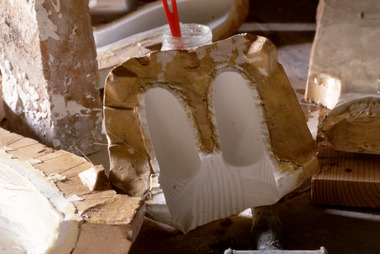
... organ and steam engine were sourced from New South Wales and Tasmania respectively. The Steampacket Place Development Board, a joint team formed by the Victorian State Government and the City of Greater Geelong undertook the $30 million revitalisation of the entire Geelong Waterfront from 1995 to 2000. As part of the revitalisation, the Steampacket Place Development Board purchased the Armitage-Herschell portable steam-driven carousel as a major feature on the revitalised waterfront. merry go-round horses carousel geelong restoration rides j. j. miller Geelong Waterfront Steam Engine Opening 35mm colour transparency steampacket place development board City of Greater Geelong revitalisation armitage-herschell Stewart Strachan Photograhy Elphinstone Rick Furlong Artists mordialloc Colour image showing a cast for horse ears. ...This image is part of a collection of 35mm colour transparencies taken by photographer Stewart Strachan during the carousel restoration project which took place in Elphinstone between 1997-1999. The Carousel was manufactured around 1892 by the Armitage-Herschell company of New York. The Carousel operated on the Mordialloc Pier from the 1920s to the 1950s. In around 1996, the carousel was found quietly rotting away in a Victorian shed by collector and restorer Rick Furlong, who saw its beauty and potential, then gathered a team of specialist historians, craftspeople and artists to work on the project of authentic restoration. Rick Furlong – Collector, Restorer and Project Manager Lindsay Mew – Woodcarver and Foundry Artist, dismantled, sectioned and cleaned the horses. Graeme Wright – Artist, who stripped up to 40 layers of paint from the horses and completed colour research for each individual horse. Kurt Simmons - Dismantled, sectioned and cleaned the horses. Andy Bull – Carpenter and Joiner, restored the floorboards, platforms, drums and crown panels and recreated a ticket box. Colin Turton – Repaired and restored all the structural metal work. Brendan Furlong & David Ely – Artists, painted the horses in their original colours. Jenny McCracken – Artist, created the paintings on sixteen scenery panels. Denise Puller – Made the pure horsehair tails. Chuck Kaparich (from Montana, USA) – Carved the chariots and shipped them for assembly and painting in Elphinstone. Using only recycled timbers, 24 of the 36 horses were restored with many legs, heads and necks replaced, while 12 replicas were hand-carved to match the originals, believed to be rare examples hand-carved by the American master, Charles Dare. Each horse took 300 hours to restore, with intricate carving, coating, filling, sanding, smoothing, painting and varnishing. The period matched organ and steam engine were sourced from New South Wales and Tasmania respectively. The Steampacket Place Development Board, a joint team formed by the Victorian State Government and the City of Greater Geelong undertook the $30 million revitalisation of the entire Geelong Waterfront from 1995 to 2000. As part of the revitalisation, the Steampacket Place Development Board purchased the Armitage-Herschell portable steam-driven carousel as a major feature on the revitalised waterfront.Colour image showing a cast for horse ears.merry go-round, horses, carousel, geelong, restoration, rides, j. j. miller, geelong waterfront, steam engine, opening, 35mm colour transparency, steampacket place development board, city of greater geelong, revitalisation, armitage-herschell, stewart strachan photograhy, elphinstone, rick furlong, artists, mordialloc -
 City of Greater Geelong
Photograph - Carousel Restoration, Elphinstone, Victoria, Stewart Strachan, 1997-1999
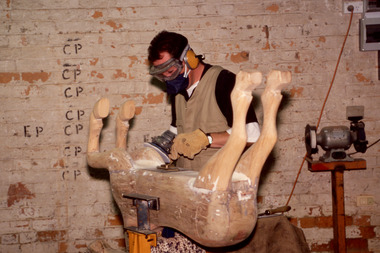
... organ and steam engine were sourced from New South Wales and Tasmania respectively. The Steampacket Place Development Board, a joint team formed by the Victorian State Government and the City of Greater Geelong undertook the $30 million revitalisation of the entire Geelong Waterfront from 1995 to 2000. As part of the revitalisation, the Steampacket Place Development Board purchased the Armitage-Herschell portable steam-driven carousel as a major feature on the revitalised waterfront. merry go-round horses carousel geelong restoration rides j. j. miller Geelong Waterfront Steam Engine Opening 35mm colour transparency steampacket place development board City of Greater Geelong revitalisation armitage-herschell Stewart Strachan Photograhy Elphinstone Rick Furlong Artists mordialloc Colour image showing a man wearing protective clothing using a power sander on a wooden carousel horse upside down in a vice. ...This image is part of a collection of 35mm colour transparencies taken by photographer Stewart Strachan during the carousel restoration project which took place in Elphinstone between 1997-1999. The Carousel was manufactured around 1892 by the Armitage-Herschell company of New York. The Carousel operated on the Mordialloc Pier from the 1920s to the 1950s. In around 1996, the carousel was found quietly rotting away in a Victorian shed by collector and restorer Rick Furlong, who saw its beauty and potential, then gathered a team of specialist historians, craftspeople and artists to work on the project of authentic restoration. Rick Furlong – Collector, Restorer and Project Manager Lindsay Mew – Woodcarver and Foundry Artist, dismantled, sectioned and cleaned the horses. Graeme Wright – Artist, who stripped up to 40 layers of paint from the horses and completed colour research for each individual horse. Kurt Simmons - Dismantled, sectioned and cleaned the horses. Andy Bull – Carpenter and Joiner, restored the floorboards, platforms, drums and crown panels and recreated a ticket box. Colin Turton – Repaired and restored all the structural metal work. Brendan Furlong & David Ely – Artists, painted the horses in their original colours. Jenny McCracken – Artist, created the paintings on sixteen scenery panels. Denise Puller – Made the pure horsehair tails. Chuck Kaparich (from Montana, USA) – Carved the chariots and shipped them for assembly and painting in Elphinstone. Using only recycled timbers, 24 of the 36 horses were restored with many legs, heads and necks replaced, while 12 replicas were hand-carved to match the originals, believed to be rare examples hand-carved by the American master, Charles Dare. Each horse took 300 hours to restore, with intricate carving, coating, filling, sanding, smoothing, painting and varnishing. The period matched organ and steam engine were sourced from New South Wales and Tasmania respectively. The Steampacket Place Development Board, a joint team formed by the Victorian State Government and the City of Greater Geelong undertook the $30 million revitalisation of the entire Geelong Waterfront from 1995 to 2000. As part of the revitalisation, the Steampacket Place Development Board purchased the Armitage-Herschell portable steam-driven carousel as a major feature on the revitalised waterfront.Colour image showing a man wearing protective clothing using a power sander on a wooden carousel horse upside down in a vice.merry go-round, horses, carousel, geelong, restoration, rides, j. j. miller, geelong waterfront, steam engine, opening, 35mm colour transparency, steampacket place development board, city of greater geelong, revitalisation, armitage-herschell, stewart strachan photograhy, elphinstone, rick furlong, artists, mordialloc -
 City of Greater Geelong
Photograph - Carousel Restoration, Elphinstone, Victoria, Stewart Strachan, 1997-1999
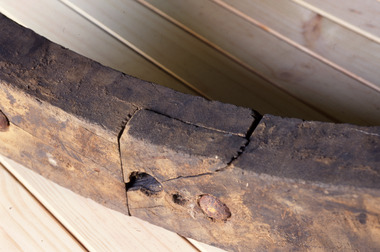
... organ and steam engine were sourced from New South Wales and Tasmania respectively. The Steampacket Place Development Board, a joint team formed by the Victorian State Government and the City of Greater Geelong undertook the $30 million revitalisation of the entire Geelong Waterfront from 1995 to 2000. As part of the revitalisation, the Steampacket Place Development Board purchased the Armitage-Herschell portable steam-driven carousel as a major feature on the revitalised waterfront. merry go-round horses carousel geelong restoration rides j. j. miller Geelong Waterfront Steam Engine Opening 35mm colour transparency steampacket place development board City of Greater Geelong revitalisation armitage-herschell Stewart Strachan Photograhy Elphinstone Rick Furlong Artists mordialloc Colour image showing detail of deteriorated timber. ...This image is part of a collection of 35mm colour transparencies taken by photographer Stewart Strachan during the carousel restoration project which took place in Elphinstone between 1997-1999. The Carousel was manufactured around 1892 by the Armitage-Herschell company of New York. The Carousel operated on the Mordialloc Pier from the 1920s to the 1950s. In around 1996, the carousel was found quietly rotting away in a Victorian shed by collector and restorer Rick Furlong, who saw its beauty and potential, then gathered a team of specialist historians, craftspeople and artists to work on the project of authentic restoration. Rick Furlong – Collector, Restorer and Project Manager Lindsay Mew – Woodcarver and Foundry Artist, dismantled, sectioned and cleaned the horses. Graeme Wright – Artist, who stripped up to 40 layers of paint from the horses and completed colour research for each individual horse. Kurt Simmons - Dismantled, sectioned and cleaned the horses. Andy Bull – Carpenter and Joiner, restored the floorboards, platforms, drums and crown panels and recreated a ticket box. Colin Turton – Repaired and restored all the structural metal work. Brendan Furlong & David Ely – Artists, painted the horses in their original colours. Jenny McCracken – Artist, created the paintings on sixteen scenery panels. Denise Puller – Made the pure horsehair tails. Chuck Kaparich (from Montana, USA) – Carved the chariots and shipped them for assembly and painting in Elphinstone. Using only recycled timbers, 24 of the 36 horses were restored with many legs, heads and necks replaced, while 12 replicas were hand-carved to match the originals, believed to be rare examples hand-carved by the American master, Charles Dare. Each horse took 300 hours to restore, with intricate carving, coating, filling, sanding, smoothing, painting and varnishing. The period matched organ and steam engine were sourced from New South Wales and Tasmania respectively. The Steampacket Place Development Board, a joint team formed by the Victorian State Government and the City of Greater Geelong undertook the $30 million revitalisation of the entire Geelong Waterfront from 1995 to 2000. As part of the revitalisation, the Steampacket Place Development Board purchased the Armitage-Herschell portable steam-driven carousel as a major feature on the revitalised waterfront.Colour image showing detail of deteriorated timber.merry go-round, horses, carousel, geelong, restoration, rides, j. j. miller, geelong waterfront, steam engine, opening, 35mm colour transparency, steampacket place development board, city of greater geelong, revitalisation, armitage-herschell, stewart strachan photograhy, elphinstone, rick furlong, artists, mordialloc -
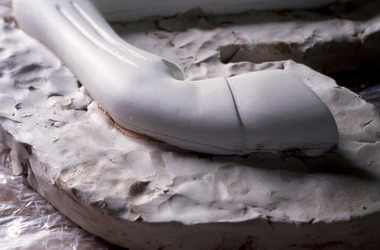 City of Greater Geelong
Photograph - Carousel Restoration, Elphinstone, Victoria, Stewart Strachan, 1997-1999
... organ and steam engine were sourced from New South Wales and Tasmania respectively. The Steampacket Place Development Board, a joint team formed by the Victorian State Government and the City of Greater Geelong undertook the $30 million revitalisation of the entire Geelong Waterfront from 1995 to 2000. As part of the revitalisation, the Steampacket Place Development Board purchased the Armitage-Herschell portable steam-driven carousel as a major feature on the revitalised waterfront. merry go-round horses carousel geelong restoration rides j. j. miller Geelong Waterfront Steam Engine Opening 35mm colour transparency steampacket place development board City of Greater Geelong revitalisation armitage-herschell Stewart Strachan Photograhy Elphinstone Rick Furlong Artists mordialloc Colour image showing detail of a cast horse leg. ...This image is part of a collection of 35mm colour transparencies taken by photographer Stewart Strachan during the carousel restoration project which took place in Elphinstone between 1997-1999. The Carousel was manufactured around 1892 by the Armitage-Herschell company of New York. The Carousel operated on the Mordialloc Pier from the 1920s to the 1950s. In around 1996, the carousel was found quietly rotting away in a Victorian shed by collector and restorer Rick Furlong, who saw its beauty and potential, then gathered a team of specialist historians, craftspeople and artists to work on the project of authentic restoration. Rick Furlong – Collector, Restorer and Project Manager Lindsay Mew – Woodcarver and Foundry Artist, dismantled, sectioned and cleaned the horses. Graeme Wright – Artist, who stripped up to 40 layers of paint from the horses and completed colour research for each individual horse. Kurt Simmons - Dismantled, sectioned and cleaned the horses. Andy Bull – Carpenter and Joiner, restored the floorboards, platforms, drums and crown panels and recreated a ticket box. Colin Turton – Repaired and restored all the structural metal work. Brendan Furlong & David Ely – Artists, painted the horses in their original colours. Jenny McCracken – Artist, created the paintings on sixteen scenery panels. Denise Puller – Made the pure horsehair tails. Chuck Kaparich (from Montana, USA) – Carved the chariots and shipped them for assembly and painting in Elphinstone. Using only recycled timbers, 24 of the 36 horses were restored with many legs, heads and necks replaced, while 12 replicas were hand-carved to match the originals, believed to be rare examples hand-carved by the American master, Charles Dare. Each horse took 300 hours to restore, with intricate carving, coating, filling, sanding, smoothing, painting and varnishing. The period matched organ and steam engine were sourced from New South Wales and Tasmania respectively. The Steampacket Place Development Board, a joint team formed by the Victorian State Government and the City of Greater Geelong undertook the $30 million revitalisation of the entire Geelong Waterfront from 1995 to 2000. As part of the revitalisation, the Steampacket Place Development Board purchased the Armitage-Herschell portable steam-driven carousel as a major feature on the revitalised waterfront.Colour image showing detail of a cast horse leg.merry go-round, horses, carousel, geelong, restoration, rides, j. j. miller, geelong waterfront, steam engine, opening, 35mm colour transparency, steampacket place development board, city of greater geelong, revitalisation, armitage-herschell, stewart strachan photograhy, elphinstone, rick furlong, artists, mordialloc -
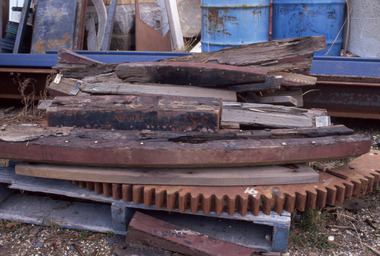 City of Greater Geelong
Photograph - Carousel Restoration, Elphinstone, Victoria, Stewart Strachan, 1997-1999
... organ and steam engine were sourced from New South Wales and Tasmania respectively. The Steampacket Place Development Board, a joint team formed by the Victorian State Government and the City of Greater Geelong undertook the $30 million revitalisation of the entire Geelong Waterfront from 1995 to 2000. As part of the revitalisation, the Steampacket Place Development Board purchased the Armitage-Herschell portable steam-driven carousel as a major feature on the revitalised waterfront. merry go-round horses carousel geelong restoration rides j. j. miller Geelong Waterfront Steam Engine Opening 35mm colour transparency steampacket place development board City of Greater Geelong revitalisation armitage-herschell Stewart Strachan Photograhy Elphinstone Rick Furlong Artists mordialloc Colour image showing a pile of damaged timber. ...This image is part of a collection of 35mm colour transparencies taken by photographer Stewart Strachan during the carousel restoration project which took place in Elphinstone between 1997-1999. The Carousel was manufactured around 1892 by the Armitage-Herschell company of New York. The Carousel operated on the Mordialloc Pier from the 1920s to the 1950s. In around 1996, the carousel was found quietly rotting away in a Victorian shed by collector and restorer Rick Furlong, who saw its beauty and potential, then gathered a team of specialist historians, craftspeople and artists to work on the project of authentic restoration. Rick Furlong – Collector, Restorer and Project Manager Lindsay Mew – Woodcarver and Foundry Artist, dismantled, sectioned and cleaned the horses. Graeme Wright – Artist, who stripped up to 40 layers of paint from the horses and completed colour research for each individual horse. Kurt Simmons - Dismantled, sectioned and cleaned the horses. Andy Bull – Carpenter and Joiner, restored the floorboards, platforms, drums and crown panels and recreated a ticket box. Colin Turton – Repaired and restored all the structural metal work. Brendan Furlong & David Ely – Artists, painted the horses in their original colours. Jenny McCracken – Artist, created the paintings on sixteen scenery panels. Denise Puller – Made the pure horsehair tails. Chuck Kaparich (from Montana, USA) – Carved the chariots and shipped them for assembly and painting in Elphinstone. Using only recycled timbers, 24 of the 36 horses were restored with many legs, heads and necks replaced, while 12 replicas were hand-carved to match the originals, believed to be rare examples hand-carved by the American master, Charles Dare. Each horse took 300 hours to restore, with intricate carving, coating, filling, sanding, smoothing, painting and varnishing. The period matched organ and steam engine were sourced from New South Wales and Tasmania respectively. The Steampacket Place Development Board, a joint team formed by the Victorian State Government and the City of Greater Geelong undertook the $30 million revitalisation of the entire Geelong Waterfront from 1995 to 2000. As part of the revitalisation, the Steampacket Place Development Board purchased the Armitage-Herschell portable steam-driven carousel as a major feature on the revitalised waterfront.Colour image showing a pile of damaged timber.merry go-round, horses, carousel, geelong, restoration, rides, j. j. miller, geelong waterfront, steam engine, opening, 35mm colour transparency, steampacket place development board, city of greater geelong, revitalisation, armitage-herschell, stewart strachan photograhy, elphinstone, rick furlong, artists, mordialloc
