
Showing 146 items matching "ornament decorative"
-
 Clunes Museum
Decorative object - VASE
... DOMESTIC ITEM ORNAMENT DECORATIVE...LOCAL HISTORY DOMESTIC ITEM ORNAMENT DECORATIVE CERAMIC ORNAMENT DECORATIVE CERAMIC SEE MAKERS DETAILS BELOW GREEN VASE, ENGLISH CERAMIC PALE GREEN BACKGROUND DECORATED WITH PINK CREAM, MAUVE AND SUNSET FLOWERS. ...GREEN VASE, ENGLISH CERAMIC PALE GREEN BACKGROUND DECORATED WITH PINK CREAM, MAUVE AND SUNSET FLOWERS. GREEN LEAVES GOLD OUTLINE METALIC GOLDTRIM. AN ATTRACTIVE VASE.SEE MAKERS DETAILS BELOWlocal history, domestic item ornament decorative, ceramic, ornament decorative, ceramic -
 Bendigo Historical Society Inc.
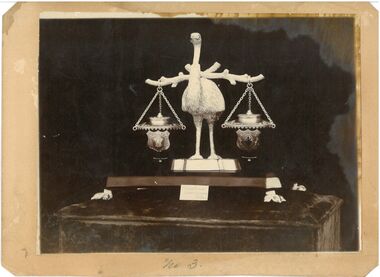
Photograph - Decorative ornament on a box
... Decorative ornament on a box....The ornament is an emu with a piece of timber across its back acting as a balance beam for two pans supported by chains. Photograph Decorative ...Photograph of an ornamental adornment on top of a box. The ornament is an emu with a piece of timber across its back acting as a balance beam for two pans supported by chains. "No 3" written below the photograph. A small plaque on t e front reads "Napoli Prescott. Jeweller and Optician. Bendigo"jewellery, feather -
Tennis Australia
Decorative ornament, 2003
... Decorative ornament...ornament of tennis ball on a rough base. Label states 'A bad day on the court beats a good day at the office'. Materials: Marble Decorative ...Marble ornament of tennis ball on a rough base. Label states 'A bad day on the court beats a good day at the office'. Materials: Marbletennis -
 Tennis Australia
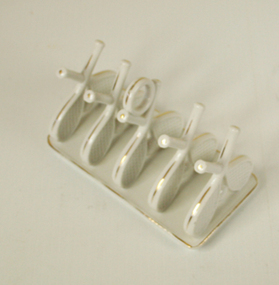
Decorative ornament, Unknown
... Decorative ornament...Tennis Toast rack design ceramic ornament with crossed tennis racquet motif Materials: Ceramic Decorative ornament ...Toast rack design ceramic ornament with crossed tennis racquet motif Materials: Ceramictennis -
 Friends of Westgarthtown
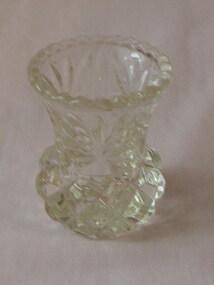
Decorative object - Vase
... ornament...decorative....domestic items ornaments/ decorative vase flowers diamond pattern glass small ornament decorative. ...Small clear glass vase with globular base and flanged neck. Base has projecting diamond pattern and neck has leaf-like design and scalloped design along edge.No visible markingsdomestic items, ornaments/ decorative, vase, flowers, diamond pattern, glass, small, ornament, decorative. -
 Hymettus Cottage & Garden Ballarat
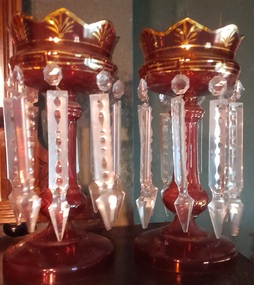
Decorative object - Lustre Vases, Pair of Lustre Vases
... Ornament...Decorative object...Ornament Decorative object vase lustre ware prisms ruby glass glass gilding Nil Ornamental ruby glass lustre vase modest gilding to the upper section and coronels with eight faceted prism drops. ...Ornamental ruby glass lustre vase modest gilding to the upper section and coronels with eight faceted prism drops.Nilornament, decorative object, vase, lustre ware, prisms, ruby glass, glass, gilding -
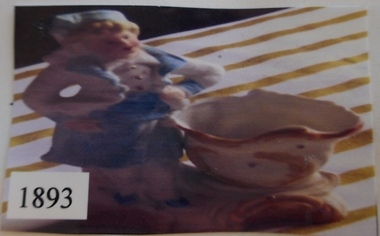 Stawell Historical Society Inc
Memorabilia - Realia, c1900's
... Domestic Decorative Ornament with small lady figurine and bowl...Stawell Domestic Decorative Ornament with small lady figurine and bowl Memorabilia Realia ...Domestic Decorative Ornament with small lady figurine and bowlstawell -
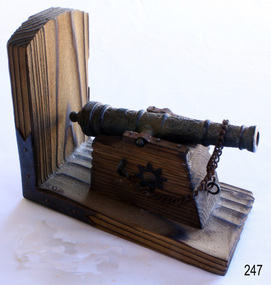 Flagstaff Hill Maritime Museum and Village
Decorative object - Ornament
... Metal cannon model ornament, with decorative funnel set in wood block of L shape design. ...Possibly part of a book end. Decorative object Ornament ...Metal cannon model ornament, with decorative funnel set in wood block of L shape design. Possibly part of a book end.flagstaff hill, warrnambool, shipwrecked coast, flagstaff hill, flagstaff hill maritime museum, maritime museum, shipwreck coast, flagstaff hill maritime village, great ocean road, ornament, bookend, model cannon -
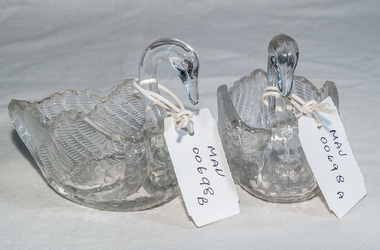 City of Moorabbin Historical Society (Operating the Box Cottage Museum)
Ornaments, 2 clear glass swans, 20thC
... These 2 clear glass swan ornaments were very common decorative items mid 20thC...These 2 clear glass swan ornaments were very common decorative items mid 20thC moorabin bentleigh cheltenham ormond ornaments glassware homewares. 2 clear glass swans Ornaments, 2 clear glass swans Australian Glass Manufacturing Company Ltd ...These 2 clear glass swan ornaments were very common decorative items mid 20thC2 clear glass swansmoorabin, bentleigh, cheltenham, ormond, ornaments, glassware, homewares. -
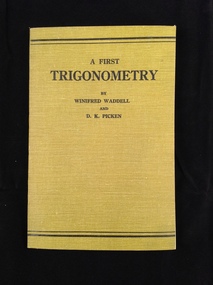 The Ed Muirhead Physics Museum
Book - A First Trigonometry, Robertson & Mullins Ltd, Published in 1930
... The front cover is horizontally bordered top and bottom with a double black line. A flat, decorative ornament of a person playing a piano, threaded with a pink ribbon, is stuck with tape to the inside front page....ornament has been stuck in the book on the first page. laby picken books trigonometry jean laby Written inside front page with blue ink: ‘Jean / from D. K. [P.]’ Front cover in black: ‘A FIRST / TRIGONOMETRY / BY / WINIFRED WADDELL / AND / D. K. PICKEN’ This volume is a softcover book with green coated fabric cover and black lettering. The front cover is horizontally bordered top and bottom with a double black line. A flat, decorative ...Part of the Laby Collection of material donated by the family of TH Laby and daughters Jean and Betty in August 2014. This particular book is one of two copies acquired together as part of the Laby Collection, the other being inscribed with Betty’s name, suggesting that this volume belonged to Jean Laby. At some point the ornament has been stuck in the book on the first page.This volume is a softcover book with green coated fabric cover and black lettering. The front cover is horizontally bordered top and bottom with a double black line. A flat, decorative ornament of a person playing a piano, threaded with a pink ribbon, is stuck with tape to the inside front page.Written inside front page with blue ink: ‘Jean / from D. K. [P.]’ Front cover in black: ‘A FIRST / TRIGONOMETRY / BY / WINIFRED WADDELL / AND / D. K. PICKEN’laby, picken, books, trigonometry, jean laby -
 Parliament of Victoria
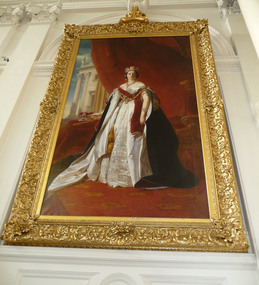
Portrait of Queen Victoria, Winterhalter, Franz Xaver (After), Queen Victoria, after Winterhalter, c.1859
... Timber frame with a layer of gesso and decorative composition ornaments. There are rose, scotch thistle, clover leaf and Acanthus ornaments. ...Timber frame with a layer of gesso and decorative composition ornaments. There are rose, scotch thistle, clover leaf and Acanthus ornaments. ...Queen Victoria’s appreciation of German artist Franz Xaver Winterhalter (1805-1873) began after she saw portraits by him of other European monarchs. Accordingly, between 1842 and 1861 he made fifteen visits to England and painted over 100 portraits of Her Majesty, the royal family and other friends and dignitaries. In 1843 Winterhalter was commissioned to paint matching portraits of Queen Victoria and Albert, the Prince Consort. These originals hang in the Garter Throne Room at Windsor Castle and are part of the UK Royal Collection. Many legitimate copies of Winterhalter’s portrait were produced and presented to the Parliaments of the British Empire, including the Parliament of Victoria. Such copies are referred to as “After F. X. Winterhalter” and artists responsible include William Corden and John Prescott Knight. When creating copies, artists were not restricted by the size of the original portrait. Walterhalter’s original is 2.7m x 1.7m whereas copies can reach an impressive 4.5 metres in height. The portrait that hangs in Queens Hall at the Parliament of Victoria is not signed. Comparison with other copies of the work suggest that the Parliament’s painting may have been completed by William Corden. The Government Art Collection (United Kingdom), has a Queen Victoria copy in their collection and Parliament’s portrait has similar traits. A copy by John Prescott Knight which hangs in the Legislative Council in the Parliament of Tasmania is quite different, particularly with reference to the shape of the young Queen’s face, which is rounder in the Corden portraits.This portrait of Queen Victoria was presented as a gift by the British Government to the Parliament of Victoria in April 1860. Painted on fine linen supplied under Royal Warrant by the workshop Winsor and Newton, London, the frame has been embellished with elaborate wooden carvings. Framed portrait, oil on linen, of Queen Victoria. Victoria is posed in front of a curtain partially obscuring a building (possibly Buckingham Palace) in the background. Timber frame with a layer of gesso and decorative composition ornaments. There are rose, scotch thistle, clover leaf and Acanthus ornaments. A carved wood and composition element crown, resting on a tassled pillow sits on top of the frame.Canvas unsigned. Verso printed: ‘WINSOR AND NEWTON / Rathbone Place, London’. Embossed stamp into stretcher wood, stamped ‘Winsor and Newton’ in black ink.victoria queen of great britain, 1819-1901, winterhalter, franz xaver, 1805-1873, corden, william, queens hall, parliament of victoria -
 Parliament of Victoria
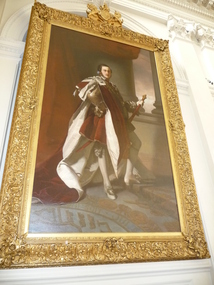
Portrait of Prince Albert, Coutts, Gordon 1865-1938 et al, Prince Albert, after Winterhalter, 1896
... Timber frame with a layer of gesso and decorative composition ornaments. There are rose, scotch thistle, clover leaf and Acanthus ornaments. ...Timber frame with a layer of gesso and decorative composition ornaments. There are rose, scotch thistle, clover leaf and Acanthus ornaments. ...In 1895 artist Gordon Coutts was commissioned by Elizabeth Harding (Mrs. Silas Harding), a wealthy pastoralist, to paint this portrait of Prince Albert. The portrait was completed by 1896 and is a copy of an original by German artist Franz Xaver Winterhalter (1805-1873). In 1843 Winterhalter was commissioned to paint matching portraits of Queen Victoria and Albert, the Prince Consort. These originals hang in the Garter Throne Room at Windsor Castle and are part of the UK Royal Collection. Queen Victoria’s appreciation of Winterhalter began after she saw portraits by him of other European monarchs. Accordingly, between 1842 and 1861 he made fifteen visits to England and painted over 100 portraits of Her Majesty, the royal family and other friends and dignitaries. There are a number of notable differences in the original Winterhalter work and this painting. The local artist Coutts has changed the colour of the Prince’s cloak from deep blue/black to red (perhaps as a result of working from a black and white photograph). Other differences include extra satin shoulder ribbons, a simplification of the furnishings, notably the floor, and an inexact representation of the medallions worn; collars of the Order of the Garter, Bath, and the Golden Fleece. The painting is framed to match the official copy portrait of Queen Victoria, with the coat of arms of Prince Albert of Saxe-Coburg and Gotha, fixed atop the frame in place of the royal crown.Framed portrait, oil on cotton, of Prince Albert. The Prince Consort wears the robes of the Order of the Garter, holds a Field-Marshal’s baton, and is posed in front of a curtain and colonnade. Timber frame with a layer of gesso and decorative composition ornaments. There are rose, scotch thistle, clover leaf and Acanthus ornaments. The coat of arms that sits on top of the frame is a combination of carved timber and composition elements.Signed lower right corner in red brushpoint: ‘after Winterhalter / By Gordon Coutts / 1896’.albert, prince consort of victoria, queen of great britain, 1819-1861, winterhalter, franz xaver, 1805-1873, coutts, gordon (1865-1938) -
 Flagstaff Hill Maritime Museum and Village
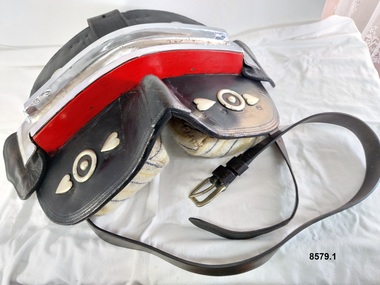
Equipment - Show Harness, R. Mitchell, Saddler, Early to mid-20th century
... It has a stainless steel "Liverpool Driving Bit" with a curb chain, a variety of decorative silver ornaments (rosettes, diamonds plus a heart and two circles) on each end of the forehead band, dropper and strap as well as a silver metal bell (sometimes known as a "fly terret" or "swinger") that sits on the headpiece of the bridle. 5. ...It has a stainless steel "Liverpool Driving Bit" with a curb chain, a variety of decorative silver ornaments (rosettes, diamonds plus a heart and two circles) on each end of the forehead band, dropper and strap as well as a silver metal bell (sometimes known as a "fly terret" or "swinger") that sits on the headpiece of the bridle. 5. ...The early settlers of Victoria depended on horse drawn vehicles to farm, make roads and railways, deliver produce and transport people. Horse harnesses were an important requisite for all drivers and could be found wherever there were working horses. Horse Harnesses have played an essential role in different cultures throughout history. Simple, utilitarian horse harnesses made of leather straps and iron rings were being used in early China before AD 500 as well as ancient Greece and Rome, allowing horses to pull chariots and ploughs. The Greeks and Romans were the first to use a "horse collar" which distributed the weight of the harness evenly across the horse's chest rather than relying on a "throat harness" that could damage a horse's throat or choke them. During the medieval period, European horse harnesses became more elaborate and decorative. Variations of different horse harnesses were also found in Native American and Middle Eastern cultures. Horse Harnesses usually have four basic components which include - 1. Communication - the bridle, bit and reins allows the driver to communicate instructions and commands to the horse, guiding its movement and direction. 2. Draft - the collar, hame straps, hames, traces and chains enables the horse to draw and pull the load efficiently by distributing the weight and transferring the pulling force to the vehicle. 3. Stopping - the breeching band, pole straps and breast strap helps to control or stabilise the horse and vehicle when moving downhill or stopping. 4. Support - the back pad, backband, belly band and back saddle keep the harness in the correct position and proper alignment. This show harness was used by Mr. Andy Bourke when showing his Clydesdales at shows or demonstrations. Although a more modern example with decorative embellishments, it still has many essential components traditionally found in an everyday working horse harness. The original purpose of the "housen" for example, was to run rain or drizzle off the horse's neck when they had to work in wet conditions - it was laid flat for this purpose on the top of the collar. Nowadays it is purely for show and is often used to advertise a business or stud. Horse brasses and fly terrets were fastened to various parts of a horse's harness. In the early days they probably began as amulets to ward off evil and to bring good luck and continued to be used as a festive decoration. The heyday of horse brasses was between the years 1851 and 1900. Horse brasses are fastened to various parts of the harness with many of their designs being symbolic. The ornamentation on this harness (although not authentic horse brasses) are based on the horse brasses that were popular in the 19th century. This horse harness is a significant example of the equipment that was needed wherever heavy horses were being used - particularly in the early years of Victoria's settlement by white settlers. Harnesses such as this example were used with stage coaches, drays, farming equipment, delivery carts and personal transportation.A leather and metal horse harness used when showing a Clydesdale (or other breed of heavy horse). It is made up of a number of components. 1. Decorative leather cart saddle with two large cloth pads underneath (which have a scalloped leather and stud border), a raised leather pommel and a silver and red coloured metal back strap holder across the top. It has two symmetrical sets of ornamentation (silver hearts and circles) in the front and a wide strap or girth (with a maker's stamp reading "R. Mitchell Saddler") and buckle which attaches the saddle to the horse. 2. Pair of steel hames which are gently curved (to fit on a horse collar) and are topped with steel knobs. They have several steel rings and lugs (to hold straps and chains) and a "Made in England Warranted Steel" stamp. 3. Breeching harness which consists of a number of leather straps, chains and metal rings including a wide padded leather strap with a scalloped edge that sits on the back of the horse and a thick leather strap that goes around the hind quarters of a horse which is joined to the back strap with four shorter vertical straps and buckles. These straps feature silver and red patent leather trim and silver heart shaped ornamentation. The strap also features the maker's stamp of "R. Mitchell". 4. Decorative leather bridle with blinkers featuring the same silver and red patent leather trim on the cheek piece, brow band and throatlatch. It has a stainless steel "Liverpool Driving Bit" with a curb chain, a variety of decorative silver ornaments (rosettes, diamonds plus a heart and two circles) on each end of the forehead band, dropper and strap as well as a silver metal bell (sometimes known as a "fly terret" or "swinger") that sits on the headpiece of the bridle. 5. Leather "violin shaped" dropper (or hanger) with two silver rosette shaped ornaments and a stainless steel clip on the top 6. Stainless steel "Liverpool Driving Bit" with a straight mouthpiece which is ribbed on one side. It has three rein spots (spaces) and a curb chain. 7. Leather arch shaped "Housen" covered in black and red patent leather and decorated with silver studs (some spelling out F H) and bordered with a red fringe. It has a leather strap at the back and two leather loops on the front. 8. Leather padded backband (Australian style "Stallion Draught Roller") decorated with two groups of nine metal "horse brasses" or harness ornaments displaying horseshoe, starburst and horse head designs on blue, red and white striped webbing. The backband has three notched straps at each end, a buckle near the centre and the initial B stamped in two places underneath. 9. Bellyband made of leather and red, white and blue striped webbing. It has a set of three buckles at each end (which correspond with the notched straps of the backband). 10. Wide, thick leather strap which has a buckle and notches at each end. It also has the maker's stamp of "R. Mitchell Saddler". 11.One pair of long leather traces - each with a buckle and notched loop at one end, decorated with a small silver diamond shaped harness ornament. 12. Length of stainless steel heavy duty chain with two swivel connectors.Saddle - "R.MITCHELL / SADDLER" Hames - "MADE IN ENGLAND / WARRANTED / STEEL" "MADE IN ENGLAND / WARRANTED / unclear" Breeching Straps - "R. MITCHELL / MAKER / R. MITCHELL MAKER" Housen - "F H" Backband "B / B' Wide leather strap - "R. MITCHELL / SADDLER"flagstaff hill maritime museum and village, warrnambool, great ocean road, shipwreck coast, harness, horse harness, show harness, clydesdale horses, andy bourke, horse drawn cart, housen, bridle, hames, breeching straps, dropper, bit, liverpool bit, backband, harness ornamentation, bellyband, back saddle, fly terret -
 Flagstaff Hill Maritime Museum and Village
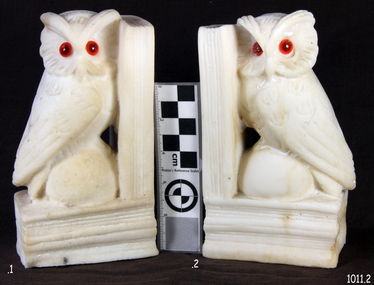
Decorative object - Bookends, ca. 1930s
... ornament for many years, possibly because of the association between owls, books and wisdom. They are used and displayed in places where books are appreciated and valued, such as homes, libraries, educational buildings, business offices, legal institutions and banks. Bookends hold a row of upright books in place by supporting the beginning and end of the row. The books are more likely to keep their integrity when stored vertically. The first patent for a metal bookend was placed by William Stebbins Barnard in 1877. Bookends became useful and decorative ...The pair of ornamental white resin owl bookends was likely made around the 1930s when epoxy resin became available. Bookends modelled on owls have been a popular ornament for many years, possibly because of the association between owls, books and wisdom. They are used and displayed in places where books are appreciated and valued, such as homes, libraries, educational buildings, business offices, legal institutions and banks. Bookends hold a row of upright books in place by supporting the beginning and end of the row. The books are more likely to keep their integrity when stored vertically. The first patent for a metal bookend was placed by William Stebbins Barnard in 1877. Bookends became useful and decorative items around the middle of the sixteenth century after printed books became available. At that time books were expensive and treasured possessions, treated with much respect. Even in the early nineteenth century, a Bible was often the only book in the home. It was included among the limited items brought by many immigrants to Australia. Books became more available and affordable to the public by the end of the nineteenth century and households and businesses were able to build their own libraries. Bookends were used then, and are still used now, to keep books organised, cared for, and readily accessible. Bookends, a pair of two (2) small white resin owls with clear bright red eyes standing on a stack of books, their bodies facing towards each other, chests on an upright book, heads turned towards the viewer. The ends are left and right-handed.flagstaff hill, flagstaff hill maritime museum and village, warrnambool, maritime museum, maritime village, great ocean road, shipwreck coast, ornament, bookend, bookends, pair of bookends, library, book storage, book display, room decoration, resin ornament, white bookends, owl bookends, owl ornament, white owls, resin owls, book support, bookend patent, william stebbins barnard -
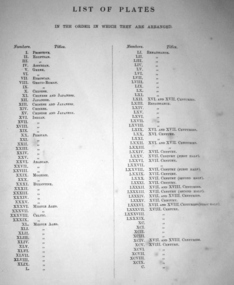 Federation University Historical Collection
Book, Charles Auguste Albert Racinet, Polychromatic Ornament, 1877 (exact)
... decorative arts of the time. Racinet learned his trade from his father. He was trained by neo-classical artists in the ambit of Percier and Fontaine. August Racinet was influenced by the Schinkel tendency and supported by architects such as Hittorf and Voillet-le-Duc. art paintings textile designs decoration and craft ornaments ballarat technical art school library bookplate A book plate inside front cover with a heading "Ballarat School of Art Library No. ...Monsieur Charles Auguste Albert Racinet was born in Paris on July 20th, 1825. His job was representative of a group of 19th-century industrial draughtsmen, teachers of technical drawing and factory studio manager. He helped in spreading the most significant design of the decorative arts of the time. Racinet learned his trade from his father. He was trained by neo-classical artists in the ambit of Percier and Fontaine. August Racinet was influenced by the Schinkel tendency and supported by architects such as Hittorf and Voillet-le-Duc.Book. Large red leather cover. Title written in gold on spine. Illustrations (black & white), 100 of chromolithographic plates in gold, silver and colours. Various styles of ancient, oriental and medieval art including the Renaissance, the 17th, and the 18th centuries. Subjects are arranged in historical order. Text translated from the original French. The book includes a table of contents, a list of plates, a classified index and an introduction.A book plate inside front cover with a heading "Ballarat School of Art Library No. R/171. Stamped with "Reference","Education Department" and "Ballarat School of Art Library"art, paintings, textile, designs, decoration and craft, ornaments, ballarat technical art school library, bookplate -
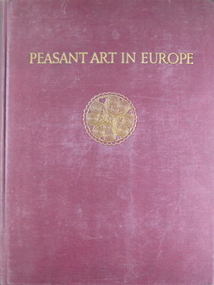 Federation University Historical Collection
Book, H. Th. Bossert, Peasant Art in Europe, 1927 (exact)
... It contains about 2100 examples of European folk-arts, such as ornaments, ceramics, embroideries, wickerwork and basketwork, fabrics, wood, handicraft, glass and metalwork. embroidery europe ceramics ornaments peasant art h th bossert folk art embroideries handicraft decorative arts textile fabrics Inside front cover there is a plate titled "Ballarat Technical Art School Library no. ...Red cloth large hardcover book. Title is written on the front cover and on spine in gold. Small gold circle pattern on front cover. The book contains 100 coloured plates, 32 b/w plates with images of peasant handicraft. The book includes table of content, index, bibliography and a library due date card inside back cover, it was borrowed by Donald Ferguson(an art lecturer)on 13 May 1957. Page numbers written in roman numerals. embroidery, europe, ceramics, ornaments, peasant art, h th bossert, folk art, embroideries, handicraft, decorative arts, textile fabrics -
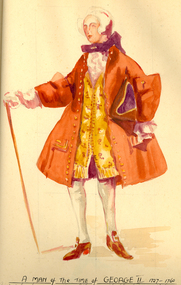 Federation University Historical Collection
Book, Historic Ornament Parts I and II. Ballarat Technical Art School Art History Books, 1931, 1931
... Ornament. This subject spanned time and space to inform and inspire designers. Students studied the influences of history, geography, culture and climate on ornamental aesthetics, including the tools, materials and methods applied to decorative objects, interior design and architecture....Ornament. This subject spanned time and space to inform and inspire designers. Students studied the influences of history, geography, culture and climate on ornamental aesthetics, including the tools, materials and methods applied to decorative objects, interior design and architecture. ballarat school of mines ballarat technical art school art history edith lawn edith curnow val lawn val d'angri curnow lawn ornament costume. ballarat technical art school library artists workbook journal Historic Ornament University Women Ballarat School of Mines Old Girls Association Two books containing student notes and drawing relating to courses at the Ballarat techncial Art School in 1931. ...Edith CURNOW (1913–2003) Ballarat | Australia Edith Gertrude Curnow undertook Industrial Art teacher training at the Ballarat Technical Art School, with a five-year Senior Technical Scholarship, between 1926 and 1931. She taught for a time before marrying compositor James Lawn in 1937. She reportedly continued to teach at the Ballarat Technical Art School as Edith Lawn. She retired in 1972 at which time she was the Lecturer in Charge of Craft Edith Lawn was a member of inaugural Ballarat School of Mines Old Girls Association, and served as first Press Correspondent. Her daughter, Valda Lawn (later D'Angri) also attended and taught at the School. One of the subjects Curnow studied was Historic Ornament. This subject spanned time and space to inform and inspire designers. Students studied the influences of history, geography, culture and climate on ornamental aesthetics, including the tools, materials and methods applied to decorative objects, interior design and architecture.Two books containing student notes and drawing relating to courses at the Ballarat techncial Art School in 1931. The work was undertaken by Edith Curnow. .1) - Foolscap red covered book on Historic Ornament. Includes History of Ornament, Egyptian Ornament, Assyrian Ornament; Greek Ornament, Roman Ornament, Pompeian Ornament, Byzantine, Romanesque Ornament, Norman, Decorated Gothic, Perpendicular Gothic, Renaissance. .2) Green quarto book on Historic Ornament Part 2: Costume. The work includes Egyptian Costume, Greek Costume, Roman Costume, Richard I, Crusades, Edward III, Charles I, Charles II, George II.ballarat school of mines, ballarat technical art school, art history, edith lawn, edith curnow, val lawn, val d'angri, curnow, lawn, ornament, costume., ballarat technical art school library, artists workbook, journal, historic ornament, university women, ballarat school of mines old girls association -
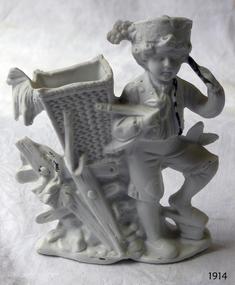 Flagstaff Hill Maritime Museum and Village
Decorative object - Ornament, ca. 19th century
... ornament, carved to represent a boy holding a basket on his back. One of a pair, the other being a girl holding a basket on her back. The hollow basket is a vase. It was made in Germany. No 0847. Decorative ...This fine white unglazed porcelain figurine is one of six donated together. The bisque material was easy to carve and allowed fine detail. Figurine ornaments were popular for table decorations between the mid-18th to early 19th centuries. This ornament was made in Germany, and German manufacturers began to use bisque material to make realistic faces for dolls in the 1850s.The set of six bisque figurines is representative of popular table decorations during the 19th and early 20th centuries.Fine unglazed white porcelain ornament, carved to represent a boy holding a basket on his back. One of a pair, the other being a girl holding a basket on her back. The hollow basket is a vase. It was made in Germany. No 0847. Marked "0847" "GERMANY GASP"flagstaff hill, flagstaff hill maritime museum and village, warrnambool, maritime museum, maritime village, great ocean road, shipwreck coast, bisque, china ornament, white china ornament, german, porcelain, unglazed porcelain, 19th century, 18th century, european ornament, pottery, unglazed pottery, domestic ornament, decoration, table decoration, germany, boy with basket, vase -
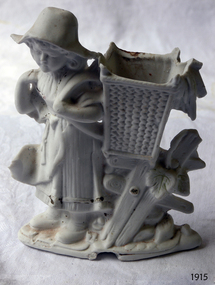 Flagstaff Hill Maritime Museum and Village
Decorative object - Ornament, ca. 19th century
... ornament, carved to represent a girl holding a basket on her back. One of a pair, the other being a boy holding a basket on his back. The hollow basket is a vase. It was made in Germany. Decorative ...This fine white unglazed porcelain figurine is one of six donated together, and one of a pair of two children carrying baskets on thei. The bisque material was easy to carve and allowed fine detail. Figurine ornaments were popular for table decorations between the mid-18th to early 19th centuries. This ornament was made in Germany, and German manufacturers began to use bisque material to make realistic faces for dolls in the 1850s.The set of six bisque figurines is representative of popular table decorations during the 19th and early 20th centuries.Fine unglazed white porcelain ornament, carved to represent a girl holding a basket on her back. One of a pair, the other being a boy holding a basket on his back. The hollow basket is a vase. It was made in Germany. "1084" "105" "GERMANY"flagstaff hill, warrnambool, maritime museum, bisque, china ornament, white china ornament, german, porcelain, unglazed porcelain, 19th century, 18th century, european ornament, pottery, unglazed pottery, domestic ornament, decoration, table decoration, germany, girl with basket, vase -
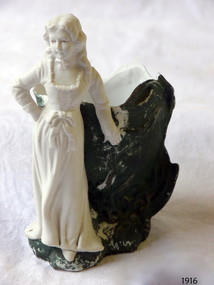 Flagstaff Hill Maritime Museum and Village
Decorative object - Ornament, 19th century
... Flagstaff Hill Flagstaff Hill Maritime Museum and Village Warrnambool Maritime Museum Maritime Village Great Ocean Road Shipwreck Coast Bisque China ornament white china ornament German porcelain unglazed porcelain 19th century 18th century European ornament pottery unglazed pottery domestic ornament decoration table decoration vase woman with vase Germany Ornament, fine unglazed white porcelain, carved to represent a woman standing in front of a green vase. Decorative ...This fine white unglazed porcelain figurine is one of six donated together. The bisque material was easy to carve and allowed fine detail. Figurine ornaments were popular for table decorations between the mid-18th to early 19th centuries. This ornament was most likely made in Germany, and German manufacturers began to use bisque material to make realistic faces for dolls in the 1850s.The set of six bisque figurines is representative of popular table decorations during the 19th and early 20th centuries.Ornament, fine unglazed white porcelain, carved to represent a woman standing in front of a green vase. flagstaff hill, flagstaff hill maritime museum and village, warrnambool, maritime museum, maritime village, great ocean road, shipwreck coast, bisque, china ornament, white china ornament, german, porcelain, unglazed porcelain, 19th century, 18th century, european ornament, pottery, unglazed pottery, domestic ornament, decoration, table decoration, vase, woman with vase, germany -
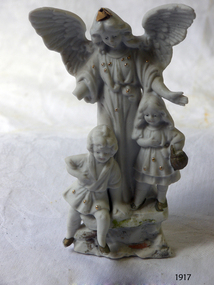 Flagstaff Hill Maritime Museum and Village
Decorative object - Ornament, ca. 19th century
... ornament, hollow inside. It is carved to represent an angel with two children, a boy and a girl. The surface is decorated with tiny gold balls and the angel wears a gold tiara. There are remnants of gold, orange, green and brown paint. No 1914. Decorative ...This fine white unglazed porcelain figurine is one of six donated together. The bisque material was easy to carve and allowed fine detail. Figurine ornaments were popular for table decorations between the mid-18th to early 19th centuries. This ornament was likely made in Germany, and German manufacturers began to use bisque material to make realistic faces for dolls in the 1850s.The set of six bisque figurines is representative of popular table decorations during the 19th and early 20th centuries.Figurine; unglazed white porcelain ornament, hollow inside. It is carved to represent an angel with two children, a boy and a girl. The surface is decorated with tiny gold balls and the angel wears a gold tiara. There are remnants of gold, orange, green and brown paint. No 1914. "1914"flagstaff hill, flagstaff hill maritime museum and village, warrnambool, maritime museum, maritime village, great ocean road, shipwreck coast, bisque, china ornament, white china ornament, german, porcelain, unglazed porcelain, 19th century, 18th century, european ornament, pottery, unglazed pottery, domestic ornament, decoration, table decoration, figurine, angel figurine, germany, angel with children -
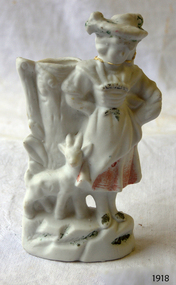 Flagstaff Hill Maritime Museum and Village
Decorative object - Ornament, ca. 19th century
... The ornament has remnants of gold, red, brown and green paint. There is an inscription on the base. Decorative ...This fine white unglazed porcelain figurine is one of six donated together. The bisque material was easy to carve and allowed fine detail. Figurine ornaments were popular for table decorations between the mid-18th to early 19th centuries. This ornament was likely made in Germany, and German manufacturers began to use bisque material to make realistic faces for dolls in the 1850s.The set of six bisque figurines is representative of popular table decorations during the 19th and early 20th centuries.Fine unglazed white porcelain ornament, hollow inside. It is carved to represent a peasant girl and goat with a vase shaped like a tree stump in the background. The ornament has remnants of gold, red, brown and green paint. There is an inscription on the base."3943:warrnambool, shipwrecked-coast, flagstaff-hill-maritime-museum, maritime-museum, shipwreck-coast, ornament, flagstaff hill, flagstaff hill maritime museum and village, maritime museum, maritime village, great ocean road, shipwreck coast, bisque, china ornament, white china ornament, german, germany, porcelain, unglazed porcelain, 19th century, 18th century, european ornament, pottery, unglazed pottery, domestic ornament, decoration, table decoration, girl and goat, vase -
 Flagstaff Hill Maritime Museum and Village
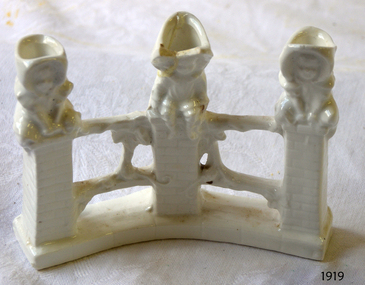
Decorative object - Ornament, ca. 19th century
... ornament, carved to represent three children sitting on three brick fence pillars. There are gold highlights on the surface. The hats on the children are vases. An inscription is on the base of the centre pillar. Decorative ...This fine white glazed porcelain figurine is one of six donated together. The bisque material was easy to carve and allowed fine detail. Figurine ornaments were popular for table decorations between the mid-18th to early 19th centuries. This ornament was likely made in Germany, and German manufacturers began to use bisque material to make realistic faces for dolls in the 1850s.The set of six bisque figurines is representative of popular table decorations during the 19th and early 20th centuries.Fine glazed white porcelain ornament, carved to represent three children sitting on three brick fence pillars. There are gold highlights on the surface. The hats on the children are vases. An inscription is on the base of the centre pillar."6946"flagstaff hill, flagstaff hill maritime museum and village, warrnambool, maritime museum, maritime village, great ocean road, shipwreck coast, bisque, china ornament, white china ornament, german, germany, porcelain, unglazed porcelain, 19th century, 18th century, european ornament, pottery, unglazed pottery, domestic ornament, decoration, table decoration, children on a fence, vase, candle holder -
 Mission to Seafarers Victoria
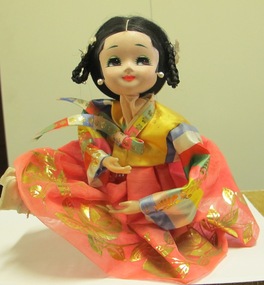
Decorative object - Doll, Unknown (circa 1960s)
... korean doll ornament doll gift korean seamen sailors seafarers A brightly-coloured, dancing, Korean doll made up of natural and synthetic fabric attached to a metal and laminex base by a steel pin. Decorative ...A brightly-coloured, dancing, Korean doll made up of natural and synthetic fabric attached to a metal and laminex base by a steel pin.korean doll, ornament, doll, gift, korean, seamen, sailors, seafarers -
 Federation University Historical Collection
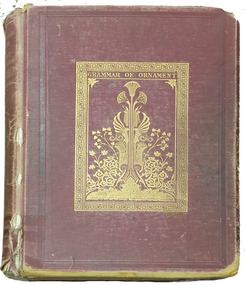
Book, Owen Jones, The Grammar of Ornament, 1868
... The subject, 'Principles of Decorative Design' explored the ‘grammar’ of ornament without reference to specific time periods or geographic locations....Ornament', a subject that spanned time and space to inform and inspire designers. Students studied the influences of history, geography, culture and climate on ornamental aesthetics, including the tools, materials and methods applied to decorative objects, interior design and architecture. ...Book featuring coloured plates of examples of historic ornamentRed cloth hard covered book of 112 plates bookplatenon-fictionBook featuring coloured plates of examples of historic ornamentornament, grammar, plates -
 Federation University Historical Collection
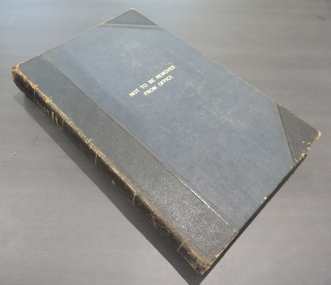
Books, H.E. Daw Government Printer, Ballarat School of Mines and Industries Departmental Papers, 1914-1950, 1914-1950
... decorative needlework...architecture, building design and construction...art (composition in form and colour)...art (casting clay models)...art (drapery)...art (drawing the human figure from casts)...art (drawing the antique from memory)...art (drawing from memory)...art (drawing plant forms from nature...art (drawing plant forms from memory)...art (drawing from models and objects)...(drawing from a flat example)...art (drawing in light and shade from a cast of ornament...Millinery, Dressmaking, Needlework, Decorative Needlework, Architecture, Building Design and Construction, Art (Composition in Form and Colour), Art (Casting Clay MOdels) Art (Drapery), Art (Drawing the Human Figure From Casts), Art (Drawing the Antique from Memory), Art (Drawing from Memory); Art (Drawing Plant Forms from Nature, Art (Drawing Plant Forms From Memory), Art (Drawing from Models and Objects), (Drawing From a Flat Example). Art (Drawing in Light and Shade from a Cast of Ornament...Millinery, Dressmaking, Needlework, Decorative Needlework, Architecture, Building Design and Construction, Art (Composition in Form and Colour), Art (Casting Clay MOdels) Art (Drapery), Art (Drawing the Human Figure From Casts), Art (Drawing the Antique from Memory), Art (Drawing from Memory); Art (Drawing Plant Forms from Nature, Art (Drawing Plant Forms From Memory), Art (Drawing from Models and Objects), (Drawing From a Flat Example). Art (Drawing in Light and Shade from a Cast of Ornament ...Used at the Ballarat School of Mines and the Ballarat Technical Art SchoolThis collection of examinations is significant because of its completeness with the full range of examinations between 1914 and 1950.Large leather bound books, with leather spine, containing all examinations held at the Ballarat School of Mines (including the Ballarat Technical Art School and Ballarat Junior Technical School). The examination papers were supplied and printed by the Education Department, Victoria. Examinations include: Agriculture, Algebra, Architecture, Arithmetic, Applied Mechanics, Assaying, Biology, Botany, Boilermaking, Building Design, Blacksmithing, Bricklaying, Carpentry and Joinery, Coachbuilding, Cabinet Making, Civil Engineering, Cabinet Making, Commercial, Chemistry, Engineering Drawing, Economics, English, Electrical technology, Electricity and Magnetism, Electric Wiring, Electric Welding, Electrical Fitting, Electrical Trades, Food Analysis, Geology, Geological Mapping, Graphics, Geometry, Heat Engines, Heat Treatment, Hydraulics, Hand Railing, Instrument Making, Millinery, Milling and Gearouting, Machine Shop Practice. Metal Founding, Mining, Metallurgy, Mineralogy, Mathematics, Motor Mechanics, Mine Surveying, Mining Mechanics, Petrology, Physics, Painting and Decorating, Pattern Making, Plastering, Plumbing and Gasfitting, Printing, Refrigeration, Spelling, Science , Shorthand, Surveying. Signwriting. Sheet Metalwork, Toolmaking, Ladies Tailoring, Trigonometry, Typewriting, Welding, Commercial Geography. Millinery, Dressmaking, Needlework, Decorative Needlework, Architecture, Building Design and Construction, Art (Composition in Form and Colour), Art (Casting Clay MOdels) Art (Drapery), Art (Drawing the Human Figure From Casts), Art (Drawing the Antique from Memory), Art (Drawing from Memory); Art (Drawing Plant Forms from Nature, Art (Drawing Plant Forms From Memory), Art (Drawing from Models and Objects), (Drawing From a Flat Example). Art (Drawing in Light and Shade from a Cast of Ornament or Lower Nature), Art (Drawing Ornament from the Cast), Art (Drawing from Models or Objects), Art (Drawing fro Dressmakers' and Milliners' Fashions), Art (Drawing With the Brush), Art (Drawing from a Flat Example); Art (Modelled Design), Art (General Design), Art (Embossed Leatherwork), Art (Practical Plane Geometry), Art (Practical Solid Geometry), Art (Geometrical Drawing), Carpentry and Joinery, Art (Human Anatomy), Art (Historic Ornament), Art (House Decoration), Art (LEttering), Signwriting, Art (Light Metalwork), Art (Modelling), Art (Modelling the Human Figure from a Life), Art (Stencilling); Art (Wood Carving) Refrigeration, Teaching, Boilermaking, Blacksmithing, Carpentry and Joinery, Coachbuilding and Carriage Drafting, Electric Wiring, Electrical Fitting, Graining and Marbling, Instrument Making , Machine Shop Practice, Metal Founding, Milling and Gear Cutting, Motor Mechanics, Painting and Decorating, Sheet Metalwork, Toolmaking, Printing, Pattern Making, Plumbing and gasfitting, examinations, ballarat school of mines, ballarat technical art school, trades, education department victoria, agriculture, algebra, architecture, arithmetic, applied mechanics, assaying, biology, botany, boilermaking, building design, blacksmithing, bricklaying, carpentry and joinery, coachbuilding, cabinet making, civil engineering, commercial, chemistry, engineering drawing, economics, english, electrical technology, electricity and magnetism, electric wiring, electric welding, electrical fitting, electrical trades, food analysis, geology, geological mapping, graphics, geometry, heat engines, heat treatment, hydraulics, hand railing, instrument making, millinery, milling and gearouting, machine shop practice, metal founding, mining, metallurgy, mineralogy, mathematics, motor mechanics, mine surveying, mining mechanics, petrology, physics, painting and decorating, pattern making, plastering, plumbing and gasfitting, printing, refrigeration, spelling, science, shorthand, surveying, signwriting, sheet metalwork, toolmaking, ladies tailoring, trigonometry, typewriting, welding., dressmaking, needlework, decorative needlework, architecture, building design and construction, art (composition in form and colour), art (casting clay models), art (drapery), art (drawing the human figure from casts), art (drawing the antique from memory), art (drawing from memory), art (drawing plant forms from nature, art (drawing plant forms from memory), art (drawing from models and objects), (drawing from a flat example), art (drawing in light and shade from a cast of ornament or lower nature), art (drawing ornament from the cast), art (drawing from models or objects), art (drawing for dressmakers' and milliners' fashions), art (drawing with the brush), art (drawing from a flat example), art (modelled design), art (general design), art (embossed leatherwork), art (practical plane geometry), art (practical solid geometry), art (geometrical drawing), art (human anatomy), art (historic ornament), art (house decoration), art (lettering), art (light metalwork), art (modelling), art (modelling the human figure from a life, art (stencilling), art (wood carving), teaching, coachbuilding and carriage drafting, graining and marbling, milling and gear cutting, commercial geography, exams, examination book -
 Federation University Historical Collection
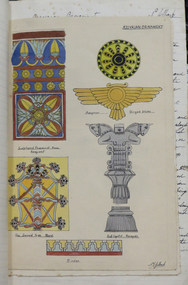
Book, N.T. Jelbart, Historic Ornament Part 1, 1934, 1934
... Ornament spanned time and space to inform and inspire designers. Students studied the influences of history, geography, culture and climate on ornamental aesthetics, including the tools, materials and methods applied to decorative objects, interior design and architecture....Ornament spanned time and space to inform and inspire designers. Students studied the influences of history, geography, culture and climate on ornamental aesthetics, including the tools, materials and methods applied to decorative objects, interior design and architecture. n.t. jelbart ballarat technical art school historic ornament art history Handwritten and drawn notes from the Ballarat Technical Art School by N.T. ...Norman JELBART (1916-1984) Norman Thomas Jelbart studied Historic Ornament Parts I and II as part of his training at the Ballarat Technical Art School to become an architect. These are some of his notes. The study of Historic Ornament spanned time and space to inform and inspire designers. Students studied the influences of history, geography, culture and climate on ornamental aesthetics, including the tools, materials and methods applied to decorative objects, interior design and architecture.Handwritten and drawn notes from the Ballarat Technical Art School by N.T. Jelbartn.t. jelbart, ballarat technical art school, historic ornament, art history -
 Flagstaff Hill Maritime Museum and Village
Book, Lettering In Ornament
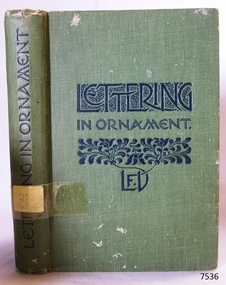
... Lettering In Ornament An Enquiry into the Decorative use of Lettering, Past, Present and Possible Autuhor: Lewis F Day Publisher: B T Batsford Date: 1902 ...Warrnambool Shipwrecked-coast Flagstaff-Hill Flagstaff-Hill-Maritime-Museum Maritime-Museum Shipwreck-coast Flagstaff-Hill-Maritime-Village Shipwrecked-artefact Book Warrnambool Mechanics’ Institute Pattison Collection Warrnambool Library Ralph Eric Pattison Warrnambool City Librarian Mechanics’ Institute Library Victorian Library Board Warrnambool books and records Warrnambool Children’s Library Lettering In Ornament Lewis F Day Label on spine cover with typed text PAT 745 DAY Pastedown front endpaper has sticker from Corangamite Regional Library Service Lettering In Ornament An Enquiry into the Decorative use of Lettering, Past, Present and Possible Autuhor: Lewis F Day Publisher: B T Batsford Date: 1902 Lettering In Ornament Book ...This item is from the ‘Pattison Collection’, a collection of books and records that was originally owned by the Warrnambool Mechanics’ Institute, which was founded in Warrnambool in 1853. By 1886 the Warrnambool Mechanics’ Institute (WMI) had grown to have a Library, Museum and Fine Arts Gallery, with a collection of “… choice productions of art, and valuable specimens in almost every branch and many wonderful national curiosities are now to be seen there, including historic relics of the town and district.” It later included a School of Design. Although it was very well patronised, the lack of financial support led the WMI in 1911 to ask the City Council to take it over. In 1935 Ralph Pattison was appointed as City Librarian to establish and organise the Warrnambool Library as it was then called. When the WMI building was pulled down in 1963 a new civic building was erected on the site and the new Warrnambool Library, on behalf of the City Council, took over all the holdings of the WMI. At this time some of the items were separated and identified as the ‘Pattison Collection’, named after Ralph Pattison. Eventually the components of the WMI were distributed from the Warrnambool Library to various places, including the Art Gallery, Historical Society and Flagstaff Hill. Later some were even distributed to other regional branches of Corangamite Regional Library and passed to and fro. It is difficult now to trace just where all of the items have ended up. The books at Flagstaff Hill Maritime Village generally display stamps and markings from Pattison as well as a variety of other institutions including the Mechanics’ Institute itself. RALPH ERIC PATTISON Ralph Eric Pattison was born in Rockhampton, Queensland, in 1891. He married Maude Swan from Warrnambool in 1920 and they set up home in Warrnambool. In 1935 Pattison accepted a position as City Librarian for the Warrnambool City Council. His huge challenge was to make a functional library within two rooms of the Mechanics’ Institute. He tirelessly cleaned, cleared and sorted a disarrayed collection of old books, jars of preserved specimens and other items reserved for exhibition in the city’s museum. He developed and updated the library with a wide variety of books for all tastes, including reference books for students; a difficult task to fulfil during the years following the Depression. He converted all of the lower area of the building into a library, reference room and reading room for members and the public. The books were sorted and stored using a cataloguing and card index system that he had developed himself. He also prepared the upper floor of the building and established the Art Gallery and later the Museum, a place to exhibit the many old relics that had been stored for years for this purpose. One of the treasures he found was a beautiful ancient clock, which he repaired, restored and enjoyed using in his office during the years of his service there. Ralph Pattison was described as “a meticulous gentleman whose punctuality, floorless courtesy and distinctive neat dress were hallmarks of his character, and ‘his’ clock controlled his daily routine, and his opening and closing of the library’s large heavy doors to the minute.” Pattison took leave during 1942 to 1942 to serve in the Royal Australian Navy, Volunteer Reserve as Lieutenant. A few years later he converted one of the Museum’s rooms into a Children’s Library, stocking it with suitable books for the younger generation. This was an instant success. In the 1950’s he had the honour of being appointed to the Victorian Library Board and received more inspiration from the monthly conferences in Melbourne. He was sadly retired in 1959 after over 23 years of service, due to the fact that he had gone over the working age of council officers. However he continued to take a very keen interest in the continual development of the Library until his death in 1969. The Pattison Collection, along with other items at Flagstaff Hill Maritime Village, was originally part of the Warrnambool Mechanics' Institute’s collection. The Warrnambool Mechanics’ Institute Collection is primarily significant in its totality, rather than for the individual objects it contains. Its contents are highly representative of the development of Mechanics' Institute libraries across Australia, particularly Victoria. A diversity of publications and themes has been amassed, and these provide clues to our understanding of the nature of and changes in the reading habits of Victorians from the 1850s to the middle of the 20th century. The collection also highlights the Warrnambool community’s commitment to the Mechanics’ Institute, reading, literacy and learning in the regions, and proves that access to knowledge was not impeded by distance. These items help to provide a more complete picture of our community’s ideals and aspirations. The Warrnambool Mechanics Institute book collection has historical and social significance for its strong association with the Mechanics Institute movement and the important role it played in the intellectual, cultural and social development of people throughout the latter part of the nineteenth century and the early twentieth century. The collection of books is a rare example of an early lending library and its significance is enhanced by the survival of an original collection of many volumes. The Warrnambool Mechanics' Institute’s publication collection is of both local and state significance. Lettering In Ornament An Enquiry into the Decorative use of Lettering, Past, Present and Possible Autuhor: Lewis F Day Publisher: B T Batsford Date: 1902 Label on spine cover with typed text PAT 745 DAY Pastedown front endpaper has sticker from Corangamite Regional Library Servicewarrnambool, shipwrecked-coast, flagstaff-hill, flagstaff-hill-maritime-museum, maritime-museum, shipwreck-coast, flagstaff-hill-maritime-village, shipwrecked-artefact, book, warrnambool mechanics’ institute, pattison collection, warrnambool library, ralph eric pattison, warrnambool city librarian, mechanics’ institute library, victorian library board, warrnambool books and records, warrnambool children’s library, lettering in ornament, lewis f day -
 City of Moorabbin Historical Society (Operating the Box Cottage Museum)
Decorative object - Ornaments, Floral vase, Circa 1890 to 1900
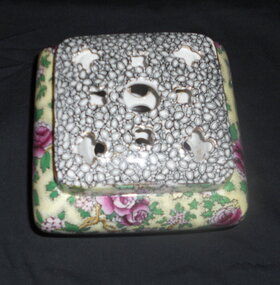
... The rim of the vase is trimmed with gold. Decorative object Ornaments, Floral vase Grimwade (Brothers) ...The Royal Winton brand has always been synonymous with quality and design and has roots in Stoke-on-Trent, England that go back over one hundred years. Originally known as Grimwade Brothers it was founded by Leonard Lumsden Grimwade. Leonard had shown a natural talent for modelling pottery and it was in this field that his infant business began, in 1885. He was soon joined in the business by his older brother, Sidney Richard, another potter. The family of Daphne Sturt were early settlers in Moorabbin ShireCirca 1890 to 1900. A Grimwade's floral and black-patterned ceramic vase with detachable "frog" for holding flowers in place. The rim of the vase is trimmed with gold. On the bottom of the vase there is a Backstamp: Grimwade, Winton, Stoke-on-Trent, England. Made in England. The Grimwade's makers -mark is also present.grimwade leonard, ceramics, pottery, stoke-on-trent, early settlers, craftwork, moorabbin, brighton, ormond, sturt lesley, sturt daphne, bentleigh -
 City of Moorabbin Historical Society (Operating the Box Cottage Museum)
Decorative object - Ornaments, lady's dressing table set, 20thC
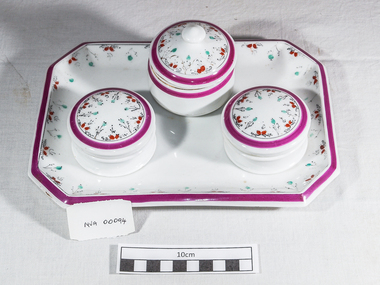
... ornaments early settlers pioneers moorabbin bentleigh cheltenham ormond market gardeners green carol Four piece lady's white ceramic dressing table set. Comprising of a small rectangular tray, and three small lidded-pots - one pot has a knob. There is a hand-painted dainty red and green floral garland decoration on each of the pots as well as the tray. Remnants of gold painted decoration can also be seen. Decorative ...The family of Miss carol Green were early settlers in Moorabbin ShireFour piece lady's white ceramic dressing table set. Comprising of a small rectangular tray, and three small lidded-pots - one pot has a knob. There is a hand-painted dainty red and green floral garland decoration on each of the pots as well as the tray. Remnants of gold painted decoration can also be seen.ceramics, ornaments, early settlers, pioneers, moorabbin, bentleigh, cheltenham, ormond, market gardeners, green carol
