
Showing 56 items matching "osborne house"
-
 Bendigo Historical Society Inc.
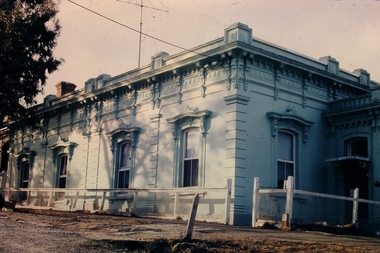
Slide - Osborne House 33 MacKenzie Street Bendigo
... Osborne House 33 MacKenzie Street Bendigo......osborne house 33 MacKenzie Street Bendigo...Beyond the secluded front entry, Osborne House offers grand Victorian proportions blended seamlessly with a timeless French influence. ...Osborne House 33 MacKenzie Street Bendigo - Slide...Built over three levels, the residence has four bedrooms plus home office, grand formal lounge and dining rooms history bendigo national trust collection bendigo osborne house 33 MacKenzie Street Bendigo Osborne House 33 MacKenzie Street Bendigo - Slide Slide Osborne House 33 MacKenzie Street Bendigo ...The Bendigo & Region Branch is the National Trust’s voice in the region. The Branch works with council and the community on local heritage issues. New members are always welcome at any of the Branch’s meetings and events. Designed by renown Bendigo architects Vahland and Getzschmann, Osborne House was originally built as a private school in 1869, extended in 1870 and sold in 1888 when it became a boarding house. The property enjoys a privileged position surrounded by more of Vahland's inspiring designs - the Forest Street Anglican, Methodist and Congregational churches while just over the hill, the massive spire of the Sacred Heart Cathedral dominates the skyline. Both the skyline and the residence have undergone much change over the last century and now enjoy a harmonious blend of traditional form and modern function. Beyond the secluded front entry, Osborne House offers grand Victorian proportions blended seamlessly with a timeless French influence. Built over three levels, the residence has four bedrooms plus home office, grand formal lounge and dining roomsOsborne House 33 MacKenzie Street Bendigo - Slidehistory, bendigo, national trust collection bendigo, osborne house 33 mackenzie street bendigo -
 Bendigo Historical Society Inc.
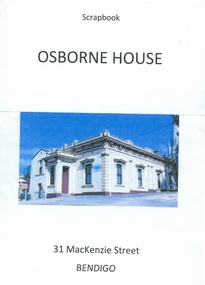
Book - OSBORNE HOUSE - A SCRAPBOOK
... OSBORNE HOUSE - A SCRAPBOOK...Osborne House...44 page soft cover, spiral bound booklet entitled 'Osborne House , 31 MacKenzie St, Bendigo A scrapbook of historical information about Osborne House compiled by Kevin Doyle , the once owner who renovated the building from 2000. ...Osborne House 31 macKenzie Street Kevin Doyle 44 page soft cover, spiral bound booklet entitled 'Osborne House , 31 MacKenzie St, Bendigo A scrapbook of historical information about Osborne House compiled by Kevin Doyle , the once owner who renovated the building from 2000. ...44 page soft cover, spiral bound booklet entitled 'Osborne House , 31 MacKenzie St, Bendigo A scrapbook of historical information about Osborne House compiled by Kevin Doyle , the once owner who renovated the building from 2000. Illustrated with B&W and colour photos, copies of Titles, newspaper articles, diagrams etc.Kevin Doyleosborne house, 31 mackenzie street -
 Greensborough Historical Society
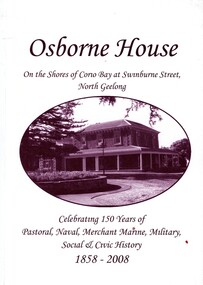
Book, Cheryl Scott, Osborne House - celebrating 150 years - 1858-2008, 2008c
... Osborne House - celebrating 150 years - 1858-2008......osborne house...Originally built as a squatter's mansion in North Geelong 1858, Osborne House is currently owned by Geelong City Council and is used for community purposes. ...Osborne House - celebrating 150 years - 1858-2008 Book Book Cheryl Scott Osborne Park Association ...Originally built as a squatter's mansion in North Geelong 1858, Osborne House is currently owned by Geelong City Council and is used for community purposes. This is a history of the house and its various uses.79 p. paperback printed in black, illus.geeelong, osborne house -
 Returned Nurses RSL Sub-branch
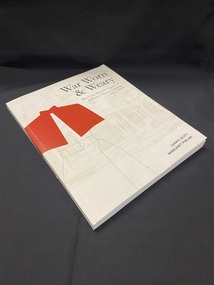
Book - Paperback book, Cheryl Scott et al, War worn & weary: the convalescent nurses of Osborne House Geelong, 1917-1919, 2018
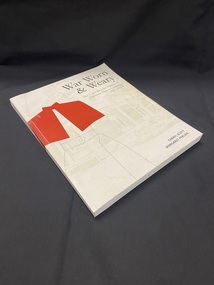
... War worn & weary: the convalescent nurses of Osborne House Geelong, 1917-1919......Osborne House Geelong...World War One WW1 WWI Australian Nurses Osborne House Geelong Military Nursing WW1 is the backdrop for this book, and the centenary of ANZAC, its catalyst. ...WW1 is the backdrop for this book, and the centenary of ANZAC, its catalyst. It is a collection of vignettes of 47 women who volunteered for service abroad to look after 'our boys'. Broken in health, they were invalided home recuperate at Osborne House, Geelong, Victoria's first Red Cross Rest Home for war worn nurses. Some never fully recovered while others went on to lead full and productive lives. Here are their inspirational stories.--Back cover.Paperback book with a white cover showing a basic outline of a nurse wearing a red cape. The title and author details are printed in black and in the background is a faded photo of a hospital building.non-fictionWW1 is the backdrop for this book, and the centenary of ANZAC, its catalyst. It is a collection of vignettes of 47 women who volunteered for service abroad to look after 'our boys'. Broken in health, they were invalided home recuperate at Osborne House, Geelong, Victoria's first Red Cross Rest Home for war worn nurses. Some never fully recovered while others went on to lead full and productive lives. Here are their inspirational stories.--Back cover. world war one, ww1, wwi, australian nurses, osborne house geelong, military nursing -
 Returned Nurses RSL Sub-branch
Book - Paperback book, Cheryl Scott et al, War worn & weary: the convalescent nurses of Osborne House Geelong, 1917-1919, 2018
... War worn & weary: the convalescent nurses of Osborne House Geelong, 1917-1919......Osborne House Geelong...World War One WW1 WWI Australian Nurses Osborne House Geelong Military Nursing WW1 is the backdrop for this book, and the centenary of ANZAC, its catalyst. ...WW1 is the backdrop for this book, and the centenary of ANZAC, its catalyst. It is a collection of vignettes of 47 women who volunteered for service abroad to look after 'our boys'. Broken in health, they were invalided home recuperate at Osborne House, Geelong, Victoria's first Red Cross Rest Home for war worn nurses. Some never fully recovered while others went on to lead full and productive lives. Here are their inspirational stories.--Back cover.Paperback book with a white cover showing a basic outline of a nurse wearing a red cape. The title and author details are printed in black and in the background is a faded photo of a hospital building.non-fictionWW1 is the backdrop for this book, and the centenary of ANZAC, its catalyst. It is a collection of vignettes of 47 women who volunteered for service abroad to look after 'our boys'. Broken in health, they were invalided home recuperate at Osborne House, Geelong, Victoria's first Red Cross Rest Home for war worn nurses. Some never fully recovered while others went on to lead full and productive lives. Here are their inspirational stories.--Back cover. world war one, ww1, wwi, australian nurses, osborne house geelong, military nursing -
 Geelong Naval and Maritime Museum
Photograph, Crew Ashore, May 1920
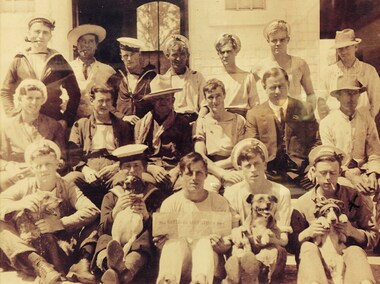
... Osborne House Stables...Osborne House was used as a Naval College from 1915-1917 it was served as a Naval Convalescent Hospital, followed by the home of Australia's first submarine fleet (1919-1924) and a training base during WW2....The photograph has been taken out the front of the stables at Osborne House, Geelong. Photo shows 15 crew members and 3 dogs dressed up. ...Osborne House was used as a Naval College from 1915-1917 it was served as a Naval Convalescent Hospital, followed by the home of Australia's first submarine fleet (1919-1924) and a training base during WW2. ...Osborne House was used as a Naval College from 1915-1917 it was served as a Naval Convalescent Hospital, followed by the home of Australia's first submarine fleet (1919-1924) and a training base during WW2.It is possible this photograph taken in 1920 shows a crew from the submarine fleet. This photograph is historically significant, it represents use of the building by the Navy and was taken onsite at the training facility. The crew and dogs are wearing a variety of clothing suggesting they were performing or having a break from work. This photograph is significant for its connections to Victoria's history of defense and building Geelong's workforce.A black and white photograph showing a crew ashore in May 1920. The photograph has been taken out the front of the stables at Osborne House, Geelong. Photo shows 15 crew members and 3 dogs dressed up. One crew member holds a copy of the Geelong Advertiser in his hands.osborne house stables, australian naval college, submarine fleet -
 Allan Doney Collection, Bendigo Historical Society Inc.
Negative - Osborne House Bendigo - Statues - Lions, Allan Doney, 1950 -1970
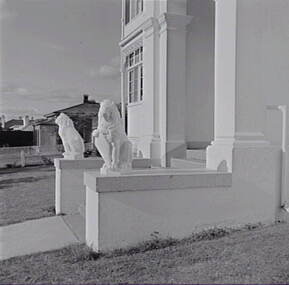
... Osborne House Bendigo - Statues - Lions...Although he travelled to many other places in Northern Victoria and beyond in search of subjects for his art, he seemed to always return to Bendigo for inspiration. Negative Osborne House Bendigo - Statues - Lions Allan Doney ...In the years of Allan Doney’s photography, landmark buildings succumbed to fire, neglect and redevelopment. He photographed the grey sand hills from Bendigo’s mining past, the streetscapes, poppet heads, miners’ cottages, gracious homes with ornate verandahs, trams and much more. Above all, his photographs show how much of the city has survived from the 19th century – and how much has not. Through two decades of great change, Allan Doney was there to capture ways people interacted with it. Although he travelled to many other places in Northern Victoria and beyond in search of subjects for his art, he seemed to always return to Bendigo for inspiration. -
 City of Greater Geelong
Gouache pen and ink, Osborne House, North Geelong
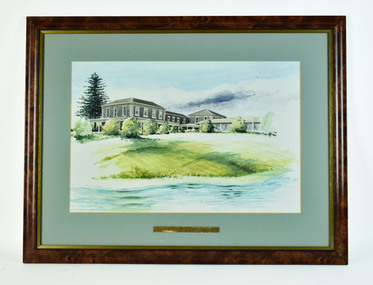
... Osborne House, North Geelong...Osborne House, North Geelong Gouache pen and ink ... -
 Federation University Historical Collection
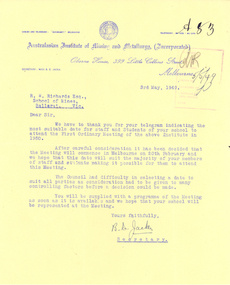
Letter - Correspondence, Miss B.E. Jacka, Secretary of the Australasian Institute of Mining and Metallurgy, Correspondence on Australian Institute of Mining and Metallurgy (Incorporated) Letterhead, 1949, 03/05/1949
... Osborne House, 399 Little Collins Street, Melbourne, Victoria, Australia ...The Australasian Institute of Mining and Metallurgy (The AusIMM) was founded in 1893 and provides services to professionals engaged in all facets of the global minerals sector. With a focus on providing leadership and opportunities to minerals industry professionals, the AusIMM delivers an ongoing program of professional development services to ensure our members are supported throughout their careers, enabling them to provide high-quality professional input to industry and the community. (http://www.ausimm.com.au/content/default.aspx?ID=94, Accessed 09 September 2015)Typed letter on the Australian Institute of Mining and Metallurgy letterhead relating to the first Ordinary Meeting of the Institute. The letter is addressed to R.W. (Dick) Richards of the Ballarat School of Mines, and is signed by B.E. Jacka, Secretary of the Australian Institute of Mining and Metallurgy.ausimm, australasian institute of mining and metallurgy, letterhead, r.w. richards, dick richards, b.e. jacka -
 Federation University Historical Collection
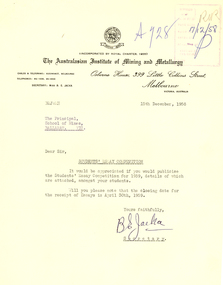
Letter - Correspondence, Miss B.E. Jacka, Secretary of the Australasian Institute of Mining and Metallurgy, Correspondence on Australasian Institute of Mining and Metallurgy Letterhead, 1958, 15/12/1958
... Osborne House, 399 Little Collins Street, Melbourne, victoria, Australia ...The Australasian Institute of Mining and Metallurgy (The AusIMM) was founded in 1893 and provides services to professionals engaged in all facets of the global minerals sector. With a focus on providing leadership and opportunities to minerals industry professionals, the AusIMM delivers an ongoing program of professional development services to ensure our members are supported throughout their careers, enabling them to provide high-quality professional input to industry and the community. (http://www.ausimm.com.au/content/default.aspx?ID=94, accessed 09/09/2015)Typed correspondence, on the Australasian Institute of Mining and Metallurgy letterhead, relating to a students' essay competition. The letter is signed by the institute Secretary B.E. Jacka.australasian institute of mining and metallurgy, ausimm, b.e. jacka -
 Port Fairy Historical Society Museum and Archives
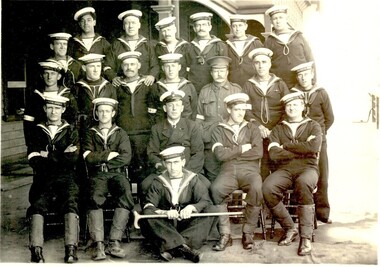
Photograph
... ...osborne house...Royal Australian Naval Guard of Reservists attached to Osborne House Geelong, possibly including local men....Royal Australian Naval Guard of Reservists attached to Osborne House Geelong, possibly including local men. defence naval royal guard osborne house royal australian Black and white photograph of naval group posed Photograph Photograph ...Royal Australian Naval Guard of Reservists attached to Osborne House Geelong, possibly including local men.Black and white photograph of naval group poseddefence, naval, royal, guard, osborne house, royal australian -
 Phillip Island and District Historical Society Inc.
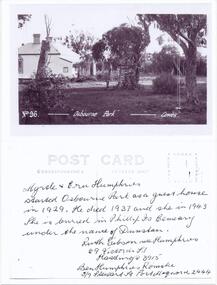
Photograph - Post Card, Osborne Park Guest House Phillip Island, 1930's
... Osborne Park Guest House Phillip Island...Osbourne Park Guest House in Beach Street, Cowes Osborne Park Guest House Phillip Island Photograph - Post Card ...Black & White photograph of a postcard. Postcard owned by Jan Stewart, Jan & John Stewart operated Bayside Caravan Park, 7 Beach Street, Cowes. This was the site of "Osbourne Park".Black & Whte photograph of a postcard, front and back. Osbourne Park Guest House in Beach Street, Cowes Front: No. 96. "Osbourne Park" - Cowes. Back: Myrtle & Ern Humphries started Osbourne Park as a guest house in 1929. He dies 1937 and she in 1943. She is buried in Phillip Is Cemetery under the name of Dunstan. Ruth Gibson nee Humphries, 69 Victoria Street, Hastings 3915. Ben Humphries Romake, 5/6 Stewart St., Port Macquarie 2444.osbourne park guesthouse phillip island, guesthouses cowes phillip island, myrtle & ern humphries, elaine alexander -
 Phillip Island and District Historical Society Inc.
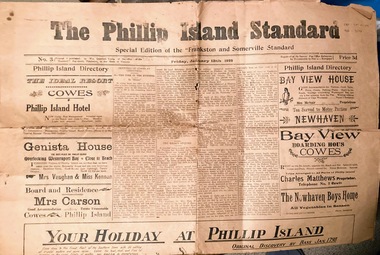
Newspaper, The Phillip Island Standard : Special Edition of The Frankston and Somerville Standard January 13, 1922
... ...Osborne House...[Wikipedia] Historical Newspaper bay view guest house Newhaven Boys Home tourism phillip island Genista house broadwater guest house Mona Vale guesthouse The Corner store Osborne House The Phillip Island Standard : Special Edition of the "Frankston and Somerville Standard. ...Frankston & Somerville Standard From 11 July 1908, two editions of the newspaper were produced, the Mornington and Dromana Standard and the Frankston & Somerville Standard,[11] which became separate newspapers on 7 January 1921[12] and whose last issues were dated 5 May 1939. [Wikipedia]HistoricalBroadsheet newspaper with articles, advertisements and large map. The Phillip Island Standard : Special Edition of the "Frankston and Somerville Standard. No. 3 newspaper, bay view guest house, newhaven boys home, tourism phillip island, genista house, broadwater guest house, mona vale guesthouse, the corner store, osborne house -
 Phillip Island and District Historical Society Inc.
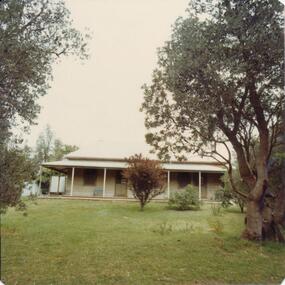
Photograph, 1978/79
... "Charmandene" Guest House in Osborne Avenue. Now a private residence....Coloured photograph of "Charmandene" Guest House in Osborne Avenue. Now a private residence...."Charmandene" Guest House in Osborne Avenue. Now a private residence. local history photographs buildings - historical coloured photograph john cook phillip island Coloured photograph of "Charmandene" Guest House in Osborne Avenue. ..."Charmandene" Guest House in Osborne Avenue. Now a private residence.Coloured photograph of "Charmandene" Guest House in Osborne Avenue. Now a private residence.local history, photographs, buildings - historical, coloured photograph, john cook, phillip island -
 Phillip Island and District Historical Society Inc.
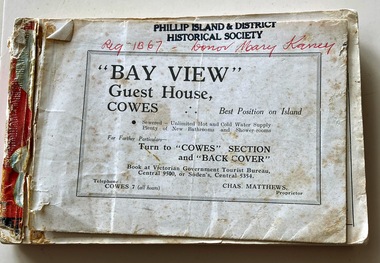
Booklet, Victorian Country Hotel & Guest House Guide 1939-40 "Where to go" in Victoria, 1939
... house...osborne park guesthouse...Details of tourist accommodation options on the Island Historical Tourist brochure bayview guest house Guesthouses carisbrooke guesthouse cowes phillip island Cowes Progress Association Cora Lynne The Isle of Wight Hotel Cowes Phillip Island phillip island hotel Douglas House hollydene guest house osborne park guesthouse Marldon House Bonnie Doon Yackatoon Elsford Widgee Victorian Country Hotel & Guest House Guide 1939-40 "Where to go" in Victoria Small, red bound booklet with maps, tables, descriptions and photos advertising tourist accommodation in country Victoria. ...Details of tourist accommodation options on the IslandHistoricalSmall, red bound booklet with maps, tables, descriptions and photos advertising tourist accommodation in country Victoria.Victorian Country Hotel & Guest House Guide 1939-40 "Where to go" in Victoriatourist brochure, bayview guest house, guesthouses, carisbrooke guesthouse cowes phillip island, cowes progress association, cora lynne, the isle of wight hotel cowes phillip island, phillip island hotel, douglas house, hollydene guest house, osborne park guesthouse, marldon house, bonnie doon, yackatoon, elsford, widgee -
 Melbourne Tram Museum
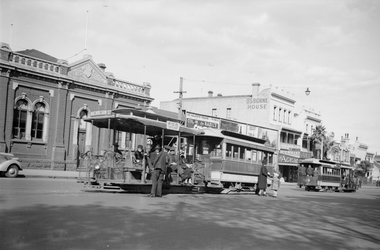
Negative, Ellis Collection, 1940
... In the background is Osborne House and shop selling The Age, and the Herald. ...In the background is Osborne House and shop selling The Age, and the Herald. ...Negative (120) of a cable tram grip car and saloon car 558 outside the Nicholson St Winding house tram stop, with another cable tram departing, saloon car 528, towards the city. In the background is Osborne House and shop selling The Age, and the Herald. Hi Res image filed in the dbtext/hawthtramcoll/Large Images/htd3594large.jpg. A low resolution A4 laminated was received with the negatives. Based on a billboard date in Reg Item 3593, the year is 1940.trams, tramways, cable trams, nicholson st, winding houses, conductors, passengers, tram stops, tram 558, tram 528 -
 Ballarat Tramway Museum
Slide - 35mm slide/s - set of 5, Roy J Mitchell, late 1960's
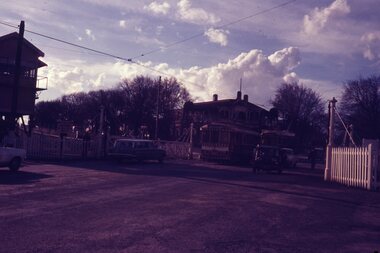
... Set of four green Fuji Film green plastic slides during late 1960's of: 1 - tram No. 11 southbound in Lydiard St North, at the level crossing with destination of Sebastopol. Has Osborne House in the background. .2 - ditto with tram 39 showing special .3 - Bogie tram crossing No. 11 (showing City) at Gregory St. ...Tramways trams Lydiard St North Level Crossings Gregory St Timetable Boards tram 11 tram 39 tram 17 On each slide in ink "Roy Mitchell" , "Tram" "1958-1971". .1 - "20" .2 - "28" .4 - "15" Set of four green Fuji Film green plastic slides during late 1960's of: 1 - tram No. 11 southbound in Lydiard St North, at the level crossing with destination of Sebastopol. Has Osborne House in the background. .2 - ditto with tram 39 showing special .3 - Bogie tram crossing No. 11 (showing City) at Gregory St. ...Set of four green Fuji Film green plastic slides during late 1960's of: 1 - tram No. 11 southbound in Lydiard St North, at the level crossing with destination of Sebastopol. Has Osborne House in the background. .2 - ditto with tram 39 showing special .3 - Bogie tram crossing No. 11 (showing City) at Gregory St. No. 11 has a Twin Lakes sign .4 - Part of one of the timetable board as the City terminus, Sturt and Lydiard Sts. .5 - No. 17 with driver/conductor reversing the pole. Has the city in the far distance, looking back towards the city.On each slide in ink "Roy Mitchell" , "Tram" "1958-1971". .1 - "20" .2 - "28" .4 - "15"tramways, trams, lydiard st north, level crossings, gregory st, timetable boards, tram 11, tram 39, tram 17 -
 Melbourne Tram Museum
Photograph - Black & White Photograph/s, Melbourne & Metropolitan Tramways Board (MMTB), early 1955
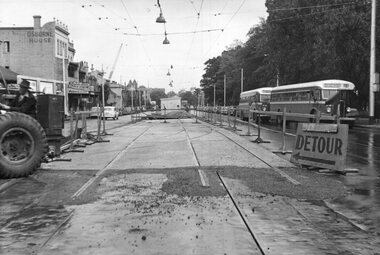
... In the background is Osborne House. signs for The Age, The Sun and Peters Ice Cream. ...In the background is Osborne House. signs for The Age, The Sun and Peters Ice Cream. ...Black and white photographs of the construction of the junction at Gertrude and Nicholson St c1955. On the right hand side of the photograph are two buses showing the Destination of Northcote. The former cable tram track in Nicholson St is yet to be removed - shows the offset between the tracks and the wood blocks. Possibly only the junction tracks have been completed at this time as there appears to be an excavation and a hut in the distance. There is a detour sign indicating that possibly vehicles used the completed section and that trackwork was underway for Gertrude St. The overhead has been erected. In the background is Osborne House. signs for The Age, The Sun and Peters Ice Cream. Early 1955?trams, tramways, trackwork, rails, track materials, track repairs, sleepers, equipment, cable trams, gertrude st, nicholson st, overhead -
 City of Melbourne Libraries
Photograph, Bull, Hugh Jones, 1897-1993, Groundsmen cover wicket during rain at the MCG match, Victoria v South Australia
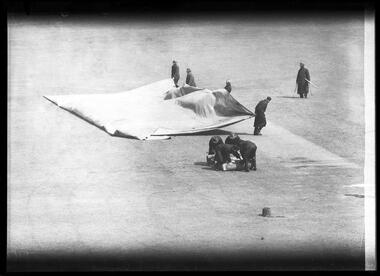
... In 1890, Mr Phillip Russell, a wealthy merino sheep breeder of Osborne House, North Geelong, offered Bert the job of curator and cricket player for his team “The Nondescripts”, a social team who played at his private oval at Osborne House. ...In 1890, Mr Phillip Russell, a wealthy merino sheep breeder of Osborne House, North Geelong, offered Bert the job of curator and cricket player for his team “The Nondescripts”, a social team who played at his private oval at Osborne House. ...“How’s the wicket, Bert?” During the 4-Day Victoria v South Australia Sheffield Shield match, held 13-17 November 1936 at the Melbourne Cricket Ground, the play was often interrupted by rain squalls, causing the groundsmen to cover their carefully prepared wicket with tarpaulins to protect it. “How’s the wicket, Bert?” is the question on everyone’s lips – Will it be a batsman’s nightmare? A bowler’s dream? Will the spectators see a full day’s play or will rain spoil it? With a twinkle in his eye, Bert “Maker of Pitches” Luttrell, the MCG curator’s response is: “It’s not the wicket when batsmen get out early, it’s good bowling!” FRC Published: The Age 17 November 1936 Featured in "Newsworthy: Melbourne in photographs 1933-1936" exhibition at East Melbourne Library, October to December 2023. Exhibition caption by project volunteer, Fiona Collyer. Photographer notations on slide: "Covering wicket during Vict v Sth Aust Cricket at M.C.G. Nov 1936 B117" Published: Age (Melbourne, Vic. : 1854 - 1954), Tuesday 17 November 1936, page 13 Published title: SHEFFIELD SHIELD CRICKET. Published caption: Placing the tarpaulin over the wicket during one of the showers. This was done four times during the day. Trove article identifier: http://nla.gov.au/nla.news-article205952141 Description: Nine men wearing black macintoshes and hats drag a tarpaulin over a cricket pitch. There is a bucket containing pegs in the foreground. Research by project volunteer, Fiona Collyer: During the four day Victoria v South Australia Sheffield Shield match, held 13-17 November 1936 at the Melbourne Cricket Ground, the play was often interrupted by rain squalls, causing the groundsmen to cover their carefully prepared wicket with tarpaulins to protect it. “How’s the wicket, Bert?” is the question on everybody’s lips - will it be a batsman’s nightmare? A bowler’s dream? Will the spectators see a full day’s play or will rain spoil it? With a twinkle in his eye, Bert “Maker of Pitches” Luttrell, the MCG curator’s response is: “It’s not the wicket when batsmen get out early, it’s good bowling!” Albert (Bert) John Wesley Luttrell 1875-1951, was born in Geelong and worked as a painter and decorator. He played cricket for Clarendon Cricket Club while helping to prepare the wicket at Kardinia Park. In 1890, Mr Phillip Russell, a wealthy merino sheep breeder of Osborne House, North Geelong, offered Bert the job of curator and cricket player for his team “The Nondescripts”, a social team who played at his private oval at Osborne House. After five years at Osborne House, Bert took up a position at Geelong Grammar School and then in 1900 he was appointed curator of Warehousemen’s Ground, Albert Park (later called Albert Ground). There he prepared the tennis courts for the 1908 Davis Cup - Australia v USA featuring the eventual winner of the tournament, Wimbledon champion Sir Norman Brookes. Following the retirement of the MCG curator, Bert was offered the position there for the 1919/20 season. Sport was resuming at the MCG after the suspension caused by the Great War and the Spanish Influenza pandemic. Cricket grounds and matches are always at the mercy of the weather. Sudden heavy downpours can make the ground unfit for play. In 1933, Bert invented and patented an absorbent roller for soaked pitches. Similar to a lawn mower in appearance, it was fitted with a rubber sponge which sucked up the water and then squeezed it into a tank. The sponge was said to mop up a gallon (3.78 litres) of water in 32 seconds and remove 100 to 120 gallons (378 - 454 litres) of water from any wet sports ground in an hour. Bert worked as a curator of the MCG for nearly 30 years, invariably creating his famous “shirt front” wicket. He retired in 1947 due to ill health. He was married to Emma and they had six children- Albert, Harry, Nell, Lily, Frank and Jack. Bert died at home in South Yarra in 1951 at 76 years of age. References: SHEFFIELD SHIELD CRICKET. ENGLISH FLYING BOAT. VICTORIA DOCK. (1936, November 17). The Age (Melbourne, Vic. : 1854 - 1954), p. 13. Retrieved May 19, 2024, from http://nla.gov.au/nla.news-article205952141 To Dry Grounds (1933, May 13). Sporting Globe (Melbourne, Vic. : 1922 - 1954), p. 3 (Edition2). Retrieved May 20, 2024, from http://nla.gov.au/nla.news-article183038194 No title (1937, February 25). The Age (Melbourne, Vic. : 1854 - 1954), p. 10. Retrieved May 19, 2024, from http://nla.gov.au/nla.news-article206185862 GOSSIP of THE GAME (1937, November 12). The Herald (Melbourne, Vic. : 1861 - 1954), p. 21. Retrieved May 20, 2024, from http://nla.gov.au/nla.news-article244541623Photographer notations on slide: "Covering wicket during Vict v Sth Aust Cricket at M.C.G. Nov 1936 B117".cricket, 1930-1939 -
 Port Melbourne Historical & Preservation Society
Document - James CONDER Journal, James Brycanne Conder, NOTES FROM A SAILORS LOG - UNDER STEAM - PART II THE NAVY
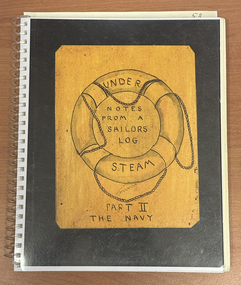
... In 1909, CONDER left the Navy and undertook shored-based civilian work until 1913 when he joined the Royal Australian Naval College at Osborne House in Geelong. He remained with the Naval College until 1937 through its moves to Jervis Bay, NSW and then to Crib Point, Victoria training midshipmen according to the practices of the Royal Navy. ...In 1909, CONDER left the Navy and undertook shored-based civilian work until 1913 when he joined the Royal Australian Naval College at Osborne House in Geelong. He remained with the Naval College until 1937 through its moves to Jervis Bay, NSW and then to Crib Point, Victoria training midshipmen according to the practices of the Royal Navy. ...James Bryance CONDER (aka James Brycanne CONDER) Artist, poet and four-navy veteran, 1872 - 1954. In 1889 he served in the Merchant Marine Service sailing on the ships ‘Ellora’ and ‘Avenger’. in 1891, aged 19, he joined the Royal Navy in Australia serving on the flagship of the Australian Station, ‘HMS Orlando’, when it escorted ships of the new Australasian Auxiliary Squadron in coastal voyages. After serving 6 months he returned to family in Melbourne rather than sign on for 12 years. Instead he joined the Victorian Colonial Navy and was posted, in succession, to the ‘HMVS Cerberus’, ‘HMVS Nelson’ and the gunboat ‘HMVS Albert’. In 1896 he left the navy, married Victoria Agnes NIHILL and joined the Victorian Police Force. In 1904 CONDOR returned to the sea as part of the Commonwealth Naval Forces, an amalgamation of the colonial navies formed after federation and later becoming the Royal Australian Navy. On his first ship, ‘HMS Katoomba’, as bosun yeoman, he helped train new recruits. He later served on ‘HMS Challenger’ and ‘HMS Psyche’ which included voyages to Fiji, the New Hebrides, Singapore and New Zealand as well as regular cruises to Australian ports. In 1909, CONDER left the Navy and undertook shored-based civilian work until 1913 when he joined the Royal Australian Naval College at Osborne House in Geelong. He remained with the Naval College until 1937 through its moves to Jervis Bay, NSW and then to Crib Point, Victoria training midshipmen according to the practices of the Royal Navy. In later life, CONDER produced two handwritten journals for his family illustrated with his own paintings and drawings. Two original sets were made. One remains in the family while the other is held by the Australian National Maritime Museum in Sydney. PMHPS hold several items relating to James CONDER including photocopies of his journals ‘Notes from a Sailors Log - Under Canvas - Part I The Merchant Service’ (Cat No 2700.01) and ‘Notes from a Sailors Log - Under Steam - Part II The Navy’ (Cat No 2700.02), a photocopy of his Certificate of Service (Cat No 2700.03), a booklet of his life story (Cat No 2700.04) and several digital items (Cat No 2476.01 - 2476.09).A spiral bound photocopy of a sailor's log; dark red marbled covers; front cover has tan inset with title in and around a sketch of a lifebuoy. Under Steam - Part II The Navy. See Under Canvas - Part I The Merchant Service (Cat No 2700.01)transport - shipping, hmvs cerberus, james bryance conder, armed services - navy, ran - royal australian navy -
 Port Melbourne Historical & Preservation Society
Booklet, Robert Murphy, James Conder - A Maritime Life - 1872-1954, c. 2000
... In 1909, CONDER left the Navy and undertook shored-based civilian work until 1913 when he joined the Royal Australian Naval College at Osborne House in Geelong. He remained with the Naval College until 1937 through its moves to Jervis Bay, NSW and then to Crib Point, Victoria training midshipmen according to the practices of the Royal Navy. ...In 1909, CONDER left the Navy and undertook shored-based civilian work until 1913 when he joined the Royal Australian Naval College at Osborne House in Geelong. He remained with the Naval College until 1937 through its moves to Jervis Bay, NSW and then to Crib Point, Victoria training midshipmen according to the practices of the Royal Navy. ...James Bryance CONDER (aka James Brycanne CONDER) Artist, poet and four-navy veteran, 1872 - 1954. In 1889 he served in the Merchant Marine Service sailing on the ships ‘Ellora’ and ‘Avenger’. in 1891, aged 19, he joined the Royal Navy in Australia serving on the flagship of the Australian Station, ‘HMS Orlando’, when it escorted ships of the new Australasian Auxiliary Squadron in coastal voyages. After serving 6 months he returned to family in Melbourne rather than sign on for 12 years. Instead he joined the Victorian Colonial Navy and was posted, in succession, to the ‘HMVS Cerberus’, ‘HMVS Nelson’ and the gunboat ‘HMVS Albert’. In 1896 he left the navy, married Victoria Agnes NIHILL and joined the Victorian Police Force. In 1904 CONDOR returned to the sea as part of the Commonwealth Naval Forces, an amalgamation of the colonial navies formed after federation and later becoming the Royal Australian Navy. On his first ship, ‘HMS Katoomba’, as bosun yeoman, he helped train new recruits. He later served on ‘HMS Challenger’ and ‘HMS Psyche’ which included voyages to Fiji, the New Hebrides, Singapore and New Zealand as well as regular cruises to Australian ports. In 1909, CONDER left the Navy and undertook shored-based civilian work until 1913 when he joined the Royal Australian Naval College at Osborne House in Geelong. He remained with the Naval College until 1937 through its moves to Jervis Bay, NSW and then to Crib Point, Victoria training midshipmen according to the practices of the Royal Navy. In later life, CONDER produced two handwritten journals for his family illustrated with his own paintings and drawings. Two original sets were made. One remains in the family while the other is held by the Australian National Maritime Museum in Sydney. PMHPS hold several items relating to James CONDER including photocopies of his journals ‘Notes from a Sailors Log - Under Canvas - Part I The Merchant Service’ (Cat No 2700.01) and ‘Notes from a Sailors Log - Under Steam - Part II The Navy’ (Cat No 2700.02), a photocopy of his Certificate of Service (Cat No 2700.03), a booklet of his life story (Cat No 2700.04) and several digital items (Cat No 2476.01 - 2476.09). 'James Conder - A Maritime Life - 1872-1954', A5 booklet 20 pp incl cover, 'developed by Robert Murphy for the many family members descended from James Conder'.armed services - navy, transport - shipping, police, arts and entertainment - visual arts, hmvs cerberus, james bryance conder, ran - royal australian navy, victorian colonial navy, victoria police, royal australian naval college, robert murphy, painting, royal naval squadron -
 Port Melbourne Historical & Preservation Society
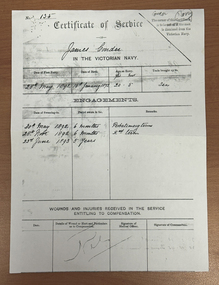
Certificate - Photocopy, Certificate of Service, James Condor, Navy, 1904 - 1959
... In 1909, CONDER left the Navy and undertook shored-based civilian work until 1913 when he joined the Royal Australian Naval College at Osborne House in Geelong. He remained with the Naval College until 1937 through its moves to Jervis Bay, NSW and then to Crib Point, Victoria training midshipmen according to the practices of the Royal Navy. ...In 1909, CONDER left the Navy and undertook shored-based civilian work until 1913 when he joined the Royal Australian Naval College at Osborne House in Geelong. He remained with the Naval College until 1937 through its moves to Jervis Bay, NSW and then to Crib Point, Victoria training midshipmen according to the practices of the Royal Navy. ...James Bryance CONDER (aka James Brycanne CONDER) Artist, poet and four-navy veteran, 1872 - 1954. In 1889 he served in the Merchant Marine Service sailing on the ships ‘Ellora’ and ‘Avenger’. in 1891, aged 19, he joined the Royal Navy in Australia serving on the flagship of the Australian Station, ‘HMS Orlando’, when it escorted ships of the new Australasian Auxiliary Squadron in coastal voyages. After serving 6 months he returned to family in Melbourne rather than sign on for 12 years. Instead he joined the Victorian Colonial Navy and was posted, in succession, to the ‘HMVS Cerberus’, ‘HMVS Nelson’ and the gunboat ‘HMVS Albert’. In 1896 he left the navy, married Victoria Agnes NIHILL and joined the Victorian Police Force. In 1904 CONDOR returned to the sea as part of the Commonwealth Naval Forces, an amalgamation of the colonial navies formed after federation and later becoming the Royal Australian Navy. On his first ship, ‘HMS Katoomba’, as bosun yeoman, he helped train new recruits. He later served on ‘HMS Challenger’ and ‘HMS Psyche’ which included voyages to Fiji, the New Hebrides, Singapore and New Zealand as well as regular cruises to Australian ports. In 1909, CONDER left the Navy and undertook shored-based civilian work until 1913 when he joined the Royal Australian Naval College at Osborne House in Geelong. He remained with the Naval College until 1937 through its moves to Jervis Bay, NSW and then to Crib Point, Victoria training midshipmen according to the practices of the Royal Navy. In later life, CONDER produced two handwritten journals for his family illustrated with his own paintings and drawings. Two original sets were made. One remains in the family while the other is held by the Australian National Maritime Museum in Sydney. PMHPS hold several items relating to James CONDER including photocopies of his journals ‘Notes from a Sailors Log - Under Canvas - Part I The Merchant Service’ (Cat No 2700.01) and ‘Notes from a Sailors Log - Under Steam - Part II The Navy’ (Cat No 2700.02), a photocopy of his Certificate of Service (Cat No 2700.03), a booklet of his life story (Cat No 2700.04) and several digital items (Cat No 2476.01 - 2476.09). Photocopy of James CONDER's Certificate of Servicearmed services - navy, transport - shipping, james bryance conder, ran - royal australian navy, royal naval squadron, victorian colonial navy, merchant navy, victoria police, police -
 Port Melbourne Historical & Preservation Society
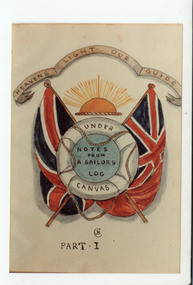
Photograph - Title page drawing from James Conder Journal Part I
... In 1909, CONDER left the Navy and undertook shored-based civilian work until 1913 when he joined the Royal Australian Naval College at Osborne House in Geelong. He remained with the Naval College until 1937 through its moves to Jervis Bay, NSW and then to Crib Point, Victoria training midshipmen according to the practices of the Royal Navy. ...In 1909, CONDER left the Navy and undertook shored-based civilian work until 1913 when he joined the Royal Australian Naval College at Osborne House in Geelong. He remained with the Naval College until 1937 through its moves to Jervis Bay, NSW and then to Crib Point, Victoria training midshipmen according to the practices of the Royal Navy. ...James Bryance CONDER (aka James Brycanne CONDER) Artist, poet and four-navy veteran, 1872 - 1954. In 1889 he served in the Merchant Marine Service sailing on the ships ‘Ellora’ and ‘Avenger’. in 1891, aged 19, he joined the Royal Navy in Australia serving on the flagship of the Australian Station, ‘HMS Orlando’, when it escorted ships of the new Australasian Auxiliary Squadron in coastal voyages. After serving 6 months he returned to family in Melbourne rather than sign on for 12 years. Instead he joined the Victorian Colonial Navy and was posted, in succession, to the ‘HMVS Cerberus’, ‘HMVS Nelson’ and the gunboat ‘HMVS Albert’. In 1896 he left the navy, married Victoria Agnes NIHILL and joined the Victorian Police Force. In 1904 CONDOR returned to the sea as part of the Commonwealth Naval Forces, an amalgamation of the colonial navies formed after federation and later becoming the Royal Australian Navy. On his first ship, ‘HMS Katoomba’, as bosun yeoman, he helped train new recruits. He later served on ‘HMS Challenger’ and ‘HMS Psyche’ which included voyages to Fiji, the New Hebrides, Singapore and New Zealand as well as regular cruises to Australian ports. In 1909, CONDER left the Navy and undertook shored-based civilian work until 1913 when he joined the Royal Australian Naval College at Osborne House in Geelong. He remained with the Naval College until 1937 through its moves to Jervis Bay, NSW and then to Crib Point, Victoria training midshipmen according to the practices of the Royal Navy. In later life, CONDER produced two handwritten journals for his family illustrated with his own paintings and drawings. Two original sets were made. One remains in the family while the other is held by the Australian National Maritime Museum in Sydney. PMHPS hold several items relating to James CONDER including photocopies of his journals ‘Notes from a Sailors Log - Under Canvas - Part I The Merchant Service’ (Cat No 2700.01) and ‘Notes from a Sailors Log - Under Steam - Part II The Navy’ (Cat No 2700.02), a photocopy of his Certificate of Service (Cat No 2700.03), a booklet of his life story (Cat No 2700.04) and several digital items (Cat No 2476.01 - 2476.09).Colour digital photograph of the title page handdrawn by James GONDER from ‘Notes from a Sailors Log - Under Canvas - Part I The Merchant Service’ (Cat No 2700.01).armed services - navy, transport - shipping, james bryance conder, ran - royal australian navy, victorian colonial navy, royal australian naval college, merchant navy, royal naval squadron -
 Port Melbourne Historical & Preservation Society
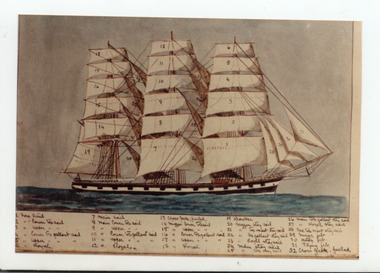
Photograph - Sailing ship showing sail configuration
... In 1909, CONDER left the Navy and undertook shored-based civilian work until 1913 when he joined the Royal Australian Naval College at Osborne House in Geelong. He remained with the Naval College until 1937 through its moves to Jervis Bay, NSW and then to Crib Point, Victoria training midshipmen according to the practices of the Royal Navy. ...In 1909, CONDER left the Navy and undertook shored-based civilian work until 1913 when he joined the Royal Australian Naval College at Osborne House in Geelong. He remained with the Naval College until 1937 through its moves to Jervis Bay, NSW and then to Crib Point, Victoria training midshipmen according to the practices of the Royal Navy. ...James Bryance CONDER (aka James Brycanne CONDER) Artist, poet and four-navy veteran, 1872 - 1954. In 1889 he served in the Merchant Marine Service sailing on the ships ‘Ellora’ and ‘Avenger’. in 1891, aged 19, he joined the Royal Navy in Australia serving on the flagship of the Australian Station, ‘HMS Orlando’, when it escorted ships of the new Australasian Auxiliary Squadron in coastal voyages. After serving 6 months he returned to family in Melbourne rather than sign on for 12 years. Instead he joined the Victorian Colonial Navy and was posted, in succession, to the ‘HMVS Cerberus’, ‘HMVS Nelson’ and the gunboat ‘HMVS Albert’. In 1896 he left the navy, married Victoria Agnes NIHILL and joined the Victorian Police Force. In 1904 CONDOR returned to the sea as part of the Commonwealth Naval Forces, an amalgamation of the colonial navies formed after federation and later becoming the Royal Australian Navy. On his first ship, ‘HMS Katoomba’, as bosun yeoman, he helped train new recruits. He later served on ‘HMS Challenger’ and ‘HMS Psyche’ which included voyages to Fiji, the New Hebrides, Singapore and New Zealand as well as regular cruises to Australian ports. In 1909, CONDER left the Navy and undertook shored-based civilian work until 1913 when he joined the Royal Australian Naval College at Osborne House in Geelong. He remained with the Naval College until 1937 through its moves to Jervis Bay, NSW and then to Crib Point, Victoria training midshipmen according to the practices of the Royal Navy. In later life, CONDER produced two handwritten journals for his family illustrated with his own paintings and drawings. Two original sets were made. One remains in the family while the other is held by the Australian National Maritime Museum in Sydney. PMHPS hold several items relating to James CONDER including photocopies of his journals ‘Notes from a Sailors Log - Under Canvas - Part I The Merchant Service’ (Cat No 2700.01) and ‘Notes from a Sailors Log - Under Steam - Part II The Navy’ (Cat No 2700.02), a photocopy of his Certificate of Service (Cat No 2700.03), a booklet of his life story (Cat No 2700.04) and several digital items (Cat No 2476.01 - 2476.09).Colour digital photograph of a drawing by James CONDER showing the sail configuration for a sailing ship.armed services - navy, transport - shipping, james bryance conder, ran - royal australian navy, victorian colonial navy, royal australian naval college, merchant navy, royal naval squadron -
 Port Melbourne Historical & Preservation Society
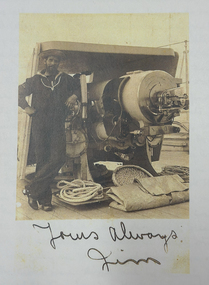
Photograph - James CONDER in uniform, c. 1905
... In 1909, CONDER left the Navy and undertook shored-based civilian work until 1913 when he joined the Royal Australian Naval College at Osborne House in Geelong. He remained with the Naval College until 1937 through its moves to Jervis Bay, NSW and then to Crib Point, Victoria training midshipmen according to the practices of the Royal Navy. ...In 1909, CONDER left the Navy and undertook shored-based civilian work until 1913 when he joined the Royal Australian Naval College at Osborne House in Geelong. He remained with the Naval College until 1937 through its moves to Jervis Bay, NSW and then to Crib Point, Victoria training midshipmen according to the practices of the Royal Navy. ...James Bryance CONDER (aka James Brycanne CONDER) Artist, poet and four-navy veteran, 1872 - 1954. In 1889 he served in the Merchant Marine Service sailing on the ships ‘Ellora’ and ‘Avenger’. in 1891, aged 19, he joined the Royal Navy in Australia serving on the flagship of the Australian Station, ‘HMS Orlando’, when it escorted ships of the new Australasian Auxiliary Squadron in coastal voyages. After serving 6 months he returned to family in Melbourne rather than sign on for 12 years. Instead he joined the Victorian Colonial Navy and was posted, in succession, to the ‘HMVS Cerberus’, ‘HMVS Nelson’ and the gunboat ‘HMVS Albert’. In 1896 he left the navy, married Victoria Agnes NIHILL and joined the Victorian Police Force. In 1904 CONDOR returned to the sea as part of the Commonwealth Naval Forces, an amalgamation of the colonial navies formed after federation and later becoming the Royal Australian Navy. On his first ship, ‘HMS Katoomba’, as bosun yeoman, he helped train new recruits. He later served on ‘HMS Challenger’ and ‘HMS Psyche’ which included voyages to Fiji, the New Hebrides, Singapore and New Zealand as well as regular cruises to Australian ports. In 1909, CONDER left the Navy and undertook shored-based civilian work until 1913 when he joined the Royal Australian Naval College at Osborne House in Geelong. He remained with the Naval College until 1937 through its moves to Jervis Bay, NSW and then to Crib Point, Victoria training midshipmen according to the practices of the Royal Navy. In later life, CONDER produced two handwritten journals for his family illustrated with his own paintings and drawings. Two original sets were made. One remains in the family while the other is held by the Australian National Maritime Museum in Sydney. PMHPS hold several items relating to James CONDER including photocopies of his journals ‘Notes from a Sailors Log - Under Canvas - Part I The Merchant Service’ (Cat No 2700.01) and ‘Notes from a Sailors Log - Under Steam - Part II The Navy’ (Cat No 2700.02), a photocopy of his Certificate of Service (Cat No 2700.03), a booklet of his life story (Cat No 2700.04) and several digital items (Cat No 2476.01 - 2476.09).Sepia digital photograph of James CONDER in uniform, sent to family with greeting 'Yours Always, Jim'. This photo is included in the early pages of CONDER's journal ‘Notes from a Sailors Log - Under Steam - Part II The Navy’ (Cat No 2700.02)."Yours always / Jim"armed services - navy, transport - shipping, james bryance conder, ran - royal australian navy, victorian colonial navy -
 Port Melbourne Historical & Preservation Society
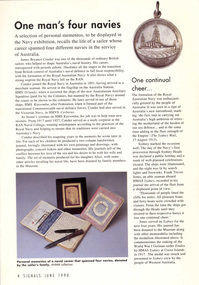
Magazine - Article, One Man's Four Navies
... In 1909, CONDER left the Navy and undertook shored-based civilian work until 1913 when he joined the Royal Australian Naval College at Osborne House in Geelong. He remained with the Naval College until 1937 through its moves to Jervis Bay, NSW and then to Crib Point, Victoria training midshipmen according to the practices of the Royal Navy. ...In 1909, CONDER left the Navy and undertook shored-based civilian work until 1913 when he joined the Royal Australian Naval College at Osborne House in Geelong. He remained with the Naval College until 1937 through its moves to Jervis Bay, NSW and then to Crib Point, Victoria training midshipmen according to the practices of the Royal Navy. ...James Bryance CONDER (aka James Brycanne CONDER) Artist, poet and four-navy veteran, 1872 - 1954. In 1889 he served in the Merchant Marine Service sailing on the ships ‘Ellora’ and ‘Avenger’. in 1891, aged 19, he joined the Royal Navy in Australia serving on the flagship of the Australian Station, ‘HMS Orlando’, when it escorted ships of the new Australasian Auxiliary Squadron in coastal voyages. After serving 6 months he returned to family in Melbourne rather than sign on for 12 years. Instead he joined the Victorian Colonial Navy and was posted, in succession, to the ‘HMVS Cerberus’, ‘HMVS Nelson’ and the gunboat ‘HMVS Albert’. In 1896 he left the navy, married Victoria Agnes NIHILL and joined the Victorian Police Force. In 1904 CONDOR returned to the sea as part of the Commonwealth Naval Forces, an amalgamation of the colonial navies formed after federation and later becoming the Royal Australian Navy. On his first ship, ‘HMS Katoomba’, as bosun yeoman, he helped train new recruits. He later served on ‘HMS Challenger’ and ‘HMS Psyche’ which included voyages to Fiji, the New Hebrides, Singapore and New Zealand as well as regular cruises to Australian ports. In 1909, CONDER left the Navy and undertook shored-based civilian work until 1913 when he joined the Royal Australian Naval College at Osborne House in Geelong. He remained with the Naval College until 1937 through its moves to Jervis Bay, NSW and then to Crib Point, Victoria training midshipmen according to the practices of the Royal Navy. In later life, CONDER produced two handwritten journals for his family illustrated with his own paintings and drawings. Two original sets were made. One remains in the family while the other is held by the Australian National Maritime Museum in Sydney. PMHPS hold several items relating to James CONDER including photocopies of his journals ‘Notes from a Sailors Log - Under Canvas - Part I The Merchant Service’ (Cat No 2700.01) and ‘Notes from a Sailors Log - Under Steam - Part II The Navy’ (Cat No 2700.02), a photocopy of his Certificate of Service (Cat No 2700.03), a booklet of his life story (Cat No 2700.04) and several digital items (Cat No 2476.01 - 2476.09).Article, 'One Man's Four Navies', about James CONDER from National Maritime Museum's 'Signals' magazine, Issue 12, 1 June 1990. armed services - navy, transport - shipping, james bryance conder, ran - royal australian navy, royal naval squadron, victorian colonial navy -
 Port Melbourne Historical & Preservation Society
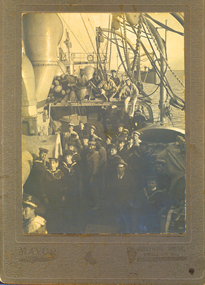
Photograph - Crew of the Katoomba, 1904
... In 1909, CONDER left the Navy and undertook shored-based civilian work until 1913 when he joined the Royal Australian Naval College at Osborne House in Geelong. He remained with the Naval College until 1937 through its moves to Jervis Bay, NSW and then to Crib Point, Victoria training midshipmen according to the practices of the Royal Navy. ...In 1909, CONDER left the Navy and undertook shored-based civilian work until 1913 when he joined the Royal Australian Naval College at Osborne House in Geelong. He remained with the Naval College until 1937 through its moves to Jervis Bay, NSW and then to Crib Point, Victoria training midshipmen according to the practices of the Royal Navy. ...James Bryance CONDER (aka James Brycanne CONDER) Artist, poet and four-navy veteran, 1872 - 1954. In 1889 he served in the Merchant Marine Service sailing on the ships ‘Ellora’ and ‘Avenger’. in 1891, aged 19, he joined the Royal Navy in Australia serving on the flagship of the Australian Station, ‘HMS Orlando’, when it escorted ships of the new Australasian Auxiliary Squadron in coastal voyages. After serving 6 months he returned to family in Melbourne rather than sign on for 12 years. Instead he joined the Victorian Colonial Navy and was posted, in succession, to the ‘HMVS Cerberus’, ‘HMVS Nelson’ and the gunboat ‘HMVS Albert’. In 1896 he left the navy, married Victoria Agnes NIHILL and joined the Victorian Police Force. In 1904 CONDOR returned to the sea as part of the Commonwealth Naval Forces, an amalgamation of the colonial navies formed after federation and later becoming the Royal Australian Navy. On his first ship, ‘HMS Katoomba’, as bosun yeoman, he helped train new recruits. He later served on ‘HMS Challenger’ and ‘HMS Psyche’ which included voyages to Fiji, the New Hebrides, Singapore and New Zealand as well as regular cruises to Australian ports. In 1909, CONDER left the Navy and undertook shored-based civilian work until 1913 when he joined the Royal Australian Naval College at Osborne House in Geelong. He remained with the Naval College until 1937 through its moves to Jervis Bay, NSW and then to Crib Point, Victoria training midshipmen according to the practices of the Royal Navy. In later life, CONDER produced two handwritten journals for his family illustrated with his own paintings and drawings. Two original sets were made. One remains in the family while the other is held by the Australian National Maritime Museum in Sydney. PMHPS hold several items relating to James CONDER including photocopies of his journals ‘Notes from a Sailors Log - Under Canvas - Part I The Merchant Service’ (Cat No 2700.01) and ‘Notes from a Sailors Log - Under Steam - Part II The Navy’ (Cat No 2700.02), a photocopy of his Certificate of Service (Cat No 2700.03), a booklet of his life story (Cat No 2700.04) and several digital items (Cat No 2476.01 - 2476.09). Digital copy of b&w photograph of the crew of the 'Katoomba'armed services - navy, hms katoomba, james bryance conder, ran - royal australian navy -
 Port Melbourne Historical & Preservation Society
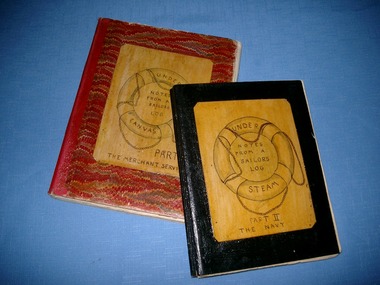
Photograph - James CONDER's journals, Glen Stuart, Aug 2008
... In 1909, CONDER left the Navy and undertook shored-based civilian work until 1913 when he joined the Royal Australian Naval College at Osborne House in Geelong. He remained with the Naval College until 1937 through its moves to Jervis Bay, NSW and then to Crib Point, Victoria training midshipmen according to the practices of the Royal Navy. ...In 1909, CONDER left the Navy and undertook shored-based civilian work until 1913 when he joined the Royal Australian Naval College at Osborne House in Geelong. He remained with the Naval College until 1937 through its moves to Jervis Bay, NSW and then to Crib Point, Victoria training midshipmen according to the practices of the Royal Navy. ...James Bryance CONDER (aka James Brycanne CONDER) Artist, poet and four-navy veteran, 1872 - 1954. In 1889 he served in the Merchant Marine Service sailing on the ships ‘Ellora’ and ‘Avenger’. in 1891, aged 19, he joined the Royal Navy in Australia serving on the flagship of the Australian Station, ‘HMS Orlando’, when it escorted ships of the new Australasian Auxiliary Squadron in coastal voyages. After serving 6 months he returned to family in Melbourne rather than sign on for 12 years. Instead he joined the Victorian Colonial Navy and was posted, in succession, to the ‘HMVS Cerberus’, ‘HMVS Nelson’ and the gunboat ‘HMVS Albert’. In 1896 he left the navy, married Victoria Agnes NIHILL and joined the Victorian Police Force. In 1904 CONDOR returned to the sea as part of the Commonwealth Naval Forces, an amalgamation of the colonial navies formed after federation and later becoming the Royal Australian Navy. On his first ship, ‘HMS Katoomba’, as bosun yeoman, he helped train new recruits. He later served on ‘HMS Challenger’ and ‘HMS Psyche’ which included voyages to Fiji, the New Hebrides, Singapore and New Zealand as well as regular cruises to Australian ports. In 1909, CONDER left the Navy and undertook shored-based civilian work until 1913 when he joined the Royal Australian Naval College at Osborne House in Geelong. He remained with the Naval College until 1937 through its moves to Jervis Bay, NSW and then to Crib Point, Victoria training midshipmen according to the practices of the Royal Navy. In later life, CONDER produced two handwritten journals for his family illustrated with his own paintings and drawings. Two original sets were made. One remains in the family while the other is held by the Australian National Maritime Museum in Sydney. PMHPS hold several items relating to James CONDER including photocopies of his journals ‘Notes from a Sailors Log - Under Canvas - Part I The Merchant Service’ (Cat No 2700.01) and ‘Notes from a Sailors Log - Under Steam - Part II The Navy’ (Cat No 2700.02), a photocopy of his Certificate of Service (Cat No 2700.03), a booklet of his life story (Cat No 2700.04) and several digital items (Cat No 2476.01 - 2476.09).Colour digital photograph of of of the original two sets of James CONDER's handwritten and illustrated journals made for his family, '‘Notes from a Sailors Log - Under Canvas - Part I The Merchant Service’ (Cat No 2700.01) and ‘Notes from a Sailors Log - Under Steam - Part II The Navy’ (Cat No 2700.02). Displayed in 'Navy in Port' exhibition Aug/Sept 2008armed services - navy, transport - shipping, james bryance conder, merchant navy, royal naval squadron, victorian colonial navy, ran - royal australian navy -
 Port Melbourne Historical & Preservation Society
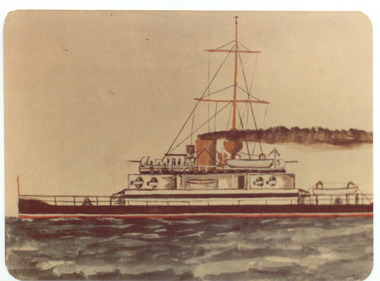
Photograph - HMVS Cerberus by James CONDER
... In 1909, CONDER left the Navy and undertook shored-based civilian work until 1913 when he joined the Royal Australian Naval College at Osborne House in Geelong. He remained with the Naval College until 1937 through its moves to Jervis Bay, NSW and then to Crib Point, Victoria training midshipmen according to the practices of the Royal Navy. ...In 1909, CONDER left the Navy and undertook shored-based civilian work until 1913 when he joined the Royal Australian Naval College at Osborne House in Geelong. He remained with the Naval College until 1937 through its moves to Jervis Bay, NSW and then to Crib Point, Victoria training midshipmen according to the practices of the Royal Navy. ...James Bryance CONDER (aka James Brycanne CONDER) Artist, poet and four-navy veteran, 1872 - 1954. In 1889 he served in the Merchant Marine Service sailing on the ships ‘Ellora’ and ‘Avenger’. in 1891, aged 19, he joined the Royal Navy in Australia serving on the flagship of the Australian Station, ‘HMS Orlando’, when it escorted ships of the new Australasian Auxiliary Squadron in coastal voyages. After serving 6 months he returned to family in Melbourne rather than sign on for 12 years. Instead he joined the Victorian Colonial Navy and was posted, in succession, to the ‘HMVS Cerberus’, ‘HMVS Nelson’ and the gunboat ‘HMVS Albert’. In 1896 he left the navy, married Victoria Agnes NIHILL and joined the Victorian Police Force. In 1904 CONDOR returned to the sea as part of the Commonwealth Naval Forces, an amalgamation of the colonial navies formed after federation and later becoming the Royal Australian Navy. On his first ship, ‘HMS Katoomba’, as bosun yeoman, he helped train new recruits. He later served on ‘HMS Challenger’ and ‘HMS Psyche’ which included voyages to Fiji, the New Hebrides, Singapore and New Zealand as well as regular cruises to Australian ports. In 1909, CONDER left the Navy and undertook shored-based civilian work until 1913 when he joined the Royal Australian Naval College at Osborne House in Geelong. He remained with the Naval College until 1937 through its moves to Jervis Bay, NSW and then to Crib Point, Victoria training midshipmen according to the practices of the Royal Navy. In later life, CONDER produced two handwritten journals for his family illustrated with his own paintings and drawings. Two original sets were made. One remains in the family while the other is held by the Australian National Maritime Museum in Sydney. PMHPS hold several items relating to James CONDER including photocopies of his journals ‘Notes from a Sailors Log - Under Canvas - Part I The Merchant Service’ (Cat No 2700.01) and ‘Notes from a Sailors Log - Under Steam - Part II The Navy’ (Cat No 2700.02), a photocopy of his Certificate of Service (Cat No 2700.03), a booklet of his life story (Cat No 2700.04) and several digital items (Cat No 2476.01 - 2476.09).Colour digital photograph of a drawing of HMVS Cerberus by James CONDER.armed services - navy, transport - shipping, james bryance conder, ran - royal australian navy, victorian colonial navy, royal australian naval college, merchant navy, hmvs cerberus, royal naval squadron -
 Port Melbourne Historical & Preservation Society
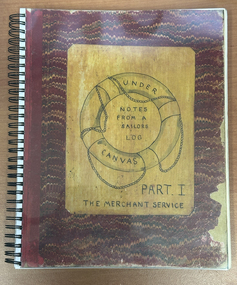
Document - James CONDER Journal, James Brycanne Conder, NOTES FROM A SAILORS LOG - UNDER CANVAS - PART I THE MERCHANT SERVICE
... In 1909, CONDER left the Navy and undertook shored-based civilian work until 1913 when he joined the Royal Australian Naval College at Osborne House in Geelong. He remained with the Naval College until 1937 through its moves to Jervis Bay, NSW and then to Crib Point, Victoria training midshipmen according to the practices of the Royal Navy. ...In 1909, CONDER left the Navy and undertook shored-based civilian work until 1913 when he joined the Royal Australian Naval College at Osborne House in Geelong. He remained with the Naval College until 1937 through its moves to Jervis Bay, NSW and then to Crib Point, Victoria training midshipmen according to the practices of the Royal Navy. ...James Bryance CONDER (aka James Brycanne CONDER) Artist, poet and four-navy veteran, 1872 - 1954. In 1889 he served in the Merchant Marine Service sailing on the ships ‘Ellora’ and ‘Avenger’. in 1891, aged 19, he joined the Royal Navy in Australia serving on the flagship of the Australian Station, ‘HMS Orlando’, when it escorted ships of the new Australasian Auxiliary Squadron in coastal voyages. After serving 6 months he returned to family in Melbourne rather than sign on for 12 years. Instead he joined the Victorian Colonial Navy and was posted, in succession, to the ‘HMVS Cerberus’, ‘HMVS Nelson’ and the gunboat ‘HMVS Albert’. In 1896 he left the navy, married Victoria Agnes NIHILL and joined the Victorian Police Force. In 1904 CONDOR returned to the sea as part of the Commonwealth Naval Forces, an amalgamation of the colonial navies formed after federation and later becoming the Royal Australian Navy. On his first ship, ‘HMS Katoomba’, as bosun yeoman, he helped train new recruits. He later served on ‘HMS Challenger’ and ‘HMS Psyche’ which included voyages to Fiji, the New Hebrides, Singapore and New Zealand as well as regular cruises to Australian ports. In 1909, CONDER left the Navy and undertook shored-based civilian work until 1913 when he joined the Royal Australian Naval College at Osborne House in Geelong. He remained with the Naval College until 1937 through its moves to Jervis Bay, NSW and then to Crib Point, Victoria training midshipmen according to the practices of the Royal Navy. In later life, CONDER produced two handwritten journals for his family illustrated with his own paintings and drawings. Two original sets were made. One remains in the family while the other is held by the Australian National Maritime Museum in Sydney. PMHPS hold several items relating to James CONDER including photocopies of his journals ‘Notes from a Sailors Log - Under Canvas - Part I The Merchant Service’ (Cat No 2700.01) and ‘Notes from a Sailors Log - Under Steam - Part II The Navy’ (Cat No 2700.02), a photocopy of his Certificate of Service (Cat No 2700.03), a booklet of his life story (Cat No 2700.04) and several digital items (Cat No 2476.01 - 2476.09).A spiral bound photocopy of a sailor's log; dark red marbled covers; front cover has tan inset with title in and around a sketch of a lifebuoy. Under Canvas - Part I The Merchant Service. See Under Steam - Part II The Navy (Cat No 2700.02)transport - shipping, james bryance conder, merchant navy
