
Showing 4 items matching "parasitic "
-
 Bendigo Historical Society Inc.
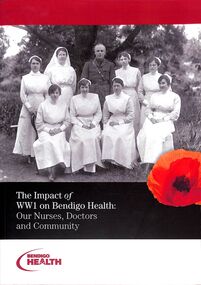
Book - "The Impact of WW1 on Bendigo Health: Our nurses, Doctors and Community.", 1914
... Those who served lived and work in crowded spaces, which helped to spread bacterial, viral and parasitic infections. Unhealthy living conditions for soldiers (and sailors) included: poor diet lack of sleep exposure to cold contact with mice, rats, fleas, lice and other parasites. ...Those who served lived and work in crowded spaces, which helped to spread bacterial, viral and parasitic infections. Unhealthy living conditions for soldiers (and sailors) included: poor diet lack of sleep exposure to cold contact with mice, rats, fleas, lice and other parasites. ...Over 4000 Bendigo residents enlisted to serve in W.W. 1. Much is known about their contributions to the war effort, but less is known about the contributions made by the medical staff who provided care at the front lines or otherwise supported care. People enlisted for many reasons - patriotism, duty and adventure being just a few. Over 416,000 persons enlisted to serve in World War One out of a population of 5 million. The Australian Government recorded 215,585 casualties during the war. Over 80% of those casualties occurred on the Western Front, in Belgium and France. The weapons used in trench warfare created horrendous injuries for both sides in the war. In the Australian Imperial Force (AIF), for example, most wounds were the result of flying metal. During their service, many of the 331,781 AIF troops and medical staff were injured more than once: over 50% were hit by shell fragments or shrapnel bullets from artillery fire 40% were hit by high-velocity bullets from rifles or machine guns 12% were affected by chlorine or mustard gas 2% were hit by bombs or grenades only 0.3% suffered bayonet wounds Many health risks also developed into large-scale problems on the front. Those who served lived and work in crowded spaces, which helped to spread bacterial, viral and parasitic infections. Unhealthy living conditions for soldiers (and sailors) included: poor diet lack of sleep exposure to cold contact with mice, rats, fleas, lice and other parasites. Soft cover. 41pp. Black and white image of nurses on front cover, along with red poppy. Tile written in white to bottom third of front cover on black background. Bendigo Health logo to bottom of front cover. Back cover has image of signage for the 'Old Mortuary' of Bendigo Hospital, with burgundy, black and white stipes above and below image. Contains black and white and color images. soldiers, world war one, british empire, doctors, nurses, bendigo hospital -
 Sunshine and District Historical Society Incorporated
Archive - Sunshine Beautification Group
... Flyer and Badge from What Can I do to Help Clean up the future|Flyer Clean Up Day Warning You must Register|Folder for Clean up Australia|1st Sunshine Beautification Group Garden Competition Pennant|Minutes of Sunshine Beautification Group 6th February 1986 at Sunshine Municipal Offices Alexandra Avenue Sunshine|Newspaper Article Star Weekly 11 January 2005 Brimbank is filthy dirty pigsty claim|Newspaper Article Brimbank Messenger 21 March 2000 Clean up not just single day|Newspaper Article Herald Sun 13 October 1994 Scribble scrapped|Newspaper Article 21 December 2004 Council rubbished for removing litter bins|Typed Letter 25 April 1991 Clean up Australia Day|Typed Letter 31 March 1981 The Sunshine Advocate Pruning of street trees|Typed Letter 21 June 1983 Sunshine International Womens Year Action Committee beautify the Ballarat Road Land|Typed Letter 6 June 1986 Conduct a Tidy Street|Typed Minutes Sunshine Beautification Group 5 June 1986|Typed Minutes Sunshine Beautification Group 7 August 1986|Typed Letter from 9 July 1986 RJ Cantrill Plant Advisory Officer Department of Agriculture Parasitic Wasp|Typed Letter 21 October 1987 to Mr Bill Fogarty Harzardous Materials Storage and Transport Strategies for Local Government in Melbourne's Western Region|Typed Letter 4 May 1988 Mr John James Town Clerk Saving Trees|Typed Minutes Sunshine Beautification Group 12 May 1988|Typed Minutes Sunshine Beautification Group 2 June 1988|Notices of Motion 14 June 1988 Litter|Typed Letter from IC Patience Deputy Town Clerk 13 June 1988 Nomination suggestion for Mrs Beth Argle for the 1988 Women's Award|Typed Letter 23 June 1988 Mr B Griffin Chief Health Surveyor New Litter Act|Typed Letter 23 June 1988 Mr J James The Town Clerk request for $500|Typed Minutes Sunshine Beautification Group 7 July 1988|Typed Minutes Sunshine Beautification Group 3 November 1988|Typed Report Metropolitan Area Improvement Programs General Information on funding conditions March 1991|Typed Minutes Sunshine Beautification Group 4 April 1991|Typed Letter to Gwen about Tidy Street Competition and Keep Australia Beautiful|Flyer Sunshine Beautification Group Keep Australia Beautiful program March 1993|Typed Minutes Sunshine Beautification Group 1 September 1994|Typed Minutes Sunshine Beautification Group 6 October 1994|Typed Minutes Sunshine Beautification Group 3 November 1994|Handwritten Minutes Sunshine Beautification Group 3 October 1996|Typed Minutes Sunshine Beautification Group 5 November 1998|Typed Minutes Sunshine Beautification Group 4 February 1999|Typed Minutes Sunshine Beautification Group 5 April 2001|Typed Minutes Sunshine Beautification Group 5 June 2003|Typed Minutes Sunshine Beautification Group 3rd February 2005|Letter to Sheryl Ashley 30 December 2004 Removal of Rubbish Bins at Bus Stops and Public places|Handwritten Letter to Gwen Goedecke 1 February 1999|Newsletter December 1998 Tootgarook Wetlands|Sash for 1st prize in Sunshine Beutification Group Garden Competition...Sunshine Beautification Group Flyer and Badge from What Can I do to Help Clean up the future|Flyer Clean Up Day Warning You must Register|Folder for Clean up Australia|1st Sunshine Beautification Group Garden Competition Pennant|Minutes of Sunshine Beautification Group 6th February 1986 at Sunshine Municipal Offices Alexandra Avenue Sunshine|Newspaper Article Star Weekly 11 January 2005 Brimbank is filthy dirty pigsty claim|Newspaper Article Brimbank Messenger 21 March 2000 Clean up not just single day|Newspaper Article Herald Sun 13 October 1994 Scribble scrapped|Newspaper Article 21 December 2004 Council rubbished for removing litter bins|Typed Letter 25 April 1991 Clean up Australia Day|Typed Letter 31 March 1981 The Sunshine Advocate Pruning of street trees|Typed Letter 21 June 1983 Sunshine International Womens Year Action Committee beautify the Ballarat Road Land|Typed Letter 6 June 1986 Conduct a Tidy Street|Typed Minutes Sunshine Beautification Group 5 June 1986|Typed Minutes Sunshine Beautification Group 7 August 1986|Typed Letter from 9 July 1986 RJ Cantrill Plant Advisory Officer Department of Agriculture Parasitic Wasp|Typed Letter 21 October 1987 to Mr Bill Fogarty Harzardous Materials Storage and Transport Strategies for Local Government in Melbourne's Western Region|Typed Letter 4 May 1988 Mr John James Town Clerk Saving Trees|Typed Minutes Sunshine Beautification Group 12 May 1988|Typed Minutes Sunshine Beautification Group 2 June 1988|Notices of Motion 14 June 1988 Litter|Typed Letter from IC Patience Deputy Town Clerk 13 June 1988 Nomination suggestion for Mrs Beth Argle for the 1988 Women's Award|Typed Letter 23 June 1988 Mr B Griffin Chief Health Surveyor New Litter Act|Typed Letter 23 June 1988 Mr J James The Town Clerk request for $500|Typed Minutes Sunshine Beautification Group 7 July 1988|Typed Minutes Sunshine Beautification Group 3 November 1988|Typed Report Metropolitan Area Improvement Programs General Information on funding conditions March 1991|Typed Minutes Sunshine Beautification Group 4 April 1991|Typed Letter to Gwen about Tidy Street Competition and Keep Australia Beautiful|Flyer Sunshine Beautification Group Keep Australia Beautiful program March 1993|Typed Minutes Sunshine Beautification Group 1 September 1994|Typed Minutes Sunshine Beautification Group 6 October 1994|Typed Minutes Sunshine Beautification Group 3 November 1994|Handwritten Minutes Sunshine Beautification Group 3 October 1996|Typed Minutes Sunshine Beautification Group 5 November 1998|Typed Minutes Sunshine Beautification Group 4 February 1999|Typed Minutes Sunshine Beautification Group 5 April 2001|Typed Minutes Sunshine Beautification Group 5 June 2003|Typed Minutes Sunshine Beautification Group 3rd February 2005|Letter to Sheryl Ashley 30 December 2004 Removal of Rubbish Bins at Bus Stops and Public places|Handwritten Letter to Gwen Goedecke 1 February 1999|Newsletter December 1998 Tootgarook Wetlands|Sash for 1st prize in Sunshine Beutification Group Garden Competition Sunshine Beautification Group Archive Sunshine Beautification Group ...Came from the Gwen Goedecke|The pennant was donated to the society when the Municipal Offices in Alexandra Ave was being cleaned out.Flyer and Badge from What Can I do to Help Clean up the future|Flyer Clean Up Day Warning You must Register|Folder for Clean up Australia|1st Sunshine Beautification Group Garden Competition Pennant|Minutes of Sunshine Beautification Group 6th February 1986 at Sunshine Municipal Offices Alexandra Avenue Sunshine|Newspaper Article Star Weekly 11 January 2005 Brimbank is filthy dirty pigsty claim|Newspaper Article Brimbank Messenger 21 March 2000 Clean up not just single day|Newspaper Article Herald Sun 13 October 1994 Scribble scrapped|Newspaper Article 21 December 2004 Council rubbished for removing litter bins|Typed Letter 25 April 1991 Clean up Australia Day|Typed Letter 31 March 1981 The Sunshine Advocate Pruning of street trees|Typed Letter 21 June 1983 Sunshine International Womens Year Action Committee beautify the Ballarat Road Land|Typed Letter 6 June 1986 Conduct a Tidy Street|Typed Minutes Sunshine Beautification Group 5 June 1986|Typed Minutes Sunshine Beautification Group 7 August 1986|Typed Letter from 9 July 1986 RJ Cantrill Plant Advisory Officer Department of Agriculture Parasitic Wasp|Typed Letter 21 October 1987 to Mr Bill Fogarty Harzardous Materials Storage and Transport Strategies for Local Government in Melbourne's Western Region|Typed Letter 4 May 1988 Mr John James Town Clerk Saving Trees|Typed Minutes Sunshine Beautification Group 12 May 1988|Typed Minutes Sunshine Beautification Group 2 June 1988|Notices of Motion 14 June 1988 Litter|Typed Letter from IC Patience Deputy Town Clerk 13 June 1988 Nomination suggestion for Mrs Beth Argle for the 1988 Women's Award|Typed Letter 23 June 1988 Mr B Griffin Chief Health Surveyor New Litter Act|Typed Letter 23 June 1988 Mr J James The Town Clerk request for $500|Typed Minutes Sunshine Beautification Group 7 July 1988|Typed Minutes Sunshine Beautification Group 3 November 1988|Typed Report Metropolitan Area Improvement Programs General Information on funding conditions March 1991|Typed Minutes Sunshine Beautification Group 4 April 1991|Typed Letter to Gwen about Tidy Street Competition and Keep Australia Beautiful|Flyer Sunshine Beautification Group Keep Australia Beautiful program March 1993|Typed Minutes Sunshine Beautification Group 1 September 1994|Typed Minutes Sunshine Beautification Group 6 October 1994|Typed Minutes Sunshine Beautification Group 3 November 1994|Handwritten Minutes Sunshine Beautification Group 3 October 1996|Typed Minutes Sunshine Beautification Group 5 November 1998|Typed Minutes Sunshine Beautification Group 4 February 1999|Typed Minutes Sunshine Beautification Group 5 April 2001|Typed Minutes Sunshine Beautification Group 5 June 2003|Typed Minutes Sunshine Beautification Group 3rd February 2005|Letter to Sheryl Ashley 30 December 2004 Removal of Rubbish Bins at Bus Stops and Public places|Handwritten Letter to Gwen Goedecke 1 February 1999|Newsletter December 1998 Tootgarook Wetlands|Sash for 1st prize in Sunshine Beutification Group Garden Competitionsunshine beautification group -
 The Beechworth Burke Museum
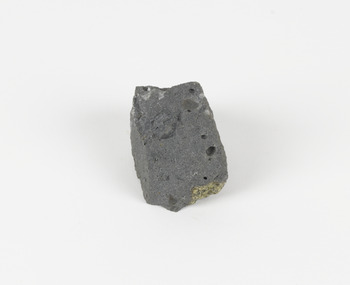
Geological specimen - Basalt (igneous-volcanic) containing Olivine, unknown
... It is a major megacryst site with some of the largest known Victorian examples of megacrysts of augite and an orthoclase. The small parasitic mound of Lady Franklin on the western flanks adds to the geological interest of the site'. ...This particular geological specimen was found in Mount Franklin or Lalgambook in Djadjawurrung, located between Daylesford and Newstead, approximately ninety minutes drive from Melbourne. The mountain is an example of a breached scoria cone (a steep conical hill of loose pyroclastic fragments) which was created by a volcanic eruption about 470,000 years ago, a date which may indicate the age of this geological specimen. The volcanic eruptions of Mount Franklin were most likely witnessed by members of the Dja Dja Wurrung Aboriginal tribe, who referred to this country as the 'smoking grounds'. Mount Franklin and the surrounding area appears to have been a place of considerable religious significance to Aboriginal people, there is evidence which indicates that frequent large ceremonial gatherings took place in the area. Basalt is the most common rock on Earth’s surface, more than 90% of all volcanic rock on Earth is basalt. Basalt is an aphanitic extrusive igneous rock formed from the rapid cooling of low-viscosity lava exposed at or very near the surface of a rocky planet or moon. Specimens are black in colour and weather to dark green or brown. Basalt is rich in iron and magnesium and is mainly composed of olivine, pyroxene, and plagioclase. Olivine is the name of a group of rock-forming silicate minerals with compositions ranging between Mg2SiO4 and Fe2SiO4. Unlike other minerals, Olivine has a very high crystallisation temperature which makes it the first of the minerals to crystallise from magma. As magma cools, the crystals begin to form and settle on the bottom of the lava and form basalts that are abnormally enriched in olivine in the lower part of lava flows. According to H. M. King (on geology.com) "Olivine is thought to be an important mineral in Earth's mantle. Its presence as a mantle mineral has been inferred by a change in the behaviour of seismic waves as they cross the boundary between Earth's crust and mantle". Lava from Mount Franklin and other volcanoes in the area filled valleys and buried the gold bearing streams that became the renowned ‘deep leads’ of the gold mining era. In 1852, as part of the Victorian gold rush, gold was discovered in the immediate area, this gold was created by lava flows during the Newer Volcanic period, which were mined intensively during the nineteenth century. Around 1865 the presence of a deep lead in Mount Franklin was established. Deep lead mining was initially unsuccessful, and it was not until the late 1870s that the Franklinford Gold Mining Company mined at Mount Franklin on a significant scale. A few years later the Mount Franklin Estate Gold Mining Company also struck gold, followed by the Shakespeare and Great Western companies in the mid-1880s. By the late 1880s, however, deep lead mining had ceased in the area. Soon after gold was discovered in 1851, Victoria’s Governor La Trobe wrote to the Colonial Office in London, urging ‘the propriety of selecting and appointing as Mineral Surveyor for this Colony a gentleman possessed of the requisite qualifications and acquaintance with geological science and phenomena’. Alfred Selwyn was appointed geological surveyor in Australia in 1852 which began the Geological Survey of Victoria. In 1853-69 the Geological Survey issued under Selwyn's direction sixty-one geological maps and numerous reports; they were of such high standard that a writer in the Quarterly Journal of the Geological Society of London bracketed the survey with that of the United States of America as the best in the world. During his years spent in Australia, Selwyn collected numerous significant geological specimens, examples of which are held in collections such as the Burke Museum.This geological specimen is an example of basalt and olivine which shows the volcanic lava activity and geographical specific nature of Mt Franklin as a significant volcanic site. According to Agriculture Victoria 'The crater is one of the deepest in the Central Highlands area. It is a major megacryst site with some of the largest known Victorian examples of megacrysts of augite and an orthoclase. The small parasitic mound of Lady Franklin on the western flanks adds to the geological interest of the site'. This specimen also highlights the locality as a significant place for both indigenous activity and Victorian gold rush era mining practices. This specimen is part of a larger collection of geological and mineral specimens collected from around Australia (and some parts of the world) and donated to the Burke Museum between 1868-1880. A large percentage of these specimens were collected in Victoria as part of the Geological Survey of Victoria that begun in 1852 (in response to the Gold Rush) to study and map the geology of Victoria. Collecting geological specimens was an important part of mapping and understanding the scientific makeup of the earth. Many of these specimens were sent to research and collecting organisations across Australia, including the Burke Museum, to educate and encourage further study.An angular, solid hand-sized piece of grey volcanic Basalt with green/brown Olivine phenocrysts along one flat edge.Olivine in basalt / - label is probably / correct. / C. Willman / 15/4/21burke museum, beechworth, indigo shire, beechworth museum, geological, geological specimen, mineralogy, basalt, igneous rock, igneous-volcanic, volcanic geology, volcanic, olivine, olivine specimen, basaltoid -
 Moorabbin Air Museum
Book - AGARD reports, Aircraft Drag Prediction and Reduction
... AGARD reports Aircraft drag reduction technology Boundary layer transition Laminar flow control Turbulent drag reduction for external flows Parasitic & interference drag Three dimensional wake analysis Vortex drag Computational drag analysis & miimisation Drag on wings at subsonic speeds Transonic drag rise Overview of methods of drag reduction in aircraft, circa 1985 Aircraft Drag Prediction and Reduction Book AGARD reports ...Overview of methods of drag reduction in aircraft, circa 1985non-fictionOverview of methods of drag reduction in aircraft, circa 1985aircraft drag reduction technology, boundary layer transition, laminar flow control, turbulent drag reduction for external flows, parasitic & interference drag, three dimensional wake analysis, vortex drag, computational drag analysis & miimisation, drag on wings at subsonic speeds, transonic drag rise
