
Showing 96 items matching "parks and gardens -- kew (vic.)"
-
 Kew Historical Society Inc
Journal, Kew Historical Society, Newsletter No.132, September 2020
... kew historical society (vic.) -- periodicals. kew historical society (vic.) -- newsletters kew historical society (vic.) -- journals There once was a creek [Connors Creek] / Julie King p1. History news [Coronavirus (COVID-19), Michael Tuck grandstand, grants,] p3. The men who bought Kew: the Fenwicks and Edward Bell / David White p4. The Henty Garden ...There once was a creek [Connors Creek] / Julie King p1. History news [Coronavirus (COVID-19), Michael Tuck grandstand, grants,] p3. The men who bought Kew: the Fenwicks and Edward Bell / David White p4. The Henty Garden at Tarring: Ruyton Girls’ School / Felicity Renowden p6. Paddocks, parks and bye-laws: regulating behaviours by and within municipalities / Robert Baker p8. A significant donation [Margaret Picken’s property illustrations] / Robert Baker p10. From the collection [North Indian scarf embroidered with a needle] / Robert Baker p10. The albums of Eva Grant: photographs and descriptions of historic houses / Robert Baker p11.Published quarterly since 1977, the newsletters of the Kew Historical Society contain significant research by members exploring relevant aspects of the Victorian and Australian Framework of Historical Themes. Frequently, articles on people, places and artefacts are the only source of information about an aspect of Kew, and Melbourne’s history.non-fictionThere once was a creek [Connors Creek] / Julie King p1. History news [Coronavirus (COVID-19), Michael Tuck grandstand, grants,] p3. The men who bought Kew: the Fenwicks and Edward Bell / David White p4. The Henty Garden at Tarring: Ruyton Girls’ School / Felicity Renowden p6. Paddocks, parks and bye-laws: regulating behaviours by and within municipalities / Robert Baker p8. A significant donation [Margaret Picken’s property illustrations] / Robert Baker p10. From the collection [North Indian scarf embroidered with a needle] / Robert Baker p10. The albums of Eva Grant: photographs and descriptions of historic houses / Robert Baker p11.kew historical society (vic.) -- periodicals., kew historical society (vic.) -- newsletters, kew historical society (vic.) -- journals -
Kew Historical Society Inc
Journal, Kew Historical Society, Newsletter No.130, March 2020
... kew historical society (vic.) -- periodicals. kew historical society (vic.) -- newsletters kew historical society (vic.) -- journals Historic Sporting Clubs / Robert Baker p1. History News: Monthly Meetings, 2020 Kew Festival, Australian Heritage Festival p3. Kew's Golden Triangle: Crown Land Portion 86 / Margaret Robinson p4. Woodbury Ladies' College 1903-1920 / Robert Baker p6. John Percy Jones: a socialist in Kew / David White p8. The Humes of Studley Park: 5 Studley Avenue and the Hume Pipe Garden ...Historic Sporting Clubs / Robert Baker p1. History News: Monthly Meetings, 2020 Kew Festival, Australian Heritage Festival p3. Kew's Golden Triangle: Crown Land Portion 86 / Margaret Robinson p4. Woodbury Ladies' College 1903-1920 / Robert Baker p6. John Percy Jones: a socialist in Kew / David White p8. The Humes of Studley Park: 5 Studley Avenue and the Hume Pipe Garden / Julie King p10. Donations to the collection / Robert Baker p11. Membership & Donations p12.Published quarterly since 1977, the newsletters of the Kew Historical Society contain significant research by members exploring relevant aspects of the Victorian and Australian Framework of Historical Themes. Frequently, articles on people, places and artefacts are the only source of information about an aspect of Kew, and Melbourne’s history.non-fictionHistoric Sporting Clubs / Robert Baker p1. History News: Monthly Meetings, 2020 Kew Festival, Australian Heritage Festival p3. Kew's Golden Triangle: Crown Land Portion 86 / Margaret Robinson p4. Woodbury Ladies' College 1903-1920 / Robert Baker p6. John Percy Jones: a socialist in Kew / David White p8. The Humes of Studley Park: 5 Studley Avenue and the Hume Pipe Garden / Julie King p10. Donations to the collection / Robert Baker p11. Membership & Donations p12.kew historical society (vic.) -- periodicals., kew historical society (vic.) -- newsletters, kew historical society (vic.) -- journals -
 Kew Historical Society Inc
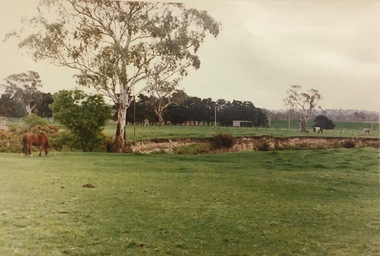
Photograph, Country Roads Board, Hays Paddock, East Kew, 1975
... ...parks and gardens - kew (vic)...hays paddock - kew east (vic) parks and gardens - kew (vic) Reverse: "Hays Paddock. ...Colour photograph of Hays Paddock in East Kew taken by a Country Roads Board photographer. The reverse provides details of the negative and the purpose of the photograph.Reverse: "Hays Paddock. Tops of bank to be rounded gently, grassed & planted."hays paddock - kew east (vic), parks and gardens - kew (vic) -
 Kew Historical Society Inc
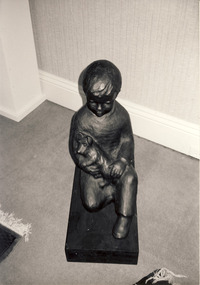
Photograph, Leopoldine Mimovich, Bronze Sculpture : Boy With Dog, 1990
... After an initial period at Bonegilla and Royal Park Migrant Hostels the couple moved to Yarraville and then to 33 Miller Road, Kew, where she established her studio. ...Leopoldine Mimovich was born in 1920, in Neumarkt in the Italian Tyrol. In 1940, aged 20, she moved to Vienna where she studied clay modelling and drawing. From 1943 she attended the School of Wood Sculpture in Hallstatt, graduating in 1947. Following her marriage to Ljubisa Mimovich, the couple migrated to Australia in 1949 travelling on MV Skaugum. After an initial period at Bonegilla and Royal Park Migrant Hostels the couple moved to Yarraville and then to 33 Miller Road, Kew, where she established her studio. A wood sculptor, painter and etcher, she was awarded an OAM for services to the arts in 1985. Examples of her sculptures in Kew can be found in the Kew Library and in the Alexandra Gardens. Black and white photograph of sculpture or sculptures by Leopoldine Mimovich photographed in her home at 31 Miller Grove, Kewartists - kew (vic), leopoldine (poldi) mimovich -
 Kew Historical Society Inc
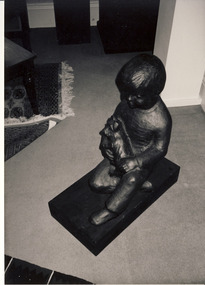
Photograph, Leopoldine Mimovich, Bronze Sculpture : Boy With Dog, 1990
... After an initial period at Bonegilla and Royal Park Migrant Hostels the couple moved to Yarraville and then to 33 Miller Road, Kew, where she established her studio. ...Leopoldine Mimovich was born in 1920, in Neumarkt in the Italian Tyrol. In 1940, aged 20, she moved to Vienna where she studied clay modelling and drawing. From 1943 she attended the School of Wood Sculpture in Hallstatt, graduating in 1947. Following her marriage to Ljubisa Mimovich, the couple migrated to Australia in 1949 travelling on MV Skaugum. After an initial period at Bonegilla and Royal Park Migrant Hostels the couple moved to Yarraville and then to 33 Miller Road, Kew, where she established her studio. A wood sculptor, painter and etcher, she was awarded an OAM for services to the arts in 1985. Examples of her sculptures in Kew can be found in the Kew Library and in the Alexandra Gardens.Black and white photograph of sculpture or sculptures by Leopoldine Mimovich photographed in her home at 31 Miller Grove, Kewartists - kew (vic), leopoldine (poldi) mimovich -
 Kew Historical Society Inc
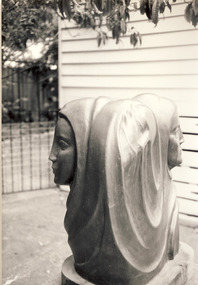
Photograph, Leopoldine Mimovich, Bronze Sculpture : Four Seasons, 1990
... After an initial period at Bonegilla and Royal Park Migrant Hostels the couple moved to Yarraville and then to 33 Miller Road, Kew, where she established her studio. ...Leopoldine Mimovich was born in 1920, in Neumarkt in the Italian Tyrol. In 1940, aged 20, she moved to Vienna where she studied clay modelling and drawing. From 1943 she attended the School of Wood Sculpture in Hallstatt, graduating in 1947. Following her marriage to Ljubisa Mimovich, the couple migrated to Australia in 1949 travelling on MV Skaugum. After an initial period at Bonegilla and Royal Park Migrant Hostels the couple moved to Yarraville and then to 33 Miller Road, Kew, where she established her studio. A wood sculptor, painter and etcher, she was awarded an OAM for services to the arts in 1985. Examples of her sculptures in Kew can be found in the Kew Library and in the Alexandra Gardens.Black and white photograph of sculpture or sculptures by Leopoldine Mimovich photographed in her home at 31 Miller Grove, Kewartists - kew (vic), leopoldine (poldi) mimovich -
 Kew Historical Society Inc
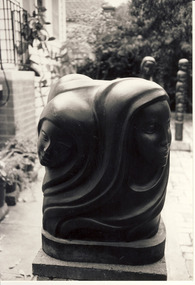
Photograph, Leopoldine Mimovich, Bronze Sculpture : Four Seasons, 1990
... After an initial period at Bonegilla and Royal Park Migrant Hostels the couple moved to Yarraville and then to 33 Miller Road, Kew, where she established her studio. ...Leopoldine Mimovich was born in 1920, in Neumarkt in the Italian Tyrol. In 1940, aged 20, she moved to Vienna where she studied clay modelling and drawing. From 1943 she attended the School of Wood Sculpture in Hallstatt, graduating in 1947. Following her marriage to Ljubisa Mimovich, the couple migrated to Australia in 1949 travelling on MV Skaugum. After an initial period at Bonegilla and Royal Park Migrant Hostels the couple moved to Yarraville and then to 33 Miller Road, Kew, where she established her studio. A wood sculptor, painter and etcher, she was awarded an OAM for services to the arts in 1985. Examples of her sculptures in Kew can be found in the Kew Library and in the Alexandra Gardens.Black and white photograph of sculpture or sculptures by Leopoldine Mimovich photographed in her home at 31 Miller Grove, Kewartists - kew (vic), leopoldine (poldi) mimovich -
 Kew Historical Society Inc
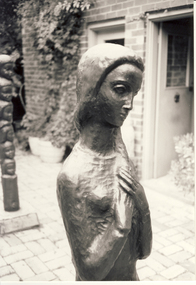
Photograph, Leopoldine Mimovich, Bronze Sculpture : Standing Woman, 1990
... After an initial period at Bonegilla and Royal Park Migrant Hostels the couple moved to Yarraville and then to 33 Miller Road, Kew, where she established her studio. ...Leopoldine Mimovich was born in 1920, in Neumarkt in the Italian Tyrol. In 1940, aged 20, she moved to Vienna where she studied clay modelling and drawing. From 1943 she attended the School of Wood Sculpture in Hallstatt, graduating in 1947. Following her marriage to Ljubisa Mimovich, the couple migrated to Australia in 1949 travelling on MV Skaugum. After an initial period at Bonegilla and Royal Park Migrant Hostels the couple moved to Yarraville and then to 33 Miller Road, Kew, where she established her studio. A wood sculptor, painter and etcher, she was awarded an OAM for services to the arts in 1985. Examples of her sculptures in Kew can be found in the Kew Library and in the Alexandra Gardens.Black and white photograph of sculpture or sculptures by Leopoldine Mimovich photographed in her home at 31 Miller Grove, Kewartists - kew (vic), leopoldine (poldi) mimovich -
 Kew Historical Society Inc
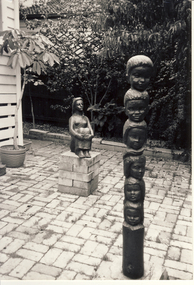
Photograph, Leopoldine Mimovich, Bronze Sculpture : Seated Woman & Totem Pole, 1990
... After an initial period at Bonegilla and Royal Park Migrant Hostels the couple moved to Yarraville and then to 33 Miller Road, Kew, where she established her studio. ...Leopoldine Mimovich was born in 1920, in Neumarkt in the Italian Tyrol. In 1940, aged 20, she moved to Vienna where she studied clay modelling and drawing. From 1943 she attended the School of Wood Sculpture in Hallstatt, graduating in 1947. Following her marriage to Ljubisa Mimovich, the couple migrated to Australia in 1949 travelling on MV Skaugum. After an initial period at Bonegilla and Royal Park Migrant Hostels the couple moved to Yarraville and then to 33 Miller Road, Kew, where she established her studio. A wood sculptor, painter and etcher, she was awarded an OAM for services to the arts in 1985. Examples of her sculptures in Kew can be found in the Kew Library and in the Alexandra Gardens.Black and white photograph of sculpture or sculptures by Leopoldine Mimovich photographed in her home at 31 Miller Grove, Kewartists - kew (vic), leopoldine (poldi) mimovich -
 Kew Historical Society Inc
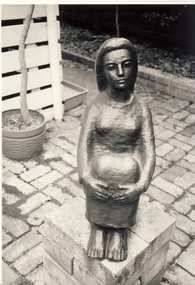
Photograph, Leopoldine Mimovich, Bronze Sculpture : Seated Woman, 1990
... After an initial period at Bonegilla and Royal Park Migrant Hostels the couple moved to Yarraville and then to 33 Miller Road, Kew, where she established her studio. ...Leopoldine Mimovich was born in 1920, in Neumarkt in the Italian Tyrol. In 1940, aged 20, she moved to Vienna where she studied clay modelling and drawing. From 1943 she attended the School of Wood Sculpture in Hallstatt, graduating in 1947. Following her marriage to Ljubisa Mimovich, the couple migrated to Australia in 1949 travelling on MV Skaugum. After an initial period at Bonegilla and Royal Park Migrant Hostels the couple moved to Yarraville and then to 33 Miller Road, Kew, where she established her studio. A wood sculptor, painter and etcher, she was awarded an OAM for services to the arts in 1985. Examples of her sculptures in Kew can be found in the Kew Library and in the Alexandra Gardens.Black and white photograph of sculpture or sculptures by Leopoldine Mimovich photographed in her home at 31 Miller Grove, Kewartists - kew (vic), leopoldine (poldi) mimovich -
 Kew Historical Society Inc
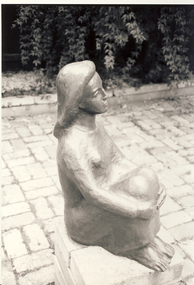
Photograph, Leopoldine Mimovich, Bronze Sculpture : Seated Woman, 1990
... After an initial period at Bonegilla and Royal Park Migrant Hostels the couple moved to Yarraville and then to 33 Miller Road, Kew, where she established her studio. ...Leopoldine Mimovich was born in 1920, in Neumarkt in the Italian Tyrol. In 1940, aged 20, she moved to Vienna where she studied clay modelling and drawing. From 1943 she attended the School of Wood Sculpture in Hallstatt, graduating in 1947. Following her marriage to Ljubisa Mimovich, the couple migrated to Australia in 1949 travelling on MV Skaugum. After an initial period at Bonegilla and Royal Park Migrant Hostels the couple moved to Yarraville and then to 33 Miller Road, Kew, where she established her studio. A wood sculptor, painter and etcher, she was awarded an OAM for services to the arts in 1985. Examples of her sculptures in Kew can be found in the Kew Library and in the Alexandra Gardens.Black and white photograph of sculpture or sculptures by Leopoldine Mimovich photographed in her home at 31 Miller Grove, Kewartists - kew (vic), leopoldine (poldi) mimovich -
 Kew Historical Society Inc
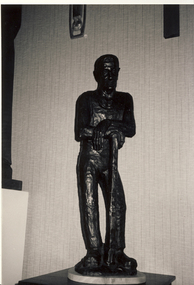
Photograph, Leopoldine Mimovich, Bronze Sculpture : The Worker, 1990
... After an initial period at Bonegilla and Royal Park Migrant Hostels the couple moved to Yarraville and then to 33 Miller Road, Kew, where she established her studio. ...Leopoldine Mimovich was born in 1920, in Neumarkt in the Italian Tyrol. In 1940, aged 20, she moved to Vienna where she studied clay modelling and drawing. From 1943 she attended the School of Wood Sculpture in Hallstatt, graduating in 1947. Following her marriage to Ljubisa Mimovich, the couple migrated to Australia in 1949 travelling on MV Skaugum. After an initial period at Bonegilla and Royal Park Migrant Hostels the couple moved to Yarraville and then to 33 Miller Road, Kew, where she established her studio. A wood sculptor, painter and etcher, she was awarded an OAM for services to the arts in 1985. Examples of her sculptures in Kew can be found in the Kew Library and in the Alexandra Gardens.Black and white photograph of sculpture or sculptures by Leopoldine Mimovich photographed in her home at 31 Miller Grove, Kewartists - kew (vic), leopoldine (poldi) mimovich -
 Kew Historical Society Inc
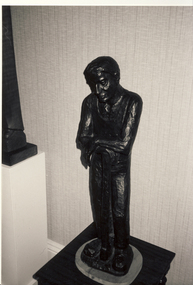
Photograph, Leopoldine Mimovich, Bronze Sculpture : The Worker, 1990
... After an initial period at Bonegilla and Royal Park Migrant Hostels the couple moved to Yarraville and then to 33 Miller Road, Kew, where she established her studio. ...Leopoldine Mimovich was born in 1920, in Neumarkt in the Italian Tyrol. In 1940, aged 20, she moved to Vienna where she studied clay modelling and drawing. From 1943 she attended the School of Wood Sculpture in Hallstatt, graduating in 1947. Following her marriage to Ljubisa Mimovich, the couple migrated to Australia in 1949 travelling on MV Skaugum. After an initial period at Bonegilla and Royal Park Migrant Hostels the couple moved to Yarraville and then to 33 Miller Road, Kew, where she established her studio. A wood sculptor, painter and etcher, she was awarded an OAM for services to the arts in 1985. Examples of her sculptures in Kew can be found in the Kew Library and in the Alexandra Gardens.Black and white photograph of sculpture or sculptures by Leopoldine Mimovich photographed in her home at 31 Miller Grove, Kewartists - kew (vic), leopoldine (poldi) mimovich -
 Kew Historical Society Inc
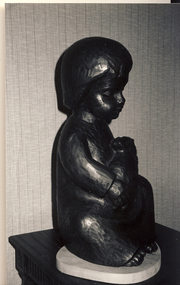
Photograph, Leopoldine Mimovich, Bronze Sculpture : Boy with Rabbit, 1990
... After an initial period at Bonegilla and Royal Park Migrant Hostels the couple moved to Yarraville and then to 33 Miller Road, Kew, where she established her studio. ...Leopoldine Mimovich was born in 1920, in Neumarkt in the Italian Tyrol. In 1940, aged 20, she moved to Vienna where she studied clay modelling and drawing. From 1943 she attended the School of Wood Sculpture in Hallstatt, graduating in 1947. Following her marriage to Ljubisa Mimovich, the couple migrated to Australia in 1949 travelling on MV Skaugum. After an initial period at Bonegilla and Royal Park Migrant Hostels the couple moved to Yarraville and then to 33 Miller Road, Kew, where she established her studio. A wood sculptor, painter and etcher, she was awarded an OAM for services to the arts in 1985. Examples of her sculptures in Kew can be found in the Kew Library and in the Alexandra Gardens.Black and white photograph of sculpture or sculptures by Leopoldine Mimovich photographed in her home at 31 Miller Grove, Kewartists - kew (vic), leopoldine (poldi) mimovich -
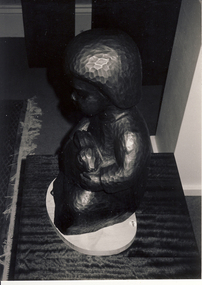 Kew Historical Society Inc
Photograph, Leopoldine Mimovich, Bronze Sculpture : Boy with Rabbit, 1990
... After an initial period at Bonegilla and Royal Park Migrant Hostels the couple moved to Yarraville and then to 33 Miller Road, Kew, where she established her studio. ...Leopoldine Mimovich was born in 1920, in Neumarkt in the Italian Tyrol. In 1940, aged 20, she moved to Vienna where she studied clay modelling and drawing. From 1943 she attended the School of Wood Sculpture in Hallstatt, graduating in 1947. Following her marriage to Ljubisa Mimovich, the couple migrated to Australia in 1949 travelling on MV Skaugum. After an initial period at Bonegilla and Royal Park Migrant Hostels the couple moved to Yarraville and then to 33 Miller Road, Kew, where she established her studio. A wood sculptor, painter and etcher, she was awarded an OAM for services to the arts in 1985. Examples of her sculptures in Kew can be found in the Kew Library and in the Alexandra Gardens.Black and white photograph of sculpture or sculptures by Leopoldine Mimovich photographed in her home at 31 Miller Grove, Kewartists - kew (vic), leopoldine (poldi) mimovich -
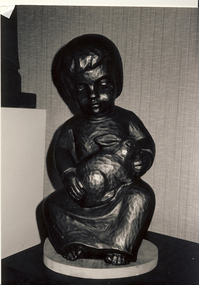 Kew Historical Society Inc
Photograph, Leopoldine Mimovich, Bronze Sculpture : Boy with Rabbit, 1990
... After an initial period at Bonegilla and Royal Park Migrant Hostels the couple moved to Yarraville and then to 33 Miller Road, Kew, where she established her studio. ...Leopoldine Mimovich was born in 1920, in Neumarkt in the Italian Tyrol. In 1940, aged 20, she moved to Vienna where she studied clay modelling and drawing. From 1943 she attended the School of Wood Sculpture in Hallstatt, graduating in 1947. Following her marriage to Ljubisa Mimovich, the couple migrated to Australia in 1949 travelling on MV Skaugum. After an initial period at Bonegilla and Royal Park Migrant Hostels the couple moved to Yarraville and then to 33 Miller Road, Kew, where she established her studio. A wood sculptor, painter and etcher, she was awarded an OAM for services to the arts in 1985. Examples of her sculptures in Kew can be found in the Kew Library and in the Alexandra Gardens.Black and white photograph of sculpture or sculptures by Leopoldine Mimovich photographed in her home at 31 Miller Grove, Kewartists - kew (vic), leopoldine (poldi) mimovich -
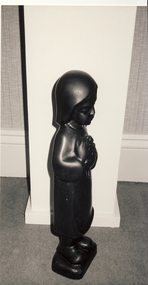 Kew Historical Society Inc
Photograph, Leopoldine Mimovich, Bronze Sculpture : Small Girl, 1990
... After an initial period at Bonegilla and Royal Park Migrant Hostels the couple moved to Yarraville and then to 33 Miller Road, Kew, where she established her studio. ...Leopoldine Mimovich was born in 1920, in Neumarkt in the Italian Tyrol. In 1940, aged 20, she moved to Vienna where she studied clay modelling and drawing. From 1943 she attended the School of Wood Sculpture in Hallstatt, graduating in 1947. Following her marriage to Ljubisa Mimovich, the couple migrated to Australia in 1949 travelling on MV Skaugum. After an initial period at Bonegilla and Royal Park Migrant Hostels the couple moved to Yarraville and then to 33 Miller Road, Kew, where she established her studio. A wood sculptor, painter and etcher, she was awarded an OAM for services to the arts in 1985. Examples of her sculptures in Kew can be found in the Kew Library and in the Alexandra Gardens.Black and white photograph of sculpture or sculptures by Leopoldine Mimovich photographed in her home at 31 Miller Grove, Kewartists - kew (vic), leopoldine (poldi) mimovich -
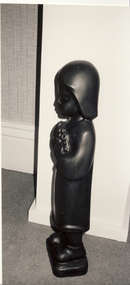 Kew Historical Society Inc
Photograph, Leopoldine Mimovich, Bronze Sculpture : Small Girl, 1990
... After an initial period at Bonegilla and Royal Park Migrant Hostels the couple moved to Yarraville and then to 33 Miller Road, Kew, where she established her studio. ...Leopoldine Mimovich was born in 1920, in Neumarkt in the Italian Tyrol. In 1940, aged 20, she moved to Vienna where she studied clay modelling and drawing. From 1943 she attended the School of Wood Sculpture in Hallstatt, graduating in 1947. Following her marriage to Ljubisa Mimovich, the couple migrated to Australia in 1949 travelling on MV Skaugum. After an initial period at Bonegilla and Royal Park Migrant Hostels the couple moved to Yarraville and then to 33 Miller Road, Kew, where she established her studio. A wood sculptor, painter and etcher, she was awarded an OAM for services to the arts in 1985. Examples of her sculptures in Kew can be found in the Kew Library and in the Alexandra Gardens.Black and white photograph of sculpture or sculptures by Leopoldine Mimovich photographed in her home at 31 Miller Grove, Kewartists - kew (vic), leopoldine (poldi) mimovich -
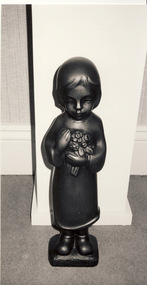 Kew Historical Society Inc
Photograph, Leopoldine Mimovich, Bronze Sculpture : Small Girl, 1990
... After an initial period at Bonegilla and Royal Park Migrant Hostels the couple moved to Yarraville and then to 33 Miller Road, Kew, where she established her studio. ...Leopoldine Mimovich was born in 1920, in Neumarkt in the Italian Tyrol. In 1940, aged 20, she moved to Vienna where she studied clay modelling and drawing. From 1943 she attended the School of Wood Sculpture in Hallstatt, graduating in 1947. Following her marriage to Ljubisa Mimovich, the couple migrated to Australia in 1949 travelling on MV Skaugum. After an initial period at Bonegilla and Royal Park Migrant Hostels the couple moved to Yarraville and then to 33 Miller Road, Kew, where she established her studio. A wood sculptor, painter and etcher, she was awarded an OAM for services to the arts in 1985. Examples of her sculptures in Kew can be found in the Kew Library and in the Alexandra Gardens.Black and white photograph of sculpture or sculptures by Leopoldine Mimovich photographed in her home at 31 Miller Grove, Kewartists - kew (vic), leopoldine (poldi) mimovich -
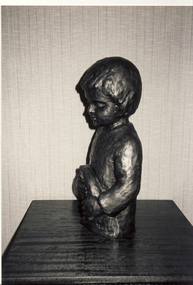 Kew Historical Society Inc
Photograph, Leopoldine Mimovich, Bronze Sculpture : Boy with Animal, 1990
... After an initial period at Bonegilla and Royal Park Migrant Hostels the couple moved to Yarraville and then to 33 Miller Road, Kew, where she established her studio. ...Leopoldine Mimovich was born in 1920, in Neumarkt in the Italian Tyrol. In 1940, aged 20, she moved to Vienna where she studied clay modelling and drawing. From 1943 she attended the School of Wood Sculpture in Hallstatt, graduating in 1947. Following her marriage to Ljubisa Mimovich, the couple migrated to Australia in 1949 travelling on MV Skaugum. After an initial period at Bonegilla and Royal Park Migrant Hostels the couple moved to Yarraville and then to 33 Miller Road, Kew, where she established her studio. A wood sculptor, painter and etcher, she was awarded an OAM for services to the arts in 1985. Examples of her sculptures in Kew can be found in the Kew Library and in the Alexandra Gardens.Black and white photograph of sculpture or sculptures by Leopoldine Mimovich photographed in her home at 31 Miller Grove, Kewartists - kew (vic), leopoldine (poldi) mimovich -
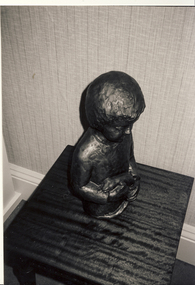 Kew Historical Society Inc
Photograph, Leopoldine Mimovich, Bronze Sculpture : Boy with Animal, 1990
... After an initial period at Bonegilla and Royal Park Migrant Hostels the couple moved to Yarraville and then to 33 Miller Road, Kew, where she established her studio. ...Leopoldine Mimovich was born in 1920, in Neumarkt in the Italian Tyrol. In 1940, aged 20, she moved to Vienna where she studied clay modelling and drawing. From 1943 she attended the School of Wood Sculpture in Hallstatt, graduating in 1947. Following her marriage to Ljubisa Mimovich, the couple migrated to Australia in 1949 travelling on MV Skaugum. After an initial period at Bonegilla and Royal Park Migrant Hostels the couple moved to Yarraville and then to 33 Miller Road, Kew, where she established her studio. A wood sculptor, painter and etcher, she was awarded an OAM for services to the arts in 1985. Examples of her sculptures in Kew can be found in the Kew Library and in the Alexandra Gardens.Black and white photograph of sculpture or sculptures by Leopoldine Mimovich photographed in her home at 31 Miller Grove, Kewartists - kew (vic), leopoldine (poldi) mimovich -
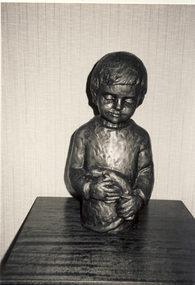 Kew Historical Society Inc
Photograph, Leopoldine Mimovich, Bronze Sculpture : Boy with Animal, 1990
... After an initial period at Bonegilla and Royal Park Migrant Hostels the couple moved to Yarraville and then to 33 Miller Road, Kew, where she established her studio. ...Leopoldine Mimovich was born in 1920, in Neumarkt in the Italian Tyrol. In 1940, aged 20, she moved to Vienna where she studied clay modelling and drawing. From 1943 she attended the School of Wood Sculpture in Hallstatt, graduating in 1947. Following her marriage to Ljubisa Mimovich, the couple migrated to Australia in 1949 travelling on MV Skaugum. After an initial period at Bonegilla and Royal Park Migrant Hostels the couple moved to Yarraville and then to 33 Miller Road, Kew, where she established her studio. A wood sculptor, painter and etcher, she was awarded an OAM for services to the arts in 1985. Examples of her sculptures in Kew can be found in the Kew Library and in the Alexandra Gardens.Black and white photograph of sculpture or sculptures by Leopoldine Mimovich photographed in her home at 31 Miller Grove, Kewartists - kew (vic), leopoldine (poldi) mimovich -
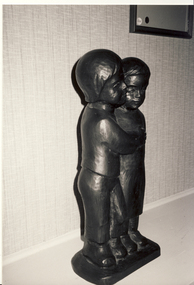 Kew Historical Society Inc
Photograph, Leopoldine Mimovich, Bronze Sculpture : Boy with Girl, 1990
... After an initial period at Bonegilla and Royal Park Migrant Hostels the couple moved to Yarraville and then to 33 Miller Road, Kew, where she established her studio. ...Leopoldine Mimovich was born in 1920, in Neumarkt in the Italian Tyrol. In 1940, aged 20, she moved to Vienna where she studied clay modelling and drawing. From 1943 she attended the School of Wood Sculpture in Hallstatt, graduating in 1947. Following her marriage to Ljubisa Mimovich, the couple migrated to Australia in 1949 travelling on MV Skaugum. After an initial period at Bonegilla and Royal Park Migrant Hostels the couple moved to Yarraville and then to 33 Miller Road, Kew, where she established her studio. A wood sculptor, painter and etcher, she was awarded an OAM for services to the arts in 1985. Examples of her sculptures in Kew can be found in the Kew Library and in the Alexandra Gardens.Black and white photograph of sculpture or sculptures by Leopoldine Mimovich photographed in her home at 31 Miller Grove, Kewartists - kew (vic), leopoldine (poldi) mimovich -
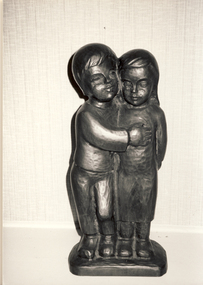 Kew Historical Society Inc
Photograph, Leopoldine Mimovich, Bronze Sculpture : Boy with Girl, 1990
... After an initial period at Bonegilla and Royal Park Migrant Hostels the couple moved to Yarraville and then to 33 Miller Road, Kew, where she established her studio. ...Leopoldine Mimovich was born in 1920, in Neumarkt in the Italian Tyrol. In 1940, aged 20, she moved to Vienna where she studied clay modelling and drawing. From 1943 she attended the School of Wood Sculpture in Hallstatt, graduating in 1947. Following her marriage to Ljubisa Mimovich, the couple migrated to Australia in 1949 travelling on MV Skaugum. After an initial period at Bonegilla and Royal Park Migrant Hostels the couple moved to Yarraville and then to 33 Miller Road, Kew, where she established her studio. A wood sculptor, painter and etcher, she was awarded an OAM for services to the arts in 1985. Examples of her sculptures in Kew can be found in the Kew Library and in the Alexandra Gardens.Black and white photograph of sculpture or sculptures by Leopoldine Mimovich photographed in her home at 31 Miller Grove, Kewartists - kew (vic), leopoldine (poldi) mimovich -
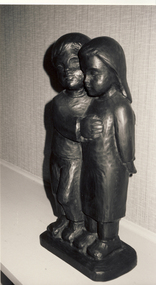 Kew Historical Society Inc
Photograph, Leopoldine Mimovich, Bronze Sculpture : Boy with Girl, 1990
... After an initial period at Bonegilla and Royal Park Migrant Hostels the couple moved to Yarraville and then to 33 Miller Road, Kew, where she established her studio. ...Leopoldine Mimovich was born in 1920, in Neumarkt in the Italian Tyrol. In 1940, aged 20, she moved to Vienna where she studied clay modelling and drawing. From 1943 she attended the School of Wood Sculpture in Hallstatt, graduating in 1947. Following her marriage to Ljubisa Mimovich, the couple migrated to Australia in 1949 travelling on MV Skaugum. After an initial period at Bonegilla and Royal Park Migrant Hostels the couple moved to Yarraville and then to 33 Miller Road, Kew, where she established her studio. A wood sculptor, painter and etcher, she was awarded an OAM for services to the arts in 1985. Examples of her sculptures in Kew can be found in the Kew Library and in the Alexandra Gardens.Black and white photograph of sculpture or sculptures by Leopoldine Mimovich photographed in her home at 31 Miller Grove, Kewartists - kew (vic), leopoldine (poldi) mimovich -
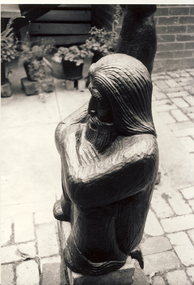 Kew Historical Society Inc
Photograph, Leopoldine Mimovich, Bronze Sculpture : Bearded Man, 1990
... After an initial period at Bonegilla and Royal Park Migrant Hostels the couple moved to Yarraville and then to 33 Miller Road, Kew, where she established her studio. ...Leopoldine Mimovich was born in 1920, in Neumarkt in the Italian Tyrol. In 1940, aged 20, she moved to Vienna where she studied clay modelling and drawing. From 1943 she attended the School of Wood Sculpture in Hallstatt, graduating in 1947. Following her marriage to Ljubisa Mimovich, the couple migrated to Australia in 1949 travelling on MV Skaugum. After an initial period at Bonegilla and Royal Park Migrant Hostels the couple moved to Yarraville and then to 33 Miller Road, Kew, where she established her studio. A wood sculptor, painter and etcher, she was awarded an OAM for services to the arts in 1985. Examples of her sculptures in Kew can be found in the Kew Library and in the Alexandra Gardens.Black and white photograph of sculpture or sculptures by Leopoldine Mimovich photographed in her home at 31 Miller Grove, Kewartists - kew (vic), leopoldine (poldi) mimovich -
 Kew Historical Society Inc
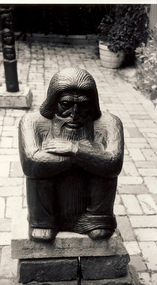
Photograph, Leopoldine Mimovich, Bronze Sculpture : Bearded Man, 1990
... After an initial period at Bonegilla and Royal Park Migrant Hostels the couple moved to Yarraville and then to 33 Miller Road, Kew, where she established her studio. ...Leopoldine Mimovich was born in 1920, in Neumarkt in the Italian Tyrol. In 1940, aged 20, she moved to Vienna where she studied clay modelling and drawing. From 1943 she attended the School of Wood Sculpture in Hallstatt, graduating in 1947. Following her marriage to Ljubisa Mimovich, the couple migrated to Australia in 1949 travelling on MV Skaugum. After an initial period at Bonegilla and Royal Park Migrant Hostels the couple moved to Yarraville and then to 33 Miller Road, Kew, where she established her studio. A wood sculptor, painter and etcher, she was awarded an OAM for services to the arts in 1985. Examples of her sculptures in Kew can be found in the Kew Library and in the Alexandra Gardens.Black and white photograph of sculpture or sculptures by Leopoldine Mimovich photographed in her home at 31 Miller Grove, Kewartists - kew (vic), leopoldine (poldi) mimovich -
 Kew Historical Society Inc
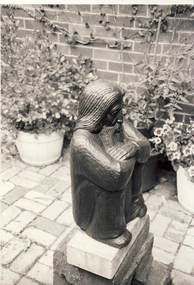
Photograph, Leopoldine Mimovich, Bronze Sculpture : Bearded Man, 1990
... After an initial period at Bonegilla and Royal Park Migrant Hostels the couple moved to Yarraville and then to 33 Miller Road, Kew, where she established her studio. ...Leopoldine Mimovich was born in 1920, in Neumarkt in the Italian Tyrol. In 1940, aged 20, she moved to Vienna where she studied clay modelling and drawing. From 1943 she attended the School of Wood Sculpture in Hallstatt, graduating in 1947. Following her marriage to Ljubisa Mimovich, the couple migrated to Australia in 1949 travelling on MV Skaugum. After an initial period at Bonegilla and Royal Park Migrant Hostels the couple moved to Yarraville and then to 33 Miller Road, Kew, where she established her studio. A wood sculptor, painter and etcher, she was awarded an OAM for services to the arts in 1985. Examples of her sculptures in Kew can be found in the Kew Library and in the Alexandra Gardens.Black and white photograph of sculpture or sculptures by Leopoldine Mimovich photographed in her home at 31 Miller Grove, Kewartists - kew (vic), leopoldine (poldi) mimovich -
Kew Historical Society Inc
Archive (series) - Subject File, Alexandra Gardens, Kew (Vic), 1958
... alexandra gardens - kew (vic.)...Typically files will contain primary and secondary sources. alexandra gardens - kew (vic.) parks and gardens - city of boroondara madford pockett Information file containing information about the Alexandra Gardens in Cotham Road (Kew) including: collected notes including brief histories by Gwen McWilliam, John Patrick, Dorothy Benyei, and Mavis Rolley. ...Various PartiesReference, Research, InformationKHS OrderReference file containing information about the Alexandra Gardens in Cotham Road (Kew) including: collected notes including brief histories by Gwen McWilliam, John Patrick, Dorothy Benyei, and Mavis Rolley. There is also an article on the Garden’s designers, the Pockett Brothers, originally published in 2015 in Australian Garden History. The archive file also includes Council publications, posters (relating to the Mimovich sculptures), correspondence (including photocopies of a letter relating to historic plantings from Jack Higgins) and newspaper articles/clippings. In addition to general historical notes, the file includes specific notes on the Rotunda and on historic trees in the Gardens. The original by-laws of the Gardens, printed on cotton are held separately in the textiles collection.alexandra gardens - kew (vic.), parks and gardens - city of boroondara, madford, pockettalexandra gardens - kew (vic.), parks and gardens - city of boroondara, madford, pockett -
Kew Historical Society Inc
Archive (Sub-series) - Subject File, CAMPBELL, Dr. Kate (1899-1986), 1958
... ...parks and gardens - kew (vic)...Typically files will contain primary and secondary sources. doctors - kew (vic) parks and gardens - kew (vic) Archive file containing information on Dame Kate Campbell MD (1899-1986), who was a pioneer doctor in the field of pediatrics. ...Various partiesReference, Research, InformationSecondary Values (KHS Imposed Order)Subject file containing information on Dame Kate Campbell MD (1899-1986), who was a pioneer doctor in the field of pediatrics. The file contains newspaper articles/clippings relating to her work. A number of the articles were written at the time of her death in 1986. Kate Campbell Reserve in northern Kew is named after her.doctors - kew (vic), parks and gardens - kew (vic)doctors - kew (vic), parks and gardens - kew (vic)
