
Showing 80 items matching "patent applications"
-
 Melbourne Tram Museum
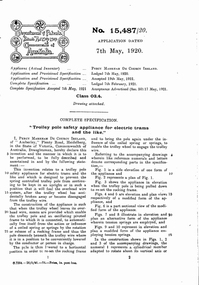
Document - Patent Applications - Trolley Pole safety appliance, Percy Ireland, 1920
... Patent Applications - Trolley Pole safety appliance...The associated documents show the differences in making patent applications in various countries. From research undertaken by the Museum it appears that while his patent applications were successful, his invention was never actually implemented on tramcars in Melbourne". ...The associated documents show the differences in making patent applications in various countries. From research undertaken by the Museum it appears that while his patent applications were successful, his invention was never actually implemented on tramcars in Melbourne". ...Percy Markham Ireland (1893-1976), a tramway rolling stock engineer with the MMTB and a Military engineer applied in 1920 for a patent for a "Trolley Pole safety appliance for electric trams and the like". He was successful in gaining a patent in a number of countries including the UK, France, Germany, Canada, the USA, and New Zealand. The associated documents show the differences in making patent applications in various countries. From research undertaken by the Museum it appears that while his patent applications were successful, his invention was never actually implemented on tramcars in Melbourne". Collected by Noelle Jones as research for an article in the March 2023 issue of the Museum's magazine Bellcord, giving details of Mr Ireland's tramway and military career. He retired as the MMTB Rolling Stock Engineer in 1958 after 44 years of service.Yields information about patents applied for by Percy Ireland in different countries.Set of digital patent documents for Australia, USA, UK, France, Germany and Canada. tramways, patents, trolley poles, percy ireland, safety devices -
 Narre Warren and District Family History Group
Document, Application for a patent for Improved means for automatically opening and closing gates by Oscar Wilfred Wanke
... Application for a patent for Improved means for automatically opening and closing gates by Oscar Wilfred Wanke......patent applications...The gate sold for twelve pounds, 12 shillings with extra for installation. automatic gates patent applications Photocopy of original file [NAA: A627, 12335/1928] held by National Archives of Australia for the patent for the Ideal Automatic Gate. ...Oscar exhibited the Ideal Automatic Gate at Stand No. 212 at the Royal Show. The gate was operated by the passage of a vehicle, which opened and closed the gate without stopping. It could also be opened independently by hand. The gate sold for twelve pounds, 12 shillings with extra for installation.Photocopy of original file [NAA: A627, 12335/1928] held by National Archives of Australia for the patent for the Ideal Automatic Gate. Original pamphlet also in file.automatic gates, patent applications -
 Robin Boyd Foundation
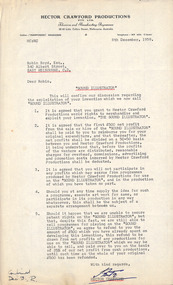
Document - Invention, Clement Hack, Hector Crawford Productions, Sound Illustrator documentation, Dec-59
... (ii) a document 'Specification of Patent Application' (7 December 1959) provides a detailed description of its operation (five pages).The invention is an "apparatus for producing synchronised audio-visual effects" (iii) Penleigh Boyd, Robin Boyd's son, has provided an explanatory illustration of the apparatus. ...(ii) a document 'Specification of Patent Application' (7 December 1959) provides a detailed description of its operation (five pages).The invention is an "apparatus for producing synchronised audio-visual effects" (iii) Penleigh Boyd, Robin Boyd's son, has provided an explanatory illustration of the apparatus. ...There are three parts: (i) A letter from Hector Crawford to Robin Boyd (8 December 1959) confirming agreement regarding production rights, profits and use of Robin Boyd's invention of the 'Sound Illustrator', plus a letter from Clement Hack and Co (Patent Attorneys) to Hector Crawford (10 December 1959), confirming lodgment of Patent Application for ‘Sound Illustrator’ in the joint names of Robin Boyd and Hector Crawford Productions. (ii) a document 'Specification of Patent Application' (7 December 1959) provides a detailed description of its operation (five pages).The invention is an "apparatus for producing synchronised audio-visual effects" (iii) Penleigh Boyd, Robin Boyd's son, has provided an explanatory illustration of the apparatus. The South Illustrator was designed by Robin Boyd for the presentation of The Flying Dogtor television series.Typewritten, foolscap, 5 pages includes covers, plus additional explanation of apparatus.The letter (i) is countersigned 'Confirmed Dec 9, R.' in Robin Boyd's handwriting.hector crawford, the flying dogtor -
 Bendigo Historical Society Inc.
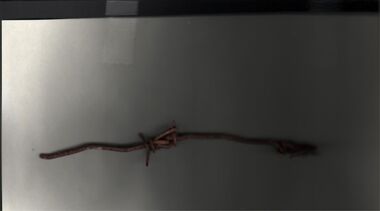
Memorabilia - ABBOTT COLLECTION: BARB WIRE
... The wire matches the design outlined in Abbott's patent application attached....The wire matches the design outlined in Abbott's patent application attached. Memorabilia ABBOTT COLLECTION: BARB WIRE ...Small section of single strand barb wire. Wire found at home in Strathfieldsaye, near Bendigo. Wire is high tensile and has a slight kink under the barbs which locks them in position. Item donated by Elaine Swanson, Strathfieldsaye, whose father purchased most of his fencing materials from Abbott Supply, Bendigo. The wire matches the design outlined in Abbott's patent application attached.rural industry, fencing, barbed wire, abbott, farming material, fence wire -
Moorabbin Air Museum
Document (series) - CAC documents and personal documents of Keith Shilling
... These documents are from the estate of Keith G Shilling who worked at CAC and Comair as a draughtsman aup until about 1977 and include Correspondence relating to a Patent Application by Comair Pty Ltd for a Rivet Stud Fastening System Other correspondence and technical drawings School geography exercise book from 1939 Swinburne Technical College Payslips from 1974 Company newsletters and reports to employees 1976-77 Pension Fund details from 1957 ...These documents are from the estate of Keith G Shilling who worked at CAC and Comair as a draughtsman aup until about 1977 and include Correspondence relating to a Patent Application by Comair Pty Ltd for a Rivet Stud Fastening System Other correspondence and technical drawings School geography exercise book from 1939 Swinburne Technical College Payslips from 1974 Company newsletters and reports to employees 1976-77 Pension Fund details from 1957 CAC documents and personal documents of Keith Shilling Document CAC documents and personal documents of Keith Shilling ... -
 Flagstaff Hill Maritime Museum and Village
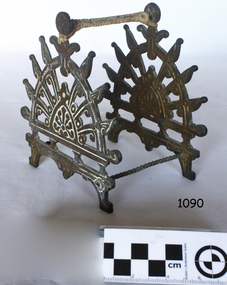
Pen Rack
... In 1831, an enterprising and very successful stationer and inventor, Sampson Mordan (inventor of the silver mechanical pencil) combined with one William Brockedon to patent the first oblique pen and oblique holder. In the patent application, they mention as the benefits that this would allow the writer to hold the pen more comfortably as well as it should allow the pen to last longer since both tines will be moving across the paper evenly. ...In 1831, an enterprising and very successful stationer and inventor, Sampson Mordan (inventor of the silver mechanical pencil) combined with one William Brockedon to patent the first oblique pen and oblique holder. In the patent application, they mention as the benefits that this would allow the writer to hold the pen more comfortably as well as it should allow the pen to last longer since both tines will be moving across the paper evenly. ...The origins of the pen rack probably began when quill pens were being replaced by steel nib pens that were held at oblique angles for writing this method of writing started to gain popularity around 1820-1860. To understand the development of display racks to hold pens on a desk we need to understand the development of the pen itself. Before the early 19th-century steel pens were almost universally all barrel pens affixed to a holder pretty permanently. Pens were also not disposable. There were even steel pen repair services, just like the same services around at the time to repair you're fine quills. Individual slip nib pens which fit into a holder were originally pieces of a quill which came in a box of nibs and fit into a holder. These were disposable and meant to obviate the need to mend your quills. By 1831 you start to see more what they called “slip nib pens” or “portable pens” (easier to carry than a long barrel pen), but the idea of holding the nib at an oblique angle in the holder was an idea new enough that it warranted a patent. In 1831, an enterprising and very successful stationer and inventor, Sampson Mordan (inventor of the silver mechanical pencil) combined with one William Brockedon to patent the first oblique pen and oblique holder. In the patent application, they mention as the benefits that this would allow the writer to hold the pen more comfortably as well as it should allow the pen to last longer since both tines will be moving across the paper evenly. It appears at the time the idea of holding a pen obliquely was new. As a result of the popularity of the oblique pen many different designs of pen desk holders were being made, to keep pens suspended on a rack alleviated the possibility that the expensive new steel nibs with their holder could be damaged if left in a desk draw with other items.Double sided Pen Rack, decorative metal with four metal legsflagstaff hill, warrnambool, shipwrecked-coast, flagstaff-hill, flagstaff-hill-maritime-museum, maritime-museum, shipwreck-coast, flagstaff-hill-maritime-village -
Emerald Museum & Nobelius Heritage Park
Tool - Name Plate maker, Roovers Bros Co, 1900s
... This machine is a Roovers ‘name plate’ maker or ‘nameplate’ machine, also known as an ‘embossing machine’ or as in the original patent application as a ‘die press’. It was manufactured from about 1895 by a firm called Roovers Bros Co., of New York, later known as Roovers Bros Inc. ...This machine is a Roovers ‘name plate’ maker or ‘nameplate’ machine, also known as an ‘embossing machine’ or as in the original patent application as a ‘die press’. It was manufactured from about 1895 by a firm called Roovers Bros Co., of New York, later known as Roovers Bros Inc. ...The name plate maker was used by a number of Nursery employees, contributing to intangible narratives of how stock at Nobelius Nursery was prepared for transport. It has a high interpretive capacity as an object associated with a tangible, physical process, presenting opportunities for understanding work practices at Nobelius Nursery and nurseries more generally.No similar name plate maker was identified after contact with and/or searches of collections held at National Museum of Australia, Museum Victoria, the Museum of Applied Arts & Sciences or the Australian Garden History Society, Victoria Branch. It is a rare example of its type in Australia. The name plate maker is of historic and social significance. It is associated with the Nobelius Nursery, the largest nursery in the southern hemisphere at its peak prior to WWI (Lyng 1927:75), where it was used from the early 1900s until at least the 1940s. The Nursery was renowned for its supply of plants and trees of high quality and reliability; the name plate maker was part of this process by providing imprinted metal labels that did not fade. The object therefore also demonstrates technological advances of the period. The object holds social significance to employees of Nobelius Nursery who used the machine for several decades to prepare stock for transport to clients.This name plate maker has a hollow hardwood rectangle body and stands on four decorative cast iron legs. It has a cast iron top and further cast iron detail on its front and sides. The top detail lists all numbers and letters to be used in the production of the labels (A-Z, 0-9, space, finish, start and - , ‘), and the front detail reads ‘THIS MACHINE IS SOLD FOR USE IN THE UNITED STATES ONLY. PATENTED NOV. 19 1901, NOV 19 1901, NOV 22 1904, JAN 31 1905 PAT. APPL’D FOR’. The side detail reads ‘PATENT APPLIED FOR’ The inside of the box contains the metal and wooden mechanisms for making embossed metal labels, which are produced inside and then come out the front once printed. Several metal labels remain sitting in the dispensing hollow. This machine is a Roovers ‘name plate’ maker or ‘nameplate’ machine, also known as an ‘embossing machine’ or as in the original patent application as a ‘die press’. It was manufactured from about 1895 by a firm called Roovers Bros Co., of New York, later known as Roovers Bros Inc. Carl Axel Nobelius imported this name plate machine from the USA, indicated by the plate of text at the front, between 1905 and 1915. It is likely that the machine was ordered directly from the manufacturer, as there is no record of the company having had distributors in Australia. The nameplate maker remained at the former nursery site throughout its changes in ownership, until it was donated to Emerald Museum in the 1970s. This machine was used to create metal labels for tree stock at Nobelius Nursery to identify produce, which were otherwise difficult to distinguish as seedlings. According to Syd Jinette, Emerald Resident and ex-nursery worker who used this machine in the 1930s and 1940s, it was used at the nursery since the early 1900s until at least the 1940s, but continued to reside at the site after this time (oral history account held at Emerald Museum). -
 Flagstaff Hill Maritime Museum and Village
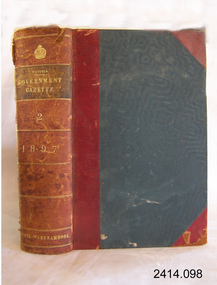
Book - Reference/Colonial Government Notification Gazette, Robert Smith Brain, The Victoria Government Gazette 1897 Vol 2 /102, 1897
... These government gazettes are a unique, useful and extremely fascinating resource for local, family and social historians and researchers in other fields, since they contain information of great use in establishing an image of Australia and its people in the past, covering land transactions, legal notices, proclamations, insolvency and bankruptcy notices, impoundments, private advertisements, patent and trademark applications, partnerships, licences, mining contracts, government positions, statistics, and a lot more. ...These government gazettes are a unique, useful and extremely fascinating resource for local, family and social historians and researchers in other fields, since they contain information of great use in establishing an image of Australia and its people in the past, covering land transactions, legal notices, proclamations, insolvency and bankruptcy notices, impoundments, private advertisements, patent and trademark applications, partnerships, licences, mining contracts, government positions, statistics, and a lot more. ...The Victoria Government Gazette and other government documents from 1887 were printed and published by Robert S. Brain, Government Printer, Melbourne. Brain held the position of Victorian Government Printer through the 1890s and into the early 1900s. The same imprint appears on other official Victorian publications from that era, such as the annual reports of the Board for the Protection of the Aborigines and the colony's Statistical Register. There wasn't really an editor in the modern sense the Gazette was compiled and issued under the authority of the colonial government, via the Chief Secretary's Department, with Brain's printing office producing and publishing it.Hard cover book. The Victorian Government Gazette 1897 Vol 2 /102 Printer: Robert Smith, Brain Publisher: Robert Smith, Brain Publisher: Authority of The Colonial Government Date: 1897 Further Information: Textured hard cover bound book leather burgundy colour spine with gilt lettering, covers embossed blue cloth & reinforced corners to front and back cover. non-fictionThe Victoria Government Gazette and other government documents from 1887 were printed and published by Robert S. Brain, Government Printer, Melbourne. Brain held the position of Victorian Government Printer through the 1890s and into the early 1900s. The same imprint appears on other official Victorian publications from that era, such as the annual reports of the Board for the Protection of the Aborigines and the colony's Statistical Register. There wasn't really an editor in the modern sense the Gazette was compiled and issued under the authority of the colonial government, via the Chief Secretary's Department, with Brain's printing office producing and publishing it.flagstaff hill, warrnambool, shipwrecked-coast, flagstaff-hill, flagstaff-hill-maritime-museum, maritime-museum, shipwreck-coast, flagstaff-hill-maritime-village, book, the victoria government gazette 1897, the victoria government gazette 1897 2 vol 102, the victoria government gazette -
 Flagstaff Hill Maritime Museum and Village
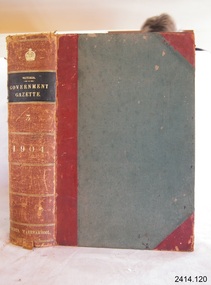
Book - Reference/Colonial Government Notification Gazette, Robert Smith Brain, The Victoria Government Gazette 1904 Vol 3 /124, 1904
... These government gazettes are a unique, useful and extremely fascinating resource for local, family and social historians and researchers in other fields, since they contain information of great use in establishing an image of Australia and its people in the past, covering land transactions, legal notices, proclamations, insolvency and bankruptcy notices, impoundments, private advertisements, patent and trademark applications, partnerships, licences, mining contracts, government positions, statistics, and a lot more. ...These government gazettes are a unique, useful and extremely fascinating resource for local, family and social historians and researchers in other fields, since they contain information of great use in establishing an image of Australia and its people in the past, covering land transactions, legal notices, proclamations, insolvency and bankruptcy notices, impoundments, private advertisements, patent and trademark applications, partnerships, licences, mining contracts, government positions, statistics, and a lot more. ...The Victoria Government Gazette and other government documents from 1887 were printed and published by Robert S. Brain, Government Printer, Melbourne. Brain held the position of Victorian Government Printer through the 1890s and into the early 1900s. The same imprint appears on other official Victorian publications from that era, such as the annual reports of the Board for the Protection of the Aborigines and the colony's Statistical Register. There wasn't really an editor in the modern sense the Gazette was compiled and issued under the authority of the colonial government, via the Chief Secretary's Department, with Brain's printing office producing and publishing it.Hard cover book. The Victorian Government Gazette 1904Vol 3 /124 Printer: Robert Smith, Brain Publisher: Robert Smith, Brain Publisher: Authority of The Colonial Government Date: 1904 Further Information: Textured hard cover bound book leather burgundy colour spine with gilt lettering, covers embossed blue cloth & reinforced corners to front and back cover. non-fictionThe Victoria Government Gazette and other government documents from 1887 were printed and published by Robert S. Brain, Government Printer, Melbourne. Brain held the position of Victorian Government Printer through the 1890s and into the early 1900s. The same imprint appears on other official Victorian publications from that era, such as the annual reports of the Board for the Protection of the Aborigines and the colony's Statistical Register. There wasn't really an editor in the modern sense the Gazette was compiled and issued under the authority of the colonial government, via the Chief Secretary's Department, with Brain's printing office producing and publishing it.flagstaff hill, warrnambool, shipwrecked-coast, flagstaff-hill, flagstaff-hill-maritime-museum, maritime-museum, shipwreck-coast, flagstaff-hill-maritime-village, book, the victoria government gazette 1897, the victoria government gazette 1897 2 vol 102, the victoria government gazette -
 Flagstaff Hill Maritime Museum and Village
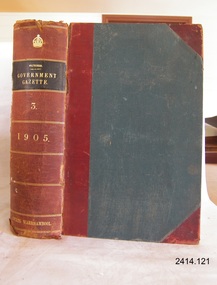
Book - Reference/Colonial Government Notification Gazette, Robert Smith Brain, The Victoria Government Gazette 1905 Vol 3 /127, 1905
... These government gazettes are a unique, useful and extremely fascinating resource for local, family and social historians and researchers in other fields, since they contain information of great use in establishing an image of Australia and its people in the past, covering land transactions, legal notices, proclamations, insolvency and bankruptcy notices, impoundments, private advertisements, patent and trademark applications, partnerships, licences, mining contracts, government positions, statistics, and a lot more. ...These government gazettes are a unique, useful and extremely fascinating resource for local, family and social historians and researchers in other fields, since they contain information of great use in establishing an image of Australia and its people in the past, covering land transactions, legal notices, proclamations, insolvency and bankruptcy notices, impoundments, private advertisements, patent and trademark applications, partnerships, licences, mining contracts, government positions, statistics, and a lot more. ...The Victoria Government Gazette and other government documents from 1887 were printed and published by Robert S. Brain, Government Printer, Melbourne. Brain held the position of Victorian Government Printer through the 1890s and into the early 1900s. The same imprint appears on other official Victorian publications from that era, such as the annual reports of the Board for the Protection of the Aborigines and the colony's Statistical Register. There wasn't really an editor in the modern sense the Gazette was compiled and issued under the authority of the colonial government, via the Chief Secretary's Department, with Brain's printing office producing and publishing it.Hard cover book. The Victorian Government Gazette 1905 Vol 3 /127 Printer: Robert Smith, Brain Publisher: Robert Smith, Brain Publisher: Authority of The Colonial Government Date: 1905 Further Information: Textured hard cover bound book leather burgundy colour spine with gilt lettering, covers embossed blue cloth & reinforced corners to front and back cover. non-fictionThe Victoria Government Gazette and other government documents from 1887 were printed and published by Robert S. Brain, Government Printer, Melbourne. Brain held the position of Victorian Government Printer through the 1890s and into the early 1900s. The same imprint appears on other official Victorian publications from that era, such as the annual reports of the Board for the Protection of the Aborigines and the colony's Statistical Register. There wasn't really an editor in the modern sense the Gazette was compiled and issued under the authority of the colonial government, via the Chief Secretary's Department, with Brain's printing office producing and publishing it.flagstaff hill, warrnambool, shipwrecked-coast, flagstaff-hill, flagstaff-hill-maritime-museum, maritime-museum, shipwreck-coast, flagstaff-hill-maritime-village, book, the victoria government gazette 1897, the victoria government gazette 1897 2 vol 102, the victoria government gazette -
 Flagstaff Hill Maritime Museum and Village
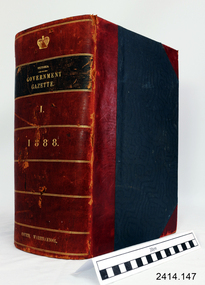
Book - Reference/Colonial Government Notification Gazette, Robert Smith Brain, The Victoria Government Gazette 1888 Vol 1 /75, 1888
... These government gazettes are a unique, useful and extremely fascinating resource for local, family and social historians and researchers in other fields, since they contain information of great use in establishing an image of Australia and its people in the past, covering land transactions, legal notices, proclamations, insolvency and bankruptcy notices, impoundments, private advertisements, patent and trademark applications, partnerships, licences, mining contracts, government positions, statistics, and a lot more. ...These government gazettes are a unique, useful and extremely fascinating resource for local, family and social historians and researchers in other fields, since they contain information of great use in establishing an image of Australia and its people in the past, covering land transactions, legal notices, proclamations, insolvency and bankruptcy notices, impoundments, private advertisements, patent and trademark applications, partnerships, licences, mining contracts, government positions, statistics, and a lot more. ...The Victoria Government Gazette and other government documents from 1887 were printed and published by Robert S. Brain, Government Printer, Melbourne. Brain held the position of Victorian Government Printer through the 1890s and into the early 1900s. The same imprint appears on other official Victorian publications from that era, such as the annual reports of the Board for the Protection of the Aborigines and the colony's Statistical Register. There wasn't really an editor in the modern sense the Gazette was compiled and issued under the authority of the colonial government, via the Chief Secretary's Department, with Brain's printing office producing and publishing it.Hard cover book. The Victorian Government Gazette 1888 Vol 1 /75 Printer: Robert Smith, Brain Publisher: Robert Smith, Brain Publisher: Authority of The Colonial Government Date: 1888 Further Information: Textured hard cover bound book leather burgundy colour spine with gilt lettering, covers embossed blue cloth & reinforced corners to front and back cover. non-fictionThe Victoria Government Gazette and other government documents from 1887 were printed and published by Robert S. Brain, Government Printer, Melbourne. Brain held the position of Victorian Government Printer through the 1890s and into the early 1900s. The same imprint appears on other official Victorian publications from that era, such as the annual reports of the Board for the Protection of the Aborigines and the colony's Statistical Register. There wasn't really an editor in the modern sense the Gazette was compiled and issued under the authority of the colonial government, via the Chief Secretary's Department, with Brain's printing office producing and publishing it.flagstaff hill, warrnambool, shipwrecked-coast, flagstaff-hill, flagstaff-hill-maritime-museum, maritime-museum, shipwreck-coast, flagstaff-hill-maritime-village, book, the victoria government gazette 1897, the victoria government gazette 1897 2 vol 102, the victoria government gazette -
 Flagstaff Hill Maritime Museum and Village
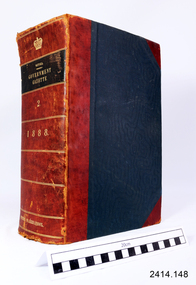
Book - Reference/Colonial Government Notification Gazette, Robert Smith Brain, The Victoria Government Gazette 1888 Vol 2 /76, 1888
... These government gazettes are a unique, useful and extremely fascinating resource for local, family and social historians and researchers in other fields, since they contain information of great use in establishing an image of Australia and its people in the past, covering land transactions, legal notices, proclamations, insolvency and bankruptcy notices, impoundments, private advertisements, patent and trademark applications, partnerships, licences, mining contracts, government positions, statistics, and a lot more. ...These government gazettes are a unique, useful and extremely fascinating resource for local, family and social historians and researchers in other fields, since they contain information of great use in establishing an image of Australia and its people in the past, covering land transactions, legal notices, proclamations, insolvency and bankruptcy notices, impoundments, private advertisements, patent and trademark applications, partnerships, licences, mining contracts, government positions, statistics, and a lot more. ...The Victoria Government Gazette and other government documents from 1887 were printed and published by Robert S. Brain, Government Printer, Melbourne. Brain held the position of Victorian Government Printer through the 1890s and into the early 1900s. The same imprint appears on other official Victorian publications from that era, such as the annual reports of the Board for the Protection of the Aborigines and the colony's Statistical Register. There wasn't really an editor in the modern sense the Gazette was compiled and issued under the authority of the colonial government, via the Chief Secretary's Department, with Brain's printing office producing and publishing it.Hard cover book. The Victorian Government Gazette 1888 Vol 2 /76 Printer: Robert Smith, Brain Publisher: Robert Smith, Brain Publisher: Authority of The Colonial Government Date: 1888 Further Information: Textured hard cover bound book leather burgundy colour spine with gilt lettering, covers embossed blue cloth & reinforced corners to front and back cover. non-fictionThe Victoria Government Gazette and other government documents from 1887 were printed and published by Robert S. Brain, Government Printer, Melbourne. Brain held the position of Victorian Government Printer through the 1890s and into the early 1900s. The same imprint appears on other official Victorian publications from that era, such as the annual reports of the Board for the Protection of the Aborigines and the colony's Statistical Register. There wasn't really an editor in the modern sense the Gazette was compiled and issued under the authority of the colonial government, via the Chief Secretary's Department, with Brain's printing office producing and publishing it.flagstaff hill, warrnambool, shipwrecked-coast, flagstaff-hill, flagstaff-hill-maritime-museum, maritime-museum, shipwreck-coast, flagstaff-hill-maritime-village, book, the victoria government gazette 1897, the victoria government gazette 1897 2 vol 102, the victoria government gazette -
 Flagstaff Hill Maritime Museum and Village
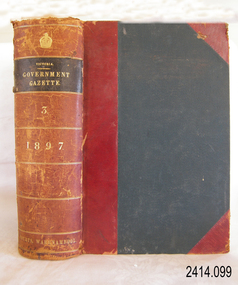
Book - Reference/Colonial Government Notification Gazette, Robert Smith Brain, The Victoria Government Gazette 1897 Vol 3 /103, 1897
... These government gazettes are a unique, useful and extremely fascinating resource for local, family and social historians and researchers in other fields, since they contain information of great use in establishing an image of Australia and its people in the past, covering land transactions, legal notices, proclamations, insolvency and bankruptcy notices, impoundments, private advertisements, patent and trademark applications, partnerships, licences, mining contracts, government positions, statistics, and a lot more. ...These government gazettes are a unique, useful and extremely fascinating resource for local, family and social historians and researchers in other fields, since they contain information of great use in establishing an image of Australia and its people in the past, covering land transactions, legal notices, proclamations, insolvency and bankruptcy notices, impoundments, private advertisements, patent and trademark applications, partnerships, licences, mining contracts, government positions, statistics, and a lot more. ...The Victoria Government Gazette and other government documents from 1887 were printed and published by Robert S. Brain, Government Printer, Melbourne. Brain held the position of Victorian Government Printer through the 1890s and into the early 1900s. The same imprint appears on other official Victorian publications from that era, such as the annual reports of the Board for the Protection of the Aborigines and the colony's Statistical Register. There wasn't really an editor in the modern sense the Gazette was compiled and issued under the authority of the colonial government, via the Chief Secretary's Department, with Brain's printing office producing and publishing it.Hard cover book. The Victorian Government Gazette 1897 Vol 3 /103 Printer: Robert Smith, Brain Publisher: Robert Smith, Brain Publisher: Authority of The Colonial Government Date: 1897 Further Information: Textured hard cover bound book leather burgundy colour spine with gilt lettering, covers embossed blue cloth & reinforced corners to front and back cover. non-fictionThe Victoria Government Gazette and other government documents from 1887 were printed and published by Robert S. Brain, Government Printer, Melbourne. Brain held the position of Victorian Government Printer through the 1890s and into the early 1900s. The same imprint appears on other official Victorian publications from that era, such as the annual reports of the Board for the Protection of the Aborigines and the colony's Statistical Register. There wasn't really an editor in the modern sense the Gazette was compiled and issued under the authority of the colonial government, via the Chief Secretary's Department, with Brain's printing office producing and publishing it.flagstaff hill, warrnambool, shipwrecked-coast, flagstaff-hill, flagstaff-hill-maritime-museum, maritime-museum, shipwreck-coast, flagstaff-hill-maritime-village, book, the victoria government gazette 1897, the victoria government gazette 1897 2 vol 102, the victoria government gazette -
 Flagstaff Hill Maritime Museum and Village
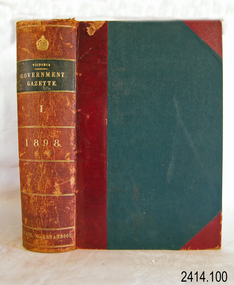
Book - Reference/Colonial Government Notification Gazette, Robert Smith Brain, The Victoria Government Gazette 1898 Vol 1 /104, 1898
... These government gazettes are a unique, useful and extremely fascinating resource for local, family and social historians and researchers in other fields, since they contain information of great use in establishing an image of Australia and its people in the past, covering land transactions, legal notices, proclamations, insolvency and bankruptcy notices, impoundments, private advertisements, patent and trademark applications, partnerships, licences, mining contracts, government positions, statistics, and a lot more. ...These government gazettes are a unique, useful and extremely fascinating resource for local, family and social historians and researchers in other fields, since they contain information of great use in establishing an image of Australia and its people in the past, covering land transactions, legal notices, proclamations, insolvency and bankruptcy notices, impoundments, private advertisements, patent and trademark applications, partnerships, licences, mining contracts, government positions, statistics, and a lot more. ...The Victoria Government Gazette and other government documents from 1887 were printed and published by Robert S. Brain, Government Printer, Melbourne. Brain held the position of Victorian Government Printer through the 1890s and into the early 1900s. The same imprint appears on other official Victorian publications from that era, such as the annual reports of the Board for the Protection of the Aborigines and the colony's Statistical Register. There wasn't really an editor in the modern sense the Gazette was compiled and issued under the authority of the colonial government, via the Chief Secretary's Department, with Brain's printing office producing and publishing it.Hard cover book. The Victorian Government Gazette 1898 Vol 1/104 Printer: Robert Smith, Brain Publisher: Robert Smith, Brain Publisher: Authority of The Colonial Government Date: 1898 Further Information: Textured hard cover bound book leather burgundy colour spine with gilt lettering, covers embossed blue cloth & reinforced corners to front and back cover. non-fictionThe Victoria Government Gazette and other government documents from 1887 were printed and published by Robert S. Brain, Government Printer, Melbourne. Brain held the position of Victorian Government Printer through the 1890s and into the early 1900s. The same imprint appears on other official Victorian publications from that era, such as the annual reports of the Board for the Protection of the Aborigines and the colony's Statistical Register. There wasn't really an editor in the modern sense the Gazette was compiled and issued under the authority of the colonial government, via the Chief Secretary's Department, with Brain's printing office producing and publishing it.flagstaff hill, warrnambool, shipwrecked-coast, flagstaff-hill, flagstaff-hill-maritime-museum, maritime-museum, shipwreck-coast, flagstaff-hill-maritime-village, book, the victoria government gazette 1897, the victoria government gazette 1897 2 vol 102, the victoria government gazette -
 Flagstaff Hill Maritime Museum and Village
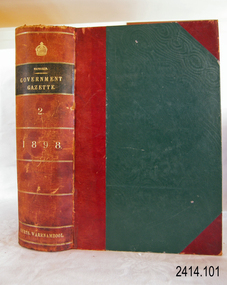
Book - Reference/Colonial Government Notification Gazette, Robert Smith Brain, The Victoria Government Gazette 1898 Vol 2/105, 1898
... These government gazettes are a unique, useful and extremely fascinating resource for local, family and social historians and researchers in other fields, since they contain information of great use in establishing an image of Australia and its people in the past, covering land transactions, legal notices, proclamations, insolvency and bankruptcy notices, impoundments, private advertisements, patent and trademark applications, partnerships, licences, mining contracts, government positions, statistics, and a lot more. ...These government gazettes are a unique, useful and extremely fascinating resource for local, family and social historians and researchers in other fields, since they contain information of great use in establishing an image of Australia and its people in the past, covering land transactions, legal notices, proclamations, insolvency and bankruptcy notices, impoundments, private advertisements, patent and trademark applications, partnerships, licences, mining contracts, government positions, statistics, and a lot more. ...The Victoria Government Gazette and other government documents from 1887 were printed and published by Robert S. Brain, Government Printer, Melbourne. Brain held the position of Victorian Government Printer through the 1890s and into the early 1900s. The same imprint appears on other official Victorian publications from that era, such as the annual reports of the Board for the Protection of the Aborigines and the colony's Statistical Register. There wasn't really an editor in the modern sense the Gazette was compiled and issued under the authority of the colonial government, via the Chief Secretary's Department, with Brain's printing office producing and publishing it.Hard cover book. The Victorian Government Gazette 1898 Vol 2/105 Printer: Robert Smith, Brain Publisher: Robert Smith, Brain Publisher: Authority of The Colonial Government Date: 1898 Further Information: Textured hard cover bound book leather burgundy colour spine with gilt lettering, covers embossed blue cloth & reinforced corners to front and back cover. non-fictionThe Victoria Government Gazette and other government documents from 1887 were printed and published by Robert S. Brain, Government Printer, Melbourne. Brain held the position of Victorian Government Printer through the 1890s and into the early 1900s. The same imprint appears on other official Victorian publications from that era, such as the annual reports of the Board for the Protection of the Aborigines and the colony's Statistical Register. There wasn't really an editor in the modern sense the Gazette was compiled and issued under the authority of the colonial government, via the Chief Secretary's Department, with Brain's printing office producing and publishing it.flagstaff hill, warrnambool, shipwrecked-coast, flagstaff-hill, flagstaff-hill-maritime-museum, maritime-museum, shipwreck-coast, flagstaff-hill-maritime-village, book, the victoria government gazette 1897, the victoria government gazette 1897 2 vol 102, the victoria government gazette -
 Flagstaff Hill Maritime Museum and Village
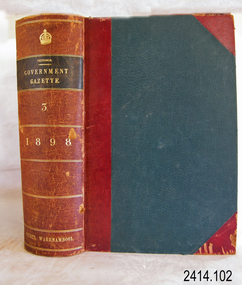
Book - Reference/Colonial Government Notification Gazette, Robert Smith Brain, The Victoria Government Gazette 1898 Vol 3 /106, 1898
... These government gazettes are a unique, useful and extremely fascinating resource for local, family and social historians and researchers in other fields, since they contain information of great use in establishing an image of Australia and its people in the past, covering land transactions, legal notices, proclamations, insolvency and bankruptcy notices, impoundments, private advertisements, patent and trademark applications, partnerships, licences, mining contracts, government positions, statistics, and a lot more. ...These government gazettes are a unique, useful and extremely fascinating resource for local, family and social historians and researchers in other fields, since they contain information of great use in establishing an image of Australia and its people in the past, covering land transactions, legal notices, proclamations, insolvency and bankruptcy notices, impoundments, private advertisements, patent and trademark applications, partnerships, licences, mining contracts, government positions, statistics, and a lot more. ...The Victoria Government Gazette and other government documents from 1887 were printed and published by Robert S. Brain, Government Printer, Melbourne. Brain held the position of Victorian Government Printer through the 1890s and into the early 1900s. The same imprint appears on other official Victorian publications from that era, such as the annual reports of the Board for the Protection of the Aborigines and the colony's Statistical Register. There wasn't really an editor in the modern sense the Gazette was compiled and issued under the authority of the colonial government, via the Chief Secretary's Department, with Brain's printing office producing and publishing it.Hard cover book. The Victorian Government Gazette 1898 Vol 3 /106 Printer: Robert Smith, Brain Publisher: Robert Smith, Brain Publisher: Authority of The Colonial Government Date: 1898 Further Information: Textured hard cover bound book leather burgundy colour spine with gilt lettering, covers embossed blue cloth & reinforced corners to front and back cover. non-fictionThe Victoria Government Gazette and other government documents from 1887 were printed and published by Robert S. Brain, Government Printer, Melbourne. Brain held the position of Victorian Government Printer through the 1890s and into the early 1900s. The same imprint appears on other official Victorian publications from that era, such as the annual reports of the Board for the Protection of the Aborigines and the colony's Statistical Register. There wasn't really an editor in the modern sense the Gazette was compiled and issued under the authority of the colonial government, via the Chief Secretary's Department, with Brain's printing office producing and publishing it.flagstaff hill, warrnambool, shipwrecked-coast, flagstaff-hill, flagstaff-hill-maritime-museum, maritime-museum, shipwreck-coast, flagstaff-hill-maritime-village, book, the victoria government gazette 1897, the victoria government gazette 1897 2 vol 102, the victoria government gazette -
 Flagstaff Hill Maritime Museum and Village
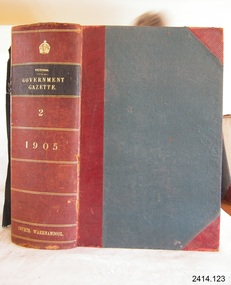
Book - Reference/Colonial Government Notification Gazette, Robert Smith Brain, The Victoria Government Gazette 1905 Vol 2 /126, 1905
... These government gazettes are a unique, useful and extremely fascinating resource for local, family and social historians and researchers in other fields, since they contain information of great use in establishing an image of Australia and its people in the past, covering land transactions, legal notices, proclamations, insolvency and bankruptcy notices, impoundments, private advertisements, patent and trademark applications, partnerships, licences, mining contracts, government positions, statistics, and a lot more. ...These government gazettes are a unique, useful and extremely fascinating resource for local, family and social historians and researchers in other fields, since they contain information of great use in establishing an image of Australia and its people in the past, covering land transactions, legal notices, proclamations, insolvency and bankruptcy notices, impoundments, private advertisements, patent and trademark applications, partnerships, licences, mining contracts, government positions, statistics, and a lot more. ...The Victoria Government Gazette and other government documents from 1887 were printed and published by Robert S. Brain, Government Printer, Melbourne. Brain held the position of Victorian Government Printer through the 1890s and into the early 1900s. The same imprint appears on other official Victorian publications from that era, such as the annual reports of the Board for the Protection of the Aborigines and the colony's Statistical Register. There wasn't really an editor in the modern sense the Gazette was compiled and issued under the authority of the colonial government, via the Chief Secretary's Department, with Brain's printing office producing and publishing it.Hard cover book. The Victorian Government Gazette 1905 Vol 2 /126 Printer: Robert Smith, Brain Publisher: Robert Smith, Brain Publisher: Authority of The Colonial Government Date: 1905 Further Information: Textured hard cover bound book leather burgundy colour spine with gilt lettering, covers embossed blue cloth & reinforced corners to front and back cover. non-fictionThe Victoria Government Gazette and other government documents from 1887 were printed and published by Robert S. Brain, Government Printer, Melbourne. Brain held the position of Victorian Government Printer through the 1890s and into the early 1900s. The same imprint appears on other official Victorian publications from that era, such as the annual reports of the Board for the Protection of the Aborigines and the colony's Statistical Register. There wasn't really an editor in the modern sense the Gazette was compiled and issued under the authority of the colonial government, via the Chief Secretary's Department, with Brain's printing office producing and publishing it.flagstaff hill, warrnambool, shipwrecked-coast, flagstaff-hill, flagstaff-hill-maritime-museum, maritime-museum, shipwreck-coast, flagstaff-hill-maritime-village, book, the victoria government gazette 1897, the victoria government gazette 1897 2 vol 102, the victoria government gazette -
 Flagstaff Hill Maritime Museum and Village
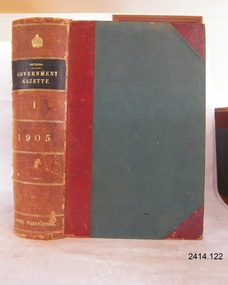
Book - Reference/Colonial Government Notification Gazette, Robert Smith Brain, The Victoria Government Gazette 1905 Vol 1 /125, 1905
... These government gazettes are a unique, useful and extremely fascinating resource for local, family and social historians and researchers in other fields, since they contain information of great use in establishing an image of Australia and its people in the past, covering land transactions, legal notices, proclamations, insolvency and bankruptcy notices, impoundments, private advertisements, patent and trademark applications, partnerships, licences, mining contracts, government positions, statistics, and a lot more. ...These government gazettes are a unique, useful and extremely fascinating resource for local, family and social historians and researchers in other fields, since they contain information of great use in establishing an image of Australia and its people in the past, covering land transactions, legal notices, proclamations, insolvency and bankruptcy notices, impoundments, private advertisements, patent and trademark applications, partnerships, licences, mining contracts, government positions, statistics, and a lot more. ...The Victoria Government Gazette and other government documents from 1887 were printed and published by Robert S. Brain, Government Printer, Melbourne. Brain held the position of Victorian Government Printer through the 1890s and into the early 1900s. The same imprint appears on other official Victorian publications from that era, such as the annual reports of the Board for the Protection of the Aborigines and the colony's Statistical Register. There wasn't really an editor in the modern sense the Gazette was compiled and issued under the authority of the colonial government, via the Chief Secretary's Department, with Brain's printing office producing and publishing it.Hard cover book. The Victorian Government Gazette 1905 Vol 1 /125 Printer: Robert Smith, Brain Publisher: Robert Smith, Brain Publisher: Authority of The Colonial Government Date: 1905 Further Information: Textured hard cover bound book leather burgundy colour spine with gilt lettering, covers embossed blue cloth & reinforced corners to front and back cover. non-fictionThe Victoria Government Gazette and other government documents from 1887 were printed and published by Robert S. Brain, Government Printer, Melbourne. Brain held the position of Victorian Government Printer through the 1890s and into the early 1900s. The same imprint appears on other official Victorian publications from that era, such as the annual reports of the Board for the Protection of the Aborigines and the colony's Statistical Register. There wasn't really an editor in the modern sense the Gazette was compiled and issued under the authority of the colonial government, via the Chief Secretary's Department, with Brain's printing office producing and publishing it.flagstaff hill, warrnambool, shipwrecked-coast, flagstaff-hill, flagstaff-hill-maritime-museum, maritime-museum, shipwreck-coast, flagstaff-hill-maritime-village, book, the victoria government gazette 1897, the victoria government gazette 1897 2 vol 102, the victoria government gazette -
 Flagstaff Hill Maritime Museum and Village
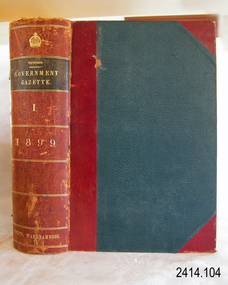
Book - Reference/Colonial Government Notification Gazette, Robert Smith Brain, The Victoria Government Gazette 1899 Vol 1 /107, 1899
... These government gazettes are a unique, useful and extremely fascinating resource for local, family and social historians and researchers in other fields, since they contain information of great use in establishing an image of Australia and its people in the past, covering land transactions, legal notices, proclamations, insolvency and bankruptcy notices, impoundments, private advertisements, patent and trademark applications, partnerships, licences, mining contracts, government positions, statistics, and a lot more. ...These government gazettes are a unique, useful and extremely fascinating resource for local, family and social historians and researchers in other fields, since they contain information of great use in establishing an image of Australia and its people in the past, covering land transactions, legal notices, proclamations, insolvency and bankruptcy notices, impoundments, private advertisements, patent and trademark applications, partnerships, licences, mining contracts, government positions, statistics, and a lot more. ...The Victoria Government Gazette and other government documents from 1887 were printed and published by Robert S. Brain, Government Printer, Melbourne. Brain held the position of Victorian Government Printer through the 1890s and into the early 1900s. The same imprint appears on other official Victorian publications from that era, such as the annual reports of the Board for the Protection of the Aborigines and the colony's Statistical Register. There wasn't really an editor in the modern sense the Gazette was compiled and issued under the authority of the colonial government, via the Chief Secretary's Department, with Brain's printing office producing and publishing it.Hard cover book. The Victorian Government Gazette 1899 Vol 1 /107 Printer: Robert Smith, Brain Publisher: Robert Smith, Brain Publisher: Authority of The Colonial Government Date: 1899 Further Information: Textured hard cover bound book leather burgundy colour spine with gilt lettering, covers embossed blue cloth & reinforced corners to front and back cover. non-fictionThe Victoria Government Gazette and other government documents from 1887 were printed and published by Robert S. Brain, Government Printer, Melbourne. Brain held the position of Victorian Government Printer through the 1890s and into the early 1900s. The same imprint appears on other official Victorian publications from that era, such as the annual reports of the Board for the Protection of the Aborigines and the colony's Statistical Register. There wasn't really an editor in the modern sense the Gazette was compiled and issued under the authority of the colonial government, via the Chief Secretary's Department, with Brain's printing office producing and publishing it.flagstaff hill, warrnambool, shipwrecked-coast, flagstaff-hill, flagstaff-hill-maritime-museum, maritime-museum, shipwreck-coast, flagstaff-hill-maritime-village, book, the victoria government gazette 1897, the victoria government gazette 1897 2 vol 102, the victoria government gazette -
 Flagstaff Hill Maritime Museum and Village
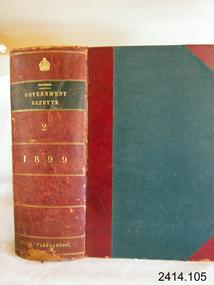
Book - Reference/Colonial Government Notification Gazette, Robert Smith Brain, The Victoria Government Gazette 1899 Vol 2 /108, 1899
... These government gazettes are a unique, useful and extremely fascinating resource for local, family and social historians and researchers in other fields, since they contain information of great use in establishing an image of Australia and its people in the past, covering land transactions, legal notices, proclamations, insolvency and bankruptcy notices, impoundments, private advertisements, patent and trademark applications, partnerships, licences, mining contracts, government positions, statistics, and a lot more. ...These government gazettes are a unique, useful and extremely fascinating resource for local, family and social historians and researchers in other fields, since they contain information of great use in establishing an image of Australia and its people in the past, covering land transactions, legal notices, proclamations, insolvency and bankruptcy notices, impoundments, private advertisements, patent and trademark applications, partnerships, licences, mining contracts, government positions, statistics, and a lot more. ...The Victoria Government Gazette and other government documents from 1887 were printed and published by Robert S. Brain, Government Printer, Melbourne. Brain held the position of Victorian Government Printer through the 1890s and into the early 1900s. The same imprint appears on other official Victorian publications from that era, such as the annual reports of the Board for the Protection of the Aborigines and the colony's Statistical Register. There wasn't really an editor in the modern sense the Gazette was compiled and issued under the authority of the colonial government, via the Chief Secretary's Department, with Brain's printing office producing and publishing it.Hard cover book. The Victorian Government Gazette 1899 Vol 2 /108 Printer: Robert Smith, Brain Publisher: Robert Smith, Brain Publisher: Authority of The Colonial Government Date: 1899 Further Information: Textured hard cover bound book leather burgundy colour spine with gilt lettering, covers embossed blue cloth & reinforced corners to front and back cover. non-fictionThe Victoria Government Gazette and other government documents from 1887 were printed and published by Robert S. Brain, Government Printer, Melbourne. Brain held the position of Victorian Government Printer through the 1890s and into the early 1900s. The same imprint appears on other official Victorian publications from that era, such as the annual reports of the Board for the Protection of the Aborigines and the colony's Statistical Register. There wasn't really an editor in the modern sense the Gazette was compiled and issued under the authority of the colonial government, via the Chief Secretary's Department, with Brain's printing office producing and publishing it.flagstaff hill, warrnambool, shipwrecked-coast, flagstaff-hill, flagstaff-hill-maritime-museum, maritime-museum, shipwreck-coast, flagstaff-hill-maritime-village, book, the victoria government gazette 1897, the victoria government gazette 1897 2 vol 102, the victoria government gazette -
 Flagstaff Hill Maritime Museum and Village
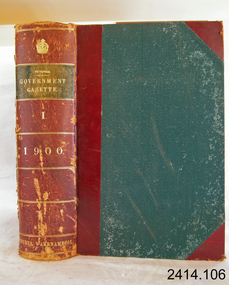
Book - Reference/Colonial Government Notification Gazette, Robert Smith Brain, The Victoria Government Gazette 1900 Vol 1 /110, 1900
... These government gazettes are a unique, useful and extremely fascinating resource for local, family and social historians and researchers in other fields, since they contain information of great use in establishing an image of Australia and its people in the past, covering land transactions, legal notices, proclamations, insolvency and bankruptcy notices, impoundments, private advertisements, patent and trademark applications, partnerships, licences, mining contracts, government positions, statistics, and a lot more. ...These government gazettes are a unique, useful and extremely fascinating resource for local, family and social historians and researchers in other fields, since they contain information of great use in establishing an image of Australia and its people in the past, covering land transactions, legal notices, proclamations, insolvency and bankruptcy notices, impoundments, private advertisements, patent and trademark applications, partnerships, licences, mining contracts, government positions, statistics, and a lot more. ...The Victoria Government Gazette and other government documents from 1887 were printed and published by Robert S. Brain, Government Printer, Melbourne. Brain held the position of Victorian Government Printer through the 1890s and into the early 1900s. The same imprint appears on other official Victorian publications from that era, such as the annual reports of the Board for the Protection of the Aborigines and the colony's Statistical Register. There wasn't really an editor in the modern sense the Gazette was compiled and issued under the authority of the colonial government, via the Chief Secretary's Department, with Brain's printing office producing and publishing it.Hard cover book. The Victorian Government Gazette 1900 Vol 1 /110 Printer: Robert Smith, Brain Publisher: Robert Smith, Brain Publisher: Authority of The Colonial Government Date: 1900 Further Information: Textured hard cover bound book leather burgundy colour spine with gilt lettering, covers embossed blue cloth & reinforced corners to front and back cover. non-fictionThe Victoria Government Gazette and other government documents from 1887 were printed and published by Robert S. Brain, Government Printer, Melbourne. Brain held the position of Victorian Government Printer through the 1890s and into the early 1900s. The same imprint appears on other official Victorian publications from that era, such as the annual reports of the Board for the Protection of the Aborigines and the colony's Statistical Register. There wasn't really an editor in the modern sense the Gazette was compiled and issued under the authority of the colonial government, via the Chief Secretary's Department, with Brain's printing office producing and publishing it.flagstaff hill, warrnambool, shipwrecked-coast, flagstaff-hill, flagstaff-hill-maritime-museum, maritime-museum, shipwreck-coast, flagstaff-hill-maritime-village, book, the victoria government gazette 1897, the victoria government gazette 1897 2 vol 102, the victoria government gazette -
 Flagstaff Hill Maritime Museum and Village
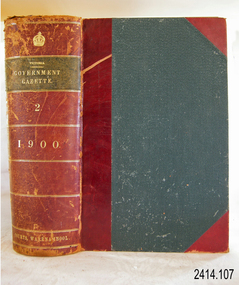
Book - Reference/Colonial Government Notification Gazette, Robert Smith Brain, The Victoria Government Gazette 1900 Vol 2 /111, 1900
... These government gazettes are a unique, useful and extremely fascinating resource for local, family and social historians and researchers in other fields, since they contain information of great use in establishing an image of Australia and its people in the past, covering land transactions, legal notices, proclamations, insolvency and bankruptcy notices, impoundments, private advertisements, patent and trademark applications, partnerships, licences, mining contracts, government positions, statistics, and a lot more. ...These government gazettes are a unique, useful and extremely fascinating resource for local, family and social historians and researchers in other fields, since they contain information of great use in establishing an image of Australia and its people in the past, covering land transactions, legal notices, proclamations, insolvency and bankruptcy notices, impoundments, private advertisements, patent and trademark applications, partnerships, licences, mining contracts, government positions, statistics, and a lot more. ...The Victoria Government Gazette and other government documents from 1887 were printed and published by Robert S. Brain, Government Printer, Melbourne. Brain held the position of Victorian Government Printer through the 1890s and into the early 1900s. The same imprint appears on other official Victorian publications from that era, such as the annual reports of the Board for the Protection of the Aborigines and the colony's Statistical Register. There wasn't really an editor in the modern sense the Gazette was compiled and issued under the authority of the colonial government, via the Chief Secretary's Department, with Brain's printing office producing and publishing it.Hard cover book. The Victorian Government Gazette 1900 Vol 2 /111 Printer: Robert Smith, Brain Publisher: Robert Smith, Brain Publisher: Authority of The Colonial Government Date: 1900 Further Information: Textured hard cover bound book leather burgundy colour spine with gilt lettering, covers embossed blue cloth & reinforced corners to front and back cover. non-fictionThe Victoria Government Gazette and other government documents from 1887 were printed and published by Robert S. Brain, Government Printer, Melbourne. Brain held the position of Victorian Government Printer through the 1890s and into the early 1900s. The same imprint appears on other official Victorian publications from that era, such as the annual reports of the Board for the Protection of the Aborigines and the colony's Statistical Register. There wasn't really an editor in the modern sense the Gazette was compiled and issued under the authority of the colonial government, via the Chief Secretary's Department, with Brain's printing office producing and publishing it.flagstaff hill, warrnambool, shipwrecked-coast, flagstaff-hill, flagstaff-hill-maritime-museum, maritime-museum, shipwreck-coast, flagstaff-hill-maritime-village, book, the victoria government gazette 1897, the victoria government gazette 1897 2 vol 102, the victoria government gazette -
 Flagstaff Hill Maritime Museum and Village
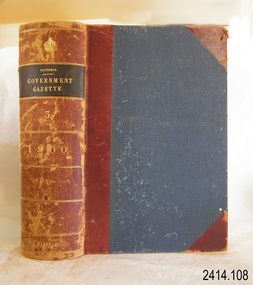
Book - Reference/Colonial Government Notification Gazette, Robert Smith Brain, The Victoria Government Gazette 1900 Vol 3 /112, 1900
... These government gazettes are a unique, useful and extremely fascinating resource for local, family and social historians and researchers in other fields, since they contain information of great use in establishing an image of Australia and its people in the past, covering land transactions, legal notices, proclamations, insolvency and bankruptcy notices, impoundments, private advertisements, patent and trademark applications, partnerships, licences, mining contracts, government positions, statistics, and a lot more. ...These government gazettes are a unique, useful and extremely fascinating resource for local, family and social historians and researchers in other fields, since they contain information of great use in establishing an image of Australia and its people in the past, covering land transactions, legal notices, proclamations, insolvency and bankruptcy notices, impoundments, private advertisements, patent and trademark applications, partnerships, licences, mining contracts, government positions, statistics, and a lot more. ...The Victoria Government Gazette and other government documents from 1887 were printed and published by Robert S. Brain, Government Printer, Melbourne. Brain held the position of Victorian Government Printer through the 1890s and into the early 1900s. The same imprint appears on other official Victorian publications from that era, such as the annual reports of the Board for the Protection of the Aborigines and the colony's Statistical Register. There wasn't really an editor in the modern sense the Gazette was compiled and issued under the authority of the colonial government, via the Chief Secretary's Department, with Brain's printing office producing and publishing it.Hard cover book. The Victorian Government Gazette 1900 Vol 3 /112 Printer: Robert Smith, Brain Publisher: Robert Smith, Brain Publisher: Authority of The Colonial Government Date: 1900 Further Information: Textured hard cover bound book leather burgundy colour spine with gilt lettering, covers embossed blue cloth & reinforced corners to front and back cover. non-fictionThe Victoria Government Gazette and other government documents from 1887 were printed and published by Robert S. Brain, Government Printer, Melbourne. Brain held the position of Victorian Government Printer through the 1890s and into the early 1900s. The same imprint appears on other official Victorian publications from that era, such as the annual reports of the Board for the Protection of the Aborigines and the colony's Statistical Register. There wasn't really an editor in the modern sense the Gazette was compiled and issued under the authority of the colonial government, via the Chief Secretary's Department, with Brain's printing office producing and publishing it.flagstaff hill, warrnambool, shipwrecked-coast, flagstaff-hill, flagstaff-hill-maritime-museum, maritime-museum, shipwreck-coast, flagstaff-hill-maritime-village, book, the victoria government gazette 1897, the victoria government gazette 1897 2 vol 102, the victoria government gazette -
 Flagstaff Hill Maritime Museum and Village
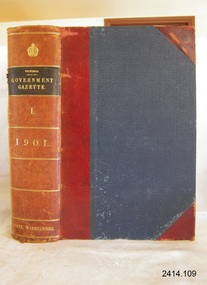
Book - Reference/Colonial Government Notification Gazette, Robert Smith Brain, The Victoria Government Gazette 1901 Vol 1 /113, 1901
... These government gazettes are a unique, useful and extremely fascinating resource for local, family and social historians and researchers in other fields, since they contain information of great use in establishing an image of Australia and its people in the past, covering land transactions, legal notices, proclamations, insolvency and bankruptcy notices, impoundments, private advertisements, patent and trademark applications, partnerships, licences, mining contracts, government positions, statistics, and a lot more. ...These government gazettes are a unique, useful and extremely fascinating resource for local, family and social historians and researchers in other fields, since they contain information of great use in establishing an image of Australia and its people in the past, covering land transactions, legal notices, proclamations, insolvency and bankruptcy notices, impoundments, private advertisements, patent and trademark applications, partnerships, licences, mining contracts, government positions, statistics, and a lot more. ...The Victoria Government Gazette and other government documents from 1887 were printed and published by Robert S. Brain, Government Printer, Melbourne. Brain held the position of Victorian Government Printer through the 1890s and into the early 1900s. The same imprint appears on other official Victorian publications from that era, such as the annual reports of the Board for the Protection of the Aborigines and the colony's Statistical Register. There wasn't really an editor in the modern sense the Gazette was compiled and issued under the authority of the colonial government, via the Chief Secretary's Department, with Brain's printing office producing and publishing it.Hard cover book. The Victorian Government Gazette 1901 Vol 1 /113 Printer: Robert Smith, Brain Publisher: Robert Smith, Brain Publisher: Authority of The Colonial Government Date: 1901 Further Information: Textured hard cover bound book leather burgundy colour spine with gilt lettering, covers embossed blue cloth & reinforced corners to front and back cover. non-fictionThe Victoria Government Gazette and other government documents from 1887 were printed and published by Robert S. Brain, Government Printer, Melbourne. Brain held the position of Victorian Government Printer through the 1890s and into the early 1900s. The same imprint appears on other official Victorian publications from that era, such as the annual reports of the Board for the Protection of the Aborigines and the colony's Statistical Register. There wasn't really an editor in the modern sense the Gazette was compiled and issued under the authority of the colonial government, via the Chief Secretary's Department, with Brain's printing office producing and publishing it.flagstaff hill, warrnambool, shipwrecked-coast, flagstaff-hill, flagstaff-hill-maritime-museum, maritime-museum, shipwreck-coast, flagstaff-hill-maritime-village, book, the victoria government gazette 1897, the victoria government gazette 1897 2 vol 102, the victoria government gazette -
 Flagstaff Hill Maritime Museum and Village
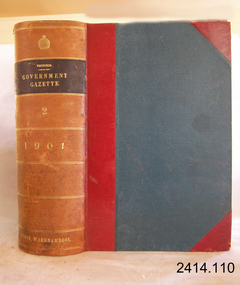
Book - Reference/Colonial Government Notification Gazette, Robert Smith Brain, The Victoria Government Gazette 1901 Vol 2 /114, 1901
... These government gazettes are a unique, useful and extremely fascinating resource for local, family and social historians and researchers in other fields, since they contain information of great use in establishing an image of Australia and its people in the past, covering land transactions, legal notices, proclamations, insolvency and bankruptcy notices, impoundments, private advertisements, patent and trademark applications, partnerships, licences, mining contracts, government positions, statistics, and a lot more. ...These government gazettes are a unique, useful and extremely fascinating resource for local, family and social historians and researchers in other fields, since they contain information of great use in establishing an image of Australia and its people in the past, covering land transactions, legal notices, proclamations, insolvency and bankruptcy notices, impoundments, private advertisements, patent and trademark applications, partnerships, licences, mining contracts, government positions, statistics, and a lot more. ...The Victoria Government Gazette and other government documents from 1887 were printed and published by Robert S. Brain, Government Printer, Melbourne. Brain held the position of Victorian Government Printer through the 1890s and into the early 1900s. The same imprint appears on other official Victorian publications from that era, such as the annual reports of the Board for the Protection of the Aborigines and the colony's Statistical Register. There wasn't really an editor in the modern sense the Gazette was compiled and issued under the authority of the colonial government, via the Chief Secretary's Department, with Brain's printing office producing and publishing it.Hard cover book. The Victorian Government Gazette 1901 Vol 2 /114 Printer: Robert Smith, Brain Publisher: Robert Smith, Brain Publisher: Authority of The Colonial Government Date: 1901 Further Information: Textured hard cover bound book leather burgundy colour spine with gilt lettering, covers embossed blue cloth & reinforced corners to front and back cover. non-fictionThe Victoria Government Gazette and other government documents from 1887 were printed and published by Robert S. Brain, Government Printer, Melbourne. Brain held the position of Victorian Government Printer through the 1890s and into the early 1900s. The same imprint appears on other official Victorian publications from that era, such as the annual reports of the Board for the Protection of the Aborigines and the colony's Statistical Register. There wasn't really an editor in the modern sense the Gazette was compiled and issued under the authority of the colonial government, via the Chief Secretary's Department, with Brain's printing office producing and publishing it.flagstaff hill, warrnambool, shipwrecked-coast, flagstaff-hill, flagstaff-hill-maritime-museum, maritime-museum, shipwreck-coast, flagstaff-hill-maritime-village, book, the victoria government gazette 1897, the victoria government gazette 1897 2 vol 102, the victoria government gazette -
 Flagstaff Hill Maritime Museum and Village
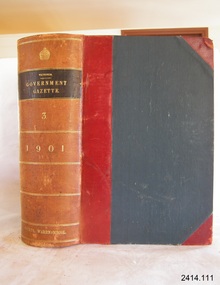
Book - Reference/Colonial Government Notification Gazette, Robert Smith Brain, The Victoria Government Gazette 1901 Vol 3 /115, 1901
... These government gazettes are a unique, useful and extremely fascinating resource for local, family and social historians and researchers in other fields, since they contain information of great use in establishing an image of Australia and its people in the past, covering land transactions, legal notices, proclamations, insolvency and bankruptcy notices, impoundments, private advertisements, patent and trademark applications, partnerships, licences, mining contracts, government positions, statistics, and a lot more. ...These government gazettes are a unique, useful and extremely fascinating resource for local, family and social historians and researchers in other fields, since they contain information of great use in establishing an image of Australia and its people in the past, covering land transactions, legal notices, proclamations, insolvency and bankruptcy notices, impoundments, private advertisements, patent and trademark applications, partnerships, licences, mining contracts, government positions, statistics, and a lot more. ...The Victoria Government Gazette and other government documents from 1887 were printed and published by Robert S. Brain, Government Printer, Melbourne. Brain held the position of Victorian Government Printer through the 1890s and into the early 1900s. The same imprint appears on other official Victorian publications from that era, such as the annual reports of the Board for the Protection of the Aborigines and the colony's Statistical Register. There wasn't really an editor in the modern sense the Gazette was compiled and issued under the authority of the colonial government, via the Chief Secretary's Department, with Brain's printing office producing and publishing it.Hard cover book. The Victorian Government Gazette 1901 Vol 3 /115 Printer: Robert Smith, Brain Publisher: Robert Smith, Brain Publisher: Authority of The Colonial Government Date: 1901 Further Information: Textured hard cover bound book leather burgundy colour spine with gilt lettering, covers embossed blue cloth & reinforced corners to front and back cover. non-fictionThe Victoria Government Gazette and other government documents from 1887 were printed and published by Robert S. Brain, Government Printer, Melbourne. Brain held the position of Victorian Government Printer through the 1890s and into the early 1900s. The same imprint appears on other official Victorian publications from that era, such as the annual reports of the Board for the Protection of the Aborigines and the colony's Statistical Register. There wasn't really an editor in the modern sense the Gazette was compiled and issued under the authority of the colonial government, via the Chief Secretary's Department, with Brain's printing office producing and publishing it.flagstaff hill, warrnambool, shipwrecked-coast, flagstaff-hill, flagstaff-hill-maritime-museum, maritime-museum, shipwreck-coast, flagstaff-hill-maritime-village, book, the victoria government gazette 1897, the victoria government gazette 1897 2 vol 102, the victoria government gazette -
 Flagstaff Hill Maritime Museum and Village
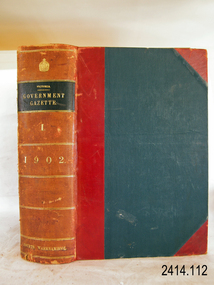
Book - Reference/Colonial Government Notification Gazette, Robert Smith Brain, The Victoria Government Gazette 1902 Vol 1 /116, 1902
... These government gazettes are a unique, useful and extremely fascinating resource for local, family and social historians and researchers in other fields, since they contain information of great use in establishing an image of Australia and its people in the past, covering land transactions, legal notices, proclamations, insolvency and bankruptcy notices, impoundments, private advertisements, patent and trademark applications, partnerships, licences, mining contracts, government positions, statistics, and a lot more. ...These government gazettes are a unique, useful and extremely fascinating resource for local, family and social historians and researchers in other fields, since they contain information of great use in establishing an image of Australia and its people in the past, covering land transactions, legal notices, proclamations, insolvency and bankruptcy notices, impoundments, private advertisements, patent and trademark applications, partnerships, licences, mining contracts, government positions, statistics, and a lot more. ...The Victoria Government Gazette and other government documents from 1887 were printed and published by Robert S. Brain, Government Printer, Melbourne. Brain held the position of Victorian Government Printer through the 1890s and into the early 1900s. The same imprint appears on other official Victorian publications from that era, such as the annual reports of the Board for the Protection of the Aborigines and the colony's Statistical Register. There wasn't really an editor in the modern sense the Gazette was compiled and issued under the authority of the colonial government, via the Chief Secretary's Department, with Brain's printing office producing and publishing it.Hard cover book. The Victorian Government Gazette 1902 Vol 1/116 Printer: Robert Smith, Brain Publisher: Robert Smith, Brain Publisher: Authority of The Colonial Government Date: 1902 Further Information: Textured hard cover bound book leather burgundy colour spine with gilt lettering, covers embossed blue cloth & reinforced corners to front and back cover. non-fictionThe Victoria Government Gazette and other government documents from 1887 were printed and published by Robert S. Brain, Government Printer, Melbourne. Brain held the position of Victorian Government Printer through the 1890s and into the early 1900s. The same imprint appears on other official Victorian publications from that era, such as the annual reports of the Board for the Protection of the Aborigines and the colony's Statistical Register. There wasn't really an editor in the modern sense the Gazette was compiled and issued under the authority of the colonial government, via the Chief Secretary's Department, with Brain's printing office producing and publishing it.flagstaff hill, warrnambool, shipwrecked-coast, flagstaff-hill, flagstaff-hill-maritime-museum, maritime-museum, shipwreck-coast, flagstaff-hill-maritime-village, book, the victoria government gazette 1897, the victoria government gazette 1897 2 vol 102, the victoria government gazette -
 Flagstaff Hill Maritime Museum and Village
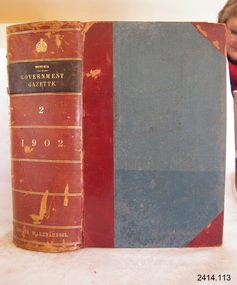
Book - Reference/Colonial Government Notification Gazette, Robert Smith Brain, The Victoria Government Gazette 1902 Vol 2 /117, 1902
... These government gazettes are a unique, useful and extremely fascinating resource for local, family and social historians and researchers in other fields, since they contain information of great use in establishing an image of Australia and its people in the past, covering land transactions, legal notices, proclamations, insolvency and bankruptcy notices, impoundments, private advertisements, patent and trademark applications, partnerships, licences, mining contracts, government positions, statistics, and a lot more. ...These government gazettes are a unique, useful and extremely fascinating resource for local, family and social historians and researchers in other fields, since they contain information of great use in establishing an image of Australia and its people in the past, covering land transactions, legal notices, proclamations, insolvency and bankruptcy notices, impoundments, private advertisements, patent and trademark applications, partnerships, licences, mining contracts, government positions, statistics, and a lot more. ...The Victoria Government Gazette and other government documents from 1887 were printed and published by Robert S. Brain, Government Printer, Melbourne. Brain held the position of Victorian Government Printer through the 1890s and into the early 1900s. The same imprint appears on other official Victorian publications from that era, such as the annual reports of the Board for the Protection of the Aborigines and the colony's Statistical Register. There wasn't really an editor in the modern sense the Gazette was compiled and issued under the authority of the colonial government, via the Chief Secretary's Department, with Brain's printing office producing and publishing it.Hard cover book. The Victorian Government Gazette 1902 Vol 2 /117 Printer: Robert Smith, Brain Publisher: Robert Smith, Brain Publisher: Authority of The Colonial Government Date: 1902 Further Information: Textured hard cover bound book leather burgundy colour spine with gilt lettering, covers embossed blue cloth & reinforced corners to front and back cover. non-fictionThe Victoria Government Gazette and other government documents from 1887 were printed and published by Robert S. Brain, Government Printer, Melbourne. Brain held the position of Victorian Government Printer through the 1890s and into the early 1900s. The same imprint appears on other official Victorian publications from that era, such as the annual reports of the Board for the Protection of the Aborigines and the colony's Statistical Register. There wasn't really an editor in the modern sense the Gazette was compiled and issued under the authority of the colonial government, via the Chief Secretary's Department, with Brain's printing office producing and publishing it.flagstaff hill, warrnambool, shipwrecked-coast, flagstaff-hill, flagstaff-hill-maritime-museum, maritime-museum, shipwreck-coast, flagstaff-hill-maritime-village, book, the victoria government gazette 1897, the victoria government gazette 1897 2 vol 102, the victoria government gazette -
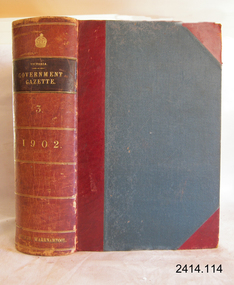 Flagstaff Hill Maritime Museum and Village
Book - Reference/Colonial Government Notification Gazette, Robert Smith Brain, The Victoria Government Gazette 1902 Vol 3 /118, 1902
... These government gazettes are a unique, useful and extremely fascinating resource for local, family and social historians and researchers in other fields, since they contain information of great use in establishing an image of Australia and its people in the past, covering land transactions, legal notices, proclamations, insolvency and bankruptcy notices, impoundments, private advertisements, patent and trademark applications, partnerships, licences, mining contracts, government positions, statistics, and a lot more. ...These government gazettes are a unique, useful and extremely fascinating resource for local, family and social historians and researchers in other fields, since they contain information of great use in establishing an image of Australia and its people in the past, covering land transactions, legal notices, proclamations, insolvency and bankruptcy notices, impoundments, private advertisements, patent and trademark applications, partnerships, licences, mining contracts, government positions, statistics, and a lot more. ...The Victoria Government Gazette and other government documents from 1887 were printed and published by Robert S. Brain, Government Printer, Melbourne. Brain held the position of Victorian Government Printer through the 1890s and into the early 1900s. The same imprint appears on other official Victorian publications from that era, such as the annual reports of the Board for the Protection of the Aborigines and the colony's Statistical Register. There wasn't really an editor in the modern sense the Gazette was compiled and issued under the authority of the colonial government, via the Chief Secretary's Department, with Brain's printing office producing and publishing it.Hard cover book. The Victorian Government Gazette 1902 Vol 3 /118 Printer: Robert Smith, Brain Publisher: Robert Smith, Brain Publisher: Authority of The Colonial Government Date: 1902 Further Information: Textured hard cover bound book leather burgundy colour spine with gilt lettering, covers embossed blue cloth & reinforced corners to front and back cover. non-fictionThe Victoria Government Gazette and other government documents from 1887 were printed and published by Robert S. Brain, Government Printer, Melbourne. Brain held the position of Victorian Government Printer through the 1890s and into the early 1900s. The same imprint appears on other official Victorian publications from that era, such as the annual reports of the Board for the Protection of the Aborigines and the colony's Statistical Register. There wasn't really an editor in the modern sense the Gazette was compiled and issued under the authority of the colonial government, via the Chief Secretary's Department, with Brain's printing office producing and publishing it.flagstaff hill, warrnambool, shipwrecked-coast, flagstaff-hill, flagstaff-hill-maritime-museum, maritime-museum, shipwreck-coast, flagstaff-hill-maritime-village, book, the victoria government gazette 1897, the victoria government gazette 1897 2 vol 102, the victoria government gazette -
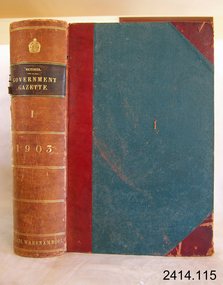 Flagstaff Hill Maritime Museum and Village
Book - Reference/Colonial Government Notification Gazette, Robert Smith Brain, The Victoria Government Gazette 1903 Vol 1 /119, 1903
... These government gazettes are a unique, useful and extremely fascinating resource for local, family and social historians and researchers in other fields, since they contain information of great use in establishing an image of Australia and its people in the past, covering land transactions, legal notices, proclamations, insolvency and bankruptcy notices, impoundments, private advertisements, patent and trademark applications, partnerships, licences, mining contracts, government positions, statistics, and a lot more. ...These government gazettes are a unique, useful and extremely fascinating resource for local, family and social historians and researchers in other fields, since they contain information of great use in establishing an image of Australia and its people in the past, covering land transactions, legal notices, proclamations, insolvency and bankruptcy notices, impoundments, private advertisements, patent and trademark applications, partnerships, licences, mining contracts, government positions, statistics, and a lot more. ...The Victoria Government Gazette and other government documents from 1887 were printed and published by Robert S. Brain, Government Printer, Melbourne. Brain held the position of Victorian Government Printer through the 1890s and into the early 1900s. The same imprint appears on other official Victorian publications from that era, such as the annual reports of the Board for the Protection of the Aborigines and the colony's Statistical Register. There wasn't really an editor in the modern sense the Gazette was compiled and issued under the authority of the colonial government, via the Chief Secretary's Department, with Brain's printing office producing and publishing it.Hard cover book. The Victorian Government Gazette 1903 Vol 1 /119 Printer: Robert Smith, Brain Publisher: Robert Smith, Brain Publisher: Authority of The Colonial Government Date: 1903 Further Information: Textured hard cover bound book leather burgundy colour spine with gilt lettering, covers embossed blue cloth & reinforced corners to front and back cover. non-fictionThe Victoria Government Gazette and other government documents from 1887 were printed and published by Robert S. Brain, Government Printer, Melbourne. Brain held the position of Victorian Government Printer through the 1890s and into the early 1900s. The same imprint appears on other official Victorian publications from that era, such as the annual reports of the Board for the Protection of the Aborigines and the colony's Statistical Register. There wasn't really an editor in the modern sense the Gazette was compiled and issued under the authority of the colonial government, via the Chief Secretary's Department, with Brain's printing office producing and publishing it.flagstaff hill, warrnambool, shipwrecked-coast, flagstaff-hill, flagstaff-hill-maritime-museum, maritime-museum, shipwreck-coast, flagstaff-hill-maritime-village, book, the victoria government gazette 1897, the victoria government gazette 1897 2 vol 102, the victoria government gazette
