
Showing 11 items matching "pedagogy"
-
 Victorian Aboriginal Corporation for Languages
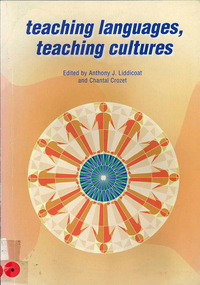
Book, Anthony J Liddicoat, Teaching languages, teaching cultures, 2000
... At its core ILT offers an approach to teaching culture as an integrated part of language and this has several implications for language teaching pedagogy and practice....At its core ILT offers an approach to teaching culture as an integrated part of language and this has several implications for language teaching pedagogy and practice. Teaching languages, teaching cultures Book Anthony J Liddicoat Chantal Crozet ...Intercultural Language Teaching (ILT) is now making its way as the emerging new approach to language teaching. At its core ILT offers an approach to teaching culture as an integrated part of language and this has several implications for language teaching pedagogy and practice.diagrams, b&w illustrations, word listsglobalisation and language, second language learning, sociolinguistics -
 Bialik College
Mixed media (Item) - 2006 PD Monash S&P Tape 2 Bialik
... ...Pedagogy...Please contact [email protected] to request access to this record. 2000s 2006 Monash Bialik College Education Pedagogy PD Monash s& P Tape 2 Bialik 24.10.2006 1 cd-rom in soft case 2006 PD Monash S&P Tape 2 Bialik Mixed media 2006 PD Monash S&P Tape 2 Bialik ...A professional development recording of Bialik staff and parents discussing teaching methods and approaches. Please contact [email protected] to request access to this record.PD Monash s& P Tape 2 Bialik 24.10.20062000s, 2006, monash, bialik college, education, pedagogy -
Bialik College
Mixed media (Item) - 2006 PD Monash S&P Tape 1 Bialik
... ...Pedagogy...Please contact [email protected] to request access to this record. 2000s 2006 Monash Bialik College Education Pedagogy PD Monash s& P Tape 1 Bialik 24.10.2006 1 cd-rom in soft case 2006 PD Monash S&P Tape 1 Bialik Mixed media 2006 PD Monash S&P Tape 1 Bialik ...A professional development recording of Bialik staff and parents discussing teaching methods and approaches. Please contact [email protected] to request access to this record.PD Monash s& P Tape 1 Bialik 24.10.20062000s, 2006, monash, bialik college, education, pedagogy -
Bialik College
Mixed media (Item) - 2006 Wooranna Park PS
... ...Pedagogy...Primary School 2000s 2006 United Kingdom Bialik College Pedagogy Wooranna Park PS June 2006 Jules film for UK Comp 1 cd rom in hard plastic case Mixed media 2006 Wooranna Park PS ...Wooranna Park PS June 2006 Jules film for UK Comp Video. Runtime 20.07. Please contact [email protected] to request access to this record. Wooranna Park PS June 2006 Jules film for UK Compprimary school, 2000s, 2006, united kingdom, bialik college, pedagogy -
 Dutch Australian Heritage Centre Victoria
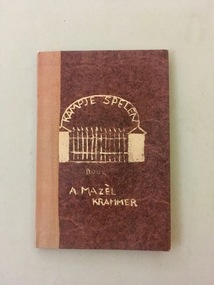
Booklet, Kampje Spelen (Playing Internment Camp), 1992
... Prior to her marriage Axie Krammer von Marchau had studied languages, literature and pedagogy and particularly the art of teaching through play. ...Prior to her marriage Axie Krammer von Marchau had studied languages, literature and pedagogy and particularly the art of teaching through play. ...Mrs. Axie Mazèl - Krammer and her friend Anneke Rappard each had two daughters with them in the Women's camp in Banjoe Biroe. Prior to her marriage Axie Krammer von Marchau had studied languages, literature and pedagogy and particularly the art of teaching through play. The spirit and optimism of these two women contributed to the survival of their 4 little girls. An accomplished artist Mrs. Mazèl created the original of this booklet for the 6th birthday of her friend's daughter Anne Marie on July 30, 1945.The illustrated story of children playing at internment does not hide the reality of their lives but puts in the context of a game of make-believe. The make-believe is illustrated in colour while the harsh reality is recognised in a small black and grey sketch in a corner of each page. Simply produced 30page booklet. It is the printed version of a handwritten booklet produced in July 1945 by Mrs Axie Mazèl Krammer to help her children deal with the memories of their imprisonment by the Japanese in the former Dutch East Indies. The materials and style imitate the simple materials that were available for the author during their 4 years of imprisonment and deprivation. The name "A. Kelleners" is written on the flyleaf.dutch east indies; japanese; internment camps; -
 Federation University Art Collection
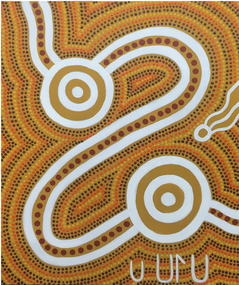
Painting - Artwork - Painting, Bonnie Fagan (Chew), 2013
... (Robyn Brandenburg and Jacqueline Z, Wilson [Eds] Pedagogies for the Future: Leading Quality Learning and Teaching in Higher Education, Sense Publishers, The Netherlands, 2013, pp40-41)...(Robyn Brandenburg and Jacqueline Z, Wilson [Eds] Pedagogies for the Future: Leading Quality Learning and Teaching in Higher Education, Sense Publishers, The Netherlands, 2013, pp40-41) Painting Artwork - Painting Bonnie Fagan (Chew) ...Bonnie Fagan's County is Wadawurrung. Most of her early learning about her Aboriginality came from the father.Aboriginal dot painting telling the artist's learning journey. Bonnie Fagan wrote of this work: "Ochres reflect my connection with the land of my traditional Wadawurrung Country. Yellow ochre forms the background and white ochre defines my pathway, showing where I have traveled from my past and where I am heading in my future. I use reddish ochres for the larger dots along my pathway to show my footprint and for the smaller dots that ripple outwards to show how I've had some influence, either good or bad. The white lines show my pathway with an entry point from my past marking the start of my journey, a middle part showing were my life will continue. Through the middle part, my teenage years, the pathway is very windy. These years were sometime quite difficult and I struggled. The two circle areas symbolize two chapters in my life, first as a child and then as an adult, when I've felt mostly positive and safe. They are periods when I've been very open to learning, gathering knowledge from people and experiences that I trusted, and the circles within the circles symbolize the layers of support, of experience, of connection and of learning that I experienced. Strong visual symbols at the base of the painting under the first circle area represent the key figures in my learning through my childhood: my father (represented by the traditional symbol, of a man with a spear) and my mothers with me as a small child, The spirit of my paternal grandmother, my Nan, hovers above my childhood circle and near the pathway through to my teenage years, showing the strength of her influence and how she was always there guiding me." (Robyn Brandenburg and Jacqueline Z, Wilson [Eds] Pedagogies for the Future: Leading Quality Learning and Teaching in Higher Education, Sense Publishers, The Netherlands, 2013, pp40-41)bonnie fagan, bonnie chew, wadawurrung, artists, artwork, aboriginal -
 Victorian Aboriginal Corporation for Languages
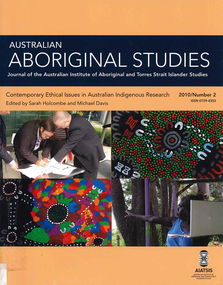
Periodical, Australian Institute of Aboriginal and Torres Strait Islander Studies, Australian Aboriginal studies : journal of the Australian Institute of Aboriginal and Torres Strait Islander Studies, 2010
... This paper uses an examination of the philosophical and pedagogical work of the Yol?u Elders and their students to reflect upon ethical teaching and research in postcolonial knowledge practices. ...This paper uses an examination of the philosophical and pedagogical work of the Yol?u Elders and their students to reflect upon ethical teaching and research in postcolonial knowledge practices. ...'Whose Ethics?':Codifying and enacting ethics in research settings Bringing ethics up to date? A review of the AIATSIS ethical guidelines Michael Davis (Independent Academic) A revision of the AIATSIS Guidelines for Ethical Research in Indigenous Studies was carried out during 2009-10. The purpose of the revision was to bring the Guidelines up to date in light of a range of critical developments that have occurred in Indigenous rights, research and knowledge management since the previous version of the Guidelines was released in 2000. In this paper I present an outline of these developments, and briefly discuss the review process. I argue that the review, and the developments that it responded to, have highlighted that ethical research needs to be thought about more as a type of behaviour and practice between engaged participants, and less as an institutionalised, document-focused and prescriptive approach. The arrogance of ethnography: Managing anthropological research knowledge Sarah Holcombe (ANU) The ethnographic method is a core feature of anthropological practice. This locally intensive research enables insight into local praxis and culturally relative practices that would otherwise not be possible. Indeed, empathetic engagement is only possible in this close and intimate encounter. However, this paper argues that this method can also provide the practitioner with a false sense of his or her own knowing and expertise and, indeed, with arrogance. And the boundaries between the anthropologist as knowledge sink - cultural translator and interpreter - and the knowledge of the local knowledge owners can become opaque. Globalisation and the knowledge ?commons?, exemplified by Google, also highlight the increasing complexities in this area of the governance and ownership of knowledge. Our stronghold of working in remote areas and/or with marginalised groups places us at the forefront of negotiating the multiple new technological knowledge spaces that are opening up in the form of Indigenous websites and knowledge centres in these areas. Anthropology is not immune from the increasing awareness of the limitations and risks of the intellectual property regime for protecting or managing Indigenous knowledge. The relevance of the Declaration on the Rights of Indigenous Peoples in opening up a ?rights-based? discourse, especially in the area of knowledge ownership, brings these issues to the fore. For anthropology to remain relevant, we have to engage locally with these global discourses. This paper begins to traverse some of this ground. Protocols: Devices for translating moralities, controlling knowledge and defining actors in Indigenous research, and critical ethical reflection Margaret Raven (Institute for Sustainability and Technology Policy (ISTP), Murdoch University) Protocols are devices that act to assist with ethical research behaviour in Indigenous research contexts. Protocols also attempt to play a mediating role in the power and control inherent in research. While the development of bureaucratically derived protocols is on the increase, critiques and review of protocols have been undertaken in an ad hoc manner and in the absence of an overarching ethical framework or standard. Additionally, actors implicated in research networks are seldom theorised. This paper sketches out a typology of research characters and the different moral positioning that each of them plays in the research game. It argues that by understanding the ways actors enact research protocols we are better able to understand what protocols are, and how they seek to build ethical research practices. Ethics and research: Dilemmas raised in managing research collections of Aboriginal and Torres Strait Islander materials Grace Koch (AIATSIS) This paper examines some of the ethical dilemmas for the proper management of research collections of Indigenous cultural materials, concentrating upon the use of such material for Native Title purposes. It refers directly to a number of points in the draft of the revised AIATSIS Guidelines for Ethical Research in Indigenous Studies and draws upon both actual and hypothetical examples of issues that may arise when requests are made for Indigenous material. Specific concerns about ethical practices in collecting data and the subsequent control of access to both the data itself and to published works based upon it are raised within the context of several types of collections, including those held by AIATSIS and by Native Title Representative Bodies. Ethics or social justice? Heritage and the politics of recognition Laurajane Smith (ANU) Nancy Fraser?s model of the politics of recognition is used to examine how ethical practices are interconnected with wider struggles for recognition and social justice. This paper focuses on the concept of 'heritage' and the way it is often uncritically linked to 'identity' to illustrate how expert knowledge can become implicated in struggles for recognition. The consequences of this for ethical practice and for rethinking the role of expertise, professional discourses and disciplinary identity are discussed. The ethics of teaching from country Michael Christie (CDU), with the assistance of Yi?iya Guyula, Kathy Gotha and Dh�?gal Gurruwiwi The 'Teaching from Country' program provided the opportunity and the funding for Yol?u (north-east Arnhem Land Aboriginal) knowledge authorities to participate actively in the academic teaching of their languages and cultures from their remote homeland centres using new digital technologies. As two knowledge systems and their practices came to work together, so too did two divergent epistemologies and metaphysics, and challenges to our understandings of our ethical behaviour. This paper uses an examination of the philosophical and pedagogical work of the Yol?u Elders and their students to reflect upon ethical teaching and research in postcolonial knowledge practices. Closing the gaps in and through Indigenous health research: Guidelines, processes and practices Pat Dudgeon (UWA), Kerrie Kelly (Australian Indigenous Psychologists Association) and Roz Walker (UWA) Research in Aboriginal contexts remains a vexed issue given the ongoing inequities and injustices in Indigenous health. It is widely accepted that good research providing a sound evidence base is critical to closing the gap in Aboriginal health and wellbeing outcomes. However, key contemporary research issues still remain regarding how that research is prioritised, carried out, disseminated and translated so that Aboriginal people are the main beneficiaries of the research in every sense. It is widely acknowledged that, historically, research on Indigenous groups by non-Indigenous researchers has benefited the careers and reputations of researchers, often with little benefit and considerably more harm for Indigenous peoples in Australia and internationally. This paper argues that genuine collaborative and equal partnerships in Indigenous health research are critical to enable Aboriginal and Torres Islander people to determine the solutions to close the gap on many contemporary health issues. It suggests that greater recognition of research methodologies, such as community participatory action research, is necessary to ensure that Aboriginal people have control of, or significant input into, determining the Indigenous health research agenda at all levels. This can occur at a national level, such as through the National Health and Medical Research Council (NHMRC) Road Map on Indigenous research priorities (RAWG 2002), and at a local level through the development of structural mechanisms and processes, including research ethics committees? research protocols to hold researchers accountable to the NHMRC ethical guidelines and values which recognise Indigenous culture in all aspects of research. Researching on Ngarrindjeri Ruwe/Ruwar: Methodologies for positive transformation Steve Hemming (Flinders University) , Daryle Rigney (Flinders University) and Shaun Berg (Berg Lawyers) Ngarrindjeri engagement with cultural and natural resource management over the past decade provides a useful case study for examining the relationship between research, colonialism and improved Indigenous wellbeing. The Ngarrindjeri nation is located in south-eastern Australia, a ?white? space framed by Aboriginalist myths of cultural extinction recycled through burgeoning heritage, Native Title, natural resource management ?industries?. Research is a central element of this network of intrusive interests and colonising practices. Government management regimes such as natural resource management draw upon the research and business sectors to form complex alliances to access funds to support their research, monitoring, policy development, management and on-ground works programs. We argue that understanding the political and ethical location of research in this contemporary management landscape is crucial to any assessment of the potential positive contribution of research to 'Bridging the Gap' or improving Indigenous wellbeing. Recognition that research conducted on Ngarrindjeri Ruwe/Ruwar (country/body/spirit) has impacts on Ngarrindjeri and that Ngarrindjeri have a right and responsibility to care for their lands and waters are important platforms for any just or ethical research. Ngarrindjeri have linked these rights and responsibilities to long-term community development focused on Ngarrindjeri capacity building and shifts in Ngarrindjeri power in programs designed to research and manage Ngarrindjeri Ruwe/Ruwar. Research agreements that protect Ngarrindjeri interests, including cultural knowledge and intellectual property, are crucial elements in these shifts in power. A preliminary review of ethics resources, with particular focus on those available online from Indigenous organisations in WA, NT and Qld Sarah Holcombe (ANU) and Natalia Gould (La Trobe University) In light of a growing interest in Indigenous knowledge, this preliminary review maps the forms and contents of some existing resources and processes currently available and under development in the Northern Territory, Queensland and Western Australia, along with those enacted through several cross-jurisdictional initiatives. A significant majority of ethics resources have been developed in response to a growing interest in the application of Indigenous knowledge in land and natural resource management. The aim of these resources is to ?manage? (i.e. protect and maintain) Indigenous knowledge by ensuring ethical engagement with the knowledge holders. Case studies are drawn on from each jurisdiction to illustrate both the diversity and commonality in the approach to managing this intercultural engagement. Such resources include protocols, guidelines, memorandums of understanding, research agreements and strategic plans. In conducting this review we encourage greater awareness of the range of approaches in practice and under development today, while emphasising that systematic, localised processes for establishing these mechanisms is of fundamental importance to ensuring equitable collaboration. Likewise, making available a range of ethics tools and resources also enables the sharing of the local and regional initiatives in this very dynamic area of Indigenous knowledge rights.b&w photographs, colour photographsngarrindjeri, ethics, ethnography, indigenous research, social justice, indigenous health -
 Victorian Aboriginal Corporation for Languages
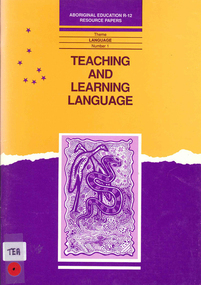
Book, Education Department of South Australia, Teaching and learning language, 1991
... Nunga Paralowie Reception 12 School Kaurna Plains School National Aboriginal Pedagogy Project Aboriginal and Torres Strait Islander Education Policy curriculum development South Australia oral history literacy and learning Teaching and learning language Book Education Department of South Australia ...nunga, paralowie reception 12 school, kaurna plains school, national aboriginal pedagogy project, aboriginal and torres strait islander education policy, curriculum development, south australia, oral history, literacy and learning -
Box Hill Historical Society
Book, M. O. Reid, The ladies came to stay: a study of the education of girls at the Presbyterian Ladies' College Melbourne 1875-1960, 1960
... The narrative provides insights into the curriculum, pedagogical approaches, and the evolving role of women's schooling during this significant period. ...This book presents a comprehensive study of the educational journey of girls at the Presbyterian Ladies' College in Melbourne. It meticulously documents the institution's history and its impact on female education from 1875 to 1960. The narrative provides insights into the curriculum, pedagogical approaches, and the evolving role of women's schooling during this significant period. It offers a detailed account of the challenges and triumphs faced by both students and educators within the college's framework. A significant proportion of the study documents and reports on the accomplishments of specific alumni based on their fields of endeavours. The work also includes details lists of scholarships and prizes as well as prefects.296 pages; b&w photos; includes indexnon-fictionThis book presents a comprehensive study of the educational journey of girls at the Presbyterian Ladies' College in Melbourne. It meticulously documents the institution's history and its impact on female education from 1875 to 1960. The narrative provides insights into the curriculum, pedagogical approaches, and the evolving role of women's schooling during this significant period. It offers a detailed account of the challenges and triumphs faced by both students and educators within the college's framework. A significant proportion of the study documents and reports on the accomplishments of specific alumni based on their fields of endeavours. The work also includes details lists of scholarships and prizes as well as prefects.presbyterian ladies college (plc), primary schools, high schools, education -
 University of Melbourne, Burnley Campus Archives
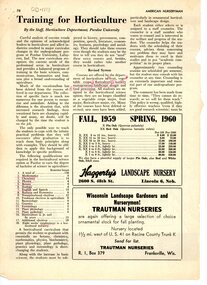
Document - Journal Extract, American Nurseryman, Training for Horticulture, American Nurseryman, c. 1959
... american nurseryman purdue university american horticulture american horticulture education pedagogical methods horticulture bacheor of horticulture curriculum 2 original Pages from American Nurseryman (1959?) ...2 original Pages from American Nurseryman (1959?) by Staff, Horticulture Dept., Purdue University. Entitled "Training for Horticulture." Describes curriculum for Bachelor of Horticulture.american nurseryman, purdue university, american horticulture, american horticulture education, pedagogical methods horticulture, bacheor of horticulture, curriculum -
 Women's Art Register
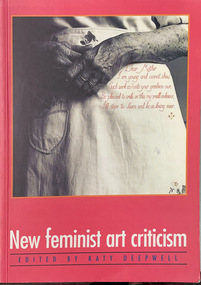
Book - Anthology, Katy Deepwell, New Feminist Art Criticism, 1995
... Complement material held in the Women's Art Register theory psychoanalytic theory modernism curatorship museology censorship hierarchy of media feminist pedagogy education performance art Essays addressing questions surrounding the effects of feminism on arts practice including responses to feminist exhibitions, the way arts degrees are taught d how feminism's engagment with psychoanalysis and postmodernism has deconstructed borders between the arts and crafts. ...Essays addressing questions surrounding the effects of feminism on arts practice including responses to feminist exhibitions, the way arts degrees are taught d how feminism's engagment with psychoanalysis and postmodernism has deconstructed borders between the arts and crafts.Booknon-fictionEssays addressing questions surrounding the effects of feminism on arts practice including responses to feminist exhibitions, the way arts degrees are taught d how feminism's engagment with psychoanalysis and postmodernism has deconstructed borders between the arts and crafts. theory, psychoanalytic theory, modernism, curatorship, museology, censorship, hierarchy of media, feminist pedagogy, education, performance art
