
Showing 93 items matching "permanent ink"
-
 Flagstaff Hill Maritime Museum and Village
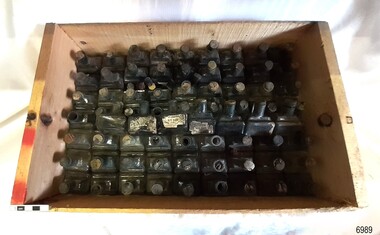
Container - Ink Bottles, Caldwell’s Ink Factory, Early 20th century
... ...permanent ink...inks were made from a formula that was over a century old, and were scientifically tested and quality controlled. The formula included gallic and tannic acids and high-quality dyes to ensure that they did not fade. They were “free from all injurious chemicals”. The permanent...Flagstaff Hill Warrnambool Maritime Village Maritime Museum Shipwreck coast Great Ocean Road Ink nib pen writing ink writing copying banks lawyers commerce student permanent ink Flo-Eesi blue black ink stationery record keeping handwriting writing equipment writing accessory office supply cottage bottle boat bottle mouth-blown bottle two-part mould sheer-lip bottle burst-lip cork seal F R Caldwell Caldwell’s Ink Company Albert Park South Melbourne inkstands stencil ink copy ink Quicksticker Zac cough mixture Printed on label; “CALDWELL FLO-EESI BLUE BLACK INK” “ - - - - “ Printed script signature “F.R. ...This crate of bottles may have come from a wholesaler, business, stationer or school. The design of the bottles is sometimes called a ‘cottage’ or ‘boat’ shape. Each of the 70 Caldwell’s handmade glass ink bottles was mouth-blown into a two-piece mould, a method often used in the mid-to-late 19th century. The glass blower burst the bottle off the end of his blowpipe with a tool, leaving an uneven mouth and sharp edge on the bottle, which was usually filed. The bottle was then filled with ink and sealed with a cork. More expensive bottles would have a lip added, which was more time-consuming and costly to produce. The capacity for a bottle such as this was about 3 ½ oz (ounces) equal to about 100 ml. Pen and ink have been in use for handwriting since about the seventh century. A quill pen made from a bird’s feather was used up until around the mid-19th century. In the 1850s a steel point nib for the dip pen was invented and could be manufactured on machines in large quantities. The nis only held a small amount of ink so users had to frequently dip the nib into an ink well for more ink. Handwriting left wet ink on the paper, so the blotting paper was carefully used to absorb the excess ink and prevent smudging. Ink could be purchased as a ready-to-use liquid or in powdered form, which needed to be mixed with water. In the 1880s a successful, portable fountain pen gave smooth-flowing ink and was easy to use. In the mid-20th century, the modern ballpoint pen was readily available and inexpensive, so the fountain pen lost its popularity. However, artisans continue to use nib pens to create beautiful calligraphy. Caldwell’s Ink Co. – F.R. Caldwell established Caldwell’s Ink Company in Australia around 1902. In Victoria, he operated from a factory at Victoria Avenue, Albert Park, until about 1911, then from Yarra Bank Road in South Melbourne. Newspaper offices were appointed as agencies to sell his inks, for example, in 1904 the New Zealand Evening Star sold Caldwell’s Flo-Eesi blue black ink in various bottle sizes, and Murchison Advocate (Victoria) stocked Caldwell’s ink in crimson, green, blue black, violet, and blue. Caldwell’s ink was stated to be “non-corrosive and unaffected by steel pens”. A motto used in advertising in 1904-1908 reads ‘Makes Writing a Pleasure’. Stationers stocked Caldwell’s products and hawkers sold Caldwell’s ink stands from door to door in Sydney in the 1910s and 1920s. In 1911 Caldwell promised cash for returned ink bottles and warned of prosecution for anyone found refilling his bottles. Caldwell’s Ink Stands were given as gifts. The company encouraged all forms of writing with their Australian-made Flo-Eesi writing inks and bottles at their impressive booth in the ‘All Australian Exhibition’ in 1913. It advertised its other products, which included Caldwell’s Gum, Caldwell’s Stencil Ink (copy ink) and Caldwell’s Quicksticker as well as Caldwell’s ‘Zac’ Cough Mixture. Caldwell stated in a 1920 article that his inks were made from a formula that was over a century old, and were scientifically tested and quality controlled. The formula included gallic and tannic acids and high-quality dyes to ensure that they did not fade. They were “free from all injurious chemicals”. The permanent quality of the ink was important for legal reasons, particularly to banks, accountants, commerce, municipal councils and lawyers. The Caldwell’s Ink Company also exported crates of its ink bottles and ink stands overseas. Newspaper advertisements can be found for Caldwell’s Ink Company up until 1934 when the company said they were the Best in the business for 40 years.This large collection of similar ink bottles is of particular significance as the bottles have come from the same source, most have their original corks and some retain their original labels, which is rare. The method of manufacture of these bottles is also representative of a 19th-century handcraft industry that is now been largely replaced by mass production. The bottles and their contents are of state significance for being produced by an early Melbourne industry and exported overseas. This case of ink bottles is historically significant as it represents methods of handwritten communication that were still common up until the mid-20th century when fountain pens and modern ballpoint pens became popular and convenient and typewriters were becoming part of standard office equipment.Ink bottles in a wooden crate; 70 rectangular, hand-blown clear glass ink bottles. They have side seams, uneven thickness, especially at the bases, and rough, burst-off mouths. The shoulders on the long sides have horizontal grooves used for pen rests. The bottles vary; some have labels, some contain remnants of blue-black ink, and many have their original corks. The glass has bubbles and imperfections. The remnants of printed labels are on white paper with a swirly border and black text. The bottles contained Caldwell’s blend of blue black ‘Flo-Eesi’ ink.Printed on label; “CALDWELL FLO-EESI BLUE BLACK INK” “ - - - - “ Printed script signature “F.R. Caldwell”flagstaff hill, warrnambool, maritime village, maritime museum, shipwreck coast, great ocean road, ink, nib pen, writing ink, writing, copying, banks, lawyers, commerce, student, permanent ink, flo-eesi, blue black ink, stationery, record keeping, handwriting, writing equipment, writing accessory, office supply, cottage bottle, boat bottle, mouth-blown bottle, two-part mould, sheer-lip bottle, burst-lip, cork seal, f r caldwell, caldwell’s ink company, albert park, south melbourne, inkstands, stencil ink, copy ink, quicksticker, zac cough mixture -
 Flagstaff Hill Maritime Museum and Village
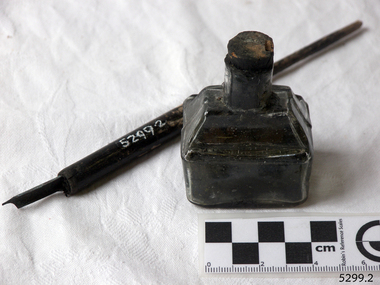
Container - Ink Bottle and Pen, Caldwell’s Ink Factory, Early 20th century
... ...permanent ink...inks were made from a formula that was over a century old, and were scientifically tested and quality controlled. The formula included gallic and tannic acids and high-quality dyes to ensure that they did not fade. They were “free from all injurious chemicals”. The permanent...Flagstaff Hill Warrnambool Maritime Museum Maritime Village Great Ocean Road Shipwreck Coast Ink nib pen writing ink writing copying banks lawyers commerce student permanent ink Flo-Eesi blue black ink stationery record keeping handwriting writing equipment writing accessory office supply cottage bottle boat bottle mouth-blown bottle two-part mould sheer-lip bottle burst-lip cork seal F R Caldwell Caldwell’s Ink Company Albert Park South Melbourne inkstands stencil ink copy ink Quicksticker Zac cough mixture "Caldwell's Flo-Eesi Blue Black Ink." ...This shaped ink bottle made by Caldwell's is called a 'boat ink bottle'. It was shaped especially to hold a nib pen when the pen was not in use. The design of the bottle is sometimes called a ‘cottage’ or ‘boat’ shape. The Caldwell’s handmade glass ink bottle was mouth-blown into a two-piece mould, a method often used in the mid-to-late 19th century. The glass blower burst the bottle off the end of his blowpipe with a tool, leaving an uneven mouth and sharp edge on the bottle, which was usually filed. The bottle was then filled with ink and sealed with a cork. More expensive bottles would have a lip added, which was more time-consuming and costly to produce. The capacity for a bottle such as this was about 3 ½ oz (ounces) equal to about 100 ml. Pen and ink have been in use for handwriting since about the seventh century. A quill pen made from a bird’s feather was used up until around the mid-19th century. In the 1850s a steel point nib for the dip pen was invented and could be manufactured on machines in large quantities. The nis only held a small amount of ink so users had to frequently dip the nib into an ink well for more ink. Handwriting left wet ink on the paper, so the blotting paper was carefully used to absorb the excess ink and prevent smudging. Ink could be purchased as a ready-to-use liquid or in powdered form, which needed to be mixed with water. In the 1880s a successful, portable fountain pen gave smooth-flowing ink and was easy to use. In the mid-20th century, the modern ballpoint pen was readily available and inexpensive, so the fountain pen lost its popularity. However, artisans continue to use nib pens to create beautiful calligraphy. Caldwell’s Ink Co. – F.R. Caldwell established Caldwell’s Ink Company in Australia around 1902. In Victoria, he operated from a factory at Victoria Avenue, Albert Park, until about 1911, then from Yarra Bank Road in South Melbourne. Newspaper offices were appointed as agencies to sell his inks, for example, in 1904 the New Zealand Evening Star sold Caldwell’s Flo-Eesi blue black ink in various bottle sizes, and Murchison Advocate (Victoria) stocked Caldwell’s ink in crimson, green, blue black, violet, and blue. Caldwell’s ink was stated to be “non-corrosive and unaffected by steel pens”. A motto used in advertising in 1904-1908 reads ‘Makes Writing a Pleasure’. Stationers stocked Caldwell’s products and hawkers sold Caldwell’s ink stands from door to door in Sydney in the 1910s and 1920s. In 1911 Caldwell promised cash for returned ink bottles and warned of prosecution for anyone found refilling his bottles. Caldwell’s Ink Stands were given as gifts. The company encouraged all forms of writing with their Australian-made Flo-Eesi writing inks and bottles at their impressive booth in the ‘All Australian Exhibition’ in 1913. It advertised its other products, which included Caldwell’s Gum, Caldwell’s Stencil Ink (copy ink) and Caldwell’s Quicksticker as well as Caldwell’s ‘Zac’ Cough Mixture. Caldwell stated in a 1920 article that his inks were made from a formula that was over a century old, and were scientifically tested and quality controlled. The formula included gallic and tannic acids and high-quality dyes to ensure that they did not fade. They were “free from all injurious chemicals”. The permanent quality of the ink was important for legal reasons, particularly to banks, accountants, commerce, municipal councils and lawyers. The Caldwell’s Ink Company also exported crates of its ink bottles and ink stands overseas. Newspaper advertisements can be found for Caldwell’s Ink Company up until 1934 when the company said they were the Best in the business for 40 years.This pen and ink bottle set is of significance as the bottle has its original cork and retains remnants of ink, which was made from a recipe that at the time was over 100 years old, according to Caldwell.. The handmade, mould blown method of manufacture is representative of a 19th-century handcraft industry that is now been largely replaced by mass production. The bottle and its contents are of state significance for being produced by an early Melbourne industry and exported overseas. The pen and ink set is historically significant as it represents methods of handwritten communication that were still common up until the mid-20th century when fountain pens and modern ballpoint pens became popular and convenient and typewriters were becoming part of standard office equipment.Victorian boat ink bottle; small rectangular clear glass ink bottle with horizontal grooves made in the glass for resting and holding the pen. The set includes one pen and nib with the bottle and cork. The bottle is made by Caldwell's and contains its Flo-Eesi Blue Black Ink brand."Caldwell's Flo-Eesi Blue Black Ink."flagstaff hill, warrnambool, maritime museum, maritime village, great ocean road, shipwreck coast, ink, nib pen, writing ink, writing, copying, banks, lawyers, commerce, student, permanent ink, flo-eesi, blue black ink, stationery, record keeping, handwriting, writing equipment, writing accessory, office supply, cottage bottle, boat bottle, mouth-blown bottle, two-part mould, sheer-lip bottle, burst-lip, cork seal, f r caldwell, caldwell’s ink company, albert park, south melbourne, inkstands, stencil ink, copy ink, quicksticker, zac cough mixture -
 Flagstaff Hill Maritime Museum and Village
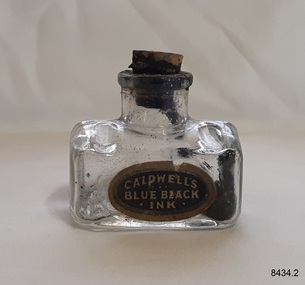
Container - Ink Bottle, Caldwell’s Ink Factory, Late 19th to early 20th centuries
... ...permanent ink...inks were made from a formula that was over a century old, and were scientifically tested and quality controlled. The formula included gallic and tannic acids and high-quality dyes to ensure that they did not fade. They were “free from all injurious chemicals”. The permanent...Flagstaff Hill Warrnambool Maritime Village Maritime Museum Shipwreck coast Great Ocean Road Ink nib pen writing ink writing copying banks lawyers commerce student permanent ink blue black ink stationery record keeping handwriting writing equipment writing accessory office supply cottage bottle boat bottle mouth-blown bottle cork seal F R Caldwell Caldwell’s Ink Company Albert Park South Melbourne inkstands stencil ink copy ink Quicksticker Zac cough mixture three part mould Cauldwells Cauldwell's Printed on label; “CALDWELL's BLUE BLACK INK” Embossed on the base "CALDWELLS" Ink bottle; rectangular base, hand-blown clear glass bottle with its own cork. ...This design of the bottle is sometimes called a ‘cottage’ or ‘boat’ shape. The Caldwell’s handmade glass ink bottle was mouth-blown into a three-piece mould, a method often used in the late 19th and early 20th centuries, with the maker's name engraved into the mould section for the base. The glass blower would cut the bottle off the end of his blowpipe with a tool and join a mouth onto the top, rolling the lip. The bottle was then filled with ink and sealed with a cork. This method of manufacture was more time-consuming and costly to produce than those made in a simple two-piece mould and 'cracked' off the blowpipe. The capacity for a bottle such as this was about 3 ½ oz (ounces) equal to about 100 ml. This particular bottle is unusual as it has four sloping indents at the corners of the shoulder, most likely for resting a pen with its nib upwards and the handle resting on a flat surface. Most of the bottles made during this era had horizontal pen rests that were indented into both of the long sides of the shoulder. Pen and ink have been in use for handwriting since about the seventh century. A quill pen made from a bird’s feather was used up until around the mid-19th century. In the 1850s a steel point nib for the dip pen was invented and could be manufactured on machines in large quantities. This only held a small amount of ink so users had to frequently dip the nib into an ink well for more ink. Handwriting left wet ink on the paper, so the blotting paper was carefully used to absorb the excess ink and prevent smudging. Ink could be purchased as a ready-to-use liquid or in powdered form, which needed to be mixed with water. In the 1880s a successful, portable fountain pen gave smooth-flowing ink and was easy to use. In the mid-20th century, the modern ballpoint pen was readily available and inexpensive, so the fountain pen lost its popularity. However, artisans continue to use nib pens to create beautiful calligraphy. Caldwell’s Ink Co. – F.R. Caldwell established Caldwell’s Ink Company in Australia around 1902. In Victoria, he operated from a factory at Victoria Avenue, Albert Park, until about 1911, then from Yarra Bank Road in South Melbourne. Newspaper offices were appointed as agencies to sell his inks, for example, in 1904 the New Zealand Evening Star sold Caldwell’s Flo-Eesi blue black ink in various bottle sizes, and Murchison Advocate (Victoria) stocked Caldwell’s ink in crimson, green, blue black, violet, and blue. Caldwell’s ink was stated to be “non-corrosive and unaffected by steel pens”. A motto used in advertising in 1904-1908 reads ‘Makes Writing a Pleasure’. Stationers stocked Caldwell’s products and hawkers sold Caldwell’s ink stands from door to door in Sydney in the 1910s and 1920s. In 1911 Caldwell promised cash for returned ink bottles and warned of prosecution for anyone found refilling his bottles. Caldwell’s Ink Stands were given as gifts. The company encouraged all forms of writing with their Australian-made Flo-Eesi writing inks and bottles at their impressive booth in the ‘All Australian Exhibition’ in 1913. It advertised its other products, which included Caldwell’s Gum, Caldwell’s Stencil Ink (copy ink) and Caldwell’s Quicksticker as well as Caldwell’s ‘Zac’ Cough Mixture. Caldwell stated in a 1920 article that his inks were made from a formula that was over a century old, and were scientifically tested and quality controlled. The formula included gallic and tannic acids and high-quality dyes to ensure that they did not fade. They were “free from all injurious chemicals”. The permanent quality of the ink was important for legal reasons, particularly to banks, accountants, commerce, municipal councils and lawyers. The Caldwell’s Ink Company also exported crates of its ink bottles and ink stands overseas. Newspaper advertisements can be found for Caldwell’s Ink Company up until 1934 when the company said they were the Best in the business for 40 years.This hand-blown bottle is significant for being the only bottle in our collection with the unusual sloping pen rests on its shoulder. It is also significant for being made in a less common three-piece mould. The method of manufacture is representative of a 19th-century handcraft industry that is now been largely replaced by mass production. The bottle is of state significance for being produced by an early Melbourne industry and exported overseas. This ink bottle is historically significant as it represents methods of handwritten communication that were still common up until the mid-20th century when fountain pens and modern ballpoint pens became popular and convenient and typewriters were becoming part of standard office equipment.Ink bottle; rectangular base, hand-blown clear glass bottle with its own cork. The bottle has side seams from the base to the mouth, an indented base and an applied lip. The corners of the shoulder sides have unusual diagonal grooves that slope down and outwards that may have been used as pen rests. Inside the bottle are remnants of dried blue-black ink. The glass has imperfections and some ripples on the surface. The bottle has an attached oval black label label with gold-brown printed text and border. The base has an embossed inscription. The bottles once contained Caldwell’s blend of blue black ink.Printed on label; “CALDWELL's BLUE BLACK INK” Embossed on the base "CALDWELLS"flagstaff hill, warrnambool, maritime village, maritime museum, shipwreck coast, great ocean road, ink, nib pen, writing ink, writing, copying, banks, lawyers, commerce, student, permanent ink, blue black ink, stationery, record keeping, handwriting, writing equipment, writing accessory, office supply, cottage bottle, boat bottle, mouth-blown bottle, cork seal, f r caldwell, caldwell’s ink company, albert park, south melbourne, inkstands, stencil ink, copy ink, quicksticker, zac cough mixture, three part mould, cauldwells, cauldwell's -
 Flagstaff Hill Maritime Museum and Village
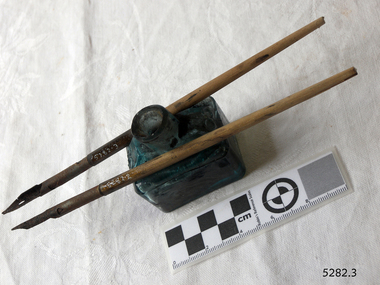
Container - Ink Bottle with pens, Early 20th century
... ...permanent ink...Flagstaff Hill Warrnambool Maritime Museum Maritime Village Great Ocean Road Shipwreck Coast Ink nib pen writing ink writing copying banks lawyers commerce student permanent ink stationery record keeping handwriting writing equipment writing accessory office supply cottage bottle boat bottle mouth-blown bottle two-part mould sheer-lip bottle burst-lip cork seal copy ink aqua glass Victorian 'Boat' ink bottle, small rectangular, aqua glass ink bottle with grooves along the long sides for pen rests. ...This handmade, aqua glass ink bottle's design is sometimes called a ‘boat’ shape. The base was mouth-blown into a rectangular mould, evidenced by the lack of seams, the pontil, crease lies and the uneven thickness of the glass. The shoulder section was mouth-blown into a two-piece mould and then cut off from the blowpipe. The lip is sometimes referred to as a 'burst-lip, which was often filed to be smooth. This method of making bottles was often used in the mid-to-late 19th century. The bottle would then be filled with ink and sealed with a cork. More expensive bottles would have a lip added, which was more time-consuming and costly. The capacity for a bottle such as this was about 3 ½ oz (ounces) equal to about 100 ml. Pens are a common item for that period. Pen and ink have been used for handwriting since about the seventh century. A quill pen made from a bird’s feather was used until the mid-19th century. In the 1850s a steel point nib for the dip pen was invented and could be manufactured on machines in large quantities. The nis only held a small amount of ink so users had to frequently dip the nib into an ink well for more ink. Handwriting left wet ink on the paper, so the blotting paper was carefully used to absorb the excess ink and prevent smudging. Ink could be purchased as a ready-to-use liquid or in powdered form, which needed to be mixed with water. In the 1880s a successful, portable fountain pen gave smooth-flowing ink and was easy to use. In the mid-20th century, the modern ballpoint pen was readily available and inexpensive, so the fountain pen lost its popularity. However, artisans continue to use nib pens to create beautiful calligraphy.The ink bottle is of interest, being made of aqua glass rather than the more common clear glass. This set of ink bottles and pens is significant because of the bottle's method of manufacture, which is representative of a 19th-century handcraft industry that has now been largely replaced by mass production. The bottle and pens are historically significant as tools used for handwritten communication until the mid-20th century when fountain pens and modern ballpoint pens became popular and convenient and mechanical typewriters became part of standard office equipment.Victorian 'Boat' ink bottle, small rectangular, aqua glass ink bottle with grooves along the long sides for pen rests. The base has a pontil, no seams, and the glass is uneven in thickness. The shoulder has two side seams and there is a ridge where it is joined onto the base; there are round indents on each of the shoulder, on the short sides, four in all. The mouth has rough edges. The neck leans to one side. The glass has impurities, crease lines and bubbles. There is dried ink in the bottle. Two pens with metal nibs are included with the ink bottle. flagstaff hill, warrnambool, maritime museum, maritime village, great ocean road, shipwreck coast, ink, nib pen, writing ink, writing, copying, banks, lawyers, commerce, student, permanent ink, stationery, record keeping, handwriting, writing equipment, writing accessory, office supply, cottage bottle, boat bottle, mouth-blown bottle, two-part mould, sheer-lip bottle, burst-lip, cork seal, copy ink, aqua glass -
 Flagstaff Hill Maritime Museum and Village
Container - Ink Bottle, Late-19th to early-20th century
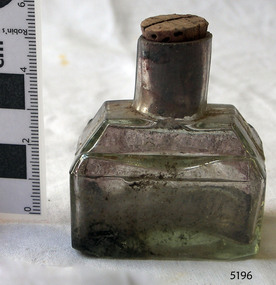
... ...permanent ink...Flagstaff Hill Warrnambool Maritime Museum Maritime Village Great Ocean Road Shipwreck Coast Ink nib pen writing ink writing copying banks lawyers commerce student permanent ink stationery record keeping handwriting writing equipment writing accessory office supply cottage bottle boat bottle mouth-blown bottle two-part mould sheer-lip bottle burst-lip cork seal stencil ink copy ink Victorian 'boat' shaped ink bottle; small rectangular clear glass ink bottle with grooves in shoulders for holding pen. ...The design of the bottle is sometimes called a ‘cottage’ or ‘boat’ shape. This handmade glass ink bottle was mouth-blown into a two-piece mould, a method often used in the mid-to-late 19th century. The glass blower burst the bottle off the end of his blowpipe with a tool, leaving an uneven mouth and sharp edge on the bottle, which was usually filed. The bottle was then filled with ink and sealed with a cork. More expensive bottles would have a lip added, which was more time-consuming and costly to produce. The capacity for a bottle such as this was about 3 ½ oz (ounces) equal to about 100 ml. Pen and ink have been in use for handwriting since about the seventh century. A quill pen made from a bird’s feather was used up until around the mid-19th century. In the 1850s a steel point nib for the dip pen was invented and could be manufactured on machines in large quantities. The nis only held a small amount of ink so users had to frequently dip the nib into an ink well for more ink. Handwriting left wet ink on the paper, so the blotting paper was carefully used to absorb the excess ink and prevent smudging. Ink could be purchased as a ready-to-use liquid or in powdered form, which needed to be mixed with water. In the 1880s a successful, portable fountain pen gave smooth-flowing ink and was easy to use. In the mid-20th century, the modern ballpoint pen was readily available and inexpensive, so the fountain pen lost its popularity. However, artisans continue to use nib pens to create beautiful calligraphy.This ink bottle still retains its original cork. The method of manufacture is representative of a 19th-century, handcraft industry that is now largely replaced by mass production. The ink bottle is historically significant as it represents methods of handwritten personal and business communication that were still common up until the mid-20th century when fountain pens and modern ballpoint pens became popular and convenient and typewriters were becoming part of standard office equipment.Victorian 'boat' shaped ink bottle; small rectangular clear glass ink bottle with grooves in shoulders for holding pen. Bottle has side seams and a 'burst-lip'. The bottle retains its cork.flagstaff hill, warrnambool, maritime museum, maritime village, great ocean road, shipwreck coast, ink, nib pen, writing ink, writing, copying, banks, lawyers, commerce, student, permanent ink, stationery, record keeping, handwriting, writing equipment, writing accessory, office supply, cottage bottle, boat bottle, mouth-blown bottle, two-part mould, sheer-lip bottle, burst-lip, cork seal, stencil ink, copy ink -
 Mont De Lancey
Tin
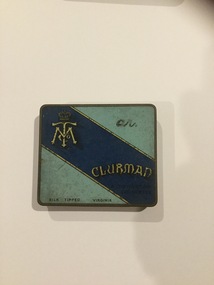
... Also on the lid are the hand-written letters "CN" written in black permanent ink. Inside the lid: "The Clubman" with the company logo underneath. ...Also on the lid are the hand-written letters "CN" written in black permanent ink. Inside the lid: "The Clubman" with the company logo underneath. ...Rectangular, Clubman tobacco tin with a light blue background and a dark blue 3.5 cm. diagonal strip across the hinged lid. It contains three small, cardboard picture cards with images and names of: a cart, a harp and a star, together with matching name lables.On lid: The merged gold letters "M", "T" and "C" surmounted by a gold crown at the top left hand end of the dark blue diagonal stripe and the name "CLUBMAN" at the right hand end, together with: "A Distinctive Cigarette" in very faded black lettering. Printed at the bottom of the lid are the words: "Silk Tipped Virginia" in black print. Also on the lid are the hand-written letters "CN" written in black permanent ink. Inside the lid: "The Clubman" with the company logo underneath. "A Distinctive Cigarette manufactured from carefully selected tobacco for discriminating smokers" "The Marcus Tobacco Co."tobacco tins, tobacco containers, smoking equipment -
 Kiewa Valley Historical Society
Bottle Swan Ink, Mabie Todd + Co (Aust) Pty Ltd Sydney, 1950's
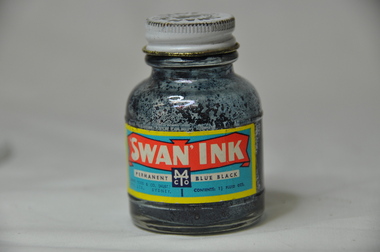
... SWAN TRIPLE FILTERED INK. 'SWAN' INK PERMANENT BLUE BLACK MABIE TODD & CO (AUST) PTY LTD SYDNEY CONTENTS 1 1/2 FLUID OZS....SWAN TRIPLE FILTERED INK. 'SWAN' INK PERMANENT BLUE BLACK MABIE TODD & CO (AUST) PTY LTD SYDNEY CONTENTS 1 1/2 FLUID OZS. ...This refillable ink bottle was extensively in use in the early 1900's, firstly with the nib pen and then with the fountain pen. Both these pens required to be refreshed with ink as they had no long term self storage capacity. The requirement, before the 1970's, for all legal documents, wills and heath certificates etc. forms had to be signed with penned ink and not biro(1950's onward). This caveat was to prevent forgeries (signatures) from ocurring. Hand writing experts can clearly distinguish forgeries because by using nibs, the "natural" and distinctive hand inflections whilst forming the signiture cannot be replicated by forgers.This item is significant to the Kiewa Valley because it details that even in the rural sector,(Kiewa Valley) the legal requirements of the day had to be adhered to. This was even at a time when in the rural areas a "man's word and handshake" was his bond", especially between neighbours or others in a small rural region. This however was not the case for Government Departments , banks and the hospital. To highlight certain words or paragraphs due to their importance, the red ink application was not only highly visible but also less likely to be tampered withThis empty bottle is cylindrical with curved "shoulders" tapering to a neck the size of a 20c coin. It has a white screw on lid bearing the name SWAN triple filtered INK. There is a paper label on the side of the bottle.SWAN TRIPLE FILTERED INK. 'SWAN' INK PERMANENT BLUE BLACK MABIE TODD & CO (AUST) PTY LTD SYDNEY CONTENTS 1 1/2 FLUID OZS.dip pen ink, ink bottle, writing methods, nib. -
 Frankston RSL Sub Branch
Bag, Water Filter
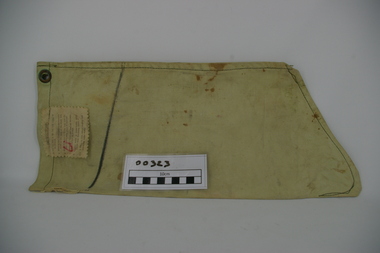
... On one side of the bag has been stamped in permanent black ink 'CAT No A.F.0005' and 'M&Co.(N) BROAD ARROW 1945'. ...On one side of the bag has been stamped in permanent black ink 'CAT No A.F.0005' and 'M&Co.(N) BROAD ARROW 1945'. ...Single person water filter bag used by World War 2 service personnel to obtain clear water when in the field. This filter type is known as a "Millbank Filter". The filter is in the form of a light green canvas bag shaped like a sock and is designed to collect and filter particles and parasites from groundwater, etc. The canvas is of a fine weave which allows the water to filter slowly from inside the bag. The top of the filter bag has brass eyelets set on opposite sides for hanging from a tree or other point during water filtering. On one side of the bag has been stamped in permanent black ink 'CAT No A.F.0005' and 'M&Co.(N) BROAD ARROW 1945'. A cotton label has been sewn near the bag top with a printed six step instruction list for use of the filter bag. Below this is a line marked in permanent black marker to let the user know when to start collecting the water draining from the bag.The bag is imprinted with the following: 'CAT No A.F.005' and has a square box imprint with 'M&Co.(N) ^ 1945'. -
 Bendigo Military Museum
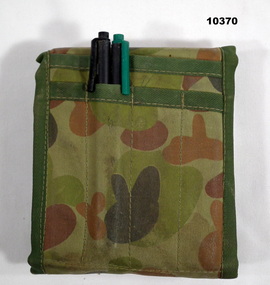
Equipment - WALLET, TACTICAL FIELD ORGANISER, ARMY, Australian Defence Industries, c. 1980's
... EXTERIOR - 4 channel pockets - two ink permanent marker pens - black and green ink. ...EXTERIOR - 4 channel pockets - two ink permanent marker pens - black and green ink. ...Uniform issued to D. Hutchinson.Tactical Field Organiser Wallet. Wallet - Canvas fabric with Disruptive Pattern Camouflage Uniform colour of greens and browns. Dark green cotton twill binding to edges and to two interior pockets and one exterior 4 channel pocket. Inner green hard plastic folder with attached clear document pockets. Manufacturers label - green poly cotton fabric. Velcro tape closer to wallet. Wallet contains the following paperwork and items. Document pockets; -"CONVOY/ PRELIMINARY ORDERS" 11 pages. - Handwritten notes, 2 pages folded, 5 pages folded. 6 pages folded. - Notepad paper - 8 pages folded. - "ARMY SCHOOL OF TRANSPORT"/ AIDE MEMOIRS/ RADIO TELEPHONE PROCEDURE" - print on yellow paper folded. - "ARMY SCHOOL OF TRANSPORT/ CORPS TRAINING WING/ DISTRIBUTION POINT" - 8 PAGES, - "RESTRICTED/ RACT CENTRE/ CORPS TRAINING WING/ TROOP LIFTING" - 5 pages stapled. - "OP OCCUPATION ORDERS" - 11 pages. - "ARMY DRIVING LICENCE" folded into a small clear plastic document pocket. CANVAS WALLET POCKETS - INTERIOR front - "LAYOUT OF OPERATION ORDER FOR ROAD MOVEMENT" - 4 pages laminated in clear plastic. - Back - "AIDE MEMOOOOOIRE/ NAVIGATOR" - 8 pages stapled. - "Department of Defence NOTEBOOK" with handwritten notes. EXTERIOR - 4 channel pockets - two ink permanent marker pens - black and green ink. Manufacturer's details - black ink print. "DDC SUPPLY LINE/ MELBOURNE".d hutchinson, equipment, army, wallet, dpcu -
 Greensborough Historical Society
Magazine - School Magazine, Watsonia High School, Kurnaji 1967 Watsonia High School Yearbook WaHIGH, 1967_
... permanent record of who attended Watsonia High School - both student and teacher in 1967 - includes photographs and articles on school activities. The donor of this copy, Glynne Cousins Pietzsch was a member of the magazine committee for this edition. Annual record of teaching staff, students and events that took place over the year by using both photos and reports. watsonia high school yearbook kurnaji school magazines Glynne Pietzsch Glynne Cousins Pietzsch Letter to Glynne Pietszch pasted inside front cover. 68 Pages, orange cover, Title "Kurnaji" in black ink. ...A permanent record of who attended Watsonia High School - both student and teacher in 1967 - includes photographs and articles on school activities. The donor of this copy, Glynne Cousins Pietzsch was a member of the magazine committee for this edition.Annual record of teaching staff, students and events that took place over the year by using both photos and reports.68 Pages, orange cover, Title "Kurnaji" in black ink. Cover illustration - black ink line drawing of students in school grounds. Letter to Glynne Pietszch pasted inside front cover.watsonia high school, yearbook, kurnaji, school magazines, glynne pietzsch, glynne cousins pietzsch -
 Federation University Historical Collection
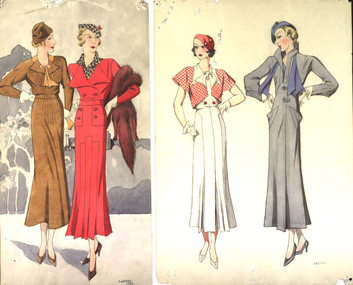
Work on paper - Fashion Illustration and Commercial Art, Alice Watson, Ballarat Technical Art School folio of Alice Watson, 1931,1932 and 1933
... Alice Watson died in Ballarat, aged 95, having conserved her beautiful student folio, which was generously gifted to the Federation University permanent Historical Collection by the Watson family. alice watson ballarat technical art school art drawing figure drawing alumni costume drawing fashion drawing ticket writing 1930's fashion indian ink edith alice watson figure construction advertising commercial art .37) Paper is embossed with 'Windsor & Newtons Bristol Board' stamp. ...Edith (Alice) WATSON (1914–2010) Murtoa | Australia Alice Watson studied at the Ballarat Technical Art School (at the School of Mines, Ballarat) from 1930 until 1933. These works include commercial art, advertising and catalogue illustrations as well as figure construction and fashion-plate designs. Watson sat several departmental exams, including drawing and painting plant forms from nature, lettering, Composition of Form and Colour and advanced General Design, as well as dressmaking and embossed leatherwork. Her folio applies many Australian native floral elements to design. Upon graduating, Watson taught at the Murtoa High School, living with her parents until their deaths in 1972 and 1988 when she was 74 years old. Alice Watson died in Ballarat, aged 95, having conserved her beautiful student folio, which was generously gifted to the Federation University permanent Historical Collection by the Watson family. Commercial artA folio of Fashion Drawing by Edith Alice Watson of the Ballarat Technical Art School. .1) Two women dressed in fashionable clothing- lhs tan ensemble and hat; rhs fuschia ensemble with black and white accessories plus fur stole. Signed lrs A.Watson. 1933. .26) The image with three women wearing a hats. This appears to be an example of ticket writing. Signed lrs "A Watson- 2nd term. 1932." .35) The image with a woman wearing a hat appears to be an example of ticket writing. Signed lrs "A Watson--11th-7-32." .23) female figure drawing. Signed lrs A.Watson. 1st Term. 1932 .21) female figure drawing. Signed lrs A.Watson. 2nd Term. 1932 .17) drawing of lips, side view. Signed lrs A. Watson. 1931 .18) drawing of lips,three-quarter view. Signed lrs A. Watson .37) Paper is embossed with 'Windsor & Newtons Bristol Board' stamp.(Griffin depicted in centre)alice watson, ballarat technical art school, art, drawing, figure drawing, alumni, costume drawing, fashion drawing, ticket writing, 1930's fashion, indian ink, edith alice watson, figure construction, advertising, commercial art -
 Flagstaff Hill Maritime Museum and Village
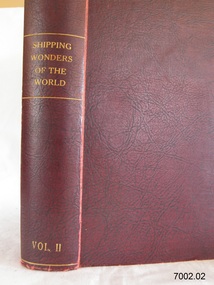
Book - Reference Shipping, The Amalgamated Press Ltd, Shipping Wonders of The World Vol 2, 1936 to 1937
... permanent set. Booksellers list the publication date as 1936–37 for both volumes, as the books themselves carry no printed date, which is a common trait of part-work bind-ups from magazine issues. Inside front Cover Inscription in black ink ...Shipping Wonders of the World, Vol. 1 & 2 was originally issued not as a single bound book in a set of two volumes but as a weekly part-work magazine with fifty-five instalments, printed and distributed before the complete work was finished across both volumes. The work was published by The Amalgamated Press, London. Amalgamated Press then bound the accumulated parts into two hardcover volumes for purchasers who wanted a permanent set. Booksellers list the publication date as 1936–37 for both volumes, as the books themselves carry no printed date, which is a common trait of part-work bind-ups from magazine issues.Hard cover book,Shipping Wonders of the World Vol 2 Editor: Clarence Winchester Publisher: The Amalgamated Press Ltd, London. Date: 1936-1937 Further Information: Textured hard cover cloth bound book, burgundy colour with gold lettering. Inscription with owner's details and a list of ships inside the front cover.non-fictionShipping Wonders of the World, Vol. 1 & 2 was originally issued not as a single bound book in a set of two volumes but as a weekly part-work magazine with fifty-five instalments, printed and distributed before the complete work was finished across both volumes. The work was published by The Amalgamated Press, London. Amalgamated Press then bound the accumulated parts into two hardcover volumes for purchasers who wanted a permanent set. Booksellers list the publication date as 1936–37 for both volumes, as the books themselves carry no printed date, which is a common trait of part-work bind-ups from magazine issues.warrnambool, shipwrecked-coast, flagstaff-hill, flagstaff-hill-maritime-museum, maritime-museum, shipwreck-coast, flagstaff-hill-maritime-village, shipwrecked-artefact, book, shipping wonders -
 Greensborough Historical Society
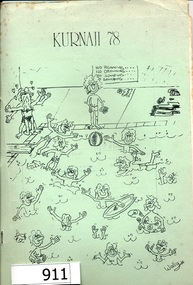
School Magazine, Kurnaji 1978 Watsonia High School Yearbook WaHIGH, 1978_
... A permanent record of who attended Watsonia High School - both student and teacher in 1978 - includes photographs watsonia high school yearbook kurnaji school magazines Pages not numbered, pale green cover, Title "Kurnaji 78" in black ink. ...Annual record of teaching staff, students and events that took place over the year 1978 by using both photos and reports This edition appears to have been produced 'in house' by photocopying. A permanent record of who attended Watsonia High School - both student and teacher in 1978 - includes photographsPages not numbered, pale green cover, Title "Kurnaji 78" in black ink. Cover illustration - black ink line drawing. Stapled foolscap pages.watsonia high school, yearbook, kurnaji, school magazines -
 Greensborough Historical Society
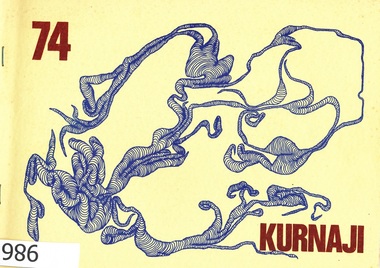
School Magazine, Kurnaji 1974 Watsonia High School Yearbook WaHIGH, 1974_
... G L Shaw A permanent record of Who attended Watsonia High School - both student and teacher in 1974 - includes photographs watsonia high school yearbook kurnaji school magazines Pages not numbered, yellow cover, Title "Kurnaji" in brown ink. ...Annual record of teaching staff, students and events that took place over the year by using both photos and reports. Headmaster / Principal - Mr. G L ShawA permanent record of Who attended Watsonia High School - both student and teacher in 1974 - includes photographs Pages not numbered, yellow cover, Title "Kurnaji" in brown ink. Cover illustration - black ink line drawing. Text and illustrations. 2 copies.watsonia high school, yearbook, kurnaji, school magazines -
 Greensborough Historical Society
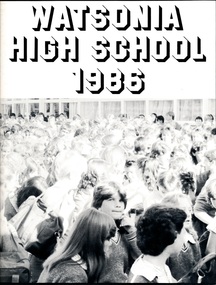
School Magazine, Watsonia High School Yearbook 1986 WaHIGH, 1986_
... permanent record of who attended Watsonia High School - both student and teacher in 1986 - includes photographs. Note change of name from Kurnaji (previous yearbooks). watsonia high school yearbook kurnaji school magazines Pages not numbered, white cover, Title "Watsonia High School 1986" in Black ink. ...Annual record of teaching staff, students and events that took place over the year by using both photos and reports. Headmaster / Principal - Mr. Don GrantA permanent record of who attended Watsonia High School - both student and teacher in 1986 - includes photographs. Note change of name from Kurnaji (previous yearbooks).Pages not numbered, white cover, Title "Watsonia High School 1986" in Black ink. Contains text and graphics. Cover illustration – black and white photograph.. watsonia high school, yearbook, kurnaji, school magazines -
 Greensborough Historical Society
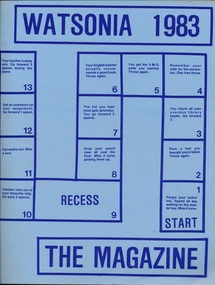
School Magazine, Watsonia 1983 The Magazine WaHIGH, 1983_
... permanent record of who attended Watsonia High School - both student and teacher in 1983 - includes photographs. Note change of name from Kurnaji (previous yearbooks). watsonia high school yearbook kurnaji school magazines One copy has 'M.Willimott' written in pencil on cover. Pages not numbered, blue cover, Title "Watsonia 1983 The Magazine" in blue ink ...Annual record of teaching staff, students and events that took place over the year 1983 by using both photos and reports. Headmaster / Principal - Mr. Don GrantA permanent record of who attended Watsonia High School - both student and teacher in 1983 - includes photographs. Note change of name from Kurnaji (previous yearbooks).Pages not numbered, blue cover, Title "Watsonia 1983 The Magazine" in blue ink. Contains text and graphics. Cover illustration – stylised board game depicting the school day. 2 copies. One copy has 'M.Willimott' written in pencil on cover.watsonia high school, yearbook, kurnaji, school magazines -
 Greensborough Historical Society
School Magazine, Watsonia High 1985. WaHIGH, 1985_
... permanent record of who attended Watsonia High School - both student and teacher in 1985 - includes photographs. Note change of name from Kurnaji (previous yearbooks). watsonia high school yearbook kurnaji school magazines Pages not numbered, blue cover, Title "Watsonia High 1985" outlined in Black ink. ...Annual record of teaching staff, students and events that took place over the year by using both photos and reports. Headmaster / Principal - Mr. Don GrantA permanent record of who attended Watsonia High School - both student and teacher in 1985 - includes photographs. Note change of name from Kurnaji (previous yearbooks).Pages not numbered, blue cover, Title "Watsonia High 1985" outlined in Black ink. Contains text and graphics. Cover illustration – fashion sketches.watsonia high school, yearbook, kurnaji, school magazines -
 Greensborough Historical Society
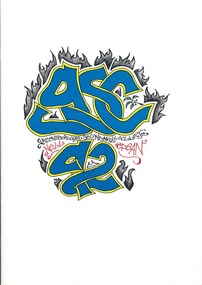
School Magazine, Greensborough Secondary College GSC 92 Nell Nepean, 1992_
... Richard Thomson A permanent record of who attended Greensborough Secondary College - both student and teacher in 1992 - includes photographs, articles and class photos greensborough secondary college yearbook school magazines 40 pages, cream cover, Title in blue ink. ...Annual record of teaching staff, students and events that took place over the year by using both photos and reports. Headmaster / Principal - Mr. Richard ThomsonA permanent record of who attended Greensborough Secondary College - both student and teacher in 1992 - includes photographs, articles and class photos40 pages, cream cover, Title in blue ink. Contains text, graphics and class photos.greensborough secondary college, yearbook, school magazines -
![School Magazine, Greensborough College 04 [2004]. Yearbook, 2004_](/media/collectors/4f729f5697f83e03086015b8/items/52b68dd32162ef04f09e1653/item-media/52b68f692162ef04f09e1799/item-fit-380x285.jpg?cb=6) Greensborough Historical Society
Greensborough Historical SocietySchool Magazine, Greensborough College 04 [2004]. Yearbook, 2004_
... John Conway A permanent record of who attended Greensborough College - both student and teacher in 2004 - includes photographs, articles and class photos greensborough college yearbook school magazines margaret willimott 80 pages, cream cover, Title "Greensborough College 04" in black ink. ...Annual record of teaching staff, students and events that took place over the year by using both photos and reports. Headmaster / Principal - Mr. John ConwayA permanent record of who attended Greensborough College - both student and teacher in 2004 - includes photographs, articles and class photos80 pages, cream cover, Title "Greensborough College 04" in black ink. Contains text, graphics and class photos. Cover illustration includes title on a background of scrap paper.greensborough college, yearbook, school magazines, margaret willimott -
 Greensborough Historical Society
School Magazine, Retrospective. Greensborough College Yearbook 2005, 2005_
... A permanent record of who attended Greensborough College - both student and teacher in 2005 - includes photographs, articles and class photos.This edition of the Greensborough College yearbook includes a CD of photographs of events. greensborough college yearbook retrospective school magazines 96 pages, blue and pink cover, Title "Retrospective 2005" in black ink. ...Annual record of teaching staff, students and events that took place over the year by using both photos and reports. Headmaster / Principal - Mr. John Conway.A permanent record of who attended Greensborough College - both student and teacher in 2005 - includes photographs, articles and class photos.This edition of the Greensborough College yearbook includes a CD of photographs of events.96 pages, blue and pink cover, Title "Retrospective 2005" in black ink. Contains text, graphics and class photos. Cover illustration includes title and line drawings. Inside back cover is a CD of extra photos.greensborough college, yearbook, retrospective, school magazines -
 Greensborough Historical Society
School Magazine, Retrospective. Greensborough College Yearbook 2007, 2007_
... John Conway A permanent record of who attended Greensborough College - both student and teacher in 2007 - includes photographs, articles and class photos. greensborough college yearbook retrospective school magazines Pages not numbered, red cover, Title "Greensborough College Retrospective" in black, white and yellow ink. ...Annual record of teaching staff, students and events that took place over the year by using both photos and reports. Headmaster / Principal - Mr. John ConwayA permanent record of who attended Greensborough College - both student and teacher in 2007 - includes photographs, articles and class photos.Pages not numbered, red cover, Title "Greensborough College Retrospective" in black, white and yellow ink. Contains text, graphics and class photos. Cover illustration includes title repeated in black graphic.greensborough college, yearbook, retrospective, school magazines -
 Greensborough Historical Society
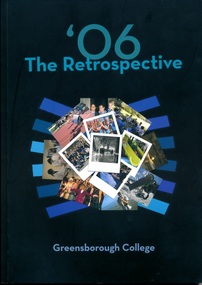
School Magazine, Retrospective. Greensborough College Yearbook '06, 2006_
... John Conway A permanent record of who attended Greensborough College - both student and teacher in 2006 - includes photographs, articles and class photos. greensborough college yearbook retrospective school magazines 100 pages, black cover, Title "'06 The Retrospective" in grey and blue ink. ...Annual record of teaching staff, students and events that took place over the year by using both photos and reports. Headmaster / Principal - Mr. John ConwayA permanent record of who attended Greensborough College - both student and teacher in 2006 - includes photographs, articles and class photos.100 pages, black cover, Title "'06 The Retrospective" in grey and blue ink. Contains text, graphics and class photos. Cover illustration includes collage of photographs.greensborough college, yearbook, retrospective, school magazines -
 Greensborough Historical Society
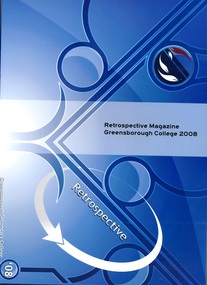
School Magazine, Retrospective Magazine. Greensborough College Yearbook 2008, 2008_
... John Conway A permanent record of who attended Greensborough College - both student and teacher in 2008 - includes photographs, articles and class photos. greensborough college yearbook retrospective school magazines Pages not numbered, blue cover, Title "Retrospective Magazine. Greensborough College 2008" in black ink ...Annual record of teaching staff, students and events that took place over the year by using both photos and reports. Headmaster / Principal - Mr. John Conway A permanent record of who attended Greensborough College - both student and teacher in 2008 - includes photographs, articles and class photos. Pages not numbered, blue cover, Title "Retrospective Magazine. Greensborough College 2008" in black ink. Contains text, graphics and class photos. Cover designed by Scott Battye.greensborough college, yearbook, retrospective, school magazines -
 Greensborough Historical Society
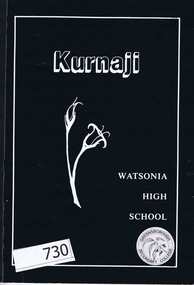
School Magazine, Kurnaji 1989. Watsonia High School Yearbook WaHIGH, 1989_
... permanent record of who attended Watsonia High School - both student and teacher in 1989 - includes photographs. Note: This was the last year of publication of Kurnaji as Watsonia High School was merged with Watsonia Technical School to become Greensborough Secondary College. Includes Roll Call section with names of all students. watsonia high school kurnaji yearbooks 50 Pages (approx), Black cover, Title "Kurnaji" in White ink ...A permanent record of who attended Watsonia High School - both student and teacher in 1989 - includes photographs. Note: This was the last year of publication of Kurnaji as Watsonia High School was merged with Watsonia Technical School to become Greensborough Secondary College. Includes Roll Call section with names of all students. 50 Pages (approx), Black cover, Title "Kurnaji" in White ink.watsonia high school, kurnaji, yearbooks -
 Ballarat Fire Brigade
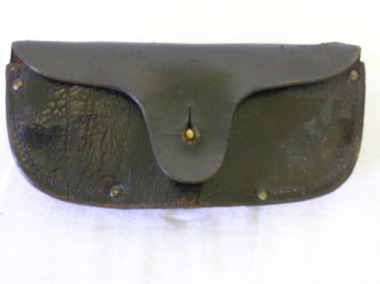
Axe case
... permanent staff. w g jamieson ballarat fire station axe case 11 (inside cover flap) Brown leather case designed to carry firemans axe on his belt. Case is stitched around the edges and has 4 brass rivets holding it together. A central brass dome headed botton acts as the clasp and goes through a hole located in the cover. On the rear side is 2 belt loops which are also riveted to the case. The number 11 is writen inside the cover in red ink ...Makes up part of the firemans belt that was owned by Senior Firefighter (S/F) W.G. Jamieson who was stationed at Ballarat Fire Station as part of the permanent staff. Brown leather case designed to carry firemans axe on his belt. Case is stitched around the edges and has 4 brass rivets holding it together. A central brass dome headed botton acts as the clasp and goes through a hole located in the cover. On the rear side is 2 belt loops which are also riveted to the case. The number 11 is writen inside the cover in red ink. 11 (inside cover flap)w g jamieson, ballarat fire station, axe case -
 Orbost & District Historical Society
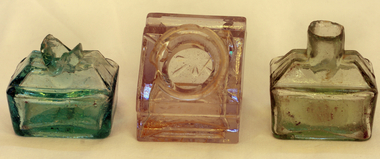
inkwells, first half 20th century
... Inkwells were generally more decorative than ink bottles and designed to be more permanent....Inkwells were generally more decorative than ink bottles and designed to be more permanent. We have mostly dispensed with ink bottles and quills. ...Inkwells were generally more decorative than ink bottles and designed to be more permanent.We have mostly dispensed with ink bottles and quills. This item is an example of early stationery equipment commonly used in schools, households and commercial enterprises.Three glass inkwells. .1-blue tinted with broken top. .2 green tinted broken at top. .3 clear glass with symmetrical design.inkwell writing-equipment glass domestic-item -
 Greensborough Historical Society
Magazine - School Magazine, Kurnaji 1973 Watsonia High School Yearbook WaHIGH, 1973_
... permanent record of who attended Watsonia High School - both student and teacher in 1973 - includes photographs. Headmaster / Principal – Mr. C.K. (Ken) Canty. Includes Roll Call section with names of all students. Depicts events and attitudes, primarily of students as they go through their adolescent years in the early 1970's. watsonia high school yearbook kurnaji school magazines 50 Pages (approx), Black & White cover, Title "Kurnaji" in Black ink. ...A permanent record of who attended Watsonia High School - both student and teacher in 1973 - includes photographs. Headmaster / Principal – Mr. C.K. (Ken) Canty. Includes Roll Call section with names of all students.Depicts events and attitudes, primarily of students as they go through their adolescent years in the early 1970's. 50 Pages (approx), Black & White cover, Title "Kurnaji" in Black ink. Line drawing of spider web. watsonia high school, yearbook, kurnaji, school magazines -
 Greensborough Historical Society
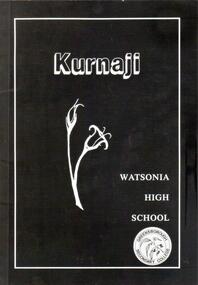
Magazine - School Magazine, Kurnaji 1989. Watsonia High School Yearbook WaHIGH, 1989_
... permanent record of Who attended Watsonia High School - both student and teacher in 1989 - includes photographs. Note: This was the last year of publication of Kurnaji as Watsonia High School was merged with Watsonia Technical School to become Greensborough Secondary College. watsonia high school yearbook kurnaji school magazines 50 Pages (approx), Black cover, Title "Kurnaji" in White ink. ...A permanent record of Who attended Watsonia High School - both student and teacher in 1989 - includes photographs. Note: This was the last year of publication of Kurnaji as Watsonia High School was merged with Watsonia Technical School to become Greensborough Secondary College.Annual record of teaching staff, students and events that took place over the year by using both photos and reports. Includes Roll Call section with names of all students. 3 copies50 Pages (approx), Black cover, Title "Kurnaji" in White ink.watsonia high school, yearbook, kurnaji, school magazines -
 Greensborough Historical Society
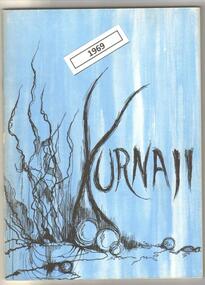
Magazine - School Magazine, Kurnaji 1969 Watsonia High School Yearbook WaHIGH, 1969_
... A permanent record of who attended Watsonia High School - both student and teacher in 1969 - includes photographs Includes Roll Call section with names of all students Annual record of teaching staff, students and events that took place over the year by using both photos and reports. watsonia high school yearbook kurnaji school magazines 48 Pages, Blue cover, Title "Kurnaji" in Black ink. ...A permanent record of who attended Watsonia High School - both student and teacher in 1969 - includes photographs Includes Roll Call section with names of all studentsAnnual record of teaching staff, students and events that took place over the year by using both photos and reports.48 Pages, Blue cover, Title "Kurnaji" in Black ink. Cover illustration - black ink line drawing. Headmaster / Principal - Mr. C.K. (Ken) Canty. 2 copies.watsonia high school, yearbook, kurnaji, school magazines -
 Greensborough Historical Society
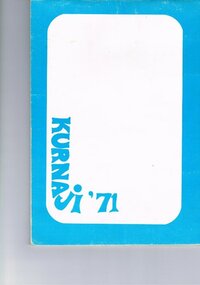
Magazine - School Magazine, Kurnaji 1971 Watsonia High School Yearbook WaHIGH, 1971_
... permanent record of who attended Watsonia High School - both student and teacher in 1971 - includes photographs. Includes Roll Call section with names of all students. Depicts events and attitudes, primarily of students as they go through their adolescent years in the early 1970's. watsonia high school yearbook kurnaji school magazines 50 Pages (approx), Blue & White cover, Title "Kurnaji" in Blue ink. ...A permanent record of who attended Watsonia High School - both student and teacher in 1971 - includes photographs. Includes Roll Call section with names of all students.Depicts events and attitudes, primarily of students as they go through their adolescent years in the early 1970's.50 Pages (approx), Blue & White cover, Title "Kurnaji" in Blue ink. watsonia high school, yearbook, kurnaji, school magazines
