
Showing 39 items matching "personal attire"
-
 Tennis Australia
Attire, Personal items, Circa 1980
... Attire, Personal items...Materials: Polyester, Metal, Plastic Attire, Personal items ...Two piece blue and white outfit by Rosy. (.1) top and (.2) skirt. Materials: Polyester, Metal, Plastictennis -
 Tennis Australia
Attire, Personal items, Circa 1974
... Attire, Personal items...Materials: Polyester, Metal Attire, Personal items ...Mondessa Tennis Collection tailored safari-style jacket, with tennis motif buttons. Materials: Polyester, Metaltennis -
 Tennis Australia
Attire, Personal items, Circa 1930
... Attire, Personal items...Materials: Cotton, Wood, Metal, Plastic Attire, Personal items ...Striped blazer. Label sewn into collar states: 'HANDMADE BY MAUREEN JEAVANS'. Materials: Cotton, Wood, Metal, Plastictennis -
 Tennis Australia
Attire, Personal items, Circa 1970
... Attire, Personal items...Materials: Polyester, Plastic, Metal Attire, Personal items ...Three piece women's JB ProStyle white tennis outfit. (.1) jacket, (.2) dress, and (.3) pants. Materials: Polyester, Plastic, Metaltennis -
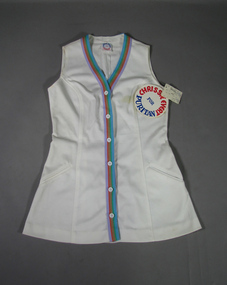 Tennis Australia
Attire, Personal items, Circa 1975
... Attire, Personal items...Materials: Cotton, Plastic Attire, Personal items ...A Puritan 'Chrissie Evert' sleeveless tennis dress with original shop tags. Materials: Cotton, Plastictennis -
 Tennis Australia
Attire, Personal items, Circa 1935
... Attire, Personal items...Materials: Cotton, Metal Attire, Personal items ...White cotton short sleeved tennis dress with collar and pleated skirt. Materials: Cotton, Metaltennis -
 Tennis Australia
Attire, Personal items, Circa 1925
... Attire, Personal items...Materials: Cotton, Plastic Attire, Personal items ...White cotton sleeveless drop waisted dress. Materials: Cotton, Plastictennis -
 Tennis Australia
Attire, Personal items, Circa 1940
... Attire, Personal items...Materials: Cotton, Plastic Attire, Personal items ...Striped cotton sleeveless dress. Materials: Cotton, Plastictennis -
 Tennis Australia
Attire, Personal items, Circa 1970
... Attire, Personal items...Tennis Pancho Gonzales Sportswear tennis shirt Materials: Cotton, Polyester, Metal Attire, Personal items ...Pancho Gonzales Sportswear tennis shirt Materials: Cotton, Polyester, Metaltennis -
 Tennis Australia
Attire, Personal items, Circa 1990
... Attire, Personal items...Tennis Nike Australian Open tennis shirt Materials: Cotton, Polyester, Metal Attire, Personal items ...Nike Australian Open tennis shirt Materials: Cotton, Polyester, Metaltennis -
 Tennis Australia
Attire, Personal items, Circa 1885
... Attire, Personal items...Materials: Cotton, Thread, Metal Attire, Personal items ...Women's striped cotton dress with lace detailing. Materials: Cotton, Thread, Metaltennis -
 Tennis Australia
Attire, Personal items, Circa 1885
... Attire, Personal items...Materials: Silk, Thread, Metal Attire, Personal items ...Two piece women's striped blue silk outfit with lace detailing.(.1) long sleeved top section (.2) long skirt. Materials: Silk, Thread, Metaltennis -
 Tennis Australia
Attire, Personal items, Circa 1930
... Attire, Personal items...Materials: Silk, Thread, Plastic Attire, Personal items ...Yellow silk sleeveless tailored dress with two purple buttons on front. Materials: Silk, Thread, Plastictennis -
 Tennis Australia
Attire, Personal items, Circa 1925
... Attire, Personal items...Materials: Silk, Thread, Plastic Attire, Personal items ...Silk sleeveless drop waisted dress. Materials: Silk, Thread, Plastictennis -
 Tennis Australia
Attire, Personal items, Circa 1885
... Attire, Personal items...Materials: Cloth, Metal Attire, Personal items ...A tennis outifit comprising (.1) white blouse, (.2) mauve jacket, (.3) white embroidered skirt and (.4) white petticoat. Materials: Cloth, Metaltennis -
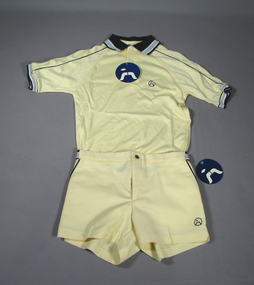 Tennis Australia
Attire, Personal items, Circa 1980
... Attire, Personal items...Materials: Cloth, Plastic, Metal Attire, Personal items ...A John Newcombe Active Sportswear tennis outift. (.1) shirt and (.2) shorts. Materials: Cloth, Plastic, Metaltennis -
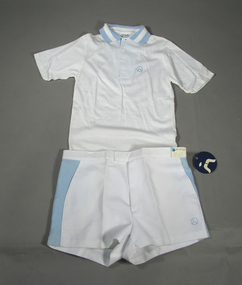 Tennis Australia
Attire, Personal items, Circa 1985
... Attire, Personal items...Materials: Cloth, Plastic Attire, Personal items ...An Interwoven 'John Newcombe Active Sportswear' tennis outift. (.1) shirt size Small and (.2) shorts size 38. Materials: Cloth, Plastictennis -
 Tennis Australia
Attire, Personal items, Circa 1985
... Attire, Personal items...Tennis A Progroup 'Tony Roche' tennis shirt Materials: Cloth, Plastic Attire, Personal items ...A Progroup 'Tony Roche' tennis shirt Materials: Cloth, Plastictennis -
 Tatura Irrigation & Wartime Camps Museum
Accessory - Buckle - belt
... personal attire...Made in camp 3 Rushworth. personal attire Dark coloured wood, shaped with gapes to put belt through. ...Made in camp 3 Rushworth.Dark coloured wood, shaped with gapes to put belt through.personal attire -
 Kiewa Valley Historical Society
Brush and Comb Set - Personal Item
... As it is the only one in our collection it also has good interpretive capacity as it shows the types dresser sets or vanity set used for womens personal attirement during the 1950's. ladies brush comb set dressing-table Pig bristle hair brush with ovate head, narrow neck and smaller ovate handle. ...This brush & comb set was used by Mrs Rooks who lived in Mt. Beauty between 19 and 2 . It is typical of the sets that adorned dressing tables in the 1950s and 1960s. Could be part of a larger vanity set. Handle on brush indicates it is a ladies brush and not a mans. Today these types of items are becoming more collectible .Historic, & social asignificance. As it is the only one in our collection it also has good interpretive capacity as it shows the types dresser sets or vanity set used for womens personal attirement during the 1950's. Pig bristle hair brush with ovate head, narrow neck and smaller ovate handle. Cream [butter coloured] xylanite [ lined pattern] . Wide toothed matching comb.ladies, brush, comb, set, dressing-table -
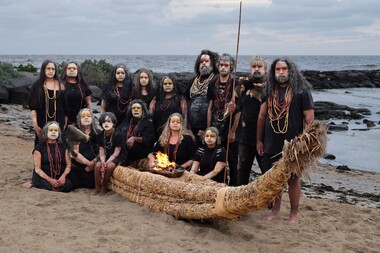 Merri-bek City Council
Photograph - Digital print on photographic paper, Maree Clarke, The Long Journey Home 4, 2024
... attire, family, and Land. The Long Journey Home 11, 2024 This photograph depicts the artist sitting on the Tasmanian river reed canoe, also wearing ground ochre and sap face paint, in front of the city’s horizon at sunset. In contrast to the previous print, The Long Journey Home 11 spotlights Clarke as a pivotal leader in nurturing and promoting contemporary Indigenous Art in Australia. Clarke’s presence in this photograph is a powerful assertion of her personal ... -
 Merri-bek City Council
Photograph - Digital print on photographic paper, Maree Clarke, The Long Journey Home 9, 2024
... attire, family, and Land. The Long Journey Home 11, 2024 This photograph depicts the artist sitting on the Tasmanian river reed canoe, also wearing ground ochre and sap face paint, in front of the city’s horizon at sunset. In contrast to the previous print, The Long Journey Home 11 spotlights Clarke as a pivotal leader in nurturing and promoting contemporary Indigenous Art in Australia. Clarke’s presence in this photograph is a powerful assertion of her personal ... -
 Embroiderers Guild, Victoria
Accessory - Sleeve Bands, Pre 1985
... The choice of motifs allowed women to express personal desires, cultural values, and aesthetic preferences, reflecting a more personal and informal style than official court attire....The choice of motifs allowed women to express personal desires, cultural values, and aesthetic preferences, reflecting a more personal and informal style than official court attire. Embroidery Silk Embroidery Japan Oriental Sleeve Bands Garments Two sleeve bands. ...Chinese sleeve embroidery bands, or wanxiu became popular in the late 19th century during the Qing Dynasty, evolving from the traditional Han cuff embroidery and Manchu styles. These detachable, decorated bands were added to women's informal jackets and robes, often featuring symbolic motifs like landscapes, flowers, and auspicious symbols. They served both a decorative function, displaying artistic skill and personal wishes, and a practical one by covering the sleeves when hands were folded at the waist. History and evolution: Origins: The practice of embroidering cuffs on robes existed during the previous Ming Dynasty for Han women, and this was adopted by the Manchu rulers who founded the Qing Dynasty. Qing Dynasty (1644-1911): The practice was popularized and elaborated upon during this era, with detachable bands becoming a fashionable element for informal wear. Symbolism: The embroidery included a complex visual vocabulary of wishes for a long life, many offspring, and a happy marriage, derived from nature, mythology, and classical literature. Functionality: Women would fold their arms, often with their hands inside the sleeves, so the embroidered bands, which were sewn to hang down the back of the jacket, would be displayed prominently down the front. 19th century peak: The late 19th century was the peak of their popularity, with intricate designs becoming fashionable and even influenced by court tastes, such as those favoured by the Empress Dowager Cixi. Later developments: The late 19th century saw the introduction of chemical 'aniline' dyes from Europe, leading to brighter, bolder colours in embroidery. Motifs and their Meanings: Auspicious symbols: Designs often included symbols for good fortune, wealth, and longevity. Natural imagery: Birds, flowers, and landscapes were common motifs that could represent natural beauty or convey specific symbolic meanings. Figurative scenes: Bands could also feature narrative scenes from classical stories or legends. The choice of motifs allowed women to express personal desires, cultural values, and aesthetic preferences, reflecting a more personal and informal style than official court attire.Two sleeve bands. Embroidered in coloured silk and gold metal thread. Motifs of lotus flowers, birds, swastikas and other flowers. Mostly satin stitch.embroidery, silk embroidery, japan, oriental, sleeve bands, garments -
 Embroiderers Guild, Victoria
Accessory - Sleeve Bands, Pre 1985
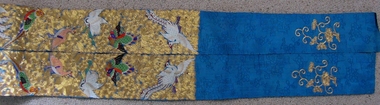
... The choice of motifs allowed women to express personal desires, cultural values, and aesthetic preferences, reflecting a more personal and informal style than official court attire....The choice of motifs allowed women to express personal desires, cultural values, and aesthetic preferences, reflecting a more personal and informal style than official court attire. Embroidery Garments Silk Embroidery Metal thread Chinese Pair of rich blue silk (figured) bands, 66 cm of which is heavily embroidered in couched gold metal threads in a swirling pattern, with coloured silk birds (18). ...Chinese sleeve embroidery bands, or wanxiu became popular in the late 19th century during the Qing Dynasty, evolving from the traditional Han cuff embroidery and Manchu styles. These detachable, decorated bands were added to women's informal jackets and robes, often featuring symbolic motifs like landscapes, flowers, and auspicious symbols. They served both a decorative function, displaying artistic skill and personal wishes, and a practical one by covering the sleeves when hands were folded at the waist. History and evolution: Origins: The practice of embroidering cuffs on robes existed during the previous Ming Dynasty for Han women, and this was adopted by the Manchu rulers who founded the Qing Dynasty. Qing Dynasty (1644-1911): The practice was popularized and elaborated upon during this era, with detachable bands becoming a fashionable element for informal wear. Symbolism: The embroidery included a complex visual vocabulary of wishes for a long life, many offspring, and a happy marriage, derived from nature, mythology, and classical literature. Functionality: Women would fold their arms, often with their hands inside the sleeves, so the embroidered bands, which were sewn to hang down the back of the jacket, would be displayed prominently down the front. 19th century peak: The late 19th century was the peak of their popularity, with intricate designs becoming fashionable and even influenced by court tastes, such as those favoured by the Empress Dowager Cixi. Later developments: The late 19th century saw the introduction of chemical 'aniline' dyes from Europe, leading to brighter, bolder colours in embroidery. Motifs and their Meanings: Auspicious symbols: Designs often included symbols for good fortune, wealth, and longevity. Natural imagery: Birds, flowers, and landscapes were common motifs that could represent natural beauty or convey specific symbolic meanings. Figurative scenes: Bands could also feature narrative scenes from classical stories or legends. The choice of motifs allowed women to express personal desires, cultural values, and aesthetic preferences, reflecting a more personal and informal style than official court attire.Pair of rich blue silk (figured) bands, 66 cm of which is heavily embroidered in couched gold metal threads in a swirling pattern, with coloured silk birds (18). There is a gold spray (floral) at the base of each band.embroidery, garments, silk embroidery, metal thread, chinese -
 Embroiderers Guild, Victoria
Accessory - Chinese Sleeve Bands
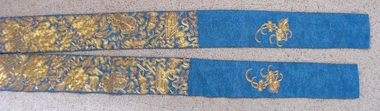
... The choice of motifs allowed women to express personal desires, cultural values, and aesthetic preferences, reflecting a more personal and informal style than official court attire....The choice of motifs allowed women to express personal desires, cultural values, and aesthetic preferences, reflecting a more personal and informal style than official court attire. Embroidery Metal thread Embroidery Garments Japan A pair of sleeve bands. ...Purchased in Singapore circa 1920 and believed to be old then. Never been worn. Chinese sleeve embroidery bands, or wanxiu became popular in the late 19th century during the Qing Dynasty, evolving from the traditional Han cuff embroidery and Manchu styles. These detachable, decorated bands were added to women's informal jackets and robes, often featuring symbolic motifs like landscapes, flowers, and auspicious symbols. They served both a decorative function, displaying artistic skill and personal wishes, and a practical one by covering the sleeves when hands were folded at the waist. History and evolution: Origins: The practice of embroidering cuffs on robes existed during the previous Ming Dynasty for Han women, and this was adopted by the Manchu rulers who founded the Qing Dynasty. Qing Dynasty (1644-1911): The practice was popularized and elaborated upon during this era, with detachable bands becoming a fashionable element for informal wear. Symbolism: The embroidery included a complex visual vocabulary of wishes for a long life, many offspring, and a happy marriage, derived from nature, mythology, and classical literature. Functionality: Women would fold their arms, often with their hands inside the sleeves, so the embroidered bands, which were sewn to hang down the back of the jacket, would be displayed prominently down the front. 19th century peak: The late 19th century was the peak of their popularity, with intricate designs becoming fashionable and even influenced by court tastes, such as those favoured by the Empress Dowager Cixi. Later developments: The late 19th century saw the introduction of chemical 'aniline' dyes from Europe, leading to brighter, bolder colours in embroidery. Motifs and their Meanings: Auspicious symbols: Designs often included symbols for good fortune, wealth, and longevity. Natural imagery: Birds, flowers, and landscapes were common motifs that could represent natural beauty or convey specific symbolic meanings. Figurative scenes: Bands could also feature narrative scenes from classical stories or legends. The choice of motifs allowed women to express personal desires, cultural values, and aesthetic preferences, reflecting a more personal and informal style than official court attire.A pair of sleeve bands. Embroidered in gold metallic thread on blue silk fabric in a pattern of peonies, bats and other auspicious symbols.embroidery, metal thread, embroidery, garments, japan -
 Embroiderers Guild, Victoria
Clothing - Chinese Floral Sleeve Band, Late 19th Century
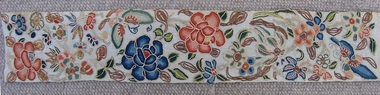
... The choice of motifs allowed women to express personal desires, cultural values, and aesthetic preferences, reflecting a more personal and informal style than official court attire....The choice of motifs allowed women to express personal desires, cultural values, and aesthetic preferences, reflecting a more personal and informal style than official court attire. China Late 19th century silk sleeve band flower peony butterfly Sleeve band of grey brocade silk, embroidered design of peonies, and butterflies in coloured silk thread in Pekin knot stitch. ...Chinese sleeve embroidery bands, or wanxiu became popular in the late 19th century during the Qing Dynasty, evolving from the traditional Han cuff embroidery and Manchu styles. These detachable, decorated bands were added to women's informal jackets and robes, often featuring symbolic motifs like landscapes, flowers, and auspicious symbols. They served both a decorative function, displaying artistic skill and personal wishes, and a practical one by covering the sleeves when hands were folded at the waist. History and evolution: Origins: The practice of embroidering cuffs on robes existed during the previous Ming Dynasty for Han women, and this was adopted by the Manchu rulers who founded the Qing Dynasty. Qing Dynasty (1644-1911): The practice was popularized and elaborated upon during this era, with detachable bands becoming a fashionable element for informal wear. Symbolism: The embroidery included a complex visual vocabulary of wishes for a long life, many offspring, and a happy marriage, derived from nature, mythology, and classical literature. Functionality: Women would fold their arms, often with their hands inside the sleeves, so the embroidered bands, which were sewn to hang down the back of the jacket, would be displayed prominently down the front. 19th century peak: The late 19th century was the peak of their popularity, with intricate designs becoming fashionable and even influenced by court tastes, such as those favoured by the Empress Dowager Cixi. Later developments: The late 19th century saw the introduction of chemical 'aniline' dyes from Europe, leading to brighter, bolder colours in embroidery. Motifs and their Meanings: Auspicious symbols: Designs often included symbols for good fortune, wealth, and longevity. Natural imagery: Birds, flowers, and landscapes were common motifs that could represent natural beauty or convey specific symbolic meanings. Figurative scenes: Bands could also feature narrative scenes from classical stories or legends. The choice of motifs allowed women to express personal desires, cultural values, and aesthetic preferences, reflecting a more personal and informal style than official court attire.Sleeve band of grey brocade silk, embroidered design of peonies, and butterflies in coloured silk thread in Pekin knot stitch. Flowers are outlined in cream crinkle cord. china, late 19th century, silk, sleeve band, flower, peony, butterfly -
 Embroiderers Guild, Victoria
Accessory - Pair of Chinese Embroidered Sleeve Bands
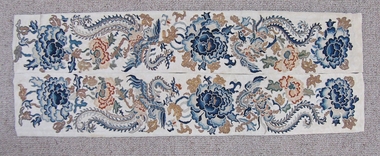
... The choice of motifs allowed women to express personal desires, cultural values, and aesthetic preferences, reflecting a more personal and informal style than official court attire....The choice of motifs allowed women to express personal desires, cultural values, and aesthetic preferences, reflecting a more personal and informal style than official court attire. Embroidery Garments Silk Embroidery Oriental China Pale green brocade with Pekin knot stitch in blue, green, cream and brown. ...Chinese sleeve embroidery bands, or wanxiu became popular in the late 19th century during the Qing Dynasty, evolving from the traditional Han cuff embroidery and Manchu styles. These detachable, decorated bands were added to women's informal jackets and robes, often featuring symbolic motifs like landscapes, flowers, and auspicious symbols. They served both a decorative function, displaying artistic skill and personal wishes, and a practical one by covering the sleeves when hands were folded at the waist. History and evolution: Origins: The practice of embroidering cuffs on robes existed during the previous Ming Dynasty for Han women, and this was adopted by the Manchu rulers who founded the Qing Dynasty. Qing Dynasty (1644-1911): The practice was popularized and elaborated upon during this era, with detachable bands becoming a fashionable element for informal wear. Symbolism: The embroidery included a complex visual vocabulary of wishes for a long life, many offspring, and a happy marriage, derived from nature, mythology, and classical literature. Functionality: Women would fold their arms, often with their hands inside the sleeves, so the embroidered bands, which were sewn to hang down the back of the jacket, would be displayed prominently down the front. 19th century peak: The late 19th century was the peak of their popularity, with intricate designs becoming fashionable and even influenced by court tastes, such as those favoured by the Empress Dowager Cixi. Later developments: The late 19th century saw the introduction of chemical 'aniline' dyes from Europe, leading to brighter, bolder colours in embroidery. Motifs and their Meanings: Auspicious symbols: Designs often included symbols for good fortune, wealth, and longevity. Natural imagery: Birds, flowers, and landscapes were common motifs that could represent natural beauty or convey specific symbolic meanings. Figurative scenes: Bands could also feature narrative scenes from classical stories or legends. The choice of motifs allowed women to express personal desires, cultural values, and aesthetic preferences, reflecting a more personal and informal style than official court attire.Pale green brocade with Pekin knot stitch in blue, green, cream and brown. Large heads and the phoenix used in the design. Gold thread couched with cream thread.embroidery, garments, silk embroidery, oriental, china -
 Embroiderers Guild, Victoria
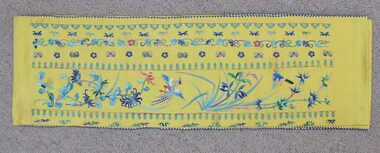
Accessory - Pair of Chinese Sleeve Bands, Late 19th Century
... The choice of motifs allowed women to express personal desires, cultural values, and aesthetic preferences, reflecting a more personal and informal style than official court attire....The choice of motifs allowed women to express personal desires, cultural values, and aesthetic preferences, reflecting a more personal and informal style than official court attire. Embroidery Garments Silk Embroidery China Late 19th century flowers garden bird Yellow silk satin, silk embroidery depicting birds and flowers in bright blues, greens, mauve, orange and pinks. ...Chinese sleeve embroidery bands, or wanxiu became popular in the late 19th century during the Qing Dynasty, evolving from the traditional Han cuff embroidery and Manchu styles. These detachable, decorated bands were added to women's informal jackets and robes, often featuring symbolic motifs like landscapes, flowers, and auspicious symbols. They served both a decorative function, displaying artistic skill and personal wishes, and a practical one by covering the sleeves when hands were folded at the waist. History and evolution: Origins: The practice of embroidering cuffs on robes existed during the previous Ming Dynasty for Han women, and this was adopted by the Manchu rulers who founded the Qing Dynasty. Qing Dynasty (1644-1911): The practice was popularized and elaborated upon during this era, with detachable bands becoming a fashionable element for informal wear. Symbolism: The embroidery included a complex visual vocabulary of wishes for a long life, many offspring, and a happy marriage, derived from nature, mythology, and classical literature. Functionality: Women would fold their arms, often with their hands inside the sleeves, so the embroidered bands, which were sewn to hang down the back of the jacket, would be displayed prominently down the front. 19th century peak: The late 19th century was the peak of their popularity, with intricate designs becoming fashionable and even influenced by court tastes, such as those favoured by the Empress Dowager Cixi. Later developments: The late 19th century saw the introduction of chemical 'aniline' dyes from Europe, leading to brighter, bolder colours in embroidery. Motifs and their Meanings: Auspicious symbols: Designs often included symbols for good fortune, wealth, and longevity. Natural imagery: Birds, flowers, and landscapes were common motifs that could represent natural beauty or convey specific symbolic meanings. Figurative scenes: Bands could also feature narrative scenes from classical stories or legends. The choice of motifs allowed women to express personal desires, cultural values, and aesthetic preferences, reflecting a more personal and informal style than official court attire.Yellow silk satin, silk embroidery depicting birds and flowers in bright blues, greens, mauve, orange and pinks.embroidery, garments, silk embroidery, china, late 19th century, flowers, garden, bird -
 Embroiderers Guild, Victoria
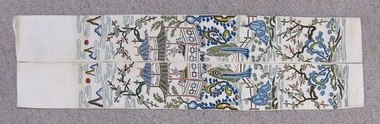
Accessory - Pair of Chinese Embroidered Sleeve Bands, 19 th C
... The choice of motifs allowed women to express personal desires, cultural values, and aesthetic preferences, reflecting a more personal and informal style than official court attire....The choice of motifs allowed women to express personal desires, cultural values, and aesthetic preferences, reflecting a more personal and informal style than official court attire. Embroidery Garments Silk Embroidery China garden figures lanscape Cream satin, silk embroidery in Pekin knot stitch. ...Chinese sleeve embroidery bands, or wanxiu became popular in the late 19th century during the Qing Dynasty, evolving from the traditional Han cuff embroidery and Manchu styles. These detachable, decorated bands were added to women's informal jackets and robes, often featuring symbolic motifs like landscapes, flowers, and auspicious symbols. They served both a decorative function, displaying artistic skill and personal wishes, and a practical one by covering the sleeves when hands were folded at the waist. History and evolution: Origins: The practice of embroidering cuffs on robes existed during the previous Ming Dynasty for Han women, and this was adopted by the Manchu rulers who founded the Qing Dynasty. Qing Dynasty (1644-1911): The practice was popularized and elaborated upon during this era, with detachable bands becoming a fashionable element for informal wear. Symbolism: The embroidery included a complex visual vocabulary of wishes for a long life, many offspring, and a happy marriage, derived from nature, mythology, and classical literature. Functionality: Women would fold their arms, often with their hands inside the sleeves, so the embroidered bands, which were sewn to hang down the back of the jacket, would be displayed prominently down the front. 19th century peak: The late 19th century was the peak of their popularity, with intricate designs becoming fashionable and even influenced by court tastes, such as those favoured by the Empress Dowager Cixi. Later developments: The late 19th century saw the introduction of chemical 'aniline' dyes from Europe, leading to brighter, bolder colours in embroidery. Motifs and their Meanings: Auspicious symbols: Designs often included symbols for good fortune, wealth, and longevity. Natural imagery: Birds, flowers, and landscapes were common motifs that could represent natural beauty or convey specific symbolic meanings. Figurative scenes: Bands could also feature narrative scenes from classical stories or legends. The choice of motifs allowed women to express personal desires, cultural values, and aesthetic preferences, reflecting a more personal and informal style than official court attire.Cream satin, silk embroidery in Pekin knot stitch. Fine couched cord. Rural setting with figures, trees and pagoda.embroidery, garments, silk embroidery, china, garden, figures, lanscape -
 Embroiderers Guild, Victoria
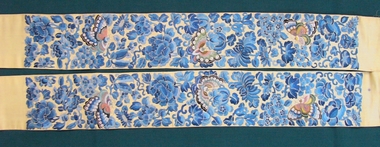
Accessory - Pair of Chinese Sleeve Bands, Mid 19th Century
... The choice of motifs allowed women to express personal desires, cultural values, and aesthetic preferences, reflecting a more personal and informal style than official court attire....The choice of motifs allowed women to express personal desires, cultural values, and aesthetic preferences, reflecting a more personal and informal style than official court attire. Embroidery Garments Silk Embroidery Mid 19th Century China Oriental Pale gold satin. ...Chinese sleeve embroidery bands, or wanxiu became popular in the late 19th century during the Qing Dynasty, evolving from the traditional Han cuff embroidery and Manchu styles. These detachable, decorated bands were added to women's informal jackets and robes, often featuring symbolic motifs like landscapes, flowers, and auspicious symbols. They served both a decorative function, displaying artistic skill and personal wishes, and a practical one by covering the sleeves when hands were folded at the waist. History and evolution: Origins: The practice of embroidering cuffs on robes existed during the previous Ming Dynasty for Han women, and this was adopted by the Manchu rulers who founded the Qing Dynasty. Qing Dynasty (1644-1911): The practice was popularized and elaborated upon during this era, with detachable bands becoming a fashionable element for informal wear. Symbolism: The embroidery included a complex visual vocabulary of wishes for a long life, many offspring, and a happy marriage, derived from nature, mythology, and classical literature. Functionality: Women would fold their arms, often with their hands inside the sleeves, so the embroidered bands, which were sewn to hang down the back of the jacket, would be displayed prominently down the front. 19th century peak: The late 19th century was the peak of their popularity, with intricate designs becoming fashionable and even influenced by court tastes, such as those favoured by the Empress Dowager Cixi. Later developments: The late 19th century saw the introduction of chemical 'aniline' dyes from Europe, leading to brighter, bolder colours in embroidery. Motifs and their Meanings: Auspicious symbols: Designs often included symbols for good fortune, wealth, and longevity. Natural imagery: Birds, flowers, and landscapes were common motifs that could represent natural beauty or convey specific symbolic meanings. Figurative scenes: Bands could also feature narrative scenes from classical stories or legends. The choice of motifs allowed women to express personal desires, cultural values, and aesthetic preferences, reflecting a more personal and informal style than official court attire.Pale gold satin. Design of peonies embroidered in shades of blue satin stitch with coloured butterflies..embroidery, garments, silk embroidery, mid 19th century, china, oriental
