

Historical information
Chinese sleeve embroidery bands, or wanxiu became popular in the late 19th century during the Qing Dynasty, evolving from the traditional Han cuff embroidery and Manchu styles. These detachable, decorated bands were added to women's informal jackets and robes, often featuring symbolic motifs like landscapes, flowers, and auspicious symbols. They served both a decorative function, displaying artistic skill and personal wishes, and a practical one by covering the sleeves when hands were folded at the waist.
History and evolution:
Origins: The practice of embroidering cuffs on robes existed during the previous Ming Dynasty for Han women, and this was adopted by the Manchu rulers who founded the Qing Dynasty.
Qing Dynasty (1644-1911): The practice was popularized and elaborated upon during this era, with detachable bands becoming a fashionable element for informal wear.
Symbolism: The embroidery included a complex visual vocabulary of wishes for a long life, many offspring, and a happy marriage, derived from nature, mythology, and classical literature.
Functionality: Women would fold their arms, often with their hands inside the sleeves, so the embroidered bands, which were sewn to hang down the back of the jacket, would be displayed prominently down the front.
19th century peak: The late 19th century was the peak of their popularity, with intricate designs becoming fashionable and even influenced by court tastes, such as those favoured by the Empress Dowager Cixi.
Later developments: The late 19th century saw the introduction of chemical 'aniline' dyes from Europe, leading to brighter, bolder colours in embroidery.
Motifs and their Meanings:
Auspicious symbols: Designs often included symbols for good fortune, wealth, and longevity.
Natural imagery: Birds, flowers, and landscapes were common motifs that could represent natural beauty or convey specific symbolic meanings.
Figurative scenes: Bands could also feature narrative scenes from classical stories or legends. The choice of motifs allowed women to express personal desires, cultural values, and aesthetic preferences, reflecting a more personal and informal style than official court attire.
Physical description
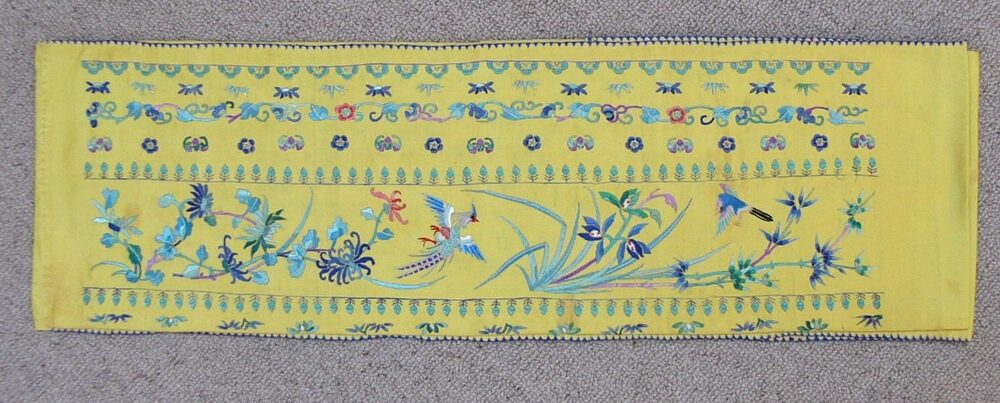
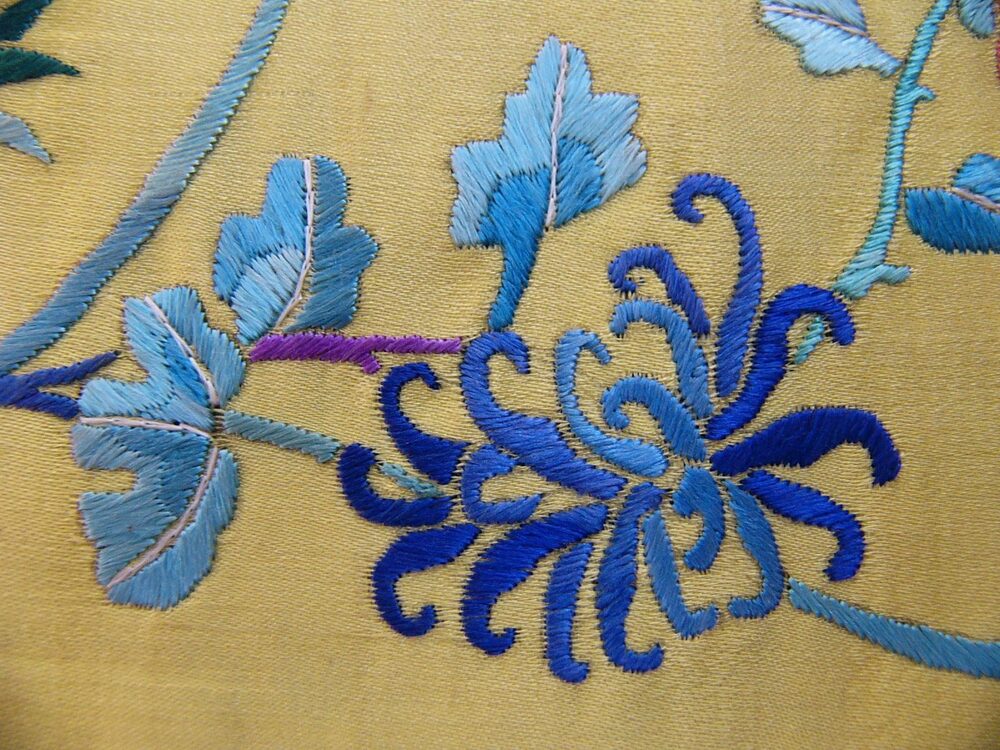
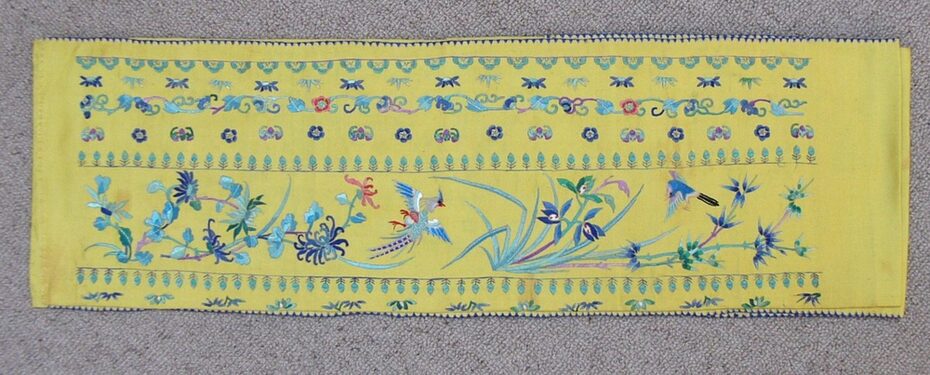
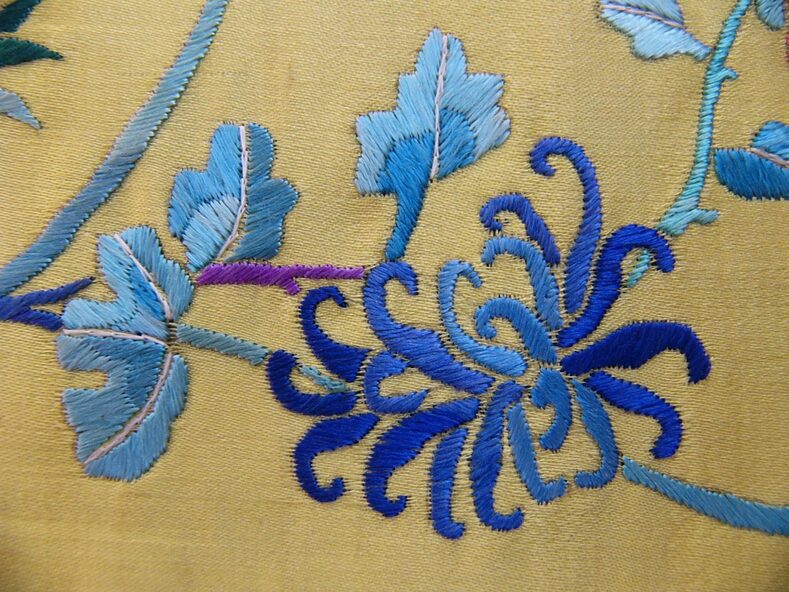
Yellow silk satin, silk embroidery depicting birds and flowers in bright blues, greens, mauve, orange and pinks.