
Showing 219 items matching "photographic society of victoria"
-
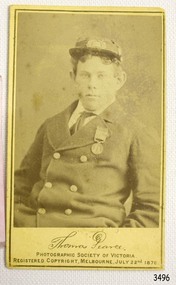 Flagstaff Hill Maritime Museum and Village
Photograph, late 19th century
... ...photographic society of victoria...Taken on July 22nd 1878 by the Photographic Society of Victoria. Registered copyright July 24th 1878. ...Printed green text “PHOTOGRAPHIC / SOCIETY OF VICTORIA / MELBOURNE / REGISTERED COPYRIGHT / JULY 24th 878” and “NONE ARE GENUINE UNLESS WITH / SIGNATURES THUS” and “PRESIDENT / VICE PRESIDENT / SECRETARY” ...Photographic Society of Victoria...Photograph Photographic Society of Victoria ...Loch Ard was bound for Melbourne in 1878 loaded with passengers and cargo when it ran into a rocky reef at the base of Mutton Bird Island, near Port Campbell. Of the 54 crew members and passengers on board, only two survived: an apprentice, Tom Pearce and a young woman passenger, Eva Carmichael, who lost all of her family in the tragedy. The wreck of Loch Ard still lies at the base of Mutton Bird Island and much of the cargo has been salvaged. Some was washed up into what is now known as Loch Ard Gorge following the shipwreck. Cargo and artefacts have also been illegally salvaged over many years before protective legislation was introduced. The photograph is significant for its association with the wreck of the Loch Ard. This wreck has been protected as a Historic Shipwreck since 11 March 1982, under the Commonwealth Historic Shipwrecks Act (1976) Flagstaff Hill’s collection of artefacts from Loch Ard is significant for being one of the largest collections of artefacts from this shipwreck in Victoria. It is significant for its association with the shipwreck, which is on the Victorian Heritage Register. The collection is significant because of the relationship between the objects, as together they have a high potential to interpret the story of the Loch Ard. The Loch Ard collection is archaeologically significant as the remains of a large international passenger and cargo ship. The Loch Ard collection is historically significant for representing aspects of Victoria’s shipping history and its potential to interpret sub-theme 1.5 of Victoria’s Framework of Historical Themes (living with natural processes). The collection is also historically significant for its association with the Loch Ard, which was one of the worst and best known shipwrecks in Victoria’s history. The Loch Ard collection meets the following criteria for assessment: Criterion A: Importance to the course, or pattern, of Victoria’s cultural history. Criterion B: Possession of uncommon, rare or endangered aspects of Victoria’s cultural history. Criterion C: Potential to yield information that will contribute to an understanding of Victoria’s cultural history. Black and White photograph of Thomas Pearce. Taken on July 22nd 1878 by the Photographic Society of Victoria. Registered copyright July 24th 1878. Reverse has printed maker’s information.Printed green text “PHOTOGRAPHIC / SOCIETY OF VICTORIA / MELBOURNE / REGISTERED COPYRIGHT / JULY 24th 878” and “NONE ARE GENUINE UNLESS WITH / SIGNATURES THUS” and “PRESIDENT / VICE PRESIDENT / SECRETARY” flagstaff hill, warrnambool, shipwrecked-coast, flagstaff-hill, flagstaff-hill-maritime-museum, maritime-museum, shipwreck-coast, flagstaff-hill-maritime-village, photograph, thomas pearce, loch ard, photographic society of victoria -
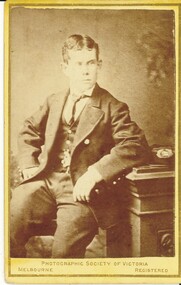 Bendigo Historical Society Inc.
Photograph - SMALL PHOTOGRAPHIC SOCIETY OF VICTORIA PHOTO
... SMALL PHOTOGRAPHIC SOCIETY OF VICTORIA PHOTO...Small sepia toned portrait of a young male photographed by the Photographic Society Of Victoria Melbourne....Photographic Society of Victoria Melbourne...PHOTOGRAPH Portrait male Photographic Society of Victoria Melbourne Small sepia toned portrait of a young male photographed by the Photographic Society Of Victoria Melbourne. ...Small sepia toned portrait of a young male photographed by the Photographic Society Of Victoria Melbourne.Photographic Society of Victoria Melbournephotograph, portrait, male -
 Flagstaff Hill Maritime Museum and Village
Photograph, late 19th century
... ...photographic society of victoria...Taken by the Photographic Society of Victoria. Registered copyright July 24th 1878. ...Label has hand writing “F-Ph 55/2-74” Printed green text “PHOTOGRAPHIC / SOCIETY OF VICTORIA / MELBOURNE / REGISTERED COPYRIGHT / JULY 24th 878” and “NONE ARE GENUINE UNLESS WITH / SIGNATURES THUS” and “PRESIDENT / VICE PRESIDENT / SECRETARY” ...Photographic Society of Victoria...Photograph Photographic Society of Victoria ...Loch Ard was bound for Melbourne in 1878 loaded with passengers and cargo when it ran into a rocky reef at the base of Mutton Bird Island, near Port Campbell. Of the 54 crew members and passengers on board, only two survived: an apprentice, Tom Pearce and a young woman passenger, Eva Carmichael, who lost all of her family in the tragedy. The wreck of Loch Ard still lies at the base of Mutton Bird Island and much of the cargo has been salvaged. Some was washed up into what is now known as Loch Ard Gorge following the shipwreck. Cargo and artefacts have also been illegally salvaged over many years before protective legislation was introduced. The photograph is significant for its association with the wreck of the Loch Ard. This wreck has been protected as a Historic Shipwreck since 11 March 1982, under the Commonwealth Historic Shipwrecks Act (1976) Flagstaff Hill’s collection of artefacts from Loch Ard is significant for being one of the largest collections of artefacts from this shipwreck in Victoria. It is significant for its association with the shipwreck, which is on the Victorian Heritage Register. The collection is significant because of the relationship between the objects, as together they have a high potential to interpret the story of the Loch Ard. The Loch Ard collection is archaeologically significant as the remains of a large international passenger and cargo ship. The Loch Ard collection is historically significant for representing aspects of Victoria’s shipping history and its potential to interpret sub-theme 1.5 of Victoria’s Framework of Historical Themes (living with natural processes). The collection is also historically significant for its association with the Loch Ard, which was one of the worst and best known shipwrecks in Victoria’s history. The Loch Ard collection meets the following criteria for assessment: Criterion A: Importance to the course, or pattern, of Victoria’s cultural history. Criterion B: Possession of uncommon, rare or endangered aspects of Victoria’s cultural history. Criterion C: Potential to yield information that will contribute to an understanding of Victoria’s cultural history. Black and White photoghrap of Thomas Pearce. Taken by the Photographic Society of Victoria. Registered copyright July 24th 1878. Reverse has printed maker’s information and a white adhesive label with hand writing on it.Label has hand writing “F-Ph 55/2-74” Printed green text “PHOTOGRAPHIC / SOCIETY OF VICTORIA / MELBOURNE / REGISTERED COPYRIGHT / JULY 24th 878” and “NONE ARE GENUINE UNLESS WITH / SIGNATURES THUS” and “PRESIDENT / VICE PRESIDENT / SECRETARY” flagstaff hill, warrnambool, shipwrecked coast, flagstaff hill maritime museum, maritime museum, shipwreck coast, flagstaff hill maritime village, great ocean road, loch line, loch ard, captain gibbs, eva carmichael, tom pearce, glenample station, mutton bird island, loch ard gorge, photoghrap, thomas pearce, photographic society of victoria, loch ard shipwreck -
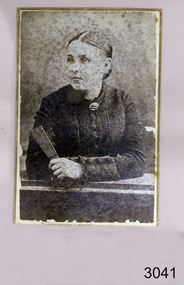 Flagstaff Hill Maritime Museum and Village
Photograph - Portrait, Photographic Society of Victoria, late 19th century
... ...Photographic Society of Victoria...Printed by the Photographic Society of Victoria, Melbourne....Reverse, printed brown text “PHOTOGRAPHIC / SOCIETY OF VICTORIA / MELBOURNE / REGISTERED COPYRIGHT / JULY 24th 878” and “NONE ARE GENUINE UNLESS WITH / SIGNATURES THUS” and “PRESIDENT / VICE PRESIDENT / SECRETARY” ...Photographic Society of Victoria...Printed by the Photographic Society of Victoria, Melbourne. Photograph Portrait Photographic Society of Victoria ...The portrait is of Miss Eva Carmichael, one of only two survivors of the disastrous wreck of the Loch Ard. The sailing ship Loch Ard was bound for Melbourne in 1878, loaded with passengers and cargo, when it ran into a rocky reef at the base of Mutton Bird Island, near Port Campbell. Of the 54 crew members and passengers on board, only two survived: an apprentice, Tom Pearce and a young woman passenger, Eva Carmichael, who lost all of her family in the tragedy. The wreck of Loch Ard still lies at the base of Mutton Bird Island, and much of the cargo has been salvaged. Some washed up into what is now known as Loch Ard Gorge following the shipwreck. Cargo and artefacts have also been illegally salvaged over many years before protective legislation was introduced. The photograph is significant for its association with the wreck of the Loch Ard. This wreck has been protected as a Historic Shipwreck since 11 March 1982, under the Commonwealth Historic Shipwrecks Act (1976). Flagstaff Hill’s collection of artefacts from the Loch Ard is significant for being one of the largest collections of artefacts from this shipwreck in Victoria. It is significant for its association with the shipwreck, which is on the Victorian Heritage Register. The collection is significant because of the relationship between the objects, as together they have a high potential to interpret the story of the Loch Ard. The Loch Ard collection is archaeologically significant as the remains of a large international passenger and cargo ship. The Loch Ard collection is historically significant for representing aspects of Victoria’s shipping history and its potential to interpret sub-theme 1.5 of Victoria’s Framework of Historical Themes (living with natural processes). The collection is also historically significant for its association with the Loch Ard, which was one of the worst and best-known shipwrecks in Victoria’s history. The Loch Ard collection meets the following criteria for assessment: Criterion A: Importance to the course, or pattern, of Victoria’s cultural history. Criterion B: Possession of uncommon, rare or endangered aspects of Victoria’s cultural history. Criterion C: Potential to yield information that will contribute to an understanding of Victoria’s cultural history. Photograph, sepia, of Miss Eva Carmichael holding a book, seated at a desk. Oval gilt-framed portrait in a green container edged with gilt. The reverse has a piece of tape centred left and right. Also has printed maker’s information. Printed by the Photographic Society of Victoria, Melbourne.Reverse, printed brown text “PHOTOGRAPHIC / SOCIETY OF VICTORIA / MELBOURNE / REGISTERED COPYRIGHT / JULY 24th 878” and “NONE ARE GENUINE UNLESS WITH / SIGNATURES THUS” and “PRESIDENT / VICE PRESIDENT / SECRETARY” flagstaff hill, warrnambool, shipwrecked-coast, flagstaff-hill, flagstaff-hill-maritime-museum, maritime-museum, shipwreck-coast, flagstaff-hill-maritime-village, loch ard shipwreck, miss eva carmichael, loch ard survivor, photographic society of victoria, melbourne -
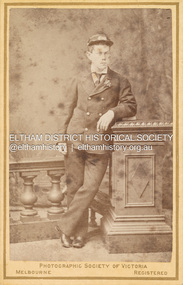 Eltham District Historical Society Inc
Photograph, The Photographic Society of Victoria, Thomas (Tom) Pearce, only surviving member of the crew of the Loch Ard, 1878
... ...The Photographic Society of Victoria...Special Carte-de-Visite produced by The Photographic Society of Victoria, Melbourne featuring the sole surviving crew member of the wreck of the ship, Loch Ard near Mutton Bird Island on the Shipwreck Coast of Victoria on June 1st, 1878. ...The Photographic Society of Victoria...Special Carte-de-Visite produced by The Photographic Society of Victoria, Melbourne featuring the sole surviving crew member of the wreck of the ship, Loch Ard near Mutton Bird Island on the Shipwreck Coast of Victoria on June 1st, 1878. ...Special Carte-de-Visite produced by The Photographic Society of Victoria, Melbourne featuring the sole surviving crew member of the wreck of the ship, Loch Ard near Mutton Bird Island on the Shipwreck Coast of Victoria on June 1st, 1878. THE PHOTOGRAPHIC SOCIETY. (1878, October 12). The Age (Melbourne, Vic. : 1854 - 1954), p. 7. Retrieved December 4, 2022, from http://nla.gov.au/nla.news-article199353573 Back of photo is printed: The Photographic Society of Victoria, Melbourne. Registered None Genuine Unless With The Signatures Thus President and signature of A. Antony (?) Vice President and signature of E. Goulter Secretary and signature of Valentine Sharp Stamped in red W. H. COOPER 21 8 23 ROYAL ARCADE CARTE-DE-VISITE (cdv) 1857-1890 Cartes-de-visite (cdv's) are the most common form of photograph from the nineteenth century, generally measuring two and a half inches by four and an eighth inches (6.3 x 10.5 cm) when mounted, sepia toned, mounted on a card which was generally printed with the photographer's name and address on the back or beneath the portrait. - Frost, Lenore; Dating Family Photos 1850-1920; Valiant Press Pty. Ltd., Berwick, Victoria 1991 Inserted loose in album at same page is a 1931 artice from The Age about the wreck featuring the same image The Loch Ard Wreck, The Age, June 6, 1931, p8marg ball collection, 1878, loch ard (ship), shillinglaw family photo album 2, the photographic society of victoria, thomas "tom" r pearce -
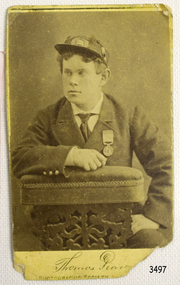
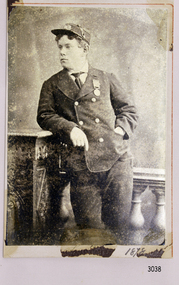 Flagstaff Hill Maritime Museum and Village
Photograph - Portrait, late 19th century
... Printed by the Photographic Society of Victoria, Melbourne....Printed green text “PHOTOGRAPHIC / SOCIETY OF VICTORIA / MELBOURNE / REGISTERED COPYRIGHT / JULY 24th 1878” and “NONE ARE GENUINE UNLESS WITH / SIGNATURES THUS” and “PRESIDENT / VICE PRESIDENT / SECRETARY” ...Photographic Society of Victoria...Printed by the Photographic Society of Victoria, Melbourne. Photograph Portrait Photographic Society of Victoria ...This photograph is of Tom Pearce, one of only 2 survivors from the shipwreck LOCH ARD. Loch Ard was bound for Melbourne in 1878 loaded with passengers and cargo when it ran into a rocky reef at the base of Mutton Bird Island, near Port Campbell. Of the 54 crew members and passengers on board, only two survived: an apprentice, Tom Pearce and a young woman passenger, Eva Carmichael, who lost all of her family in the tragedy. Coleman Jacobs composed the music “The Young Hero Schottische” and dedicated it, by permission, to Mr. Thomas R. (Tom) Pearce. The sheet music was published in 1878 by the Messieurs Roberts, professors of dancing etc. Melbourne. It was on sale for 3/- (3 shillings) and in aid of the “LOCH ARD” fund. [This is Coleman Jacobs’ only surviving musical work Coleman Jacobs, accomplished pianist, musical performer, singer, composer, professor of music and music teacher, was born in 1827 and died on 4 July 1885, aged 58 years. Coleman Jacobs was buried in the Melbourne Cemetery (grave 461, Church of England section).] The wreck of Loch Ard still lies at the base of Mutton Bird Island and much of the cargo has been salvaged. Some was washed up into what is now known as Loch Ard Gorge following the shipwreck. Cargo and artefacts have also been illegally salvaged over many years before protective legislation was introduced. The photograph is significant for its association with the wreck of the Loch Ard. This wreck has been protected as a Historic Shipwreck since 11 March 1982, under the Commonwealth Historic Shipwrecks Act (1976) Flagstaff Hill’s collection of artefacts from Loch Ard is significant for being one of the largest collections of artefacts from this shipwreck in Victoria. It is significant for its association with the shipwreck, which is on the Victorian Heritage Register. The collection is significant because of the relationship between the objects, as together they have a high potential to interpret the story of the Loch Ard. The Loch Ard collection is archaeologically significant as the remains of a large international passenger and cargo ship. The Loch Ard collection is historically significant for representing aspects of Victoria’s shipping history and its potential to interpret sub-theme 1.5 of Victoria’s Framework of Historical Themes (living with natural processes). The collection is also historically significant for its association with the Loch Ard, which was one of the worst and best known shipwrecks in Victoria’s history. The Loch Ard collection meets the following criteria for assessment: Criterion A: Importance to the course, or pattern, of Victoria’s cultural history. Criterion B: Possession of uncommon, rare or endangered aspects of Victoria’s cultural history. Criterion C: Potential to yield information that will contribute to an understanding of Victoria’s cultural history. Photograph of Mr Tom Pearce dressed in a uniform with a medal pinned on it. Standing with his arm resting on a masonry pillar. Reverse has piece of tape centre top and bottom. Also has printed maker’s information. Printed by the Photographic Society of Victoria, Melbourne.Printed green text “PHOTOGRAPHIC / SOCIETY OF VICTORIA / MELBOURNE / REGISTERED COPYRIGHT / JULY 24th 1878” and “NONE ARE GENUINE UNLESS WITH / SIGNATURES THUS” and “PRESIDENT / VICE PRESIDENT / SECRETARY” flagstaff hill, warrnambool, shipwrecked coast, flagstaff hill maritime museum, maritime museum, shipwreck coast, flagstaff hill maritime village, loch ard shipwreck, tom pearce, thomas r pearce, eva carmichael, mutton bird island, loch ard survivor, loch ard hero, coleman jacobs, the young hero schottische, photograph of tom pearce -
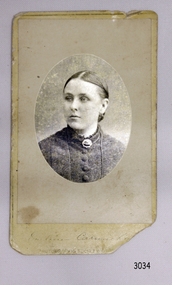 Flagstaff Hill Maritime Museum and Village
Photograph - Portrait, Miss Eva Carmichael, 24-07-1878
... Photographed in 1878 in Melbourne by the Photographic Society of Victoria. There is a handwritten inscription below the photograph. ...Front, handwritten below photograph: "Miss Eva Carmichael" Reverse, bottom right, handwritten: [3 signatures] Stamped: “PHOTOGRAPHIC / SOCIETY OF VICTORIA / MELBOURNE / REGISTERED COPYRIGHT / JULY 24th 878” and “NONE ARE GENUINE UNLESS WITH / SIGNATURES THUS” and “PRESIDENT / VICE PRESIDENT / - - - - - TARY” Label, handwritten: “F- Ph 56/2 – 74”...Photographic Society of Victoria...Miss Eva Carmichael Photograph Portrait Photographic Society of Victoria ...Eva Carmichael was the daughter of Dr and Mrs Emery Carmichael. Both her parents, as well as her three sisters and two brothers, were drowned when the Loch Ard was wrecked. Only five bodies were recovered from the wreck, two of these being Miss Carmichael's mother and sister. They were buried on top of the cliff. The only other survivor, Mr Tom Pearce, assisted Miss Carmichael. She was taken to Glenample homestead, where she remained for some time before going to Melbourne. A few months later, she returned to Ireland, where she later married Mr T Townshend. The sailing ship Loch Ard was bound for Melbourne in 1878, loaded with passengers and cargo, when it ran into a rocky reef at the base of Mutton Bird Island, near Port Campbell. Of the 54 crew members and passengers on board, only two survived: an apprentice, Tom Pearce and a young woman passenger, Eva Carmichael, who lost all of her family in the tragedy. The wreck of Loch Ard still lies at the base of Mutton Bird Island, and much of the cargo has been salvaged. Some washed up into what is now known as Loch Ard Gorge following the shipwreck. Cargo and artefacts have also been illegally salvaged over many years before protective legislation was introduced.The photograph is significant for its association with the wreck of the Loch Ard. This wreck has been protected as a Historic Shipwreck since 11 March 1982, under the Commonwealth Historic Shipwrecks Act (1976) Flagstaff Hill’s collection of artefacts from Loch Ard is significant for being one of the largest collections of artefacts from this shipwreck in Victoria. It is significant for its association with the shipwreck, which is on the Victorian Heritage Register. The collection is significant because of the relationship between the objects, as together they have a high potential to interpret the story of the Loch Ard. The Loch Ard collection is archaeologically significant as the remains of a large international passenger and cargo ship. The Loch Ard collection is historically significant for representing aspects of Victoria’s shipping history and its potential to interpret sub-theme 1.5 of Victoria’s Framework of Historical Themes (living with natural processes). The collection is also historically significant for its association with the Loch Ard, which was one of the worst and best known shipwrecks in Victoria’s history. The Loch Ard collection meets the following criteria for assessment: Criterion A: Importance to the course, or pattern, of Victoria’s cultural history. Criterion B: Possession of uncommon, rare or endangered aspects of Victoria’s cultural history. Criterion C: Potential to yield information that will contribute to an understanding of Victoria’s cultural history. Photograph, small sepia portrait of Miss Eva Carmichael within an oval matte frame, on card. Photographed in 1878 in Melbourne by the Photographic Society of Victoria. There is a handwritten inscription below the photograph. The reverse has a stamp, gold maker’s print and a white adhesive label with handwriting on it.Front, handwritten below photograph: "Miss Eva Carmichael" Reverse, bottom right, handwritten: [3 signatures] Stamped: “PHOTOGRAPHIC / SOCIETY OF VICTORIA / MELBOURNE / REGISTERED COPYRIGHT / JULY 24th 878” and “NONE ARE GENUINE UNLESS WITH / SIGNATURES THUS” and “PRESIDENT / VICE PRESIDENT / - - - - - TARY” Label, handwritten: “F- Ph 56/2 – 74”flagstaff hill maritime museum and village, flagstaff hill, warrnambool, maritime museum, shipwreck coast, photograph, miss eva carmichael, loch ard shipwreck, loch ard survivor, photographic society of melbourne, dr and mrs emery carmichael., mr t townshend, mutton bird island, port campbell, tom pearce, 1878 -
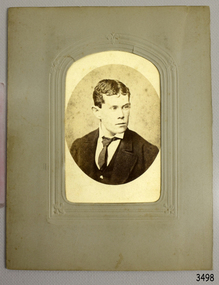 Flagstaff Hill Maritime Museum and Village
Photograph
... ...photographic society of victoria...Taken by the Photographic Society of Victoria. Oval photograph set on card and then encased in a paper frame.111 mm x 145 mm LA 015 Loch Ard - 1...Taken by the Photographic Society of Victoria. Oval photograph set on card and then encased in a paper frame.111 mm x 145 mm LA 015 Loch Ard - 1 Photograph ...HISTORY OF THE LOCH ARD The LOCH ARD belonged to the famous Loch Line which sailed many ships from England to Australia. Built in Glasgow by Barclay, Curdle and Co. in 1873, the LOCH ARD was a three-masted square rigged iron sailing ship. The ship measured 262ft 7" (79.87m) in length, 38ft (11.58m) in width, 23ft (7m) in depth and had a gross tonnage of 1693 tons. The LOCH ARD's main mast measured a massive 150ft (45.7m) in height. LOCH ARD made three trips to Australia and one trip to Calcutta before its final voyage. LOCH ARD left England on March 2, 1878, under the command of Captain Gibbs, a newly married, 29 year old. She was bound for Melbourne with a crew of 37, plus 17 passengers and a load of cargo. The general cargo reflected the affluence of Melbourne at the time. On board were straw hats, umbrella, perfumes, clay pipes, pianos, clocks, confectionary, linen and candles, as well as a heavier load of railway irons, cement, lead and copper. There were items included that intended for display in the Melbourne International Exhibition in 1880. The voyage to Port Phillip was long but uneventful. At 3am on June 1, 1878, Captain Gibbs was expecting to see land and the passengers were becoming excited as they prepared to view their new homeland in the early morning. But LOCH ARD was running into a fog which greatly reduced visibility. Captain Gibbs was becoming anxious as there was no sign of land or the Cape Otway lighthouse. At 4am the fog lifted. A man aloft announced that he could see breakers. The sheer cliffs of Victoria's west coast came into view, and Captain Gibbs realised that the ship was much closer to them than expected. He ordered as much sail to be set as time would permit and then attempted to steer the vessel out to sea. On coming head on into the wind, the ship lost momentum, the sails fell limp and LOCH ARD's bow swung back. Gibbs then ordered the anchors to be released in an attempt to hold its position. The anchors sank some 50 fathoms - but did not hold. By this time LOCH ARD was among the breakers and the tall cliffs of Mutton Bird Island rose behind the ship. Just half a mile from the coast, the ship's bow was suddenly pulled around by the anchor. The captain tried to tack out to sea, but the ship struck a reef at the base of Mutton Bird Island, near Port Campbell. Waves broke over the ship and the top deck was loosened from the hull. The masts and rigging came crashing down knocking passengers and crew overboard. When a lifeboat was finally launched, it crashed into the side of LOCH ARD and capsized. Tom Pearce, who had launched the boat, managed to cling to its overturned hull and shelter beneath it. He drifted out to sea and then on the flood tide came into what is now known as LOCH ARD Gorge. He swam to shore, bruised and dazed, and found a cave in which to shelter. Some of the crew stayed below deck to shelter from the falling rigging but drowned when the ship slipped off the reef into deeper water. Eva Carmichael had raced onto deck to find out what was happening only to be confronted by towering cliffs looming above the stricken ship. In all the chaos, Captain Gibbs grabbed Eva and said, "If you are saved Eva, let my dear wife know that I died like a sailor". That was the last Eva Carmichael saw of the captain. She was swept off the ship by a huge wave. Eva saw Tom Pearce on a small rocky beach and yelled to attract his attention. He dived in and swam to the exhausted woman and dragged her to shore. He took her to the cave and broke open case of brandy which had washed up on the beach. He opened a bottle to revive the unconscious woman. A few hours later Tom scaled a cliff in search of help. He followed hoof prints and came by chance upon two men from nearby Glenample Station three and a half miles away. In a state of exhaustion, he told the men of the tragedy. Tom returned to the gorge while the two men rode back to the station to get help. By the time they reached LOCH ARD Gorge, it was cold and dark. The two shipwreck survivors were taken to Glenample Station to recover. Eva stayed at the station for six weeks before returning to Ireland, this time by steamship. In Melbourne, Tom Pearce received a hero's welcome. He was presented with the first gold medal of the Royal Humane Society of Victoria and a £1000 cheque from the Victorian Government. Concerts were performed to honour the young man's bravery and to raise money for those who lost family in the LOCH ARD disaster. Of the 54 crew members and passengers on board, only two survived: the apprentice, Tom Pearce and the young woman passenger, Eva Carmichael, who lost all of her family in the tragedy. Ten days after the LOCH ARD tragedy, salvage rights to the wreck were sold at auction for £2,120. Cargo valued at £3,000 was salvaged and placed on the beach, but most washed back into the sea when another storm developed. The wreck of LOCH ARD still lies at the base of Mutton Bird Island. Much of the cargo has now been salvaged and some was washed up into what is now known as LOCH ARD Gorge. Cargo and artefacts have also been illegally salvaged over many years before protective legislation was introduced. One of the most unlikely pieces of cargo to have survived the shipwreck was a Minton porcelain peacock - one of only nine in the world. The peacock was destined for the Melbourne International Exhibition in 1880. It had been well packed, which gave it adequate protection during the violent storm. Today, the Minton peacock can be seen at the Flagstaff Hill Maritime Museum in Warrnambool. From Australia's most dramatic shipwreck it has now become Australia's most valuable shipwreck artefact and is one of very few 'objects' on the Victorian State Heritage Register. Flagstaff Hill’s collection of artefacts from LOCH ARD is significant for being one of the largest collections of artefacts from this shipwreck in Victoria. It is significant for its association with the shipwreck, which is on the Victorian Heritage Register (VHR S417). The collection is significant because of the relationship between the objects, as together they have a high potential to interpret the story of the LOCH ARD. The LOCH ARD collection is archaeologically significant as the remains of a large international passenger and cargo ship. The LOCH ARD collection is historically significant for representing aspects of Victoria’s shipping history and its potential to interpret sub-theme 1.5 of Victoria’s Framework of Historical Themes (living with natural processes). The collection is also historically significant for its association with the LOCH ARD, which was one of the worst and best known shipwrecks in Victoria’s history. Black and White photoghrap of Thomas Pearce. Taken by the Photographic Society of Victoria. Oval photograph set on card and then encased in a paper frame.111 mm x 145 mm LA 015 Loch Ard - 1flagstaff hill, warrnambool, shipwrecked coast, flagstaff hill maritime museum, maritime museum, shipwreck coast, flagstaff hill maritime village, great ocean road, loch line, loch ard, captain gibbs, eva carmichael, tom pearce, glenample station, mutton bird island, loch ard gorge, photoghrap, photographic society of victoria -
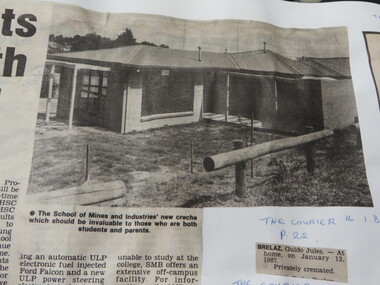 Federation University Historical Collection
Book - Book -Scrap Book, Ballarat School of Mines: Scrap Book of newspaper cuttings, Book 29, November 1986 to February 1987, 1986-1987
... society of victoria...garden tools for field officers...helen mclennan course teacher...writing for pleasure...book launch "wednesday's words"june griffiths...nan gale...averil macklin...smb applied science grant...atomic absorption spectrophotometer...julie baulch encourages women to break with tradition...family centre space in tippett building...mellissa bone win photographic...The papers concerned are The Courier, Ballarat, The Australian, The Age over the period of 20 November 1986 to 14 February 1987. courses available tertiary orientation program t o p teaching positions advertised smb programs fashion of the future clare schreenan lisa willison mary anne rowe smb staff join protest wool classing exams smb secretarial program women graduate with trades skills linda bland julie baulch tracey coleman student royal horticultural society of victoria garden tools for field officers helen mclennan course teacher writing for pleasure book launch "wednesday's words"june griffiths nan gale averil macklin smb applied science grant atomic absorption spectrophotometer julie baulch encourages women to break with tradition family centre space in tippett building mellissa bone win photographic award smb computer world's best sue dennis school's in for adults smb vocational programs university of the third age ken flecknoe managing director courier retires Book with blue cover, front, spiral bound. ...Collection of newspaper articles related to Ballarat School Of Mines.They cover activities and advertisements for staff. The papers concerned are The Courier, Ballarat, The Australian, The Age over the period of 20 November 1986 to 14 February 1987.Book with blue cover, front, spiral bound.courses available, tertiary orientation program, t o p, teaching positions advertised, smb programs, fashion of the future, clare schreenan, lisa willison, mary anne rowe, smb staff join protest, wool classing exams, smb secretarial program, women graduate with trades skills, linda bland, julie baulch, tracey coleman student, royal horticultural society of victoria, garden tools for field officers, helen mclennan course teacher, writing for pleasure, book launch "wednesday's words"june griffiths, nan gale, averil macklin, smb applied science grant, atomic absorption spectrophotometer, julie baulch encourages women to break with tradition, family centre space in tippett building, mellissa bone win photographic award, smb computer world's best, sue dennis, school's in for adults, smb vocational programs, university of the third age, ken flecknoe managing director courier retires -
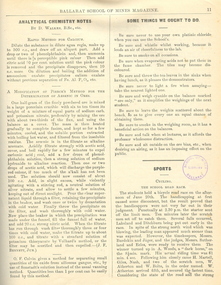 Federation University Historical Collection
Magazine, Ballarat School of Mines Students' Magazine, 1898-1901, 1898-1901
... Society, Ballarat Photographic Club) * Original Poetry * Sports * Students' Association Committee Meetings * On the Increase of Temperature of the Earth With Increased Depth Vol 1, No. 2, October 1898 * Notes about some of the Past Students (E.M. Weston, J.A. Porter, H.R. Sleeman, G.E. Sander, B.C.T. Solley, T. Rhys, C. Burbury, D. McDougal, J. Matsen) * Excursion to Daylesford, p.3 * History of the Ballarat School of Mines (continued) * The Soudan * Greater Melbourne * Image of J. Hopkinson, electrical engineer killed ascending the Alps * What is Science * Mining Notes (Pitfield Plains, Victoria...Society, Ballarat Photographic Club) * Original Poetry * Sports * Students' Association Committee Meetings * On the Increase of Temperature of the Earth With Increased Depth Vol 1, No. 2, October 1898 * Notes about some of the Past Students (E.M. Weston, J.A. Porter, H.R. Sleeman, G.E. Sander, B.C.T. Solley, T. Rhys, C. Burbury, D. McDougal, J. Matsen) * Excursion to Daylesford, p.3 * History of the Ballarat School of Mines (continued) * The Soudan * Greater Melbourne * Image of J. Hopkinson, electrical engineer killed ascending the Alps * What is Science * Mining Notes (Pitfield Plains, Victoria ...Bound copies of the Ballarat School of Mines Students' Magazine, 1898-1901 Vol 1, No. 1, September 1898 * News and Notes (Ballarat School of Mines Museum, J.F. Usher, New British Pharmacopoeia, excursion to Bendigo) * History of the Ballarat School of Mines * Current Topics (Federation, Gladstone, Anglo-American Alliance) * Of Custom * Discovery of Coolgardie * Mining Notes(Clunes, Pitfield, Birthday Mine, Western Australia, Transvaal, Mt Bischoff, Rand Drill Co.) * From the Journals * The Societies - (Student Association, Ballarat Field Club and Science Society, Ballarat Photographic Club) * Original Poetry * Sports * Students' Association Committee Meetings * On the Increase of Temperature of the Earth With Increased Depth Vol 1, No. 2, October 1898 * Notes about some of the Past Students (E.M. Weston, J.A. Porter, H.R. Sleeman, G.E. Sander, B.C.T. Solley, T. Rhys, C. Burbury, D. McDougal, J. Matsen) * Excursion to Daylesford, p.3 * History of the Ballarat School of Mines (continued) * The Soudan * Greater Melbourne * Image of J. Hopkinson, electrical engineer killed ascending the Alps * What is Science * Mining Notes (Pitfield Plains, Victoria United G.M.Co., Lithgow, Avoca, great Cobar, Mt Whycheproof) * Student's Association (women's franchise) * Sports Vol 2, No. 1, March 1899 * News and Notes * History of the Ballarat School of Mines (continued) * Notes of Victorian Geology, 1. Granites, by Thomas S. Hart * Sir William Crookes * Summaries and Notes from the Mining Journals * Students' Association * Sports * The Bush Assayer * Solubility of Gold-Silver Alloys in Potassium Cyanide * Correspondence Vol 2, No. 2, April 1899 * News and Notes (Smythesdale Excursion, New Buildings, A.S. Coyte, R.J. Allan) * History of the Ballarat School of Mines (Continued) * The New Students (J. Owen, A. Clayton Morrisby, A.S. Atkin, J. Alexander Reid, Alfred G. Johnston, L. Lowe, F.H. Dalton, W.M. Robertson, A. Hacke, H.L. Giles, W. Martin, E. Walshe, H.L. Krause, R. Sawyer) * Berringa by Oh'E Jay * Summaries and Notes from the Mining Journals * Mount Magnet to Victoria - A Long Bicycle Trip * 1898 Examination returns * Sports Vol 2, No. 3, May 1899 * Technical Education and the Proposed Affiliation of the Schools of Mines with the Melbourne University. * Laying of the Foundation Stone of the New Classrooms (now Administration Building). Alexander J. Peacock * News and Notes (Past Students - A.S. Lilburn, J.W. Sutherland, J. Richardson, E. Prendergast, J. Wallace, J. Kidd, J. Lake, Mathew Thompson), Coolgardie Exhibition. * Trip to Lal Lal * Students' Association * Summaries and Notes from the Mining Journals * Professor Henry Louis on Mining Education * Corrections Used in Chaining by C.W. Adams * The Black Horse Cyanide Plant * Sports * Completed List of 1898 Examinations Vol 2, No. 4, June 1899 * News and Notes * The Education Problem by D.N. McLean * A Few Hints on Histological Technique by Emil Gutheil * Summaries and Notes from the Mining Journals * Students' Association * A Visit to the Skipton Caves (Mount Widdern, Ormand Hill, volcano, Emu Creek, Mount Kinross, Mount Elephant, Mount Vite Vite, Mount Kinross, Mount Hamiston) * Mount Magnet To Victoria (cont) * The New Engines at the Ballarat Woollen Mills - includes image of the Compound 700 H.P. Engines constructed for the Ballarat Woollen Mills by Austral Otis Company and consulting engineers Monash and Anderson. * Sports * Original Poetry * Correspondence Vol 2, No. 5, July 1899 * News and Notes (E. Byron Moore, Visit to Britannia Gold Mine, J. Bryant, Visit to Last Chance Mine) * A Few Hints on Histological Technique (cont) by Emil Gutheil * Summaries and Notes from the Mining Journals * Professor Alfred Mica Smith (includes image) * Notes on Victorian Geology Part 2 The Trappean Rocks, by Thomas Hart * Origin of Diamonds * Hydraulic Mining by A.E.C. Kerr * Volcanoes by F.G. Bonney * Analytical Chemistry Notes by Daniel Walker * Some Things Out To Do * Sports * Correspondence Vol 2, No. 6, August 1899 *Summaries and notes from the Mining Journals * Some Regulations of the Academy of Mines at Freiberg * A visit to Mt Lyell Smelters * Professor Gilbert J. Dawbarn (includes image) * Air compressor and Transmission of Power by Compressed air by A.E.C. Kerr * Chemistry Notes by Daniel Walker * Mineralogical Notes, Ballarat by Thomas S. Hart * Kalgurli Gold Mines, W.A. * OUr New Lab Vol 2., No 7, September 1899 * Summaries and Notes from the Mining Journals * Some recent Steam Plants at Bendigo by Gilbert Dawbarn * Professor Thomas Stephen Hart (includes image) * Students Association * Notes on Victorian Geology by Thomas Hart * Centrifugal Pumps * A New Chum's Experience by E.M. Weston Vol 2., No 8, October 1899 * The institute of Chemistry Examinations * A New Method of Qualitative Chemical Analysis by Emil Gutheil * Steam Engine Valves and Valve-Gears by Gilbert Dawbarn * Daniel Walker (includes image) * Notes on Victorian Geology by Thomas Hart * Cyaniding Cripple Creek Tellurides (Metallic Extraction Company) * Notes on Two Ballarat Gravel Pumping Plants, G.A. Wilberforce (Eureka Jennings Co and Yarrowee Sluicing Co) * History of the School of Mines (concluded) Vol 3., No 1, March 1900 * A Journey from Natal to Mashomaland with the British Police * A Plea for Research * New Caledonia by C.A.M. Deane * Notes of Victorian Geology - Lower Palaeoroic Rocks by Thomas Hart * Mt Bischoff Mine and Mill * Summaries and Notes from the Mining Journals * Things we Eat and Drink * Farewell to A.S. Coyte Vol 3., No 1, March 1900 * Mining Education * Model Locomotive made by the apprentices of the Phoenix Foundry, p2 * Glimpses of Rhodesian Police Camp Life * New Caledonia (continued) * Summaries from the Mining and Engineering Journals * Boot and Saddle Vol 3., No 3, May 1900 * A Students' Common Room * Geological Excursion to Hardie's Hill * Notes on Victorian Geology by Thomas Hart * The Planet Venus by John Brittain * Summaries and Notes from the Australian Mining Standard * The Assay Ton * Zeehan Smelters * Electrical Notes by Ohe Jay * Trop of the Cricket Club to Stawell * Students' Association * Solid Hydrogen Vol 3., No 4, June 1900 * The Minister of Mines on Mining Education (Minister A.R. Outtrim) * Lal Lal Geology Trip (Thomas Hart) * Rifle Club now defunct, pg 3 * A Contribution to the Mining Geology of Kalgoorlie, W.A. by Ferdinand Krause (includes cross sections) (Wood's Point, Rand, Johannesburg, South Africa, Gaffney's Creek, Walhalla, Shady Creek, Sago Hill at Cardigan, Bunbury) * Summaries and Notes from the Australian Mining Standard (Buninyong Estate Mine) * Monthly Progress Reports of the Geological Survey * Electrical Notes by John M Sutherland (Telagraphone, phonograph, telephone receiver) * Students' Theatre Party (Gordon Todd, Ohe Jaeger, C.S. Wakley) * Opening of the New Buildings - Ministerial Speeches (Outtrim, W.H. Irvine, New Mining Laboratory, Old Chemistry Building, Battery, Model Mine) * Students' Association * Relief of Mafeking * A Critic Criticised * Things We Eat and Drink by Ohe Jay - Oatmeal, Coffee and Cocoa. Vol 3., No 5, July 1900 * Research * Adelaide Varsity Students at Ballarat * The Manchester-Liverpool Mono Railway * Students Association * *A Contribution to the Mining Geology of Kalgoorlie, W.A. by Ferdinand Krause (continued) (includes cross-sections) * Motive Power, address by Charles A. Parsons * Summaries and Notes from the Australian Mining Standard * Sugar Manufacturing by Sugna * Great Creswick Hydraulic Sluicing Plant (THomas Hart, Ballarat School of Mines Mining Class visit) * Reminiscences of a Students Life in Germany * Football - Ballarat School of Mines v Geelong Grammar School (Australian Rules Football) Vol 3., No 6, August 1900 * Cheap Mine Management * Library * Bendigo School of Mines, pg 3 * Notes on Ore Dressing by T, Vincent, Manager The Zeehan (Tas) Silver-Lead Mines Ltd) * Motive Power * Notes on Broken Hill - Its Mines and Minerals by J. Williams * The Concert * Summaries and Notes from the Australian Mining Standard * The Dandy Duke's Dreadful Demise * The Road Race Vol 3., No 7, September 1900 * Michaelmas Excursion (Melbourne University, Prof Kernot, Applied Mechanics) * Injury to School Property * Return of E. Ditchburn (Boer War) * Mt William Gold-Field visit, pg 3 * The Stoping of Wide Lodes by J.V. Lake (includes cross sections) * Summaries of Notes from the Australian Mining Standard * Notes on Broken Hill Part 2- Its Mines and Minerals by W.J. Williams * Motive Power from the Waves * Electrical Notes * Some Account of Italian Mining (Sarinia, Sicily, Peidmont, Lombardia) by Candido Maglione * Students Association * Should Women Have the Vote by Frank Bessemeres * The School Theatre Parly * Past Students * Poetry * Football * Surveying Rules Vol 3., No 8, October 1900 * Ballarat School of Mines Associateship * An Engineering Laboratory * Students' Practical Work * Notes on Broken Hill Part 3 by W.J. Williams * The Lake View Consols by F.S. Earp - Battery Treatment of Sulpo-Telluride Ore * Neglected Mineral Fields - Eurowie and Warrata * A Glimpse Ahead * News and Notes * A.W. G. McPherson, Boer War * Students Association * Ballarat School of Mines Melbourne Excursion to the Government Electric Lighting Station, Austral-Otis Co, Working Mens College * Ballarat School of Mines Concert in Aid of Soldiers Statue Balance Sheet * Football * Cricket Vol 3., No 8b, November 1900 * Position of the Ballarat School of Mines with Regards to Mining Education * Age Limit * Entrance Examination * Presentation t0 Professor Alfred Mica Smith * Image of a Group of Old Ballarat School of Mines Students in Coolgardie and Kalgoorlie. * Students Association Vol 4., No 1, March 1901 * Espirit De Corps * A few Notes on the Testing of Explosives * Round About Inverell, NSW by F. and J. Mawl * On the Choice of Drawing Instruments * Summaries and Notes From the Technical Journals * Annual Examinations 1900 * New Students * Sporting Notes * The Vale of Coolgardie Mine, Bonnievale, W.A. by G. Stephen Hart * News and Notes (Kerr Grant, C.L. Nash, R. Gordon Todd, Vial) * Editorial Notices Vol 4., No 2, Second Term 1901 * The Metallurgical Treatment of Sulpho-Telluride Ores by L.W. Grayson * Some Metallurgical Difficulties of Aluminium * Diehl's Sulphide Process by A.E. C. Kerr * A Californian Gold Mine by A.E. C. Kerr * New Express Locomotives for the Victorian Government (Phoenix Foundry) * An Excursion to Geelong (Electric Light and Traction Company of Australia) * The Linkenback Table for our New Mining Laboratory (Humboldt Company of Colgne) * Death of Thomas Bath * The Late Alfred G. Johnson (Boer War) * An Introduction to Natural Science by Emil Gutheil * The First Annual School Sports Meeting * Concert in Aid of Magazine Funds * The Men That Made the Concert (C.E. Denniston, W.H. Chandler, Mr White, William Litte Jnr, Marriott, Giles McCracken) * Sports * News and Notes Vol 4., No 2, Third Term 1901 * Bagging-Up - A Sketch * Concentration of Difficult Silver-Lead Ores * Estimation of Chlorine, Bromine and Iodine by D. Runting * Summaries of Notes from teh technical Journals * Notes on the Use and Care of Platinum Ware Common Sense * The Machinery at the Tasmania Gold Mine, Beaconsfield, Tasmania * Mining at Walhalla - The Long Tunnel Mine * Past Students * Mapping our of Agricultural Areas, etc, In Dense Vine Lands, North Queensland by R.A. Suter * News and Notes * Concert Balance Sheet e.m. weston, robert brough smyth, mcdougall, bruce, charles burbury, harrie wood, graham j. hopwood, emil gutheil, daniel walker, thomas hart, thomas stephen hart, m. hacker, schnitzler, f.a., ditchfield, l.h, alfred e.c. kerr, charles harvey, campbell, joseph bryant, campbell & ferguson, gilbert j. dawburn, irving, g.b., kerr, a.e.c., john walter sutherland, william robertson, herbert l. krause, alfred mica smith, binh pham, crosbie, d. jack, ditchburn, j., james hiscock, alfred johnston, reid, j.a., kidd, john, james bonwick, james, j.p, overall, d, e.h salmon, gaynor marquand, williams, w.w., williams, william, deane, c.m., vincent, tom, phillips, g.e., hart, d.w., jarnail suingh, rowlands, e., ferdinand m. krause,, easterby, f.l, parsons, r.g., partington, j.r., vial, s.b., meadows, h, atkins, arthur, john braisted burdekin, w.h. corbould, ditchburn, john, hill, john, otto e. jager, mcpherson, g.t, nicholls, c, thom, j.m., crafter, stewart, john brittain, peter lalor, hardy - commissioner, thomas bath, alf johnston, charles campbell, nash, llewellyn, watson, m.a, gardener, eddie, adamson, s.g, alford, l.c, allen, r.j, arthur, d.w.b., burge, a., willia, cairncross, cooper, i, maurice osric copland, maurice copland, dickinson, s., doepel, dunstan, john, loveday dunstan, eeles, terri, flegeltaub, israel, fletcher, a, fyrar, peter, kerr grant, w.kerr, green, gary, betty harris, harris, c.m., hay, a.l., hearn, hill, martin, james, david, johnston, alfred g, kilner, marion, kingston, thomas, lewin, f.c.k., lilburne, arthur m, linahan, colin, macready, w.h, major birlefco, markwald, henry, mccaffrey, mcfarlane, kaye, mciver, s.k, mellins, b, morton, felicity, w. kenneth moss, ken moss, nash, c.w., nash, neville, nickolls, berkeley, osborne, percy, philp, e., playford, william, reid, e, roberts, gordon, ross, f.c., royce, phillip, sawyer, basil, stewart, r.c., todhunter, i, vaisey, a., vincent, john, vinden, sue, wakley, cecil, watt, james, westcott, lewis, charles w. whyte,, vial, s browning, ballarat school of mines students in coolgardie and kalgoorlie, coolgardie, kalgoorlie, claude maitland, a.l. hay, a.s. lilburne, latham watson, arthur kildahl, thomas copeland, f.a. moss, w.a. hearman, cardoc james, alexander fraser, e.o. watt, g.m. roberts, j.j. dunstan, h.v. moss, j.a. hill,, john dunstan, c.m. harris, william h. corbould, j.w. sutherland, ballarat photographic club, ballarat field naturalists club, ballarat field club and science society, photography, geology, excursions, last chance mine, tasmania gold mine, beaconsfield, tasmania, rand, south africa, mount lyell, ballarat school of mines student excursion to mount lyell, h.l. krause, ferdinand krause, krause, hardie's hill, hardie's hill excursion, lal lal, lal lal excursion, lal lal geology excursion, smythesdale, smythesdale excursion, soudan, south african miners, south star mines, wynne and tregurtha battery, ananconda copper mining, arizona copper mining, boiler plates, british guinea, butte copper smelter, daylesford geology camp, daylesford excursion, diehl process, electric power house ballarat, electric pumps, geelong rope factory, gympie, golden horseshoe estate, c johnstone, jack nichol, c. macgennis, alec saunders, alfred g. johnstone, graeme jolly, william purdie, john mann, maxwell l gaunt, sale school of mines, freiberg school of mines, schools of mines, railway locomotive -
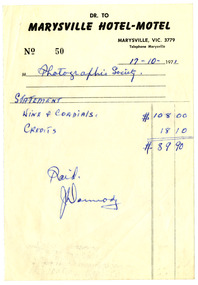 Marysville & District Historical Society
Ephemera (item) - Invoice, DR. TO MARYSVILLE HOTEL-MOTEL, Unknown
... Photographic Society for wine and cordials consumed at the hotel. The invoice is dated from 17th October 1971 and is signed as paid by Jim Darmody. An invoice from the Marysville Hotel Motel to a Photographic Society for wine and cordials consumed at the hotel. victoria australia keppel hotel keppel's australian hotel australian hotel keppel family maurice john keppel accommodation marysville hotel hotel marysville marysville hotel motel invoice jim darmody An invoice from the Marysville Hotel Motel to a Photographic Society for wine and cordials consumed at the hotel. ...An invoice from the Marysville Hotel Motel to a Photographic Society for wine and cordials consumed at the hotel. The invoice is dated from 17th October 1971 and is signed as paid by Jim Darmody.An invoice from the Marysville Hotel Motel to a Photographic Society for wine and cordials consumed at the hotel.victoria, australia, keppel hotel, keppel's australian hotel, australian hotel, keppel family, maurice john keppel, accommodation, marysville hotel, hotel marysville, marysville hotel motel, invoice, jim darmody -
 Marysville & District Historical Society
THE TRIANGLE NEWS-VOL 38 NO 35-SEPTEMBER 30 2011
... victoria...australia...marysville drainage works...vbfa...amnesty supports fire prevention efforts...murrindindi shire council...resource recovery centres...transfer stations...marysville golf report...advertisements...sneak preview opening...marysville & district historical society...sparkling wine festival...art & photographic...marysville victoria australia marysville drainage works vbfa amnesty supports fire prevention efforts murrindindi shire council resource recovery centres transfer stations marysville golf report advertisements sneak preview opening marysville & district historical society sparkling wine festival art & photographic galleries mary kenealy vale dawn hendy tudor lodge narbethong pullen family bushfire memorial commences the memorials working group murrindindi shire bushfire memorials forum alexandra district hospital women's health marysville medical centre clinic extension grants mayor peter beales THE TRIANGLE NEWS-VOL 38 NO 35-SEPTEMBER 30 2011 ...marysville, victoria, australia, marysville drainage works, vbfa, amnesty supports fire prevention efforts, murrindindi shire council, resource recovery centres, transfer stations, marysville golf report, advertisements, sneak preview opening, marysville & district historical society, sparkling wine festival, art & photographic galleries, mary kenealy, vale dawn hendy, tudor lodge narbethong, pullen family, bushfire memorial commences, the memorials working group, murrindindi shire bushfire memorials forum, alexandra district hospital, women's health, marysville medical centre, clinic extension grants, mayor peter beales -
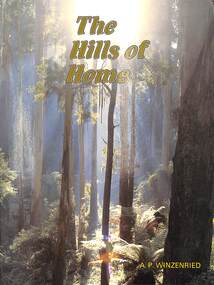 Ringwood and District Historical Society
Book, Arthur Paul Winzenried, The Hills of Home - A.P. Winzenried, 1988
... Acknowledgements include thanks for members of the Sherbrooke Historical Society who gave their assistance which was particularly useful in the area of photographic materials. Soft covered book by Arthur Paul Winzenried. Full title: The Hills of Home - A Bicentennial History of the Shire of Sherbrooke (Victoria, Australia), including captioned colour and black & white photographs of the area. ...Soft covered book by Arthur Paul Winzenried. Full title: The Hills of Home - A Bicentennial History of the Shire of Sherbrooke (Victoria, Australia), including captioned colour and black & white photographs of the area.Cover - "Poems are made by fools like me, But only God can make a tree" - Joyce Kilmer. Photo Neil McLeod. Acknowledgements include thanks for members of the Sherbrooke Historical Society who gave their assistance which was particularly useful in the area of photographic materials. -
 Eltham District Historical Society Inc
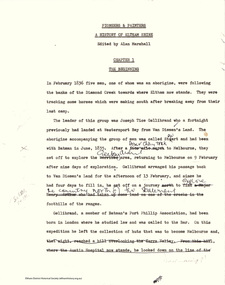
Folder, Pioneers & Painters; Manuscript, 1971, 1971-1978
... societies; interviewing longer term residents and a public campaign through the local press to acquire photographic material for duplication and use in the book. The public campaign received generous response and the material collected became the genesis for the Shire of Eltham Pioneers Photograph collection now held in partnership between Eltham District Historical Society and Yarra Plenty Regional Library (Eltham Library). alan marshall, cr. charis pelling, manuscript, pioneers and painters, rhsv, royal historical society of victoria Paper documents of various sizes Pioneers & Painters; Manuscript, 1971 Folder ...Material pertaining to the production of a history of the Shire of Eltham, "Pioneers & Painters: One Hundred Years of Eltham and its Shire" in recognition of the shire's centenary in 1971 Item Title 04769-1 Manuscript: Pioneers & Painters - A History of Eltham Shire, edited by Alan Marshall, 1971 04769-2 Eltham District Road Board Members 04769-3 Shire of Eltham Councillors 04769-4 Galley Proof, Pioneers & Painters, Appendices pp137-138 04769-5 Eltham Shire Celebrates 100 Years of Colour and Progress; Book Review, The Australian Municipal Journal, July 1971, p 13 04769-6 Letter: Acknowledgement from RHSV to Shire of Eltham Historical Society that Pioneers & Painters is to be reprinted, 10 November 1978 The idea to develop a book on the history of the Shire of Eltham to be edited by noted author, Alan Marshall in celebration of the shire's centenary was initiated in 1969. The Shire of Eltham Historical Society undertook significant research in conjunction with Alan Marshall locating material at various institutions and other societies; interviewing longer term residents and a public campaign through the local press to acquire photographic material for duplication and use in the book. The public campaign received generous response and the material collected became the genesis for the Shire of Eltham Pioneers Photograph collection now held in partnership between Eltham District Historical Society and Yarra Plenty Regional Library (Eltham Library).Paper documents of various sizesalan marshall, cr. charis pelling, manuscript, pioneers and painters, rhsv, royal historical society of victoria -
 Eltham District Historical Society Inc
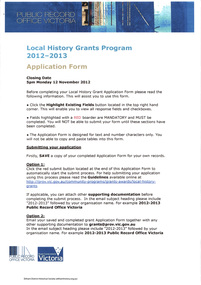
Folder, Shire of Eltham Pioneers Photograph Collection; Application by Yarra Plenty Regional Library for a Local History Grant to digitise collection, 1982-2014
... societies; interviewing longer term residents and a public campaign through the local press to acquire photographic material for duplication and use in the book. The public campaign received generous response and the material collected became the genesis for the Shire of Eltham Pioneers Photograph collection now held in partnership between Eltham District Historical Society and Yarra Plenty Regional Library (Eltham Library). This material covers the application to digitise the bulk of the collection with the assistance of a Local History Grants project made available through Public Records Office Victoria ...Material pertaining to the production of a history of the Shire of Eltham, "Pioneers & Painters: One Hundred Years of Eltham and its Shire" in recognition of the shire's centenary in 1971 Item Title Caption 04771-1 Shire of Eltham Pioneers Photograph Collection: Application; Local History Grants Program 2012-2013, Yarra Plenty Regional Library, 7 November 2012 04771-2 Shire of Eltham Pioneers Photograph Collection: Local History Grants Program 2012-2013, Yarra Plenty Regional Library, 31 May 2013 04771-3 Notification to Eltham District Histoprical Society of successful application for Local History Grants Program by Yarra Plenty Regional Library, 5 June 2013 04771-4f 04771-5 Media Release, Craig Ondarchie MP announcing a grant of $3,775 for the Shire of Eltham Pioneers Photograph Collection, 3 July 2013 Grant for digitising selected images within the collection 04771-6 Details of negative and prints scanned as part of Local History Grants Project, 23 October 2013 04771-7 Feedback from Eltham Disitrict Historical Society to Local and Family History Librarian, Yarra Plenty Regional Library in support of Local History Grant application to digitise the Shire of Eltham Pioneers Photograph collection, 27 October 2012. The idea to develop a book on the history of the Shire of Eltham to be edited by noted author, Alan Marshall in celebration of the shire's centenary was initiated in 1969. The Shire of Eltham Historical Society undertook significant research in conjunction with Alan Marshall locating material at various institutions and other societies; interviewing longer term residents and a public campaign through the local press to acquire photographic material for duplication and use in the book. The public campaign received generous response and the material collected became the genesis for the Shire of Eltham Pioneers Photograph collection now held in partnership between Eltham District Historical Society and Yarra Plenty Regional Library (Eltham Library). This material covers the application to digitise the bulk of the collection with the assistance of a Local History Grants project made available through Public Records Office Victoria; the result of which was successful and has enable d Eltham District Historical Society and Yarra Plenty Regional Library to embrace a much wider audience from far afield in sharing the local history of the Eltham Shire and Eltham districtPaper documents A4 size; one item laminatedeltham district historical society, local history grants program 2012-2013, public record office victoria (prov), yarra plenty regional library, shire of eltham pioneers photograph collection -
 Eltham District Historical Society Inc
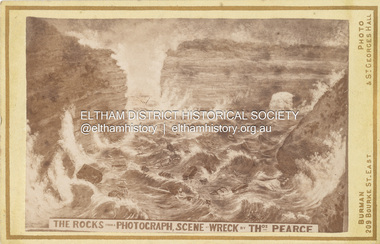
Photograph, W.J. Burman, The Rocks from a Photograph, Scene of Wreck by Thomas Pearce, 1878
... Burman, July 3,1878 featuring the scene of the wreck of the ship, Loch Ard near Mutton Bird Island on the Shipwreck Coast of Victoria on June 1st, 1878. THE PHOTOGRAPHIC SOCIETY. (1878, October 12). ...Burman, July 3,1878 featuring the scene of the wreck of the ship, Loch Ard near Mutton Bird Island on the Shipwreck Coast of Victoria on June 1st, 1878. THE PHOTOGRAPHIC SOCIETY. (1878, October 12). ...Special Carte-de-Visite produced by W. Burman, July 3,1878 featuring the scene of the wreck of the ship, Loch Ard near Mutton Bird Island on the Shipwreck Coast of Victoria on June 1st, 1878. THE PHOTOGRAPHIC SOCIETY. (1878, October 12). The Age (Melbourne, Vic. : 1854 - 1954), p. 7. Retrieved December 4, 2022, from http://nla.gov.au/nla.news-article199353573 According to Sands & McDougall Melbourne Directory, Burman's were operating from 209 Bourke St. East and St George's Hall (73 Bourke St. East) from 1879-1885 Back of photo is overtsamped "Registered Copyright by W. Burman" CARTE-DE-VISITE (cdv) 1857-1890 Cartes-de-visite (cdv's) are the most common form of photograph from the nineteenth century, generally measuring two and a half inches by four and an eighth inches (6.3 x 10.5 cm) when mounted, sepia toned, mounted on a card which was generally printed with the photographer's name and address on the back or beneath the portrait. - Frost, Lenore; Dating Family Photos 1850-1920; Valiant Press Pty. Ltd., Berwick, Victoria 1991marg ball collection, 1878, 1878-1885, burman's photographer 209 bourke st east and st georges hall melbourne, loch ard (ship), shillinglaw family photo album 2 -
 Eltham District Historical Society Inc
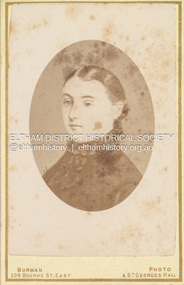
Photograph, W.J. Burman, Eva Carmichael, sole surviving passenger of the wreck of the Loch Ard, 1878
... Burman, July 3,1878 featuring the sole surviving passenger of the wreck of the ship, Loch Ard near Mutton Bird Island on the Shipwreck Coast of Victoria on June 1st, 1878. THE PHOTOGRAPHIC SOCIETY. (1878, October 12). ...Burman, July 3,1878 featuring the sole surviving passenger of the wreck of the ship, Loch Ard near Mutton Bird Island on the Shipwreck Coast of Victoria on June 1st, 1878. THE PHOTOGRAPHIC SOCIETY. (1878, October 12). ...Special Carte-de-Visite produced by W. Burman, July 3,1878 featuring the sole surviving passenger of the wreck of the ship, Loch Ard near Mutton Bird Island on the Shipwreck Coast of Victoria on June 1st, 1878. THE PHOTOGRAPHIC SOCIETY. (1878, October 12). The Age (Melbourne, Vic. : 1854 - 1954), p. 7. Retrieved December 4, 2022, from http://nla.gov.au/nla.news-article199353573 According to Sands & McDougall Melbourne Directory, Burman's were operating from 209 Bourke St. East and St George's Hall (73 Bourke St. East) from 1879-1885 Back of photo is overtsamped "Registered Copyright by W. Burman, July 3rd 1878" CARTE-DE-VISITE (cdv) 1857-1890 Cartes-de-visite (cdv's) are the most common form of photograph from the nineteenth century, generally measuring two and a half inches by four and an eighth inches (6.3 x 10.5 cm) when mounted, sepia toned, mounted on a card which was generally printed with the photographer's name and address on the back or beneath the portrait. - Frost, Lenore; Dating Family Photos 1850-1920; Valiant Press Pty. Ltd., Berwick, Victoria 1991marg ball collection, 1878, 1878-1885, burman's photographer 209 bourke st east and st georges hall melbourne, shillinglaw family photo album 2, eva carmichael, loch ard (ship) -
 Warrnambool and District Historical Society Inc.
Work on paper - Ledger, Warrnambool Photographic Society, Circa 1966
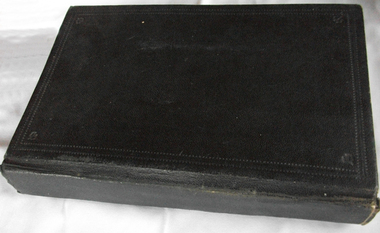
... Victoria Sir Rohan Delacombe and the Hon. H. E. Bolte. The significance of this ledger lies with its links to a local club which is still viable. It also shows the organisation behind holding an International Exhibition. warrnambool warrnambool photography club photographs ledger international photographic exhibition warrnambool photographic society Modern print 91 Kepler Street, Warrnambool. ...The Warrnambool Camera Club is a group of like -minded people who meet once a month in Dennington. The ledger contains lists of entrants and photographs from International Exhibitions of Photography held from 1966 to 1970. The exhibition was held in January 1966 at the Warrnambool Town Hall. Patrons were the Governor of Victoria Sir Rohan Delacombe and the Hon. H. E. Bolte.The significance of this ledger lies with its links to a local club which is still viable. It also shows the organisation behind holding an International Exhibition.Black leather bound volume with green card inside front and back cover. Contains handwritten entries and a number of brochures, tickets and statements. Modern print 91 Kepler Street, Warrnambool. Telephone 2274.warrnambool, warrnambool photography club, photographs, ledger, international photographic exhibition warrnambool photographic society -
 Bendigo Historical Society Inc.
Document - National Trust Collection: National Trust photographic documentation of buildings in Bendigo, 25/06/1972
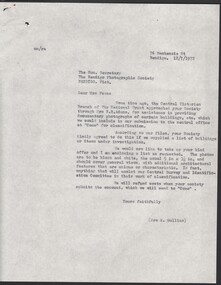
... National Trust - 3097.14A 12/07/1972 to-page letter to Bendigo Photographic Society from the National Trust of Victoria (Central Victoria Branch) requesting assistance to compile photographic documentation of the following range of buildings in Bendigo: State Schools The Home & Hospital for the Aged Banks Caretaker's cottage The "Old Fuse Factory The Railway Station Buildings 3097.14B Cast Iron Policy DRAFT (two-page) National Trust Photographic Committee two-page with five-point policy...policy for the photographic documentation of historic buildings and lacework within Bendigo photographic documentation of buildings National Trust - 3097.14A 12/07/1972 to-page letter to Bendigo Photographic Society from the National Trust of Victoria (Central Victoria Branch) requesting assistance to compile photographic documentation of the following range of buildings in Bendigo: State Schools The Home & Hospital for the Aged Banks Caretaker's cottage The "Old Fuse Factory The Railway Station Buildings 3097.14B Cast Iron Policy DRAFT (two-page) National Trust Photographic Committee two-page with five-point policy Document National Trust Collection: National Trust photographic documentation of buildings in Bendigo ...policy for the photographic documentation of historic buildings and lacework within BendigoNational Trust - 3097.14A 12/07/1972 to-page letter to Bendigo Photographic Society from the National Trust of Victoria (Central Victoria Branch) requesting assistance to compile photographic documentation of the following range of buildings in Bendigo: State Schools The Home & Hospital for the Aged Banks Caretaker's cottage The "Old Fuse Factory The Railway Station Buildings 3097.14B Cast Iron Policy DRAFT (two-page) National Trust Photographic Committee two-page with five-point policyphotographic documentation of buildings -
 Daylesford & District Historical Society
Photograph Daylesford Panorama, J. J. Crawford, Western Avenue to Wombat Hill woman and two girls c1900, Circa 1900
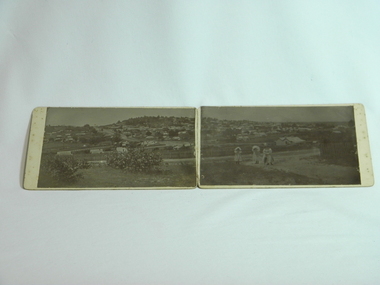
... Society by (J.J. Crawford Mitiamo) (late of Daylesford) D13 2 B&W photos forming panorama of Daylesford township, looking South East to Wombat Hill & beyond with many buildings clearly visible. 3 women/girls in foreground. Circa 1900. Mounted on 2 pieces of cardboard, stuck together by sewing red fabrick onto mounting boards. Taken at western Avenue by J. J. Crawford of Mitiamo Victoria photographic ...Early panorama of Daylesford circa 1900 with views of Wombat Hill from Western Avenue. Taken by J. J. Crawford of Mitiamo late resident of Daylesford.A unique early view of Daylesford showing large areas of vacant land pre modern development.2 B&W photos forming panorama of Daylesford township, looking South East to Wombat Hill & beyond with many buildings clearly visible. 3 women/girls in foreground. Circa 1900. Mounted on 2 pieces of cardboard, stuck together by sewing red fabrick onto mounting boards. Taken at western Avenue by J. J. Crawford of Mitiamo Victoria photographic studio a late resident of Daylesford. J.J. Crawford Mitiamo (Stamp) Donated to Daylesford & District Historical Society by (J.J. Crawford Mitiamo) (late of Daylesford) D13wombat hill, town views, clothing -
 Bendigo Historical Society Inc.
Document - EAGLEHAWK DAHLIA & ARTS FESTIVAL 1991, SOUVENIR PROGRAMME, 14 March 1991
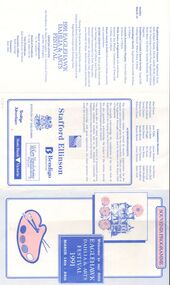
... Photographic Literary Awards. 9th Annual Dahlia and Arts Half-Marathon... conducted by Eaglehawk Athletic Club. Ecumenical Church Service... Combined Clergy. Rev. Lindsay Faulkner... Eaglehawk Excellencies... the Governor of Victoria... Dr. McGaughey and Mrs McGaughey. Picnic Lunch. Free Concert. Cycling Criterium... Featuring the Tony McCaig Memorial Wheelrace. Barry Kenny Country Roundup. Family Mini Fair. Borough Bingo. Indoor Garden Party. Celebrity Concert. Rotary Club Dinner. Children's Fancy Dress Parade... sponsored by Bendigo Advertiser. Gala Charity Old Time Ball... 'Premiers Orchestra'. Traditional Cornish Concert... Eaglehawk Citizens Brass Band... Val Broad... Annette Beckwith... Steven Higgs. Traditional Cornish Service. Genealogy Society...Photographic and Literary Awards. 9th Annual Dahlia and Arts Half-Marathon, conducted by Eaglehawk Athletic Club. Ecumenical Church Service, Combined Clergy. Speaker: Rev. Lindsay Faulkner, Eaglehawk Citizens Brass Band. Their Excellencies, the Governor of Victoria, Dr. McGaughey and Mrs McGaughey. Picnic Lunch. Free Concert. Cycling Criterium, Featuring the Tony McCaig Memorial Wheelrace. Barry Kenny Country Roundup. Family Mini Fair. Borough Bingo. Indoor Garden Party. Celebrity Concert. Rotary Club Dinner. Children's Fancy Dress Parade, sponsored by Bendigo Advertiser. Gala Charity Old Time Ball, 'Premiers Orchestra'. Traditional Cornish Concert, Eaglehawk Citizens Brass Band, Val Broad, Annette Beckwith, Steven Higgs. Traditional Cornish Service. Genealogy Society...Photographic Literary Awards. 9th Annual Dahlia and Arts Half-Marathon conducted by Eaglehawk Athletic Club. Ecumenical Church Service Combined Clergy. Rev. Lindsay Faulkner Eaglehawk Excellencies the Governor of Victoria Dr. McGaughey and Mrs McGaughey. Picnic Lunch. Free Concert. Cycling Criterium Featuring the Tony McCaig Memorial Wheelrace. Barry Kenny Country Roundup. Family Mini Fair. Borough Bingo. Indoor Garden Party. Celebrity Concert. Rotary Club Dinner. Children's Fancy Dress Parade sponsored by Bendigo Advertiser. Gala Charity Old Time Ball 'Premiers Orchestra'. Traditional Cornish Concert Eaglehawk Citizens Brass Band Val Broad Annette Beckwith Steven Higgs. Traditional Cornish Service. Genealogy Society ...Eaglehawk Dahlia & Arts Festival 1991, Souvenir Programme, March 14th - 24th. Programme. Debutante Ball x2 Debs presented to Mayor of Eaglehawk Cr. W Carney. Music 'Gaytones'. Gala Fair, Canterbury Park. Organised by Y's Men and Menettes of Eaglehawk. Porcelain Art and Craft Show, Art Show, Stafford Ellison & McKern Awards. Display of Memorabilia, Cornish Association. Children's multi-Dimensional Art Exhibition. Flower Show, sponsored by North West Country Credit. Children's Photographic Display. Photographic Print Competition. Historic California Hill Church, open. Victorian Police Display Unit caravan open to public. Official Opening His Excellency, Dr. Davis McCaughey. A.C. Governor of Victoria. Dahlia and Arts Street Procession. Presentation of Art, Craft Photographic and Literary Awards. 9th Annual Dahlia and Arts Half-Marathon, conducted by Eaglehawk Athletic Club. Ecumenical Church Service, Combined Clergy. Speaker: Rev. Lindsay Faulkner, Eaglehawk Citizens Brass Band. Their Excellencies, the Governor of Victoria, Dr. McGaughey and Mrs McGaughey. Picnic Lunch. Free Concert. Cycling Criterium, Featuring the Tony McCaig Memorial Wheelrace. Barry Kenny Country Roundup. Family Mini Fair. Borough Bingo. Indoor Garden Party. Celebrity Concert. Rotary Club Dinner. Children's Fancy Dress Parade, sponsored by Bendigo Advertiser. Gala Charity Old Time Ball, 'Premiers Orchestra'. Traditional Cornish Concert, Eaglehawk Citizens Brass Band, Val Broad, Annette Beckwith, Steven Higgs. Traditional Cornish Service. Genealogy Society, Cornish Association Display, Walk Tours of Eaglehawk, Ray Wallace. Picnic in the Park followed by family reunions and entertainment. Aussie Clean-up Day. Croquet and Bowls Tournaments. Official Guests: His Excellency, Dr. Davis McCaughey A.C. Governor of Victoria, and Mrs McCaughey. Mayor of Eaglehawk: Cr. W Carney J.P. Festival President: Cr Lola Miller B.E.M. Vice Presidents: Alan Bull & Kevin Herdman. Executive Officer: Ruth Claridge. Treasurer: Mary Mills. Committee Members: Alan Pearce, Harold Trahair, Wendy Holland, Trevie Dineen, Wayne Evans, Rebecca Evans, Jean Tebb, Lois Locket, Pam Wright Ron Dineen, Sandie Morris, Wayne Morris, Joyce Shelton, Dot White, Ric Norris, Ron Watts, Noel Thomas, Lorna Thomas, Ted Brown, Heather Bull, Dennis Cock, Edith Mudford, Ron Mudford, Anne Scott. Acknowledgements: Councillors, Officers and Staff of the Eaglehawk Borough Council, and by members of the Rotary Club of Eaglehawk. Lions Club of Eaglehawk. Judges of various awards. Sponsors, donors of procession prizes, voluntary workers, dedicated community of Eaglehawk. Sponsors: Stafford Ellison, Borough of Eaglehawk, Bendigo Bank, KcKern Manufacturing Pty Ltd, Bendigo Advertiser, State Bank of Victoria.event, entertainment, eaglehawk dalia and arts festival, eaglehawk dahlia & arts festival 1991, programme, march 14th - 24th. programme. debutante ball x2 debs. music 'gaytones'. gala fair, canterbury park. organised by y's men and menettes of eaglehawk. porcelain art and craft show, art show, stafford ellison & mckern awards. memorabilia, cornish association. children's multi-dimensional art exhibition. flower show, sponsored by north west country credit. children's photographic display. photographic print competition. historic california hill church, . victorian police display unit caravan open to public. street procession. presentation of art, craft photographic literary awards. 9th annual dahlia and arts half-marathon, conducted by eaglehawk athletic club. ecumenical church service, combined clergy. rev. lindsay faulkner, eaglehawk excellencies, the governor of victoria, dr. mcgaughey and mrs mcgaughey. picnic lunch. free concert. cycling criterium, featuring the tony mccaig memorial wheelrace. barry kenny country roundup. family mini fair. borough bingo. indoor garden party. celebrity concert. rotary club dinner. children's fancy dress parade, sponsored by bendigo advertiser. gala charity old time ball, 'premiers orchestra'. traditional cornish concert, eaglehawk citizens brass band, val broad, annette beckwith, steven higgs. traditional cornish service. genealogy society, cornish association display, walk tours of eaglehawk, ray wallace. picnic in the park family reunions and entertainment. aussie clean-up day. croquet bowls tournaments. official guests: his excellency, dr. davis mccaughey a.c. governor of victoria, and mrs mccaughey. mayor of eaglehawk: cr. w carney j.p. festival president: cr lola miller b.e.m. vice presidents: alan bull & kevin herdman. executive officer: ruth claridge. treasurer: mary mills. committee members: alan pearce, harold trahair, wendy holland, trevie dineen, wayne evans, rebecca evans, jean tebb, lois locket, pam wright ron dineen, sandie morris, wayne morris, joyce shelton, dot white, ric norris, ron watts, noel thomas, lorna thomas, ted brown, heather bull, dennis cock, edith mudford, ron mudford, anne scott. acknowledgements: councillors, officers and staff of the eaglehawk borough council, and by members of the rotary club of eaglehawk. lions club of eaglehawk. judges of various awards. sponsors, donors of procession prizes, voluntary workers, dedicated community of eaglehawk. sponsors: stafford ellison, borough of eaglehawk, bendigo bank, kckern manufacturing pty ltd, bendigo advertiser, state bank of victoria. -
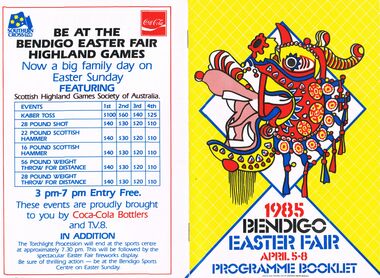 Bendigo Historical Society Inc.
Document - BENDIGO EASTER FAIR 1985, 5 April 1985
... Photographic Exhibition, Family Activities, Cinema 180, Art Gallery, Embroiderers Guild. Monday: Philatelic Society Exhibition, Rotary Art Show, Handcraft Bazaar, Antique Fair, Model Railroaders, Bendigo District Bowling Assn. Easter Bowling Carnival, Exhibition of Dolls, Dudley House Bendigo Branch Royal Historical Society, Trams, Central Deborah, Motorcycle Show, Antique and Historical Display of Arms Weapons & Militaria, Mardi-Gras Street Carnival, Hargreaves Mall, Gala Street Procession, Carnival For Children, Sun Loong on Display, Photographic Exhibition, Fusion, Cinema 180, Art Gallery, Embroiders Guild. Church Services in Bendigo City Area During Easter (listings for Thursday, Good Friday, Eater Saturday, Easter Day). The Bendigo & District Tourism Association Welcomes you to Victoria's...Photographic Exhibition Family Activities Cinema 180 Art Gallery Embroiderers Guild. Monday: Philatelic Society Exhibition Rotary Art Show Handcraft Bazaar Antique Fair Model Railroaders Bendigo District Bowling Assn. Easter Bowling Carnival Exhibition of Dolls Dudley House Bendigo Branch Royal Historical Society Trams Central Deborah Motorcycle Show Antique and Historical Display of Arms Weapons & Militaria Mardi-Gras Street Carnival Hargreaves Mall Gala Street Procession Carnival For Children Sun Loong on Display Photographic Exhibition Fusion Cinema 180 Art Gallery Embroiders Guild. Church Services Bendigo City Easter Eater Saturday Bendigo & District Tourism Association Victoria's ...Bendigo Easter Fair 1985, April 5-8. Programme Booklet. Friday: Sun Loon Display, Easter Bowling Carnival, Rotary Easter Art Show, Book Bazaar, Model Railroaders Exhibition, Dudley House, Exhibition of Dolls, Embroiderers Guild, Art Gallery. Saturday: Mardi-Gras Street Carnival, Busking, Outdoor Theatre, Arts & Music, Bendigo Theatre Company, Cynthia Holland & Bendigo Talent Club Sun Loong Display, Rotary Art Show, Handcraft Bazaar, Motorcycle Show-Sandhurst Historic Vehicle Club Trams, Central Deborah, Dudley House, Exhibition Dolls, Antique Fair, Model Railroaders, Fire Brigades' Carnival for Children, Horse & Harness Parade, Book Bazaar, Bowling Carnival, Football, Photographic Exhibition, Family Activities, Cinema 180, Exhibition of Paintings silver furniture & porcelain, Embroiders Guild. Sunday: Horse Spectacular, Model Railroaders, Rotary Art Show, Handcraft Bazaar, Antique & Historical Display of Arms Weapons & Military, Antique Fair, Torchlight Procession, Awakening of Dragon, Exhibition of Dolls, Dudley House, Trams, Central Deborah, Book Bazaar, Mardi-Gras Street Carnival, Hargreaves Mall, Motorcycle Show, Photographic Exhibition, Family Activities, Cinema 180, Art Gallery, Embroiderers Guild. Monday: Philatelic Society Exhibition, Rotary Art Show, Handcraft Bazaar, Antique Fair, Model Railroaders, Bendigo District Bowling Assn. Easter Bowling Carnival, Exhibition of Dolls, Dudley House Bendigo Branch Royal Historical Society, Trams, Central Deborah, Motorcycle Show, Antique and Historical Display of Arms Weapons & Militaria, Mardi-Gras Street Carnival, Hargreaves Mall, Gala Street Procession, Carnival For Children, Sun Loong on Display, Photographic Exhibition, Fusion, Cinema 180, Art Gallery, Embroiders Guild. Church Services in Bendigo City Area During Easter (listings for Thursday, Good Friday, Eater Saturday, Easter Day). The Bendigo & District Tourism Association Welcomes you to Victoria's Premier Town. Listing of events over Easter with map to guide all around. Bendigo Easter Fair Incorporated Phone: (054) 43 9191Bendigo Easter Fair Inc. would like to thank the Ministry for the Arts for its continued assistance over the past 11 years. 3 1/2 pages of information on the Bendigo Easter Fair and its rich history dating back to 1871. The first Fair was held to aid 2 charities: Bendigo Base Hospital and the Home and Hospital for the Aged (Benevolent Asylum). Gone are the days of the Fancy Bazaar, Fat Baby Contest and the greasy Pig Chase, many tradition remain the same. Links to the Chinese community date back to when the first settlers arrived seeking gold. This gives the Fair its unique quality and Brings visitors in their thousands each Easter. The Monday Procession has always been the most famous as many old photographs show. Some photos taken before the turn of the century. Many made the journey to Bendigo from Melbourne and outlying districts. Visitors line the route to see floats, bands, and the once a year appearance of the Chinese Dragon, ''Sun Loong'' or ''New Dragon''. The longest Imperial Dragon in the World; 300ft plus in length. His predecessor, ''Long'', is acclaimed as the worlds oldest Imperial Dragon. Easter Saturday Procession has taken form of a Horse and Harness Parade, attracting and immense variety of entrants. The torchlight Procession on Sunday evening includes fireworks, Fire Brigades, Fire Trucks, firemen, marching girls and illuminated floats. The Army has helped with the procession since around the time of Federation. 15th Transport Squadron (15 Tpt. Sqdn.), processions are assembled & dispatched with Army efficiency. Marshalling the Monday Procession this year will be done by the Army as well as our own Easter Fair marshalls with a new communications system.1930 the Popular Girl contest was introduced. The four main streets of Bendigo, Pall Mall, Mitchell Street, Hargreaves Street and Williamson Street (formerly View Street), sponsored their particular girl by means of raffles, street stalls and a variety of fund raising. The winner was the one that raised the most money, and was announced from the balcony of the Shamrock Hotel, by the Mayor of Bendigo on Easter Saturday Night. The Popular girl contest is still held with a lot of the fund raising now done by service clubs and voluntary organizations. 1984 fund raising efforts, in excess of $50,000 was distributed to charities in our area. The combined Bendigo Brigades' record support for the Easter Fair goes back of many years in a variety of ways. Bendigo people are known for their love of sport and the choice in the city is very wide. There will be no Easter Sports Carnival this year but Easter Fair will still be holding functions at the Bendigo Sports Centre in Park Road. Bendigo city centre will be alive with stalls, raffles and rides of every description over the three days of sports, Sat-Sun. Hargreaves Mall will be the focus of relaxation, buskers, community theatre, arts with craft activity & musical entertainment. The Rotary Club of Bendigo and the Easter Fair Society had had independent Arts Shows but in 1981amalgamate their shows. 1981 Rotary Club of Bendigo added the Antique Fair to the Easter Program, held in the RSL Memorial Hall, Pall Mall. Last year some event were cancelled, but last year's Fair was quite a success. With many outdoor activities, the weather plays a vital role. It has been necessary to alter some venues in the past years, with Easter being a week early in April this year we are looking forward to fine conditions. The Chinese and Bendigo Easter Fair, The First Chinese arrived on the goldfields in mid 1850's in teams or groups to work the rich alluvial gold fields of Dai Gum San (Big Gold Mountain). Most were of poorer class from the district of See Yup, an area of four villages near the provincial capital Canton (Kwangchow). By far the largest group came from the village of Toi Shan. The alluvial gold quickly petered out so by the time of the first Bendigo Easter Fair in 1871 most Chinese had either left for richer fields or turned to other pursuits such as stores, market gardens, laundries, herbalists etc.. Many of course had died on the fields from the rigors of mining of diseases not encountered in their homeland. The Benevolent Asylum (Home & Hospital for the age) and Bendigo Base Hospital had become places of rest, help and haven for old, sick and lonely Chinese. SO when the idea was mooted to hold a charity fair to raise money for these worthy establishments, the Chinese were only too happy to join with the Easter Fair Society in this charitable work. It has for over 113 years. Chinese showed their costumes, scenery, and weapons of warfare, but it was not until 1892, that the first of the 5 loongs (dragons) appeared.. . The pageant was marshalled by Mr T Chapman and headed by Mr Moody, attired in habiliments of a most gorgeous character on a gaily caparisoned horse, and his get up as a Chinese grandee was perfect. . . Tom toms , bagpipes. . Wind instrument resembling a clarinet. . Bagpipes,.. The Weekly Advertiser, Friday, April 22,1892. . . Today the Chinese Association, made up of descendants and families of the early Chinese and associate members, carries on the charitable works of their predecessors. A Little Of Dragons, We have all heard of St. George Bendigo dragons (loongs) have none of these characteristics, in fact they have only brought good to Bendigo. There are 3 chief species of Chinese Dragons of which ''The Lung'' (Loong) is the most powerful. It is also the spiritual dragon which produces wind and rain. It has 9 resemblances, the head of a camel, horns of a deer, eyes of a rabbit ears of a cow, neck of a snake, belly of a frog, scales of a carp, claws of a hawk and palm of a tiger. Loong is a vegetarian, favourite food pomelo (ooluk), the father of our modern grapefruit. The abode, according to legend is the sky or water. He is also deaf, thus requiring loud noises to awaken him and to keep him awake. . . Number of claws they have represent rank. Dragons have 2, 3, 4 or 5 claws, the latter being reserved for the Emperor. Loong and Sun Loong have both five claw dragons. Bendigo has had 5 or 6 dragons, the number being confused by the fact each dragon was called 'Loong'. Today Three dragons remain in Bendigo, Loong, Sun Loong, and Yar Loong. Loong is the oldest Imperial Dragon in the world. He continued his walk through the streets of Bendigo til his retirement in 1970. He was created in Fat Shan in the Peoples Republic of China. Built of. . . Sun Loong replaced Loong after the 2 dragon procession of 1970. Created by Mr Law On, . . Yar Loong is a night dragon, came in 1930's. . . Long history of dragons. . The Birth Of A Dragon. . . To awaken A Dragon. . . The Easter Monday Chinese Procession. . . Procession divided into 6 sections,.. The Easter Monday Procession comprises,… over 350 people. Conclusion It is hoped that in the near future a museum can be built to house the priceless regalia gathered together over the last century and a half by the Bendigo Chinese Association. Advertisements; Historic Bendigo Pottery, Mim's Restaurant, Antique Fair (Rotary), The Copper Pot, Sandhurst Town (Develop Victoria Council Tourism Award 1983-1985), Bendigo Motor Co. (Mazda), Diggers, Chaplin's, Bendigo's Dunny Diner, Arakoon, Quin's Bluebird, Allara Motor Lodge, Lakeview Motor Inn, The Armoured Car Company, Gillies, Mardi Gras Street Carnival, Handcraft Bazaar, Art Show (Rotary) Bendigo Model Railroaders (Easter Exhibition), Bendigo Easter Fair Highland Games brought to you by TV8 and Coca-Cola Bottlers. Design and Finished Art By Graphics Group, Bendigo.Graphics Group Bendigoevent, easter fair, bendigo easter fair incorporated, bendigo easter fair 1985, april 5-8. programme. friday: sun loon display, easter bowling carnival, rotary easter art show, book bazaar, model railroaders exhibition, dudley house, exhibition of dolls, embroiderers guild, art gallery. saturday: mardi-gras street carnival, busking, outdoor theatre, arts & music, bendigo theatre company, cynthia holland & bendigo talent club sun loong display, rotary art show, handcraft bazaar, motorcycle show-sandhurst historic vehicle club trams, central deborah, dudley house, exhibition dolls, antique fair, model railroaders, fire brigades' carnival for children, horse & harness parade, book bazaar, bowling carnival, football, photographic exhibition, family activities, cinema 180, exhibition of paintings silver furniture & porcelain, embroiders guild. sunday: horse spectacular, model railroaders, rotary art show, handcraft bazaar, antique & historical display of arms weapons & military, antique fair, torchlight procession, awakening of dragon, exhibition of dolls, dudley house, trams, central deborah, book bazaar, mardi-gras street carnival, hargreaves mall, motorcycle show, photographic exhibition, family activities, cinema 180, art gallery, embroiderers guild. monday: philatelic society exhibition, rotary art show, handcraft bazaar, antique fair, model railroaders, bendigo district bowling assn. easter bowling carnival, exhibition of dolls, dudley house bendigo branch royal historical society, trams, central deborah, motorcycle show, antique and historical display of arms weapons & militaria, mardi-gras street carnival, hargreaves mall, gala street procession, carnival for children, sun loong on display, photographic exhibition, fusion, cinema 180, art gallery, embroiders guild. church services bendigo city easter , eater saturday bendigo & district tourism association victoria's premier town. bendigo easter fair incorporated bendigo easter fair rich history 1871. base hospital and the home and hospital for the aged (benevolent asylum). fancy bazaar, fat baby contest greasy pig chase, many old photographs floats, bands, chinese dragon, ''sun loong'' or ''new dragon''. the longest imperial dragon in the world; 300ft plus in length easter saturday procession horse harness parade. torchlight procession on sunday evening includes fireworks, fire brigades, fire trucks, firemen, marching girls and illuminated floats. army helped federation. 15th transport squadron (15 tpt. sqdn). monday procession by the army 1930 popular girl contest introduced. four main streets, pall mall, mitchell street, hargreaves street williamson street. winner announced shamrock hotel, easter saturday night. popular girl contest fund raising service clubs voluntary organizations. 1984 fund raising efforts, in excess $50, 000 distributed to charities. combined bendigo brigades'. no easter sports carnival holding functions bendigo sports centre in park road. stalls, raffles three days sports, sat-sun. relaxation, buskers, community theatre, arts with craft activity & musical rotary club of bendigo easter fair society independent arts shows in 1981amalgamate antique fair, held last year some event cancelled. with many outdoor activities, weather plays vital role. alter some venues in the past, easter being a week early first chinese arrived goldfields in mid 1850's dai gum san (big gold mountain). see yup, canton (kwangchow). toi shan. first easter fair in 1871 for richer fields other pursuits stores, market gardens, laundries, herbalists etc. benevolent asylum (home & hospital for the age) bendigo base hospital had become places of rest, help and haven for old, chinese. charity fair to raise money, chinese join easter fair society in this charitable work. costumes, scenery, weapons of warfare, 1892, the first of the 5 loongs. marshalled by mr t chapman by mr moody, caparisoned horse, chinese grandee. tom toms, wind instrument. bagpipes, advertiser, april 22, 1892. chinese association, descendants chinese and associate charitable works. st. george ''the lung'' most powerful. spiritual dragon wind rain. 9 resemblances, camel, deer, rabbit cow, snake, frog, carp, hawk tiger. a vegetarian, pomelo (ooluk), the abode, legend is the sky or water. deaf loud noises to keep him awake. claws represent rank. 2, 3, 4 or 5 claws, reserved for emperor. had 5 or 6 dragons called 'loong'. three dragons loong, sun loong, yar loong. loong oldest imperial dragon in the world. retirement 1970. created in fat shan peoples republic of china. built of. sun loong, loong 2 dragon procession 1970. created mr law on, yar loong a night dragon1930's.history dragons. birth of a dragon. awaken a dragon. easter monday chinese procession divided 6 sections 350 people. priceless regalia last century bendigo chinese association. advertisements; historic bendigo pottery, mim's restaurant, antique fair (rotary), the copper pot, sandhurst town (develop victoria council tourism award 1983-1985), bendigo motor co. (mazda), diggers, chaplin's, bendigo's dunny diner, arakoon, quin's bluebird, allara motor lodge, lakeview motor inn, armoured car company, gillies, mardi gras street carnival, handcraft bazaar, art show model railroaders highland games tv8 coca-cola. art by graphics group -
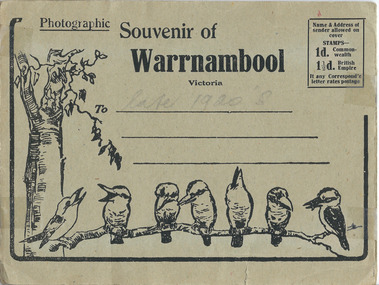 Warrnambool and District Historical Society Inc.
Document, Warrnambool Post Card, 1920s
... Society has several examples of these photographs. These folding post cards are kept as examples of the souvenirs tourists bought in the early and mid 20th century and the photographs themselves give a good indication of what Warrrnamool and district looked like at the time. The photographs also indicate what were considered at the time to be tourist spots worth a visit and a photo. warrnambool 1920 warrnambool Front Cover – Photographic Souvenir of Warrnambool, Victoria On one (VC000803.2) – in pencil – ‘late 1920s’ and on back cover on affixed sheet, ‘ from Horsham H.S., 17.3.96’ These are folding post cards with scenes of Warrnambool. ...Folding post cards were popular as tourist souvenir of visits to places in Australia throughout the 20th century. Many thousands of the same photographs were reproduced and the Warrnambool and District Historical Society has several examples of these photographs. These folding post cards are kept as examples of the souvenirs tourists bought in the early and mid 20th century and the photographs themselves give a good indication of what Warrrnamool and district looked like at the time. The photographs also indicate what were considered at the time to be tourist spots worth a visit and a photo. These are folding post cards with scenes of Warrnambool. One has a kangaroo and a bush landscape on the front cover and one has seven kookaburras and a gum tree on the cover. There are 15 of the same black and white photographs in each (taken about the 1920s). The covers are buff-coloured with a space on the front cover to write and address and affix a stamp. Front Cover – Photographic Souvenir of Warrnambool, Victoria On one (VC000803.2) – in pencil – ‘late 1920s’ and on back cover on affixed sheet, ‘ from Horsham H.S., 17.3.96’ warrnambool, 1920 warrnambool -
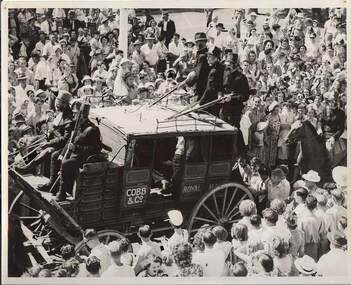 Bendigo Historical Society Inc.
Photograph - BENDIGO CENTENARY COLLECTION: COBB & CO COACH WITH FIVE MEN IN COSTUME, 1960
... Circular stamp 'Royal Historical Society of Victoria, Bendigo Branch'. 'Copyright, Bendigo Advertiser, Bendigo Advertiser Photographic Service. ...Circular stamp 'Royal Historical Society of Victoria, Bendigo Branch'. 'Copyright, Bendigo Advertiser, Bendigo Advertiser Photographic Service. ...Black and white photograph. Cobb & Co coach with two men in costume on driver's seat, three men in costume with rifles on back. One man in coach. Large crowd of people surrounding the coach. In image: 'Cobb & Co', 'Mail'. On back: 'MP 192'. Circular stamp 'Royal Historical Society of Victoria, Bendigo Branch'. 'Copyright, Bendigo Advertiser, Bendigo Advertiser Photographic Service. For re-order quote CD 257', '1960, 97'.Bendigo Advertiserperson, group, centenary, see also 2000/511.01, 2000.512.01, 2000.513.01, 2000.514.01, 2000.515.01, 2000.516.01, 2000.517.01, 2000.518.01, 2000.519.01, 2000.520.01, 2000.521.01, 2000.522.01, 2000.523.01 -
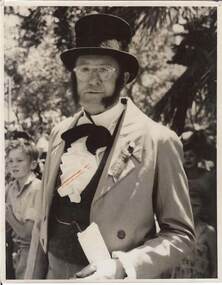 Bendigo Historical Society Inc.
Photograph - BENDIGO CENTENARY COLLECTION: ADULT MALE IN COSTUME, IN PARK, c.1951
... Circular purple stamp 'Royal Historical Society of Victoria, Bendigo Branch', '1960', '97', '294'. On back 'Copyright, Bendigo Advertiser'. 'Bendigo Advertiser Photographic Services, for re-order quote CD294'....Circular purple stamp 'Royal Historical Society of Victoria, Bendigo Branch', '1960', '97', '294'. On back 'Copyright, Bendigo Advertiser'. 'Bendigo Advertiser Photographic Services, for re-order quote CD294'. ...Black and white photograph. One adult male in costume. Cut-away coat, waistcoat, frilled shirt, top hat. Wearing ribbon on lapel marked 'President'. Watch chain. Children in background under trees. Inscriptions in image: On back 'MP189'. Circular purple stamp 'Royal Historical Society of Victoria, Bendigo Branch', '1960', '97', '294'. On back 'Copyright, Bendigo Advertiser'. 'Bendigo Advertiser Photographic Services, for re-order quote CD294'.Bendigo Advertiserperson, individual, centenary, see also 2000.511.01, 2000.512.01, 2000.513.01, 2000.514.01, 2000, 515.01, 2000.516.01, 2000.517.01, 2000.518.01, 2000.519.01, 2000.521.01, 2000.522..01, 2000..523.01, 2000.524.01 -
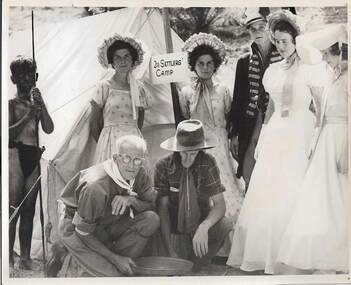 Bendigo Historical Society Inc.
Photograph - BENDIGO CENTENARY COLLECTION: EIGHT PERSONS IN COSTUME IN FRONT OF TENT, c.1951
... Society at Victoria, Bendigo Branch', '1960', '218', '97', '264', '5', 'MP 187'. History of object Acc. No. 'MP 187' James Lerk? 'Centenary of Bendigo?'. On back: 'Copyright Bendigo Advertiser'. 'Bendigo Advertiser Photographic...Society at Victoria, Bendigo Branch', '1960', '218', '97', '264', '5', 'MP 187'. History of object Acc. No. 'MP 187' James Lerk? 'Centenary of Bendigo?'. On back: 'Copyright Bendigo Advertiser'. 'Bendigo Advertiser Photographic ...Black and white photograph Eight persons in costume. Four females in floor length dresses and bonnets. Four males: one boy dressed as Aboriginal, one as soldier, two men panning for gold. Tent in background. Inscriptions in image: '2nd Settlers' Camp'. On back, purple circular stamp 'Royal Historical Society at Victoria, Bendigo Branch', '1960', '218', '97', '264', '5', 'MP 187'. History of object Acc. No. 'MP 187' James Lerk? 'Centenary of Bendigo?'. On back: 'Copyright Bendigo Advertiser'. 'Bendigo Advertiser Photographic Service, for re-order quote CD 264'person, group, centenary ?, see also 2000.511.01, 2000.512.01, 2000 513.01, 2000.514.01, 2000.515.01, 2000.516.01, 2000.517.01, 2000.519.01, 2000.520.01, 2000.521.01, 2000.522.01, 2000.523.01, 2000.524.01 -
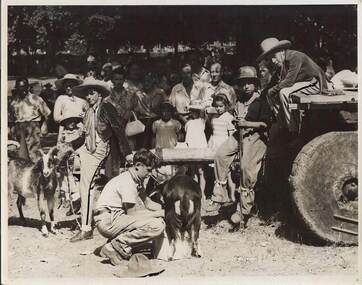 Bendigo Historical Society Inc.
Photograph - BENDIGO CENTENARY COLLECTION: YOUNG MALES IN COSTUME IN PARK, 1951?
... Society of Victoria, Bendigo Branch'. '1960', '97', 269A'. History of object: Previous Acc. No. 'MP 186'. James Lerk 'Centenary of Bendigo?' On back - 'Copyright Bendigo Advertiser', 'Bendigo Advertiser Photographic Service' . ...Society of Victoria, Bendigo Branch'. '1960', '97', 269A'. History of object: Previous Acc. No. 'MP 186'. James Lerk 'Centenary of Bendigo?' On back - 'Copyright Bendigo Advertiser', 'Bendigo Advertiser Photographic Service' . ...Black and white photograph. Four young males in costume, two goats - one being milked, one male sitting on jinker with wood wheels. Crowd of people watching in background. Trees at back in park. Inscriptions: on back 'MP' 186', circular purple stamp 'Royal Historical Society of Victoria, Bendigo Branch'. '1960', '97', 269A'. History of object: Previous Acc. No. 'MP 186'. James Lerk 'Centenary of Bendigo?' On back - 'Copyright Bendigo Advertiser', 'Bendigo Advertiser Photographic Service' . 'For re-order quote CD 269A'Bendigo Advertiserperson, group, centenary ?, see also 2000/511/01, 2000.512.01, 2000.513.01, 2000.514.01, 2000.515.01, 2000.516.01, 2000.517.01, 2000.518.01, 2000.519.01, 2000.520.01, 2000.521.01, 2000.522.01, 2000.523.01, 2000.524.01 -
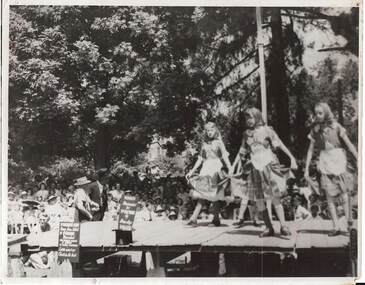 Bendigo Historical Society Inc.
Photograph - FOUR YOUNG FEMALES IN COSTUME DANCING ON STAGE, IN PARK, 1951 ?
... Purple circular stamp 'Royal Historical Society of Victoria, Bendigo Branch', '1960', '97', 'CD 279'. 'Copyright, Bendigo Advertiser, 'Bendigo Advertiser Photographic Service. ...Purple circular stamp 'Royal Historical Society of Victoria, Bendigo Branch', '1960', '97', 'CD 279'. 'Copyright, Bendigo Advertiser, 'Bendigo Advertiser Photographic Service. ...Black and white photograph, four young females in costume dancing on stage, in a park. Large crowd under trees watching. Inscription: In image on board on stage 'Nuggets, presented by Dr Backhaus by Bendigo Diggers'. History of object - previous Acc. No. '185'. James Lerk 'Centenary of Gold?'. In image 'Dr Bacchaus's chair, stump from which? Dr Backhaus preached. First ordained preacher or minister on Bendigo Goldfields. On back 'MP 185'. Purple circular stamp 'Royal Historical Society of Victoria, Bendigo Branch', '1960', '97', 'CD 279'. 'Copyright, Bendigo Advertiser, 'Bendigo Advertiser Photographic Service. For re-order quote CD 279'Bendigo Advertiserperson, group, centenary, see also 2000.511.01, 2000.512.01, 2000.513.01, 2000.514.01, 2000.515.01, 2000.517.01, 2000.518.01, 2000.518.01, 2000.519.01, 2000.520.01, 2000.521.01, 2000.522.01, 2000.524.01. -
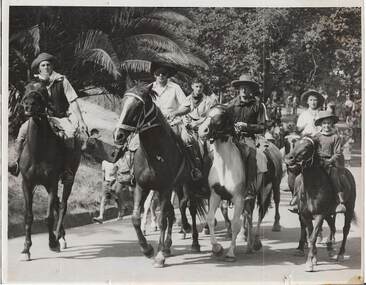 Bendigo Historical Society Inc.
Photograph - BENDIGO CENTENARY COLLECTION: SIX MEN ON HORSEBACK, c.1951
... Inscriptions: On back 'MP 183', Circular purple stamp 'Royal Historical Society of Victoria, Bendigo Branch', '1960', '218', '269'. Also on back: 'copyright Bendigo Advertiser', 'Bendigo Photographic Service, for re-order quote CD 269'. ...Inscriptions: On back 'MP 183', Circular purple stamp 'Royal Historical Society of Victoria, Bendigo Branch', '1960', '218', '269'. Also on back: 'copyright Bendigo Advertiser', 'Bendigo Photographic Service, for re-order quote CD 269'. ...Black and white photograph. Six young males mounted on horses and ponies. Dressed in costumes. On pathway in park (Rosalind Park?). People in background. Inscriptions: On back 'MP 183', Circular purple stamp 'Royal Historical Society of Victoria, Bendigo Branch', '1960', '218', '269'. Also on back: 'copyright Bendigo Advertiser', 'Bendigo Photographic Service, for re-order quote CD 269'. History of object: Previous Acc. No. 'MP 183'. James Lerk 'Bendigo Centenary?'Bendigo Advertiserperson, group, centenary, see also: 2000.511.01, 2000.512.01, 2000.513.01, 2000.515.01, 2000.516.01, 2000.517.01, 2000.518.01, 2000.519.01, 2000520.01, 2000.521.01, 2000.522.01, 2000.523.01, 2000.524.01 -
 Bendigo Historical Society Inc.
Photograph - BENDIGO CENTENARY COLLECTION: PARADE PHOTOGRAPH, c.1951
... Photographic Service. For re-order quote CD 266. On back, purple circular stamp 'Royal Historical Society of Victoria, Bendigo Branch' '1969', '218', '97', 'MP 181'. ...Photographic Service. For re-order quote CD 266. On back, purple circular stamp 'Royal Historical Society of Victoria, Bendigo Branch' '1969', '218', '97', 'MP 181'. ...Black and white photograph. Three females in costume. Floor length dresses, hats, standing on grass in park with large crowd behind. Inscriptions 'copyright' Bendigo Advertiser' Bendigo Advertiser Photographic Service. For re-order quote CD 266. On back, purple circular stamp 'Royal Historical Society of Victoria, Bendigo Branch' '1969', '218', '97', 'MP 181'. History of object - previous Acc No. 'MP 181'. James Lerk 'Bendigo Centenary?'. Helen Mainka 17/11/2000 'Female at L - Norma Young?'person, group, centenary, see also 2000.511.01, 2000.513.01, 2000.514.01, 2000.515.01, 2000.516.-01, 2000.517.01, 2000.518.01, 2000.519.01, 2000.20.01, 2000.521.01, 2000.522.01, 2000.523.01, 2000.524.01
