

Historical information
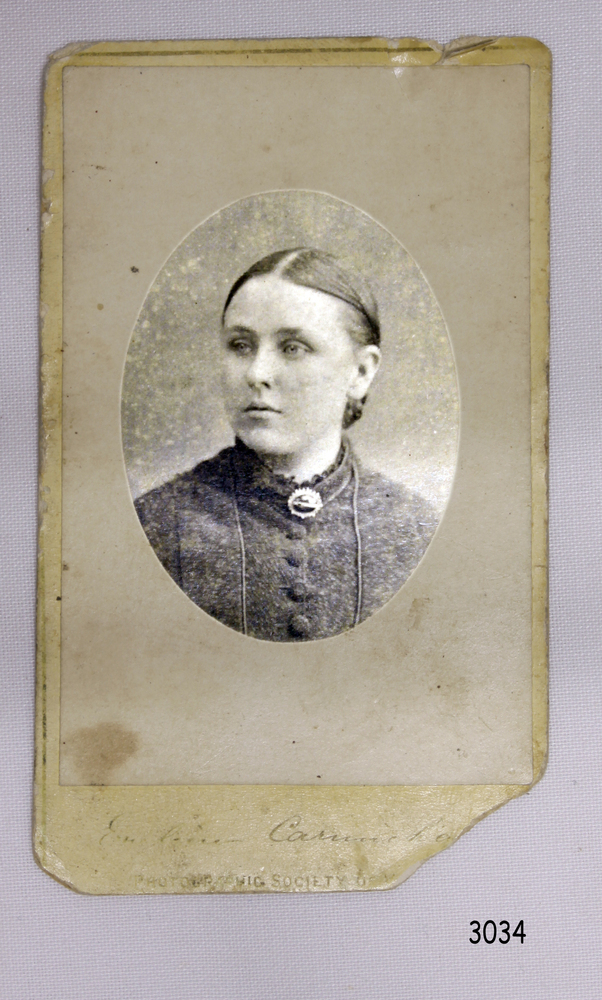
Eva Carmichael was the daughter of Dr and Mrs Emery Carmichael. Both her parents, as well as her three sisters and two brothers, were drowned when the Loch Ard was wrecked. Only five bodies were recovered from the wreck, two of these being Miss Carmichael's mother and sister. They were buried on top of the cliff. The only other survivor, Mr Tom Pearce, assisted Miss Carmichael. She was taken to Glenample homestead, where she remained for some time before going to Melbourne. A few months later, she returned to Ireland, where she later married Mr T Townshend.
The sailing ship Loch Ard was bound for Melbourne in 1878, loaded with passengers and cargo, when it ran into a rocky reef at the base of Mutton Bird Island, near Port Campbell. Of the 54 crew members and passengers on board, only two survived: an apprentice, Tom Pearce and a young woman passenger, Eva Carmichael, who lost all of her family in the tragedy.
The wreck of Loch Ard still lies at the base of Mutton Bird Island, and much of the cargo has been salvaged. Some washed up into what is now known as Loch Ard Gorge following the shipwreck. Cargo and artefacts have also been illegally salvaged over many years before protective legislation was introduced.
Significance
The photograph is significant for its association with the wreck of the Loch Ard. This wreck has been protected as a Historic Shipwreck since 11 March 1982, under the Commonwealth Historic Shipwrecks Act (1976)
Flagstaff Hill’s collection of artefacts from Loch Ard is significant for being one of the largest
collections of artefacts from this shipwreck in Victoria. It is significant for its association with the shipwreck, which is on the Victorian Heritage Register.
The collection is significant because of the relationship between the objects, as together they have a high potential to interpret the story of the Loch Ard.
The Loch Ard collection is archaeologically significant as the remains of a large international
passenger and cargo ship.
The Loch Ard collection is historically significant for representing aspects of Victoria’s shipping history and its potential to interpret sub-theme 1.5 of Victoria’s Framework of Historical Themes (living with
natural processes).
The collection is also historically significant for its association with the Loch Ard, which was one of the worst and best known shipwrecks in Victoria’s history.
The Loch Ard collection meets the following criteria for assessment:
Criterion A: Importance to the course, or pattern, of Victoria’s cultural history.
Criterion B: Possession of uncommon, rare or endangered aspects of Victoria’s cultural
history.
Criterion C: Potential to yield information that will contribute to an understanding of
Victoria’s cultural history.
Physical description
Photograph, small sepia portrait of Miss Eva Carmichael within an oval matte frame, on card. Photographed in 1878 in Melbourne by the Photographic Society of Victoria.
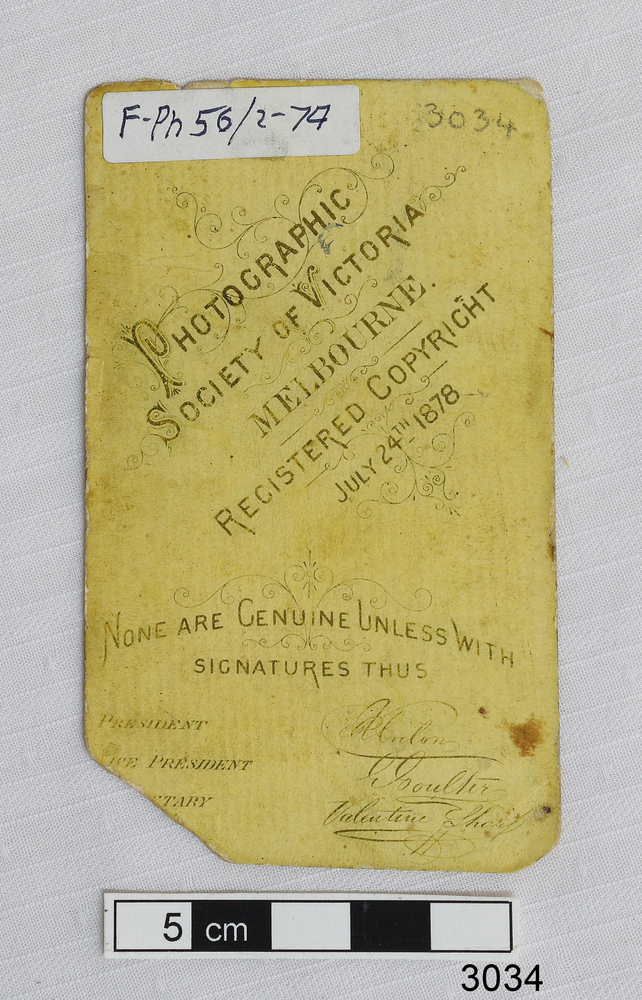
There is a handwritten inscription below the photograph. The reverse has a stamp, gold maker’s print and a white adhesive label with handwriting on it.
Inscriptions & markings
Front, handwritten below photograph: "Miss Eva Carmichael"
Reverse, bottom right, handwritten: [3 signatures]
Stamped: “PHOTOGRAPHIC / SOCIETY OF VICTORIA / MELBOURNE / REGISTERED COPYRIGHT / JULY 24th 878”
and “NONE ARE GENUINE UNLESS WITH / SIGNATURES THUS”
and “PRESIDENT / VICE PRESIDENT / - - - - - TARY”
Label, handwritten: “F- Ph 56/2 – 74”
Subjects
- flagstaff hill maritime museum and village,
- flagstaff hill,
- warrnambool,
- maritime museum,
- shipwreck coast,
- photograph,
- miss eva carmichael,
- loch ard shipwreck,
- loch ard survivor,
- photographic society of melbourne,
- dr and mrs emery carmichael.,
- mr t townshend,
- mutton bird island,
- port campbell,
- tom pearce,
- 1878
References
- Wrecks along the Great Ocean Road by J K Loney