
Showing 357 items matching "pioneer company"
-
 Stawell Historical Society Inc
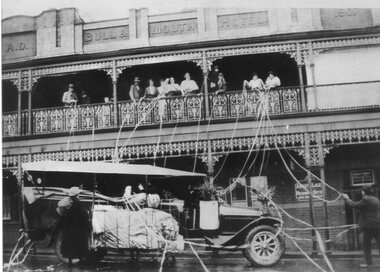
Photograph, Bull & Mouth Hotel in Main Street Stawell with Pioneer Motor company Later Pioneer Coaches Pty Ltd
... Bull & Mouth Hotel in Main Street Stawell with Pioneer Motor company Later Pioneer Coaches Pty Ltd...Bull & Mouth Hotel Main Street Stawell Built 1907 with Pioneer Motor company Later Pioneer Coaches Pty Ltd. ...Bull & Mouth Hotel Main Street Stawell Built 1907 with Pioneer Motor company Later Pioneer Coaches Pty Ltd. ...Bull & Mouth Hotel Main Street Stawell Built 1907 with Pioneer Motor company Later Pioneer Coaches Pty Ltd. Prop: Albert A Withers 1862-1929. Probably Nash Extended Chassis c1923 14-18 passengers.stawell streetscape transport -
 Victorian Interpretive Projects Inc.
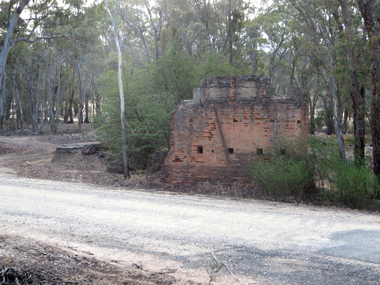
Photograph - Colour, Clare Gervasoni, Former Steele's Pioneer Company Mine, Yandoit, 16/01.2016
... Former Steele's Pioneer Company Mine, Yandoit...Former Steele's Pioneer Company Mine, Yandoit Photograph - Colour Clare Gervasoni ...A number of colour photographs of the remnants of works at Steele's Pioneer Gold Mine, Yandoit, Victoria.steele's, yandoit, steele's pioneer, mining -
 Lakes Entrance Historical Society
Book, Ronald Parsons, A Pioneer Australian Steamship Company, 1990
... A Pioneer Australian Steamship Company...Ships and Shipping Maritime History A history of the Hunters River S N Co, and the Australian Steam Navigation Company. A Pioneer Australian Steamship Company Book Ronald Parsons ...A history of the Hunters River S N Co, and the Australian Steam Navigation Company.ships and shipping, maritime history -
 Ballaarat Mechanics' Institute (BMI Ballarat)
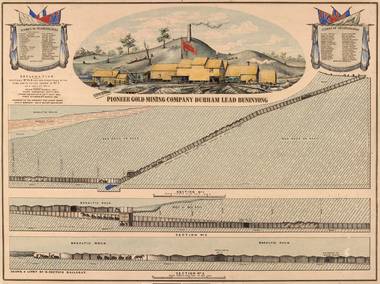
Pioneer Gold Mining Company Buninyong
... Pioneer Gold Mining Company Buninyong...Ballarat Durham lead mining Pioneer Gold Mining Company Buninyong ...This photograph is from the Max Harris Collection held by the Ballaraat Mechanics' Institute. Please contact BMI for all print and usage inquiries.ballarat, durham lead, mining -
 Federation University Historical Collection
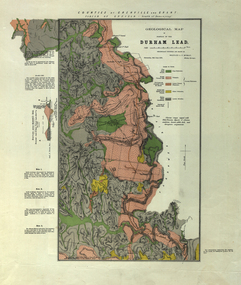
Plan, Durham Lead, 1870
... ...Pioneer Company...durham lead reginald a.f. murray plan Garibaldi Garibaldi Company Geology Chryseis Company Hardies Hill City of Manchester Company Williamson's Creek South Grenville Company Enfield Company Pioneer Company Duke of Northumberland Company Monmowth Gully Extinct Volcano Crater Mount Mercer Basalt Geological Map of portions of Durham Lead. ...Geological Map of portions of Durham Lead. durham lead, reginald a.f. murray, plan, garibaldi, garibaldi company, geology, chryseis company, hardies hill, city of manchester company, williamson's creek, south grenville company, enfield company, pioneer company, duke of northumberland company, monmowth gully, extinct volcano crater, mount mercer basalt -
 Bendigo Historical Society Inc.
Document - NEW CHUM & VICTORIA LINES OF REEF - THE NEW CHUM REEFS AND SOUTH VICTORIA
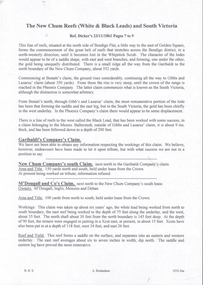
... ... Pioneer Company...DOCUMENT Gold New Chum & Victoria Lines of Reef The New Chum Reefs and South Victoria Dicker's 23/11/1861 Pages 7 to 9 Bonatti's Claim Gibbs & Lazarus Claim Phoenix Company South Victoria The Black Lead Messrs Ballerstedt Garibaldi's Company's Claim New Chum Company M'Dougall Inglis Menzies Dehan The White Lead New Chum Quartz Mining company Bonati and Company Phillip Bonati Woolcrow Albrecht Pragleman Mortinson Plumbreck Emmerling Sievis Denis's Claim Messrs Thompson and Powell Geo Denis Begelhole and Company Mr Begelhole Brown Blackwell Hildebrand & Co Begelhole & Co W Begelhole Thomas Brown Henry Begelhole John Blackwell Watson & Co J B Watson Gibbs Lazarus Local Court Grant Gibbs & Lazarus Claim Mr Gibbs Mr Lazarus Phoenix Company's Claim Pioneer Company Henry Jackson Sullivan Burrows Chambers Marshall William Gunther Klemin Fulton Brown Brown Anderson First Quartz Mining Company Burrow's & Co's Claim Hudson's Thomas Burrows W Philips George Hudson John Wybrant Handwritten notes on the New Chum Reefs (White & Black Leads) and South Victoria. ...Handwritten notes on the New Chum Reefs (White & Black Leads) and South Victoria. Ref. Dicker's 23/11/1861 Pages 7 to 9. Notes include geography, Claims, Owners, Area & Title, Workings, Reef and Yield, Drainage and Remarks. Dates are 13/8/1861, 16/10/1861 and 11/9/1861. Also, a typed copy is includeddocument, gold, new chum & victoria lines of reef, the new chum reefs and south victoria, dicker's 23/11/1861 pages 7 to 9, bonatti's claim, gibbs & lazarus claim, phoenix company, south victoria, the black lead, messrs ballerstedt, garibaldi's company's claim, new chum company, m'dougall, inglis, menzies, dehan, the white lead, new chum quartz mining company, bonati and company, phillip bonati, woolcrow, albrecht, pragleman, mortinson, plumbreck, emmerling, sievis, denis's claim, messrs thompson and powell, geo denis, begelhole and company, mr begelhole, brown, blackwell, hildebrand & co, begelhole & co, w begelhole, thomas brown, henry begelhole, john blackwell, watson & co, j b watson, gibbs, lazarus, local court grant, gibbs & lazarus claim, mr gibbs, mr lazarus, phoenix company's claim, pioneer company, henry jackson, sullivan, burrows, chambers, marshall, william gunther, klemin, fulton, brown, brown, anderson, first quartz mining company, burrow's & co's claim, hudson's, thomas burrows, w philips, george hudson, john wybrant -
 Bendigo Historical Society Inc.
Newspaper - LONG GULLY HISTORY GROUP COLLECTION: KOCK'S MINE WORKERS
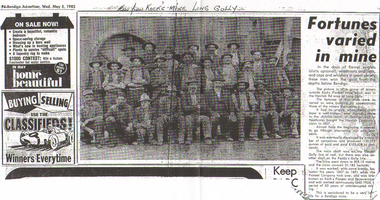
... The mine was worked, with some breaks, between 1857 and 1871 when the Pioneer Company took over, and was later known as Koch's Pioneer and Perseverance and worked continuously until 1924, a period of 53 years of uninterrupted mining....The mine was worked, with some breaks, between 1857 and 1871 when the Pioneer Company took over, and was later known as Koch's Pioneer and Perseverance and worked continuously until 1924, a period of 53 years of uninterrupted mining. ...The initial partnership in a quartz crushing plant between Henry Koch, Simon Albert and Charles Wallin was dissolved in 1860 with Koch becoming the sole owner. In 1866 the crushing plant consisted of a 50 hp engine and 48 stamping heads capable of crushing 600 tons of quartz per week. By 1902 there were 72 stamps and this was by far the largest crushing plant in the area, serving many quartz mines. Henry Koch (1800-1889) was a German sailor who signed off when his ship reached Melbourne in 1851. Having heard of the gold discovery he proceeded to Bendigo where he was initially employed in puddling in the Myers Flat area. He was soon employed and then made partner in a quartz crushing plant that he became sole owner of in 1860. He was also landlord at the British and American Hotel and the Silver Mines Hotel. HE also started the Perseverance United gold claim. He married Anna Maria Theresia Heinz in 1857. In 1872 he sold the crushing plant for 75,000 pounds and took his family back to Germany. He resumed his trade as a ship builder although he maintained many Bendigo mining interests.Photocopy of an article from the Bendigo Advertiser, dated 5/5/1982 titled Fortunes carried in mine. Written above the photo is: Men from Kock's Mine Long Gully. One man is wearing a suit and the rest are in work clothes. The mine was worked, with some breaks, between 1857 and 1871 when the Pioneer Company took over, and was later known as Koch's Pioneer and Perseverance and worked continuously until 1924, a period of 53 years of uninterrupted mining.bendigo, history, long gully history group, the long gully history group - kock's mine workers, bendigo advertiser 5/5/1982, kochs pioneer mine, henry koch, havilah company's claim, garden gully line of reef, paddy's gully line, koch's pioneer and perseverance -
 Wangaratta RSL Sub Branch
Instrument - Aircraft Air Speed Indicator
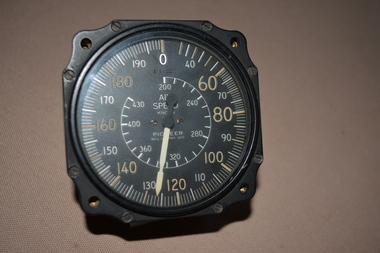
... Aircraft air speed indicator made by Pioneer Instrument Company which specialised in aeronautical instruments....Aircraft air speed indicator made by Pioneer Instrument Company which specialised in aeronautical instruments. raaf aircraft airspeed indicator ww2 pioneer instrument co Air Speed Pioneer Black painted cylindrical instrument with glass face . ...Aircraft air speed indicator made by Pioneer Instrument Company which specialised in aeronautical instruments. Black painted cylindrical instrument with glass face . There is a side cutout containing metal parts . Air Speed Pioneerraaf, aircraft, airspeed indicator, ww2, pioneer instrument co -
 The 5th/6th Battalion Royal Victoria Regiment Historical Collection
Plaque - Presentation Award, Assault Pioneer Platoon 5/6 Battallion Royal Victoria Regiment, 1996
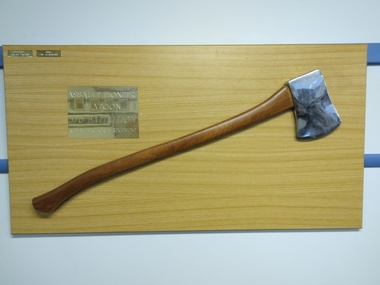
... Presented to members of Assault Pioneer Platoon, Support Company which used to be located at this depot...The paper lists the names of members of the company that had formerly been Assault Pioneers....Presented to members of Assault Pioneer Platoon, Support Company which used to be located at this depot This plaque gives insight into one of the support tasks that used to be conducted by SPT Coy prior to it morphing into D Coy Assault Pioneer Platoon 5/6 Battallion Royal Victoria Regiment 1992/95 CPL P.P. ...Presented to members of Assault Pioneer Platoon, Support Company which used to be located at this depotThis plaque gives insight into one of the support tasks that used to be conducted by SPT Coy prior to it morphing into D CoyLarge varnished timber board with chromed axe mounted diagonally across the center. There is a large brass plaque and two smaller ones affixed in the top left corner. a piece of paper has been folded and held in behind the axe. The paper lists the names of members of the company that had formerly been Assault Pioneers.Assault Pioneer Platoon 5/6 Battallion Royal Victoria Regiment 1992/95 CPL P.P. CASSAR 1996 CPL S.I RODGER -
 Ballarat Heritage Services
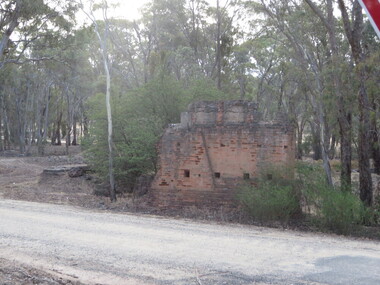
Photograph - Photograph - Colour, Steele's Pioneer Mine Ruins, Yandoit, 2016, 18/01/2016
... In 1906, the Steele's Pioneer Company commenced work, erecting a winding winch at the old shaft sunk by the Steele's Company. ...In 1906, the Steele's Pioneer Company commenced work, erecting a winding winch at the old shaft sunk by the Steele's Company. ...Steele's Reef was opened in 1859 along with a number of other reefs in the Yandoit area. The reef was worked by small mining parties until the late 1880s. In 1887, the Steele's Reef Quartz Mining Company fixed steam pumping machinery and commenced sinking a shaft. The company were unable to find a profitable ore body and after two years work closed down. By this time their shaft had reached a depth of 150 feet. The mine was then taken over by the Pioneer Quartz Mining Company who appear not to have worked the mine. In 1906, the Steele's Pioneer Company commenced work, erecting a winding winch at the old shaft sunk by the Steele's Company. The next year the company erected a 10-head battery, set of poppet legs, a pumping engine. Sinking the shaft a further 100 feet, the company struggled to find payable ore and soon closed down.Colour photographs of the remnants of Steele's mine at Yandoit, Victoria. steele's mine, yandoit, mining, ruins -
 Bendigo Historical Society Inc.
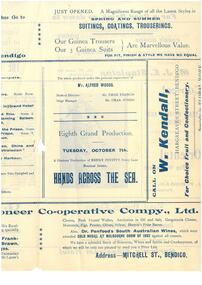
Document - HAMILTON COLLECTION:THEATRE PROGRAM, Early 1900s
... Sandhurst Pioneer Cooperative Company. Mr.J.E.Stapleton - Stationer. ...Sandhurst Pioneer Cooperative Company. Mr.J.E.Stapleton - Stationer. ...Document. Theatre Program Royal Princess Theatre, white bi-fold theatre program for ''Hands Across the Sun'', Tuesday Oct 7th. Advertisers: C.Plumbe - Tailors. Cattran's - Sandhurst Boot Palace & Golden Key. W.Kendall - Fruit and Confectionery. Sandhurst Pioneer Cooperative Company. Mr.J.E.Stapleton - Stationer. Oriental Tea Warehouse. Commonwealth Supply Stores. Straughair's Paperhangings. G.K.Conn - S.P.Bookmaker.performing arts, elocution, theatre program -
 National Vietnam Veterans Museum (NVVM)
Photograph, Gibbons, Denis, Sgt Cook
... Cook, Assault Pioneer Sergeant Support Company 4th Battalion/New Zealand (ANZAC) (June 1968 - May 1969). ...Cook, Assault Pioneer Sergeant Support Company 4th Battalion/New Zealand (ANZAC) (June 1968 - May 1969). ...Denis Gibbons (1937 – 2011) Trained with the Australian Army, before travelling to Vietnam in January 1966, Denis stayed with the 1st Australian Task Force in Nui Dat working as a photographer. For almost five years Gibbons toured with nine Australian infantry battalions, posting compelling war images from within many combat zones before being flown out in late November 1970 after sustaining injuries. The images held within the National Vietnam Veterans Museum make up the Gibbons Collection. A black and white photograph of Sergeant D.N. Cook, Assault Pioneer Sergeant Support Company 4th Battalion/New Zealand (ANZAC) (June 1968 - May 1969). Sgt Cook is the only man in the Australian Army allowed to grow a beard, granted by Lord D'Isle when he presented 4 RAR/NZ with their colours.photograph, 4 rar nz, lord d'isle, gibbons collection catalogue, assault pioneer sergeant, photographer, vietnam war, denis gibbons, sgt d.n. cook, 4th battalion, 4 rar/nz (anzac) -
 Orbost & District Historical Society
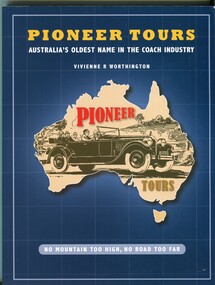
Book, Worthington, Vivienne, PIONEER TOURS, December 1 2009
... It contains black / white photographs and the history of the Pioneer Travel Company. ...It contains black / white photographs and the history of the Pioneer Travel Company. PIONEER TOURS Book book Worthington, Vivienne ...This book was written by Vivienne Worthington, a relative of the family of Albert Withers, the founder of Pioneer Coach Tours. From the hire of his first vehicle in 1905 Albert Withers always used the name 'Pioneer', until he ultimately established Pioneer Tourist Coaches, which became 'the largest of its kind in the Commonwealth' and in many respects unique. It began with motoring in Victoria and eventually covered the whole of Australia.This book is a useful reference tool.A paperback book of 136 pp. The cover is dark blue with the title, " Pioneer Tours" in yellow print at the top and "oldest name in the coach industry / Vivienne R Worthington" in white print beneath it. In the centre is an outline of a fawn coloured map of Australia with a black drawing of a family in a touring car. - probably from 1930s. At the top in red print is "PIONEER" and below the drawing in brown print is "TOURS" At the bottom of the page is "NO MOUNTAIN TOO HIGH NO ROAD TOO FAR" in white print inside a pale blue rectangle with rounded ends. It contains black / white photographs and the history of the Pioneer Travel Company. on cover at bottom in white "NO MOUNTAIN TOO HIGH NO ROAD TOO FAR" on cover at top - "PIONEER TOURS : AUSTRALIA'S OLDEST NAME IN THE COACH INDUSTRY / VIVIENNE R WORTHINGTON."transport tourism pioneer-coach-tours worthington-vivienne -
 Flagstaff Hill Maritime Museum and Village
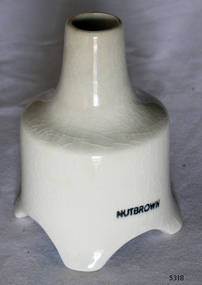
Domestic object - Pie funnel, Thomas M Nutbrown, 1932 to 1940
... He registered the company in 1932 and over the following years his company was exporting goods all over the world. His company pioneered many unseen kitchen gadgets and utensils onto the market and had many products patented. ...He registered the company in 1932 and over the following years his company was exporting goods all over the world. His company pioneered many unseen kitchen gadgets and utensils onto the market and had many products patented. ...A pie funnel is a hollow ceramic tool that bakers place in the center of pies to prevent bubbling over. They can also be called pie vents, because that hollow core allows steam to escape during baking. Thomas M Nutbrown started manufacturing kitchenware in 1927 from his factory on Walker Street, Blackpool. He registered the company in 1932 and over the following years his company was exporting goods all over the world. His company pioneered many unseen kitchen gadgets and utensils onto the market and had many products patented. Today Nutbrown continues original techniques and craftsmanship to produce kitchenware that give its products a distinctive character.A kitchen item that in the 1930s was a unique addition to any housewives kitchen from a UK company that is still producing these types of products today. Pie Funnel, ceramic white glaze, "Nutbrown" printed on side.flagstaff hill, warrnambool, shipwrecked-coast, flagstaff-hill-maritime-museum, shipwreck-coast, flagstaff-hill-maritime-village, pie funnel, porcelain pie funnel, baking utensil, cooking equipment, kitchenware, nutbrown pie funnel, nutbrown -
 Wodonga & District Historical Society Inc
Functional object - Ceramic pie Funnel, Thomas M. Nutbrown, c1930
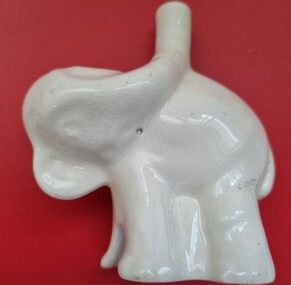
... He registered the company in 1932 and over the following years his company was exporting goods all over the world. His company pioneered many unseen kitchen gadgets and utensils onto the market and had many products patented. ...He registered the company in 1932 and over the following years his company was exporting goods all over the world. His company pioneered many unseen kitchen gadgets and utensils onto the market and had many products patented. ...A ceramic pie funnel was a hollow ceramic tool that bakers and home cooks placed in the centre of pies to prevent the contents bubbling over. The hollow core allowed steam to escape during baking leaving the pie crust as light and flaky inside as on the surface. They came in a variety of shapes and sizes. This pie funnel was produced by Thomas M Nutbrown who started manufacturing kitchenware in 1927 from his factory on Walker Street, Blackpool. He registered the company in 1932 and over the following years his company was exporting goods all over the world. His company pioneered many unseen kitchen gadgets and utensils onto the market and had many products patented. The company closed in 1988.This item was typical of kitchenware used widely in the early twentieth century when a broader range of food items were home cooked.A ceramic pie funnel in the shape of an elephant. This is marked “NUTBROWN PIE FUNNEL Made in England” and was made by a company called Thomas M. Nutbrown Ltd of Blackpool. It also has a registered design number which is a little indistinct but is probably No 860928. It dates from the 1930’s and is in very good condition.On side of elephant in black ink "NUTBROWN/ PIE FUNNEL/ Made in England/ Reg. No 860928"domestic appliances, pie funnel, kitchenware early 20th century -
 The Beechworth Burke Museum
Photograph
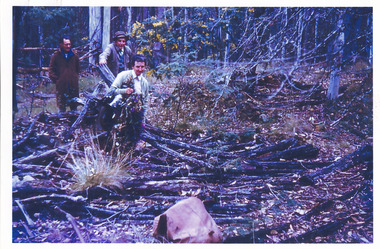
... Many companies such as the Rocky Mountain Extended Gold Sluicing Company Ltd and the Cocks Pioneer Gold &Tin Sluicing Company also set up mines in the area. ...Many companies such as the Rocky Mountain Extended Gold Sluicing Company Ltd and the Cocks Pioneer Gold &Tin Sluicing Company also set up mines in the area. ...This image shows an unknown location in the area of Beechworth that was possibly used as a sluicing mining site for gold during the Victorian Gold Rush. This era saw an influx of Chinese immigrants and Australian prospectors hoping to strike it rich on the fields. Many companies such as the Rocky Mountain Extended Gold Sluicing Company Ltd and the Cocks Pioneer Gold &Tin Sluicing Company also set up mines in the area. This site may be the location of one of these company's mines. The wooden logs are reminiscent of known sluicing operations in the era from that time. Sluicing involved the use of high-pressured hoses to clear away soil from earth that had been dug up by miners and was a popular method of excavation in the area, although it had severe impacts on the environment.The search for gold is ingrained into the history of Victoria and therefore, images like this one which portray an open cut sluicing site can reveal important information for society and technology for the date when the photograph was taken. This image is of important historical significance for its ability to convey information about sluicing and the methods used to find gold. It also shows a location where sluicing was undertook which provides insight into the impact of sluicing on the environment at a time when it was done.A colour rectangular photograph printed on glossy photographic paperReverse: 6855 /beechworth, gold rush, sluicing, mining -
 The Beechworth Burke Museum
Photograph, 1910
... Cocks pioneer gold and tin sluicing company no liabilities...This photograph depicts Cocks Pioneer Gold & Tin Sluicing Company, N.L. (no liabilities) site No.3 and is looking from the east side of the site. ...This photograph depicts Cocks Pioneer Gold & Tin Sluicing Company, N.L. (no liabilities) site No.3 and is looking from the east side of the site. ...This photograph depicts Cocks Pioneer Gold & Tin Sluicing Company, N.L. (no liabilities) site No.3 and is looking from the east side of the site. The image is captured within a small valley creek bed and presents the conditions in which mining was evolving in the early 1900s. In the foreground are remnants of components such as flume pipes, timber and iron pieces, mixed with rocks and rubble. These appeared to have connections to the small processing sluice plant featured in the background. The scale of the processing plant appears to be relatively small with the structure resembling a shack or cottage built from iron and positioned upon a floating pontoon. This is known as dredge sluicing, essentially a floating factory, that was capable of covering large areas of the lake and dams. As this dredge was compact it could maneuver in tight spaces, which larger structure could not. The size of the figures at the front opening, which appears to be a doorway, indicate the scale of this very modest production plant. Scaffolding on the roof and to the left process alluvial from the stream floor into sluicing boxes, which filtered deposits passing over a series of ripples to collect the heavier material such as gold. A faded sepia rectangular photograph printed on matte photographic paper mounted on grey green cardCocks pioneer G&T S.L. Co. N.L./ 1910/ No.3 site looking eastsluicing, el dorado, beechworth, water race, flume pipes, cocks pioneer gold and tin sluicing company no liabilities, dredging -
 Otway Districts Historical Society
Painting - Oil painting, framed, The Luncheon Rooms at Melba Gully, 1981
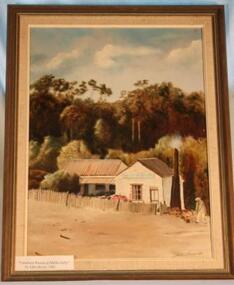
... Sometime in the late 1920s Mrs Fry was approached by Pioneer Tours, the bus company, to see if she would provide lunches and afternoon teas for their passengers travelling between Apollo Bay and Port Campbell. ...Sometime in the late 1920s Mrs Fry was approached by Pioneer Tours, the bus company, to see if she would provide lunches and afternoon teas for their passengers travelling between Apollo Bay and Port Campbell. ...Forming the headwaters of the Johanna River and noted for its majestic Myrtle Beech and Blackwood trees, in 1921 the property came into the possession of Mrs Jessie Fry, wife of Mr Thomas Fry, a well-known and respected local bushman and timber getter. Here the family lived and it was Mrs Fry who named the place 'Melba Gully'. Sometime in the late 1920s Mrs Fry was approached by Pioneer Tours, the bus company, to see if she would provide lunches and afternoon teas for their passengers travelling between Apollo Bay and Port Campbell. Mrs Fry rose to the challenge; the Melba Gully Luncheon Rooms were built adjoining the Fry home and she was in business. Mrs Fry was unfailing in her courtesy and kindness. She was also a splendid cook, known for her feather-light scones and sponges. Home-produced strawberries and cream were a special treat. Visitors were also taken on a tour of 'The Gully', often guided by one of her young sons. Melba Gully Visitors Book is testimony to her many satisfied customers. Tom and Jessie Fry sold the property on her retirement in 1947 and the tearooms ceased to operate. It again changed hands in 1958 to Otway residents Mr and Mrs Axel Madsen, and in 1975 they made the magnificent gesture of gifting the 48 hectare Melba Gully to the people of Victoria..Framed painting in oils of a weatherboard house with picket fence, before a backdrop of forest. A figure chopping wood is at the right.Signature of artist John Driver, 1981melba gully, jessie fry, thomas fry, buses, tours, weatherboard house, john driver -
 Otway Districts Historical Society
Book - Visitors Book, Melba Gully Visitors Book, 1937-1958
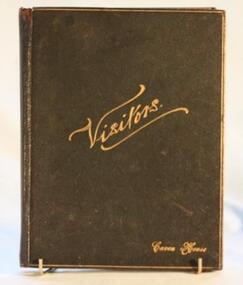
... Sometime in the late 1920s Mrs Fry was approached by Pioneer Tours, the bus company, to see if she would provide lunches and afternoon teas for their passengers travelling between Apollo Bay and Port Campbell. ...Sometime in the late 1920s Mrs Fry was approached by Pioneer Tours, the bus company, to see if she would provide lunches and afternoon teas for their passengers travelling between Apollo Bay and Port Campbell. ...Forming the headwaters of the Johanna River and noted for its majestic Myrtle Beech and Blackwood trees, in 1921 the property came into the possession of Mrs Jessie Fry, wife of Mr Thomas Fry, a well-known and respected local bushman and timber getter. Here the family lived and it was Mrs Fry who named the place 'Melba Gully'. Sometime in the late 1920s Mrs Fry was approached by Pioneer Tours, the bus company, to see if she would provide lunches and afternoon teas for their passengers travelling between Apollo Bay and Port Campbell. Mrs Fry rose to the challenge; the Melba Gully Luncheon Rooms were built adjoining the Fry home and she was in business. Mrs Fry was unfailing in her courtesy and kindness. She was also a splendid cook, known for her feather-light scones and sponges. Home-produced strawberries and cream were a special treat. Visitors were also taken on a tour of 'The Gully', often guided by one of her young sons. Melba Gully Visitors Book, running from November 1937 until the end of 1958, is testimony to her many satisfied customers. Tom and Jessie Fry sold the property on her retirement in 1947 although the tearooms continued to operate. It again changed hands in 1958 to Otway residents Mr and Mrs Axel Madsen, when it finally closed, and in 1975 they made the magnificent gesture of gifting the 48 hectare Melba Gully to the people of Victoria..Melba Gully Visitors Book. Foolscap, leather-bound, lined pages with margin approximately 30mm from left. Added, 24 p. unlined quarto.Full of inscriptions, cover to coverlavers hill, melba gully, jessie fry, thomas fry, axel madsen -
 Flagstaff Hill Maritime Museum and Village
Functional object - Water Pump, Goulds Manufacturing Co, 1915-1925
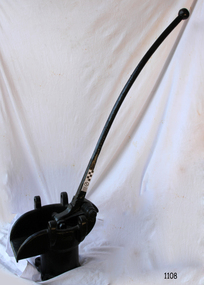
... Company he was keen to start producing cast iron pumps. An iron pump, he believed, would overcome all the disadvantages of a wooden pump. It would be strong and efficient and provide fresh flowing water for the pioneers. ...Company he was keen to start producing cast iron pumps. An iron pump, he believed, would overcome all the disadvantages of a wooden pump. It would be strong and efficient and provide fresh flowing water for the pioneers. ...Gould manufacturing company was founded in 1848 at Seneca Falls, New York when Seabury S. Gould purchased an interest in Downs, Mynderse & Co. and the firm became Downs & Co. Wooden pumps were produced at the time in an old cotton factory building. In 1869, the name of the company was changed from Downs & Company to Goulds Manufacturing Company. Seabury S. Gould was regarded as a man of unusual vision, and as the founder of Goulds Manufacturing Company he was keen to start producing cast iron pumps. An iron pump, he believed, would overcome all the disadvantages of a wooden pump. It would be strong and efficient and provide fresh flowing water for the pioneers. He ran the company until after the American Civil War and because Goulds Manufacturing had a foundry, they also produced all kinds of cast iron products such as corn shellers, bells, sad irons, sinks, tools, and a line of fire engines. From 1848 to 1964 a Gould family member had always been President of the company. However, the company ownership in 1964 was transferred from family-owned stock to public offerings and employee ownership of stock. The subject item called the "N e w Deluge" was an improved bilge pump for vessels having not more than 25 feet depth of hold. It was also used by contractors for pumping out excavations and was well adapted for irrigation use. This hand pump was designed to be used where a hand pump of large capacity was desired. Goulds made many different types of pumps to suit differing pumping situations such as. Well Pumps, Hydraulic Rams, Diaphragm Pumps, Tank Pumps, Sprayers and Small Capacity Power rumps. Goulds Triplex, Centrifugal, Rotary and Deep Well Power Pumps The subject item was first introduced to the market in the Goulds catalogue of 1915 and became a very popular pump used in Australia and the USA. It is manufactured by a company still trading today with offices in Australia and many other countries.Hand Pump cast iron with long reversable pumping lever and cylindrical casing there are 4 metal holes for fastening to floor surface. Painted black. Embossed "NEW DELUGE" "- - -" and "No 16" or "No 18".warrnambool, flagstaff-hill, flagstaff-hill-maritime-museum, maritime-museum, shipwreck-coast, flagstaff-hill-maritime-village, pump, hand pump, goulds manufacturing -
 Flagstaff Hill Maritime Museum and Village
Domestic object - Kettle, T & C Clarke and Co Ltd, 1880 to 1900
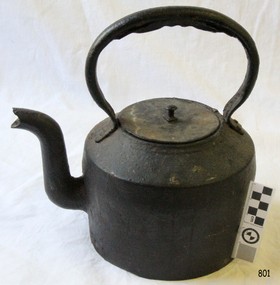
... The company grew to be one of the largest iron foundries in Wolverhampton and were pioneering in the manufacture of enamelled cast iron cookware and sanitary wares. ...The company grew to be one of the largest iron foundries in Wolverhampton and were pioneering in the manufacture of enamelled cast iron cookware and sanitary wares. ...T. & C. Clark & Company Limited was based at Shakespeare Foundry in Wolverhampton England and was founded in 1795 by Thomas and Charles Clark. The company grew to be one of the largest iron foundries in Wolverhampton and were pioneering in the manufacture of enamelled cast iron cookware and sanitary wares. The company's product range included thousands of items, both domestic and industrial. T. & C. Clark were pioneers in the use of enamelled cast ironware, after taking out a patent in 1839 guaranteeing their products to be free of lead or arsenic. The company became the largest employer in Wolverhampton employing between 600 to 700 people.The item is significant as it was used as a domestic kitchen item to boil water safely without the concern that the metal may contain lead or arsenic as earlier cooking utensils had.Kettle, cast iron ware, black with some rust. . With lid of questionable origin. Made by "T & C Clark "C" inside 6 pointed star, England RD 665875 3 quarts No 3 First Quality"flagstaff hill, warrnambool, shipwrecked-coast, flagstaff-hill, flagstaff-hill-maritime-museum, maritime-museum, shipwreck-coast, flagstaff-hill-maritime-village -
 Flagstaff Hill Maritime Museum and Village
Nibs & box, late 19th to early 20th century
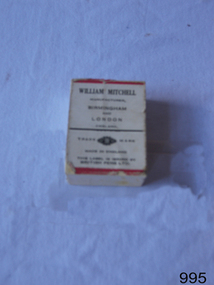
... Established in 1827 Joseph Gillott was one of the pioneers of mass steel pen nib manufacturing. The company was particularly strong in the American market, prompting Elihu Burrit, the American consul, to write “In ten thousand school houses across the American continent between two oceans, a million children are as familiarly acquainted with Joseph Gillott as with Noah Webster” (The compiler of the famous American dictionary). ...Established in 1827 Joseph Gillott was one of the pioneers of mass steel pen nib manufacturing. The company was particularly strong in the American market, prompting Elihu Burrit, the American consul, to write “In ten thousand school houses across the American continent between two oceans, a million children are as familiarly acquainted with Joseph Gillott as with Noah Webster” (The compiler of the famous American dictionary). ...Box of dip pen nibs made by William Mitchell Calligraphy dating back to late 19th or early 20th century when dip pens with steel nibs were the main writing instruments. The pen nibs are shaped to fit into a slot in the base of a wooden or Bakelite pen holder. The hole at the front of the nib is for collecting ink from a well, which is then stored in a reservoir at the back of the nib. The nibs are stamped with their nib size and Pedigree (what type of nib it is) and maker’s details. William Mitchell Calligraphy still makes these nibs today with a slightly difference finish. (ref: Sales and Marketing Director of William Mitchell Calligraphy in 2016). HISTORY of the Ink Pen Quills and ink were common writing tools until the early 19th century when the pen trade began mass producing steel nibs and pens. The steel nibs each have a hole in the middle that acts like a well for the ink. When the nib is dipped into the ink well the writer needs to ensure that it is dipped to only just past that well. India Ink was one of the most popular inks used with the nib pens, notable for its satin-like smooth flow. This ink is composed of a particularly fine carbon mixed with water; it can also be obtained as a dry stick that is then crushed and mixed with water as required. The Jewellery Quarter of Birmingham had the largest concentration of independent jewellers in Europe. Birmingham became the centre of the world’s pen trade for many years -, during the 1800’s over 100 factories, employing 1000s of skilled workers, manufactured the ‘Birmingham Pen’. ABOUT WILLIAM MITCHELL CALLIGRAPHY LTD.* (*The following text is quoted from the William Mitchell Calligraphy website) British based William Mitchell Calligraphy has been designing and manufacturing exceptional pens for almost 200 years. The William Mitchell heritage in making pen nibs began whilst working with his brother John Mitchell in the early 1820s. William Mitchell established his own business in 1825 to become one of the leading nib manufacturers and famous for lettering pens. Almost 100 years later William Mitchell merged with Hinks, Wells & Co, another pen manufacturer, to form British Pens, employing around 1000 people in the Bearwood Road area of Birmingham. During the early 1960s British Pens acquired the pen business of other pen manufacturers Perry & Co and John Mitchell, once again reuniting the two brothers. Joseph Gillott, who were famous for their artist drawing and mapping nibs, amalgamated with British pens in 1969. William Mitchell and Joseph Gillott established in Birmingham during the early part of the nineteenth century and [their products] are still proudly made here. British Pens were subsequently purchased by its current owner Byron Head, the owner of William Mitchell (Sinkers) in 1982, and was subsequently renamed William Mitchell (calligraphy) Ltd. Established in 1827 Joseph Gillott was one of the pioneers of mass steel pen nib manufacturing. The company was particularly strong in the American market, prompting Elihu Burrit, the American consul, to write “In ten thousand school houses across the American continent between two oceans, a million children are as familiarly acquainted with Joseph Gillott as with Noah Webster” (The compiler of the famous American dictionary). The company consequently received visits from many notable Americans, including president Ulysses S Grant. Email on file, from Mike Chappell, Sales and Marketing Manager, William Mitchell Calligraphy, “20161122 - William Mitchell re pen nibs” How to use a dip pen to create modern calligraphy, https://thepostmansknock.com/how-to-use-a-dip-pen-to-create-modern-calligraphy/ India Ink, Wikipedia https://en.wikipedia.org/wiki/India_ink birmingham Pen Trade, Wikipedia, https://en.wikipedia.org/wiki/Birmingham_pen_trade The Pen Museum, http://penmuseum.org.uk/ The early 19th century invention and later mass production of pen nibs such these in our collection had a large impact on education and literacy because the nibs could be produced in great numbers and affordable prices.Box of patent Mitchell nibs containing 48 "Pedigree" nibs. Box depicts picture of William Mitchell on lid, and picture of nib pen on lid and side. Made in Birmingham, England. Nib “0505 Wm MITCHELLS PEDIGREE ENGLAND” Box “PEDIGREE / MAINFOLD SLIP”, “WILLIAM MITCHELL / BIRM - - - - - - LOND” flagstaff hill, warrnambool, shipwrecked-coast, flagstaff-hill, flagstaff-hill-maritime-museum, maritime-museum, shipwreck-coast, flagstaff-hill-maritime-village, william mitchell calligraphy ltd, pen nib, writing implement, writing accessories, dip pen, birmingham manufacturer, communication in writing, mass produced pen nibs -
 Flagstaff Hill Maritime Museum and Village
Domestic object - Kettle, T & C Clarke and Co Ltd, Late 19th to early 20th century
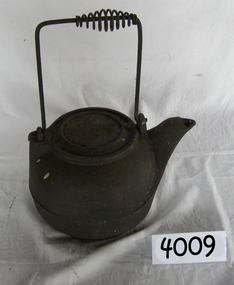
... The company grew to be one of the largest iron foundries in Wolverhampton and were pioneering in the manufacture of enamelled cast iron cookware and sanitary wares. ...The company grew to be one of the largest iron foundries in Wolverhampton and were pioneering in the manufacture of enamelled cast iron cookware and sanitary wares. ...T. & C. Clark & Company Limited was based at Shakespeare Foundry in Wolverhampton England and was founded in 1795 by Thomas and Charles Clark. The company grew to be one of the largest iron foundries in Wolverhampton and were pioneering in the manufacture of enamelled cast iron cookware and sanitary wares. The company's product range included thousands of items, both domestic and industrial. T. & C. Clark were pioneers in the use of enamelled cast ironware, after taking out a patent in 1839 guaranteeing their products to be free of lead or arsenic. The company became the largest employer in Wolverhampton employing between 600 to 700 people.The item is significant as it was used as a domestic kitchen item to boil water safely without the concern that the metal may contain lead or arsenic as earlier cooking utensils had. Kettle metal has spiral wire piece on handle painted black T & C Clarkflagstaff hill, warrnambool, shipwrecked-coast, flagstaff-hill, flagstaff-hill-maritime-museum, maritime-museum, shipwreck-coast, flagstaff-hill-maritime-village, kettle, domestic item, cooking, kitchen ware, cast iron, t & c clark & co -
 Flagstaff Hill Maritime Museum and Village
Equipment - Platform Scales
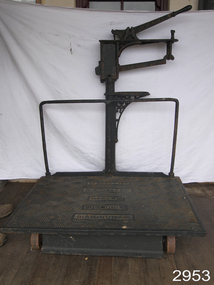
... Made by a company that pioneered weighing equipment with offices all over the world. ...Large platform scales such as these ones made by W. & T. Avery were used for weighing goods for trading and passengers' luggage. They would be used in places such as railway stations, shipping ports, customs offices and ticketing offices. Often fees would be charged to customers according to the weight of their goods and luggage. Items would be placed onto the large horizontal platform then weights would be added to the weighing bar until the bar leveled to being horizontal. The weights would be added together and the total of the weights would be used for the final figure. These scales were made in Birmingham, England, by the British company, W and T Avery. The company had its origins in the early 1700s but only became known as W and T Avery when the brothers William and Thomas Avery inherited the scale-making business from a relative, Joseph Balden, on his death in 1813. By 1885 they had three factories and In 1895, the company acquired James Watt & Co and two years later had moved to the 25-acre Soho Foundry site in Smethwick, Birmingham where James Watt had manufactured steam engines. When the last Avery family member died in 1918, the company employed over 3,000 people and had businesses all over the world. Following the highly successful introduction of the first digital retail scale in 1971, the company was taken over by the GEC Group in 1979. The business was subsequently acquired by the American company, Weigh-Tronix, in 2000 which had already acquired a competitor, Salter. The Avery name continues today in the company known as Avery Weigh-Tronix.An item that was used at the turn of the century as train platform scales or for weighing agricultural products. Made by a company that pioneered weighing equipment with offices all over the world. With many examples of this scale in museums throughout the world. Platform scales with wheels. Large cast iron, scales painted black, weight capacity to 7 CWT (hundred weight). Weight beam has markers "0. 5. 10. 15. 20. 25". Platform scale loose weight type with relieving handle; cast iron construction, fluted columns with integral weight stand, the two wheels are fitted to base at front of platform; there is a graduated steelyard 0-14bs with pear-shaped poise. Weight carrier is missing.Pressed into cast iron arm on scale, one side "W. & T. AVERY", opposite side "BIRMINGHAM", and into the platform "TO WEIGH 7 CWT, W. & T. AVERY, MAKERS, LONDON & BIRMINGHAM" flagstaff hill, warrnambool, shipwrecked-coast, flagstaff-hill, flagstaff-hill-maritime-museum, maritime-museum, shipwreck-coast, flagstaff-hill-maritime-village, measuring scales, weighing scales, weighing instrument, fees for goods, fees for luggage, ticket office -
 Flagstaff Hill Maritime Museum and Village
Instrument - Compass and Housing, 1880-1900
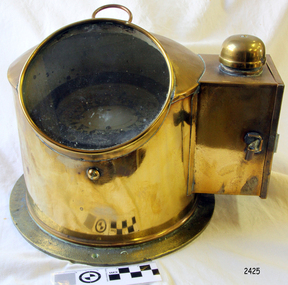
... company he founded "Gehna" is today a substantial international marine corporation and is still based in Hamburg. A rare example of an early binnacle and compass probably used on a sailing vessel. It is a significant item not only for it’s rarity but also because it demonstrates the progress of marine navigational instrument development in the late 19th century. The item was made by an early pioneer ...This compass was used to determine directions using a free-moving magnetised needle, indicating north and south. W Hartmann was a compass maker located in Hamburg Germany some of his compasses are marked “Gehna” and “Nautica”. There is no information available regards W Hartmann, his successor in the business was “Georg Hechelmann” a marine instrument maker of which Gehna is an acronym of his name. In 1874 he patented an improved version of “Lord Kelvin Thomson’s” compass design of a paper rose with magnets hung on silk threads. It appears he worked in his shop from around 1878 until probably 1905. The company he founded "Gehna" is today a substantial international marine corporation and is still based in Hamburg. A rare example of an early binnacle and compass probably used on a sailing vessel. It is a significant item not only for it’s rarity but also because it demonstrates the progress of marine navigational instrument development in the late 19th century. The item was made by an early pioneer and innovator of marine navigation and instrument making. Compass and Housing; the brass housing, with side light box, insides a fluid dampening gimble compass. The maker is W Hermann/Georg Hechelmann, of Hamburg, Germany. The inscription ioncludes the number of the compass.Made by W Hartmann/Georg Hechelmann of Hamburg, No 7208flagstaff hill, warrnambool, shipwrecked-coast, flagstaff-hill, flagstaff-hill-maritime-museum, maritime-museum, shipwreck-coast, flagstaff-hill-maritime-village, compass and housing, w hartmann, binnacle, georg hechelmann, navigational instrument, ship compass -
 Flagstaff Hill Maritime Museum and Village
Confectionery Thermometer, Early 20th Century
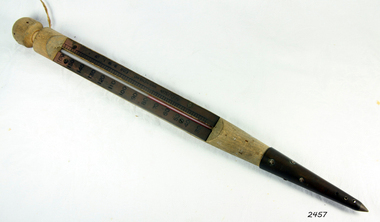
... An item made for the confectionery industries not very rare, but made by the company that invented and pioneered the blood pressure meter (sphygmomanometer) that is still in use today and an item we all have use when we have visited our doctor when our blood pressure is checked. flagstaff hill warrnambool shipwrecked-coast flagstaff-hill flagstaff-hill-maritime-museum maritime-museum shipwreck-coast flagstaff-hill-maritime-village thermometer b.m.i. ltd accoson Blood Pressure Inscription Made by ACCOSON, in England for B.M.I. ...The company was established in 1859 by Alfred Charles Cossor following a period of apprenticeship by the founder as a glass blower, Having gained a high reputation for his skills and the quality of his products, the founder was joined by his sons Alfred Charles in 1875 and then by his younger son Frank in 1885. In 1904 Accoson produced their first glass manometer, using their glass blowing skills, known as the sphygmomanometer. A year later Russian surgeon Nikolai Korotkoff first described the technique to measure diastolic pressure. In 1921 Frank Cossor was joined by his son Frank Gordon Cossor and the company expanded its products to include all types of thermometers, hydrometers and syringes. However, Sphygmomanometers became the main product of the company. When Adrian Cossor joined the company in 1966 he was the fourth generation to do so. Accoson was acquired by the HCE Medical Group in 2018 and relocated to new premises in Irvine, Scotland. An item made for the confectionery industries not very rare, but made by the company that invented and pioneered the blood pressure meter (sphygmomanometer) that is still in use today and an item we all have use when we have visited our doctor when our blood pressure is checked.Thermometer wooden casing with a metal tip. used for measuring temperature by the expansion and contraction of mercury or alcohol in a capillary tube and bulb. Inscription Made by ACCOSON, in England for B.M.I. Ltd.flagstaff hill, warrnambool, shipwrecked-coast, flagstaff-hill, flagstaff-hill-maritime-museum, maritime-museum, shipwreck-coast, flagstaff-hill-maritime-village, thermometer, b.m.i. ltd, accoson, blood pressure -
Federation University Historical Collection
Drawing - Rubbing, Rubbing on a plaque relating to the Sky High Restaurant
... Cody & Quinn Pty Ltd Builders .2) (logo) This tablet was erected by the citizens of Ballarat in honour of the pioneers of this city and district. .3) This MEMORIAL TABLET was unveiled on the 3rd May 1961 by F.W. WRAY, Esq in the company of S.C. ...Cody & Quinn Pty Ltd Builders .2) (logo) This tablet was erected by the citizens of Ballarat in honour of the pioneers of this city and district. .3) This MEMORIAL TABLET was unveiled on the 3rd May 1961 by F.W. WRAY, Esq in the company of S.C. ...This is thought to be the work of Keith Rash of Ballarat.A number of rubbings from plaques on buildings. .1) Sky High Restaurant .2) Pioneers Tablet (Probably relating to the Pioneers Plot at the Ballaarat Old Cemetery. .3) and .4) Plaque relating to the Pioneers tablet.1) This Skyhigh restaurant was officially opened by The Hon. Vance Dickie M.L.C. Minister for Tourism on the 25th March 1971 This building was planned and constructed for The Ministry of Tourism J. Dale Fisher F.R.A.I.A. Architect W.J. Cody & Quinn Pty Ltd Builders .2) (logo) This tablet was erected by the citizens of Ballarat in honour of the pioneers of this city and district. .3) This MEMORIAL TABLET was unveiled on the 3rd May 1961 by F.W. WRAY, Esq in the company of S.C. HENDERSON, Esq. The only remaining members of the Original Pioneers Memorial Committee.architecture, j. dale, w, j, cody & quinn, skyhigh restaurant, frottage, rubbing, ballarat pioneers, keith rash -
Federation University Historical Collection
Equipment - Camera, Thornton-Pickard, Thornton Pickard Triple Imperial Extension Camera, c1901
... The company was based in Altrincham, near Manchester, and was an early pioneer in the development of the camera industry....The company was based in Altrincham, near Manchester, and was an early pioneer in the development of the camera industry. ...Thornton-Pickard was a famous British camera manufacturer established in 1888. The company was based in Altrincham, near Manchester, and was an early pioneer in the development of the camera industry.Thornton Pickard Triple Imperial Extension half plate camera nos 529946 and 529947. The camera has leather bellows, and was originally mounted on a tripod.camera, extension camera, photographic equipment -
 Flagstaff Hill Maritime Museum and Village
Domestic object - Baby Feeding Bottle, Allen & Handbury's, 1891-1920
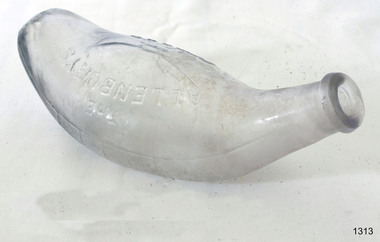
... company was continuous, but it was in the second part of the 19th century that developments on a large scale took place. Factories were built at Ware, Hertfordshire, and Bethnal Green in East London. The factory at Ware specialised in infants' foods, dietetic products, medicated pastilles, malt preparations as well as galenical preparations, beginning production in 1892. The brands included Allenburys Nº1 and Nº2 foods (essentially milk foods for babies up to six months), and Allenburys Nº 3 (malted farinaceous food, six months and older). Allenburys Rusks was a suitable first solid food for infants. Allenburys claimed to be pioneers...company was continuous, but it was in the second part of the 19th century that developments on a large scale took place. Factories were built at Ware, Hertfordshire, and Bethnal Green in East London. The factory at Ware specialised in infants' foods, dietetic products, medicated pastilles, malt preparations as well as galenical preparations, beginning production in 1892. The brands included Allenburys Nº1 and Nº2 foods (essentially milk foods for babies up to six months), and Allenburys Nº 3 (malted farinaceous food, six months and older). Allenburys Rusks was a suitable first solid food for infants. Allenburys claimed to be pioneers ...Allen & Hanburys was founded in 1715 in Old Plough Court, Lombard Street, London, by Silvanus Bevan, a Welshman, apothecary, and a Quaker. Bevan and his brother, Timothy, who became his partner and later succeeded him, were known for their just dealings and the integrity and quality of their drugs. The company grew into a respected pharmaceutical center and had established a strong reputation with American doctors by the late 18th century. William Allen, FRS, also a Quaker, and well-known scientist, joined the firm in 1792 and rose quickly to become the dominant personality. His second wife was a member of the Hanbury family who had produced several learned scientists. On Allen's death, the Hanbury family assumed control of the company. The growth of the company was continuous, but it was in the second part of the 19th century that developments on a large scale took place. Factories were built at Ware, Hertfordshire, and Bethnal Green in East London. The factory at Ware specialised in infants' foods, dietetic products, medicated pastilles, malt preparations as well as galenical preparations, beginning production in 1892. The brands included Allenburys Nº1 and Nº2 foods (essentially milk foods for babies up to six months), and Allenburys Nº 3 (malted farinaceous food, six months and older). Allenburys Rusks was a suitable first solid food for infants. Allenburys claimed to be pioneers in Great Britain in the production of pastilles, and thus the Ware factory also produced Allenburys Glycerine and Black Currant Pastilles, amongst another 80 different kinds of medicated and crystallised pastilles. Allen and Hanburys were one of the first manufacturers of cod liver oil in Great Britain, and owned factories in the Lofoten Islands (Norway) as well as at Hull and Aberdeen taking cod directly from the North Sea. The Bethnal Green factory carried much of the administrative and scientific side of the business, which included research, analytical control, chemistry, pharmacy, and pharmacology. In this plant, galenical preparations, pills, tablets, capsules, and other classes of pharmaceutical and medical goods were prepared. The company had overseas branches in Lindsay, Ontario, Durban, India, Shanghai, Australia, and Buenos Aires, and agencies in many other countries. The company address was for many years at 37 Lombard Street, London EC. Allen and Hanburys Ltd were absorbed by Glaxo Laboratories in 1958 under the name Glaxo Smith Kline, the company, used the Allen and Hanburys name for the specialist respiratory division until it was phased out in 2013.An early baby feeding bottle was made by the Allen & Hanburys company between 1891 to around 1920. The item is significant as it was used to feed babies the new manufactured baby milk formula's made by Allen & Hanburys that were gaining in popularity towards the end of the Victorian era.Baby feeding bottle clear glass curved with flat bottom and measuring scale, teat opening at one end and filling hole without stopper at the other end.Allenburys Feeder AD 1715warrnambool, shipwrecked-coast, flagstaff-hill, flagstaff-hill-maritime-museum, maritime-museum, shipwreck-coast, flagstaff-hill-maritime-village, baby feeding bottle, bottle, domestic object -
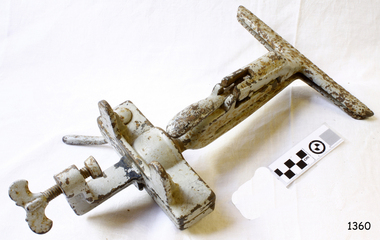 Flagstaff Hill Maritime Museum and Village
Tool - Bench Saw Vice, Henry Disston & Sons, 1910 -1925
... A significant American company that pioneered the making of high-quality steel and saws along with other tools and accessories. ...The subject item is a saw blade sharpening clamp that attaches to a bench allowing the operator to sharpen the teeth on a saw with a file while keeping the saw blade in an upright position. Henry Disston (1819–1878) began his career as an American saw maker in Philadelphia. He emigrated from England in 1833 and started making saws and squares in 1840. In 1850, he founded the company that would become the largest saw maker in the world the ”Keystone Saw Works” on the Delaware River. Some five years later, Disston built a furnace possibly the first melting plant for steel in America and began producing the first crucible saw steel ever made in the United States. While his competitors were buying good steel from Britain, he was making his own, to his specification, for his own needs. Disston subsequently constructed a special rolling mill exclusively for saw blades. Over the following decade, the Disston company continued to grow, even while dedicating itself to the Union Army's war effort. In 1865, when his son Hamilton Disston rejoined the business after serving in the Civil War, Disston changed the company's name to Henry Disston & Son. Henry Disston and his sons set the standards for American saw makers, both in terms of producing high-quality saws and developing innovative manufacturing techniques. Disston also started making files in 1865. In September 1872, Henry Disston and two other men dug a part of the foundation for what was to become the largest saw manufacturing facility in the world: Disston Saw Works. This was in the Tacony section of Philadelphia. Having previously moved his expanding business from near Second and Market Streets to Front and Laurel Streets, Disston sought to establish his business away from this cramped area. It took over 25 years to move the entire facility to Tacony. This Philadelphia neighborhood seems to have been the only company town in the United States established within an existing city. At its peak of operations, Disston Saw Works employed 8,000 people and the factory covered 300 acres. The company, known as Henry Disston and Sons, Inc by the early 20th century, cast the first crucible steel in the nation from an electric furnace in 1906. The firm's Armour plate building near Princeton Avenue and Milnor Street contributed tremendously to the World War II effort. But the company's innovation and industriousness would not last forever. In 1955, with mounting cash-flow problems and waning interest on the family's part to run the firm, Henry Disston and Sons were sold to the H.K. Porter Company of Pittsburgh. Porter's Disston Division was sold in 1978 and became the Henry Disston Division of Sandvik Saw of Sweden. This division was then sold in 1984 to R.A.F. Industries of Philadelphia and became known as Disston Precision Incorporated, a maker of specialized flat steel products. In 2013, R.A.F. Industries sold Disston Precision Inc. in a private sale. Although the company has ceased making Disston handsaws, the Disston brand name still exists in this firm. A significant American company that pioneered the making of high-quality steel and saws along with other tools and accessories. The subject item is significant as it was made at a time when the company was in its hay day. Adjustable Ball & Socket Saw Sharpening vice, cast iron, with clamp to attach to a workbench. Made by Henry Disston & Co. No 1 painted greyflagstaff hill, warrnambool, flagstaff-hill, flagstaff-hill-maritime-museum, maritime-museum, shipwreck-coast, flagstaff-hill-maritime-village, saw clamp, henry disston & sons, saw sharpening, tool accessories, wood saws
