
Showing 105 items matching "plenty farm"
-
 Greensborough Historical Society
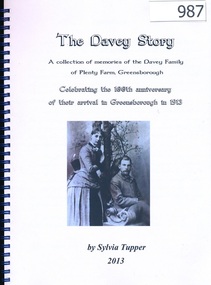
Book, The Davey Story; a collection of memories of the Davey Family of Plenty Farm, Greensborough; by Sylvia Tupper 2013, 1913-2013
... The Davey Story; a collection of memories of the Davey Family of Plenty Farm, Greensborough; by Sylvia Tupper 2013.......plenty farm...This history of the Davey Family of Plenty Farm Greensborough was published to celebrate the 100th anniversary of John Henry Davey, his wife Elizabeth and children settling in Greensborough in 1913. ...The Davey Story; a collection of memories of the Davey Family of Plenty Farm, Greensborough; by Sylvia Tupper 2013. ...This history of the Davey Family of Plenty Farm Greensborough was published to celebrate the 100th anniversary of John Henry Davey, his wife Elizabeth and children settling in Greensborough in 1913. The book contains stories written by many family members, photographs and traces the family line back to England in the 17th century.A thoroughly researched and referenced family history.108 pages, colour and black and white illustrations. Spiral binding. davey family, sylvia tupper, plenty farm, greensborough -
 Greensborough Historical Society
CD-ROM, The Davey story: a collection of memories of the Davey Family of Plenty Farm Greensborough, by Sylvia Tupper, 1913-2013
... The Davey story: a collection of memories of the Davey Family of Plenty Farm Greensborough, by Sylvia Tupper...This CD contains stories collected and published by Sylvia Tupper. davey family sylvia tupper CD-ROM in envelope The Davey story: a collection of memories of the Davey Family of Plenty Farm Greensborough, by Sylvia Tupper CD-ROM Sylvia Tupper (nee Davey) ...The Davey family came to live in Greensborough in 1913. This CD contains stories collected and published by Sylvia Tupper.CD-ROM in envelopedavey family, sylvia tupper -
 Greensborough Historical Society
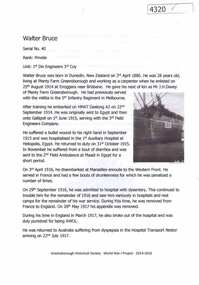
Article, Greensborough Historical Society et al, Walter Bruce, 1914-1918
... At the time of Walter Bruce's enlistment, he was living at Plenty Farm and working for Mr John Davey....At the time of Walter Bruce's enlistment, he was living at Plenty Farm and working for Mr John Davey. world war 1 project walter bruce 1 Page, text and colour images. ...A short article about Walter Bruce and his service in World War 1. At the time of Walter Bruce's enlistment, he was living at Plenty Farm and working for Mr John Davey.1 Page, text and colour images.world war 1 project, walter bruce -
 Greensborough Historical Society
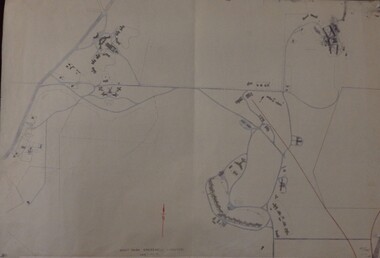
Maps, Mont Park, Gresswell, Larundel, 01/08/1949
... Map of Mont Park area, including Larundel, Gresswell and Kingsbury Farm, between Plenty Road and Waiora Road, as at 1949, including buildings. ...Map of Mont Park area, including Larundel, Gresswell and Kingsbury Farm, between Plenty Road and Waiora Road, as at 1949, including buildings. mont park larundel gresswell watsonia kingsbury 49/147, R. ...Map of Mont Park area, including Larundel, Gresswell and Kingsbury Farm, between Plenty Road and Waiora Road, as at 1949, including buildings. Map of Mont Park area, including Larundel, Gresswell and Kingsbury Farm. Ink & pencil. Scale: 200': 1 inch49/147, R. G. H.mont park, larundel, gresswell watsonia, kingsbury -
 Greensborough Historical Society
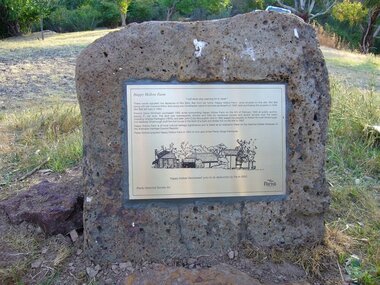
Photograph - Digital Image, Happy Hollow plaque, 05/02/1840o
... plenty river...happy hollow...happy hollow farm...The land surrounding Happy Hollow farm at Plenty was purchased by Francis Wickham in 1840. ...The land surrounding Happy Hollow farm at Plenty was purchased by Francis Wickham in 1840. ...The land surrounding Happy Hollow farm at Plenty was purchased by Francis Wickham in 1840. The land was later subdivided and held by various owners including Charles Partington (1875) and John McLaughlin who leased the property in 1892 to Robert Emmett Whatmough who erected the first dwelling on the property. The land was later owned by Mrs Betty Bell and was purchased by Parks Victoria in 1994 to form part of the Plenty Gorge Parklands. This plaque was laid by Plenty Historical Society.Happy Hollow was an example of early settlement along the Plenty River.Digital copy of colour photograph. Plaque at Plenty Gorge Parklands.plenty river, happy hollow, happy hollow farm, robert emmett whatmough, betty bell, john mclaughlin, charles partington, parks victoria -
![Article - Article, Newsletter, Greensborough RSL, Memorabilia: Did You Know [Article on water powered flour mills], 1842o](/media/collectors/4f729f5697f83e03086015b8/items/5091b7fc2162ef017426bfd2/item-media/58a1ae60d0cdd41070a1d27e/item-fit-380x285.jpg?cb=6) Greensborough Historical Society
Greensborough Historical SocietyArticle - Article, Newsletter, Greensborough RSL, Memorabilia: Did You Know [Article on water powered flour mills], 1842o
... plenty river...yan yean reservoir...boadles mill...marsh farm...Contains some hard to find information on district flour mills and their fate. janefield mill george coulstock john brock peter hurlestone carome mill thomas mill plenty river yan yean reservoir boadles mill marsh farm diamond creek A one page article on Plenty River flour mills written by Jim Allen. ...Contains a brief history of the various flour mills that existed on the Plenty River upstream from Greensborough and some others in the district.Contains some hard to find information on district flour mills and their fate.A one page article on Plenty River flour mills written by Jim Allen.janefield mill, george coulstock, john brock, peter hurlestone, carome mill, thomas mill, plenty river, yan yean reservoir, boadles mill, marsh farm, diamond creek -
 Greensborough Historical Society
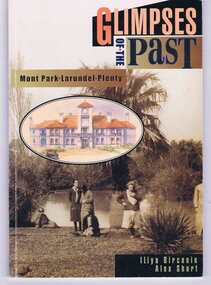
Book, Glimpses of the past: Mont Park, Larundel, Plenty. By Iliya Bircanin and Alex Short, 1909o
... This book gives an outline of life within the hospital precinct. mont park hospital larundel hospital plenty hospital iliya bircanin alex short nemps north eastern metropolitan psychiatric services 64 pages, illus. (some col.). Cover includes sepia photo 'Pond at Farm ...The psychiatric hospitals at Mont Park, Larundel and Plenty closed in the late 1970s and this book gives a brief history of the group of hospitals. The area has since been redeveloped into a residential area, although some of the original buildings remain.This book gives an outline of life within the hospital precinct.64 pages, illus. (some col.). Cover includes sepia photo 'Pond at Farm Worker's Block circa 1927'.mont park hospital, larundel hospital, plenty hospital, iliya bircanin, alex short, nemps, north eastern metropolitan psychiatric services -
 Greensborough Historical Society
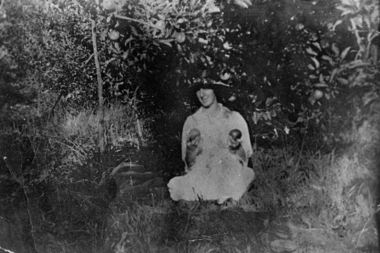
Photograph - Digital Image, Mrs Greenwood with two apples; and, older Gladys Greenwood: group of photographs, 1927c
... The Greenwood family share farmed with the Bosch family. The area of Greensborough along the Plenty River was known for its orchards, which might explain why Mrs Greenwood is photographed holding the apples. greenwood gladys greenwood Digital copy of one black and white photograph and one colour photograph. ...A young Mrs Greenwood is seen posing with two apples; an older Miss Gladys Greenwood (daughter of Mrs Greenwood) is seen at a celebration. The Greenwood family share farmed with the Bosch family.The area of Greensborough along the Plenty River was known for its orchards, which might explain why Mrs Greenwood is photographed holding the apples.Digital copy of one black and white photograph and one colour photograph.greenwood, gladys greenwood -
 Greensborough Historical Society
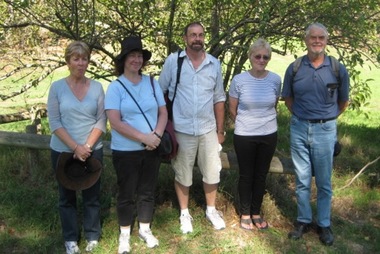
Photograph - Digital Image, Pioneer descendants, 28/3/2009
... The Whatmoughs settled and farmed along the Plenty River in Greensborough. Pictured are Denise Anderson and sister Barbara, Steve Whatmough, Faye Fort (nee Partington) and Brian Poulter. ...The Whatmoughs settled and farmed along the Plenty River in Greensborough. Pictured are Denise Anderson and sister Barbara, Steve Whatmough, Faye Fort (nee Partington) and Brian Poulter. ...Photograph of descendants of the Whatmough family. The Whatmoughs settled and farmed along the Plenty River in Greensborough. Pictured are Denise Anderson and sister Barbara, Steve Whatmough, Faye Fort (nee Partington) and Brian Poulter. Photograph taken at the unveiling of a plaque at the site of "Happy Hollow".Digital copy of colour photograph.happy hollow, poulter, partington, whatmough -
![Photograph - Digital image, Familie Bosch Australien [Bosch/Bush], 1910c](/media/collectors/4f729f5697f83e03086015b8/items/5441ba832162f10c081eab62/item-media/5441bae12162f10c081eae58/item-fit-380x285.jpg?cb=6) Greensborough Historical Society
Greensborough Historical SocietyPhotograph - Digital image, Familie Bosch Australien [Bosch/Bush], 1910c
... Johannes Bosch and family migrated from Southern Germany to Greensborough district. They farmed along the Plenty River having purchased land from Flintoff. ...Johannes Bosch and family migrated from Southern Germany to Greensborough district. They farmed along the Plenty River having purchased land from Flintoff. ...Johannes Bosch and family migrated from Southern Germany to Greensborough district. They farmed along the Plenty River having purchased land from Flintoff. Johannes Bosch came to Australia in 1884 aged 17. He married Henrietta Duck, had 3 children and divorced in 1903. Around 1902 he anglicized the family name to Bush.Digital copy of black and white photograph.johannes bosch, bosch family, bush family -
![Photograph - Digital image, Bosch family [as adults], 1914c](/media/collectors/4f729f5697f83e03086015b8/items/5441bd572162f10c081ec065/item-media/5441bd9b2162f10c081ec218/item-fit-380x285.jpg?cb=6) Greensborough Historical Society
Greensborough Historical SocietyPhotograph - Digital image, Bosch family [as adults], 1914c
... Around 1902 he anglicized the family name to Bush.They farmed along the Plenty River having purchased land from Flintoff. ...Around 1902 he anglicized the family name to Bush.They farmed along the Plenty River having purchased land from Flintoff. john adam bush johannes adem bosch frederick william bush amelia suzanne bush bosch family bush family Digital copy of black and white studio photograph. ...Photograph of Bosch (Bush) family as adults. Left to right: John Adam Bush Senior (Johannes Adem Bosch born 19/8/1867 died1925), Frederick William Bush (31/3/1892-20/8/1952), John Adam Bush Junior (3/2/1895-24/6/1970), Amelia Suzanne Bush (b25/6/1893). Johannes Bosch came to Australia in 1884 aged 17. He married Henrietta Duck, had 3 children and divorced in 1903. Around 1902 he anglicized the family name to Bush.They farmed along the Plenty River having purchased land from Flintoff. Digital copy of black and white studio photograph.john adam bush, johannes adem bosch, frederick william bush, amelia suzanne bush, bosch family, bush family -
 Greensborough Historical Society
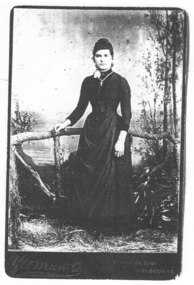
Photograph - Digital image, Hetta Bosch, 1889c
... Johannes Bosch and family migrated from Southern Germany to Greensborough district c1889. They farmed along the Plenty River having purchased land from Flintoff. ...Johannes Bosch and family migrated from Southern Germany to Greensborough district c1889. They farmed along the Plenty River having purchased land from Flintoff. ...Photograph of Hetta Bosch. Johannes Bosch and family migrated from Southern Germany to Greensborough district c1889. They farmed along the Plenty River having purchased land from Flintoff. They later changed their surname from Bosch to Bush.Digital copy of black and white studio photograph.hetta bosch, johannes bosch, bosch family, bush family -
![Photograph - Digital Image, Johannes Adem Bosch [John Adam Bush], 1910c](/media/collectors/4f729f5697f83e03086015b8/items/5441c12a2162f10c081edebc/item-media/5441c15c2162f10c081ee01a/item-fit-380x285.jpg?cb=6) Greensborough Historical Society
Greensborough Historical SocietyPhotograph - Digital Image, Johannes Adem Bosch [John Adam Bush], 1910c
... Johannes Bosch and family migrated from Southern Germany to Greensborough district c1889. They farmed along the Plenty River having purchased land from Flintoff. ...Johannes Bosch and family migrated from Southern Germany to Greensborough district c1889. They farmed along the Plenty River having purchased land from Flintoff. ...Photograph of Johannes Bosch cropped from larger photograph. Johannes Bosch and family migrated from Southern Germany to Greensborough district c1889. They farmed along the Plenty River having purchased land from Flintoff. They later changed their surname from Bosch to Bush.Digital copy cropped from black and white photograph.johannes bosch, john adam bush, bosch family, bush family -
 Greensborough Historical Society
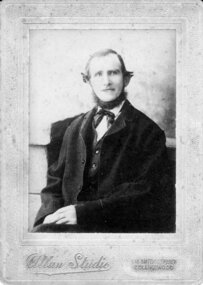
Photograph - Digital image, Charles Partington, 1880s
... Charles Partington and family came to Melbourne in the 1857 and moved to Greensborough where they farmed along the Plenty River. Descendants still live in Greensborough....Charles Partington and family came to Melbourne in the 1857 and moved to Greensborough where they farmed along the Plenty River. Descendants still live in Greensborough. ...Charles Partington and family came to Melbourne in the 1857 and moved to Greensborough where they farmed along the Plenty River. Descendants still live in Greensborough.A pioneer Greensborough family.Digital copy of black and white studio photograph.charles partington, partington family -
![Photograph - Digital image, Charles Partington [Heywood], 1856_](/media/collectors/4f729f5697f83e03086015b8/items/5441f5592162f10c08213c48/item-media/5441f5822162f10c08214095/item-fit-380x285.jpg?cb=6) Greensborough Historical Society
Greensborough Historical SocietyPhotograph - Digital image, Charles Partington [Heywood], 1856_
... Charles Partington and family came to Melbourne in the 1857 and moved to Greensborough where they farmed along the Plenty River. ...Charles Partington and family came to Melbourne in the 1857 and moved to Greensborough where they farmed along the Plenty River. charles partington Digital copy of black and white studio photograph. ...Photograph of Charles Partington probably taken in England before his departure (in 1856) for Melbourne. Charles Partington and family came to Melbourne in the 1857 and moved to Greensborough where they farmed along the Plenty River. Digital copy of black and white studio photograph.charles partington -
![Photograph - Digital image, Ellen Partington [nee Whatmough], 1897c](/media/collectors/4f729f5697f83e03086015b8/items/5441f75c2162f10c082155ad/item-media/5441f7902162f10c08215798/item-fit-380x285.jpg?cb=6) Greensborough Historical Society
Greensborough Historical SocietyPhotograph - Digital image, Ellen Partington [nee Whatmough], 1897c
... She and husband Charles Partington and family came to Melbourne in the 1857 and moved to Greensborough where they farmed along the Plenty River. Descendants still live in Greensborough....She and husband Charles Partington and family came to Melbourne in the 1857 and moved to Greensborough where they farmed along the Plenty River. Descendants still live in Greensborough. ...Photograph of Ellen Partington (nee Whatmough). She and husband Charles Partington and family came to Melbourne in the 1857 and moved to Greensborough where they farmed along the Plenty River. Descendants still live in Greensborough.Pioneer Greensborough familyDigital copy of black and white studio photograph.charles partington, ellen partington, ellen whatmough -
 Greensborough Historical Society
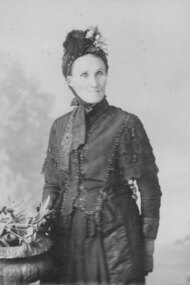
Photograph - Digital image, Ellen Partington, 1897c
... She and husband Charles Partington and family came to Melbourne in the 1857 and moved to Greensborough where they farmed along the Plenty River. Descendants still live in Greensborough....She and husband Charles Partington and family came to Melbourne in the 1857 and moved to Greensborough where they farmed along the Plenty River. Descendants still live in Greensborough. ...Photograph of Ellen Partington (nee Whatmough). She and husband Charles Partington and family came to Melbourne in the 1857 and moved to Greensborough where they farmed along the Plenty River. Descendants still live in Greensborough.Greensborough pioneer family.Digital copy of black and white studio photograph.ellen partington, ellenwhatmough, charles partington -
![Photograph - Digital image, James Partington cropped from family portrait], 31/01/1857](/media/collectors/4f729f5697f83e03086015b8/items/5441f9a32162f10c0821694f/item-media/5441f9e82162f10c08216b94/item-fit-380x285.jpg?cb=6) Greensborough Historical Society
Greensborough Historical SocietyPhotograph - Digital image, James Partington cropped from family portrait], 31/01/1857
... Charles Partington and family came to Melbourne in the 1857 and moved to Greensborough where they farmed along the Plenty River. Descendants still live in Greensborough. ...Charles Partington and family came to Melbourne in the 1857 and moved to Greensborough where they farmed along the Plenty River. Descendants still live in Greensborough. ...Portraits of James Partington cropped from family photograph. Charles Partington and family came to Melbourne in the 1857 and moved to Greensborough where they farmed along the Plenty River. Descendants still live in Greensborough. A pioneer Greensborough family.Digital copy of cropped sections of black and white studio photograph.james partington, charles partington -
 Greensborough Historical Society
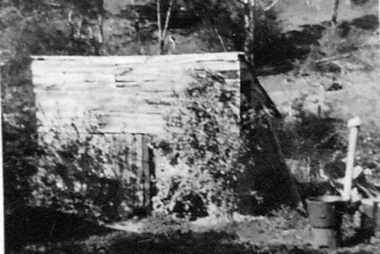
Photograph - Digital image, Outhouse, Willis Vale, 1920c
... farmed by the Partington family from the 1870s. The derelict Willis Vale house was destroyed in 1964 when a fire originating from North Plenty Gorge - Kurrak Road - was lit by two teenage boys and made its way several kilometres down to Partington's Flat Greensborough....farmed by the Partington family from the 1870s. The derelict Willis Vale house was destroyed in 1964 when a fire originating from North Plenty Gorge - Kurrak Road - was lit by two teenage boys and made its way several kilometres down to Partington's Flat Greensborough. ...This photograph shows one of the out buildings at 'Willis Vale', a property owned and farmed by the Partington family from the 1870s. The derelict Willis Vale house was destroyed in 1964 when a fire originating from North Plenty Gorge - Kurrak Road - was lit by two teenage boys and made its way several kilometres down to Partington's Flat Greensborough.The hoe of a pioneer Greensborough family.Digital copy of black and white photograph.willis vale, partington family -
 Greensborough Historical Society
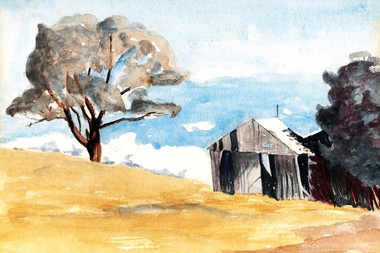
Painting - Digital image, Barn at Willis Vale, 1920c
... farmed by the Partington family from the 1870s. The derelict Willis Vale house was destroyed in 1964 when a fire originating from North Plenty Gorge - Kurrak Road - was lit by two teenage boys and made its way several kilometres down to Partington's Flat Greensborough. ...farmed by the Partington family from the 1870s. The derelict Willis Vale house was destroyed in 1964 when a fire originating from North Plenty Gorge - Kurrak Road - was lit by two teenage boys and made its way several kilometres down to Partington's Flat Greensborough. ...Painting of a barn at Willis Vale. 'Willis Vale' was owned and farmed by the Partington family from the 1870s. The derelict Willis Vale house was destroyed in 1964 when a fire originating from North Plenty Gorge - Kurrak Road - was lit by two teenage boys and made its way several kilometres down to Partington's Flat Greensborough. Gary Partington thought the barn was probably associated with the bull yard. (Note: Only some abandoned stumps existed when Gary was very young in the mid to late 1940s) Digital copy of painting.willis vale, partington family -
 Greensborough Historical Society
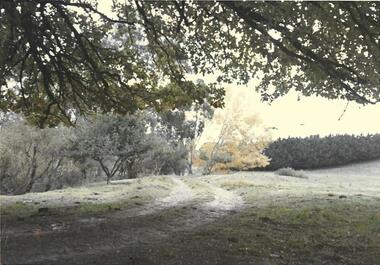
Photograph, Partington's Flat Greensborough Circa 1968, 1968_
... It may have been a track from Willis Vale house going toward the Plenty River with maybe Marsh's Pine trees in the right background defining the border fence line of the Marsh Farm....It may have been a track from Willis Vale house going toward the Plenty River with maybe Marsh's Pine trees in the right background defining the border fence line of the Marsh Farm. alan partington greensborough partingtons flat farms landscapes gardens Handwritten on back "Partington's Flat Greensborough about 1968" Colour photograph Partington's Flat Greensborough Circa 1968 Photograph Photograph Alan Partington ...Partington's Flat Greensborough was created in the 1950s when Heidelberg Council bought 12 acres from the Partington family to make the park. Fruit trees can be seen in this photograph. Gary Partington (on 2/2/2017) was hazy on the precise locale of the photo. It may have been a track from Willis Vale house going toward the Plenty River with maybe Marsh's Pine trees in the right background defining the border fence line of the Marsh Farm.Colour photographHandwritten on back "Partington's Flat Greensborough about 1968"alan partington, greensborough, partingtons flat, farms, landscapes, gardens -
 Greensborough Historical Society
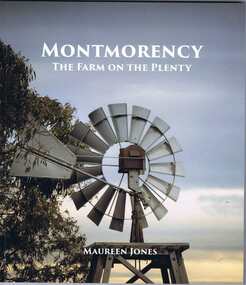
Book, Montmorency: the Farm on the Plenty / by Maureen Jones, 2015_
... Montmorency: the Farm on the Plenty / by Maureen Jones...Montmorency: the Farm on the Plenty / by Maureen Jones Book A & M Jones ...A history of the Melbourne suburb of Montmorency from its time as a hunting ground for the Wurundjeri willam people to its uptake by white settlers and eventual evolution to the suburb we know today.A well researched and documented history of the Montmorency area.166 p., illus. (some col.). Soft cover.maureen jones, montmorency -
 Greensborough Historical Society
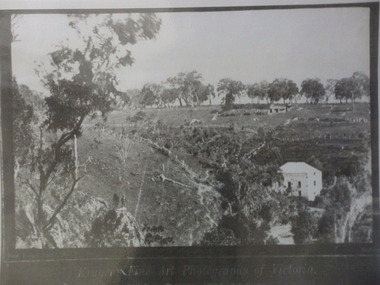
Photograph (copy), Fred Kruger, On the Plenty River near Bundoora / photograph by Fred Kruger, 1877c
... View of farm land and mill on the Plenty River near Bundoora, circa 1877; photograph by Fred Kruger. ...View of farm land and mill on the Plenty River near Bundoora, circa 1877; photograph by Fred Kruger. ...View of farm land and mill on the Plenty River near Bundoora, circa 1877; photograph by Fred Kruger. Original held at SLV (accession # H473 and Image # a53840)Black and white photograph, enlarged and laminated.fred kruger, plenty river -
 Greensborough Historical Society
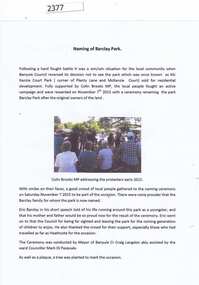
Report and photographs, Barclay Park Greensborough, 07/11/2015
... On November 7, 2015 a small park in Greensborough (previously known as McKenzie Court Park, corner Plenty Lane and McKenzie Court) was renamed as Barclay Park after a local family. henry and Dorothy Barclay farmed Grace Park from 1938. ...On November 7, 2015 a small park in Greensborough (previously known as McKenzie Court Park, corner Plenty Lane and McKenzie Court) was renamed as Barclay Park after a local family. henry and Dorothy Barclay farmed Grace Park from 1938. ...On November 7, 2015 a small park in Greensborough (previously known as McKenzie Court Park, corner Plenty Lane and McKenzie Court) was renamed as Barclay Park after a local family. henry and Dorothy Barclay farmed Grace Park from 1938. Members of the family were present at the ceremony conducted by Banyule Mayor Craig Langdon assisted by Ward Councillor Mark di Pasquale. This open ground was saved from development through the work of local residents.Collection of 6 photographs and a report.barclay family, eric barclay, craig langdon, barclay park -
 Greensborough Historical Society
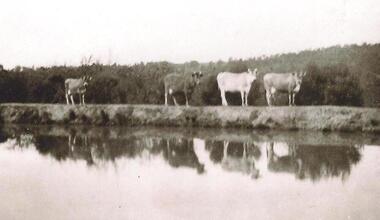
Photograph - Digital image, Cows on Hill Dam at Apollo Parkways, 1935c
... The Partington family came to Melbourne in the 1840s and moved to Greensborough where they farmed along the Plenty River. Descendants still live in Greensborough. partington family Digital copy of black and white photograph. ...Dam on the Partington property at what is now Apollo Parkways Greensborough.The Partington family came to Melbourne in the 1840s and moved to Greensborough where they farmed along the Plenty River. Descendants still live in Greensborough.Digital copy of black and white photograph.partington family -
 Greensborough Historical Society
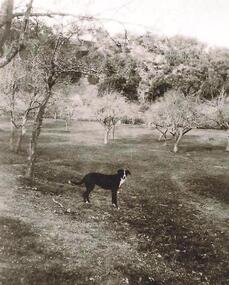
Photograph - Digital image, Old orchard at Partington Flat, 1930c
... Charles Partington and family came to Melbourne in the 1840s and moved to Greensborough where they farmed along the Plenty River. This dog belonged to Jessie Partington....Charles Partington and family came to Melbourne in the 1840s and moved to Greensborough where they farmed along the Plenty River. This dog belonged to Jessie Partington. partingtons flat partington family Digital copy of black and white photograph. ...Remnants of the Partington orchard at Greensborough on land that is now the Partingtons Flat reserve in Greensborough. Charles Partington and family came to Melbourne in the 1840s and moved to Greensborough where they farmed along the Plenty River. This dog belonged to Jessie Partington.Digital copy of black and white photograph.partingtons flat, partington family -
 Greensborough Historical Society
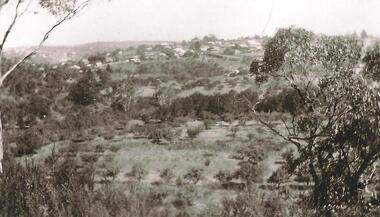
Photograph - Digital Image, Partingtons Flat and Whatmough Park taken from hill, 1930c
... The Partington and Whatmough families came to Melbourne in the 1840s and moved to Greensborough where they farmed along the Plenty River. The Partingtons Flat Reserve and Whatmough Park were part of their land holdings and are now Banyule Council owned reserves and sporting fields....The Partington and Whatmough families came to Melbourne in the 1840s and moved to Greensborough where they farmed along the Plenty River. The Partingtons Flat Reserve and Whatmough Park were part of their land holdings and are now Banyule Council owned reserves and sporting fields. partington family whatmough family whatmough park partingtons flat Digital copy of black and white photograph. ...The Partington and Whatmough families came to Melbourne in the 1840s and moved to Greensborough where they farmed along the Plenty River. The Partingtons Flat Reserve and Whatmough Park were part of their land holdings and are now Banyule Council owned reserves and sporting fields.Digital copy of black and white photograph.partington family, whatmough family, whatmough park, partingtons flat -
 Greensborough Historical Society
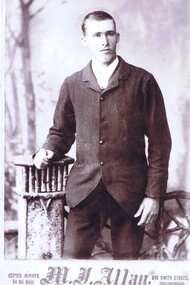
Photograph - Digital image, Tom Partington, 1885c
... Charles Partington and family came to Melbourne in the 1840s and moved to Greensborough where they farmed along the Plenty River. Descendants still live in Greensborough. tom partington partington family Digital copy of black and white studio photograph. ...Photograph of Tom Partington, born 1868. Lived and worked at Willis Vale on the farm and orchards. Married at age 34.Charles Partington and family came to Melbourne in the 1840s and moved to Greensborough where they farmed along the Plenty River. Descendants still live in Greensborough.Digital copy of black and white studio photograph.tom partington, partington family -
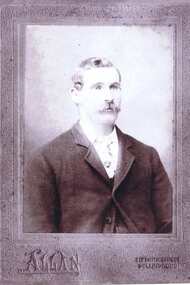 Greensborough Historical Society
Photograph - Digital image, Joseph Partington, 1904c
... Charles Partington and family came to Melbourne in the 1840s and moved to Greensborough where they farmed along the Plenty River. Descendants still live in Greensborough. joseph partington joe partington partington family Digital copy of black and white studio photograph. ...Joe Partington, born 1870. Lived and worked at Willis Vale on the farm and orchards. Married at age 34.Charles Partington and family came to Melbourne in the 1840s and moved to Greensborough where they farmed along the Plenty River. Descendants still live in Greensborough.Digital copy of black and white studio photograph.joseph partington, joe partington, partington family -
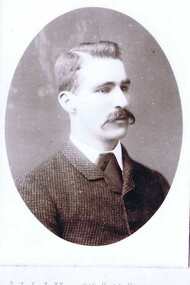 Greensborough Historical Society
Photograph - Digital Image, Charles Partington Junior, 1898c
... [Verified by Faye Partington who built the house at 25 Haile Street that later had a room used for the Police Station] Charles Partington and family came to Melbourne in the 1840s and moved to Greensborough where they farmed along the Plenty River. Descendants still live in Greensborough. partington family Digital copy of black and white studio photograph. ...Photograph of Charles Partington Junior. [Verified by Faye Partington who built the house at 25 Haile Street that later had a room used for the Police Station]Charles Partington and family came to Melbourne in the 1840s and moved to Greensborough where they farmed along the Plenty River. Descendants still live in Greensborough.Digital copy of black and white studio photograph.partington family
