
Showing 17 items matching "postwar years"
-
 Returned Nurses RSL Sub-branch
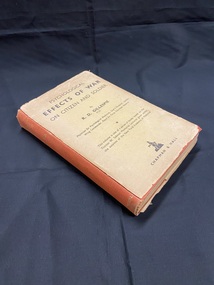
Book - Hardcover book, Chapman and Hall, Psychological effects of war on citizens and soldier, 1942
... ...postwar years...psychological effects of war postwar years morale psychneuroses Written by the physician for psychological medicine at Guy's Hospital, London; Wing Commander, Royal Air Force Volunteer Reserve. ...Written by the physician for psychological medicine at Guy's Hospital, London; Wing Commander, Royal Air Force Volunteer Reserve. This volume explores the changing ideas behind the psychological effects war has on civilians and members of the military forces.Faded red cloth-bound book with an extremely worn and torn dust-jacket that has its spine missing. Title printed in gold on the cloth-bound spine. What's left of the dust-jacket is faded light brown with black print.non-fictionWritten by the physician for psychological medicine at Guy's Hospital, London; Wing Commander, Royal Air Force Volunteer Reserve. This volume explores the changing ideas behind the psychological effects war has on civilians and members of the military forces.psychological effects of war, postwar years, morale, psychneuroses -
 Sunshine and District Historical Society Incorporated
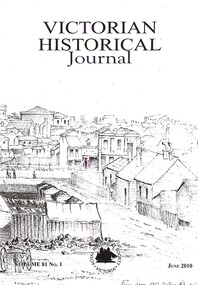
Journal - Victorian Historical Journal Volume 81 Number 1 June 2010, Royal Historical Society of Victoria, June 2010
... The articles and book reviews include but are not limited to: Article Page 113: Selling Immigration: Bonegilla Reception and Training Centre 1947 - 1971 by Bruce Pennay This article examines the part played by the Bonegilla Reception and Training Centre in keeping the nation favorably disposed toward the immigration of large numbers of non-British people in the postwar years. Many of Sunshine and District post-World War II migrants passed through this camp....The articles and book reviews include but are not limited to: Article Page 113: Selling Immigration: Bonegilla Reception and Training Centre 1947 - 1971 by Bruce Pennay This article examines the part played by the Bonegilla Reception and Training Centre in keeping the nation favorably disposed toward the immigration of large numbers of non-British people in the postwar years. Many of Sunshine and District post-World War II migrants passed through this camp. ...The Victorian Historical Journal, first published as the Victorian Historical Magazine in 1911, is the official journal of record and scholarly publication of the Royal Historical Society of Victoria. It is the second oldest history journal in Australia. It has become a vast collaborative history of Victoria with hundreds of individual contributors and topics and has itself become a primary source for researchers The journal features research articles, historical studies and book reviews.Paperback book with glossy front covernon-fiction The Victorian Historical Journal, first published as the Victorian Historical Magazine in 1911, is the official journal of record and scholarly publication of the Royal Historical Society of Victoria. It is the second oldest history journal in Australia. It has become a vast collaborative history of Victoria with hundreds of individual contributors and topics and has itself become a primary source for researchers The journal features research articles, historical studies and book reviews. bonegilla, bonegilla migrant camp, wodonga, immigration, migration -
 Glen Eira Historical Society
Document - KOOYONG ROAD, 75, CAULFIELD NORTH
... The pamphlet includes a brief history of the unit’s association with the City of Caulfield, a list of individuals holding posts within the Unit, text of the scroll conferring the Freedom of Entry on the Unit, a program of the ceremony, a brief history of the Royal Australian Army Ordnance Corps including the Unit’s use of 75 Kooyong Road as their premises, a brief history of the City of Caulfield from 1937-postwar years, and an explanation of the tradition of conferring Freedom of Entry to a city. ...The pamphlet includes a brief history of the unit’s association with the City of Caulfield, a list of individuals holding posts within the Unit, text of the scroll conferring the Freedom of Entry on the Unit, a program of the ceremony, a brief history of the Royal Australian Army Ordnance Corps including the Unit’s use of 75 Kooyong Road as their premises, a brief history of the City of Caulfield from 1937-postwar years, and an explanation of the tradition of conferring Freedom of Entry to a city. ...Two copies of a pamphlet for the ceremony of the Third Ordnance Services Unit ‘Exercising the Right of the Freedom of Entry to the City of Caulfield’ held on 23/10/1983. The pamphlet includes a brief history of the unit’s association with the City of Caulfield, a list of individuals holding posts within the Unit, text of the scroll conferring the Freedom of Entry on the Unit, a program of the ceremony, a brief history of the Royal Australian Army Ordnance Corps including the Unit’s use of 75 Kooyong Road as their premises, a brief history of the City of Caulfield from 1937-postwar years, and an explanation of the tradition of conferring Freedom of Entry to a city. The pamphlet includes also: 1/A black and white photograph (47x35mm) of the Mayor of Caulfield, W.R. Walters, undated and unattributed. 2/A black and white photograph (81x69mm) of Major A.G. Storen, Commanding Officer of the Third Ordnance Services Unit, undated and unattributed. 3/A color photograph (88x84mm) of the Sovereign’s Banner, undated and unattributed. 4/A black and white copy (137x87mm) of the scroll conferring Freedom of Entry into the City of Caulfield, which was seated August 4 1978. 5/A color illustration (30x32mm) of the City of Caulfield Coat of Arms. 6/A color illustration (40x32mm) of the Third Ordnance Services Unit, Royal Australian Army Ordnance Corps Coat of Arms. 7/A black and white illustration (21x24mm) of the city of Caulfield Coat of Arms. 8/A black and white illustration (19x14mm) of the City of Caulfield badge. 9/A black and white illustration (22x31mm) of the City of Caulfield banner.walters w.r., storen a.g. major, finning d.j. captain, hately p.g. major, davidson j. (captain), swendson r. (second lieutenant), caulfield, city of caulfield, australian army, the third ordnance services unit royal australian army ordnance corps, caulfield park, caulfield council, north caulfield, campton e.j. (brigadier), walters w.r. mrs., calder g.k., calder g.k. mrs., mahon j. (chief superintendent), city hall, balaclava road, hawthorn road, glen eira road, hartley avenue, kooyong road, caulfield racecourse, caulfield town hall, alma road, red cheques cab company, army headquarters printing press, searchlight company, amenities store, armoured replacement unit, first base printing company r.a.a.o.c., garden vale, caulfield railway station, paddy’s swamp, great dandenong road, glen ferrie road, dandenong road, east caulfield reserve, caulfield military hospital, ‘glen eira’, town hall, ‘war office’, caulfield district road board, shire of caulfield, caulfield recruiting committee for volunteers, city repatriation committee, red cross emergency service, women’s national service, mayor’s patriotic fund, promotions committee for war savings certificates, war savings group scheme, ‘the gazette’, air raid precautions committee, orrong road, armed forces, world war 1939-1945, local government, parades and processions, military reserves, world war 1914-1918, councillors, events and activities, historic events, official events, caulfield john, wyne agar, murphy (mayor), hale p., ison (captain), fisher andrew, morris t.w. (mayor) -
 Eltham District Historical Society Inc
Audio - Audio Recording, The Prize, Eltham Films 1959, 11 Oct. 2023
... He became a key figure in Australian postwar cinema and was instrumental in helping to rebuild the Australian film industry, at a time when it had been effectively dead for years. ...He became a key figure in Australian postwar cinema and was instrumental in helping to rebuild the Australian film industry, at a time when it had been effectively dead for years. ...EDHS Newsletter No. 272 October 2023 Our next meeting will be a special evening, if not a little unusual. On pages 3 and 4 in this newsletter edition there are articles about Eltham Films, with particular reference to the film ‘The Prize’, made by Tim Burstall in 1958/59. As Burstall had strong connections with Eltham it would have been an easy decision for him and his associates to use the local area as the setting for his first film. Following this film Burstall went on to make many more. He became a key figure in Australian postwar cinema and was instrumental in helping to rebuild the Australian film industry, at a time when it had been effectively dead for years. At this EDHS meeting we will view this film, or should we say review this film, stopping at times to attempt to identify the main actors and where certain scenes were filmed around Eltham. Some locations may be more obvious than others. The actors are mainly children playing the characters in the film. So this will be an exercise in identifying people and places, whilst enjoying the rare opportunity to view a valued example of early Eltham film history.1:12:11 duration Digital MP3 file; 24.7MBaudio recording, eltham district historical society, meeting, society meeting, eltham, eltham films, guest speaker, the prize (film), tim burstall -
 Tatura Irrigation & Wartime Camps Museum
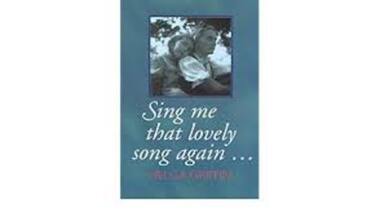
Book, Sing Me That Lovely Song Again, 2006
... years interned in Camp 3 near Rushworth, then released to Melbourne. Helga vividly describes her early childhood in Persia. The mixed emotions of her whole family during the internment experience and postwar, trying to adjust to a new country, new culture, new language. ...years interned in Camp 3 near Rushworth, then released to Melbourne. Helga vividly describes her early childhood in Persia. The mixed emotions of her whole family during the internment experience and postwar, trying to adjust to a new country, new culture, new language. ...Helga Griffin, daughter of Austrian engineer father and German mother. Interned aged 6 years and sent to Australia with her parents and young brother. Five years interned in Camp 3 near Rushworth, then released to Melbourne. Helga vividly describes her early childhood in Persia. The mixed emotions of her whole family during the internment experience and postwar, trying to adjust to a new country, new culture, new language. Very evocative memories of wartime dislocation.Blue/green front soft cover, red and white printing, white back cover and spine, black printing.With my very best wishes to the Tatura museum and the sterling work of the volunteers that contribute to its valuable presence. Helga 26.5.06ww2 camp 3, books, autobiography, helga griffin, helga griffin (girschik) -
 Torquay and District Historical Society
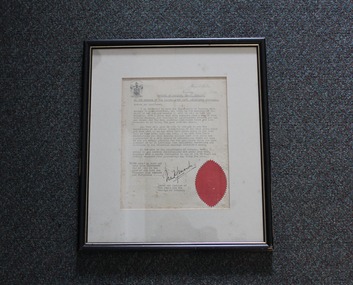
Letter - Framed letter
... In this case Torquay Golf Club in Victoria Australia sent its President, Mr Vary, with gifts of food to help supplement the 'somewhat restricted menus' of the people of Torquay, Devon, England. postwar torquay golf club torquay victoria australia torquay devon england Letter to members of the Torquay Golf Club Australia expressing gratitude for 'generous assistance', such as 'food gifts', given during post war years. ...This letter acknowledges help given to the British people by Australians after WW 11. In this case Torquay Golf Club in Victoria Australia sent its President, Mr Vary, with gifts of food to help supplement the 'somewhat restricted menus' of the people of Torquay, Devon, England. Typed letter/testimonial with large red seal and personally signed. Located in a black frame with gold edge. Letter to members of the Torquay Golf Club Australia expressing gratitude for 'generous assistance', such as 'food gifts', given during post war years. Seal of the Borough of Torquay, Devon, England. Signed by Mayor and Justice of the Peace for the Borough. Dated 13th July 1949. postwar, torquay golf club, torquay victoria australia, torquay devon england -
 Brighton Historical Society
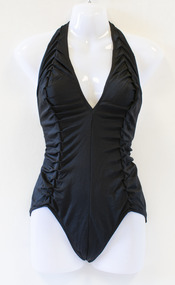
Swimsuit, Ada of California
... postwar refugees in 1948, Ada and Toni arrived in Melbourne with little to their name. Working initially in garment factories and building their connections, by the mid-1950s the couple were able to start a company of their own, with Ada designing the garments and Toni managing the business. Within ten years...postwar refugees in 1948, Ada and Toni arrived in Melbourne with little to their name. Working initially in garment factories and building their connections, by the mid-1950s the couple were able to start a company of their own, with Ada designing the garments and Toni managing the business. Within ten years ...Ada of California was a Melbourne swimwear company founded in the early 1950s by Brighton locals Ada and Toni Murkies. Born in Poland in 1922, Ada was 17 when the Second World War reached her doorstep. She and her family were torn from their home by Soviet soldiers and sent to a brutal labour camp in Siberia as part of a series of mass deportations. In order to escape the horrific conditions of the camp, Ada and her sister Barbara joined the Soviet-backed Polish Army. During her time in the military she became close with a handsome young Jewish officer, Lieutenant Antoni Murkies, who later became her husband. After the war Toni was awarded 15 medals including the highest Polish military honour, the Virtuti Militari. Ada was awarded 10 medals, including the Order of the Cross of Grunwald. Emigrating to Australia as postwar refugees in 1948, Ada and Toni arrived in Melbourne with little to their name. Working initially in garment factories and building their connections, by the mid-1950s the couple were able to start a company of their own, with Ada designing the garments and Toni managing the business. Within ten years, Ada of California swimwear was being sold in department stores throughout Australia, and the Murkies family were able to build a permanent home of their own in Brighton. By the early 1980s they had acquired several other major labels, including Watersun. This swimsuit is believed to be one of a large quantity of samples, seconds and unsold Ada Productions stock donated to Brighton Historical Society in late 1990 by Brian Samuel, who worked at the company between 1979 and 1990.Black one-piece swimsuit with deep v-neck and low-cut back and high-cut legs. Halter neck. Ruched sides. Label in side: "ada / 16"swimwear, ada of california, ada productions, melbourne designers, ada murkies, toni murkies -
 Brighton Historical Society
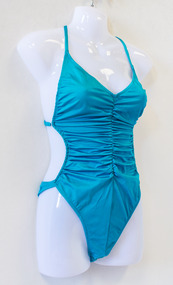
Swimsuit, Ada of California
... postwar refugees in 1948, Ada and Toni arrived in Melbourne with little to their name. Working initially in garment factories and building their connections, by the mid-1950s the couple were able to start a company of their own, with Ada designing the garments and Toni managing the business. Within ten years...postwar refugees in 1948, Ada and Toni arrived in Melbourne with little to their name. Working initially in garment factories and building their connections, by the mid-1950s the couple were able to start a company of their own, with Ada designing the garments and Toni managing the business. Within ten years ...Ada of California was a Melbourne swimwear company founded in the early 1950s by Brighton locals Ada and Toni Murkies. Born in Poland in 1922, Ada was 17 when the Second World War reached her doorstep. She and her family were torn from their home by Soviet soldiers and sent to a brutal labour camp in Siberia as part of a series of mass deportations. In order to escape the horrific conditions of the camp, Ada and her sister Barbara joined the Soviet-backed Polish Army. During her time in the military she became close with a handsome young Jewish officer, Lieutenant Antoni Murkies, who later became her husband. After the war Toni was awarded 15 medals including the highest Polish military honour, the Virtuti Militari. Ada was awarded 10 medals, including the Order of the Cross of Grunwald. Emigrating to Australia as postwar refugees in 1948, Ada and Toni arrived in Melbourne with little to their name. Working initially in garment factories and building their connections, by the mid-1950s the couple were able to start a company of their own, with Ada designing the garments and Toni managing the business. Within ten years, Ada of California swimwear was being sold in department stores throughout Australia, and the Murkies family were able to build a permanent home of their own in Brighton. By the early 1980s they had acquired several other major labels, including Watersun. This swimsuit is believed to be one of a large quantity of samples, seconds and unsold Ada Productions stock donated to Brighton Historical Society in late 1990 by Brian Samuel, who worked at the company between 1979 and 1990.Blue backless one-piece swimsuit with ruching up sides and front. Halter neck. Straps loop down over hooks at the back.Label in side: "ada / 12"swimwear, ada of california, ada productions, melbourne designers, ada murkies, toni murkies -
 Brighton Historical Society
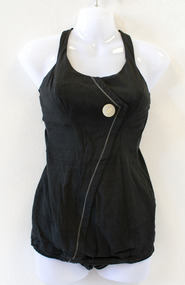
Clothing - Swimsuit, Ada of California, circa 1950s-60s
... postwar refugees in 1948, Ada and Toni arrived in Melbourne with little to their name. Working initially in garment factories and building their connections, by the mid-1950s the couple were able to start a company of their own, with Ada designing the garments and Toni managing the business. Within ten years...postwar refugees in 1948, Ada and Toni arrived in Melbourne with little to their name. Working initially in garment factories and building their connections, by the mid-1950s the couple were able to start a company of their own, with Ada designing the garments and Toni managing the business. Within ten years ...This swimsuit belonged to Audrey May Ferguson (nee Fulton), a longtime Brighton resident. Ada of California was a Melbourne swimwear company founded in the early 1950s by Brighton locals Ada and Toni Murkies. Born in Poland in 1922, Ada was 17 when the Second World War reached her doorstep. She and her family were torn from their home by Soviet soldiers and sent to a brutal labour camp in Siberia as part of a series of mass deportations. In order to escape the horrific conditions of the camp, Ada and her sister Barbara joined the Soviet-backed Polish Army. During her time in the military she became close with a handsome young Jewish officer, Lieutenant Antoni Murkies, who later became her husband. After the war Toni was awarded 15 medals including the highest Polish military honour, the Virtuti Militari. Ada was awarded 10 medals, including the Order of the Cross of Grunwald. Emigrating to Australia as postwar refugees in 1948, Ada and Toni arrived in Melbourne with little to their name. Working initially in garment factories and building their connections, by the mid-1950s the couple were able to start a company of their own, with Ada designing the garments and Toni managing the business. Within ten years, Ada of California swimwear was being sold in department stores throughout Australia, and the Murkies family were able to build a permanent home of their own in Brighton. By the early 1980s they had acquired several other major labels, including Watersun.Black one-piece rayon and cotton swimsuit. Straps button at back. Asymmetrical zig-zag front with double-line of white stitching, embellished by a large cream button.Label, white with green palm tree logo and red text: "Ada / OF CALIFORNIA" Label, white with red text: "61% RAYON, 10% RUBBER, 29% COTTON 36"swimwear, audrey may ferguson, audrey may fulton, melbourne designers, ada of california, ada murkies, toni murkies, 1950s, 1960s -
 Brighton Historical Society
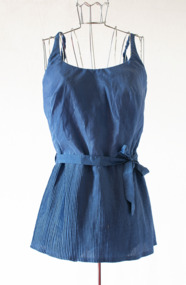
Swimsuit, circa 1950s
... postwar refugees in 1948, Ada and Toni arrived in Melbourne with little to their name. Working initially in garment factories and building their connections, by the mid-1950s the couple were able to start a company of their own, with Ada designing the garments and Toni managing the business. Within ten years...postwar refugees in 1948, Ada and Toni arrived in Melbourne with little to their name. Working initially in garment factories and building their connections, by the mid-1950s the couple were able to start a company of their own, with Ada designing the garments and Toni managing the business. Within ten years ...This swimsuit belonged to Brighton local Joyce Fuller, nee Harries (1920-2018), who wore it at Dendy Beach in the 1950s. Ada of California was a Melbourne swimwear company founded in the early 1950s by Brighton locals Ada and Toni Murkies. Born in Poland in 1922, Ada was 17 when the Second World War reached her doorstep. She and her family were torn from their home by Soviet soldiers and sent to a brutal labour camp in Siberia as part of a series of mass deportations. In order to escape the horrific conditions of the camp, Ada and her sister Barbara joined the Soviet-backed Polish Army. During her time in the military she became close with a handsome young Jewish officer, Lieutenant Antoni Murkies, who later became her husband. After the war Toni was awarded 15 medals including the highest Polish military honour, the Virtuti Militari. Ada was awarded 10 medals, including the Order of the Cross of Grunwald. Emigrating to Australia as postwar refugees in 1948, Ada and Toni arrived in Melbourne with little to their name. Working initially in garment factories and building their connections, by the mid-1950s the couple were able to start a company of their own, with Ada designing the garments and Toni managing the business. Within ten years, Ada of California swimwear was being sold in department stores throughout Australia, and the Murkies family were able to build a permanent home of their own in Brighton. By the early 1980s they had acquired several other major labels, including Watersun. Visiting Brighton Historical Society in 2019, Ada recalled this particular swimsuit style to be a popular one, particularly with older women, as the cinched waist and pleated modesty skirt suited many body types. This was important to her, as she wanted women of all ages and sizes to look and feel good in her swimwear, and she devoted much time and attention to the fit and finish of the garments. When the company began introducing padded bras, such as the one in this swimsuit, Ada insisted on using lacy floral lining and a small ribbon rosette in the centre gore, to give women a sense of quality, femininity and care in construction.Blue one-piece swimsuit with waist tie and short finely pleated overskirt. Sleeveless with thin elasticised straps. Inbuilt padded underwire bra with label and pale pink ribbon rosette on centre gore. Fastens with back zip.Label: "Ada / OF CALIFORNIA / 38"swimwear, brighton, dendy street beach, ada of california, ada murkies, toni murkies, joyce fuller, joyce harries -
 Brighton Historical Society
Swimsuit, late 1950s - early 1960s
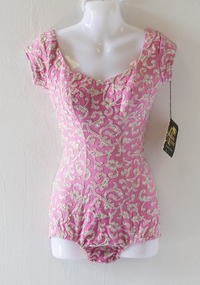
... postwar refugees in 1948, Ada and Toni arrived in Melbourne with little to their name. Working initially in garment factories and building their connections, by the mid-1950s the couple were able to start a company of their own, with Ada designing the garments and Toni managing the business. Within ten years...postwar refugees in 1948, Ada and Toni arrived in Melbourne with little to their name. Working initially in garment factories and building their connections, by the mid-1950s the couple were able to start a company of their own, with Ada designing the garments and Toni managing the business. Within ten years ...Ada of California was a Melbourne swimwear company founded in the early 1950s by Brighton locals Ada and Toni Murkies. Born in Poland in 1922, Ada was 17 when the Second World War reached her doorstep. She and her family were torn from their home by Soviet soldiers and sent to a brutal labour camp in Siberia as part of a series of mass deportations. In order to escape the horrific conditions of the camp, Ada and her sister Barbara joined the Soviet-backed Polish Army. During her time in the military she became close with a handsome young Jewish officer, Lieutenant Antoni Murkies, who later became her husband. After the war Toni was awarded 15 medals including the highest Polish military honour, the Virtuti Militari. Ada was awarded 10 medals, including the Order of the Cross of Grunwald. Emigrating to Australia as postwar refugees in 1948, Ada and Toni arrived in Melbourne with little to their name. Working initially in garment factories and building their connections, by the mid-1950s the couple were able to start a company of their own, with Ada designing the garments and Toni managing the business. Within ten years, Ada of California swimwear was being sold in department stores throughout Australia, and the Murkies family were able to build a permanent home of their own in Brighton. By the early 1980s they had acquired several other major labels, including Watersun. This swimsuit is believed to be one of a large quantity of samples, seconds and unsold Ada Productions stock donated to Brighton Historical Society in late 1990 by Brian Samuel, who worked at the company between 1979 and 1990.Pink short-sleeved one-piece swimsuit with silver lamé embellishment. Sweetheart neckline and low-cut back with metal zip. A black and gold swing tag is attached to one sleeve.Label in bra: “Ada OF CALIFORNIA / MIRACULOUS s-t-r-e-t-c-h BRI-NYLON / 34” Swing tag, front: black with gold text and palm tree logo. “Ada / OF CALIFORNIA / ‘Limited Edition’”. Back: gold with black text. “‘Limited Edition’”. Interior: “Congratulations on your choice of ADA OF CALIFORNIA ‘Limited Edition” Swimsuit contoured for your discriminating taste. / Style 546 / Size 34 / Price £11.9.6”. Care instructions also included.swimwear, ada productions, ada of california, ada murkies, toni murkies, melbourne designers -
 Kew Historical Society Inc
Decorative object - Paradise Bird Design Linen Curtains, GP&J Baker, 1920s
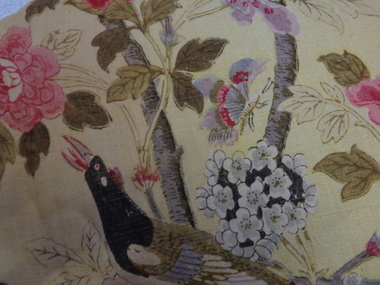
... The first use of the design was in 1918, following the Great War, and the design is said to reflect the hope for peace which was a feature of the postwar years. The curtains are an early example of the Paradise Bird design, and were block printed. curtains fabric design historic buildings A pair of curtains originally situated in one of the front reception rooms of 'Tourmont' in Balwyn Road, Balwyn (now Fintona Girls’ School). ...William Turner, a Scottish born free-lance designer, who was contracted to GP&J Baker, painted the image on which the design was based in 1918. Turner had trained as a furniture designer before leaving for London in the 1890s, where he rose to prominence as an Arts & Crafts designer. The bird that gives this design its name is adapted from Robert Havell’s ‘A Collection of Birds of Paradise’, published in 1835, and was a favourite of Victorian chintz designers.“Paradise Bird” has been in continuous production since its creation. The hand-block print, of which these curtains are an early example, was supplemented by a version engraved on copper rollers in 1962, and was updated onto screens in 1982. The curtains have significance to the collection because of their intrinsic value and for the link to one of the historic mansions in the City of Boroondara. The curtains by G.P & J Baker of London use one of the exemplary designs in this manufacturer’s output. The first use of the design was in 1918, following the Great War, and the design is said to reflect the hope for peace which was a feature of the postwar years. The curtains are an early example of the Paradise Bird design, and were block printed. A pair of curtains originally situated in one of the front reception rooms of 'Tourmont' in Balwyn Road, Balwyn (now Fintona Girls’ School). The fabric in the curtains was manufactured by the English firm of GP&J Baker. The textile design is variably named as ‘Paradise Bird’ or more recently, ‘Hydrangea Bird’. Turner’s bird perches in a blossoming branch directly above a woodpecker, which is an attribute of Mars, god of war. Thus the design reads as a symbolic statement where War is reversed and Paradise returns (a hopeful message at the end of WWI). “Paradise Bird” has been in continuous production since its creation. . curtains, fabric design, historic buildings -
 Kew Historical Society Inc
Exhibition, Postwar Kew 1945-60 : Continuity & change, 2025
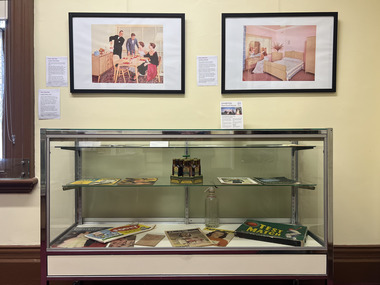
... postwar restrictions on resources affected what could be built, how people worked, and the everyday lives of men and women. The decade beginning in 1950 included monumental shifts in the social and cultural fabric of life in Australia more widely, and also in Kew. This exhibition explores how life changed by exploring the memories of people who lived in Kew during these years...postwar restrictions on resources affected what could be built, how people worked, and the everyday lives of men and women. The decade beginning in 1950 included monumental shifts in the social and cultural fabric of life in Australia more widely, and also in Kew. This exhibition explores how life changed by exploring the memories of people who lived in Kew during these years ...While the end of World War II heralded a new era, postwar restrictions on resources affected what could be built, how people worked, and the everyday lives of men and women. The decade beginning in 1950 included monumental shifts in the social and cultural fabric of life in Australia more widely, and also in Kew. This exhibition explores how life changed by exploring the memories of people who lived in Kew during these years, the development of notable private and public modern architecture, and the ways that innovation transformed the lives of Kew’s residents. Set of five photos of artefacts and photographs of the main exhibition room of the Kew Historical Society at the Kew Court House. The secondary room includes images of 1950s and 1960s architecture. Also included in this file is the exhibition flyer.kew -- history -- postwar, kew historical society -- exhibitions -
 Dandenong/Cranbourne RSL Sub Branch
Photograph - Sepia photograph/postcard, Unknown
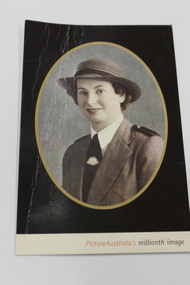
... Her courage while a prisoner of the Japanese for over three and a half years exemplified the bravery of Australian women in war, and her distinguished postwar career was marked by many humanitarian achievements....Her courage while a prisoner of the Japanese for over three and a half years exemplified the bravery of Australian women in war, and her distinguished postwar career was marked by many humanitarian achievements. ...WWII historical significancePortrait of Vivian Bullwinkel AO, MBE (1915 - 2000)Vivian Bullwinkel, a Second World War army nursing sister, is best known as the sole survivor of the infamous Banka Island massacre, in which 21 of her colleagues were killed by Japanese troops. Her courage while a prisoner of the Japanese for over three and a half years exemplified the bravery of Australian women in war, and her distinguished postwar career was marked by many humanitarian achievements. -
 Melbourne Legacy
Photograph - Photo, Anzac Day 1936, 1936
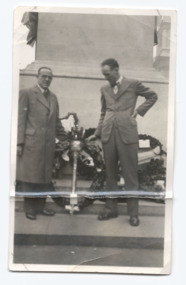
... years. It might also be the cenotaph that was in Spring St, near Parliament house, until the Shrine of Remembrance was dedicated in 1937. (see photo at 01371). The two were very similar in design as the Victorian one was a half size replica of the London one. Pat Hanna (born George Patrick Hanna; 18 March 1888 in Whitianga, New Zealand) was a New Zealand-born film producer ; he was a soldier of the First World War who entertained postwar audiences with the stage show 'Diggers', that was adapted to a film of the same title in 1931....years. It might also be the cenotaph that was in Spring St, near Parliament house, until the Shrine of Remembrance was dedicated in 1937. (see photo at 01371). The two were very similar in design as the Victorian one was a half size replica of the London one. Pat Hanna (born George Patrick Hanna; 18 March 1888 in Whitianga, New Zealand) was a New Zealand-born film producer ; he was a soldier of the First World War who entertained postwar audiences with the stage show 'Diggers', that was adapted to a film of the same title in 1931. ...The photo shows Legatees Pat Hanna (left) and Frank Doolan (right) with a wreath at a war memorial on Anzac Day in 1936. The wreath was an interesting design with a torch to resemble the Legacy logo. From the pencil note on the reverse it was thought it might be the cenotaph in Whitehall, London. Pat Hanna lived in London for a number of years. It might also be the cenotaph that was in Spring St, near Parliament house, until the Shrine of Remembrance was dedicated in 1937. (see photo at 01371). The two were very similar in design as the Victorian one was a half size replica of the London one. Pat Hanna (born George Patrick Hanna; 18 March 1888 in Whitianga, New Zealand) was a New Zealand-born film producer ; he was a soldier of the First World War who entertained postwar audiences with the stage show 'Diggers', that was adapted to a film of the same title in 1931.An early Anzac day ceremony with a Legacy laying a wreath. Frank Doolan and Pat Hanna were founding members of Legacy. Frank Doolan was one of the archive committee that attempted to record the history of Legacy.Black and white photo of two Legatees laying a wreath.Hand-written on reverse: 'Pat Hanna and self with Legacy wreath / Anzac Day 1936' in navy ink. 'Legatee Frank Doolan' written in pencil near the word 'self'. 'London ?' written in pencil. Stamped 'W2259' in black ink.anzac day, wreath laying ceremony, founding legatee, hanna, frank doolan -
 Wodonga & District Historical Society Inc
Book - Harvester City - The Making of Multicultural Sunshine 1939 - 1975, Olwen Ford, Published 2012
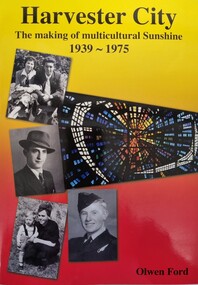
... multiculturalism australia Sunshine Victoria postwar migration This publication by the Sunshine & District Historical Society builds on an earlier publication "Harvester Town: The Making of Sunshine 1890-1925". It focuses on the post-war migration years ...This publication by the Sunshine & District Historical Society builds on an earlier publication "Harvester Town: The Making of Sunshine 1890-1925". It focuses on the post-war migration years when thousands of young immigrants settled in the new City of Sunshine, bought land, built homes, had families and worked in the area's important industries. It uses a range of primary resources including photos, photo stories, interviews and other documents to explain the challenges, achievements and issues faced in the development of "Multicultural Sunshine"A soft cover publication of 590 pages. The cover features several photos of people and places in Sunshine, The background of these cover photos is coloured in yellow and orange. The book includes photos and photo stories as well as extracts from newspapers, government archives and census records to document key developments and stories of hardships and achievements during a critical period of industrialisation and postwar migration to Australia. It includes bibliographical references and an index.non-fictionThis publication by the Sunshine & District Historical Society builds on an earlier publication "Harvester Town: The Making of Sunshine 1890-1925". It focuses on the post-war migration years when thousands of young immigrants settled in the new City of Sunshine, bought land, built homes, had families and worked in the area's important industries. It uses a range of primary resources including photos, photo stories, interviews and other documents to explain the challenges, achievements and issues faced in the development of "Multicultural Sunshine"multiculturalism australia, , sunshine victoria, postwar migration -
 Wodonga & District Historical Society Inc
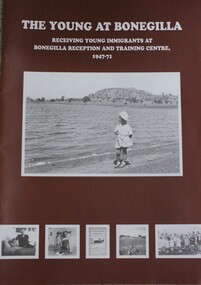
Booklet - The Young at Bonegilla : Receiving young Immigrants at Bonegilla Reception and Training Centre. 1947 - 1971, Bruce J Pennay
... postwar Between 1947 and 1971 about 309,000 people arrived in Australia through the Bonegilla Reception and Training Centre in Northeast Victoria. Bonegilla was the largest and longest serving migration reception centre. It usually accommodated about 3,000 people but did hold up to 7,000 at one stage. It was a young person's place. Few of the adults were aged over 35 years ...Between 1947 and 1971 about 309,000 people arrived in Australia through the Bonegilla Reception and Training Centre in Northeast Victoria. Bonegilla was the largest and longest serving migration reception centre. It usually accommodated about 3,000 people but did hold up to 7,000 at one stage. It was a young person's place. Few of the adults were aged over 35 years old. This study analyses how Australia tried to meet the challenges involved in supporting young adults, teenagers and children. It also examines how those who were young remember their experiences at Bonegilla.non-fictionBetween 1947 and 1971 about 309,000 people arrived in Australia through the Bonegilla Reception and Training Centre in Northeast Victoria. Bonegilla was the largest and longest serving migration reception centre. It usually accommodated about 3,000 people but did hold up to 7,000 at one stage. It was a young person's place. Few of the adults were aged over 35 years old. This study analyses how Australia tried to meet the challenges involved in supporting young adults, teenagers and children. It also examines how those who were young remember their experiences at Bonegilla.bonegilla, immigrant experiences, young immigrants postwar
