
Showing 180 items matching "private libraries"
-
 Hymettus Cottage & Garden Ballarat
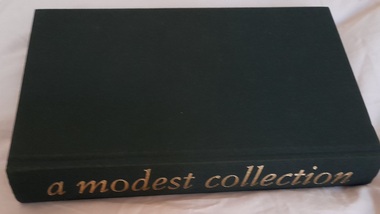
Work on paper - Book, A Modest Collection
... Private Libraries...Published by the Private Libraries Association in the UK 2007 featuring a selection of member's libraries and a history of the association and its publications. ...Private Libraries Private Libraries Association Australia UK A Modest Collection Work on paper Book ...non-fictionprivate libraries, private libraries association, australia, uk -
 Hymettus Cottage & Garden Ballarat
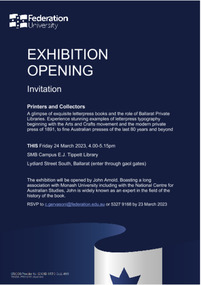
Work on paper - Invitation, Exhibition Opening Invitation
... Private Libraries...Invitation to the opening of an exhibition of books from Ballarat book collectors' private libraries. ...Invitation to the opening of an exhibition of books from Ballarat book collectors' private libraries. Private Libraries Ballarat Book Collectors Exhibition Opening Invitation Work on paper Invitation ...non-fictionprivate libraries, ballarat, book collectors -
 Hymettus Cottage & Garden Ballarat
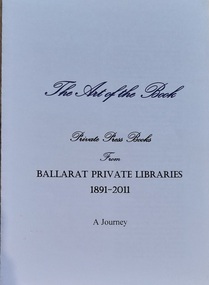
Work on paper - Catalogue, The Art of the Book
... ...Private Libraries...An exhibition mounted at the Ballarat City Library featuring books from the book collection of Michael Taffe at Hymettus Cottage Ballarat. Works featured private press books with a focus on those produced by expatriate Australians....Book Collectors Private Libraries Cover of 2011 catalogue from Ballarat City Library of small exhibition by local book collector Michael Taffe. ...Cover of 2011 catalogue from Ballarat City Library of small exhibition by local book collector Michael Taffe. Private presses included, Mandrake, Fanfrolico, Windsor, Ancora, Gregynog and Kelmscott and Escutcheon.non-fictionCover of 2011 catalogue from Ballarat City Library of small exhibition by local book collector Michael Taffe. Private presses included, Mandrake, Fanfrolico, Windsor, Ancora, Gregynog and Kelmscott and Escutcheon.book collectors, private libraries -
 Unions Ballarat
Alfred Deakin: A biography (Vol 2), La Nauze, J.A, 1965
... The book is stamped "The private library of Rex Testro" on title page and on the page following the index....Relevance to history of Ballarat and Australia. btlc ballarat trades hall unions ballarat deakin, alfred federation prime ministers - australia - alfred deakin biography politics members of parliament The book is stamped "The private library of Rex Testro" on title page and on the page following the index. ...Alfred Deakin was one of the founding fathers of Federation and was Prime Minister of Australia over the periods 1903-1904, 1905-1908 and 1909-1910. He was the federal member for Ballaarat from 1901-1913 and was attorney general in the Barton government. He also served in the State of Victoria parliament. In his second term, Deakin's government passed the Census and Statistics Act 1905, Papua Act 1905, Representation Act 1905 and Copyright Act 1905. The book is based on Deakin's private papers, writings, private and official materials. This is volume two of a two volume set. Index: 15. Australian Correspondent 16. Three Elevens 17. "A Notice to Quit"? 18. "Nation Building", 1905-1908 19. New Hebrides 20. New Guinea and Hubert Murray 21. Empire 22. London, 1907 23. The Defence of Australia 24. Fusion, 1909 25. "Harvest" and Defeat 26. "Mercy of Release" 27. "A Shadow in a Dream" 28. "Content and more than Content" Appendices: I. Victorian Ministries, 1877-1900 II. Commonwealth Ministries, 1901-1914Biographical interest. Relevance to history of Ballarat and Australia.Hardcover - book; 348 pages. Cover dust jacket: black and white lettering; faded. Cover without dust jacket: green cloth; gold lettering.The book is stamped "The private library of Rex Testro" on title page and on the page following the index.btlc, ballarat trades hall, unions ballarat, deakin, alfred, federation, prime ministers - australia - alfred deakin, biography, politics, members of parliament -
 Kew Historical Society Inc
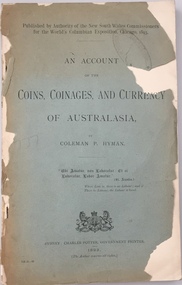
Booklet, Coleman P Hyman, An Account of the Coins, Coinages and Currencies of Australasia, 1893
... This volume formed part of the private library of Malcolm Carkeek, former Archivist of the Royal Society of Victoria, and was donated by him to the Kew Historical Society....This volume formed part of the private library of Malcolm Carkeek, former Archivist of the Royal Society of Victoria, and was donated by him to the Kew Historical Society. australia - currency Published by Authority of the New South Wales Commissioners for the World's Columbian Exposition, Chicago, 1893. viii, [2], 159 p. : ill. ; 24 cm. ...This volume formed part of the private library of Malcolm Carkeek, former Archivist of the Royal Society of Victoria, and was donated by him to the Kew Historical Society.Published by Authority of the New South Wales Commissioners for the World's Columbian Exposition, Chicago, 1893. viii, [2], 159 p. : ill. ; 24 cm.australia - currency -
Linton and District Historical Society Inc
Book from lending library, Leslie Charteris, Meet the tiger : the first 'Saint' novel, 1928, reprinted 1941
... Novel which was once in Carrie Murrell's privately run 'Linton Library'. Book has a plain green board cover. ...Murrell's / Linton Library". "498" written in pencil within the stamp. Novel which was once in Carrie Murrell's privately run 'Linton Library'. ...Carrie Murrell ran a lending library from her newsagent's shop in Sussex Street. The stamp set used in this library is also in the LDHS collection (Registration No. 1754). Dates during which Miss Murrell ran the library are not known.Novel which was once in Carrie Murrell's privately run 'Linton Library'. Book has a plain green board cover. Pages 256Stamp on title page: "C. Murrell's / Linton Library". "498" written in pencil within the stamp.carrie murrell, c. murrell's linton library -
 Hymettus Cottage & Garden Ballarat
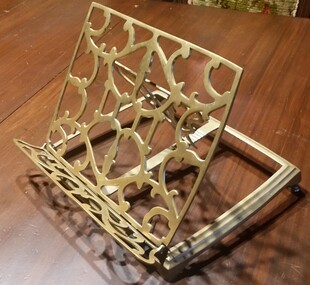
Functional object - Table book-rest/lectern, Table bookstand
... This example was purchased to enhance reading in a household private library and also used to display books when on loan in the public domain in libraries and other repositories....This example was purchased to enhance reading in a household private library and also used to display books when on loan in the public domain in libraries and other repositories. ...Nineteenth century brass bookstand or table lectern used to hold book for reading or display purpose often deemed an essential item for the nineteenth and early twentieth century library. Also used as altar lectern in church items. This example was purchased to enhance reading in a household private library and also used to display books when on loan in the public domain in libraries and other repositories.brass, bookstand, book-rest, altar lectern, reading, library, display, 19th century. church. -
 Warrnambool and District Historical Society Inc.
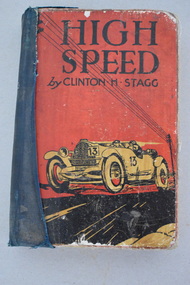
Book, High Speed - Clinton H Stagg, 1930s
... ‘Hygienic’ libraries were a feature of privately-operated libraries in Australia, mostly in the 1930s, 40s and 50s. ...‘Hygienic’ libraries were a feature of privately-operated libraries in Australia, mostly in the 1930s, 40s and 50s. ...This book has been in two Warrnambool lending libraries. It has been borrowed by subscription holders from 1938 to 1950. The book was first in Hudson’s Hygienic Library at 71 Liebig Street Warrnambool. A.R.Hudson had a bookshop and newsagency at the same address. Subscribers to the library paid two shillings and sixpence to join the library and then threepence a week for borrowing the book. The library was open to 9 p.m. and was advertised as ‘The most up-to-date library in the Western District.’ ‘Hygienic’ libraries were a feature of privately-operated libraries in Australia, mostly in the 1930s, 40s and 50s. The increased interest in germ prevention and health improvement led to the ‘hygienic’ practice of sterilising the books after each borrowing. It appears that the books were wiped with formaldehyde. Following Hudson’s ownership of this book, it was in Stronach’s Library at 105B Liebig Street. There have been examples of private subscription libraries in Warrnambool since the 1860s (plus the subscription library available at the Mechanics’ Institute). After 1950, with the increase in the funding and building of public libraries, subscription libraries for the general public largely disappeared. This book is of interest as an example of the books that could be borrowed from a private subscription library in Warrnambool in the early to mid 20th centuries. This is a hard cover book of 247 pages. The cover is red and yellow with an illustration of a racing car on the front and black printing on the front and back. The spine has been reinforced with black tape which is now peeling off. The inside front cover and the back cover have stickers from lending libraries. Inside the back cover are a series of stamps. The book is scuffed and somewhat stained. ‘Hudson’s Hygienic Library’ ‘Stronach’s Library’warrnambool subscription libraries, warrnambool -
 Flagstaff Hill Maritime Museum and Village
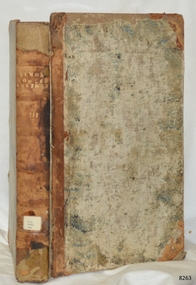
Book - Reference Fossils/Science, John Hill, A General Natural History, 1748
... After inheriting a publishing business from his father, Osborne became famous for buying up entire, massive private libraries of deceased nobles and selling them via mail-order catalogues. ...After inheriting a publishing business from his father, Osborne became famous for buying up entire, massive private libraries of deceased nobles and selling them via mail-order catalogues. ...A General Natural History is a massive, ambitious three-volume compendium written to survey the natural world. It is divided into three distinct parts, which were published sequentially between 1748 and 1752. Volume One contains The History of Fossils (1748). Despite the modern name, "fossils" back then referred to anything dug out of the earth. This volume focuses heavily on mineralogy, gemstones, rocks, and minerals, mapping them out based on a microscopic examination. In Volume Two, A History of Plants (1751), Hill covers botany, describing the appearance, geographic range, and medicinal uses of various native and exotic plants (like the coffee tree, cacti, and various herbs). Volume Three concentrates on various animals and is called An History of Animals (1752). It's a zoological survey that starts with microscopic organisms before moving on to insects, marine life, reptiles, birds, and mammals. The book focused not just on describing these specimens, but also on outlining their "virtues and uses" in medicine and mechanics.A General Natural History Author: John Hill Publisher: Thomas Osborne Date: 1748 Badly damaged light brown hardcover with a damaged spine and lettering in gold. The spine has a Library label with an inscription.non-fictionA General Natural History is a massive, ambitious three-volume compendium written to survey the natural world. It is divided into three distinct parts, which were published sequentially between 1748 and 1752. Volume One contains The History of Fossils (1748). Despite the modern name, "fossils" back then referred to anything dug out of the earth. This volume focuses heavily on mineralogy, gemstones, rocks, and minerals, mapping them out based on a microscopic examination. In Volume Two, A History of Plants (1751), Hill covers botany, describing the appearance, geographic range, and medicinal uses of various native and exotic plants (like the coffee tree, cacti, and various herbs). Volume Three concentrates on various animals and is called An History of Animals (1752). It's a zoological survey that starts with microscopic organisms before moving on to insects, marine life, reptiles, birds, and mammals. The book focused not just on describing these specimens, but also on outlining their "virtues and uses" in medicine and mechanics.flagstaff hill, warrnambool, shipwrecked coast, flagstaff hill maritime museum, maritime museum, shipwreck coast, flagstaff hill maritime village, great ocean road, book, pattison collection, warrnambool library, warrnambool mechanics’ institute, ralph eric pattison, corangamite regional library service, warrnambool city librarian, mechanics’ institute library, victorian library board, warrnambool books and records, warrnambool children’s library, a general natural history, john hill -
 Federation University Historical Collection
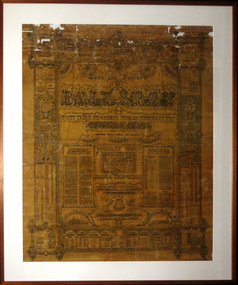
Work on paper - Artwork - Poster, Past and Present Ballarat of Forty Years of Progress from an Uninhabited Wilderness, 22/10/1892 - 17/03/1898
... The work, which is worthy of a position in any public library or private residence, has been designed and composed by Mr. ...The work, which is worthy of a position in any public library or private residence, has been designed and composed by Mr. ...James McKain MEEK (1815-1899) Born England Arrived Australia 1838 James Meek was an artist who built the first house at Ballarat. He wrote 'designed, composed and written with pen and ink by James Meek (founder of the City). When this work was completed the in 1893 the Ballarat Star described the work: - "An Industrial Inmate. At the conclusion of Monday's meeting of the Ballarat Benevolent Asylum Committee one of the inmates, named James McBain Meek, having been introduced, laid upon the table a magnificently executed work of art, bearing the following inscription: - The past and present of Ballarat, or 40 years' progress from an uninhabited wilderness, 1852 to 1892, during which time it has become the grandest inland city of the Southern World. It stands unrivaled by that of any city in her Britannic Majesty's extensive domain over which the sun never sets, and o'er which Albion's beloved sovereign sways her benign sceptre." The work conveys by words and pictorial representations a complete history of Ballarat from its inception up to the 17th March inst. The various pillars and scrolls by which the many incidents that are related are surrounded are marvelously executed, the plain and ornamental lettering is exquisite; while the language used in the narrative is of the most eloquent and refined description. Sketches of the Ballarat Hospital and Benevolent Asylum, equal to any photographic picture, are shown at either end of the word " Ballarat," which occupies the most central position of the chart. The work, which is worthy of a position in any public library or private residence, has been designed and composed by Mr. Meek, who is 78 years of age, at the Asylum. It is done entirely with pen and ink, and was commenced on the 22nd October, 1892, and completed on 17th March, 1893. (Ballarat Star, 27 March 1893)Although 'Past and Present Ballarat of Forty Years of Progress from an Uninhabited Wilderness' was printed it appears that few have survived the ravages of time. Another copy of this works survives in the collection of the Australiana Room at the Central Highlands Regional Library Corp. No others have been located to date. (2012)Large black and white poster (now brown with age) with the hand drawn work of James Meek reproduced by the Ballarat printers Rider & Mercer. Many, but one includes 'Most respectfully dedicated to the native born children of European parents in the Ballarat Mining District by the author.'ballarat, james meek, meek, ballarat benevolent asylum, nazareth house, ballarat mayors, james bury, james oddie, la poer trench, welfare -
 Flagstaff Hill Maritime Museum and Village
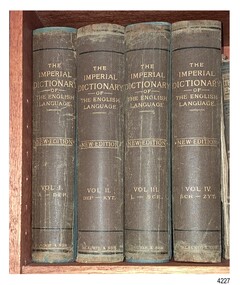
Book - Reference, John Ogilvie, The Imperial Dictionary of The English Language Vol 1, 1882
... library cabinet of the Common School in Flagstaff Hill's village. Each book has a label with an inscription acknowledging the Geelong Maritime Society Inc.'s donation. STEAM TUG VICTOR: The steam tug Victor, built in 1951 at Gainsborough, UK, was said to be the most powerful tug in Victoria. It was once used in Geelong. A private...library cabinet of the Common School in Flagstaff Hill's village. Each book has a label with an inscription acknowledging the Geelong Maritime Society Inc.'s donation. STEAM TUG VICTOR: The steam tug Victor, built in 1951 at Gainsborough, UK, was said to be the most powerful tug in Victoria. It was once used in Geelong. A private ...A newspaper article was published at the time of the donation of this four-volume set of The Imperial Dictionary of The English Language. The article refers to the Geelong Maritime Society donating the funds to purchase the set of books. The Geelong Maritime Society Inc. was formed to save the Steam Tug Victor from being scrapped. Its public appeal raised funds for this purpose, but its efforts to stop the tug's destruction were unsuccessful. The Society was disbanded in February 1990 and generously donated the raised funds to Flagstaff Hill Maritime Museum and Village. Flagstaff Hill used the funds to purchase the four-volume set of The Imperial Dictionary of the English Language by John Ogilvie. The books are appropriately housed in the library cabinet of the Common School in Flagstaff Hill's village. Each book has a label with an inscription acknowledging the Geelong Maritime Society Inc.'s donation. STEAM TUG VICTOR: The steam tug Victor, built in 1951 at Gainsborough, UK, was said to be the most powerful tug in Victoria. It was once used in Geelong. A private party, currently, in 2025, researching the steam tug Victor, discovered the information that connected the vessel to the books in Flagstaff Hill's library. This set of reference books was published in 1882. The volumes are typical of books used for education in the late 19th and early 20th centuries. The publisher used both print and illustrations for explanations.The Imperial Dictionary of The English Language: a complete encyclopedic lexicon, literary, scientific and technological, Volume 1 by John Ogilvie, LL.D., Author of "The Comprehensive English Dictionary," "The Student's English Dictionary," &c. &c. New edition, carefully revised and greatly augmented. Edited by Charles Annandale, M.A. Illustrated by above [by Charles Annandale, M.A.]. Three thousand engravings printed in the text. Vol. IV. SCREAM-ZYTHUM. With supplement and appendix. Publisher: Blackie & Son, 49 AND 50 Old Bailey, E.C. London, Glasgow, Edinburgh and Dublin Printer: W. G. Blackie and Co., Villafield, Glasgow. UK. Volumes Dated: 1882 and 1883 Publisher's logo on the Fly page. Large book, brown covered board, gold embossed details on spine, and front cover impressed with a decorative diamond logo of Blackie and Sons and its motto, within a rectangle. A label inside the front cover acknowledges the donor, Geelong Maritime Society Inc. Inside this first volume was a newspaper clipping, undated. Logo and motto: "(Shield Infront of a ribbon) with entwined letters "B & S" [Blackie & Son] and "Lucem Libris Disseminamus" [Laten: We disseminate light through books] Label: "Donated by Geelong Maritime Society Inc which was disbanded in February 1990" with blue rope border, and logos of a sailing ship and an anchor. Titles of newspaper clippings: "Queer Beasts of the Bush: The Legend of the Bunyip, by J. C. Le Souef" "Nature's Puzzle World: How Lillies Close Their Petals" "In the Forties: A Pastoral Pioneer" [about Charles M. Gray] flagstaff hill, warrnambool, shipwrecked-coast, flagstaff-hill, flagstaff-hill-maritime-museum, maritime-museum, shipwreck-coast, flagstaff-hill-maritime-village, book, the imperial dictionary of the english language vol 1, john ogilvie, blackie & son, 1882, dictionary, encyclopedia, geelong maritime society inc., reference books, common school, steam tug victor, 1942 -
 Federation University Historical Collection
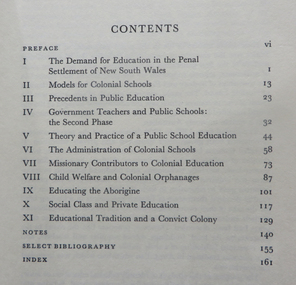
Book, John F. Cleverley, The First Generation: Schools and Society in Early Australia, 1971, 1971
... The book was part of the Ballarat Teachers' College Library. penal settlement education colonial education public education government teachers public school education school administration missions child welfare colonial orphanages aboriginal education private education convict colony Green hard covered book of 168 pages, with index. ...The book was part of the Ballarat Teachers' College Library.Green hard covered book of 168 pages, with index. penal settlement, education, colonial education, public education, government teachers, public school education, school administration, missions, child welfare, colonial orphanages, aboriginal education, private education, convict colony -
Federation University Historical Collection
Photographs - Black and White, Private Residence of Townsend MacDermott, 1861
... Library of Victoria c1980. It shows a bluestone house with a number of women and girls on the verandah. Private ...The residence was designed by architect Henry Richards Caselli.Copy of a black and white photograph purchased from the State Library of Victoria c1980. It shows a bluestone house with a number of women and girls on the verandah. townsend macdermott, henry richards caselli, bluestone house -
 Federation University Historical Collection
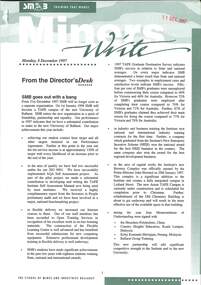
Document - Newsletter, Miners Write: Ballarat School of Mines Staff Newsletter, 1994-1997, 1994-1997
... Tippett Award, Shane Lake, SMB Graduates 1995, Tony Leonard, Colin McCurry, Steph Pilmore 26 June 1995 - Child Care Centre, computer survey responses, Ellimatta, Sharna Whitehand, Jack Veeken, John Hanmer, Aaron Block, Kirsten Martin, Rowena Worth, Jan Croggon, Andrew McEvoy 24 July 1995 - Teaching, Engineering Liaison, Graham Shearer, Carol Durant, Brian McLennan, Market Research, Ararat Campus, Kevin Martin, Myrtle Muir, Hairdressing, Carol McDonald 07 August 1995 - Childcare, Playgroup, Disabilities, Judy Mills, Former Ballarat Gaol, Private Providers, Equal Opportunity, Equal Employment Opportunity 04 September 1995 - Keith Boast, Barkly Street Campus Library, Barrie Firth, Yuille Street Building, Painting and Decorating, Bricklaying, Disability Forum Committee, Belinda Morgan, Fay Guinane, Olivia Guinane, Robert Clarke Community Centre ceramic Tile Mosaic, Neville French, Annelies Egan, Judith Davies, Tanis Yuille, Margaret Komishon, Ruth Zegir, Ray Isaac 18 September - Competition Policy, Public Sector Reform, Brewery Building contract to S.J. ...Tippett Award, Shane Lake, SMB Graduates 1995, Tony Leonard, Colin McCurry, Steph Pilmore 26 June 1995 - Child Care Centre, computer survey responses, Ellimatta, Sharna Whitehand, Jack Veeken, John Hanmer, Aaron Block, Kirsten Martin, Rowena Worth, Jan Croggon, Andrew McEvoy 24 July 1995 - Teaching, Engineering Liaison, Graham Shearer, Carol Durant, Brian McLennan, Market Research, Ararat Campus, Kevin Martin, Myrtle Muir, Hairdressing, Carol McDonald 07 August 1995 - Childcare, Playgroup, Disabilities, Judy Mills, Former Ballarat Gaol, Private Providers, Equal Opportunity, Equal Employment Opportunity 04 September 1995 - Keith Boast, Barkly Street Campus Library, Barrie Firth, Yuille Street Building, Painting and Decorating, Bricklaying, Disability Forum Committee, Belinda Morgan, Fay Guinane, Olivia Guinane, Robert Clarke Community Centre ceramic Tile Mosaic, Neville French, Annelies Egan, Judith Davies, Tanis Yuille, Margaret Komishon, Ruth Zegir, Ray Isaac 18 September - Competition Policy, Public Sector Reform, Brewery Building contract to S.J. ...The Ballarat School of Mines is a predecessor institution of Federation University Australia. Photocopied newsletters with numerous newspaper clippings. 20 June 1994 - Mission, Women's Policy, Kate Wait, Walter Haller, Stewart Moors, Cynthia Jardine, Mark Lynch, R.J. Young Scholarship, David Thomas 22 August 1994 - Wimmera Community College Agreement, SMB/University of Ballarat Affiliation Agreement Signed by Chancellor Geoffrey Blainey, Max Palmer, Matthew Barlow, Mark Dawe, Phillip Lee, John Conaughton, Elizabeth White 05 September 1994 - Employment White Paper, Workcover, Ross Furness, Nance Jeffreys, Keith Chase, Michael Ronaldson, Ron Wild, Paul Jenkins 25 October 1994 - Staff Consultation Committee, Bendix Mintex Award, Rick Williams, Mike Hickey, Sexual Harassment, Ann McCaffrey, Brewery Complex building 07 November 1994 - Karpin Report, Edgar Bartrop Scholarship, Winsome McCaughey 13 June 1995 - Female Participation in TAFE, Lake Bolac Visit, Virginia Fenelon, Hairdressing, Ararat Community College, Brian MCLennan, Forestry Industry Contract, Ararat PRison Education, E.J.T. Tippett Award, Shane Lake, SMB Graduates 1995, Tony Leonard, Colin McCurry, Steph Pilmore 26 June 1995 - Child Care Centre, computer survey responses, Ellimatta, Sharna Whitehand, Jack Veeken, John Hanmer, Aaron Block, Kirsten Martin, Rowena Worth, Jan Croggon, Andrew McEvoy 24 July 1995 - Teaching, Engineering Liaison, Graham Shearer, Carol Durant, Brian McLennan, Market Research, Ararat Campus, Kevin Martin, Myrtle Muir, Hairdressing, Carol McDonald 07 August 1995 - Childcare, Playgroup, Disabilities, Judy Mills, Former Ballarat Gaol, Private Providers, Equal Opportunity, Equal Employment Opportunity 04 September 1995 - Keith Boast, Barkly Street Campus Library, Barrie Firth, Yuille Street Building, Painting and Decorating, Bricklaying, Disability Forum Committee, Belinda Morgan, Fay Guinane, Olivia Guinane, Robert Clarke Community Centre ceramic Tile Mosaic, Neville French, Annelies Egan, Judith Davies, Tanis Yuille, Margaret Komishon, Ruth Zegir, Ray Isaac 18 September - Competition Policy, Public Sector Reform, Brewery Building contract to S.J. Weir, Ararat Campus, BHP, Peter Bell, Mining Industry, Horticulture Facility (Gillies Street), Creche Fairy Mural, Shellagh Kentish, Daylesford Neighbourhood House and Learning Centre, Jenny Beacham, Tom Bates, Colin Trembath, Alan Scanosio, Zaiga Svanosio 16 October 1995 - Rural Studies Staffing, Robyn Greig, Ross Holton, Virginia Fenelon, Michelle Loader, Christina Elshaug, Cynthia Jardine, Morgan B. John death, Ian Pym, Melissa Cameron, hairdressing, Woolshed, Great Southern Woolshed, Graham Shearer October 1995 - Employment Relations Update, Enterprise Bargaining, Sue Wright, Ron Wild 30 October 1995 - 125th anniversary, 125th anniversary Medallions, Bill Murray (died 28 October 1995), Metal Fabrication, Ron Wild, Gael Ramsay, Paul Keating 20 November 1995 - Ceramics Exhibition, Heather Campbell, Marion Byass, Barry Norman, Helen Knowles, Michael Bracher, Brian McLennan, Rural Studies, Carpark, David Nicholson, Linetter Penhall, Suzanne Brown, Marie Bedggood 27 May 1996 - David Brown Farewell, Keith Boast, Educational Services, Wally Gradkowski, Dzintra Crocker, World Wide Web, Ann McCaffrey 17 June 1996 - Lifelong Learning Through Vocational Education and Training, Lyndal Cooper, Engineering Studies, David Manterfield, Rod MacKinney 19 August 1996 - SMB Strategic Plan 1997-2001, Ian Harris, Ararat Prison Education, Moongate 06 September 1996 - Tom Johnson, Bill Gribble, Ron Wild, INternational Projects Report, Cas Anderson, Court House Theatre, Former Court House, The Moongate 11 November 1996 - Brewery Complex Opening by Prime Minister John Howard on 09 December 1996, Human Resources, Marie Kerr, Fran Kisler, Karen Neale, Trudy Horwoood, Graham Hankin, Engineering Studies, David Manerfied, Sheilagh Kentish, Goroke College 12 May 1997 - Ballarat Group Training, Ballarat Aboriginal Co-operative, SMB Flexible Learning Centre, E.J. Tippett Library, Changing Role of the TAFE Teacher, Maree Greig, Colin Prowse, Performing Arts, Dave Knowles, Karyn Kilroy 20 August 1997 - Amalgamation Update, Graham Paynter, Heather MacLeod, Performing Arts 05 September 1997 - From TAFE to VET, Leoda Atkinson, Daniel James, Ararat campus, Mark Bevelander, computers, Craftsmanship Awards, Koorie Programs Unit, Deanne Jakiel, Stephen Burns, Women's Access Program, Internet 20 October 1997 - amalgamation update, Flexible Learning Centre, Andrea Bateman, Val D'Angri, Leoda Atkinson, Paul Mason, Andrea Bateman 10 November 1997 - Ballarat School of Mines/University of Ballarat Amalgamation, Shenzhen Polytechnic China, Videoconferencing, John Ferrier (Science), Performing Arts 08 December 1997 - Last Edition of Miners' Write Ron Wild, Brian McLennan, Max Palmer, Jeanetter John, Farewell to SMB, Time Capsuleminers write, ballarat school of mines, ron wild -
 Flagstaff Hill Maritime Museum and Village
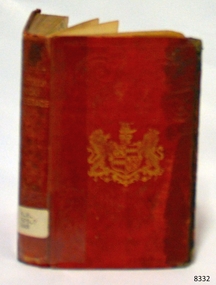
Book - Referance Book, Thomas Curson Hansard Junior, Hansards Pocket Peerage, 1854
... Authentic artifacts, documents, or personal library books signed by the founders of Melbourne are scarce and deeply sought after by Australian universities, state libraries, museums, and private collectors of colonial history. ...Authentic artifacts, documents, or personal library books signed by the founders of Melbourne are scarce and deeply sought after by Australian universities, state libraries, museums, and private collectors of colonial history. ...This volume is a genealogical and biographical reference directory of the British nobility. It was designed as a compact, portable handbook detailing the titles, lineages, coats of arms, and family histories of the peers of Great Britain and Ireland, as well as bishops and baronets. While Thomas Curson Hansard is famous for establishing the printing of Britain's official parliamentary debates (Hansard), his firm also published these highly practical, condensed pocket guides for politicians, gentlemen, and libraries who needed quick access to the details of high society and parliamentary ranks.Hansards Pocket Peerage Publisher: T C Newby Date: 1854 Further Information: Signed by John Pascoe Fawknernon-fictionThis volume is a genealogical and biographical reference directory of the British nobility. It was designed as a compact, portable handbook detailing the titles, lineages, coats of arms, and family histories of the peers of Great Britain and Ireland, as well as bishops and baronets. While Thomas Curson Hansard is famous for establishing the printing of Britain's official parliamentary debates (Hansard), his firm also published these highly practical, condensed pocket guides for politicians, gentlemen, and libraries who needed quick access to the details of high society and parliamentary ranks.flagstaff hill, warrnambool, shipwrecked coast, flagstaff hill maritime museum, maritime museum, shipwreck coast, flagstaff hill maritime village, great ocean road, book, pattison collection, warrnambool library, warrnambool mechanics’ institute, ralph eric pattison, corangamite regional library service, warrnambool city librarian, mechanics’ institute library, victorian library board, warrnambool books and records, warrnambool children’s library, hansards pocket peerage, thomas cautley newby, thomas curson hansard junior, john pascoe fawkner -
 Flagstaff Hill Maritime Museum and Village
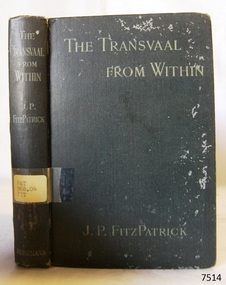
Book, The Transvaal From Within
... Warrnambool Shipwrecked-coast Flagstaff-Hill Flagstaff-Hill-Maritime-Museum Maritime-Museum Shipwreck-coast Flagstaff-Hill-Maritime-Village Shipwrecked-artefact Book Warrnambool Mechanics’ Institute Pattison Collection Warrnambool Library Ralph Eric Pattison Warrnambool City Librarian Mechanics’ Institute Library Victorian Library Board Warrnambool books and records The Transvaal From Within J P Fitzpatrick Label on spine cover with typed text PAT 968.04 FIT Pastedown front end page has sticker from Warrnambool Mechanics Institute and Free Library Front loose endpaper has a sticker from Corangamite Regional Library Service The Transvaal From Within A Private Record of Public Affairs Author: J P Fitzpatrick Publisher: William Heinemann Date: 1900 The Transvaal From Within Book ...This item is from the ‘Pattison Collection’, a collection of books and records that was originally owned by the Warrnambool Mechanics’ Institute, which was founded in Warrnambool in 1853. By 1886 the Warrnambool Mechanics’ Institute (WMI) had grown to have a Library, Museum and Fine Arts Gallery, with a collection of “… choice productions of art, and valuable specimens in almost every branch and many wonderful national curiosities are now to be seen there, including historic relics of the town and district.” It later included a School of Design. Although it was very well patronised, the lack of financial support led the WMI in 1911 to ask the City Council to take it over. In 1935 Ralph Pattison was appointed as City Librarian to establish and organise the Warrnambool Library as it was then called. When the WMI building was pulled down in 1963 a new civic building was erected on the site and the new Warrnambool Library, on behalf of the City Council, took over all the holdings of the WMI. At this time some of the items were separated and identified as the ‘Pattison Collection’, named after Ralph Pattison. Eventually the components of the WMI were distributed from the Warrnambool Library to various places, including the Art Gallery, Historical Society and Flagstaff Hill. Later some were even distributed to other regional branches of Corangamite Regional Library and passed to and fro. It is difficult now to trace just where all of the items have ended up. The books at Flagstaff Hill Maritime Village generally display stamps and markings from Pattison as well as a variety of other institutions including the Mechanics’ Institute itself. RALPH ERIC PATTISON Ralph Eric Pattison was born in Rockhampton, Queensland, in 1891. He married Maude Swan from Warrnambool in 1920 and they set up home in Warrnambool. In 1935 Pattison accepted a position as City Librarian for the Warrnambool City Council. His huge challenge was to make a functional library within two rooms of the Mechanics’ Institute. He tirelessly cleaned, cleared and sorted a disarrayed collection of old books, jars of preserved specimens and other items reserved for exhibition in the city’s museum. He developed and updated the library with a wide variety of books for all tastes, including reference books for students; a difficult task to fulfil during the years following the Depression. He converted all of the lower area of the building into a library, reference room and reading room for members and the public. The books were sorted and stored using a cataloguing and card index system that he had developed himself. He also prepared the upper floor of the building and established the Art Gallery and later the Museum, a place to exhibit the many old relics that had been stored for years for this purpose. One of the treasures he found was a beautiful ancient clock, which he repaired, restored and enjoyed using in his office during the years of his service there. Ralph Pattison was described as “a meticulous gentleman whose punctuality, floorless courtesy and distinctive neat dress were hallmarks of his character, and ‘his’ clock controlled his daily routine, and his opening and closing of the library’s large heavy doors to the minute.” Pattison took leave during 1942 to 1942 to serve in the Royal Australian Navy, Volunteer Reserve as Lieutenant. A few years later he converted one of the Museum’s rooms into a Children’s Library, stocking it with suitable books for the younger generation. This was an instant success. In the 1950’s he had the honour of being appointed to the Victorian Library Board and received more inspiration from the monthly conferences in Melbourne. He was sadly retired in 1959 after over 23 years of service, due to the fact that he had gone over the working age of council officers. However he continued to take a very keen interest in the continual development of the Library until his death in 1969. The Pattison Collection, along with other items at Flagstaff Hill Maritime Village, was originally part of the Warrnambool Mechanics' Institute’s collection. The Warrnambool Mechanics’ Institute Collection is primarily significant in its totality, rather than for the individual objects it contains. Its contents are highly representative of the development of Mechanics' Institute libraries across Australia, particularly Victoria. A diversity of publications and themes has been amassed, and these provide clues to our understanding of the nature of and changes in the reading habits of Victorians from the 1850s to the middle of the 20th century. The collection also highlights the Warrnambool community’s commitment to the Mechanics’ Institute, reading, literacy and learning in the regions, and proves that access to knowledge was not impeded by distance. These items help to provide a more complete picture of our community’s ideals and aspirations. The Warrnambool Mechanics Institute book collection has historical and social significance for its strong association with the Mechanics Institute movement and the important role it played in the intellectual, cultural and social development of people throughout the latter part of the nineteenth century and the early twentieth century. The collection of books is a rare example of an early lending library and its significance is enhanced by the survival of an original collection of many volumes. The Warrnambool Mechanics' Institute’s publication collection is of both local and state significance. The Transvaal From Within A Private Record of Public Affairs Author: J P Fitzpatrick Publisher: William Heinemann Date: 1900 Label on spine cover with typed text PAT 968.04 FIT Pastedown front end page has sticker from Warrnambool Mechanics Institute and Free Library Front loose endpaper has a sticker from Corangamite Regional Library Servicewarrnambool, shipwrecked-coast, flagstaff-hill, flagstaff-hill-maritime-museum, maritime-museum, shipwreck-coast, flagstaff-hill-maritime-village, shipwrecked-artefact, book, warrnambool mechanics’ institute, pattison collection, warrnambool library, ralph eric pattison, warrnambool city librarian, mechanics’ institute library, victorian library board, warrnambool books and records, the transvaal from within, j p fitzpatrick -
 Ringwood and District Historical Society
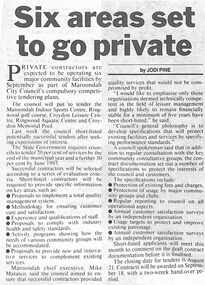
Newspaper, Scrapbook Clipping, Library Collection, Ringwood, Victoria, `
... Newspaper clipping from The "Mail" , 11-7-95 P 7 By Jodi Pine NEWS WATCH Six areas set to go private Scrapbook Clipping, Library Collection, Ringwood, Victoria,. ...``Newspaper clipping from The "Mail" , 11-7-95 P 7 By Jodi Pine NEWS WATCH Six areas set to go privatePrivate contractors are expected to be operating six major community facilities by September as part of Maroondah City Council's compulsory competitive tendering .` -
 Ringwood and District Historical Society
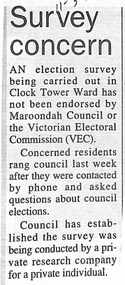
Newspaper, Scrapbook Clipping, Library Collection, Ringwood, Victoria, `
... private individual. Newspaper clipping from the "Post", 11-3-97, P5, Survey concern Scrapbook Clipping, Library Collection, Ringwood, Victoria,. ...``Newspaper clipping from the "Post", 11-3-97, P5, Survey concernAn election survey carried out in Clock Tower Ward has not been endorsed by Maroondah Council or the Victorian Electoral Commission (VCE). Council has established the survey was being conducted by a private research company for a private individual.` -
 Ringwood and District Historical Society
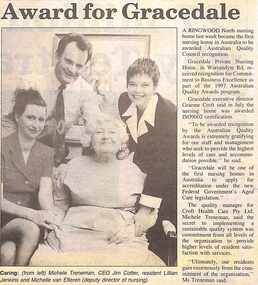
Newspaper, Scrapbook Clipping, Library Collection, Ringwood, Victoria, `
... Gracedale Private Nursing Home, in Warrandyte Rd, received recognition for Commitment to Business Excellence as part of the 1997 Australian Quality Awards program. Newspaper clipping from the "Mail", 2-12-97, P24. Award for Gracedale. Scrapbook Clipping, Library ...``Newspaper clipping from the "Mail", 2-12-97, P24. Award for Gracedale.A Ringwood North nursing home became the first nursing home in Australia to be awarded Australian Quality Council recognition. Gracedale Private Nursing Home, in Warrandyte Rd, received recognition for Commitment to Business Excellence as part of the 1997 Australian Quality Awards program. ` -
 Ringwood and District Historical Society
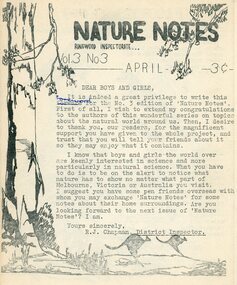
Magazine, Nature Notes magazines 1966 (Vol 3) Issues 3 & 8 only
... The magazine had a large circulation, supplying to schools, private subscribers and societies as well as sending many complimentary copies to libraries, and museums; distribution was throughout Australia. ...The magazine had a large circulation, supplying to schools, private subscribers and societies as well as sending many complimentary copies to libraries, and museums; distribution was throughout Australia. ...Printed magazinesFrom “The History of Ringwood East Primary School 1924-1990” 'Nature Notes' was a children's nature magazine, produced at Ringwood East Primary School for approximately 10 years. It came to us from Blackburn Lake Primary School and before that Blackburn South Primary School. It was originally developed by Harry Hopkins in 1964. He was a District Inspector of schools and also President of the Gould League at the time. Fred Rodgers and Len Delacca were original contributors, Fred writing on native flora and Len writing on native flora [fauna]. It came to Ringwood East in 1975 with Keith Dyer, a teacher on the staff, as editor. The magazine had a large circulation, supplying to schools, private subscribers and societies as well as sending many complimentary copies to libraries, and museums; distribution was throughout Australia. The Magazine continued to grow under consequent editors, Anne Gibson (who also developed 'Probe' a junior version of 'Nature Notes' designed for grades 2 and 4), Barry Archibald, Colin Bull, Russell Hall, Deborah Brydon and Mandy Charmichael. The editors would research, compile, edit and print the magazine which was a monthly issue. The parents would then come in on a Monday to collate, fold and staple. This usually was a morning’s work but this depended on how many helping hands there were. The Wednesday was packing and posting day and in the early days the parents used to deliver the local orders to save costs. Subscribers were sought through advertisements in various school literature and material. The Parents Club received an annual remuneration for their hard work and in turn were able to help purchase many items needed throughout the school. These magazines were packed with really good nature information and taught children how to look after their environment using articles, puzzles, riddles, questions and quizzes. There were special characters as well like 'Wally the Wombat' and 'Ernie the Echidna' for the children to follow on various adventures every month. Children would enjoy watching them crop up in each edition. The magazine stayed with us at Ringwood East until 1986, when due to restructuring and various other things was moved to Healesville Sanctuary where it adopted a new format and name. From here it has since folded and so the end of 'Nature Notes'. 'Nature Notes' was a very successful magazine. Many people through the years devoted a lot of time and energy to its production and readers throughout Australia, as well as its many creators and producers during its 20-year existence, mourn its passing. Written from material supplied by Barry Archibald (editor 'Nature Notes' 1977-78) Margaret Preece & Lois Aders (parents in charge of collating and packaging during its last years of existence. -
 Ringwood and District Historical Society
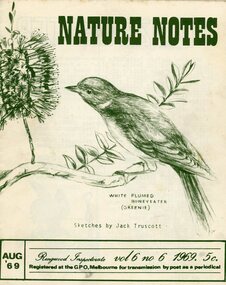
Archive, Parent Record for Nature Notes & Probe magazines Collection
... The magazine had a large circulation, supplying to schools, private subscribers and societies as well as sending many complimentary copies to libraries, and museums; distribution was throughout Australia. ...The magazine had a large circulation, supplying to schools, private subscribers and societies as well as sending many complimentary copies to libraries, and museums; distribution was throughout Australia. ...Parent Record for Archive collection of photographs, documents, minutes etc relating to the Nature Notes and Probe magazines published by the Ringwood Electorate State/Primary SchoolsFrom “The History of Ringwood East Primary School 1924-1990” 'Nature Notes' was a children's nature magazine, produced at Ringwood East Primary School for approximately 10 years. It came to us from Blackburn Lake Primary School and before that Blackburn South Primary School. It was originally developed by Harry Hopkins in 1964. He was a District Inspector of schools and also President of the Gould League at the time. Fred Rodgers and Len Delacca were original contributors, Fred writing on native flora and Len writing on native flora [fauna]. It came to Ringwood East in 1975 with Keith Dyer, a teacher on the staff, as editor. The magazine had a large circulation, supplying to schools, private subscribers and societies as well as sending many complimentary copies to libraries, and museums; distribution was throughout Australia. The Magazine continued to grow under consequent editors, Anne Gibson (who also developed 'Probe' a junior version of 'Nature Notes' designed for grades 2 and 4), Barry Archibald, Colin Bull, Russell Hall, Deborah Brydon and Mandy Charmichael. The editors would research, compile, edit and print the magazine which was a monthly issue. The parents would then come in on a Monday to collate, fold and staple. This usually was a morning’s work but this depended on how many helping hands there were. The Wednesday was packing and posting day and in the early days the parents used to deliver the local orders to save costs. Subscribers were sought through advertisements in various school literature and material. The Parents Club received an annual remuneration for their hard work and in turn were able to help purchase many items needed throughout the school. These magazines were packed with really good nature information and taught children how to look after their environment using articles, puzzles, riddles, questions and quizzes. There were special characters as well like 'Wally the Wombat' and 'Ernie the Echidna' for the children to follow on various adventures every month. Children would enjoy watching them crop up in each edition. The magazine stayed with us at Ringwood East until 1986, when due to restructuring and various other things was moved to Healesville Sanctuary where it adopted a new format and name. From here it has since folded and so the end of 'Nature Notes'. 'Nature Notes' was a very successful magazine. Many people through the years devoted a lot of time and energy to its production and readers throughout Australia, as well as its many creators and producers during its 20-year existence, mourn its passing. Written from material supplied by Barry Archibald (editor 'Nature Notes' 1977-78) Margaret Preece & Lois Aders (parents in charge of collating and packaging during its last years of existence. -
 Ringwood and District Historical Society
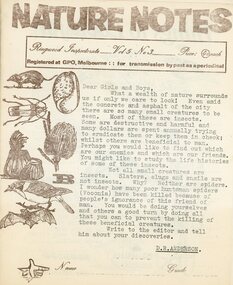
Magazine, Nature Notes magazines 1968 (Vol 5) Issues 3 to 10
... The magazine had a large circulation, supplying to schools, private subscribers and societies as well as sending many complimentary copies to libraries, and museums; distribution was throughout Australia. ...The magazine had a large circulation, supplying to schools, private subscribers and societies as well as sending many complimentary copies to libraries, and museums; distribution was throughout Australia. ...Printed magazinesFrom “The History of Ringwood East Primary School 1924-1990” 'Nature Notes' was a children's nature magazine, produced at Ringwood East Primary School for approximately 10 years. It came to us from Blackburn Lake Primary School and before that Blackburn South Primary School. It was originally developed by Harry Hopkins in 1964. He was a District Inspector of schools and also President of the Gould League at the time. Fred Rodgers and Len Delacca were original contributors, Fred writing on native flora and Len writing on native flora [fauna]. It came to Ringwood East in 1975 with Keith Dyer, a teacher on the staff, as editor. The magazine had a large circulation, supplying to schools, private subscribers and societies as well as sending many complimentary copies to libraries, and museums; distribution was throughout Australia. The Magazine continued to grow under consequent editors, Anne Gibson (who also developed 'Probe' a junior version of 'Nature Notes' designed for grades 2 and 4), Barry Archibald, Colin Bull, Russell Hall, Deborah Brydon and Mandy Charmichael. The editors would research, compile, edit and print the magazine which was a monthly issue. The parents would then come in on a Monday to collate, fold and staple. This usually was a morning’s work but this depended on how many helping hands there were. The Wednesday was packing and posting day and in the early days the parents used to deliver the local orders to save costs. Subscribers were sought through advertisements in various school literature and material. The Parents Club received an annual remuneration for their hard work and in turn were able to help purchase many items needed throughout the school. These magazines were packed with really good nature information and taught children how to look after their environment using articles, puzzles, riddles, questions and quizzes. There were special characters as well like 'Wally the Wombat' and 'Ernie the Echidna' for the children to follow on various adventures every month. Children would enjoy watching them crop up in each edition. The magazine stayed with us at Ringwood East until 1986, when due to restructuring and various other things was moved to Healesville Sanctuary where it adopted a new format and name. From here it has since folded and so the end of 'Nature Notes'. 'Nature Notes' was a very successful magazine. Many people through the years devoted a lot of time and energy to its production and readers throughout Australia, as well as its many creators and producers during its 20-year existence, mourn its passing. Written from material supplied by Barry Archibald (editor 'Nature Notes' 1977-78) Margaret Preece & Lois Aders (parents in charge of collating and packaging during its last years of existence. -
 Ringwood and District Historical Society
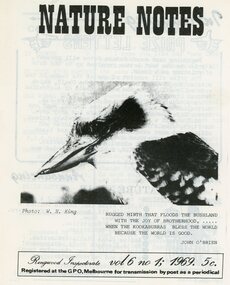
Magazine, Nature Notes magazines 1969 (Vol 6) Issues 1 to 2, 4 to 10
... The magazine had a large circulation, supplying to schools, private subscribers and societies as well as sending many complimentary copies to libraries, and museums; distribution was throughout Australia. ...The magazine had a large circulation, supplying to schools, private subscribers and societies as well as sending many complimentary copies to libraries, and museums; distribution was throughout Australia. ...Printed magazinesFrom “The History of Ringwood East Primary School 1924-1990” 'Nature Notes' was a children's nature magazine, produced at Ringwood East Primary School for approximately 10 years. It came to us from Blackburn Lake Primary School and before that Blackburn South Primary School. It was originally developed by Harry Hopkins in 1964. He was a District Inspector of schools and also President of the Gould League at the time. Fred Rodgers and Len Delacca were original contributors, Fred writing on native flora and Len writing on native flora [fauna]. It came to Ringwood East in 1975 with Keith Dyer, a teacher on the staff, as editor. The magazine had a large circulation, supplying to schools, private subscribers and societies as well as sending many complimentary copies to libraries, and museums; distribution was throughout Australia. The Magazine continued to grow under consequent editors, Anne Gibson (who also developed 'Probe' a junior version of 'Nature Notes' designed for grades 2 and 4), Barry Archibald, Colin Bull, Russell Hall, Deborah Brydon and Mandy Charmichael. The editors would research, compile, edit and print the magazine which was a monthly issue. The parents would then come in on a Monday to collate, fold and staple. This usually was a morning’s work but this depended on how many helping hands there were. The Wednesday was packing and posting day and in the early days the parents used to deliver the local orders to save costs. Subscribers were sought through advertisements in various school literature and material. The Parents Club received an annual remuneration for their hard work and in turn were able to help purchase many items needed throughout the school. These magazines were packed with really good nature information and taught children how to look after their environment using articles, puzzles, riddles, questions and quizzes. There were special characters as well like 'Wally the Wombat' and 'Ernie the Echidna' for the children to follow on various adventures every month. Children would enjoy watching them crop up in each edition. The magazine stayed with us at Ringwood East until 1986, when due to restructuring and various other things was moved to Healesville Sanctuary where it adopted a new format and name. From here it has since folded and so the end of 'Nature Notes'. 'Nature Notes' was a very successful magazine. Many people through the years devoted a lot of time and energy to its production and readers throughout Australia, as well as its many creators and producers during its 20-year existence, mourn its passing. Written from material supplied by Barry Archibald (editor 'Nature Notes' 1977-78) Margaret Preece & Lois Aders (parents in charge of collating and packaging during its last years of existence. -
 Ringwood and District Historical Society
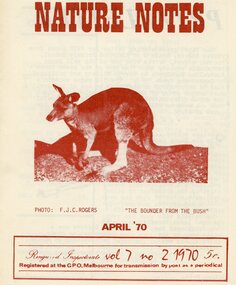
Magazine, Nature Notes magazines 1970 (Vol 7) Issues 2 to 10
... The magazine had a large circulation, supplying to schools, private subscribers and societies as well as sending many complimentary copies to libraries, and museums; distribution was throughout Australia. ...The magazine had a large circulation, supplying to schools, private subscribers and societies as well as sending many complimentary copies to libraries, and museums; distribution was throughout Australia. ...Printed magazinesFrom “The History of Ringwood East Primary School 1924-1990” 'Nature Notes' was a children's nature magazine, produced at Ringwood East Primary School for approximately 10 years. It came to us from Blackburn Lake Primary School and before that Blackburn South Primary School. It was originally developed by Harry Hopkins in 1964. He was a District Inspector of schools and also President of the Gould League at the time. Fred Rodgers and Len Delacca were original contributors, Fred writing on native flora and Len writing on native flora [fauna]. It came to Ringwood East in 1975 with Keith Dyer, a teacher on the staff, as editor. The magazine had a large circulation, supplying to schools, private subscribers and societies as well as sending many complimentary copies to libraries, and museums; distribution was throughout Australia. The Magazine continued to grow under consequent editors, Anne Gibson (who also developed 'Probe' a junior version of 'Nature Notes' designed for grades 2 and 4), Barry Archibald, Colin Bull, Russell Hall, Deborah Brydon and Mandy Charmichael. The editors would research, compile, edit and print the magazine which was a monthly issue. The parents would then come in on a Monday to collate, fold and staple. This usually was a morning’s work but this depended on how many helping hands there were. The Wednesday was packing and posting day and in the early days the parents used to deliver the local orders to save costs. Subscribers were sought through advertisements in various school literature and material. The Parents Club received an annual remuneration for their hard work and in turn were able to help purchase many items needed throughout the school. These magazines were packed with really good nature information and taught children how to look after their environment using articles, puzzles, riddles, questions and quizzes. There were special characters as well like 'Wally the Wombat' and 'Ernie the Echidna' for the children to follow on various adventures every month. Children would enjoy watching them crop up in each edition. The magazine stayed with us at Ringwood East until 1986, when due to restructuring and various other things was moved to Healesville Sanctuary where it adopted a new format and name. From here it has since folded and so the end of 'Nature Notes'. 'Nature Notes' was a very successful magazine. Many people through the years devoted a lot of time and energy to its production and readers throughout Australia, as well as its many creators and producers during its 20-year existence, mourn its passing. Written from material supplied by Barry Archibald (editor 'Nature Notes' 1977-78) Margaret Preece & Lois Aders (parents in charge of collating and packaging during its last years of existence. -
 Ringwood and District Historical Society
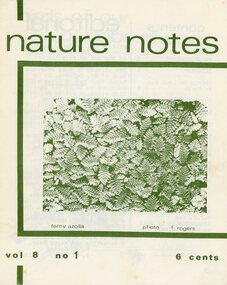
Magazine, Nature Notes magazines 1971 (Vol 8) Issues 1 to 10
... The magazine had a large circulation, supplying to schools, private subscribers and societies as well as sending many complimentary copies to libraries, and museums; distribution was throughout Australia. ...The magazine had a large circulation, supplying to schools, private subscribers and societies as well as sending many complimentary copies to libraries, and museums; distribution was throughout Australia. ...Printed magazinesFrom “The History of Ringwood East Primary School 1924-1990” 'Nature Notes' was a children's nature magazine, produced at Ringwood East Primary School for approximately 10 years. It came to us from Blackburn Lake Primary School and before that Blackburn South Primary School. It was originally developed by Harry Hopkins in 1964. He was a District Inspector of schools and also President of the Gould League at the time. Fred Rodgers and Len Delacca were original contributors, Fred writing on native flora and Len writing on native flora [fauna]. It came to Ringwood East in 1975 with Keith Dyer, a teacher on the staff, as editor. The magazine had a large circulation, supplying to schools, private subscribers and societies as well as sending many complimentary copies to libraries, and museums; distribution was throughout Australia. The Magazine continued to grow under consequent editors, Anne Gibson (who also developed 'Probe' a junior version of 'Nature Notes' designed for grades 2 and 4), Barry Archibald, Colin Bull, Russell Hall, Deborah Brydon and Mandy Charmichael. The editors would research, compile, edit and print the magazine which was a monthly issue. The parents would then come in on a Monday to collate, fold and staple. This usually was a morning’s work but this depended on how many helping hands there were. The Wednesday was packing and posting day and in the early days the parents used to deliver the local orders to save costs. Subscribers were sought through advertisements in various school literature and material. The Parents Club received an annual remuneration for their hard work and in turn were able to help purchase many items needed throughout the school. These magazines were packed with really good nature information and taught children how to look after their environment using articles, puzzles, riddles, questions and quizzes. There were special characters as well like 'Wally the Wombat' and 'Ernie the Echidna' for the children to follow on various adventures every month. Children would enjoy watching them crop up in each edition. The magazine stayed with us at Ringwood East until 1986, when due to restructuring and various other things was moved to Healesville Sanctuary where it adopted a new format and name. From here it has since folded and so the end of 'Nature Notes'. 'Nature Notes' was a very successful magazine. Many people through the years devoted a lot of time and energy to its production and readers throughout Australia, as well as its many creators and producers during its 20-year existence, mourn its passing. Written from material supplied by Barry Archibald (editor 'Nature Notes' 1977-78) Margaret Preece & Lois Aders (parents in charge of collating and packaging during its last years of existence. -
 Ringwood and District Historical Society
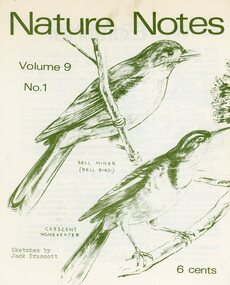
Magazine, Nature Notes magazines 1972 (Vol 9) Issues 1, 3-4, 6 to 10
... The magazine had a large circulation, supplying to schools, private subscribers and societies as well as sending many complimentary copies to libraries, and museums; distribution was throughout Australia. ...The magazine had a large circulation, supplying to schools, private subscribers and societies as well as sending many complimentary copies to libraries, and museums; distribution was throughout Australia. ...Printed magazinesFrom “The History of Ringwood East Primary School 1924-1990” 'Nature Notes' was a children's nature magazine, produced at Ringwood East Primary School for approximately 10 years. It came to us from Blackburn Lake Primary School and before that Blackburn South Primary School. It was originally developed by Harry Hopkins in 1964. He was a District Inspector of schools and also President of the Gould League at the time. Fred Rodgers and Len Delacca were original contributors, Fred writing on native flora and Len writing on native flora [fauna]. It came to Ringwood East in 1975 with Keith Dyer, a teacher on the staff, as editor. The magazine had a large circulation, supplying to schools, private subscribers and societies as well as sending many complimentary copies to libraries, and museums; distribution was throughout Australia. The Magazine continued to grow under consequent editors, Anne Gibson (who also developed 'Probe' a junior version of 'Nature Notes' designed for grades 2 and 4), Barry Archibald, Colin Bull, Russell Hall, Deborah Brydon and Mandy Charmichael. The editors would research, compile, edit and print the magazine which was a monthly issue. The parents would then come in on a Monday to collate, fold and staple. This usually was a morning’s work but this depended on how many helping hands there were. The Wednesday was packing and posting day and in the early days the parents used to deliver the local orders to save costs. Subscribers were sought through advertisements in various school literature and material. The Parents Club received an annual remuneration for their hard work and in turn were able to help purchase many items needed throughout the school. These magazines were packed with really good nature information and taught children how to look after their environment using articles, puzzles, riddles, questions and quizzes. There were special characters as well like 'Wally the Wombat' and 'Ernie the Echidna' for the children to follow on various adventures every month. Children would enjoy watching them crop up in each edition. The magazine stayed with us at Ringwood East until 1986, when due to restructuring and various other things was moved to Healesville Sanctuary where it adopted a new format and name. From here it has since folded and so the end of 'Nature Notes'. 'Nature Notes' was a very successful magazine. Many people through the years devoted a lot of time and energy to its production and readers throughout Australia, as well as its many creators and producers during its 20-year existence, mourn its passing. Written from material supplied by Barry Archibald (editor 'Nature Notes' 1977-78) Margaret Preece & Lois Aders (parents in charge of collating and packaging during its last years of existence. -
 Ringwood and District Historical Society
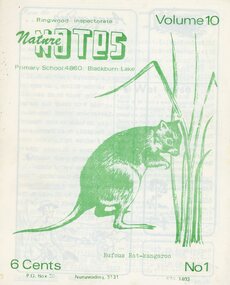
Magazine, Nature Notes magazines 1973 (Vol 10) Issues 1-4, 6-10
... The magazine had a large circulation, supplying to schools, private subscribers and societies as well as sending many complimentary copies to libraries, and museums; distribution was throughout Australia. ...The magazine had a large circulation, supplying to schools, private subscribers and societies as well as sending many complimentary copies to libraries, and museums; distribution was throughout Australia. ...Printed magazinesFrom “The History of Ringwood East Primary School 1924-1990” 'Nature Notes' was a children's nature magazine, produced at Ringwood East Primary School for approximately 10 years. It came to us from Blackburn Lake Primary School and before that Blackburn South Primary School. It was originally developed by Harry Hopkins in 1964. He was a District Inspector of schools and also President of the Gould League at the time. Fred Rodgers and Len Delacca were original contributors, Fred writing on native flora and Len writing on native flora [fauna]. It came to Ringwood East in 1975 with Keith Dyer, a teacher on the staff, as editor. The magazine had a large circulation, supplying to schools, private subscribers and societies as well as sending many complimentary copies to libraries, and museums; distribution was throughout Australia. The Magazine continued to grow under consequent editors, Anne Gibson (who also developed 'Probe' a junior version of 'Nature Notes' designed for grades 2 and 4), Barry Archibald, Colin Bull, Russell Hall, Deborah Brydon and Mandy Charmichael. The editors would research, compile, edit and print the magazine which was a monthly issue. The parents would then come in on a Monday to collate, fold and staple. This usually was a morning’s work but this depended on how many helping hands there were. The Wednesday was packing and posting day and in the early days the parents used to deliver the local orders to save costs. Subscribers were sought through advertisements in various school literature and material. The Parents Club received an annual remuneration for their hard work and in turn were able to help purchase many items needed throughout the school. These magazines were packed with really good nature information and taught children how to look after their environment using articles, puzzles, riddles, questions and quizzes. There were special characters as well like 'Wally the Wombat' and 'Ernie the Echidna' for the children to follow on various adventures every month. Children would enjoy watching them crop up in each edition. The magazine stayed with us at Ringwood East until 1986, when due to restructuring and various other things was moved to Healesville Sanctuary where it adopted a new format and name. From here it has since folded and so the end of 'Nature Notes'. 'Nature Notes' was a very successful magazine. Many people through the years devoted a lot of time and energy to its production and readers throughout Australia, as well as its many creators and producers during its 20-year existence, mourn its passing. Written from material supplied by Barry Archibald (editor 'Nature Notes' 1977-78) Margaret Preece & Lois Aders (parents in charge of collating and packaging during its last years of existence. -
 Ringwood and District Historical Society
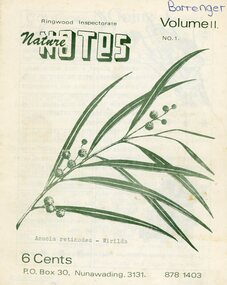
Magazine, Nature Notes magazines 1974 (Vol 11) Issues 1-10
... The magazine had a large circulation, supplying to schools, private subscribers and societies as well as sending many complimentary copies to libraries, and museums; distribution was throughout Australia. ...The magazine had a large circulation, supplying to schools, private subscribers and societies as well as sending many complimentary copies to libraries, and museums; distribution was throughout Australia. ...Printed magazinesFrom “The History of Ringwood East Primary School 1924-1990” 'Nature Notes' was a children's nature magazine, produced at Ringwood East Primary School for approximately 10 years. It came to us from Blackburn Lake Primary School and before that Blackburn South Primary School. It was originally developed by Harry Hopkins in 1964. He was a District Inspector of schools and also President of the Gould League at the time. Fred Rodgers and Len Delacca were original contributors, Fred writing on native flora and Len writing on native flora [fauna]. It came to Ringwood East in 1975 with Keith Dyer, a teacher on the staff, as editor. The magazine had a large circulation, supplying to schools, private subscribers and societies as well as sending many complimentary copies to libraries, and museums; distribution was throughout Australia. The Magazine continued to grow under consequent editors, Anne Gibson (who also developed 'Probe' a junior version of 'Nature Notes' designed for grades 2 and 4), Barry Archibald, Colin Bull, Russell Hall, Deborah Brydon and Mandy Charmichael. The editors would research, compile, edit and print the magazine which was a monthly issue. The parents would then come in on a Monday to collate, fold and staple. This usually was a morning’s work but this depended on how many helping hands there were. The Wednesday was packing and posting day and in the early days the parents used to deliver the local orders to save costs. Subscribers were sought through advertisements in various school literature and material. The Parents Club received an annual remuneration for their hard work and in turn were able to help purchase many items needed throughout the school. These magazines were packed with really good nature information and taught children how to look after their environment using articles, puzzles, riddles, questions and quizzes. There were special characters as well like 'Wally the Wombat' and 'Ernie the Echidna' for the children to follow on various adventures every month. Children would enjoy watching them crop up in each edition. The magazine stayed with us at Ringwood East until 1986, when due to restructuring and various other things was moved to Healesville Sanctuary where it adopted a new format and name. From here it has since folded and so the end of 'Nature Notes'. 'Nature Notes' was a very successful magazine. Many people through the years devoted a lot of time and energy to its production and readers throughout Australia, as well as its many creators and producers during its 20-year existence, mourn its passing. Written from material supplied by Barry Archibald (editor 'Nature Notes' 1977-78) Margaret Preece & Lois Aders (parents in charge of collating and packaging during its last years of existence. -
 Ringwood and District Historical Society
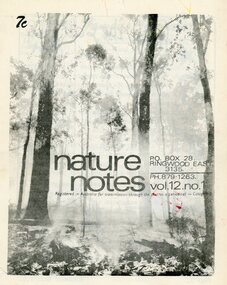
Magazine, Nature Notes magazines 1975 (Vol 12) Issues 1-10
... The magazine had a large circulation, supplying to schools, private subscribers and societies as well as sending many complimentary copies to libraries, and museums; distribution was throughout Australia. ...The magazine had a large circulation, supplying to schools, private subscribers and societies as well as sending many complimentary copies to libraries, and museums; distribution was throughout Australia. ...Printed magazinesFrom “The History of Ringwood East Primary School 1924-1990” 'Nature Notes' was a children's nature magazine, produced at Ringwood East Primary School for approximately 10 years. It came to us from Blackburn Lake Primary School and before that Blackburn South Primary School. It was originally developed by Harry Hopkins in 1964. He was a District Inspector of schools and also President of the Gould League at the time. Fred Rodgers and Len Delacca were original contributors, Fred writing on native flora and Len writing on native flora [fauna]. It came to Ringwood East in 1975 with Keith Dyer, a teacher on the staff, as editor. The magazine had a large circulation, supplying to schools, private subscribers and societies as well as sending many complimentary copies to libraries, and museums; distribution was throughout Australia. The Magazine continued to grow under consequent editors, Anne Gibson (who also developed 'Probe' a junior version of 'Nature Notes' designed for grades 2 and 4), Barry Archibald, Colin Bull, Russell Hall, Deborah Brydon and Mandy Charmichael. The editors would research, compile, edit and print the magazine which was a monthly issue. The parents would then come in on a Monday to collate, fold and staple. This usually was a morning’s work but this depended on how many helping hands there were. The Wednesday was packing and posting day and in the early days the parents used to deliver the local orders to save costs. Subscribers were sought through advertisements in various school literature and material. The Parents Club received an annual remuneration for their hard work and in turn were able to help purchase many items needed throughout the school. These magazines were packed with really good nature information and taught children how to look after their environment using articles, puzzles, riddles, questions and quizzes. There were special characters as well like 'Wally the Wombat' and 'Ernie the Echidna' for the children to follow on various adventures every month. Children would enjoy watching them crop up in each edition. The magazine stayed with us at Ringwood East until 1986, when due to restructuring and various other things was moved to Healesville Sanctuary where it adopted a new format and name. From here it has since folded and so the end of 'Nature Notes'. 'Nature Notes' was a very successful magazine. Many people through the years devoted a lot of time and energy to its production and readers throughout Australia, as well as its many creators and producers during its 20-year existence, mourn its passing. Written from material supplied by Barry Archibald (editor 'Nature Notes' 1977-78) Margaret Preece & Lois Aders (parents in charge of collating and packaging during its last years of existence. -
 Ringwood and District Historical Society
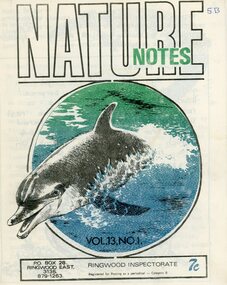
Magazine, Nature Notes magazines 1976 (Vol 13) Issues 1-10
... The magazine had a large circulation, supplying to schools, private subscribers and societies as well as sending many complimentary copies to libraries, and museums; distribution was throughout Australia. ...The magazine had a large circulation, supplying to schools, private subscribers and societies as well as sending many complimentary copies to libraries, and museums; distribution was throughout Australia. ...Printed magazinesFrom “The History of Ringwood East Primary School 1924-1990” 'Nature Notes' was a children's nature magazine, produced at Ringwood East Primary School for approximately 10 years. It came to us from Blackburn Lake Primary School and before that Blackburn South Primary School. It was originally developed by Harry Hopkins in 1964. He was a District Inspector of schools and also President of the Gould League at the time. Fred Rodgers and Len Delacca were original contributors, Fred writing on native flora and Len writing on native flora [fauna]. It came to Ringwood East in 1975 with Keith Dyer, a teacher on the staff, as editor. The magazine had a large circulation, supplying to schools, private subscribers and societies as well as sending many complimentary copies to libraries, and museums; distribution was throughout Australia. The Magazine continued to grow under consequent editors, Anne Gibson (who also developed 'Probe' a junior version of 'Nature Notes' designed for grades 2 and 4), Barry Archibald, Colin Bull, Russell Hall, Deborah Brydon and Mandy Charmichael. The editors would research, compile, edit and print the magazine which was a monthly issue. The parents would then come in on a Monday to collate, fold and staple. This usually was a morning’s work but this depended on how many helping hands there were. The Wednesday was packing and posting day and in the early days the parents used to deliver the local orders to save costs. Subscribers were sought through advertisements in various school literature and material. The Parents Club received an annual remuneration for their hard work and in turn were able to help purchase many items needed throughout the school. These magazines were packed with really good nature information and taught children how to look after their environment using articles, puzzles, riddles, questions and quizzes. There were special characters as well like 'Wally the Wombat' and 'Ernie the Echidna' for the children to follow on various adventures every month. Children would enjoy watching them crop up in each edition. The magazine stayed with us at Ringwood East until 1986, when due to restructuring and various other things was moved to Healesville Sanctuary where it adopted a new format and name. From here it has since folded and so the end of 'Nature Notes'. 'Nature Notes' was a very successful magazine. Many people through the years devoted a lot of time and energy to its production and readers throughout Australia, as well as its many creators and producers during its 20-year existence, mourn its passing. Written from material supplied by Barry Archibald (editor 'Nature Notes' 1977-78) Margaret Preece & Lois Aders (parents in charge of collating and packaging during its last years of existence.
