
Showing 192 items matching "processing materials"
-
 Moorabbin Air Museum
Book - Aircraft construction, Aircraft processes
... Processing materials...Aircraft construction Processing materials Aluminium & it alloys Magnesium & its alloys Steels used in aircraft construction Heat treatment of steels Stainless steels Welding steel Arc welding fundamentals Welding aluminium Electric spot welding Metal spraying Cadmium plating Overview of material & processes for aircraft construction, circa 1941 Aircraft processes Book Aircraft construction ...Overview of material & processes for aircraft construction, circa 1941non-fictionOverview of material & processes for aircraft construction, circa 1941processing materials, aluminium & it alloys, magnesium & its alloys, steels used in aircraft construction, heat treatment of steels, stainless steels, welding steel, arc welding fundamentals, welding aluminium, electric spot welding, metal spraying, cadmium plating -
 Bendigo Historical Society Inc.
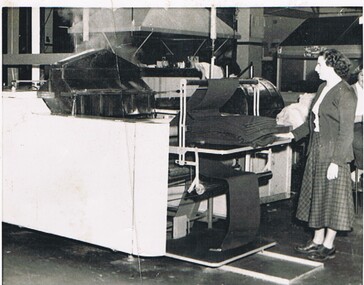
Photograph - HANRO COLLECTION: INTERIOR OF FACTORY, GARMENT PROCESSING MACHINE, ? 1950's
... Photo: black and white photo showing machinery inside factory, processing material over a series of rollers. Female operator standing on Rh side of photo, dressed in plaid skirt, white top and long line cardigan, wearing flat shoes....ORGANIZATION Business hanro Hanro Bendigo manufacturing machinery no known Photo: black and white photo showing machinery inside factory, processing material over a series of rollers. Female operator standing on Rh side of photo, dressed in plaid skirt, white top and long line cardigan, wearing flat shoes. ...Photo: black and white photo showing machinery inside factory, processing material over a series of rollers. Female operator standing on Rh side of photo, dressed in plaid skirt, white top and long line cardigan, wearing flat shoes.no knownorganization, business, hanro, hanro, bendigo, manufacturing, machinery -
 Bendigo Military Museum
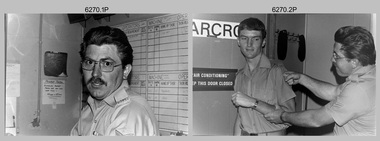
Photograph - Photo Troop, Lithographic Squadron – Army Survey Regiment, Fortuna, Bendigo, c1983
... The main tasks undertaken by technicians in Photo Troop were most likely enlargements, reductions and duplication of map reproduction material, and processing of aerial photography....The main tasks undertaken by technicians in Photo Troop were most likely enlargements, reductions and duplication of map reproduction material, and processing of aerial photography. Royal Australian Survey Corps RASvy Army Survey Regiment Army Svy Regt Fortuna ASR Litho No personnel are identified. ...This collection of seven photos was most likely taken at Lithographic Squadron, Army Survey Regiment, Fortuna, Bendigo in c1983. The main tasks undertaken by technicians in Photo Troop were most likely enlargements, reductions and duplication of map reproduction material, and processing of aerial photography.This is a set of seven photographs of Photo Troop personnel and equipment from Lithographic Squadron at the Army Survey Regiment, Fortuna, Bendigo, c1983. The photographs were on 35mm negative film and were scanned at 96 dpi. They are part of the Army Survey Regiment’s Collection. .1) - Photo, black & white, c1983, Photo Troop work area, SGT Garran Hill. .2) - Photo, black & white, c1983, Photo Troop work area, L to R: SPR Steve Burke, SGT Garran Hill. .3) - Photo, black & white, c1983, Photo Troop work area, SPR Steve Burke. .4) - Photo, black & white, c1983, Photo Troop work area, WO1 Noel ‘Nesty’ Coulthard. .5) - Photo, black & white, c1983, Photo Troop work area, WO1 Noel ‘Nesty’ Coulthard. .6) - Photo, black & white, c1983, Photo Troop work area, CPL Gary Tremain. .7) - Photo, black & white, c1983, Photo Troop work area, CPL Neville Carr. No personnel are identified.royal australian survey corps, rasvy, army survey regiment, army svy regt, fortuna, asr, litho -
 Bendigo Military Museum
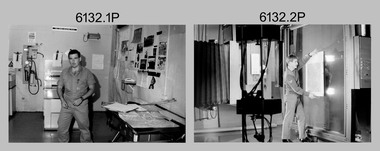
Photograph - Photo Troop, Lithographic Squadron – Army Survey Regiment, Fortuna, Bendigo, 1988
... The main tasks undertaken by technicians in Photo Troop were most likely enlargements, reductions and duplication of map reproduction material, and processing of aerial photography....The main tasks undertaken by technicians in Photo Troop were most likely enlargements, reductions and duplication of map reproduction material, and processing of aerial photography. Royal Australian Survey Corps RASvy Army Survey Regiment Army Svy Regt Fortuna ASR litho No personnel are identified This is a set of 10 photographs of Photo Troop personnel and equipment from Lithographic Squadron at the Army Survey Regiment, Fortuna, Bendigo, 1988. ...This collection of 10 photos was most likely taken at Lithographic Squadron, Army Survey Regiment, Fortuna, Bendigo in 1988. The main tasks undertaken by technicians in Photo Troop were most likely enlargements, reductions and duplication of map reproduction material, and processing of aerial photography.This is a set of 10 photographs of Photo Troop personnel and equipment from Lithographic Squadron at the Army Survey Regiment, Fortuna, Bendigo, 1988. The photographs were on 35mm negative film and were scanned at 96 dpi. They are part of the Army Survey Regiment’s Collection. .1) - Photo, black & white, 1988, BARCRO work area, SPR Gary Sievers. .2) - Photo, black & white, 1988, KLIMSCH Commodore camera, CPL Mick Gillham. .3) - Photo, black & white, 1988, KLIMSCH Commodore camera, CPL Mick Gillham. .4) - Photo, black & white, 1988, WILD U4A Diapositive Camera, SPR Rob Jones. .5) - Photo, black & white, 1988, WILD U4A Diapositive Camera, SPR Rob Jones. .6) - Photo, black & white, 1988, WILD U4A Diapositive Camera, SPR Rob Jones. .7) - Photo, black & white, 1988, WILD U4A Diapositive Camera, SPR Rob Jones. .8) - Photo, black & white, 1988, WILD U4A Diapositive Camera, SPR Rob Jones. .9) - Photo, black & white, 1988, Photographic camera enlarger, unidentified technician. .10) - Photo, black & white, 1988, SUPER CHROMEGA F Photographic camera enlarger. No personnel are identifiedroyal australian survey corps, rasvy, army survey regiment, army svy regt, fortuna, asr, litho -
 Bendigo Military Museum
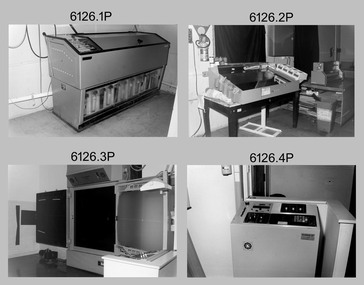
Photograph - Photo Troop, Lithographic Squadron – Army Survey Regiment, Fortuna, Bendigo, 1986
... The main tasks undertaken by technicians in Photo Troop were most likely enlargements, reductions and duplication of map reproduction material, and processing of aerial photography....The main tasks undertaken by technicians in Photo Troop were most likely enlargements, reductions and duplication of map reproduction material, and processing of aerial photography. Royal Australian Survey Corps RASvy Army Survey Regiment Army Svy Regt Fortuna ASR litho No personnel are identified This is a set of 18 photographs of Photo Troop personnel and equipment from Lithographic Squadron at the Army Survey Regiment, Fortuna, Bendigo, 1986. ...This collection of 18 photos was most likely taken at Lithographic Squadron, Army Survey Regiment, Fortuna, Bendigo in 1986. The main tasks undertaken by technicians in Photo Troop were most likely enlargements, reductions and duplication of map reproduction material, and processing of aerial photography.This is a set of 18 photographs of Photo Troop personnel and equipment from Lithographic Squadron at the Army Survey Regiment, Fortuna, Bendigo, 1986. The photographs were on 35mm negative film and were scanned at 96 dpi. They are part of the Army Survey Regiment’s Collection. .1) - Photo, black & white, 1986, Film developer. .2) - Photo, black & white, 1986, Chromalin Proof equipment. .3) - Photo, black & white, 1986, KLIMSCH Commodore camera. .4) - Photo, black & white, 1986, KLIMSCH Commodore camera operator’s console. .5) - Photo, black & white, 1986, Film contact frame. .6) - Photo, black & white, 1986, Film processing chemicals. .7) - Photo, black & white, 1986, Unidentified technician. .8) - Photo, black & white, 1986, L to R: Unidentified technician, SPR Russell Pajank, SPR Carmel (Butler) Fauth. .9) - Photo, black & white, 1986, SPR Carmel (Butler) Fauth. .10) - Photo, black & white, 1986, SPR Carmel (Butler) Fauth. .11) - Photo, black & white, 1986, L to R: CPL Paul Baker, SGT Rob Bougumil. .12) - Photo, black & white, 1986, CPL Paul Baker. .13) - Photo, black & white, 1986, CPL Paul Baker. .14) - Photo, black & white, 1986, L to R: CPL Paul Baker, CPL Brian Paul. .15) - Photo, black & white, 1986, L to R: CPL Frank Lenane, SGT Rob Bougumil. .16) - Photo, black & white, 1986, CPL Brian Fauth. .17) - Photo, black & white, 1986, WO1 Trevor Osborne. .18) - Photo, black & white, 1986, L to R: SPR Kerron South, SGT Rob Bogumil.No personnel are identifiedroyal australian survey corps, rasvy, army survey regiment, army svy regt, fortuna, asr, litho -
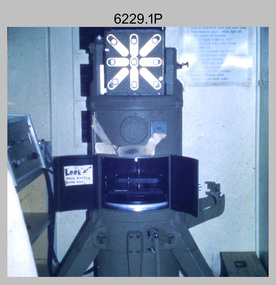 Bendigo Military Museum
Photograph - Photo Troop Equipment, Lithographic Squadron – Army Survey Regiment, Fortuna, Bendigo, c1970s
... The main tasks undertaken by technicians in Photo Troop were most likely enlargements, reductions and duplication of map reproduction material, and processing of aerial photography....The main tasks undertaken by technicians in Photo Troop were most likely enlargements, reductions and duplication of map reproduction material, and processing of aerial photography. Royal Australian Survey Corps RASvy Army Survey Regiment Army Svy Regt ASR Fortuna litho .1P to .5P – Some of the equipment is annotated on the frame of the 35mm slides. ...This collection of five photos was most likely taken at Lithographic Squadron, Army Survey Regiment, Fortuna, Bendigo in c1970s. The main tasks undertaken by technicians in Photo Troop were most likely enlargements, reductions and duplication of map reproduction material, and processing of aerial photography.This is a set of five photographs of Photo Troop equipment was taken in Lithographic Squadron, at the Army Survey Regiment, Fortuna, Bendigo, c1970s. The photographs are on 35mm colour slides and were scanned at 96 dpi. They are part of the Army Survey Regiment’s Collection. .1) - Photo, colour, c1970s, WILD U4A Diapositive Camera. .2) - Photo, colour, c1970s, Hass-Labortechnik Film and Paper Roller Transport Processor. .3) - Photo, colour, c1970s, Hass-Labortechnik Film and Paper Roller Transport Processor, SGT Christopher Wardley. .4) - Photo, colour, c1970s, Hass-Labortechnik Film and Paper Roller Transport Processor, unidentified technician. .5) - Photo, colour, c1970s, Pako Film Processor..1P to .5P – Some of the equipment is annotated on the frame of the 35mm slides.royal australian survey corps, rasvy, army survey regiment, army svy regt, asr, fortuna, litho -
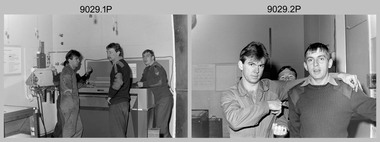 Bendigo Military Museum
Photograph - Photo Troop, Lithographic Squadron – Army Survey Regiment, Fortuna, Bendigo, c1982
... The main tasks undertaken by technicians in Photo Troop were most likely enlargements, reductions and duplication of map reproduction material, and processing of aerial photography....The main tasks undertaken by technicians in Photo Troop were most likely enlargements, reductions and duplication of map reproduction material, and processing of aerial photography. Royal Australian Survey Corps RASvy Fortuna Army Survey Regiment Litho No personnel are identified This is a set of 13 photographs of Photo Troop personnel and equipment from Lithographic Squadron at the Army Survey Regiment, Fortuna, Bendigo, 1982. ...This collection of 13 photos was most likely taken at Lithographic Squadron, Army Survey Regiment, Fortuna, Bendigo circa 1982. The main tasks undertaken by technicians in Photo Troop were most likely enlargements, reductions and duplication of map reproduction material, and processing of aerial photography.This is a set of 13 photographs of Photo Troop personnel and equipment from Lithographic Squadron at the Army Survey Regiment, Fortuna, Bendigo, 1982. The photographs are on 35mm negative film and scanned at 96 dpi. They are part of the Army Survey Regiment’s Collection. .1) - Photo, black & white, c1982, L to R: unidentified, SPR Brian Fauth, CPL Garry Hudson. .2) - Photo, black & white, c1982, L to R: unidentified, CPL Mick ‘Buddha’ Ellis, CPL Garry Hudson. .3) & .4) - Photo, black & white, c1982, CPL Mick ‘Buddha’ Ellis .5) - Photo, black & white, c1982, SPR Paul Baker. .6) - Photo, black & white, c1982, SPR Brian Fauth, .7) - Photo, black & white, c1982, L to R: unidentified, WO2 Dave Miles, SGT Peter Coombes, unidentified, WO2 Noel ‘Nesty’ Coulthard. .8) - Photo, black & white, c1982, L to R: unidentified, Air Survey Squadron’s CPL Jack Elvard & SGT Greg Byers. .9) - Photo, black & white, c1982, L to R: SPR Paul Baker, CPL Mick Gillham. .10) - Photo, black & white, c1982, L to R: CPL Frank Lenane, CPL Brian Paul, SPR Martin Van De Maele, unidentified (x2). .11) - Photo, black & white, c1982, SGT Garran Hill. .12) - Photo, black & white, c1982, SPR John ’Junior’ Whaling. .13) - Photo, black & white, c1982, L to R: CPL Di Chalmers, SPR Penny Knott, CPL Laurie Justin. No personnel are identifiedroyal australian survey corps, rasvy, fortuna, army survey regiment, litho -
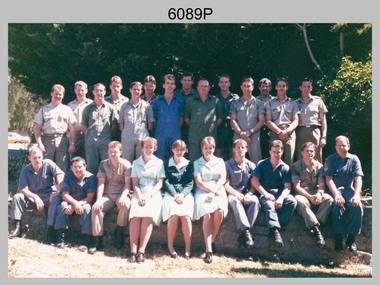 Bendigo Military Museum
Photograph - Photo Troop, Lithographic Squadron - Army Survey Regiment, Bendigo, 1989
... The main tasks undertaken by Photo Troop’s technicians were most likely photographic enlargements, reductions and duplication of map reproduction material, and processing of aerial photography....The main tasks undertaken by Photo Troop’s technicians were most likely photographic enlargements, reductions and duplication of map reproduction material, and processing of aerial photography. Royal Australian Survey Corps RASvy Army Survey Regiment Army Svy Regt Fortuna ASR litho No personnel are identified. ...This is a photograph of Photo Troop, Lithographic Squadron; one of the Army Survey Regiment’s four squadrons, at Fortuna, Bendigo, December 1989. The main tasks undertaken by Photo Troop’s technicians were most likely photographic enlargements, reductions and duplication of map reproduction material, and processing of aerial photography.This is a photograph of Photo Troop Lithographic Squadron, Army Survey Regiment at Fortuna, Bendigo, 1989. The colour photograph was printed on photographic paper and is part of the Army Survey Regiment’s Collection. The photograph was scanned at 300 dpi. Back Row L to R: Rob Bogumil, Kevin ‘Chuck’ Berry, Andrew ‘Morrie’ Morrison-Evans, Scott Cameron, Greg Howell, unidentified, Damien Cole, Doug Whiteside, Warren ‘Waldo’ Shirley, Steve Burke, Paul Baker, Bob Garritty, Frank Lenane, Bill Jones. Front Row L to R: John Bragg, Ken Peters, Gavin Craggs, Michelle Withers, Penny Knott, Di Chalmers, Geoff Webb, unidentified, Darren ‘Barney’ Maher, Terry King. No personnel are identified. Annotated on back with ‘Photo Troop Dec 1989’royal australian survey corps, rasvy, army survey regiment, army svy regt, fortuna, asr, litho -
Federation University Historical Collection
Booklet, Ballarat School of Mines Student's Magazine, Second Term, 1904, 1904
... Table of contents: Editorial, Victorian School of Mines, Extraction of copper, The Diehl process, Analysis of materials used in assaying, Definitions of electrical terms, Mine managers - Practical and Unpractical, Geology at Lake Burrumbeet, Smelting argentiferous lead, Geology notes, Nature - Aphorisms by Goethe, Our illustrations, The estimation of a girl, The abolition of thunderstorms, Send-off to Messers L. ...Table of contents: Editorial, Victorian School of Mines, Extraction of copper, The Diehl process, Analysis of materials used in assaying, Definitions of electrical terms, Mine managers - Practical and Unpractical, Geology at Lake Burrumbeet, Smelting argentiferous lead, Geology notes, Nature - Aphorisms by Goethe, Our illustrations, The estimation of a girl, The abolition of thunderstorms, Send-off to Messers L. ...Table of contents: Editorial, Victorian School of Mines, Extraction of copper, The Diehl process, Analysis of materials used in assaying, Definitions of electrical terms, Mine managers - Practical and Unpractical, Geology at Lake Burrumbeet, Smelting argentiferous lead, Geology notes, Nature - Aphorisms by Goethe, Our illustrations, The estimation of a girl, The abolition of thunderstorms, Send-off to Messers L. Smith and S. Austin, Students' annual reunion, Correspondence, Past students, Diplomas and Certificates, Sports, News and notes, Editorial notes.Pale gray booklet of 18 pagesballarat school of mines, students' magazine, stephen hart, l. smith, s. austin, past students, f. a. marriott, l. j. lambert, h. krause, nettle, h. irwin,, a. atkins, l. seal, t. davis, r. robin, b. roy, d. elder, w. b. blyth, a. gillespie, j. huston, k. moore, obituary, alfred g. johnstone, cecil s. wakley., r. o. inglis, g. w. cornell, s. austin, s. g. turrell, l. seward, j. burrows, w. j. lakeland, douglas runting, godfrey s. hart, latham watson, samuel j. lindsay -
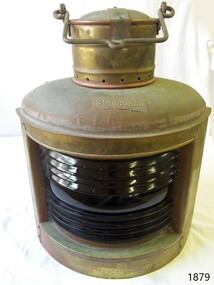 Flagstaff Hill Maritime Museum and Village
Equipment - Navigation Lamp, Starboard
... In contrast, contemporary reproductions are often manufactured using alternative materials and processes, reflecting changes in production methods and cost considerations....In contrast, contemporary reproductions are often manufactured using alternative materials and processes, reflecting changes in production methods and cost considerations. ...This item appears to be a 20th-century lamp, modelled after an earlier version of a wall-mounted kerosene lamp. Authentic kerosene lamps were typically crafted from copper or brass, renowned for their durability and traditional aesthetic. In contrast, contemporary reproductions are often manufactured using alternative materials and processes, reflecting changes in production methods and cost considerations.The lamp is modelled after marine kerosene navigation lamps that were widely used throughout the 19th and early 20th centuries. These lamps played a significant role in maritime history, providing essential lighting for navigation on vessels during this era. As a representation of this period’s maritime lighting technology, the lamp serves as an example of the type of equipment that would have been commonplace aboard ships of the time.Navigation lamp; Starboard side. Metal kerosene lamp with two flat sides and a curved front with a rippled, green glass window. The chimney on top has a catch and an opening lid. and the name "Starboard" is inscribed on a fixed brass plaque. The fuel tank and wick can be removed through the base. Engraved on plaque: “STARBOARD“flagstaff hill, flagstaff hill maritime museum and village, warrnambool, maritime museum, maritime village, great ocean road, shipwreck coast, ship's lamp, kerosene lamp, navigation lamp, starboard lamp, ship's equipment, safety equipment -
 Flagstaff Hill Maritime Museum and Village
Equipment - Navigation Lamp, Port, Bef. 08-02-1984
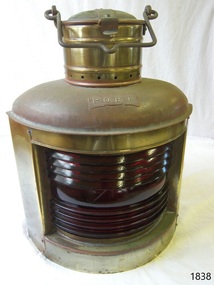
... In contrast, contemporary reproductions are often manufactured using alternative materials and processes, reflecting changes in production methods and cost considerations....In contrast, contemporary reproductions are often manufactured using alternative materials and processes, reflecting changes in production methods and cost considerations. ...This item appears to be a 20th-century lamp, modelled after an earlier version of a wall-mounted kerosene lamp. Authentic kerosene lamps were typically crafted from copper or brass, renowned for their durability and traditional aesthetic. In contrast, contemporary reproductions are often manufactured using alternative materials and processes, reflecting changes in production methods and cost considerations.The lamp is modelled after marine kerosene navigation lamps that were widely used throughout the 19th and early 20th centuries. These lamps played a significant role in maritime history, providing essential lighting for navigation on vessels during this era. As a representation of this period’s maritime lighting technology, the lamp serves as an example of the type of equipment that would have been commonplace aboard ships of the time. Marine lamp: navigation lamp, portside. Metal Kerosene lamp with two flat sides and a curved, rippled red glass front window. The name "port" is inscribed on a fixed brass plaque. A round chimney is on top of the lid opens with a catch. The fuel tank and wick can be removed through the base. The metal appears to be electroplated.Inscribed on the plaque; "PORT"flagstaff hill, flagstaff hill maritime museum and village, warrnambool, maritime museum, maritime village, great ocean road, shipwreck coast, ship's lamp, kerosene lamp, navigation lamp, ship's equipment, safety equipment, port lamp -
 Nillumbik Shire Council
Sculpture: Jane ANNOIS, Jane Annois, Evolution, 2006
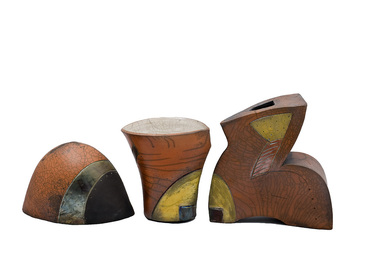
... Potters Cottage was influential in the development of contemporary ceramics, building and developing practices that experimented with traditional ceramic processes, raw materials and locally sourced clay. The group mentored and nurtured many interested in the art of ceramics, producing alumni and teachers such as Peter Laycock, John Dermer, Greg Daly and Jane Annois. ...Potters Cottage was influential in the development of contemporary ceramics, building and developing practices that experimented with traditional ceramic processes, raw materials and locally sourced clay. The group mentored and nurtured many interested in the art of ceramics, producing alumni and teachers such as Peter Laycock, John Dermer, Greg Daly and Jane Annois. ...Jane Annois had a long involvement with Potters Cottage in Warrandyte, where she taught for many years. Potters Cottage was established in the late 1950s in Warrandyte as an artist co-operative. Founding members included Reg Preston, Phyl Dunn, Gus McLaren, Artur Halpern, Sylvia Halpern and Elsa Ardern. These talented artists had the ingenuity and foresight to create a teaching studio, gallery shop and restaurant to experiment, make, promote and sell predominantly domestic wares of the time. These activities helped financially sustain each member’s individual creative practice. Potters Cottage was influential in the development of contemporary ceramics, building and developing practices that experimented with traditional ceramic processes, raw materials and locally sourced clay. The group mentored and nurtured many interested in the art of ceramics, producing alumni and teachers such as Peter Laycock, John Dermer, Greg Daly and Jane Annois. Jane Annois is a ceramic artist who has lived and worked locally in Warrandyte for many years. She focuses primarily on exploring the art of Japanese raku, adapting the technique to develop the typical characteristics of crackle glazes and lustres, with contrasting areas of black. Jane also applies a fine slip called terrasigillata which gives soft, warm ochre colours. This technique was once used by the Greeks over 2000 years ago to seal and decorate their pots. She is also strongly onfluenced by the French potters, particularly in the style of terre vernissee, a decorative form of terracotta tableware. Three piece stoneware and raku fired ceramic sculpture. The first piece is a hollow, dome shaped object. It is orange (terracotta slip) in colour with a copper metallic band and a black edge on one side with a small yellow glazed rounded triangle and metallic strip of colour on the otherside. The second piece is shaped like a traditional vase. It is orange (terracotta slip) in colour with white crackle on the inside. It has a yellow slip edge with a dark glazed square on one side and on the other side a black thick edge that mirrors the contour of this shape. The third piece is shaped loosley in the form of the letter 'z'. It compliments the second piece with a yellow slip edge and black glazed square to its lower left side and top right as well as on its' other side a black thick edge that mirrors the contour of this shape. This piece has a very small skewed square opening at its' top. All three pieces have elements of crazing and variations of colour and lustre, caused by the raku process. 2006.52.1VA has the artist name/signature 'J. Annois' inscriped small (with fine point ceramic tool?) on the front of the piece, bottom right; 2006.52.2VA has the artist name 'Jane'? inscribed (unlegible - with fine point ceramic tool?) underneath; 2006.52.3VA has the artist name/signature 'Jane Annois' inscriped (with fine point ceramic tool?) inside its hollow form. evolution, raku, stoneware, terrasigillata, terracotta, glazes, slip, terre vernissee -
 Federation University Historical Collection
Book, Manual of Mining Tools, 1871, 1871
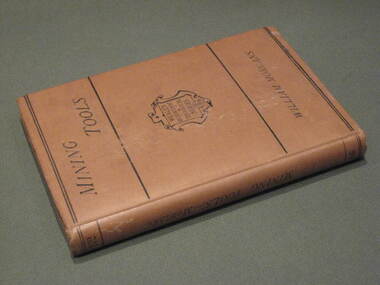
... The books covers materials andf processes used in the manufacture of tools, special uses, qualities and efficiciency. ...The books covers materials andf processes used in the manufacture of tools, special uses, qualities and efficiciency. ...The author, William Morgans, was a lecturer on mining at the Bristol School of Mines. The owner of the book, William Baragwanath, was a former student of the Ballarat School of Mines who held the following positions: Department of Mines (1897-1922); director of the geological survey (1922-24); chief mining surveyor (1924-32); secretary for mines (1932-34); chief mining surveyor (1934-43); consultant to the Department of Mines (1943-50); President, Royal Society of Victoria (1943-44), councillor of the Ballarat School of Mines (1916-50).Hard cover book of 207 pages with buff cloth cover. The books covers materials andf processes used in the manufacture of tools, special uses, qualities and efficiciency. It includes 235 wood engravings of mining tools drawn to scale. Tools include borers, hammers, sledges, picks, shovels, spades, saws, helves and handles.Title page handwritten in ink 'W.B.' [William Baragwanath]mining, tools, ballarat school of mines, geology, bristol school of mines, government geologist, william baragwanath -
 Bendigo Military Museum
photograph - Camera Section, Lithographic Squadron at the Army Survey Regiment, Bendigo, 1976, 1978 and 1979
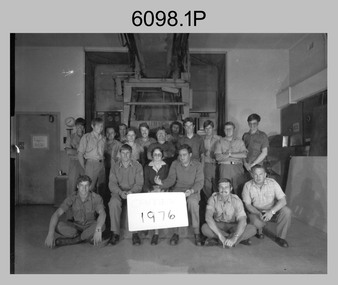
... The main tasks undertaken by Camera Section’s technicians were photographic enlargements, reductions and duplication of map reproduction material, and processing of aerial photography. Photo .2P and its enlargement (.3P) was taken with Camera Section in front of the Klimsch Commodore camera on the 5th of October 1978, before its decommissioning. ...The main tasks undertaken by Camera Section’s technicians were photographic enlargements, reductions and duplication of map reproduction material, and processing of aerial photography. Photo .2P and its enlargement (.3P) was taken with Camera Section in front of the Klimsch Commodore camera on the 5th of October 1978, before its decommissioning. ...This is a set of four photograph of Camera Section, Lithographic Squadron, one of the Army Survey Regiment’s four squadrons, at Fortuna, Bendigo in 1976, 1978 and 1979. The main tasks undertaken by Camera Section’s technicians were photographic enlargements, reductions and duplication of map reproduction material, and processing of aerial photography. Photo .2P and its enlargement (.3P) was taken with Camera Section in front of the Klimsch Commodore camera on the 5th of October 1978, before its decommissioning. It was replaced with a new Klimsch model with computerised control, improved speed and consistent controlled output.This is a set of four photograph of Camera Section, Lithographic Squadron, Army Survey Regiment at Fortuna, Bendigo, c1970s. The black and white photographs were printed on photographic paper and are part of the Army Survey Regiment’s Collection. The photographs were scanned at 300 dpi. .1) - Photo, black & white, 1976, Back Row L to R: unidentified, Garry Hudson, unidentified, Greg Kidman, unidentified, Bob Chamberlain, Mick ‘Buddha’ Ellis, Zoe (Lisiewich) Ames, Bill Jones, Trevor Osborne, Dave Miles, Chris Osborne. Front Row L to R: Frank Lenane, Gavin Neilson, Joanne Green, Warren ‘Waldo’ Shirley, Peter Coombes, John Nicholls. .2) & .3) - Photo, black & white, 5th Oct 1978, Back Row L to R: CPL Bob Chamberlain, Greg Kidman, SSGT George Graham, Chris Osborne, John Nicholls, Frank Lenane, Terry Edwards, Bill Jones, CAPT Gary Kenney, Peter Imeson. Front Row L to R: CPL Warren ‘Waldo’ Shirley, SPR Mick ‘Buddha’ Ellis, CPL Garran Hill. .4) - Photo, black & white, 1979, Back Row L to R: WO2 George Graham, CAPT Stan Vote, Peter Imeson, Gary Tremain, Penny Knott, Zoe (Lisiewich) Ames, Di Chalmers, Rob Bogumil, Bill Jones, Rhys De Laine, Brian Fauth, John McCracken. Front Row L to R: SGT Ralph Chant, SGT Garran Hill, CPL Gavin Neilson, Frank Lenane, Paul Baker, SSGT Trevor Osborne.No personnel are identified. Each photo is annotated on the front. .1P annotated ‘1976’ .2P &.3P annotated ‘CAMERA SECT 5 Oct 1978 The Last of the old Klimsch’ .3P annotated ‘Camera ‘79’royal australian survey corps, rasvy, army survey regiment, army svy regt, fortuna, asr, litho -
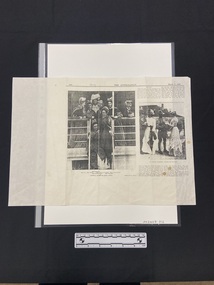 Returned Nurses RSL Sub-branch
Newspaper - Photocopy of a newspaper clipping, The Australasian, The pin, March 17, 1900
... The article discusses the history of the pin, introduced in Britain in the fifteenth century as personal fasteners used in the dressing process. It explains the materials used for 'pins' and the connection to the phrase 'pin-money'. ...The article discusses the history of the pin, introduced in Britain in the fifteenth century as personal fasteners used in the dressing process. It explains the materials used for 'pins' and the connection to the phrase 'pin-money'. ...The large photo is of seven Victorian nurses bound for South Africa (Sister Ivy, Sister Langlands, Sister Walker, Sister Rawson, Sister Bernhard Smith, Sister Dorothy Smith, Sister Thompson). The article discusses the history of the pin, introduced in Britain in the fifteenth century as personal fasteners used in the dressing process. It explains the materials used for 'pins' and the connection to the phrase 'pin-money'. The second photo was taken at Victoria Barracks, it shows a well-dressed lady pinning on favours to a soldier in uniform, beside them stands another lady arm-in-arm with another soldier.Photocopy of a newspaper article. The article is in the top right corner and there is some white space on the left hand side and below. The article consists of a large photo of a group of women and a Captain boarding a ship. To the right of the image is a smaller photo of two men and two women at Victoria Barracks, above and below this picture are two small columns of text.'NC17' [Handwritten in blue ink on the top of the page]australian army nurses, victorian nurses - south africa, pins - history -
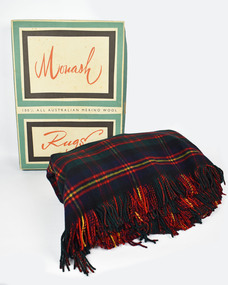 National Wool Museum
Textile - Rug, Returned Soldiers and Sailors Mill, 1963
... Modern day textile production requires fewer steps in the processing of materials for this use. This meant large factory complexes such as early woollen mills like the RS&S mills were no longer required. ...Modern day textile production requires fewer steps in the processing of materials for this use. This meant large factory complexes such as early woollen mills like the RS&S mills were no longer required. ...The Returned Soldiers and Sailors Mills was located near the Barwon river on Pakington Street, Geelong, where its building still stands. The mill was established in October 1922 with capital acquired from War Gratuity Bonds. The mill produced fine grade woollen products with its speciality being ‘Retsol’ travelling rugs. The mill first began to run into financial troubles with the ‘Credit Squeeze’ or the ‘Holt Jolt’ of the early 1960s. This saw import restrictions lifted which triggered the start of a minor recession and a rise in unemployment. Included in these troubles was the RS&S Mill which saw the number of employees gradually decrease and business declining with cheaper imports beginning to grab an expanding part of the market share. The mill was eventually purchased by Godfrey Hirst in 1973 who tried to continue operations without success and in June 1975 textile production at the site ceased. Outside of financial considerations contributing to the closure of Woollen Mills in this period was the declining need for heavier fabrics as in-home heating and insulation improved. This need had been replaced for a demand for ever softer, finer and lighter worsted fabrics for more casual clothing. Modern day textile production requires fewer steps in the processing of materials for this use. This meant large factory complexes such as early woollen mills like the RS&S mills were no longer required. Compared to modern textile production which can spin a fine yarn out of synthetic fibre or imported cotton easily, spinning fine yarn from medium quality wool at a textile factory was cumbersome and no longer financially viable to suit new consumer demands. This rug provides context to this statement. It was gifted to Shirley and Gordon Green as a wedding present in November 1963 by one of Gordon's colleagues in the wool industry. Living in areas such as Neutral Bay, the Hornsby area and later in life retiring to the Central Coast, the blanket was too heavy for use in these weather conditions and hence it stayed in its original box for nearly 60 years. Top and bottom of rug has frilled edges. Pattern is titled the 'Clan Cameron' and is repeated in a 7x7 grid. Front of rug has a red background with 4 vertical and horizontal lines. All is surrounded by a yellow boarder. Label is stitched into the bottom right corner. Reverse of rug also has a repeating 7x7 grid. Blue background with thick green horizontal stripe. Yellow and red boarder to the grid with 4 red vertical and horizontal lines making up the interior. Rug measure 1550 x 2040mm, approximately the same size as a queen size mattress.Wording, Bottom right corner. THE GEELONG R.S&S. WOOLEN MILLS/ PURE/ WOOL/ AUSTRALIA/ The John Monash Rug (cursive)/ The Clan Cameron (cursive)rs&s mills, textile manufacture, rug, clan cameron, sydney greasy wool exchange -
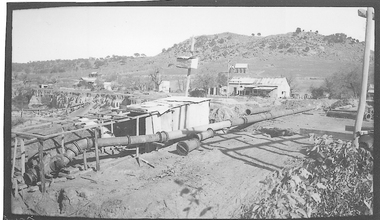 El Dorado Museum Association Inc.
Photograph (item) - Digital Image
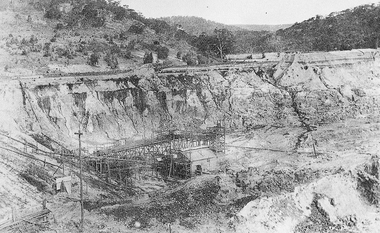
... From 6,800,000 cubic yards of material processed, the returns were 64,397 ounces of gold and 855 ton of tin. ...From 6,800,000 cubic yards of material processed, the returns were 64,397 ounces of gold and 855 ton of tin. ...Cocks Pioneer Electric Gold & Tin Mine Company was formed in 1899. The company's first power station, located at the eastern end of the valley began operating with its 340 Kilowatt steam-powered generator. By 1909, from 2,500,000 cubic yards worked, reported recovery was 17,284 ounces of gold and 224 tons of tin ore. By 1909, Cocks Pioneer’s power plant had become inadequate and uneconomical. The barge was floated downstream about a mile, but lost time caused the operations to cease. Following testing, a new mine was established by diverting Reid's Creek at a cost of £25,000. Settling dams were built, one of which held 1,935,900 cubic feet. Sold earth banks, built against a wall of stringy bark saplings constructed and laced with vertical props, were built. In 1914, the company was reformed as Cock’s Pioneer Gold and Tin Mines NL, another power station was constructed at the western end of the township, near the junction of Clear and Reid's Creeks. From 6,800,000 cubic yards of material processed, the returns were 64,397 ounces of gold and 855 ton of tin. Cocks Pioneer mine then moved the barge downs stream and continued sluicing. In 1929 Cocks Pioneer Electric Gold and Tin Mining Company ceased operations due to a drop in values. Cock’s Pioneer Gold and Tin Mines NL carried on large-scale hydraulic sluicing operations until 1941. mining, gold, tin, barge, sluicing, gold mining, tin mining, cocks pioneer, el dorado, eldorado -
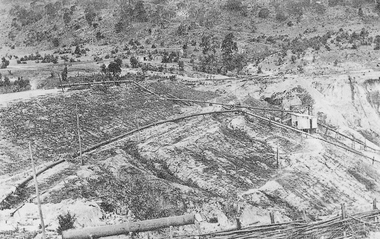 El Dorado Museum Association Inc.
Photograph (item) - Digital Image
... From 6,800,000 cubic yards of material processed, the returns were 64,397 ounces of gold and 855 ton of tin. ...From 6,800,000 cubic yards of material processed, the returns were 64,397 ounces of gold and 855 ton of tin. ...Cocks Pioneer Electric Gold & Tin Mine Company was formed in 1899. The company's first power station, located at the eastern end of the valley began operating with its 340 Kilowatt steam-powered generator. By 1909, from 2,500,000 cubic yards worked, reported recovery was 17,284 ounces of gold and 224 tons of tin ore. By 1909, Cocks Pioneer’s power plant had become inadequate and uneconomical. The barge was floated downstream about a mile, but lost time caused the operations to cease. Following testing, a new mine was established by diverting Reid's Creek at a cost of £25 000. Settling dams were built, one of which held 1,935,900 cubic feet. Sold earth banks, built against a wall of stringy bark saplings constructed and laced with vertical props, were built. In 1914, the company was reformed as Cock’s Pioneer Gold and Tin Mines NL, another power station was constructed at the western end of the township, near the junction of Clear and Reid's Creeks. From 6,800,000 cubic yards of material processed, the returns were 64,397 ounces of gold and 855 ton of tin. Cocks Pioneer mine then moved the barge downs stream and continued sluicing. In 1929 Cocks Pioneer Electric Gold and Tin Mining Company ceased operations due to a drop in values. Cock’s Pioneer Gold and Tin Mines NL carried on large-scale hydraulic sluicing operations until 1941. gold, tin, mining, sluicing, gold mining, tin mining, cocks pioneer, el dorado, eldorado -
 El Dorado Museum Association Inc.
Photograph (item) - Digital Image
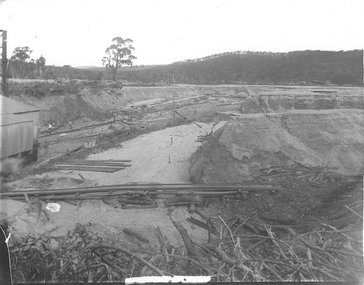
... From 6,800,000 cubic yards of material processed, the returns were 64,397 ounces of gold and 855 ton of tin. ...From 6,800,000 cubic yards of material processed, the returns were 64,397 ounces of gold and 855 ton of tin. ...Cocks Pioneer Electric Gold & Tin Mine Company was formed in 1899. The company's first power station, located at the eastern end of the valley began operating with its 340 Kilowatt steam-powered generator. By 1909, from 2,500,000 cubic yards worked, reported recovery was 17,284 ounces of gold and 224 tons of tin ore. By 1909, Cocks Pioneer’s power plant had become inadequate and uneconomical. The barge was floated downstream about a mile, but lost time caused the operations to cease. Following testing, a new mine was established by diverting Reid's Creek at a cost of £25,000. Settling dams were built, one of which held 1,935,900 cubic feet. Sold earth banks, built against a wall of stringy bark saplings constructed and laced with vertical props, were built. In 1914, the company was reformed as Cock’s Pioneer Gold and Tin Mines NL, another power station was constructed at the western end of the township, near the junction of Clear and Reid's Creeks. From 6,800,000 cubic yards of material processed, the returns were 64,397 ounces of gold and 855 ton of tin. Cocks Pioneer mine then moved the barge downs stream and continued sluicing. In 1929 Cocks Pioneer Electric Gold and Tin Mining Company ceased operations due to a drop in values. Cock’s Pioneer Gold and Tin Mines NL carried on large-scale hydraulic sluicing operations until 1941. mines, mining, tin, gold, tin mining, gold mining, sluicing, cocks pioneer, el dorado, eldorado -
 El Dorado Museum Association Inc.
Photograph (item) - Digital Image
... From 6,800,000 cubic yards of material processed, the returns were 64,397 ounces of gold and 855 ton of tin. ...From 6,800,000 cubic yards of material processed, the returns were 64,397 ounces of gold and 855 ton of tin. ...Cocks Pioneer Electric Gold & Tin Mine Company was formed in 1899. The company's first power station, located at the eastern end of the valley began operating with its 340 Kilowatt steam-powered generator. By 1909, from 2,500,000 cubic yards worked, reported recovery was 17,284 ounces of gold and 224 tons of tin ore. By 1909, Cocks Pioneer’s power plant had become inadequate and uneconomical. The barge was floated downstream about a mile, but lost time caused the operations to cease. Following testing, a new mine was established by diverting Reid's Creek at a cost of £25 000. Settling dams were built, one of which held 1,935,900 cubic feet. Sold earth banks, built against a wall of stringy bark saplings constructed and laced with vertical props, were built. In 1914, the company was reformed as Cock’s Pioneer Gold and Tin Mines NL, another power station was constructed at the western end of the township, near the junction of Clear and Reid's Creeks. From 6,800,000 cubic yards of material processed, the returns were 64,397 ounces of gold and 855 ton of tin. Cocks Pioneer mine then moved the barge downs stream and continued sluicing. In 1929 Cocks Pioneer Electric Gold and Tin Mining Company ceased operations due to a drop in values. Cock’s Pioneer Gold and Tin Mines NL carried on large-scale hydraulic sluicing operations until 1941. mining, mines, gold, tin, gold mining, tin mining, sluicing, cocks pioneer, el dorado, eldorado -
 El Dorado Museum Association Inc.
Photograph (item) - Digital Image
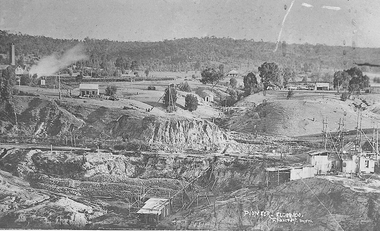
... From 6,800,000 cubic yards of material processed, the returns were 64,397 ounces of gold and 855 ton of tin. ...From 6,800,000 cubic yards of material processed, the returns were 64,397 ounces of gold and 855 ton of tin. ...Cocks Pioneer Electric Gold & Tin Mine Company was formed in 1899. The company's first power station, located at the eastern end of the valley began operating with its 340 Kilowatt steam-powered generator. By 1909, from 2,500,000 cubic yards worked, reported recovery was 17,284 ounces of gold and 224 tons of tin ore. By 1909, Cocks Pioneer’s power plant had become inadequate and uneconomical. The barge was floated downstream about a mile, but lost time caused the operations to cease. Following testing, a new mine was established by diverting Reid's Creek at a cost of £25 000. Settling dams were built, one of which held 1,935,900 cubic feet. Sold earth banks, built against a wall of stringy bark saplings constructed and laced with vertical props, were built. In 1914, the company was reformed as Cock’s Pioneer Gold and Tin Mines NL, another power station was constructed at the western end of the township, near the junction of Clear and Reid's Creeks. From 6,800,000 cubic yards of material processed, the returns were 64,397 ounces of gold and 855 ton of tin. Cocks Pioneer mine then moved the barge downs stream and continued sluicing. In 1929 Cocks Pioneer Electric Gold and Tin Mining Company ceased operations due to a drop in values. Cock’s Pioneer Gold and Tin Mines NL carried on large-scale hydraulic sluicing operations until 1941. Handwritten across photograph: "PIONEER" - ELDORADO / F FOXCROFT PHOTO.mining, mines, gold, tin, gold mining, tin mining, sluicing, cocks pioneer, el dorado, eldorado -
 Darebin Art Collection
Film, Jon Butt, 'Collider', 2017-2019
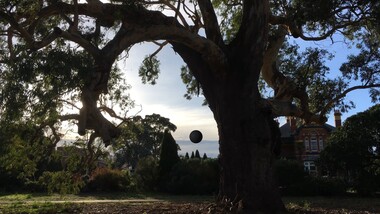
... Using investigative material processes to make images (scanners, camera-less photography, digital/analogue manipulation, motion graphics) I attempt to question or disrupt the way others can view an image. ...Using investigative material processes to make images (scanners, camera-less photography, digital/analogue manipulation, motion graphics) I attempt to question or disrupt the way others can view an image. ...'Collider' is a video site-response work that investigates the physical and conceptual notions of Bundoora Homestead Art Centre and surrounding Bundoora Parklands as matter, memory and phenomena. The project spanned three years of the artist’s life, visiting as both a local resident and an exhibiting artist at the Centre, involving a long-term process of “mapping” the site. The work looks to make visible, the hidden frequencies embedded within the buildings and parklands, including the social and geological. A complicated space, once a volcanic vent (Mt Cooper, 9.5 million years ago), home to over 60,000 years of continuous First Australian culture, long-term indigenous and (recent) settler land use, a place of respite for returned soldiers; visitors today generally experience the site as a place of leisure. Collider aims to disrupt this view, asking the viewer to look below the surface and experience a deeper sense of place. Using video sequences, this work places the Bundoora Homestead site within a shifting scale of material territories, molecular energies and entropic disorder. Collider includes both abstracted and live video sequences shot throughout the Homestead grounds and across the Bundoora Park and Mt Cooper area that appear to be capturing unknown, signalling phenomena. Time flowing and dissolving across the landscape."My practice sits within an expanded notion of landscape photography, combining video, photography, sound, installations and site responses. I’m interested in the idea of landscape as a transmutable zone where the unseen forces of the material world interact with embedded layers of time and history. Projects revolve around site research, science fiction/fact, the weirdness of ecologies and the realities of quantum matter. I try to represent what is sensed rather than understood, through both observational and uncanny visualisation. Using investigative material processes to make images (scanners, camera-less photography, digital/analogue manipulation, motion graphics) I attempt to question or disrupt the way others can view an image. This material approach is key to how and why I work. With 22 years experience in gallery-based exhibitions, art fairs and site specific/responsive projects, I have participated in over 50 exhibitions including projects for: Dark Mofo, Northern Centre of Contemporary Art, Testing Grounds, Charles Sturt University Gallery, Bargoonga Nganjin Library, c3 Contemporary Art Space, Centre Pompidou (FRA), Bus Projects, The Narrows, Peloton, 1st Floor, Linden, Seventh, Strange Neighbour, and many more. I have a BA (Fine Arts – Sculpture) RMIT, was the founder of seventh gallery and am the founder and current director of c3 Contemporary Art Space in Melbourne." - Jon Butt -
 Bendigo Military Museum
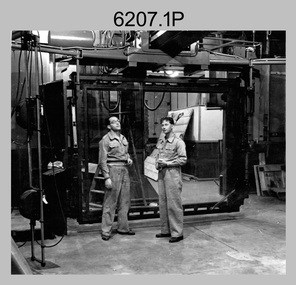
Photograph - Photo Troop Equipment and Personnel, Lithographic Squadron, Army Survey Regiment, Fortuna, Bendigo, 1960s and 1970s
... The main tasks undertaken by technicians in Photo Troop were most likely enlargements, reductions and duplication of map reproduction material, and processing of aerial photography. The equipment operated by the technicians is the KLIMCH camera. ...The main tasks undertaken by technicians in Photo Troop were most likely enlargements, reductions and duplication of map reproduction material, and processing of aerial photography. The equipment operated by the technicians is the KLIMCH camera. ...This collection of 14 photos were taken at Lithographic Squadron, Army Survey Regiment, Fortuna, Bendigo probably in the 1960s and 1970s. The main tasks undertaken by technicians in Photo Troop were most likely enlargements, reductions and duplication of map reproduction material, and processing of aerial photography. The equipment operated by the technicians is the KLIMCH camera. The main tasks undertaken by the technicians were most likely enlargements and reductions of map reproduction material. The KLIMSCH Commodore camera was introduced in 1953 and was the largest in the Southern Hemisphere. It was replaced with a new model of the same size in 1979. The new model with its computer-based interface provided productivity gains with improved speed and its consistent results led to less wastage in time and materials. See items 6057.8P, 6056.11P and 6058.8P for more information and photos on Photo Troop equipment and personnel. There is more information on the KLIMSCH Commodore camera, on pages 70 and 120 of Valerie Lovejoy’s book 'Mapmakers of Fortuna – A history of the Army Survey Regiment’ ISBN: 0-646-42120-4. This collection of 14 photos were taken in Photo Troop, Lithographic Squadron, Army Survey Regiment, Fortuna, Bendigo probably in the 1960s and 1970s. The photographs were printed on photographic paper and are part of the Army Survey Regiment’s Collection. The photographs were scanned at 300 dpi. .1) - Photo, black & white, 1960s, KLIMSCH Commodore camera, unidentified technicians. .2) - Photo, black & white, 1960s, KLIMSCH Commodore camera, unidentified technician. .3) - Photo, black & white, 1960s, KLIMSCH Commodore camera. .4) - Photo, black & white, 1960s, KLIMSCH Commodore camera, unidentified technician. .5) - Photo, black & white, 1960s, KLIMSCH Commodore camera. .6) - Photo, black & white, 1960s, KLIMSCH Commodore camera, unidentified technicians. .7) - Photo, colour, 1970s, KLIMSCH Commodore camera, unidentified technicians. .8) - Photo, black & white, 1970s, WILD U4A Diapositive Camera, SPR Garry Hudson. .9) - Photo, black & white, 1970s, Photographic camera enlarger, SPR Garry Hudson. .10) - Photo, black & white, 1970s, Photographic camera enlarger, Phil Beaty. .11) - Photo, black & white, 1979, Film developer, SGT Garren Hill. .12) - Photo, black & white, 1970s, Film contact frame. .13) - Photo, black & white, 1970s, LogEtronics Contact Printer. .14) - Photo, black & white, 1970s, Tri-stud registered map separations with composite black negative on top.No personnel are identified. .11P annotated ‘1979’. .13P and .14P annotated ‘orthophoto’royal australian survey corps, rasvy, army survey regiment, army svy regt, fortuna, asr, litho -
 El Dorado Museum Association Inc.
Photograph (item) - Digital Image
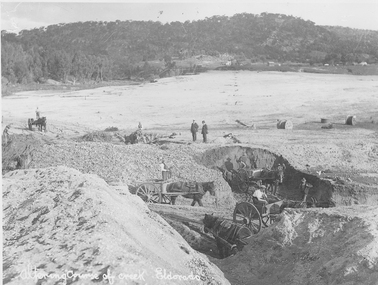
... From 6,800,000 cubic yards of material processed, the returns were 64,397 ounces of gold and 855 ton of tin. ...From 6,800,000 cubic yards of material processed, the returns were 64,397 ounces of gold and 855 ton of tin. ...Altering course of Reedy Creek, El Dorado. Cocks Pioneer Electric Gold & Tin Mine Company was formed in 1899. The company's first power station, located at the eastern end of the valley began operating with its 340 Kilowatt steam-powered generator. By 1909, from 2,500,000 cubic yards worked, reported recovery was 17,284 ounces of gold and 224 tons of tin ore. By 1909, Cocks Pioneer’s power plant had become inadequate and uneconomical. The barge was floated downstream about a mile, but lost time caused the operations to cease. Following testing, a new mine was established by diverting Reid's Creek at a cost of £25 000. Settling dams were built, one of which held 1,935,900 cubic feet. Sold earth banks, built against a wall of stringy bark saplings constructed and laced with vertical props, were built. In 1914, the company was reformed as Cock’s Pioneer Gold and Tin Mines NL, another power station was constructed at the western end of the township, near the junction of Clear and Reid's Creeks. From 6,800,000 cubic yards of material processed, the returns were 64,397 ounces of gold and 855 ton of tin. Cocks Pioneer mine then moved the barge downs stream and continued sluicing. In 1929 Cocks Pioneer Electric Gold and Tin Mining Company ceased operations due to a drop in values. Cock’s Pioneer Gold and Tin Mines NL carried on large-scale hydraulic sluicing operations until 1941. Handwritten across the front: 'Altering course of creek. Eldorado'mining, gold, tin, sluicing, reedy creek, cocks pioneer, el dorado, eldorado, men, horses -
 El Dorado Museum Association Inc.
Photograph (item) - Digital Image
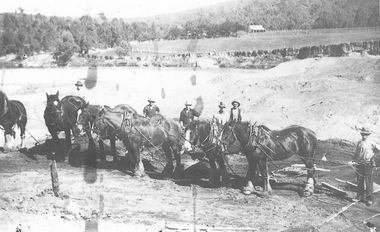
... From 6,800,000 cubic yards of material processed, the returns were 64,397 ounces of gold and 855 ton of tin. ...From 6,800,000 cubic yards of material processed, the returns were 64,397 ounces of gold and 855 ton of tin. ...Horse team , Cocks Pioneer Cocks Pioneer Electric Gold & Tin Mine Company was formed in 1899. The company's first power station, located at the eastern end of the valley began operating with its 340 Kilowatt steam-powered generator. By 1909, from 2,500,000 cubic yards worked, reported recovery was 17 284 ounces of gold and 224 tons of tin ore. By 1909, Cocks Pioneer’s power plant had become inadequate and uneconomical. The barge was floated downstream about a mile, but lost time caused the operations to cease. Following testing, a new mine was established by diverting Reid's Creek at a cost of £25,000. Settling dams were built, one of which held 1,935,900 cubic feet. Sold earth banks, built against a wall of stringy bark saplings constructed and laced with vertical props, were built. In 1914, the company was reformed as Cock’s Pioneer Gold and Tin Mines NL, another power station was constructed at the western end of the township, near the junction of Clear and Reid's Creeks. From 6,800,000 cubic yards of material processed, the returns were 64,397 ounces of gold and 855 ton of tin. Cocks Pioneer mine then moved the barge downs stream and continued sluicing. In 1929 Cocks Pioneer Electric Gold and Tin Mining Company ceased operations due to a drop in values. Cock’s Pioneer Gold and Tin Mines NL carried on large-scale hydraulic sluicing operations until 1941. mining, gold, tin, sluicing, men, cocks pioneer, el dorado, eldorado, horses, gold mining, tin mining -
 El Dorado Museum Association Inc.
Photograph (item) - Digital Image
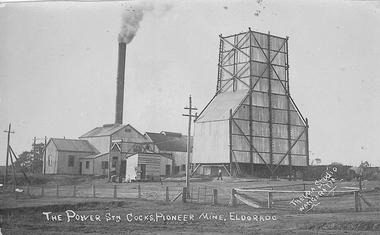
... From 6,800,000 cubic yards of material processed, the returns were 64,397 ounces of gold and 855 ton of tin. ...From 6,800,000 cubic yards of material processed, the returns were 64,397 ounces of gold and 855 ton of tin. ...Cocks Pioneer Mine El Dorado, Power Station No. 2 was established in 1914 and located near junction of Reid's and Clear Creeks, Byawatha. Cocks Pioneer Electric Gold & Tin Mine Company was formed in 1899. The company's first power station, located at the eastern end of the valley began operating with its 340 Kilowatt steam-powered generator. By 1909, from 2,500,000 cubic yards worked, reported recovery was 17,284 ounces of gold and 224 tons of tin ore. By 1909, Cocks Pioneer’s power plant had become inadequate and uneconomical. The barge was floated downstream about a mile, but lost time caused the operations to cease. Following testing, a new mine was established by diverting Reid's Creek at a cost of £25,000. Settling dams were built, one of which held 1,935,900 cubic feet. Sold earth banks, built against a wall of stringy bark saplings constructed and laced with vertical props, were built. In 1914, the company was reformed as Cock’s Pioneer Gold and Tin Mines NL, another power station was constructed at the western end of the township, near the junction of Clear and Reid's Creeks. From 6,800,000 cubic yards of material processed, the returns were 64,397 ounces of gold and 855 ton of tin. Cocks Pioneer mine then moved the barge downs stream and continued sluicing. In 1929 Cocks Pioneer Electric Gold and Tin Mining Company ceased operations due to a drop in values. Cock’s Pioneer Gold and Tin Mines NL carried on large-scale hydraulic sluicing operations until 1941. Handwritten on front: 'THE POWER STN COCKS, PIONEER MINE, ELDORADO' / 'THELMA STUDIO / [underlined] WANGARATTA'mining, gold, tin, cocks pioneer, power, sluicing, el dorado, eldorado, byawatha, thelma studios, wangaratta, gold mining, tin mining, reid's creek, clear creek -
 El Dorado Museum Association Inc.
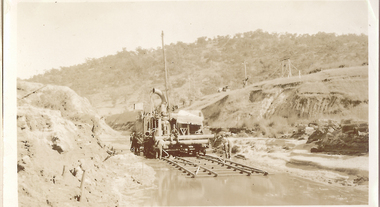
Photograph (item) - Digital Image
... From 6,800,000 cubic yards of material processed, the returns were 64,397 ounces of gold and 855 ton of tin. ...From 6,800,000 cubic yards of material processed, the returns were 64,397 ounces of gold and 855 ton of tin. ...Cocks Pioneer Creek Diversion. Cocks Pioneer Electric Gold & Tin Mine Company was formed in 1899. The company's first power station, located at the eastern end of the valley began operating with its 340 Kilowatt steam-powered generator. By 1909, from 2,500,000 cubic yards worked, reported recovery was 17,284 ounces of gold and 224 tons of tin ore. By 1909, Cocks Pioneer’s power plant had become inadequate and uneconomical. The barge was floated downstream about a mile, but lost time caused the operations to cease. Following testing, a new mine was established by diverting Reid's Creek at a cost of £25,000. Settling dams were built, one of which held 1,935,900 cubic feet. Sold earth banks, built against a wall of stringy bark saplings constructed and laced with vertical props, were built. In 1914, the company was reformed as Cock’s Pioneer Gold and Tin Mines NL, another power station was constructed at the western end of the township, near the junction of Clear and Reid's Creeks. From 6,800,000 cubic yards of material processed, the returns were 64,397 ounces of gold and 855 ton of tin. Cocks Pioneer mine then moved the barge downs stream and continued sluicing. In 1929 Cocks Pioneer Electric Gold and Tin Mining Company ceased operations due to a drop in values. Cock’s Pioneer Gold and Tin Mines NL carried on large-scale hydraulic sluicing operations until 1941. mining, gold, tin, cocks pioneer, creek, gold mining, tin mining, el dorado, eldorado -
 El Dorado Museum Association Inc.
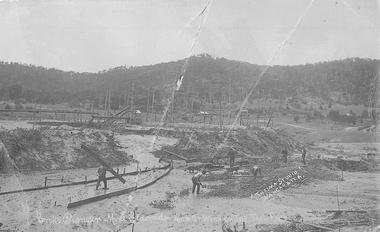
Photograph (item) - Digital Image
... From 6,800,000 cubic yards of material processed, the returns were 64,397 ounces of gold and 855 ton of tin. ...From 6,800,000 cubic yards of material processed, the returns were 64,397 ounces of gold and 855 ton of tin. ...Men at Work on the Tail Race, Cocks Pioneer Mine, El Dorado. Cocks Pioneer Electric Gold & Tin Mine Company was formed in 1899. The company's first power station, located at the eastern end of the valley began operating with its 340 Kilowatt steam-powered generator. By 1909, from 2,500,000 cubic yards worked, reported recovery was 17,284 ounces of gold and 224 tons of tin ore. By 1909, Cocks Pioneer’s power plant had become inadequate and uneconomical. The barge was floated downstream about a mile, but lost time caused the operations to cease. Following testing, a new mine was established by diverting Reid's Creek at a cost of £25,000. Settling dams were built, one of which held 1,935,900 cubic feet. Sold earth banks, built against a wall of stringy bark saplings constructed and laced with vertical props, were built. In 1914, the company was reformed as Cock’s Pioneer Gold and Tin Mines NL, another power station was constructed at the western end of the township, near the junction of Clear and Reid's Creeks. From 6,800,000 cubic yards of material processed, the returns were 64,397 ounces of gold and 855 ton of tin. Cocks Pioneer mine then moved the barge downs stream and continued sluicing. In 1929 Cocks Pioneer Electric Gold and Tin Mining Company ceased operations due to a drop in values. Cock’s Pioneer Gold and Tin Mines NL carried on large-scale hydraulic sluicing operations until 1941. Handwritten across the front: 'Cocks Pioneer Mine Eldorado MEN AT WORK ON THE TAIL RACE' / 'THELMA STUDIO / [underlined] WANGARATTA.mining, gold, tin, gold mining, tin mining, cocks pioneer, men, thelma studios, wangaratta, el dorado, eldorado -
 El Dorado Museum Association Inc.
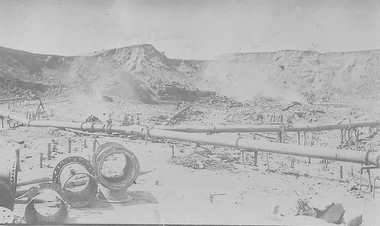
Photograph (item) - Digital Image
... From 6,800,000 cubic yards of material processed, the returns were 64 397 ounces of gold and 855 ton of tin. ...From 6,800,000 cubic yards of material processed, the returns were 64 397 ounces of gold and 855 ton of tin. ...Cocks Pioneer Pipes and Open Cut. Cocks Pioneer Electric Gold & Tin Mine Company was formed in 1899. The company's first power station, located at the eastern end of the valley began operating with its 340 Kilowatt steam-powered generator. By 1909, from 2,500,000 cubic yards worked, reported recovery was 17,284 ounces of gold and 224 tons of tin ore. By 1909, Cocks Pioneer’s power plant had become inadequate and uneconomical. The barge was floated downstream about a mile, but lost time caused the operations to cease. Following testing, a new mine was established by diverting Reid's Creek at a cost of £25,000. Settling dams were built, one of which held 1,935,900 cubic feet. Sold earth banks, built against a wall of stringy bark saplings constructed and laced with vertical props, were built. In 1914, the company was reformed as Cock’s Pioneer Gold and Tin Mines NL, another power station was constructed at the western end of the township, near the junction of Clear and Reid's Creeks. From 6,800,000 cubic yards of material processed, the returns were 64 397 ounces of gold and 855 ton of tin. Cocks Pioneer mine then moved the barge downs stream and continued sluicing. In 1929 Cocks Pioneer Electric Gold and Tin Mining Company ceased operations due to a drop in values. Cock’s Pioneer Gold and Tin Mines NL carried on large-scale hydraulic sluicing operations until 1941. mining, gold, tin, open cut, sluicing, gold mining, tin mining, cocks pioneer, el dorado, eldorado -
 El Dorado Museum Association Inc.
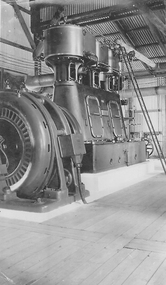
Photograph (item) - Digital Image
... From 6,800,000 cubic yards of material processed, the returns were 64 397 ounces of gold and 855 ton of tin. ...From 6,800,000 cubic yards of material processed, the returns were 64 397 ounces of gold and 855 ton of tin. ...Cocks Pioneer New Engines, c. 1934. Cocks Pioneer Electric Gold & Tin Mine Company was formed in 1899. The company's first power station, located at the eastern end of the valley began operating with its 340 Kilowatt steam-powered generator. By 1909, from 2,500,000 cubic yards worked, reported recovery was 17,284 ounces of gold and 224 tons of tin ore. By 1909, Cocks Pioneer’s power plant had become inadequate and uneconomical. The barge was floated downstream about a mile, but lost time caused the operations to cease. Following testing, a new mine was established by diverting Reid's Creek at a cost of £25,000. Settling dams were built, one of which held 1,935,900 cubic feet. Sold earth banks, built against a wall of stringy bark saplings constructed and laced with vertical props, were built. In 1914, the company was reformed as Cock’s Pioneer Gold and Tin Mines NL, another power station was constructed at the western end of the township, near the junction of Clear and Reid's Creeks. From 6,800,000 cubic yards of material processed, the returns were 64 397 ounces of gold and 855 ton of tin. Cocks Pioneer mine then moved the barge downs stream and continued sluicing. In 1929 Cocks Pioneer Electric Gold and Tin Mining Company ceased operations due to a drop in values. Cock’s Pioneer Gold and Tin Mines NL carried on large-scale hydraulic sluicing operations until 1941. mining, gold, tin, engine, electricity, gold mining, tin mining, cocks pioneer, el dorado, eldorado
