
Showing 267 items matching "processing plant"
-
 Stawell Historical Society Inc
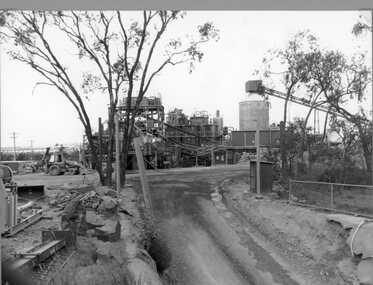
Photograph, Stawell Joint Venture, Magdala Gold Mining Processing Plant 1995
... Stawell Joint Venture, Magdala Gold Mining Processing Plant 1995...Stawell Joint Venture. Processing plant 1995...Stawell Joint Venture. Processing plant 1995 Stawell Mining Stawell Joint Venture, Magdala Gold Mining Processing Plant 1995 Photograph ...Stawell Joint Venture. Processing plant 1995stawell mining -
 Federation University Historical Collection
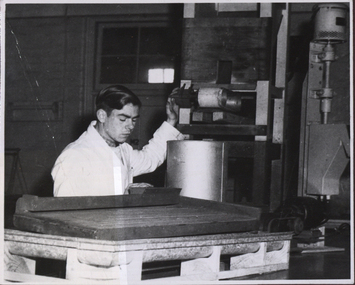
Photograph - Black and White Photograph, Metallurgical Students
... ...ore processing plant....1 and .2) A male at a bench with pre processing model plant .3) a male at a metallurgical microscope .4) The original item ...ballarat school of mines metallurgy ore processing plant alf mckenzie .1 and .2) A male at a bench with pre processing model plant .3) a male at a metallurgical microscope .4) The original item Metallurgical Students Photograph Black and White Photograph ....1 and .2) A male at a bench with pre processing model plant .3) a male at a metallurgical microscope .4) The original item ballarat school of mines, metallurgy, ore processing plant, alf mckenzie -
 Bendigo Historical Society Inc.
Document - Kangaroo Flat Gold Mine: operations report, Gill Reef
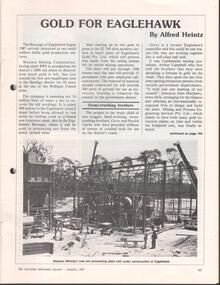
... ...processing plant...BENDIGO Gold mining exploration Bendigo goldfield Bendigo Mining Gill Reef processing plant Three page photocopy of information taken from Bendigo Mining Operations Report. ...Gill Reef is a high-grade gold reef located within the Bendigo Goldfield, specifically on the Garden Gully line of reef. In the mid-2000s, Bendigo Mining planned to undertake trial mining and processing of ore from this reef to restart gold production in the region. While it showed promising indicators, the success of commercial production depended on the trial results and the economics of the time. Location: The Gill Reef is part of the broader Bendigo Goldfield and is located on the Garden Gully line of reef. Geology: It is a quartz reef with an estimated grade of 10–15 g/t gold. News reports from 2008 also describe it as a high-grade reef with promising signs of gold. Historical context: Bendigo Mining was preparing to trial mine and process ore from the Gill Reef around 2008 as part of a plan to restart gold production in the area. Trial mining: The company conducted trial processing of ore from the Gill Reef to gather more detailed information about its shape and grade.Three page photocopy of information taken from Bendigo Mining Operations Report. Report details Trial Mining on the Gill Reef. bendigo, gold mining, exploration, bendigo goldfield, bendigo mining, gill reef, processing plant -
 Stawell Historical Society Inc
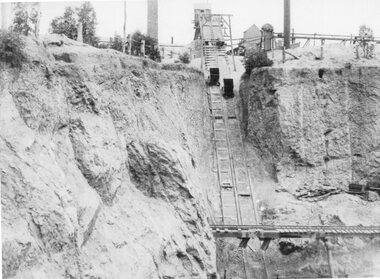
Photograph, Jubilee Open Cut - Wonga Company showing how ore is taken up an incline 1899
... Rail tracks with ore trucks pulled by cable moving up incline to processing plant...Stawell Mining Rail tracks with ore trucks pulled by cable moving up incline to processing plant Jubilee Open Cut - Wonga Company showing how ore is taken up an incline 1899 Photograph ...B/W photo Wonga Company 1899 showing how ore is taken up an incline in ore trucks..Rail tracks with ore trucks pulled by cable moving up incline to processing plantstawell mining -
 Stawell Historical Society Inc
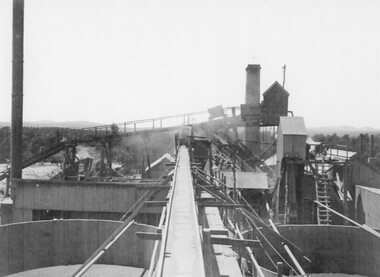
Photograph, Wonga Cyanide Gold Recovery Company Mining Operations 1899
... Cyanide gold processing plant infrastructure. Conveyor belt at centre of photo, cyanide vats in foreground....B/W photo Wonga Company Plant 1899 Stawell Mining Cyanide gold processing plant infrastructure. Conveyor belt at centre of photo, cyanide vats in foreground. ...B/W photo Wonga Company Plant 1899Cyanide gold processing plant infrastructure. Conveyor belt at centre of photo, cyanide vats in foreground.stawell mining -
 Bendigo Historical Society Inc.
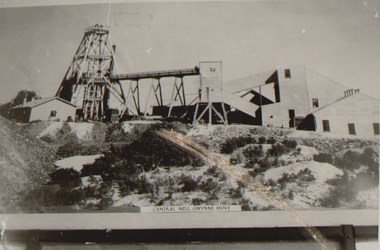
Photograph - CENTRAL NELL GWYNNE MINE, 1960's
... Side image of poppet head with processing plants. Inscriptions:...Side image of poppet head with processing plants. Inscriptions: Photograph CENTRAL NELL GWYNNE MINE ...Black and white photograph of Central Nell Gwynne. Side image of poppet head with processing plants. Inscriptions: 'Central Nell Gwynne Mine' written on bottom front of photographmining site, central nell gwynne gold mine, poppet head -
 Victorian Aboriginal Corporation for Languages
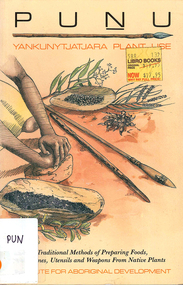
Book, Pun?u : Yankunytjatjara plant use : traditional methods of preparing foods, medicines, utensils and weapons from native plants, 1988
... ...plant processing...Includes general and linguistic introduction, and extensive glossaries of botanical names, plant parts, processes etc, all Yankunytjatjara and English (and Latin as appropriate)...Includes general and linguistic introduction, and extensive glossaries of botanical names, plant parts, processes etc, all Yankunytjatjara and English (and Latin as appropriate) Pun? ...Encyclopedia style entries for 27 plants with standard scientific description plus description, science and stories in Yankunytjatjara with translations. Includes general and linguistic introduction, and extensive glossaries of botanical names, plant parts, processes etc, all Yankunytjatjara and English (and Latin as appropriate)B&w illustrations, colour illustrations, word listsclimate, landforms, vegetation, vegetable food (mai), fruits, seeds, roots, greens, galls, fungi, nectars, sweet secretions, gums, medicinal plants (punu ngangkari), language, stories, plant use, trees, shrubs, subshrubs, grasses, vines, succulents, mistletoes, plant parts, habitat, plant processing, yankunytjatjara, central australia -
 Rutherglen Historical Society
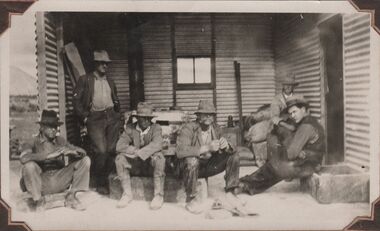
Image, 1931
... processing...cyanide plant...Photographs showing the works at the Great Southern Mine, cyanide plant, which was an important part of the process of separating gold from the ore....Photographs showing the works at the Great Southern Mine, cyanide plant, which was an important part of the process of separating gold from the ore. great southern gold mining gold processing cyanide plant Written on album page between photos: "Great Southern Mine Cyanide Plant 1931" One of 4 small black and white photographs, mounted on a single album page. ...Photographs showing the works at the Great Southern Mine, cyanide plant, which was an important part of the process of separating gold from the ore.One of 4 small black and white photographs, mounted on a single album page. This one shows six men, taking a break from their work in a corrugated iron shed. Written on album page between photos: "Great Southern Mine Cyanide Plant 1931"great southern, gold mining, gold processing, cyanide plant -
 Rutherglen Historical Society
Image, 1931
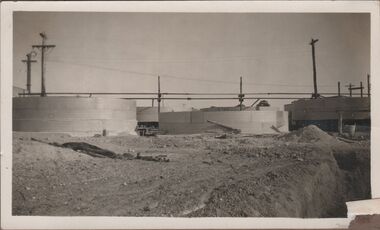
... processing...cyanide plant...Photographs showing the works of the Great Southern Mine, cyanide plant, which was an important part of the process of separating gold from the ore....Photographs showing the works of the Great Southern Mine, cyanide plant, which was an important part of the process of separating gold from the ore. great southern gold mining gold processing cyanide plant Written on album page between photos: "Great Southern Mine Cyanide Plant 1931" One of 4 small black and white photographs, mounted on a single album page. ...Photographs showing the works of the Great Southern Mine, cyanide plant, which was an important part of the process of separating gold from the ore.One of 4 small black and white photographs, mounted on a single album page. This one shows several large corrugated tanks.Written on album page between photos: "Great Southern Mine Cyanide Plant 1931"great southern, gold mining, gold processing, cyanide plant -
 Rutherglen Historical Society
Image, 1931
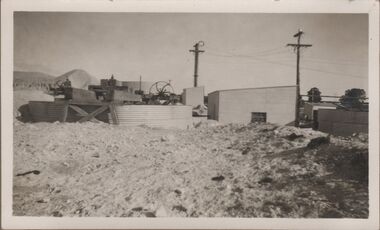
... processing...cyanide plant...Photographs showing the works at the Great Southern Mine, cyanide plant, which was an important part of the process of separating gold from the ore....Photographs showing the works at the Great Southern Mine, cyanide plant, which was an important part of the process of separating gold from the ore. great southern gold mining gold processing cyanide plant Written on album page between photos: "Great Southern Mine Cyanide Plant 1931" One of 4 small black and white photographs, mounted on a single album page. ...Photographs showing the works at the Great Southern Mine, cyanide plant, which was an important part of the process of separating gold from the ore.One of 4 small black and white photographs, mounted on a single album page. This one shows buildings, tanks and equipment of the plant.Written on album page between photos: "Great Southern Mine Cyanide Plant 1931"great southern, gold mining, gold processing, cyanide plant -
 Rutherglen Historical Society
Image, 1931
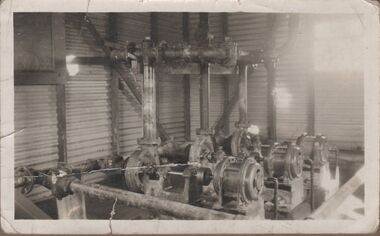
... processing...cyanide plant...Photographs showing the works at the Great Southern Mine, cyanide plant, which was an important part of the process of separating gold from the ore....Photographs showing the works at the Great Southern Mine, cyanide plant, which was an important part of the process of separating gold from the ore. great southern gold mining gold processing cyanide plant Written on album page between photos: "Great Southern Mine Cyanide Plant 1931" One of 4 small black and white photographs, mounted on a single album page. ...Photographs showing the works at the Great Southern Mine, cyanide plant, which was an important part of the process of separating gold from the ore.One of 4 small black and white photographs, mounted on a single album page. This one shows three pumps in a corrugated iron building.Written on album page between photos: "Great Southern Mine Cyanide Plant 1931"great southern, gold mining, gold processing, cyanide plant -
 Bendigo Historical Society Inc.
Photograph - Kangaroo Flat Gold Mine Collection: Unity Mining employees
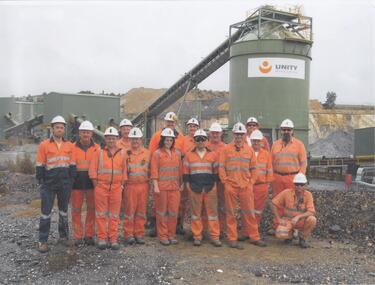
... In background, part of processing plant with 'Unity Mining Limited' on side of tank. ...In background, part of processing plant with 'Unity Mining Limited' on side of tank. ...A3 laminated sheet with colour photographs of mine personnel. Fourteen men and one woman dressed in orange high-vis clothing and wearing hard hats. In background, part of processing plant with 'Unity Mining Limited' on side of tank. Kangaroo Flat Gold mine site in far background. kangaroo flat gold mine, bendigo mining nl, new bendigo gold project, goldmining, personnel, doug buerger, colin burns, unity mining -
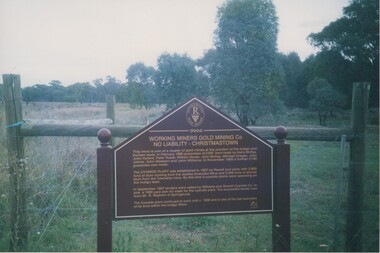 Rutherglen Historical Society
Image, 2004
... Colour photograph of a story board marking former site of a gold processing cyanide plant at Christmastown. Photo is mounted on an album page....storyboards working miners gold mining co gold mining cyanide plant Colour photograph of a story board marking former site of a gold processing cyanide plant at Christmastown. ...Colour photograph of a story board marking former site of a gold processing cyanide plant at Christmastown. Photo is mounted on an album page.storyboards, working miners gold mining co, gold mining, cyanide plant -
 Bendigo Historical Society Inc.
Newspaper - Kangaroo Flat Gold Mine Collection: Costerfield Gold Mine
... 'Brunswick Mine was closed in the early 1970's, had been dewatered and the mine and the run-down processing plant had been rehabilitated by AGD' (Bendigo Advertiser 4/10/95)...'Brunswick Mine was closed in the early 1970's, had been dewatered and the mine and the run-down processing plant had been rehabilitated by AGD' (Bendigo Advertiser 4/10/95) Gold mining exploration Bendigo Costerfield Gleeson antimony gold Brunswick Mine In pencil on side of article: 'Bendigo Advertiser, 4/10/95. ...'Brunswick Mine was closed in the early 1970's, had been dewatered and the mine and the run-down processing plant had been rehabilitated by AGD' (Bendigo Advertiser 4/10/95)'Bendigo Advertiser' article 4th October 1995, 'Mine produces a gold bonanza' describes the opening of the Brunswick Mine on 3rd October, 1995 and the potential gold production at the Brunswick Mine at Costerfield. A further article on the same page ' Mining a way of life' details the involvement of the Gleeson family for six generations in the Costerfield goldfield. A black and white image of Meg Gleeson with her grandfather, Leo Harvey, standing in front of a metal poppet head included in the article.In pencil on side of article: 'Bendigo Advertiser, 4/10/95.gold mining, exploration, bendigo, costerfield, gleeson, antimony, gold, brunswick mine -
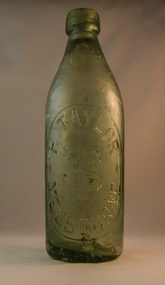 Kiewa Valley Historical Society
Bottle - Ginger Beer, early to late 1900's
... This bottle was so constructed to be easily moved within the ginger beer processing plants from the brewing vats/holding tanks to the final corking/sealing of the bottles for eventual distribution. ...This bottle was so constructed to be easily moved within the ginger beer processing plants from the brewing vats/holding tanks to the final corking/sealing of the bottles for eventual distribution. ...This glass ginger beer bottle was manufactured and used early to late 1900's, until the time that cheaper containers were invented(plastic bottles). This bottle was so constructed to be easily moved within the ginger beer processing plants from the brewing vats/holding tanks to the final corking/sealing of the bottles for eventual distribution. From 1990s the bottle slowly became phased out of production however boutique suppliers still preferred thick glass to contain any explosive action. Two major glass bottle works companies, e.g. Melbourne Glass Bottle Works Co. were the main suppliers for the Victorian State. In the period when this bottle was manufactured and used the major ginger beer brewing plants for the whole of Victoria were located in Melbourne because this was where its greatest consumer base was there and most rural areas were supplied by domestic sources (mother brewing ginger beer for the children). The Kiewa Valley and its region was one rural area which until road invrastructure was enhance covered the ginger beer thirst by local family production. As the population expanded considerably in the late 1940's (SECV Hydro Scheme) with a greater demand for "soft" drinks" being established supplies from larger towns and cities were call for. Each bottle was "branded" during manufacturing to show the contents were from a reputable supplier (H Taylor) and where it originated from. These bottles were recyled by the manufacturer as a way to cut production costs. This method of recycling the bottles back to the specific manufacturer has (except for South Australia)been overtaken by a no cost recycling collection by councils (funded by their communities). This method by passes the user cost principle as the bottles are processed as non generic. The uneconomical "on cost" which was replaced by the "throw away" less costly plastic containers however did not provide the keen domestic brewer of the "beer" with a reusable bottle. This heavy gauged glass ginger beer bottle has a rim and a distinctive head at the top. This head has been manufactured to facilitate the movement of the bottled along the filling production line. The method of pouring ginger beer into the bottle has been part of the "production line". This bottle has a one and a half pint capacity and is made from "light green" coloured glass(a protection against light penetration). This thick glass bottle, to contain ginger beer, required its thickness because of the extensive handling (man and machine) before final consumption. During this period delivery to homes in cities and towns was made initially by horse and cart and later by truck. Ginger beer was a "soft drink" of great demand. On the middle portion of this bottle is a large elongated circle within it and following the spherical line is "H. TAYLOR" ans a star separates this from "MELBOURNE" rounding out the bottom curviture. Within these words are the large initials "T H" . The "T" superimposed onto the "H". On the base and covering the whole bottom is the letter "T". At the opposite side to the manufacturers logo is "THIS BOTTLE CANNOT BE SOLD OR USED BY ANY OTHER PERSON & IS NOT COMPLETE WITHOUT STOPPER" glass bottle, non alcoholic drink, taylor ginger beer bottle, reuseable bottles -
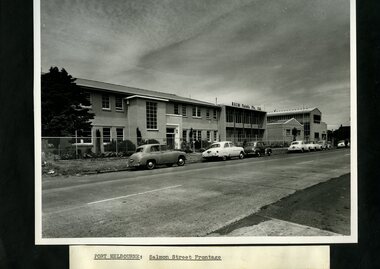 Port Melbourne Historical & Preservation Society
Photograph - CD-ROM, "BALM Paints", 1950s
... Images are from the 1950s and are of buildings, plant and processes....Images are from the 1950s and are of buildings, plant and processes. "BALM Paints" Photograph CD-ROM ...CD with 24 pictures of BALM Paints in Salmon St, Port Melbourne. Images are from the 1950s and are of buildings, plant and processes.industry - manufacturing, built environment - industrial, balm paints, dulux paints -
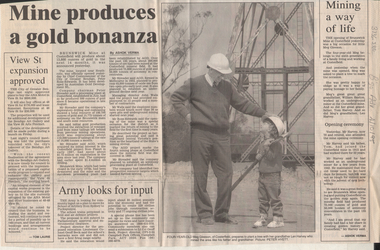 Bendigo Historical Society Inc.
Newspaper - Kangaroo Flat Gold Mine Collection: Costerfield Gold Mine
... Company Director, Peter Streader, stated that the processing plant 'had so far produced 500 ounces of gold since it became operational in late August'. ...Company Director, Peter Streader, stated that the processing plant 'had so far produced 500 ounces of gold since it became operational in late August'. ...Bendigo Advertiser article 4th October, 1995, titled 'Mine produces a gold bonanza', describes the mining operations at the former Brunswick Mine site, Costerfield, by Australian Gold Development NL. Company Director, Peter Streader, stated that the processing plant 'had so far produced 500 ounces of gold since it became operational in late August'. Article on side of page ' Mining a way of life', describes the story of a family who have had five generations of miners working in the area. Photo on page shows Meg Gleeson of Costerfield with her grandfather Len Harvey, preparing to plant a tree to commemorate the opening of the new endeavour and the longevity of her family in mining. gold mining, bendigo, costerfield, brunswick mine, australian gold development nl, len harvey -
 The Beechworth Burke Museum
Photograph, 1910
... These appeared to have connections to the small processing sluice plant featured in the background. ...These appeared to have connections to the small processing sluice plant featured in the background. ...This photograph depicts Cocks Pioneer Gold & Tin Sluicing Company, N.L. (no liabilities) site No.3 and is looking from the east side of the site. The image is captured within a small valley creek bed and presents the conditions in which mining was evolving in the early 1900s. In the foreground are remnants of components such as flume pipes, timber and iron pieces, mixed with rocks and rubble. These appeared to have connections to the small processing sluice plant featured in the background. The scale of the processing plant appears to be relatively small with the structure resembling a shack or cottage built from iron and positioned upon a floating pontoon. This is known as dredge sluicing, essentially a floating factory, that was capable of covering large areas of the lake and dams. As this dredge was compact it could maneuver in tight spaces, which larger structure could not. The size of the figures at the front opening, which appears to be a doorway, indicate the scale of this very modest production plant. Scaffolding on the roof and to the left process alluvial from the stream floor into sluicing boxes, which filtered deposits passing over a series of ripples to collect the heavier material such as gold. A faded sepia rectangular photograph printed on matte photographic paper mounted on grey green cardCocks pioneer G&T S.L. Co. N.L./ 1910/ No.3 site looking eastsluicing, el dorado, beechworth, water race, flume pipes, cocks pioneer gold and tin sluicing company no liabilities, dredging -
 Kiewa Valley Historical Society
Bottle Ginger Beer, circa mid to late 1900's
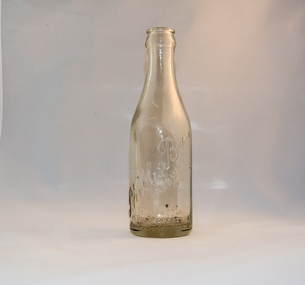
... This bottle was so constructed to be easily moved within the ginger beer processing plants from the brewing vats/holding tanks to the final corking/sealing of the bottles for eventual distribution. ...This bottle was so constructed to be easily moved within the ginger beer processing plants from the brewing vats/holding tanks to the final corking/sealing of the bottles for eventual distribution. ...This glass ginger beer bottle was manufactured and used early to late 1900's, until the time that cheaper containers were invented(plastic bottles). This bottle was so constructed to be easily moved within the ginger beer processing plants from the brewing vats/holding tanks to the final corking/sealing of the bottles for eventual distribution. From 1990s the bottle slowly became phased out of production however boutique suppliers still preferred thick glass to contain any explosive action. Two major glass bottle works companies, e.g. Australian Glass Manufacturers and the Melbourne Glass Bottle Works Co. were the main suppliers for the Victorian State.In the period when this bottle was manufactured and used the major ginger beer brewing plants for the whole of Victoria were located in Melbourne because this was where its greatest consumer base was there and most rural areas were supplied by domestic sources (mother brewing ginger beer for the children). The Kiewa Valley and its region was one rural area which until road invrastructure was enhance covered the ginger beer thirst by local family production. As the population expanded considerably in the late 1940's (SECV Hydro Scheme) with a greater demand for "soft" drinks" being established supplies from larger towns and cities were call for. Each bottle was "branded" during manufacturing to show the contents were from a reputable supplier (PHIBBS Bros) and where it originated from. These bottles were recycled by the manufacturer as a way to cut production costs. This method of recycling the bottles back to the specific manufacturer has (except for South Australia)been overtaken by a no cost recycling collection by councils (funded by their communities). This method by passes the user cost principle as the bottles are processed as non generic. The uneconomical "on cost" which was replaced by the "throw away" less costly plastic containers however did not provide the keen domestic brewer of the "beer" with a reusable bottle.This heavy gauged glass bottle (Ginger Beer) has a rim and a distinctive head at the top. This head has been manufactured to facilitate the movement of the bottled along the production line. The method of pouring ginger beer into the bottle has been part of the "production line" process of automation. This bottle has a capacity to hold 250ml of ginger beer and is made from "clear" glass. The marority of ginger beer bottles produced in this time frame where made with a "green" tint in them.This tinting helped reduce the sunlight effecting the contentsAround the bottom side of the bottle and blown into the glass is "THIS BOTTLE IS THE PROPERTY OF PHIBBS BROS, ALBURY" above this, in "running script" and sloping up from left to right is "Phibbs Bros" and underneath parallel to it "ALBURY". On the base of the bottle is molded a big "L 289" underneath this "M" and below this "AGM".ginger beer bottle, soft drink bottles, cordial bottles -
 Warrnambool and District Historical Society Inc.
Booklet - Centenary History of Dennington Factory, Dennington Factory 100 Years of Production, 2011
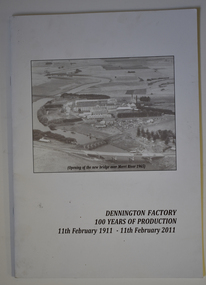
... In 2019 the factory ceased to be a milk processing plant and in 2020 ProviCo, an animal nutrition manufacturer, took over the factory....In 2019 the factory ceased to be a milk processing plant and in 2020 ProviCo, an animal nutrition manufacturer, took over the factory. ...Centenary History of the Dennington FactoryThis is a booklet of 24 pages. The front cover has a black and white photograph and black printing and the back cover has a colour photograph, a logo and black printing. The pages contain printed text and black and white and colour photographs. The booklet is stapled.non-fictionCentenary History of the Dennington Factorynestles factory dennington, fonterra factory dennington -
 Bendigo Historical Society Inc.
Photograph - AUSTIN COLLECTION: Wattle Gully Gold Mine, Chewton, Not dated but possibly 1980's
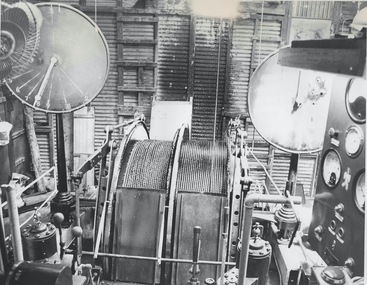
... Recent additions to the mine's infrastructure has been a new ore processing plant and a decline tunnel. The ore processing plant was operated by Newmont mining from 1987 to 1990 and subsequently operated by Consolidated Victorian Mines and Duketon Goldfields. ...Recent additions to the mine's infrastructure has been a new ore processing plant and a decline tunnel. The ore processing plant was operated by Newmont mining from 1987 to 1990 and subsequently operated by Consolidated Victorian Mines and Duketon Goldfields. ...Wattle Gully Mine holds a pivotal position in the history of the State's quartz mining industry. The rich strike at Wattle Gully mine in 1937 helped revive the State's gold mining industry that had been in the doldrums since the First World War. Wattle Gully, and a handful of other 'new' companies - the Maude and Yellow Girl, Morning Star, A 1, and North Deborah - were the flagships of the revived industry and sustained the State's gold production for some 30 years. Wattle Gully mine, with a yield of 350,000 ounces, was the richest mine of its era. By 1940, the Wattle Gully Company had paid out £207,000 in dividends to its shareholders. The company continued to mine profitably through the Second World War, though it struggled due to a shortage of manpower. After the war, the mine continued to develop - in the early 1950s new plant including a winding engine, steel poppet head, and twenty-head battery was added. The plant was obtained from the Central Nell Gwynne Company, Bendigo. On 13 March 1969, the Wattle Gully Company closed down the mine, laying off 62 men. Since 1970 Wattle Gully mine has worked intermittently. Recent additions to the mine's infrastructure has been a new ore processing plant and a decline tunnel. The ore processing plant was operated by Newmont mining from 1987 to 1990 and subsequently operated by Consolidated Victorian Mines and Duketon Goldfields. The mine site has retained evidence of its development since 1937 with its most recent periods of equipment upgrades in the 1950s and 1980s being documented by buildings, structures and intact and working machinery. Heritage Council Victoria: https://vhd.heritagecouncil.vic.gov.au/places/2380 Black and white photograph: view of engine room. Wattle Gully Gold Mine winding gear, two winding wheels in centre of image.gold mining, underground, wattle gully gold mine, chewton, winding gear -
 Bendigo Historical Society Inc.
Photograph - AUSTIN COLLECTION: Winding Gear, Wattle Gully Gold Mine, Chewton, 1982
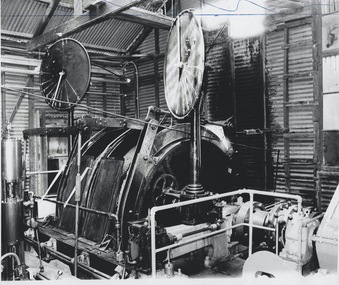
... Recent additions to the mine's infrastructure has been a new ore processing plant and a decline tunnel. The ore processing plant was operated by Newmont mining from 1987 to 1990 and subsequently operated by Consolidated Victorian Mines and Duketon Goldfields. ...Recent additions to the mine's infrastructure has been a new ore processing plant and a decline tunnel. The ore processing plant was operated by Newmont mining from 1987 to 1990 and subsequently operated by Consolidated Victorian Mines and Duketon Goldfields. ...Wattle Gully Mine holds a pivotal position in the history of the State's quartz mining industry. The rich strike at Wattle Gully mine in 1937 helped revive the State's gold mining industry that had been in the doldrums since the First World War. Wattle Gully, and a handful of other 'new' companies - the Maude and Yellow Girl, Morning Star, A 1, and North Deborah - were the flagships of the revived industry and sustained the State's gold production for some 30 years. Wattle Gully mine, with a yield of 350,000 ounces, was the richest mine of its era. By 1940, the Wattle Gully Company had paid out £207,000 in dividends to its shareholders. The company continued to mine profitably through the Second World War, though it struggled due to a shortage of manpower. After the war, the mine continued to develop - in the early 1950s new plant including a winding engine, steel poppet head, and twenty-head battery was added. The plant was obtained from the Central Nell Gwynne Company, Bendigo. On 13 March 1969, the Wattle Gully Company closed down the mine, laying off 62 men. Since 1970 Wattle Gully mine has worked intermittently. Recent additions to the mine's infrastructure has been a new ore processing plant and a decline tunnel. The ore processing plant was operated by Newmont mining from 1987 to 1990 and subsequently operated by Consolidated Victorian Mines and Duketon Goldfields. The mine site has retained evidence of its development since 1937 with its most recent periods of equipment upgrades in the 1950s and 1980s being documented by buildings, structures and intact and working machinery. Heritage Council Victoria: https://vhd.heritagecouncil.vic.gov.au/places/2380 Black and white photograph: view of engine room. Wattle Gully Gold Mine winding gear, two winding wheels in centre of image.gold mining, underground, wattle gully gold mine, chewton, winding gear -
 Bendigo Historical Society Inc.
Photograph - AUSTIN COLLECTION: Wattle Gully Gold Mine, Chewton, 1982
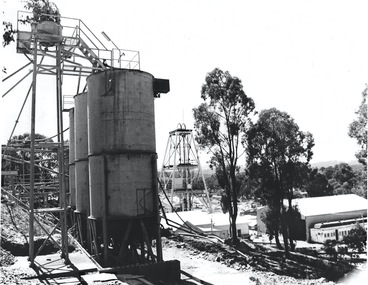
... Recent additions to the mine's infrastructure has been a new ore processing plant and a decline tunnel. The ore processing plant was operated by Newmont mining from 1987 to 1990 and subsequently operated by Consolidated Victorian Mines and Duketon Goldfields. ...Recent additions to the mine's infrastructure has been a new ore processing plant and a decline tunnel. The ore processing plant was operated by Newmont mining from 1987 to 1990 and subsequently operated by Consolidated Victorian Mines and Duketon Goldfields. ...Wattle Gully Mine holds a pivotal position in the history of the State's quartz mining industry. The rich strike at Wattle Gully mine in 1937 helped revive the State's gold mining industry that had been in the doldrums since the First World War. Wattle Gully, and a handful of other 'new' companies - the Maude and Yellow Girl, Morning Star, A 1, and North Deborah - were the flagships of the revived industry and sustained the State's gold production for some 30 years. Wattle Gully mine, with a yield of 350,000 ounces, was the richest mine of its era. By 1940, the Wattle Gully Company had paid out £207,000 in dividends to its shareholders. The company continued to mine profitably through the Second World War, though it struggled due to a shortage of manpower. After the war, the mine continued to develop - in the early 1950s new plant including a winding engine, steel poppet head, and twenty-head battery was added. The plant was obtained from the Central Nell Gwynne Company, Bendigo. On 13 March 1969, the Wattle Gully Company closed down the mine, laying off 62 men. Since 1970 Wattle Gully mine has worked intermittently. Recent additions to the mine's infrastructure has been a new ore processing plant and a decline tunnel. The ore processing plant was operated by Newmont mining from 1987 to 1990 and subsequently operated by Consolidated Victorian Mines and Duketon Goldfields. The mine site has retained evidence of its development since 1937 with its most recent periods of equipment upgrades in the 1950s and 1980s being documented by buildings, structures and intact and working machinery. Heritage Council Victoria: https://vhd.heritagecouncil.vic.gov.au/places/2380 Black and white photograph: view of Wattle Gully mine site with ore bins, poppet head and mining sheds. Eucalypt trees in centre of image. gold mining, underground, wattle gully gold mine, chewton, ore bins, poppet head, mine sheds -
 Bendigo Historical Society Inc.
Photograph - AUSTIN COLLECTION: Wattle Gully Gold Mine, Chewton, 1980's
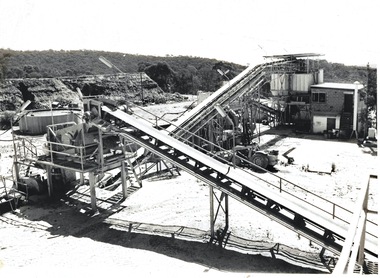
... Recent additions to the mine's infrastructure has been a new ore processing plant and a decline tunnel. The ore processing plant was operated by Newmont mining from 1987 to 1990 and subsequently operated by Consolidated Victorian Mines and Duketon Goldfields. ...Recent additions to the mine's infrastructure has been a new ore processing plant and a decline tunnel. The ore processing plant was operated by Newmont mining from 1987 to 1990 and subsequently operated by Consolidated Victorian Mines and Duketon Goldfields. ...Wattle Gully Mine holds a pivotal position in the history of the State's quartz mining industry. The rich strike at Wattle Gully mine in 1937 helped revive the State's gold mining industry that had been in the doldrums since the First World War. Wattle Gully, and a handful of other 'new' companies - the Maude and Yellow Girl, Morning Star, A 1, and North Deborah - were the flagships of the revived industry and sustained the State's gold production for some 30 years. Wattle Gully mine, with a yield of 350,000 ounces, was the richest mine of its era. By 1940, the Wattle Gully Company had paid out £207,000 in dividends to its shareholders. The company continued to mine profitably through the Second World War, though it struggled due to a shortage of manpower. After the war, the mine continued to develop - in the early 1950s new plant including a winding engine, steel poppet head, and twenty-head battery was added. The plant was obtained from the Central Nell Gwynne Company, Bendigo. On 13 March 1969, the Wattle Gully Company closed down the mine, laying off 62 men. Since 1970 Wattle Gully mine has worked intermittently. Recent additions to the mine's infrastructure has been a new ore processing plant and a decline tunnel. The ore processing plant was operated by Newmont mining from 1987 to 1990 and subsequently operated by Consolidated Victorian Mines and Duketon Goldfields. The mine site has retained evidence of its development since 1937 with its most recent periods of equipment upgrades in the 1950s and 1980s being documented by buildings, structures and intact and working machinery. Heritage Council Victoria: https://vhd.heritagecouncil.vic.gov.au/places/2380 Black and white photograph: view of Wattle Gully mine site with two elevators, centre of image. gold mining, underground, wattle gully gold mine, ore elevators -
 Bendigo Historical Society Inc.
Photograph - AUSTIN COLLECTION: Wattle Gully Gold Mine, Chewton, 1980's
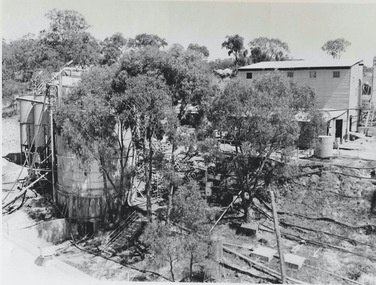
... Recent additions to the mine's infrastructure has been a new ore processing plant and a decline tunnel. The ore processing plant was operated by Newmont mining from 1987 to 1990 and subsequently operated by Consolidated Victorian Mines and Duketon Goldfields. ...Recent additions to the mine's infrastructure has been a new ore processing plant and a decline tunnel. The ore processing plant was operated by Newmont mining from 1987 to 1990 and subsequently operated by Consolidated Victorian Mines and Duketon Goldfields. ...Wattle Gully Mine holds a pivotal position in the history of the State's quartz mining industry. The rich strike at Wattle Gully mine in 1937 helped revive the State's gold mining industry that had been in the doldrums since the First World War. Wattle Gully, and a handful of other 'new' companies - the Maude and Yellow Girl, Morning Star, A 1, and North Deborah - were the flagships of the revived industry and sustained the State's gold production for some 30 years. Wattle Gully mine, with a yield of 350,000 ounces, was the richest mine of its era. By 1940, the Wattle Gully Company had paid out £207,000 in dividends to its shareholders. The company continued to mine profitably through the Second World War, though it struggled due to a shortage of manpower. After the war, the mine continued to develop - in the early 1950s new plant including a winding engine, steel poppet head, and twenty-head battery was added. The plant was obtained from the Central Nell Gwynne Company, Bendigo. On 13 March 1969, the Wattle Gully Company closed down the mine, laying off 62 men. Since 1970 Wattle Gully mine has worked intermittently. Recent additions to the mine's infrastructure has been a new ore processing plant and a decline tunnel. The ore processing plant was operated by Newmont mining from 1987 to 1990 and subsequently operated by Consolidated Victorian Mines and Duketon Goldfields. The mine site has retained evidence of its development since 1937 with its most recent periods of equipment upgrades in the 1950s and 1980s being documented by buildings, structures and intact and working machinery. Heritage Council Victoria: https://vhd.heritagecouncil.vic.gov.au/places/2380 Black and white photograph: landscape view of Wattle Gully mine site. Eucalypt trees in foreground, mining sheds in background. Ore bins on left hand side of image.gold mining, underground, wattle gully gold mine, mine sheds, ore bins -
 Bendigo Historical Society Inc.
Photograph - AUSTIN COLLECTION: Bill Williamson, 1980's
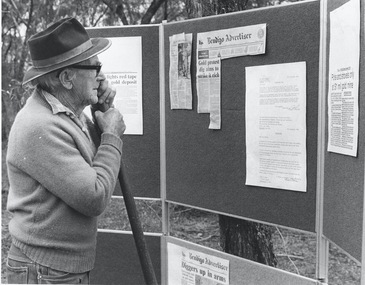
... Recent additions to the mine's infrastructure has been a new ore processing plant and a decline tunnel. The ore processing plant was operated by Newmont mining from 1987 to 1990 and subsequently operated by Consolidated Victorian Mines and Duketon Goldfields. ...Recent additions to the mine's infrastructure has been a new ore processing plant and a decline tunnel. The ore processing plant was operated by Newmont mining from 1987 to 1990 and subsequently operated by Consolidated Victorian Mines and Duketon Goldfields. ...Wattle Gully Mine holds a pivotal position in the history of the State's quartz mining industry. The rich strike at Wattle Gully mine in 1937 helped revive the State's gold mining industry that had been in the doldrums since the First World War. Wattle Gully, and a handful of other 'new' companies - the Maude and Yellow Girl, Morning Star, A 1, and North Deborah - were the flagships of the revived industry and sustained the State's gold production for some 30 years. Wattle Gully mine, with a yield of 350,000 ounces, was the richest mine of its era. By 1940, the Wattle Gully Company had paid out £207,000 in dividends to its shareholders. The company continued to mine profitably through the Second World War, though it struggled due to a shortage of manpower. After the war, the mine continued to develop - in the early 1950s new plant including a winding engine, steel poppet head, and twenty-head battery was added. The plant was obtained from the Central Nell Gwynne Company, Bendigo. On 13 March 1969, the Wattle Gully Company closed down the mine, laying off 62 men. Since 1970 Wattle Gully mine has worked intermittently. Recent additions to the mine's infrastructure has been a new ore processing plant and a decline tunnel. The ore processing plant was operated by Newmont mining from 1987 to 1990 and subsequently operated by Consolidated Victorian Mines and Duketon Goldfields. The mine site has retained evidence of its development since 1937 with its most recent periods of equipment upgrades in the 1950s and 1980s being documented by buildings, structures and intact and working machinery. Heritage Council Victoria: https://vhd.heritagecouncil.vic.gov.au/places/2380 Black and white photograph: former miner from Castlemaine, Bill Williamson, leaning on a shovel, reading newspaper clippings pinned on trifold noticeboard. One notice ' Bendigo Advertiser, 'Gold protest dig aims to strike it rich'. Photo probably taken near Chewton.Written on back of photo in blue pen: Bill Williamson, old miner from Castlemaine, (mined through depression yrs) gold mining, underground, wattle gully gold mine, mine sheds, ore bins -
 Bendigo Historical Society Inc.
Document - DEBORAH REEF PROJECT ENVIRONMENT EFFECTS STATEMENT
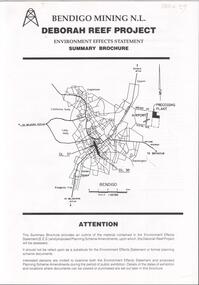
... A map of central Bendigo is drawn on page 1 and shows the location of the proposed processing plant near the Airport. Further maps on page 2 and 3 show the North Deborah Mine Site, the pipeline route and the airfield site. ...A map of central Bendigo is drawn on page 1 and shows the location of the proposed processing plant near the Airport. Further maps on page 2 and 3 show the North Deborah Mine Site, the pipeline route and the airfield site. ...Two page document. On top, first page ' Bendigo Mining N.L., Deborah Reef Project, Environment Effects Statement, Summary Brochure'. Poppet head on top LH corner of document. A map of central Bendigo is drawn on page 1 and shows the location of the proposed processing plant near the Airport. Further maps on page 2 and 3 show the North Deborah Mine Site, the pipeline route and the airfield site. The summary brochure provides an outline of the material contained in the Environment Effects Statement and proposed planning scheme amendments upon which, the Deborah Reef Project will be assessed. Page four lists the issues that impact on this submission: planning and land use; socio economic environment; traffic; discharges to air; water management; explosives storage and handling; subsidence; heritage; flora and fauna and landscape and visual assessment. The 16th March, 1989, is the date given for submissions to be lodged in regard to this project.Bendigo Mining N.Lbendigo, mining, deborah reef project -
 Stawell Historical Society Inc
Photograph, Stawell People in Horsham Paper Wimmera Advertiser
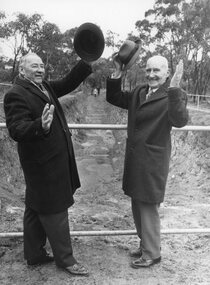
... Brodie-Hall, Opening Stawell Gold Mine, June 1981 -3 Don Webb, Rosemary & Robert Illig, Peter Ruthven, Barry Sherwell, Hazel Lewis, Jan Sherwell, Keith Haymes, Opening Stawell Gold Mine, June 1981 -4 Underground Ore Truck or Ore Loader at Stawell Gold Mines, Dec 1984 -5 Gold Pour at Stawell Gold Mine, Dec 1984 -6 Gold Pour at Stawell Gold Mine, Dec 1984 -7 Weighing of Gold Pour at Stawell Gold Mine, Dec 1984 -8 Ball Mill and processing plant at Stawell Gold Mine. Dec 1984 -9 Open Cut at Stawell Gold Mine, Dec 1984 -10 Contractor from Monbulk, Russel Fletcher, Chris Day at Marnoo Diamond Drilling, Feb 1986 ...Brodie-Hall, Opening Stawell Gold Mine, June 1981 -3 Don Webb, Rosemary & Robert Illig, Peter Ruthven, Barry Sherwell, Hazel Lewis, Jan Sherwell, Keith Haymes, Opening Stawell Gold Mine, June 1981 -4 Underground Ore Truck or Ore Loader at Stawell Gold Mines, Dec 1984 -5 Gold Pour at Stawell Gold Mine, Dec 1984 -6 Gold Pour at Stawell Gold Mine, Dec 1984 -7 Weighing of Gold Pour at Stawell Gold Mine, Dec 1984 -8 Ball Mill and processing plant at Stawell Gold Mine. Dec 1984 -9 Open Cut at Stawell Gold Mine, Dec 1984 -10 Contractor from Monbulk, Russel Fletcher, Chris Day at Marnoo Diamond Drilling, Feb 1986 B/W Photographs Stawell People in Horsham Paper Wimmera Advertiser Photograph ...7254 Bill Holmes, Reg Chapman, Opening Stawell Gold Mine, June 1981 -1 Deming Whitman, Stawell Gold Mine, June 1987 -2 Keith Parry (Rear), L.C. Brodie-Hall, Opening Stawell Gold Mine, June 1981 -3 Don Webb, Rosemary & Robert Illig, Peter Ruthven, Barry Sherwell, Hazel Lewis, Jan Sherwell, Keith Haymes, Opening Stawell Gold Mine, June 1981 -4 Underground Ore Truck or Ore Loader at Stawell Gold Mines, Dec 1984 -5 Gold Pour at Stawell Gold Mine, Dec 1984 -6 Gold Pour at Stawell Gold Mine, Dec 1984 -7 Weighing of Gold Pour at Stawell Gold Mine, Dec 1984 -8 Ball Mill and processing plant at Stawell Gold Mine. Dec 1984 -9 Open Cut at Stawell Gold Mine, Dec 1984 -10 Contractor from Monbulk, Russel Fletcher, Chris Day at Marnoo Diamond Drilling, Feb 1986 B/W Photographs -
 Kiewa Valley Historical Society
Bottle Milk, early 1900's
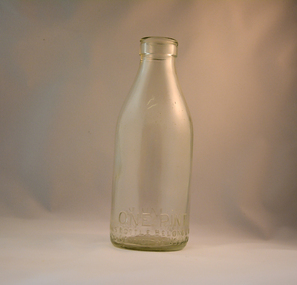
... This bottle was so constructed to be easily moved within the milk processing plants from the delivery vats/holding tanks to the final corking/sealing of the bottles for eventual distribution. ...This bottle was so constructed to be easily moved within the milk processing plants from the delivery vats/holding tanks to the final corking/sealing of the bottles for eventual distribution. ...This glass milk bottle was manufactured and used mid to late 1900's (1834 Victorian dairy industry was founded) up to the time that a cheaper container was invented(plastic bottles and polyethylene plastic lined cardboard cartons) and produced. In 1909 the supply of pure bottled milk was required for babies to overcome infant mortality due to unhygienic milk sources (unclean containers and unpasteurized milk). Due to the volume of milk being processed and hand milking could not keep up with demand, dairy farms introduced milking machines in the late 1930's. The great increases in dairy herds from the average of 18 cows per heard in 1950's to 142 cows per herd in 1996 required milk tankers to pick up the regions milk supply. This bottle was so constructed to be easily moved within the milk processing plants from the delivery vats/holding tanks to the final corking/sealing of the bottles for eventual distribution. From 1958 the milk bottle slowly became phased out of production. At this point in time Melbourne was drawing 160,000 bottles per week from the two major glass bottle works companies, e.g. Melbourne Glass Bottle Works Co. Victoria was the major state supplier of cows milk in the history of Australian milk production from the early 1800's. The Kiewa Valley and its region was a major contributor to meet that demand. Each bottle was "branded" during manufacturing to show the contents (pasteurized milk) and where it originated from (region and supplier). This method of recycling the bottles back to specific dairy farms was a good control method but an uneconomical "on cost" which was replaced by the "throw away" less costly plastic and cardboard containers. Kiewa Valley dairy herds had marked bottles bearing "90/9", "6/18", "6/33", "6/35" and "6/36" This heavy gauged glass milk bottle has a rim and a distinctive head at the top. This head has been manufactured to facilitate the movement of the bottled along the milk production line. The method of pouring milk into the bottle has been part of the "production line". This bottle has a one pint capacity and is made from "clear" glass. There are other milk bottles that have a "green" tint in them.Around the bottom side of the bottle and blown into the glass "ONE PINT" and on the opposite side "MILK". Below these markings is "This BOTTLE BELONGS TO MILK BOTTLES RECOVERY LTD" below this "AND CANNOT BE USED WITHOUT WRITTEN PERMISSION. On the base of the bottle is molded a big "M". An identification mark of "90" over "9" is beneath the "M". glass bottles, commercial milk containers, domestic milk bottles, pasteurized milk bottles, milk, dairy, farms, kiewa valley -
 Kiewa Valley Historical Society
Bottle Milk, mid to late 1900's
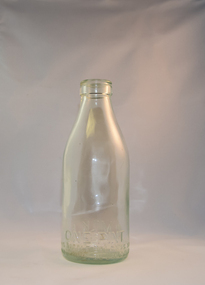
... This bottle was so constructed to be easily moved within the milk processing plants from the delivery vats/holding tanks to the final corking/sealing of the bottles for eventual distribution. ...This bottle was so constructed to be easily moved within the milk processing plants from the delivery vats/holding tanks to the final corking/sealing of the bottles for eventual distribution. ...This glass milk bottle was manufactured and used mid 1800's (1834 Victorian dairy industry was founded) to the time that a cheaper container was invented(plastic bottles and polyethylene plastic lined cardboard cartons). In 1909 the supply of pure bottled milk was required for babies to overcome infant mortality due to unhygienic milk sources (unclean containers and unpasteurized milk). Due to the large volume of milk being processed and hand milking could not keep up with demand, dairy farms introduced milking machines in the late 1930's. The great increases in dairy herds from the average of 18 cows per heard in 1950's to 142 cows per herd in 1996 required milk tankers to pick up the regions milk supply. This bottle was so constructed to be easily moved within the milk processing plants from the delivery vats/holding tanks to the final corking/sealing of the bottles for eventual distribution. From 1958 the milk bottle slowly became phased out of production. At this point in time Melbourne was drawing 160,000 bottles per week from the two major glass bottle works companies, e.g. Melbourne Glass Bottle Works Co.Victoria was the major state supplier of cows milk in the history of Australian milk production from the early 1800's. The Kiewa Valley and its region was a major contributor to meet that demand. Each bottle was "branded" during manufacturing to show the contents (pasteurized milk) and where it originated from (region and supplier). This method of recycling the bottles back to specific dairy farms was a good control method but an uneconomical "on cost" which was replaced by the "throw away" less costly plastic and cardboard containers. Kiewa Valley dairy herds had marked bottles bearing "90/9", "6/18", "6/33", "6/35" and "6/36"This heavy gauged glass milk bottle has a rim and a distinctive head at the top. This head has been manufactured to facilitate the movement of the bottled along the milk production line. The method of pouring milk into the bottle has been part of the "production line". This bottle has a one pint capacity and is made from "light green" coloured glass(a protection against sunlight penetration). There are other milk bottles that do not have a "green" tint in them. This thick glass bottle to contain milk required its thickness because of the extensive handling before final consumption. Milk was delivered by the "milk man" direct to the homes of consumers. During this period delivery to homes in cities and towns was made initially by horse and cart and later by truck.On the bottom end of this bottle a circle within it 6/33 and next to this "ONE PINT" and under this "THIS BOTTLE BELONGS TO MILK BOTTLE RECOVERY LTD" and below this "AND CANNOT BE USED WITHOUT WRITTEN PERMISSION" on the base "M" underneath this "4"glass bottles, commercial milk containers, domestic milk bottles, pasteurized milk bottles
