
Showing 25 items matching "railway infrastructure - australia"
-
 Victorian Railway History Library
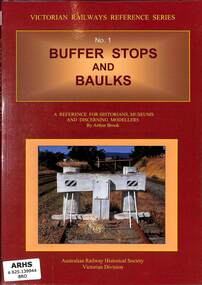
Book, Brook, Arthur, Buffer Stops and Baulks, 2007
... Railway infrastructure - Victoria...Railway infrastructure - Australia...Railway infrastructure - Victoria Railway infrastructure - Australia A reference book for historians, museums and discerning railway modelers about the different buffer stops and baulks used on the Victorian Railways. ill, p.104. ...A reference book for historians, museums and discerning railway modelers about the different buffer stops and baulks used on the Victorian Railways.ill, p.104.A reference book for historians, museums and discerning railway modelers about the different buffer stops and baulks used on the Victorian Railways.railway infrastructure - victoria, railway infrastructure - australia -
 Mission to Seafarers Victoria
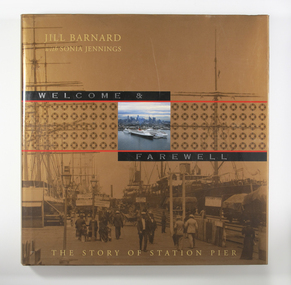
Book - Reference book, Jill Barnard et al, Welcome and Farewell: The Story of Station Pier, 2004
... infrastructure was not coping with the volume of passenger and cargo traffic arriving in and departing from the burgeoning gold-fevered colony. However, the opening of Railway Pier at Port Melbourne in 1854 greatly improved the situation. Railway Pier serviced the steamships, which plied Port Phillip Bay and the Victorian coastal waters beyond, and also offered berths for vessels on the regular runs to other Australian colonies and to overseas destinations. ...In the mid-nineteenth century, Victoria’s primitive maritime infrastructure was not coping with the volume of passenger and cargo traffic arriving in and departing from the burgeoning gold-fevered colony. However, the opening of Railway Pier at Port Melbourne in 1854 greatly improved the situation. Railway Pier serviced the steamships, which plied Port Phillip Bay and the Victorian coastal waters beyond, and also offered berths for vessels on the regular runs to other Australian colonies and to overseas destinations. However, as the larger and more powerful steamships of the early twentieth century found berthing increasingly difficult at Railway Pier, the need for a more modern pier became apparent. By 1930, the new Station Pier had replaced its predecessor. Itself extended and upgraded several times including during the past decade, Station pier still offers every contemporary convenience to shipping services using its busy facilities, just as did its predecessor Railway Pier, 150 years ago. The Victorian Government commissioned Welcome & Farewell to celebrate the 150 years since the opening of the Railway Pier. In doing so, it was mindful that the story of the site is not limited to its contribution to national and state economies, or to its physical development. The Government wanted a history that would also speak to ordinary Victorians, and other Australians, of their own experiences of this significant place. For indeed the Station Pier site has played its part in almost every milestone or phase in our history: at moments of celebration and commemoration, during economic booms and depressions, during times of war and peace. It has also won a place in the hearts of ordinary individuals affected by the welcomes and farewells they have experienced there: those for visiting royalty and celebrities, for servicemen and medical personnel off to war or returning home, for migrants from distant countries and refugees from war zones, for friends and family travelling for personal, professional or cultural reasons. Welcome & Farewell thoughtfully examines Station Pier’s significance and offers a splendid visual panorama of the experiences lived out there between 1854 and 2004.Illustrated large-format book with 224 pages [36] p. of plates. : ill., maps, ports.Bibliography: p. 199-201non-fictionIn the mid-nineteenth century, Victoria’s primitive maritime infrastructure was not coping with the volume of passenger and cargo traffic arriving in and departing from the burgeoning gold-fevered colony. However, the opening of Railway Pier at Port Melbourne in 1854 greatly improved the situation. Railway Pier serviced the steamships, which plied Port Phillip Bay and the Victorian coastal waters beyond, and also offered berths for vessels on the regular runs to other Australian colonies and to overseas destinations. However, as the larger and more powerful steamships of the early twentieth century found berthing increasingly difficult at Railway Pier, the need for a more modern pier became apparent. By 1930, the new Station Pier had replaced its predecessor. Itself extended and upgraded several times including during the past decade, Station pier still offers every contemporary convenience to shipping services using its busy facilities, just as did its predecessor Railway Pier, 150 years ago. The Victorian Government commissioned Welcome & Farewell to celebrate the 150 years since the opening of the Railway Pier. In doing so, it was mindful that the story of the site is not limited to its contribution to national and state economies, or to its physical development. The Government wanted a history that would also speak to ordinary Victorians, and other Australians, of their own experiences of this significant place. For indeed the Station Pier site has played its part in almost every milestone or phase in our history: at moments of celebration and commemoration, during economic booms and depressions, during times of war and peace. It has also won a place in the hearts of ordinary individuals affected by the welcomes and farewells they have experienced there: those for visiting royalty and celebrities, for servicemen and medical personnel off to war or returning home, for migrants from distant countries and refugees from war zones, for friends and family travelling for personal, professional or cultural reasons. Welcome & Farewell thoughtfully examines Station Pier’s significance and offers a splendid visual panorama of the experiences lived out there between 1854 and 2004.port melbourne, station pier -
 Ringwood and District Historical Society
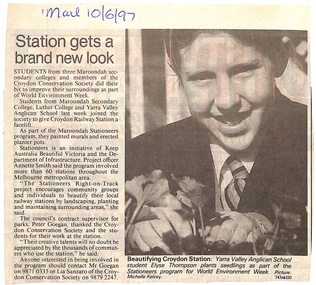
Article, Maroondah Secondary College - Newspaper article 10/6/1997 - "Station gets a brand new look" - Croydon Railway Station
... Railway Station. As part of the Maroondah Stationeers program—run by Keep Australia Beautiful Victoria and the Department of Infrastructure—students painted murals, installed planter pots, and helped give the station a fresh new look. ...Railway Station. As part of the Maroondah Stationeers program—run by Keep Australia Beautiful Victoria and the Department of Infrastructure—students painted murals, installed planter pots, and helped give the station a fresh new look. ...Newspaper clipping - The article describes a World Environment Week project in which students from Maroondah Secondary College, Luther College, and Yarra Valley Anglican School joined members of the Croydon Conservation Society to improve Croydon Railway Station. As part of the Maroondah Stationeers program—run by Keep Australia Beautiful Victoria and the Department of Infrastructure—students painted murals, installed planter pots, and helped give the station a fresh new look. Project officer Annette Smith explains that the Stationeers initiative operates at more than 60 stations across Melbourne. Peter Goegan, the council’s contract supervisor for parks, publicly thanked the students and volunteers for their work. The article also provides contact details for Peter Goegan and Lia Sanzaro for anyone interested in joining the conservation efforts. A photo features Elyse Thompson, a student from Yarra Valley Anglican School, planting seedlings as part of the project. (Co-pilot summary 8/8/2026)Caption "Beautifying Croydon Station" -
 Eltham District Historical Society Inc
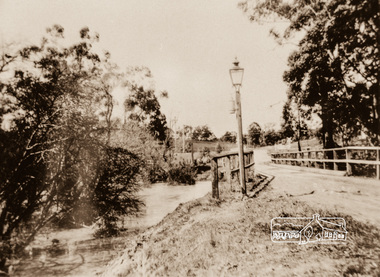
Photograph, Diamond Creek Bridge, Eltham North, c.1920
... railway crossing sign. There is a self-contained carbide streetlamp situated in front of the bridge. In the early 1900s, carbide (acetylene gas) streetlamps emerged as a lighting technology for regional towns across Victoria, Australia, before municipal electricity grids were widely established. During the late Victorian and early Edwardian eras, major hubs like Melbourne relied on centralized coal-gas infrastructure...railway crossing sign. There is a self-contained carbide streetlamp situated in front of the bridge. In the early 1900s, carbide (acetylene gas) streetlamps emerged as a lighting technology for regional towns across Victoria, Australia, before municipal electricity grids were widely established. During the late Victorian and early Edwardian eras, major hubs like Melbourne relied on centralized coal-gas infrastructure ...View looking east across the Glen Park Bridge and the railway crossing towards Main Road circa 1920. The bridge was originally built as a replacement for an older private bridge built by a man named Foley around 1880. In 1911 Heidelberg and Eltham agreed to share the costs to build a new bridge (the Diamond Creek was the border between the two). Construction began in June 1915 and it was officially opened by Cr. Taylor on Cup Day, November 1915. This photo, dated around 1920, is of the Glen Park Bridge crossing over the Diamond Creek about 50 metres north of the present-day Wattletree tree Road Bridge. Glen Park Road intersected Main Rain Road along an alignment following present day Coleman Cresent. In this this picture we see the narrow wooden bridge over a high flowing Diamond Creek at Glen Park, now Eltham North. In the background is a railway crossing sign. There is a self-contained carbide streetlamp situated in front of the bridge. In the early 1900s, carbide (acetylene gas) streetlamps emerged as a lighting technology for regional towns across Victoria, Australia, before municipal electricity grids were widely established. During the late Victorian and early Edwardian eras, major hubs like Melbourne relied on centralized coal-gas infrastructure. However, small regional Victorian shires lacked the funds or population density to build large gasworks. When the commercial production of calcium carbide became viable around 1900, it offered a quantum leap in brightness over traditional kerosene streetlamps. Acetylene gas burned with an intense, crisp white flame—significantly brighter than oil or candles. Many rural towns used self-contained lampposts. A lamplighter had to climb each post daily to manually place calcium carbide pellets in a lower chamber and fill an upper chamber with water. The water dripped onto the carbide, producing acetylene gas to feed the burner. Lamplighters carefully measured the fuel amounts so the chemical reaction would naturally exhaust itself and "turn off" around midnight. While carbide streetlights provided unparalleled visibility for early motorists, cyclists, and pedestrians, they were incredibly labour-intensive and inherently volatile. The gas was highly explosive, prone to leaks, and left behind a pungent, sulphur-like odour. By the end of World War I, local Victorian councils rapidly phased out acetylene infrastructure in favour of safer, independent electric powerhouse generators. In the context of Eltham's local history, the Eltham Shire and surrounding Yarra Valley region actively relied on carbide streetlamps and kerosene lighting during the early 20th century before the expansion of the Melbourne electric grid. Eltham was an outer-rural, heavily timbered farming and orchard district at the turn of the century, it faced unique civic infrastructure challenges. In rural Eltham, early streetlamps were exceptionally sparse. The community relied heavily on "innkeeper laws" which dictated local hotels—such as the historic Eltham Hotel—were legally required to keep external oil, kerosene, or acetylene lamps burning through the night to illuminate the main roads for travellers and coaches. The volatile carbide and kerosene lamps on Eltham's main thoroughfares were progressively phased out during the 1920s. The district steadily transitioned to electricity, which allowed for developments like the installation of modern electrical wiring at the local fire station on Arthur Street by 1928. The Glen Park Bridge was a low structure and subject to flooding readily. In 1959 Eltham Council erected a new crossing over the Diamond Creek and realigned the road to the present-day Wattletree Road Bridge. Construction was not fully complete when on Sunday, 20 September 1959, heavy flooding occurred in the stream and at 3:53 pm the old bridge was washed away forever. - Research by Peter Pidgeon, EDHS, June 2026Photograph copy eltham north, wattletree road, coleman crescent, bridges, diamond creek (creek), bridge, carbide streetlamp, floodwater, glen park bridge, street lamp, glen park road, glen park estate -
 Port Melbourne Historical & Preservation Society
Book, Jill Barnard et al, "Welcome & Farewell - The Story of Station Pier", Aug 2004
... Railway and Station Piers. Copper coloured cover and dust cover, hardback, 206 pp. Index, Bibliography, Chronology and extensive references. Signed by co-authors and Station Pier Manager "Welcome & Farewell - The Story of Station Pier" Book Jill Barnard Sonia Jennings Victorian Department of Infrastructure Arcadia, an imprint of Australia Scholarly Publishing P/L ...Donated to the PMH&PS by the authors, at the launch on Station Pier (occasion of 150th birthday of Railway Pier), 12th September 2004. (Ref 1948.01 for picture of authors at launch)."Welcome & Farewell - The Story of Station Pier" - a large, lavishly illustrated history of early Sandridge Railway and Station Piers. Copper coloured cover and dust cover, hardback, 206 pp. Index, Bibliography, Chronology and extensive references. Signed by co-authors and Station Pier ManagerSigned by co-authors Jill Barnard and Sonia Jennings, and Station Pier Manager Evda Marangospiers and wharves - railway pier, piers and wharves - station pier, transport - shipping, transport - railways, immigration, jill barnard, sonia jennings -
 Victorian Railway History Library
Book, Langford, Weston, Victorian Railway Station Diagrams 1956-1960 - Western District, 1956-1960
... railroad infrastructure - Victoria railroads - Victoria Railway diagrams of all the stations in the Western district of Victoria in 1956 to 1960. maps, p.56. Victorian Railway Station Diagrams 1956-1960 - Western District Book Langford, Weston Australian Railway Historical Society (Victorian Division) ...Railway diagrams of all the stations in the Western district of Victoria in 1956 to 1960.maps, p.56.non-fictionRailway diagrams of all the stations in the Western district of Victoria in 1956 to 1960.railroad infrastructure - victoria, railroads - victoria -
 Victorian Railway History Library
Book, Langford, Weston, Victorian Railway Station Diagrams 1956-1960 - South Western District, 1956-1960
... railroad infrastructure - Victoria railroads - Victoria Railway diagrams of all the stations in the South Western district of Victoria in 1956 to 1960. maps, p.76. Victorian Railway Station Diagrams 1956-1960 - South Western District Book Langford, Weston Australian Railway Historical Society (Victorian Division) ...Railway diagrams of all the stations in the South Western district of Victoria in 1956 to 1960.maps, p.76.non-fictionRailway diagrams of all the stations in the South Western district of Victoria in 1956 to 1960.railroad infrastructure - victoria, railroads - victoria -
 Victorian Railway History Library
Book, Langford, Weston, Victorian Railway Station Diagrams 1956-1960 - Eastern and South Eastern District, 1956-1960
... railroad infrastructure - Victoria railroads - Victoria Railway diagrams of all the stations in the Eastern and South Eastern district of Victoria in 1956 to 1960. maps, p.67. Victorian Railway Station Diagrams 1956-1960 - Eastern and South Eastern District Book Langford, Weston Australian Railway Historical Society (Victorian Division) ...Railway diagrams of all the stations in the Eastern and South Eastern district of Victoria in 1956 to 1960.maps, p.67.non-fictionRailway diagrams of all the stations in the Eastern and South Eastern district of Victoria in 1956 to 1960.railroad infrastructure - victoria, railroads - victoria -
 Victorian Railway History Library
Book, Langford, Weston, Victorian Railway Station Diagrams 1956-1960 - North Eastern District, 1956-1960
... railroad infrastructure - Victoria railroads - Victoria Railway diagrams of all the stations in the North Eastern district of Victoria in 1956 to 1960. maps, p.132. Victorian Railway Station Diagrams 1956-1960 - North Eastern District Book Langford, Weston Australian Railway Historical Society (Victorian Division) ...Railway diagrams of all the stations in the North Eastern district of Victoria in 1956 to 1960.maps, p.132.non-fictionRailway diagrams of all the stations in the North Eastern district of Victoria in 1956 to 1960.railroad infrastructure - victoria, railroads - victoria -
 Victorian Railway History Library
Book, Langford, Weston, Victorian Railway Station Diagrams 1956-1960 - Suburban District Part Two, 1956-1960
... railroad infrastructure - Victoria railroads - Victoria Railway diagrams of the stations on the Clifton Hill, North Melbourne Port Melbourne & St Kilda group of lines in the Suburban district of Melbourne Victoria in 1956 to 1960. maps, p.52. Victorian Railway Station Diagrams 1956-1960 - Suburban District Part Two Book Langford, Weston Australian ...Railway diagrams of the stations on the Clifton Hill, North Melbourne Port Melbourne & St Kilda group of lines in the Suburban district of Melbourne Victoria in 1956 to 1960.maps, p.52.non-fictionRailway diagrams of the stations on the Clifton Hill, North Melbourne Port Melbourne & St Kilda group of lines in the Suburban district of Melbourne Victoria in 1956 to 1960.railroad infrastructure - victoria, railroads - victoria -
 Victorian Railway History Library
Book, Langford, Weston, Victorian Railway Station Diagrams 1956-1960 - Suburban District Part One, 1956-1960
... railroad infrastructure - Victoria railroads - Victoria Railway diagrams of all the stations on the Richmond group of lines in the Suburban district of Melbourne Victoria in 1956 to 1960. maps, p.64. Victorian Railway Station Diagrams 1956-1960 - Suburban District Part One Book Langford, Weston Australian ...Railway diagrams of all the stations on the Richmond group of lines in the Suburban district of Melbourne Victoria in 1956 to 1960.maps, p.64.non-fictionRailway diagrams of all the stations on the Richmond group of lines in the Suburban district of Melbourne Victoria in 1956 to 1960.railroad infrastructure - victoria, railroads - victoria -
 Victorian Railway History Library
Book, Langford, Weston, Victorian Railway Station Diagrams 1956-1960 - Northern and Midland District, 1956-1960
... railroad infrastructure - Victoria railroads - Victoria Railway diagrams of all the stations in the Northern and Midland district of Victoria in 1956 to 1960. maps, p.43. Victorian Railway Station Diagrams 1956-1960 - Northern and Midland District Book Langford, Weston Australian Railway Historical Society (Victorian Division) ...Railway diagrams of all the stations in the Northern and Midland district of Victoria in 1956 to 1960.maps, p.43.non-fictionRailway diagrams of all the stations in the Northern and Midland district of Victoria in 1956 to 1960.railroad infrastructure - victoria, railroads - victoria -
 Victorian Railway History Library
Book, Langford, Weston, Victorian Railway Station Diagrams 1956-1960 - North Western District, 1956-1960
... railroad infrastructure - Victoria railroads - Victoria Railway diagrams of all the stations in the North Western district of Victoria in 1956 to 1960. maps, p.84. Victorian Railway Station Diagrams 1956-1960 - North Western District Book Langford, Weston Australian Railway Historical Society (Victorian Division) ...Railway diagrams of all the stations in the North Western district of Victoria in 1956 to 1960.maps, p.84.non-fictionRailway diagrams of all the stations in the North Western district of Victoria in 1956 to 1960.railroad infrastructure - victoria, railroads - victoria -
 Victorian Railway History Library
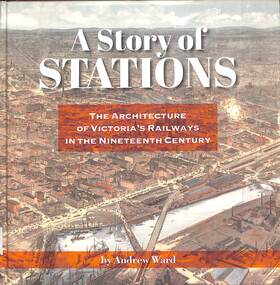
Book, Ward, Andrew, A Story of Stations The Architecture of Victoria's Railways in the Nineteenth Century, 2019
... railroad infrastructure - Victoria Railroads - Victoria - history Details of the architecture of railway stations building in Victoria Australia in the 19th century. index, ill, maps, p.337. ...Details of the architecture of railway stations building in Victoria Australia in the 19th century.index, ill, maps, p.337.non-fictionDetails of the architecture of railway stations building in Victoria Australia in the 19th century.railroad infrastructure - victoria, railroads - victoria - history -
 Victorian Railway History Library
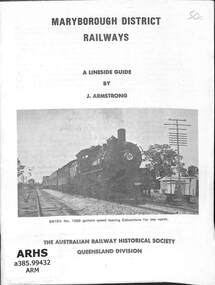
Booklet, Australian Railway Historical Society - Queensland Division, Maryborough District Railways A lineside guide, 1970
... Railroad operations - Queensland - history railroad infrastructure - Queensland A lineside guide for the Maryborough district of the Queensland Government railway. ill, maps, p.29. Maryborough District Railways A lineside guide Booklet Australian Railway Historical Society - Queensland Division Armstrong, John ...A lineside guide for the Maryborough district of the Queensland Government railway.ill, maps, p.29.non-fictionA lineside guide for the Maryborough district of the Queensland Government railway.railroad operations - queensland - history, railroad infrastructure - queensland -
 Victorian Railway History Library
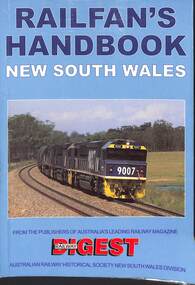
Book, McKillop, Robert F, Railfan's Handbook: New South Wales, 1998
... railroad operations - New South Wales - history railroad infrastructure - New South Wales A guide to the rollingstock and operations of the railways of New South Wales in 1998. ill, maps, p.80. Railfan's Handbook: New South Wales Book McKillop, Robert F Australian Railway Historical Society New South Wales Division ...A guide to the rollingstock and operations of the railways of New South Wales in 1998.ill, maps, p.80.non-fictionA guide to the rollingstock and operations of the railways of New South Wales in 1998.railroad operations - new south wales - history, railroad infrastructure - new south wales -
 Victorian Railway History Library
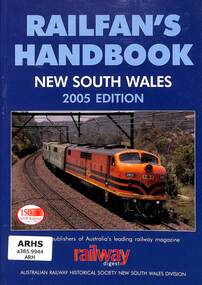
Book, McKillop, Robert F, Railfan's Handbook New South Wales 2005 Edition, 2005
... railroad operations - New South Wales - history railroad infrastructure - New South Wales A guide to the rollingstock and operations of the railways of New South Wales in 2005. ill, maps, p.96. Railfan's Handbook New South Wales 2005 Edition Book McKillop, Robert F Australian Railway Historical Society New South Wales Division ...A guide to the rollingstock and operations of the railways of New South Wales in 2005.ill, maps, p.96.non-fictionA guide to the rollingstock and operations of the railways of New South Wales in 2005.railroad operations - new south wales - history, railroad infrastructure - new south wales -
Emerald Museum & Nobelius Heritage Park
Photograph - Nursery below 'Carramar', Unknown photographer, 1910s
... infrastructure in the region; C.A. Nobelius was one of thirteen witnesses to the Parliamentary Standing Committee on Railways in 1898 debating a rail connection between Gembrook and Ferntree Gully, which became today's Puffing Billy tourist service. The nurseries occupied 280 acres at their peak in 1905, with more than one million trees available for sale at that time. The nursery focused on exotic fruit and ornamental species which were supplied to public parks and gardens all over the world. In several cases the nurseries were the first suppliers of the trees in Australia...infrastructure in the region; C.A. Nobelius was one of thirteen witnesses to the Parliamentary Standing Committee on Railways in 1898 debating a rail connection between Gembrook and Ferntree Gully, which became today's Puffing Billy tourist service. The nurseries occupied 280 acres at their peak in 1905, with more than one million trees available for sale at that time. The nursery focused on exotic fruit and ornamental species which were supplied to public parks and gardens all over the world. In several cases the nurseries were the first suppliers of the trees in Australia ...Carl Axel Nobelius established the Gembrook Nurseries in 1886 on sixty-three acres purchased from an original selector after the area's gold rush started to diminish. It was called the Gembrook Nurseries as it was located in the Parish of Gembrook, but it was commonly referred to as the Nobelius nurseries after its founder; especially as control of the remaining portions of the nurseries remained with the Nobelius family until 1955. The Nobelius Nurseries had a substantial impact on the development of the township of Emerald, as local farmers were able to earn funds during the winter by working at the nursery which gave them financial resources while waiting for their own farms to become productive. The need to transport plants and trees to port quickly also contributed to the development of rail infrastructure in the region; C.A. Nobelius was one of thirteen witnesses to the Parliamentary Standing Committee on Railways in 1898 debating a rail connection between Gembrook and Ferntree Gully, which became today's Puffing Billy tourist service. The nurseries occupied 280 acres at their peak in 1905, with more than one million trees available for sale at that time. The nursery focused on exotic fruit and ornamental species which were supplied to public parks and gardens all over the world. In several cases the nurseries were the first suppliers of the trees in Australia. Sales records show that trees were supplied to clients in Europe, Asia, the United States, Africa and New Zealand, as well as to many Councils and Government organisations around Australia, such as Melbourne's Fitzroy Gardens and Royal Botanic Gardens. Emerald Museum records indicate that this photograph of the Gembrook Nursery was taken in the vicinity of Carramar, the family home built by Carl Axel Nobelius. The sixteen-room mansion was one of the premier estates in the region and was visited by guests including Dame Nellie Melba and the Governor of Victoria, Sir Reginald Talbot. The building still stands amongst gardens that feature original Gembrook Nurseries plantings. Portions of the Gembrook Nurseries (and the Carramar estate) were sold at different times throughout the Twentieth Century, with the Emerald Country Club and Emerald Lake Park both occupying portions of the original land. In 1981 the final twelve acres were purchased by the Shire of Sherbrooke in recognition to be used as a heritage landmark in recognition of the site's significance.The photograph is significant because it depicts the built environment and stock cultivation at the Gembrook Nurseries during the early decades of the Twentieth Century; a period in which the nurseries were the leading Southern-hemisphere supplier of plants and trees to public gardens around the world. Museum acquisition records indicate this photograph was taken in the vicinity of the 'Carramar' estate, the home of the Nobelius family.Black and white rectangular photograph printed on photographic paper. The photograph depicts cultivated fields, roads, fencing and buildings at the Gembrook Nurseries; in the vicinity of the 'Carramar' estate.Obverse: 70 / (?) nt /1910s, 1890s, 1900s, carl axel nobelius, gembrook nurseries, nobelius nursery, carramar, farming, buildings, agriculture, dame nellie melba, reginald talbot, emerald country club, emerald lake park, shire of sherbrooke -
Emerald Museum & Nobelius Heritage Park
Photograph - Packing Shed, Gembrook Nurseries, Unknown maker, 1900-1920
... The photograph is significant because it depicts personnel and infrastructure associated with the Gembrook or Nobelius Nurseries, a business which was instrumental to the development of Emerald as a settlement in the 19th and 20th Centuries and also influenced the development of public and private gardens and the farming of several species in Australia and internationally. The Nobelius Nursery is listed on the Victorian Heritage Register. 1900s Gembrook Nurseries Nobelius Nurseries Carl Axel Nobelius Packing Shed railway ...The Gembrook Nurseries, informally known as the Nobelius Nurseries after the founder Carl Axel Nobelius, began with the purchase of sixty-three acres in 1886 and boomed in the 1890s due to opportunities provided by employment-promoting schemes to develop public parks and gardens and street shade by local and State Governments around Australia. Trees were sold to more than forty councils and Government organisations in the 1890s, including the Department of Agriculture, Lands Department and Victorian Railways. The need to transport nursery products by train via Ferntree Gully rather than by bullock dray to Narre Warren was a factor in the successful petition to develop what is now known as the Puffing Billy Railway. Railway developments in 1900 included the creation of a siding and Packing Shed, known as Nobelius Station, which is featured in this photograph. The Packing Shed was able to handle 250,000 cases of fruit each year. Gembrook Nurseries had an indirect influence on the development of other farms and industries in the region. As a wholesale nursery with high sales volumes it was an important employer of local people. Peak season for employees was during the cooler months, during most farmers' off-season. This provided local farmers with a source of income while their own farms were becoming established.The photograph is significant because it depicts personnel and infrastructure associated with the Gembrook or Nobelius Nurseries, a business which was instrumental to the development of Emerald as a settlement in the 19th and 20th Centuries and also influenced the development of public and private gardens and the farming of several species in Australia and internationally. The Nobelius Nursery is listed on the Victorian Heritage Register.Black and white rectangular photograph printed on print media paper. The image is captioned 'Lunch Hour at the Packing Shed, Gembrook Nurseries.' It depicts thirty-one men (including one adolescent) and one woman posing for a group photograph behind approximately five large product bales resting in a rectangular metal rail cargo carriage. One of the men has a bandage across one eye. The people depicted are wearing clothing indicating the image may have been taken in the early 20th century. The Packing Shed building (built in 1900) and several stacked wooden storage crates are visible behind the group.Obverse: 59 NOR (?) 10 (?) + / LUNCH HOUR AT THE PACKING SHED, GEMBROOK NURSERIES. /1900s, gembrook nurseries, nobelius nurseries, carl axel nobelius, packing shed, railway, puffing billy railway, nursery employees, farming, agriculture, government initiatives -
Emerald Museum & Nobelius Heritage Park
Photograph - Budding at Gembrook Nurseries, Unknown photographer, 1910s
... infrastructure in the region; C.A. Nobelius was one of thirteen witnesses to the Parliamentary Standing Committee on Railways in 1898 debating a rail connection between Gembrook and Ferntree Gully, which became today's Puffing Billy tourist service. The nurseries occupied 280 acres at their peak in 1905, with more than one million trees available for sale at that time. The nursery focused on exotic fruit and ornamental species which were supplied to public parks and gardens all over the world. In several cases the nurseries were the first suppliers of the trees in Australia...infrastructure in the region; C.A. Nobelius was one of thirteen witnesses to the Parliamentary Standing Committee on Railways in 1898 debating a rail connection between Gembrook and Ferntree Gully, which became today's Puffing Billy tourist service. The nurseries occupied 280 acres at their peak in 1905, with more than one million trees available for sale at that time. The nursery focused on exotic fruit and ornamental species which were supplied to public parks and gardens all over the world. In several cases the nurseries were the first suppliers of the trees in Australia ...Carl Axel Nobelius established the Gembrook Nurseries in 1886 on sixty-three acres purchased from an original selector after the area's gold rush started to diminish. It was called the Gembrook Nurseries as it was located in the Parish of Gembrook, but it was commonly referred to as the Nobelius nurseries after its founder; especially as control of the remaining portions of the nurseries remained with the Nobelius family until 1955. The Nobelius Nurseries had a substantial impact on the development of the township of Emerald, as local farmers were able to earn funds during the winter by working at the nursery which gave them financial resources while waiting for their own farms to become productive. The need to transport plants and trees to port quickly also contributed to the development of rail infrastructure in the region; C.A. Nobelius was one of thirteen witnesses to the Parliamentary Standing Committee on Railways in 1898 debating a rail connection between Gembrook and Ferntree Gully, which became today's Puffing Billy tourist service. The nurseries occupied 280 acres at their peak in 1905, with more than one million trees available for sale at that time. The nursery focused on exotic fruit and ornamental species which were supplied to public parks and gardens all over the world. In several cases the nurseries were the first suppliers of the trees in Australia. Sales records show that trees were supplied to clients in Europe, Asia, the United States, Africa and New Zealand, as well as to many Councils and Government organisations around Australia, such as Melbourne's Fitzroy Gardens and Royal Botanic Gardens. Portions of the Gembrook Nurseries were sold at different times throughout the Twentieth Century, with the Emerald Country Club and Emerald Lake Park both occupying portions of the original land. In 1981 the final twelve acres were purchased by the Shire of Sherbrooke in recognition to be used as a heritage landmark in recognition of the site's significance.The photograph is significant because it depicts work processes at the Gembrook Nurseries during the early decades of the Twentieth Century; a period in which the nurseries were the leading Southern-hemisphere supplier of plants and trees to public gardens around the world. The photograph may also depict Carl Axel Nobelius overseeing his workers, which gives insights into work practices and social dynamics of the time.Black and white rectangular photograph printed on photographic paper. The photograph of a postcard or newspaper clipping depicts twelve men in clothes associated with the first decades of the Twentieth Century undertaking planting or other field work under the gaze of a man in a suit and top hat. The item is captioned 'Budding at Gembrook Nurseries.'Obverse: BUDDING AT GEMBROOK NURSERIES. /1910s, 1900s, 1890s, 1880s, 1886, 1905, carl axel nobelius, nobelius nursery, gembrook nurseries, emerald country club, emerald lake park, fruit growing, trees, farming -
Emerald Museum & Nobelius Heritage Park
Photograph - Gembrook Nurseries, 1908-1912, Unknown photographer, 1908-1912
... infrastructure in the region; C.A. Nobelius was one of thirteen witnesses to the Parliamentary Standing Committee on Railways in 1898 debating a rail connection between Gembrook and Ferntree Gully, which became today's Puffing Billy tourist service. The nurseries occupied 280 acres at their peak in 1905, with more than one million trees available for sale at that time. The nursery focused on exotic fruit and ornamental species which were supplied to public parks and gardens all over the world. In several cases the nurseries were the first suppliers of the trees in Australia...infrastructure in the region; C.A. Nobelius was one of thirteen witnesses to the Parliamentary Standing Committee on Railways in 1898 debating a rail connection between Gembrook and Ferntree Gully, which became today's Puffing Billy tourist service. The nurseries occupied 280 acres at their peak in 1905, with more than one million trees available for sale at that time. The nursery focused on exotic fruit and ornamental species which were supplied to public parks and gardens all over the world. In several cases the nurseries were the first suppliers of the trees in Australia ...Carl Axel Nobelius established the Gembrook Nurseries in 1886 on sixty-three acres purchased from an original selector after the area's gold rush started to diminish. It was called the Gembrook Nurseries as it was located in the Parish of Gembrook, but it was commonly referred to as the Nobelius nurseries after its founder; especially as control of the remaining portions of the nurseries remained with the Nobelius family until 1955. The Nobelius Nurseries had a substantial impact on the development of the township of Emerald, as local farmers were able to earn funds during the winter by working at the nursery which gave them financial resources while waiting for their own farms to become productive. The need to transport plants and trees to port quickly also contributed to the development of rail infrastructure in the region; C.A. Nobelius was one of thirteen witnesses to the Parliamentary Standing Committee on Railways in 1898 debating a rail connection between Gembrook and Ferntree Gully, which became today's Puffing Billy tourist service. The nurseries occupied 280 acres at their peak in 1905, with more than one million trees available for sale at that time. The nursery focused on exotic fruit and ornamental species which were supplied to public parks and gardens all over the world. In several cases the nurseries were the first suppliers of the trees in Australia. Sales records show that trees were supplied to clients in Europe, Asia, the United States, Africa and New Zealand, as well as to many Councils and Government organisations around Australia, such as Melbourne's Fitzroy Gardens and Royal Botanic Gardens. Portions of the Gembrook Nurseries were sold at different times throughout the Twentieth Century, with the Emerald Country Club and Emerald Lake Park both occupying portions of the original land. In 1981 the final twelve acres were purchased by the Shire of Sherbrooke in recognition to be used as a heritage landmark in recognition of the site's significance.The photograph is significant because it demonstrates the extent of stock cultivation at the Gembrook Nurseries during the early decades of the Twentieth Century; a period in which the nurseries were the leading Southern-hemisphere supplier of plants and trees to public gardens around the world. Museum acquisition records indicate this photograph was taken in the period 1908-1912.Black and white rectangular photograph printed on photographic paper. The photograph depicts a central view of cultivated fields and trees along the skyline at the Gembrook Nurseries in approximately 1908-1912.Obverse: Gembrook Nurseries - Central View /1900s, 1910s, farming, agriculture, trees, gembrook nurseries, carl axel nobelius, emerald park lake, emerald country club, parish of gembrook, fitzroy gardens, royal botanic gardens, melbourne, shire of sherbrooke -
Emerald Museum & Nobelius Heritage Park
Photograph - Nobelius Nursery Packing Shed, Unknown photographer, 1970s
... The photograph is significant because it depicts infrastructure associated with the Gembrook or Nobelius Nurseries, a business which was instrumental to the development of Emerald as a settlement in the 19th and 20th Centuries and also influenced the development of public and private gardens and the farming of several species in Australia and internationally. The Nobelius Nursery is listed on the Victorian Heritage Register. The image appears to show the Packing Shed building prior to its restoration as a tourist facility. 1970s Gembrook Nurseries Puffing Billy Railway ...The Gembrook Nurseries, informally known as the Nobelius Nurseries after the founder Carl Axel Nobelius, began with the purchase of sixty-three acres in 1886 and boomed in the 1890s due to opportunities provided by employment-promoting schemes to develop public parks and gardens and street shade by local and State Governments around Australia. Trees were sold to more than forty councils and Government organisations in the 1890s, including the Department of Agriculture, Lands Department and Victorian Railways. The need to transport nursery products by train via Ferntree Gully rather than by bullock dray to Narre Warren was a factor in the successful petition to develop what is now known as the Puffing Billy Railway. Railway developments in 1900 included the creation of a siding and Packing Shed, known as Nobelius Station, which is featured in this photograph. The Packing Shed was able to handle 250,000 cases of fruit each year at the height of the nurseries' activities. The image shows the Packing Shed with boarded-up windows, suggesting it was taken prior to the purchase of the facility for use in the Puffing Billy Railway service. Gembrook Nurseries had an indirect influence on the development of other farms and industries in the region. As a wholesale nursery with high sales volumes it was an important employer of local people. Peak season for employees was during the cooler months, during most farmers' off-season. This provided local farmers with a source of income while their own farms were becoming established.The photograph is significant because it depicts infrastructure associated with the Gembrook or Nobelius Nurseries, a business which was instrumental to the development of Emerald as a settlement in the 19th and 20th Centuries and also influenced the development of public and private gardens and the farming of several species in Australia and internationally. The Nobelius Nursery is listed on the Victorian Heritage Register. The image appears to show the Packing Shed building prior to its restoration as a tourist facility.Black and white rectangular photograph printed on print media paper. The image depicts the Gembrook Nurseries Packing Shed building with boarded up windows.Obverse: NOBELIUS NURSERIES / . WEEKEND TRADING . /1970s, gembrook nurseries, puffing billy railway, carl axel nobelius, packing shed, railway stations, farming, agriculture -
Emerald Museum & Nobelius Heritage Park
Photograph - Nobelius Packing Shed, Unknown photographer
... The photograph is significant because it depicts infrastructure associated with the Gembrook or Nobelius Nurseries, a business which was instrumental to the development of Emerald as a settlement in the 19th and 20th Centuries and also influenced the development of public and private gardens and the farming of several species in Australia and internationally. The Nobelius Nursery is listed on the Victorian Heritage Register. The image appears to show the Packing Shed building prior to its restoration as a tourist facility. Gembrook Nurseries Puffing Billy Railway ...The Gembrook Nurseries, informally known as the Nobelius Nurseries after the founder Carl Axel Nobelius, began with the purchase of sixty-three acres in 1886 and boomed in the 1890s due to opportunities provided by employment-promoting schemes to develop public parks and gardens and street shade by local and State Governments around Australia. Trees were sold to more than forty councils and Government organisations in the 1890s, including the Department of Agriculture, Lands Department and Victorian Railways. The need to transport nursery products by train via Ferntree Gully rather than by bullock dray to Narre Warren was a factor in the successful petition to develop what is now known as the Puffing Billy Railway. Railway developments in 1900 included the creation of a siding and Packing Shed, known as Nobelius Station, which is featured in this photograph. The Packing Shed was able to handle 250,000 cases of fruit each year at the height of the nurseries' activities. The image shows the Packing Shed prior to the purchase of the facility for use in the Puffing Billy Railway service. Gembrook Nurseries had an indirect influence on the development of other farms and industries in the region. As a wholesale nursery with high sales volumes it was an important employer of local people. Peak season for employees was during the cooler months, during most farmers' off-season. This provided local farmers with a source of income while their own farms were becoming established.The photograph is significant because it depicts infrastructure associated with the Gembrook or Nobelius Nurseries, a business which was instrumental to the development of Emerald as a settlement in the 19th and 20th Centuries and also influenced the development of public and private gardens and the farming of several species in Australia and internationally. The Nobelius Nursery is listed on the Victorian Heritage Register. The image appears to show the Packing Shed building prior to its restoration as a tourist facility.Black and white rectangular photograph printed on print media paper. The image depicts the Gembrook Nurseries Packing Shed building. The building is made from weatherboard and features a brick chimney. There is also a tall tree standing next to the chimney.Obverse: IUS NURSERIES / TRADING ... /gembrook nurseries, puffing billy railway, carl axel nobelius, packing shed, railway stations, farming, agriculture -
Emerald Museum & Nobelius Heritage Park
Photograph - Nobelius Packing Shed, Unknown photographer, 2000s
... The photograph is significant because it depicts infrastructure associated with the Gembrook or Nobelius Nurseries, a business which was instrumental to the development of Emerald as a settlement in the 19th and 20th Centuries and also influenced the development of public and private gardens and the farming of several species in Australia and internationally. The Nobelius Nursery is listed on the Victorian Heritage Register. Nobelius Nursery Packing Shed 2000s Puffing Billy Railway ...The Gembrook Nurseries, informally known as the Nobelius Nurseries after the founder Carl Axel Nobelius, began with the purchase of sixty-three acres in 1886 and boomed in the 1890s due to opportunities provided by employment-promoting schemes to develop public parks and gardens and street shade by local and State Governments around Australia. Trees were sold to more than forty councils and Government organisations in the 1890s, including the Department of Agriculture, Lands Department and Victorian Railways. The need to transport nursery products by train via Ferntree Gully rather than by bullock dray to Narre Warren was a factor in the successful petition to develop what is now known as the Puffing Billy Railway. Railway developments in 1900 included the creation of a siding and Packing Shed, known as Nobelius Station, which is featured in this photograph. The Packing Shed was able to handle 250,000 cases of fruit each year at the height of the nurseries' activities. The image shows the Packing Shed with boarded-up windows, suggesting it was taken prior to the purchase of the facility for use in the Puffing Billy Railway service. Gembrook Nurseries had an indirect influence on the development of other farms and industries in the region. As a wholesale nursery with high sales volumes it was an important employer of local people. Peak season for employees was during the cooler months, during most farmers' off-season. This provided local farmers with a source of income while their own farms were becoming established.The photograph is significant because it depicts infrastructure associated with the Gembrook or Nobelius Nurseries, a business which was instrumental to the development of Emerald as a settlement in the 19th and 20th Centuries and also influenced the development of public and private gardens and the farming of several species in Australia and internationally. The Nobelius Nursery is listed on the Victorian Heritage Register.A coloured rectangular photograph of the Nobelius Nurseries Packing Shed. The photograph was taken in the grounds looking up towards the packing shed. There are various trees and vegetation throughout the grounds and surrounding the packing shed. The Nobelius Nurseries Packing Shed was used to sort and pack trees to be sent overseas during the 1900s-1940s.No inscriptions/marksnobelius nursery, packing shed, 2000s, puffing billy railway, nobelius heritage park -
Emerald Museum & Nobelius Heritage Park
Memorabilia - Ship voyage souvenir, Unknown maker, 1900s
... Australia to do so. Locally, Gembrook Nurseries were an important industry and major employer in Emerald and the surrounding area and had a profound influence on the development of the township, including in the development of infrastructure such as the narrow-gauge railway used to transport stock to the main line in Ferntree Gully, which is now known as the Puffing Billy railway. ...Australia to do so. Locally, Gembrook Nurseries were an important industry and major employer in Emerald and the surrounding area and had a profound influence on the development of the township, including in the development of infrastructure such as the narrow-gauge railway used to transport stock to the main line in Ferntree Gully, which is now known as the Puffing Billy railway. ...The lifebuoy postcard frame was given to Ethel Ruby Nobelius to commemorate her nineteenth birthday on board the S.S. Mongolia during a trip to Ceylon with her parents, Carl and Emily Nobelius. Ethel Ruby Nobelius was born on 27 October 1887 in Emerald and died on 2 August 1965 in Mildura at the age of 77. She was the Nobelius family's second oldest daughter. In total there were eleven children, including three girls, though three sons died in infancy. Ruby's father, Carl Axel Nobelius, was born in Finland in 1851 to a Swedish horticulturalist family and emigrated to Melbourne from Sweden in 1871. He worked at nurseries in Toorak and South Yarra before purchasing sixty-three acres of land in the new settlement of Emerald where he grew plant stock including fruit and ornamental trees which were sold to Australian and international clients for public parks, municipal landscaping projects and private gardens. These included the Fitzroy Gardens and Royal Botanic Gardens in Melbourne and buyers in Europe, the Americas, Asia and New Zealand. Nobelius sourced plants from many countries, and in some instances was the first nurseryman in Australia to do so. Locally, Gembrook Nurseries were an important industry and major employer in Emerald and the surrounding area and had a profound influence on the development of the township, including in the development of infrastructure such as the narrow-gauge railway used to transport stock to the main line in Ferntree Gully, which is now known as the Puffing Billy railway. It is not known where the lifebuoy postcard frame was made. It appears to be official merchandise for the ship S.S. Mongolia, operated as part of the Peninsular and Oriental Steam Navigation Company ("P&O"). P&O were one of the first passenger voyage companies, incorporating in 1840 by Royal Charter and beginning passenger services in 1844. P&O were successful initially because they obtained contracts to carry official mail, which is indicated on the designation 'R.M.S.' or Royal Mail Ship on the lifebuoy. The line was originally formed to operate between England, Spain and Portugal; the colours of the Portuguese and Spanish flags were used to form the P&O company or house flag which can be seen on the item. Services to and from Australia directly did not begin until 1932, indicating that the Nobelius family may have travelled to board the ship at an international port prior to their journey to Ceylon. On the 23rd of June, 1917, the S.S. Mongolia struck a mine laid by a German ship entitled 'Wolf', eighty kilometres from the port of Bombay, India, en route to Australia. Twenty-one people died in the initial explosion or from wounds sustained in the blast and two crew members drowned during the evacuation, but more than 450 people were successfully evacuated in the thirteen minutes it took the ship to sink.The item is significant as it provides evidence of a trip to Ceylon made by Carl Axel Nobelius in 1906 which may have influenced stock available in the Gembrook nurseries, commonly known as the Nobelius nurseries. The Nobelius nurseries exported stock to many parks and municipalities and private buyers throughout the world in the early 20th Century so an international trip made by the proprietor potentially influenced the distribution of plant species during this period. In addition, the item commemorates the ship S.S. Mongolia which was sunk by Germany in 1917, during World War 1.The item is a wooden photo frame in the shape of a lifebuoy with attached cord. It is painted a cream colour, with decoration featuring two flags and the names of the ship and shipping line, one in each of four sections around the edges. On the item's left is a version of the Australian flag without the Federation Star or Southern Cross elements. On the item's right is the white, blue, red and yellow company flag of the P&O shipping line. Both flags are paired with an additional anchor design element. The top section contains the initials P.&O. R.M.S. and the lower section the word Mongolia. The frame contains a black and white postcard depicting the S.S. Mongolia.Obverse: P.&O. R.M.S. / S S ong ." P O / MONGOLIA Reverse: THE BOAT Ruby Carl & Emily / Travelled to Ceylon / 1906 / Given to Ruby / on her 19th birthday / 24/10/06 /1906, p&o, peninsular and oriental steam navigation company, carl axel nobelius, ruby nobelius, ethel ruby nobelius, gembrook nurseries, nobelius nurseries, lifebuoy, memorabilia, souvenir, ship, ceylon, s.s. mongolia, royal mail ship, world war 1, ww1, first world war
