
Showing 272 items matching "receivers "
-
 National Vietnam Veterans Museum (NVVM)
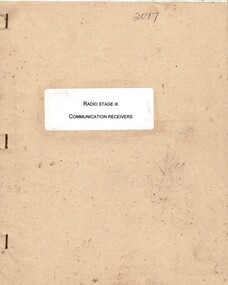
Manual, Marconi School of Wireless, Radio Stage 3, Communication Receivers
... Radio Stage 3, Communication Receivers...Typed on the label reads Radion Stage 111 Communication Receivers. The manual is held together with three metal staples down the left hand side....Radio Stage 3, Communication Receivers Manual Marconi School of Wireless ...A cream coloured cardboard cover with a white label on the front. Typed on the label reads Radion Stage 111 Communication Receivers. The manual is held together with three metal staples down the left hand side. manuals, radio stage, communication receivers -
 Whitehorse Historical Society Inc.
Functional object - Post Box
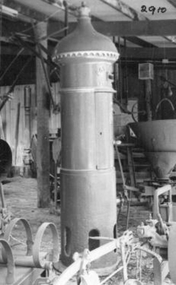
... Receiver was obtained from Supply Branch of Telecom Australia. ...Alternative Name: Letter Receiver Large round cast iron Letter Receiver surmounted with a gold crown on domes to pointed top. ...Cast into Receiver - POST OFFICE / Letter Receiver In door - transfer with crown and E11R...Receiver was obtained from Supply Branch of Telecom Australia. ...Receiver was obtained from Supply Branch of Telecom Australia. It was located by Harold Bakes (early member of the Nunawading Historical Society) at the Hawthorn Line depot and Society purchased. It was stored at the former City of Nunawading Depot in Station Street, Nunawading. It was noticed by Postal Services when they were building the Nunawading Mail Exchange and loaned to them whilst it remained in the City of Nunawading at the Mail Exchange. The had it refurbished and it stood in the Mail Exchange vestibule. When the exchange closed it was taken to Dandenong. It took much negotiation before it was returned to the Society. Alternative Name: Letter Receiver Large round cast iron Letter Receiver surmounted with a gold crown on domes to pointed top. Top has a gold cast iron fancy fringe and below on the main body a further gold plain fringe. Door follows the contour of the round receiver and cover about on of the body. Handle of door is in shape of a fist painted gold. Receiver is mounted on a cast iron base (could have been all cast together) approx 3/8 of the overall height of 250cm. Receiver is painted Pillar Box Red - base which is placed in ground is mid green. From a similar Receiver installed near the Prahran Railway it would appear that half of the base is above ground. Station It has five oblong holes. Cast into the body between the two fringes are a letter opening and two words POST OFFICE and Receiving Pillar. Cast into Receiver - POST OFFICE / Letter Receiver In door - transfer with crown and E11R communication, postal, historical society -
 University of Melbourne, School of Chemistry
Receivers
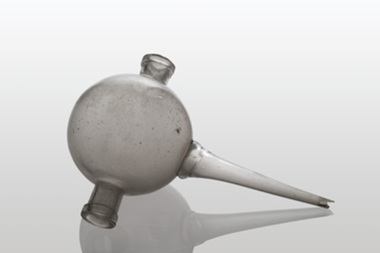
... Receivers...Receivers, 2 Tubular and quill. (Gall. Cat. No 460.)...Receivers ...Receivers, 2 Tubular and quill. (Gall. Cat. No 460.) -
 Nhill Aviation Heritage Centre
Radio Receiver Type C55184, c1940
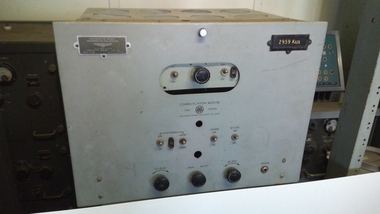
... Multiples of these receivers were set on different frequencies and mounted in the racks. ...AWA Radio Receiver, Grey colour has four control knobs six toggle switches one ear phone jack and metal tag holder for frequency setting card, ...Y5/13 Communications Receiver Type R20 Serial numbers 575, 118, 81, 591. ...Multiples of these receivers were set on different frequencies and mounted in the racks. ...Multiples of these receivers were set on different frequencies and mounted in the racks. Radio units of this type were used in the Aeradio building AWA Radio Receiver, Grey colour has four control knobs six toggle switches one ear phone jack and metal tag holder for frequency setting card, Department of Civil Aviation Commonwealth of Australia DCA indent No. Y5/13 Communications Receiver Type R20 Serial numbers 575, 118, 81, 591. Made by AWA Ltd -
 Moorabbin Air Museum
Document (Item) - Standard Adjustment Criteria For Airborne Localizer And Glide Slope Receivers
... Standard Adjustment Criteria For Airborne Localizer And Glide Slope Receivers...Radio Technical Commission For Aeronautics Washington 25, DC Standard Adjustment Criteria For Airborne Localizer And Glide Slope Receivers Document Standard Adjustment Criteria For Airborne Localizer And Glide Slope Receivers ...Radio Technical Commission For Aeronautics Washington 25, DC -
Moorabbin Air Museum
Document (Item) - Standard Procedure For The Measurement Of Radio-Frequency Radiation From Aviation Radio Receivers Operating Within The Radio Frequency Range Of 30-890 MC/S, Standard Procedure For The Measurement Of Radio-Frequency From Aviation Radio Receivers Operating Within The Radio Frequency Range Of 30-890MC/S
... Standard Procedure For The Measurement Of Radio-Frequency From Aviation Radio Receivers Operating Within The Radio Frequency Range Of 30-890MC/S ...Standard Procedure For The Measurement Of Radio-Frequency From Aviation Radio Receivers Operating Within The Radio Frequency Range Of 30-890MC/S Document Standard Procedure For The Measurement Of Radio-Frequency Radiation From Aviation Radio Receivers Operating Within The Radio Frequency Range Of 30-890 MC/S ... -
 Department of Energy, Environment and Climate Action
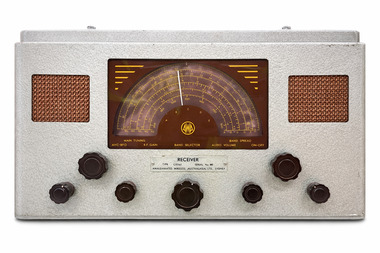
Audio - AWA Type C55163 radio receiver
... metal encased radio receiver with removable protective metal cover for face...RECEIVER; TYPE C55163; SERIAL No. 192; AMALGAMATED WIRELESS (AUSTRALASIA) LTD., SYDNEY ...Used by the Forests Commission's radio technicians for testing transmitters RECEIVER; TYPE C55163; SERIAL No. 192; AMALGAMATED WIRELESS (AUSTRALASIA) LTD., SYDNEY metal encased radio receiver with removable protective metal cover for face Audio AWA Type C55163 radio receiver ...Used by the Forests Commission's radio technicians for testing transmitters metal encased radio receiver with removable protective metal cover for face RECEIVER; TYPE C55163; SERIAL No. 192; AMALGAMATED WIRELESS (AUSTRALASIA) LTD., SYDNEY -
 Department of Energy, Environment and Climate Action
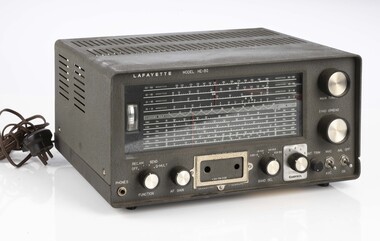
Lafayette Radio Receiver
... This Lafayette radio receiver (model HE-30) is a basic single conversion tube semi-professional short wave communications receiver. ...Lafayette Radio Receiver...This Lafayette radio receiver (model HE-30) is a basic single conversion tube semi-professional short wave communications receiver. ...This Lafayette radio receiver (model HE-30) is a basic single conversion tube semi-professional short wave communications receiver. It covers 0.55 to 30 MHz in four bands. The multi-frequency bands was used on an experimental basis in FCV Divisional Offices to monitor district radio transmissions. Used on an experimental basis to monitor fire radio traffic Lafayette Radio Receiver HE-30 AM-CW-SSB forests commission victoria (fcv), radios -
 Mont De Lancey
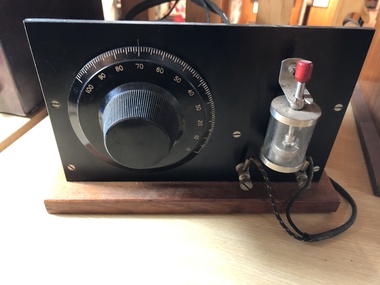
Wireless Receiver, 1923
... Crystal wireless receiver and head phones. Using Galena crystal cat-whiskers detector, on a wooden base....Receiver:- 'Using Galena Crystal Cat - Whisker Detector' Headphones:- 'Superior - BBC Patents ready'...Crystal Receiving sets Receiver:- 'Using Galena Crystal Cat - Whisker Detector' Headphones:- 'Superior - BBC Patents ready' Crystal wireless receiver and head phones. ...Restored by Mr. Perce Sebire, 1923 and in working order. Crystal wireless receiver and head phones. Using Galena crystal cat-whiskers detector, on a wooden base. Receiver:- 'Using Galena Crystal Cat - Whisker Detector' Headphones:- 'Superior - BBC Patents ready' crystal receiving sets -
 Department of Energy, Environment and Climate Action
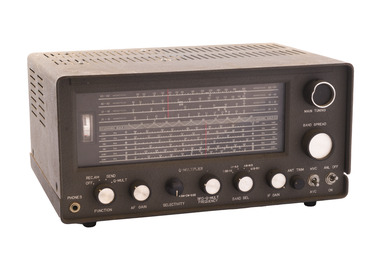
Lafayette Radio Receiver, Lafayette Radio & TV Corp; New York (NY), Model HE-30, C 1961
... This Lafayette radio receiver (model HE-30) is a basic single conversion tube semi-professional short wave communications receiver. ...Lafayette Radio Receiver HE-30 With operating manual...This Lafayette radio receiver (model HE-30) is a basic single conversion tube semi-professional short wave communications receiver. ...This Lafayette radio receiver (model HE-30) is a basic single conversion tube semi-professional short wave communications receiver. It covers 0.55 to 30 MHz in four bands. The multi-frequency bands was used on an experimental basis in FCV Divisional Offices to monitor district radio transmissions. Used on an experimental basis to monitor fire radio traffic Lafayette Radio Receiver HE-30 With operating manual radios, forests commission victoria (fcv) -
4th/19th Prince of Wales's Light Horse Regiment Unit History Room
Radio Set RS 510, AWA, 1957
... Manpack portable HF transmitter/receiver consisting of two main units mounted in webbing pouches (worn in place of 1937 pattern infantry basic pouches). ...Transmitter No 885, Receiver No 885 ...Equipment used by the Regiment radio manpack awa 510 Transmitter No 885, Receiver No 885 Manpack portable HF transmitter/receiver consisting of two main units mounted in webbing pouches (worn in place of 1937 pattern infantry basic pouches). ...Equipment used by the Regiment Manpack portable HF transmitter/receiver consisting of two main units mounted in webbing pouches (worn in place of 1937 pattern infantry basic pouches). Crystal controlled radio for use in areas where VHF radio not viable, eg jungle. Operating range 3 to 5 miles The radio and all equipment comes in a wooden transit case Transmitter No 885, Receiver No 885 radio, manpack, awa, 510 -
 Queenscliffe Maritime Museum
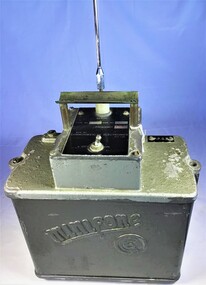
Equipment - Telephone, Radio Receiver and Transmitter, Commonwealth Electronics Pty Ltd
... A portable radio receiver and VHF transmitter used by the Sea Pilot Service. ...Miniphone radio receiver / transmitter and carry bag ...A portable radio receiver and VHF transmitter used by the Sea Pilot Service. ...A portable radio receiver and VHF transmitter used by the Sea Pilot Service. An early model used from about 1956 for ship-to-ship and ship-to-shore communication during arrival and departure procedures. Used by the Port Phillip Pilot service in the 1950s Miniphone radio receiver / transmitter and carry bag MFD by Commonwealth Electronics Pty Ltd Type No 180TRN Serial No 184 communication, radio receiver and transmitter -
 Deaf Children Australia
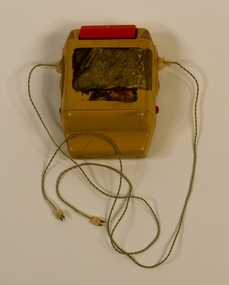
FM Phonic Ear, Phonic Ear, Inc, Manufactured in 1965
... This aid was also an FM receiver so the child could clearly hear the teachers' voice. ...Beige FM Receiver with red plug-in crystal module (colour coded for frequency) and two leads on either side for hearing aids. ..."MODEL/HC 421 R/STEREO/AUDITORY TRAINER/FM/CERTIFICATION/THIS RECEIVER COMPLIES/ WITH FCC RULES PART 15/OPERATION IS SUBJECT/TO THE CONDITION THAT/ THE DEVICE WILL NOT/CAUSE HARMFUL INTER-/FERENCE AND THAT THE/DEVICE MUST ACCEPT ANY/INTERFERENCE THAT/MAY BE RECEIVED, INCL-UDING INTERFERENCE/THAT MAY CAUSE UN-/DESIFED OPERATION....This aid was also an FM receiver so the child could clearly hear the teachers' voice. ...The Phonic Ear hearing aids were actually auditory trainers for children in school. This aid was also an FM receiver so the child could clearly hear the teachers' voice. This was used by the student to receive the teachers' transmissions. For more information see: http://www.hearingaidmuseum.com/gallery/Miscellaneous/Assistive%20Devices/Phonic%20Ear/info/phonicearfmsystem.htm Beige FM Receiver with red plug-in crystal module (colour coded for frequency) and two leads on either side for hearing aids. This would have been used by the student to receive the teachers transmissions. Masking tape on front, obscuring name, writing on tape faded. "MODEL/HC 421 R/STEREO/AUDITORY TRAINER/FM/CERTIFICATION/THIS RECEIVER COMPLIES/ WITH FCC RULES PART 15/OPERATION IS SUBJECT/TO THE CONDITION THAT/ THE DEVICE WILL NOT/CAUSE HARMFUL INTER-/FERENCE AND THAT THE/DEVICE MUST ACCEPT ANY/INTERFERENCE THAT/MAY BE RECEIVED, INCL-UDING INTERFERENCE/THAT MAY CAUSE UN-/DESIFED OPERATION./PHONIC EAR/MODEL HC 421 R/TYPE GODKENOT/ deaf children australia, hearing aid, auditory training device, phonic ear -
 Frankston RSL Sub Branch
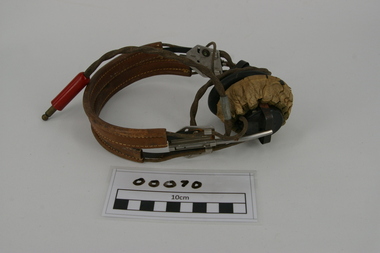
Communications Head Set
... Consists of two earpiece receivers attached to a head band with a flexible cable for connection. ...The ear receivers have the following, 'ANB-H-1 MADE IN USA BY UTAH-CHICAGO'...Consists of two earpiece receivers attached to a head band with a flexible cable for connection. ...Head set used for communications equipment. Consists of two earpiece receivers attached to a head band with a flexible cable for connection. The cable terminates in a two pole line plug. The earpices have a protective rubber shroud and one has a cloth cover. The ear receivers have the following, 'ANB-H-1 MADE IN USA BY UTAH-CHICAGO' radio, ww2, communications, headphones, radio, ww2, communications, headphones -
 University of Melbourne, School of Chemistry
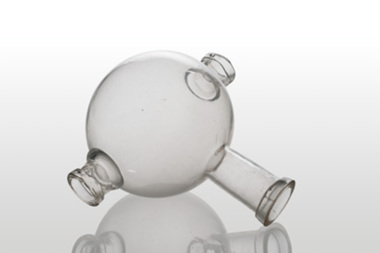
Receivers
... Receivers...Receivers ... -
 Nhill Aviation Heritage Centre
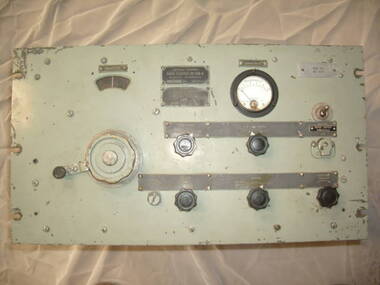
Equipment - Radio Receiver BC-639A, 1940-1949
... This system used the ARl7 receiver and ATl7 transmitter. Many of the sets had been modified after the war by the then Dept of Civil Aviation for use as monitoring receivers....The BC-639A is a ground based AM VHF receiver covering the nominal frequency range of 100 -156 m/cs. ...This system used the ARl7 receiver and ATl7 transmitter. Many of the sets had been modified after the war by the then Dept of Civil Aviation for use as monitoring receivers. ...The BC-639A is a ground based AM VHF receiver covering the nominal frequency range of 100 -156 m/cs. The set was built for the U.S. Army Air Force in WW2 as part of a communication system to communicate with aircraft. A system of similar intent was built in Australia during WW2 by Radio Corporation of Victoria (ASTOR), with the addition of FM facilities. This system used the ARl7 receiver and ATl7 transmitter. Many of the sets had been modified after the war by the then Dept of Civil Aviation for use as monitoring receivers. This type was used at the Aeradio The BC-639A is a ground based AM VHF receiver covering the nominal frequency range of 100 -156 m/cs. The set was built for the U.S. Army Air Force in WW2 as part of a communication system to communicate with aircraft. Dark grey US Military colour radio receiver, bc 639, bc 639a, 639, aeradio -
 Parks Victoria - Wilsons Promontory Lightstation
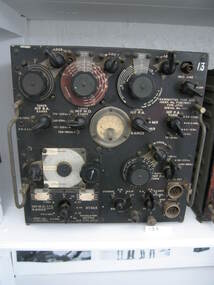
Radio
... This is an AT5 MF/HF 50 watts radio transmitter with black face and multiple dials and switches; There is also an AR8 radio receiver with a brown face and various dials and switches; and an AT5 radio aerial coupling unit with black face and dials and switches in the WP collection. ...Radio receiver, grey metal face with multiple dials & switches...The units will have first level contributory significance if it is confirmed they were used at the Wilsons Promontory Radar Station. Radio receiver, grey metal face with multiple dials & switches Radio ...Type used by RAAF Radar station at Wilsons Promontory Lightstation (RS 14) for backup communications 1942 - 1946. This is an AT5 MF/HF 50 watts radio transmitter with black face and multiple dials and switches; There is also an AR8 radio receiver with a brown face and various dials and switches; and an AT5 radio aerial coupling unit with black face and dials and switches in the WP collection. They functioned as a set and were manufactured in 1938 at the Ashfield, Sydney workshop of AWA (Amalgamated Wireless Australasia Ltd, later AWA Ltd), Australia’s largest electronics manufacturer and broadcaster. They are rare outside Australia as they were seldom exported to other air forces, and remained in service until the late 1950s. An AT5 transmitter and AT5 coupling unit are held in Sydney’s Powerhouse Museum.The three units in the Wilsons Promontory Museum were deployed by the RAAF in WWII and represent the types of communications equipment used at the 14 Radar Station, Wilsons Promontory. It is not known, however if these particular examples were used at the lightstation and are part of the same set. They have interpretive relevance to the collection, but their significance to the lightstation is dependent on whether they have a direct historical association with the radar station that operated there. The units will have first level contributory significance if it is confirmed they were used at the Wilsons Promontory Radar Station. Radio receiver, grey metal face with multiple dials & switches -
 Kiewa Valley Historical Society
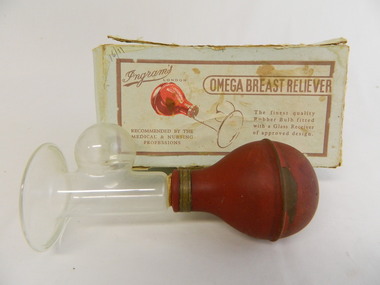
Breast Reliever - Omega - Medical
... Inside is a rubber bulb pump attached to a clear glass 'receiver'. The glass is a cylinder opening to an almost flat wide circular disc. ...Label: (Top Left):'Ingram's / London' / (On the right): 'Omega Breast Reliever / The finest quality / Rubber Bulb fitted / with a Glass Receiver / of approved design.' (Bottom left): Recommended by the / Medical & Nursing / Professions On rubber: Ingram's / London / Omega...Inside is a rubber bulb pump attached to a clear glass 'receiver'. The glass is a cylinder opening to an almost flat wide circular disc. ...This medical / hospital instrument was used in the Tawonga District General Hospital which was built in the 1950's specifically for the increase in population due to the Kiewa Hydro Scheme. Historical: Shows the development of scientific hospital equipment. Provenance: Used in the Tawonga District General Hospital which was remote and therefore required good equipment. Good condition and good interpretation capacity. Cardboard box with a label on the lid. Inside is a rubber bulb pump attached to a clear glass 'receiver'. The glass is a cylinder opening to an almost flat wide circular disc. On one side of the cylinder is a sphere opening to the cylinder presumably where the milk is collected. Label: (Top Left):'Ingram's / London' / (On the right): 'Omega Breast Reliever / The finest quality / Rubber Bulb fitted / with a Glass Receiver / of approved design.' (Bottom left): Recommended by the / Medical & Nursing / Professions On rubber: Ingram's / London / Omega omega breast reliever, baby's feeding, breast feeding, medical, nursing -
 Department of Energy, Environment and Climate Action
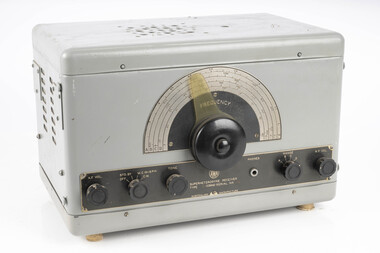
AWA Superheterodyne receiver
... AWA Receiver...Bushfire Radios Forests Commission Victoria (FCV) Type IC 9640 AWA Receiver AWA Superheterodyne receiver ...After the 1939 bushfires, the Forests Commission Victoria invested heavily in a radically new communications network. After suffering some inevitable delays due to the war, radio VL3AA switched into full operation in October 1945 proudly beaming out 200 watts across the State. But by today’s standards, the technology was primitive and the reception poor unless the user was on a high point somewhere. The radio signal was "line-of-sight" and bounced between fire towers and relay transmitters across the mountains back to the District offices. The advent of solid-state electronics in the 1960s replaced the more delicate valve sets which enabled greater use of vehicle mounted radios. The Commission continued to research, develop and build new radios at its many workshops around Victoria. The network was supported by a large team of skilled radio technicians. The more secure and versatile State Mobile Radio (SMR) digital trunk system came into operation in about 1995. Upgraded Tait Radios were purchased in 2014 after recommendations of the 2009 Bushfires Royal Commission. But it was the convergence of separate technologies such as 5G mobile phones, high-capacity and light-weight lithium batteries, Wi-Fi, the ever-expanding internet, cloud data storage, digital cameras, GPS, personal organisers and hundreds of supporting Apps into powerful smartphones and tablets which revolutionised bushfire communications from the mid-2000s. AWA Receiver Type IC 9640 bushfire, radios, forests commission victoria (fcv) -
 Bendigo Military Museum
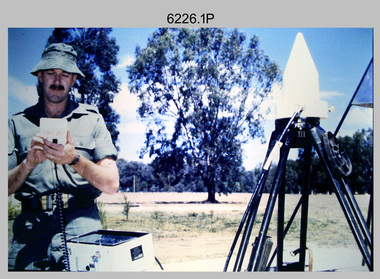
Photograph - Demonstration of TI4100 GPS Receiver, Royal Australian Survey Corps, c1988
... Demonstration of TI4100 GPS Receiver, Royal Australian Survey Corps....Texas Instruments TI4100 portable Global Positioning System (GPS) geodetic receivers were introduced from 1986–1988. The GPS receivers and Ferranti FILS3 helicopter and vehicle mounted Inertial Positioning System (IPS) replaced the TRANSIT satellite receivers. ...Colour photos are on 35mm slide film and were scanned at 96 dpi. .1) to .4) - Photo, colour, c1988, WO2 Graham Ragless demonstrating the operation of a TI4100 GPS receiver...Texas Instruments TI4100 portable Global Positioning System (GPS) geodetic receivers were introduced from 1986–1988. The GPS receivers and Ferranti FILS3 helicopter and vehicle mounted Inertial Positioning System (IPS) replaced the TRANSIT satellite receivers. ...This is a set of four photographs of WO2 Graham Ragless from the Royal Australian Survey Corps demonstrating the operation of Global Positioning System equipment in c1988. The photos were probably taken at the School of Military Survey (SMS), Bonegilla, VIC. Texas Instruments TI4100 portable Global Positioning System (GPS) geodetic receivers were introduced from 1986–1988. The GPS receivers and Ferranti FILS3 helicopter and vehicle mounted Inertial Positioning System (IPS) replaced the TRANSIT satellite receivers. The equipment was deployed to establish the baseline for a GPS controlled air camera and photogrammetric system to significantly reduce the requirement for ground survey to accurately control air photography for topographic mapping. Personnel from the four field survey squadrons at this time were trained at the SMS to operate the TI4100 receivers. Field survey operations using GPS and IPS equipment followed in the late 1980s. This technology is described in more detail in the RA Svy booklet titled An Introduction to Topographic Mapping. See record ID - 6010. WO2 Graham Ragless progressed to the rank of WO1 and was appointed as RSM of the Army Survey Regiment from 1990 to 1992. Refer to item 6186.2P for more photographs of WO2 Graham Ragless demonstrating the TI4100. This is a set of four photographs of a technician from the Royal Australian Survey Corps demonstrating the operation of Global Positioning System equipment in c1988. Colour photos are on 35mm slide film and were scanned at 96 dpi. .1) to .4) - Photo, colour, c1988, WO2 Graham Ragless demonstrating the operation of a TI4100 GPS receiver There are no annotations. royal australian survey corps, rasvy, army survey regiment, army svy regt, fortuna, asr, surveying -
 Bendigo Military Museum
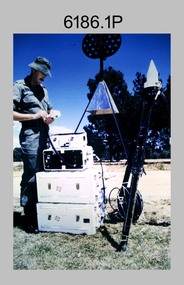
Photograph - Demonstration of TI4100 GPS Receiver, Royal Australian Survey Corps, c1988
... Demonstration of TI4100 GPS Receiver, Royal Australian Survey Corps....Texas Instruments TI4100 portable Global Positioning System (GPS) geodetic receivers were introduced from 1986–1988. The GPS receivers and Ferranti FILS3 helicopter and vehicle mounted Inertial Positioning System (IPS) replaced the TRANSIT satellite receivers. ...Colour photos are on 35mm slide film and were scanned at 96 dpi. .1) and .2) - Photo, colour, c1988, WO2 Graham Ragless demonstrating the operation of a TI4100 GPS receiver...Texas Instruments TI4100 portable Global Positioning System (GPS) geodetic receivers were introduced from 1986–1988. The GPS receivers and Ferranti FILS3 helicopter and vehicle mounted Inertial Positioning System (IPS) replaced the TRANSIT satellite receivers. ...This is a set of two photographs of WO2 Graham Ragless from the Royal Australian Survey Corps demonstrating the operation of Global Positioning System equipment in c1988. The photos were probably taken at the School of Military Survey (SMS), Bonegilla, VIC. Texas Instruments TI4100 portable Global Positioning System (GPS) geodetic receivers were introduced from 1986–1988. The GPS receivers and Ferranti FILS3 helicopter and vehicle mounted Inertial Positioning System (IPS) replaced the TRANSIT satellite receivers. The equipment was deployed to establish the baseline for a GPS controlled air camera and photogrammetric system to significantly reduce the requirement for ground survey to accurately control air photography for topographic mapping. Personnel from the four field survey squadrons at this time were trained at the SMS to operate the TI4100 receivers. Field survey operations using GPS and IPS equipment followed in the late 1980s. This technology is described in more detail in the RA Svy booklet titled An Introduction to Topographic Mapping. See record ID - 6010. WO2 Graham Ragless progressed to the rank of WO1 and was appointed as RSM of the Army Survey Regiment from 1990 to 1992. Refer to item 6226.4P for more photographs of WO2 Graham Ragless demonstrating the TI4100. This is a set of two photographs of a technician from the Royal Australian Survey Corps demonstrating the operation of Global Positioning System equipment in c1988. Colour photos are on 35mm slide film and were scanned at 96 dpi. .1) and .2) - Photo, colour, c1988, WO2 Graham Ragless demonstrating the operation of a TI4100 GPS receiver There are no annotations. royal australian survey corps, rasvy, army survey regiment, army svy regt, fortuna, asr, surveying -
 Department of Energy, Environment and Climate Action
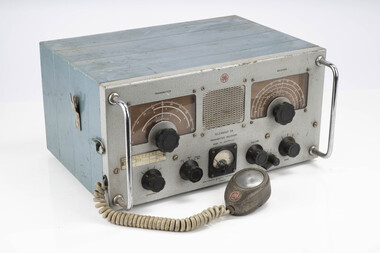
AWA Transmitter / Receiver
... AWA Teleradio Transmitter / Receiver ...Bushfire Radios Forests Commission Victoria (FCV) Teleradio 5A AWA Teleradio Transmitter / Receiver AWA Transmitter / Receiver ...After the 1939 bushfires, the Forests Commission Victoria invested heavily in a radically new communications network. After suffering some inevitable delays due to the war, radio VL3AA switched into full operation in October 1945 proudly beaming out 200 watts across the State. But by today’s standards, the technology was primitive and the reception poor unless the user was on a high point somewhere. The radio signal was "line-of-sight" and bounced between fire towers and relay transmitters across the mountains back to the District offices. The advent of solid-state electronics in the 1960s replaced the more delicate valve sets which enabled greater use of vehicle mounted radios. The Commission continued to research, develop and build new radios at its many workshops around Victoria. The network was supported by a large team of skilled radio technicians. The more secure and versatile State Mobile Radio (SMR) digital trunk system came into operation in about 1995. Upgraded Tait Radios were purchased in 2014 after recommendations of the 2009 Bushfires Royal Commission. But it was the convergence of separate technologies such as 5G mobile phones, high-capacity and light-weight lithium batteries, Wi-Fi, the ever-expanding internet, cloud data storage, digital cameras, GPS, personal organisers and hundreds of supporting Apps into powerful smartphones and tablets which revolutionised bushfire communications from the mid-2000s. AWA Teleradio Transmitter / Receiver Teleradio 5A bushfire, radios, forests commission victoria (fcv) -
 Department of Energy, Environment and Climate Action
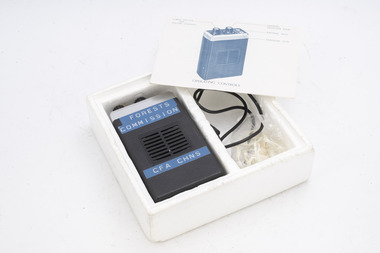
Monita-Mini FM communications receiver MR-2G
... Radio receiver in box and packaging...Bushfire Radios Forests Commission Victoria (FCV) Forests Commission CFA Chns Radio receiver in box and packaging Monita-Mini FM communications receiver MR-2G ...After the 1939 bushfires, the Forests Commission Victoria invested heavily in a radically new communications network. After suffering some inevitable delays due to the war, radio VL3AA switched into full operation in October 1945 proudly beaming out 200 watts across the State. But by today’s standards, the technology was primitive and the reception poor unless the user was on a high point somewhere. The radio signal was "line-of-sight" and bounced between fire towers and relay transmitters across the mountains back to the District offices. The advent of solid-state electronics in the 1960s replaced the more delicate valve sets which enabled greater use of vehicle mounted radios. The Commission continued to research, develop and build new radios at its many workshops around Victoria. The network was supported by a large team of skilled radio technicians. The more secure and versatile State Mobile Radio (SMR) digital trunk system came into operation in about 1995. Upgraded Tait Radios were purchased in 2014 after recommendations of the 2009 Bushfires Royal Commission. But it was the convergence of separate technologies such as 5G mobile phones, high-capacity and light-weight lithium batteries, Wi-Fi, the ever-expanding internet, cloud data storage, digital cameras, GPS, personal organisers and hundreds of supporting Apps into powerful smartphones and tablets which revolutionised bushfire communications from the mid-2000s. Radio receiver in box and packaging Forests Commission CFA Chns bushfire, radios, forests commission victoria (fcv) -
4th/19th Prince of Wales's Light Horse Regiment Unit History Room
Radio, CPRC-26, Rogers Majestic, 1954
... VHF Man pack transmitter/receiver...radio No 22615 VHF Man pack transmitter/receiver Radio, CPRC-26 Rogers Majestic ...VHF Man pack transmitter/receiver No 22615 radio -
 Department of Energy, Environment and Climate Action
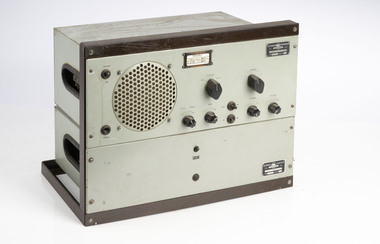
Astor Radio Receiver
... Astor radio receiver type RG19...Bushfire Radios Forests Commission Victoria (FCV) Astor radio receiver type RG19 Astor Radio Receiver ...After the 1939 bushfires, the Forests Commission Victoria invested heavily in a radically new communications network. After suffering some inevitable delays due to the war, radio VL3AA switched into full operation in October 1945 proudly beaming out 200 watts across the State. But by today’s standards, the technology was primitive and the reception poor unless the user was on a high point somewhere. The radio signal was "line-of-sight" and bounced between fire towers and relay transmitters across the mountains back to the District offices. The advent of solid-state electronics in the 1960s replaced the more delicate valve sets which enabled greater use of vehicle mounted radios. The Commission continued to research, develop and build new radios at its many workshops around Victoria. The network was supported by a large team of skilled radio technicians. The more secure and versatile State Mobile Radio (SMR) digital trunk system came into operation in about 1995. Upgraded Tait Radios were purchased in 2014 after recommendations of the 2009 Bushfires Royal Commission. But it was the convergence of separate technologies such as 5G mobile phones, high-capacity and light-weight lithium batteries, Wi-Fi, the ever-expanding internet, cloud data storage, digital cameras, GPS, personal organisers and hundreds of supporting Apps into powerful smartphones and tablets which revolutionised bushfire communications from the mid-2000s. Astor radio receiver type RG19 bushfire, radios, forests commission victoria (fcv) -
 Heyfield & Districts Historical Society
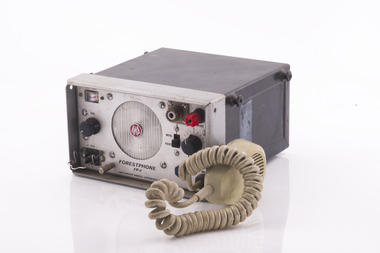
Equipment - AWA FORESTPHONE FP-1 portable transmitter-receiver, Amalgamated Wireless Australasia (AWA), AWA FP-1
... Transmitter-receiver Forest Phone FP-1 ...No 550 AMALGAMATED WIRELESS (AUSTRALASIA) LTD. Transmitter-receiver Forest Phone FP-1 AWA FP-1 Equipment AWA FORESTPHONE FP-1 portable transmitter-receiver Amalgamated Wireless Australasia (AWA) ...In the mid 1960s, Amalgamated Wireless Australasia (AWA) was asked to design a solid-state replacement for the PYE TRP-1 in collaboration with the FCV. The new transceiver was to be more powerful than the TRP-1, with an output power of about 10-12W (compared to 1.5-2W). The set also had to be capable of being used as a walkie-talkie, as well as being suitable for use in a vehicle The FP-1 is a single channel radio that has a crystal for each channel, and an IF frequency of 45 5khz. The receive crystal is 455khz higher than the transmit crystal. It is completely transistorised, and uses AWA and RCA brand transistors. A later version was called the FP5 and had five channels. Introduced to the FCV in the mid 1960s Transmitter-receiver Forest Phone FP-1 TYPE No 1N63609 SER. No 550 AMALGAMATED WIRELESS (AUSTRALASIA) LTD. radios, forests commission victoria (fcv) -
 Department of Energy, Environment and Climate Action
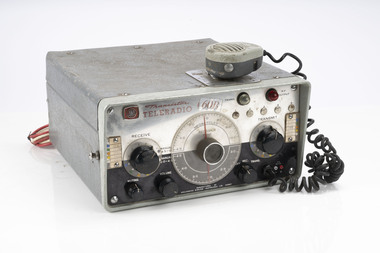
AWA Teleradio 60B
... AWA Teleradio Transmitter / Receiver Used in FCV vehicles...Bushfire Radios Forests Commission Victoria (FCV) Type ING 1355 AWA Teleradio Transmitter / Receiver Used in FCV vehicles AWA Teleradio 60B ...After the 1939 bushfires, the Forests Commission Victoria invested heavily in a radically new communications network. After suffering some inevitable delays due to the war, radio VL3AA switched into full operation in October 1945 proudly beaming out 200 watts across the State. But by today’s standards, the technology was primitive and the reception poor unless the user was on a high point somewhere. The radio signal was "line-of-sight" and bounced between fire towers and relay transmitters across the mountains back to the District offices. The advent of solid-state electronics in the 1960s replaced the more delicate valve sets which enabled greater use of vehicle mounted radios. The Commission continued to research, develop and build new radios at its many workshops around Victoria. The network was supported by a large team of skilled radio technicians. The more secure and versatile State Mobile Radio (SMR) digital trunk system came into operation in about 1995. Upgraded Tait Radios were purchased in 2014 after recommendations of the 2009 Bushfires Royal Commission. But it was the convergence of separate technologies such as 5G mobile phones, high-capacity and light-weight lithium batteries, Wi-Fi, the ever-expanding internet, cloud data storage, digital cameras, GPS, personal organisers and hundreds of supporting Apps into powerful smartphones and tablets which revolutionised bushfire communications from the mid-2000s. AWA Teleradio Transmitter / Receiver Used in FCV vehicles Type ING 1355 bushfire, radios, forests commission victoria (fcv) -
 Department of Energy, Environment and Climate Action
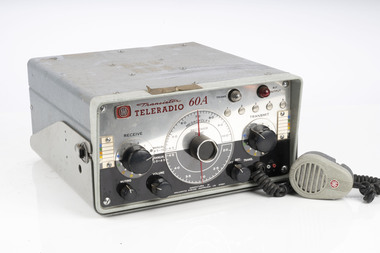
AWA Teleradio 60A (similar to item A/101)
... AWA Teleradio Transmitter / Receiver Used in FCV vehicles...Bushfire Radios Forests Commission Victoria (FCV) Type ING 1355 AWA Teleradio Transmitter / Receiver Used in FCV vehicles AWA Teleradio 60A (similar to item A/101) ...After the 1939 bushfires, the Forests Commission Victoria invested heavily in a radically new communications network. After suffering some inevitable delays due to the war, radio VL3AA switched into full operation in October 1945 proudly beaming out 200 watts across the State. But by today’s standards, the technology was primitive and the reception poor unless the user was on a high point somewhere. The radio signal was "line-of-sight" and bounced between fire towers and relay transmitters across the mountains back to the District offices. The advent of solid-state electronics in the 1960s replaced the more delicate valve sets which enabled greater use of vehicle mounted radios. The Commission continued to research, develop and build new radios at its many workshops around Victoria. The network was supported by a large team of skilled radio technicians. The more secure and versatile State Mobile Radio (SMR) digital trunk system came into operation in about 1995. Upgraded Tait Radios were purchased in 2014 after recommendations of the 2009 Bushfires Royal Commission. But it was the convergence of separate technologies such as 5G mobile phones, high-capacity and light-weight lithium batteries, Wi-Fi, the ever-expanding internet, cloud data storage, digital cameras, GPS, personal organisers and hundreds of supporting Apps into powerful smartphones and tablets which revolutionised bushfire communications from the mid-2000s. AWA Teleradio Transmitter / Receiver Used in FCV vehicles Type ING 1355 bushfire, radios, forests commission victoria (fcv) -
 Port Melbourne Historical & Preservation Society
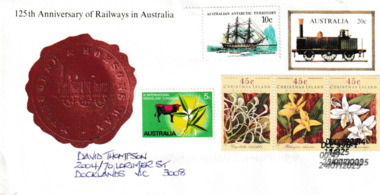
Souvenir - Commemorative envelope for 125th Anniversary of Railways in Australia, 1979
... On bottom left address of receiver when donated....On bottom left address of receiver when donated. The envelope was produced in 1979 to commemorate the 125 Anniversary of Railways in Australia. ...The envelope was produced in 1979 to commemorate the 125 Anniversary of Railways in Australia. This cream envelope has an imprinted stamp on the upper right and a large red imprinted seal on the left. Within in the seal are the words 'Melbourne & Hobsons Bay' & an imprint of a 1854 stream train. The Melbourne & Hobson's Bay Railway company built and operated the first railway line from Flinders Street to Sandridge (now Port Melbourne). There are also later stamps on the envelope celebrating Christmas island flowers, International Grassland Conference and Australian Antarctic Territory. On reverse name & address of original owner. On bottom left address of receiver when donated. transport - railways, celebrations fetes and exhibitions -
 Victoria Police Museum
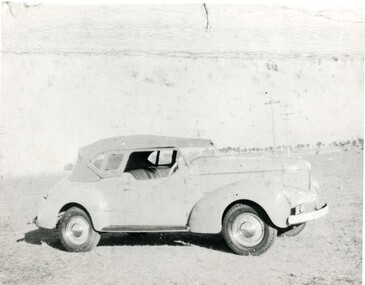
Photograph (police car), Kodak
... Section car 50 with receiver only, circa 1942...Section car 50 with receiver only, circa 1942 Photograph (police car) Kodak ...Willys M.T.S. Section car 50 with receiver only, circa 1942 Photo: Clare Brown police vehicles; transport branch; wireless patrol; motor police branch; willys car
