
Showing 30344 items matching "record"
-
 Ballarat Heritage Services
Booklet, Public Record Office Victoria, Public Record Office Central Highlands Region of Victoria List of Holdings, 1984, 02/1984/
... Public Record Office Central Highlands Region of Victoria List of Holdings, 1984...Public Record Office Victoria has a branch in Ballarat. ...Yellow covered booklet with holdings at the the Ballarat branch of the Public Record Office. ...Public Record Office Victoria...Public Record Office Victoria has a branch in Ballarat. ...Public Record Office Victoria has a branch in Ballarat. This listing is pre the computrised lisitng of the Central Highlands material. Yellow covered booklet with holdings at the the Ballarat branch of the Public Record Office. public record office victoria, prov, avoca, ararat, lexton, ripon, talbot, clunes, ballarat, grenville, daylesford, gelnlyon, bungaree, ballan, sebastopol, buninyong, creswick -
 Victorian Aboriginal Corporation for Languages
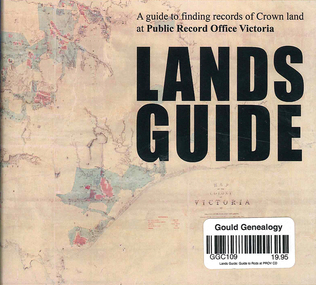
CD-ROM, Public Record Office Victoria, Lands guide : a guide to finding records of Crown land at Public Record Office Victoria, 2009
... Lands guide : a guide to finding records of Crown land at Public Record Office Victoria...A Guide to finding records of Crown land at Public Records Office Victoria....Public Record Office Victoria...CD-ROM A Guide to finding records of Crown land at Public Records Office Victoria. ...A Guide to finding records of Crown land at Public Records Office Victoria.CD-ROM -
 Victorian Aboriginal Corporation for Languages
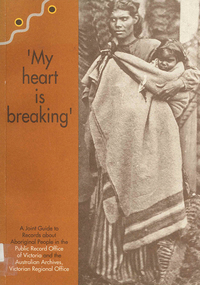
Book, Australian Archives et al, 'My heart is breaking' : a joint guide to records about Aboriginal people in the Public Record Office of Victoria and the Australian Archives, Victorian Regional Office, 1993
... 'My heart is breaking' : a joint guide to records about Aboriginal people in the Public Record Office of Victoria and the Australian Archives, Victorian Regional Office...For the early period, 1836-1859, the records are held in the Public Record Office of Victoria, and for the period 1860-1975, a substantial proportion are in the Australian Archives, Victorian Regional Office. ......Public Record Office Victoria...Australian Archives Public Record Office Victoria history sources b&w photographs, index, lists The records covered by this guide relate to Victoria's Aboriginal people until 1975 when the Commonwealth assumed the State's then responsibility for Aboriginal affairs. ...The records covered by this guide relate to Victoria's Aboriginal people until 1975 when the Commonwealth assumed the State's then responsibility for Aboriginal affairs. One result of the transfer of responsibility was that the official documents became separated. For the early period, 1836-1859, the records are held in the Public Record Office of Victoria, and for the period 1860-1975, a substantial proportion are in the Australian Archives, Victorian Regional Office. The object of this guide is to improve public knowledge of these records and to promote their use in the Aboriginal and general community.b&w photographs, index, listsaustralian archives, public record office victoria, history sources -
Canterbury History Group
Book, Public Record Office of Victoria et al, 'My heart is breaking' : a joint guide to records about Aboriginal people in the Public Record Office of Victoria and the Australian Archives, Victorian Regional Office, 1993
... 'My heart is breaking' : a joint guide to records about Aboriginal people in the Public Record Office of Victoria and the Australian Archives, Victorian Regional Office...For the early period, 1836-1859, the records are held in the Public Record Office of Victoria, and for the period 1860-1975, a substantial proportion are in the Australian Archives, Victorian Regional Office. ...Public Record Office of Victoria...For the early period, 1836-1859, the records are held in the Public Record Office of Victoria, and for the period 1860-1975, a substantial proportion are in the Australian Archives, Victorian Regional Office. ...Part 1 is a Guide to relevant holdings about aboriginal people of the PRO and Australian Archives. Part 2 is a compilation of material to illustrate the "richness and variety of the surviving record as well as the complementary nature of the two holdings".191 pages; Includes black and white photographs, indexes and bibliographynon-fictionPart 1 is a Guide to relevant holdings about aboriginal people of the PRO and Australian Archives. Part 2 is a compilation of material to illustrate the "richness and variety of the surviving record as well as the complementary nature of the two holdings".aboriginal peoples, australian archives -
 Whitehorse Historical Society Inc.
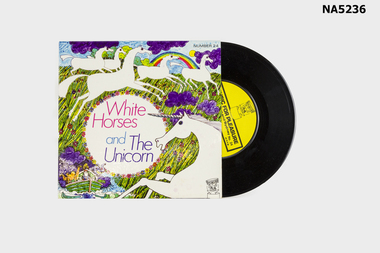
Leisure object - Record, White horses and the unicorn record, Unknown
... Record...White horses and the unicorn record...45 RPM record in a cardboard cover 'Music For Pleasure'...White Horses and the unicorn Music for pleasure London and Sydney No24 45 RPM record in a cardboard cover 'Music For Pleasure' White horses and the unicorn record Leisure object Record ...45 RPM record in a cardboard cover 'Music For Pleasure'White Horses and the unicorn Music for pleasure London and Sydney No24 -
 Slovenian Association Melbourne
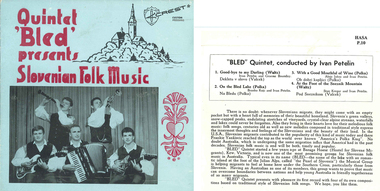
Record, Recorded by Quintet Bled
... Record...Record...Slovenian record by the Quintet Bled, playing and singing Slovenian music and singing Slovenian songs. ...Record cover decorated with the image of Lake Bled island church, photo of the band and Slovenian national flower, the carnation...Record Qunitet Bled Record cover decorated with the image of Lake Bled island church, photo of the band and Slovenian national flower, the carnation Slovenian record by the Quintet Bled, playing and singing Slovenian music and singing Slovenian songs. ...Slovenian record by the Quintet Bled, playing and singing Slovenian music and singing Slovenian songs. The members of the Quintet are: the leader Ivan Petelin, Branko Kojc, Graeme Bounday, Alojz jakša and Stan KregarRecord cover decorated with the image of Lake Bled island church, photo of the band and Slovenian national flower, the carnationrecord, qunitet bled -
Koorie Heritage Trust
Book, Public Record Office of Victoria, Victorian Aborigines 1835-1901 : a resource guide to the holdings of the Public Record Office, Victoria / prepared by the Public Record Office of Victoria, 1984
... Victorian Aborigines 1835-1901 : a resource guide to the holdings of the Public Record Office, Victoria / prepared by the Public Record Office of Victoria....Public Record Office of Victoria...Victorian Aborigines 1835-1901 : a resource guide to the holdings of the Public Record Office, Victoria / prepared by the Public Record Office of Victoria. ...Includes a brief history of the Board for the Protection of Aborigines (and its forerunners) and extracts from the papers of M. Sievewright, C.W. Sievewright (on a murder case), W. Thomas (on stone houses), W.A.P. Dana (on native police), E.S. Parker; (biography of Merringoondeet), P. Sohier (on phrenology); Coranderrk revolt; Lake Tyers; Ramahyuck64 p. : ill ; facsims, ports. ; 21 cm.Includes a brief history of the Board for the Protection of Aborigines (and its forerunners) and extracts from the papers of M. Sievewright, C.W. Sievewright (on a murder case), W. Thomas (on stone houses), W.A.P. Dana (on native police), E.S. Parker; (biography of Merringoondeet), P. Sohier (on phrenology); Coranderrk revolt; Lake Tyers; Ramahyuckphrenology. | public records -- victoria. | psychology - cognition - intelligence. | settlement and contacts - colonisation - 1788-1850. | settlement and contacts - colonisation - 1851- crime - against persons. | education. | government policy - initial period and protectionism - 1788-1850. | government policy - initial period and protectionism - 1851-1900. | government policy - state and territory - victoria. | settlement and contacts - government settlements, reserves. | law enforcement - police - native police. -
Kew Historical Society Inc
Book, Prof E W Russell, A Matter of Record: A history of Public Record Office Victoria, 2003
... A Matter of Record: A history of Public Record Office Victoria......Public Record Office Victoria...A Matter of Record: A history of Public Record Office Victoria Book Prof E W Russell Public Record Office Victoria ...xi, 227 p. : ill., ports. ; 25 cm.non-fictionvictoria - public record office - history, public records - victoria - history, archives - victoria - history -
 Broadmeadows Historical Society & Museum
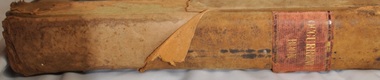
Document - RECORD BOOK, POLICE ACTIVITY RECORD BOOK BROADMEADOWS POLICE STATION 1927 - 1956
... POLICE ACTIVITY RECORD BOOK BROADMEADOWS POLICE STATION 1927 - 1956...Contains the record of police activity from 1927 to 1956....Pages are divided into 19 columns, used to record, by Police Officers, occurrences in an area of note. ...On spine: Occurrence Record Book...Contains the record of police activity from 1927 to 1956. ...Contains the record of police activity from 1927 to 1956.This is ultimately a record of the chances within Broadmeadows through thirty years of the twentieth century.Book, with blue cover and brown leather spine. Pages are divided into 19 columns, used to record, by Police Officers, occurrences in an area of note. Week to a page.On spine: Occurrence Record Bookpolice, broadmeadows, occurrence records, 1927, 1956 -
 Eltham District Historical Society Inc
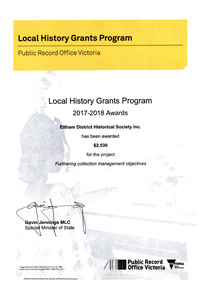
Document - Award Certificate, Local History Grants Program 2017-2018 Awards, Eltham District Historical Society; Public Record Office Victoria, 2018
... Local History Grants Program 2017-2018 Awards, Eltham District Historical Society; Public Record Office Victoria...Public Record Office Victoria...Local History Grant issued to Eltham District Historical Society to assist in furthering collection management objectives eltham district historical society, local history grants program 2017-2018, public record office victoria (prov) 14 A4 pages Local History Grants Program 2017-2018 Awards, Eltham District Historical Society; Public Record Office Victoria Document Award Certificate Public Record Office Victoria Nillumbik Writers' Cooperative Adept Printing ...Local History Grant issued to Eltham District Historical Society to assist in furthering collection management objectives14 A4 pageseltham district historical society, local history grants program 2017-2018, public record office victoria (prov) -
 The 5th/6th Battalion Royal Victoria Regiment Historical Collection
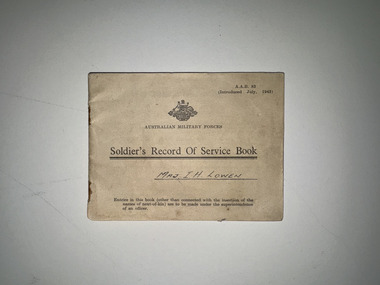
Document - Record of Service Book, Brigadier Lowen WWII Record of Service Book
... Brigadier Lowen WWII Record of Service Book...Record of Service Book belonging to Brigadier Lowen (MAJ Lowen at the time). ...Soldier's Record of Service Book for MAJ I.H.Lowen, there are 20 pages in this book, all the entry in the book are written by hand...Australian Military Forces Solder's Record of Service Book, MAJ I.H.Lowen...Record of Service Book belonging to Brigadier Lowen (MAJ Lowen at the time). ...Record of Service Book belonging to Brigadier Lowen (MAJ Lowen at the time). Brig Lowden served in 2/5 Australian Infantry Battalion in WW2The record contains the member's services history in WWIISoldier's Record of Service Book for MAJ I.H.Lowen, there are 20 pages in this book, all the entry in the book are written by handAustralian Military Forces Solder's Record of Service Book, MAJ I.H.Lowen5/6 rvr, bhq, brig lowen, 2/5th bn, solder's record of service book, maj lowen -
 Warrnambool and District Historical Society Inc.
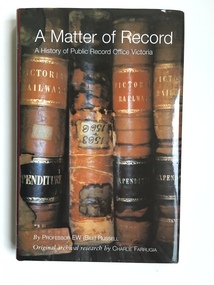
Book, A Matter of Record, 2003
... A Matter of Record...This book gives the history of the Public Record Office, Victoria. It was written by Professor Bill Russell and produced in 2003. ...The book is a 2003 history of the Public Record Office of Victoria written by Professor Bill Russell and researched by Charlie Farrugia. ...Front Cover: ‘A Matter of Record, A History of Public Record Office Victoria by Professor E W (Bill) Russell, Original archival research by Charlie Farrugia.’ ...Spine: ‘A Matter of Record, Russell, Public Record Office Victoria’. ...This book gives the history of the Public Record Office, Victoria. It was written by Professor Bill Russell and produced in 2003. The research by Charlie Farrugia that enabled the book to be written was carried out entirely using the Public Record Office archives. The book documents the 1903 beginnings of the Public Record Office from a small collection in the possession of the Melbourne Public Library through to the important 1973 Victorian Public Records Act to the present day institution at North Melbourne. The Melbourne Public Library, the Historical Society of Victoria and the History School of the University of Melbourne were early contributors to the preservation of Victoria’s archives. This book is in the library of the Warrnambool and District Historical Society and is an important reference for us in regard to the history of archival preservation of historical documents in our State. In addition we are a Place of Deposit for historical records that are surplus to the requirements of the Public Record Office of Victoria and that concern more directly the history of Warrnambool and district. Many local Warrnambool and district residents use the facilities at the Public Record Office at North Melbourne and the link between that institution and Warrnambool historical groups is important. This is a hard cover book of 227 pages. The cover is black with gold lettering on the spine. The dust cover is dark red with printed material about the author and the book’s contents. The front of the dust cover has an illustration of four Victorian Railways ledgers in sepia tones and the back of the dust cover has a small illustration in brown and white of a heritage label. The book has a Contents page, an Acknowledgement page, a Foreword, an Introduction, eight chapters, Appendices, Notes and References and an Index. The book is a 2003 history of the Public Record Office of Victoria written by Professor Bill Russell and researched by Charlie Farrugia. Front Cover: ‘A Matter of Record, A History of Public Record Office Victoria by Professor E W (Bill) Russell, Original archival research by Charlie Farrugia.’ Spine: ‘A Matter of Record, Russell, Public Record Office Victoria’. public record office, professor bill russell, charlie farrugia, historical records of victoria -
 Flagstaff Hill Maritime Museum and Village
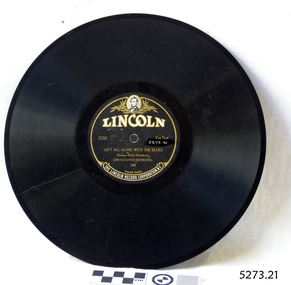
Audio - Gramophone Record, Lincoln Record Corporation, Left All Alone With The Blues, Early-to-mid 20th century
... ...record...Photograph Record...Shellac gramophone record with a black and gold label. Title: Left All Alone With The Blues Artist: Lincoln Dance Orchestra Publisher: The Lincoln Record Corporation, N.Y. 2153 Number:700 Size: 10 inch...Lincoln Record Corporation...Photograph Record This gramophone represents a step in the evolution of recording sound. ...Photograph RecordThis gramophone represents a step in the evolution of recording sound. In the 19th century, the human voice was first recorded on wax cylinders and replayed. It was the beginning of a new era in sound. Then, in the 1880s, voice could be recorded onto flat discs like this record, reliably reproduced and replayed many times, even on portable devices. Later, in the mid-20th century the following generation of electronic audio recording began, and later that century, digital recording gave even better reproduction. The record represents a popular means of entertainment for personal and social activities, as well as in some businesses. Shellac gramophone record with a black and gold label. Title: Left All Alone With The Blues Artist: Lincoln Dance Orchestra Publisher: The Lincoln Record Corporation, N.Y. 2153 Number:700 Size: 10 inchflagstaff hill, warrnambool, maritime village, maritime museum, flagstaff hill maritime museum and village, shipwreck coast, great ocean road, gramophone, phonograph, sound waves, record, reproduction, audio record, music, sound, thomas edison, emile berliner, 1887, shellac, rpm, william barry owen, edmund trevor lloyd williams, the gramophone company, his master’s voice, hmv, francis barraud, nipper, the lincoln record corporation n.y. 2153, left all alone with the blues, lincoln dance orchestra, 700 -
 Flagstaff Hill Maritime Museum and Village
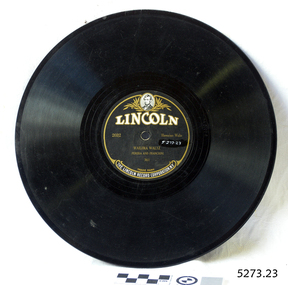
Audio - Gramophone Record, Lincoln Record Corporation, Wailima Waltz, Early-to-mid 20th century
... ...record...Although Bakelite seemed a useful, synthetic product, it was unsuccessful as a product for records. Around the time of World War II, lightweight, flexible synthetic vinyl records began replacing shellac records. ...Shellac gramophone record with a black and gold label. Title: Wailima Waltz Artist: Ferera and Franchini Publisher: The Lincoln Record Corporation N.Y. 2032 Number:361 Size: 10 inch...Lincoln Record Corporation...Although Bakelite seemed a useful, synthetic product, it was unsuccessful as a product for records. Around the time of World War II, lightweight, flexible synthetic vinyl records began replacing shellac records. ...Thomas Edison (1847–1931), an American, invented the phonograph in 1877, making it possible to record sound waves vertically and reproduce them on a wax cylinder so they could be heard again. Later, the German American, Emile Berliner (1851-1929), improved on Edison’s principles, greatly increasing the quality of the reproduced sounds with his invention of the gramophone in 1887, which recorded the sound waves laterally onto a flat shellac disc, or ‘record’. Records could be mass-produced in a factory where audio recordings were converted to a physical copy of that recording on a plate-sized disc. A gramophone machine reproduced the sound by spinning the record on a turntable at a specified number of rotations per minute (RPM) and using a stylus or needle to transfer the vibration via a membrane to a speaker, which amplified the sound. Berliner helped set up affiliated businesses overseas. One of his representatives was William Barry Owen (1860–1914), who, on 23 February 1889, partnered with Edmund Trevor Lloyd Williams (1859–1946) in England to register The Gramophone Company. His Master’s Voice (HMV) soon became the company’s major recording label, popular worldwide. The business based the label's logo of a dog looking into a gramophone horn for ‘his master’s voice’ was based on a painting by English artist Francis Barraud, which featured a terrier called Nipper beside a gramophone. Early gramophone records were mostly made from a material referred to as shellac, a natural ingredient combined with slate powder, and a filler of manilla copal, wood resin, carnauba wax, and carbon black. Although Bakelite seemed a useful, synthetic product, it was unsuccessful as a product for records. Around the time of World War II, lightweight, flexible synthetic vinyl records began replacing shellac records. Common diameters of records: 7 inch, 10 inch, 12 inch and 16 inch Revolutions Per Minute include: 33 1/3, 45, 78 Minutes per side of record: 3, 5.5, 7, 8, 9, 12, 15 and 22 Labels, in minutes per side: Single Play 3-5 min, Extended Play (EP) 7-12 min, Long Play (LP) 12-22 min This gramophone represents a step in the evolution of recording sound. In the 19th century, the human voice was first recorded on wax cylinders and replayed. It was the beginning of a new era in sound. Then, in the 1880s, voice could be recorded onto flat discs like this record, reliably reproduced and replayed many times, even on portable devices. Later, in the mid-20th century the following generation of electronic audio recording began, and later that century, digital recording gave even better reproduction. The record represents a popular means of entertainment for personal and social activities, as well as in some businesses. Shellac gramophone record with a black and gold label. Title: Wailima Waltz Artist: Ferera and Franchini Publisher: The Lincoln Record Corporation N.Y. 2032 Number:361 Size: 10 inchflagstaff hill, warrnambool, maritime village, maritime museum, flagstaff hill maritime museum and village, shipwreck coast, great ocean road, gramophone, phonograph, sound waves, record, reproduction, audio record, music, sound, thomas edison, emile berliner, 1887, shellac, rpm, william barry owen, edmund trevor lloyd williams, the gramophone company, his master’s voice, hmv, francis barraud, nipper, the lincoln record corporation n.y. 2032, wailima waltz, ferera and franchin, 361 -
 Flagstaff Hill Maritime Museum and Village
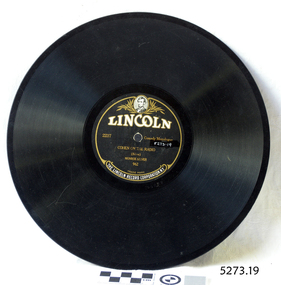
Audio - Gramophone Record, Lincoln Record Corporation, Cohen On The Radio, Early-to-mid 20th century
... ...record...Although Bakelite seemed a useful, synthetic product, it was unsuccessful as a product for records. Around the time of World War II, lightweight, flexible synthetic vinyl records began replacing shellac records. ...Shellac gramophone record with a black and gold label. Title: Cohen On The Radio Artist: Monroe Silver Publisher: The Lincoln Record Corporation N.Y. 2237 Number:962 Size: 10 inch...Lincoln Record Corporation...Although Bakelite seemed a useful, synthetic product, it was unsuccessful as a product for records. Around the time of World War II, lightweight, flexible synthetic vinyl records began replacing shellac records. ...Thomas Edison (1847–1931), an American, invented the phonograph in 1877, making it possible to record sound waves vertically and reproduce them on a wax cylinder so they could be heard again. Later, the German American, Emile Berliner (1851-1929), improved on Edison’s principles, greatly increasing the quality of the reproduced sounds with his invention of the gramophone in 1887, which recorded the sound waves laterally onto a flat shellac disc, or ‘record’. Records could be mass-produced in a factory where audio recordings were converted to a physical copy of that recording on a plate-sized disc. A gramophone machine reproduced the sound by spinning the record on a turntable at a specified number of rotations per minute (RPM) and using a stylus or needle to transfer the vibration via a membrane to a speaker, which amplified the sound. Berliner helped set up affiliated businesses overseas. One of his representatives was William Barry Owen (1860–1914), who, on 23 February 1889, partnered with Edmund Trevor Lloyd Williams (1859–1946) in England to register The Gramophone Company. His Master’s Voice (HMV) soon became the company’s major recording label, popular worldwide. The business based the label's logo of a dog looking into a gramophone horn for ‘his master’s voice’ was based on a painting by English artist Francis Barraud, which featured a terrier called Nipper beside a gramophone. Early gramophone records were mostly made from a material referred to as shellac, a natural ingredient combined with slate powder, and a filler of manilla copal, wood resin, carnauba wax, and carbon black. Although Bakelite seemed a useful, synthetic product, it was unsuccessful as a product for records. Around the time of World War II, lightweight, flexible synthetic vinyl records began replacing shellac records. Common diameters of records: 7 inch, 10 inch, 12 inch and 16 inch Revolutions Per Minute include: 33 1/3, 45, 78 Minutes per side of record: 3, 5.5, 7, 8, 9, 12, 15 and 22 Labels, in minutes per side: Single Play 3-5 min, Extended Play (EP) 7-12 min, Long Play (LP) 12-22 min This gramophone represents a step in the evolution of recording sound. In the 19th century, the human voice was first recorded on wax cylinders and replayed. It was the beginning of a new era in sound. Then, in the 1880s, voice could be recorded onto flat discs like this record, reliably reproduced and replayed many times, even on portable devices. Later, in the mid-20th century the following generation of electronic audio recording began, and later that century, digital recording gave even better reproduction. The record represents a popular means of entertainment for personal and social activities, as well as in some businesses. Shellac gramophone record with a black and gold label. Title: Cohen On The Radio Artist: Monroe Silver Publisher: The Lincoln Record Corporation N.Y. 2237 Number:962 Size: 10 inchflagstaff hill, warrnambool, maritime village, maritime museum, flagstaff hill maritime museum and village, shipwreck coast, great ocean road, gramophone, phonograph, sound waves, record, reproduction, audio record, music, sound, thomas edison, emile berliner, 1887, shellac, rpm, william barry owen, edmund trevor lloyd williams, the gramophone company, his master’s voice, hmv, francis barraud, nipper, the lincoln record corporation n.y. 2237, cohen on the radio, monroe silver, no 962, 10 inch -
 Flagstaff Hill Maritime Museum and Village
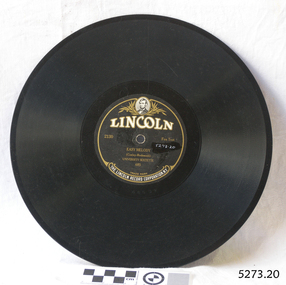
Audio - Gramophone Record, Lincoln Record Corporation, Easy Melody, Early-to-mid 20th century
... ...record...Although Bakelite seemed a useful, synthetic product, it was unsuccessful as a product for records. Around the time of World War II, lightweight, flexible synthetic vinyl records began replacing shellac records. ...Shellac gramophone record with a black and gold label. Title: Easy Melody Artist: University Sextette Publisher: The Lincoln Record Corporation N.Y. ...Lincoln Record Corporation...Although Bakelite seemed a useful, synthetic product, it was unsuccessful as a product for records. Around the time of World War II, lightweight, flexible synthetic vinyl records began replacing shellac records. ...Thomas Edison (1847–1931), an American, invented the phonograph in 1877, making it possible to record sound waves vertically and reproduce them on a wax cylinder so they could be heard again. Later, the German American, Emile Berliner (1851-1929), improved on Edison’s principles, greatly increasing the quality of the reproduced sounds with his invention of the gramophone in 1887, which recorded the sound waves laterally onto a flat shellac disc, or ‘record’. Records could be mass-produced in a factory where audio recordings were converted to a physical copy of that recording on a plate-sized disc. A gramophone machine reproduced the sound by spinning the record on a turntable at a specified number of rotations per minute (RPM) and using a stylus or needle to transfer the vibration via a membrane to a speaker, which amplified the sound. Berliner helped set up affiliated businesses overseas. One of his representatives was William Barry Owen (1860–1914), who, on 23 February 1889, partnered with Edmund Trevor Lloyd Williams (1859–1946) in England to register The Gramophone Company. His Master’s Voice (HMV) soon became the company’s major recording label, popular worldwide. The business based the label's logo of a dog looking into a gramophone horn for ‘his master’s voice’ was based on a painting by English artist Francis Barraud, which featured a terrier called Nipper beside a gramophone. Early gramophone records were mostly made from a material referred to as shellac, a natural ingredient combined with slate powder, and a filler of manilla copal, wood resin, carnauba wax, and carbon black. Although Bakelite seemed a useful, synthetic product, it was unsuccessful as a product for records. Around the time of World War II, lightweight, flexible synthetic vinyl records began replacing shellac records. Common diameters of records: 7 inch, 10 inch, 12 inch and 16 inch Revolutions Per Minute include: 33 1/3, 45, 78 Minutes per side of record: 3, 5.5, 7, 8, 9, 12, 15 and 22 Labels, in minutes per side: Single Play 3-5 min, Extended Play (EP) 7-12 min, Long Play (LP) 12-22 min This gramophone represents a step in the evolution of recording sound. In the 19th century, the human voice was first recorded on wax cylinders and replayed. It was the beginning of a new era in sound. Then, in the 1880s, voice could be recorded onto flat discs like this record, reliably reproduced and replayed many times, even on portable devices. Later, in the mid-20th century the following generation of electronic audio recording began, and later that century, digital recording gave even better reproduction. The record represents a popular means of entertainment for personal and social activities, as well as in some businesses. Shellac gramophone record with a black and gold label. Title: Easy Melody Artist: University Sextette Publisher: The Lincoln Record Corporation N.Y. Number:2130 685 Size: 10 inchflagstaff hill, warrnambool, maritime village, maritime museum, flagstaff hill maritime museum and village, shipwreck coast, great ocean road, gramophone, phonograph, sound waves, record, reproduction, audio record, music, sound, thomas edison, emile berliner, 1887, shellac, rpm, william barry owen, edmund trevor lloyd williams, the gramophone company, his master’s voice, hmv, francis barraud, nipper, the lincoln record corporation n.y., 2130, easy melody, university sextette, 685 -
 Flagstaff Hill Maritime Museum and Village
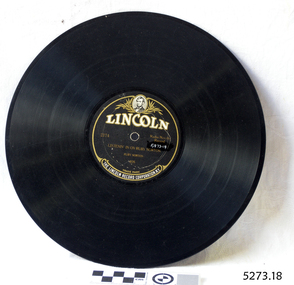
Audio - Gramophone Record, Lincoln Record Corporation, Listenin In On Ruby Norton, Early-to-mid 20th century
... ...record...Although Bakelite seemed a useful, synthetic product, it was unsuccessful as a product for records. Around the time of World War II, lightweight, flexible synthetic vinyl records began replacing shellac records. ...Shellac gramophone record with a black and gold label. Title: Listenin" In On Ruby Norton Artist: Ruby Norton. ...Lincoln Record Corporation...Publisher: The Lincoln Record Corporation N.Y. Number:2174 835 Size: 10 inch Listenin In On Ruby Norton Audio Gramophone Record Lincoln Record Corporation ...Thomas Edison (1847–1931), an American, invented the phonograph in 1877, making it possible to record sound waves vertically and reproduce them on a wax cylinder so they could be heard again. Later, the German American, Emile Berliner (1851-1929), improved on Edison’s principles, greatly increasing the quality of the reproduced sounds with his invention of the gramophone in 1887, which recorded the sound waves laterally onto a flat shellac disc, or ‘record’. Records could be mass-produced in a factory where audio recordings were converted to a physical copy of that recording on a plate-sized disc. A gramophone machine reproduced the sound by spinning the record on a turntable at a specified number of rotations per minute (RPM) and using a stylus or needle to transfer the vibration via a membrane to a speaker, which amplified the sound. Berliner helped set up affiliated businesses overseas. One of his representatives was William Barry Owen (1860–1914), who, on 23 February 1889, partnered with Edmund Trevor Lloyd Williams (1859–1946) in England to register The Gramophone Company. His Master’s Voice (HMV) soon became the company’s major recording label, popular worldwide. The business based the label's logo of a dog looking into a gramophone horn for ‘his master’s voice’ was based on a painting by English artist Francis Barraud, which featured a terrier called Nipper beside a gramophone. Early gramophone records were mostly made from a material referred to as shellac, a natural ingredient combined with slate powder, and a filler of manilla copal, wood resin, carnauba wax, and carbon black. Although Bakelite seemed a useful, synthetic product, it was unsuccessful as a product for records. Around the time of World War II, lightweight, flexible synthetic vinyl records began replacing shellac records. Common diameters of records: 7 inch, 10 inch, 12 inch and 16 inch Revolutions Per Minute include: 33 1/3, 45, 78 Minutes per side of record: 3, 5.5, 7, 8, 9, 12, 15 and 22 Labels, in minutes per side: Single Play 3-5 min, Extended Play (EP) 7-12 min, Long Play (LP) 12-22 min This gramophone represents a step in the evolution of recording sound. In the 19th century, the human voice was first recorded on wax cylinders and replayed. It was the beginning of a new era in sound. Then, in the 1880s, voice could be recorded onto flat discs like this record, reliably reproduced and replayed many times, even on portable devices. Later, in the mid-20th century the following generation of electronic audio recording began, and later that century, digital recording gave even better reproduction. The record represents a popular means of entertainment for personal and social activities, as well as in some businesses. Shellac gramophone record with a black and gold label. Title: Listenin" In On Ruby Norton Artist: Ruby Norton. Publisher: The Lincoln Record Corporation N.Y. Number:2174 835 Size: 10 inchflagstaff hill, warrnambool, maritime village, maritime museum, flagstaff hill maritime museum and village, shipwreck coast, great ocean road, gramophone, phonograph, sound waves, record, reproduction, audio record, music, sound, thomas edison, emile berliner, 1887, shellac, rpm, william barry owen, edmund trevor lloyd williams, the gramophone company, his master’s voice, hmv, francis barraud, nipper, the lincoln record corporation n.y. 2174, listenin in on ruby norton, ruby norton, 835, 10 inch -
 Falls Creek Historical Society
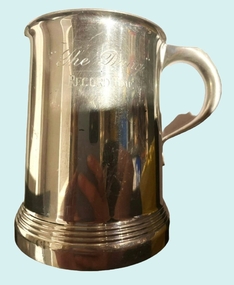
Award - Pewter Mug Trophies - Ross and Malcolm Milne - "The Drag" - Record Time
... Pewter Mug Trophies - Ross and Malcolm Milne - "The Drag" - Record Time...A pewter mug engraved with the "The Drag" - Record time. No other details are available....Engraved on side of mug: "The Drag" Record Time ...Pewter Mug Trophies - Ross and Malcolm Milne - "The Drag" - Record Time Award Pewter Mug Trophies - Ross and Malcolm Milne - "The Drag" - Record Time ...This Pewter Mug Collection is a set of 32 trophies won by Australian Alpine skiers Ross and Malcolm Milne between 1959 and 1964. Ross and Malcolm grew up on their family's tobacco property in Myrtleford, and began skiing at Falls Creek at an early age. They were both taught by Austrian Sigi Haberzettl, who was chief coach at Falls Creek for 17 years. Ross went on to win the North-Eastern District Ski Association (NEDSA) Junior Championships for three years in a row. In 1961 Ross was a member of the Australian team which competed against New Zealand in the Inter-Dominion Championships. In 1963, he won the Downhill and Alpine Combined title at the Australian Championships, while placing second in the Grand Slalom event. Ross Milne was selected in the Australian team that participated in the 1964 Olympic Winter Games at Innsbruck, Austria. A few days before the opening of the Games, on 25 January 1964, he tragically lost his life when he crashed into a tree during a training run for the Men's Downhill. He was only 19 years of age. Malcolm became a member of the Australian Junior Ski Team to Japan at the age of 14. He won all of the NEDSA children’s races and won the State Title in 1966. Malcolm continued to achieve great success, winning the Australian Championships for the next five years. At the end of 1969 he won Gold in the Val d'Isere FIS Alpine Ski World Cup Downhill, Australia's first Alpine Ski World Cup medal. He was on the Australian National Ski Team for eight years, representing his country at the 1968 and 1972 Olympic Games and the 1966 and 1970 World Championships before turning professional in 1972. Malcolm Milne was inducted into the Sport Australia Hall of Fame in 1985. In 2000 he received the Australian Sports Medal for his contribution to skiing. In 2004, Ski & Snowboard Australia granted Milne Life Membership for the contribution he made to the sport by becoming the first World Cup medal winner in Australian winter sports history, and the subsequent impact his performances have had on future athletes. Malcolm Milne was awarded the Medal of the Order of Australia (OAM) for services to skiing in 2016.This item is significant because it is part of a collection which documents the career of two outstanding Australian sportsmen.A pewter mug engraved with the "The Drag" - Record time. No other details are available.Engraved on side of mug: "The Drag" Record Time ross milne, malcolm milne, milne brothers, australian alpine skiers -
 Bendigo Military Museum
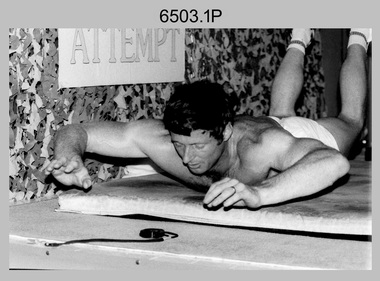
Photograph - 4th Field Survey Squadron – CPL John Ratcliffe World Record, Keswick Barracks, Adelaide SA, 1986
... 4th Field Survey Squadron – CPL John Ratcliffe World Record, Keswick Barracks, Adelaide SA...Officials representing the Guinness Book of Records were present and passed his effort. ...CPL John Ratcliffe interviewed by media after setting the new world record. ...‘CPL RATCLIFFE “WORLD RECORD”. NOV 1986’ annotated on negatives sleeve....Officials representing the Guinness Book of Records were present and passed his effort. ...This is a set of 12 photographs of 4th Field Survey Squadron’s CPL John Ratcliffe setting a world record for an exercise routine comprising push-ups, sit-ups and double back-arches at Keswick Barracks, Adelaide in November 1986. A newspaper article of unknown origin titled “John sets world’s best time in routine” was published reporting the achievement. The article reported: “Corporal John Ratcliffe has smashed his personal best time, his greatest expectations and the 16-year-old Australian record for a push-up, sit-up and double back-arch routine. Corporal Ratcliffe, 37, set a world record by doing 1232 push-ups (clapping his chest with his hands between each one), 1936 back-arches and 440 sit-ups in one hour, 16 minutes and 29 seconds yesterday. Officials representing the Guinness Book of Records were present and passed his effort. The record was achieved by repeating a set of 14 push-ups, 22 double back-arches and 5 sit-ups, 88 times. The Australian record for the same routine was set in 1970 in the time of 1 hour 41 minutes. CPL Ratcliffe beat his personal best time by 13 minutes. “I could not do it without them” CPL Ratcliffe said of the crowd. Nearing the end of the routine when he was tiring, the crowd of more than 100 clapped and chanted encouragement. CPL Ratcliffe, who works in the Army’s surveying department, said the most important aspect of the exercise was raising money for Legacy, not getting his name in the record books.” This achievement was also reported in the Army Newspaper dated 11th Dec 1986. There are eight more photos that have not been published in the set of negatives.This is a set of 12 photographs of 4th Field Survey Squadron’s CPL John Ratcliffe setting a exercise routine world record at Keswick Barracks, Adelaide in November 1986. The black & white photographs are on 35mm negative film and are part of the Army Survey Regiment’s Collection. The photographs were scanned at 96 dpi. .1) to .9) - Photo, black & white, 1986. CPL John Ratcliffe during his exercise routine. .10) - Photo, black & white, 1986. CPL John Ratcliffe celebrates the new world record. L to R: Bob Rogister, Wally Chilcott. .11) - Photo, black & white, 1986. CPL John Ratcliffe celebrates the new world record. L to R: Peter Imeson, Bob Rogister, Wally Chilcott. .12) - Photo, black & white, 1986. CPL John Ratcliffe interviewed by media after setting the new world record. .1P to .12P – There are no other personnel identified. ‘CPL RATCLIFFE “WORLD RECORD”. NOV 1986’ annotated on negatives sleeve.royal australian survey corps, rasvy, 4 fd svy sqn -
 Flagstaff Hill Maritime Museum and Village
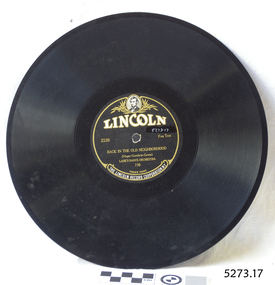
Audio - Gramophone Record, Lincoln Record Corporation, Back In The Old Neighborhood, Early-to-mid 20th century
... ...record...Although Bakelite seemed a useful, synthetic product, it was unsuccessful as a product for records. Around the time of World War II, lightweight, flexible synthetic vinyl records began replacing shellac records. ...Publisher: The Lincoln Record Corporation, N.Y. 2138 Number:738 Size: 10 inch...Lincoln Record Corporation...Publisher: The Lincoln Record Corporation, N.Y. 2138 Number:738 Size: 10 inch Back In The Old Neighborhood Audio Gramophone Record Lincoln Record Corporation ...Thomas Edison (1847–1931), an American, invented the phonograph in 1877, making it possible to record sound waves vertically and reproduce them on a wax cylinder so they could be heard again. Later, the German American, Emile Berliner (1851-1929), improved on Edison’s principles, greatly increasing the quality of the reproduced sounds with his invention of the gramophone in 1887, which recorded the sound waves laterally onto a flat shellac disc, or ‘record’. Records could be mass-produced in a factory where audio recordings were converted to a physical copy of that recording on a plate-sized disc. A gramophone machine reproduced the sound by spinning the record on a turntable at a specified number of rotations per minute (RPM) and using a stylus or needle to transfer the vibration via a membrane to a speaker, which amplified the sound. Berliner helped set up affiliated businesses overseas. One of his representatives was William Barry Owen (1860–1914), who, on 23 February 1889, partnered with Edmund Trevor Lloyd Williams (1859–1946) in England to register The Gramophone Company. His Master’s Voice (HMV) soon became the company’s major recording label, popular worldwide. The business based the label's logo of a dog looking into a gramophone horn for ‘his master’s voice’ was based on a painting by English artist Francis Barraud, which featured a terrier called Nipper beside a gramophone. Early gramophone records were mostly made from a material referred to as shellac, a natural ingredient combined with slate powder, and a filler of manilla copal, wood resin, carnauba wax, and carbon black. Although Bakelite seemed a useful, synthetic product, it was unsuccessful as a product for records. Around the time of World War II, lightweight, flexible synthetic vinyl records began replacing shellac records. Common diameters of records: 7 inch, 10 inch, 12 inch and 16 inch Revolutions Per Minute include: 33 1/3, 45, 78 Minutes per side of record: 3, 5.5, 7, 8, 9, 12, 15 and 22 Labels, in minutes per side: Single Play 3-5 min, Extended Play (EP) 7-12 min, Long Play (LP) 12-22 min This gramophone represents a step in the evolution of recording sound. In the 19th century, the human voice was first recorded on wax cylinders and replayed. It was the beginning of a new era in sound. Then, in the 1880s, voice could be recorded onto flat discs like this record, reliably reproduced and replayed many times, even on portable devices. Later, in the mid-20th century the following generation of electronic audio recording began, and later that century, digital recording gave even better reproduction. The record represents a popular means of entertainment for personal and social activities, as well as in some businesses. Shellac gramophone record with a black and gold label. Title: Back In The Old Neighbourhood Artist: Lane's Dance Orchestra. Publisher: The Lincoln Record Corporation, N.Y. 2138 Number:738 Size: 10 inchflagstaff hill, warrnambool, maritime village, maritime museum, flagstaff hill maritime museum and village, shipwreck coast, great ocean road, gramophone, phonograph, sound waves, record, reproduction, audio record, music, sound, thomas edison, emile berliner, 1887, shellac, rpm, william barry owen, edmund trevor lloyd williams, the gramophone company, his master’s voice, hmv, francis barraud, nipper, the lincoln record corporation n.y. 2138, back in the old neighbourhood, lane's dance orchestra, 738 -
 Flagstaff Hill Maritime Museum and Village
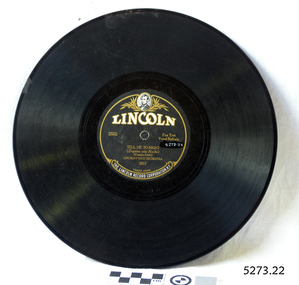
Audio - Gramophone Record, Lincoln Record Corporation, Tell Me To-Night, Early-to-mid 20th century
... ...record...Although Bakelite seemed a useful, synthetic product, it was unsuccessful as a product for records. Around the time of World War II, lightweight, flexible synthetic vinyl records began replacing shellac records. ...Shellac gramophone record with a black and gold label. Title: Tell Me To-Night Artist: Lincoln Dance Orchestra. ...Lincoln Record Corporation...Publisher: The Lincoln Record Corporation N.Y. 2552 Number:2057 Size: 10 inch Tell Me To-Night Audio Gramophone Record Lincoln Record Corporation ...Thomas Edison (1847–1931), an American, invented the phonograph in 1877, making it possible to record sound waves vertically and reproduce them on a wax cylinder so they could be heard again. Later, the German American, Emile Berliner (1851-1929), improved on Edison’s principles, greatly increasing the quality of the reproduced sounds with his invention of the gramophone in 1887, which recorded the sound waves laterally onto a flat shellac disc, or ‘record’. Records could be mass-produced in a factory where audio recordings were converted to a physical copy of that recording on a plate-sized disc. A gramophone machine reproduced the sound by spinning the record on a turntable at a specified number of rotations per minute (RPM) and using a stylus or needle to transfer the vibration via a membrane to a speaker, which amplified the sound. Berliner helped set up affiliated businesses overseas. One of his representatives was William Barry Owen (1860–1914), who, on 23 February 1889, partnered with Edmund Trevor Lloyd Williams (1859–1946) in England to register The Gramophone Company. His Master’s Voice (HMV) soon became the company’s major recording label, popular worldwide. The business based the label's logo of a dog looking into a gramophone horn for ‘his master’s voice’ was based on a painting by English artist Francis Barraud, which featured a terrier called Nipper beside a gramophone. Early gramophone records were mostly made from a material referred to as shellac, a natural ingredient combined with slate powder, and a filler of manilla copal, wood resin, carnauba wax, and carbon black. Although Bakelite seemed a useful, synthetic product, it was unsuccessful as a product for records. Around the time of World War II, lightweight, flexible synthetic vinyl records began replacing shellac records. Common diameters of records: 7 inch, 10 inch, 12 inch and 16 inch Revolutions Per Minute include: 33 1/3, 45, 78 Minutes per side of record: 3, 5.5, 7, 8, 9, 12, 15 and 22 Labels, in minutes per side: Single Play 3-5 min, Extended Play (EP) 7-12 min, Long Play (LP) 12-22 min This gramophone represents a step in the evolution of recording sound. In the 19th century, the human voice was first recorded on wax cylinders and replayed. It was the beginning of a new era in sound. Then, in the 1880s, voice could be recorded onto flat discs like this record, reliably reproduced and replayed many times, even on portable devices. Later, in the mid-20th century the following generation of electronic audio recording began, and later that century, digital recording gave even better reproduction. The record represents a popular means of entertainment for personal and social activities, as well as in some businesses. Shellac gramophone record with a black and gold label. Title: Tell Me To-Night Artist: Lincoln Dance Orchestra. Publisher: The Lincoln Record Corporation N.Y. 2552 Number:2057 Size: 10 inchflagstaff hill, warrnambool, maritime village, maritime museum, flagstaff hill maritime museum and village, shipwreck coast, great ocean road, gramophone, phonograph, sound waves, record, reproduction, audio record, music, sound, thomas edison, emile berliner, 1887, shellac, rpm, william barry owen, edmund trevor lloyd williams, the gramophone company, his master’s voice, hmv, francis barraud, nipper, the lincoln record corporation n.y. 2552, tell me to-night, lincoln dance orchestra, 2057 -
 Flagstaff Hill Maritime Museum and Village
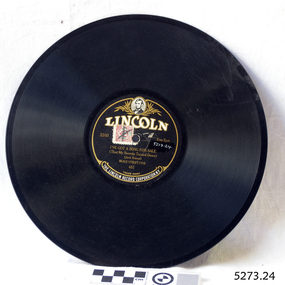
Audio - Gramophone Record, Lincoln Record Corporation, I've Got A Song For Sale, Early-to-mid 20th century
... ...record...Although Bakelite seemed a useful, synthetic product, it was unsuccessful as a product for records. Around the time of World War II, lightweight, flexible synthetic vinyl records began replacing shellac records. ...Shellac gramophone record with a black and gold label. Title: I've Got A Song For Sale Artist: Beale Street Five Publisher: The Lincoln Record Corporation N.Y. 2103 Number:652 Size: 10 inch...Lincoln Record Corporation...Although Bakelite seemed a useful, synthetic product, it was unsuccessful as a product for records. Around the time of World War II, lightweight, flexible synthetic vinyl records began replacing shellac records. ...Thomas Edison (1847–1931), an American, invented the phonograph in 1877, making it possible to record sound waves vertically and reproduce them on a wax cylinder so they could be heard again. Later, the German American, Emile Berliner (1851-1929), improved on Edison’s principles, greatly increasing the quality of the reproduced sounds with his invention of the gramophone in 1887, which recorded the sound waves laterally onto a flat shellac disc, or ‘record’. Records could be mass-produced in a factory where audio recordings were converted to a physical copy of that recording on a plate-sized disc. A gramophone machine reproduced the sound by spinning the record on a turntable at a specified number of rotations per minute (RPM) and using a stylus or needle to transfer the vibration via a membrane to a speaker, which amplified the sound. Berliner helped set up affiliated businesses overseas. One of his representatives was William Barry Owen (1860–1914), who, on 23 February 1889, partnered with Edmund Trevor Lloyd Williams (1859–1946) in England to register The Gramophone Company. His Master’s Voice (HMV) soon became the company’s major recording label, popular worldwide. The business based the label's logo of a dog looking into a gramophone horn for ‘his master’s voice’ was based on a painting by English artist Francis Barraud, which featured a terrier called Nipper beside a gramophone. Early gramophone records were mostly made from a material referred to as shellac, a natural ingredient combined with slate powder, and a filler of manilla copal, wood resin, carnauba wax, and carbon black. Although Bakelite seemed a useful, synthetic product, it was unsuccessful as a product for records. Around the time of World War II, lightweight, flexible synthetic vinyl records began replacing shellac records. Common diameters of records: 7 inch, 10 inch, 12 inch and 16 inch Revolutions Per Minute include: 33 1/3, 45, 78 Minutes per side of record: 3, 5.5, 7, 8, 9, 12, 15 and 22 Labels, in minutes per side: Single Play 3-5 min, Extended Play (EP) 7-12 min, Long Play (LP) 12-22 min This gramophone represents a step in the evolution of recording sound. In the 19th century, the human voice was first recorded on wax cylinders and replayed. It was the beginning of a new era in sound. Then, in the 1880s, voice could be recorded onto flat discs like this record, reliably reproduced and replayed many times, even on portable devices. Later, in the mid-20th century the following generation of electronic audio recording began, and later that century, digital recording gave even better reproduction. The record represents a popular means of entertainment for personal and social activities, as well as in some businesses. Shellac gramophone record with a black and gold label. Title: I've Got A Song For Sale Artist: Beale Street Five Publisher: The Lincoln Record Corporation N.Y. 2103 Number:652 Size: 10 inchflagstaff hill, warrnambool, maritime village, maritime museum, flagstaff hill maritime museum and village, shipwreck coast, great ocean road, gramophone, phonograph, sound waves, record, reproduction, audio record, music, sound, thomas edison, emile berliner, 1887, shellac, rpm, william barry owen, edmund trevor lloyd williams, the gramophone company, his master’s voice, hmv, francis barraud, nipper, the lincoln record corporation n.y. 2103, i've got a song for sale, beale street five, 652 -
 Flagstaff Hill Maritime Museum and Village
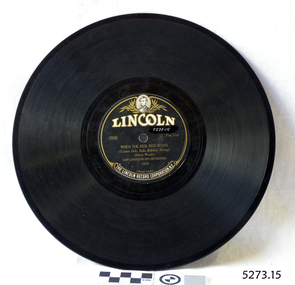
Audio - Gramophone Record, Lincoln Record Corporation, When The Red, Red Robin, Early-to-mid 20th century
... ...record...Although Bakelite seemed a useful, synthetic product, it was unsuccessful as a product for records. Around the time of World War II, lightweight, flexible synthetic vinyl records began replacing shellac records. ...Shellac gramophone record with a black and gold label. Title: When The Red, Red Robin Artist: Sammy Lanin and his Orchestra Publisher: Lincoln Record Corporation, N.Y. ...Lincoln Record Corporation...Although Bakelite seemed a useful, synthetic product, it was unsuccessful as a product for records. Around the time of World War II, lightweight, flexible synthetic vinyl records began replacing shellac records. ...Thomas Edison (1847–1931), an American, invented the phonograph in 1877, making it possible to record sound waves vertically and reproduce them on a wax cylinder so they could be heard again. Later, the German American, Emile Berliner (1851-1929), improved on Edison’s principles, greatly increasing the quality of the reproduced sounds with his invention of the gramophone in 1887, which recorded the sound waves laterally onto a flat shellac disc, or ‘record’. Records could be mass-produced in a factory where audio recordings were converted to a physical copy of that recording on a plate-sized disc. A gramophone machine reproduced the sound by spinning the record on a turntable at a specified number of rotations per minute (RPM) and using a stylus or needle to transfer the vibration via a membrane to a speaker, which amplified the sound. Berliner helped set up affiliated businesses overseas. One of his representatives was William Barry Owen (1860–1914), who, on 23 February 1889, partnered with Edmund Trevor Lloyd Williams (1859–1946) in England to register The Gramophone Company. His Master’s Voice (HMV) soon became the company’s major recording label, popular worldwide. The business based the label's logo of a dog looking into a gramophone horn for ‘his master’s voice’ was based on a painting by English artist Francis Barraud, which featured a terrier called Nipper beside a gramophone. Early gramophone records were mostly made from a material referred to as shellac, a natural ingredient combined with slate powder, and a filler of manilla copal, wood resin, carnauba wax, and carbon black. Although Bakelite seemed a useful, synthetic product, it was unsuccessful as a product for records. Around the time of World War II, lightweight, flexible synthetic vinyl records began replacing shellac records. Common diameters of records: 7 inch, 10 inch, 12 inch and 16 inch Revolutions Per Minute include: 33 1/3, 45, 78 Minutes per side of record: 3, 5.5, 7, 8, 9, 12, 15 and 22 Labels, in minutes per side: Single Play 3-5 min, Extended Play (EP) 7-12 min, Long Play (LP) 12-22 min This gramophone represents a step in the evolution of recording sound. In the 19th century, the human voice was first recorded on wax cylinders and replayed. It was the beginning of a new era in sound. Then, in the 1880s, voice could be recorded onto flat discs like this record, reliably reproduced and replayed many times, even on portable devices. Later, in the mid-20th century the following generation of electronic audio recording began, and later that century, digital recording gave even better reproduction. The record represents a popular means of entertainment for personal and social activities, as well as in some businesses. Shellac gramophone record with a black and gold label. Title: When The Red, Red Robin Artist: Sammy Lanin and his Orchestra Publisher: Lincoln Record Corporation, N.Y. Number:2528 Size: 10 inchflagstaff hill, warrnambool, maritime village, maritime museum, flagstaff hill maritime museum and village, shipwreck coast, great ocean road, gramophone, phonograph, sound waves, record, reproduction, audio record, music, sound, thomas edison, emile berliner, 1887, shellac, rpm, william barry owen, edmund trevor lloyd williams, the gramophone company, his master’s voice, hmv, francis barraud, nipper, lincoln record corporation, new york, 2528, when the red red robin, sammy lanin and his orchestra, 10 inch -
University of Melbourne, Burnley Campus Archives
Book - Register and Student Records, Record of Students and Spray Records, 1910-1947
... Record of Students and Spray Records...This record of student addresses was compiled between 1911 and 1947 during the principalships of the College of Horticulture and Primary Agriculture Burnley - Pescott, E.E. (1909-1916), McLennan, J.P. (1917-21), Rae, F.J. (1922-25), Jessep, A.W. (1926-41), Provan, J.L. (1942-46) and Kneen, T.H. (1946-67)....Upside down and beginning from the rear are Spray Records 1910-1916 including columns headed Name, Company, Date, Source, fruit trees sprayed and trial dates, remarks and results, and report. ...Typed adhesive label on cover "STUDENT'S ADDRESSES" Inside front cover Egg Records scored out with three red lines. Beneath is hand inscribed "Records of Students" Inside back cover "Spray Records" ...Beneath is hand inscribed "Records of Students" Inside back cover "Spray Records" Bound register divided into 2 sections. ...This record of student addresses was compiled between 1911 and 1947 during the principalships of the College of Horticulture and Primary Agriculture Burnley - Pescott, E.E. (1909-1916), McLennan, J.P. (1917-21), Rae, F.J. (1922-25), Jessep, A.W. (1926-41), Provan, J.L. (1942-46) and Kneen, T.H. (1946-67).Bound register divided into 2 sections. Each is hand rulled columns in red ink with handwritten black ink. The front register is of students enrolled in Horticultural courses from 1911-1941 and their subsequent history. Also records of part-time students. Inserts Includes (1) B.H.P.S.A. (2) Staff and students of School of Horticulture, Burnley. (3) Pasted insert, Presbyterian Girls Hostel, Parliament Place, C2. Probably used by the B.H.P.S.A. Upside down and beginning from the rear are Spray Records 1910-1916 including columns headed Name, Company, Date, Source, fruit trees sprayed and trial dates, remarks and results, and report. A special section in the centre gives list of Training of Returned Soldiers (22) in Horticulture, Poultry management (1918-1921) - the nature of the work, fees and subsequent career . Typed adhesive label on cover "STUDENT'S ADDRESSES" Inside front cover Egg Records scored out with three red lines. Beneath is hand inscribed "Records of Students" Inside back cover "Spray Records" register, students, horticultural courses, sprays, fruit trees, bhpsa, staff, school of horticulture, burnley, presbyterian girls hostel, part-time students, jobs, burnley horticultural past students association, returned soldiers, careers -
 Flagstaff Hill Maritime Museum and Village
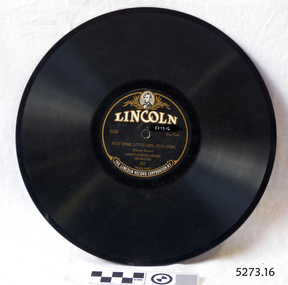
Audio - Gramophone Record, Lincoln Record Corporation, Stay Home Little Girl, Stay Home, Early-to-mid 20th century
... ...record...Although Bakelite seemed a useful, synthetic product, it was unsuccessful as a product for records. Around the time of World War II, lightweight, flexible synthetic vinyl records began replacing shellac records. ...Publisher: The Lincoln Record Corporation, N.Y. 2516 Number:797 Size: 10 inch...Lincoln Record Corporation...Publisher: The Lincoln Record Corporation, N.Y. 2516 Number:797 Size: 10 inch Stay Home Little Girl, Stay Home Audio Gramophone Record Lincoln Record Corporation ...Thomas Edison (1847–1931), an American, invented the phonograph in 1877, making it possible to record sound waves vertically and reproduce them on a wax cylinder so they could be heard again. Later, the German American, Emile Berliner (1851-1929), improved on Edison’s principles, greatly increasing the quality of the reproduced sounds with his invention of the gramophone in 1887, which recorded the sound waves laterally onto a flat shellac disc, or ‘record’. Records could be mass-produced in a factory where audio recordings were converted to a physical copy of that recording on a plate-sized disc. A gramophone machine reproduced the sound by spinning the record on a turntable at a specified number of rotations per minute (RPM) and using a stylus or needle to transfer the vibration via a membrane to a speaker, which amplified the sound. Berliner helped set up affiliated businesses overseas. One of his representatives was William Barry Owen (1860–1914), who, on 23 February 1889, partnered with Edmund Trevor Lloyd Williams (1859–1946) in England to register The Gramophone Company. His Master’s Voice (HMV) soon became the company’s major recording label, popular worldwide. The business based the label's logo of a dog looking into a gramophone horn for ‘his master’s voice’ was based on a painting by English artist Francis Barraud, which featured a terrier called Nipper beside a gramophone. Early gramophone records were mostly made from a material referred to as shellac, a natural ingredient combined with slate powder, and a filler of manilla copal, wood resin, carnauba wax, and carbon black. Although Bakelite seemed a useful, synthetic product, it was unsuccessful as a product for records. Around the time of World War II, lightweight, flexible synthetic vinyl records began replacing shellac records. Common diameters of records: 7 inch, 10 inch, 12 inch and 16 inch Revolutions Per Minute include: 33 1/3, 45, 78 Minutes per side of record: 3, 5.5, 7, 8, 9, 12, 15 and 22 Labels, in minutes per side: Single Play 3-5 min, Extended Play (EP) 7-12 min, Long Play (LP) 12-22 min This gramophone represents a step in the evolution of recording sound. In the 19th century, the human voice was first recorded on wax cylinders and replayed. It was the beginning of a new era in sound. Then, in the 1880s, voice could be recorded onto flat discs like this record, reliably reproduced and replayed many times, even on portable devices. Later, in the mid-20th century the following generation of electronic audio recording began, and later that century, digital recording gave even better reproduction. The record represents a popular means of entertainment for personal and social activities, as well as in some businesses. Shellac gramophone record with a coloured label. Title: Stay Home Little Girl, Stay Home Artist: Johnny Johnson and his Orchestra. Publisher: The Lincoln Record Corporation, N.Y. 2516 Number:797 Size: 10 inchflagstaff hill, warrnambool, maritime village, maritime museum, flagstaff hill maritime museum and village, shipwreck coast, great ocean road, gramophone, phonograph, sound waves, record, reproduction, audio record, music, sound, thomas edison, emile berliner, 1887, shellac, rpm, william barry owen, edmund trevor lloyd williams, the gramophone company, his master’s voice, hmv, francis barraud, nipper, lincoln record corporation n.y. 2516, stay home little girl stay home, johnny johnson and his orchestra, 797, 10 inch -
 Orbost & District Historical Society
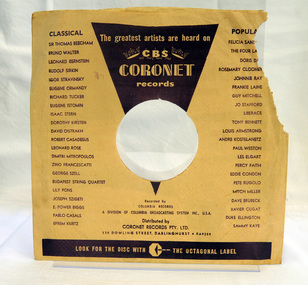
record cover, 1950's - 1960's
... Coronet was a record label in Australia, based in Sydney. ...A cream coloured paper sleeve for a CBS Coronet record 78. It has purple print - Recorded by Columbia Records A Division of Columbia Broadcasting System Inc USA. ...Australian Record Company Ltd...Coronet was a record label in Australia, based in Sydney. ...Coronet was a record label in Australia, based in Sydney. It operated from the early 1950s until around 1962 and was recognizable by its octagonal label.The phonograph disc record was the primary medium used for music reproduction until late in the 20th century, replacing the phonograph cylinder record—with which it had co-existed from the late 1880s through to the late 1920s. Records retained the largest market share even when new formats such as compact cassette were mass-marketed. By the late 1980s, digital media, in the form of the compact disc, had gained a larger market share, and the vinyl record left the mainstream in 1991. This record sleeve/jacket is an example of a music media not commonly used in the 21st century.A cream coloured paper sleeve for a CBS Coronet record 78. It has purple print - Recorded by Columbia Records A Division of Columbia Broadcasting System Inc USA. It lists the records available from Coronet.phonograph-record-sleeve coronet columbia -
Ringwood and District Historical Society
Document, Ringwood Rifle Club, Ringwood Rifle Club - Record of shoots for 1963-1964. Buff coloured sheet, 1963 - 1964
... Ringwood Rifle Club - Record of shoots for 1963-1964. Buff coloured sheet....Standard form showing record of shoots for 1963-1964....Ringwood Rifle Club- Form details record of trophy shoots of Rifle Club members...Ringwood Rifle Club- Form details record of trophy shoots of Rifle Club members Standard form showing record of shoots for 1963-1964. ...Given to the Society by Gordon Hoskin who was the treasurer of the Ringwood Rifle Club in later years.Standard form showing record of shoots for 1963-1964.Ringwood Rifle Club- Form details record of trophy shoots of Rifle Club members -
Port Melbourne Historical & Preservation Society
Document - Port Melbourne vs Williamstown Grand Final, "Record", 2011
... "Record"...AFL Victoria "Record", VFL & TAC Cup Grand Final Edition, 25.09.2011. ...Full time scores recorded on pages 32 and 33...Purchased (for $3) by Cr Janet BOLITHO at the 2011 Grand Final Sport - Australian Rules Football Societies Clubs Unions and other Organisations Gary AYRES John BAIRD Port Melbourne Football Club PMFC Full time scores recorded on pages 32 and 33 AFL Victoria "Record", VFL & TAC Cup Grand Final Edition, 25.09.2011. ...Purchased (for $3) by Cr Janet BOLITHO at the 2011 Grand FinalAFL Victoria "Record", VFL & TAC Cup Grand Final Edition, 25.09.2011. The program fom the Port Melbourne vs Williamstown grand final, won by Port MelbourneFull time scores recorded on pages 32 and 33sport - australian rules football, societies clubs unions and other organisations, gary ayres, john baird, port melbourne football club, pmfc -
 Greensborough Historical Society
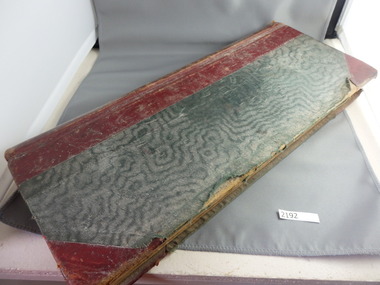
Book, Pharmacy record book, 1930s
... Pharmacy record book...Prescription record book from 1932 to 1936. Used at pharmacy in Main Street Greensborough....Handwritten pharmacy records throughout....Pharmacy record book Book ...Prescription record book from 1932 to 1936. Used at pharmacy in Main Street Greensborough.500 pages, heavy cardboard cover.Handwritten pharmacy records throughout.pharmacy greensborough -
 Robin Boyd Foundation
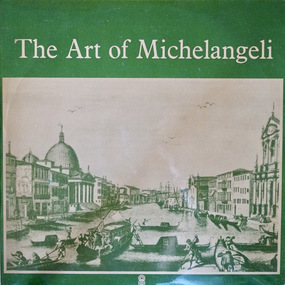
Audio - Recording, Decca, released in Australia exclusively by World Record Club
... The Boyds purchased their record player and sound system from Thomas’s in Melbourne. ...LP 33RPM vinyl, Catalogue Number: World Record Club W.R.C. S/4831, Record cover, plastic sleeve, 1 vinyl disc, cover notes (no author listed). ...Decca, released in Australia exclusively by World Record Club...The Boyds purchased their record player and sound system from Thomas’s in Melbourne. ...The Boyds purchased their record player and sound system from Thomas’s in Melbourne. Patricia Boyd (later Davies) was very interested in opera and was later appointed to the Board of the Australian Opera.The Art of Michelangeli. LP 33RPM vinyl, Catalogue Number: World Record Club W.R.C. S/4831, Record cover, plastic sleeve, 1 vinyl disc, cover notes (no author listed). Beethoven, Galuppi, Scarlatti.lp, sound recording
