
Showing 8 items matching "record sleeve design"
-
 RMIT Design Archives
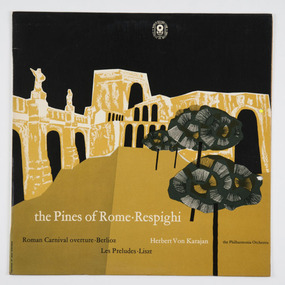
Record sleeve, The Pines of Rome - Respighi
... record club...max robinson...rmit university...rmit design archives...geoff digby...record sleeve...Max Robinson (1934-2018) designed this record sleeve for the World Record Club in 1961. ...design work of Max Robinson. It is historically significant for its association with the World Record Club, an organisation that produced a representative collection of Australian graphic designers’ work from 1957 until 1976. world record club max robinson rmit university rmit design archives geoff digby record sleeve design graphic design the Pines of Rome . ...Max Robinson (1934-2018) designed this record sleeve for the World Record Club in 1961. Robinson studied for a year at the Melbourne Technical College (RMIT University), and in his early career worked for Peter Clemenger and the graphic designer, Max Forbes. He produced a number of striking record covers for the World Record Club in the late 1950s and early 1960s. Robinson’s work is familiar to many Australians – he designed the new $10 note in 1993, which featured Banjo Paterson and Dame Mary Gilmore. The World Record Club’s operated in Melbourne from 1957 until 1976; it was a mail order service, and its art director, Geoff Digby commissioned young designers and artist to design the record sleeves. It is regarded now as one of most representative collection of Australian designers’ work of its period, and highlights the years of transition from ‘commercial art’ to ‘graphic design’. The album cover was donated to the Archive by the World Record Club’s art director, Geoff Digby. Ann Carew, 2020This record sleeve is historically significant for its association with Max Robinson, who was inducted into the Australian Graphic Design Association’s (AGDA) Hall of Fame in recognition for his work as graphic artist, but also his tireless advocacy for graphic design in Australia. It is aesthetically significant as an early example of the design work of Max Robinson. It is historically significant for its association with the World Record Club, an organisation that produced a representative collection of Australian graphic designers’ work from 1957 until 1976. the Pines of Rome . Respighi / Roman Carnival overture . Berlioz / Herbert Von Karajan / the Philharmonia Orchestra / Les Preludes . Lisztworld record club, max robinson, rmit university, rmit design archives, geoff digby, record sleeve design, graphic design -
 Robin Boyd Foundation
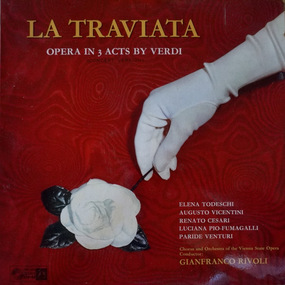
Audio - Recording, Synchro Stereo
... LP 33RPM vinyl, Catalogue Number: SMS2353A, Record cover, Plastic sleeve, 1 vinyl disk. Cover notes, no author listed. Cover design H. ...LP 33RPM vinyl, Catalogue Number: SMS2353A, Record cover, Plastic sleeve, 1 vinyl disk. Cover notes, no author listed. Cover design H. ...The Boyds purchased their record player and sound system from Thomas’s in Melbourne. Patricia Boyd (later Davies) was very interested in opera and was later appointed to the Board of the Australian Opera.La Traviata. Opera in 3 acts by Verdi. LP 33RPM vinyl, Catalogue Number: SMS2353A, Record cover, Plastic sleeve, 1 vinyl disk. Cover notes, no author listed. Cover design H. Raynor. Conductor Gianfranco Rivoli: Chorus and orchestra Vienna State Operalp, sound recording, opera -
 Robin Boyd Foundation
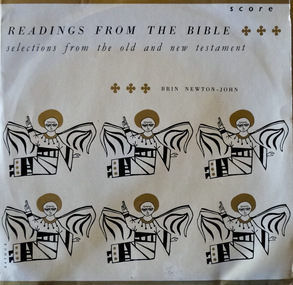
Audio - Recording, Score
... LP 33RPM vinyl, Catalogue Number: POL 011, Record cover, Plastic sleeve, 1 vinyl disk. Cover notes, no author listed. Cover design H. ...LP 33RPM vinyl, Catalogue Number: POL 011, Record cover, Plastic sleeve, 1 vinyl disk. Cover notes, no author listed. Cover design H. ...The Boyds purchased their record player and sound system from Thomas’s in Melbourne. Patricia Boyd (later Davies) was very interested in opera and was later appointed to the Board of the Australian Opera.Readings from the bible. Selections from the old and new testaments. LP 33RPM vinyl, Catalogue Number: POL 011, Record cover, Plastic sleeve, 1 vinyl disk. Cover notes, no author listed. Cover design H. Raynor. Brin Newton-Johnlp, sound recording -
 Robin Boyd Foundation
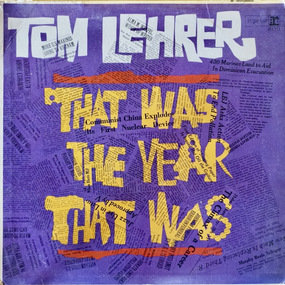
Audio - Recording, Reprise
... LP 33RPM vinyl, Catalogue Number: R-6179, Record cover, Paper sleeve, 1 vinyl disk. Cover notes, no author listed. Cover design: Eric Martin. ...LP 33RPM vinyl, Catalogue Number: R-6179, Record cover, Paper sleeve, 1 vinyl disk. Cover notes, no author listed. Cover design: Eric Martin. ...The Boyds purchased their record player and sound system from Thomas’s in Melbourne. Patricia Boyd (later Davies) was very interested in opera and was later appointed to the Board of the Australian Opera.That was the year that was. LP 33RPM vinyl, Catalogue Number: R-6179, Record cover, Paper sleeve, 1 vinyl disk. Cover notes, no author listed. Cover design: Eric Martin. Tom Lehrer.lp, sound recording -
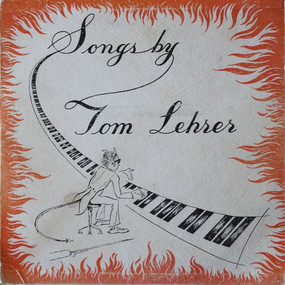 Robin Boyd Foundation
Audio - Recording, Lehrer Records
... LP 33RPM vinyl, Catalogue Number: KL 1653, Record cover, no sleeve, 1 vinyl disk. Cover notes, no author listed. Cover design: Janine Sterner. ...LP 33RPM vinyl, Catalogue Number: KL 1653, Record cover, no sleeve, 1 vinyl disk. Cover notes, no author listed. Cover design: Janine Sterner. ...The Boyds purchased their record player and sound system from Thomas’s in Melbourne. Patricia Boyd (later Davies) was very interested in opera and was later appointed to the Board of the Australian Opera.Songs by Tom Lehrer. LP 33RPM vinyl, Catalogue Number: KL 1653, Record cover, no sleeve, 1 vinyl disk. Cover notes, no author listed. Cover design: Janine Sterner. Tom Lehrer.lp, sound recording -
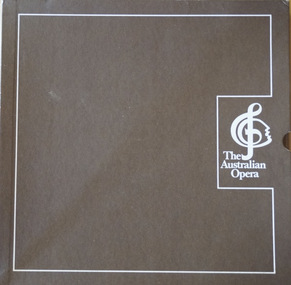 Robin Boyd Foundation
Audio - Recording
... LP 33RPM vinyl - Commemorative set, Catalogue Number: 2XS 4606, 1 cardboard box cover, 1 internal box cover, 1 paper record cover, 1 plastic record sleeve, 1 vinyl disk, 1 cardboard portfolio of prints cover, 6 prints of costume design (various artists)....LP 33RPM vinyl - Commemorative set, Catalogue Number: 2XS 4606, 1 cardboard box cover, 1 internal box cover, 1 paper record cover, 1 plastic record sleeve, 1 vinyl disk, 1 cardboard portfolio of prints cover, 6 prints of costume design (various artists). ...The Boyds purchased their record player and sound system from Thomas’s in Melbourne. Patricia Boyd (later Davies) was very interested in opera and was later appointed to the Board of the Australian Opera.The Australian Opera. LP 33RPM vinyl - Commemorative set, Catalogue Number: 2XS 4606, 1 cardboard box cover, 1 internal box cover, 1 paper record cover, 1 plastic record sleeve, 1 vinyl disk, 1 cardboard portfolio of prints cover, 6 prints of costume design (various artists).lp, sound recording, opera -
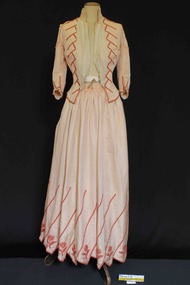 Brighton Historical Society
Clothing - Dress, Afternoon dress, c.1890
... The shoulders have been repaired with replacement fabric to match, from our records it appears that the repair work was performed in circa 1974 but no record exists of the original shoulder design and if the repair was an exact copy of the original. The repaired shoulders feature a small frill around the shoulder yoke and top of the arm. The sleeve...The shoulders have been repaired with replacement fabric to match, from our records it appears that the repair work was performed in circa 1974 but no record exists of the original shoulder design and if the repair was an exact copy of the original. The repaired shoulders feature a small frill around the shoulder yoke and top of the arm. The sleeve ...This afternoon dress belonged to Clara Johnstone Miller (nee Bell, 1866-1910). Clara was the only daughter of Mr James Bell, a councillor of the Shire of Leigh (today a part of Golden Plains Shire) and owner of Woolbrook Homestead in Teesdale, near Geelong. In 1888, Clara married prominent businessman, racehorse owner, racing identity and pastoralist Septimus Miller (1854-1925). Septimus was the sixth of seven children born to Henry 'Money' Miller and Eliza Miller (nee Mattinson). 'Money' Miller was a well known financier and politician and reputedly one of Australia's wealthiest people in his time. In 1889, Clara and Septimus moved into the house 'Cantala' in Dandenong Road, Caulfield. They had one child, Gwendoline Stewart Miller, who died in 1902 at the age of thirteen of diabetes - a largely untreatable condition at the time (insulin would not be discovered until 1921). Clara died in 1910, aged only 44. Septimus subsequently married Helen (nee Henderson), with whom he had a son, Ronald (1915-1990). The Millers were buried in the Brighton General Cemetery in a large Gothic-style vault. Upon Clara's death, Septimus sent much of her clothing and Gwendoline's to her mother Mary Bell. Some of these items were passed down to two of Clara's nieces, Miss Mary Bell and Mrs Lois Lillies, who donated them to BHS around 1973.A salmon (pale orange pink) corded silk afternoon dress with orange beaded embellishments, consisting of a bodice (.1) and skirt (.2) from c.1890. The bodice features a high standing collar with triple pleated bone silk chiffon trim along the top line, under the chin. This same chiffon is also secured in two pieces gathered and secured under the collar and and at the waist adding volume over the bust line and partially obscuring the jacket closing. The chiffon is secured at the side into the main fabric of the bodice by the beaded embellishment. The pink seed beads are sewn in lines of five beads one after the other creating a diagonal design that tapers from the shoulder to the waist. The bodice is boned around the front and back and secured down the centre font by nineteen hook and eyes and additional cotton tapes. Further beading details the bottom centre front and base line of the bodice. The shoulders have been repaired with replacement fabric to match, from our records it appears that the repair work was performed in circa 1974 but no record exists of the original shoulder design and if the repair was an exact copy of the original. The repaired shoulders feature a small frill around the shoulder yoke and top of the arm. The sleeve is fitted and three quarter finishing just below the elbow. The base of the sleeve is also trimmed with the pink bead design and bone three pleat chiffon trim. The back of the bodice features shaped panels contouring the jacket neatly in at the waist and then splitting and splaying out over the fullness of the skirt. The skirt appears to have been floor or ankle length held at the waist by a wide waistband. The skirt openings have been altered from the original currently featuring two openings secured by press studs. The skirt is gathered to the waistband at front and back creating fullness. The lower part of the skirt features the same pink bead embellishment and additional beaded flowers and diagonal point edge detail.clara miller, woolbrook, septimus miller, henry 'money' miller, gwendoline miller, cantala, 1890s fashion, caulfield, brighton general cemetery -
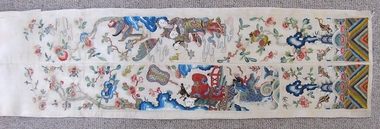 Embroiderers Guild, Victoria
Accessory - Pair of Chinese Embroidered Sleeve Bands, 19 th C
... Design. "This pair of sleeve bands are two halves of a scene known as "tian xian song zi" or "Heavenly immortals deliver a son". The historical origins of this saying is a story from 'The History of the Wei Imperial records', involving the Emperor Sheng and an immortal maiden who presents him with a son. ...Design. "This pair of sleeve bands are two halves of a scene known as "tian xian song zi" or "Heavenly immortals deliver a son". The historical origins of this saying is a story from 'The History of the Wei Imperial records', involving the Emperor Sheng and an immortal maiden who presents him with a son. ...Chinese sleeve embroidery bands, or wanxiu became popular in the late 19th century during the Qing Dynasty, evolving from the traditional Han cuff embroidery and Manchu styles. These detachable, decorated bands were added to women's informal jackets and robes, often featuring symbolic motifs like landscapes, flowers, and auspicious symbols. They served both a decorative function, displaying artistic skill and personal wishes, and a practical one by covering the sleeves when hands were folded at the waist. History and evolution: Origins: The practice of embroidering cuffs on robes existed during the previous Ming Dynasty for Han women, and this was adopted by the Manchu rulers who founded the Qing Dynasty. Qing Dynasty (1644-1911): The practice was popularized and elaborated upon during this era, with detachable bands becoming a fashionable element for informal wear. Symbolism: The embroidery included a complex visual vocabulary of wishes for a long life, many offspring, and a happy marriage, derived from nature, mythology, and classical literature. Functionality: Women would fold their arms, often with their hands inside the sleeves, so the embroidered bands, which were sewn to hang down the back of the jacket, would be displayed prominently down the front. 19th century peak: The late 19th century was the peak of their popularity, with intricate designs becoming fashionable and even influenced by court tastes, such as those favoured by the Empress Dowager Cixi. Later developments: The late 19th century saw the introduction of chemical 'aniline' dyes from Europe, leading to brighter, bolder colours in embroidery. Motifs and their Meanings: Auspicious symbols: Designs often included symbols for good fortune, wealth, and longevity. Natural imagery: Birds, flowers, and landscapes were common motifs that could represent natural beauty or convey specific symbolic meanings. Figurative scenes: Bands could also feature narrative scenes from classical stories or legends. The choice of motifs allowed women to express personal desires, cultural values, and aesthetic preferences, reflecting a more personal and informal style than official court attire. Symbolism: Mountains and sea, clouds and waves - Good luck. Dragon/fish tail/flaming pearl = Good fortune. This refers to the legend 'liyutiaolongmen' - a carp rising from the waves with the head already changed into a dragon implies the wish for success in the civil service examination. It is an allegory for the persistent effort needed to overcome obstacles. Male with black hat - Zhuang Yuan conferred. Among patterns with implied meanings , patterns related to the pursuits of scholarly honour and official rand include mainly the 'three number ones'. 'Zheng Yuan conferred' and 'carp jumping over the dragon gate'. In feudal society, examiners for the official positions had to go through three different levels of examinations. Bats - the work for bat is 'fu' and is a visual pun for the word happiness 'fu'. Rhino horn - wealth and good fortune. The ruyi sceptre - is a curved decorative Chinese object that symbolizes power, good fortune, and the wish that “things go as you desire.” The head of the sceptre resembles the 'lingzhi' of the 'longevity fungus'. Pomegranate - fertility ie; offspring, a virtue in China. Boy holding the flowering branch in the arms of the woman - in the selection of officials through imperial examinations in feudal society, the winner of an official position is described as ' having picked the crown'. 'Gui' (sweet scented osmanthus) and 'gui' (high rank or official) are very close in sound Chinese. In this design the boy in the woman's arms is seen waving a sweet scented osmanthus, thus an auspicious message is delivered. Information from Dr Rachel Silberstein, visiting Associate Professor at Rhode Island School of Design. "This pair of sleeve bands are two halves of a scene known as "tian xian song zi" or "Heavenly immortals deliver a son". The historical origins of this saying is a story from 'The History of the Wei Imperial records', involving the Emperor Sheng and an immortal maiden who presents him with a son. After this, the expression "tian xian song zi" came to be used as good wishes for marriage, closely associated with 'qilin song zi' (the qilin delivers a son), another popular topic in nianhua popular prints". Both cuffs show figures in an outdoor setting, done in colourful silk thread on a ivory satin. Reading from the bottom to the top of the cuff both have pointed mountains, clouds and sea with a rhino horn and a 'rui' coming out of the waves. Left cuff: above the sea there are a fish/dragon and a flaming pearl. Next two male figures standing on a bridge. One holds a fan and the other is wearing a black hat. More flowers, peonies and blossoms are above the figures. Right cuff: Above the water and mountains is a bat, peonies and pomegranates. Above these are three figures and another bat. The figure in there rear holds a feathered fan, while the front figure holds a child, who is holding a flowering branch. Above the trio is a low pagoda and blossoms. Silk satin stitch, Pekin knots and couched gold metal thread.embroidery, garments, silk embroidery, china, landscape, garden, figures
