
Showing 38 items matching "religious works"
-
 Flagstaff Hill Maritime Museum and Village
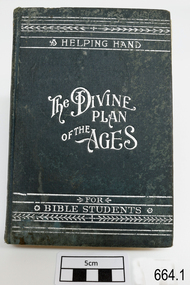
Book - Reference Religious Ideology, Charles Taze Russell, Millennial Dawn Vol 1 The Plan of the Ages, 1905
... ...Religious Works...(For more information on the Pattison Collection see item 3678 Flagstaff Hill collections) https://victoriancollections.net.au/items/5580c7e72162f114d8b758db flagstaff hill warrnambool shipwrecked-coast flagstaff-hill flagstaff-hill-maritime-museum maritime-museum shipwreck-coast millennial dawn vol 1 the plan of the ages book Religious Works Watch Tower Bible & Tract Society Charles Taze Russell Jehova Witness Bible Studies Millennial Dawn, Vol. 1 (The Plan of the Ages) was published in 1905 by the Watch Tower Bible & Tract Society and is a central text in the history of modern American millenarianism. ...Millennial Dawn, Vol. 1 (The Plan of the Ages) was published in 1905 by the Watch Tower Bible & Tract Society and is a central text in the history of modern American millenarianism. The subject book was originally published in 1886 under the title The Plan of the Ages, and later re-titled The Divine Plan of the Ages as part of the Studies in the Scriptures series. Volume 1 lays out the foundational theological framework of Charles Taze Russell's religious movement. The book argues that God operates through distinct chronological "dispensations" or ages, such as the Patriarchal Age, the Jewish Age, and the Gospel Age, leading up to the "Millennial Age". Its primary themes include the harmonising of the scriptures while attempting to systematically reconcile Old and New Testament prophecies.Millennial Dawn Vol 1 (The Plan of The Ages) Author: Charles Taze Russell Publisher: Watch Tower Bible & Tract Society. Allegheny, PA USA 1905 Date: 1905 Further Information: Blue hard cover book with white text to lettering and front board edge pattern designnon-fictionMillennial Dawn, Vol. 1 (The Plan of the Ages) was published in 1905 by the Watch Tower Bible & Tract Society and is a central text in the history of modern American millenarianism. The subject book was originally published in 1886 under the title The Plan of the Ages, and later re-titled The Divine Plan of the Ages as part of the Studies in the Scriptures series. Volume 1 lays out the foundational theological framework of Charles Taze Russell's religious movement. The book argues that God operates through distinct chronological "dispensations" or ages, such as the Patriarchal Age, the Jewish Age, and the Gospel Age, leading up to the "Millennial Age". Its primary themes include the harmonising of the scriptures while attempting to systematically reconcile Old and New Testament prophecies.flagstaff hill, warrnambool, shipwrecked-coast, flagstaff-hill, flagstaff-hill-maritime-museum, maritime-museum, shipwreck-coast, millennial dawn vol 1 the plan of the ages, book, religious works, watch tower bible & tract society, charles taze russell, jehova witness, bible studies -
 Flagstaff Hill Maritime Museum and Village
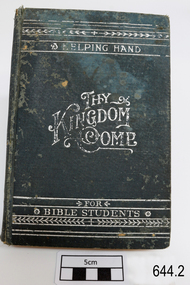
Book - Reference Religious Ideology, Charles Taze Russell, Millennial Dawn Vol 3 Thy Kingdom Come, 1905
... ...Religious Works...(For more information on the Pattison Collection see item 3678 Flagstaff Hill collections) https://victoriancollections.net.au/items/5580c7e72162f114d8b758db flagstaff hill warrnambool shipwrecked-coast flagstaff-hill flagstaff-hill-maritime-museum maritime-museum shipwreck-coast millennial dawn vol 1 the plan of the ages book Religious Works Watch Tower Bible & Tract Society Charles Taze Russell Jehova Witness Bible Studies Millennial Dawn, Vol. 3 (Thy Kingdom Come) was published in 1905 by the Watch Tower Bible & Tract Society and is a central text in the history of modern American millenarianism. ...Millennial Dawn, Vol. 3 (Thy Kingdom Come) was published in 1905 by the Watch Tower Bible & Tract Society and is a central text in the history of modern American millenarianism. The subject book was originally published in 1886 under the title The Plan of the Ages, and later re-titled The Divine Plan of the Ages as part of the Studies in the Scriptures series. Volume 1 lays out the foundational theological framework of Charles Taze Russell's religious movement. The book argues that God operates through distinct chronological "dispensations" or ages, such as the Patriarchal Age, the Jewish Age, and the Gospel Age, leading up to the "Millennial Age". Its primary themes include the harmonising of the scriptures while attempting to systematically reconcile Old and New Testament prophecies.Millennial Dawn Vol 3 (Thy Kingdom Come) Author: Charles Taze Russell Publisher: Watch Tower Bible & Tract Society. Allegheny, PA USA 1905 Date: 1905 Further Information: Blue hard cover book with white text to lettering and front board edge pattern designnon-fictionMillennial Dawn, Vol. 3 (Thy Kingdom Come) was published in 1905 by the Watch Tower Bible & Tract Society and is a central text in the history of modern American millenarianism. The subject book was originally published in 1886 under the title The Plan of the Ages, and later re-titled The Divine Plan of the Ages as part of the Studies in the Scriptures series. Volume 1 lays out the foundational theological framework of Charles Taze Russell's religious movement. The book argues that God operates through distinct chronological "dispensations" or ages, such as the Patriarchal Age, the Jewish Age, and the Gospel Age, leading up to the "Millennial Age". Its primary themes include the harmonising of the scriptures while attempting to systematically reconcile Old and New Testament prophecies.flagstaff hill, warrnambool, shipwrecked-coast, flagstaff-hill, flagstaff-hill-maritime-museum, maritime-museum, shipwreck-coast, millennial dawn vol 1 the plan of the ages, book, religious works, watch tower bible & tract society, charles taze russell, jehova witness, bible studies -
 Flagstaff Hill Maritime Museum and Village
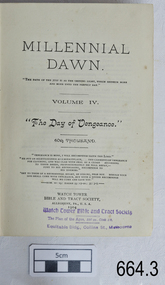
Book - Reference Religious Ideology, Charles Taze Russell, Millennial Dawn Vol 4 The Day of Vengeance, 1905
... ...Religious Works...(For more information on the Pattison Collection see item 3678 Flagstaff Hill collections) https://victoriancollections.net.au/items/5580c7e72162f114d8b758db flagstaff hill warrnambool shipwrecked-coast flagstaff-hill flagstaff-hill-maritime-museum maritime-museum shipwreck-coast millennial dawn vol 1 the plan of the ages book Religious Works Watch Tower Bible & Tract Society Charles Taze Russell Jehova Witness Bible Studies Millennial Dawn, Vol. 4 (The Day of Vengeance) was published in 1905 by the Watch Tower Bible & Tract Society and is a central text in the history of modern American millenarianism. ...Millennial Dawn, Vol. 4 (The Day of Vengeance) was published in 1905 by the Watch Tower Bible & Tract Society and is a central text in the history of modern American millenarianism. The subject book was originally published in 1886 under the title The Plan of the Ages, and later re-titled The Divine Plan of the Ages as part of the Studies in the Scriptures series. Volume 1 lays out the foundational theological framework of Charles Taze Russell's religious movement. The book argues that God operates through distinct chronological "dispensations" or ages, such as the Patriarchal Age, the Jewish Age, and the Gospel Age, leading up to the "Millennial Age". Its primary themes include the harmonising of the scriptures while attempting to systematically reconcile Old and New Testament prophecies.Millennial Dawn Vol 4 (The Day of Vengeance) Author: Charles Taze Russell Publisher: Watch Tower Bible & Tract Society. Allegheny, PA USA 1905 Date: 1905 Further Information: Blue hard cover book with white text to lettering and front board edge pattern designMillennial Dawn, Vol. 4 (The Day of Vengeance) was published in 1905 by the Watch Tower Bible & Tract Society and is a central text in the history of modern American millenarianism. The subject book was originally published in 1886 under the title The Plan of the Ages, and later re-titled The Divine Plan of the Ages as part of the Studies in the Scriptures series. Volume 1 lays out the foundational theological framework of Charles Taze Russell's religious movement. The book argues that God operates through distinct chronological "dispensations" or ages, such as the Patriarchal Age, the Jewish Age, and the Gospel Age, leading up to the "Millennial Age". Its primary themes include the harmonising of the scriptures while attempting to systematically reconcile Old and New Testament prophecies.flagstaff hill, warrnambool, shipwrecked-coast, flagstaff-hill, flagstaff-hill-maritime-museum, maritime-museum, shipwreck-coast, millennial dawn vol 1 the plan of the ages, book, religious works, watch tower bible & tract society, charles taze russell, jehova witness, bible studies -
 Flagstaff Hill Maritime Museum and Village
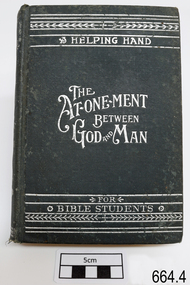
Book - Reference Religious Ideology, Charles Taze Russell, Millennial Dawn Vol 4 The Atonement of Man, 1905
... ...Religious Works...(For more information on the Pattison Collection see item 3678 Flagstaff Hill collections) https://victoriancollections.net.au/items/5580c7e72162f114d8b758db flagstaff hill warrnambool shipwrecked-coast flagstaff-hill flagstaff-hill-maritime-museum maritime-museum shipwreck-coast millennial dawn vol 1 the plan of the ages book Religious Works Watch Tower Bible & Tract Society Charles Taze Russell Jehova Witness Bible Studies Millennial Dawn, Vol. 4 (The Atonement of Man) was published in 1905 by the Watch Tower Bible & Tract Society and is a central text in the history of modern American millenarianism. ...Millennial Dawn, Vol. 4 (The Atonement of Man) was published in 1905 by the Watch Tower Bible & Tract Society and is a central text in the history of modern American millenarianism. The subject book was originally published in 1886 under the title The Plan of the Ages, and later re-titled The Divine Plan of the Ages as part of the Studies in the Scriptures series. Volume 1 lays out the foundational theological framework of Charles Taze Russell's religious movement. The book argues that God operates through distinct chronological "dispensations" or ages, such as the Patriarchal Age, the Jewish Age, and the Gospel Age, leading up to the "Millennial Age". Its primary themes include the harmonising of the scriptures while attempting to systematically reconcile Old and New Testament prophecies.Millennial Dawn Vol 4 (The Atonement of Man) Author: Charles Taze Russell Publisher: Watch Tower Bible & Tract Society. Allegheny, PA USA 1905 Date: 1905 Further Information: Blue hard cover book with white text to lettering and front board edge pattern designnon-fictionMillennial Dawn, Vol. 4 (The Atonement of Man) was published in 1905 by the Watch Tower Bible & Tract Society and is a central text in the history of modern American millenarianism. The subject book was originally published in 1886 under the title The Plan of the Ages, and later re-titled The Divine Plan of the Ages as part of the Studies in the Scriptures series. Volume 1 lays out the foundational theological framework of Charles Taze Russell's religious movement. The book argues that God operates through distinct chronological "dispensations" or ages, such as the Patriarchal Age, the Jewish Age, and the Gospel Age, leading up to the "Millennial Age". Its primary themes include the harmonising of the scriptures while attempting to systematically reconcile Old and New Testament prophecies.flagstaff hill, warrnambool, shipwrecked-coast, flagstaff-hill, flagstaff-hill-maritime-museum, maritime-museum, shipwreck-coast, millennial dawn vol 1 the plan of the ages, book, religious works, watch tower bible & tract society, charles taze russell, jehova witness, bible studies -
 Mont De Lancey
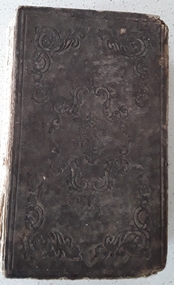
Book, Richard Watson, The Life of The Rev. John Wesley, A.M, 1851
... There are dirty marks, severe tanning and foxing noted all through this 1851 edition. 485p. with a few pages at the back of further religious works by the publisher John Mason....There are dirty marks, severe tanning and foxing noted all through this 1851 edition. 485p. with a few pages at the back of further religious works by the publisher John Mason. The Life of The Rev. ...The life of The Rev. John Wesley, A.M. sometime fellow of Lincoln College, Oxford and founder of the Methodist Societies.An old rare damaged brown heavily embossed patterned hardcover book, The Life of The Rev. John Wesley, A.M. by Richard Watson. The spine is missing. There are loose pages particularly at the front with pencil and ink inscriptions. A sewing pin is holding the black and white portrait of John Wesley to the endpaper. The spine edge inside has grey tape holding the endpapers together. There are dirty marks, severe tanning and foxing noted all through this 1851 edition. 485p. with a few pages at the back of further religious works by the publisher John Mason.non-fictionThe life of The Rev. John Wesley, A.M. sometime fellow of Lincoln College, Oxford and founder of the Methodist Societies.religion, biography, methodist church history -
 Flagstaff Hill Maritime Museum and Village
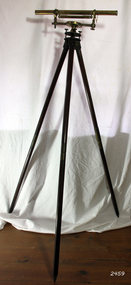
Instrument - Drainage Level, 1750-1795
... He often combined in his written works with religious themes and scientific content, often against the prevailing thoughts of the time. ...He often combined in his written works with religious themes and scientific content, often against the prevailing thoughts of the time. ...Adams jnr wrote many elementary scientific works, as well as on the use of mathematical instruments. He often combined in his written works with religious themes and scientific content, often against the prevailing thoughts of the time. According to one popular magazine of the time (Gentleman's Magazine), his works were often accused of "growing errors of materialism, infidelity, and anarchy". He started writing at a young age and developed a love for it, his main interests included math and science, these subjects he often expressed in his written essay's. Notable works from Adams are. An Essay on Electricity, and Magnetism (1784). Essays on the Microscope (1787). An Essay on Vision, briefly explaining the fabric of the eye (1789). Astronomical and Geographical Essays (1790). A Short Dissertation on the Barometer (1790). Geometrical and Graphical Essays, containing a description of the mathematical instruments used in geometry, civil and military surveying, leveling and perspective (1790). Lectures on Natural and Experimental Philosophy, in five volumes (1794).George Adams Sr and Jnr were both notable opticians and scientific instrument makers of the 18th century. Their contribution to scientific innovation and optical development cannot be underestimated. Having one of their early drainage levels in the collection and in extremely good condition is an asset to the Flagstaff collection.Drainage level or optical level. A brass surveying instrument with Achromatic telescope, bubble level and dial fitted to the Tribrach or footplate that has leveling screws. Tripod is wood and brass with adjustable and unscrewable legs (for ease of transportation). Made by "G. Adams Fleet St, London". Used in surveying and building to transfer, measure and/or set horizontal levels."G. Adams - London".flagstaff hill, warrnambool, shipwrecked-coast, flagstaff-hill, flagstaff-hill-maritime-museum, maritime-museum, shipwreck-coast, flagstaff-hill-maritime-village, george adams fleet street london, optical instrument, scientific instrument, technical instrument, surveyors level, george adams snr, projection microscope -
 The Beechworth Burke Museum
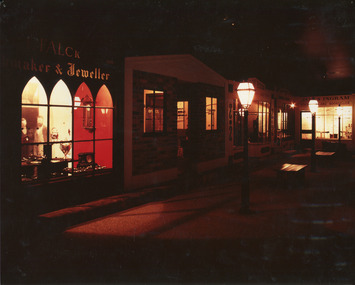
Photograph, 1990s--estimated
... Vale stocked a wide range of literary, historical and religious works, textbooks, periodicals and newspapers, as well as hosting a reading and writing room on Camp Street{?}. ...Taken in 1990, this photograph depicts a row of shops in Beechworth, with the shopfront of watchmaker and jewellers, William Turner and C.F. Falck, in the foreground, and newsagent and bookseller James Ingram's shop in the background.This photograph is of social significance to the Beechworth community in depicting the Street of Shops, the creation of curator, Roy Harvey, which opened in 1979 at Burke Museum. According to the Indigo Shire Council webpage for Burke Museum, this addition 'began a new period of collecting with Roy Harvey calling to the community for donations. The response resulted in an influx of material adding to the town history/ development and local identities collections. The Shops and their contents reflect another period in museology.' The historic shopfronts in this image portray those of local settlers, William Turner and CF Falck's Watchmaker and Jeweller store, and James Ingram's news agency and bookshop. William Turner was originally a goldfields official who became a commissioner on the Ovens goldfield, and later a resident warden, at times performing magisterial duties and chairing the Local Court. Charles Frederick Falck, born in Korlin, Germany, in 1833, a skilled watchmaker and jeweller, ran the jewellery business from 1862. Along with William Turner and Melbourne barrister, George Milner Stephen, he prepared a dazzling display of gems and jewellery from Beechworth for the Royal Society's Exhibition in Melbourne in 1865. This act signposted Beechworth's progress as a nineteenth-century gold rush town with a population of around 3000. In the mid-1850s, newsagent James Ingram established a newsagency and supplied papers and stationary to the goldfields. He and bookseller R.T. Vale stocked a wide range of literary, historical and religious works, textbooks, periodicals and newspapers, as well as hosting a reading and writing room on Camp Street{?}. James Ingram was a 'devoted instigator and supporter of the town's welfare institutions', who raised funds for to establish a hospital, primary school and benevolent asylum, and assisted people who'd fallen on hard times with his wife. He was also a mainstay of the early Baptist church, holding meetings in his house. He died in 1928, six weeks short of his 100th birthday. Ingram's Rock, north-west of Beechworth near where he lived in later life, was named after him. Colour rectangular photograph printed on matte photographic paper.Obverse: FALCK 1880 / maker & Jeweller/ WARDENS OFFICE/COACHING OFFICE/ EST. ??55/ ????ON HOUSE/ JAMES INGRAM/ NEWS?????? AND BOOKSELLER/ TOYS visible above shopfront in left foreground. Reverse: Catalogue item number 3305 pencilled in top right-hand corner.beechworth, beechworth historic shops, william turner, cf falck, james ingram, turner and falck watchmaker and jeweller, james ingram newsagent and bookseller, burke museum, promoting settlement, marketing and retailing, living in country towns, making regional centres, preserving traditions and commemorating, beechworth founders, victorian gold rush towns, beechworth pioneers, ingram's rock, 1860s beechworth, street of shops, roy harvey -
 Flagstaff Hill Maritime Museum and Village
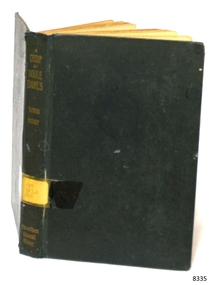
Book - Fictional Stories, Thomas Hardy, A Group of Noble Dames, 1894
... works in Wessex, a semi-fictionalized region of southwest England. He used this deeply atmospheric rural backdrop to chart how the encroaching modern industrial world was destroying old agrarian traditions. He achieved major success with novels like Far from the Madding Crowd (1874) and The Mayor of Casterbridge (1886). However, his later masterpieces, Tess of the d'Urbervilles (1891) and Jude the Obscure (1895), dealt so brutally with religious...works in Wessex, a semi-fictionalized region of southwest England. He used this deeply atmospheric rural backdrop to chart how the encroaching modern industrial world was destroying old agrarian traditions. He achieved major success with novels like Far from the Madding Crowd (1874) and The Mayor of Casterbridge (1886). However, his later masterpieces, Tess of the d'Urbervilles (1891) and Jude the Obscure (1895), dealt so brutally with religious ...The subject novel A Group of Noble Dames is a collection of ten historical short stories bound together by a classic frame narrative. The premise is that to escape the boredom of a rainy day, ten male members of the "Wessex Field and Antiquarian Club" gather together. To pass the time, each member including a local historian, an old surgeon, a rural dean, and a churchwarden takes a turn telling a scandalous, tragic, or ironic tale about a high-born lady from the local aristocracy of the 17th and 18th centuries. Unlike Hardy's deeply somber major novels, he categorized these stories as "Romances and Fantasies." However, they still contain classic Hardyan cynicism.A Group of Noble Dames Author: Thomas Hardy Publisher: Macmillan And Co Date: 1894 Further Information: Olive hardcover and spine with spine lettering in gold. The spine has a Library label with inscription.non-fictionThe subject novel A Group of Noble Dames is a collection of ten historical short stories bound together by a classic frame narrative. The premise is that to escape the boredom of a rainy day, ten male members of the "Wessex Field and Antiquarian Club" gather together. To pass the time, each member including a local historian, an old surgeon, a rural dean, and a churchwarden takes a turn telling a scandalous, tragic, or ironic tale about a high-born lady from the local aristocracy of the 17th and 18th centuries. Unlike Hardy's deeply somber major novels, he categorized these stories as "Romances and Fantasies." However, they still contain classic Hardyan cynicism.flagstaff hill, warrnambool, shipwrecked coast, flagstaff hill maritime museum, maritime museum, shipwreck coast, flagstaff hill maritime village, great ocean road, book, pattison collection, warrnambool library, warrnambool mechanics’ institute, ralph eric pattison, corangamite regional library service, warrnambool city librarian, mechanics’ institute library, victorian library board, warrnambool books and records, warrnambool children’s library, a group of noble dames, thomas hardy -
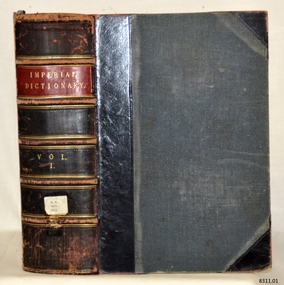 Flagstaff Hill Maritime Museum and Village
Book - Reference Dictionary/Scientific/Technological, John Ogilvie, The Imperial Dictionary English Technological and Scientific Vol 1, 1861
... religious, and reference texts. They were pioneers in the "subscription" model of selling books, delivering large works in affordable instalments to working-class and middle-class households. ...religious, and reference texts. They were pioneers in the "subscription" model of selling books, delivering large works in affordable instalments to working-class and middle-class households. ...The Imperial Dictionary was a massive, progressive undertaking designed to be a bridge between a traditional language dictionary and a comprehensive technical encyclopedia. John Ogilvie built the text upon the foundation of Noah Webster’s famous American Dictionary. However, Ogilvie dramatically expanded it to include thousands of new terms born from the Industrial Revolution. It heavily prioritized the vocabulary of engineering, medicine, manufacturing, chemistry, and the arts, alongside a vast array of distinct Scottish and provincial British terms that Webster had omitted.The Imperial Dictionary English Technological and Scientific Vol 1 Author: John Ogilvie Publisher: Blackie & Son Ltd Date: 1861 Further Information: Black cloth hardcover with a brown leather spine, title lettering in gold. The spine has a Library label with an inscription.non-fictionThe Imperial Dictionary was a massive, progressive undertaking designed to be a bridge between a traditional language dictionary and a comprehensive technical encyclopedia. John Ogilvie built the text upon the foundation of Noah Webster’s famous American Dictionary. However, Ogilvie dramatically expanded it to include thousands of new terms born from the Industrial Revolution. It heavily prioritized the vocabulary of engineering, medicine, manufacturing, chemistry, and the arts, alongside a vast array of distinct Scottish and provincial British terms that Webster had omitted.flagstaff hill, warrnambool, shipwrecked coast, flagstaff hill maritime museum, maritime museum, shipwreck coast, flagstaff hill maritime village, great ocean road, book, pattison collection, warrnambool library, warrnambool mechanics’ institute, ralph eric pattison, corangamite regional library service, warrnambool city librarian, mechanics’ institute library, victorian library board, warrnambool books and records, warrnambool children’s library -
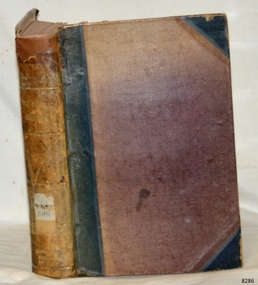 Flagstaff Hill Maritime Museum and Village
Book - Literary Work, John Bunyan, The Pilgrims Progress, 1850
... religious authors. The publisher, George Virtue (1794–1868), was a powerhouse 19th-century London publisher based out of Ivy Lane and Paternoster Row. He established himself in the "numbers trade", a publishing strategy where massive, high-end works were released in affordable, sequential pamphlets via subscription. ...religious authors. The publisher, George Virtue (1794–1868), was a powerhouse 19th-century London publisher based out of Ivy Lane and Paternoster Row. He established himself in the "numbers trade", a publishing strategy where massive, high-end works were released in affordable, sequential pamphlets via subscription. ...Written in 1678, The Pilgrim's Progress is a deeply influential Christian allegory that tracks the spiritual journey of a man named Christian. Weighed down by a crushing burden on his back (representing his sins), Christian flees his home in the "City of Destruction", after reading a holy book. Guided by the evangelist Evangelist, he embarks on a perilous trek toward the Celestial City (Heaven). Along the way, his journey brings him face-to-face with a cast of characters who personify spiritual triumphs and trials, such as Faithful, Hopeful, Mr Worldly Wiseman, and Giant Despair. He must navigate legendary, treacherous obstacles like the Slough of Despond, the temptations of Vanity Fair, and a terrifying battle with the demon Apollyon. The narrative is structured as a dream sequence experienced by the narrator. Because the second half follows Christian's wife, Christiana, and their children on the same path, it functions as both an adventure tale and a road map for the Puritan concept of salvation. It should be noted that the 1850 George Virtue printing is a classic example of a mid-Victorian luxury reprint. It is highly notable because it was curated by the popular non-conformist minister and author Rev. Robert Philip.The Pilgrims Progress Author: John Bunyan Curated By: Rev. Robert Philip Publisher: George Virtue Date: 1850 Further Information: Red hardcover with a red spine and reinforced corners, lettering in gilt. The spine has a Library label with an inscription.fictionWritten in 1678, The Pilgrim's Progress is a deeply influential Christian allegory that tracks the spiritual journey of a man named Christian. Weighed down by a crushing burden on his back (representing his sins), Christian flees his home in the "City of Destruction", after reading a holy book. Guided by the evangelist Evangelist, he embarks on a perilous trek toward the Celestial City (Heaven). Along the way, his journey brings him face-to-face with a cast of characters who personify spiritual triumphs and trials, such as Faithful, Hopeful, Mr Worldly Wiseman, and Giant Despair. He must navigate legendary, treacherous obstacles like the Slough of Despond, the temptations of Vanity Fair, and a terrifying battle with the demon Apollyon. The narrative is structured as a dream sequence experienced by the narrator. Because the second half follows Christian's wife, Christiana, and their children on the same path, it functions as both an adventure tale and a road map for the Puritan concept of salvation. It should be noted that the 1850 George Virtue printing is a classic example of a mid-Victorian luxury reprint. It is highly notable because it was curated by the popular non-conformist minister and author Rev. Robert Philip. flagstaff hill, warrnambool, shipwrecked coast, flagstaff hill maritime museum, maritime museum, shipwreck coast, flagstaff hill maritime village, great ocean road, book, pattison collection, warrnambool library, warrnambool mechanics’ institute, ralph eric pattison, corangamite regional library service, warrnambool city librarian, mechanics’ institute library, victorian library board, warrnambool books and records, warrnambool children’s library, the pilgrims progress, john bunyan -
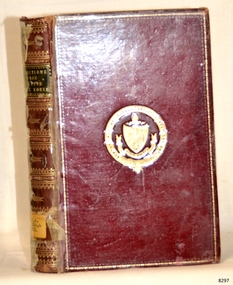 Flagstaff Hill Maritime Museum and Village
Book - Literary Work, John Milton, Selections from the Prose Works of John Milton, 1870
... Works of John Milton (1870) is a curated compilation of the non-poetic writings of John Milton. While Milton is globally famous for epic poems like Paradise Lost, he spent a significant portion of his adult life writing fiery political and religious tracts. ...Selections from the Prose Works of John Milton (1870) is a curated compilation of the non-poetic writings of John Milton. While Milton is globally famous for epic poems like Paradise Lost, he spent a significant portion of his adult life writing fiery political and religious tracts. This specific volume, compiled and annotated by the Rev. James J.G. Graham, extracts the most powerful segments of Milton’s prose. The book organizes his writings to give readers a cohesive look at Milton's philosophy, including his arguments for the freedom of the press known as Areopagitica. This was a famous 1644 prose pamphlet by Milton, written to protest Parliament's Licensing Order of 1643, which mandated government pre-approval for all published books. It remains one of the most historically significant defences of freedom of speech and the press. This work also encompasses his thoughts on the right to overthrow tyrannical rulers, his views on church reform, and various autobiographical passages.Selections from the Prose Works of John Milton Author: John Milton Edited by the Rev.James J G Graham Publisher: Hurst and Blackett Date: 1870 Further Information: Red embossed hardcover with a red spine and lettering in gold. The spine has a Library label with an inscription.fictionSelections from the Prose Works of John Milton (1870) is a curated compilation of the non-poetic writings of John Milton. While Milton is globally famous for epic poems like Paradise Lost, he spent a significant portion of his adult life writing fiery political and religious tracts. This specific volume, compiled and annotated by the Rev. James J.G. Graham, extracts the most powerful segments of Milton’s prose. The book organizes his writings to give readers a cohesive look at Milton's philosophy, including his arguments for the freedom of the press known as Areopagitica. This was a famous 1644 prose pamphlet by Milton, written to protest Parliament's Licensing Order of 1643, which mandated government pre-approval for all published books. It remains one of the most historically significant defences of freedom of speech and the press. This work also encompasses his thoughts on the right to overthrow tyrannical rulers, his views on church reform, and various autobiographical passages.flagstaff hill, warrnambool, shipwrecked coast, flagstaff hill maritime museum, maritime museum, shipwreck coast, flagstaff hill maritime village, great ocean road, selections from the prose works of john milton, colac municipal library, rev.james j ggraham -
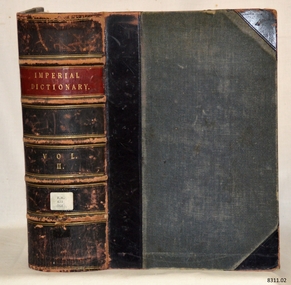 Flagstaff Hill Maritime Museum and Village
Book - Reference Dictionary/Scientific/Technological, John Ogilvie, The Imperial Dictionary English Technological and Scientific Vol 2, 1861
... religious, and reference texts. They were pioneers in the "subscription" model of selling books, delivering large works in affordable instalments to working-class and middle-class households. ...religious, and reference texts. They were pioneers in the "subscription" model of selling books, delivering large works in affordable instalments to working-class and middle-class households. ...The Imperial Dictionary was a massive, progressive undertaking designed to be a bridge between a traditional language dictionary and a comprehensive technical encyclopedia. John Ogilvie built the text upon the foundation of Noah Webster’s famous American Dictionary. However, Ogilvie dramatically expanded it to include thousands of new terms born from the Industrial Revolution. It heavily prioritized the vocabulary of engineering, medicine, manufacturing, chemistry, and the arts, alongside a vast array of distinct Scottish and provincial British terms that Webster had omitted.The Imperial Dictionary English Technological and Scientific Vol 2 Author: John Ogilvie Publisher: Blackie & Son Ltd Date: 1861 Further Information: Black cloth hardcover with a brown leather spine, title lettering in gold. The spine has a Library label with an inscription.non-fictionThe Imperial Dictionary was a massive, progressive undertaking designed to be a bridge between a traditional language dictionary and a comprehensive technical encyclopedia. John Ogilvie built the text upon the foundation of Noah Webster’s famous American Dictionary. However, Ogilvie dramatically expanded it to include thousands of new terms born from the Industrial Revolution. It heavily prioritized the vocabulary of engineering, medicine, manufacturing, chemistry, and the arts, alongside a vast array of distinct Scottish and provincial British terms that Webster had omitted.flagstaff hill, warrnambool, shipwrecked coast, flagstaff hill maritime museum, maritime museum, shipwreck coast, flagstaff hill maritime village, great ocean road, book, pattison collection, warrnambool library, warrnambool mechanics’ institute, ralph eric pattison, corangamite regional library service, warrnambool city librarian, mechanics’ institute library, victorian library board, warrnambool books and records, warrnambool children’s library -
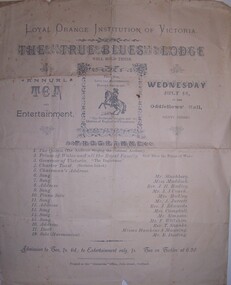 Glenelg Shire Council Cultural Collection
Programme - Programme - Loyal Orange Institution of Victoria "True Blues" Lodge Annual Tea and Entertainment Programme, c. 1900
... works to support and defend the Protestant faith. The Institution is named in honour of King William III, Prince of Orange (1650-1702) and his achievements for civil and religious liberty. ...works to support and defend the Protestant faith. The Institution is named in honour of King William III, Prince of Orange (1650-1702) and his achievements for civil and religious liberty. ...The Loyal Orange Institution of Victoria was established in 1843. As a society composed of Protestants, it works to support and defend the Protestant faith. The Institution is named in honour of King William III, Prince of Orange (1650-1702) and his achievements for civil and religious liberty. The first Orange Lodge in Victoria was founded in 1843, following a sectarian protest in Elizabeth Street Melbourne over the election of a Protestant candidate to the Legislative Council. By the 1890s there were 169 branches in Victoria, engaged in political lobbying for mainstream Protestant issues like temperance, Sunday observance, opposition to state aid for church schools, and opposition to any expansion of the political influence of Roman Catholics. The monthly meetings had an element of secrecy, as members wore regalia and followed a simple ritual. No Catholics could join. Women were admitted to Lodges in 1903.Single-sided sheet printed in blue ink containing program details. Decorative title at top of page, with central image of cavalier on rearing horse within a decorative ribbon and floral border, containing a Protestant oath. Loyal Orange Institution of Victoria "True Blues" Lodge Annual Tea and Entertainment Programmeloyal orange institution, protestant, societies, religion -
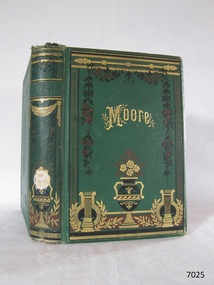 Flagstaff Hill Maritime Museum and Village
Book - Poetical Writings, Thomas Moore, The Poetical Works of Thomas Moore, 1878–1890s
... works on Richard Brinsley Sheridan and his close friend Lord Byron. Later in life, he wrote a four-volume History of Ireland. He spent his final decades residing at Sloperton Cottage in Wiltshire, England, where he died in 1852. The publisher for this volume, Gall & Inglis, was founded in Edinburgh by printer James Gall (1784–1872) in 1810, and joined by Robert Inglis in 1847. The firm initially gained recognition for publishing religious...works on Richard Brinsley Sheridan and his close friend Lord Byron. Later in life, he wrote a four-volume History of Ireland. He spent his final decades residing at Sloperton Cottage in Wiltshire, England, where he died in 1852. The publisher for this volume, Gall & Inglis, was founded in Edinburgh by printer James Gall (1784–1872) in 1810, and joined by Robert Inglis in 1847. The firm initially gained recognition for publishing religious ...This subject volume is a comprehensive collection of the works of Irish poet and songwriter Thomas Moore (1779–1852). The work features his famous Irish Melodies (containing classic songs like "The Last Rose of Summer" and "The Minstrel Boy"), his Oriental romance epic Lalla Rookh, satire, and light verse, along with a biographical summary ("With Life") and steel-engraved illustrations.Hard cover book. The Poetical Works of Thomas Moore Author: Thomas Moore Publisher: Gall & Inglis Date: 1878–1890s Further Information: Highly decorated green Cloth hardcover with lettering and patterning to spine in gilt. The spine has a Library label with an inscription.fictionThis subject volume is a comprehensive collection of the works of Irish poet and songwriter Thomas Moore (1779–1852). The work features his famous Irish Melodies (containing classic songs like "The Last Rose of Summer" and "The Minstrel Boy"), his Oriental romance epic Lalla Rookh, satire, and light verse, along with a biographical summary ("With Life") and steel-engraved illustrations.warrnambool, shipwrecked-coast, flagstaff-hill, flagstaff-hill-maritime-museum, maritime-museum, shipwreck-coast, flagstaff-hill-maritime-village, shipwrecked-artefact, book, the poetical works of thomas moore, thomas moore, warrnambool mechanics’ institute, pattison collection, warrnambool library, ralph eric pattison, corangamite regional library service, warrnambool city librarian, mechanics’ institute library, victorian library board, warrnambool books and records, warrnambool children’s library -
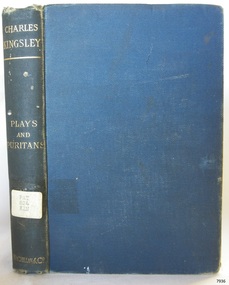 Flagstaff Hill Maritime Museum and Village
Book - Reference Book/Historical/Sociology/Research, Charles Kingsley, Plays and Puritans and other Historical Essays, 1873
... religious thought, all written in a vivid, moral in history style typical of Kingsley’s later essays. Charles Kingsley (1819–1875) was an Anglican clergyman, social reformer, historian, and popular Victorian novelist. He was associated with Christian socialism, helped found the Working Men’s College, became Regius Professor of Modern History at Cambridge, chaplain to Queen Victoria, and later canon of Chester Cathedral and of Westminster Abbey. His better known works...religious thought, all written in a vivid, moral in history style typical of Kingsley’s later essays. Charles Kingsley (1819–1875) was an Anglican clergyman, social reformer, historian, and popular Victorian novelist. He was associated with Christian socialism, helped found the Working Men’s College, became Regius Professor of Modern History at Cambridge, chaplain to Queen Victoria, and later canon of Chester Cathedral and of Westminster Abbey. His better known works ...Plays and Puritans and Other Historical Essays by Charles Kingsley is a collection of cultural and historical meditations, centred on the relationship between Puritanism and the English stage, especially in the 16th and 17th centuries, along with broader reflections on art, morality, and national identity in Victorian‑era Britain.Plays and Puritans and other Historical Essays Author: Charles Kingsley Publisher: MacMillan & Co Date: 1873, Light Blue to cloth cardboard covers darker Blue to the spine the spine has title embossed in gold lettering. non-fictionPlays and Puritans and Other Historical Essays by Charles Kingsley is a collection of cultural and historical meditations, centred on the relationship between Puritanism and the English stage, especially in the 16th and 17th centuries, along with broader reflections on art, morality, and national identity in Victorian‑era Britain. warrnambool, shipwrecked-coast, flagstaff-hill, flagstaff-hill-maritime-museum, maritime-museum, shipwreck-coast, flagstaff-hill-maritime-village, shipwrecked-artefact, book, pattison collection, warrnambool library, warrnambool mechanics’ institute, ralph eric pattison, corangamite regional library service, warrnambool city librarian, mechanics’ institute library, victorian library board, warrnambool books and records, warrnambool children’s library, great ocean road, plays and puritans and other historical essays, charles kingsley -
 Flagstaff Hill Maritime Museum and Village
Book - Reference Book/Biology/Scientific, Charles Darwin, The Origin of Species or The Preservation of Favoured Races in the Struggle for Life, 1859
... The book is considered one of the most influential scientific works ever written because it provided a unifying explanation for the diversity of life. It also sparked major scientific and religious debate that continues to this day. ...The Origin of Species is Charles Darwin’s landmark 1859 book, and it introduced the idea that species change over time through natural selection. Darwin drew on observations from his voyage on the HMS Beagle, especially evidence from the Galapagos Islands, to argue that living things share common ancestry and adapt through inherited variation. Darwin’s central claim argues that individuals with traits better suited to their environment are more likely to survive and reproduce, so those traits become more common over generations. The book challenged the idea of special creation and became the foundation of modern evolutionary biology. The book is considered one of the most influential scientific works ever written because it provided a unifying explanation for the diversity of life. It also sparked major scientific and religious debate that continues to this day.The Origin of Species Author: Charles Darwin Publisher: John Murray Date: 1860non-fiction The Origin of Species is Charles Darwin’s landmark 1859 book, and it introduced the idea that species change over time through natural selection. Darwin drew on observations from his voyage on the HMS Beagle, especially evidence from the Galapagos Islands, to argue that living things share common ancestry and adapt through inherited variation. Darwin’s central claim argues that individuals with traits better suited to their environment are more likely to survive and reproduce, so those traits become more common over generations. The book challenged the idea of special creation and became the foundation of modern evolutionary biology. The book is considered one of the most influential scientific works ever written because it provided a unifying explanation for the diversity of life. It also sparked major scientific and religious debate that continues to this day. warrnambool, shipwrecked-coast, flagstaff-hill, flagstaff-hill-maritime-museum, maritime-museum, shipwreck-coast, shipwrecked-artefact, book, warrnambool mechanics’ institute, the origin of species, charles darwin, pattison collection -
 Mission to Seafarers Victoria
Article, New Light on the Light of the World
... works of sacred art ever painted. Curious Londoners flocked to see it, but there was no inkling then of its influence on religious art, poetry and illustration that would continue well into the twentieth century; no less influential was its impact on stained glass. ...Abstract William Holman Hunt's Light of the World (1851-53) was a remarkable painting that depicted an idealised vision of his conversion to Evangelical Protestantism. The derogatory critics and fierce debates that greeted the Pre-Raphaelite paintings at Royal Academy exhibitions from 1850 in no way abated when the Light of the World and other PRB works were hung in 1854. Acceptance of the Light of the World was gradual, significantly aided by a long explanatory letter from John Ruskin published in The Times (5 May 1854 p. 9) that explained the symbolism in great detail, championing the work as the principal Pre-Raphaelite picture in the Exhbition and one of the noblest works of sacred art ever painted. Curious Londoners flocked to see it, but there was no inkling then of its influence on religious art, poetry and illustration that would continue well into the twentieth century; no less influential was its impact on stained glass. Almost immediately it was embraced as a new subject for church windows of all denominations. The global tour of Hunt's larger copy of the Light of the World reached Australia in 1906 where, preceded by clever pre-publicity, it generated huge interest in cities and country centres here and in New Zealand. The effect of the 'blockbuster' tour was far-reaching, with hundreds of stained glass windows appearing in churches across the country for the next fifty years. This paper explores William Holman Hunt's co-option of illumination as metaphor and reality, the factors behind the longevity of the Light of the World as a stained glass phenomenon in Australia, and its universal appeal to Protestant church-goers.non-fictionAbstract William Holman Hunt's Light of the World (1851-53) was a remarkable painting that depicted an idealised vision of his conversion to Evangelical Protestantism. The derogatory critics and fierce debates that greeted the Pre-Raphaelite paintings at Royal Academy exhibitions from 1850 in no way abated when the Light of the World and other PRB works were hung in 1854. Acceptance of the Light of the World was gradual, significantly aided by a long explanatory letter from John Ruskin published in The Times (5 May 1854 p. 9) that explained the symbolism in great detail, championing the work as the principal Pre-Raphaelite picture in the Exhbition and one of the noblest works of sacred art ever painted. Curious Londoners flocked to see it, but there was no inkling then of its influence on religious art, poetry and illustration that would continue well into the twentieth century; no less influential was its impact on stained glass. Almost immediately it was embraced as a new subject for church windows of all denominations. The global tour of Hunt's larger copy of the Light of the World reached Australia in 1906 where, preceded by clever pre-publicity, it generated huge interest in cities and country centres here and in New Zealand. The effect of the 'blockbuster' tour was far-reaching, with hundreds of stained glass windows appearing in churches across the country for the next fifty years. This paper explores William Holman Hunt's co-option of illumination as metaphor and reality, the factors behind the longevity of the Light of the World as a stained glass phenomenon in Australia, and its universal appeal to Protestant church-goers.jesus, stained glass windows, bronwyn hughes, pre-raphaelite, william holman hunt (1827-1910) -
 Yarra City Council
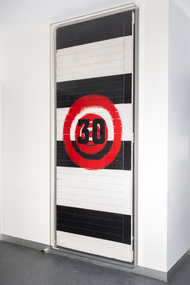
Painting - Public Art, Rule 30
... His unique combination of materials and the potent imagery in his works expose the impact of British settlement and religious order imposed on his people. ...Clinton Naina’s earliest memory is attending Collingwood football matches at Victoria Park with his father and uncles. His dad was an avid Collingwood supporter and Naina proudly wore his football colours. Lining up to enter the grounds at the big old black-and-white painted wooden doors gave Naina the feeling of entering into another world. 'Rule 30' is a comment on race relations in sport. The artwork is made from the original doors located at the front entrance of the Collingwood Football Club’s grounds at Victoria Park. When the club was refurbished the door was gifted to Naina by a friend—an ex-Collingwood football player—for use in his art practice. The work depicts a big red target painted on the existing Black and white stripes—Collingwood colours—of the door. Naina placed a fabric number ‘30’ on top of the target—created from material used for numbers on the back of players’ football vests. This represents the individuals who have been racially vilified while playing football over many years. The red represents the colour of human blood, while the Blak and white Collingwood colours already painted on the wood are a very fitting comment on race relations. The door itself becomes a potent metaphor for “overcoming barriers, making change, breaking down doors and moving forth into a new era of respect for people”. Rule 30 in the AFL was the first racial vilification code in Australian sport. It prohibited conduct between players, clubs and other AFL officials, which threatened, disparaged, vilified or insulted another person on the basis of that person’s race, religion, colour, descent or ethnic origin. In 2013, ‘Rule 30’ was amended to ‘Rule 35’ to combat other forms of discrimination including disability, appearance and sexuality.The number '30' cut out of fabric placed on top of a painted red target at the centre of an existing black and white wooden door.Accompanying labelracism, sport, football, afl -
 National Vietnam Veterans Museum (NVVM)
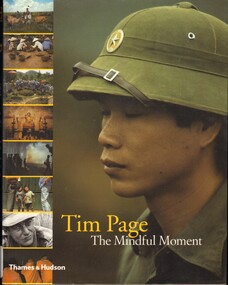
Book, Page, Tim, The Mindful Moment, 2001
... works. Travelers are among the most privileged people. Transcending frontiers religious, physical and political constitutes the ultimate learning curve. at best, we gain enlightenment; most get by without ever having more that a few mindful moments. ...Travelers are among the most privileged people. Transcending frontiers religious, physical and political constitutes the ultimate learning curve. at best, we gain enlightenment; most get by without ever having more that a few mindful moments.Travelers are among the most privileged people. Transcending frontiers religious, physical and political constitutes the ultimate learning curve. at best, we gain enlightenment; most get by without ever having more that a few mindful moments.vietnam war, 1961-1975 -- pictorial works, vietnam war (1961-1975), indochina -- history -- 1945- -- pictorial works. -
 Warrnambool and District Historical Society Inc.
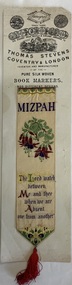
Functional object - Bookmark, Thomas Stevens, Coventry and London, Mizpah, late 19th century
... works etc. These were called Stevengraphs. Stevens opened a factory in London in 1878 and by the 1880s was producing over 900 woven silk designs. Stevengraphs are a collectors' Items today and this Mizpah bookmark is a fine example of one. Religious ...This bookmark was found loose inside one of our antiquarian books and no connection to the book or its unknown original owner have been found. The word Mizpah means Watchtower in Hebrew and a Mizpah card or bookmark was sent or given to Jewish people who were separated from their loved ones, with the message that the Lord was watching over those absent. The bookmark has been made by the firm of Thomas Stevens of Coventry. This city was the English centre of ribbon weaving in the 19th century and Thomas Stevens, a local weaver, invented and developed in the 1860s the art of making woven silk items - book marks, greeting cards, art works etc. These were called Stevengraphs. Stevens opened a factory in London in 1878 and by the 1880s was producing over 900 woven silk designs. Stevengraphs are a collectors' Items today and this Mizpah bookmark is a fine example of one.This is a woven silk bookmark with multi-coloured patterns. coloured script and a sprig of fuchsia flowers, all on a yellow background. There is a red tassel at the end of the bookmark. The bookmark was affixed to a rectangular sheet of paper containing details of the maker but the bookmark is now detached. The backing sheet is partly torn.Mizpah The Lord watch between Me and thee when we are Absent one from anotherreligious book marks, stevengraphs -
 Vision Australia
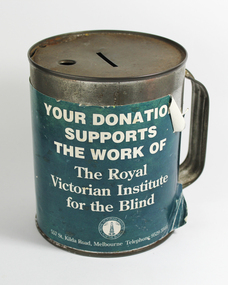
Container - Object, Donation tin - round RVIB circa 1980's, 1980s
... The donation of coins is and was considered part of religious life and mentioned in Christian, Jewish and Islamic texts. With the need and expansion of charitable works occurring outside religious life, charity boxes began to spread into hospitals, orphanages and asylums. ...The donation of coins is and was considered part of religious life and mentioned in Christian, Jewish and Islamic texts. With the need and expansion of charitable works occurring outside religious life, charity boxes began to spread into hospitals, orphanages and asylums. ...Coin collections have a long and varied history. Coins were often collected in churches in a box located near the entrance/exit, and later via a collection plate that was passed amongst the congregation Funds were used to repair the church or feed the poorest of the parish. The donation of coins is and was considered part of religious life and mentioned in Christian, Jewish and Islamic texts. With the need and expansion of charitable works occurring outside religious life, charity boxes began to spread into hospitals, orphanages and asylums. The need for non-fixed boxes grew with the rise in charities and their activities outside a fixed building. Collection boxes could be large (and therefore hard to move) or could be held by individuals acting as collection agents, working at a specific location, moving between dwellings or at events. In this example, the RVIB tin could be used gathering coins at events such as Carols by Candlelight, White Cane day or other special marketing days.1 metal coin collection tin with handle and paper wrapYour Donation Supports the Work of The Royal Victorian Institute for the Blind RVIB lighthouse logo 557 St Kilda Road, Melbourne, Telephone 9529 3544royal victorian institute for the blind, equipment -
 Vision Australia
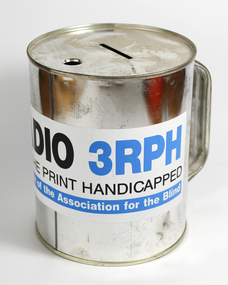
Functional object - Object, Donation tin - round Radio 3RPH circa 1990's, 1980-1990s
... The donation of coins is and was considered part of religious life and mentioned in Christian, Jewish and Islamic texts. With the need and expansion of charitable works occurring outside religious life, charity boxes began to spread into hospitals, orphanages and asylums. ...The donation of coins is and was considered part of religious life and mentioned in Christian, Jewish and Islamic texts. With the need and expansion of charitable works occurring outside religious life, charity boxes began to spread into hospitals, orphanages and asylums. ...Coin collections have a long and varied history. Coins were often collected in churches in a box located near the entrance/exit, and later via a collection plate that was passed amongst the congregation Funds were used to repair the church or feed the poorest of the parish. The donation of coins is and was considered part of religious life and mentioned in Christian, Jewish and Islamic texts. With the need and expansion of charitable works occurring outside religious life, charity boxes began to spread into hospitals, orphanages and asylums. The need for non-fixed boxes grew with the rise in charities and their activities outside a fixed building. Collection boxes could be large (and therefore hard to move) or could be held by individuals acting as collection agents, working at a specific location, moving between dwellings or at events. In this example, the 3RPH tin could be used gathering coins at events such as outside broadcasts or other special marketing days.1 metal coin collection tin with handle and paper wrap1170 Radio 3RPH For the print handicapped A service of the Association for the Blindassociation for the blind, 3rph radio station -
 Vision Australia
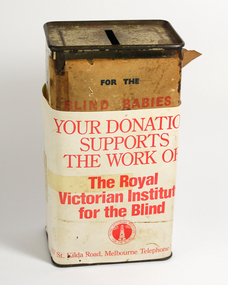
Functional object - Object, Donation tin - rectangular tin RVIB wrapper around Blind Babies tin, circa 1945
... The donation of coins is and was considered part of religious life and mentioned in Christian, Jewish and Islamic texts. With the need and expansion of charitable works occurring outside religious life, charity boxes began to spread into hospitals, orphanages and asylums. ...The donation of coins is and was considered part of religious life and mentioned in Christian, Jewish and Islamic texts. With the need and expansion of charitable works occurring outside religious life, charity boxes began to spread into hospitals, orphanages and asylums. ...Coin collections have a long and varied history. Coins were often collected in churches in a box located near the entrance/exit, and later via a collection plate that was passed amongst the congregation Funds were used to repair the church or feed the poorest of the parish. The donation of coins is and was considered part of religious life and mentioned in Christian, Jewish and Islamic texts. With the need and expansion of charitable works occurring outside religious life, charity boxes began to spread into hospitals, orphanages and asylums. The need for non-fixed boxes grew with the rise in charities and their activities outside a fixed building. Collection boxes could be large (and therefore hard to move) or could be held by individuals acting as collection agents, working at a specific location, moving between dwellings or at events. In this example, the older Blind Babies tin has been wrapped with a modern RVIB wrapper, which could be used at Carols by Candlelight, White Cane day or other special marketing days.1 metal coin collection tin with paper wrapWrapper: Your Donation Supports the Work of the Royal Victorian Institute for the Blind RVIB lighthouse logo 557 St Kilda Road, Melbourne, Telephone 9577 3341 Old label Front: For the Blind Babies Children and Adults of the Royal Victorian Institute for the Blind 557 St Kilda Road, Prahran Side: As a thanksgiving for sight! (Drawing of a man holding his hand to his eyes as a blast occurs in front of him, pushing small objects towards his body) It might hit You or Me! Side: As a thanksgiving for sight! (Elaine Leahy facing towards the RVIB gates). The gates of the Institute are always open to welcome all eligible blind babies, children and adults who seek, and never fail to receive, its aid.royal victorian institute for the blind, fundraising -
 Vision Australia
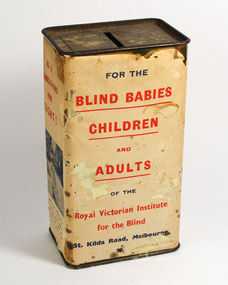
Functional object - Object, Donation tin - rectangular tin Blind Babies wrapper, circa 1945
... The donation of coins is and was considered part of religious life and mentioned in Christian, Jewish and Islamic texts. With the need and expansion of charitable works occurring outside religious life, charity boxes began to spread into hospitals, orphanages and asylums. ...The donation of coins is and was considered part of religious life and mentioned in Christian, Jewish and Islamic texts. With the need and expansion of charitable works occurring outside religious life, charity boxes began to spread into hospitals, orphanages and asylums. ...Coin collections have a long and varied history. Coins were often collected in churches in a box located near the entrance/exit, and later via a collection plate that was passed amongst the congregation Funds were used to repair the church or feed the poorest of the parish. The donation of coins is and was considered part of religious life and mentioned in Christian, Jewish and Islamic texts. With the need and expansion of charitable works occurring outside religious life, charity boxes began to spread into hospitals, orphanages and asylums. The need for non-fixed boxes grew with the rise in charities and their activities outside a fixed building. Collection boxes could be large (and therefore hard to move) or could be held by individuals acting as collection agents, working at a specific location, moving between dwellings or at events. In this example, the Blind Babies tin could have be used at Carols by Candlelight, White Cane day or other special marketing days.3 metal coin collection tin with paper wrapFront: For the Blind Babies Children and Adults of the Royal Victorian Institute for the Blind 557 St Kilda Road, Prahran Side: As a thanksgiving for sight! (Drawing of a man holding his hand to his eyes as a blast occurs in front of him, pushing small objects towards his body) It might hit You or Me! Side: As a thanksgiving for sight! (Elaine Leahy facing towards the RVIB gates). The gates of the Institute are always open to welcome all eligible blind babies, children and adults who seek, and never fail to receive, its aid.royal victorian institute for the blind, fundraising -
 Vision Australia
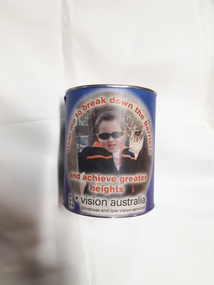
Functional object - Object, Donation tin - round Vision Australia, 2005-2018
... The donation of coins is and was considered part of religious life and mentioned in Christian, Jewish and Islamic texts. With the need and expansion of charitable works occurring outside religious life, charity boxes began to spread into hospitals, orphanages and asylums. ...The donation of coins is and was considered part of religious life and mentioned in Christian, Jewish and Islamic texts. With the need and expansion of charitable works occurring outside religious life, charity boxes began to spread into hospitals, orphanages and asylums. ...Coin collections have a long and varied history. Coins were often collected in churches in a box located near the entrance/exit, and later via a collection plate that was passed amongst the congregation Funds were used to repair the church or feed the poorest of the parish. The donation of coins is and was considered part of religious life and mentioned in Christian, Jewish and Islamic texts. With the need and expansion of charitable works occurring outside religious life, charity boxes began to spread into hospitals, orphanages and asylums. The need for non-fixed boxes grew with the rise in charities and their activities outside a fixed building. Collection boxes could be large (and therefore hard to move) or could be held by individuals acting as collection agents, working at a specific location, moving between dwellings or at events. In this example, the Vision Australia tin could be used gathering coins at events such as Carols by Candlelight or other special marketing days.1 metal coin collection tin with paper wrapPaper wrapper around tin: Help me to break down the barriers and achieve greater heights Vision Australia blindness and low vision services Paper on top of tin: Thank you for your support Vision Australia blindness and low vision servicesvision australia, fundraising -
 Vision Australia
Functional object - Object, Donation tin - rectangular RVIB tin, 1936
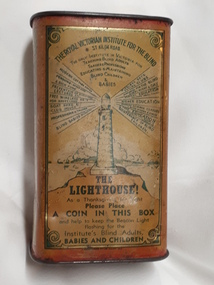
... The donation of coins is and was considered part of religious life and mentioned in Christian, Jewish and Islamic texts. With the need and expansion of charitable works occurring outside religious life, charity boxes began to spread into hospitals, orphanages and asylums. ...The donation of coins is and was considered part of religious life and mentioned in Christian, Jewish and Islamic texts. With the need and expansion of charitable works occurring outside religious life, charity boxes began to spread into hospitals, orphanages and asylums. ...Coin collections have a long and varied history. Coins were often collected in churches in a box located near the entrance/exit, and later via a collection plate that was passed amongst the congregation Funds were used to repair the church or feed the poorest of the parish. The donation of coins is and was considered part of religious life and mentioned in Christian, Jewish and Islamic texts. With the need and expansion of charitable works occurring outside religious life, charity boxes began to spread into hospitals, orphanages and asylums. The need for non-fixed boxes grew with the rise in charities and their activities outside a fixed building. Collection boxes could be large (and therefore hard to move) or could be held by individuals acting as collection agents, working at a specific location, moving between dwellings or at events. These boxes were designed to be reused, with a pop out section in the base.2 x metal coin collection tins with printed sidesFront: The Royal Victorian Institute for the Blind St Kilda Road The only Institute in Victoria for teaching blind adults trades & professions educating & maintaining blind children & babies (Lighthouse with words radiating out from light) Modern cottage homes Pensions - after care & sick fund Prevention of blindness lectures, etc. Free wireless radio for needy cases Boat shed & club house Professions & trades Blind babies nursery Wireless sets Social club Happiness for the blind every day & night Musical education Higher education Domestic science classes for blind women & girls A free education Maintenance of blind children The Lighthouse! As a thanksgiving for sight Please place a coin in this box and help to keep the Beacon Light flashing for the Institute's Blind Adults, Babies and Children Side: (Picture of two girls playing with dolls house) Our blind babies and pupils will probably spend 70 years in our Royal Victorian Institute for the Blind St Kilda Road As a thanksgiving for sight please help make their years very happy ones by placing a coin in this box! Reverse front: (Drawing of a man holding his hand to his eyes as a blast occurs in front of him, pushing small objects towards his body.) It might hit You or Me! Please! Will You? As a thanksgiving for the sight you and your dear ones possess, please place a coin in this box to assist the Royal Victorian Institute for the Blind, St Kilda Road, and its Blind Adults, Children and Babies! Reverse side: (picture of workshop at RVIB) One of our many spacious workshops provided by public subscription! The Royal Victorian Institute for the Blind is faced with the problem of employing and otherwise assisting its blind workers. It gives them charitable allowances in addition to their earnings, amounting to approximately 15,000 (pounds) every year, to enable them to support their wives and families! No profits can therefore be made! This 15,000 (pounds) is distributed because the great handicap of blindness prevents blind persons from earning as much as their more fortunate sighted fellows. Please! Ask Storekeepers for our Baskets, Mats, Brooms, etc. And as a thanksgiving for Your Sight place a coin in this box for our blind adults, children and babies! Embossed on the top of the box is Royal Victorian Institute for the Blindfundraising, royal victorian institute for the blind -
 Vision Australia
Functional object - Object, Wooden donation boxes, 1970-1990
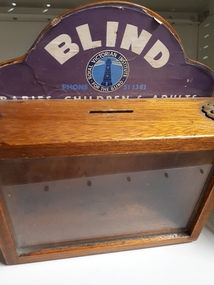
... The donation of coins is and was considered part of religious life and mentioned in Christian, Jewish and Islamic texts. With the need and expansion of charitable works occurring outside religious life, charity boxes began to spread into hospitals, orphanages and asylums. ...The donation of coins is and was considered part of religious life and mentioned in Christian, Jewish and Islamic texts. With the need and expansion of charitable works occurring outside religious life, charity boxes began to spread into hospitals, orphanages and asylums. ...Coin collections have a long and varied history. Coins were often collected in churches in a box located near the entrance/exit, and later via a collection plate that was passed amongst the congregation Funds were used to repair the church or feed the poorest of the parish. The donation of coins is and was considered part of religious life and mentioned in Christian, Jewish and Islamic texts. With the need and expansion of charitable works occurring outside religious life, charity boxes began to spread into hospitals, orphanages and asylums. The need for non-fixed boxes grew with the rise in charities and their activities outside a fixed building. Collection boxes could be large (and therefore hard to move) or could be held by individuals acting as collection agents, working at a specific location, moving between dwellings or at events. In this example, the boxes were placed in a semi-permanent location, such as a shop counter or bar, for people to donate money. Periodically it would be emptied by a collector, who either unlocked the padlock that was usually attached or replaced it with a new box.2 wooden boxes with paper label, perspex or glass,metal hinges and locking mechanism.Blind Babies, Children & Adults Royal Victorian Institute for the Blind Phone 51 1381 All services provided by the RVIB are free - thanks to your helproyal victorian institute for the blind, fundraising -
 Federation University Art Collection
Painting, Isabel Huntington, 'Sunflower' by Isabel Huntington, c1956
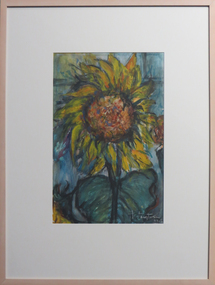
... religious paintings in oils, awarding the prize to Isabel Huntington. In the same year Isabel Huntington travelled to Europe. In Ballarat's Crouch Prize Isabel Huntington was commended three times. After returning from overseas she taught at Rosanna High School, Victoria. Isabel Huntington lived at Montmorency, Victoria, and was there at the time of her death. Her studio was located at 10 Nokes Court, Montmorency, 3094. This item is part of the Federation University Art Collection. The Art Collection features over 2000 works...religious paintings in oils, awarding the prize to Isabel Huntington. In the same year Isabel Huntington travelled to Europe. In Ballarat's Crouch Prize Isabel Huntington was commended three times. After returning from overseas she taught at Rosanna High School, Victoria. Isabel Huntington lived at Montmorency, Victoria, and was there at the time of her death. Her studio was located at 10 Nokes Court, Montmorency, 3094. This item is part of the Federation University Art Collection. The Art Collection features over 2000 works ...Isabel HUNTINGTON (1905 - 04 December 1971) Isabel McCausland was educated at Ballarat and married Robert Keith Huntington in 1931, and which time Isabel was living in the Melbourne suburb of Preston. Isabel Huntington was a painter, craft officer and craft worker. She studied at Ballarat High School, Ballarat Technical Art School (a division of the School of Mines) and RMIT, and was a member of the Victorian Artists' Society and the Contemporary Art Society. In 1945 she was appointed Director of Handcrafts for the Victorian Division of the Red Cross Society. Isabel Huntington had previously held the position of Supervisor of Handcrafts at Heidelberg Military Hospital for three and a half years. She was a member or the Arts and Crafts Society. Isabel Huntington had five 'one-man" shows, three in Melbourne, one in Ballarat and one in Hamilton, Victoria. The critics of the day described Isobel Huntington's work as Post Impressionist and Expressionist. 'Her enjoyment of the use of colour and her sense of vitality is obvious in her most original conception of the relationship of art to flowers.' Ursula Hoff judged the 1965 Albury awards for watercolour, and religious paintings in oils, awarding the prize to Isabel Huntington. In the same year Isabel Huntington travelled to Europe. In Ballarat's Crouch Prize Isabel Huntington was commended three times. After returning from overseas she taught at Rosanna High School, Victoria. Isabel Huntington lived at Montmorency, Victoria, and was there at the time of her death. Her studio was located at 10 Nokes Court, Montmorency, 3094. This item is part of the Federation University Art Collection. The Art Collection features over 2000 works and was listed as a 'Ballarat Treasure' in 2007 in 1971.Framed painting of a sunflower. The signature at the lower right has been oversigned in white 'Huntington 1962". A note on the back of the work suggests it was more like to have been created in 1956, and it was first purchased between 1956 and 1958. If you can share information on this artist or artwork please use the email link below.A note on the back says "Sunflower 1962 Oil/Pastel Insurance Isobel Huntington Gouache 1956 Black Box. Huntingdon (sic) Isobel. Acquired between 1956 - 1958"art, artwork, gouache, painting, sunflower, isabel huntington, handcraft, arts and crafts society, crouch prize, ursula hoff, alumni, flora, ballarat teachers' college art collection, isobel huntington, isabel mccausland -
Kew Historical Society Inc
Journal, Kewriosity : December 1984
... Religious notices; Clubs] / p2. Update: Notes from Council - Caring about your community / Cr Robin Saunders [Mayor of Kew] p3. Depot works ...New look - Kewriosity / p1. Community Notices [Religious notices; Clubs] / p2. Update: Notes from Council - Caring about your community / Cr Robin Saunders [Mayor of Kew] p3. Depot works on schedule / p3. Kew Library on the move / p4. [Kew] Recreation Centre / p4. Carols by candlelight / p5. Occasional Care Centre / p5. Full Day Care Centre / p5. Traffic management / p5. Kew Bowling Club - Women make history / Jack Gervasoni p6. Housing needs in Kew / p6. Youth Page - Welcome [Scouting in Kew] / p7. Merry Christmas and Happy New Year/ p8-9. Things to do in Kew / p10-11. Library news / p11. Red alert for Scouts [2nd Kew Scout Group] / p12. Kew Festival / p12.Kewriosity was a local newsletter combining Kew Council and community news. It was published between November 1983 and June 1994, replacing an earlier Kewriosity [broad] Sheet (1979-84). In producing Kewriosity, Council aimed to provide a range of interesting and informative articles covering its deliberations and decision making, together with items of general interest and importance to the Kew community and information not generally available through daily media outlets.non-fictionNew look - Kewriosity / p1. Community Notices [Religious notices; Clubs] / p2. Update: Notes from Council - Caring about your community / Cr Robin Saunders [Mayor of Kew] p3. Depot works on schedule / p3. Kew Library on the move / p4. [Kew] Recreation Centre / p4. Carols by candlelight / p5. Occasional Care Centre / p5. Full Day Care Centre / p5. Traffic management / p5. Kew Bowling Club - Women make history / Jack Gervasoni p6. Housing needs in Kew / p6. Youth Page - Welcome [Scouting in Kew] / p7. Merry Christmas and Happy New Year/ p8-9. Things to do in Kew / p10-11. Library news / p11. Red alert for Scouts [2nd Kew Scout Group] / p12. Kew Festival / p12. publications -- city of kew (vic.), kewriosity, council newsletters, community newsletters -
 Vision Australia
Functional object - Object, RVIB Wooden donation boxes, 1970-1990
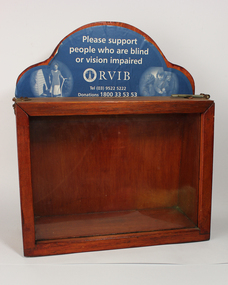
... The donation of coins is and was considered part of religious life and mentioned in Christian, Jewish and Islamic texts. With the need and expansion of charitable works occurring outside religious life, charity boxes began to spread into hospitals, orphanages and asylums. ...The donation of coins is and was considered part of religious life and mentioned in Christian, Jewish and Islamic texts. With the need and expansion of charitable works occurring outside religious life, charity boxes began to spread into hospitals, orphanages and asylums. ...Coin collections have a long and varied history. Coins were often collected in churches in a box located near the entrance/exit, and later via a collection plate that was passed amongst the congregation Funds were used to repair the church or feed the poorest of the parish. The donation of coins is and was considered part of religious life and mentioned in Christian, Jewish and Islamic texts. With the need and expansion of charitable works occurring outside religious life, charity boxes began to spread into hospitals, orphanages and asylums. The need for non-fixed boxes grew with the rise in charities and their activities outside a fixed building. Collection boxes could be large (and therefore hard to move) or could be held by individuals acting as collection agents, working at a specific location, moving between dwellings or at events. In this example, the boxes were placed in a semi-permanent location, such as a shop counter or bar, for people to donate money. Periodically it would be emptied by a collector, who either unlocked the padlock that was usually attached or replaced it with a new box.2 wooden boxes with paper label, perspex or glass,metal hinges and locking mechanism.Blind Babies, Children & Adults Royal Victorian Institute for the Blind Phone 51 1381 All services provided by the RVIB are free - thanks to your helproyal victorian institute for the blind, fundraising
