
Showing 21 items matching "repair of airframes "
-
 Moorabbin Air Museum
Book - Wooden aircraft, Aircraft Woodwork
... ...Repair of airframes & wings...Wooden aircraft Wood / wind & sky Materials & equipment Construction - fuselage & tail Wings Construction of spars Construction of ribs Making bows Wing assembly Repair of airframes & wings Overview of building an aircraft with wood, circa 1972 Aircraft Woodwork Book Wooden aircraft ...Overview of building an aircraft with wood, circa 1972non-fictionOverview of building an aircraft with wood, circa 1972wood / wind & sky, materials & equipment, construction - fuselage & tail, wings, construction of spars, construction of ribs, making bows, wing assembly, repair of airframes & wings -
Moorabbin Air Museum
Manual - Aviation Technician Integrated Training Program, Aviation Technician Integrated Training Program Airframe Section Books 1 through 9 EA-ITP-A
... Aviation technical integrated training program Aircraft structures Metal structural repairs Aircraft fabric covering/painting & finishing/welding Aircraft assembly & rigging Electrical systems Hydraulic & pneumatic systems Landing gear systems Cabin atmosphere control systems Fire & rain control systems Technical overview of aircraft structures for training purposes, circa 1981 2 ring folder. Possible duplicate item Aviation Technician Integrated Training Program Airframe ...Technical overview of aircraft structures for training purposes, circa 19812 ring folder. Possible duplicate itemnon-fictionTechnical overview of aircraft structures for training purposes, circa 1981aircraft structures, metal structural repairs, aircraft fabric covering/painting & finishing/welding, aircraft assembly & rigging, electrical systems, hydraulic & pneumatic systems, landing gear systems, cabin atmosphere control systems, fire & rain control systems -
Moorabbin Air Museum
Book - Aero engines, Aero Engines ? - no title page, book spine illegible
... Aero engines The internal combustion engine Lubrication system Ignition system Installation Starting the engine Airscrews Instruments Undercarriage Airframe Overview of aero engine construction, functioning & repair. Unable to locate date, but pre jet engine Spine illegible, title page missing Aero Engines ? ...Overview of aero engine construction, functioning & repair. Unable to locate date, but pre jet engineSpine illegible, title page missingnon-fictionOverview of aero engine construction, functioning & repair. Unable to locate date, but pre jet enginethe internal combustion engine, lubrication system, ignition system, installation, starting the engine, airscrews, instruments, undercarriage, airframe -
 Eltham District Historical Society Inc
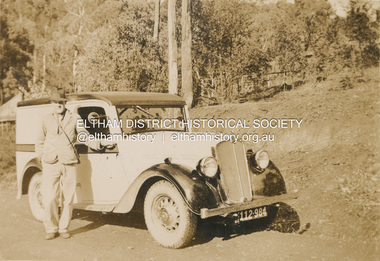
Photograph, Lester Neil Ingram with his Morris Ten Series II delivery van, c.1942
... airframe had run 1,127 hours. A full moon was just rising. The flight was non-operational, its purpose a dual conversion on type mission flown by a student pilot with almost two hours completed at night on similar flights. They had just changed aircraft as their previous aircraft had become unserviceable. The pilot had accepted the aircraft, which was technically unserviceable as the NCO in charge of flight had not completed the inspection paperwork correctly. The aircraft had undergone a major engine repair...airframe had run 1,127 hours. A full moon was just rising. The flight was non-operational, its purpose a dual conversion on type mission flown by a student pilot with almost two hours completed at night on similar flights. They had just changed aircraft as their previous aircraft had become unserviceable. The pilot had accepted the aircraft, which was technically unserviceable as the NCO in charge of flight had not completed the inspection paperwork correctly. The aircraft had undergone a major engine repair ...The van is a Morris Ten Series II which was manufactured 1935-1937. The numeral only Victorian Registration plate 112-984 was part of the sequence of numeral only plates issued 1910-1939. Lester Neil Ingram was born at Kew, 8 November 1911, the son of John and Ada (Key) Ingram of Research. According to Electoral Roll records, in 1903, John Ingram was a farmer at Lancefield, his wife Ada, a milliner. By 1906, John Ingram was a baker at Research and from about 1912, an orchardist. The family moved to Anglesea River sometime between 1937 and 1942. A sheet metal worker by trade, Lester had run the bakery business for 14 years, his father retired, and was working as a baker at Anglesea when he enlisted in the R.A.A.F. on 5 December 1941 at Melbourne. Previously he had worked as a baker at Research (1937). He undertook training as Aircrew at No. 4 Initial Training School at Victor Harbour, South Australia, followed by No. 1 Wireless Air Gunners School at Ballarat, Victoria, and No. 3 Bombing and Gunnery School, West Sale, Victoria. On October 15, 1942 Lester qualified as an Air Gunner, promoted to Sergeant, and was posted to 1 Embarkation Depot at Ascot Vale, Victoria, and attached to R.A.F. UK. Lester embarked from Australia December 2, 1942 and arrived at 11 Personnel Despatch and Reception Depot on January 13, 1943. On March 9 he was transferred to 10 Operational Training Unit, Group No. 91, Bomber Command, R.A.F. Lester’s service file reveals that on the evening of 22 April 1943, Lester was a member of the aircrew of Whitley V bomber, N.1374. The airframe had run 1,127 hours. A full moon was just rising. The flight was non-operational, its purpose a dual conversion on type mission flown by a student pilot with almost two hours completed at night on similar flights. They had just changed aircraft as their previous aircraft had become unserviceable. The pilot had accepted the aircraft, which was technically unserviceable as the NCO in charge of flight had not completed the inspection paperwork correctly. The aircraft had undergone a major engine repair the day before. The aircraft took off at 2348 hours from R.A.F. Abington. It was reported that the aircraft take-off was quite normal and after climbing to 800 feet it passed out of view of the ground observers. A few seconds later the aircraft crashed, and it was reported that the sound of the engines seemed to become desynchronised. The crash occurred one and a half miles northwest of Longworth, Berkshire and the aircraft destroyed by fire. It carried a crew of five. Lester is commemorated on the Eltham Roll of Honour Board, which was commissioned by the Eltham War Memorial Trust to be hung in the Eltham Infant Welfare Centre, part of complex of buildings that form the Eltham War Memorial. The Honour Roll is presently (2023) hanging in the Eltham Library Community Gallery space. Lester was remembered with the following notices published in The Argus newspaper, Saturday 22 April 1944, p2: INGRAM. —In treasured memories you are with me still. Sgt. Lester Neil Ingram, killed, aircraft accident, England, April 22, 1943. (Mother and father.) INGRAM. —In proud and ever loving memory of Lester, 410236, Sgt. L. N. Ingram, R.A.A.F., air crash England, April 22, 1943. —Per ardua ad astra. (Ellen Peake and family.) [“Per ardua ad astra” is a Latin phrase meaning “through adversity to the stars” or “through struggle to the stars” which was the motto of the Royal Air Force and other Commonwealth air forces such as the Royal Australian Air Force.] And from his fiancé Ellen, in The Argus, Wednesday, 5 May 1943, p2: INGRAM. —On April 22 (result of aircraft accident near Lodgeworth Village, Berks, England), Sgt. Lester Neil Ingram, R.A.A.F., fiance of Ellen. -Treasured memories till we meet again. Lester is buried at Brookwood Military Cemetery, Surrey, United Kingdom, Grave 4. 1. 11. INGRAM, Flt. Sgt. LESTER NEIL, 410236. R.A.A.F. 22nd April 1943. Age 31. Son of John and Ada Ingram, of Anglesea, Victoria, Australia. He gave his life For freedom’s cause ◊ ◊ ◊ LEST WE FORGET “They shall grow not old, as we that are left grow old; Age shall not weary them, nor the years condemn. At the going down of the sun and in the morning We will remember them.”On reverse "Lester Ingram"112-984 (victorian registration), lester neil ingram, morris ten series ii, bakery, delivery van, pam thoonen (nee ingram) collection -
 Eltham District Historical Society Inc
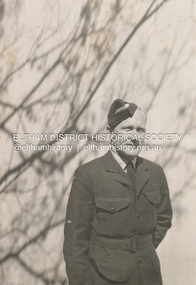
Photograph, Leading Aircraftsman, Lester Neil Ingram, RAAF, c.1943
... airframe had run 1,127 hours. A full moon was just rising. The flight was non-operational, its purpose a dual conversion on type mission flown by a student pilot with almost two hours completed at night on similar flights. They had just changed aircraft as their previous aircraft had become unserviceable. The pilot had accepted the aircraft, which was technically unserviceable as the NCO in charge of flight had not completed the inspection paperwork correctly. The aircraft had undergone a major engine repair...airframe had run 1,127 hours. A full moon was just rising. The flight was non-operational, its purpose a dual conversion on type mission flown by a student pilot with almost two hours completed at night on similar flights. They had just changed aircraft as their previous aircraft had become unserviceable. The pilot had accepted the aircraft, which was technically unserviceable as the NCO in charge of flight had not completed the inspection paperwork correctly. The aircraft had undergone a major engine repair ...Lester Neil Ingram was born at Kew, 8 November 1911, the son of John and Ada (Key) Ingram of Research. According to Electoral Roll records, in 1903, John Ingram was a farmer at Lancefield, his wife Ada, a milliner. By 1906, John Ingram was a baker at Research and from about 1912, an orchardist. The family moved to Anglesea River sometime between 1943 and 1949. A sheet metal worker by trade, Lester had run the bakery business for 14 years, his father retired, and was working as a baker at Anglesea when he enlisted in the R.A.A.F. on 5 December 1941 at Melbourne. Previously he had worked as a baker at Research (1937). He undertook training as Aircrew at No. 4 Initial Training School at Victor Harbour, South Australia, followed by No. 1 Wireless Air Gunners School at Ballarat, Victoria, and No. 3 Bombing and Gunnery School, West Sale, Victoria. On October 15, 1942 Lester qualified as an Air Gunner, promoted to Sergeant, and was posted to 1 Embarkation Depot at Ascot Vale, Victoria, and attached to R.A.F. UK. Lester embarked from Australia December 2, 1942 and arrived at 11 Personnel Despatch and Reception Depot on January 13, 1943. On March 9 he was transferred to 10 Operational Training Unit, Group No. 91, Bomber Command, R.A.F. Lester’s service file reveals that on the evening of 22 April 1943, Lester was a member of the aircrew of Whitley V bomber, N.1374. The airframe had run 1,127 hours. A full moon was just rising. The flight was non-operational, its purpose a dual conversion on type mission flown by a student pilot with almost two hours completed at night on similar flights. They had just changed aircraft as their previous aircraft had become unserviceable. The pilot had accepted the aircraft, which was technically unserviceable as the NCO in charge of flight had not completed the inspection paperwork correctly. The aircraft had undergone a major engine repair the day before. The aircraft took off at 2348 hours from R.A.F. Abington. It was reported that the aircraft take-off was quite normal and after climbing to 800 feet it passed out of view of the ground observers. A few seconds later the aircraft crashed, and it was reported that the sound of the engines seemed to become desynchronised. The crash occurred one and a half miles northwest of Longworth, Berkshire and the aircraft destroyed by fire. It carried a crew of five. Lester is commemorated on the Eltham Roll of Honour Board, which was commissioned by the Eltham War Memorial Trust to be hung in the Eltham Infant Welfare Centre, part of complex of buildings that form the Eltham War Memorial. The Honour Roll is presently (2023) hanging in the Eltham Library Community Gallery space. Lester was remembered with the following notices published in The Argus newspaper, Saturday 22 April 1944, p2: INGRAM. —In treasured memories you are with me still. Sgt. Lester Neil Ingram, killed, aircraft accident, England, April 22, 1943. (Mother and father.) INGRAM. —In proud and ever loving memory of Lester, 410236, Sgt. L. N. Ingram, R.A.A.F., air crash England, April 22, 1943. —Per ardua ad astra. (Ellen Peake and family.) [“Per ardua ad astra” is a Latin phrase meaning “through adversity to the stars” or “through struggle to the stars” which was the motto of the Royal Air Force and other Commonwealth air forces such as the Royal Australian Air Force.] And from his fiancé Ellen, in The Argus, Wednesday, 5 May 1943, p2: INGRAM. —On April 22 (result of aircraft accident near Lodgeworth Village, Berks, England), Sgt. Lester Neil Ingram, R.A.A.F., fiance of Ellen. -Treasured memories till we meet again. Lester is buried at Brookwood Military Cemetery, Surrey, United Kingdom, Grave 4. 1. 11. INGRAM, Flt. Sgt. LESTER NEIL, 410236. R.A.A.F. 22nd April 1943. Age 31. Son of John and Ada Ingram, of Anglesea, Victoria, Australia. He gave his life For freedom’s cause ◊ ◊ ◊ LEST WE FORGET “They shall grow not old, as we that are left grow old; Age shall not weary them, nor the years condemn. At the going down of the sun and in the morning We will remember them.”On reverse "Lester Ingram"lester neil ingram, baker, eltham, honour board, raaf, research (vic.), roll of honour, pam thoonen (nee ingram) collection -
 Eltham District Historical Society Inc
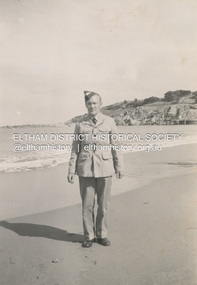
Photograph, Leading Aircraftsman, Lester Neil Ingram, RAAF, c.1943
... airframe had run 1,127 hours. A full moon was just rising. The flight was non-operational, its purpose a dual conversion on type mission flown by a student pilot with almost two hours completed at night on similar flights. They had just changed aircraft as their previous aircraft had become unserviceable. The pilot had accepted the aircraft, which was technically unserviceable as the NCO in charge of flight had not completed the inspection paperwork correctly. The aircraft had undergone a major engine repair...airframe had run 1,127 hours. A full moon was just rising. The flight was non-operational, its purpose a dual conversion on type mission flown by a student pilot with almost two hours completed at night on similar flights. They had just changed aircraft as their previous aircraft had become unserviceable. The pilot had accepted the aircraft, which was technically unserviceable as the NCO in charge of flight had not completed the inspection paperwork correctly. The aircraft had undergone a major engine repair ...Lester Neil Ingram was born at Kew, 8 November 1911, the son of John and Ada (Key) Ingram of Research. According to Electoral Roll records, in 1903, John Ingram was a farmer at Lancefield, his wife Ada, a milliner. By 1906, John Ingram was a baker at Research and from about 1912, an orchardist. The family moved to Anglesea River sometime between 1943 and 1949. A sheet metal worker by trade, Lester had run the bakery business for 14 years, his father retired, and was working as a baker at Anglesea when he enlisted in the R.A.A.F. on 5 December 1941 at Melbourne. Previously he had worked as a baker at Research (1937). He undertook training as Aircrew at No. 4 Initial Training School at Victor Harbour, South Australia, followed by No. 1 Wireless Air Gunners School at Ballarat, Victoria, and No. 3 Bombing and Gunnery School, West Sale, Victoria. On October 15, 1942 Lester qualified as an Air Gunner, promoted to Sergeant, and was posted to 1 Embarkation Depot at Ascot Vale, Victoria, and attached to R.A.F. UK. Lester embarked from Australia December 2, 1942 and arrived at 11 Personnel Despatch and Reception Depot on January 13, 1943. On March 9 he was transferred to 10 Operational Training Unit, Group No. 91, Bomber Command, R.A.F. Lester’s service file reveals that on the evening of 22 April 1943, Lester was a member of the aircrew of Whitley V bomber, N.1374. The airframe had run 1,127 hours. A full moon was just rising. The flight was non-operational, its purpose a dual conversion on type mission flown by a student pilot with almost two hours completed at night on similar flights. They had just changed aircraft as their previous aircraft had become unserviceable. The pilot had accepted the aircraft, which was technically unserviceable as the NCO in charge of flight had not completed the inspection paperwork correctly. The aircraft had undergone a major engine repair the day before. The aircraft took off at 2348 hours from R.A.F. Abington. It was reported that the aircraft take-off was quite normal and after climbing to 800 feet it passed out of view of the ground observers. A few seconds later the aircraft crashed, and it was reported that the sound of the engines seemed to become desynchronised. The crash occurred one and a half miles northwest of Longworth, Berkshire and the aircraft destroyed by fire. It carried a crew of five. Lester is commemorated on the Eltham Roll of Honour Board, which was commissioned by the Eltham War Memorial Trust to be hung in the Eltham Infant Welfare Centre, part of complex of buildings that form the Eltham War Memorial. The Honour Roll is presently (2023) hanging in the Eltham Library Community Gallery space. Lester was remembered with the following notices published in The Argus newspaper, Saturday 22 April 1944, p2: INGRAM. —In treasured memories you are with me still. Sgt. Lester Neil Ingram, killed, aircraft accident, England, April 22, 1943. (Mother and father.) INGRAM. —In proud and ever loving memory of Lester, 410236, Sgt. L. N. Ingram, R.A.A.F., air crash England, April 22, 1943. —Per ardua ad astra. (Ellen Peake and family.) [“Per ardua ad astra” is a Latin phrase meaning “through adversity to the stars” or “through struggle to the stars” which was the motto of the Royal Air Force and other Commonwealth air forces such as the Royal Australian Air Force.] And from his fiancé Ellen, in The Argus, Wednesday, 5 May 1943, p2: INGRAM. —On April 22 (result of aircraft accident near Lodgeworth Village, Berks, England), Sgt. Lester Neil Ingram, R.A.A.F., fiance of Ellen. -Treasured memories till we meet again. Lester is buried at Brookwood Military Cemetery, Surrey, United Kingdom, Grave 4. 1. 11. INGRAM, Flt. Sgt. LESTER NEIL, 410236. R.A.A.F. 22nd April 1943. Age 31. Son of John and Ada Ingram, of Anglesea, Victoria, Australia. He gave his life For freedom’s cause ◊ ◊ ◊ LEST WE FORGET “They shall grow not old, as we that are left grow old; Age shall not weary them, nor the years condemn. At the going down of the sun and in the morning We will remember them.”On reverse "Lester Ingram"lester neil ingram, baker, eltham, honour board, raaf, research (vic.), roll of honour, pam thoonen (nee ingram) collection -
 Eltham District Historical Society Inc
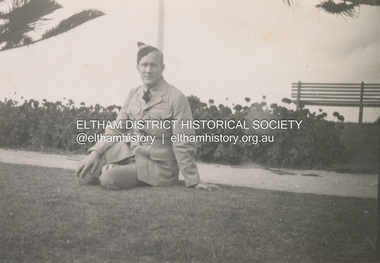
Photograph, Leading Aircraftsman, Lester Neil Ingram, RAAF, c.1943
... airframe had run 1,127 hours. A full moon was just rising. The flight was non-operational, its purpose a dual conversion on type mission flown by a student pilot with almost two hours completed at night on similar flights. They had just changed aircraft as their previous aircraft had become unserviceable. The pilot had accepted the aircraft, which was technically unserviceable as the NCO in charge of flight had not completed the inspection paperwork correctly. The aircraft had undergone a major engine repair...airframe had run 1,127 hours. A full moon was just rising. The flight was non-operational, its purpose a dual conversion on type mission flown by a student pilot with almost two hours completed at night on similar flights. They had just changed aircraft as their previous aircraft had become unserviceable. The pilot had accepted the aircraft, which was technically unserviceable as the NCO in charge of flight had not completed the inspection paperwork correctly. The aircraft had undergone a major engine repair ...Lester Neil Ingram was born at Kew, 8 November 1911, the son of John and Ada (Key) Ingram of Research. According to Electoral Roll records, in 1903, John Ingram was a farmer at Lancefield, his wife Ada, a milliner. By 1906, John Ingram was a baker at Research and from about 1912, an orchardist. The family moved to Anglesea River sometime between 1943 and 1949. A sheet metal worker by trade, Lester had run the bakery business for 14 years, his father retired, and was working as a baker at Anglesea when he enlisted in the R.A.A.F. on 5 December 1941 at Melbourne. Previously he had worked as a baker at Research (1937). He undertook training as Aircrew at No. 4 Initial Training School at Victor Harbour, South Australia, followed by No. 1 Wireless Air Gunners School at Ballarat, Victoria, and No. 3 Bombing and Gunnery School, West Sale, Victoria. On October 15, 1942 Lester qualified as an Air Gunner, promoted to Sergeant, and was posted to 1 Embarkation Depot at Ascot Vale, Victoria, and attached to R.A.F. UK. Lester embarked from Australia December 2, 1942 and arrived at 11 Personnel Despatch and Reception Depot on January 13, 1943. On March 9 he was transferred to 10 Operational Training Unit, Group No. 91, Bomber Command, R.A.F. Lester’s service file reveals that on the evening of 22 April 1943, Lester was a member of the aircrew of Whitley V bomber, N.1374. The airframe had run 1,127 hours. A full moon was just rising. The flight was non-operational, its purpose a dual conversion on type mission flown by a student pilot with almost two hours completed at night on similar flights. They had just changed aircraft as their previous aircraft had become unserviceable. The pilot had accepted the aircraft, which was technically unserviceable as the NCO in charge of flight had not completed the inspection paperwork correctly. The aircraft had undergone a major engine repair the day before. The aircraft took off at 2348 hours from R.A.F. Abington. It was reported that the aircraft take-off was quite normal and after climbing to 800 feet it passed out of view of the ground observers. A few seconds later the aircraft crashed, and it was reported that the sound of the engines seemed to become desynchronised. The crash occurred one and a half miles northwest of Longworth, Berkshire and the aircraft destroyed by fire. It carried a crew of five. Lester is commemorated on the Eltham Roll of Honour Board, which was commissioned by the Eltham War Memorial Trust to be hung in the Eltham Infant Welfare Centre, part of complex of buildings that form the Eltham War Memorial. The Honour Roll is presently (2023) hanging in the Eltham Library Community Gallery space. Lester was remembered with the following notices published in The Argus newspaper, Saturday 22 April 1944, p2: INGRAM. —In treasured memories you are with me still. Sgt. Lester Neil Ingram, killed, aircraft accident, England, April 22, 1943. (Mother and father.) INGRAM. —In proud and ever loving memory of Lester, 410236, Sgt. L. N. Ingram, R.A.A.F., air crash England, April 22, 1943. —Per ardua ad astra. (Ellen Peake and family.) [“Per ardua ad astra” is a Latin phrase meaning “through adversity to the stars” or “through struggle to the stars” which was the motto of the Royal Air Force and other Commonwealth air forces such as the Royal Australian Air Force.] And from his fiancé Ellen, in The Argus, Wednesday, 5 May 1943, p2: INGRAM. —On April 22 (result of aircraft accident near Lodgeworth Village, Berks, England), Sgt. Lester Neil Ingram, R.A.A.F., fiance of Ellen. -Treasured memories till we meet again. Lester is buried at Brookwood Military Cemetery, Surrey, United Kingdom, Grave 4. 1. 11. INGRAM, Flt. Sgt. LESTER NEIL, 410236. R.A.A.F. 22nd April 1943. Age 31. Son of John and Ada Ingram, of Anglesea, Victoria, Australia. He gave his life For freedom’s cause ◊ ◊ ◊ LEST WE FORGET “They shall grow not old, as we that are left grow old; Age shall not weary them, nor the years condemn. At the going down of the sun and in the morning We will remember them.”On reverse "Lester Ingram"lester neil ingram, baker, eltham, honour board, raaf, research (vic.), roll of honour, pam thoonen (nee ingram) collection -
Moorabbin Air Museum
Book (item) - CAC Collection - Airframe Log Book Wirraway A20-202, COMMONWEALTH AIRCRAFT CORPORATION PTY LTD et al, 11/12/40
... Repairs mostly carried out by 7 Service Flight Training School and 23 Squadron Red hardcover manual CAC Collection - Airframe Log Book Wirraway A20-202 Book CAC Collection - Airframe Log Book Wirraway A20-202 COMMONWEALTH AIRCRAFT CORPORATION PTY LTD Royal Australian Air Force ...Repairs mostly carried out by 7 Service Flight Training School and 23 Squadron -
Moorabbin Air Museum
Book (item) - CAC Collection - Wirraway Airframe Log Book A20-539, Royal Australian Air Force et al, 22/03/1942
... Repairs mostly carried out by No. 4 Operational Training Unit (OTU) Red hardcover manual CAC Collection - Wirraway Airframe Log Book A20-539 Book CAC Collection - Wirraway Airframe Log Book A20-539 Royal Australian Air Force COMMONWEALTH AIRCRAFT CORPORATION PTY LTD ...Repairs mostly carried out by No. 4 Operational Training Unit (OTU) -
Moorabbin Air Museum
Book (item) - CAC Collection - Airframe Log Book Wirraway A20-240, Royal Australian Air Force et al, 25/03/41
... Repairs mostly conducted by 2 Service Flight Training School. Red hardcover manual CAC Collection - Airframe Log Book Wirraway A20-240 Book CAC Collection - Airframe Log Book Wirraway A20-240 Royal Australian Air Force COMMONWEALTH AIRCRAFT CORPORATION PTY LTD ...Repairs mostly conducted by 2 Service Flight Training School. -
 Australian Gliding Museum
Machine - Glider – Sailplane, 29/071956
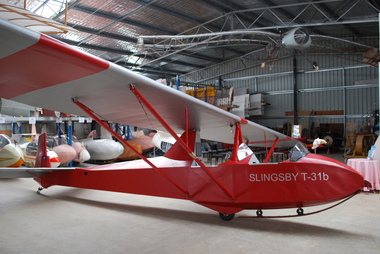
... airframes. To date only four remain of which two are airworthy. This aircraft began flying in at Caversham in Western Australia (the then home of the Gliding Club of Western Australia) in July 1956. It was badly damaged in a crash in June 1958. The wreckage was sent to Schneiders in Adelaide for repair...airframes. To date only four remain of which two are airworthy. This aircraft began flying in at Caversham in Western Australia (the then home of the Gliding Club of Western Australia) in July 1956. It was badly damaged in a crash in June 1958. The wreckage was sent to Schneiders in Adelaide for repair ...The Slingsby T31 is a two seat training glider that came available in 1951. It is, in effect, a two seat version of the single seat Kirby Tutor. The T31 was marketed by Slingsby Sailplanes both as complete aircraft and kits of parts for assembly. The Australian Gliding Museum’s example (currently registered as VH-GDB) is one of five of this type to grace Australian skies. Three including GDB were assembled in Australia from kits supplied by Slingsby’s in England, the other two were delivered as completed airframes. To date only four remain of which two are airworthy. This aircraft began flying in at Caversham in Western Australia (the then home of the Gliding Club of Western Australia) in July 1956. It was badly damaged in a crash in June 1958. The wreckage was sent to Schneiders in Adelaide for repair. However, the Club decided against having the repairs done, opting instead to buy a new ES52 Kookaburra. After a couple of years, the wreck was purchased by a member of the Waikerie Gliding Club whereupon the glider was rebuilt with some modifications, including a more rounded and better streamlined fuselage nose. It returned to the air in October 1961 at Clare in South Australia. The ownership of VH-GDB passed through a number of clubs, including at Dubbo in New South Wales, Wimmera in Victoria and Pioneer Valley at Mackay in Queensland. Eventually, it came into the hands of Bill Riley of Tocumwal in New South Wales who held it in storage for many years. Riley donated the aircraft to the Museum. It has been restored to airworthiness and is flown at vintage glider rallies and on Museum open days. This exhibit is an excellent example of a Slingsby T31 Tandem Tutor, a type of glider that was used by a number of clubs in the 1950s and 1960s for dual training of pilots to the solo capability.The Slingsby T31b Tandem Tutor is an open cockpit, tandem, two-seater glider with high, pylon mounted two piece wing supported by double, wire braced, steel tube struts. The glider is fitted with a main wheel, rubber-block sprung, wooden nose skid and steel leaf sprung, brass shod tailskid. The basic controls of aileron, rudder and elevator are not supplemented with pitch trim. Wing lift spoilers and both aerotow and winch releases are fitted. The instrument panels in both cockpits are fitted with an airspeed indicator, cosim variometer and altimeter. This red and silver painted wood and fabric covered aircraft is in excellent condition having been restored to full airworthy status by the Australian Gliding Museum. SLINGSBY – T31b (nose – both sides) DB Australian Gliding Museum (rudder – both sides) It has been given Serial Number GFA/HB/12 and is registered as VH-GDBaustralian gliding, glider, sailplane, slingsby, tandem tutor, t31, gliding club of western australia, waikerie gliding club, wimmera soaring club, pioneer valley soaring club -
 Australian Gliding Museum
Machine - Glider - Sailplane, 1961
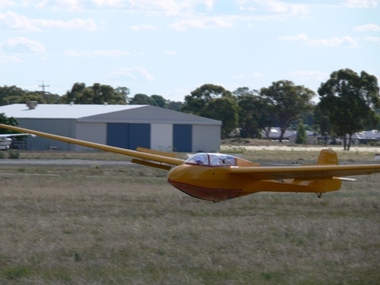
... repairs for returning it to an airworthy condition. It is estimated that the glider was flown about 300 times and perhaps logged about 140 hours in the air in Australia. If restored this exhibit will be representative of the Scheibe Bergfalke II-55 sailplane type (a rarity in Australia). glider sailplane australian gliding scheibe bergfalke byron soaring centre mangalore gliding club dattler southern riverina gliding club tocumwal Registration "GKZ" on sides of fuselage Tandem two seat sailplane of a wood and tubular steel construction covered with plywood and fabric. It has a fully enclosed cockpit under perspex (which is missing from this airframe ...The Scheibe Bergfalke II is a high performance (for its day) and relatively inexpensive two seat sailplane designed by Egon Scheibe. It appeared in 1953 as a derivative of the Scheibe Mu13 Bergfalke and incorporated design changes to resolve and simplify structural issues that affected the Mu13. The Bergfalke II-55 followed in 1955. About 300 of the Bergfalke II and II-55 types were built in Germany and Sweden. This aircraft of the Bergfalke II-55 type was built by Scheibe in 1961 (work number 339). After a long life at Fliegergruppe Leimen e.V. logging 6754 flights and 1588 hours in the air, the glider was imported into Australia from Germany in June 2004. The glider was registered as VH-GKZ in January 2005 by Thomas Dattler of Millumbindy and flown only a small number of occasions (probably at Byron Soaring Centre). The Mangalore Gliding Club appears to have taken an interest in the glider in 2006 and completed routine Form 2 inspections in 2006 and 2009. The amount of usage during this period is unclear as the logbook records held are incomplete. In January 2012 the glider was purchased by the Southern Riverina Gliding Club and flown at Tocumwal until it was damaged in 2013 due to being blown over while at rest on the airfield. The 10 year survey was due in March 2013 and a decision was made by the club to donate the glider to the Australian Gliding Museum instead of completing the necessary repairs for returning it to an airworthy condition. It is estimated that the glider was flown about 300 times and perhaps logged about 140 hours in the air in Australia. If restored this exhibit will be representative of the Scheibe Bergfalke II-55 sailplane type (a rarity in Australia).Tandem two seat sailplane of a wood and tubular steel construction covered with plywood and fabric. It has a fully enclosed cockpit under perspex (which is missing from this airframe). The wings which join the fuselage at shoulder height are swept forward such that the aircraft can be flown solo from the front seat and be properly balanced. The aircraft is in a damaged condition. Registration "GKZ" on sides of fuselage glider, sailplane, australian gliding, scheibe, bergfalke, byron soaring centre, mangalore gliding club, dattler, southern riverina gliding club, tocumwal -
 Australian Gliding Museum
Machine - Glider –Sailplane, 1960
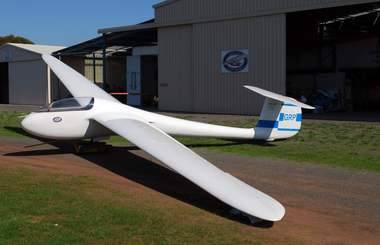
... With the original conversion to a Phonix T and subsequent repairs and changes to equipment the weight of the airframe increased from 182 kg to approximately 220 kg. ...With the original conversion to a Phonix T and subsequent repairs and changes to equipment the weight of the airframe increased from 182 kg to approximately 220 kg. ...The FS-24 Phonix is the first sailplane design to be built using a moulded fiberglass sandwich technique. It was designed by Hermann Nagele and Richard Eppler leading a group setup for the purpose at Stuttgart Technical University in the early 1950s. Initial construction was undertaken at workshops of Wolf Hirth and the first prototype was completed at the Bolkow Aircraft Company where Nagele and another member of the group, Rudi Lindner, had gained employment. It flew on 27 November 1957. Two further prototypes were built incorporating a T-tail and other refinements. Eight in all were built before production was stopped in 1961. A number of gliding records were broken in Phonix sailplanes in Germany in 1962-1963. It was found to have a best glide ratio of 40:1. The Museum’s example, No. 403 was originally a prototype built on 25 May 1960 [Registration D-8354]. It was converted at Bolkow to a Phonix T in 1963 and sold to a private owner in Switzerland [Registration HB-746] and later then to gliding club Segelfluggruppe Solothurn in 1965. The glider returned to Germany in 1971 (Meersburg) and re-registered as D-0738. It moved to a new owner in Allershausen in 1976, and again to Lindhoft in 1982. In 1983 the glider was sold to owners at Hasselt, Belgium and given registration OO-ZQD. In 1989 a further change of ownership occurred and the glider went to Leusden in the Netherlands where it was registered as PH-949. In 2006 the Phonix No.403 was imported into Australia by John Ashford of the Geelong Gliding Club. On 30 January 2007, it was registered as VH-GRP. However, as at January 2016 it has not been flown in Australia. In the course of its flying history the glider was damaged several times and repaired. At one stage a larger rudder was fitted and later on this modification was reversed. With the original conversion to a Phonix T and subsequent repairs and changes to equipment the weight of the airframe increased from 182 kg to approximately 220 kg. Nevertheless, the wing loading is a modest 20kg/square metre. As at January 2016, minor repairs and airworthiness certification are required to return the glider to flying condition. This exhibit is highly significant as it is one of only eight of this pioneering sailplane design. It is the only one in Australia. Glassfibre single seat sailplane, finished white with blue stripes on fin and rudder.Australian registration GRP on rudder; Serial Number 403 and Vintage glider club of Netherlands plaque in cockpitaustralian gliding, sailplane, glider, fs-24, phonix, nagele, eppler, lindner, stuttgart technical university, bolkov aircraft company, segelfluggruppe solothurn, ashford, geelong gliding club. -
Moorabbin Air Museum
Manual (Item) - Brystol Sycamore Helicopter Minor & Major Airframe Repairs, Sycamore Aircraft Minor & Major Airframe Repairs
... Air Ministry Sycamore Aircraft Minor & Major Airframe Repairs Manual Brystol Sycamore Helicopter Minor & Major Airframe Repairs ...Air Ministry -
Moorabbin Air Museum
Book - Aircraft maintenance, Aeroplane Maintenance And Operation Vol II. Engines,Airframe Inspection & Repair, Magnetos, Link Trainer
... Engines,Airframe Inspection & Repair, Magnetos, Link Trainer...Engines,Airframe Inspection & Repair, Magnetos, Link Trainer Book Aircraft maintenance ...Overview of aircraft maintenance/operation for all interested in civil or military aircraft. No publication date.No publication date stated. Could be late 1930snon-fictionOverview of aircraft maintenance/operation for all interested in civil or military aircraft. No publication date.engines, airframes, magenetos, link trainer -
Moorabbin Air Museum
Book - Aircraft maintenance & operations, Airframes ( Part 2 )
... Airplane Maintenance & Operations Airframes British aircraft circa 1940s Overview of inspection & repair of British airframes, circa 1940s Airframes ( Part 2 ) Book Aircraft maintenance & operations ...Overview of inspection & repair of British airframes, circa 1940sOverview of inspection & repair of British airframes, circa 1940sairframes british aircraft circa 1940s -
Moorabbin Air Museum
Book - Airframes, Airframes Part I
... Airframe inspection & repair...Airframes Airframe inspection & repair Overview of inspection/repair of British & American airframes , with notes on the use of welding, circa 1940s Duplicate item Airframes Part I Book Airframes ...Overview of inspection/repair of British & American airframes , with notes on the use of welding, circa 1940sDuplicate itemOverview of inspection/repair of British & American airframes , with notes on the use of welding, circa 1940sairframe inspection & repair -
Moorabbin Air Museum
Book - Aeronautical Engineering, Aircraft Engineers "A" Licence
... Aeronautical engineering Duties Aircraft licences Measuring & checking Airframe Construction Minor repairs Faults & adjustments Instructions for Air Registration Board ( UK ) exams for A licence applicants, circa 1945 Aircraft Engineers "A" Licence Book Aeronautical Engineering ...Instructions for Air Registration Board ( UK ) exams for A licence applicants, circa 1945non-fictionInstructions for Air Registration Board ( UK ) exams for A licence applicants, circa 1945duties, aircraft licences, measuring & checking, airframe construction, minor repairs, faults & adjustments -
Moorabbin Air Museum
Manual - Federal Aviation Agency USA directed studies, Directed Study Airframe Fundamentals
... Federal Aviation Agency USA Lesson manuals on the mechanics of building, repairing, maintenance & operation of an aircraft & its component parts/systems circa early 1960s Spiral bound manauals Directed Study Airframe Fundamentals Manual Federal Aviation Agency USA directed studies ...Lesson manuals on the mechanics of building, repairing, maintenance & operation of an aircraft & its component parts/systems circa early 1960sSpiral bound manaualsnon-fictionLesson manuals on the mechanics of building, repairing, maintenance & operation of an aircraft & its component parts/systems circa early 1960s -
Moorabbin Air Museum
Book - Airframes, Airframes Part I
... Airframe inspection & repair...Airframes Airframe inspection & repair Overview of inspection & repair of British & American airframes circa 1940s Airframes Part I Book Airframes ...Overview of inspection & repair of British & American airframes circa 1940snon-fictionOverview of inspection & repair of British & American airframes circa 1940sairframe inspection & repair -
Moorabbin Air Museum
Book - Airframes, Airframes ( Part II )
... Airframe inspection & repair...Airframes Airframe inspection & repair Overview of inspection & repair of types of British airframes, circa 1940s Airframes ( Part II ) Book Airframes ...Overview of inspection & repair of types of British airframes, circa 1940snon-fictionOverview of inspection & repair of types of British airframes, circa 1940s airframe inspection & repair
