
Showing 61 items matching "return from the ground"
-
 Moorabbin Air Museum
Book - Aircraft radar systems, Introduction to Airborne Radar
... ...Return from the ground...Aircraft radar systems Overview of airborne radar Essential groudwork Primary design considerations Detection & ranging Extracting doppler information Return from the ground Air-to air operation High resolution ground mapping Future developments Technical history of airborne radar, circa 1983 Introduction to Airborne Radar Book Aircraft radar systems ...Technical history of airborne radar, circa 1983non-fictionTechnical history of airborne radar, circa 1983overview of airborne radar, essential groudwork, primary design considerations, detection & ranging, extracting doppler information, return from the ground, air-to air operation, high resolution ground mapping, future developments -
 Federation University Historical Collection
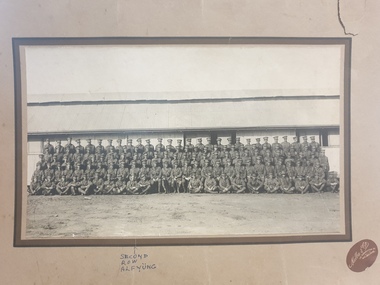
Photograph, Melba & Co, 7th Australian Infantry Training Battalion WW1
... from ANZAC to Cape Helles to help in the attack on the village of Krithia. The attack captured little ground but cost the brigade almost a third of its strength. The Victorian battalions returned...from ANZAC to Cape Helles to help in the attack on the village of Krithia. The attack captured little ground but cost the brigade almost a third of its strength. The Victorian battalions returned ...George Alfred Yung, known as Alf, pictured in the second row, 10th from the left, enlisted on 25/02/1916; embarked on 19/02/1917; was killed during the battle of Menin Gate at Yrpres, Belgium on 20/09/1917. https://www.awm.gov.au/collection/U51447 The 7th Battalion was among the first infantry units raised for the AIF during the First World War. Like the 5th, 6th and 8th Battalions, it was recruited from Victoria and, together with these battalions, formed the 2nd Brigade. The battalion was raised by Lieutenant Colonel H. E. "Pompey" Elliott within a fortnight of the declaration of war in August 1914 and embarked just two months later. After a brief stop in Albany, Western Australia, the battalion proceeded to Egypt, arriving on 2 December. It later took part in the ANZAC landing on 25 April 1915, as part of the second wave. Ten days after the landing, the 2nd Brigade was transferred from ANZAC to Cape Helles to help in the attack on the village of Krithia. The attack captured little ground but cost the brigade almost a third of its strength. The Victorian battalions returned to ANZAC to help defend the beachhead, and in August the 2nd Brigade fought at the battle of Lone Pine. While holding positions captured by the 1st Brigade, four members of the 7th Battalion, Corporal A. S. Burton, Acting Corporal W. Dunstan, Lieutenant W. Symons and Captain F. H. Tubb, earned the Victoria Cross - Burton posthumously. The battalion served at ANZAC until the evacuation in December. After the withdrawal from Gallipoli in December 1915, the battalion returned to Egypt. In March 1916, it sailed for France and the Western Front and entered the front line trenches for the first time on 3 May. The battalion's first major action in France was at Pozieres in the Somme valley where it fought between 23-27 July and 15-21 August. After Pozieres the battalion manned trenches in the Ypres salient in Belgium, before returning to the Somme valley. It saw out the horrendous winter of 1916-1917 rotating between training, working parties and duty in the trenches. In early 1917, the Germans withdrew to the Hindenburg Line and the 7th Battalion participated in the brief advance that followed and then came to a grinding halt before Bullecourt. The battalion was withdrawn from the front line for training on 9 May 1917 and did not return to action until the Ypres offensive of September and October. It fought major battles at Menin Road on 20 September and Broodseinde on 4 October, and then spent much of ensuing winter in the Ypres mud. In March and April 1918 the 7th helped stop the German spring offensive in northern France and later participated in the Allies' own great offensive of 1918, that began with the battle of Amiens on 8 August. The advance by British and empire troops on 8 August was the greatest success in a single day on the Western Front, one that German General Erich Ludendorff described as, "the black day of the German Army in this war". The battalion continued operations until late September 1918. At 11 am on 11 November 1918, the guns fell silent. The November armistice was followed by the peace treaty of Versailles signed on 28 June 1919. In November 1918 members of the AIF began to return to Australia for demobilisation and discharge. In March, the battalion was so reduced that it and the 6th Battalion were amalgamated to form a composite battalion. In turn, this battalion was merged with another, formed from the 5th and 8th Battalions, to form the 2nd Brigade Battalion. https://www.awm.gov.au/collection/U51447army, soldier, alf yung, 7th australian infantry battalion -
 Geelong RSL Sub Branch
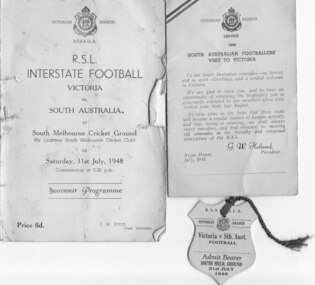
RSL Interstate Football Program, Renwick Pride, 1948
... Ground between sides from Victoria and South Australia. The event was organized by the RSL Victorian Branch. The RSL Victorian Branch Football Association was originally formed in 1947 and was affiliated with the Victorian Football Union. The purpose of the Football Association was to provide organized football for Returned...Ground between sides from Victoria and South Australia. The event was organized by the RSL Victorian Branch. The RSL Victorian Branch Football Association was originally formed in 1947 and was affiliated with the Victorian Football Union. The purpose of the Football Association was to provide organized football for Returned ...On 31 July 1948 a football match was played at the South Melbourne Cricket Ground between sides from Victoria and South Australia. The event was organized by the RSL Victorian Branch. The RSL Victorian Branch Football Association was originally formed in 1947 and was affiliated with the Victorian Football Union. The purpose of the Football Association was to provide organized football for Returned Servicemen. The were 14 teams and 650 players registered in the inaugural competition which was won by Williamstown Sub-Branch.The Program, Order of Weekend Events and Admit Ticket are originals from the weekend 30 July 1948 to 01 August 1948, the game was played on 31 July 1948.1 x Souvenir Program RSL Interstate Football - Victoria vs South Australia, 1 x Order of Weekend Events, 1 x Admit Bearer Entry Tag.Souvenir Program - RSL Interstate Football Victoria vs South Australia at South Melbourne Cricket Ground, 31 July 1948. Order of Program - Victorian Branch RSL 1948 South Australian Footballers' Visit to Victoria, forward by G W Holland, President 1948. Admit Bearer Entry Tag - RSS&AILA Victorian Branch, Victoria v Sth Aust, Football, Admit Bearer South Meld Ground 31 July 1948. Printed by Renwick Pride. rsl victorian branch, football, 1947, 1948, interstate football, victoria, south australia -
 City of Moorabbin Historical Society (Operating the Box Cottage Museum)
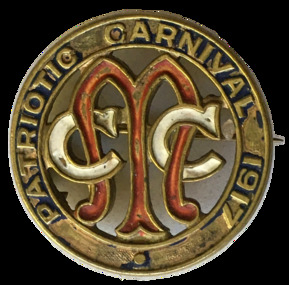
Badge - PATRIOTIC CARNIVAL 1917, 1917
... The Patriotic Carnival was held at the Melbourne Cricket Ground (MCG) from the 20th to the 27th of October to raise funds for the support of returned servicemen and their families. ...The Patriotic Carnival was held at the Melbourne Cricket Ground (MCG) from the 20th to the 27th of October to raise funds for the support of returned servicemen and their families. ...The Patriotic Carnival was held at the Melbourne Cricket Ground (MCG) from the 20th to the 27th of October to raise funds for the support of returned servicemen and their families. Early Settle families in Moorabbin Shire were generous supporters of local charities for returned service men and womenVoided round gilt and enamel badge with pin on back. The front has the Melbourne Cricket Club logo, ‘MCC’ in red and white at the centre; around on blue background, ‘PATRIOTIC CARNIVAL 1917’. The reverse has the makers name, ‘STOKES & SONS MELB’.Patriotic Carnival 1917 MCCmelbourne cricket ground, fundraising, returned service men, patriotic carnival -
 Bendigo Military Museum
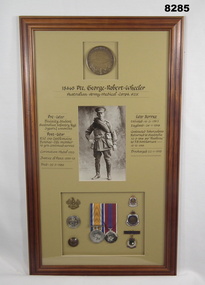
Award - FRAMED MEDALS, BADGES, PHOTO
... Returned Servicemen". The bottom inset has the following. Badge, "8th Australian Infantry Regiment". (George served in pre War) Badge, "For King and Empire - Services rendered". Button. From an Army uniform. Badge. "Life Member of the RSL". Badge. "RSL membership badge with membership year clip 1920 on" Badge. "Super Veteran - Royal Victorian Bowls Association"' Medals. "British War medal 1914 - 1918" "Coronation medal 1953". George Wheeler, refer Cat No 8263 for his Military and RSL Service details. brsl smirsl gwheeler Main item is, "18465 Pte George. Robert. Wheeler - Australian Army Medical Corps AIF. Framed timber with a fawn colour back ground ...The item is a mixture of Military and RSL service. The Medallion at the top has around the edge, "Centenary of the Government of Victoria 1851 - 1951". In the centre of has, "Awarded to G.R. Wheeler Esq for 25 years service to the Returned Servicemen". The bottom inset has the following. Badge, "8th Australian Infantry Regiment". (George served in pre War) Badge, "For King and Empire - Services rendered". Button. From an Army uniform. Badge. "Life Member of the RSL". Badge. "RSL membership badge with membership year clip 1920 on" Badge. "Super Veteran - Royal Victorian Bowls Association"' Medals. "British War medal 1914 - 1918" "Coronation medal 1953". George Wheeler, refer Cat No 8263 for his Military and RSL Service details.Framed timber with a fawn colour back ground with a medallion at the top followed by a photo inset, at bottom inset are a set of medals and 6 various badges.Main item is, "18465 Pte George. Robert. Wheeler - Australian Army Medical Corps AIF.brsl, smirsl, gwheeler -
 Eltham District Historical Society Inc
Photograph, Fay Bridge, Moor-rul Viewing Platform, Garden Hill, Kangaroo Ground, n.d
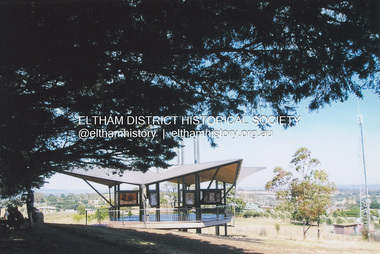
... The concept of the viewing platform is part of the refurbishment project for the Kangaroo Ground War Memorial Park which has taken place since 1997 with the active approval and financial assistance of the Nillumbik Shire Council. This project has been guided by an Advisory Committee with volunteer community representatives from the local Historical Societies, the Country Fire Authority, the Returned Services League and the Wurundjeri people. ...The concept of the viewing platform is part of the refurbishment project for the Kangaroo Ground War Memorial Park which has taken place since 1997 with the active approval and financial assistance of the Nillumbik Shire Council. This project has been guided by an Advisory Committee with volunteer community representatives from the local Historical Societies, the Country Fire Authority, the Returned Services League and the Wurundjeri people. ...OPENING OF THE VIEWING PLATFORM AT KANGAROO GROUND Nillumbik Council has advised that the viewing platform at Kangaroo Ground 27km NE of Melbourne is to be opened to the public on Wednesday, March 26th 2008 (Melway 271 , G10). The function of the platform is to provide shelter adjacent to the War Memorial Tower whilst allowing all people to enjoy the stunning panoramic views. From the platform you. can see the Dandenongs, the city of Melbourne, the You Yangs, Mount Macedon, the Kinglake Ranges and the Mt Baw-Baw Ranges where the Yarra River starts. This landscape covers all the ancestral lands of the Wurundjeri and some of the wider Kulin nation land. The platform has been given the name Moor-rut, a name which described the fertile soils of the Kangaroo Ground area in contrast to the poorer (Silurian) country of its surrounds, which the Wurundjeri knew as 'Nillumbik' or less rich country. The full 360 degree view can be seen from the adjacent Tower of Remembrance which has 53 stairs. The viewing platform however can be accessed by wheelchair. Inside the viewing platform there are eight double sided interpretive panels giving the history and information regarding this special area. The viewing platform's interpretive panels set out the Aboriginal and European history of the area and also the geology and the local flora and fauna, so that the casual visitor comes away understanding more about this significant part of Victoria. The concept of the viewing platform is part of the refurbishment project for the Kangaroo Ground War Memorial Park which has taken place since 1997 with the active approval and financial assistance of the Nillumbik Shire Council. This project has been guided by an Advisory Committee with volunteer community representatives from the local Historical Societies, the Country Fire Authority, the Returned Services League and the Wurundjeri people. Other allied groups such as the Nillumbik Reconciliation Group have been called upon for their expertise. The initial idea for the viewing platform came from Dean Stewart when he was the caretaker while living at the park. He discussed this idea with local author Mick Woiwod and Harry Gilham of Eltham District Historical Society when they were planning the refurbishment of the War Memorial Park in 1996. When the committee was formalised by the Nillumbik Council in 1997, Nicholas Pelling, representing the CFA and RSL, joined the group. Dennis Ward, local architect, then volunteered to develop the concept plan for the refurbishment of the park and later drew up the plans for the viewing platform. The Kangaroo Ground War Memorial Park and its Tower of Remembrance is located on one of the highest locations in the Yarra Valley. The Tower of Remembrance is a unique war memorial constructed from local stone standing 14 metres high. It was built in the style of a Scottish watchtower reflecting the strong Scottish influence of the first European settlers of the district from the 1840s onward. The park was opened in 1921 and the Tower of Remembrance was dedicated in 1926 recognising the local people who served in the First World War. Those who served in the Second World War were recognised by plaques dedicated in 1951 and more recently those who served in Korea, Borneo, Malaya and Vietnam by plaques unveiled in 2001. Harry Gilham, Advisory Committee Convenor - Eltham District Historical Society Newsletter N0 179 March 2008fay bridge collection, garden hill, kangaroo ground, memorial park, moor-rul viewing platform -
 Bendigo Military Museum
Memorabilia - PHOTOGRAPH, FRAMED
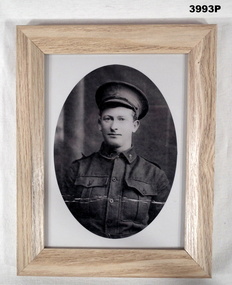
... from WIA 5.12.1917, hospital with Scabies 12.1.1918 to 12.2.1918, WIA 3rd occasion 11.8.1918 gunshot wound to head. He returned to Australia on 7.2.1919 and was discharged from the AIF on 31.3.1919 medically unfit. bravery military Leslie PYERS Black and white oval portrait photo of a soldier in peak cap on white back ground, frame is a light brown colour with glass front. ...Soldier is "Leslie Pyers" No 2134, enlisted 25.3.1916 age 23 years in 3rd Reinforcements 38th Bn AIF. Embarked on 25.9.1916 for England, embarked for France 20.12.1916, WIA 2.6.1917 remains on duty, WIA 8.6.1917 gunshot wound hand severe. He was awarded the Military Medal at Messiness on 7.6.1917. Carrying important messages to the front line he was WIA twice and suffering from loss of blood and exhaustion he refused treatment until he got his messages through. Rejoin unit from WIA 5.12.1917, hospital with Scabies 12.1.1918 to 12.2.1918, WIA 3rd occasion 11.8.1918 gunshot wound to head. He returned to Australia on 7.2.1919 and was discharged from the AIF on 31.3.1919 medically unfit.Black and white oval portrait photo of a soldier in peak cap on white back ground, frame is a light brown colour with glass front.bravery, military, leslie pyers -
 Bendigo Military Museum
Award - MEDAL & BOX, Post 1945
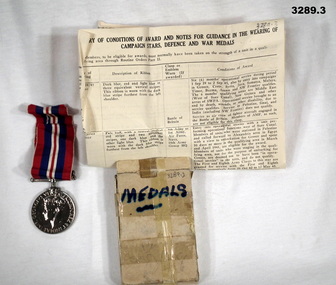
... Returned from Active Service badge. Total Awards = One VX78589 S W ROSS. Note: 2 numbers shown. Original 12277, then later with a different pen 12274. 12274 is the correct No on the RAS badge. .1) War Medal 1939 - 1945. One side has head of George VI, the reverse shows a triumphant lion holding a bird headed monster to the ground ...Item relates to S W Ross VX78589, refer 3147 for his service details..1) War Medal 1939 - 1945. One side has head of George VI, the reverse shows a triumphant lion holding a bird headed monster to the ground. .2) Plain cardboard box to suit. .3) Sheet of paper summarising conditions of award & guidance for wearing..1) Inscription on Medal: VX78589 S W ROSS. .2) Written in blue ink on box: Medals. .3) Handwritten in ink on sheet of paper: Returned from Active Service badge. Total Awards = One VX78589 S W ROSS. Note: 2 numbers shown. Original 12277, then later with a different pen 12274. 12274 is the correct No on the RAS badge.medals, military, containers -
 Eltham District Historical Society Inc
Photograph - Digital Photograph, Alan King, Pigeon Bank, Kangaroo Ground-Warrandyte Road, Kangaroo Ground, 6 February 2008
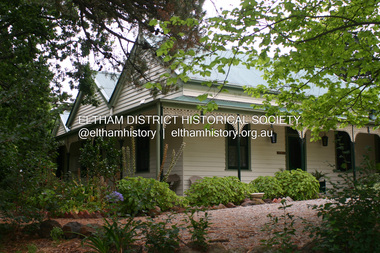
... Every New Year’s Eve, Cameron hired a highland piper, who marched from the Kangaroo Ground school house to Pigeon Bank playing his pipes.3 Distinguished visitors included opera singer, Dame Nellie Melba, Victorian Premier, Thomas Bent, Governor, Lord Hopetoun and artist, Longstaff. Following Cameron’s death, the property changed hands several times, then returned...Every New Year’s Eve, Cameron hired a highland piper, who marched from the Kangaroo Ground school house to Pigeon Bank playing his pipes.3 Distinguished visitors included opera singer, Dame Nellie Melba, Victorian Premier, Thomas Bent, Governor, Lord Hopetoun and artist, Longstaff. Following Cameron’s death, the property changed hands several times, then returned ...In 1848, Francis Rogerson form Dumfriesshire, Scotland purchased 80 acres of land at Kangaroo Ground on which he built a two-roomed bark hut. He named the property afterr the many Bronzewings and Wonga Pigeons in the area. Ewen Hugh Cameron moved to Pigeon Bank the same year he was elected to Parliament as the Member for Evelyn. At the time he moved in, Pigeon Bank had six rooms and the present water well. He made further extensive additions and lived there until his death in 1915. Covered under Heritage Overlay, Nillumbik Planning Scheme. Published: Nillumbik Now and Then / Marguerite Marshall 2008; photographs Alan King with Marguerite Marshall.; p27 Pigeon Bank, on the Kangaroo Ground – Warrandyte Road, Kangaroo Ground, is one of the Shire’s oldest farm dwellings, and has been home to some of the district’s earliest and most distinguished families. Although close to the road, the white weatherboard Victorian farmhouse is ensured privacy by the trees and hedges around it. On 4.8 hectares of farmland, Pigeon Bank is surrounded by rolling hills, farmland and bush, the peace of which is punctuated by an occasional birdcall. Pigeon Bank’s first owner was Francis Rogerson, from Dumfriesshire, Scotland, who bought 80 acres (32.4ha) of land in 1848 on which he built a two-roomed bark hut. Today this is the centre piece of the 14-room home.1 Rogerson lined the rooms with tongue-and-groove boards and roofed them with wooden shingles and sapling frames, which remain under the present green corrugated iron roof. He named Pigeon Bank after the many forest bronzewing and Wonga Pigeons in the area at the time, and the name Bank was commonly used in Scotland. Rogerson was united with one of the oldest families in the area when his sister Janet married John Bell, son of William, the original Bell settler. When Ewen Cameron moved to Pigeon Bank in 1874 it had six rooms and the present water well. He made extensive additions to the house and farm buildings and lived at Pigeon Bank until his death in 1915. Cameron, who had arrived in Melbourne from Scotland in 1853, contributed an enormous amount to the community. He worked as a builder, as a miner at Andersons Creek, a storekeeper at Queenstown2 and as the first postmaster at Warrandyte. In 1867 he married Agnes Bell, daughter of local farmer, John Bell. Cameron was a member of the Eltham Road Board (which preceded the Shire Council) and for more than 50 years, from 1863, he was an Eltham Shire Councillor, being President three times. Cameron was the Member for Evelyn for 40 years from 1874. In the 1880s he became the Government Whip, in 1902 the Minister for Mines and Water Supply, and in 1904, the Minister for Health, Cameron was also an outstanding farmer, whose farm won the Agricultural Department prize for the finest in the district, three consecutive times. Not surprisingly Pigeon Bank became the centre of district life. Every New Year’s Eve, Cameron hired a highland piper, who marched from the Kangaroo Ground school house to Pigeon Bank playing his pipes.3 Distinguished visitors included opera singer, Dame Nellie Melba, Victorian Premier, Thomas Bent, Governor, Lord Hopetoun and artist, Longstaff. Following Cameron’s death, the property changed hands several times, then returned to the family in 1919 when bought by Gordon Cameron. As the car took over from the horse, Pigeon Bank entered difficult times because the farm had produced chaff and oats and bred Clydesdales and harness ponies. In 1926 Mr Matthews bought the property and made many alterations including pulling down the kitchen, which had been separate from the main house. The property again changed hands several times. One owner was Senator James F Guthrie, who added a sunroom. In 1968 the house again returned to the Cameron family, when Vera Jackson, a grand-daughter of Ewen Cameron, and her husband, bought the property. The Bishop family, who were sixth and seventh generation Bells and also descended from the Camerons, restored the house in the 1980s. Today tongue-and-groove boards still line part of the hall (which retains two fine arches), the breakfast room, and Ewen Cameron’s former room. Five original fireplaces in the bed and living rooms are still in working order. The wide veranda with a curved iron roof and ornate iron lace work bounds three sides of the house, and nearby a windmill stands beside the water well. Sue and Ron James, who bought the property in 2001, made extensive improvements to the homestead and meticulously restored the grounds to their original state.This collection of almost 130 photos about places and people within the Shire of Nillumbik, an urban and rural municipality in Melbourne's north, contributes to an understanding of the history of the Shire. Published in 2008 immediately prior to the Black Saturday bushfires of February 7, 2009, it documents sites that were impacted, and in some cases destroyed by the fires. It includes photographs taken especially for the publication, creating a unique time capsule representing the Shire in the early 21st century. It remains the most recent comprehenesive publication devoted to the Shire's history connecting local residents to the past. nillumbik now and then (marshall-king) collection, ewen hugh cameron, francis rogerson, kangaroo ground, kangaroo ground-warrandyte road, pigeon bank -
 Eltham District Historical Society Inc
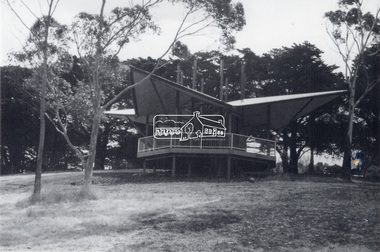
Photograph - Black and White Print, Moor-rul Viewing Platform, March 2007
... The concept of the viewing platform is part of the refurbishment project for the Kangaroo Ground War Memorial Park which has taken place since 1997 with the active approval and financial assistance of the Nillumbik Shire Council. This project has been guided by an Advisory Committee with volunteer community representatives from the local Historical Societies, the Country Fire Authority, the Returned Services League and the Wurundjeri people. ...The concept of the viewing platform is part of the refurbishment project for the Kangaroo Ground War Memorial Park which has taken place since 1997 with the active approval and financial assistance of the Nillumbik Shire Council. This project has been guided by an Advisory Committee with volunteer community representatives from the local Historical Societies, the Country Fire Authority, the Returned Services League and the Wurundjeri people. ...Early stages - no display panels installed. OPENING OF THE VIEWING PLATFORM AT KANGAROO GROUND Nillumbik Council has advised that the viewing platform at Kangaroo Ground 27km NE of Melbourne is to be opened to the public on Wednesday, March 26th 2008 (Melway 271 , G10). The function of the platform is to provide shelter adjacent to the War Memorial Tower whilst allowing all people to enjoy the stunning panoramic views. From the platform you. can see the Dandenongs, the city of Melbourne, the You Yangs, Mount Macedon, the Kinglake Ranges and the Mt Baw-Baw Ranges where the Yarra River starts. This landscape covers all the ancestral lands of the Wurundjeri and some of the wider Kulin nation land. The platform has been given the name Moor-rut, a name which described the fertile soils of the Kangaroo Ground area in contrast to the poorer (Silurian) country of its surrounds, which the Wurundjeri knew as 'Nillumbik' or less rich country. The full 360 degree view can be seen from the adjacent Tower of Remembrance which has 53 stairs. The viewing platform however can be accessed by wheelchair. Inside the viewing platform there are eight double sided interpretive panels giving the history and information regarding this special area. The viewing platform's interpretive panels set out the Aboriginal and European history of the area and also the geology and the local flora and fauna, so that the casual visitor comes away understanding more about this significant part of Victoria. The concept of the viewing platform is part of the refurbishment project for the Kangaroo Ground War Memorial Park which has taken place since 1997 with the active approval and financial assistance of the Nillumbik Shire Council. This project has been guided by an Advisory Committee with volunteer community representatives from the local Historical Societies, the Country Fire Authority, the Returned Services League and the Wurundjeri people. Other allied groups such as the Nillumbik Reconciliation Group have been called upon for their expertise. The initial idea for the viewing platform came from Dean Stewart when he was the caretaker while living at the park. He discussed this idea with local author Mick Woiwod and Harry Gilham of Eltham District Historical Society when they were planning the refurbishment of the War Memorial Park in 1996. When the committee was formalised by the Nillumbik Council in 1997, Nicholas Pelling, representing the CFA and RSL, joined the group. Dennis Ward, local architect, then volunteered to develop the concept plan for the refurbishment of the park and later drew up the plans for the viewing platform. The Kangaroo Ground War Memorial Park and its Tower of Remembrance is located on one of the highest locations in the Yarra Valley. The Tower of Remembrance is a unique war memorial constructed from local stone standing 14 metres high. It was built in the style of a Scottish watchtower reflecting the strong Scottish influence of the first European settlers of the district from the 1840s onward. The park was opened in 1921 and the Tower of Remembrance was dedicated in 1926 recognising the local people who served in the First World War. Those who served in the Second World War were recognised by plaques dedicated in 1951 and more recently those who served in Korea, Borneo, Malaya and Vietnam by plaques unveiled in 2001. Harry Gilham, Advisory Committee Convenor - Eltham District Historical Society Newsletter N0 179 March 2008 Black and white inkjet print on paper 14 x 21 cmmoor-rul viewing platform, garden hill, kangaroo ground, memorial park -
 Eltham District Historical Society Inc
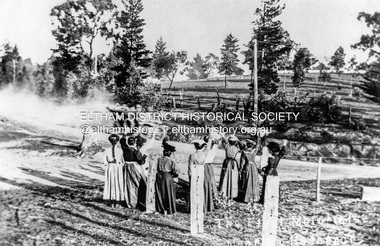
Negative - Photograph, Tom Prior, Feminine reception for the U.S. Fleet near Research, Victoria, 4 Sep. 1908
... from the the Automobile Club of Victoria took 100 officers on an excursion to the Black Spur past Yarra Glen on the 4th September 1908. (The area we know today as the Yarra Valley). The convoy travelled through Eltham, Research and Kangaroo Ground, where a group of women gathered to wave to them. (Given the length of shadows from the west, this must have been late in the day as they were returning...from the the Automobile Club of Victoria took 100 officers on an excursion to the Black Spur past Yarra Glen on the 4th September 1908. (The area we know today as the Yarra Valley). The convoy travelled through Eltham, Research and Kangaroo Ground, where a group of women gathered to wave to them. (Given the length of shadows from the west, this must have been late in the day as they were returning ...Looking due south at Main Road, Research near intersection with Cassells Road, September 4, 1908 where a group of ladies wave to the passing American Fleet on tour of the district. "The Fleet Motorists Nearing Research" With the visit of the American Fleet to Melbourne in early September 1908, volunteers from the the Automobile Club of Victoria took 100 officers on an excursion to the Black Spur past Yarra Glen on the 4th September 1908. (The area we know today as the Yarra Valley). The convoy travelled through Eltham, Research and Kangaroo Ground, where a group of women gathered to wave to them. (Given the length of shadows from the west, this must have been late in the day as they were returning to Melbourne.) The visit of the American Fleet was a big deal at the time. A Program of activites was compiled. City buidlings were illuminated, a State reception was given and a concert was held. The Federal Parliament sat in Melbourne at that time. This photo was made using a home-made camera constructed by the photographer Tom Prior (brother of Mrs E.R. Reynolds). Reproduced on p86 of 'Pioneers & Painters' Photo: Tom Prior Shire of Eltham Pioneers Photograph Collection, No. 507 held in partnership between Eltham District Historical Society and Yarra Plenty Regional Library. The Evelyn Observer. (1908, September 4). Evelyn Observer and Bourke East Record (Vic. : 1902 - 1917), p. 2 (MORNING.). Retrieved June 17, 2026, from http://nla.gov.au/nla.news-article60647808This photo forms part of a collection of photographs gathered by the Shire of Eltham for their centenary project book,"Pioneers and Painters: 100 years of the Shire of Eltham" by Alan Marshall (1971). The collection of over 500 images is held in partnership between Eltham District Historical Society and Yarra Plenty Regional Library (Eltham Library) and is now formally known as 'The Shire of Eltham Pioneers Photograph Collection.' It is significant in being the first community sourced collection representing the places and people of the Shire's first one hundred years.Digital image 4 x 5 inch B&W Negsepp, shire of eltham pioneers photograph collection, research (vic.), u.s.a. fleet, automobile club of victoria, drive, excursion, visitors, welcome, usa fleet, us fleet, waving, tom prior, pioneers and painters, reynolds prior collection, u.s fleet, cassells road, eltham college -
 Eltham District Historical Society Inc
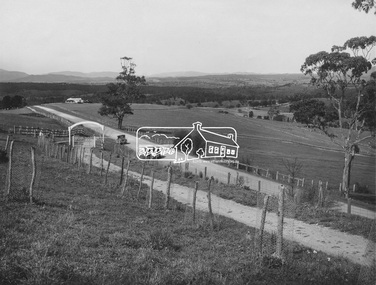
Photograph, Entrance to Shire of Eltham Memorial Park, Garden Hill, Eltham-Yarra Glen Road, Kangaroo Ground, c.1923
... from the Kangaroo Ground-Yarra Glen road was seen to be a problem and Mrs. White, who owned the land beside the park, was asked to donated a triangle of her property to allow this access. • By September 1919 returned soldiers were employed by the Shire and volunteers were called to clear the hilltop by ploughing up the rocks and clearing the area, the fencing was put into place and in May 1921 the Council erected three gates, within an archway, at the entrance to the drive and pathway to the summit. • Public subscriptions were sought through the Advertiser newspaper to beautify the site. ...from the Kangaroo Ground-Yarra Glen road was seen to be a problem and Mrs. White, who owned the land beside the park, was asked to donated a triangle of her property to allow this access. • By September 1919 returned soldiers were employed by the Shire and volunteers were called to clear the hilltop by ploughing up the rocks and clearing the area, the fencing was put into place and in May 1921 the Council erected three gates, within an archway, at the entrance to the drive and pathway to the summit. • Public subscriptions were sought through the Advertiser newspaper to beautify the site. ...View to south-east from Shire of Eltham Soldiers' Memorial Park showing the carriageway from the road to top of Memorial Park. Accompanying notes state that the entry gate was put in place in May 1921. Eltham and Whittlesea Shire Advertiser and Diamond Creek Valley Advocate Fri 21 May 1920 p 2 reported: Kangaroo Ground Memorial Park "It was decided to arrange for a working bee on Saturday, 29th inst., for the purpose of forming and gravelling the track leading to the Park, and of carrying out other necessary works." A history summary of the Shire of Eltham Soldiers’ Memorial Park • The summit at Garden Hill was a popular tourist lookout and picnic spot from the 1880s. Virtually the entire Shire of Eltham and beyond could be viewed from this location. • A local farmer, Mr Walter A. D. Wippell is credited as being the first to propose the idea of a war memorial park and offered £50 towards the purchase of the land. • The earliest public reference to this project is to be found in the local Advertiser newspaper edition of August 9th, 1918. A report of the August Council meeting records the Eltham Shire President, Cr. Robert White, saying: "some time back it was proposed that the Council obtain and place on an Honour Board in the Council Chamber [at Kangaroo Ground] containing names of the lads who had enlisted. Just recently however, it had been suggested that a more fitting memorial would be the obtaining of a piece of land on the summit of Garden Hill, Kangaroo Ground, and the formation of a memorial park in which a monument could be erected to represent the whole of Shire. If a couple of acres could be obtained a gentleman had promised to donate 50 pounds, and another one would fence it, and other contributions, he was sure, could be obtained." • Councillors were favourable of the proposal and the President, Shire Secretary and Shire Engineer were deputised to wait on Messrs Mess Bros. (the owners of the Garden Hill farm) and ascertain if they would gratuitously give the land. The Mess Bros. land adjoined the farm/stud of Mrs Fanny White (Cr Robert White’s mother), daughter of Andrew Harkness who established their property on Garden Hill around 1846. • Access to the land came in February 1919 when several Councillors and the Shire Engineer surveyed the actual two acres of '5 chains along the road and 4 chains deep'. The Engineer volunteered his services free to do this task. The Mess brothers however demanded £100 per acre but eventually agreed to take £50 per acre. • Entry from the Kangaroo Ground-Yarra Glen road was seen to be a problem and Mrs. White, who owned the land beside the park, was asked to donated a triangle of her property to allow this access. • By September 1919 returned soldiers were employed by the Shire and volunteers were called to clear the hilltop by ploughing up the rocks and clearing the area, the fencing was put into place and in May 1921 the Council erected three gates, within an archway, at the entrance to the drive and pathway to the summit. • Public subscriptions were sought through the Advertiser newspaper to beautify the site. The views of the Curator of the Melbourne Botanical Gardens were sought as to the ‘class of ornamental trees most suitable for planting in the Park area”. • The Memorial Park or Shire of Eltham Soldiers’ Memorial Park was officially opened by Mr. W.H. Everard, M.L.A., 3 September 1921. • In 1922 plans were made to place a War Memorial in the Park. Funds were donated by the Council of £250 and a challenge to the community, to match this money with contributions was met. • On Anzac Day 1923, 1,000 people gathered on the summit in the park for a memorial service. A much smaller group of about 50 people gathered around a newly constructed cairn and flagstaff in the afternoon of Anzac Day 1924 amidst rain and a squally southerly wind, the morning service being cancelled. • A meeting for those interested in establishing a War Memorial monument within the park was held in January 1924 and the Eltham Shire War Memorial League was formed and a design competition decided upon. • The Shire of Eltham War Memorial tower was built in 1926 at a cost of £1,023 and 5 shillings with locally quarried stone donated by Dr Ethel and Professor William Osborne. It was formally known as the ‘Shire of Eltham War Memorial’ and was unveiled on 11 November 1926. The large bronze inscription above the entrance to the tower states: SHIRE OF ELTHAM WAR MEMORIAL THESE MEN DIED FOR THEIR COUNTRY 1914 IN REMEMBRANCE THIS TOWER WAS BUILT 1918 • The Caretaker’s hut was built in 1927 with left over from the tower construction. • A returned soldier was appointed to act as caretaker for the memorials. Tiny Carrol, a huge man, was the first caretaker and lived in the stone hut. There was a push to have alterations made at one stage to provide additional rooms for a married caretaker but was rejected. • A new Caretaker Cottage was built in 1951 at a cost £2,500. The cottage had been subjected to raids by thieves three times during construction until a guard from the Returned Servicemen’s League was posted until its opening. • The War Memorial tower was re-dedicated by Sir Dallas Brooks on 8 November 1951, unveiling new bronze plaques containing the names of those who fell during the Second World War. Sir Dallas also officiated the opening of the new Caretaker’s Cottage. • A toilet block was built in 1965. • A further dedication of the Shire of Eltham War Memorial tower took place 11 November 2001 to recognise the men who fell in subsequent campaigns up to and including Vietnam. • Four land titles are involved: o The purchase of the two acres from owners Ruth Gosling, Alexander Mess, James Johnson Mess and Joseph Mess is recorded in two actions, the first being the payment of £100 for the two acres, the second showing that the Shire of Eltham did not get a transfer of title until 14th January 1952. o The access land donated by Mrs. Fanny White is dated 26 February 1924. A further need to widen the entry came after the deepening of the road cutting and another land donation was given by Sir Herbert Gepp, title dated 15th May 1952. This would have been about the time he sold off the former White ‘Garden Hill’ property. o The land reserve to increase the area and possibly allow a circuit road to be put in place on the western side of the park was purchased by the Shire of Eltham, title dated 16th February 1973. Rare photograph of the entrance to the Shire's Memorial Park during early stages of development prior to the erection of the Shire of Eltham War MemorialSepia photograph printed with white border with slight crack lower left hand corner and three significant vertical cracks fanning from lower centre edge to upper edge Digitally enhanced version to minimise impact of crackseltham-yarra glen road, entrance gate, garden hill, kangaroo ground, shire of eltham memorial park, shire of eltham war memorial, kangaroo ground war memorial park -
 Eltham District Historical Society Inc
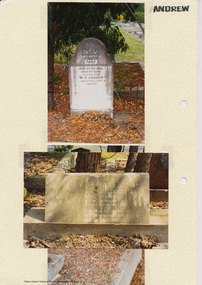
Folder, Andrew
... Returning to Victoria fourteen or fifteen years ago, he commenced storekeeping at Eltham, where he has carried on that business ever since. Mr Andrew has always taken a lively interest in the public affairs of town and district” from "Victoria and its Metropolis: Past and Present" written in 1888 by Alexander Sutherland. Chapter 19, "The Upper Yarra District" pages [402] - 415. Includes descriptions of some townships and short biographies of local residents. Page 405 james andrew pioneer kangaroo ground ...James Andrew Kangaroo Ground, 1870 "James Andrew, Whittlesea, born in East Palford, Devonshire, England, in 1827, arrived in Adelaide in February 1850 per ship Lady McCaughton and almost immediately sailed in a coasting vessel to Melbourne, where the first work he undertook was clearing earth from a stone quarry in Collingwood. He next carried stones for masons engaged in building the Bishop’s Palace, and then was employed in Cambellfield mowing hay. He was at Saltwater River on Black Thursday, and afterwards took a little farm at Darebin Creek, remaining there for four years. He went up to Kangaroo Ground in 1859 and lived there until he bought his present property at Whittlesea, a farm of between 300 and 400 acres. He has been twice married, and had a family of six children." "Andrew, W. B. Eltham, is a native of England, born in 1822. Coming out to Australia in 1842, he lived in Brighton, Victoria for fifteen years, when he re-visited England for a year. Returning to Victoria fourteen or fifteen years ago, he commenced storekeeping at Eltham, where he has carried on that business ever since. Mr Andrew has always taken a lively interest in the public affairs of town and district” from "Victoria and its Metropolis: Past and Present" written in 1888 by Alexander Sutherland. Chapter 19, "The Upper Yarra District" pages [402] - 415. Includes descriptions of some townships and short biographies of local residents. Page 405 Folder of information on James Andrew, Trustee Kangaroo Ground Cemetery, Kangaroo Ground 1870 William Bravery Andrew, Eltham, 1870s-1880s Ernest James Andrew, Eltham, Eltham Shire Councillor, 1920s-1950 and Ellen Matilda Brown Andrewjames andrew, pioneer, kangaroo ground, ernest james andrew, william bravery andrew, ellen andrew, eltham cemetery, biography, ellen harper andrew (nee clarke), ellen matilda andrew (nee brown), eltham war memorial gate, eltham war memorial trust -
 Eltham District Historical Society Inc
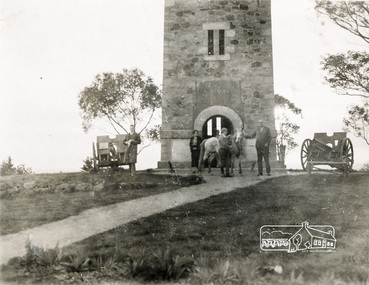
Photograph, Memorial Tower, Kangaroo Ground c.1934, 1934c
... The work has been undertaken by the people of the Shire a a tribute of love and admiration for those who were known and dear to use in the days of their youth and early manhood, who went out from amongst us, never to return, and whose self-sacrifice has made us, each and all, thier ever-lasting debtors" Harry Gilham, Eltham District Historical Society Kangaroo Ground Tower of Remembrance, A Journey in Time: a column about Nillumbik's history, Nillumbik Mail, 9th August, 2000 Since that research the following has been sourced from Eltham and Whittlesea Shires Advertiser and Diamond Creek Valley Advocate, April 8, 1921, p. 3 Retrieved April 25, 2020, from http://nla.gov.au/nla.news-article57639687 Eltham Shire Council From Town Clerk, Melbourne, stating that a light machine-gun captured by the 22nd battalion, A.I.F. at La Motte Farm, near Beaurvoir, on Oct. 3rd, 1918, during the operations which won the Beauvoir line and completed the smashing of the great Hindenburg defence-system, has been alloted to the Shire of Eltham. - On the motion of Crs Hubbard and Smedley, it was decided to have the gun placed in the Memorial Park. ...The work has been undertaken by the people of the Shire a a tribute of love and admiration for those who were known and dear to use in the days of their youth and early manhood, who went out from amongst us, never to return, and whose self-sacrifice has made us, each and all, thier ever-lasting debtors" Harry Gilham, Eltham District Historical Society Kangaroo Ground Tower of Remembrance, A Journey in Time: a column about Nillumbik's history, Nillumbik Mail, 9th August, 2000 Since that research the following has been sourced from Eltham and Whittlesea Shires Advertiser and Diamond Creek Valley Advocate, April 8, 1921, p. 3 Retrieved April 25, 2020, from http://nla.gov.au/nla.news-article57639687 Eltham Shire Council From Town Clerk, Melbourne, stating that a light machine-gun captured by the 22nd battalion, A.I.F. at La Motte Farm, near Beaurvoir, on Oct. 3rd, 1918, during the operations which won the Beauvoir line and completed the smashing of the great Hindenburg defence-system, has been alloted to the Shire of Eltham. - On the motion of Crs Hubbard and Smedley, it was decided to have the gun placed in the Memorial Park. ...Sepia photograph of Joyce McMahon and 'Tiny' Carroll at the War Memorial Tower, Kangaroo Ground c.1934. The guns were installed in 1934 and removed in 1942. Taken in the early 1930s, the photograph ... shows the Kangaroo Ground Tower of Remembance with Joyce McMahon, daughter-in-law of Mr. P. J.McMahon, the then Shire of Eltham Secretary, her horse and a very tall person patting the horse. He is ex-serviceman W. "Tiny" Caroll who was the council's caretaker of the surrounding War Memorial Park. He lived in the stone cottage which still stands in the park. "Tiny" is seen as the fictional character "Tiny Bourke" who, in author Alan Marshall's book "This is the Grass", "was a giant of a man, well over six feet high, with huge hands that completely encircled the cup of tea". The bronze casting, which shows the 79 names of those who paid the "supremen sacrifice" in World War 1 (1914-1918), was erecfed above the entrance to the Tower in September, 1930. The Monterey cypress trees which now form the windbreak around the park's fenceline, were just knee high in this photograph. They were planted in August 1926, with all the plantings paid for, and done, by the public as the Tower was being erected. The two field guns have been identified as of German origin, Krupp 77 mm calibre captured on October 4, 1918 at Geneve, France. They were removed in 1943/44 as a wartime requirement of the Australian Govenment. A public notice dated October 16, 1926 by Cr. H Rutter, Chairman of the Eltham Soldiers War Memorial League stated: "On the summit of that central and conspicuous landmark, Garden Hill, there is being erected a massive memorial tower which will, for all time, remind every passerby of the part played by the men of the Shire of Eltham in the Great War. The work has been undertaken by the people of the Shire a a tribute of love and admiration for those who were known and dear to use in the days of their youth and early manhood, who went out from amongst us, never to return, and whose self-sacrifice has made us, each and all, thier ever-lasting debtors" Harry Gilham, Eltham District Historical Society Kangaroo Ground Tower of Remembrance, A Journey in Time: a column about Nillumbik's history, Nillumbik Mail, 9th August, 2000 Since that research the following has been sourced from Eltham and Whittlesea Shires Advertiser and Diamond Creek Valley Advocate, April 8, 1921, p. 3 Retrieved April 25, 2020, from http://nla.gov.au/nla.news-article57639687 Eltham Shire Council From Town Clerk, Melbourne, stating that a light machine-gun captured by the 22nd battalion, A.I.F. at La Motte Farm, near Beaurvoir, on Oct. 3rd, 1918, during the operations which won the Beauvoir line and completed the smashing of the great Hindenburg defence-system, has been alloted to the Shire of Eltham. - On the motion of Crs Hubbard and Smedley, it was decided to have the gun placed in the Memorial Park. Sepia Photographgarden hill, gun, joyce mcmahon, kangaroo ground, memorial tower, shire of eltham war memorial tower, tiny carroll, war memorials, war trophy, william carroll -
 Port Melbourne Historical & Preservation Society
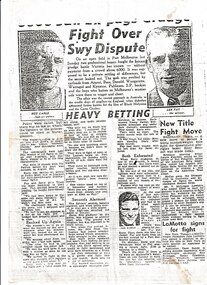
Document, Truth Newspaper, 6000 saw Ex-Pugs Grudge Fight over Swy Dispute, 1950
... ground behind the Fire Station. The local crowd was swelled by carloads from Victorian country towns. Bets at times up to three hundred pounds were placed allegedly 'always between friends'. By the end of 15 rounds both fighters had collapsed and had to be lifted apart by their seconds. Although FAY was declared the winner on points, EARLE wanted a return...ground behind the Fire Station. The local crowd was swelled by carloads from Victorian country towns. Bets at times up to three hundred pounds were placed allegedly 'always between friends'. By the end of 15 rounds both fighters had collapsed and had to be lifted apart by their seconds. Although FAY was declared the winner on points, EARLE wanted a return ...The fight between Roy EARLE & Len FAY was over a disputed bet whilst playing the illegal game of two-up known as Swy. After two fights when EARLE needed stitches on both sides of his jaw, he challenged FAY to 15 two minute rounds. Although supposed to be a private affair a crowd of 6,000 gathered on rough ground behind the Fire Station. The local crowd was swelled by carloads from Victorian country towns. Bets at times up to three hundred pounds were placed allegedly 'always between friends'. By the end of 15 rounds both fighters had collapsed and had to be lifted apart by their seconds. Although FAY was declared the winner on points, EARLE wanted a return fight. Single sheet of A4 paper copied from a 1950 edition of the Truth Newspaper. Missing the first five words of the headline, is - Fight over Swy Dispute. Photographs of the two combatant's, Roy (Ox) EARL and Len FAY , are on either side of the heading. sport - boxing, roy (ox) earl, len fay, young jocker, jack kirkham, arts and entertainment - gambling -
 Eltham District Historical Society Inc
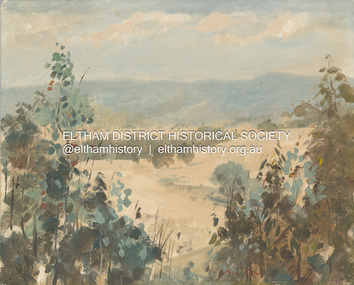
Artwork, other - Painting, Peter Glass, Summer Landscape, Kangaroo Ground, 1968
... returning to Eltham he built another adobe house in which he lived with his wife, Cecile Madeleine, and two children, Julian and Marie-Luce on land adjoining the original house. Peter Glass died in December 1997 aged 80, his wife Cecile in 2006, aged 79. They are memorialised in Eltham Cemetery. Much of the inspiration for his landscape painting comes from the Eltham bush and the Yarra flowing through it. 1968 Arthur William Glass artwork Kangaroo Ground ...Arthur William Glass known as Peter was born August 28, 1917. During the 1930s, Peter Glass and a young Graeme Bell were studying painting under Max Meldrum. Graeme Bell at that time was undecided whether to devote his life to music or painting. In 1938, inspired by what they had seen at 'Montsalvat', Peter Glass along with Graeme and Roger Bell (whose names were to become internationally known as the leaders of Australia's most famous jazz band) agreed to purchase land at Eltham to build themselves a mud brick house. For some time, Eltham had been their chosen place for painting and sketching, but it was not until they visited the 'Jorgensen Colony', as it was then known, and saw the possibilities of building in earth, that they decided to establish a permanent base in Eltham. In July, the three of them bought a few acres of land at the top of John Street and started making mud bricks for a proposed sixty square sized house. Following the Second World War, Peter Glass returned in 1946 to live permanently in Eltham. He resumed work on building of the adobe house which he had commenced before the war. During some years spent in England and France he married a French girl and on returning to Eltham he built another adobe house in which he lived with his wife, Cecile Madeleine, and two children, Julian and Marie-Luce on land adjoining the original house. Peter Glass died in December 1997 aged 80, his wife Cecile in 2006, aged 79. They are memorialised in Eltham Cemetery. Much of the inspiration for his landscape painting comes from the Eltham bush and the Yarra flowing through it.oil on chipboard 33 x 40.5 x 1.0 cm Signed 'Peter Glass in red paint lower right of centre Evidence of some paint rub-off at edges from previous frame mounting (frame removed).Reverse side painted in pale yellow cream and inscribed: 'Summer Landscape - 1968 Kangaroo Ground' in black paint1968, arthur william glass, artwork, kangaroo ground, paintings, peter glass -
Eltham District Historical Society Inc
Document - Folder, Parry, Robert
... came to Melbourne from Wales in 1850, marrying Margaret Brett, a fellow passenger. He worked for James Donaldson at Kangaroo Ground, returning after success at gold mining. ...came to Melbourne from Wales in 1850, marrying Margaret Brett, a fellow passenger. He worked for James Donaldson at Kangaroo Ground, returning after success at gold mining. ...Robert Parry (1824-?) came to Melbourne from Wales in 1850, marrying Margaret Brett, a fellow passenger. He worked for James Donaldson at Kangaroo Ground, returning after success at gold mining. He began as a carter and settled near Healesville. Contents Photocopy: "The Upper Yarra District" page 413, biography of Robert Parry.Newspaper clippings, A4 photocopies, etcrobert parry, margaret parry nee brett, james donaldson, kangaroo ground, john hicks petty -
 Port of Echuca
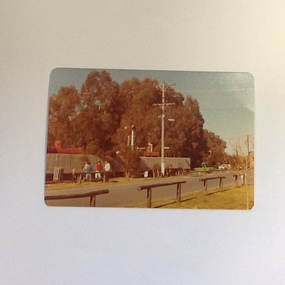
Colour photograph, Approx 1982
... ground for the filming of "All the Rivers Run" which began in October 1982. The Port area was returned to look like it would have been in the 1870s. The roads were covered in gravel, signage was removed in an endeavour to create the appropriate era. port of echuca - power lines power lines coulson, helen On the reverse:This paper manufactured by Kodak Colour photograph featuring power poles and power lines on the Murray esplanade, Port of Echuca. Picket fence and locomotive stand behind the pole. View from ...Undergrounding of the power lines took place in September 1982. Relates to "before" shots P000159, P000161, P000163 and "after" shots P000160, P000162, P000164. Interview with Helen Coulson, 27.09.1984The power lines were put under ground for the filming of "All the Rivers Run" which began in October 1982. The Port area was returned to look like it would have been in the 1870s. The roads were covered in gravel, signage was removed in an endeavour to create the appropriate era.Colour photograph featuring power poles and power lines on the Murray esplanade, Port of Echuca. Picket fence and locomotive stand behind the pole. View from across the road looking east.On the reverse:This paper manufactured by Kodakport of echuca - power lines, power lines, coulson, helen -
 Uniting Church Archives - Synod of Victoria
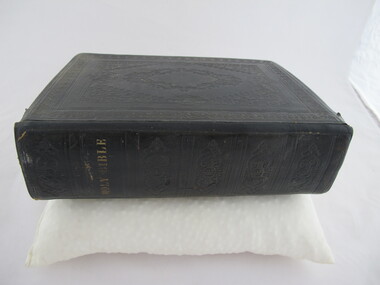
Book - Pulpit bible
... David Boyd from the Presbytery of Magherfelt, Ireland. 1852 Licensed, County Londonderry; 1853 Est. Synod of Victoria, ordained Heidelberg-Kangaroo Ground; 1869 resigned. Returned...David Boyd from the Presbytery of Magherfelt, Ireland. 1852 Licensed, County Londonderry; 1853 Est. Synod of Victoria, ordained Heidelberg-Kangaroo Ground; 1869 resigned. Returned ...Tooled brown leather pulpit bible with gilt text on the spine and gilt edged pages. There is a dedication pasted inside the front.rev david boyd, scots church heidelberg -
 Ballarat Tramway Museum
Photograph - Geelong football trams, c1920's
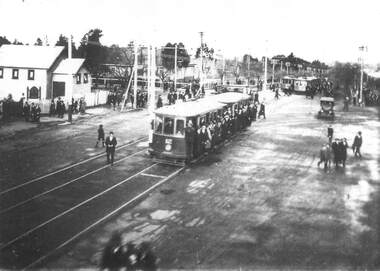
... ground, Ryrie St East, with the Garden St junction in the background. See btm9211 for another print, Dave O'Neil advised 20/7/2009 - Geelong High School to the left and other photos in the series. Laminated A3 size print added 3-08-2014 - to be used for display purposes. Yields information about the form and style of the Geelong tram depot during the Second World War era. trams tramways Geelong Football Ryrie St tram 12 "21 / Geelong Trmys" "Ryrie Street East / Garden Street Jtn in background, / Spectators returning from a Victoria Football League football match, played at Corio Oval, early 1920's" and a "William F Scott" address labels in the bottom right hand corner. ...Photograph of Geelong No. 12 towing a trailer with other trams in the background, following a football match, Corio football ground, Ryrie St East, with the Garden St junction in the background. See btm9211 for another print, Dave O'Neil advised 20/7/2009 - Geelong High School to the left and other photos in the series. Laminated A3 size print added 3-08-2014 - to be used for display purposes.Yields information about the form and style of the Geelong tram depot during the Second World War era.Black and white photograph, printed onto card (inkjet printer?) "21 / Geelong Trmys" "Ryrie Street East / Garden Street Jtn in background, / Spectators returning from a Victoria Football League football match, played at Corio Oval, early 1920's" and a "William F Scott" address labels in the bottom right hand corner.trams, tramways, geelong, football, ryrie st, tram 12 -
 Ballarat Tramway Museum
Photograph - Geelong football trams, c1920's
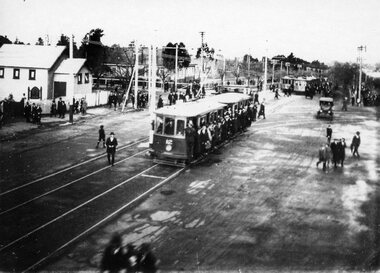
... ground, Ryrie St East, with the Garden St junction in the background. See btm9211 for another print, Dave O'Neil advised 20/7/2009 - Geelong High School to the left and other photos in the series. Laminated A3 size print added 3-08-2014 - to be used for display purposes. Yields information about the form and style of the Geelong tram depot during the Second World War era. trams tramways Geelong Football Ryrie St tram 12 "21 / Geelong Trmys" "Ryrie Street East / Garden Street Jtn in background, / Spectators returning from a Victoria Football League football match, played at Corio Oval, early 1920's" and a "William F Scott" address labels in the bottom right hand corner. ...Photograph of Geelong No. 12 towing a trailer with other trams in the background, following a football match, Corio football ground, Ryrie St East, with the Garden St junction in the background. See btm9211 for another print, Dave O'Neil advised 20/7/2009 - Geelong High School to the left and other photos in the series. Laminated A3 size print added 3-08-2014 - to be used for display purposes.Yields information about the form and style of the Geelong tram depot during the Second World War era.Black and white photograph, printed onto card (inkjet printer?) "21 / Geelong Trmys" "Ryrie Street East / Garden Street Jtn in background, / Spectators returning from a Victoria Football League football match, played at Corio Oval, early 1920's" and a "William F Scott" address labels in the bottom right hand corner.trams, tramways, geelong, football, ryrie st, tram 12 -
 Sunshine and District Historical Society Incorporated
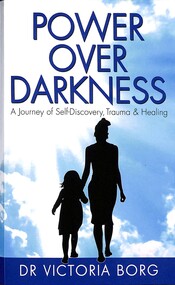
Book - Power Over Darkness A Journey of Self-Discovery, Trauma & Healing, Infinity Books USA, LLC, 2022
... from Malta in 1972. I returned to study as a mature-age student at Victoria University, St. Albans campus. I completed all my tertiary studies, including my doctorate at this institution and worked there for many years as an academic. I have been involved in voluntary work since my two children were in primary school. Having spent so many years here, I feel very grounded...from Malta in 1972. I returned to study as a mature-age student at Victoria University, St. Albans campus. I completed all my tertiary studies, including my doctorate at this institution and worked there for many years as an academic. I have been involved in voluntary work since my two children were in primary school. Having spent so many years here, I feel very grounded ...A memoir of the author's journey on mental illness and self-discovery.A soft covered book with title and author's name written on frontnon-fictionA memoir of the author's journey on mental illness and self-discovery.mental illness and self discovery, trauma and healing, reconciliation -
 Wangaratta RSL Sub Branch
Work on paper - Drawing
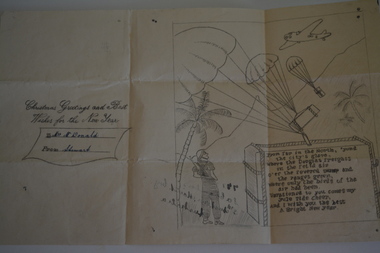
... Even though the Battation was disbanded in 1946 members and their families return each year, in November, for a commemorative service at the 2/24th Battalion Memorial Wall at the Wangaratta Cemetery. stewart a chambers vx 77754 ww2 Christmas Greetings and Best Wishes for the New Year To Mrs McDonald From Stewart Drawing - verse on box Rear - VX77754 S A Chambers 3rd Aust Air Maint Coy Australia Cream paper with drawing by hand in pencil of soldier looking up at plane and parachutes attached to boxes falling to ground with palm trees and hills in background Work on paper Drawing ...Drawing by Sgt Stewart Allan Chambers VX77754 Born 23/7/1902 at Toongabbie Enlisted 11/3/1942 at Caulfield at the age of 39 years 7 months He served in the AIF from 11/3/1942 to when he was discharged on 14/2/1946 He was attached to the 2nd Ambulance Car Coy and 3rd Australian Air Maintenance Coy. Sgt Chambers was posted to Wangaratta prior to embarking on 14/8/1942 for New Guinea during World War Two.Victoria's 2/24th Infantry Battalion was raised in Wangaratta in July 1940. They were welcomed with open arms by the local community as they rapidly built up their numbers. The people of Wangaratta adopted the Battalion and they became known as "Wangaratta's Own" because of the time the battalion spent in the town during its formative period prior to deployment overseas. Many of the soldiers maintained life long friendships with the people of Wangaratta. Even though the Battation was disbanded in 1946 members and their families return each year, in November, for a commemorative service at the 2/24th Battalion Memorial Wall at the Wangaratta Cemetery.Cream paper with drawing by hand in pencil of soldier looking up at plane and parachutes attached to boxes falling to ground with palm trees and hills in backgroundChristmas Greetings and Best Wishes for the New Year To Mrs McDonald From Stewart Drawing - verse on box Rear - VX77754 S A Chambers 3rd Aust Air Maint Coy Australia stewart a chambers, vx 77754, ww2 -
 Federation University Art Collection
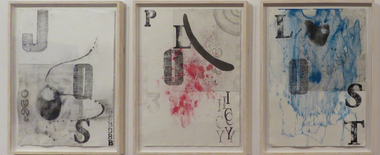
Work on paper, Patrice Mahoney, 'Jobs, Policy and LOST' (tryptich) by Patrice Mahoney, 2014
... from nature, environment and looking forward to a time when she can return to her family's traditional country to make work.
In 2012 the artist completed a Bachelor of Visual and Media Arts at Monash University’s Churchill campus (from 2014 Federation University's Churchill Campus). The Victorian Indigenous Art Awards 2014 were exhibited and judged at the Art Gallery of Ballarat. artist artwork patrice mahoney aboriginal victorian indigenous awards jobs culture printmaking drawing policies lost victorian indigenous art awards available alumni This unique edition triptych involves the techniques of intaglio copper plate, pigment, soft ground, open bite, aquatint, spit-bite, stamping, relief, drawing and burnishing on paper. ...These works are a display of my frustration of hour our family were lucky we were not beheaded, scalped, taken away and impaled as a warning to others not to enter farming lands, which had been traditional lands of the Nganyaywana country. The word 'Policy' represents the White Australia Policy, the word "Lost' stands for those lost including hundreds of family members, 'Jobs' asks why Aboriginal people can only find employment if through Aboriginal positions and policies. The number 3 symbolises myself and my siblings, red is for bloodshed, blue is for secrets and black the family history. Patrice MUTHAYMILES MAHONEY OAM Anewan/Nganyaywan/Dunghutti country. Patrice Mahoney is a printmaker, sculptor, weaver, drawer and painter. Her work challenges mainstream and Aboriginal Australians and is profoundly influenced by space, place and country, taking inspiration from nature, environment and looking forward to a time when she can return to her family's traditional country to make work. In 2012 the artist completed a Bachelor of Visual and Media Arts at Monash University’s Churchill campus (from 2014 Federation University's Churchill Campus). The Victorian Indigenous Art Awards 2014 were exhibited and judged at the Art Gallery of Ballarat.This unique edition triptych involves the techniques of intaglio copper plate, pigment, soft ground, open bite, aquatint, spit-bite, stamping, relief, drawing and burnishing on paper. It was awarded the 2014 Victorian Indigenous Art Awards Federation University Acquisitive Award for for work by a Victorian regional artist. Text, colour, metaphor and Aboriginal symbolism are important components of her work. This work expresses the artist's frustration with unjust situations experienced by traditional owners of Nganyaywana country. The word 'Policy' refers to White Australia Policy, 'Lost' the hundreds of lost family members, and 'Jobs' highlights the difficulty of Aboriginal peple obtaining work, especially outside Aboriginal positions and policy. The number 3 symbolises Patrice Mahoney's siblings, with black used to denote family history. The violently splattered red represents bloodshed, with the blue washing across the work obscuring details and representing secrets. The Selection Panel of the 2014 Victorian Indigenous Art Awards made the following comments on the work: 'The selection panel for the Federation University Acquisitive Award for 2014 were highly impressed by this work and applauded the vigorous use of symbolism and metaphor in a well scripted visual composition. The poignancy of connectedness to the past, memory, place and country is palpable and enhanced by the suggestive employment of text and minimal colour. A provocative and evocative work of art!artist, artwork, patrice mahoney, aboriginal, victorian indigenous awards, jobs, culture, printmaking, drawing, policies, lost, victorian indigenous art awards, available, alumni -
 Beechworth RSL Sub-Branch
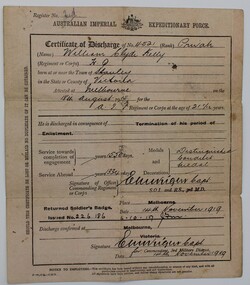
Certificate, Certificate of Discharge WWI War Service; 4521 Pte William Clyde Kelly
... Medals & Decorations Distinguished Conduct Medal; Returned Soldier's Badge Issued No. 226186 Certificate of Discharge for William Clyde Kelly 4521 service in the Australian Imperial Forces; there are crease marks where the document has been folder, there is obvious in ground dirt from being carried in a pocket or wallet Certificate of Discharge WWI War Service; 4521 Pte William Clyde Kelly Certificate Certificate ...Private William Clyde Kelly served in World War One as this certificate states he also did war time service in World War two. Certificate of Discharge for William Clyde Kelly 4521 service in the Australian Imperial Forces; there are crease marks where the document has been folder, there is obvious in ground dirt from being carried in a pocket or walletAustralian Imperial Expeditionary Force Certificate of Discharge of 4521 Private William Clyde Kelly at the termination of his period of Enlistment. Service towards completion of engagement 1550 days / Service Abroad 1334 days. Medals & Decorations Distinguished Conduct Medal; Returned Soldier's Badge Issued No. 226186certificate, certificate of service wwi -
 Melton City Libraries
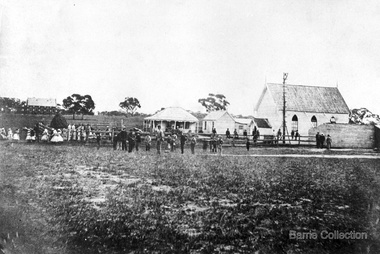
Photograph, Denominational Church and School, Unknown
... ground altered the vista across Common. The first Presbyterian Minister in the district was the Reverend Alexander McNicol an advanced student and an experienced missionary from Glasgow, arriving in Melbourne in 1850. He was ordained on the 8th of June and was called to the Bacchus Marsh and Mount Macedon district. On the 1st of May 1851 he was called to Geelong and returned...ground altered the vista across Common. The first Presbyterian Minister in the district was the Reverend Alexander McNicol an advanced student and an experienced missionary from Glasgow, arriving in Melbourne in 1850. He was ordained on the 8th of June and was called to the Bacchus Marsh and Mount Macedon district. On the 1st of May 1851 he was called to Geelong and returned ...Presbyterian Church Melton Background: A Combined Denominational Church and School was established in Melton by Protestants from the Presbyterian, Episcopalian, Wesleyan and Baptists denominations. A wooden church was built on the flat area east of the Toolam Toolern Creek. A photo of this church shows the buildings with small houses nearby. In the background the bluestone Presbyterian Church built in 1867 can be seen to the north on Yuille and Sherwin street. The flat area beside the road to Ballarat was subject to flooding and the site was eventually abandoned for a settlement. By the latter part of the 1860s the Church of England and Wesleyan bluestone churches were also being erected in the centre of the township of Melton. The commercial centre developed in High Street from Smith to Palmerston Street. Township of Melton Crown Grants Issued Under Common Law refers to the site of the Combined Denominational Church and School on the east side of Sherwin Street on the corner of Pyke Street. Section 4 Allotments 1 and 10 situated on the corner of Pyke, Bryan and Sherwin Street. The early map has the name of Thomas Cridge on this site. The area known Common (flat) remained open level ground with some cottages and buildings and a milk cooler in the 1930s, Granny Watts house “Lynch Cottage was moved in 1964. Sherwin Street was used until the 1960s with the open area being the used for playing golf. Alterations to the flat occurred when the golf course added to the height and removed the Sherwin Street access. The greens were developed and the height of ground altered the vista across Common. The first Presbyterian Minister in the district was the Reverend Alexander McNicol an advanced student and an experienced missionary from Glasgow, arriving in Melbourne in 1850. He was ordained on the 8th of June and was called to the Bacchus Marsh and Mount Macedon district. On the 1st of May 1851 he was called to Geelong and returned to Bacchus Marsh on February 1856 remaining until July 1859. Group of people in front of the church and school.churches, local identities, education -
 City of Greater Geelong
Acrylic on Canvas, Big Day Out, 2010-2011
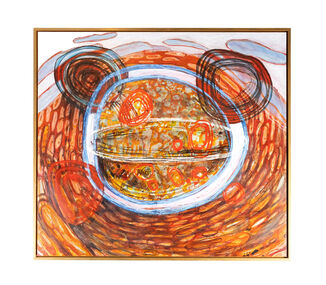
... Robinson would often take his painting gear along and do some work on unstretched linen on the desert ground, he would paint for a while and then perhaps lie around with the elders or follow one of the expert hunters and observe from a distance [several meters] the skills of elderly women casually walking through some recently burned spinifex knocking cowering bunnies on the head with a steel rod. It was on one of these occasions, when this particular painting was being conceived, that after returning...Robinson would often take his painting gear along and do some work on unstretched linen on the desert ground, he would paint for a while and then perhaps lie around with the elders or follow one of the expert hunters and observe from a distance [several meters] the skills of elderly women casually walking through some recently burned spinifex knocking cowering bunnies on the head with a steel rod. It was on one of these occasions, when this particular painting was being conceived, that after returning ...Rohan Robinson is an artist born in Geelong, and attended “the Mill” part of Deakin University in 1980-82, studying Fine Art. In 2010-11, he was the manager of Kayili Artists Aboriginal Corporation, at Patjarr in the Gibson Desert W.A., where he oversaw the development and marketing of artworks of the corporation’s members. The community is the remotest in Australia and averaged 25 people, mostly consisting of elderly people and part of the Ngaanyatjarra region, with some members not having any consistent contact with white fellas up to the mid 1960’s. During his time it was common for all the community members to go out hunting and having a visit to important areas, where members would get some tucker of rabbits and lizards and honey ants and perhaps some “meow meow” and have a nice sleep in the shade on the warm sand. Robinson would often take his painting gear along and do some work on unstretched linen on the desert ground, he would paint for a while and then perhaps lie around with the elders or follow one of the expert hunters and observe from a distance [several meters] the skills of elderly women casually walking through some recently burned spinifex knocking cowering bunnies on the head with a steel rod. It was on one of these occasions, when this particular painting was being conceived, that after returning from the hunting mission, he was informed by some of the mob, that an elder had been spending time looking at this work in it’s infantile stage...”You know the old fella over there, he been looking at that painting of yours” It was later in the day, when returning to Patjarr, that the elder Arthur Robertson approached Robinson, and demanded/asked that Robinson paint his stories for him. Mr Robertson was suffering from Parkinson’s disease, and was having trouble painting, but had been doing some brilliant work with Posca markers. It was with a certain reluctance that Robinson agreed, as he felt this to be a “political hot potato in some quarters” but also respected a relationship between artists beyond the cultural divide. Mr Robertson demanded that they start immediately and armed with pencil and paper they created the notes for several paintings under Mr Robertson’s direction. The painting that you are viewing is signifcant in that it was the catalyst for this relationship between the two artists. Mr Arthur Robertson died later that year 2011.Gold framed blue and earth tone painting. Painting depicting four circles with mountain and sky in the background. -
 8th/13th Victorian Mounted Rifles Regimental Collection
Photograph - McGrath, 1918 circa
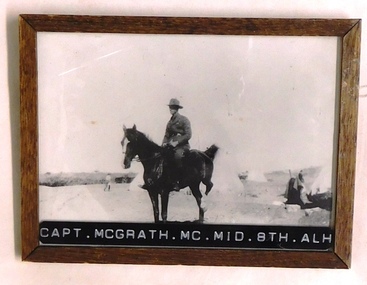
... ground for his rifle in the house. In all he stopped five bullets but the gunman bolted once McGrath appeared with his own weapon.Some weeks later he was captured getting milk from a dairy and declared insane. One of the five victims died that day, one some months later, one had to use a stick for the rest of his life and McGrath was forced to give up the farm and return to his old job as an accountant. ...ground for his rifle in the house. In all he stopped five bullets but the gunman bolted once McGrath appeared with his own weapon.Some weeks later he was captured getting milk from a dairy and declared insane. One of the five victims died that day, one some months later, one had to use a stick for the rest of his life and McGrath was forced to give up the farm and return to his old job as an accountant. ...William 'Lauchie' McGrath, an accountant with Australian Mercantile Land & Finance (AML&F), enlisted in AIF in September 1914. He was posted to 8th Light Horse regiment with the No 268 and rank of trooper. He rose through the ranks, serving at Gallipoli, Egypt and Palestine reachin the rank of Captain/Adjutant of the regiment. The 8th Light Horse Regiment AIF was raised at Broadmeadows Victoria in September 1914 under the command of Lieutenant Colonel Alexander White and formed part of the 3rd Light Horse Brigade. The regiment served at Gallipoli where in a courageous but ill-fated charge at the Nek on 7 August 1915 it suffered horrendous casualties including Lieutenant Colonel White. Rebuilt in Egypt under the command of Lieutenant Colonel Leslie Maygar VC the regiment went on the serve throughout the Middle East Campaign. Colonel Maygar died of wounds at Beersheba when the regiment was attacked by enemy aircraft while waiting to follow up the successful charge of the 4th LH Brigade on 30 October 1917. The 8th Light Horse AIF was disbanded in 1919, but soon after re-raised as the 8th (Indi) Light Horse in the Citizen Military Forces, superseding 16th (Indi) Light Horse. McGrath wrote the History of the regiment (See 3091.901) Following his return to Australia he took up farming in the Upper Murray, On 10 February 1924, a community picnic was being held at a creek below his Jingellic homestead when a maniac armed with a rifle came out of the scrub and proceeded to shoot indiscriminately int the party. No reason was ever given but it was presumed that he wanted to kill one man who was not among the five he hit. McGrath got the women and children into the creek and organised the other wounded - he had already been hit in the chest - into cover before running over open ground for his rifle in the house. In all he stopped five bullets but the gunman bolted once McGrath appeared with his own weapon.Some weeks later he was captured getting milk from a dairy and declared insane. One of the five victims died that day, one some months later, one had to use a stick for the rest of his life and McGrath was forced to give up the farm and return to his old job as an accountant. He was awarded the silver medal of the Royal Humane Society of NSW and the silver medal of the Royal Shipwreck Relief & Humane Society of NSW. The latter body felt the water in the creek made it appropriate to also make the award. McGrath enlisted again in World War Two, serving firstly as 2/ic Broadmeadows Camp and later 2/ic the Officer Commanding 12th Garrison Battalion. Framed black and white photograph of mounted officer with tents in background.Across lower edge of frame "Capt. McGrath. MC.. MID. 8th Australian Light Horse"mcgrath, 8th, light horse, garrison, royal humane society nsw -
 8th/13th Victorian Mounted Rifles Regimental Collection
Photograph - Mansfield & Yea Troops 20th Light Horse
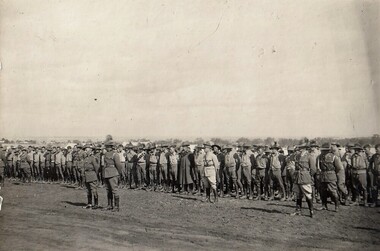
... return in April 1945, the Regiment was redesignated 20th Pioneer Battalion. It was disbanded following the end of the war. 20th Light Horse was the only light horse regiment to serve overseas in WWII. This is one of a collection of photographs featuring a Light Horse regiment drawn from rural and regional Victoria in the period immediately prior to mobilisation for World War 2 (1939-1945). Mansfield Yea 20th Light Horse " Mansfield - Yea Troops, 20th ALH ' Black and white photograph mounted on card of large group of soldiers on parade ground ...The 20th Light Horse (Victorian Mounted Rifles) was raised in 1920 as part of the 3rd Cavalry Brigade, 2nd Cavalry Division, Citizen Military Forces, with Headquarters at Seymour and depots along the Goulburn Valley from Mansfield to Tocumwal in southern NSW. In December 1941, 20th Light Horse (Victorian Mounted Rifles) converted from horse to mechanised, initially as 20th Motor Regiment. In 1943 the Regiment was deployed to Merauke, Dutch New Guinea. Upon its return in April 1945, the Regiment was redesignated 20th Pioneer Battalion. It was disbanded following the end of the war. 20th Light Horse was the only light horse regiment to serve overseas in WWII.This is one of a collection of photographs featuring a Light Horse regiment drawn from rural and regional Victoria in the period immediately prior to mobilisation for World War 2 (1939-1945).Black and white photograph mounted on card of large group of soldiers on parade ground. Two officers in front. Part of 20th Light Horse collection." Mansfield - Yea Troops, 20th ALH 'mansfield, yea, 20th light horse -
 Dandenong/Cranbourne RSL Sub Branch
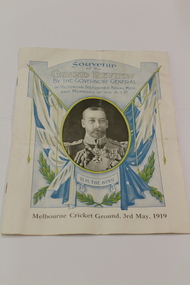
Souvenir - Souvenir of Grand Review at the MCG 3rd May 1919, Osboldstone & Co. Pty. Ltd, 1919
... from 1919 Picture of His Majesty the King (George the Fifth).Photos of Our Heroes in the Making on page 2. Pictures of various politicians the Governor General on page 3. Pages 4 and 5 displays the colours of various units participating in the parade. Pictures of worldwide dignitaries on page 6.Page shows photographs of where Australia's Glorious deeds were done. On the rear shows Anzac House, Collins Street, Melbourne. Souvenir of the Grand Review By the Governor General of Victorian Returned Naval Men and Members of the Australian Imperial Forces (A.I.F.) held at the Melbourne Cricket Ground ...Original Souvenir booklet from 1919Souvenir of the Grand Review By the Governor General of Victorian Returned Naval Men and Members of the Australian Imperial Forces (A.I.F.) held at the Melbourne Cricket Ground on the 3rd of May 1919.Picture of His Majesty the King (George the Fifth).Photos of Our Heroes in the Making on page 2. Pictures of various politicians the Governor General on page 3. Pages 4 and 5 displays the colours of various units participating in the parade. Pictures of worldwide dignitaries on page 6.Page shows photographs of where Australia's Glorious deeds were done. On the rear shows Anzac House, Collins Street, Melbourne.
