
Showing 15 items matching "returned soldiers' blocks"
-
 Merbein District Historical Society
Poster, Merbein Blocks, Central School, Residents, Businesses, 1909-1937
... Returned Soldiers' blocks...Returned Soldiers' blocks Working Bee Bennett's block Garry Lyons (house) King's house Cupper's house Tiller's block Burrell's house Sgt Harston Tonzing's block - 7th Street Merbein Post Office Merbein Central School Merbein Central School students Bill Junior Bennett Ken Allan Bill Senior Bennett Cowanna Billabong Butcher (Outdoor) Merbein Blocks, Central School, Residents, Businesses Poster ...returned soldiers' blocks, working bee, bennett's block, garry lyons (house), king's house, cupper's house, tiller's block, burrell's house, sgt harston, tonzing's block - 7th street merbein, post office, merbein central school, merbein central school students, bill junior bennett, ken allan, bill senior bennett, cowanna billabong, butcher (outdoor) -
 Lara RSL Sub Branch
Photographs, Bob Wilson, Framed Photos and Medals - McIntyre Family, 2016
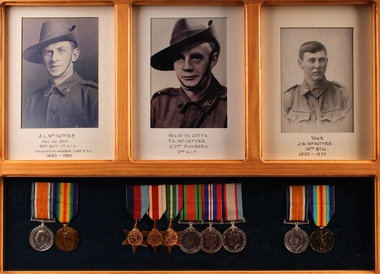
... John returned home in 1919 and was granted a soldier settlement block in Lara in 1937. ...John returned home in 1919 and was granted a soldier settlement block in Lara in 1937. ...These photographs and medals are of the McIntyre family. Three members of Lara's McIntyre family served during the First and Second World Wars, and two were members of the Lara RSL. John Lachlan McIntyre was born at Beeac, Victoria in December 1890. He enlisted in the 1st AIF in July 1915. John fought on the Western Front, taking part in the battles of Fromelles and the 2nd Battle of the Somme. He was severely wounded at Fromelles and spent 12 months in hospital in England before returning to the front. John returned home in 1919 and was granted a soldier settlement block in Lara in 1937. He was a founding member of Lara RSL and is its longest serving member. John died in 1990. Thomas Gordon McIntyre was born at Lara in 1901. Thomas, known as Gordon, was too young to enlist in the First World War with his brothers. At the outbreak of the Second World War he joined the 2/2nd Pioneer Battalion. He fought in the Syrian Campaign, before being recalled to Australia to fight in the pacific campaign. Gordon was wounded in a battle against the Japanese in Java on the 19/02/1942, and taken prisoner. No record of him after this was ever discovered, and he is presumed to have been killed. Jim McIntyre was born in 1893, and grew up in Lara and Geelong. Jim enlisted in the 1st AIF in 1916, and served with the 14th Battalion through the war. He was wounded twice. Jim died in 1976. The McIntyre family were early pioneers in the Lara district, and the brothers were founding members of the Lara RSL. Their medals and photographs represent a significant link to the history of the town and sub-branch. Three photographs and three sets of medals in a pine wood frame with glass covering. Photographs are black and white portraits of soldiers in uniform mounted on cream card. The medals are mounted on black felt. T.G. McIntyre VX20754 - 35-45 Star, Africa Star, Pacific Star, Defence Medal, War Medal and the Australian Service Medal 39-45. J.L. McIntyre 3591 - War Medal and Victory Medal J.W. McIntyre 7049 - War Medal and Victory Medal J.L. McIntyre REG. No. 3591 58th. BATT. 1st A.I.F Foundation Member Lara R.S.L 1890 - 1990 REG. NO. VX20754 T.G. MC INTYRE 2/2nd PIONEERS 2nd A.I.F 7049 J.W. McINTYRE 14th BTN. 1893-1975photograph, mcintyre, medals, wwi, wwii, world war 1, world war 2, aif, pioneers, lara, rsl -
 Lara RSL Sub Branch
Postcards, France
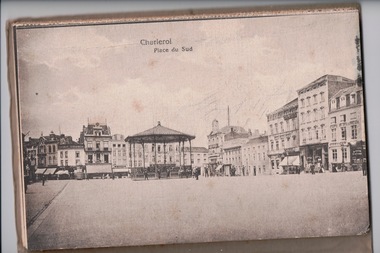
... John returned home in 1919 and was granted a soldier settlement block in Lara in 1937. ...John returned home in 1919 and was granted a soldier settlement block in Lara in 1937. ...John Lachlan McIntyre was born at Beeac, Victoria in December 1890. He enlisted in the 1st AIF in July 1915. John fought on the Western Front, taking part in the battles of Fromelles and the 2nd Battle of the Somme. He was severely wounded at Fromelles and spent 12 months in hospital in England before returning to the front. John returned home in 1919 and was granted a soldier settlement block in Lara in 1937. He was a founding member of Lara RSL and is its longest serving member. John died in 1990. This letter was written by John and sent to his mother in 1918 on his journey through Belgium. The McIntyre family were early pioneers in the Lara district, and the brothers were founding members of the Lara RSL. This letter represents a significant link to the history of the town and sub-branch.A brown envelope addressed to Miss J McIntyre. Within the envelope is a pack of 12 illustrated souvenir post cards. Envelope: O.A.S. Tower of London. Miss J McIntyre. Elcho Lara lake, Australia, Victoria. Rear of postcard pack: London December 27th 18 Dear Mother, I arrived here yesterday. Spent Xmas day travelling across France. The trip took the best part of four days. We are up near Belgium. Had to go into Belgium to get a train. Will write when I get settled. Hoping you are all well. With best wishes for a happy new year. Jack. Edition Martinetty Charleroi Front of pack: J. L. McIntyre Xmas 1918 Souvenir de Charleroi-Belgium 12 cartes postales 12 En Photochrommother, letter, postcard, first world war, wwi, world war one, belgium, lara -
 Red Cliffs Military Museum
Document, Life history of Sgt. William Carroll, (estimated); early -mid 1990
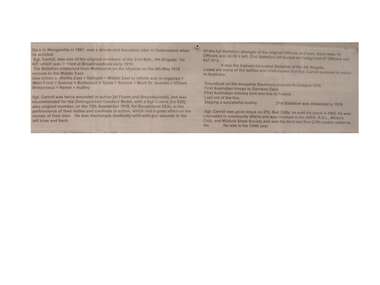
... return to Australia. Torpedoed on the troop ship Southland enroute to Gallipoli 1915;/ First Australian troops to Garrison Cairo; First Australian Infantry Unit into line in France; Last out of the line; Staging a successful mutiny; 21st Battalion was disbanded in 1918. Sgt. Carroll was given block 276 Red Cliffs, he sold his block in 1982. He was interested in Community affairs and was involved in ADFA, RSL, Mildura Club, and Mildura Show Society and was the third last Red Cliffs Soldier...return to Australia. Torpedoed on the troop ship Southland enroute to Gallipoli 1915;/ First Australian troops to Garrison Cairo; First Australian Infantry Unit into line in France; Last out of the line; Staging a successful mutiny; 21st Battalion was disbanded in 1918. Sgt. Carroll was given block 276 Red Cliffs, he sold his block in 1982. He was interested in Community affairs and was involved in ADFA, RSL, Mildura Club, and Mildura Show Society and was the third last Red Cliffs Soldier ...This short history is in a display of photos and a copy of a letter written home by Sgt Carroll to his Aunt.A brief written life history from birth to death of William Carroll service Number 815. As written by a member of Red Cliffs R.S.L. in consultation with the family.Born in Wangaratta in 1891, was a drover and boundary rider in Queensland when enlisted.Sgt. Carroll was one of the original members of the 21st Battalion, 6th Brigade, 1st AIF, which was formed at Broadmeadows early 1915. The battalion embarked from Melbourne on the Uylsses on the 8th May 1915 enroute to the Middle East. Saw action Middle East> Gallipoli>Middle East to reform and reorganise > Western Front> Somme> Bullecourt> Ypres> Somme> Mont St. Quentin> Villiers Bretonneux> Hamel Mutiny./ Sgt. Carroll was twice wounded in action (at Fluers and Broondseinde)and was recommended for the Distinguished Conduct Medal, with a Sgt Cozens (No 825 also original member, on the 15th September 1916, for exceptional zeal in the performance of their duties and coolness in action, which had a great affect on the moral of their mem. He was discharged medically unfit with gun wounds to his left knee and back. Of the full Battalion strength of the original Officers and men, there were 16 Officers and 24 Or's left. 21st Battalion left buried on foreign soil 47 Officers and 827 Or's. It was the highest decorated Battalion of the 6th Brigade. Listed are some of the Battles and Misfortunes that Sgt. Carrol survived to return to Australia. Torpedoed on the troop ship Southland enroute to Gallipoli 1915;/ First Australian troops to Garrison Cairo; First Australian Infantry Unit into line in France; Last out of the line; Staging a successful mutiny; 21st Battalion was disbanded in 1918. Sgt. Carroll was given block 276 Red Cliffs, he sold his block in 1982. He was interested in Community affairs and was involved in ADFA, RSL, Mildura Club, and Mildura Show Society and was the third last Red Cliffs Soldier Settler to die. He was in his 100th year.medal, distinguished, battalion, aif, 21st, 6th, brigade, 1st, mutiny, gallipoli, wangaratta, 1891, boundary, rider, ulysses, middle, east, western, front, conduct -
 Warrnambool and District Historical Society Inc.
Document, Australian Army Statement of Service, C 1976
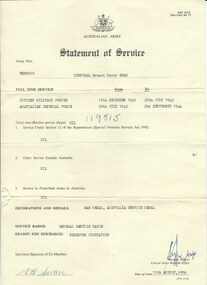
... soldiers’ settlers block in the Grasmere area, north of Warrnambool. The soldiers' settlement program was instigated after both world wars whereby land was made available to returning soldiers. ...soldiers’ settlers block in the Grasmere area, north of Warrnambool. The soldiers' settlement program was instigated after both world wars whereby land was made available to returning soldiers. ...He served from December 1941 to July 1942 in the Citizen Military Forces and from July 1942 to September 1944 in the Australian Imperial Forces. His reason for discharge was reserved occupation. He held the rank of corporal in 26th Motor regiment. He was born in Colac 19/11/1919 to Ernest Swan and Daisy Johnson. He died 04/08/2009 and is buried at the Warrnambool cemetery. During his life he farmed a soldiers’ settlers block in the Grasmere area, north of Warrnambool. The soldiers' settlement program was instigated after both world wars whereby land was made available to returning soldiers. Some of the land was Crown land and some was acquired. This document is an official statement of his service.This document has social significance and interest as it is representative of thousands of local men who served in World War 2. It is a link also to the Soldiers' settlement programCream paper with black text. Personal details of Ernest Henry Swan have been typed into fields. text in the centre of the reverse.Signed E H Swan. date of issue is 11/08/1976.Army number VX88010.warrnambool, e h swan, e h swan statement of service -
 Waverley RSL Sub Branch
Booklet, A N Z A C Memorial Day 25th April 1919, 1919
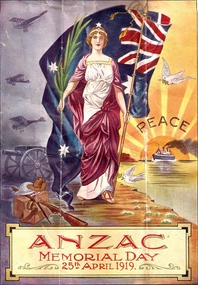
... Colour booklet (Souvenir) published by Victorian Branch of the Returned Soldiers and Sailors League of Victoria for ANZAC Memorial Day 1919 G. R. Palmer, President. Printed by Osboldstone & Co. Pty. Ltd. Designed by Goldsworthy and Davey. Blocks...Aquired by Henry Claude Roussac (Gallipoli Veteran) and kept as a souvenir Rare survivor anzac day anzac memorial day anzac day 1919 returned sailors and soldiers league victoria goldsworthy and davey osboldstone and co. pty. ltd osboldstone master process engravers association melbourne anzac day 1919 roussac 25 bn. anzac day anzac memorial day anzac day 1919 returned sailors and soldiers league victoria goldsworthy and davey osboldstone and co. pty. ltd osboldstone master process engravers association melbourne anzac day 1919 roussac 25 bn. ANZAC Memorial Day 25th April 1919 Peace Colour booklet (Souvenir) published by Victorian Branch of the Returned Soldiers and Sailors League of Victoria for ANZAC Memorial Day 1919 G. R. Palmer, President. Printed by Osboldstone & Co. Pty. Ltd. Designed by Goldsworthy and Davey. Blocks ...Printed for the Victorian Branch of the Returned Soldiers and Sailors League of Victoria for ANZAC Memorial Day 1919 G. R. Palmer, President. Aquired by Henry Claude Roussac (Gallipoli Veteran) and kept as a souvenir Rare survivorColour booklet (Souvenir) published by Victorian Branch of the Returned Soldiers and Sailors League of Victoria for ANZAC Memorial Day 1919 G. R. Palmer, President. Printed by Osboldstone & Co. Pty. Ltd. Designed by Goldsworthy and Davey. Blocks by The Master Process Engravers Association.ANZAC Memorial Day 25th April 1919 Peaceanzac day, anzac memorial day, anzac day 1919, returned sailors and soldiers league victoria, goldsworthy and davey, osboldstone and co. pty. ltd, osboldstone, master process engravers association, melbourne anzac day 1919, roussac, 25 bn., anzac day, anzac memorial day, anzac day 1919, returned sailors and soldiers league victoria, goldsworthy and davey, osboldstone and co. pty. ltd, osboldstone, master process engravers association, melbourne anzac day 1919, roussac, 25 bn. -
Bendigo Historical Society Inc.
Document - Notes of public talk given to Bendigo Historical Society by Jenny Trewartha on 7th March, 2025 relating to NDSN, 7th March, 2025
... soldiers returning with wounds and conditions not seen before and needing special treatment. Medicine and medical treatments were entering a new age, and this new age needed nurses with new skills. There was a need to improve the status and prospects for nurses. Improved working and living conditions were needed; adequate remuneration and a career path to attract a better class of trainees, and a uniform training by means of a circular or block system. ...soldiers returning with wounds and conditions not seen before and needing special treatment. Medicine and medical treatments were entering a new age, and this new age needed nurses with new skills. There was a need to improve the status and prospects for nurses. Improved working and living conditions were needed; adequate remuneration and a career path to attract a better class of trainees, and a uniform training by means of a circular or block system. ...Speech given by Jenny Trewartha to the Bendigo Historical Society on 7th March, 2025 at the la Trobe Art Institute, View Street, Bendigo. Jenny was a graduate of the NDSN at the end of 1972. The Northern District School of Nursing opened at Bendigo in 1950 and was the only regional independent School of Nursing of its kind in the southern hemisphere. There was a huge need for trained nurses in hospitals across the region as the nursing numbers were dwindling. Post World War II was a critical period with soldiers returning with wounds and conditions not seen before and needing special treatment. Medicine and medical treatments were entering a new age, and this new age needed nurses with new skills. There was a need to improve the status and prospects for nurses. Improved working and living conditions were needed; adequate remuneration and a career path to attract a better class of trainees, and a uniform training by means of a circular or block system. This was the basis of the establishment of the Northern District School of Nursing which oversaw nurse training in hospitals across the northwest of Victoria, including Bendigo, Castlemaine, Kyneton, Maryborough, Mildura, Ouyen, St Arnaud, Swan Hill, Dunolly, Inglewood and Echuca. The Northern District School of Nursing opened in 1950 and closed its doors in 1989 having overseen the training of more than 3000 nurses who are now scattered across Australia and the world.Ten pages of typed notes pertaining to training as a nurse at the Northern District School of Nursing from 1950 to 1989, and the Northern District School of Nursing Graduates Association. Document discusses different aspects of life as a trainee nurse - including financial, social and where students came from.northern district school of nursing, nursing, student -
 Bendigo Military Museum
Mixed media - KANGAROO FLAT SOLDIERS MEMORIAL 1917 - 1921
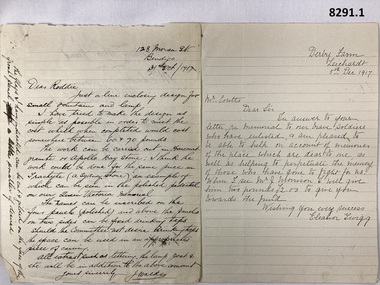
... Returned or Killed". The pencil listing has a list of 18 names with "Killed" next to. The other part has 45 names. On the rear of this one is some pencil notes, a sketch and re a meeting on "June 5th". .6) Newspaper cuttings x 2. one relates the site chosen for the Kangaroo Flat Soldiers Memorial being the block in front of the school and donated by Mrs Allen. ...Returned or Killed". The pencil listing has a list of 18 names with "Killed" next to. The other part has 45 names. On the rear of this one is some pencil notes, a sketch and re a meeting on "June 5th". .6) Newspaper cuttings x 2. one relates the site chosen for the Kangaroo Flat Soldiers Memorial being the block in front of the school and donated by Mrs Allen. ...The Cat No 8290 pre this is the Minute book related to "The Kangaroo Flat Soldiers Memorial fund project". These letters, documents, name lists, sketches, quotes all revolve around the project to build a Memorial. They are dated from 31.10.1917 to 12.4.1921. This also includes documentation to have a "War Trophy(s)" on the site. At this time in history Kangaroo Flat was part of the Marong Shire not Bendigo. .1) 1917. These two letters are addressed to Roderick Coutts who was the Secretary of the Memorial Committee. .2) 1918.These letters & documents are broken up into 14 groups (a - n) all re the Kangaroo Flat Memorial. (a) Shire of Marong x two dated 7.6.1918 & 4.10.1918. (b) J.B. Wilson Monumental Sculptures x three dated 2.5.1918 to 9.10.1918. (c) J. Harris Monumental and General Masons dated 6.5.1918. (d) P Finn & Co General Masons dated 21.5.1918. (e) W & R Quinn General Masons dated 21.5.1918. (f) A. M. Irwin Builder & Contractors x two dated 10.11.1918 & 18.11.1918. (g) Herbert Keck & Sons Nurseryman and Orchardist dated 18.9.1918. (h) Department of Public Works x three dated 13.5.1918 - 24.9.1918 - 27.9.1918. (i) Education Department Melbourne x six re State School No 981 Kangaroo Flat dated 6 .3.1918 to 29.8. 1918. (j) Letters x two re R Coutts dated 6.2.1918 & 4.3.1918. (k) Kangaroo Flat & District Soldiers Memorial Fund x one Coutts to Okey. (l) McColl, Rankin & Stanistreet Legal Managers & Accountants x one dated 5.12.1918. (m) Snowden, Neave & Demaine Solicitors & Co x two dated 24.1.1918 & 7.8.1918. (n) Auditors report x one dated 16.12.1918. .3) 1919. Letters x two from "Myr - Nong" Elsternwick to Mr Okey dated 19.3.1919 & 31.3.1919. .4) 1920. Letters x two from the "Prime Ministers Department & Australian Military Forces 3rd Military District" dated 4.3.1920 & 8.3.1920. .5) Six miscellaneous items, only one has a date. (a) Short note re a donation to the Memorial. (b)Price list for Soldiers Memorial works. (c) Sketch in pencil re "Cyclone Spring coil". (d) Letter in Pencil, has a date "Wed April 10th" regarding the final site of the Memorial either, a block of ground in front of the Methodist Church or a block of ground in front of State School. Both fronted the Main Road. Mrs Allen donated the block in front of the School, this offer was accepted. (e) Sketch plan in pencil and red ink showing a proposal of how the site would look with the Memorial on. (f) Two sections of paper pinned together, one in ink, one in pencil. The ink piece is name listed 1 - 65 and some names have notations written next to and is double sided. The notations are "Returned or Killed". The pencil listing has a list of 18 names with "Killed" next to. The other part has 45 names. On the rear of this one is some pencil notes, a sketch and re a meeting on "June 5th". .6) Newspaper cuttings x 2. one relates the site chosen for the Kangaroo Flat Soldiers Memorial being the block in front of the school and donated by Mrs Allen. The other relates to the Repatriation Commission and the costing of local Memorials. .7) War trophy documents & correspondence. (a & b) Dated 10th & 17th December 1918 re application for War trophies replied by the State Parliament House Melbourne. (c) Dated 24 the October 1919. From the Australian War Museum - Wool Exchange King Street Melbourne. (d & e) Dated 22.10.1919 & 8.10.1920. From the Victorian State Trophy Committee and State Parliament. (f) Dated 17th April 1921. From the Victorian State Trophy Committee re allotment of a War trophy. (g) Double sided correspondence with "V98a" at top details the process of allotting War trophies, the Committee, conditions, town size and what is allotted per size. Stamped in purple is "One Machinegun". .1) 1917.Two letters, white paper, ruled lines with black ink hand writing, dated 31.10.1917 & 5.12.1917, the October letter has pencil notes on the rear. .2) 1918. Twenty six letters, documents, quotes either hand written in black pen, pencil, black & purple typed, Business names re letter heads some with images dating from 24.1.1918 ot 30.12.1918. .3) 1919. Two letters all in black pen, one has two pages, both letters have same heading stamp at the top in purple. Dated 19.3.1919 & 31.3.1919. .4) 1920. Two letters typed in black, both have a letter head, dated 4.3.1920 & 8.3.1920. .5) Items. Six miscellaneous items, letter, lists, prices, sketches of the proposed memorial site. .6) Articles. Two Newspaper clippings, yellowed black print, one has been found being 18.4.1918. .7) War trophies. Seven letters and documents, six have a date relating to "War Trophies", black and purple print, dates are 17.2.1918 to 12.4.1921. Sizes vary from note pad size to Foolscap.brsl, smirsl, kfsmf, letters -
![Photograph - Land in Albion for soldiers settlement after WWI Photograph, [1920]](/media/collectors/5164c1772162ef0c64d700f2/items/69dc57946a5a9c1cb356d845/item-media/69dc57bb6a5a9c1cb356eb43/item-fit-380x285.jpg?cb=6) Sunshine and District Historical Society Incorporated
Sunshine and District Historical Society IncorporatedPhotograph - Land in Albion for soldiers settlement after WWI Photograph, [1920]
... Land made available in Albion by HV McKay for soldier settlement after World War I Land was subdivided into housing blocks to be made available for homes for returned soldiers....Albion World War 1914 - 1918 Land made available in Albion by HV McKay for soldier settlement after World War I Land was subdivided into housing blocks to be made available for homes for returned soldiers. ...albion, world war 1914 - 1918 -
 Lake Bolac & District Historical Society
Black and white photograph, Pte Donald Murray meeting Pte Ray Hargreaves in London during WW1
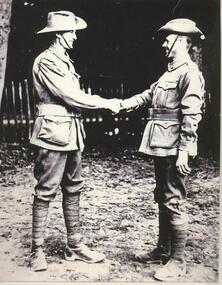
... Upon his return he was granted a Soldier Settler's block west of Lake Bolac in 1921. ...Upon his return he was granted a Soldier Settler's block west of Lake Bolac in 1921. ...Private Donald Hector Murray greeting Private Edward Raymond Hargreaves in London during WW1. Donald enlisted 17/04/1916 in the 37th Infantry Battalion and embarked for Europe 03/06/1916. He died of Tubercular Pleurisy on 21/12/1916 at the Military Hospital, Fargo England, whilst on active service. He is buried in the Durrington Cemetery there. Edward enlisted in the 5th Infantry Battalion on 08/07/1915 and embarked for France 11/10/1915. Upon his return he was granted a Soldier Settler's block west of Lake Bolac in 1921. He married Flora Graham in 1925. murray, 37th infantry battalion, hargreaves, graham, 5th infantry battalion, london, ww1, fargo military hospital, durrington cemetery, lake bolac -
 Lake Bolac & District Historical Society
Black and white photograph, Private Hugh Michael O'Rorke, 39th Infantry Brigade, WW1
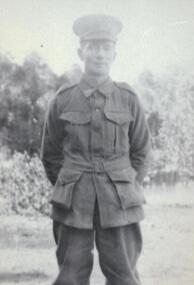
... After convalescence in England he returned to Australia and was discharged in 1918. He took up a Soldier Settlement block at Westmere and named it Killigrew'. ...After convalescence in England he returned to Australia and was discharged in 1918. He took up a Soldier Settlement block at Westmere and named it Killigrew'. ...Private Hugh O'Rorke enlisted 28/03/1916 in 39th Infantry Battalion and embarked for France 27/05/1916. He was gassed and then severely wounded during the Battle for Broodseinde Ridge on 04/10.1917. After convalescence in England he returned to Australia and was discharged in 1918. He took up a Soldier Settlement block at Westmere and named it Killigrew'. Ray and Jan O'Brien live in the house now.' He was awarded an MBE in 1955 for services to the CFA. He died in 1962, aged 72.o'rorke, 39th infantry battalion, france, battle for broodseinde ridge, soldier settler, westmere, o'brien, mbe, cfa -
 Melton City Libraries
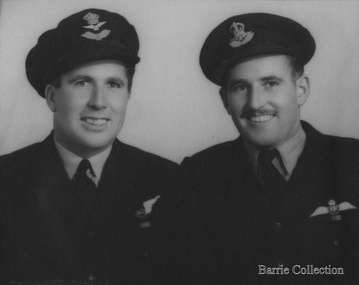
Photograph, Jim (James) and William (Horace) Barrie, Unknown, c.1940
... returned to Darlingsford. In 1953 he married Wilma Ryan of Yarram. He continued in the family farming tradition obtaining a Soldier Settlement Block at Shelford. ...returned to Darlingsford. In 1953 he married Wilma Ryan of Yarram. He continued in the family farming tradition obtaining a Soldier Settlement Block at Shelford. ...In 1939 when World War 11 erupted Jim and Horace enlisted in the RAAF Jim to become a pilot and Horace a navigator. James Edward Barrie enlisted in the RAAF on 21st June 1941, aged 19 years. He was sent to Canada and then later to England to become a Spitfire Pilot. Half way through the War he returned to Australia to be sent north to fight the Japanese. At one stage he had to bail out over the Pacific after his engine had failed. Fortunately, he had time to radio his position before he abandoned his Spitfire. He dropped his boot out to determine how far below the water was, parachuted down inflated his dinghy and waited to be rescued. He was picked up very quickly by a rescue crew just as a heavy fog descended, or he may never have been found. He lost many of his mates in that Squadron in the Pacific, it was a particularly vital time for the Allies and these boys played a major part in turning the tide against the Japanese. This information has been taken from the writings of Mary Robinson, sister of Jim. My parents Bon and Edna Barrie spoke about this incident leaving a vivid impression in my mind as a young child. Jim is mentioned in the book Two Steps to Tokyo. A Story of the RAAF in the Trobriand and Admiralty Islands by Gordon Powell Chaplain, RAAF. After the war Jim returned to Darlingsford. In 1953 he married Wilma Ryan of Yarram. He continued in the family farming tradition obtaining a Soldier Settlement Block at Shelford. Jim regularly attended the ANZAC day march to the Shrine. He died in August 2004 This account has been compiled by his niece Wendy Barrie Sons of Charles (Ernie) and Jessie Barrie of Darlingsford Meltonlocal identities -
 Whitehorse Historical Society Inc.
Functional object - Stamp, >1945
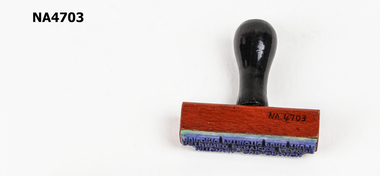
... Mitcham, Ink Stamp, reading |Building Patriot Fund Trust Returned Soldiers League Mitcham Sub-Branc |Brown wood oblong block with painted black handle and blue inked rubber wording....Returned Soldiers League|Mitcham Sub-Branch R.S.L. Mitcham, Ink Stamp, reading |Building Patriot Fund Trust Returned Soldiers League Mitcham Sub-Branc |Brown wood oblong block with painted black handle and blue inked rubber wording. ...From the Returned Services League - Mitcham Sub-Branch. Commonly referred to as the|Mitcham R.S.L.|Branch at 26 McDowall Street (cnr of Harrison Street), Mitcham. Closed in early 2014.R.S.L. Mitcham, Ink Stamp, reading |Building Patriot Fund Trust Returned Soldiers League Mitcham Sub-Branc |Brown wood oblong block with painted black handle and blue inked rubber wording.Building Patriot Fund Trust|Returned Soldiers League|Mitcham Sub-Branchmilitary history, air force, army, marines, navy, societies, service clubs -
 City of Melbourne Libraries
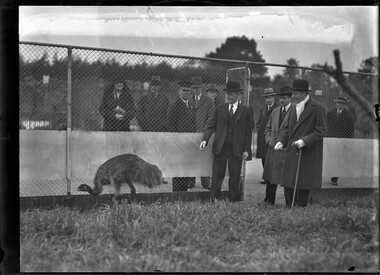
Photograph, Bull, Hugh Jones, 1897-1993, Vice-regal visit to zoo: Lord Huntingfield meets an emu
... After the First World War, many returned soldiers took up the Government’s offer of land in the Soldier Settlement Scheme. Most of the veterans had little or no farming experience and much of the land offered was of poor quality, with blocks often too small to be viable. ...After the First World War, many returned soldiers took up the Government’s offer of land in the Soldier Settlement Scheme. Most of the veterans had little or no farming experience and much of the land offered was of poor quality, with blocks often too small to be viable. ...Photographer notations on slide: "Vice Regal visit to Zoo B42" Not published. Description: A group of men and one woman all dressed in hats and overcoats stand by a wire fence while watching an emu. Research by project volunteer, Fiona Collyer: On 25 June 1934, new Victorian Governor, His Excellency Lord Huntingfield and his wife Lady Huntingfield made an official visit to the Melbourne Zoological Gardens in order to grant his patronage to the Royal Zoological and Acclimatisation Society. During the visit, zoo director Mr. Andrew Wilkie introduced them to some of the zoo’s inhabitants, including an emu. After the First World War, many returned soldiers took up the Government’s offer of land in the Soldier Settlement Scheme. Most of the veterans had little or no farming experience and much of the land offered was of poor quality, with blocks often too small to be viable. Many of the settlers had ongoing physical and mental injuries from the war. The Western Australian government allocated land to 5000 former soldiers but by 1929, one quarter of the men had already abandoned their land, unable to make a living. Not only was the world economy struggling with the Great Depression, but the settlers also had to contend with plummeting wheat and wool prices, crippling drought and rabbit infestation. The Scullin Government (Oct 1929-Jan 1932) had promised subsidies to the Western Australian farmers if they increased their wheat crops but were unable to pass the legislation in the Senate. The new Lyons Government (Jan 1932-April 1939) abandoned the legislation and the subsidies were never paid, bringing calls from Western Australia of secession from Australia. In October 1932, a deputation of soldier settlers from the Campion wheatbelt region in Western Australia, petitioned Commonwealth Minister for Defence, Western Australian Senator Sir George Pearce, for assistance. A mob of 20,000 emus were migrating to the coast after breeding and were gathering along the eastern side of the Number 1 Rabbit Proof Fence, attracted to the ripening crops and the dams the farmers had built. They were heading towards Campion, 303 kilometres east of Perth, eating and trampling the wheat, destroying the fences and letting the rabbits in. Having witnessed firsthand the effectiveness of machine guns in killing people in war, the former soldiers thought the guns would be ideal for killing emus. Sir George, wanting to demonstrate that his government was sympathetic to the settlers and hoping to quell Western Australian succession talk, agreed. However, he stipulated that no expense would be incurred by the Commonwealth Government and only active military personnel could use the machine guns. The farmers had to pay for the ammunition, food and accommodation for the military for the length of the operation. The cost for the ammunition was £50 for 10,000 rounds. Sir George also felt the operation would provide excellent target practice for the soldiers! The operation was headed by Major Gwynydd Purves Wynn-Aubrey Meredith, 1887-1975, of the Seventh Heavy Battery of the Royal Australian Artillery, and assisted by Sergeant S. McMurray and Gunner J. O'Halloran. They were equipped with two American-designed Lewis light machine guns and 10,000 rounds. Each magazine held 47 rounds of ammunition and the gun was capable of firing 500 to 600 rounds per minute with effective firing range of 800 metres. A cinematographer from British Movietone News accompanied the soldiers in order to record what was expected to be not only an easy victory but also useful propaganda for both the military and the Lyons Government. Emu (Dromaius novaehollandiae, meaning New Holland Racer) is a species of long-necked flightless bird endemic to Australia. The Tasmanian and the dwarf King and Kangaroo Island subspecies were hunted to extinction after the European settlement of Australia. It is the second largest bird in the world after the ostrich, standing up to 1.9 metres tall and weighing up to 50 kilograms. The Emu has long, powerful legs with three forward facing toes and is the only bird with calf muscles. It is able to jump 2.1 metres into the air and run 50 kilometres per hour. It communicates by drumming and booming through an inflatable neck sac which can be heard up to two kilometres away. Along with its tough hide and a body more feathers than flesh, the emu can be a tricky target. Emus had been a protected native species until 1922, when the government changed their status to “vermin” in response to the emus breaking down fences and destroying crops. Major Meredith told the press that Colonel Oswald V. Hoad of the 1st Cavalry Division NSW had especially requested he send 100 emu skins to replenish the plumage on his Light Horsemen’s hat tops. On the first day of the Emu War, 2 November 1932, Major Meredith spotted a mob of emus out of range of the guns, so he asked the farmers to use their vehicles to drive the emus towards the fence and the guns. The panicked birds split into small groups, kicking up the dust and scattering every which way. Only six were killed, though some were wounded. After that, the emus became very wary of humans. On 4 November, Major Meredith staged a dawn ambush at a dam. As 1000 emus approached to drink, the soldiers opened fire, killing 12 emus. After reloading, the gun jammed and the emus dispersed in all directions, and were not sighted again that day. The West Australian newspaper reported on 4 November 1932 that, “The emus have proved that they are not so stupid as they are usually considered to be. Each mob has its leader, always an enormous black-plumed bird standing fully six-feet high, who keeps watch while his fellows busy themselves with the wheat. At the first suspicious sign, he gives the signal, and dozens of heads stretch up out of the crop. A few birds will take fright, starting a headlong stampede for the scrub, the leader always remaining until his followers have reached safety.” In a later attempt, they mounted a gun onto the bed of a truck in order to chase and mow down the birds. However the truck couldn’t drive fast enough over the rough terrain and it was too bumpy to fire the gun accurately. The birds easily outran the truck except for one hapless emu who faltered while being chased and fell under the truck, its body wedging in the steering gear, causing the driver to crash the truck, and bringing down half a chain of the rabbit proof fence. RSPCA inspector Mr. Arthur Austin arrived with a rifle and knife in order to finish the work of the Lewis guns and dispatch injured emus. He said that while his society was sympathetic to the stricken settlers, he was anxious that wounded birds should not be left to suffer. Major Meredith told the inspector, “What speed can you run? You have to be better than Peter Pan if you want to catch wounded emus that make for the scrub.” (Racehorse “Peter Pan” had won the 1932 Melbourne Cup a few weeks earlier.) The commentator of the British Movietime newsreel uses a jocular tone to optimistically proclaim, “The scouts [emus] of the advancing army have keen eyesight, and in order to get close to the main body, our lads have to do some real stalking, with the enemy watching events through their periscopes raised up over the heads of corn... Instead of the birds ruining the farmers, tables are turned, there will be no more damage down here for many a day to come once the enemy is eliminated.” Emus proved tougher adversaries than expected, barely breaking stride even when badly injured from machine gun bullets, and the suspicious emus soon learnt to stay out of range of the men and their guns. Meanwhile, in the eastern states concern was being expressed about the cruelty of machine-gunning the native birds. Senator James Guthrie UAP of Victoria suggested that there must be “more humane, if less spectacular methods” of coping with the pests. People wrote letters to the newspapers to express their dismay at the inhumane methods used. R.F. Bellchambers from Humbug Scrub, 25 November 1932, lamented that, “At the present rate of extinctions, it will shortly be necessary to go to the Museum to see the remains of our fauna.” The Murchison Times published a letter on 16 November 1932 from “Clay Pan Joe”: “War on Emus. Slaughter of innocent birds would be more appropriate... The birds may be a nuisance and it may be necessary to destroy them, but why cause so much suffering amongst these innocent birds.” E.S. Playford of Norton’s Summit wrote to The Advertiser, 22 November 1932, that “...habitation on the earth would be impossible without bird life. Therefore, it is unwise to say that any bird is useless. Is sentiment dying? Are we so keen on personal gain that our lovely and unique birds have to be ruthlessly slaughtered in thousands and their bodies left rotting in the sun?” In Sydney, picture palace patrons expressed “considerable concern” after viewing the Movietone News newsreel of emus fleeing from the barrage of machine-guns, and wounded emus in the fields in Campion. The press had a field day, dubbing it the “The Emu War” and joking that the “Chicago method” was being used against the feathered foe. The Daily News newspaper published a cartoon depicting the emus outrunning and outsmarting the soldiers. In Parliament NSW Senator James Dunn called Sir George the “Minister for the Emu War”. Labor member Mr. Rosevear, midst great laughter, asked if the minister would consider declaring an armistice and withdrawing his troops from the Western Front. Prime Minister Joe Lyons was asked if medals would be struck for those taking part in the war. Labor parliamentarian Mr. A.E. Green declared any medals should go to the emus who had “won every round so far”. With the embarrassing press coverage and poor results, Sir George ordered a stop to the project on 9 November, and Major Meredith and the soldiers departed for Perth. The WA Premier Sir James Mitchell and the Campion farmers demanded they return, citing the continued destruction of crops and fences by the emus. Major Meredith and his two gunners were allowed to return on 13 November and seemingly having learnt from their previous experiences, had slightly more success this time killing emus. The operation finally finished on 10 December with Major Meredith reporting “definite kills” of 986 emus for 9860 rounds of ammunition, coincidentally and conveniently exactly 10% of the number of rounds used. A further 2500 birds were said to have died from their injuries and although this is a disputed figure, even if accurate, the ratio of rounds expended to emu casualties was thought too high to justify continuing. The operation barely caused a dint in the marauding mob of 20,000 emus. “There’s only one way to kill an emu”, one of the party bitterly remarked: “Shoot him through the back of the head when his mouth is closed or through the front of his mouth when his mouth is open. That’s how hard it is.” Australian ornithologist Dominic L. Serventy noted that “The machine-gunners’ dreams of point blank fire into serried masses of Emus were soon dissipated. The Emu command had evidently ordered guerrilla tactics, and its unwieldy army soon split up into innumerable small units that made use of the military equipment uneconomic. A crestfallen field force therefore withdrew from the combat area after about a month.” Major Meredith expressed the greatest of respect for the enemy. He said, “If we had a military division with the bullet-carrying capacity of these birds, it would face any army in the world. They could face machine guns with the invulnerability of tanks. They are like Zulus, whom even dum dum bullets would not stop." The Major’s official report stated that there were no human casualties in “The Emu War.” Emus are considered the victors of “The Great Emu War.” Western Australian farmers requested military assistance in 1934, 1943 and 1948, including using bombs, but the government refused. The bounty system instigated in 1923 continued, with farmers using rifles against their fleet-footed foe, with 57,034 bounties for dead emus claimed in six months in 1934 in Western Australia alone. 284,704 emus were killed in Western Australia between 1945 and 1960. The other most effective defence against the emus was the construction of a robust, vermin proof fence spanning over a long distance. Emus were formally protected in 1999 by the Environment Protection and Biodiversity Conservation Act. It’s estimated there are between 625,000 to 725,000 wild emus in Australia in 2024. An emu and a kangaroo feature on Australia’s coat of arms, holding up a shield illustrated with symbols of the six states. The animals symbolise the nation moving forward as neither animal can walk backwards. Campion is now a ghost town. A book about the operation, “Letters from the Emu War” by J.A. Bryden was published in 2023 by Playtime Books. In 2024, an Australian film called “The Emu War” was released, starring Damian Callinan and Luke McGregor. Andrew Arthur Wellesley Wilkie, 1853-1948, was Director of the Melbourne Zoo from 1923 to 1936 and was associated with the zoo for 70 years. He first worked as a horticultural assistant to Government botanist Baron Ferdinand von Mueller at the Botanical Gardens at the age of 13, along with his older brother David. One of Andrew’s jobs was to capture moths for the National Herbarium. In 1857, a group of prominent Melburnians assembled at St. Patrick’s Hall to form the Zoological Society of Victoria, with the aim of introducing animals and plants from overseas. It was conceived, “For the purposes of science and for that of affording the public the advantages of studying the habits of the animal creation in properly arranged zoological gardens.” The Victorian Government granted 32 acres (13 hectares) of land to the Zoological Society at the southern end of Richmond Paddock on the opposite bank to the Botanical Gardens. (This is where AAMI Stadium and Collingwood Football Club now stand.) In 1861, the Zoological Society of Victoria was renamed The Acclimatisation Society of Victoria. Unfortunately the Yarra River frontage was damp, swampy and subject to flooding, so the animals were briefly housed at the Botanical Gardens until in 1862, the City of Melbourne donated 55 acres (22 hectares) of land at Royal Park for the fledgling zoo. Baron von Mueller secured employment at Royal Park for Andrew and David and they helped to lay out the gardens, plant trees and take care of a collection of deer, pheasants, hares and partridges. Initially the zoo was used for the acclimatisation of animals recovering from the long voyage to Australia and for breeding them for sport. In 1872, the zoo bought two lions, a leopard and a cheetah that had been seized from circus showmen Keith and Phillips when they were unable to pay the bill of butcher Mr T K Bennet of Bourke Street. The first zoo director, Mr. Albert Le Souef, negotiated with captains of ships to buy animals at overseas ports they visited and soon a multitude of exotic species arrived, including a ten-year-old Indian elephant in 1878. In 1923, after being head keeper for some years, Andrew was appointed director of the zoo. By 1933, the zoo had 110 different species of animals, 200 species of birds and 72 species of reptiles under Andrew’s care. He had personally planted all but six trees and laid out the garden beds. As director he lobbied authorities for funds to build more humane enclosures for the animals. In June 1928, Table Talk magazine wrote of Andrew Wilkie: “Up at the Zoo there is a humble gentleman who is a lion among the lions, who knows the proper specific to employ when the boa constrictor has chilblains, and who is a friend and confidant of Queenie the elephant. His fount of zoological lore has never been plumbed. It is bottomless, like his good fellowship and geniality. Every day he may be seen somewhere in the grounds of that growing sanctuary for the strange and arresting fauna and creeping things of the world, and I assure you as one who is privy to his passion that that area and its inhabitants are rarely out of his thoughts.” Andrew retired from the zoo in 1936 at the age of 83 and in 1948 died at his home in Brunswick aged 94. He and his wife Josephine had six children. The Victorian Acclimatisation Society was founded in 1861 by Edward Wilson, 1813-1878, then owner and editor of The Argus newspaper. He said that Australian indigenous animals were practically useless, providing only “a little sport and an occasional meal”. The Society believed that Australia’s plants and animals were vastly inferior to those in Europe. They wanted to introduce and acclimatise to Victoria “all innoxious animals, birds, fishes, insects and vegetables, whether useful or ornamental” for sport and for the table, and to spread indigenous animals and plants from the colony around the world. Their motto was “if it lives, we want it”. The Society was primarily responsible for introducing sparrows, starlings, sambar and hog deer, ostriches, brown trout, blackberries, and carp to the Murray River. They released the European songbirds, thrush and blackbird to quell the homesickness of British settlers. The Society also sent Australian animals like platypus, echidnas, kangaroos and koalas to Europe for scientific and novelty purposes. Thomas Austin, a wealthy sheep farmer of Barwon Park, Winchelsea (property now owned by the National Trust) was a member and in 1859 he introduced hares, blackbirds, thrushes and partridges onto his property. He is probably best known for introducing 24 breeding rabbits onto his estate as game for shooting parties. Thomas quipped, “The introduction of a few rabbits could do little harm and might provide a touch of home, in addition to a spot of hunting." In 2022, genomic data confirmed that Australia’s feral rabbit population is entirely descended from these rabbits. Biological control has brought the rabbit population down from an estimated high of 10 billion rabbits in the 1920s to approximately 200 million today, inhabiting 70% of Australian landmass (5.3 million square kilometres). In 1872, the Acclimatisation Society was renamed The Zoological and Acclimatisation Society of Victoria and they focused on importing exotic animals for display purposes to the zoo. In 1937, the Royal Acclimatisation Society of Victoria was recreated as the Zoological Board of Victoria with a focus on research of native animals threatened with extinction. In an editorial for The Argus newspaper, 16 March 1856, Edward Wilson lamented: "...this country has been shamelessly stolen from the blacks. Had they been like the New Zealanders or the North American Indians, we should have bought their land, and supplied them with the means of living when we took it... In less than twenty years we have nearly swept them off the face of the earth. We have shot them down like dogs. In the guise of friendship we have issued corrosion sublimate in their damper, and consigned whole tribes to the agonies of an excruciating death. We have made them drunkards, and infected them with disease which has rotted the bones of their adults, and made such few children as are born amongst them a sorrow and a torture from the very instant of their birth. We have made them outcasts on their own land, and are rapidly consigning them to entire annihilation. There are but a few of them left, comparatively. This is what we would do for that few. We would feed and clothe every one of them.” [Note: this last sentence is italicized in the original newspaper article text]. Lord Huntingfield, (William Charles Arcedeckne Vanneck) 1883-1969, Governor of Victoria 1934-1939, was a British Conservative Party politician and the first ever Australian-born Governor of an Australian state (although he was always considered British). He was patron of the Royal Zoological and Acclimatisation Society of Victoria and was acting Governor-General for six months during the absence of Lord Gowie in 1938. Lady Huntingfield (née Margaret Eleanor Crosby) 1884-1943, his American-born wife showed great interest in social welfare and the advancement of women and children. She was president of the City Newsboys Society and Patroness of the Girls Friendly Society. In 1937, rose breeder Alister Clark named a yellow hybrid tea rose for her. In 1940, the City of Melbourne opened the Lady Huntingfield Free Kindergarten in North Melbourne, now the Lady Huntingfield Early Learning and Family Services Centre. Lady Huntingfield died in London in 1943 after her house was bombed during a German airstrike. The Lady Huntingfield Memorial Scholarship was established after the City of Melbourne raised £1000 in a public appeal conducted in her memory for students undertaking a Social Work degree at the University of Melbourne. It is awarded annually to this day. The Queen Victoria Hospital named a bed in her honour. References: VICE-ROYALTY GREETS THE KING OF BEASTS AT THE ZOO. (1934, June 26). The Age (Melbourne, Vic. : 1854 - 1954), p. 11. Retrieved August 23, 2024, from http://nla.gov.au/nla.news-article204818472 Prominent Personalities ANDREW WILKIE (1928, June 7). Table Talk (Melbourne, Vic. : 1885 - 1939), p. 15. Retrieved August 29, 2024, from http://nla.gov.au/nla.news-article146562949 'Edward Wilson (journalist)', Wikipedia, https://en.wikipedia.org/wiki/Edward_Wilson_(journalist) 'Thomas Austin (pastoralist)', Wikipedia, https://en.wikipedia.org/wiki/Thomas_Austin_(pastoralist) 'The Acclimatisation Society was driven by misguided ideals about 'fixing nature' in Australia', ABC News, https://www.abc.net.au/news/2022-11-04/acclimatisation-society-introduced-species-history-listen/101588262?utm_campaign=abc_news_web&utm_content=link&utm_medium=content_shared&utm_source=abc_news_web THE ABORIGINES. (1856, March 16). The Argus (Melbourne, Vic. : 1848 - 1957), p. 5. Retrieved September 28, 2024, from http://nla.gov.au/nla.news-article4833244 WAR ON EMUS. (1932, November 4). The West Australian (Perth, WA : 1879 - 1954), p. 12. Retrieved September 29, 2024, from http://nla.gov.au/nla.news-article32588972 'The Great Emu War: how it started and who won', ABC Australia, https://www.youtube.com/watch?v=Y1wA0PKeJqc Advertising (1932, November 25). The West Australian (Perth, WA : 1879 - 1954), p. 2. Retrieved October 26, 2024, from http://nla.gov.au/nla.news-article32584578 Emu Chasers Must Outstrip Peter Pan (1932, November 9). The Labor Daily (Sydney, NSW : 1924 - 1938), p. 5. Retrieved October 10, 2024, from http://nla.gov.au/nla.news-article237042749 WAR ON EMUS (1932, November 22). The Advertiser (Adelaide, SA : 1931 - 1954), p. 18. Retrieved October 15, 2024, from http://nla.gov.au/nla.news-article73997254 WAR ON EMUS. (1932, October 28). The Labor Daily (Sydney, NSW : 1924 - 1938), p. 6. Retrieved October 24, 2024, from http://nla.gov.au/nla.news-article237046601 EMU WAR (1932, December 3). Mirror (Perth, WA : 1921 - 1956), p. 7. Retrieved October 24, 2024, from http://nla.gov.au/nla.news-article75626301 Machine Gun Offensive Against Emus. (1932, November 10). Western Mail (Perth, WA : 1885 - 1954), p. 3 (PICTORIAL SECTION). Retrieved October 24, 2024, from http://nla.gov.au/nla.news-article37766670 A THOUSAND BIRDS IN LUCK. (1932, November 10). Western Mail (Perth, WA : 1885 - 1954), p. 28. Retrieved October 11, 2024, from http://nla.gov.au/nla.news-article37766849 New Strategy In A War On The Emu (1953, July 5). The Sunday Herald (Sydney, NSW : 1949 - 1953), p. 13. Retrieved October 11, 2024, from http://nla.gov.au/nla.news-article18516559 This is a nice emu-that was! (1932, November 5). The Daily News (Perth, WA : 1882 - 1955), p. 9 (HOME EDITION). Retrieved September 30, 2024, from http://nla.gov.au/nla.news-article82878309 LOCAL AND GENERAL (1932, November 16). The Murchison Times (Cue, WA : 1924 - 1937), p. 2. Retrieved October 14, 2024, from http://nla.gov.au/nla.news-article257500260 Taking Him for a Ride! (1932, October 13). The Daily News (Perth, WA : 1882 - 1955), p. 6 (HOME EDITION). Retrieved September 30, 2024, from http://nla.gov.au/nla.news-article83717338 'The Emu War', History Nuggets, https://historynuggets.squarespace.com/nuggets/2018/4/21/the-emu-war New Strategy In A War On The Emu (1953, July 5). The Sunday Herald (Sydney, NSW : 1949 - 1953), p. 13. Retrieved October 23, 2024, from http://nla.gov.au/nla.news-article18516559 'This is the story of how Australia went to war with emus and lost', First Dog on the Moon, https://www.theguardian.com/commentisfree/2018/jul/26/this-is-the-story-of-how-australia-went-to-war-with-emus-and-lost Photographer notations on slide: "Vice Regal visit to Zoo B42"emu wars, governors, melbourne zoo, city of melbourne, 1930-1939, hunting, lord huntingfield, lady huntingfield, royal park, animals, wildlife -
 Returned Nurses RSL Sub-branch
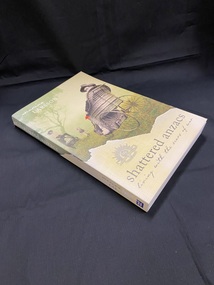
Book - Paperback book, University of New South Wales Press, Shattered ANZACs: living with the scars of war, 2009
... returned soldiers, and explores the profound and lasting consequences of disablement for their kin in the 1920s and 1930s. Drawing the reader into the emotional interior of family life, it evocatively brings to light the daily struggles of Australia's 90,000 'changed men', and reveals the significant burdens carried by their family members--Provided by publisher. 'PROPERTY OF VICTORIAN BRANCH R.S.L.' [stamped in red ink on the first page and the top of block ...Living with the Scars of War tells the untold story of thousands of Australian families who welcomed home disabled soldiers after the First World War. It offers a poignant account of the impact of physical injury and shell shock upon returned soldiers, and explores the profound and lasting consequences of disablement for their kin in the 1920s and 1930s. Drawing the reader into the emotional interior of family life, it evocatively brings to light the daily struggles of Australia's 90,000 'changed men', and reveals the significant burdens carried by their family members--Provided by publisher.Cover design wraps around the spine and both covers. Lower section is a pale yellow/white colour with silver text. The higher section is a torn green image of a grassed field and tree with black and white images of a lady and pram, a young boy, and a man in a wheelchair with one red poppy. The back cover image is a welcome home sign with a gathering of people beneath it.non-fictionLiving with the Scars of War tells the untold story of thousands of Australian families who welcomed home disabled soldiers after the First World War. It offers a poignant account of the impact of physical injury and shell shock upon returned soldiers, and explores the profound and lasting consequences of disablement for their kin in the 1920s and 1930s. Drawing the reader into the emotional interior of family life, it evocatively brings to light the daily struggles of Australia's 90,000 'changed men', and reveals the significant burdens carried by their family members--Provided by publisher.australian and new zealand army corps, war veterans, disabled veterans australia, soldiers-family relationships, post-traumatic stress disorder, social aspects of war, psycholgical aspects of war, ww1, wwi, first world war, world war 1914-1918
