
Showing 19 items matching "robert couper"
-
 Emerald Museum & Nobelius Heritage Park
Memorabilia - Butcher's shop memorabilila
... ...Robert Couper...Emerald Victoria Australia Businesses butchers calendars Bill Stephens Gary Stephens Robert Couper 1988 calendar; typed manuscript; news clipping Memorabilia Butcher's shop memorabilila ...The original butchers shop was built in the Emerald township by Mr Couper in the early 1900s, then taken over by Mr J. Madigan, then by Mr Michael. The shop and adjoining residence located on the corner of Belgrave-Gembrook and Emerald-Monbulk Roads was acquired by the Stephens family in 1948..1988 calendar; typed manuscript; news clippingemerald, victoria, australia, businesses, butchers, calendars, bill stephens, gary stephens, robert couper -
 Emerald Museum & Nobelius Heritage Park
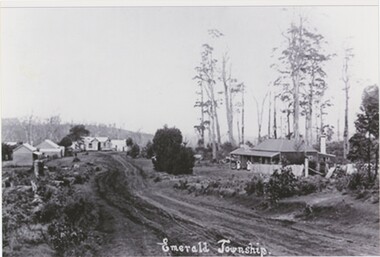
Photograph, Emerald Township, c. 1900s
... The building in the foreground of the image is likely Robert Couper's - Emerald's first butchery which was established in approximately 1900 and later owned by the Madigan family. ...The building in the foreground of the image is likely Robert Couper's - Emerald's first butchery which was established in approximately 1900 and later owned by the Madigan family. ...The building in the foreground of the image is likely Robert Couper's - Emerald's first butchery which was established in approximately 1900 and later owned by the Madigan family. It was located near the corner of what are now Main Street and Monbulk Road, near today's Madigan Way. If the butchery in the photograph - which was likely taken in the first decade of the twentieth century - is indeed Couper's, this photo is likely looking down Main Street from the intersection with Monbulk Road. These copies were made in 2006.This photograph captures an earlier phase of Emerald's development, not long after the opening of the first Butchery and long before the town had sealed roads.This item includes photographs a, b, and c. The printed black and white photographs depicts an unsealed road, following the centre of the image before curving right over a hill and out of sight. In the background, four wooden structures are present beside the road on the left. In the foreground on the right, another wooden building with a chimney and a metal verandah and roof stands a distance back from the road. In a and c - identical photographs - two distant figures - likely women - stand under the verandah. In b - a slightly different phootgraph from the same angle - a horse and cart is in front of the building with several individuals. Behind the house on the right, trees with sparse leaves rise into the sky, nearly reaching the top of the frame. In the far background on the left, a wooded hill rises above the row of buildings. a is very blurry and a significantly lower quality copy than b or c.a, b, and c Obverse: "Emerald Township" b Obverse, Printed: "COPIES MAY BE PURCHASED FROM TH" b and c Obverse, in-photo sign (unclear in a): "BUTCHERS" a Reverse: "10 27 EMEF24~1.JPG 5 16.12.06 18.12.06" b Reverse: "J9505398 4/6 00000004.jpg / JOB3819505398 Emerald Old Emerald 2 adjt" c Reverse: "J9505398 1/6 00000001.jpg / JOB3819505398 Emerald early 1.jpg Kevin+"emerald, 1900s -
 Emerald Museum & Nobelius Heritage Park
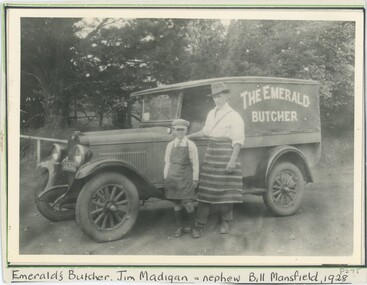
Photograph, Emerald's Butcher Jim Madigan, 1928
... The Emerald Butcher was established in the early 1900s by Robert Couper, and purchased by the Madigan family in 1924. ...The Emerald Butcher was established in the early 1900s by Robert Couper, and purchased by the Madigan family in 1924. ...The Emerald Butcher was established in the early 1900s by Robert Couper, and purchased by the Madigan family in 1924. It was located at the corner of Main Street and Emerald-Monbulk Road, at 381 Belgrave-Gembrook Road where Resale Therapy is as of 2026. The vehicle pictured appears to be a custom Chevrolet National Series AB Sedan, a model released in 1928 - allegedly the year this photograph was taken. If that date is accurate, this may be a photograph commemorating the purchase of the new vehicle imported from North America.Madigan's butcher business was an important institution in Emerald's early 20th century growth phase; this photograph remembers the family business' operation.A black and white photograph of a vehicle resembling the 1928 Chevrolet National Series AB Sedan. Standing in front of the truck are a man and a boy; behind the truck is a fence and trees at the side of the road. There is a handwritten label in black pen below the photograph, and the reverse has an annotation in blue pen.Obverse: Annotation: "Emerald's Butcher. Jim Madigan & nephew Bill Mansfield, 1928" Truckside: "THE EMERALD / BUTCHER" Number Plate: "142632" Reverse: "Jim Madigan & nephew Bill Mansfield / Emerald Butcher 1928"madigan family, emerald, 1920s -
 Emerald Museum & Nobelius Heritage Park
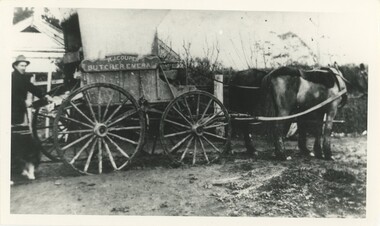
Photograph - R. J. Couper Butcher Cart, c. 1900s
... Robert John Couper (born 1871) was Emerald's first butcher, establishing his butchery c. 1900 and soon taking up a position near the corner of Main Street and Emerald-Monbulk Road. ...Robert John Couper (born 1871) was Emerald's first butcher, establishing his butchery c. 1900 and soon taking up a position near the corner of Main Street and Emerald-Monbulk Road. ...Robert John Couper (born 1871) was Emerald's first butcher, establishing his butchery c. 1900 and soon taking up a position near the corner of Main Street and Emerald-Monbulk Road. He operated the business until the Madigan family took over in 1919. This cart was used for transportation by the business.This photograph captures a major early Emerald business; it is also a good example of transportation in the early 20th century.This item is a black-and-white photograph depicting two horses and horsecart. The cart has four spoked wooden wheels and a painted label advertising R. J. Couper. A man stands behind the cart, placing items into it. The cart is parked on the side of an unpaved road, besides a building and hedge. The reverse features annotations in blue pen and an accession number in pencil.Obverse, Cart Label: "R. J. COUPER / BUTCHER EMERALD" Reverse: "From / R. [illegible] / R J Couper's meat delivery cart / early 1900's"1900s, emerald, butchery, commerce, transport -
 Emerald Museum & Nobelius Heritage Park
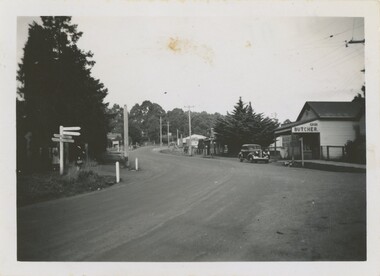
Photograph - Emerald Township 1948, March 1948
... This dirt road was once home to the first Emerald butcher, established by Robert John Couper around 1900. Located on the corner of Main Street and Monbulk Road, the butcher was first run out of Couper's home, then it moved into a shop built on their property and customers were most often served by his wife Mabel. ...This dirt road was once home to the first Emerald butcher, established by Robert John Couper around 1900. Located on the corner of Main Street and Monbulk Road, the butcher was first run out of Couper's home, then it moved into a shop built on their property and customers were most often served by his wife Mabel. ...This particular thoroughfare connecting Belgrave-Gembrook Road and Emerald-Monbulk Road, now home to many local and major business, has changed greatly over the last century. This dirt road was once home to the first Emerald butcher, established by Robert John Couper around 1900. Located on the corner of Main Street and Monbulk Road, the butcher was first run out of Couper's home, then it moved into a shop built on their property and customers were most often served by his wife Mabel. The butcher was then purchased by the Madigan Family in 1924 and run by Timothy James Madigan following his return from World War One service. Animals were slaughtered on-site, then stored in an underground cellar. Meat was then purchased in the store-front or delivered to local towns and homes by horse-drawn carriage and, eventually, delivery vans.This photograph demonstrates with incredible clarity just how greatly the local Emerald township has changed over the last century, especially on a thoroughfare as central as the one pictured.This black and white photograph features a dirt street lined with trees and buildings. On the left, a street sign points to locations such as Lilydale, Monbulk, Gembrook, Ferntree Gully, Macclesfield, and Melbourne. Two women stand behind the sign, waiting to cross the road. A butcher stands on the right side of the street and car is parked out front. Telephone poles are dotted along the road, both disappearing around a corner and into a horizon of trees. On the photograph's reverse is some handwritten text.Rear, handwritten in ink: "Emerald. / Mar. 1948."1940s, emerald, madigan family -
 Flagstaff Hill Maritime Museum and Village
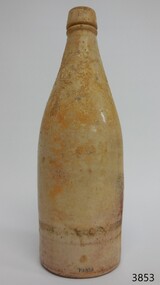
Ceramic - Stoneware Bottle, Dundas Pottery, 1856-1910
... Johnstone sold the pottery in 1835 to Robert Cochran and James Couper. Mc Coll was retained as manager until 1837when in 1839 Cochran & Couper sold the pottery and purchased the St Rollex Glass Works. ...Johnstone sold the pottery in 1835 to Robert Cochran and James Couper. Mc Coll was retained as manager until 1837when in 1839 Cochran & Couper sold the pottery and purchased the St Rollex Glass Works. ...This bottle is part of the John Chance Collection of shipwreck artefacts. The Dundas Pottery works were established in 1828 by William Johnstone in partnership with John Forsyth and John Mc Coll. Located where the Forth and Clyde Canal joined the Monkland Canal, North of Glasgow. Johnstone sold the pottery in 1835 to Robert Cochran and James Couper. Mc Coll was retained as manager until 1837when in 1839 Cochran & Couper sold the pottery and purchased the St Rollex Glass Works. George Duncan took over briefly but died in 1841, with the pottery possibly being run by his widow Helen and a potter named Alexander Paul. James Miller was the manager at the time and he bought the pottery in 1856, in partnership with John Moody. Miller's long and careful stewardship of the pottery saw success from the export market which allowed him to purchase the North British pottery in 1867 until 1874 when it was sold. In 1875, Miller, in partnership with John Young, leased part of Caledonian Pottery, naming it Crown Pottery, however, it burned down in 1879. In the early 1880s, Young extended the pottery and named it Milton Pottery. Miller’s son, James W., became a partner in Milton pottery in 1905. James Miller Snr died in 1905 and the company continued as a limited liability company, being sold to the Borax Consolidation Ltd in 1929, but it was unsuccessful and Possil pottery purchased some of the company's equipment before it finally closed in 1932. From 1828 until the James Miller period of circa 1856, the pottery produced salt-glazed stoneware for the local industrial trade; mainly bottles and drain pipes. James Miller produced various bottles, whisky and acid jars, casks, butter crocks, jam jars and domestic wares in Bristol glaze. He streamlined the water filter manufacturing, which had become a speciality of the pottery, and a dedicated section of the pottery was created solely for their production, which was exported worldwide. A significant item of salt-glazed ceramic stoneware made by the Dundas potteries in Scotland who were renowned for making quality ironstone pottery. The bottle that was in common use throughout the British colonies and America for the containment of ale The bottle is also significant as it was recovered by John Chance, a diver, from a wreck on the coast of Victoria in the 1960s-70s. Items that come from several wrecks along Victoria's coast have since been donated to the Flagstaff Hill Maritime museum collection by his family Illustrating the level of historical value the subject item has.Beige salt glazed stoneware, bottle with discolorations above base. Manufacturer's oval Inscription lozenge stamped near base. Stamp: [symbol of concentric ovals], text within the symbol "PORT DUNDAS POTTERY COY." and "GLASGOW". Stamp:[Symbol - square with short vertical line in centre of base line]flagstaff hill, warrnambool, flagstaff hill maritime museum, maritime museum, shipwreck coast, flagstaff hill maritime village, great ocean road, john chance, stoneware bottle, pottery, port dundas pottery, william johnstone, bottles, shipwreck artefact, stoneware, ironstone, bottle, glasgow, antique bottle -
 Flagstaff Hill Maritime Museum and Village
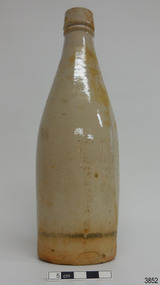
Ceramic - Stoneware Bottle, Dundas Pottery, Late 1800s to early 1900s
... Johnstone sold the pottery in 1835 to Robert Cochran and James Couper. Mc Coll was retained as manager until 1837when in 1839 Cochran & Couper sold the pottery and purchased the St Rollex Glass Works. ...Johnstone sold the pottery in 1835 to Robert Cochran and James Couper. Mc Coll was retained as manager until 1837when in 1839 Cochran & Couper sold the pottery and purchased the St Rollex Glass Works. ...This bottle was made in Scotland and recovered decades later from a shipwreck along the coast of Victoria. It may have been amongst the ship's cargo, its provisions or amongst a passenger's personal luggage. It is now part of the John Chance collection. Stoneware bottles similar to this one were in common use during the mid-to-late 19th century. They were used to store and transport. The bottles were handmade using either a potter's wheel or in moulds such as a plaster mould, which gave the bottles uniformity in size and shape. The bottle would then be fired and glazed in a hot kiln. Makers often identified their bottles with the impression of a small symbol or adding a colour to the mouth. The manufacturer usually stamped their bottles with their name and logo, and sometimes a message that the bottle remained their property and should be returned to them. The bottles could then be cleaned and refilled. DUNDAS POTTERY WORKS - The Dundas Pottery works were established in 1828 by William Johnstone in partnership with John Forsyth and John Mc Coll. Located where the Forth and Clyde Canal joined the Monkland Canal, North of Glasgow. Johnstone sold the pottery in 1835 to Robert Cochran and James Couper. Mc Coll was retained as manager until 1837when in 1839 Cochran & Couper sold the pottery and purchased the St Rollex Glass Works. George Duncan took over briefly but died in 1841, with the pottery possibly being run by his widow Helen and a potter named Alexander Paul. James Miller was the manager at the time and he bought the pottery in 1856, in partnership with John Moody. Miller's long and careful stewardship of the pottery saw success from the export market which allowed him to purchase the North British pottery in 1867 until 1874 when it was sold. In 1875, Miller, in partnership with John Young, leased part of Caledonian Pottery, naming it Crown Pottery, however, it burned down in 1879. In the early 1880s, Young extended the pottery and named it Milton Pottery. Miller’s son, James W., became a partner in Milton pottery in 1905. James Miller Snr died in 1905 and the company continued as a limited liability company, being sold to the Borax Consolidation Ltd in 1929, but it was unsuccessful and Possil pottery purchased some of the company's equipment before it finally closed in 1932. From 1828 until the James Miller period of circa 1856, the pottery produced salt-glazed stoneware for the local industrial trade; mainly bottles and drain pipes. James Miller produced various bottles, whisky and acid jars, casks, butter crocks, jam jars and domestic wares in Bristol glaze. He streamlined the water filter manufacturing, which had become a specialty of the pottery, and a dedicated section of the pottery was created solely for their production, which was exported worldwide. This stoneware bottle is historically significant for its manufacture and use in the late 19th to the early 20th century. This bottle is historically significant for its connection with the well-known stoneware manufacturers, Dundas Pottery of Glasgow, Scotland. The bottle is also significant as it was recovered by John Chance, a diver, from a wreck on the coast of Victoria in the 1960s-70s. Items that come from several wrecks along Victoria's coast have since been donated to the Flagstaff Hill Maritime Village’s museum collection by his family, illustrating this item’s level of historical value. Bottle, salt glazed stoneware, beige, sealed with wax, discolouration above base. Inscriptions stamped near base. Stamp: [symbol of concentric ovals], text within the symbol "PORT DUNDAS POTTERY COY." and "GLASGOW". Stamp:[Symbol - square with short vertical line in centre of base line] flagstaff hill, warrnambool, flagstaff hill maritime museum, maritime museum, shipwreck coast, flagstaff hill maritime village, great ocean road, shipwreck artefact, stoneware, ironstone, pottery, bottle, port dundas pottery, glasgow, john chance, antique bottle, william johnstone -
 Flagstaff Hill Maritime Museum and Village
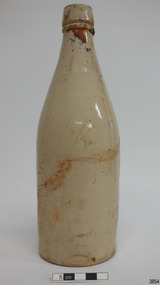
Ceramic - Stoneware Bottle, Dundas Pottery, Late 1800s to early 1900s
... Johnstone sold the pottery in 1835 to Robert Cochran and James Couper. Mc Coll was retained as manager until 1837when in 1839 Cochran & Couper sold the pottery and purchased the St Rollex Glass Works. ...Johnstone sold the pottery in 1835 to Robert Cochran and James Couper. Mc Coll was retained as manager until 1837when in 1839 Cochran & Couper sold the pottery and purchased the St Rollex Glass Works. ...This bottle was made in Scotland and recovered decades later from a shipwreck along the coast of Victoria. It may have been amongst the ship's cargo, its provisions or amongst a passenger's personal luggage. It is now part of the John Chance collection. Stoneware bottles similar to this one were in common use during the mid-to-late 19th century. They were used to store and transport. The bottles were handmade using either a potter's wheel or in moulds such as a plaster mould, which gave the bottles uniformity in size and shape. The bottle would then be fired and glazed in a hot kiln. Makers often identified their bottles with the impression of a small symbol or adding a colour to the mouth. The manufacturer usually stamped their bottles with their name and logo, and sometimes a message that the bottle remained their property and should be returned to them. The bottles could then be cleaned and refilled. DUNDAS POTTERY WORKS - The Dundas Pottery works were established in 1828 by William Johnstone in partnership with John Forsyth and John Mc Coll. Located where the Forth and Clyde Canal joined the Monkland Canal, North of Glasgow. Johnstone sold the pottery in 1835 to Robert Cochran and James Couper. Mc Coll was retained as manager until 1837when in 1839 Cochran & Couper sold the pottery and purchased the St Rollex Glass Works. George Duncan took over briefly but died in 1841, with the pottery possibly being run by his widow Helen and a potter named Alexander Paul. James Miller was the manager at the time and he bought the pottery in 1856, in partnership with John Moody. Miller's long and careful stewardship of the pottery saw success from the export market which allowed him to purchase the North British pottery in 1867 until 1874 when it was sold. In 1875, Miller, in partnership with John Young, leased part of Caledonian Pottery, naming it Crown Pottery, however, it burned down in 1879. In the early 1880s, Young extended the pottery and named it Milton Pottery. Miller’s son, James W., became a partner in Milton pottery in 1905. James Miller Snr died in 1905 and the company continued as a limited liability company, being sold to the Borax Consolidation Ltd in 1929, but it was unsuccessful and Possil pottery purchased some of the company's equipment before it finally closed in 1932. From 1828 until the James Miller period of circa 1856, the pottery produced salt-glazed stoneware for the local industrial trade; mainly bottles and drain pipes. James Miller produced various bottles, whisky and acid jars, casks, butter crocks, jam jars and domestic wares in Bristol glaze. He streamlined the water filter manufacturing, which had become a speciality of the pottery, and a dedicated section of the pottery was created solely for their production, which was exported worldwide. This stoneware bottle is historically significant for its manufacture and use in the late 19th to the early 20th century. This bottle is historically significant for its connection with the well-known stoneware manufacturers, Dundas Pottery of Glasgow, Scotland. The bottle is also significant as it was recovered by John Chance, a diver, from a wreck on the coast of Victoria in the 1960s-70s. Items that come from several wrecks along Victoria's coast have since been donated to the Flagstaff Hill Maritime Village’s museum collection by his family, illustrating this item’s level of historical value.Bottle, salt glazed stoneware, beige, sealed with wax, some discolouration above base. Inscription stamped near base..Stamp: [symbol of concentric ovals], text within the symbol "PORT DUNDAS POTTERY COY." and "GLASGOW". Stamp:[Symbol - square with short vertical line in centre of base line]flagstaff hill, warrnambool, flagstaff hill maritime museum, maritime museum, shipwreck coast, flagstaff hill maritime village, great ocean road, john chance, shipwreck artefact, stoneware, ironstone, pottery, bottle, port dundas pottery, glasgow, antique bottle, william johnstone -
 Flagstaff Hill Maritime Museum and Village
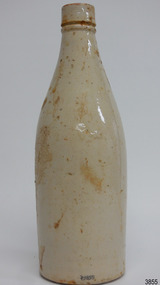
Ceramic - Stoneware Bottle, Dundas Pottery, Late 1800s to early 1900s
... Johnstone sold the pottery in 1835 to Robert Cochran and James Couper. Mc Coll was retained as manager until 1837when in 1839 Cochran & Couper sold the pottery and purchased the St Rollex Glass Works. ...Johnstone sold the pottery in 1835 to Robert Cochran and James Couper. Mc Coll was retained as manager until 1837when in 1839 Cochran & Couper sold the pottery and purchased the St Rollex Glass Works. ...This bottle was made in Scotland and recovered decades later from a shipwreck along the coast of Victoria. It may have been amongst the ship's cargo, its provisions or amongst a passenger's personal luggage. It is now part of the John Chance collection. Stoneware bottles similar to this one were in common use during the mid-to-late 19th century. They were used to store and transport. The bottles were handmade using either a potter's wheel or in moulds such as a plaster mould, which gave the bottles uniformity in size and shape. The bottle would then be fired and glazed in a hot kiln. Makers often identified their bottles with the impression of a small symbol or adding a colour to the mouth. The manufacturer usually stamped their bottles with their name and logo, and sometimes a message that the bottle remained their property and should be returned to them. The bottles could then be cleaned and refilled. DUNDAS POTTERY WORKS - The Dundas Pottery works were established in 1828 by William Johnstone in partnership with John Forsyth and John Mc Coll. Located where the Forth and Clyde Canal joined the Monkland Canal, North of Glasgow. Johnstone sold the pottery in 1835 to Robert Cochran and James Couper. Mc Coll was retained as manager until 1837when in 1839 Cochran & Couper sold the pottery and purchased the St Rollex Glass Works. George Duncan took over briefly but died in 1841, with the pottery possibly being run by his widow Helen and a potter named Alexander Paul. James Miller was the manager at the time and he bought the pottery in 1856, in partnership with John Moody. Miller's long and careful stewardship of the pottery saw success from the export market which allowed him to purchase the North British pottery in 1867 until 1874 when it was sold. In 1875, Miller, in partnership with John Young, leased part of Caledonian Pottery, naming it Crown Pottery, however, it burned down in 1879. In the early 1880s, Young extended the pottery and named it Milton Pottery. Miller’s son, James W., became a partner in Milton pottery in 1905. James Miller Snr died in 1905 and the company continued as a limited liability company, being sold to the Borax Consolidation Ltd in 1929, but it was unsuccessful and Possil pottery purchased some of the company's equipment before it finally closed in 1932. From 1828 until the James Miller period of circa 1856, the pottery produced salt-glazed stoneware for the local industrial trade; mainly bottles and drain pipes. James Miller produced various bottles, whisky and acid jars, casks, butter crocks, jam jars and domestic wares in Bristol glaze. He streamlined the water filter manufacturing, which had become a speciality of the pottery, and a dedicated section of the pottery was created solely for their production, which was exported worldwide.This stoneware bottle is historically significant for its manufacture and use in the late 19th to the early 20th century. This bottle is historically significant for its connection with the well-known stoneware manufacturers, Dundas Pottery of Glasgow, Scotland. The bottle is also significant as it was recovered by John Chance, a diver, from a wreck on the coast of Victoria in the 1960s-70s. Items that come from several wrecks along Victoria's coast have since been donated to the Flagstaff Hill Maritime Village’s museum collection by his family, illustrating this item’s level of historical value.Bottle, salt glazed stoneware, beige, part sealed with wax and cork, very little discolouration. Inscriptions stamped near base.Stamp: [symbol of concentric ovals], text within the symbol "PORT DUNDAS POTTERY COY." and "GLASGOW". Stamp:[Symbol - square with short vertical line in centre of base line]flagstaff hill, warrnambool, flagstaff hill maritime museum, maritime museum, shipwreck coast, flagstaff hill maritime village, great ocean road, john chance, shipwreck artefact, stoneware, ironstone, pottery, bottle, port dundas pottery, glasgow, antique bottle, william johnstone -
 Flagstaff Hill Maritime Museum and Village
Ceramic - Stoneware Bottle, Dundas Pottery, Late 1800s to early 1900s
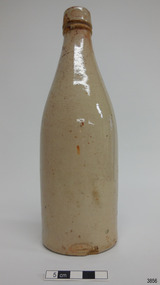
... Johnstone sold the pottery in 1835 to Robert Cochran and James Couper. Mc Coll was retained as manager until 1837when in 1839 Cochran & Couper sold the pottery and purchased the St Rollex Glass Works. ...Johnstone sold the pottery in 1835 to Robert Cochran and James Couper. Mc Coll was retained as manager until 1837when in 1839 Cochran & Couper sold the pottery and purchased the St Rollex Glass Works. ...This bottle was made in Scotland and recovered decades later from a shipwreck along the coast of Victoria. It may have been amongst the ship's cargo, its provisions or amongst a passenger's personal luggage. It is now part of the John Chance collection. Stoneware bottles similar to this one were in common use during the mid-to-late 19th century. They were used to store and transport. The bottles were handmade using either a potter's wheel or in moulds such as a plaster mould, which gave the bottles uniformity in size and shape. The bottle would then be fired and glazed in a hot kiln. Makers often identified their bottles with the impression of a small symbol or adding a colour to the mouth. The manufacturer usually stamped their bottles with their name and logo, and sometimes a message that the bottle remained their property and should be returned to them. The bottles could then be cleaned and refilled. DUNDAS POTTERY WORKS - The Dundas Pottery works were established in 1828 by William Johnstone in partnership with John Forsyth and John Mc Coll. Located where the Forth and Clyde Canal joined the Monkland Canal, North of Glasgow. Johnstone sold the pottery in 1835 to Robert Cochran and James Couper. Mc Coll was retained as manager until 1837when in 1839 Cochran & Couper sold the pottery and purchased the St Rollex Glass Works. George Duncan took over briefly but died in 1841, with the pottery possibly being run by his widow Helen and a potter named Alexander Paul. James Miller was the manager at the time and he bought the pottery in 1856, in partnership with John Moody. Miller's long and careful stewardship of the pottery saw success from the export market which allowed him to purchase the North British pottery in 1867 until 1874 when it was sold. In 1875, Miller, in partnership with John Young, leased part of Caledonian Pottery, naming it Crown Pottery, however, it burned down in 1879. In the early 1880s, Young extended the pottery and named it Milton Pottery. Miller’s son, James W., became a partner in Milton pottery in 1905. James Miller Snr died in 1905 and the company continued as a limited liability company, being sold to the Borax Consolidation Ltd in 1929, but it was unsuccessful and Possil pottery purchased some of the company's equipment before it finally closed in 1932. From 1828 until the James Miller period of circa 1856, the pottery produced salt-glazed stoneware for the local industrial trade; mainly bottles and drain pipes. James Miller produced various bottles, whisky and acid jars, casks, butter crocks, jam jars and domestic wares in Bristol glaze. He streamlined the water filter manufacturing, which had become a specialty of the pottery, and a dedicated section of the pottery was created solely for their production, which was exported worldwide.This stoneware bottle is historically significant for its manufacture and use in the late 19th to the early 20th century. This bottle is historically significant for its connection with the well-known stoneware manufacturers, Dundas Pottery of Glasgow, Scotland. The bottle is also significant as it was recovered by John Chance, a diver, from a wreck on the coast of Victoria in the 1960s-70s. Items that come from several wrecks along Victoria's coast have since been donated to the Flagstaff Hill Maritime Village’s museum collection by his family, illustrating this item’s level of historical value.Bottle, salt glazed stoneware, beige, sealed with cork, no discolouration . Inscriptions stamped near base.Stamp: [symbol of concentric ovals], text within the symbol "PORT DUNDAS POTTERY COY." and "GLASGOW". Stamp:[Symbol - square with short vertical line in centre of base line]flagstaff hill, warrnambool, flagstaff hill maritime museum, maritime museum, shipwreck coast, flagstaff hill maritime village, great ocean road, john chance, shipwreck artefact, stoneware, ironstone, pottery, bottle, port dundas pottery, glasgow, antique bottle, william johnstone -
 Flagstaff Hill Maritime Museum and Village
Ceramic - Stoneware Bottle, Dundas Pottery, Late 1800s to early 1900s
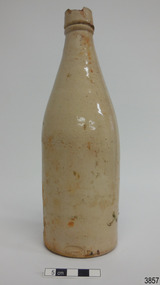
... Johnstone sold the pottery in 1835 to Robert Cochran and James Couper. Mc Coll was retained as manager until 1837when in 1839 Cochran & Couper sold the pottery and purchased the St Rollex Glass Works. ...Johnstone sold the pottery in 1835 to Robert Cochran and James Couper. Mc Coll was retained as manager until 1837when in 1839 Cochran & Couper sold the pottery and purchased the St Rollex Glass Works. ...This bottle was made in Scotland and recovered decades later from a shipwreck along the coast of Victoria. It may have been amongst the ship's cargo, its provisions or amongst a passenger's personal luggage. It is now part of the John Chance collection. Stoneware bottles similar to this one were in common use during the mid-to-late 19th century. They were used to store and transport. The bottles were handmade using either a potter's wheel or in moulds such as a plaster mould, which gave the bottles uniformity in size and shape. The bottle would then be fired and glazed in a hot kiln. Makers often identified their bottles with the impression of a small symbol or adding a colour to the mouth. The manufacturer usually stamped their bottles with their name and logo, and sometimes a message that the bottle remained their property and should be returned to them. The bottles could then be cleaned and refilled. DUNDAS POTTERY WORKS - The Dundas Pottery works were established in 1828 by William Johnstone in partnership with John Forsyth and John Mc Coll. Located where the Forth and Clyde Canal joined the Monkland Canal, North of Glasgow. Johnstone sold the pottery in 1835 to Robert Cochran and James Couper. Mc Coll was retained as manager until 1837when in 1839 Cochran & Couper sold the pottery and purchased the St Rollex Glass Works. George Duncan took over briefly but died in 1841, with the pottery possibly being run by his widow Helen and a potter named Alexander Paul. James Miller was the manager at the time and he bought the pottery in 1856, in partnership with John Moody. Miller's long and careful stewardship of the pottery saw success from the export market which allowed him to purchase the North British pottery in 1867 until 1874 when it was sold. In 1875, Miller, in partnership with John Young, leased part of Caledonian Pottery, naming it Crown Pottery, however, it burned down in 1879. In the early 1880s, Young extended the pottery and named it Milton Pottery. Miller’s son, James W., became a partner in Milton pottery in 1905. James Miller Snr died in 1905 and the company continued as a limited liability company, being sold to the Borax Consolidation Ltd in 1929, but it was unsuccessful and Possil pottery purchased some of the company's equipment before it finally closed in 1932. From 1828 until the James Miller period of circa 1856, the pottery produced salt-glazed stoneware for the local industrial trade; mainly bottles and drain pipes. James Miller produced various bottles, whisky and acid jars, casks, butter crocks, jam jars and domestic wares in Bristol glaze. He streamlined the water filter manufacturing, which had become a specialty of the pottery, and a dedicated section of the pottery was created solely for their production, which was exported worldwide.This stoneware bottle is historically significant for its manufacture and use in the late 19th to the early 20th century. This bottle is historically significant for its connection with the well-known stoneware manufacturers, Dundas Pottery of Glasgow, Scotland. The bottle is also significant as it was recovered by John Chance, a diver, from a wreck on the coast of Victoria in the 1960s-70s. Items that come from several wrecks along Victoria's coast have since been donated to the Flagstaff Hill Maritime Village’s museum collection by his family, illustrating this item’s level of historical value.Bottle, salt glazed stoneware, beige, large chip on lip of bottle. Inscription stamped near base.Stamp: [symbol of concentric ovals], text within the symbol "PORT DUNDAS POTTERY COY." and "GLASGOW". Stamp:[Symbol - square with short vertical line in centre of base line]flagstaff hill, warrnambool, flagstaff hill maritime museum, maritime museum, shipwreck coast, flagstaff hill maritime village, great ocean road, john chance, shipwreck artefact, stoneware, ironstone, pottery, bottle, port dundas pottery, glasgow, antique bottle, william johnstone -
 Flagstaff Hill Maritime Museum and Village
Ceramic - Stoneware Bottle, Dundas Pottery, Late 1800s to early 1900s
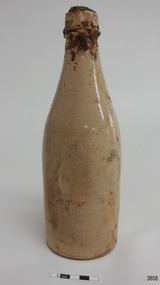
... Johnstone sold the pottery in 1835 to Robert Cochran and James Couper. Mc Coll was retained as manager until 1837 when in 1839 Cochran & Couper sold the pottery and purchased the St Rollex Glass Works. ...Johnstone sold the pottery in 1835 to Robert Cochran and James Couper. Mc Coll was retained as manager until 1837 when in 1839 Cochran & Couper sold the pottery and purchased the St Rollex Glass Works. ...This bottle was made in Scotland and recovered decades later from a shipwreck along the coast of Victoria. It may have been amongst the ship's cargo, its provisions or amongst a passenger's personal luggage. It is now part of the John Chance collection. Stoneware bottles similar to this one were in common use during the mid-to-late 19th century. They were used to store and transport. The bottles were handmade using either a potter's wheel or in moulds such as a plaster mould, which gave the bottles uniformity in size and shape. The bottle would then be fired and glazed in a hot kiln. Makers often identified their bottles with the impression of a small symbol or adding a colour to the mouth. The manufacturer usually stamped their bottles with their name and logo, and sometimes a message that the bottle remained their property and should be returned to them. The bottles could then be cleaned and refilled. DUNDAS POTTERY WORKS - The Dundas Pottery works were established in 1828 by William Johnstone in partnership with John Forsyth and John Mc Coll. Located where the Forth and Clyde Canal joined the Monkland Canal, North of Glasgow. Johnstone sold the pottery in 1835 to Robert Cochran and James Couper. Mc Coll was retained as manager until 1837 when in 1839 Cochran & Couper sold the pottery and purchased the St Rollex Glass Works. George Duncan took over briefly but died in 1841, with the pottery possibly being run by his widow Helen and a potter named Alexander Paul. James Miller was the manager at the time and he bought the pottery in 1856, in partnership with John Moody. Miller's long and careful stewardship of the pottery saw success from the export market which allowed him to purchase the North British pottery in 1867 until 1874 when it was sold. In 1875, Miller, in partnership with John Young, leased part of Caledonian Pottery, naming it Crown Pottery, however, it burned down in 1879. In the early 1880s, Young extended the pottery and named it Milton Pottery. Miller’s son, James W., became a partner in Milton pottery in 1905. James Miller Snr died in 1905 and the company continued as a limited liability company, being sold to the Borax Consolidation Ltd in 1929, but it was unsuccessful and Possil pottery purchased some of the company's equipment before it finally closed in 1932. From 1828 until the James Miller period of circa 1856, the pottery produced salt-glazed stoneware for the local industrial trade; mainly bottles and drain pipes. James Miller produced various bottles, whisky and acid jars, casks, butter crocks, jam jars and domestic wares in Bristol glaze. He streamlined the water filter manufacturing, which had become a speciality of the pottery, and a dedicated section of the pottery was created solely for their production, which was exported worldwide.This stoneware bottle is historically significant for its manufacture and use in the late 19th to the early 20th century. This bottle is historically significant for its connection with the well-known stoneware manufacturers, Dundas Pottery of Glasgow, Scotland. The bottle is also significant as it was recovered by John Chance, a diver, from a wreck on the coast of Victoria in the 1960s-70s. Items that come from several wrecks along Victoria's coast have since been donated to the Flagstaff Hill Maritime Village’s museum collection by his family, illustrating this item’s level of historical value.Bottle, salt glazed stoneware, beige, sealed with cork and wax, discolouration on upper part. Inscription stamped near base.Stamp: [symbol of concentric ovals], text within the symbol "PORT DUNDAS POTTERY COY." and "GLASGOW". Stamp:[Symbol - square with short vertical line in centre of base line]flagstaff hill, warrnambool, flagstaff hill maritime museum, maritime museum, shipwreck coast, flagstaff hill maritime village, great ocean road, john chance, shipwreck artefact, stoneware, ironstone pottery, bottle, port dundas pottery, glasgow, antique bottle, william johnstone -
 Flagstaff Hill Maritime Museum and Village
Container - Stone Ware Bottle, Port Dundas Pottery, Circa early 1870's
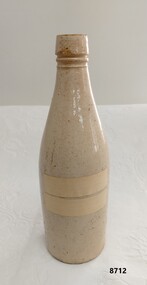
... Johnstone sold the pottery in 1835 to Robert Cochran and James Couper. Mc Coll was retained as manager until 1837when in 1839 Cochran & Couper sold the pottery and purchased the St Rollex Glass Works. ...Johnstone sold the pottery in 1835 to Robert Cochran and James Couper. Mc Coll was retained as manager until 1837when in 1839 Cochran & Couper sold the pottery and purchased the St Rollex Glass Works. ...This bottle was made at the Dundas Pottery Works, in Glasgow, Scotland and recovered from the shipwreck of the Loch Ard. Stoneware bottles similar to this one were in common use during the mid-to-late 19th century. They were used to store and transport beverages like ginger beer, porter or stout. The bottles were handmade using either a potter's wheel or in moulds such as a plaster mould, which gave the bottles uniformity in size and shape. The bottle would then be fired and glazed in a hot kiln. Makers often identified their bottles with the impression of a small symbol or adding a colour to the mouth. The manufacturer usually stamped their bottles with their name and logo, and sometimes a message that the bottle remained their property and should be returned to them. The bottles could then be cleaned and refilled. DUNDAS POTTERY WORKS - The Dundas Pottery works were established in 1828 by William Johnstone in partnership with John Forsyth and John Mc Coll. Located where the Forth and Clyde Canal joined the Monkland Canal, North of Glasgow. Johnstone sold the pottery in 1835 to Robert Cochran and James Couper. Mc Coll was retained as manager until 1837when in 1839 Cochran & Couper sold the pottery and purchased the St Rollex Glass Works. George Duncan took over briefly but died in 1841, with the pottery possibly being run by his widow Helen and a potter named Alexander Paul. James Miller was the manager at the time and he bought the pottery in 1856, in partnership with John Moody. Miller's long and careful stewardship of the pottery saw success from the export market which allowed him to purchase the North British pottery in 1867 until 1874 when it was sold. In 1875, Miller, in partnership with John Young, leased part of Caledonian Pottery, naming it Crown Pottery, however, it burned down in 1879. In the early 1880s, Young extended the pottery and named it Milton Pottery. Miller’s son, James W., became a partner in Milton pottery in 1905. James Miller Snr died in 1905 and the company continued as a limited liability company, being sold to the Borax Consolidation Ltd in 1929, but it was unsuccessful and Possil pottery purchased some of the company's equipment before it finally closed in 1932. From 1828 until the James Miller period of circa 1856, the pottery produced salt-glazed stoneware for the local industrial trade; mainly bottles and drain pipes. James Miller produced various bottles, whisky and acid jars, casks, butter crocks, jam jars and domestic wares in Bristol glaze. He streamlined the water filter manufacturing, which had become a specialty of the pottery, and a dedicated section of the pottery was created solely for their production, which was exported worldwide. It was salvaged from the Loch Ard. The ship Loch Ard was built on the River Clyde in Scotland in 1873 for the prestigious Loch Line of colonial clipper ships, designed for the Australian run. It sailed from England on 1 March 1878 carrying 37 crew, 17 passengers and a diverse general cargo ranging from luxury items to bulk railway iron. On 1 June 1878, emerging from fog and hearing too late the sound of breakers against the tall limestone cliffs, the vessel struck the southern foot of Mutton Bird Island and sank in 23 metres of water. Of the fifty-four people on board only two survived, one young male crewman, Tom Pearce, and one young female passenger, Eva Carmichael. This ink bottle was given to George Shields - a member of the Shields family who have had a long association with the wreck of the Loch Ard. In 1878, following the wreck of the Loch Ard and the subsequent rescue of Eva Carmichael, Eva was taken to Glenample station (near Princetown) to recuperate. It was during this period that Eva became great friends with Jane Shields (an Aunt of George Shields) - a friendship that continued throughout their lives. At that time, Jane was a young woman living in Princetown with her parents and siblings. Many of the Shields family continued to have a great interest in the Loch Ard and several generations of the family are buried in the Loch Ard cemetery.This stoneware bottle is historically significant for its manufacture and use in trade and transport in the late 19th to the early 20th century. This bottle is historically significant for its connection with the well-known stoneware manufacturers, Dundas Pottery of Glasgow, Scotland. The shipwreck of the Loch Ard is of significance for Victoria and is registered on the Victorian Heritage Register ( S 417). Flagstaff Hill has a varied collection of artefact's from Loch Ard and its collection is significant for being one of the largest accumulation of artefact's from this notable Victorian shipwreck of which the subject items are a small part. The collection's objects give us a snapshot of how we can interpret the story of this tragic event. The collection is also archaeologically significant as it represents aspects of Victoria's shipping history that allows us to interpret Victoria's social and historical themes of the time. Through is associated with the worst and best-known shipwreck in Victoria's history.A beige coloured,salt glazed stoneware bottle with gently tapered sides and a speckled finish. It has two narrow channels around the neck and is missing a stopper. Two 8.5 centimetre pieces of tape, with very faded writing, are stuck horizontally on the side of the bottle. The bottom of the bottle has brown discolouration. It has an oval shaped stamp with a makers' name and location on bottom side of bottle.On tape - "STONE BOTTLE SALVAGED / FROM WRECK OF LOCH ARD/ SUNK NEAR PORT CAMPBELL/ ? 1878" "1624 TNS SAILING SHIP / ONLY 2 SURVIVORS OUT OF / 54 PEOPLE ON BOARD/ NOW KNOWN AS LOCH ARD GORGE" Stamp - "PORT DUNDAS POTTERY / GLASGOW" Symbol - Stamp square with "D"flagstaff hill maritime museum and village, warrnambool, great ocean road, shipwreck coast, loch ard, stoneware bottle, port dundas pottery, shields family, ginger beer bottle, loch ard salvage, loch ard artefact -
 Federation University Historical Collection
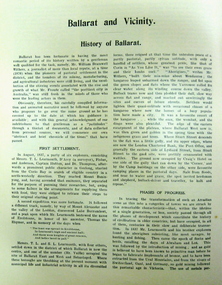
Document, Cyclopedia of Victoria: Ballarat , 1904, 1904
... Valentine andrew scott Thomas Robertson John Gordon robertspm w.t. rowe thomas a. oddie william morris jospeh walshe William Acheson Joseph dill william mason llanberis no 1 Anthony Jenkin James Carey Wlliam emery percy kent henry bath j. rowe john couttie william sansom francis coote john mckenna robert ditchburn thomas mitchell john daniel george williams william treloar r.b. squire jonah ward robert smyth william bell thomas couper w. joseph william wallace benjamin dowling robert crawford alexander Aikens c. dennison w.f. coltman federal timber yard george hotel Williaim dones j. dreaden richard's and co j.a. gear r.w. fleming l.e. cutter l.s. cutter a.e. cutter c.f. cutter george anderson w.e. longhurst christopher howlett david mcgrath james wishart f.g. reeve eureka iron works j.e. cowley albert foundry john robert harrison j.b. cameron p.b. sutherland george richards ballarat brass foundry m.b. john morgan john m.w.b. john james smith w.p. davies j.t. vercoe james kelly williaim osbourne alexander mcdonald alexander E. ...Digital images of the Ballarat section of the Cyclopedia of Victoria, 1904cyclopedia of victoria, ballarat, ballarat benevolent asylum, john adam, gold discovery, lake wendouree, boat house, sailing, eureka stockade, ballarat botanical gardens, statuary, statues, ballarat school of mines, ballarat town hall, sturt street, shoppee square ballarat, ballarat mecahanics' institute, ballarat hospital, henry cuthbert, charles collett shoppee, john murray, richard greenwood middleton, john m. kline, john ritchie, thomas stoddart, william little, john robson, hugh v. mckay, h.v. mckay, n. clark, a. h. powell, r.j. powell, edward shaw, charles j. reid, frederick g. haymes, james thomas mitchell, robert scott, frane longden, robert d. pinnock, thomas a. wilson, sydney b. fisher, david bartholomew, t.r. treloar, s-ray, w. cornell, alexander greenfield, andrew callow, victorian mounted rifles, s.g. valentine, andrew scott, thomas robertson, john gordon robertspm, w.t. rowe, thomas a. oddie, william morris, jospeh walshe, william acheson, joseph dill, william mason, llanberis no 1, anthony jenkin, james carey, wlliam emery, percy kent, henry bath, j. rowe, john couttie, william sansom, francis coote, john mckenna, robert ditchburn, thomas mitchell, john daniel, george williams, william treloar, r.b. squire, jonah ward, robert smyth, william bell, thomas couper, w. joseph, william wallace, benjamin dowling, robert crawford, alexander aikens, c. dennison, w.f. coltman, federal timber yard, george hotel, williaim dones, j. dreaden, richard's and co, j.a. gear, r.w. fleming, l.e. cutter, l.s. cutter, a.e. cutter, c.f. cutter, george anderson, w.e. longhurst, christopher howlett, david mcgrath, james wishart, f.g. reeve, eureka iron works, j.e. cowley, albert foundry, john robert harrison, j.b. cameron, p.b. sutherland, george richards, ballarat brass foundry, m.b. john, morgan john, m.w.b. john, james smith, w.p. davies, j.t. vercoe, james kelly, williaim osbourne, alexander mcdonald, alexander e. mcdonald, henry john symons, bridge street flood -
Glen Eira Historical Society
Book - Carnegie Primary School No. 2897
... Roberts ‘Fly’ Footballers Malcolm Mr. Henderson Reg Henderson Alice Brew L. Rule Mr. Philbrick Mr. Wood Mr. Trembath Mr. Keogh Mr. Plummer Tom Lane A. Fox Ernest Souters Market Gardeners Fox Belle Fox Bella Fox Vern Couper Margaret Couper Sandra Couper Peter Couper Narelle Couper Clare Couper Jarrod Scott Mr. ...Carnegie Primary School centenary book (96 pages x 2 copies) ‘The First Hundred Years NO2897. Carnegie Primary School 1888-1988’ compiled and edited by Isabel Couper and Deidre Lynch. A detailed history of the school’s beginnings. Many informative memories and recollections from school’s first students and teachers; includes social history of area and people, football teams, debutante sets and school. Also a reprinted newspaper article from school’s Golden Anniversary and photo of school band; and a couple of social history photographs.anderson james, murrumbeena, glen huntly railway station, carnegie state school, wesleyan hall, neerim road, railway stations, carnegie primary school, rosstown, toolambool road, lynch deidre, mcvey claire, ross william murray, findlay francis, couper isabel, brown wesley, rosstown state school, brisbane w, carnegie uniting church, liddelow m.h., evans thomas, selboskar phyl, centenaries, margaret street, caulfield, brewster mr., taylor mr., draper mrs., mcfarlane mr., rule thomas, teachers, campbell ada, ‘ava’, campbell aubrey, campbell vera, matthews ben, hewitts road, matthews funeral service, funeral parlours, leo amy, leo alfie, rudge family, rudge mr., transport, phillips store, general store, phillips corner, emily street, hamlya family, pitt family, sheppard family, pemberton mr., pemberton mrs., dunlop misses, preschools, whitlam family, whitlam gordon, woods family, woods lorna, swaggie, swagman, liddelow amy, anderson mr., anderson archie, dunlop bill, phillips linda, hansen alice, lodge laura, fox arthur , hamlyn eric, hansen dagmar, cooper lina , woods lorna, waite family, cove family, johansen family, koornang road, market gardens, sheppard ernie, wood a.m., ‘nisava’, wood family, wood bill, evans rachel, evans thomas, wood millicent, whitfield mr., griffiths mr., wood malcolm, wood forest, wood joe, roxburgh miss, grange road, clifton street, lord street, wood frederick geo, egan miss dressmakers, whitlam fred, whitlam christine, whitlam george, whitlam gough, whitlam freda, whitfield mr., patterson road, graceburn avenue, griffiths r.h., koornang road, scales mr., reid athol, lording dr., mernda ave, farmstead, lord reserve, leman’s swamp, koornang park, cobby harry, larkin aircraft company, dawson howard, rosedale avenue, spencer reg, turner ruth, turner jack, turner noreen, turner marie, morton alan, morton barney, gardiner martin, frogmore estate, oakleigh road, frogmore road, koornang park, hunt club kennels, raeke miss, morgan miss, pitt winnie, jiggins mr., smith mr., blundy violet, ryall ray, mimosa road, wolseley mr., wolseley family, wolseley ted, brunstein madge, murrumbeena cricket club, sinclair alan, sincliar tinny, thomas ted, walker alec, bone bob, footballers, middleton colin, farquahson mrs., eddy family, eddy rose, wolseley jack, buswell stan, buswell doug, buswell. stan jnr., irving nell, brims ethel, bailey bruce, eason sisters, hands hilda, windlow isabel, madden road, glenhuntly road, griffiths rita, jackson jean, scott mr., ward ‘cap’, caulfield grammar school, kokaribb road, carnegie traders, cricket teams, carnegie south, ward marjory, ryan mr., phillips tony, phillips bessie, buckley street, phillips harriet, phillips marion, phillips ernest, phillips hilda, phillips david, phillips florence, phillips linda, lihou miss, jersey parade, meake family, skewe family, mansfield family, fraser jean, collister alma, sturges millie, retallick girls, lillywhite family, mason nellie, johns nancy, bowsfield family, jenner family, chisholm emma, chisholm doris, chisholm ivy, chisholm netta, chisholm beryl, chisholm eileen, wadsworth ethel, luke mr., plummer t.w., raecke miss, sargent ron, sarkie family, reid family, meake violet, collett reg, mcneil miss, scales mr., carmody thomas william, steele miss, young mac, young margaret, cooper cyril, cooper bill, whiteside d., broadbent neil, broadbent mr., carnegie theatre, theatres, morton family, clarke family, quickand neals grocery store, grocers, billy guyatt’s, shops, spencer the removalist, removalists, collister harold, collister bill, caulfield band, bands, carthews the drapers, drapers, mccarrons alec blacksmiths, skewes keith, oliver frank, pitt ‘squeaker’, knevitt ‘skeeter’ harry, jockeys, britter jack, stanistreet family, gear rita, culleen billy, tailors, sherwoods butchers, butchers, jersey parade, riley didlo, verne harry, cooper horace, cooper linda, cooper martin, cooper claude, cooper reginald, cooper stanley, cooper gladys, cooper muriel, cooper percival, cooper cyril, beaumont w.a., whittfield joe, beaumont eileen, major mary anne sister, major myrtle, major bessie, major alma, stagholl walter, stagholl margaret, stagholl eric, robertson bessie, robertson fred, robertson norman, robertson donald, robertson alma, robertson alan, baird neil, baird john, baird rosemary, dunn helen, baird ian, baird heather, baird dianne, petrie stuart, petrie richard, bailey ron, gaunt mabel, reading harold, reading marge, irwin joyce, dickson margaret, dickson jennifer, dickson peter, wood malcolm, wood millicent, wood forest, wood joe, sinclair ‘trinny’, roberts ‘fly’, footballers, malcolm mr., henderson reg, henderson alice, brew l., rule mr., philbrick mr., wood mr., trembath mr., keogh mr., plummer tom, lane a., fox ernest, souters, market gardeners, fox belle, fox bella, fox vern, couper margaret, couper sandra, couper peter, couper narelle, couper clare, couper jarrod, scott mr., doughty will, doughty tom, lloyd miss, islingworth master, adams joyce, hogan mr., markus jean, cosgrove joan, cosgrove mrs., cosgrove mr., marshall jim, kellow fred, fretwell elizabeth, fretwell betty, shepparson ave, singers, edmonson miss, butters shirley, harwood vera, bracher lloyd, dewhurst irene, dewhurst jack, boyle mr., gow jack, welch len, stanistreet harry, stanistreet jack, stanistreet kathleen, stanistreet frank, stanistreet kingsley, ‘ray sullivan’s harmony boys’, carnegie memorial hall, st. anthony’s hall, welch len, gibbons norm, ashley sylvia, crosswell edna, marks peggy, worth phyllis, cleal jean, tabner edith, jenkins elva, mcintosh gladys, worth reg, waters cyril, downard rex, wild mavis, wild darby, hill roland, eason jean, tyers noel, tyers clive, witten hope, strickland doris, chisholm beryl, harwood family, battershill sid, battershill walter, dixon mavis, boyle mr., ford hilda, forsythe miss, edmonsen miss, ryan mr., grimsley mr., allaway mrs., grant mrs., bone bob, bone bruce, w. bone & son nursery men, bone norman, bone jack, bone william, railway road, green kevin, paris marjorie, mimosa road, green joan, allaway winnie, elliot miss, mcburney mr., purdy mrs., allaway suzanne, barron shirley, hogan mr., rutherford mrs., curtin mr., mckee’s, stores, whelan’s, coles, koornang road, gardiner marty, grange road dairy, dairies, mcwhinney’s tuck shop, shops, williams dorothy, kennedy irene regina, rigby miss, grimsley steve, grimsley muriel, grimsley jack, grimsley margaret, grimsley aimee, grimsley bill, blinkinsop steve, blinkinsop jeannie, mathers max, howie rex, major mr., flatmans paddock, crossover, reid eric, reid athol, lowe margaret, lowe dorothy, lowe ian, poliomyelitis epidemic diseases, forsythe miss, cuddihy miss, dougall keith, grace miss, hattam’s, stores, driver wally, perry max, perry don, perry jack, meagher j., ‘hostile’, racehorses, edney jack, carthews the drapers, fretwell elizabeth, kellow fred, muddyman bill, graceburn ave, caulfield junior citizens band, bands, luke mr., luke percy, luke maise, luke nessie, luke geoff, luke ross, luke jan, luke lynette, bolton douglas, anderson mrs., mcburney mr., hogan mr., scott mr., tyers s., ross j., ryan j., irvine j., muirhead mrs., muirhead j., mcnab m., buller l., emmanuel p., buller m., paton v., moor j., condron a., bibby d., matthews n., holman l., cotterell m., whelan j., jennion g., walker b., taylor e., green a., turner r., matthews e., smith joan, gardiner marty, dairies, hanson family, cove family, gallop family, barrett family, barrett w.a., bolch family, bolch b., burke w., burke bill, burke s., mobbs h., young g., young c., burke m., ward c., hopwood g., gordon mr., milk bars, cooper cr., phillips t., swindell mr., grogan mr., wadsworth mrs., bourke mrs., lewis mrs., worsley mrs., quickenstead mrs., brown wesley, musicians, purdy h., curtain les, jenner’s dairy, riley’s wood yard, occupations, jenner vic, jenner les, grant noel, parker george, connolly keith, purdy mr., glen huntly picture theatre, picture theatres, irvine jack, law christie, hatter bob, joppick les, driver geoff, curtin mrs., frederick street, ormond, waters ron, carnegie junior citizens band, carnegie salvation army band – bands, whelan evan, irwin ray, balgleish jack, cowen laurie, smyth wally, lambeth margaret, kind lorraine, bondini joy, tredennick miss, linton miss, heath graham, shiell bill, shiell myrtle, archard bess, bull joan, craig ida, collins dorrie, collins doreen, diggans jess, cornthwaite h., cripps e., dougall n., dixon joyce, francis d., evans mrs., glass peg, greene jess, grace merle, hocking freda, jillings mrs., price mrs., day kitty, kerr may, mason marge, kind sylvia, muirhead d, mcconchie netta, needham nancy, nickless w, o’connor linda, pilven mrs., ryall h., strother ivy, singleton mrs., kelly phyl, waters von, usher mrs., trotter maude, watson mrs., williams mabel, withers olive, aarsmann norma, shiell norma, close peter, ‘wild cherry’ cake shop, rudi miss, anderson miss, eddy mr., hunter jean, nelson vera, fisher john, hunter ron, read jean, smith brian, newsreaders, nelson miss, singleton billy, quon miss, mchutchison george, valma smith, millar royal r., donoghue nora, lester mr., roberts tom, andreisen colin, miles alec, hine mr., baker mr., clements george, bracher lloyd, dimick miss, muir judy, dunn margaret, sant richard, myring miss, ryan mr., armstrong margaret, share wally, howie rex, barclay bob, rockman udo, hoult david, eisfelder kevin, jacques mr., smith mr., magee mr., stehle belinda, wallace mr., james mrs., main mr., wood miss, verso mr., mcpherson mrs., felotico miss, stehle john, howards mrs., collard mrs., webster vivian, stehle siggy, truong le sen, mcpherson barbara, mitchell eva, moutsos mark, chan benjamin, wilson del, jewell christopher, mitchell keith, grant marilyn, caskie alastair, dixon dennis, armstrong john, lucas edward, clark deanne, coutts natalie, flood zivanja, derham peter, momandwall shaper, couper jarrod, heslop joanne, breeze ginaya, caskie fiona, filippone nadya, mcmahon nina, hedges nigel, williams shae, grimm karen, mcgregor clare, vagenes john, gallagher glenn, mcalister rob, varga marilyn, hunter debbie, courtney cathy, booth carol, mcmahon mary, brown danielle, burska maciej, campbell jason, chryssis aris, d’arcy michael, delaney matthew, doukas vivian, dower samantha, fournarakis andrew, genoli amanda, grammatos jimmy, harrington melanie, karamoshos john, karim sadruddin, kennedy russel, lalani zahra, lightfoot kylie, looby mark, louange veronica, park sung mi, perera dennis, pozvek julie, scurry kate, sievers sarah, smith matthew, svarnas dennis, vassiliou denise, wright tracey, zouzounis spirros, adahall jojie, agar jude, anderson lynette, black renae, bobrowski ursula, caskie catherine, devon hayley, diakoumis maria, duljas kristie, evans lindsay, faucett ebony, filippone annette, fournarakis jimmy, francese sean, gibson jay, gordon michelle, guslitser dora, king jane, lianos villi, lorkin christopher, macleod cheryl, maggs amberley, mitchell keith, mucic renae, o’brien jessica, park matthew, pozvek richard, psarras nancy, rhodes suzanne, simons emma, smith christopher, spokes melanie, tia michael, timewell amanda, vavoudis peter, abbott kristi, allender daniel, bobrowski jacob, carey rebecca, carter daimein, catramados john, christou eugenia, couper jarrod, healey michael, kalaitzakis nick, kennedy rebecca, macleod suzanne, mavridis angelo, morosini amanda, mowforth dustin, okolicsanyi george, park sung chul, pemberton michael, reisman elizabeth, richards kylie, savrone leah, tia charlie, tran paul, wiseman derek, wright dean, wyatt marilyn, andre ryan, breeze ginaya, brown james, campbell chad, charles benjamin, devon john, diakmoumis stacey, diamantis chris, duljas michael, grammatos harry, hill bradd, karim salim, lindsay amanda, lynch jennifer, marrello sol, momandwall shaker, moutsos ireni, oram scott, o’sughrue kristy, panevin david, park catherine, pozvek louise, stratton alisa, timewell rebecca, tsigos stam, yeow sook ling, anderson peter, batson tracey, black craig, brain jason, breeze benjamin, brown kylie, carrington harata, caskie fiona, catramados hercule, chan daphne, christou chris, clarke simone, diamantis anthony, faucett sara, flood natalia, holmes gavin, kotrotsos tony, kuk robin, mitchell david, okolicsanyi steve, pemberton samuel, soos melinda, stephenson gabrielle, tran pauline, vassiliou evan, agar natalia, bennett tracey, buhmann wayne, couper clare, faucett sean, filippone nadya, filippone marie, gallagher glenn, gelman roman, grant shawn, hill tania, jewel chris, kaliappa danny, kiss robert, liacopoulos aris, louey david, macleod mike, malamas voula, oram michelle, scurry ivan, wardley amanda, zouzounis sam, anderson robert, antoniou nick, carey tamara, derham peter, diep dianne, filippone danielle, flood zivanja, frangos katina, handley scott, harrison robin, heath cheryl, hedges megan, hedges nigel, hudson raelene, jacovou daniel, katrotsos george, kuk maggie, leung tracy, lightfoot wendy, mcmahon nina, taylor stephen, vassiliou litsa, liddelow e., anderson james h., boardman thomas h., rule thomas, whitfield j.p., griffiths r.h., scales e., boyle j.b., ryan owen w., eddy h.m., millar royal r., lester russel a., donoghue r., bracher a. lloyd (acting principle), o’brien john d., moller henry r., monahan t.v., barclay robert l., somerville albert v., magee frank c. (acting principle), wallis keith, laing allan i., verso ron (acting principle), wood moira (acting principle), tonkin ernest, share wallace (acting principle), howie rex, harding malcolm (acting principle), crowe brian, schmidt david (acting principle), lynch deidre (acting principle), o’keeffe leo, brierley bob, brierley marjorie, couper isabel, couper peter, lindsay janine, lynch deidre, selboskar phyl, stehle siggy, webster jennifer -
 Wonga Park Community Cottage History Group
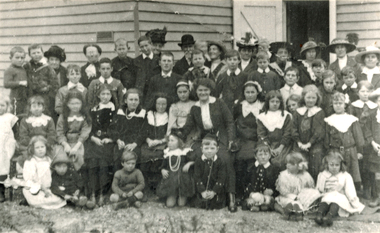
Photograph - Black and White, Wonga Park School Photo 1912
... Back Row: Dave Hooper, Norm St John, Mrs Cocking, Mrs St John, Cliff Jones, Robert Dalrymple, Mrs Webb, Mr Cocking, Mrs Fitton, Miss Snowes, Mrs Edyvane, Doris Slade, Mrs Renton, Mrs Couper, E. ...Back Row: Dave Hooper, Norm St John, Mrs Cocking, Mrs St John, Cliff Jones, Robert Dalrymple, Mrs Webb, Mr Cocking, Mrs Fitton, Miss Snowes, Mrs Edyvane, Doris Slade, Mrs Renton, Mrs Couper, E. ...Back Row: Dave Hooper, Norm St John, Mrs Cocking, Mrs St John, Cliff Jones, Robert Dalrymple, Mrs Webb, Mr Cocking, Mrs Fitton, Miss Snowes, Mrs Edyvane, Doris Slade, Mrs Renton, Mrs Couper, E. Yewdall, Lily Shaw, Miss Lucy (Tweet) Webb. Third row: Billy Edyvane, Billy Collyer, Cyril Whale, Charlie (Fatty) St John, George Edyvane, Edgar Collyer, Stan Cocking, Ron Edyvane, Les Read. Second row: Nell Read, Alice Collyer, Dot Kerr, Bessie Cocking, Winnie Read, Ruth Irvine, Miss Peterson (head teacher), Ethel Hooper, Hetti Collyer, Elsie Whale, Violet Yewdall, Flora Collyer, Myrtle Yewdall, Peter Vergers. Front row: Ethel Fitton, Sonny Fitton, Frank Edyvane, Mabel Irwin, Jimmy Couper, Andy Irwin, Annie Irwin, Carrie Hooper. -
 Wonga Park Community Cottage History Group
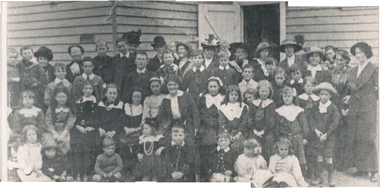
Photograph - Black and White, Parents and Pupils, outside Wonga Park State School, No. 3241 (1912)
... Back Row: Dave Hooper, Norm St John, Mrs Cocking, Mrs St John, Cliff Jones, Robert Dalrymple, Mrs Webb, Mr Cocking, Mrs Fitton, Miss Snowes, Mrs Edyvane, Doris Slade, Mrs Renton, Mrs Couper, E. ...Back Row: Dave Hooper, Norm St John, Mrs Cocking, Mrs St John, Cliff Jones, Robert Dalrymple, Mrs Webb, Mr Cocking, Mrs Fitton, Miss Snowes, Mrs Edyvane, Doris Slade, Mrs Renton, Mrs Couper, E. ...Back Row: Dave Hooper, Norm St John, Mrs Cocking, Mrs St John, Cliff Jones, Robert Dalrymple, Mrs Webb, Mr Cocking, Mrs Fitton, Miss Snowes, Mrs Edyvane, Doris Slade, Mrs Renton, Mrs Couper, E. Yewdall, Lily Shaw, Miss Lucy (Tweet) Webb. Third row: Billy Edyvane, Billy Collyer, Cyril Whale, Charlie (Fatty) St John, George Edyvane, Edgar Collyer, Stan Cocking, Ron Edyvane, Les Read. Second row: Nell Read, Alice Collyer, Dot Kerr, Bessie Cocking, Winnie Read, Ruth Irvine, Miss Peterson (head teacher), Ethel Hooper, Hetti Collyer, Elsie Whale, Violet Yewdall, Flora Collyer, Myrtle Yewdall, Peter Vergers. Front row: Ethel Fitton, Sonny Fitton, Frank Edyvane, Mabel Irwin, Jimmy Couper, Andy Irwin, Annie Irwin, Carrie Hooper. -
 Wonga Park Community Cottage History Group
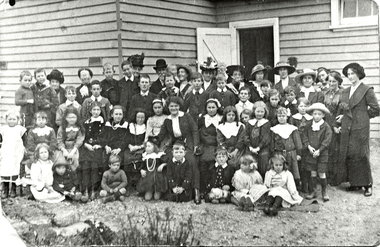
Photograph (Item) - Black and White, 3262 1914 Wonga Park school children parents etc, c. 1931
... Back Row: Dave Hooper, Norm St John, Mrs Cocking, Mrs St John, Cliff Jones, Robert Dalrymple, Mrs Webb, Mr Cocking, Mrs Fitton, Miss Snowes, Mrs Edyvane, Doris Slade, Mrs Renton, Mrs Couper, E. ...Back Row: Dave Hooper, Norm St John, Mrs Cocking, Mrs St John, Cliff Jones, Robert Dalrymple, Mrs Webb, Mr Cocking, Mrs Fitton, Miss Snowes, Mrs Edyvane, Doris Slade, Mrs Renton, Mrs Couper, E. ...Back Row: Dave Hooper, Norm St John, Mrs Cocking, Mrs St John, Cliff Jones, Robert Dalrymple, Mrs Webb, Mr Cocking, Mrs Fitton, Miss Snowes, Mrs Edyvane, Doris Slade, Mrs Renton, Mrs Couper, E. Yewdall, Lily Shaw, Miss Lucy (Tottie) Webb Third Row: Billy Edyvane, Billy Collyer, Cyril Whale, Charlie (Fatty) St John, Geroge Edyvane, Edgar Collyer, Stan Cocking, Ron Edyvane, Les Read Second Row: Nell Read, Alice Collyer, Dot Kerr, Bessie Cocking, Winnie Read, Ruth Irvine, Miss Mary Peterson (head teacher), Ethel Hooper, Hetti Collyer, Elsie Whale, Violet Yewdall, Flora Collyer, Myrtle Yewdall, Peter Vergers Front Row: Ethel Fitton, Sonny Fitton, Frank Edyvane, Mabel Irwin, Jimmy Couper, Andy Irwin, Annie Irwin, Carrie HooperPhoto is named 14880012.jpg on CD -
 Flagstaff Hill Maritime Museum and Village
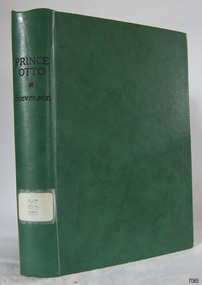
Book - A Fictional Story, Robert Louis Stevenson, Prince Otto, 1895
... robert louis stevenson Prince Otto is a romance set in the fictional Ruritania-style German statelet of Grünewald. Prince Otto slips away from his escort near the border while out hunting and wanders into the neighbouring country of Gerolstein. Otto is regarded by his own people as an incompetent fool, incapable of ruling. He hears rumours that his wife, Princess Amalia Seraphina, is having an affair with the ambitious minister Baron Gondremark, with whom she effectively runs the country, and the plot spirals through a plotted coup ...Prince Otto is a romance set in the fictional Ruritania-style German statelet of Grünewald. Prince Otto slips away from his escort near the border while out hunting and wanders into the neighbouring country of Gerolstein. Otto is regarded by his own people as an incompetent fool, incapable of ruling. He hears rumours that his wife, Princess Amalia Seraphina, is having an affair with the ambitious minister Baron Gondremark, with whom she effectively runs the country, and the plot spirals through a plotted coup, an order to arrest Otto, and a growing political crisis. Unlike Stevenson's boys'-adventure books, this one is a romance in which the marriage of the hero and heroine is not the happy ending but the central problem that the plot must resolve. The theme explores the moral compromises required by marriage. Stevenson considered this work unusually difficult to write, working on it over a five-month period; he called it 'my hardest effort'. One chapter was rewritten eight times by Stevenson, and once by his wife.Hard cover book. Prince Otto Author: Robert Louis Stevenson Publisher: Chatto and Windus Date: 1895 Further Information: Green cloth, gilt-blocked spine with lettering and patterning to spine in black. The spine has a Library label with an inscription.fictionPrince Otto is a romance set in the fictional Ruritania-style German statelet of Grünewald. Prince Otto slips away from his escort near the border while out hunting and wanders into the neighbouring country of Gerolstein. Otto is regarded by his own people as an incompetent fool, incapable of ruling. He hears rumours that his wife, Princess Amalia Seraphina, is having an affair with the ambitious minister Baron Gondremark, with whom she effectively runs the country, and the plot spirals through a plotted coup, an order to arrest Otto, and a growing political crisis. Unlike Stevenson's boys'-adventure books, this one is a romance in which the marriage of the hero and heroine is not the happy ending but the central problem that the plot must resolve. The theme explores the moral compromises required by marriage. Stevenson considered this work unusually difficult to write, working on it over a five-month period; he called it 'my hardest effort'. One chapter was rewritten eight times by Stevenson, and once by his wife.warrnambool, shipwrecked-coast, flagstaff-hill, flagstaff-hill-maritime-museum, maritime-museum, shipwreck-coast, flagstaff-hill-maritime-village, shipwrecked-artefact, book, prince otto, robert louis stevenson
