
Showing 22 items matching "robert rust"
-
 Flagstaff Hill Maritime Museum and Village
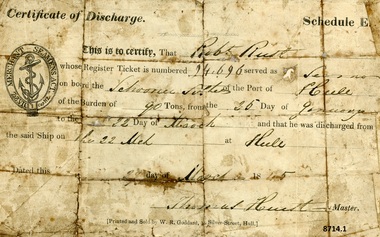
Certificate - Certificate of Discharge, 1845 - 1852
... ...Robert Rust...Example of handwritten character note - "This is to certify that the/ bearer Robert Rust sailor in the barque/ James Turcan, under my command as able / seaman six months during which time / his conduct was to my entire satisfaction / he is a sober steady man. ...Flagstaff Hill Maritime Museum and Village Shipwreck Coast Warrnambool Certificate of Discharge Certificate of Character Robert Rust Bob Rust Seaman's Certificate of Discharge Sisters Caleb Angus James Turcan Eclipse Cecrops Enterprise brig Thames Elizabeth Lady Rowena Warrnambool pioneer Sarah Ann Twaits Example of Certificate from 1845 - 1850 - "Certificate of Discharge. ...Bob Rust was born in Poplar, London in 1823. He became a merchant seaman and all of his "Certificates of Discharge" (except the first one) show him working out of the London docks. The certificates document his career as an "Able Seaman" between the years 1845 to 1852. He worked on the following ships - Jan 25th - March 22nd, 1845 - schooner "Sisters" out of Hull. 14th July - 30th Nov 1845 - "Caleb Angus" - Port of London to West India Dock, London. 12th Dec 1845 - 14th June 1846 - "Caleb Angus" - Port of London to West India Dock, London. April - 16th Oct 1847 - barque "James Turcan" - discharged at Antwerp. It was noted by Mr Mills (Master) "his conduct was to my entire satisfaction. He is a sober, steady man" 25th Oct - 18th Dec 1847 - Brig "Eclipse" - Port of London. Dec 1847 - Nov 1848 - "Cecrops" - London to Cardiff to Cuba and discharged at West India Dock, London. 2nd Dec 1848 - 9th Feb 1850 (15 months) - "Enterprise" - discharged London. Nb - this was not the "Enterprise" used by John Pascoe Fawkner to enter the Yarra in 1835 or the "Enterprise" that sank in Lady Bay, Warrnambool in 1850 and it was not the "Enterprise" belonging to the British Navy which was used to search for Sir John Franklin's lost expedition and later made two Arctic voyages. It is not noted where Bob Rust sailed to on this voyage, but his Master noted on his certificate that "the bearer is an excellent seaman and a good sail maker". 3rd April - 20th Oct 1850 - brig "Thames" - London to London via Trieste. 30th Oct 1850 - 10th May 1851 - "Elizabeth". 9th June - 10th Nov 1851 - "Lady Rowena" - to Alexandria. 23rd Nov 1851 - 17th May 1852 - "Thames" - Mediterranean voyage to Trieste. Bob Rust was an early settler in Warrnambool. He came to Warrnambool, Australia sometime between May 1852 and 1856 where he was recorded in the Electoral Roll, as a labourer, living in Henna Street. According to family history, he "jumped ship" at Port Fairy (then Belfast) as there are no records of him officially arriving in Australia. His picture and details are recorded in "The Pioneers' Register, Warrnambool Township and Shire 1839-1900 Volume Two". He married Sarah Ann Twaits in 1865 and they had seven children. His wife died in 1876 following the birth of their last child. He doesn't appear to have ever worked as a seafarer once he arrived in Warrnambool but is only recorded as working as a labourer and chimney sweep and (in the 1880's) operating as a "General Storekeeper" and "Produce Merchant" (frequently advertising in the Warrnambool Standard for items such as potatoes, oats and dairy produce from his Henna Street premises). He continued to live in Henna Street until his death on 15th January 1906 aged 82 years. English maritime discharge certificates evolved from simple proof of release in the 1700's to become official service records in the mid 1800's. They were issued at the end of a voyage to confirm a sailor had been released from duty and paid. The Merchant Shipping Act of 1835 introduced the formal registration of British seamen, to allow the Government (Board of Trade) to identify individual seamen for the Royal Naval Reserve. Seafarers who registered were issued with tickets which contained some personal details including name, date and place of birth. As the registration system evolved over time, each merchant seafarer was allocated a unique number which would be retained during their time of service at sea. Bob Rust's number was 27914. It also documented the name of the ship (for each voyage), its tonnage, master and date and place of discharge. Early certificates had separate notes re the seaman's conduct or character but after the early 1850's, these became part of the discharge certificate. This collection of "Certificates of Discharge" include those from the late 1840's (which were smaller in size), several handwritten character references as well as some examples of the newer forms of the early 1850's.Theses certificates are significant examples of the legal paperwork generated by the British government in the day-to-day regulation of working seamen in the late 19th century. They are also significant as they document the career of a working seaman at that time.This is a set of twelve "Certificates of Discharge", two handwritten character descriptions and two "Certificates of Character" issued to Able Seaman Bob Rust primarily between the years 1845 and 1852. They have been issued by the Masters of the ships Bob Rust had sailed on, at the completion of each voyage. They differ slightly in size and layout but most follow a similar format in documenting the name of the seaman (Bob Rust), his ticket number (24696), the name of the ship and its tonnage, the port of departure and discharge (e.g. West India Docks London) and the date of the voyage. Some later certificates also describe the destination of the voyage (e.g. Mediterranean). Two of the documents are handwritten notes by the master of the ship certifying as to the conduct of the seaman and two later documents (from 1851 and 1852) are "Certificates of Character" - completed and signed by the Master on the termination of the voyage. Example of Certificate from 1845 - 1850 - "Certificate of Discharge. Schedule E, 7 & 8 Victoria, c.112. This is to certify, that Robert Rust/ whose Register Ticket is numbered 24696 served as Able Seaman/ on Board the Caleb Angus of the Port of London / of the Burden of 303 Tons, from the 14th day of July to the 30th / day of Nov 1845 and that he was discharged from the said ship on 30th /Nov 1845 at West India Docks London Dated this 3 day of December 1845" Mr Whittle MASTER. Example of handwritten character note - "This is to certify that the/ bearer Robert Rust sailor in the barque/ James Turcan, under my command as able / seaman six months during which time / his conduct was to my entire satisfaction / he is a sober steady man. W B. Mills Antwerp 20th October 1847"flagstaff hill maritime museum and village, shipwreck coast, warrnambool, certificate of discharge, certificate of character, robert rust, bob rust, seaman's certificate of discharge, sisters, caleb angus, james turcan, eclipse, cecrops, enterprise, brig thames, elizabeth, lady rowena, warrnambool pioneer, sarah ann twaits -
 Eltham District Historical Society Inc
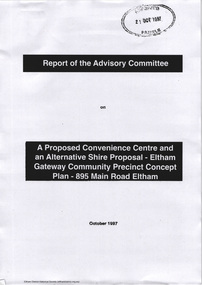
Document - Report, Paul Jerome, Advisory Committee on a Proposed Convenience Centre and an Alternative Shire Proposal - Eltham Gateway Community Precinct Concept Plan - 895 Main Road Eltham, October 1997
... Robert Marshall • Cr. Margaret Jennings • Cr. Lex de Man • Mr. Dallas Howgate of Dallas Price Properties, also Dallas Price Homes • Mr. Barry Rochford, CEO, Shire of Nillumbik • Ms. Yvonne Rust...Robert Marshall • Cr. Margaret Jennings • Cr. Lex de Man • Mr. Dallas Howgate of Dallas Price Properties, also Dallas Price Homes • Mr. Barry Rochford, CEO, Shire of Nillumbik • Ms. Yvonne Rust ...On 15 December 1994 the former Shire of Eltham ceased to exist following the Liberal Kennett Government local council amalgamations. A new Nillumbik Shire Council was established with unelected commissioners appointed. That Council sold the former Eltham Shire Council Offices and land at 89S Main Road Eltham to Dallas Price Homes Pty. Ltd. the sale being conditional upon the granting of a planning permit for a petrol station/convenience store, fast food and video outlet. The sale was conditional that if the permit was not granted by 30 August. 1997, the contract could be avoided by either the purchaser or the vendor. The proposed development consisted of a petrol station with undercover fuelling facilities, convenience shopping, a drive through service facility for fast food, an 80 seat cafe, automated banking, a children's play area and retail space. In addition, the proposal included a 200 square metre community facility for Council use, provision of on site carparking over 2 levels for 83 vehicles, and advertising signage. An Advisory Committee consisting of Dimitry Reed and Margaret Pitt was appointed under Section 151 of the Planning and Environment Act 1987 to hear submissions on the proposal to develop the land at 895 Main Road Eltham, the site of the former Eltham Shire Offices. In September 1996, two applications were made by Contour Consultants Australia Pty Ltd on behalf of Dallas Price Homes Ply Ltd, to Nillumbik Shire Council. After extensive notification, the Council received 213 objections and a petition of over 1400 signatures. On October 9, 1996, Nillumbik Shire Council issued Notices of Decision to Grant Permit on Applications number 96/03376 and 96/0377 for the use and development of the land as a convenience Centre consisting of a petrol station, convenience store, cafe/takeaway food premises, a retail facility and a community facility, with associated advertising signs. Objectors to the proposals lodged Planning Appeals number 96/40724 and 96/40812 with the Administrative Appeals Tribunal on November 1, 1996. The grounds of appeal can be summarised as: inappropriate development, insufficient carparking, traffic and access issues, unsatisfactory design, inadequate permit conditions, the proposal being out of character with the area. and being contrary to the purpose and orderly development of the Eltham Town Centre, excessive noise, lack of consultation and unsuitable signage. On November 13, 1996, the Minister for Planning and Local Government directed the Registrar of the Administrative Appeals Tribunal. under Section 41 (1) (a) of the Planning Act 1980, to refer the Appeals to the Governor in Council for determination without a hearing or recommendation by the Tribunal. The Minister for Planning and Local Government called in the Appeals as he considered that they raised major issues of policy relating to the facilitation of development in accordance with the objectives set out in Section 4 of the Planning and Environment Act 1987, and that determination of the Appeals could have a substantial effect on the achievement of these planning objectives. The Minister required the Advisory Committee to consider the planning merits of the proposed use and development, and to address the issues raised in the objections. The Advisory Committee was required to produce a report providing: • The Committee's response to the matters detailed; • Relevant supporting information for the Advisory Committee's recommendation; and • A description of the proceedings conducted by the Advisory Committee and a list of those consulted or heard by the Committee. In March 1997, elections were held in the Shire of Nillumbik and the view of the new Council to this proposal differed from the view held by the earlier Council Hence the Submission made to the Committee by the Shire was against the decision by the Shire of Nillumbik to issue the Notices of Decision to Grant a Permit. The Recommendations of the Advisory Committee were: i. The cafe and take away food premises are as of right uses and are therefore allowable, but that shop and petrol station are unacceptable uses. A community facility is a discretionary use and is acceptable. ii. A development of the type and scale proposed is totally inappropriate for this land and that the Applications number 96/03376 and 96/0377 for the use and development of the land as a convenience Centre consisting of a petrol station, convenience store, café/takeaway food premises, a retail facility and a community facility, with associated advertising signs, be refused. iii. The land should be rezoned for public purposes and should remain in the community's ownership for community use. Following this, the Minister for Planning and Local Government, the Hon. Robert Maclellan, appointed Mr. Paul Jerome as an Advisory Committee under section 151 of the Planning and Environment Act 1987 to consider a Convenience Centre and an alternative proposal by Iha Shire of Nillumbik being the Eltham Gateway Community Precinct Concept Plan for the site of the former Shire of Eltham municipal offices at 895 Main Road, Eltham. In summary, the terms of reference for the Advisory Committee required it to: • consider the merits of the Council proposal • examine the merits of both proposals in terms of net community benefit • address the report of the previous Advisory Committee on the Convenience Centre proposal The Advisory Committee inspected the site and considered all the material before It including submissions made by all parties to the previous Advisory Committee and correspondence received by the Department of Infrastructure both before and after that Committee submltted its report. The Advisory Committee also held discussions with the following people: • Cr. Robert Marshall • Cr. Margaret Jennings • Cr. Lex de Man • Mr. Dallas Howgate of Dallas Price Properties, also Dallas Price Homes • Mr. Barry Rochford, CEO, Shire of Nillumbik • Ms. Yvonne Rust, Planning Officer, Shire of Nillumbik • Mr. Gregory Burgess, Architect of the Eltham Library and of Council’s Community Precinct Concept Plan • Mr. Jim Connor representing Mrs Thelma Barkway of the Eltham Senior Citizens Club Having considered all the material before it, the Committee arrived at two basic conclusions. First, the DPP proposal should be rejected because, on its merits, It does not sufficiently satisfy the requirements of the planning scheme which is a statutory document. The planning scheme requires that, before making a decision on the permit applications for the DPP proposal, a range of matters must be considered. It follows that consideration of these matters should Influence the decision. These matters include local policies relating to character and amenity. In particular, these policies seek • to conserve and enhance the bushland/country atmosphere, artistic heritage and strong sense of community of the Eltham Town Centre by ensuring that the design and height of any new development is sympathetic to existing buildings • to achieve a pleasing physical environment within the Eltham Town Centre by encouraging a high standard of architecture and urban design • to encourage Improvement to pedestrian amenity through such facilities as open and shattered rest areas and meeting places, crossing facilities, pedestrian arcades, pedestrian links to car parks and pedestrian weather protection • to reduce conflict between vehicular traffic and pedestrian flows, and • to encourage pedestrian thoroughfares It is submitted, as set out In the main body of this report, that the DPP proposal fails substantially to meet these policies and In so doing does not merit the exercise of discretion In Its favour with the Issuing of a permit. This finding is not offset by the investment and employment attributes of the proposal. They do not override the need to comply with the planning scheme. Second, the Council proposal, on Its own merits, substantially meets all statutory requirements applicable to this site with a possible reservation about car parking and traffic management which need further definition and assessment as the concept is refined. The Council proposal, however, has a serious weakness in that Its financial viability has not been adequately tested. The Committee refers to 'financial' rather than 'commercial' viability in recognition that Council owns the land and may enter into a range of agreements and partnerships to realise its concept some of which may be truly commercial and some of which may involve an element of subsidy arising from Council's involvement as a public body acting on behalf of its community. The Committee concludes that Council should be given the opportunity, within a reasonable timeframe to establish the financial feasibility of its concept and should develop a strategy for the future of Its land asset at 895 Main Road in the event that Its concept for the site cannot be realised. 895 main road, advisory committee, dallas price homes, eltham, eltham shire office, nillumbik shire council, planning application, administrative appeals tribunal -
 Eltham District Historical Society Inc
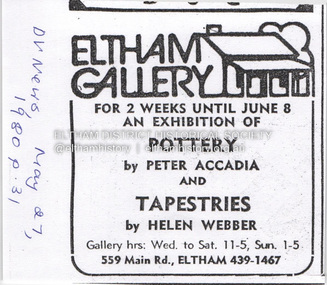
Document - Property Binder, 559 Main Road, Eltham
... Robert Marshall...Mud brick building...Eltham (Vic)...559 Main Road Eltham...Artists...Bernhard Rust...Main Road Property Businesses Eltham Gallery Wiregrass Gallery Eltham Gateway Action Group Robert Marshall Mud brick building Eltham (Vic) 559 Main Road Eltham Artists Bernhard Rust Bob Smith Jan Neil John Adams Marian Sussex Michael Wilson Tony Dopheide 47-55 Main Street Diamond Creek 50 Were Street Montmorency 55 Rattray Road Montmorency 410 Main Road Lower Plenty Abbey of Diamond Creek Adams North Riding Restaurant Advertising Eltham Barrel Montmorency Mustard Seed Restaurant Peking House Restaurant St Andrews Tamara's Miscellaneous clippings, notes, photocopies, etc held on the subject property. 559 Main Road, Eltham Document Property Binder ...Newspaper advertisement: Diamond Valley News, 27 May 1980, Exhibition, Peter Accadia, pottery, and Helen Webber, tapestries. Newspaper article: Five for the price of one, Diamond Valley News, Tuesday, July 8, 1986, p27; exhibition of five artists at Eltham Gallery. On reverse, numerous advertisements for food and entertainment Newspaper advertisement: The Age ,17 June 1989, Exhibition, Donald Ramsay "Watching the river flow". Newspaper article: Landmark gallery says goodbye, Diamond Valley Leader, 24 November 2004, Gallery site sold to Sentinel Equities, present tenant Julie Skate, quotes from former part-owner Val Murray. Newspaper article: Rift over gallery plans, Diamond Valley Leader, 21 February 2007, purchasers Jethro Tull and Suzanne Still plan to build offices, gallery and cafe; Eltham Gateway Action Group objected while supporting need for a gallery elsewhere. Newspaper article: New try for gallery-cafe ready soon, Diamond Valley Leader, 18 April 2007, purchaser Jethro Tull to have a new plan ready in two weeks for gallery and cafe. Newspaper article: Gateway for artists, Diamond Valley Leader, 25 May 2007, Jenni Mitchell opened a new gallery pending decision by Nillumbik Council. Newspaper article: Art gallery proposal rejected, Diamond Valley Leader, 30 May 2007, Nillumbik Council against planned new building. Newspaper article: Artful win for gallery, Diamond Valley Leader, 30 January 2008, VCAT approved mudbrick art gallery. Newspaper article: Rocky road to create a landmark, Diamond Valley Leader, 13 February 2008, VCAT approved Robert Marshall's design, artists's impression, Eltham Gateway Action Group opposed.main road, property, businesses, eltham gallery, wiregrass gallery, eltham gateway action group, robert marshall, mud brick building, eltham (vic), 559 main road eltham, artists, bernhard rust, bob smith, jan neil, john adams, marian sussex, michael wilson, tony dopheide, 47-55 main street diamond creek, 50 were street montmorency, 55 rattray road montmorency, 410 main road lower plenty, abbey of diamond creek, adams north riding restaurant, advertising, eltham barrel, montmorency, mustard seed restaurant, peking house restaurant, st andrews, tamara's -
 Victoria Police Museum
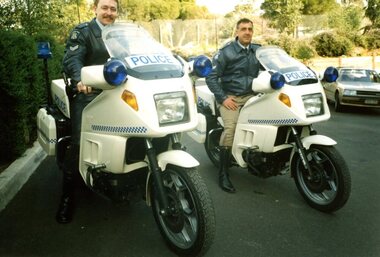
Photograph (police motorcycle)
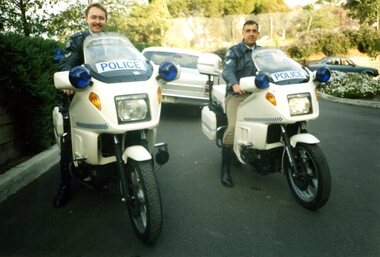
... police vehicles; wireless patrol; motor transport branch; motor transport section; motor cycle patrol; police motorcycles; bmw motorcycle; rust, graeme douglas; francis, robert charles...police vehicles; wireless patrol; motor transport branch; motor transport section; motor cycle patrol; police motorcycles; bmw motorcycle; rust, graeme douglas; francis, robert charles G Rust and R Francis sitting on BMW1100s in uniform but without helmet or gloves - front and side view. ...G Rust and R Francis sitting on BMW1100s in uniform but without helmet or gloves - front and side view. Circa 1991police vehicles; wireless patrol; motor transport branch; motor transport section; motor cycle patrol; police motorcycles; bmw motorcycle; rust, graeme douglas; francis, robert charles -
 Victoria Police Museum
Photograph (police motorcycle)
... police vehicles; wireless patrol; motor transport branch; motor transport section; motor cycle patrol; police motorcycles; bmw motorcycle; rust, graeme douglas; francis, robert charles...police vehicles; wireless patrol; motor transport branch; motor transport section; motor cycle patrol; police motorcycles; bmw motorcycle; rust, graeme douglas; francis, robert charles G Rust and R Francis sitting on BMW1100s in uniform but without helmet or gloves - front view with car in background. ...G Rust and R Francis sitting on BMW1100s in uniform but without helmet or gloves - front view with car in background. Circa 1991police vehicles; wireless patrol; motor transport branch; motor transport section; motor cycle patrol; police motorcycles; bmw motorcycle; rust, graeme douglas; francis, robert charles -
![Front cover of Alfred Hospital Gynaecology Lectures [ca.1970’s]](/media/collectors/50187a8f023fd7201471f198/items/6a4332a4c32e650c7b8fe6a1/item-media/6a434710c32e650c7b95659a/item-fit-380x285.jpg?cb=6) Alfred Hospital Nurses League - Nursing History Collection
Alfred Hospital Nurses League - Nursing History CollectionDocument - Lecture Notes, Alfred Hospital School of Nursing, Alfred Hospital Gynaecology Lectures [ca.1970’s], [ca.1970’s]
... rust marking where the staples were attached. A small white sticker with the number 213.24 on top right corner. Below this number written in pencil is 1970’s. Cream coloured foolscap cardboard folder containing printed pages, printed on one side only. Alfred Hospital Gynaecology Lectures [ca.1970’s] Document Lecture Notes Alfred Hospital School of Nursing Robert ...These lecture notes were given to Alfred Hospital nurses during their training in the 1970’s.Used by student nurses at The Alfred Cream coloured foolscap cardboard folder containing printed pages, printed on one side only.Purple oval stamp in centre of front page with inscription reading Alfred Hospital Gynaecology Lectures. Embellishment between Alfred Hospital and Gynaecology Lectures and a dotted line space under Gynaecology Lectures for a name to be written. Three areas of rust marking where the staples were attached. A small white sticker with the number 213.24 on top right corner. Below this number written in pencil is 1970’s.nursing study and teaching, gynaecological nursing -
![Index page Alfred Hospital Gynaecology Lectures [ca.1960’s]](/media/collectors/50187a8f023fd7201471f198/items/6a558ac2e44e60aeee18bbb0/item-media/6a558bdee44e60aeee18f947/item-fit-380x285.jpg?cb=6) Alfred Hospital Nurses League - Nursing History Collection
Alfred Hospital Nurses League - Nursing History CollectionDocument - Lecture Notes, Alfred Hospital School of Nursing, Alfred Hospital Gynaecology Lectures [ca.1960’s], [ca.1960’s]
... rust marking where the staples were attached. Cat No 735.19 written on top right corner. Below this number written in pencil is 1960’s. Some handwritten notes in blue bird written on some pages. Cream coloured foolscap cardboard folder containing printed pages, printed on one side only. Alfred Hospital Gynaecology Lectures [ca.1960’s] Document Lecture Notes Alfred Hospital School of Nursing Robert ...These lecture notes were given to Alfred Hospital nurses during their training in the 1960’s.Used by student nurses at The Alfred HospitalCream coloured foolscap cardboard folder containing printed pages, printed on one side only.Purple oval stamp in centre of front page with inscription reading Alfred Hospital Gynaecology Lectures. Embellishment between Alfred Hospital and Gynaecology Lectures and a dotted line space under Gynaecology Lectures with the name Danise Mackinnon written and underneath name in pencil Graduated 1965. Three areas of rust marking where the staples were attached. Cat No 735.19 written on top right corner. Below this number written in pencil is 1960’s. Some handwritten notes in blue bird written on some pages.nursing study and teaching, gynaecological nursing -
 National Vietnam Veterans Museum (NVVM)
Photograph, Behind the Wire
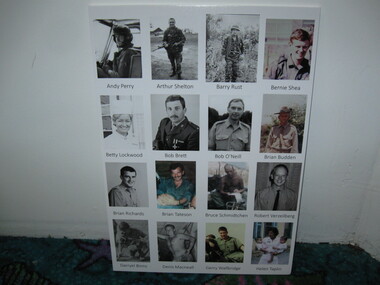
... 16 Photograph of Vietnam Veterans: Andy Perry; Arthur Shelton; Barry Rust; Bernie Shea; Betty Lockwood; Bob Brett; Bob O'Neill; Brian Budden; Brian Richards; Brian Tateson; Bruce Schmidtchen; Robert Verzeilberg; Darryel Binns; Denis Macneall; Gerry Wallbridge; Helen Taplin....Photographic Exhibition Behind the Wire 16 Photograph of Vietnam Veterans: Andy Perry; Arthur Shelton; Barry Rust; Bernie Shea; Betty Lockwood; Bob Brett; Bob O'Neill; Brian Budden; Brian Richards; Brian Tateson; Bruce Schmidtchen; Robert Verzeilberg; Darryel Binns; Denis Macneall; Gerry Wallbridge; Helen Taplin. ...16 Photograph of Vietnam Veterans: Andy Perry; Arthur Shelton; Barry Rust; Bernie Shea; Betty Lockwood; Bob Brett; Bob O'Neill; Brian Budden; Brian Richards; Brian Tateson; Bruce Schmidtchen; Robert Verzeilberg; Darryel Binns; Denis Macneall; Gerry Wallbridge; Helen Taplin.photographic exhibition, behind the wire -
 Maffra Sugarbeet Museum
Beet Lifter
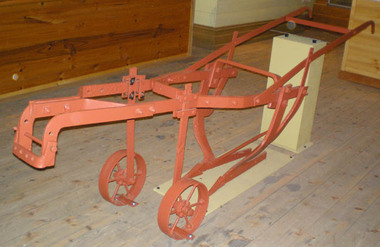
... Roberts (his father), had an earlier model from Bill Fulton. (possibly six pounds ten shillings, and he was able to pay it off). pers com. 5/12/2010 SUGARBEET Blacksmith-made single sugarbeet lifter, painted with rust-proofing paint. ...Possibly the work of W.O. Fulton, Maffra blacksmith and machinery maker. Ken Roberts says that Harry Roberts (his father), had an earlier model from Bill Fulton. (possibly six pounds ten shillings, and he was able to pay it off). pers com. 5/12/2010Blacksmith-made single sugarbeet lifter, painted with rust-proofing paint.sugarbeet -
 National Wool Museum
Textile - Fabric Sample, Kathryn Knitwear, 1980
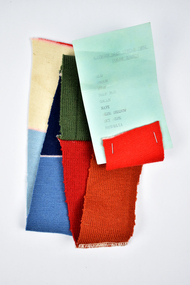
... Robert Blake and Kathryn Knitwear is a balance between adopting new innovations without sacrificing the core values of durability, comfort, care and style that had made the brand so well known. Their legacy forms an integral part of both Australian social and manufacturing history. fabric sample textile sample fabric swatch textile swatch Fashion Textile Production Textile manufacturing KATHRYN WOOL WINTER 1980 COLOUR SWATCH RED BROWN RUST DEEP RED GREEN NAVY BLUE SHADOW SKY BLUE MAGNOLIA Strip of knitted fabric samples showing the nine wool colour options for Kathryn knitwear for the winter season of 1980. ...Kathryn Knitwear, founded by Robert Blake, manufactured high quality children’s knitwear in Melbourne from the 1940s – 1980s. Robert Blake began manufacturing children’s knitwear in his bedroom in Strathmore using a hand powered machine in the late 1940s. The operation moved to Ascot Vale and Essendon, before eventually establishing a factory in Moonee Ponds in the early 1950s. The business continued to expand, necessitating a move to a new factory in Broadmeadows. By 1962, the Broadmeadows factory was producing an average of 20,000 garments per month, which increased to 24,000 by 1964. Robert Blake’s Son, Brendan recalls that “The Kathryn brand was famous around Australia, anywhere children needed to keep warm and dress smartly. It also won a number of wool fashion awards”, including the 1969 Wool Awards, which was held by the Australian Wool Bureau and published in Women’s Weekly. The Kathryn range was designed for durability, comfort and care, without sacrificing style. They used patterning techniques that increase stretchiness, comfort and fit, as well as integrating decorative elements into the fabric to prevent them from being bulky, uncomfortable or tight. Making longevity of style a priority, Brendan Blake remembers that “there was one particular garment that was in the range for at least thirty years”. He also recalls “In the past, when women have found out that I was associated with Kathryn Knitwear, they would often relate to me the story of a garment they had purchased or received as a gift and, when their child had grown out of it, they would hand it on to another child. Several ladies have told me of purchasing garments for their daughters’ glory box, or saving a particular garment after their daughter had grown out of it. Brendan Blake: “At the peak of their operation they employed approximately two hundred people, mainly women and girls. A family would often seek to send their daughter to work in this company because they knew they would be looked after and safe. One lady wrote to me telling me that working at the Moonee Ponds Factory prior to getting married was the happiest time of her life.” In 1963, workers at the Kathryn factory earned £13 per week, which was 8 shillings and 8 pence higher than the minimum weekly wage for female workers in the textile manufacturing industry (£12 11s 4d). By 1970, the Kathryn Knitwear brand expanded from children’s knitwear into womenswear under the brand name ‘Lady Kathryn’, and for boys and men under ‘Robert Blake’. Continuing to diversify their distribution, they also began exporting ‘Kathryn’ garments to New Zealand, the Pacific Islands, and Japan. ‘Kathryn Knitwear’ was well-known for their early adoption of modern materials and techniques that had broad appeal to their customer base. This is shown in their early use of the acrylic fibre ‘Orlon’ in the 50s and 60s and ‘Superwash’ wool in the 1970s. Many of Kathryn Knitwear’s styles, particularly those that were long running staples of the brand, were available in both wool and Orlon to suit the consumer’s preference. Far from the humble origins of one man in his bedroom with a hand-cranked machine; at its closure in 1980, the Broadmeadows factory of ‘Kathryn’ housed more than 100 machines, including 53 sewing machines and 45 knitting machines. Robert Blake was “a passionate advocate for wool and Australian Made” throughout his whole life. A strong thread that ties through the lifespan of Robert Blake and Kathryn Knitwear is a balance between adopting new innovations without sacrificing the core values of durability, comfort, care and style that had made the brand so well known. Their legacy forms an integral part of both Australian social and manufacturing history.Strip of knitted fabric samples showing the nine wool colour options for Kathryn knitwear for the winter season of 1980. Label printed in pale blue paper lists season and colour names and is attached to sample strip with two metal staplesKATHRYN WOOL WINTER 1980 COLOUR SWATCH RED BROWN RUST DEEP RED GREEN NAVY BLUE SHADOW SKY BLUE MAGNOLIAfabric sample, textile sample, fabric swatch, textile swatch, fashion textile production, textile manufacturing -
 National Wool Museum
Textile - Children's Jumper, Kathryn Knitwear, c.1970
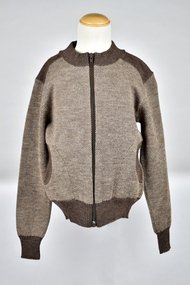
... ROBERT BLAKE Size 8 / knitwear HEIGHT 130cm MADE IN AUSTRALIA .2 [blue sample label] STYLE B/117 Jacket. Zip. Birdseye. Wool. SIZES: 2 4 6 8 10 PRICE: $11.75 [amended to $12.80 in blue pen] $13.85 [amended to $15.05 in blue pen] SIZES: 12 14 PRICE: [printed] $14.95 [amended to $16.15 in blue pen] COLORS: Woodgrain/Pebble Green/Silver [drawn through in black pen] Burgundy/Denim, Navy/Denim, Rust/Pebble Dec on Del. ...ROBERT BLAKE Size 8 / knitwear HEIGHT 130cm MADE IN AUSTRALIA .2 [blue sample label] STYLE B/117 Jacket. Zip. Birdseye. Wool. SIZES: 2 4 6 8 10 PRICE: $11.75 [amended to $12.80 in blue pen] $13.85 [amended to $15.05 in blue pen] SIZES: 12 14 PRICE: [printed] $14.95 [amended to $16.15 in blue pen] COLORS: Woodgrain/Pebble Green/Silver [drawn through in black pen] Burgundy/Denim, Navy/Denim, Rust/Pebble Dec on Del. ...Kathryn Knitwear, founded by Robert Blake, manufactured high quality children’s knitwear in Melbourne from the 1940s – 1980s. Robert Blake began manufacturing children’s knitwear in his bedroom in Strathmore using a hand powered machine in the late 1940s. The operation moved to Ascot Vale and Essendon, before eventually establishing a factory in Moonee Ponds in the early 1950s. The business continued to expand, necessitating a move to a new factory in Broadmeadows. By 1962, the Broadmeadows factory was producing an average of 20,000 garments per month, which increased to 24,000 by 1964. Robert Blake’s Son, Brendan recalls that “The Kathryn brand was famous around Australia, anywhere children needed to keep warm and dress smartly. It also won a number of wool fashion awards”, including the 1969 Wool Awards, which was held by the Australian Wool Bureau and published in Women’s Weekly. The Kathryn range was designed for durability, comfort and care, without sacrificing style. They used patterning techniques that increase stretchiness, comfort and fit, as well as integrating decorative elements into the fabric to prevent them from being bulky, uncomfortable or tight. Making longevity of style a priority, Brendan Blake remembers that “there was one particular garment that was in the range for at least thirty years”. He also recalls “In the past, when women have found out that I was associated with Kathryn Knitwear, they would often relate to me the story of a garment they had purchased or received as a gift and, when their child had grown out of it, they would hand it on to another child. Several ladies have told me of purchasing garments for their daughters’ glory box, or saving a particular garment after their daughter had grown out of it. Brendan Blake: “At the peak of their operation they employed approximately two hundred people, mainly women and girls. A family would often seek to send their daughter to work in this company because they knew they would be looked after and safe. One lady wrote to me telling me that working at the Moonee Ponds Factory prior to getting married was the happiest time of her life.” In 1963, workers at the Kathryn factory earned £13 per week, which was 8 shillings and 8 pence higher than the minimum weekly wage for female workers in the textile manufacturing industry (£12 11s 4d). By 1970, the Kathryn Knitwear brand expanded from children’s knitwear into womenswear under the brand name ‘Lady Kathryn’, and for boys and men under ‘Robert Blake’. Continuing to diversify their distribution, they also began exporting ‘Kathryn’ garments to New Zealand, the Pacific Islands, and Japan. ‘Kathryn Knitwear’ was well-known for their early adoption of modern materials and techniques that had broad appeal to their customer base. This is shown in their early use of the acrylic fibre ‘Orlon’ in the 50s and 60s and ‘Superwash’ wool in the 1970s. Many of Kathryn Knitwear’s styles, particularly those that were long running staples of the brand, were available in both wool and Orlon to suit the consumer’s preference. Wool has been renowned for its excellent properties for thousands of years, by people from all over the world. Not only good for thick winter woollens, it can help keep you cool in summer, as well as being durable and resistant to water, fire, ultraviolet light, stains and odour. Far from the humble origins of one man in his bedroom with a hand-cranked machine; at its closure in 1980, the Broadmeadows factory of ‘Kathryn’ housed more than 100 machines, including 53 sewing machines and 45 knitting machines. Robert Blake was “a passionate advocate for wool and Australian Made” throughout his whole life. A strong thread that ties through the lifespan of Robert Blake and Kathryn Knitwear is a balance between adopting new innovations without sacrificing the core values of durability, comfort, care and style that had made the brand so well known. Their legacy forms an integral part of both Australian social and manufacturing history.Brown and Grey children’s jacket with brown accents at pockets and shoulder, centre front zip, curved pocket detail.Style B/117, Colourway Woodgrain/Pebble, Size 8 .2) Sample tags stapled together with manufacturing information, including sizes and colours available, as well as knit swatch samples for colourways Green/Silver, Burgundy/Denim, Navy/Denim, and Rust/Pebble.1) [white label at back neck with green and black printed writing] ROBERT BLAKE Size 8 / knitwear HEIGHT 130cm MADE IN AUSTRALIA .2 [blue sample label] STYLE B/117 Jacket. Zip. Birdseye. Wool. SIZES: 2 4 6 8 10 PRICE: $11.75 [amended to $12.80 in blue pen] $13.85 [amended to $15.05 in blue pen] SIZES: 12 14 PRICE: [printed] $14.95 [amended to $16.15 in blue pen] COLORS: Woodgrain/Pebble Green/Silver [drawn through in black pen] Burgundy/Denim, Navy/Denim, Rust/Pebble Dec on Del. [cream brand label] [OBVERSE] ROBERT BLAKE [REVERSE] ROBERT BLAKE KNITWEAR MELBOURNE, AUSTRALIAknitwear, clothing, children's clothing, jumper, manufacturing, fashion textile production, machine knitting, children's knitwear -
 Parks Victoria - Days Mill and Farm
Container - Jar
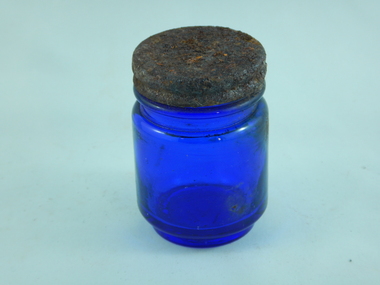
... William Day Ann Day Joseph Day Robert Day Small blue jar with rusted on screw top lid. The round jar has straight sides. ...Found in the above ground rubbish pile at Days Mill & Farm. Possibly contained 'Vicks Vapor Rub".Small blue jar with rusted on screw top lid. The round jar has straight sides. william day, ann day, joseph day, robert day -
 Parks Victoria - Days Mill and Farm
Container - Tins
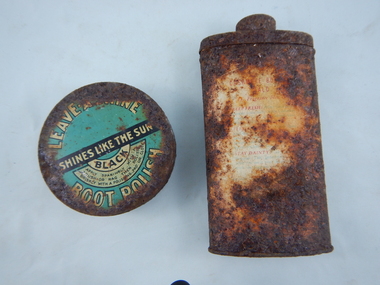
... William Day Ann Day Joseph Day Robert Day Two different rusted tins. One is round and flat with a blue/green decoration, the other is taller, flattish with rounded sides and a small opening at the top. ...Found in an above ground rubbish pile at Days Mill & Farm. One contained boot polish the other talcum powder.Two different rusted tins. One is round and flat with a blue/green decoration, the other is taller, flattish with rounded sides and a small opening at the top.william day, ann day, joseph day, robert day -
 Parks Victoria - Days Mill and Farm
Domestic object - Plates, dinner
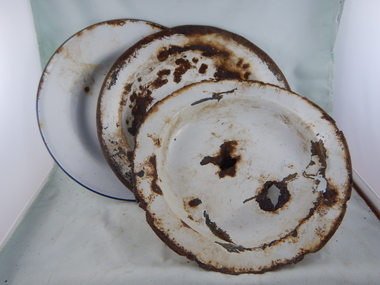
... The plates were possibly used by farm or mill workers. william day ann day joseph day robert day Three rusted white enamel plates . Domestic object Plates, dinner ...These enameled plates were found in an above ground rubbish pile at Days Mill & Farm. The plates were possibly used by farm or mill workers.Three rusted white enamel plates . william day, ann day, joseph day, robert day -
 Parks Victoria - Days Mill and Farm
Domestic object - Bowls
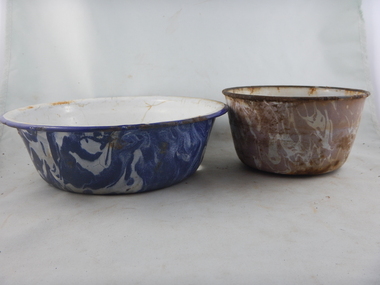
... Robert Day Two enamel bowls with marbleized patterning on the outside. The larger wider bowl is blue and white the smaller but taller bowl is pinky/beige and white. Both have white interiors. Both are rusted ...Found in the above ground rubbish pile at Days Mill and Farm. Probably used on site.Two enamel bowls with marbleized patterning on the outside. The larger wider bowl is blue and white the smaller but taller bowl is pinky/beige and white. Both have white interiors. Both are rustedwilliam day, ann day, joseph day, robert day -
 Parks Victoria - Days Mill and Farm
Container - Can
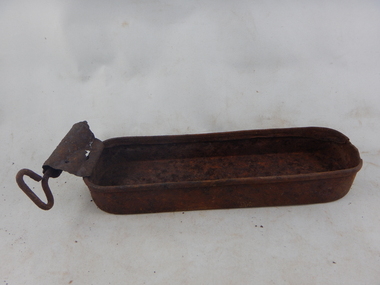
... William Day Ann Day Joseph Day Robert Day Rusted can, oblong in shape with rolled back lid and key in place. ...Found in the above ground rubbish pile at Days Mill and Farm. The can probably contained sardines or herrings or other type of preserved fish. Probably consumed on site.Rusted can, oblong in shape with rolled back lid and key in place.william day, ann day, joseph day, robert day -
 Parks Victoria - Days Mill and Farm
Container - Tins, boot polish
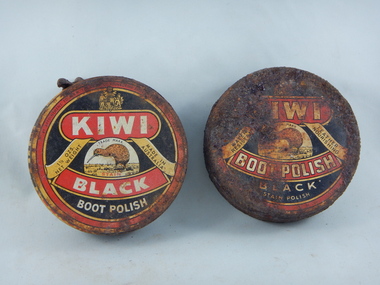
... William Day Ann Day Joseph Day Robert Day yes Two tins of boot polish in flat round tins with butterfly type fastenings between the lid and the tin body. Both lids have red, black, yellow and white graphics that depict a kiwi but the wording and wording placement is different. Both tins are rusted ...Found in an above ground rubbish pile at Days Mill and Farm. Boot polish probably used by family or workers on site.Two tins of boot polish in flat round tins with butterfly type fastenings between the lid and the tin body. Both lids have red, black, yellow and white graphics that depict a kiwi but the wording and wording placement is different. Both tins are rusted and may contain remnants of boot polish.yeswilliam day, ann day, joseph day, robert day -
 Parks Victoria - Days Mill and Farm
Functional object - Comb
... William Day Ann Day Joseph Day Robert Day Small metal comb with nine teeth (10th tooth is broken off) two holes and two Ü" shaped cut out sections. Rusted ...Found in an above ground rubbish pile at Days Mill and farm. This comb appears to have been part of an electric shearing hand piece.Small metal comb with nine teeth (10th tooth is broken off) two holes and two Ü" shaped cut out sections. Rusted.william day, ann day, joseph day, robert day -
 Parks Victoria - Days Mill and Farm
Domestic object - Mugs
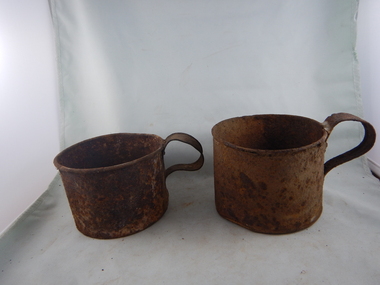
... William Day Ann Day Joseph Day Robert Day no Two rusted straight sided tin mugs with largish handles. ...Found in an above ground rubbish pile at Days Mill and farm. Probably used on site.Two rusted straight sided tin mugs with largish handles. One is smaller than the other.nowilliam day, ann day, joseph day, robert day -
 Carlton Football Club
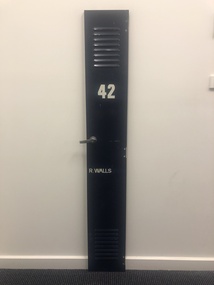
Locker door, No.42, R. Walls, Circa 1960s
... robert heatley stand locker room At rear on left side below louvre, white powder coated, with inscription GOOD BOY BANGER! in fading black fineliner, and GOOD BOY POTS AND PANS!, plus various other markings. 1.5m x 25m x 2.5cm steel louvred dark navy blue locker with white enamel No.42 and R. Walls, silver handle. At rear on left side below louvre, white powder coated, with inscription GOOD BOY BANGER! in fading black fineliner, and GOOD BOY POTS AND PANS!, plus various other markings. Slight rust ...This locker door was used by the Carlton Premiership player of 1968, 1970 and 1972, Robert Walls. Walls played 218 games for Carlton between 1967 and '78. The locker carries his name because he wore the No.42 into 100 senior games for the club - the minimum number of games required by a player to earn that honour. This item is one of the few of its type remaining with the club, and Robert Walls is an important figure in Carlton FC history as both Carlton Premiership player (1968, 1970 and 1972) and Senior Coach (1987). The locker room is considered the inner sanctum of the players, hence the significance.1.5m x 25m x 2.5cm steel louvred dark navy blue locker with white enamel No.42 and R. Walls, silver handle. At rear on left side below louvre, white powder coated, with inscription GOOD BOY BANGER! in fading black fineliner, and GOOD BOY POTS AND PANS!, plus various other markings. Slight rust. At rear on left side below louvre, white powder coated, with inscription GOOD BOY BANGER! in fading black fineliner, and GOOD BOY POTS AND PANS!, plus various other markings. locker, no.42, robert walls, carlton football club, robert heatley stand, locker room -
 Royal Australian and New Zealand College of Obstetricians & Gynaecologists (RANZCOG)
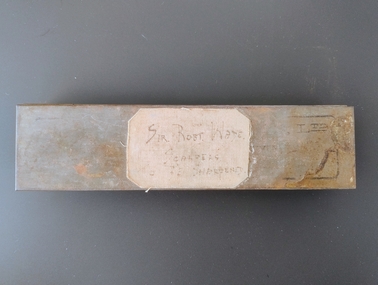
Equipment - Tin containing set of surgical scalpels associated with Sir Robert Wade and Dame Constance D'Arcy, Allen & Hanburys, England
... V2A, produced by Krupp (see third scalpel in this box), was the first commercially produced non-rusting steel. It was patented in 1912. (Montanstahl) Sir Robert Wade (1874-1954) was an orthopaedic surgeon. ...V2A, produced by Krupp (see third scalpel in this box), was the first commercially produced non-rusting steel. It was patented in 1912. (Montanstahl) Sir Robert Wade (1874-1954) was an orthopaedic surgeon. ...This item was donated to RANZCOG's historical collection by Dr Ian Cope. In 1958, Dr Cope moved into rooms at 233 Macquarie Street, Sydney, which had previously been occupied by Dr Dame Constance D'arcy. He subsequently donated much of the material which remained in those rooms to the College. V2A, produced by Krupp (see third scalpel in this box), was the first commercially produced non-rusting steel. It was patented in 1912. (Montanstahl) Sir Robert Wade (1874-1954) was an orthopaedic surgeon. He was a Foundation Fellow of the Royal Australian College of Surgeons (RACS), and President of RACS 1935-1937. He was also President of the State (NSW) branch of the British Medical Association, and inaugural president of the orthopaedic section of the Australian Medical Congress.Metal tin containing three scalpels. Section of sticking plaster attached to lid of tin carries hardwriting which reads 'SIR ROBT. WADE/SCALPELS/TO BE SHARPENED'. Traces of an manufacturers label printed on the lid of the tin are visible beside the sticking plaster, resembling an Allen and Hanburys label. The first scalpel is engraved 'J.GRAY & SON/SHEFFIELD' near the base of the handle on one side, with a parital and unreadable engraving relating to a Sydney instrument maker on the other side. The second scalpel is very thin and narrow and is engraved with the text 'ALLEN&HANBURYS LONDON' on one side of the handle. The third scalpel is engraved with the logo of Krupp (a German instrument maker), 'V2A', and the number '1377.dame constance d'arcy, surgery, british medical association, royal australian college of surgeons, australian medical congress -
 Federation University Art Collection
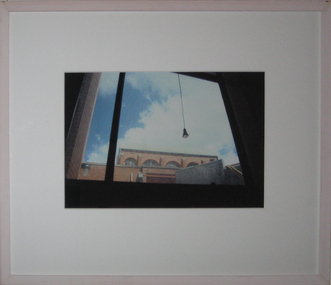
Photograph - colour, Robert Allan, 'Looking North - Camp Street' by Robert Allan, 2002
... Rust stain 7 cm long on lower right hand corner of glass. Colour photograph of a view of the Federation University Arts Academy campus before custom buildings were erected. 'Looking North - Camp Street' by Robert ...Robert ALLAN Born Hopetoun, Victoria Bob Allan graduated from Melbourne teachers' College in 1967. He obtained an Associateship Diploma in 1973, and a Fellowship Diploma of Art (potter) in 1976 from the Royal Melbourne Institute of Technology. Since 1968 he taught art and pottery at various Victorian secondary schools, and joined the staff of the Ballarat University College (now Federation University Australia) in 1976. This item is part of the Federation University Art Collection. The Art Collection features over 1000 works and was listed as a 'Ballarat Treasure' in 2007.Colour photograph of a view of the Federation University Arts Academy campus before custom buildings were erected.Rust stain 7 cm long on lower right hand corner of glass. art, artwork, allan, bob allan, available, camp street, photography, staff, ballarat university college
