
Showing 98 items matching "rock family"
-
 Southern Sherbrooke Historical Society Inc.
Information folder - Grace Vosper
... ...rock family...Contents: -marriage certificate, Dennis Rock and Grace Vosper, 1st September 1855, Melbourne, Victoria -family tree, showing descendants of Grace & Dennis Rock, hand-written -printed Register chart, William Vosper, showing descendants -printed Descendancy chart, William Vosper, showing descendants -printout, 1881 British Census, Vosper family members (2 sheets)...Research carried out to ascertain history of sampler donated to Southern Sherbrooke Historical Society by Helen Gibson. vosper grace vosper family rock family gibson helen original st martins church southern sherbrooke historical society Folder containing information pertaining to Grace Vosper, creator of the sampler now hanging in the original St Martins Anglican Church, Belgrave Heights, Victoria. ...Research carried out to ascertain history of sampler donated to Southern Sherbrooke Historical Society by Helen Gibson.Folder containing information pertaining to Grace Vosper, creator of the sampler now hanging in the original St Martins Anglican Church, Belgrave Heights, Victoria. Contents: -marriage certificate, Dennis Rock and Grace Vosper, 1st September 1855, Melbourne, Victoria -family tree, showing descendants of Grace & Dennis Rock, hand-written -printed Register chart, William Vosper, showing descendants -printed Descendancy chart, William Vosper, showing descendants -printout, 1881 British Census, Vosper family members (2 sheets)vosper, grace, vosper family, rock family, gibson, helen, original st martins church, southern sherbrooke historical society -
 Peterborough History Group
Book - Peterborough Families, circa 2000
... family...peterborough...florence calvert...owen moore...elephant rock...Significant because it preserves the information and memories which would otherwise be lost and includes old photographs over time of local residents and holidaymakers and glimpses of locations in Peterborough. cumming family peterborough florence calvert owen moore elephant rock hope family james wallace hope the schomberg rescue Some photos labelled with name, location and year but not all. ...Contains records of different families memories of Peterborough and includes various photographs, some of Peterborough locations but not all are labelled.Significant because it preserves the information and memories which would otherwise be lost and includes old photographs over time of local residents and holidaymakers and glimpses of locations in Peterborough. Looseleaf folder containing stories and copies of photos of people who lived or holidayed in Peterborough.Some photos labelled with name, location and year but not all.cumming family, peterborough, florence calvert, owen moore, elephant rock, hope family, james wallace hope, the schomberg rescue -
 Ballarat Heritage Services
Photograph - Photograph - Colour, Smith's Beach, 2011, 29/08/2017
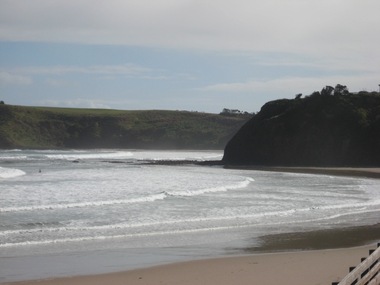
... Known for surfing, swimming, rock pooling, and family-friendly vibes with amenities like cafes and resorts. ...Known for surfing, swimming, rock pooling, and family-friendly vibes with amenities like cafes and resorts. ...Smiths Beach is a popular coastal spots in Phillip Island, Victoria. Known for surfing, swimming, rock pooling, and family-friendly vibes with amenities like cafes and resorts. The Phillip Island location offers consistent waves for all levels.Colour photographs of Smith's Beach.smith's beach, sea, beach, phillip island -
 Bendigo Historical Society Inc.
Photograph - HILDA HILL COLLECTION: BLACK AND WHITE PHOTOS, 1923
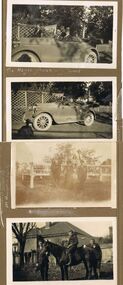
... This photo has two men in the front seat, both wearing grey suits white shirts and black ties, driver only wears a hat, in the rear seat are two ladies wearing dark clothing, one wears a hat, and a male wearing a dark suit white shirt and dark tie, Note anti kick guards below each door. At Hanging Rock family group, three gentlemen one lady and two young girls, standing next to a road bridge with wooden railings, two males are dressed in dark suits white shirts and dark ties, one wears a hat, man sitting on bridge rail wears a grey suit white shirt and dark tie, the two young girls are wearing light coloured clothing. ...This photo has two men in the front seat, both wearing grey suits white shirts and black ties, driver only wears a hat, in the rear seat are two ladies wearing dark clothing, one wears a hat, and a male wearing a dark suit white shirt and dark tie, Note anti kick guards below each door. At Hanging Rock family group, three gentlemen one lady and two young girls, standing next to a road bridge with wooden railings, two males are dressed in dark suits white shirts and dark ties, one wears a hat, man sitting on bridge rail wears a grey suit white shirt and dark tie, the two young girls are wearing light coloured clothing. ...Series of Black & White Photos Total 4 depicting post war life for the Hill Family & Friends. The Hayes' Family Buick, 4 occupants and two men standing on offside of vehicle, two men in front seat are wearing dark suits and hats, two ladies in rear seat wear dark clothing, one has a hat, man standing beside the car in dark suit white shirt and black tie, other man nearer the back is wearing a grey suit, wooden cross in background near rear of vehicle, trellis fence left background, short white picket fence right background, 'Durvol'. This photo has two men in the front seat, both wearing grey suits white shirts and black ties, driver only wears a hat, in the rear seat are two ladies wearing dark clothing, one wears a hat, and a male wearing a dark suit white shirt and dark tie, Note anti kick guards below each door. At Hanging Rock family group, three gentlemen one lady and two young girls, standing next to a road bridge with wooden railings, two males are dressed in dark suits white shirts and dark ties, one wears a hat, man sitting on bridge rail wears a grey suit white shirt and dark tie, the two young girls are wearing light coloured clothing. Martin, Jack, Tom & Dolly the Horse, three boys wearing dark clothing, two boys are wearing white shirts and dark ties, Dolly is dark coloured, background shows gable roofed house with one chimney, end of veranda , large tree left background, wooden paling fence, 'Durvol' property Kyneton 1923.Hilda Hill Pesdonal Collectionaustralia, history, post war life -
 Federation University Historical Collection
Book, Mining Engineers Handbook Volume 1 & 2, 1941
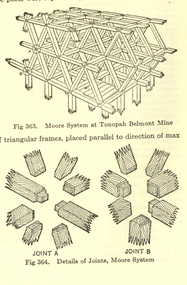
... family business (on Charles Bacon's maternal line). Robert Peele was Professor Emeritus of mining Engineering at the School of Mines, Columbia University. charles bacon mining engineering mining engineering university of nevada mackay school of mines explosives timbering Inside front cover "Charles Bacon" Maroon hardcovered books. .1) Volume 1 - Chapters include Mineralogy, Geology and Mineral Deposits, Earth Excavation, Explosives, Rock Excavation, Tunneling, Shaft Sinking in Rock, Shaft sinking in Unstable and Waterbearing Ground, Boring, Underground Transport, Mine Ventilation. .2) Volume 2 - Chapers include Compressed Air Practice, Electric Power for mine Service, Surveying,Underground Surveying, Mine Geologic Maps and models, Cost of mining, Mining Laws, Ore sampling, Assaying, Aerial Tramways and Cableways, Gold Amalgamation and Cyanidation, etc. ...The book was used by Charles Bacon who studied at the University of Nevada in the late 1930s/early 1940s. Bacon worked at Bunker Hill Mines and Kellogg Idaho, before arriving in Australian in 1951. He worked for CN Myers, a company involved with paper converting. CN Myers was a family business (on Charles Bacon's maternal line). Robert Peele was Professor Emeritus of mining Engineering at the School of Mines, Columbia University.Maroon hardcovered books. .1) Volume 1 - Chapters include Mineralogy, Geology and Mineral Deposits, Earth Excavation, Explosives, Rock Excavation, Tunneling, Shaft Sinking in Rock, Shaft sinking in Unstable and Waterbearing Ground, Boring, Underground Transport, Mine Ventilation. .2) Volume 2 - Chapers include Compressed Air Practice, Electric Power for mine Service, Surveying,Underground Surveying, Mine Geologic Maps and models, Cost of mining, Mining Laws, Ore sampling, Assaying, Aerial Tramways and Cableways, Gold Amalgamation and Cyanidation, etc.Inside front cover "Charles Bacon"charles bacon, mining engineering, mining, engineering, university of nevada, mackay school of mines, explosives, timbering -
 Federation University Historical Collection
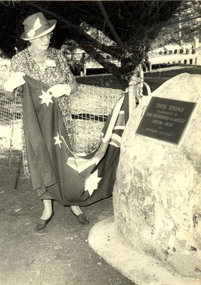
Photograph, Miss Mary Coghill Holmes unveiling the District of Ascot 150th anniversary plaque
... chatham chatham family collection ascot mary coghill mary holmes mary coghill-holmes In blue ballpoint pen verso: "Auntie Mary coghill - Holmes. Ascot 150 years Celebrations in from of Ascot Hall. A woman wearing a hat and gloves removes an Australian flag to unveil a plaque in a rock ...A woman wearing a hat and gloves removes an Australian flag to unveil a plaque in a rock commemorating the Pioneers of Ascot, Victoria from 1838. The plaque is in front of the Ascot District Community Hall. The woman is Mary Coghill Holmes, in 1988 she was the oldest living descendent of the district's pioneer Coghill FamiiyIn blue ballpoint pen verso: "Auntie Mary coghill - Holmes. Ascot 150 years Celebrations in from of Ascot Hall. chatham, chatham family collection, ascot, mary coghill, mary holmes, mary coghill-holmes -
 Federation University Historical Collection
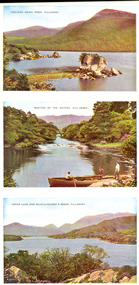
Letter Card, Six View Letter card of Killarney, Ireland
... Probably acquired because of its connection to rural life and the Irish immigrants settled in the Ballarat District Chatham-Holmes family archive Killarney Ireland Six coloured images from Killarney, Ireland. * Colleen Gawn Rock * Meeting of the Waters * Upper Lake and MacGillycuddy's Reeks, Killarney * The Islands, Upper Lake * Kate Kearney's Cottage * Lower Lake and Ross Castle Six View Letter card of Killarney, Ireland Letter Card ...Probably acquired because of its connection to rural life and the Irish immigrants settled in the Ballarat DistrictSix coloured images from Killarney, Ireland. * Colleen Gawn Rock * Meeting of the Waters * Upper Lake and MacGillycuddy's Reeks, Killarney * The Islands, Upper Lake * Kate Kearney's Cottage * Lower Lake and Ross Castlechatham-holmes family archive, killarney, ireland -
 Ringwood and District Historical Society
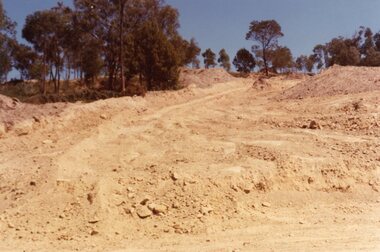
Photograph, Looking west from Kubis Drive, North Ringwood above the bend of the ridge in February 1978
... The rock was stripped up to 2 metres depth and used to fill the gullies Part of a 101-photo record of the development of the "Bel Air" Estate, Ringwood North, including road works to Debbie Place, Kubis Drive, Jenkins Close, Burlock Avenue, Pamela Court, Manuelo Terrace, Lyn Court, Rudolf Court, Werac Drive, Iluka Place and Glenvale Road. From the Jack Lundy Clarke collection (39 Burlock Avenue, North Ringwood) of photos taken from 1976 to 1982. The developer, Mr Kubis, named streets after his family ...Part of a 101-photo record of the development of the "Bel Air" Estate, Ringwood North, including road works to Debbie Place, Kubis Drive, Jenkins Close, Burlock Avenue, Pamela Court, Manuelo Terrace, Lyn Court, Rudolf Court, Werac Drive, Iluka Place and Glenvale Road. From the Jack Lundy Clarke collection (39 Burlock Avenue, North Ringwood) of photos taken from 1976 to 1982. The developer, Mr Kubis, named streets after his family and associates.The rock was stripped up to 2 metres depth and used to fill the gullies -
The Beechworth Burke Museum
Audio - Oral History, Jennifer Williams, Gwen and Jack Scott, 24th February 2000
... family planning. Both Jack and Gwen recalled attending the open-air cinema at ‘The Rock’ in their childhoods. ...family planning. Both Jack and Gwen recalled attending the open-air cinema at ‘The Rock’ in their childhoods. ...Jack Scott was born in Beechworth on the 24th January 1919 into a third generation Beechworth family who had migrated from Scotland, Cornwall and Ireland during the 1860s. Also present during the oral history recording is Jack’s wife, Gwen Scott. In 1878 Jack’s grandfather established the carrier business - R. Scott Carriers. Jack’s grandfather secured a contract with the Zwar Brothers' Beechworth Tannery to transport all goods between the tannery and train station via horse and cart. Jack’s father and uncle carried on the family business, before Jack and his brother eventually joined after the Second World War. The company expanded from a single horse and cart short route to multiple trucks operating interstate routes. Prior to joining the family carrier business, Jack on leaving school started work at the tannery and served in the air force during the Second World War. When asked about the working conditions at the tannery, Jack recalls while they did have union representatives, it was not particularly effectual. The union representatives were often placated by sharing multiple whiskies with the Zwar brothers when in their offices to discuss workers’ issues. Gwen’s father also worked for the tannery for a period of time, and she enjoyed the annual picnics the tannery provided for employee families. Both Jack and Gwen’s connections to the tannery reinforces the tannery’s role as a major employer and presence in the Beechworth community. Prior to marrying Jack, Gwen worked in a range of roles including at the Ovens and Murray Hospital for the Aged, managing the family home when her parents both worked during the Second World War, and apprenticed with her sister as a hairdresser. Jack and Gwen provide some insight into maternal health issues in brief discussions of hospital birthing trends and awareness of contraception and family planning. Both Jack and Gwen recalled attending the open-air cinema at ‘The Rock’ in their childhoods. Gwen remembers that the ‘elites’ would sit on chairs at the front, and Gwen’s family sat on a rug at the back, while Jack would jump the fence and get in for nothing. Jack and Gwen discuss attitudes towards both Chinese Australians and Italian migrants in Beechworth. They did not notice any racism and from their perspective felt they were accepted in the town. Jack did note that Italian employees lost their jobs at the tannery during the Second World War, but believed they all stayed within the area and found stonemason and concrete work in the interim. Jack socialised with members of the Italian community and joyfully recalled attending their homes for music nights with lots of drinking and instruments being played. This oral history recording was part of a project conducted by Jennifer Williams in the year 2000 to capture the everyday life and struggles in Beechworth during the twentieth century. This project involved recording seventy oral histories on cassette tapes of local Beechworth residents which were then published in a book titled: Listen to what they say: voices of twentieth century Beechworth. These cassette tapes were digitised in July 2021 with funds made available by the Friends of the Burke. Gwen and Jack Scott’s account of their lives in Beechworth is historically and socially significant to the cultural heritage of the region. Gwen and Jack in reflecting on their everyday experiences of operating a family business, availability of work, leisure opportunities, interaction with migrants, and access to maternal health care provide essential economic, social, and healthcare insights. Gwen and Jack Scott’s oral history recording is part of a larger collection of oral histories recorded by Jennifer Williams in 2000, collectively they provide invaluable insights into Beechworth during the 20th century, much of the information in these oral histories would be lost if not documented and missed in the interpretation of tangible objects. This is a digital copy of a recording that was originally captured on a cassette tape. The cassette tape is black with a horizontal white strip and is currently stored in a clear flat plastic rectangular container. It holds up 40 minutes of recordings on each side.Mrs Gwen and Mr Jack Scott jack scott, gwen scott, r. scott carriers, scott brothers, zwar brother's beechworth tannery, zwar tannery, beechworth tannery, ovens and murray hospital for the aged, benevolent asylum, open-air cinema, the rock cinema, italians beechworth, hospital births 1920s, wang tech, wangaratta tech, nell scott, jennifer williams, oral history, listen to what they say: voices of twentieth century beechworth, tannery union -
 The Beechworth Burke Museum
Audio - Oral History, Jennifer Williams, Evelyn Jensen, 13th April 2000
... rock and similar surfaces. This broke down the surface for gold to be found. Unfortunately, when he began most of the gold was already gone. Miss Jensen's mother died when Miss Jensen was sixteen. As a result, Miss Jensen had to take care of the children and run the house. This included looking after a few months old baby. Her father was away at work most days so all of the responsibility fell on her. Her grandmother was present but she was too old to help Miss Jensen. Miss Jensen and her family...rock and similar surfaces. This broke down the surface for gold to be found. Unfortunately, when he began most of the gold was already gone. Miss Jensen's mother died when Miss Jensen was sixteen. As a result, Miss Jensen had to take care of the children and run the house. This included looking after a few months old baby. Her father was away at work most days so all of the responsibility fell on her. Her grandmother was present but she was too old to help Miss Jensen. Miss Jensen and her family ...Miss Evelyn Jensen was born in 1908 near Mytleford Road in Beechworth. Miss Jensen was a twin but she also had twelve brothers and sisters. Miss Jensen went to school when she was nine years old but did not enjoy it. Her father was a nozzleman and had a role in finding and collecting gold. More specifically, a nozzleman operated a steel barrel with an interchangeable brass nozzle that sprayed high pressure water onto rock and similar surfaces. This broke down the surface for gold to be found. Unfortunately, when he began most of the gold was already gone. Miss Jensen's mother died when Miss Jensen was sixteen. As a result, Miss Jensen had to take care of the children and run the house. This included looking after a few months old baby. Her father was away at work most days so all of the responsibility fell on her. Her grandmother was present but she was too old to help Miss Jensen. Miss Jensen and her family lived a very long way from the main town and often had to carry kerosene tins full of water half a mile to their house. This was because they have no access to water at their home. This lack of water also meant they had to either bathe in the creek or carry the water back home for a bath. On wash day, they washed their clothes in the creek too. Miss Jensen never married but continued to provide for her family. She spent her days gardening and cooking. They did not have much money so gardening was a way that they provided food for themselves. This oral history recording was part of a project conducted by Jennifer Williams in the year 2000 to capture the everyday life and struggles in Beechworth during the twentieth century. This project involved recording seventy oral histories on cassette tapes of local Beechworth residents which were then published in a book titled: Listen to what they say: voices of twentieth century Beechworth. These cassette tapes were digitised in July 2021 with funds made available by the Friends of the Burke.Miss Jensen's oral history is significant because it demonstrates the struggles of living remotely during this early part of the twentieth century. When Miss Jensen's mother died, she had to take on a lot of responsibility and did not have much support. This history sheds light on these struggles of being a young caregiver but it also gives details on how large families lived in isolated places. An example of this is the way that Miss Jensen often had to do the washing in the creek because that was the only place there was running water. In addition, Miss Jensen's story is significant because her father was a nozzleman. It indicates one of the processes was used to find gold. This oral history account is socially and historically significant as it is a part of a broader collection of interviews conducted by Jennifer Williams which were published in the book 'Listen to what they say: voices of twentieth-century Beechworth.' While the township of Beechworth is known for its history as a gold rush town, these accounts provide a unique insight into the day-to-day life of the town's residents during the 20th century, many of which will have now been lost if they had not been preserved.This is a digital copy of a recording that was originally captured on a cassette tape. The cassette tape is black with a horizontal white strip and is currently stored in a clear flat plastic rectangular container. It holds up 40 minutes of recordings on each sideEvelyn Jensen /mytleford road, beechworth, three mile creek, three mile beechworth, twin, nozzleman, goldrush, gold rush, work, mother, young mother, children, siblings, baby, grandmother, father, isolation, bush, water, watertanks, kerosene tins, wash day, bath day, creek, gardening, provide, poor, money, oral history, twentieth century, recording, story -
 The Beechworth Burke Museum
Audio - Oral History, Jennifer Williams, Dr Roy Phillips, 8th October 2000 (exact date unclear)
... Rock...Racism...Chinese Dragon...Benevolent Society...Star Lane Coach Building Factory...Outdoor concerts...Gold...Jimmy Ingram...Kelly Gang...Kelly Family...family living in Beechworth, with whom they lived. Dr Phillips tells vivid stories about life in Beechworth in the first half of the Twentieth Century, from the daily lives of young children of the time to the town's relationship to the local Chinese community. He discusses features of the landscape such as 'The Rock...family living in Beechworth, with whom they lived. Dr Phillips tells vivid stories about life in Beechworth in the first half of the Twentieth Century, from the daily lives of young children of the time to the town's relationship to the local Chinese community. He discusses features of the landscape such as 'The Rock ...Roy Phillips was born in 1907 in Yackandandah and moved with his family to Beechworth when he was five years old. His father was involved in dredging operations at Lake Sambell but his parents also had other family living in Beechworth, with whom they lived. Dr Phillips tells vivid stories about life in Beechworth in the first half of the Twentieth Century, from the daily lives of young children of the time to the town's relationship to the local Chinese community. He discusses features of the landscape such as 'The Rock' at which community concerts were held and 'The Echo' (an echo-sounding point over a nearby gully) which he states are no longer used in the same way. He also discusses changing community attitudes to various issues, for example, 'not being coddled' as a child but living in a town with very strict rules about people of different religions mingling. This oral history recording was part of a project conducted by Jennifer Williams in the year 2000 to capture the everyday life and struggles in Beechworth during the twentieth century. This project involved recording seventy oral histories on cassette tapes of local Beechworth residents which were then published in a book titled: Listen to what they say: voices of twentieth century Beechworth. These cassette tapes were digitised in July 2021 with funds made available by the Friends of the Burke.Dr Roy Phillips' account of his life in Beechworth in the early part of the 20th Century is historically and socially significant to the cultural heritage of the region. He describes town life from a child's point of view during a time of transition to life after the Gold Rush era, including social tensions existing between cultural groups such as the Chinese community and European-heritage townspeople and between people of different religious groups in Beechworth. This oral history account is socially and historically significant as it is a part of a broader collection of interviews conducted by Jennifer Williams which were published in the book 'Listen to what they say: voices of twentieth-century Beechworth.' While the township of Beechworth is known for its history as a gold rush town, these accounts provide a unique insight into the day-to-day life of the town's residents during the 20th century, many of which will have now been lost if they had not been preserved.This is a digital copy of a recording that was originally captured on a cassette tape. The cassette tape is black with a horizontal white strip and is currently stored in a clear flat plastic rectangular container. It holds up 40 minutes of recordings on each side.Dr Roy Phillips /beechworth, yackandandah, wangaratta, mining, dredging, 1910s, 1920s, 1930s, chinese community, typhoid, lake kerferd, reminiscences, memories, childhood, lake sambell, alcoholism, new year celebrations, transport, horses, foresters lodge, oddfellows lodge, funeral practices, child-rearing practices, star hotel, the rock, racism, chinese dragon, benevolent society, star lane coach building factory, outdoor concerts, gold, jimmy ingram, kelly gang, kelly family, churches, catholic, methodist, protestant, anglican, confuscionist, buddhism, women's christian temperance association, hotels, twentieth century, coronation of king george iv, echo point, the echo, tippany cat, marbles, children's games, cornish, cornwall, listen to what they say, oral history -
 The Beechworth Burke Museum
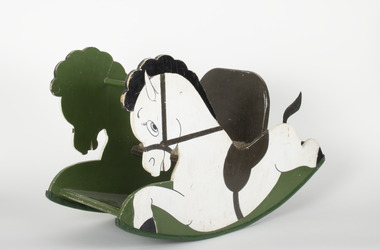
Domestic object - Rocking Horse, c1977
... Child-size rocking horse made and sold by a patient of Mayday Hills Asylum. Purchased in 1978 and used by a family for generations....Child-size rocking horse made and sold by a patient of Mayday Hills Asylum. Purchased in 1978 and used by a family for generations. ...Child-size rocking horse made and sold by a patient of Mayday Hills Asylum. Purchased in 1978 and used by a family for generations.Mayday Hills Asylum was one of the three largest psychiatric hospitals in Victoria, and played an important role in the treatment of mental health illnesses from its establishment in 1867 to its closure in 1995. As part of prescribed treatment, many patients participated in craft activities were they were able to create an array of objects. A small wooden rocking horse painted in green, white and brown, with carpet lining on seat.beechworth, burke museum, mayday hills asylum, rocking horse, children's toys -
 Mission to Seafarers Victoria
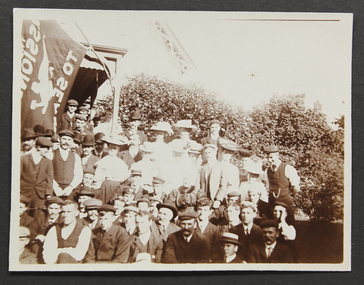
Photograph - Photograph, Sepia, Anne Treverton Goldsmith (nee Lobb), Picnic at Glenfern, King's Birthday 1906, 9 November 1906
... family...sailors...seamen...seafarers...bowler hat...cap...boater hat...snapshots...camera...photographer...sports...cricket...football...ethel augusta godfrey 1861-1935...mr axell...fairy rock...Thanks to the article in the Standard, Saturday 17 November 1906, page 4, we learn that some of the early sepia photographs were taken by Mrs Gurney Goldsmith herself. 1906 glenfern st kilda east picnic lhlg king's birthday edward vii mary alice isabelle danne nee johnston, 1851-1926 reverend kerr johnston, 1812-1887 boyd family sailors seamen seafarers bowler hat cap boater hat snapshots camera photographer sports cricket football ethel augusta godfrey 1861-1935 mr axell fairy rock charles arthur holmes (-1947) mrs gurney goldsmith anne treverton goldsmith (nee lobb) cedric campbell Small monochrome photograph depicting a group of seamen and ladies with the Mission's Flagstaff. ...Gathering of seafarers and MTS clergy and LHLG members, at Glenfern 1906. Mrs Mary Danne daughter of Reverend Kerr Johnston was a widow at the time and was renting Glenfern, the property once owned by the Boyd family, and started a private primary school she called Newington College. A member of the Mission's committee from 1905 to 1926 when she passed away, a bras plaque was made in her memory and placed in the chapel of the Flinders Street Mission. (see item 0690) In the Standard published on Saturday 17 November 1906, page 4 we could read: "In connection with the Victoria Missions to Seamen a successful and pleasant outing, was given to the sailors in port on King's Birth day. Mrs. Danne, of "Glenfern," St. Kilda, threw her house and grounds open tor sports and tea. Cricket, football and sports were enthusiastically pursued, and ample justice was done to the substantial tea provided by Mrs. Danne and her friends. The Misses Danne, Miss Godfrey and other ladies were untiring in their attentions. Mr. Axell, first officer of brig Fairy Rock, in a few appropriate words thanked Mrs. Danne and the ladies, on behalf of the sailors, for their kind hospitality. Snapshots of the party were taken by Mrs. Goldsmith. Mr. C A. Holmes and Mr. Cedric Campbell acted as stewards and starters for the races. On the invitation of the chaplain (Rev. A G. Goldsmith*) ringing cheers were given for Mrs. Danne and the ladies. Before the party broke up Mrs Danne addressed a few kind words to the men and gave them all a shake of the band at the gate. The rest of the evening was spent at the Institute, Beach street, where games and competitions were carried on to the accompaniment of vocal and instrumental music. The prizes won at the sports etc., were distributed, and after singing the National Anthem the party broke up."Thanks to the article in the Standard, Saturday 17 November 1906, page 4, we learn that some of the early sepia photographs were taken by Mrs Gurney Goldsmith herself.Small monochrome photograph depicting a group of seamen and ladies with the Mission's Flagstaff.1906, glenfern, st kilda east, picnic, lhlg, king's birthday, edward vii, mary alice isabelle danne nee johnston, 1851-1926, reverend kerr johnston, 1812-1887, boyd family, sailors, seamen, seafarers, bowler hat, cap, boater hat, snapshots, camera, photographer, sports, cricket, football, ethel augusta godfrey 1861-1935, mr axell, fairy rock, charles arthur holmes (-1947), mrs gurney goldsmith, anne treverton goldsmith (nee lobb), cedric campbell -
 Federation University Historical Collection
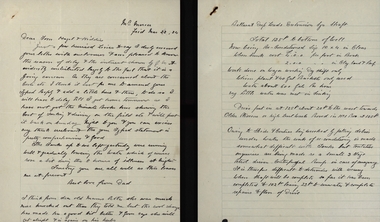
Letter, Letters from Richard Squire to his son Tom 1934
... Walker Secretary for Mines Pipeclay Sandstone Mr Saville Weymouth & Carroll Suction Pipe Valves Financiers Gold Mines of Australia Mr Hanley Hunter Sadowa Coy Kerang Shareholder Buninyong Stanley Hunter Len Fran Max Dr Jones Honeycomb Rock Booth Sandy McNab Emily Shaw John Cock Ross Creek Mitchell Rowe Neil Cameron Walker Kidney Disease Holst Nellie Ronaldson's Ronaldson & Tippett Brokers Investors Lockett Miller & Co Wellesly John Sharpe Elizabeht Ellen Old Lawaluk Mining Handwritten letters from Richard Squire to his son Tom and Family reporting happening at the mine Letters from Richard Squire to his son Tom 1934 Letter ...In 1905 Richard Squire was manager of the West Berry Consols at Allendale, and developed an improved system of mine ventilation, which was supported in "The Age."[4] He was successful in combating and remedying the gas and ventilation troubles of the Deep Mines of Creswick and Allendale Districts after all had failed.[5] MINE MANAGERS’ ASSOCIATION. Ballarat Branch. ... Mr R. B. Squire, manager of the West Berry Consols, at Allendale, submitted a paper detailing what he had done tor the betterment of ventilation in the alluvial mines of Smeaton and Mary borough districts- Members gave Mr Squire every credit for the results that he claimed to have effected; the adoption of his ideas had testified to their value to mine-owners. It was painted out, however, that for want of a thorough debate of the subject with experienced men the author had unwittingly included some general statements that required modifying in some points and extending in others, in justice to other workers among the earlier and the present day managers of mines. It was decided to invite the author to meet a sub-committee on this subject![6]Handwritten letters from Richard Squire to his son Tom and Family reporting happening at the mine richard squire, tom squire, engine trouble, basil, f.l. smythe broker, trembath, w. ryall, mt mercer, flu, plant, skids, pump, c. hayes, illness, poppet, carburetor, mum, ned, shaft, balance weight, hazel squire, pearson, pulleys, syndicate, goon, len hopkins, suction, dunstown, lease, jim squire, bannockburn, nina, albert, mrs trenery, connie, jay, judy squire, cohuna, bladder attack, reports, estimates, dunstan & coy, jelbarts, barrett, flat fields, brown, gold estates, berry leads, parsley roots, share book, meredith, reef, pay sheet, colin, mr gibbs, l.r.g plan, banagwanth, mcnaughton bores, glenfine, allan, william thomas, john lynch, crawford, shelford, liz the car, trucks, chandlers, ballarat trustees, cameron, elaine, mrs read, clark, j. hayes, dunlop, dr lawrence, eye specialist, reid, mullock bank, jack squire, herman, peter's legal inc. ballarat, freddie reid, j.r. whipp, a.b. reid, grenville, leigh river plan, johnstone's, premier petrol coy, chandler's, ballarat deep leads extension, harwood & pincott, a. rice, lillas, l. e. walker, secretary for mines, pipeclay, sandstone, mr saville, weymouth & carroll, suction pipe, valves, financiers, gold mines of australia, mr hanley hunter, sadowa coy, kerang shareholder, buninyong, stanley hunter, len, fran, max, dr jones, honeycomb rock, booth, sandy mcnab, emily shaw, john cock, ross creek, mitchell, rowe, neil cameron, walker, kidney disease, holst, nellie, ronaldson's, ronaldson & tippett, brokers, investors, lockett, miller & co, wellesly, john sharpe, elizabeht ellen, old lawaluk, mining -
 Federation University Historical Collection
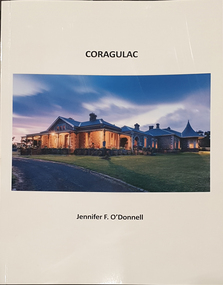
Book, Jennifer O'Donnell, Caragulac, 2021
... family...monash cottage...disappearing lakes....tuff quarries...red rock...gulidjan robertson family cargulac house cororooke andrew spence chirnside william prenzel polo colac caledonian society colac mounted cadets thomas baker leonard samuel ralton len talton matthews family monash cottage disappearing lakes. tuff quarries red rock hugh murray murdering gully massacre william robertson margaret robertson william buckley the hill estate colac estate colac polo club guyon purchas caragulac land sale garry gibson sharyn gibson Soft covered book with a photographuc image of the building known as Caragulac on the cover. ...Soft covered book with a photographuc image of the building known as Caragulac on the cover. Contents include the Gulidjan, Robertson family, Cargulac house, Cororooke, Andrew Spence Chirnside, William Prenzel, polo, Colac Caledonian Society, Colac Mounted Cadets, Thomas Baker, Leonard Samuel Ralton, Len Talton, Matthews family, Monash Cottage, Disappearing lakes.gulidjan, robertson family, cargulac house, cororooke, andrew spence chirnside, william prenzel, polo, colac caledonian society, colac mounted cadets, thomas baker, leonard samuel ralton, len talton, matthews family, monash cottage, disappearing lakes., tuff quarries, red rock, hugh murray, murdering gully massacre, william robertson, margaret robertson, william buckley, the hill estate, colac estate, colac polo club, guyon purchas, caragulac land sale, garry gibson, sharyn gibson -
Marysville & District Historical Society
THE TRIANGLE NEWS-VOL 41 NO 6-FEBRUARY 21 2014
... family picnic and fun day youth fundraiser...australian government mobile service centre assistance...temporary road closure darwin st...fire prevention irrigation systems...fallons bus service alexandra marysville route service...position vacant parks & gardens officer...marysville branch liberal party agm...marysville skate park...need for feed...lions club of pakenham...free disposal of greenwaste...councillor comment...intrepid triangle bushwalkers...irish band saoirse...el kanah...marysville cultural community...irish andrew sisters...news from the gallipoli park precinct committee of management...scarecrow competition...buxton progress assocn...rock...marysville victoria australia made in marysville art craft and produce co op marysville central marysville and district lions welcome erin morrison to the triangle news team what's on when in february & march marsyville walks without hills marysville p.s. parents club agm marysville sub branch rsl agm the committee of management of the gallipoli park precinct marysville community market creative triangle marysville & district historical society resignation of mary kenealy buxton ridge vineyard wine tasting church notices the annual motorhome event at buxton world day of prayer national live theatre-warhorse mayor's chair murrindindi shire council advertise your regional tourism event for free adventurous cooks black spur caravan park advertisements chainsaw carving event marysville golf report daytime netball veterans football super 8's cricket at marysville alexandra district hospital display close the gap payment of rate instalment marysville real estate thank you from family picnic and fun day youth fundraiser australian government mobile service centre assistance temporary road closure darwin st fire prevention irrigation systems fallons bus service alexandra marysville route service position vacant parks & gardens officer marysville branch liberal party agm marysville skate park need for feed lions club of pakenham free disposal of greenwaste councillor comment intrepid triangle bushwalkers irish band saoirse el kanah marysville cultural community irish andrew sisters news from the gallipoli park precinct committee of management scarecrow competition buxton progress assocn rock 'n roll night at buxton hall marysville fire brigade news marysville region really long lunch the last of the yarra track stopping places book gallipoli park world's greatest shave THE TRIANGLE NEWS-VOL 41 NO 6-FEBRUARY 21 2014 ...marysville, victoria, australia, made in marysville art craft and produce co op, marysville central, marysville and district lions welcome erin morrison to the triangle news team, what's on when in february & march, marsyville walks without hills, marysville p.s. parents club agm, marysville sub branch rsl agm, the committee of management of the gallipoli park precinct, marysville community market, creative triangle, marysville & district historical society, resignation of mary kenealy, buxton ridge vineyard wine tasting, church notices, the annual motorhome event at buxton, world day of prayer, national live theatre-warhorse, mayor's chair, murrindindi shire council, advertise your regional tourism event for free, adventurous cooks, black spur caravan park, advertisements, chainsaw carving event, marysville golf report, daytime netball, veterans football, super 8's cricket at marysville, alexandra district hospital display, close the gap, payment of rate instalment, marysville real estate, thank you from family picnic and fun day youth fundraiser, australian government mobile service centre assistance, temporary road closure darwin st, fire prevention irrigation systems, fallons bus service alexandra marysville route service, position vacant parks & gardens officer, marysville branch liberal party agm, marysville skate park, need for feed, lions club of pakenham, free disposal of greenwaste, councillor comment, intrepid triangle bushwalkers, irish band saoirse, el kanah, marysville cultural community, irish andrew sisters, news from the gallipoli park precinct committee of management, scarecrow competition, buxton progress assocn, rock 'n roll night at buxton hall, marysville fire brigade news, marysville region really long lunch, the last of the yarra track stopping places book, gallipoli park, world's greatest shave -
 Greensborough Historical Society
Newspaper Clipping, The (Melbourne) Magazine, Our first Rock Star: Johnny Chester, 1959o
... rock and roll star from the 1950s. Although the connection with Greensborough is not mentioned in this article, Johnny Chester and his family lived in Greenhills. johnny chester rock and roll music 3 pages, text and col. illus. ...The story of Johnny Chester and his career as a rock and roll star from the 1950s.Although the connection with Greensborough is not mentioned in this article, Johnny Chester and his family lived in Greenhills.3 pages, text and col. illus.johnny chester, rock and roll music -
 Orbost & District Historical Society
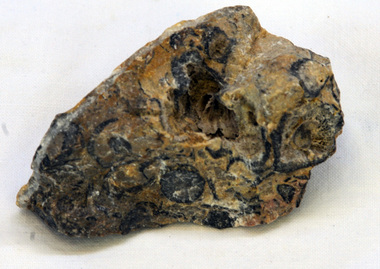
fossil, Devonian Age 419.2–358.9 million years ago
... rock. Genus Spinella Buchanesis . Devonian age 419.2–358.9 million years ago. It contains blastoids from the echinoid family....rock. Genus Spinella Buchanesis . Devonian age 419.2–358.9 million years ago. It contains blastoids from the echinoid family. fossil ...Found at the Pyramids , Buchan. Inspected by George Rawlings on 6.2.2013.A heavily calcified fossil rock. Genus Spinella Buchanesis . Devonian age 419.2–358.9 million years ago. It contains blastoids from the echinoid family.fossil spinella buchan devonian -
 Orbost & District Historical Society
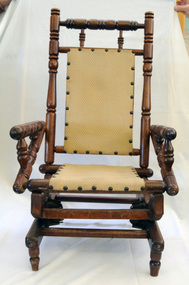
child's rocking chair, c. late 19th, early 20th Century
... This chair is presumed to be Ruth Richardson's chair from when she was a child. child's-rocker spring-rocker Richardson-family A child's rocking chair, frame of round wood and highly finished, seat and backrest of coffee coloured canvas, coiled springs are made of metal. child's rocking chair ...This chair is presumed to be Ruth Richardson's chair from when she was a child. A child's rocking chair, frame of round wood and highly finished, seat and backrest of coffee coloured canvas, coiled springs are made of metal.child's-rocker spring-rocker richardson-family -
 Phillip Island and District Historical Society Inc.
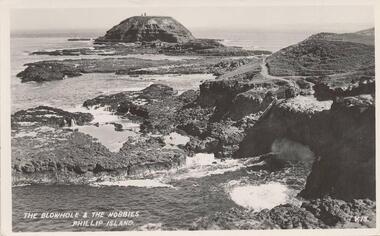
Photograph - Post Card, Valentine Postcard, 1920's
... Donated by S Serpell of Serpell & Reid families, Sandringham. the blowhole phillip island the nobbies phillip island s serpell The Blowhole & The Nobbies Phillip Island. Letter on back sent from Cowes to "Dear Aunt describing holiday in caravan - signed Love Elaine" Black & White Postcard of the Nobbies. Pathway on mainland and rock ...Donated by S Serpell of Serpell & Reid families, Sandringham.Black & White Postcard of the Nobbies. Pathway on mainland and rock pools.The Blowhole & The Nobbies Phillip Island. Letter on back sent from Cowes to "Dear Aunt describing holiday in caravan - signed Love Elaine"the blowhole phillip island, the nobbies phillip island, s serpell -
 Phillip Island and District Historical Society Inc.
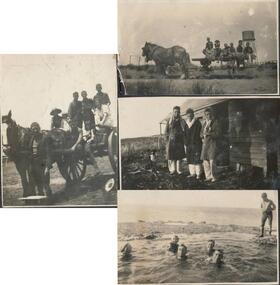
Photograph - Photographs of Phillip Island, 1920s and 1940s
... family Jim Blake Betty Parker Eight black & white photographs. 314-01. Photograph of horse and cart with 2 women, 2 girls and 5 boys. 314-02. Photograph of a mixed group of 7 people on a horse and drag. 314-03. Photograph of 3 young adult males and a dog standing in front of a wooden building. 1926 “Campers Rest” Labelled The Immortal camp at Ventnor. Poss. Trenavin Park 314-04. Photograph of 5 boys and 1 woman swimming in rock ...Photographs associated with Public Schools camp, that started in the 1930s. Some boys worked on chicory at McFee's farm. 314-05 was possibly located at Trenavin Farm, Ventnor. (Source Jan Andrews ) Photo of people on cart with tank stand was off to a 7 picnic at the Nobbies 1917. [See 1124-01] Keeston Sambell driving, behind him is Betty Parker. on side from left is May Lambert, Jim Patterson, Jim Blake, Carmen Sambell and Bill Sambell.[ Source Jim Blake] Eight black & white photographs. 314-01. Photograph of horse and cart with 2 women, 2 girls and 5 boys. 314-02. Photograph of a mixed group of 7 people on a horse and drag. 314-03. Photograph of 3 young adult males and a dog standing in front of a wooden building. 1926 “Campers Rest” Labelled The Immortal camp at Ventnor. Poss. Trenavin Park 314-04. Photograph of 5 boys and 1 woman swimming in rock pool. 1 boy watching. 314-05. Photograph of old wooden hut with tank and chimney. Appears to have been used by boys when camping. 314-06. Photograph of 4 boys - 2 in swimming costumes - on the beach. 314-07. Photograph of 3 women and 1 girl sitting on sand dunes. 314-08. Photograph of 3 boys in uniform and 1 man sitting on bench - maybe watching sporting event?scotch college camp phillip island, scotch college boys, s j mcfee, c.k. newman, f. r. newman, trenavin park phillip island, sambell family, jim blake, betty parker -
 Phillip Island and District Historical Society Inc.
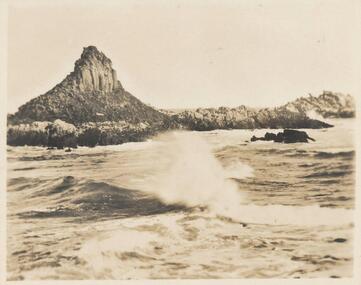
Photograph - Post Card, 1960's
... Serpell of Serpell & Reid families, Sandringham phillip island Pyramid Rock, Phillip Island Sepia Photo of Pyramid Rock, Phillip Island Photograph - Post Card Valentine's ...Donated by S. Serpell of Serpell & Reid families, SandringhamSepia Photo of Pyramid Rock, Phillip IslandPyramid Rock, Phillip Islandphillip island -
 Phillip Island and District Historical Society Inc.
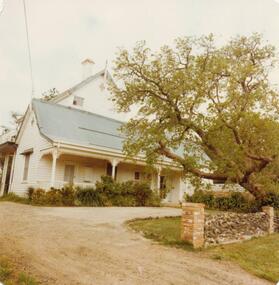
Photograph, 1978/79
... family lived there for many years. Mr & Mrs Lunn bought Glen Isla in 1971. A single fronted white weatherboard cottage, large 2 story building behind seemingly attached. Sprawling tree across right front of photograph behind a rock...family lived there for many years. Mr & Mrs Lunn bought Glen Isla in 1971. A single fronted white weatherboard cottage, large 2 story building behind seemingly attached. Sprawling tree across right front of photograph behind a rock ...Glen Isla built by Bob Anderson about 1870. The Anderson family lived there for many years. Mr & Mrs Lunn bought Glen Isla in 1971. A single fronted white weatherboard cottage, large 2 story building behind seemingly attached. Sprawling tree across right front of photograph behind a rock fence with brick pillars - a wide yellow gravel drive. Bought by Mr & Mrs Baker early 2000s and run as an accommodation property.Glen Isla built by Bob Anderson about 1870local history, photographs, buildings, historic, buildings - historical, coloured photograph, john cook, phillip island, glen isla homestead -
Phillip Island and District Historical Society Inc.
Photograph
... family of the late Mr. Jack Jenner (1977) local history photography photographs slides film view phillip island sepia photograph jack jenner pyramid rock phillip island Labelled "Pyramid Rock, Phillip Island". ...Part of collection of Photographs donated to the museum by the family of the late Mr. Jack Jenner (1977)Sepia Postcard - View Pyramid Rock, Phillip IslandLabelled "Pyramid Rock, Phillip Island".local history, photography, photographs, slides, film, view phillip island, sepia photograph, jack jenner, pyramid rock, phillip island -
Phillip Island and District Historical Society Inc.
Photograph
... family of the late Mr. Jack Jenner. (1977) local history photography photographs slides film view phillip island sepia photograph jack jenner pyramid rock coastline phillip island "The Pyramid Rock, Cowes, Phillip Island, Victoria" The Rose Series, P.663 Sepia Postcard - Rose Series - view of Pyramid Rock Photograph ...Part of collection of Photographs donated to the Museum by the family of the late Mr. Jack Jenner. (1977)Sepia Postcard - Rose Series - view of Pyramid Rock"The Pyramid Rock, Cowes, Phillip Island, Victoria" The Rose Series, P.663local history, photography, photographs, slides, film, view phillip island, sepia photograph, jack jenner, pyramid rock, coastline, phillip island -
 Flagstaff Hill Maritime Museum and Village
Linen, late 1800's
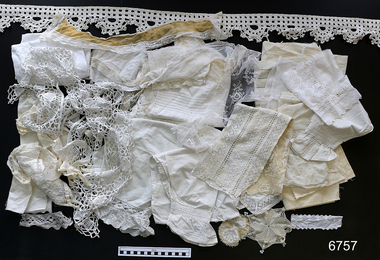
... family, which were donated by Flagstaff Hill volunteers Vera and Aurelin Giles (Henry and Mary Jane’s daughter and granddaughter respectively). These are predominantly located in the Lighthouse Keeper’s Cottage and include: Living room • Cloths (made by Vera Giles) • Portraits of Mary and Henry Giles • 1 x dresser • Covers on dresser • 1 x bellows Baby’s room • 1 x blessing (in the baby’s room) • 1 x picture of boy and girl • 1 x rocking chair • 1 x cushion (made by V Giles) • 1 x chest (belonging to Mary Jane Giles’s mother, Jane Fleming who migrated to Australia from Ireland in 1843) • 1 x chest cover • Bed materials Bedroom • 1 x knitted bedspread and cushion cover (knitted by V Giles) • Pillow shams and covers (Mrs Catherine King) • Pillow cases (Mary Giles) • 1 x wash stand (Mary Giles) • Towels (lace knitted by Aurelin Giles) • 1 x washstand cover • 1 x white ceramic dog • Shaving items • 1 x dressing table mirror • 1 x dressing table cover (made by Aurelin Giles) • 1 x framed motto • 2 x texts • 1 x settee (sofa) • 1x wardrobe (Vera Giles donated the wardrobe in the Lighthouse Keeper’s Cottage to Flagstaff Hill. ...family, which were donated by Flagstaff Hill volunteers Vera and Aurelin Giles (Henry and Mary Jane’s daughter and granddaughter respectively). These are predominantly located in the Lighthouse Keeper’s Cottage and include: Living room • Cloths (made by Vera Giles) • Portraits of Mary and Henry Giles • 1 x dresser • Covers on dresser • 1 x bellows Baby’s room • 1 x blessing (in the baby’s room) • 1 x picture of boy and girl • 1 x rocking chair • 1 x cushion (made by V Giles) • 1 x chest (belonging to Mary Jane Giles’s mother, Jane Fleming who migrated to Australia from Ireland in 1843) • 1 x chest cover • Bed materials Bedroom • 1 x knitted bedspread and cushion cover (knitted by V Giles) • Pillow shams and covers (Mrs Catherine King) • Pillow cases (Mary Giles) • 1 x wash stand (Mary Giles) • Towels (lace knitted by Aurelin Giles) • 1 x washstand cover • 1 x white ceramic dog • Shaving items • 1 x dressing table mirror • 1 x dressing table cover (made by Aurelin Giles) • 1 x framed motto • 2 x texts • 1 x settee (sofa) • 1x wardrobe (Vera Giles donated the wardrobe in the Lighthouse Keeper’s Cottage to Flagstaff Hill. ...This item is one of many 19th century items donated to Flagstaff Hill Maritime Village by the Giles Family, and known as the “Giles Family Collection”. Henry Giles was born at Tower Hill, Victoria in 1858 and worked as a labourer on the Warrnambool Breakwater. His wife, Mary Jane, was born in 1860 at Cooramook and worked as a student teacher at Mailor’s Flat Secondary School. The Giles family lived at The Maam, Wangoom in the late 19th century, before moving to New South Wales in 1895, where Henry built bridges. Henry died in 1933 and Mary Jane died seven years later. Flagstaff Hill holds a number of objects associated with the Giles family, which were donated by Flagstaff Hill volunteers Vera and Aurelin Giles (Henry and Mary Jane’s daughter and granddaughter respectively). These are predominantly located in the Lighthouse Keeper’s Cottage and include: Living room • Cloths (made by Vera Giles) • Portraits of Mary and Henry Giles • 1 x dresser • Covers on dresser • 1 x bellows Baby’s room • 1 x blessing (in the baby’s room) • 1 x picture of boy and girl • 1 x rocking chair • 1 x cushion (made by V Giles) • 1 x chest (belonging to Mary Jane Giles’s mother, Jane Fleming who migrated to Australia from Ireland in 1843) • 1 x chest cover • Bed materials Bedroom • 1 x knitted bedspread and cushion cover (knitted by V Giles) • Pillow shams and covers (Mrs Catherine King) • Pillow cases (Mary Giles) • 1 x wash stand (Mary Giles) • Towels (lace knitted by Aurelin Giles) • 1 x washstand cover • 1 x white ceramic dog • Shaving items • 1 x dressing table mirror • 1 x dressing table cover (made by Aurelin Giles) • 1 x framed motto • 2 x texts • 1 x settee (sofa) • 1x wardrobe (Vera Giles donated the wardrobe in the Lighthouse Keeper’s Cottage to Flagstaff Hill. According to Aurelin Giles, it was originally owned by William Swinton junior and was later given to a friend of the Giles family.) Kitchen • Settee covers (made by V Giles) • 1 x sideboard • 1 x butter churner • 2 x pictures • 1 x white cheese dome • 1 x wash-up tray • 2 x jugs • 1 x vegetable bowl and dish • 1 x willow pattern dinner set • Glass butter and jam dishes. The Giles family collection has social significance at a local level, because it illustrates the level of material support the Warrnambool community gave to Flagstaff Hill when the Museum was established.Calico bag of assorted fabrics, trims and sewn pieces (originally donated together with sewing machine). Items include clothing, lace, tablecloth, tray cloth, collars, oversleeves, trims, jug cover, lace inserts. (part of the Giles Collection)flagstaff hill, warrnambool, shipwrecked-coast, flagstaff-hill, flagstaff-hill-maritime-museum, maritime-museum, shipwreck-coast, flagstaff-hill-maritime-village, linen, fabric, dressmaking, sewing materials, 19th century sewing, 19th century fashion, giles family, 19th century hand craft, henry giles, tower hill, cooramook, warrnambool breakwater, mailor’s flat, wangoom, 19th century clothing, 19th century linen, 19th century handcraft -
 Flagstaff Hill Maritime Museum and Village
Guest towel, late 19th century
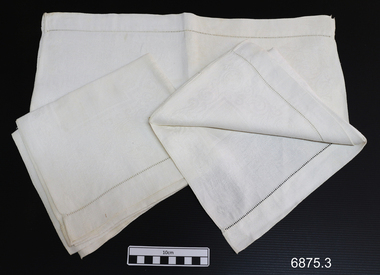
... family, which were donated by Flagstaff Hill volunteers Vera and Aurelin Giles (Henry and Mary Jane’s daughter and granddaughter respectively). These are predominantly located in the Lighthouse Keeper’s Cottage and include: Living room • Cloths (made by Vera Giles) • Portraits of Mary and Henry Giles • 1 x dresser • Covers on dresser • 1 x bellows Baby’s room • 1 x blessing (in the baby’s room) • 1 x picture of boy and girl • 1 x rocking chair • 1 x cushion (made by V Giles) • 1 x chest (belonging to Mary Jane Giles’s mother, Jane Fleming who migrated to Australia from Ireland in 1843) • 1 x chest cover • Bed materials Bedroom • 1 x knitted bedspread and cushion cover (knitted by V Giles) • Pillow shams and covers (Mrs Catherine King) • Pillow cases (Mary Giles) • 1 x wash stand (Mary Giles) • Towels (lace knitted by Aurelin Giles) • 1 x washstand cover • 1 x white ceramic dog • Shaving items • 1 x dressing table mirror • 1 x dressing table cover (made by Aurelin Giles) • 1 x framed motto • 2 x texts • 1 x settee (sofa) • 1x wardrobe (Vera Giles donated the wardrobe in the Lighthouse Keeper’s Cottage to Flagstaff Hill. ...family, which were donated by Flagstaff Hill volunteers Vera and Aurelin Giles (Henry and Mary Jane’s daughter and granddaughter respectively). These are predominantly located in the Lighthouse Keeper’s Cottage and include: Living room • Cloths (made by Vera Giles) • Portraits of Mary and Henry Giles • 1 x dresser • Covers on dresser • 1 x bellows Baby’s room • 1 x blessing (in the baby’s room) • 1 x picture of boy and girl • 1 x rocking chair • 1 x cushion (made by V Giles) • 1 x chest (belonging to Mary Jane Giles’s mother, Jane Fleming who migrated to Australia from Ireland in 1843) • 1 x chest cover • Bed materials Bedroom • 1 x knitted bedspread and cushion cover (knitted by V Giles) • Pillow shams and covers (Mrs Catherine King) • Pillow cases (Mary Giles) • 1 x wash stand (Mary Giles) • Towels (lace knitted by Aurelin Giles) • 1 x washstand cover • 1 x white ceramic dog • Shaving items • 1 x dressing table mirror • 1 x dressing table cover (made by Aurelin Giles) • 1 x framed motto • 2 x texts • 1 x settee (sofa) • 1x wardrobe (Vera Giles donated the wardrobe in the Lighthouse Keeper’s Cottage to Flagstaff Hill. ...This item is one of many 19th century items donated to Flagstaff Hill Maritime Village by the Giles Family, and known as the “Giles Family Collection”. Henry Giles was born at Tower Hill, Victoria in 1858 and worked as a labourer on the Warrnambool Breakwater. His wife, Mary Jane, was born in 1860 at Cooramook and worked as a student teacher at Mailor’s Flat Secondary School. The Giles family lived at The Maam, Wangoom in the late 19th century, before moving to New South Wales in 1895, where Henry built bridges. Henry died in 1933 and Mary Jane died seven years later. Flagstaff Hill holds a number of objects associated with the Giles family, which were donated by Flagstaff Hill volunteers Vera and Aurelin Giles (Henry and Mary Jane’s daughter and granddaughter respectively). These are predominantly located in the Lighthouse Keeper’s Cottage and include: Living room • Cloths (made by Vera Giles) • Portraits of Mary and Henry Giles • 1 x dresser • Covers on dresser • 1 x bellows Baby’s room • 1 x blessing (in the baby’s room) • 1 x picture of boy and girl • 1 x rocking chair • 1 x cushion (made by V Giles) • 1 x chest (belonging to Mary Jane Giles’s mother, Jane Fleming who migrated to Australia from Ireland in 1843) • 1 x chest cover • Bed materials Bedroom • 1 x knitted bedspread and cushion cover (knitted by V Giles) • Pillow shams and covers (Mrs Catherine King) • Pillow cases (Mary Giles) • 1 x wash stand (Mary Giles) • Towels (lace knitted by Aurelin Giles) • 1 x washstand cover • 1 x white ceramic dog • Shaving items • 1 x dressing table mirror • 1 x dressing table cover (made by Aurelin Giles) • 1 x framed motto • 2 x texts • 1 x settee (sofa) • 1x wardrobe (Vera Giles donated the wardrobe in the Lighthouse Keeper’s Cottage to Flagstaff Hill. According to Aurelin Giles, it was originally owned by William Swinton junior and was later given to a friend of the Giles family.) Kitchen • Settee covers (made by V Giles) • 1 x sideboard • 1 x butter churner • 2 x pictures • 1 x white cheese dome • 1 x wash-up tray • 2 x jugs • 1 x vegetable bowl and dish • 1 x willow pattern dinner set • Glass butter and jam dishes. The Giles family collection has social significance at a local level, because it illustrates the level of material support the Warrnambool community gave to Flagstaff Hill when the Museum was established.Guest towel, set of 3 white damask guest towels.(Giles Collection) flagstaff hill, warrnambool, shipwrecked-coast, flagstaff-hill, flagstaff-hill-maritime-museum, maritime-museum, shipwreck-coast, flagstaff-hill-maritime-village, giles family, henry giles, tower hill, cooramook, warrnambool breakwater, mailor’s flat,, wangoom, 19th century linen, 19th century handcraft, guest towel -
 Flagstaff Hill Maritime Museum and Village
Tray cloth, late 19th century
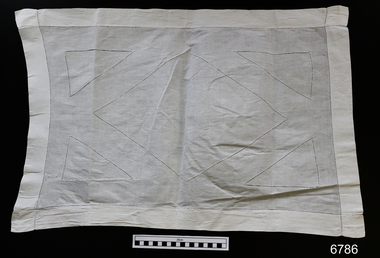
... family, which were donated by Flagstaff Hill volunteers Vera and Aurelin Giles (Henry and Mary Jane’s daughter and granddaughter respectively). These are predominantly located in the Lighthouse Keeper’s Cottage and include: Living room • Cloths (made by Vera Giles) • Portraits of Mary and Henry Giles • 1 x dresser • Covers on dresser • 1 x bellows Baby’s room • 1 x blessing (in the baby’s room) • 1 x picture of boy and girl • 1 x rocking chair • 1 x cushion (made by V Giles) • 1 x chest (belonging to Mary Jane Giles’s mother, Jane Fleming who migrated to Australia from Ireland in 1843) • 1 x chest cover • Bed materials Bedroom • 1 x knitted bedspread and cushion cover (knitted by V Giles) • Pillow shams and covers (Mrs Catherine King) • Pillow cases (Mary Giles) • 1 x wash stand (Mary Giles) • Towels (lace knitted by Aurelin Giles) • 1 x washstand cover • 1 x white ceramic dog • Shaving items • 1 x dressing table mirror • 1 x dressing table cover (made by Aurelin Giles) • 1 x framed motto • 2 x texts • 1 x settee (sofa) • 1x wardrobe (Vera Giles donated the wardrobe in the Lighthouse Keeper’s Cottage to Flagstaff Hill. ...family, which were donated by Flagstaff Hill volunteers Vera and Aurelin Giles (Henry and Mary Jane’s daughter and granddaughter respectively). These are predominantly located in the Lighthouse Keeper’s Cottage and include: Living room • Cloths (made by Vera Giles) • Portraits of Mary and Henry Giles • 1 x dresser • Covers on dresser • 1 x bellows Baby’s room • 1 x blessing (in the baby’s room) • 1 x picture of boy and girl • 1 x rocking chair • 1 x cushion (made by V Giles) • 1 x chest (belonging to Mary Jane Giles’s mother, Jane Fleming who migrated to Australia from Ireland in 1843) • 1 x chest cover • Bed materials Bedroom • 1 x knitted bedspread and cushion cover (knitted by V Giles) • Pillow shams and covers (Mrs Catherine King) • Pillow cases (Mary Giles) • 1 x wash stand (Mary Giles) • Towels (lace knitted by Aurelin Giles) • 1 x washstand cover • 1 x white ceramic dog • Shaving items • 1 x dressing table mirror • 1 x dressing table cover (made by Aurelin Giles) • 1 x framed motto • 2 x texts • 1 x settee (sofa) • 1x wardrobe (Vera Giles donated the wardrobe in the Lighthouse Keeper’s Cottage to Flagstaff Hill. ...This item is one of many 19th century items donated to Flagstaff Hill Maritime Village by the Giles Family, and known as the “Giles Family Collection”. Henry Giles was born at Tower Hill, Victoria in 1858 and worked as a labourer on the Warrnambool Breakwater. His wife, Mary Jane, was born in 1860 at Cooramook and worked as a student teacher at Mailor’s Flat Secondary School. The Giles family lived at The Maam, Wangoom in the late 19th century, before moving to New South Wales in 1895, where Henry built bridges. Henry died in 1933 and Mary Jane died seven years later. Flagstaff Hill holds a number of objects associated with the Giles family, which were donated by Flagstaff Hill volunteers Vera and Aurelin Giles (Henry and Mary Jane’s daughter and granddaughter respectively). These are predominantly located in the Lighthouse Keeper’s Cottage and include: Living room • Cloths (made by Vera Giles) • Portraits of Mary and Henry Giles • 1 x dresser • Covers on dresser • 1 x bellows Baby’s room • 1 x blessing (in the baby’s room) • 1 x picture of boy and girl • 1 x rocking chair • 1 x cushion (made by V Giles) • 1 x chest (belonging to Mary Jane Giles’s mother, Jane Fleming who migrated to Australia from Ireland in 1843) • 1 x chest cover • Bed materials Bedroom • 1 x knitted bedspread and cushion cover (knitted by V Giles) • Pillow shams and covers (Mrs Catherine King) • Pillow cases (Mary Giles) • 1 x wash stand (Mary Giles) • Towels (lace knitted by Aurelin Giles) • 1 x washstand cover • 1 x white ceramic dog • Shaving items • 1 x dressing table mirror • 1 x dressing table cover (made by Aurelin Giles) • 1 x framed motto • 2 x texts • 1 x settee (sofa) • 1x wardrobe (Vera Giles donated the wardrobe in the Lighthouse Keeper’s Cottage to Flagstaff Hill. According to Aurelin Giles, it was originally owned by William Swinton junior and was later given to a friend of the Giles family.) Kitchen • Settee covers (made by V Giles) • 1 x sideboard • 1 x butter churner • 2 x pictures • 1 x white cheese dome • 1 x wash-up tray • 2 x jugs • 1 x vegetable bowl and dish • 1 x willow pattern dinner set • Glass butter and jam dishes. The Giles family collection has social significance at a local level, because it illustrates the level of material support the Warrnambool community gave to Flagstaff Hill when the Museum was established.Tray cloth, white linen, geometric pulled thread design. (Giles Collection) Tag attached "LHK n6" flagstaff hill, warrnambool, shipwrecked-coast, flagstaff-hill, flagstaff-hill-maritime-museum, maritime-museum, shipwreck-coast, flagstaff-hill-maritime-village, giles family, tower hill, cooramook, warrnambool breakwater, mailor’s flat, wangoom, 19th century linen, 19th century handcraft -
 Flagstaff Hill Maritime Museum and Village
Tray cloth, Late 19th century
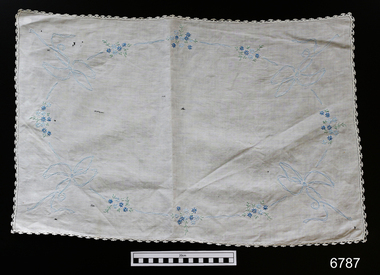
... family, which were donated by Flagstaff Hill volunteers Vera and Aurelin Giles (Henry and Mary Jane’s daughter and granddaughter respectively). These are predominantly located in the Lighthouse Keeper’s Cottage and include: Living room • Cloths (made by Vera Giles) • Portraits of Mary and Henry Giles • 1 x dresser • Covers on dresser • 1 x bellows Baby’s room • 1 x blessing (in the baby’s room) • 1 x picture of boy and girl • 1 x rocking chair • 1 x cushion (made by V Giles) • 1 x chest (belonging to Mary Jane Giles’s mother, Jane Fleming who migrated to Australia from Ireland in 1843) • 1 x chest cover • Bed materials Bedroom • 1 x knitted bedspread and cushion cover (knitted by V Giles) • Pillow shams and covers (Mrs Catherine King) • Pillow cases (Mary Giles) • 1 x wash stand (Mary Giles) • Towels (lace knitted by Aurelin Giles) • 1 x washstand cover • 1 x white ceramic dog • Shaving items • 1 x dressing table mirror • 1 x dressing table cover (made by Aurelin Giles) • 1 x framed motto • 2 x texts • 1 x settee (sofa) • 1x wardrobe (Vera Giles donated the wardrobe in the Lighthouse Keeper’s Cottage to Flagstaff Hill. ...family, which were donated by Flagstaff Hill volunteers Vera and Aurelin Giles (Henry and Mary Jane’s daughter and granddaughter respectively). These are predominantly located in the Lighthouse Keeper’s Cottage and include: Living room • Cloths (made by Vera Giles) • Portraits of Mary and Henry Giles • 1 x dresser • Covers on dresser • 1 x bellows Baby’s room • 1 x blessing (in the baby’s room) • 1 x picture of boy and girl • 1 x rocking chair • 1 x cushion (made by V Giles) • 1 x chest (belonging to Mary Jane Giles’s mother, Jane Fleming who migrated to Australia from Ireland in 1843) • 1 x chest cover • Bed materials Bedroom • 1 x knitted bedspread and cushion cover (knitted by V Giles) • Pillow shams and covers (Mrs Catherine King) • Pillow cases (Mary Giles) • 1 x wash stand (Mary Giles) • Towels (lace knitted by Aurelin Giles) • 1 x washstand cover • 1 x white ceramic dog • Shaving items • 1 x dressing table mirror • 1 x dressing table cover (made by Aurelin Giles) • 1 x framed motto • 2 x texts • 1 x settee (sofa) • 1x wardrobe (Vera Giles donated the wardrobe in the Lighthouse Keeper’s Cottage to Flagstaff Hill. ...This item is one of many 19th century items donated to Flagstaff Hill Maritime Village by the Giles Family, and known as the “Giles Family Collection”. Henry Giles was born at Tower Hill, Victoria in 1858 and worked as a labourer on the Warrnambool Breakwater. His wife, Mary Jane, was born in 1860 at Cooramook and worked as a student teacher at Mailor’s Flat Secondary School. The Giles family lived at The Maam, Wangoom in the late 19th century, before moving to New South Wales in 1895, where Henry built bridges. Henry died in 1933 and Mary Jane died seven years later. Flagstaff Hill holds a number of objects associated with the Giles family, which were donated by Flagstaff Hill volunteers Vera and Aurelin Giles (Henry and Mary Jane’s daughter and granddaughter respectively). These are predominantly located in the Lighthouse Keeper’s Cottage and include: Living room • Cloths (made by Vera Giles) • Portraits of Mary and Henry Giles • 1 x dresser • Covers on dresser • 1 x bellows Baby’s room • 1 x blessing (in the baby’s room) • 1 x picture of boy and girl • 1 x rocking chair • 1 x cushion (made by V Giles) • 1 x chest (belonging to Mary Jane Giles’s mother, Jane Fleming who migrated to Australia from Ireland in 1843) • 1 x chest cover • Bed materials Bedroom • 1 x knitted bedspread and cushion cover (knitted by V Giles) • Pillow shams and covers (Mrs Catherine King) • Pillow cases (Mary Giles) • 1 x wash stand (Mary Giles) • Towels (lace knitted by Aurelin Giles) • 1 x washstand cover • 1 x white ceramic dog • Shaving items • 1 x dressing table mirror • 1 x dressing table cover (made by Aurelin Giles) • 1 x framed motto • 2 x texts • 1 x settee (sofa) • 1x wardrobe (Vera Giles donated the wardrobe in the Lighthouse Keeper’s Cottage to Flagstaff Hill. According to Aurelin Giles, it was originally owned by William Swinton junior and was later given to a friend of the Giles family.) Kitchen • Settee covers (made by V Giles) • 1 x sideboard • 1 x butter churner • 2 x pictures • 1 x white cheese dome • 1 x wash-up tray • 2 x jugs • 1 x vegetable bowl and dish • 1 x willow pattern dinner set • Glass butter and jam dishes. The Giles family collection has social significance at a local level, because it illustrates the level of material support the Warrnambool community gave to Flagstaff Hill when the Museum was established. Tray cloth, white cotton with blue floral embroidery, chrchet edge. Some small tears. (Giles Collection) Tag attached "LHK N7"flagstaff hill, warrnambool, shipwrecked-coast, flagstaff-hill, flagstaff-hill-maritime-museum, maritime-museum, shipwreck-coast, flagstaff-hill-maritime-village, giles family, henry giles, tower hill, cooramook, warrnambool breakwater, mailor’s flat, wangoom, 19th century linen, 19th century handcraft, tray cloth -
 Halls Gap & Grampians Historical Society
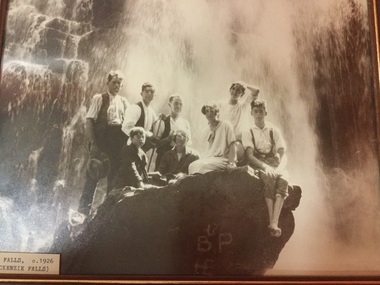
Photograph - Parfett family at Mackenzie Falls, c. 1926
... The Rock has letters B.P and t E (?) painted on it. Photograph Parfett family at Mackenzie Falls ...The Parfett family regularly holidayed in the Halls Gap area c1920sRectangular black & white photograph in a thin wooden frame with gold edging. A party of 8 people grouped on a large rock in front of a waterfall. 3 men, standing, the first has a cigarette in his mouth and holds a hat, the second holds a hiking pole; 3 women, the third has her arm raised with her hand on the back of her head; and 2 youths, the bigger wears braces and sits at the front of the rock, feet crossed, hands in his lap. The Rock has letters B.P and t E (?) painted on it. "BIG FALLS, c. 1926 (Mackenzie Falls) BLC sticker "Framed by DOUG'S FRAMES professional Picture Frame 24 Magpie St Ballarat, just down from Sovereign Hill. Phone 053 - 32 8311 label on back of frame.parfett, mackenzie falls, waterfalls
