
Showing 8 items matching "royalist"
-
 Royal Brighton Yacht Club
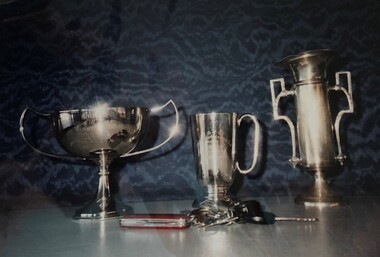
Trophy, 1930s Trophies
... ...royalist...1930s Trophies Donor: Deed of Gift: Details: Left to Right A1 Class ‘Acrospire’ 1936 Young Frothblowers Corella 1930 Corella and Royalist 1930/ 34 ...Royal Brighton Yacht Club 253 Esplanade Brighton melbourne 1930s Trophies Donor: Deed of Gift: Details: Left to Right A1 Class ‘Acrospire’ 1936 Young Frothblowers Corella 1930 Corella and Royalist 1930/ 34 A1 Acrospire Frothblowers corella royalist 1930s Trophies Trophy ...1930s Trophies Donor: Deed of Gift: Details: Left to Right A1 Class ‘Acrospire’ 1936 Young Frothblowers Corella 1930 Corella and Royalist 1930/ 34 a1, acrospire, frothblowers, corella, royalist -
 National Vietnam Veterans Museum (NVVM)
Headwear - Slouch Hat - Australian Army, Slouch Hat, 1967 (estimate)
... This style of hat has been worn for many hundreds of years, especially during the English Civil War during the 17th century when it became associated with Royalists known as Cavaliers and became known as the Cavalier hat, but it was also fashionable for the upper and middle classes throughout Europe during that time until it developed into the tricorne and bicorne. ...This style of hat has been worn for many hundreds of years, especially during the English Civil War during the 17th century when it became associated with Royalists known as Cavaliers and became known as the Cavalier hat, but it was also fashionable for the upper and middle classes throughout Europe during that time until it developed into the tricorne and bicorne. ...The name "slouch hat" refers to the fact that one side droops down as opposed to the other which is pinned against the side of the crown. This style of hat has been worn for many hundreds of years, especially during the English Civil War during the 17th century when it became associated with Royalists known as Cavaliers and became known as the Cavalier hat, but it was also fashionable for the upper and middle classes throughout Europe during that time until it developed into the tricorne and bicorne. It was introduced into Australia around 1885, although it traces its military use back to Austrian skirmishers. The modern slouch hat is derived from the black "Corsican hat" (Korsehut) – historically used in the Austrian army during the Napoleonic Wars. The headwear saw primary use by 15 battalions of Austrian Jägers (skirmishers) and it featured an upturned brim, leather chinstrap and feather plume. The regular infantry also saw limited use of the Corsican hat in the periods 1803–06 and 1811–36. (Sourced from Wikipedia)A green Australian Army slouch hat which is typically made from durable, khaki coloured fur felt (like rabbit fur) of wool felt. It has a wide brim and which was turned up one side.clothing, slouch hat -
 Royal Brighton Yacht Club
Junior and Transition Trophies, Junior classes
... ...royalist...If you click on the "right arrow" on the photo above you can see each of these one by one. sabot caitlin junior hermann robinson clog mccallum shepard 16 ft skiff 420 acrospire sylvia laser 505 duncan royalist b class redeemer Junior classes Junior and Transition Trophies ...Sabot Dinghies have raced at RBYC for a great many years, as a training boat for boys and girls and as a "one design" regatta boat. There are a number of trophies which have been awarded, some of which have since been repurposed for use by other junior classes. If you click on the "right arrow" on the photo above you can see each of these one by one.sabot, caitlin, junior, hermann, robinson, clog, mccallum, shepard, 16 ft skiff, 420, acrospire, sylvia, laser, 505, duncan, royalist, b class, redeemer -
 Flagstaff Hill Maritime Museum and Village
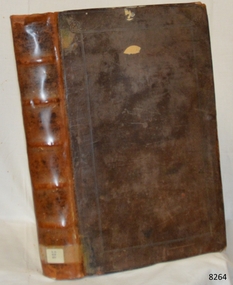
Book - Reference Encyclopedic Compendium, Peter Heylyn, Cosmography in Four Books, 1674
... The author, Dr Peter Heylyn (1599–1662), was an English clergyman, royalist theologian, and historian. Educated at Magdalen College, Oxford, he delivered the university's first lectures on historical geography, which formed the foundation of his early work titled Microcosmus in 1621. ...The author, Dr Peter Heylyn (1599–1662), was an English clergyman, royalist theologian, and historian. Educated at Magdalen College, Oxford, he delivered the university's first lectures on historical geography, which formed the foundation of his early work titled Microcosmus in 1621. ...Cosmography in Four Books was originally published as Cosmographie and is one of the most famous and comprehensive English encyclopedic compendiums of global geography, history, and chorography, meaning regional topography, produced in the 17th century. The work was first published in 1652 and attempts to document every known region of the world at the time. The information is bound together as a single large folio volume and divided into four main sections or books: Book I: Europe and its surrounding islands. Book II: Asia and its kingdoms. Book III: Africa, its provinces, and coastal regions. Book IV: America, split into Northern and Southern America. Book IV features an Appendix speculating on Terra Australis Incognita (the unknown Southern Continent). Each section outlines geographical coordinates, local climates, political histories, royal lineages, cultures, and notable geographical features, accompanied by four large folding engraved maps, one for each continent.Hard cover book,Cosmography in Four Books Author: Peter Heylyn Publisher: Philip Cherwind & Anne Seile, London. Date: (MDCLXXIV) 1674 Further Information: Brown Leather bound volume, library label to spine, spine has raised ribbing front cover has border in gilt.non-fictionCosmography in Four Books was originally published as Cosmographie and is one of the most famous and comprehensive English encyclopedic compendiums of global geography, history, and chorography, meaning regional topography, produced in the 17th century. The work was first published in 1652 and attempts to document every known region of the world at the time. The information is bound together as a single large folio volume and divided into four main sections or books: Book I: Europe and its surrounding islands. Book II: Asia and its kingdoms. Book III: Africa, its provinces, and coastal regions. Book IV: America, split into Northern and Southern America. Book IV features an Appendix speculating on Terra Australis Incognita (the unknown Southern Continent). Each section outlines geographical coordinates, local climates, political histories, royal lineages, cultures, and notable geographical features, accompanied by four large folding engraved maps, one for each continent.flagstaff hill, warrnambool, shipwrecked coast, flagstaff hill maritime museum, maritime museum, shipwreck coast, flagstaff hill maritime village, great ocean road, book, pattison collection, warrnambool library, warrnambool mechanics’ institute, ralph eric pattison, corangamite regional library service, warrnambool city librarian, mechanics’ institute library, victorian library board, warrnambool books and records, warrnambool children’s library, cosmography in four books, philip chetwind, anne seile -
 Kiewa Valley Historical Society
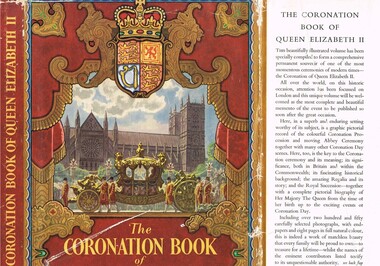
Book - History, The Coronation Book of Queen Elizabeth II, Circa 1952
... The growing push for a republic is becoming stronger and stronger as the level of rural royalists deminishes. modern australian history british royalty queen elizabeth ii coronation of queen elizabeth ii australia's "mother country" The dust jacket is in full colour with the wording "The CORONATION BOOK of QUEEN ELIZABETH II" With a Pictorial Record of the Ceremony" The spin of the jacket (in gold print on a regal red background) "THE CORONATION BOOK OF QUEEN ELIZABETH II" on the bottom "ODHAMS" The cover has a pressed oval shaped double lined border enclosing a crown and the words Elizabeth R, below which is pressed 1953. ...This book was produced in a period of time when Australians, especially those in rural areas referred to Britain as "the mother" country. It was a time when the transition from a colonial dominion of Britain to the status of an individual State through the Australian Constitution was quite apparent, except for the affection and respect of the majority of the population towards "their" Queen. It was a time when the Governor General (Queen's representative) were British born and picked. Australia had grown from a colonial status to an individual state. The feeling towards the monarchy is aptly demonstrated by the words from the High Commissioner for Australia, Sir Thomas White K.B.E., proposal for Australia to adopt the royal title "Elizabeth the Second by the grace of God of the United Kingdom, Australia and her realms and territories Queen, Head of the Commonwealth, defender of the Faith" Here faith implies the christian (Church of England) religion. In rural Australia the respect and admiration for the Queen was very high and all public offices, clubs and halls displayed a well positioned, large photograph of the Queen. The respect for British royalty was quite pronounced by the royal toast, offered before "official" proceedings commenced, and in the military flying the royal "blessed" colours.This book was donated by one of the founding families residing in the Kiewa Valley and is typical of the general feeling of respect and admiration felt by the rural communities towards the British Royal Family, especially towards Queen Elizabeth II. The rural slant towards any form of patriotism was along the lines of "Queen and Country", in that order. After World War II the social texture through multi-culturalism (especially in the Cities)moved away from this "motherland" bondage but it had taken a longer period to penetrate those rural sectors within the Kiewa valley and high plains areas. The great post World War II immigration of European refugees started a shift of numbers of Australian families whose parents were not born in Australia or had British family ties. The book represents a period in time where ties to Britain where a lot strong and entrenched in the social fabric of the Australian rural sector. The growing push for a republic is becoming stronger and stronger as the level of rural royalists deminishes.This item is a hard covered book of 200 pages including 8 pages in full colour and over 250 photographs covering the British royal family and in particular Queen Elizabeth II and her coronation. The external protective paper dust-jacket is in colour. Specific references to Australia appear on pages 9,36 to 41 and 97. The hard cover has a "off" white cloth textured (glued reinforced) cover over thick cardboard . The front and back pages depict the Royal investiture carriage with guards and footmen. Little cherubs are portrayed around the sheath holding the Royal Crown. Crowned lion and stallion sit at attention on either side of the carriage, with the Royal shield supporting their front legs.,The dust jacket is in full colour with the wording "The CORONATION BOOK of QUEEN ELIZABETH II" With a Pictorial Record of the Ceremony" The spin of the jacket (in gold print on a regal red background) "THE CORONATION BOOK OF QUEEN ELIZABETH II" on the bottom "ODHAMS" The cover has a pressed oval shaped double lined border enclosing a crown and the words Elizabeth R, below which is pressed 1953. The spine has the following words in gold coloured print "THE CORONATION BOOK OF QUEEN ELIZABETH II. The front, inside flap, of the dust jacket details the significance of what is contained within the book and the back inside flap has the contents and those personages who contributed. The back of the dust jacket has a brief review of three other books covering other aspects of British royalty and they are titled "THE DUKE OF EDINBURGH" ( a pictorial biography), "QUEEN MARY" (her life and times) and "ROYAL HOMES ILLUSTRATED" (with an essay on the royal palaces by A.L. Rowse.modern australian history, british royalty, queen elizabeth ii, coronation of queen elizabeth ii, australia's "mother country" -
 Flagstaff Hill Maritime Museum and Village
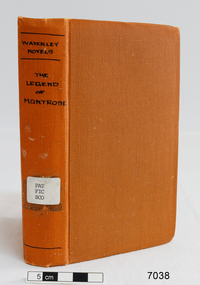
Book - Fictional stories, Sir Walter Scott, A Legend of Montrose Vol 15, 1837
... Its main story follows Allan M’Aulay, his friend the Earl of Menteith, and Annot Lyle, against the backdrop of Montrose’s Royalist campaign and clan feuds in the Highlands. ...The subject volume of Waverley Novels Vol 15 published by Fisher Son & Co (1837) is part of a collected 48 volume set of Sir Walter Scott's works, containing various stories. Vol 15 in the 1836 Fisher edition reprints later entries from the fourth series, as these stories originally appeared in Scott's Magnum Opus 48 volume editions, the first from 1816. With the influential “Magnum Opus” editions from 1829–1833 by Robert Cadell, serving as the basis for later reprinted published sets like Fisher's. The story is a historical novel set in Scotland in the 1640s, during the wars of the three Kingdoms. Its main story follows Allan M’Aulay, his friend the Earl of Menteith, and Annot Lyle, against the backdrop of Montrose’s Royalist campaign and clan feuds in the Highlands. The plot combines romance, revenge, and civil war. Annot, who was raised by the M’Aulays after being taken during a clan feud, becomes the focus of a love triangle between Allan M’Aulay and Menteith; The mystery of Annot's birth holds both back from pressing their claims buy eventually her marriage to Menteith is made possible But Allan’s jealousy drives him to attack the groom. A large subplot follows with Dugald Dalgetty, a comic professional soldier whose practical, mercenary outlook contrasts with the passions and loyalties of the other characters.Waverley Novels Vol 15 A Legend of Montrose, Light brown hardcover lettering in black text. Author: Sir Walter Scott Publisher: Fisher Son & Co Date: 1837 fictionThe subject volume of Waverley Novels Vol 15 published by Fisher Son & Co (1837) is part of a collected 48 volume set of Sir Walter Scott's works, containing various stories. Vol 15 in the 1836 Fisher edition reprints later entries from the fourth series, as these stories originally appeared in Scott's Magnum Opus 48 volume editions, the first from 1816. With the influential “Magnum Opus” editions from 1829–1833 by Robert Cadell, serving as the basis for later reprinted published sets like Fisher's. The story is a historical novel set in Scotland in the 1640s, during the wars of the three Kingdoms. Its main story follows Allan M’Aulay, his friend the Earl of Menteith, and Annot Lyle, against the backdrop of Montrose’s Royalist campaign and clan feuds in the Highlands. The plot combines romance, revenge, and civil war. Annot, who was raised by the M’Aulays after being taken during a clan feud, becomes the focus of a love triangle between Allan M’Aulay and Menteith; The mystery of Annot's birth holds both back from pressing their claims buy eventually her marriage to Menteith is made possible But Allan’s jealousy drives him to attack the groom. A large subplot follows with Dugald Dalgetty, a comic professional soldier whose practical, mercenary outlook contrasts with the passions and loyalties of the other characters. warrnambool, shipwrecked-coast, flagstaff-hill, flagstaff-hill-maritime-museum, maritime-museum, shipwreck-coast, flagstaff-hill-maritime-village, shipwrecked-artefact, book, waverley novels vol 46 tales of my landlord, sir walter scott, pattison collection, warrnambool library, warrnambool mechanics’ institute, ralph eric pattison, corangamite regional library service, warrnambool city librarian, mechanics’ institute library, victorian library board, warrnambool books and records, warrnambool children’s library, quentin durward, quinten durward -
 Flagstaff Hill Maritime Museum and Village
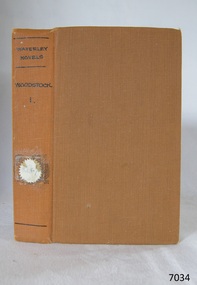
Book - Fictional stories, Sir Walter Scott, Waverley Novels Vol 39 Woodstock or The Cavalier, 1838
... The story is about a royalist Sir Henry Lee and his daughter Alice, they lose their Woodstock home to Colonel Markham Everard, a sympathetic round head relative, who seeks protection for them from Cromwell, who suspects the site as a hideout for fugitive Charles II (disguised as a royal page "Louis Kerneguy"). ...The subject volume of Waverley Novels Vol 39 published by Fisher Son & Co (1838) is part of a collected 48 volume set of Sir Walter Scott's works, containing various stories. Vol 39 in the 1836 Fisher edition reprints later entries from the fourth series, as these stories originally appeared in Scott's Magnum Opus 48 volume editions, the first from 1816. With the influential “Magnum Opus” editions from 1829–1833 by Robert Cadell, serving as the basis for later reprinted published sets like Fisher's. Scott's "Woodstock," or “The Cavalier” is a historical novel originally published in 1826 as the 22nd in the Waverley series. Set in 1651 at Woodstock Manor during the English Commonwealth after the Battle of Worcester, it dramatises Charles II's daring escape from Cromwell's forces. The story is about a royalist Sir Henry Lee and his daughter Alice, they lose their Woodstock home to Colonel Markham Everard, a sympathetic round head relative, who seeks protection for them from Cromwell, who suspects the site as a hideout for fugitive Charles II (disguised as a royal page "Louis Kerneguy"). Charles as the page courts Alice, sparking jealousy with Everard, amid duels, haunting in secret passages, and Cromwell's siege. Charles escapes with help from allies like Wildrake and Albert Lee, who impersonates him. The key themes to this novel are that it contrasts Cavalier loyalty and Puritan zeal, loyalty across divides, romance amid politics, and supernatural folklore masking intrigue. In the Fisher Son & Co edition, it reprints this story from Scott's revised collected original work in 1826.Waverley Novels Vol 39 Woodstock or the Cavalier, Light brown hardcover lettering in black text. Author: Sir Walter Scott Publisher: Fisher Son & Co Date: 1838 fictionThe subject volume of Waverley Novels Vol 39 published by Fisher Son & Co (1838) is part of a collected 48 volume set of Sir Walter Scott's works, containing various stories. Vol 39 in the 1836 Fisher edition reprints later entries from the fourth series, as these stories originally appeared in Scott's Magnum Opus 48 volume editions, the first from 1816. With the influential “Magnum Opus” editions from 1829–1833 by Robert Cadell, serving as the basis for later reprinted published sets like Fisher's. Scott's "Woodstock," or “The Cavalier” is a historical novel originally published in 1826 as the 22nd in the Waverley series. Set in 1651 at Woodstock Manor during the English Commonwealth after the Battle of Worcester, it dramatises Charles II's daring escape from Cromwell's forces. The story is about a royalist Sir Henry Lee and his daughter Alice, they lose their Woodstock home to Colonel Markham Everard, a sympathetic round head relative, who seeks protection for them from Cromwell, who suspects the site as a hideout for fugitive Charles II (disguised as a royal page "Louis Kerneguy"). Charles as the page courts Alice, sparking jealousy with Everard, amid duels, haunting in secret passages, and Cromwell's siege. Charles escapes with help from allies like Wildrake and Albert Lee, who impersonates him. The key themes to this novel are that it contrasts Cavalier loyalty and Puritan zeal, loyalty across divides, romance amid politics, and supernatural folklore masking intrigue. In the Fisher Son & Co edition, it reprints this story from Scott's revised collected original work in 1826. warrnambool, shipwrecked-coast, flagstaff-hill, flagstaff-hill-maritime-museum, maritime-museum, shipwreck-coast, flagstaff-hill-maritime-village, shipwrecked-artefact, book, waverley novels vol 46 tales of my landlord, sir walter scott, pattison collection, warrnambool library, warrnambool mechanics’ institute, ralph eric pattison, corangamite regional library service, warrnambool city librarian, mechanics’ institute library, victorian library board, warrnambool books and records, warrnambool children’s library -
 Flagstaff Hill Maritime Museum and Village
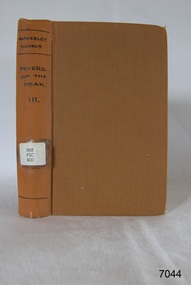
Book - Fictional stories, Sir Walter Scott, Waverley Novels Peveril of the Peak- 3 Vol 30, 1838
... The story continues on the Peveril family's royalist loyalties clashing with the Bridgenorths' Puritan resentment, fuelled by past Civil War grievances like the execution of William Christian. ...The subject volume “Waverley Novels Vol 30” published by Fisher Son & Co (1838) is part of a collected edition of Sir Walter Scott's works, containing stories from the "Tales of My Landlord" series. "Tales of My Landlord" forms a key subset of Scott's Waverley Novels, presented as fictional tales gathered by characters like Peter Pattieson from the landlord of the Wallace “Inn at Gandercleugh”. The series spans multiple books across four sub-series, including “The Black Dwarf” (1707 setting), “Old Mortality” (1679–1689), “The Heart of Midlothian” (1736), “The Bride of Lammermoor” (1709–1711), “A Legend of Montrose” (1644–1645), “Count Robert of Paris” (1097), and “Castle Dangerous” (1307). Vol 46 in the 1838 Fisher edition reprints later entries like “Count Robert of Paris” or “Castle Dangerous” from the fourth series, as these stories originally appeared in Scott's Magnum Opus collected volume editions, the first from 1816. With the influential 48-volume “Magnum Opus” edition from 1829–1833 by Robert Cadell, serving as the basis for later collected published sets like Fisher's. Peveril of the Peak is Walter Scott's longest novel, published in 1823 and set during the late 17th century amid the Popish plot hysteria under Charles II. It follows young Cavalier Julian Peveril's forbidden romance with Alice Bridgenorth a Puritan's daughter. The story covers political intrigue, family feuds, and conspiracies drawing the characters into events spanning Derbyshire's Peak District, the Isle of Man, and London. The story continues on the Peveril family's royalist loyalties clashing with the Bridgenorths' Puritan resentment, fuelled by past Civil War grievances like the execution of William Christian. Julian and Alice's love is tested when Julian's parents face Popish Plot accusations with subplots involving a scheming dwarf, the Countess of Derby, and court figures like the Duke of Buckingham. It resolves with royal intervention, exposing intrigues and eventually uniting the lovers.Waverley Novels Peveril of the Peak- 3 Vol 30, Light brown hardcover lettering in black text. Author: Sir Walter Scott Publisher: Fisher Son & Co Date: 1838 fictionThe subject volume “Waverley Novels Vol 30” published by Fisher Son & Co (1838) is part of a collected edition of Sir Walter Scott's works, containing stories from the "Tales of My Landlord" series. "Tales of My Landlord" forms a key subset of Scott's Waverley Novels, presented as fictional tales gathered by characters like Peter Pattieson from the landlord of the Wallace “Inn at Gandercleugh”. The series spans multiple books across four sub-series, including “The Black Dwarf” (1707 setting), “Old Mortality” (1679–1689), “The Heart of Midlothian” (1736), “The Bride of Lammermoor” (1709–1711), “A Legend of Montrose” (1644–1645), “Count Robert of Paris” (1097), and “Castle Dangerous” (1307). Vol 46 in the 1838 Fisher edition reprints later entries like “Count Robert of Paris” or “Castle Dangerous” from the fourth series, as these stories originally appeared in Scott's Magnum Opus collected volume editions, the first from 1816. With the influential 48-volume “Magnum Opus” edition from 1829–1833 by Robert Cadell, serving as the basis for later collected published sets like Fisher's. Peveril of the Peak is Walter Scott's longest novel, published in 1823 and set during the late 17th century amid the Popish plot hysteria under Charles II. It follows young Cavalier Julian Peveril's forbidden romance with Alice Bridgenorth a Puritan's daughter. The story covers political intrigue, family feuds, and conspiracies drawing the characters into events spanning Derbyshire's Peak District, the Isle of Man, and London. The story continues on the Peveril family's royalist loyalties clashing with the Bridgenorths' Puritan resentment, fuelled by past Civil War grievances like the execution of William Christian. Julian and Alice's love is tested when Julian's parents face Popish Plot accusations with subplots involving a scheming dwarf, the Countess of Derby, and court figures like the Duke of Buckingham. It resolves with royal intervention, exposing intrigues and eventually uniting the lovers. warrnambool, shipwrecked-coast, flagstaff-hill, flagstaff-hill-maritime-museum, maritime-museum, shipwreck-coast, flagstaff-hill-maritime-village, shipwrecked-artefact, book, waverley novels vol 46 tales of my landlord, sir walter scott, pattison collection, warrnambool library, warrnambool mechanics’ institute, ralph eric pattison, corangamite regional library service, warrnambool city librarian, mechanics’ institute library, victorian library board, warrnambool books and records, warrnambool children’s library
